# LifeRing Secular Recovery
> Sobriety, Secularity, Self Direction
> Generated by All in One SEO Pro v5.0.4, this is an llms-full.txt file, used by LLMs to index the site.
## Posts
### [National Liver Awareness Month](https://lifering.org/liver-awareness-2026/)
**Published:** October 15, 2026
**Author:** Bees
**Excerpt:** October is National Liver Awareness Month -- What is it? What does it do? Come take a peek at what's going on inside you!
**Content:**
#### 
## Yellow Eyes?
### Great for a Cat … not so great for you!
[National Liver Awareness Month ](https://www.reaganlibrary.gov/archives/speech/proclamation-5542-american-liver-foundation-national-liver-awareness-month-1986) is an opportune time to reflect on **the critical role our liver plays in our overall health** and well-being, especially for those of us on the journey of recovery.
At LifeRing Secular Recovery, we understand that **recovery is a multifaceted process** that extends beyond abstaining from substances; it encompasses nurturing our physical, mental, and emotional health. The liver, often overlooked, is a vital organ that can be **significantly impacted by substance use**, making awareness and education about liver health crucial for individuals seeking a sustainable recovery.
The month of October serves as a reminder to adopt a holistic approach to recovery by understanding how alcohol and drugs affect our bodies. Let’s raise awareness together and **empower individuals to make informed choices** that support a healthier, substance-free lifestyle for all.
---
[Jump to Liver Health Support Resources](#resources)
#### **Caring for Your Liver**
LifeRing Secular Recovery community members understand the complexities of overcoming substance use challenges. It’s not just about abstaining from alcohol and drugs; it’s also about embracing a [healthier lifestyle that nurtures our minds and our bodies](https://www.ncbi.nlm.nih.gov/pmc/articles/PMC10206429/). The liver plays a crucial role in our overall health and is often adversely affected by substance misuse. There are currently[ millions of individuals living with chronic liver disease and cirrhosis](https://www.cdc.gov/nchs/fastats/liver-disease.htm), but with early intervention, lifestyle changes, and sustained recovery, the liver has a remarkable capacity to heal and regenerate.
#### Understanding the Importance of Liver Health
When it comes to our health, we often think about our hearts, lungs, and brains, but what about the liver? This vital organ plays a crucial role in keeping our bodies functioning properly, yet it often doesn’t get the attention it deserves. In this blog, we’ll explore what the liver does, the importance of maintaining a healthy liver, and **how to promote liver health** for a vibrant and energetic life.
---
*By understanding the importance of maintaining a healthy liver and taking proactive steps to promote liver health,
we can ensure that this vital organ continues to support us in living our best lives.*
---
#### What Does the Liver Do?
The liver is a powerhouse of an organ, performing **over [500 essential functions](https://www.hopkinsmedicine.org/health/conditions-and-diseases/liver-anatomy-and-functions)** crucial for our well-being. It acts as a filter for toxins and waste products, metabolizes nutrients, produces bile for digestion, and **stores essential vitamins and minerals**. Additionally, the liver is responsible for regulating blood sugar levels, producing proteins essential for blood clotting, and **breaking down medications and toxins**. Without a healthy liver, our bodies would struggle to perform these vital functions, impacting our overall health and well-being.
#### Promoting Liver Health
Taking care of our liver is paramount for our overall health. A healthy liver **supports digestion, helps regulate metabolism, and aids in the body’s detoxification process.** When the liver is overburdened or damaged, it can lead to a range of health issues, including fatty liver disease, hepatitis, cirrhosis, and even liver cancer. Your gut will tell you, maintaining a healthy liver is crucial for a long and vibrant life.
How can we can promote liver health in our daily lives? Here are a few things you can do:
1. [**Quit Drinking Alcohol**](https://www.niaaa.nih.gov/alcohols-effects-health/alcohol-topics/alcohol-facts-and-statistics/alcohol-and-human-body#:~:text=Of%20the%20100%2C530%20liver%20disease,%2C%20with%2042.8%25%20involving%20alcohol.): Alcohol consumption can lead to liver damage and disease.
2. **[**Eat a Balanced Diet**](https://www.medicalnewstoday.com/articles/323915): Consuming a diet rich in fruits, vegetables, lean proteins, and whole grains** provides essential nutrients that support liver function. Avoiding excessive consumption of processed foods, saturated fats, and sugary drinks can help prevent fatty liver disease and promote overall liver health
3. **[Stay Hydrated](https://www.mayoclinic.org/healthy-lifestyle/nutrition-and-healthy-eating/in-depth/water/art-20044256#:~:text=The%20U.S.%20National%20Academies%20of,fluids%20a%20day%20for%20women)**: Drinking an adequate amount of water supports liver function and helps **flush out toxins** from the body.
4. [**Exercise Regularly**](https://pennstatehealthnews.org/topics/how-patients-with-liver-disease-can-benefit-from-exercise/): Engaging in regular physical activity not only supports overall health but also **promotes liver function** by aiding in weight management and reducing the risk of fatty liver disease.
5. **[Avoid Toxins](https://www.journal-of-hepatology.eu/article/S0168-8278(23)00166-6/fulltext#:~:text=Recent%20studies%20indicate%20that%20environmental,and%20physical%20stressors%20such%20as):** Minimize exposure to **environmental toxins and chemicals** that can harm the liver. This includes being mindful of household cleaning products and pesticides.
6. **[Get Regular Check-Ups](https://my.clevelandclinic.org/health/diagnostics/17366-physical-examination):** It’s important to have regular check-ups with a healthcare professional to **monitor liver health** and address any potential issues early on.
Our liver is a silent hero, tirelessly working to keep our bodies healthy and functioning optimally. By understanding the importance of maintaining a healthy liver and taking **proactive steps to promote liver health**, we can ensure that this vital organ continues to support us in living our best lives. Let’s give our livers the love and care they deserve for a healthier, happier future.
#### Addressing the Issue of Liver Disease
The rising demand for liver treatment due to increased alcohol intake is a complex issue that requires a multi-faceted approach. By **addressing the root causes of excessive alcohol consumption, promoting early intervention and treatment, improving organ donation processes, providing mental health support, and implementing effective public policies,** we can work toward reducing the burden on liver transplant programs and promoting healthier lifestyles. To address the concerning rise in alcohol-related liver diseases and the subsequent need for liver transplants, several steps can be taken:
1. **Education and Awareness:** Increasing public awareness about the **risks and consequences of excessive drinking** is essential. Education campaigns can highlight the long-term impact on liver health, **encouraging individuals to make informed choices** about alcohol consumption.
2. **Early Intervention and Treatment:** Early **identification and intervention** in alcohol-related problems can help prevent severe liver damage. Accessible and effective treatment options, counseling services, and support groups should be readily available to individuals struggling with alcohol use.
3. **Organ Donation and Transplantation:** Efforts should be made to **increase the availability of donor organs** for liver transplantation. This includes improving organ donation processes, raising awareness about the importance of organ donation, and enhancing collaboration between healthcare systems and transplant centers.
4. **Recovery Support:** Positive abstinence-based recovery programs to support substance use challenges are crucial. **Connecting with others improves mental health and promotes better lifestyle choices.** For those diagnosed with SUD-related medical conditions, these social connections are lifesaving. Connecting with others who are at various stages of their own recovery journeys is **emotionally impactful and can build confidence and strength**. Patients undergo treatment with a better understanding of the road ahead and improve their chances for success.
5. **Public Policy:** Governments can play a significant role in reducing alcohol consumption and its associated harms. Implementing and **enforcing policies that discourage excessive alcohol intake**, such as stricter regulations on alcohol marketing, can help mitigate the demand for liver transplants.
Caring for your liver is a vital part of your recovery journey. By understanding the impact of alcohol on liver health and taking **proactive steps to support your body**, you can enhance your recovery experience and promote long-term wellness. Remember, recovery is not just about abstaining from alcohol and drugs; **it’s about nurturing a healthier, happier you**.
Embrace this opportunity to take charge of your health and inspire others in the LifeRing community to do the same. Together, we can support one another on the path to recovery and a brighter future.
#### **.**
---
### **Support and Information Resources**
[**LifeRing Online Meetings**](https://meetings.lifering.org/meetings/?title=&program=&audiences=105&meetingType=&datetime_nextmeeting=&languages=&location=&coordinates=&scope=)
LifeRing provides weekly support meetings for members managing **specific medical conditions** that result from substance use disorders. [Read more about The Liver Spot Community here.](https://lifering.org/the-liver-spot-community/)
- **[The Liver Spot](https://meetings.lifering.org/meetings/1241/) \| Wednesdays at 5:30pm Pacific** The Community \| Open to All
- **[The Liver Spot \| Living](https://meetings.lifering.org/meetings/1241/) \| Fridays at 5:30pm Pacific** Real Life with ALD \| Open to All
- **[The Liver Spot \| Post-Op](https://meetings.lifering.org/meetings/1191/) \| Tuesday at 5:30pm Pacific** Targeted Support \| Post-Transplant Patients
- **[El Punto de Hígado](https://meetings.lifering.org/meetings/1309/) \| Mondays at 5:30pm**
Apoyo Dirigido \| Hablantes de Español
**Additional Resources**
**[American Association for the Study of Liver Disease](https://www.aasld.org/) (AASLD)**
**The American Association for the Study of Liver Disease** (AASLD) is the leading organization of scientists and health care professionals committed to preventing and curing liver disease. We foster research that leads to improved treatment options for millions of liver disease patients. We advance the science and practice of hepatology through educational conferences, training programs, professional publications, and partnerships with government agencies and sister societies.
**[American Liver Foundation](https://liverfoundation.org/) (ALF)**
**The American Liver Foundation** (ALF) was created in 1976 by the American Association for the Study of Liver Disease (AASLD). This organization of scientists and healthcare professionals was concerned with the rising incidence of liver disease and the lack of awareness among both the general public and the medical community. ALF’s mission is to promote education, advocacy, support services and research for the prevention, treatment and cure of liver disease.
**[Community Liver Alliance](https://communityliveralliance.org/) (CLA)**
**The Community Liver Alliance** (CLA) is a national non-profit dedicated to supporting the community through liver disease awareness, prevention, education, advocacy, and research. The CLA works by uniting patients, caregivers, healthcare professionals, and the health industry to offer educational resources, coordinate support groups, and advocate for policy changes, with a focus on both common conditions like Fatty Liver Disease (MASLD/MASH) and viral hepatitis, as well as rare liver diseases and general liver wellness.
**[Sober Livers](https://soberlivers.org/)**
**Sober Livers** is an organization for patients with alcohol use disorder and alcohol-related liver disease. Patients seeking support that only comes from those that have walked in the same shoes suddenly realized they are not alone.
---
### **S**upporting References
1. **[American Liver Foundation](https://liverfoundation.org/)**
2. **[Addressing Nutrition and Physical Activity in Substance Use Disorder Treatment](https://pmc.ncbi.nlm.nih.gov/articles/PMC10206429/)** [National](https://pmc.ncbi.nlm.nih.gov/)[ Library](https://pmc.ncbi.nlm.nih.gov/)[ of Medicine](https://pmc.ncbi.nlm.nih.gov/), (NLM) May 2, 2023
3. [**Liver: Anatomy and Function**](https://www.hopkinsmedicine.org/health/conditions-and-diseases/liver-anatomy-and-functions)[Johns Hopkins Medicine](https://www.hopkinsmedicine.org/)
4. **[Alcohol and the Human Body](https://www.niaaa.nih.gov/alcohols-effects-health/alcohol-topics/alcohol-facts-and-statistics/alcohol-and-human-body#:~:text=Of%20the%20100%2C530%20liver%20disease,%2C%20with%2042.8%25%20involving%20alcohol.)**
[National Institute on Alcohol Abuse and Alcoholism](https://www.niaaa.nih.gov/) (NIH), 2023
5. **[UNOS National Liver Data (All Donors)](https://unos.org/data/)**
[United Network of Organ Sharing](https://unos.org/) (UNOS)
6. **[National Liver Waitlist Additions through October 27, 2023](https://insights.unos.org/OPTN-metrics/)**
[Organ Procurement & Transplant Network](https://optn.transplant.hrsa.gov/) (OPTN)
7. **[When alcohol abstinence criteria create ethical dilemmas for the liver transplant team](https://www.ncbi.nlm.nih.gov/pmc/articles/PMC2579412/)** [National Institute on Alcohol Abuse and Alcoholism](https://www.niaaa.nih.gov/) (NIH), May 2006
8. **[The Liver Transplant Process](https://www.niddk.nih.gov/health-information/liver-disease/liver-transplant/preparing-transplant#evaluated)**
[National Institute on Alcohol Abuse and Alcoholism](https://www.niaaa.nih.gov/) (NIH), 2017
9. **[**Alcohol Related Liver Disease**](https://www.nhsinform.scot/illnesses-and-conditions/stomach-liver-and-gastrointestinal-tract/alcohol-related-liver-disease/)** \| [National Health Service](https://www.nhs24.scot/Our-Services/NHS-Inform)
10. **[**Health Resources Services Administration**](https://www.organdonor.gov/learn/organ-donation-statistics)** \| [Organdonor .gov](https://www.organdonor.gov/learn/organ-donation-statistics)
11. **[Recommend Evidence-Based Treatment: Know the Options](https://www.niaaa.nih.gov/health-professionals-communities/core-resource-on-alcohol/recommend-evidence-based-treatment-know-options)**
[National Institute on Alcohol Abuse and Alcoholism](https://www.niaaa.nih.gov/) (NIH), May 2022
---
Support LifeRing communities like The Liver Spot
[**with your one-time or sustaining donations**](https://lifering.org/get-involved-menu/donate/)**.**
Thank You!
*Updated from original LifeRing Secular Recovery blog posted on October 7, 2025. Since originally posted, LifeRing has added 2 new weekly meetings to [The Liver Spot Community. ](https://lifering.org/the-liver-spot-community/)*
**Categories:** Post, Post 2
**Tags:** alcoholic, cirrhosis, lifering liver spot, lifering secular recovery, liver, liver awareness, liver meetings, liver patient meetings, liver spot, the liver spot, The Liver Spot Communities
---
### [Recovery Month 2026 Around the Country](https://lifering.org/recovery-month-2026-around-the-country/)
**Published:** September 30, 2026
**Author:** Lorraine
**Excerpt:** Help expand peer-led secular recovery, empowering individuals and growing vibrant communities.
**Content:**
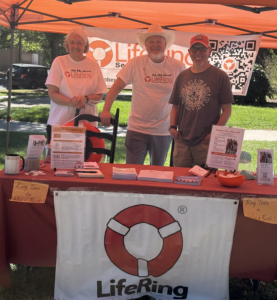
Kathleen G., Jonathan M., and Aaron R., at Rally for Recovery in Denver, CO.
## Spreading the Word about Positive, Secular Recovery in Three Cities during Recovery Month
### **Rally for Recovery 2026 (Denver, CO)**
**•** **The Vibe:** Hope, connection, and celebrating every path to recovery.
**• LifeRing in Action:** This was LifeRing Colorado’s 14th year at the Rally. Former Executive Director, Convenor, and Colorado Regional Representative, Kathleen G., highlighted how choosing an empower-your-own-recovery plan transforms lives.
• **Standout Moment:** A local nonprofit worker won a Recovery by Choice workbook by playing ring toss. She had already built a foundation of sobriety through traditional programs but was thrilled to find a tool tailored to strengthening key life domains like decision-making, relationships, and self-care.
• **Key Takeaways:**
– Board Member Jonathan M. highlighted LifeRing’s core promise: “We won’t tell you what to do. We actively listen and share real experiences to help you build your own path.”
– Longtime member and Convenor, Aaron R., noted the massive energy of the crowd and how empowering it was to share LifeRing’s impact on his sobriety with newcomers.
---
### Sober Fest MI (Belding, MI)
**• The Vibe:** A three-day weekend event proving that life in recovery is vibrant, active, and fun.
**• LifeRing in Action:** Convenor and Annual Meeting Organizer, Cindy S., spread the word to attendees who had never encountered a positive, secular alternative before, while also connecting with Sober Fest founder Robert Woldhuis about the work he’s doing with the Sober Not Boring App.
**• Key Takeaway:** Excitement for secular choices in Michigan is growing fast. As Cindy put it: “Recovery can be about so much more than just not drinking or using-it’s about connection, community, and actually having fun.”
---
### **Recovery in the Park (Austin, TX)**
**• The Vibe:** Community outreach bridging the gap between secular recovery and local healthcare providers.
**• LifeRing in Action:** Board Member Anna B. and her partner connected with over 40 event exhibitors while wearing “Ask Me About LifeRing” T-shirts that drew continuous interest.
**• Big Wins:**
– Therapist Interest: Clinicians from a major medical group specifically sought out LifeRing’s focus groups for trauma and co-occurring disorders.
– A True Alternative: A family member found relief discovering a non-12-step option for a loved one in need.
– New Meeting on the Horizon: A local medical director expressed interest in restarting a LifeRing meeting.
---
### **Why Get Involved Next Year?**
Recovery Month events are more than just tables and brochures-they are dynamic spaces where you can find genuine connection, discover personalized tools, and help expand life-saving options in your community. Whether you want to share your own story, discover new recovery resources, or start a meeting in your area, there is a seat at the table for you.
*Interested in tabling, attending, or bringing LifeRing to your city? Reach out to your local representative or join an upcoming meeting to get connected!*
### **[Help keep the secular pathway open to those who need it](https://lifering.org/donate/)**
---
#### **[Comment](https://lifering.org/contact-us-menu/) \| [Donate](https://lifering.org/get-involved-menu/donate/) \| [Collaborate](https://lifering.org/volunteer-form/)**
**Categories:** Post
**Tags:** addiction meetings, Colorado, community, donate, lifering secular recovery, Michigan and Texas spread secular recovery message, peer supported recovery, positive support, Recovery Month 2026
---
### [LifeRing Across California This Recovery Month](https://lifering.org/lifering_across_california_this_recovery-month/)
**Published:** September 23, 2026
**Author:** Lorraine
**Excerpt:** Help expand peer-led secular recovery, empowering individuals and growing vibrant communities.
**Content:**
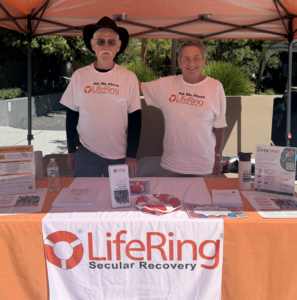
Robert S. and Michael A.
## Shining a Light on Secular Recovery: LifeRing’s Impact Across California This Recovery Month
Recovery Month 2026 was a season of connection, empowerment, and hope across Northern California! Dedicated LifeRing Secular Recovery convenors hit the ground, tabling at local community events to share a vital message: there is more than one choice that leads to healing.
LifeRing’s framework, rooted in an abstinence-based, secular, and self-empowered philosophy, offers a breath of fresh air for individuals seeking a personal recovery journey that aligns with their values. At event after event, the energy at the LifeRing table was palpable.
**A typical conversation unfolded with a spark of discovery:**
Recovery Seekers: “You mean there is another option besides the 12-step plan to get sober?”
LifeRing Convenors: “Yes! I achieved long-term recovery without relying on a higher power or rigid rules.”
Recovery Seekers: “Please, tell me more about the LifeRing approach!”
**Moments like these highlight why present, compassionate outreach matters.**
---
### Out in the Community
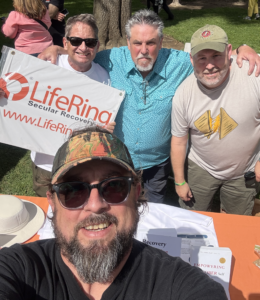
Michael A., Mike R., Marc O., in back: Jad G., front
Special recognition goes to Michael A., LifeRing member, Convenor, California Regional Representative, and Board Member, who championed the secular recovery message across Northern California. Michael represented LifeRing at a wide array of vibrant regional events, including:
- Recovery Happens in Sacramento and San Mateo
- SF Recovery Day in San Francisco
- Yuba-Sutter Recovery Day in Marysville
- Redwood City Recovery Fair in Redwood City
- Fresno & Clovis Recovery Summit in Fresno
- Recovery Cafe in San Jose
Michael was joined by a passionate team of fellow representatives-Robert S., Mike R., Marc O., Jad G., Sue B., and Byron K.-who stood on the front lines to provide positive, nonjudgmental support to everyone who stopped by.
---
### **Why Sharing Our Stories Matters**
Every conversation held, brochure handed out, and personal story shared builds understanding, ignites hope, and strengthens the fabric of our communities. By sharing lived experience, our convenors didn’t just present an alternative-they opened doors for individuals ready to begin their own journey toward healing.
#### **Thank you to all of our incredible convenors and representatives for bringing
warmth, respect, and secular recovery options to California!**
---
### **[You can help keep our secular pathway open to those who need it most](https://lifering.org/donate/)**
---
#### **[Comment](https://lifering.org/contact-us-menu/) \| [Donate](https://lifering.org/get-involved-menu/donate/) \| [Collaborate](https://lifering.org/volunteer-form/)**
**Categories:** Post
**Tags:** addiction meetings, California spreads secular message, community, donate, lifering secular recovery, peer supported recovery, positive support, Recovery Month 2026
---
### [New LifeRing COB](https://lifering.org/new-lifering-cob/)
**Published:** September 29, 2026
**Author:** Bees
**Excerpt:** LifeRing Secular Recovery welcomes long-time community leader and volunteer Bobbi Campbell as our new Board Chair!
**Content:**
## ****
## **Celebrating Connection, Community, and Leadership:**
### **Welcome Bobbi Campbell as LifeRing’s New Board Chair**
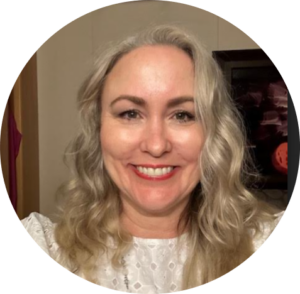
We are thrilled to announce that Bobbi Campbell has raised her hand to serve as the new Chair of the LifeRing Board of Directors!
Bobbi’s connection to LifeRing runs deep, serving as a cornerstone of her recovery journey since November 2007. Her path with LifeRing is deeply personal – she even met her husband and fellow “LifeRinger,” Richard, through the [LSRsafe email discussion group](https://lifering.org/meeting-menu/email-groups/). Alongside the [LifeRing Delphi Forum](http://forums.delphiforums.com/lifering) and the [LSR Women’s Empowered](https://lifering.groups.io/g/LSR-Women-Empowered) email discussion group, Bobbi credits these online communities as her primary sources of ongoing recovery support.
A retired [Certified Medical Assistant (AAMA)](https://aama-ntl.org/home) and dedicated community volunteer residing in the Los Angeles area, Bobbi has consistently given back to the organization that supported her. Her history of service to LifeRing spans multiple vital roles:
- Board Leadership: Appointed to the [Board of Directors](https://lifering.org/governance-menu/bod/) in December 2022, Bobbi was officially elected in 2023, reelected in 2025, and now steps into her new role as Board Chair. Her current term on the Board of Directors runs through 2028.
- Committee Work & Recognition: She serves on the [Fundraising, Marketing, and Communication Committee](https://lifering.org/volunteer-opportunities/) and previously managed LifeRing’s social media. In 2024, Bobbi was honored as an **Emily Marcus Award** winner, receiving the *Outstanding Expansion Award* for her outstanding work resuscitating LifeRing’s social media. This award recognizes the person who made the greatest contributions to LifeRing team collaboration and outside organizations.
- Community Outreach: A familiar voice to many, Bobbi has written for the [LifeRing blog](https://lifering.org/news-blog/) and continues to assist with managing [LifeRing’s social media pages](https://lifering.org/social-media/) – a role she is ready to pass along to anyone interested in stepping up!
When she isn’t devoting her time to supporting secular recovery, Bobbi enjoys writing and paper crafting, humorously noting that she “still doesn’t know what she wants to be when she grows up.”
Bobbi’s passion for ensuring others find a robust, secular path to recovery makes her uniquely suited to lead our governing body. Please join us in congratulating Bobbi Campbell as she steps into her role as Board Chair to help LifeRing continue to grow and thrive!
---
**Categories:** Post, Post 2
**Tags:** addiction recovery, LifeRIng, LifeRing BOD, LifeRing Member Experiences, lifering secular recovery
---
### [Another Door: Recovery and World Suicide Prevention Day](https://lifering.org/another-door-suicide-prevention/)
**Published:** September 9, 2026
**Author:** Lorraine
**Excerpt:** Today marks World Suicide Prevention Day. It's time to move the conversation from one of silence and shame to one of hope, understanding, and prevention.
**Content:**
## *[](https://www.who.int/campaigns/world-suicide-prevention-day/2026)*
***September 10 is World Suicide Prevention Day. This year’s call to action is simple and powerful:***
## ***Start the Conversation.***
The idea is to move away from a culture of silence, shame, and stigma and toward one of openness, empathy, and active support. That means encouraging honest conversations about suicide and mental health, making it safer for people to ask for help, and strengthening the systems and communities that are there to support them.
---
Bruce S., in NY, a member of LifeRing’s Outreach Committee, said, *“I don’t come to this subject with a personal story about suicide. I come to it through the recovery community. And from that perspective, the connection is difficult to ignore.”*
People struggling with alcohol and other drugs can also be struggling with isolation, damaged relationships, fear, depression, shame, financial problems, or a growing sense that their lives have become unmanageable. Substance use itself is recognized as a risk factor for suicide, and alcohol and drugs can further impair judgment and increase impulsive behavior.
And perhaps that gives us another way to think about suicide prevention:
### Make sure there is always another door.
---
## Recovery Doesn’t Have Just One Door
For generations, Alcoholics Anonymous and other 12-step programs have provided recovery and fellowship for millions of people. For many, that pathway works extraordinarily well.
**For others, it doesn’t.**
Fortunately, the recovery world is much larger today. Professional treatment, counseling, medication-assisted treatment, peer recovery programs, **[LifeRing Secular Recovery](https://lifering.org/),** SMART Recovery, Recovery Dharma, and many other approaches offer different ways of addressing alcohol and substance-use problems.
That variety matters.
A person who walks into one recovery program and doesn’t feel that it fits should never come away believing, Recovery isn’t for me.
The better message is:
**Maybe that particular approach wasn’t for you. Let’s try another door.**♥
LifeRing is one of those doors.
LifeRing Secular Recovery is an abstinence-based, peer-to-peer recovery organization built around **Sobriety, Secularity, and Self-Empowerment**. Rather than prescribing a single recovery formula, LifeRing encourages each person to develop a recovery program that works for them, drawing on their own strengths and the experiences of others.
Our online and in-person meetings provide something else that can be especially important when someone is struggling:
**human connection.**
People talk. People listen. People share what worked, what didn’t, what frightened them, what challenged them this week, and what helped them stay sober today.
Nobody has to have all the answers.
Sometimes showing up is enough for that day.
---
## Starting the Conversation
One of the most important ideas behind **[World Suicide Prevention Day](https://www.who.int/campaigns/world-suicide-prevention-day/2026)** is that silence does not protect people.
**Starting a conversation can.**
We should not be afraid to ask someone who appears to be in serious emotional pain how they are doing. And when there is reason for concern, it is appropriate to ask directly whether they are thinking about suicide.
Talking openly about suicide does not create suicidal thoughts. Instead, a compassionate conversation can give someone permission to say what they have been afraid to say.
That principle should sound familiar to anyone in recovery.
Both addiction and suicide have long carried stigma. Both can grow in secrecy. Both can convince a suffering person that nobody else could possibly understand what they are experiencing.
Recovery communities challenge that isolation every day.
Someone says, ***This is what happened to me**.*
Someone else says, ***Me too**.*
And suddenly a problem that felt unbearably private is being shared with another human being.
Starting the conversation also means more than one person reaching out to another. It means communities creating environments where asking for help is safe and normal.
---
## Know Where Immediate Help Is Available
If you or someone you know is in suicidal crisis or needs immediate emotional support in the United States, **call or text 988** to reach the **[988 Suicide & Crisis Lifeline.](https://988lifeline.org/)** Trained crisis counselors are available 24 hours a day, seven days a week.
If there is immediate danger, **call 911** or go to the nearest emergency department.
LifeRing also maintains suicide-prevention information and links to organizations including the [988 Suicide & Crisis Lifeline](https://988lifeline.org/), the [American Foundation for Suicide Prevention](https://afsp.org/), the [National Institute of Mental Health](https://www.nimh.nih.gov/health/topics/suicide-prevention), and other resources.
For people whose alcohol or drug use is part of the struggle, there are also many routes into recovery. LifeRing meetings are available online and in person, and professional treatment providers and other peer-recovery organizations offer additional treatment and support.
---
> ### ***The important thing is not which door someone uses.***
>
> ### ***It is that they know another door exists.***
---
[](https://988lifeline.org/)
---
#### Supporting LifeRing this Recovery Month powers Outreach and Visibility to reach individuals still searching for secular alternatives with your [**one-time and monthly donations**](https://lifering.org/get-involved-menu/donate/).
---
#### **[Comment](https://lifering.org/contact-us-menu/) \| [Donate](https://lifering.org/get-involved-menu/donate/) \| [Collaborate](https://lifering.org/volunteer-form/)**
LifeRing graciously thanks content contributor Bruce S. in NY for creating this information.
**Categories:** Post, Post 2
**Tags:** addiction meetings, crisis awareness, LifeRIng, lifering secular recovery, non-religious recovery meetings, suicide prevention
---
### [Recovery Awareness Month 2026](https://lifering.org/recovery-awareness-month-2026/)
**Published:** August 29, 2026
**Author:** Bees
**Excerpt:** LifeRing is taking it to the streets during Recovery Awareness Month -- Come help celebrate with us!
**Content:**

## **September is Recovery Awareness Month –** Come Celebrate with Us!
September is **National Recovery Month** – a time dedicated to breaking stigmas, uplifting voices, and honoring the strength of individuals navigating substance use recovery.
At **LifeRing Secular Recovery**, we believe in the power of peer support and individual empowerment. This September, we invite **you** – our community members, convenors, allies, families, and friends – to stand alongside us as we participate in Recovery Awareness Month events.
[Jump to LifeRing Events](#events)
---
#### What is Recovery Awareness Month?
First established in 1989, National Recovery Month is an annual observance held every September. It serves three critical purposes:
- **Celebrating Milestones:** Recognizing the millions of individuals living in recovery, as well as the peers, families, and professionals who support them along the way.
- **Educating & Awareness:** Shedding light on substance use recovery, demonstrating that evidence-based strategies work, and showing that full recovery is attainable.
- **Dismantling Stigma:** Transforming how society views addiction by promoting self-directed healing, empathy, and strong community support.
It is a powerful reminder that **recovery is real, personal growth is possible, and community makes all the difference.**
---
#### How You Can Participate
Throughout September, LifeRing members will be gathering for both local and virtual events to build connection, raise awareness, and support your personal recovery plan.
1. **Join us for Events:** Check out our event calendar below for local meetups, virtual meetings, and walk teams.
2. **Wear Purple:** Purple is the official color of Recovery Month – wear your purple gear during September events to show your support!
3. **Share Your Voice:** Whether you have a personal story or words of encouragement for others, your journey can be the spark of hope someone else needs.
4. **Invite a Friend:** Community thrives on inclusion. Bring friends, family, or fellow meeting attendees to any of our open events.
Together, we can foster a culture where seeking help is celebrated, recovery is sustained, and every individual is empowered.
**Ready to stand with us?** Check out The LifeRing Events Calendar below and lock in your participation for September.
---
#### **.**
### LifeRing Recovery Month Events \*
**ONLINE**
| **Date \| City** | **Event** | **Address** | **LifeRing Rep** |
|---|---|---|---|
| **9/26/2026** 3:00pm to 8:00pm Pacific | [LifeRing Open House](https://lifering.org/lifering-recovery-celebration-open-house/)[(opens in new tab)](https://recoveryhappens.info/) Come Share Your Stories, Ideas, and Experiences | Online \| Zoom Open House [Link To Invitation](https://lifering.org/lifering-recovery-celebration-open-house/) | LifeRing Community |
**CALIFORNIA**
| **Date \| Time** | **Event** | **Address** | **LifeRing Rep** |
|---|---|---|---|
| **9/2/2026** Full Day | [Recovery Happens](https://recoveryhappens.info/wp-content/uploads/2026/01/RH34-Save-The-Date.jpg) Full Day | State Capital \| 1315 10th Street Sacramento, CA 95814 | Michael |
| **9/4/2026** Noon to 3:00pm | [SF Recovery Day](https://tlcbd.org/event/6th-annual-recovery-day/)(opens in new tab) \| Rally | Boedekker Park \| 246 Eddy Street San Francisco, CA 94102 | Michael & Robert |
| **9/9/2026** 10:00am to 2:00pm | [Recovery Happens(opens in new tab)](https://irp.cdn-website.com/758e18e7/dms3rep/multi/opt/260909+Final+RH+Picnic+Flier+%281%29-1920w.jpg) \| Picnic | Eucalyptus Area \| Coyote Point Park 1701 Coyote Point San Mateo, CA 94401 | Michael & Robert |
| **9/10/2026** 10:00am to 1:30pm | [Yuba-Sutter Recovery Day(opens in new tab)](https://www.instagram.com/p/Dav4ofpCAIv/) | Bryant Field \| 1431 C Street Marysville, CA 95901 | Michael |
| **9/12/2026** 9:00am to 12:30pm | [Fresno & Clovis Recovery Summit(opens in new tab)](https://www.fresnoclovisrecoverysummit.com/) | Bethany Church \| 9161 N Maple Ave Fresno, CA 93720 | Michael & Matt R. |
| **9/15/2026** 9:00am to 2:00pm | [Redwood City Recovery Fair(opens in new tab)](https://irp.cdn-website.com/758e18e7/dms3rep/multi/opt/260915+Final+Recovery+Breakfast+-+Walk+of+Hope+%282%29-1920w.jpg) | 400 County Center Redwood City, CA 94063 | Michael & Robert |
| **9/18/2026** 10:00am to 2:00pm | [Recovery Cafe(opens in new tab)](https://recoverycafesj.org/) \| Visit[(opens in new tab)](https://recoverycafesj.org/) | 80 South 5th Street San Jose, CA 95112 | Byron & Michael |
| **9/26/2026** 10:00am to 2:00pm | [Recovery in Every Voice(opens in new tab)](https://manypathsonedestination.org/) (opens in new tab)\| Conference | 2700 Booksin Avenue San Jose, CA 95125 | Michael |
**COLORADO**
| **Date \| City** | **Event** | **Address** | **LifeRing Rep** |
|---|---|---|---|
| **9/19/2026** 3:00pm to 8:00pm Pacific | [Rally for Recovery 2026(opens in new tab)](https://www.advocatesforrecovery.org/rallyforrecovery?ss_source=sscampaigns&ss_campaign_id=6a4bd6f7aa61c260ef8e0988&ss_email_id=6a5eb72d3746d26a1a7cd33a&ss_campaign_name=July+newsletter&ss_campaign_sent_date=2026-07-21T00%3A03%3A06Z) \| Parade and Rally[(opens in new tab)](https://www.advocatesforrecovery.org/rallyforrecovery?ss_source=sscampaigns&ss_campaign_id=6a4bd6f7aa61c260ef8e0988&ss_email_id=6a5eb72d3746d26a1a7cd33a&ss_campaign_name=July+newsletter&ss_campaign_sent_date=2026-07-21T00%3A03%3A06Z) (opens in new tab) | Cheeseman Park \| 1599 East 8th Avenue Denver, CO 80128 | Lorraine & Friends |
**MICHIGAN**
| **Date \| City** | **Event** | **Address** | **LifeRing Rep** |
|---|---|---|---|
| **9/11-9/13** All Day Long | [SoberFest Michigan(opens in new tab)](https://soberfestmi.com/) \| [\#3444(opens in new tab)](https://soberfestmi.com/)Free 3-day recovery festival [(opens in new tab](https://recoveryhappens.info/) | 5469 Long Lake Road Belding, MI 48809 | Cindy |
**NEW YORK**
| **Date \| City** | **Event** | **Address** | **LifeRing Rep** |
|---|---|---|---|
| **8/31/2026** 3:00pm to 8:00pm Pacific | [International Overdose Awareness Day(opens in new tab)](https://whiteplainslibrary.org/wp-content/uploads/2025/07/IOAD-Sep-4.jpg) \|[(opens in new tab)](https://whiteplainslibrary.org/wp-content/uploads/2025/07/IOAD-Sep-4.jpg)Rally[(opens in new tab)](https://whiteplainslibrary.org/wp-content/uploads/2025/07/IOAD-Sep-4.jpg) [(opens in new tab](https://recoveryhappens.info/) | White Plains Library \| Lobby 100 Martine Avenue White Plains, NY 10601 | Bruce S |
| **Tuesdays** 12:30pm to 4:00pm | [Suicide Prevention Month \|](https://calendar.whiteplainslibrary.org/event/16575271) Weekly Tabling Event | White Plains Library \| Lobby 100 Martine Avenue White Plains, NY 10601 | Bruce S |
| **9/26/2026** 9:00am | [Run for Recovery 5K](https://fundraise.givesmart.com/vf/run4recovery) Marathon Run | FDR State Park \| Lot 1 2957 Crompond Road Yorktown Heights, NY 10598 | Bruce S |
**TEXAS**
| **Date \| City** | **Event** | **Address** | **LifeRing Rep** |
|---|---|---|---|
| **9/19/2026** 5:00pm to 9:00pm | [Recovery In The Park](https://www.eventcreate.com/e/ritp2026) \| Rally for Recovery [(opens in new tab](https://recoveryhappens.info/) | Fair Market 1100 East 5th Street Austin, TX 78702 | Anna & Andy |
*\* links provided by participants*
---
#### Rallying Around Recovery Month: Empowering the Future of Peer Support
This **Recovery Awareness Month 2026**, LifeRing is rallying to amplify secular recovery, break down barriers, and make noise for non-dogmatic support. We are dedicated to ensuring that anyone seeking sobriety on their own terms finds a welcoming seat at our table. Because we never charge fees for our meetings, discussion groups, or community spaces, we rely on partners like you to fuel the movement. **Your support this Recovery Month powers:**
- **Outreach & Visibility:** Helping us reach individuals who are still searching for a secular alternative.
- **Convenor & Volunteer Support:** Equipping meeting convenors with the tools needed to foster vibrant, supportive spaces.
- **Platform Infrastructure:** Keeping our daily online meetings, discussion groups, and regional networks running smoothly.
Help us keep recovery free, inclusive, and accessible to all.
[Please Donate Today](https://lifering.org/get-involved-menu/donate/)
#### Support evidence-based, compassionate, and self-empowered recovery for all.
**Categories:** Post, Post 2
**Tags:** addiction recovery, celebrate Recovery Awareness Month, LifeRIng, LifeRing Member Experiences, lifering secular recovery, Recovery Awareness Month, Support LifeRing
---
### [Empowering Sobriety](https://lifering.org/empowering-sobriety-samhsa-survey/)
**Published:** August 25, 2026
**Author:** Bees
**Excerpt:** See how LifeRing’s secular, self-empowered model fits the latest SAMHSA nation-wide substance use findings.
**Content:**
#### **What the Latest SAMHSA Data Means for the LifeRing Community**
**Hot Off the Presses:** The [Substance Abuse and Mental Health Services Administration](https://www.samhsa.gov/newsroom/press-announcements/20260727/samhsa-releases-annual-national-survey-on-drug-use-and-health) (SAMHSA) has released its latest [National Survey on Drug Use and Health](https://www.samhsa.gov/data/data-we-collect/nsduh-national-survey-drug-use-and-health/national-releases/2025) (NSDUH) – the nation’s primary benchmark for substance use and mental health statistics.
For the LifeRing Community, this annual publication provides far more than raw numbers. **Its findings offer powerful, empirical proof that recovery is dynamic, individualized, and widespread**. By illustrating real-world substance trends and treatment gaps, the report reinforces the vital need for LifeRing’s secular, self-empowered model in today’s recovery landscape.
---
#### Quick Takeaways
- **Recovery is Real and Widespread:** An overwhelming [**73% of adults**](https://www.samhsa.gov/data/sites/default/files/reports/rpt57150/2025-nsduh-annual-national-html/2025-nsduh-annual-national.htm#taba.82b) who identified as having had a substance use problem consider themselves in recovery or recovered – proving that self-directed recovery works.
- **Sobriety Remains Essential:** Alcohol continues to be the nation’s most widely used substance. With millions meeting the criteria for a substance use disorder, maintaining complete sobriety remains a necessary, practical boundary.
- **Empowerment Through Our 3-S Philosophy:** By grounding support in **Secularity, Sobriety, and Self-Empowerment**, LifeRing offers an inclusive, doctrine-free space to build a Personal Recovery Plan tailored to your individual life and mental health needs.
---
#### Key Insights from the Report
1. **Long-Term Recovery is Achievable** At the heart of the [NSDUH report](https://www.samhsa.gov/data/sites/default/files/reports/rpt57150/2025-nsduh-annual-national-html/2025-nsduh-annual-national.htm) is an encouraging truth: [**nearly three-quarters of adults with a past substance use problem report being in recovery**](https://www.samhsa.gov/data/sites/default/files/reports/rpt57150/2025-nsduh-annual-national-html/2025-nsduh-annual-national.htm#recovery). This directly mirrors LifeRing’s core principle of **Self-Empowerment**. When individuals take full ownership of their path, design custom recovery strategies, and lean on peer encouragement, lasting sobriety is entirely within reach.
2. **The Continuing Need for Abstinence and Community** The survey highlights ongoing behavioral health challenges across the country. Alcohol remains the primary substance involved in misuse, with roughly 44% of current drinkers reporting binge drinking in the past year. Furthermore, approximately [**44.6 million Americans aged 12 and older met the criteria for a Substance Use Disorder (SUD**)](https://www.samhsa.gov/data/sites/default/files/reports/rpt57150/2025-nsduh-annual-national-html/2025-nsduh-annual-national.htm#substance), yet only a fraction received formal clinical treatment. These figures emphasize why total **Sobriety** is crucial for long-term health, and why accessible peer-support networks are essential safety nets outside traditional medical settings
3. **Addressing Mental Health Without Barriers** SAMHSA reported that **[54.6 million adults experienced a mental health condition](https://www.samhsa.gov/data/sites/default/files/reports/rpt57150/2025-nsduh-annual-national-html/2025-nsduh-annual-national.htm#mental3)** over the past year, underscoring the deep connection between emotional health and substance use. LifeRing’s commitment to **Secularity** ensures a safe, non-judgmental environment where members can address co-occurring mental health concerns freely. Without religious doctrines or spiritual requirements, participants can seamlessly **integrate evidence-based therapy, medical support, and personal wellness practices** into their recovery journey.
---
#### Core Data Highlights
| **Metric** | **Findings & Statistics** | **Relevance to Peer Recovery** |
|---|---|---|
| **Substance Use Disorder (SUD)** | **~44.6 million** Americans aged 12+ met SUD criteria. | Demonstrates the massive ongoing need for accessible, secular mutual-aid groups. |
| **Alcohol Usage** | Driven predominantly by alcohol, over half the U.S. population used alcohol, tobacco, or illicit drugs in the past month. | Reaffirms alcohol as a primary driver of substance concerns across all demographics. |
| **Co-Occurring Mental Health** | **54.6 million** adults experienced mental illness; adolescent anxiety (~18%) and major depressive episodes (~15%) remain high. | Reinforces LifeRing’s commitment to self-directed recovery that respects individual mental health needs and professional medical care. |
| **Treatment Gap** | Only a small fraction of those meeting SUD criteria received formal clinical treatment. | Highlights why community-based support groups are vital long-term lifelines. |
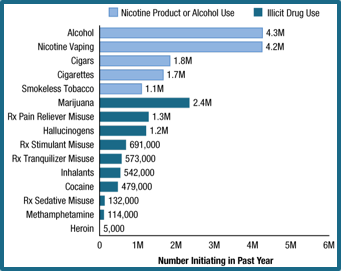
#### [Perceived Unmet Need for Substance Use Treatment among Adults](https://www.samhsa.gov/data/sites/default/files/reports/rpt57150/2025-nsduh-annual-national-html/2025-nsduh-annual-national.htm#substx5b)
###### [](https://www.samhsa.gov/data/sites/default/files/reports/rpt57150/2025-nsduh-annual-national-html/2025-nsduh-annual-national.htm#substx5b)
###### Substance Abuse and Mental Health Services Administration. (2026). *Key substance use and mental health indicators in the United States: Results from the 2025 National Survey on Drug Use and Health* (HHS Publication No. PEP26‑07‑010, NSDUH Series H‑61). Center for Behavioral Health Statistics and Quality, Substance Abuse and Mental Health Services Administration. [https://www.samhsa.gov/data/data‐we‐collect/nsduh‐national‐survey‐drug‐use‐and‐health/national‐releases](https://www.samhsa.gov/data/data-we-collect/nsduh-national-survey-drug-use-and-health/national-releases)
---
#### The LifeRing Perspective
- **Empowering Personal Choice:** SAMHSA’s emphasis on self-reported recovery underscores that healing is deeply personal. LifeRing’s 3-S framework (**Secularity, Sobriety, Self-Empowerment**) aligns directly with these findings by encouraging every member to craft a [Personal Recovery Plan](https://lifering.org/bookstore/books/rbc/) suited to their unique life conditions.
- **Secular and Inclusive Support:** With tens of millions navigating substance use and mental health challenges simultaneously, nonreligious, peer-led spaces remain a vital, barrier-free sanctuary for anyone seeking recovery on their own terms.
---
#### Help Us Keep Recovery Free, Inclusive, and Empowering
With nearly **45 million Americans** navigating substance use disorders and only a fraction receiving formal clinical treatment, **community-based support is more vital than ever**. SAMHSA’s research demonstrates that peer recovery works – but it must remain accessible, judgment-free, and free of dogma.
At LifeRing, we believe everyone deserves a safe space to build a sober life on their own terms. We never charge for our meetings or support networks, but keeping our doors open and accessible requires resources.
Your generosity directly funds our online meeting platforms, resources for meeting convenors, and outreach efforts to ensure no one has to navigate recovery alone.
[Donate Today](https://lifering.org/get-involved-menu/donate/)
#### Support evidence-based, compassionate, and self-empowered recovery for all.
**Categories:** Post, Post 2
**Tags:** addiction recovery, LifeRIng, LifeRing Member Experiences, lifering secular recovery, No Judgement meetings, non-step recovery, samhsa survey results, Support LifeRing
---
### [Rethinking Recovery](https://lifering.org/rethinking_recovery/)
**Published:** August 18, 2026
**Author:** Bees
**Excerpt:** Rethinking the role of "morality" in recovery: Explore how moving beyond traditional frameworks can open doors to new healing possibilities.
**Content:**
## ****Why Moving Beyond “Morality” Unlocks Real Healing
When we think about recovery, we often take for granted the language that surrounds it. For decades, traditional recovery models have framed addiction through the lens of moral failure, personal defects, and spiritual shortcomings. But what happens when that exact framework gets in the way of saving lives?
---
In a study published in the *[Journal of Psychoactive Drugs](https://www.tandfonline.com/journals/ujpd20)*, medical sociologist David Frank explores this critical issue in[ *“The Trouble with Morality: The Effects of 12-Step Discourse on Addicts’ Decision-Making”*](https://pmc.ncbi.nlm.nih.gov/articles/PMC4788510/). The research examines how traditional, morality-focused 12-Step narratives can deeply influence – and often hinder – how people navigate their own recovery choices.
---
#### “The power of the dominant discourse is such that it produces a desire to buy into its values and tenets even when it is against the individual’s interests to do so.”
***– **David Frank**
The Trouble with Morality:
The Effects of 12-Step Discourse on Addicts’ Decision-Makings***
---
The study highlights a troubling pattern: when recovery is defined as a test of moral character, standard medical treatments like [Methadone Maintenance Treatment](https://www.ncbi.nlm.nih.gov/books/NBK310658/) (MMT) or [Medication-Assisted Treatment](https://americanaddictioncenters.org/addiction-medications) (MAT) are frequently stigmatized as “cheating” or replacing one addiction with another. Because the dominant narrative equates true recovery with total spiritual purism, many people internalize feelings of shame or guilt – even when medical support is actively helping them rebuild their lives.
At LifeRing, we see a fundamentally different way forward.
---
#### Comparison: Morality vs. Empowerment
| #### **12-Step Discourse** | #### **LifeRing’s Human-Centered Approach** |
|---|---|
| **Foundation:** Moral defects, spiritual shortcomings, personal powerlessness | **Foundation:** Self-empowerment, human agency, practical decision-making |
| **Tone:** Judgment, shame-based narratives, dogmatic rules | **Tone:** Compassion, mutual respect, nonjudgmental acceptance |
| **Approach to Support:** One-size-fits-all path; medical tools often stigmatized | **Approach to Support:** Personalized recovery plans; all evidence-based tools welcomed |
| **Community Dynamic:** Hierarchical sponsorship and confession | **Community Dynamic:** Equal connection, peer-based knowledge exchange, shared strengths |
---
#### Compassion Over Judgement
*The Trouble with Morality* paper underscores how damaging it can be when recovery tools carry a moral verdict. Addiction is not a character flaw, and getting help should never involve earned shame.
LifeRing operates on a foundation of **compassion** We do not ask you to inventory your moral failings or surrender your agency. Instead, we meet you exactly where you are today. Whether your path includes therapy, lifestyle changes, or life-saving harm reduction and recovery medications, LifeRing honors your choices without judgment.
---
#### Connection Over Conformity
In traditional moralized frameworks, connection is often conditional on adopting a specific ideology or belief system. If your personal path strays from the prescribed steps, you risk feeling isolated or “less than”.
LifeRing builds **connection** through authenticity and diversity. We recognize that no two recovery journeys look identical. By removing the pressure to conform to a rigid set of rules, our meetings create a safe space where you can speak honestly about what is working – and what isn’t – without fear of criticism or dogma
---
#### Community Built on Self-Reliance
When community is grounded in moral surveillance, peer support can quickly turn into peer pressure. Frank’s research shows how peer networks enforcing traditional morality can inadvertently discourage individuals from pursuing life-saving healthcare options.
In contrast, the **LifeRing Community** is a peer-run network designed to strengthen your personal “sober self.” We don’t believe you are powerless. We believe you possess the internal wisdom to design a [Personal Recovery Plan](https://lifering.org/bookstore/books/rbc/) that fits your unique life. Our community isn’t here to judge your moral character; we are here to offer the encouragement, solidarity, and practical tools you need to thrive
---
#### You Are the Author of Your Recovery
Recovery shouldn’t be about proving your moral worth to a group-it should be about building a healthy, fulfilling life that you love. By leaving behind outdated ideas of defect and shame, we open the door to real healing, evidence-based care, and true self-determination.
If you are looking for a community that values your autonomy and supports your individual journey, we invite you to pull up a chair at a LifeRing meeting.
- **Explore the Research:** Read the full academic article,[ *The Trouble with Morality: The Effects of 12-Step Discourse on Addicts’ Decision-Making*](https://pmc.ncbi.nlm.nih.gov/articles/PMC4788510/).
- **Join a Meeting:** Connect with us online or in person by visiting the [LifeRing meeting schedule](https://meetings.lifering.org/meetings/).
- **New to Recovery?** Find support and strength: [If This Is Day One](https://lifering.org/lifering-recovery-menu/if-this-is-day-one/)
---
#### Help Us Keep Recovery Free, Inclusive, and Empowering
Research shows how damaging it can be when recovery is treated as a test of moral character instead of a journey toward health. At LifeRing, we believe everyone deserves a safe space to build a sober life – free from judgment, dogma, or shame.
We never charge for our meetings or support networks, but keeping our doors open and accessible requires resources. Your donation directly funds online meeting platforms, resources for our online and local convenors, and outreach to ensure no one has to navigate recovery alone.
**[Donate to LifeRing Today](https://lifering.org/donate/) – *Support evidence-based, compassionate recovery for all.***
**Categories:** Post, Post 2
**Tags:** addiction recovery, LifeRIng, LifeRing Member Experiences, lifering secular recovery, No Judgement meetings, non-step recovery, Support LifeRing
---
### [Why Support LifeRing this Summer?](https://lifering.org/why_support_lifering_this_summer/)
**Published:** July 17, 2026
**Author:** Lorraine
**Excerpt:** Help expand peer-led secular recovery, empowering individuals and growing vibrant communities.
**Content:**
## ****Summer is a Critical Time for Well-being
Think back to the hot summer days before you found LifeRing. Remember the isolation and uncertainty, then the relief of finally finding a community where you felt valued, respected, and empowered.
**Right now, someone is searching for that exact same lifeline**.
Because LifeRing is entirely community-supported and receives no government funding, **every connection we make relies on you**. This summer, your generosity directly funds the vital resources that keep our community growing:
**• Keeping meetings accessible:** Running our daily online support meeting network.
**• Starting new meetings:** Supporting convenors to launch local, in-person meetings.
**• Educating professionals:** Sharing LifeRing’s secular, self-empowered approach with recovery clinicians and treatment centers.
## **Donate Today to Keep Connections Strong**
---
Your one-time or recurring gift helps empower others on their recovery journey. See the direct impact your support can make today:
**• $20** funds one online meeting for an entire month.
**• $50** sponsors a LifeRing informational table at a Recovery Month Rally this September.
**• $100** (or $50 split with a friend) covers the cost of sending recovery resources directly to a clinical treatment center to introduce their clients to LifeRing.
**Every dollar keeps our secular pathway open to those who need it most.**
---
## ***Make Your Summer Donation Today.***
[](https://lifering.org/donate/)
### *Thank you!*
---
**Categories:** Post
**Tags:** addiction meetings, donate, isolation, lifering secular recovery, peer supported recovery, positive support, summer heat
---
### [Recovery Cats](https://lifering.org/recovery-cats/)
**Published:** July 2, 2026
**Author:** Lorraine
**Excerpt:** Purr-fect partners in sobriety! Explore how feline companions offer comfort and quiet strength during recovery.
**Content:**
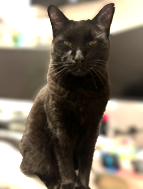
Miggy, the cat in charge
## **🐾** **Two Sobriety-Focused Felines in LifeRing**
### **A Message From Miggy & Jax (via our human, Cindy)**
Hello, humans.
We are **Miguel Enchilada Cabrera McShearerski** (the distinguished black cat in charge) and **Jax** (the younger, sleek gray apprentice). We share a home with our favorite human, Cindy, and we are officially the most professional Zoom-bombers to ever walk across a keyboard.
We are writing to you today because we need your help. Well, technically, our fellow humans need your help, but we cats are the ones who notice the little things.
### **Before the Change: The Heavy Silence**
Cats are experts in routine. We notice when breakfast is exactly two minutes late. And a few years ago, we definitely noticed when our human wasn’t herself.
The house was quieter, heavier. Her eyes were often far away, clouded by a struggle we couldn’t understand. We did our best—offering purrs, sitting on her lap, guarding her sleep—but **a cat’s love can’t cure addiction**. We felt helpless watching the person we love slip further away.
### **The Turnaround: How LifeRing Changed Everything**

Jax, the young apprentice
Today, our home is completely transformed.
It is full of light and sound. Cindy laughs constantly. She sings us custom, wildly improvised songs telling us how beautiful we are (frequently very loudly, and frankly, not always on key).
What changed? She found a lifeline. She spends her evenings and weekends looking at a glowing screen, talking to a global community of peers who understand exactly what she’s going through. **She found LifeRing Secular Recovery.**
We’ve personally attended more recovery meetings than most humans. We have standard protocols for them:
- **The Tail-in-Face Surprise:** Popping our tails directly in front of the camera lens to break the tension.
- **The Strategic Meow:** Loudly demanding chin scratches at the exact moment someone shares a deeply profound milestone.
- **The Vibe Check:** Staring intently at the screen is our way of making sure everyone feels supported.
We don’t fully understand what a “peer-to-peer recovery support network” is, but **we know it gave us our human back**. It gave us a person who is entirely present, joyful, and safe.
---
### [**Your Donation is the Lifeline**](https://lifering.org/donate/)
The truth is that LifeRing’s life-saving meetings don’t just happen. They require resources, technology, and support to remain free and accessible 24/7 to anyone fighting for their life.
When you give to LifeRing, you aren’t just funding a nonprofit. You are keeping the local, in-person, and digital doors open for someone who is currently sitting in the dark, looking for hope. You are rebuilding families.
***Because when you help one person find recovery, you rescue every single soul waiting for them at home.* 🐾**
---
### **Will You Protect a Home Like Ours?**
Please don’t wait. A gift of any size makes a big difference:
**$25** helps fund the secure digital platform for an online meeting for one month.
**$50** provides materials for new peer convenors to expand the meeting calendar.
**$100** facilitates outreach to clinicians to connect individuals with a sober community.
**[Click here to make your tax-deductible donation to LifeRing today](https://lifering.org/donate/).** Together, we can make sure more humans become the incredible people their pets already know them to be.
With deep, rumbling purrs of gratitude,
**Miggy & Jax** *Professional Nap Supervisors, Meeting Crashers, and Very Good Boys*
---
**Categories:** Post
**Tags:** addiction, Hope, LifeRing Member Experiences, Peer Support, pets, recovery, Substance misuse, Support LifeRing
---
### [The Chutney Challenge](https://lifering.org/chutney-does-it-with-doggie-style/)
**Published:** July 28, 2026
**Author:** Bees
**Excerpt:** Take the Chutney Challenge! You can make a dog-gone difference for those overcoming substance use challenges. A a bonus, we added great pictures of Chutney!
**Content:**
## **The Chutney Challenge: Such a Good Girl! **
#### The Power of Chutney: How One Special Pup Unleashed an $11k Matching Gifts
When Chutney’s story was first shared, the response was overwhelming. Inspired by the quiet, nonjudgmental loyalty of a rescue dog named Chutney-and the profound role pets play in our recovery journeys – generous LifeRing supporters stepped forward with an unprecedented $11,000 in personal donations.
---
That wasn’t just a fundraising milestone; it was a testament to the power of love, accountability, and positive recovery support.
Now, we are turning that generosity into **The Chutney Challenge**. Starting today, every dollar you donate will be matched dollar-for-dollar up to $11,000 – doubling your impact on secular recovery support!
[Help Us Fetch $11k in Matching Funds This Summer!](https://lifering.org/donate/)
#### Why Chutney’s Story Resonates
Recovery is rarely a solo effort. For many of us, our four-legged companions are the first ones to sit beside us without judgment on our hardest days. They give us a routine to rely on, a reason to get out of bed, and a gentle reminder that we are worthy of care.
When Chutney’s human found LifeRing, everything shifted. LifeRing provided the **self-empowering tools needed to build a sustainable path to sobriet**y – and Chutney got her human back, whole and present.
***Pets remind us to stay grounded in the present moment. LifeRing gives us the secular tools and community to stay present for them – and for ourselves.***
---
[**The Chutney Challenge**](https://lifering.org/get-involved-menu/donate/) is our chance to unlock the full $11,000 match to **fuel LifeRing’s mission**. When you give today, your donation goes twice as far to support:
- **Expanding Online & Local Meetings:** Ensuring anyone seeking secular recovery can find a safe space 365 days a year.
- **Targeted Outreach & Inclusion:** Strengthening outreach efforts to actively engage with and serve underrepresented communities, ensuring accessible recovery options for all.
- **Community Recovery Resources:** Providing our members with improved access to meetings, interactive discussion groups, and vital self-empowerment tools.
---
#### How You Can Meet the Challenge Today
Whether you have a four-legged friend at your feet right now or simply believe in accessible, secular recovery options, you can help us reach our target:
1. **Donate to Double Your Gift:** Make a contribution today and watch $25 become $50, or $100 become $200 for LifeRing.
2. **Share Your Story:** Tell us about the pets or peers who kept you grounded on your recovery journey.
3. **Spread the Word:** Share #TheChutneyChallenge with friends, family, and fellow LifeRing members to help us unlock the full $11,000 match!
4. **Volunteer Your Time:** Join our dedicated team of collaborators to help convene meetings, organize local events, and keep our peer-led network strong.
#### Together, we can turn every contribution into lifesaving connections.
[Donate Now to Double Your Impact](https://lifering.org/donate/)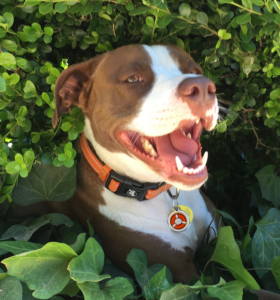
**Categories:** Post, Post 2
**Tags:** addiction recovery, LifeRIng, LifeRing Member Experiences, lifering secular recovery, non-step recovery, pets, Support LifeRing
---
### [LifeRing Community Town Hall | Summer 2026](https://lifering.org/town-hall-summer-2026/)
**Published:** July 23, 2026
**Author:** Bees
**Excerpt:** Your Invited! Join us online Thursday, July 30th at 5:00pm Pacific for the LifeRing Community Town Hall! Focus: LifeRing Forward
**Content:**
## [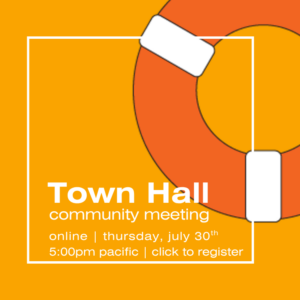](https://lifering-org.zoom.us/meeting/register/0nQ_t6r7QVGYMsRXsIR3zw)Your Voice, Our Future:
LifeRing Community Town Hall
- [**Link to Town Hall Registration**](https://lifering-org.zoom.us/meeting/register/0nQ_t6r7QVGYMsRXsIR3zw)
- [**Link to Provisional Agenda**](https://lifering.org/summer-2026-town-hall/)
We invite **all LifeRing members, collaborators, convenors, and supporters** to join an essential open-forum discussion. This is your chance to actively shape the future of LifeRing.
---
- **When?** Thursday, July 30, 2026
- **What Time?** 5:00pm Pacific Time
- **Where?** Online
- **Who?** YOU!
- **Registration?** [Town Hall Registration Link](https://lifering-org.zoom.us/meeting/register/0nQ_t6r7QVGYMsRXsIR3zw)
---
**Our Goal:** Less lecturing, more connecting. We’re here to share where LifeRing is heading, hear what’s on your mind, spark ideas for Recovery Month, and build the future of our community ***together***.
Come **share your valuable experiences**, ask your pressing questions, and offer suggestions that will directly impact our direction and growth this year.
---
#### [*LifeRing Forward: Strategy, Stories & Recovery Month*](https://lifering.org/summer-2026-town-hall/)
This meeting is for all of us. **Come share your vision for our future!**
**Categories:** Post, Post 2
**Tags:** alcoholic, cirrhosis, LifeRIng, lifering secular recovery, LifeRing Town Hall, liver, liver awareness, liver meetings, liver patient meetings, the liver spot
---
### [Unconditional support: What a beloved dog taught me about recovery](https://lifering.org/beloved-dog-taught-me-recovery/)
**Published:** July 9, 2026
**Author:** Lorraine
**Excerpt:** Support LifeRing Secular Recovery! Your donation helps provide the same unconditional, nonjudgmental support my dog Bronzeson gave me.
**Content:**

Bronzeson
## Pets Provide Unconditional Acceptance
#### **Dear LifeRing Community,**
I grew up on a farm surrounded by great dogs, but none compared to Bronzeson. Named for his shiny, bronze-colored coat, he was the best dog ever. He lived a long, loyal life of 13 years.
Bronzeson survived my two sons’ teenage years-no easy trick-but his true feat was sticking by me during the darkest years of my life, while I was dealing with a severe alcohol addiction.
Through it all, **he never judged me. His love and acceptance were entirely unconditional.** Whether we were exploring hiking trails, walking around the neighborhood, or I was unable to leave the couch, he was just there, nudging my hand to be petted. That is the beautiful thing about pets, cats or dogs. Their pure devotion mirrors exactly what I found when I finally discovered LifeRing Secular Recovery: **absolute, nonjudgmental acceptance.**
---
### Community Matters
Trying to navigate recovery alone can feel like walking through an empty house. LifeRing gave me the community and support I needed to heal, offering the same steady, welcoming presence I used to feel sitting next to my old pal Bronzeson.
**Today, I am donating to LifeRing in honor of Bronzeson’s memory.**
**Will you join me in supporting this vital community?**
Your gift ensures that LifeRing can continue providing a safe, judgment-free space for everyone seeking positive recovery support.
### **[Donate to LifeRing Today!](https://lifering.org/donate/)**
*Your financial contributions are the building blocks for LifeRing. Please consider making a [one-time or sustaining donation ](https://lifering.org/donate/)to support our programs!*
[](https://lifering.org/get-involved-menu/donate/)
---
**Share your story**: Do you have a pet who has supported your recovery journey? We would love to hear about them. **Please share your recovery-related pet stories in the comments below!**
With gratitude,
Lorraine
---
**Categories:** Post, Post 2
**Tags:** addiction recovery, LifeRIng, LifeRing Member Experiences, lifering secular recovery, non-step recovery, pets, Support LifeRing
---
### [The Liver Spot | En Español](https://lifering.org/the_liver_spot_en_espanol/)
**Published:** June 9, 2026
**Author:** Bees
**Excerpt:** Maristella brings the compassion, connection, and camaraderie of The Liver Spot to our Spanish-speaking community.
**Content:**
### **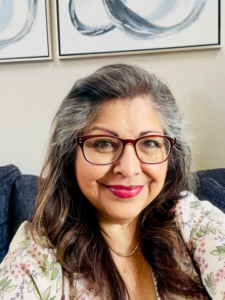**Cultivating Community and Language Equity:
### [The Liver Spot \| El Punto de Hígado](https://lifering.org/meeting-menu/online-meetings/the-liver-spot-en-espanol/)
[](https://lifering.org/el-punto-del-higado-conoce-a-maristella/)[](https://lifering.org/el-punto-del-higado-conoce-a-maristella/)
###### .
#### ***Meet Our Newest Liver Spot Convenor: Maristella M***
For Maristella, the road to her **liver transplant** was a three-year journey marked by uncertainty, fear, and the heavy weight of the unknown. Even while surrounded by the love of family, she often felt a profound sense of isolation that only those facing a life-threatening illness can truly understand.
Everything changed on March 27, 2025, when Maristella received the gift of life at UCSF from an anonymous living donor-a selfless act by a stranger that redefined her sense of hope and faith. This experience ignited a fire within her to ensure that no one else has to navigate the darkness of **Alcohol-Associated Liver Disease (ALD)** alone.
Maristella’s inspiration to launch a **Spanish-language Liver Spot meeting** stems from a deep commitment to breaking down the barriers that language creates in healthcare and recovery. Her heart was moved by the sight of a ten-year-old girl forced to act as a translator for her mother during a medical crisis-a moment that highlighted the desperate need for **spaces where Spanish speakers can seek support in their own language**.
Maristella recognized that while the medical system provides translators, it cannot translate the “warmth of shared experience” that defines true healing. Following the core philosophy of The Liver Spot Community, Maristella leads this meeting not as a monitored, mandated resource, but as an active, committed community where the **patient-to-patient connection** is the primary driver of change. By stripping away the clinical coldness of a diagnosis and replacing it with the comfort of compassion Maristella creates **a space where recovery is collective teamwork rather than a solitary struggle**. The unique purpose of this meeting lies in its cycle of mutual strength.
Having spent over a year on the transplant list herself, Maristella knows that connecting with peers who truly understand the journey is the most potent medicine available. In this “no-judgment zone,” she is creating an ecosystem where **Spanish-speaking members can express their fears and celebrate their milestones** without the burden of a language gap. As she reaches back to guide newcomers, Maristella transforms her own medical journey into a collective triumph, proving that when we support one another, we find the ultimate tool for staying whole.
**Join Maristella online every Monday at 5:30pm Pacific for** [**The Liver Spot \| El Punto de Hígado**](https://meetings.lifering.org/meetings/1309/)
.
#### **We Do Brave Things Here!**
.
---
#### LifeRing SUD \| ALD Liver Spot Support Meetings
**[The Liver Spot](https://lifering.org/wp-content/uploads/2026/06/The-Liver-Spot-Calendar-Flyer.pdf)** is a specialized community of **LifeRing Secular Recovery**. We offer peer support from a patient’s perspective. [Come check us out!](https://meetings.lifering.org/meetings/?title=&program=&audiences=105&meetingType=&datetime_nextmeeting=&languages=&location=&coordinates=&scope=)
- **The Liver Spot** – Open to everyone at any stage of liver health. Our flagship weekly meeting is a vibrant community of over 60 peers. This is a space for authentic connection focusing on real talk, shared experiences, and patient-centered support.
[Wednesdays at 5:30pm Pacific](https://meetings.lifering.org/meetings/1241/)
- **The Liver Spot \| Post-Op** – Exclusively for liver post-transplant patients. This unique meeting offers a nurturing environment tailored specifically for navigating the emotional and medical complexities of the post-operative journey.
[Tuesdays at 5:30pm Pacific](https://meetings.lifering.org/meetings/1191/)
- **The Liver Spot \| XYZ** – Specifically for younger liver patients. This open meeting invites younger people at every stage of recovery to share vital insights and resources. This knowledge exchange empowers participants to better understand their medical issues and promote more informed and effective strategies to thrive.
[Fridays at 5:30pm Pacific](https://meetings.lifering.org/meetings/1300/)
- **El Punto de Hígado \| The Liver Spot en Español** – Un espacio en línea dedicado a pacientes hepáticos de habla hispana para compartir sus experiencias, su salud y su esperanza.
[Los Lunes a las 5:30 p.m. hora del Pacífico](https://lifering.org/meeting-menu/online-meetings/the-liver-spot-en-espanol/)
#### .
---
***Help us help others. Your [donations](https://lifering.org/donate/) allow LifeRing to expand our support for all* *people in recovery.***
#### *Thank you!*
***For other ways you can contribute to LifeRing,* *please consider being a [LifeRing V](https://lifering.org/get-involved-menu/volunteer-form/)[olunteer](https://lifering.org/get-involved-menu/volunteer-form/) or a [LifeRing Conveno](https://lifering.org/meeting-menu/start-a-meeting/)[r](https://lifering.org/be-a-lifering-convenor/).***
---
**Categories:** Post
**Tags:** El Punto de Hígado, LifeRIng, liver support in spanish, the liver spot, The Liver Spot Community, The Liver Spot in spanish
---
### [The Role of Pets in Recovery](https://lifering.org/best-friend-to-humans/)
**Published:** June 25, 2026
**Author:** Lorraine
**Excerpt:** Meet Chutney, a grateful pup whose world changed when his human found sobriety and community through LifeRing.
**Content:**
## 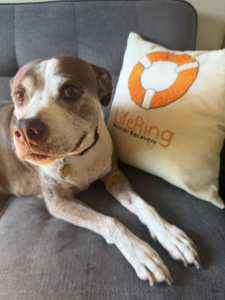Be The Person Your Pet Thinks You Are
---
#### My name is Chutney, and I barely recognize my guardian since he found LifeRing.
**Before, our routine was a mess. My meals were unscheduled, my walks were tragically short, and my belly rubs were-shall we say-completely uninspired.**
---
But since he started attending LifeRing meetings, everything changed. He’s a totally different human. Not only does he actually seem to enjoy my company now, but he’s finally taking care of himself. His personal hygiene alone has improved dramatically. I used to swear he’d been rolling around in fermented fruit and picking fights with skunks; now, he actually smells like a responsible adult.
I don’t exactly know what happens in those meetings, but I know he’s built a community of supportive, caring, and sober humans. LifeRing didn’t just save him-it gave me my best friend back.
##### **I think all humans should generously donate to LifeRing today so that other furry friends can reap the same benefits as I did.**
---
### What a beautiful paws-pective on recovery, Chutney!
Your guardian’s journey is a wonderful reminder of how deep the positive ripple effects of sobriety truly go. It turns out that building a **supportive, caring, and sober community** doesn’t just clear up the “fermented fruit” aroma-it brings back the presence, care, and reliability that our favorite furry family members deserve.
**If Chutney’s story inspired you and you want to support this nonjudgmental path to sobriety, you can make a tax-deductible donation directly to LifeRing Secular Recovery.**
Your generosity funds essential resources like:
- **In-person meeting start-up kits to help build new local communities.**
- **New meeting venues to expand safe spaces for recovery.**
- **Outreach to new members to ensure no one has to walk the path to sobriety alone.**
---
**Whether it’s a one-time gift or a monthly commitment, every bit helps more humans become the responsible, clear-headed adults their pets already believe they are.**
#### Thank you for sharing your story, Chutney-here is to many more inspired belly rubs and long walks!
*Your financial contributions are the building blocks for LifeRing. Please consider making a [one-time or sustaining donation ](https://lifering.org/donate/)to support our programs!*
[](https://lifering.org/get-involved-menu/donate/)
**Categories:** Post, Post 2
**Tags:** addiction recovery, LifeRIng, LifeRing Member Experiences, lifering secular recovery, non-step recovery, pets, Support LifeRing
---
### [Your Donation Makes All the Difference](https://lifering.org/make-the-difference/)
**Published:** December 30, 2025
**Author:** Bees
**Excerpt:** LifeRing is a free service, but there are costs involved. Help us provide free recovery resources for everyone!
**Content:**
#### You may ask, what is the value of a free service?
LifeRing Secular Recovery meetings are free to attend, but there are costs to provide the services LifeRing offers to you.
The value of a service comes from what it enables someone to do and what the service is made from.
It’s up to you to decide the value of a free service while the service provider, LifeRing, in this case handles what makes the service possible to solve real problems or create network effects.
---
***Is the value you place on LifeRing meetings equal to or greater than what you** **spent on drugs or alcohol?***
---
Here are examples of the expenses behind LifeRing’s recovery resources:
- **Online Meetings:** Zoom licenses, meeting calendar platform, verification of attendance services \| **$8,320 monthly**
- **Local Meetings:** Meeting materials, meeting calendar platform, meeting space fees \| **$51.66 per month**
- **eGroups and ePals:** Google groups.io licenses \| **$22.50 per month**
- **Outreach Projects:** Events, conference fees, design and printing \| **$1,497.87 per month**
---
**What does this add up to? Sustained Recovery!**[](https://lifering.org/donate-2025/)
We’re asking for your assistance. Please consider helping us directly fund these free recovery resources with your one-time or recurring donation:
**$20 \| Keep Recovery Accessible:** Fund a full month of a single online meeting, providing a safe and supportive space for those seeking help.
**$50 \| Spark New Beginnings:** Equip a local convenor with a Start-up Kit to launch a brand-new LifeRing meeting in their community.
**$100 \| Expand Our Reach:** Print an Introduction Packet that empowers professionals to connect more people with LifeRing’s secular recovery support.
Please think about the value you receive from LifeRing’s secular, non-judgmental, positive support meetings and make a monetary contribution today.
**Your donation is our foundation. Thank you!**
[](https://lifering.org/donate-2025/)
#### [**Comment**](https://lifering.org/feedback-form/) \| [**Donate**](https://lifering.org/donate-2025/) \| [**Collaborate!**](https://lifering.org/volunteer-form/)
**Categories:** Post
**Tags:** addiction recovery, LifeRIng, non-step recovery support, nonprofit addiction support, nonprofit recovery support
---
### [2026 Annual Conference](https://lifering.org/2026-annual-conference/)
**Published:** May 8, 2026
**Author:** Bees
**Excerpt:** Join the 2026 LifeRing Online Conference! 2 days of interactive workshops & vital community governance. Click here for your invitation!
**Content:**
## [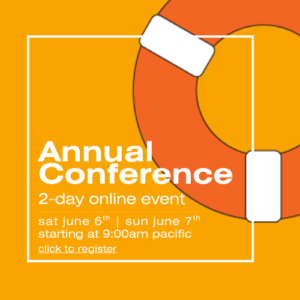](https://lifering-org.zoom.us/meeting/register/q70KONEvSC2QArNKW4nzSw)The Event of the Year!
LifeRing’s Annual 2-Day Conference
#### – [**Link to Click Here To Register!**](https://lifering-org.zoom.us/meeting/register/q70KONEvSC2QArNKW4nzSw) **–**
---
We invite **all LifeRing members, collaborators, convenors, and supporters** to join us online for our annual gathering and congress. This is your chance to connect and actively shape the future of LifeRing.
---
- **When?** Saturday, June 6th and Sunday, June 7th
- **What Time?** Both events start at 9:00am Pacific Time
- **Where?** [Online!](https://lifering-org.zoom.us/meeting/register/q70KONEvSC2QArNKW4nzSw)
- **Who? YOU!**
---
***This two-day event brings together the LifeRing community and representatives of the LifeRing network of recovery resources.***
The LifeRing Annual Meeting is our Meeting of Meetings! At the Annual Meeting, convenors and the LifeRing Community gather to hear speakers, participate in workshops and socialize. **[Click here for more information on the 2026 LifeRing Annual Conference.](https://lifering.org/meeting-of-meetings/)**
**This conference is for all of us. Come share your vision for our future!**
---
### **Saturday, June 6th \| Annual Meeting** **– This Year’s Focus \| Meetings of Meetings!**
**
Welcome Message \|** 9:00am Pacific
**MC:** Ivona S is a LifeRing Denizen and all-time fan favorite! She lives in Long Beach, California and discovered the LifeRing community in late 2020. Ivona is an online convenor and was elected to the LifeRing Board of Directors in 2025.

**Keynote Address** \| 9:15am Pacific
**Keynote Speaker:** Tawny Lara is a writer, speaker, and advocate whose work focuses on sobriety, mental health, and modern recovery. She is the former co-host of the *Recovery Rocks* podcast and has contributed to publications including *The New York Times, Time, Elle,* and *Vice.* Through her work, Tawny explores emotional sobriety, identity, and the ways recovery intersects with relationships and everyday life.
****
**Workshop 1** \| 10:15am **Relapse Prevention: Mindfulness, Science, and Strategies**
Presenters \| Ewa C, Sylvia W, and Anna B. – This session begins with a guided meditation led by Ewa, Certified MBSR (Mindfulness Based Stress Reduction) Level 1 Instructor. Sylvia and Anna will then share insights on relapse prevention, combining science-based understanding with practical recovery tools.
**Break** \| 11:15am Pacific
Presenters \| Nora G. and Michael A. – Hilarity ensues when this madcap team explores crosstalk, index cards, and the importance of connection
**Workshop 2** \| 11:25am Pacific
Learning to Sit with Feelings Without Fixing Them**
Presenter \| Jonathan M. – During this session, Jonathan shares practical insights on emotional sobriety and navigating difficult feelings in recovery.
**Workshop 3** \| 11:45am Pacific
Collaborative Recovery: The Power of Shared Leadership**
Presenters \| Diane B, Mike R, Annie O, Joe M, and Melvin W – Members of the ‘Strange Brew Morning Crew,’ a collaborative recovery meeting, will share how their “party line” approach to convening creates a supportive and effective meeting environment.
**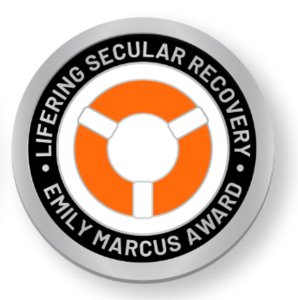Awards Celebration**\| 12:15pm Pacific
**Emily Marcus Awards** – To honor the memory of LifeRing Community Advocate and BOD member Emily Marcus, LifeRing will recognize outstanding contributors to the LifeRing mission and vision.
**\_\_\_\_\_\_\_\_\_\_\_\_\_\_\_\_\_\_\_\_\_\_\_\_\_\_\_\_\_\_\_\_\_\_\_\_\_\_\_**
**Break** \| 12:30am Pacific \| Lunch and Jeopardy
Join Michael A for a fun and interactive game during the lunch break. Test your knowledge, connect with others, and enjoy a lighthearted moment in recovery.
**\_\_\_\_\_\_\_\_\_\_\_\_\_\_\_\_\_\_\_\_\_\_\_\_\_\_\_\_\_\_\_\_\_\_\_\_\_\_\_**
**Workshop 4** \| 1:00pm Pacific **The Power of Community in Recovery**
Presenter \| Randy D – Randy shares insights on connection, relationships, and the role of community in recovery.
**Workshop 5** \| 1:20pm Pacific
**Friends & Family in Recovery: Support Beyond the Individual**
Presenter \| Khare – This session offers an overview of LifeRing’s Friends and Family meetings, including how they are run and the types of topics discussed. Khare will share how these meetings support loved ones and how participants can confidently introduce this resource to those in their lives.
**Social Hour or Two** \| 2:00pm Pacific **Recovery Through Music**
Join Gerry from Ireland for a music-filled social hour celebrating connection and community. Wrap up the afternoon with a chance to unwind, socialize, and experience the role music can play in recovery.
---
### **Sunday, June 7th \| Annual Congress and Delegates Assembly**
**[Click here for more information about the 2026 LifeRing Annual Congress and Delegates Assembly](https://lifering.org/general-information-about-congress/).**
**Annual Report \|** 9:00am Pacific
Report from the Board of Directors, including Financial Report
- Report from the Board of Directors, including Financial Report
- The complete Annual Report and Financial Report can be found on the LifeRing website. A summary will be presented at the Delegate’s Assembly.
- Questions and comments are invited.
**Review Board of Director Nominees \|** 9:30am Pacific
- BOD nominees introduce themselves and outline their goals if elected
- Q&A open session
**Review of Motions to Change LifeRing Bylaws \|** 10:00am Pacific
- Introduction and discussion of motions to change current LifeRing Bylaws
**Meeting Delegates’ Reports \|** 10:30am Pacific
- Delegates present meeting reports
**Vote to Approve Absentee Election Ballot** \| 11:30am Pacific
- Delegates’ vote to approve the candidates and any proposed bylaws changes to be included on the absentee ballot
**June 2026 Board of Directors Meeting \|** 12:00pm Pacific
- Delegates and members of the LifeRing Community are encouraged to attend
**Categories:** Post
---
### [Where Does Mindfulness Fit In?](https://lifering.org/mindfulness-mental-health/)
**Published:** May 26, 2026
**Author:** Bees
**Excerpt:** Mindfulness plays a significant role in mental health by helping to reduce symptoms of stress, anxiety and depression.
**Content:**
## ****Where Does Mindfulness Fit In?
**[Mental Health Awareness Month](https://www.nami.org/stay-connected/events/awareness-events/mental-health-awareness-month/)** was established in 1949 to increase awareness of the importance of mental health and wellness in Americans’ lives and to celebrate recovery from mental illness. It plays a crucial role in reducing stigma, encouraging early intervention and fostering empathy and understanding.
One of the key objectives of Mental Health Awareness Month is to promote mental wellbeing and self-care practices for overall health. **Mindfulness** is a practice that can support mental health and well-being in numerous ways.
---
#### What is Mindfulness?
*It is the awareness that arises from paying attention on purpose in the present moment without judgment.*
Simple, right? Just pay attention! It is simple, but not necessarily easy, and benefits from practice. The practice aims to **cultivate compassion and fosters connection**. Practicing in a group can be especially powerful.
A mindfulness practice can be both formal or informal. You don’t need hours of silence or a meditation cushion to start practicing mindfulness. Many people find **short, consistent moments of awareness** throughout the day just as powerful.
---
#### *Mindfulness starts with the premise that as long as you are breathing there is more right with you than wrong with you.*
---
Mindfulness is a practice that encourages individuals to **focus on the present moment**, paying attention to their thoughts, feelings, and bodily sensations without judgment.
The cultivation of self-awareness can significantly enhance mental health by fostering a deeper understanding of one’s emotional and physical state.
Originally rooted in Buddhist spiritual and meditation traditions, **mindfulness has been secularized in order to make it more accessible to all** and has become widely accepted in modern psychology and medicine. Clinical research consistently shows that mindfulness reduces symptoms of stress, anxiety and depression.
[Jon Kabat-Zinn](https://www.eomega.org/workshops/teachers/jon-kabat-zinn?gad_campaign) is credited with introducing mindfulness to the USA, particularly through his development of the [Mindfulness-Based Stress Reduction](https://pmc.ncbi.nlm.nih.gov/articles/PMC3336928/) (MBSR) program in 1979. His work popularized mindfulness practices in Western medicine and psychology.
Jon Kabat-Zinn likes to say that ‘mindfulness starts with the premise that as long as you are breathing there is more right with you than wrong with you”.
That’s a great place to start.
---
#### Mindfulness Based Stress Reduction (MBSR)
Research has exploded since 1979 and along with the Mindfulness Based Stress Reduction (MBSR) has been incorporated into other evidence-based therapies such as **mindfulness-based cognitive therapy** (MBCT), and [mindfulness-based relapse prevention](https://pmc.ncbi.nlm.nih.gov/articles/PMC3280682/) (MBRP). In addition, [Dialectical Behavior Therapy](https://my.clevelandclinic.org/health/treatments/22838-dialectical-behavior-therapy-dbt) (DBT) itself combines mindfulness and emotional regulation training.
For those of us living with **anxiety, depression or trauma-related symptoms**, the mind can feel like a daunting place at times. Thoughts race. Emotions spiral. The past and future dominate our attention for the most part, unless we’re distracting ourselves in one way or another. Or trying to escape, one way or another.
Mindfulness offers a break from this cycle. It starts by guiding you to pay attention to your breath. The breath is the gateway to working with your nervous system and provide the opportunity to slow down, thus helping you to create some space and respond thoughtfully rather than reacting automatically to the various challenges of each day.
With regular practice, [research has shown Improved emotional regulation, enhanced focus and concentration, lower levels of stress hormones, improved immune function, and better sleep quality](https://pmc.ncbi.nlm.nih.gov/articles/PMC3679190/). All of these, in addition to increased self-awareness and compassion lead to better decision-making and ability to navigate life’s stressors.
If you’re curious about mindfulness there are plenty of resources out there, whether classes, books or apps. Stop by “[Choose to Recover Mindfully](https://meetings.lifering.org/meetings/1240/)” on Tuesdays at 9AM PST for weekly mindfulness sessions.
---
#### Additional LifeRing Mental Health Support Resources
**[LifeRing Secular Dual Recovery Discussion Group](https://lifering.groups.io/g/liferingSDR)**
This email-based recovery resource is open 24/7 for those in recovery who also face emotional and mental challenges. LifeRing SDR is a safe place to discuss highly personal issues among people who may not share the particular problem, but who understand what it’s like to deal with life-limiting issues in addition to addiction. Whether the difficulty is depression, or anxiety, or some other emotional/psychological challenge, the members of this group will listen and respond with positive and supportive messages.
**[LifeRing Co-Occurring Disorders and Trauma Focus Meetings](https://meetings.lifering.org/meetings/?title=&program=7&audiences=&meetingType=&datetime_nextmeeting=&languages=&location=&coordinates=&scope=)** *All meeting names are chosen by the current convenor.*
- **Tuesdays, 1:00pm Pacific Time
[Crazy Talk](https://meetings.lifering.org/meetings/1246/) – Co-Occurring Disorders Meeting
Open Camera Meeting – Attendees are asked to keep their video-feed on**
- **Wednesdays, 9:00pm Pacific Time
[You, Me, and ADHD](https://meetings.lifering.org/meetings/1295/) – Co-Occurring Disorders Meeting
Open Camera Meeting – Attendees are asked to keep their video-feed on
- **Thursdays, 4:00pm Pacific Time
[Strange Attractors](https://meetings.lifering.org/meetings/1244/) – Co-Occurring Disorders Meeting
Open Camera Meeting – Attendees are asked to keep their video-feed on
- **Saturdays, 6:00am Pacific Time
[Trauma in Recovery on Saturdays](https://meetings.lifering.org/meetings/1248/) – Co-Occurring Disorders Meeting
Open Camera Meeting – Attendees are asked to keep their video-feed on
- **Sundays, 7:00am Pacific Time
[Trauma in Recovery on Sundays](https://meetings.lifering.org/meetings/1245/) – Co-Occurring Disorders Meeting
Open Camera Meeting – Attendees are asked to keep their video-feed on
- **Sundays, 9:00am Pacific Time
[Shine On You Crazy Diamond](https://meetings.lifering.org/meetings/1243/) – Co-Occurring Disorders Meeting
Open Camera Meeting – Attendees are asked to keep their video-feed on
- **Sundays, 3:00pm Pacific Time
[SOAR (Sober & Overcoming ADHD in Recovery](https://meetings.lifering.org/meetings/1280/) – Co-Occurring Disorders Meeting
Open Camera Meeting – Attendees are asked to keep their video-feed on
- **Sundays, 5:00pm Pacific Time
[Manic Sunday](https://meetings.lifering.org/meetings/1247/) – Co-Occurring Disorders Meeting
Open Camera Meeting – Attendees are asked to keep their video-feed on
[Catch a LifeRing meeting >>> ](https://meetings.lifering.org/meetings/)
**There are times when you need more than a recovery meeting. We urge you to call or visit one of these crisis resources for help.** [Crisis Resources](https://lifering.org/crisis-resource/)
---
#### Mindfulness Resources
**Palouse Mindfulness**
- [Mindfulness-based Stress Reduction](https://palousemindfulness.com/resources/research.html)
**Mindfulness Center at Brown**
- [Mindfulness Based Stress Reduction](https://mindfulness.sph.brown.edu/faqs/what-mbsr-mindfulness-based-stress-reduction) – MBSR
- [Mindfulness Based Cognitive Therapy](https://mindfulness.sph.brown.edu/faqs/what-mindfulness-based-cognitive-therapy) – MBCT
- [Community Mindfulness Sessions](https://events.brown.edu/sps/event/321530-mindfulness-based-programs-general-information) (free)
**Mindfulness Health Institute**
- [Community Mindfulness Sessions](https://mindfulnessandhealthinstitute.org/advising-community-info-sessions) (free)
- [Mindfulness In This Moment \| Speakers Series](https://mindfulnessandhealthinstitute.org/mindfulness-in-this-moment) (free)
- [Information Sessions and Events](https://mindfulnessandhealthinstitute.org/advising-community-info-sessions) (free)
**Mindfully Based Relapse Prevention \| Addictive Behavior Research Center at UWash**
- [Mindfully Based Relapse Prevention](https://www.mindfulrp.com/)
**Free Meditation Sessions**
- [Meditation Sessions \| UMass Memorial Health](https://www.ummhealth.org/services-treatments/center-mindfulness/mindfulness-programs/global-online-meditation-community)
- [Weekly Meditation Class \| UCLA Mindful](https://www.uclahealth.org/uclamindful/free-weekly-meditation-class)
- [Weekly Drop-in Meditation Talks \| UCLA Mindful](https://www.uclahealth.org/uclamindful/weekly-meditations-talks)
- [Streaming Guided Meditations \| UCLA Mindful](https://www.uclahealth.org/uclamindful/guided-meditations)
---
#### MBSR 8-Week Courses
- [Mindfulness Center at Brown](https://docs.google.com/spreadsheets/d/e/2PACX-1vQRzI8UOjhXciPgKtLsxdqY7VmtfoO1stEcpPFZ_klwl8H7KRH4pKKciOPgIK-juCxuRCsNgpFAi2S9/pubhtml?gid=2035988522&single=true)
Diverse 8-week programs designed to begin the cultivation of **mindfulness skills and competencies**.
- [Mindfulness Programs at UMass](https://www.ummhealth.org/services-treatments/center-mindfulness/mindfulness-programs)
Instruction and **support for every step** of your mindfulness journey.
**FREE MBSR Courses**
- [Mindfulness Center at Brown](https://mindfulness.sph.brown.edu/education/everyone)
Free 8-week programs designed to begin the cultivation of **mindfulness skills and competencies**.
- [Mindfulness-Based Stress Reduction (MBSR) Course \| Palouse Mindfulness](https://palousemindfulness.com/)Live, in-person, MBSR courses I taught, including guided meditations, articles and video.
---
#### Books
- [*Full Catastrophe Living*](https://en.wikipedia.org/wiki/Full_Catastrophe_Living) by Jon Kabat Zinn
- *[Coming to Our Senses](https://www.goodreads.com/book/show/91078.Coming_to_Our_Senses)* by Jon Kabat-Zinn
- [*The Miracle of Mindfulness: An Intro to the Practice of Meditation*](https://www.beacon.org/The-Miracle-of-Mindfulness-P194.aspx) by Thich Nhat Hahn
- [*Radical Acceptance*](https://www.tarabrach.com/books/radical-acceptance/) by Tara Brach
- [*Making Friends with Your Mind* ](https://us.macmillan.com/books/9781622037353/makingfriendswithyourmind/)by Pema Chodron
- [*Why Zebras Don’t Get Ulcers*](https://www.psychologytoday.com/us/blog/the-refugee-experience/202512/why-zebras-dont-get-ulcers-and-why-we-do) by Robert M. Sapolsky
---
#### Apps
- **JKZ Meditations:** <https://jonkabat-zinn.com>
- **Headspace:** <https://www.headspace.com>
- **HealthyMinds:** [ https://www.humin.org/wellbeing-tools/app](https://www.humin.org/wellbeing-tools/app)
- **Insight Timer:** <https://insighttimer.com>
---
#### Guest Blogger: Ewa C!
Ewa is LifeRing’s resident [Mindfulness expert](https://lifering.org/recover-mindfully/) and winner of the [2024 Marcus Amazing Online Awesomeness Award](https://lifering.org/meeting-of-meetings/emily-marcus-awards-2024/). She is a long-time LifeRinger and is recognized for her unwavering efforts to make LifeRing a positive and engaging space for everyone seeking recovery support. From her original engagement as a LifeRing Officer and Regional Representative to her well-loved Zoom meetings and mindfulness workshops, Ewa is truly an incredible contributor. Thank you, Ewa!
Ewa will be presenting during the [2026 LifeRing Annual Meeting](https://lifering.org/2026-annual-conference/). Come say hello!
---
***Help us help others. Your [donations](https://lifering.org/donate/) allow LifeRing to support new focus meetings
f**or people in recovery who also face mental health challenges.***
#### *Thank you!*
***For other ways you can contribute to LifeRing,* *please consider being a [LifeRing V](https://lifering.org/get-involved-menu/volunteer-form/)[olunteer](https://lifering.org/get-involved-menu/volunteer-form/) or a [LifeRing Conveno](https://lifering.org/meeting-menu/start-a-meeting/)[r](https://lifering.org/be-a-lifering-convenor/).***
---
**Categories:** Post
**Tags:** co-morbidity, Co-occurring disorders, co-occurring disorders peer support, LifeRIng, mental health, mental health peer support, mindfulness
---
### [Recover Mindfully](https://lifering.org/recover-mindfully/)
**Published:** May 25, 2023
**Author:** Bees
**Content:**
## **Choose to Recover Mindfully!**
**Ewa will be leading a session during this year’s Annual Conference: Relapse Prevention: Mindfulness, Science, and Strategies.[ *Join Ewa and Sylvia and Anna online at 10:15am Pacific on Saturday, June 6th.*](https://lifering.org/2026-annual-conference/)**
---
Inviting you all to join me online Tuesday mornings at 9AM Pacific for a focus meeting called *Choose to Recover Mindfully!*
***[Choose to Recover Mindfully!](https://meetings.lifering.org/meetings/1240/)* Tuesdays at 9:00am Pacific** [Click here to join](https://meetings.lifering.org/meetings/1240/)
---
My name is Ewa and I’m a woman in long term recovery from alcohol. I’ve been convening HWYW meetings from the East Coast (Boston/Fall River) for several years, first live and now Virtual. Those of you who know me, know that the practice of mindfulness has been, and continues to be, a major component of my recovery journey, aside from LifeRing itself, of course.
Over the past couple of decades, there has been a surge of interest in and research into the use of mindfulness meditation, as well as other mind-body modalities, in helping individuals work through addiction and into sustainable recovery. Mindfulness meditation is associated with neuroplasticity, for one thing, which is our brain’s ability to adapt and change according to what activities we engage in.
Mindfulness has helped me learn to manage stress more skillfully; I’ve become much less reactive, and my overall well-being has improved. Most importantly, for me, is that I’m learning to be more comfortable with being uncomfortable! Mindfulness has helped me be able to “sit” with difficult feelings, situations or what-have-you, without immediately wanting to escape. And I’m slowly learning to be more compassionate towards myself, all of which support my ongoing joy in recovery. The most important thing to understand about Mindfulness is that it is not something you can learn by reading about it or talking about it. The only way to benefit from it is to experience it, and to do the practice with others where you can share your experiences. At first glance, Mindfulness may seem silly or obvious, or ridiculously easy. I can promise you that it is not. Just like recovery, it is simple. But not necessarily easy. And like recovery, I benefits from practice.
**Just a little about me** I’ve been in health care for 30 years, and now, as I slowly move towards retirement, I’m working on obtaining a teaching certificate in Mindfulness Based Stress Reduction (MBSR) through Brown University, where they also do a lot of research on mindfulness. When I first got sober in 2015, I took an 8 week MBSR course at UMass Medical School, where MBSR was launched by Jon Kabat-Zinn. At that time, in very early sobriety, I felt that most of my alcohol misuse came from my having too much stress in my life. I remember that I often used “stress” as my excuse to drink, or to put off getting sober. And, during our meetings I often hear people talk about how stress has derailed their recovery. I myself had so many mixed feelings about being an “alcoholic”; the approach of MBSR was especially helpful to me because it helped frame all my maladaptive approaches (meaning drinking) to stress management as being unskilled, or unskillful, rather than implying that I was ‘defective’ in some way, or that I was a ‘bad’ person. I have, of course, come to realize that my AUD was much more than poor stress management! But all joking aside, early recovery is very stressful! As is modern life. Poor stress tolerance is very common in both PAWS (Post-Acute Withdrawal Syndrome) and in those who have any sort of trauma history, which is so common in SUD. The practice of mindfulness can be very helpful for those of us navigating the (sometimes) stormy waters of recovery.
So, please join me on Tuesdays for **Choose to Recover Mindfully**! We’ll be touching on some of the science behind meditation and we’ll do a brief guided meditation together, after which we’ll open the meeting up to discussion. The discussion can revolve around mindfulness or, of course, any recovery-related discussions per the usual HWYW format. The Tuesday meetings will now run thirty minutes longer in order to allow time for the meditation.
See you there!
---
#### [**Please support others who fight to empower their sobriety with your one-time or sustaining donations.**](https://lifering.org/get-involved-menu/donate/)
**Categories:** Post
---
### [Chicago! Chicago-ish!](https://lifering.org/chicago-chicago-ish/)
**Published:** March 3, 2023
**Author:** Bees
**Excerpt:** LifeRing hosts local meetings in Chicago and neighboring cities. Check it out!
**Content:**

### LifeRing Local Illinois Meetings
Welcome to LifeRing in Chicago. There are currently five LifeRing meetings, [two are online](https://meetings.lifering.org/meetings/?title=&program=&audiences=&meetingType=1&datetime_nextmeeting=&languages=&location=chicago&coordinates=10&scope=hide), one on Tuesday and one on Thursday, both at 7 pm. There are also three in-person meetings, one on Monday at 7 pm, one on Tuesday at noon, and the other on Wednesday at 7 pm. The Monday meeting is at [St Francis Hospital ](https://meetings.lifering.org/meetings/1033/)on Ridge Ave, in Evanston, IL. The Tuesday meeting is at [Evanston Hospital](https://meetings.lifering.org/meetings/1019/), also on Ridge Ave in Evanston, IL. The Wednesday meeting is at [Kindred Hospital Chicago North](https://meetings.lifering.org/meetings/1022/) on Montrose. For more information, contact the convenors at <LifeRingChicago@gmail.com> or[ soltup1@gmail.com](mailto:soltup1@gmail.com).
– tup, *LifeRing Convenor and Advocate*
---
LifeRing is opening new doors to welcome everyone searching for addiction recovery support. **[Please support our growing community with your donation](https://lifering.org/get-involved-menu/donate/).**
**Thank you for giving so many a chance to find their way to sobriety!**
**Categories:** Post
---
### [1 in 5: Where Do You Fit In?](https://lifering.org/mental-health-month-2026/)
**Published:** May 19, 2026
**Author:** Bees
**Excerpt:** May is Mental Health Awareness Month. Here are some tools for a quick mental health checkup!
**Content:**
## ****May is National Mental Health Awareness Month
**[1 in 5 people will experience a mental illness during their lifetime](https://www.samhsa.gov/data/sites/default/files/reports/rpt56287/2024-nsduh-annual-national-report.pdf) and everyone faces challenges in life that can impact their mental health. Since the pandemic, many people are realizing that stress, isolation, and uncertainty have taken a toll on their well-being.**
Since 1949, May has been recognized as [National Mental Awareness Month](https://www.thenationalcouncil.org/mental-health-awareness-month/). President Barack Obama proclaimed it official on April 30, 2014. The President called upon “citizens, government agencies, organizations, health care providers, and research institutions to raise mental health awareness and continue helping Americans live longer, healthier lives.”
This year’s theme is **More Good Days, Together**. The National Alliance on Mental Illness (NAMI) [Stigma Grows in Silence. Healing Begins in Community campaign](https://www.nami.org/stay-connected/events/awareness-events/mental-health-awareness-month/) encourages us to foster open dialogues, cultivate empathy and understanding and to share resources to support individuals and families on their journey toward mental wellness. LifeRing has taken up this challenge and [currently offers eight weekly online meetings for people diagnosed with co-occurring disorders](https://meetings.lifering.org/meetings/?title=&program=7&audiences=&meetingType=&datetime_nextmeeting=&languages=&location=&coordinates=&scope=).
Here are additional resources to consider during National Mental Health Awareness Month.
---
#### **Mental Health America (MHA): Mental Health Tests**
The [MHA](https://mhanational.org/) offers online screening tests to determine whether you are experiencing symptoms of a mental health condition . Tests include:
| **[Depression](https://screening.mhanational.org/screening-tools/depression/?ref) • [Psychosis](https://screening.mhanational.org/screening-tools/psychosis/?ref) • [PTSD](https://screening.mhanational.org/screening-tools/ptsd/?ref) • [Addiction](https://screening.mhanational.org/screening-tools/addiction/?ref) • [Bipolarity](https://screening.mhanational.org/screening-tools/bipolar/?ref) • [Anxiety](https://screening.mhanational.org/screening-tools/anxiety/?ref) • [OCD](https://screening.mhanational.org/screening-tools/ocd/?layout=actions_b/?ref)** |
|---|
(I tested “Addiction” and it’s likely I have an “Alcohol or Substance Use Problem.” That about sums it up!)
[Take a test >>>](https://screening.mhanational.org/screening-tools/)NAMI provides an excellent repository of information on their [Warning Signs and Symptoms](https://www.nami.org/about-mental-illness/warning-signs-and-symptoms/) webpage including a video on the 10 Common Warning Signs of Mental Health Conditions.
[Watch it here >>>](https://youtu.be/zt4sOjWwV3M)
---
#### **Finding a Mental Health Care Provider**
Nami also provides a great walkthrough focused on [Finding a Mental Health Professional](https://www.nami.org/living-with-a-mental-health-condition/finding-a-mental-health-professional/) This blog provides an easy to follow plan to help you find, engage, and build a relationship with your therapist.
The MHA offers a webpage rich with information about [Finding the Right Clinical Mental Health Care For You.](https://www.mhanational.org/finding-right-mental-health-care-you) This includes
- Where can I go for help?
- Which mental health professional is right for me?
- How to engage with your mental health professional
- Types of treatment
- Am I getting the help I need?
- What about self-help/support groups
The [National Institutes of Health](https://www.nimh.nih.gov/) (NIH) is the US’s primary federal agency for medical research. It’s part of the [Department of Health and Human Services](http://www.hhs.gov/) and is made up of 27 institutes and centers. The NIH’s mission is to improve health, save lives, and reduce illness and disability. They offer the[ Help for Mental Illness resources webpage](https://www.nimh.nih.gov/health/find-help) including a link to [Tips for Talking With a Health Care Provider](https://www.nimh.nih.gov/health/publications/tips-for-talking-with-your-health-care-provider) about your mental health.
The University of California (UCSF) [Department of Psychiatry and Behavioral Sciences](https://psychiatry.ucsf.edu/) provides a list of mental health providers some of whom have identified themselves as specializing in treating particular populations.
[Explore the options >>>](https://psychiatry.ucsf.edu/cope/providers)
---
#### **More Good Days Ahead**
In honor of Mental Health Month, join **Mental Health America (MHA)** for an immersive virtual experience designed to support your mind and body. Wellness is not achieved through a single change or action; it’s built on intentional, consistent practices that can lead to ***more good days***. MHA offers an interactive calendar to serve as a guide to having more good days. You can get access to online activities, articles, printable tools, and practical resources to help you have a good day.
[Get your Good Days Calendar here>>>](https://mhanational.org/wp-content/uploads/2026/05/MHM-2026-31-More-Good-Days-Together-Tips-Calendar.pdf)
---
#### LifeRing Mental Health Support Resources
**[LifeRing Secular Dual Recovery Discussion Group](https://lifering.groups.io/g/liferingSDR)**
This email-based recovery resource is open 24/7 for those in recovery who also face emotional and mental challenges. LifeRing SDR is a safe place to discuss highly personal issues among people who may not share the particular problem, but who understand what it’s like to deal with life-limiting issues in addition to addiction. Whether the difficulty is depression, or anxiety, or some other emotional/psychological challenge, the members of this group will listen and respond with positive and supportive messages.
**[LifeRing Co-Occurring Disorders and Trauma Focus Meetings](https://meetings.lifering.org/meetings/?title=&program=7&audiences=&meetingType=&datetime_nextmeeting=&languages=&location=&coordinates=&scope=)** **\***
**Tuesdays, 1:00pm Pacific Time
[Crazy Talk](https://meetings.lifering.org/meetings/1246/) – Co-Occurring Disorders Meeting
Open Camera Meeting – Attendees are asked to keep their video-feed on****Wednesdays, 9:00pm Pacific Time
[You, Me, and ADHD](https://meetings.lifering.org/meetings/1295/) – Co-Occurring Disorders Meeting
Open Camera Meeting – Attendees are asked to keep their video-feed on **Thursdays, 4:00pm Pacific Time
[Strange Attractors](https://meetings.lifering.org/meetings/1244/) – Co-Occurring Disorders Meeting
Open Camera Meeting – Attendees are asked to keep their video-feed on **Saturdays, 6:00am Pacific Time
[Trauma in Recovery on Saturdays](https://meetings.lifering.org/meetings/1248/) – Co-Occurring Disorders Meeting
Open Camera Meeting – Attendees are asked to keep their video-feed on **Sundays, 7:00am Pacific Time
[Trauma in Recovery on Sundays](https://meetings.lifering.org/meetings/1245/) – Co-Occurring Disorders Meeting
Open Camera Meeting – Attendees are asked to keep their video-feed on **Sundays, 9:00am Pacific Time
[Shine On You Crazy Diamond](https://meetings.lifering.org/meetings/1243/) – Co-Occurring Disorders Meeting
Open Camera Meeting – Attendees are asked to keep their video-feed on **Sundays, 3:00pm Pacific Time
[SOAR (Sober & Overcoming ADHD in Recovery](https://meetings.lifering.org/meetings/1280/) – Co-Occurring Disorders Meeting
Open Camera Meeting – Attendees are asked to keep their video-feed on **Sundays, 5:00pm Pacific Time
[Manic Sunday](https://meetings.lifering.org/meetings/1247/) – Co-Occurring Disorders Meeting
Open Camera Meeting – Attendees are asked to keep their video-feed on
**\*** *All meeting names are chosen by the current convenor.*
[Catch a LifeRing meeting >>> ](https://meetings.lifering.org/meetings/)
#### **There are times when you need more than a recovery meeting. We urge you to call or visit one of these crisis resources for help.** [Crisis Resources](https://lifering.org/crisis-resource/)
---
***Help us help others. Your [donations](https://lifering.org/donate/) allow LifeRing to support new focus meetings for people in recovery who are diagnosed with co-occurring disorders. Thank you!***
***For other ways you can contribute to LifeRing, please consider being a [LifeRing V](https://lifering.org/get-involved-menu/volunteer-form/)[olunteer](https://lifering.org/get-involved-menu/volunteer-form/) or a [LifeRing Conveno](https://lifering.org/meeting-menu/start-a-meeting/)[r](https://lifering.org/be-a-lifering-convenor/).***
---
**Categories:** Post
**Tags:** co-morbidity, Co-occurring disorders, co-occurring disorders peer support, mental health peer support
---
### [One Last Thing...](https://lifering.org/one-last-thing/)
**Published:** April 27, 2026
**Author:** Bobbi
**Content:**
## A Shout Out to Our Executive Director, Sue Betts
**Bobbi:**
Although it’s over now, during our week of thanks and praise to all the volunteers who make LifeRing the little secular recovery engine that could (and can, and does!), it occurred to me that it seemed one person in particular deserves a very special, singular shout out for everything they do for LifeRing, because y’all? It’s A LOT. She does it (seemingly) tirelessly. Relentlessly. With fire, passion, gusto, and grit, she does far more than anyone else in our organization every day – and that’s not to take away from everything everyone else does, which is also considerable, it’s just a fact. What’s more, she does it all without asking for a single thing for herself, except sometimes for our time and attention where it’s warranted (which, by signing up to volunteer, we kinda already agreed we would. I suspect it can often times be a lot like what I like to describe as herding cats and lassoing butterflies). It’s not an easy job, and it’s not just one big job – it’s all the little things in between, too, and all the meetings and organizing and wrangling and building and…Phew.
Like I said, it’s just a lot, and it takes a certain kind of person to be able to do all of that, you know? Especially a person who’s been through a lot in their own lives, but continues to do it day after day, year after year, because they love LifeRing.
So I thought we should take a few extra minutes to tell you a little bit about our truly fearless Executive Director (and expert cat herder), Sue Betts.
- First, and foremost, she loves cats. She does, ask anyone! (And it’s a good thing, too.)
- Also, she loves getting up early in the morning with a hot cup of Joe to get it all going straight away.
- She’s a warm, brave, compassionate, and thoughtful leader who thrives under pressure, and loves the work.
- She takes a lot of time out of her day for people, giving them pep talks, checking on them to make sure they’re OK, letting them know how much she appreciates and believes in them, asking if they need help, and volunteering to help them if the answer is yes.
- All of this, *and* she’s a fiery basketball fan who loves and supports her home team, the Golden State Warriors. (Sorry about the Play Offs, Sue – maybe next year.)
What more can I say? A lot, actually, but I’ve gone on long enough, plus there are a few others who would like to add their two cents’ to the proceedings, too.
**Robert**:
!!Very important – took over most of my responsibilities!!
She has created structure in LifeRing, including setting up regular committee meetings and, in some cases, providing the agendas as needed.
Sue is very hardworking and is a prolific writer, even without the “S” key.
She likes public speaking.
All around a good manager. It’s what LifeRing needed.
Relates well with the LifeRing membership
Represents LifeRing to professional organizations and the general public with an on-point message.
**Lorraine**:
Sue plans. She plans for everything, which means events, meetings, and important documents all turn out better because of her planning.
She is an excellent writer, often telling a compelling story in her writing.
Sue has a huge heart. She will say she’s not a nurturer, but don’t believe it. She cares a lot about individuals and good causes.
She has a great sense of humor to lighten awkward or difficult situations.
Sue’s marketing and communication skills are exceptional.
Her personality leans toward extroversion, so she is a joy to have around because she always knows what to say.
Sue has a wonderful grasp of the big picture, while still noticing the fine details of anything that’s being worked on.
**Lisa**:
She streamlined Board of Directors agendas.
She started the [Liver Spot.](https://meetings.lifering.org/meetings/1241/)
She works longer hours as a volunteer Executive Director than most paid EDs work.
The first thing she asks us about in Admin meetings is our families (she knows pets are family, too).
When I was a full time caretaker for mom, Sue always asked if I needed help with anything and when I could attend admin meetings, she knew I might not be able to stay before having to return to caretaking so she tried to get my areas of concern done when I was there. Sometimes, I couldn’t be in admin meetings long but it was a few minutes where I got to be the me that wasn’t a caretaker – that meant a lot!
Sometimes you just need to laugh to blow off steam, and Sue and I share the same twisted sense of humor.
**Kathleen**:
Sue has moved LifeRing 1,000 steps forward! I know how hard it is to sit in the chair of Executive Director and she does it with such elegance and intelligence. We are so lucky that she continues to do this for us! If I believed in God, I would thank her for Sue!
There’s a lot more that could be said, but we’ll end here by simple saying ***thanks for every thing, Sue*** – we quite literally couldn’t do it without you!
(But of course if anyone else has something nice they’d like to say about Sue, too, then by all means, please put it in the Comments below!)
**Categories:** Post
**Tags:** Governance, lifering secular recovery, National Volunteer Week, nonprofit recovery support, the liver spot
---
### [The Power of Small Acts](https://lifering.org/the-power-of-small-acts/)
**Published:** April 25, 2026
**Author:** Bobbi
**Content:**
## Celebrating Every Hand That Builds LifeRing
In LifeRing, we often talk about how recovery isn’t won in a single, heroic battle. It’s built in the quiet, five-minute decisions we make every day to choose our Sober Self. Our community functions exactly the same way. While meetings get the spotlight, the pulse of LifeRing is found in the “micro-moments” of service-the small, swift acts that keep our recovery community vibrant and thriving.
**The Precision of Small Acts**
A “micro-volunteer” isn’t someone doing “lesser” work. They are the specialists who handle the essential details that allow the rest of us to breathe easier. We are talking about:
- **The Greeters:** The people who welcome in-person attendees or drop a welcoming “Glad you’re here” in a chat box, making a newcomer feel seen in seconds.
- **The Resource Curators:** Those who spend three minutes ensuring a link is updated or a resource is shared helps get the right information to the right people at the right time.
- **The Quiet Advocates:** The group members who share a single post on social media or leave a flyer with their personal physicians, at a local library or put a poster in a coffee shop, opening a door for someone they may never even meet.
- **The Technical Tuners:** Those who offer a quick proofread, a formatting fix, or a “thumbs up” on a new initiative to keep us moving forward.
**Why Your Five Minutes Matter**
It’s easy to think, *“It’s just a link”* or *“It’s just a quick reply,”* but in the world of recovery, those small actions are foundational. When a newcomer finds a working link or a friendly word, the barrier to entry drops. You are quite literally clearing the path so that someone else can walk it.
*Recovery is a mosaic. No single tile is the whole picture, but without the smallest piece, the image is incomplete. Our micro-volunteers provide the color and the grout that hold our entire community together.*
**Categories:** Post
**Tags:** addiction recovery meetings, in-person reccovery meeting, lifering secular recovery, NVW, online recovery meetings
---
### [Captains Courageous: The Engineers of LifeRing](https://lifering.org/captains-courageous/)
**Published:** April 24, 2026
**Author:** Bobbi
**Content:**

## Honoring Our Powerhouse Collaboration Teams
***Continuing our appreciation series for Volunteer Appreciation Week, we’re heading below deck to pay tribute to the “back of the house” specialists who keep LifeRing moving full speed ahead.***
***In the landscape of recovery, strength is often found in the collaborative vibe of a meeting or social media thread – but just as vital is the strength found in the quiet, essential systems that make those connections possible.***
**Today we are turning our focus to the dedicated crew who ensure our community has a solid deck to stand on: Our Captains Courageous.**
Think of these intrepid volunteers as the engine room specialists of LifeRing. While their work is often unseen, they provide the framework and horsepower of LifeRing by managing the complex infrastructure where recovery lives.
They are the ones who keep the hull watertight and the turbines finely tuned, ensuring that whether it is calm seas or a storm, a supportive secular community is always just a LifeRing away. We salute these individuals for maintaining a true compass and keeping an even keel for everyone seeking sobriety.
**You Keep LifeRing Afloat**
While our meetings are the visible sails of our organization, our **Collaboration Teams** are the agile mechanics who make it all run shipshape. You navigate the complex logistics of the real world to ensure that the infrastructure of recovery is high-performance and built to last. You don’t just keep us on a steady course – you optimize the entire journey with precision and care:
- **The Operations Quartermasters:** You are the logistical experts who hold the keys to our vital communication hubs. Your on-the-spot problem-solving and technical agility ensure every crew member has the right tools for the voyage.
- **The Master Navigators:** Our committees – from Finance to the Board – are the strategists on the bridge. You monitor the gauges, balance the books, and ensure LifeRing has the long-term fuel and steady heading needed for smooth sailing into the future.
- **The Shipwrights & Tech Specs:** Whether you’re crafting new literature on the FMC crew or refining the website’s “wiring,” you are the builders. You calibrate the high-quality digital platforms and materials our members use to navigate their own recovery.
- **The Signal Corps:** Our Outreach and Communications teams are the ones sending out the flares. You’re the specialists of growth, constantly building new bridges to reach people in the storm and making sure our message of secular sobriety is heard clearly across the waves.
**A Legacy of Collective Strength**
Whether you’re troubleshooting a server, designing a sleek new flyer, or brainstorming at a committee meeting, your hands are on the levers of change. You prove that a smooth-sailing organization isn’t an accident – it’s the result of a dedicated crew that knows exactly how to keep the gears turning and the compass true.
Thank you for your precision, your teamwork, and your tireless dedication to the inner workings of LifeRing. We’d be adrift without our world-class crew at the helm of the engine room.
*Anna, Bobbi, Carlie, Cathy, Cindy, Dan, Diane, Ewa, Ivona, Jackie, Jonathan, Karl, Kathleen, Kelly, Kevin, Laura, Lisa, Lorraine, Margit, Mary Beth, Michael, Monica, Rafal, Robert, Sue, Taresa, and Travis!*
**Hail the Crew Who Keeps Us Moving!**
Do you appreciate the fact that LifeRing offers a variety of meetings, events, and recovery resources? Or enjoy the steady reliability of our online communications? That’s the high-level work of our Collaboration Teams! Join us in giving them a round of applause!
We invite you to join us in thanking our volunteers for building our community into what it is today – leave them a comment below or on any of our [social media posts](https://lifering.org/social-media/)!
**Thank you for helping us honor the incredible Collaboration Teams who work tirelessly behind the scenes to make every day a good day to be sober!**
**All Hands On Deck!**
**Ready to hop aboard?** If you’ve got a knack for organization, tech, design, or strategy we need your expertise on deck! We’re always looking for intrepid souls to man the stations and help us grow.
Check out our[ Engagement Opportunities](https://lifering.org/volunteer-opportunities/) and see where your interests fit best.
**Categories:** Post
**Tags:** addiction recovery, lifering secular recovery, National Volunteer Week, nonprofit recovery support
---
### [Honoring Our Text Based Recovery Volunteers](https://lifering.org/honoring-our-text-based-recovery-volunteers/)
**Published:** April 23, 2026
**Author:** Bobbi
**Content:**
## The Written Lifeline: Our Forum, eGroup, and ePals

In the landscape of recovery, some find their strength in the spoken word, while others find it in the quiet processing time that writing offers. This **Volunteer Appreciation Week**, we are turning our focus to the dedicated individuals who maintain LifeRing’s vital email-based communities: our **Forum Moderators**, **eGroup Moderators**, and **ePals**.
These volunteers provide a service that is distinct from our online meetings. They manage spaces where the conversation never stops, ensuring that whether it is 3:00 PM or 3:00 AM, a supportive secular community is always just a few clicks away.
**Our Forum & eGroup Moderators: Cultivating Connection**
The LifeRing Forum and our various eGroups are more than just message boards; they are living libraries of shared experience. Unlike the “no crosstalk” rules found elsewhere, LifeRing thrives on the active exchange of ideas and personal stories. Our moderators work daily to:
- **Encourage Dynamic Dialogue:** Create the space where members can engage in meaningful crosstalk- asking questions, and offering support.
- **Support the Whole Person:** Ensure these venues remain safe places to talk about all aspects of life, recognizing that sobriety is built on the reality of our daily experiences.
- **Bridge the Gap:** For those in different time zones or those who prefer to process their thoughts through writing, moderators ensure the “Ring” stays unbroken and accessible to all.
**Our ePals: The Power of One-on-One**
Our ePals don’t lead a crowd; they walk beside a single person. When someone reaches out to an ePal, they are looking for a personal connection to share in their journey. Our ePal volunteers provide essential, one-on-one validation that proves recovery is possible, one email at a time.
**2026 Honor Roll: Our Digital Champions**
We would like to publicly recognize the following individuals for their tireless service to our Forum, eGroups, and ePal programs. Your dedication is the reason our community remains a safe and supportive harbor.
We extend our deepest gratitude to **Pete A,** **Brian B, Tom F, Jason G, Karl H, Margit H, Jen M, Michael M,** and **Craig W** for their commitment to keeping our digital doors open and our community connected.
Beyond those named above, we also want to honor the **moderators and ePals who have chosen to remain anonymous.** Whether you are troubleshooting technical issues, managing member lists, or responding to a cry for help in the middle of the night without seeking the spotlight, please know that your work is seen and deeply valued. To all our volunteers: thank you for being the “LifeRing” for those of us who find our voice through the keyboard.
If you’d like to check out any of our Text-Based Recovery groups for yourselves, our eGroups can be found [**here**](https://lifering.org/meeting-menu/email-groups/), our ePals [**here**](https://lifering.org/meeting-menu/epals/), and the LifeRing forum **[here](https://forums.delphiforums.com/lifering)**.
**Categories:** Post
**Tags:** addiction recovery, eGroups, lifering secular recovery, Text Based Recovery
---
### [Our Extraordinary In Person Convenors](https://lifering.org/our-extraordinary-in-person-convenors/)
**Published:** April 22, 2026
**Author:** Bobbi
**Content:**
## The Trailblazers of the Real World
******In honor of Volunteer Appreciation Week, we’re turning up the volume for the intrepid souls who scout the locations, grab the keys, and plant the LifeRing flag in their local communities:* You!*****
****Why Your Spirit Is Unstoppable****
LifeRing in-person convenors aren’t just volunteers – you’re the **recovery trailblazers** of the physical world. You navigate the logistics of the “real world” to claim a territory where sobriety can thrive. You bring a high-energy, “in the zone” focus to every meeting, providing the essential grit and discovery for successful recovery:
- **Intrepid Leadership:** You go where the need is. Whether it’s a library basement, a community center, or a rented hall, you are the pioneers making sure LifeRing has a physical footprint. You clear the path so others can find their way.
- **Originality:** No two local meetings are the same because **you** bring your unique flavor to the table. You set the vibe, spark the “crosstalk,” and keep the energy electric and authentic.
- **Tactile Connection:** You understand that sometimes recovery needs to be felt-in a firm handshake, a shared laugh, or the powerful presence of a peer who truly “gets it.” You turn a room into a sanctuary.
- **The “Zone” Factor:** Your ability to read the room and keep the conversation focused on the **How** and the **Now** is what makes our secular approach so powerful. You keep the group moving forward, even when the terrain gets tough.
**A Legacy of Local Bravery**
Whether you’ve been captaining your local meeting for years or you’re just launching your first intrepid “Sober, Secular, and Self-Empowered” expedition, know that you are the living breathing spirit of our movement. You aren’t just opening a door – you’re creating a space of freedom where people can rediscover their best selves.
**Thank you** for your courage, your hustle, and your commitment to keeping the LifeRing flame burning bright in your community. We are incredibly proud to have you leading the charge.
*Alex, Alexander, Anna, Brian, Bryant, Byron, Chris F, Chris S , Crami Admin, Damien, Deb, Doug, Erin, Gary, Geoffrey, Greenwich Convenor Group, Greg, Hillary, Jason, Jeffrey, Jeremy, Joe F, Joe H, John, Kathleen, Kelly, Laura, Lawrence, LifeRing Akron Convenor Group, Mark, Mary, Matt, Michael A, Nat, Patrick R, Patrick S, Richard, Sandy, Sue, Tim, Tom, Tonya, and tup*
**Join the Crew in Showing Appreciation!**
Is your local convenor an absolute legend? It’s time to give them the shout-out they deserve!
**Here’s How:** Just go to the[ LifeRing Meeting Calendar](https://meetings.lifering.org/meetings/) and search for your local haunt to bring up the Meeting Record:
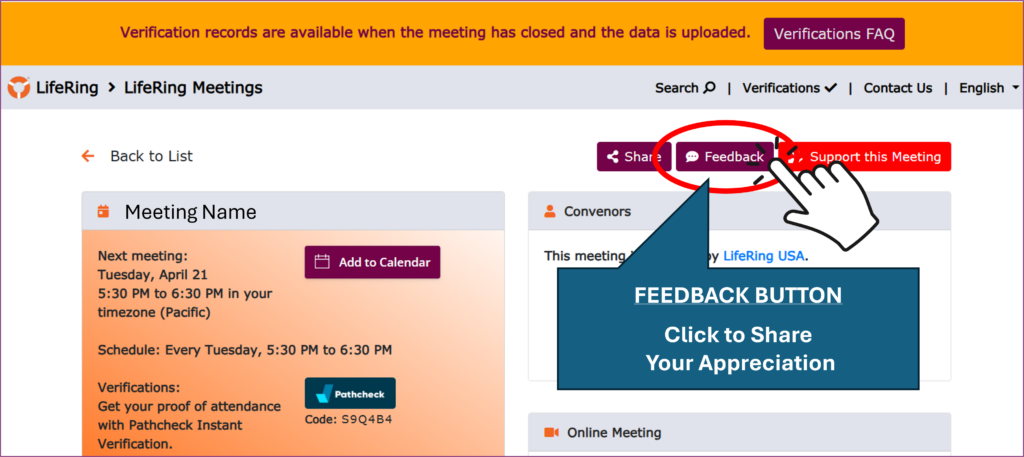
Click the purple **“Feedback”** button and let us know why your convenor is a total rock star. A little recognition is the fuel that keeps our intrepid leaders moving!
**Categories:** Post
**Tags:** addiction recovery meetings, addiction support meetings, In Person Meetings, lifering secular recovery, National Volunteer Week
---
### [A Heartfelt Thanks to Our Volunteers](https://lifering.org/a-heartfelt-thanks-to-our-volunteers/)
**Published:** April 20, 2026
**Author:** Bobbi
**Content:**
It’s [National Volunteers Week,](https://www.pointsoflight.org/national-volunteer-week/) and we’re placing a spotlight on all LifeRing volunteers whose invaluable commitment and collective effort are bettering our community. Together, let’s celebrate the kindness of volunteers who generously give their most valuable assets: Their time, talent, and voices to make a difference.
Participating in volunteer activities allows individuals to make a meaningful impact on issues that matter to them. It provides opportunities for personal growth, skill development, and social connection. Volunteers gain a sense of purpose, fulfillment, and belonging as they contribute their time and talents to the recovery community’s welfare.
Throughout this week we’re showcasing the invaluable contributions volunteers make toward building a more compassionate and connected recovery community to remind all LifeRing members the value of our volunteers’ selflessness and community engagement.
*Special thanks to post contributor and volunteer extraordinaire, Laura M., who in addition to convening two in person meetings (more info. about them [here](https://meetings.lifering.org/meetings/1259/) and [here](https://meetings.lifering.org/meetings/1009/)), goes out of her way to help out every chance she gets! Thanks, Laura – we appreciate you and everything you do for LifeRing!*
**To Our Volunteers**
*You have all contributed to building an international community dedicated to empowering sobriety. You are sharing the message of choice in recovery using LifeRing’s 3-S philosophy: Secularity, Sobriety and Self Empowerment*
*Whether you have spent a little or a lot of time, it all helps get the word out to others looking for a sober connection and a place to feel at home in their recovery. For this we are profoundly grateful.*
**You are awesome!!!**
Everyone benefits from volunteering, so please join us in thanking all our volunteers who contribute to the growth and development of LifeRing by leaving a Comment below!
**Categories:** Post
**Tags:** lifering secular recovery, LifeRing Volunteers, National Volunteer Week
---
### [Online-Rock-Stars](https://lifering.org/online-rock-stars/)
**Published:** April 21, 2026
**Author:** Bees
**Excerpt:** LifeRing Online Convenors are the heartbeat of our online recovery community!
**Content:**
## **To Our Extraordinary Online Convenors and Co-hosts:**
## **THANK YOU!**
#### *In honor of Volunteer Appreciation Week, we want to take a moment to shine a spotlight on the heartbeat of our online recovery community:* **You!**
### Why Your Work Matters
The impact of a LifeRing online convenor goes far beyond keeping the beat and keeping it strong. You provide the essential playlist for successful recovery:
- - **Empowerment:** By upholding our “Empower Your Sober Self” philosophy, you help participants find their own voice and strength.
- **Consistency:** In a world that can feel chaotic, your presence provides a reliable, sober sanctuary for those who need it most.
- **Connection:** You turn a grid of screens into a LifeRing circle of support, ensuring that no one has to navigate their journey alone.
- **Safety:** Your skill in creating positive, engaging environments allows for the kind of radical honesty that leads to true healing.
### A Legacy of Support
Whether you have been with us for years or if this is your first week supporting a LifeRing online meeting, please know that your time and energy are making a measurable difference. Every share and every supportive nod helps dismantle the stigma of addiction and replaces it with the dignity of recovery.
Thank you for your patience, your empathy, and your unwavering commitment to the LifeRing Community. We are incredibly proud to have you on our team.
---
#### Please join us in showing these amazing folks your appreciation:
*Alexis, Anna B, Anna H, Anna L, Anne D, Annie, Ashley, Bat Dan, Billy, Brian, Bruce D, Bruce E, Bruce M, Charles, Chris H, Chris S, Christina, Cindy, Courtney, Cynthia, Dan, Daniel M, David H, David R, Denise, Diane, Doug, Eddie, Ewa, Gary, Gerry, Heather M, Ivona, Jackie, Jacqueline, Jad, James, Jay, Jennifer, Jenny, Jim Just Jim, Jim M, Jody E, Joe H, Joe N, Jonathan, Jonni, Karl, Kristoffer, LifeRing Akron, Lorraine, Luc, Majid, Mandy, Marc, Mark F, Mark K, Mary, Masha, Matt C, Matt F, Matt R, Matty, Michael A, Michael M, Mickey, Mike, Nia, Patrick D, Patrick K, Peter, Prax, Khare, Rafal, Randy, Renee, Ric, Richard, Rick, Shane, Shelly, Steve B, Steve F, Steve S, Sue, Sylvia, Taresa, Thomas, Tom, Travis, Twyla, and Ty.*
#### **Here’s How:**
Just go to the [LifeRing Meeting Calendar](https://meetings.lifering.org/meetings/) and click on your core meeting to bring up the Meeting Record:

Click the purple “**Feedback**” button and share your appreciation!
**Thank you for helping us celebrate our amazing volunteer Online Convenors and Co-Hosts who help make every day a good day to be sober!**
---
**Categories:** Post, Post 2
**Tags:** addiction recovery, addiction recovery meetings, addiction support, LifeRIng, non-aa meetings, non-religious recovery meetings, online recovery community
---
### [A Long and Winding Road Ended in a Meeting in Salem](https://lifering.org/meet-kelly-salem-or/)
**Published:** April 14, 2026
**Author:** Bobbi
**Content:**
# Meet Kelly, Who’s Blazing a Trail at Oregon’s First LSR Meeting
 Salem, OR’s in person meeting convenor, Kelly Thomas
We’re pleased to introduce Kelly Thomas, one of our newest convenors who’s started the first face-to-face LifeRing meeting in the state of Oregon.
Kelly took some time to talk to us about his journey into recovery, which like many of us went in fits and starts before finally sticking with him:
**What’s your recovery journey been like?**
I’m a living example of “fall down seven times, get up eight.” My recovery journey has been long and winding. I’ve had nine separate stretches of recovery lasting over 100 days and have been through at least five outpatient programs. As I write this, I have over 810 days of continuous sobriety. I first checked myself into a six-week outpatient program in Las Vegas in December 2000. Not long after, I began misusing prescription opiates that weren’t mine; they belonged to my parents. I didn’t have the language for it at the time, but it was classic substitute addiction.
In the spring of 2001, I started looking for alternatives to AA and discovered LifeRing. I still have a copy of the 1999 workbook: it’s much smaller than today’s version. Another UNLV student and I tried to start a meeting on campus, but after a few attempts, it fizzled out.
In January 2005, I entered outpatient treatment again and was prescribed medication for withdrawal along with Campral (acamprosate), which was relatively new at the time. I continue to take it today. I put together over six months of solid recovery, built meaningful connections, and began to understand an important truth: connection really is the opposite of addiction.
 A Little More About Kelly: Favorite animal: Platypus Favorite Sport: Baseball, and my team is the Red Sox. (Photo Courtesy of Kelly Thomas)
At around 200 days, while on vacation (a known trigger), I learned I hadn’t received a promotion I expected. I responded the way I often had: I picked up again.
Over the next several years, I cycled in and out of recovery. In early 2010, I reached another 100+ days and met a woman who would later become my wife, a major catalyst for change in my life.
In 2012, knowing I planned to propose, I again put together about six months of recovery. But after she said yes, I returned to old habits. For years, that pattern continued.
In November 2015, I was determined to stop and entered outpatient treatment again. This time, I explored multiple recovery paths, including SMART Recovery and Refuge Recovery. I even tried to start a Refuge Recovery meeting in Las Vegas, though it never materialized. I also began attending a secular AA meeting, which became my first true home group.
During this period, I landed a dream job with the State Energy Office in Carson City, bringing me closer to Reno, where I grew up. Carson had a meditation community but lacked secular recovery options, so I started a secular sober social group and built meaningful connections. Even then, I still didn’t fully understand that connection was the key to my recovery.
After more than 14 months of solid recovery, I convinced myself I could control my drinking and decided to have alcohol “just for the holidays.” As expected, it didn’t work. My career suffered, and I returned to treatment, this time in a CBT-based outpatient program.
In August 2018, I moved to Salem, Oregon for another dream job. Years earlier, I had imagined living somewhere within an hour of the ocean, the mountains, and an international airport. I didn’t realize it at the time, but Salem fit that vision perfectly.
In May 2019, I found my way back to recovery. That summer, I had a key realization: I needed to actually do the work of a recovery program. I became active in Recovery Dharma, helped grow the community, and started an additional meeting. Once again, I built over a year of solid recovery. But in July 2020, family issues and the isolation of COVID led me back to old patterns
A major turning point came in February 2021, when I made the difficult decision to cut contact with toxic family members. Since then, I’ve spent over 70% of my days in recovery, and since January 2024, I’ve been completely sober.
In February 2024, I entered outpatient treatment again at Serenity Lane and wrote my own recovery plan from scratch. As a trained architect, I’m drawn to building analogies, so I call it the Four Foundational Corners of Connection, grounded in the idea that the opposite of addiction isn’t sobriety: it’s connection.
Those four points are: self, individuals, groups, and community.
Self comes first. I’ve learned that self-care isn’t selfish. My plan includes nutrition, supplementation, and working with a dietitian to manage cravings.
From there, I built strong individual connections: friends, mentors, and professionals who support my recovery.
But one or two points of connection can feel unstable, like balancing on a unicycle. Adding a third brings real stability. For me, that came through LifeRing. I began attending the Saturday online meeting in May 2024, followed by the Sunday workbook meeting, and immediately felt that missing piece click into place.
What struck me most was discovering later that LifeRing’s own tagline is “The Opposite of Addiction is a LifeRing Connection.” I had arrived at the same conclusion independently. That felt like a sign.
The fourth point is community, and it led me to start building something local. After attending the LifeRing Winter Social in late 2024 and the Annual Congress in the summer of 2025, I knew I wanted to create an in-person meeting in Salem.
**What led you to start a meeting in Salem, and how has it been going?**
Starting a meeting required the right mix of time, energy, and location. Through connections from Recovery Dharma, I found a space at IKE Box, a unique coffee shop in a historic building in downtown Salem. It’s housed in an old mausoleum, which makes for a pretty memorable setting.
The meeting has been small so far. Some weeks it’s just me and one regular attendee. We’ve had new people come through, though most haven’t returned yet. That’s challenging, but it’s part of building something from the ground up.
Recently, someone came back for a second meeting, a small but meaningful milestone. He strongly identifies with secular recovery and is looking for an alternative to AA. I’m hopeful it’s the beginning of steady growth.
My goal is to build a core group of 8 to 12 regulars. From there, we can expand into additional meetings. Long term, I’d love to see LifeRing grow across Oregon, in places like Bend, Corvallis, Eugene, and Portland.
**What can people expect from your meeting?**
We start with a 5 to 10 minute grounding meditation, inspired by Recovery Dharma, then move into LifeRing’s “How Was Your Week?” format. As the group grows, we plan to introduce a monthly topic meeting using the Recovery by Choice workbook or readings from Empowering Your Sober Self. Topics will be chosen collaboratively by the group. **What draws you to LifeRing?**
What draws me to LifeRing is its openness and its emphasis on building your own recovery.
I sometimes describe it this way: LifeRing is like Chipotle, but for recovery. You start with your base (mine is connection) and then add what works for you. But you still must eat it. You must do the work!
That flexibility aligns with my personal philosophy of being an “Omnist,” someone who believes that different perspectives can hold elements of truth. LifeRing creates space for people to build a recovery that actually fits their lives. **What do you like about living in the Pacific Northwest?**
I was drawn to the Pacific Northwest for both its culture and its natural beauty. Growing up in Reno gave me a love for the outdoors, but after more than 20 years in Las Vegas, I was ready for something greener and a genuine four seasons.
The PNW’s open, secular-friendly mindset makes it an ideal place to build a recovery community. I know that community exists here, and I’d love to help it grow. If you’re looking for a place to build your own recovery, we’re building one here in Salem, one person at a time.
**Kelly’s meeting takes place every Monday from 5:30 – 6:30 PM at the Ike Box Bay Room in Salem. Click [here](https://meetings.lifering.org/meetings/1292/) to get more meeting information.**
**There’s also a Facebook page you can find [here](https://www.facebook.com/LSR1292)!**
**Categories:** Post
**Tags:** addiction meetings, addiction recovery meetings, addiction support, In Person Meetings, lifering meetings, lifering secular recovery, secular recovery
---
### [Caregivers in Recovery](https://lifering.org/caregivers/)
**Published:** April 2, 2024
**Author:** Bees
**Content:**
[](https://lifering.org/online-meetings/)
## **LifeRing Supports Those Who Support Others!**
*LifeRing is proud to introduce our newest focus meeting for caregivers in recovery on Wednesday mornings at 8:00am Pacific.*
***[Caregivers Huddle](https://meetings.lifering.org/meetings/1251/)* Wednesdays at 8:00am Pacific** [Zoom Meeting Information and Login Page](https://meetings.lifering.org/meetings/1251/)
---
***About Renee***
I’m a Humanist organizer, a retired army veteran, a former army wife, and care giver for my teenage nephew and two adult sons with disabilities. As a caregiver and retiree, I know that mental health suffers in our community, and caregivers who need help themselves have little to no voice, let alone support.
---
> #### Caregiving is a life-purpose unlike any other. … It is now my turn to give back to other caregivers.
---
After a long journey, I discovered in Humanism my philosophical home and life purpose. I’ve been involved in the local freethought, Humanist, and atheist community for many years, and believe immensely in the [Humanist Ten Commitments](https://americanhumanistcenterforeducation.org/ten-commitments/):
[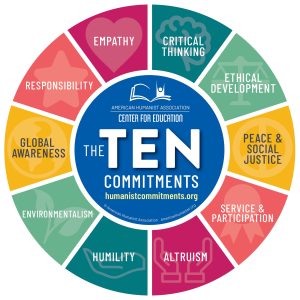](https://americanhumanistcenterforeducation.org/ten-commitments/)
Image Source: American Humanist Center for Education americanhumanistcenterforeducation.org
While I realize I haven’t always lived these values, I believe that my story is one of recovery and triumph, because I’m still here not only fighting the good fight to be a better caregiver for my household (which includes my disabled sister who is now in a potential host home-for whom I am trying to get approval for long term care services), but also trying to give voice and validation to caregivers who ALSO have needs-mental health, physical, self-care.
Ours is a unique life experience, and I benefit greatly from my conversations with friends and family who are also caregivers, many of whom are also either in recovery or family members of alcoholics/addicts in recovery. My own recovery also benefits greatly from regular MEETINGS!
After my December 2022 arrest, which was extremely distressing as it brought to the forefront of my consciousness how I was not only jeopardizing my ability to care for my household, but also my family directly. I realized I didn’t know HOW to remain sober and that my level of emotional dysregulation was overwhelming- I needed to find others who have similar life experiences.
Since I’d already been receiving different kinds of therapy services through the [VA](https://www.va.gov/), which was not enough or the right kind of support, I realized by March 2023 that I needed something more.
[Traditional AA](https://www.aa.org/) was NOT an option for me, but I’d recalled seeing a Meetup.com listing for a secular AA group, [Godless Heathens](https://alcoholicsanonymous.com/aa-meeting/godless-heathens/), which meets nightly; I knew I needed meeting options at other times due to my life schedule but wasn’t yet comfortable enough to try others so I continue to attend Godless Heathens most nights.
I met LifeRing convenor Lorraine H. at the [American Humanist Association](https://americanhumanist.org/) conference in May 2023, and immediately bought the LifeRing books she had available, but stuck with the evening Godless Heathen meetings until a few months ago.
While I enjoy and benefit from attending and volunteering as a host of the Godless Heathens, which is usually a topic/discussion meeting, I have slowly become more confident in hosting and trying out other meetings, and a few months ago found a morning LifeRing meeting that really resonated for me, during which I received information about LifeRing focus groups – exactly what I need!
I understand that not only is my sobriety dependent on my mental health selfcare, my mental health selfcare is also reliant on maintaining my own sobriety – this has to be a priority. Making my own selfcare a priority will allow me to become a better caregiver, to improve my household.
Though I know I am still early in recovery (sobriety date January 6, 2023) and am feeling more aware, more confident, more resilient, I know that my mental health/sobriety is lifelong management, and I need other caregivers with similar life experiences in my world. My commitment to hosting a weekly Godless Heathens meeting has given me experience to facilitate virtually, and attending LifeRing meetings has made me comfortable with the meeting format. So while I will continue to attend my evening meetings, it is now my turn to give back to other caregivers.
I truly hope to give caregivers with all life experiences the voice and validation they need to continue doing what we do – sober. Caregiving is a life-purpose unlike any other. And it’s the glue that makes our society a village.
***Join Renee for*** ***Caregivers Huddle* Wednesdays at 8:00am Pacific** [Zoom Meeting Information and Login Page](https://meetings.lifering.org/meetings/1251/)
---
#### [**Please help people like Renee overcome their substance use challenges with your one-time or sustaining donations. Thank you!**](https://lifering.org/get-involved-menu/donate/)
Content Opinion Disclaimer: The views and opinions expressed in this blog post are those of the personal content provider and do not necessarily represent those of LifeRing Secular Recovery, collaborators, and/or any/all contributors to this site.
**Categories:** Post
**Tags:** caregivers
---
### [Self-Love](https://lifering.org/self-love-2026/)
**Published:** February 14, 2026
**Author:** Bees
**Excerpt:** Recovery is a journey of healing, not just sobriety. Discover how self-love fosters the compassion and strength you need to thrive. Start nurturing your worth today! ❤️
**Content:**
## ****
## **Self-love is good for you and good for your recovery!**
***Self-love is an important part of the recovery process. It helps provide stability and security in a person’s life, as well as fostering a greater sense of self-worth. Self-love allows us to take responsibility for our actions, which can help us stay on our personal recovery pathways.***
It also encourages us to practice self-care and to [be kind to ourselves](https://www.sciencedaily.com/releases/2019/02/190206200344.htm). In recovery, self-love can help reduce feelings of guilt and shame, and can help us recognize our own strengths and abilities. It is an essential part of the healing process, and it can help create a more positive outlook on life and make it easier to move forward in recovery.
---
#### **Clearly seeing who you are while forgiving your weaknesses and embracing our strengths is at the core of recovery. It’s critical to develop compassion for yourself while working your sobriety program.**
– Bronwyn McInturff, *[5 Ways to Nurture Ourself with Self-Love During Recovery](https://www.uabmedicine.org/-/5-ways-to-nurture-yourself-with-self-love-during-recovery)*
---
Self-love is critical to our mental health and wellbeing. It is a state of appreciation for oneself that grows from actions that support our physical psychological. It is about [accepting and appreciating who we are](https://www.medicalnewstoday.com/articles/321309) and understanding our own needs and worth. It involves being kind and compassionate to ourselves and recognizing our own strengths, weaknesses, and potential.
Self-love is dynamic; it grows through our thoughts and actions. With self-love, we learn to have compassion toward ourselves and become more centered on our life purpose and values.
We should all [actively strive to cultivate self-love](https://www.psychologytoday.com/us/blog/get-hardy/201203/seven-step-prescription-self-love) in our lives. Self-love involves having a deep sense of appreciation and respect for ourselves, and it involves actively engaging in behaviors that promote self-care and personal growth. Self-love means being kind to ourselves, treating ourselves with respect, and forgiving ourselves when mistakes are made. It can also involve setting boundaries and protecting our own mental and emotional wellbeing.
[Taking care of our physical and mental health](https://nesslabs.com/self-love) strengthens self-love. This means engaging in activities that make us feel good, such as exercise, relaxation, and healthy eating. It also means looking after our emotional health by practicing self-care, setting boundaries, and seeking help when needed.
Self-love is recognizing that we are all unique and valuable, and recognizing that it is okay to make mistakes. It is about understanding that we are worthy of love and respect, and that we deserve to be happy. Self-love is about taking the time to [nurture our own self-esteem and developing a positive relationship](https://psychcentral.com/lib/how-to-build-a-healthy-relationship-with-yourself-every-day) with ourselves.
Ultimately, self-love is an essential part of a happy, healthy life. It helps to build a strong foundation for physical, mental, and emotional wellbeing, and it can help to foster better relationships with the people in our lives. Like in recovery, [cultivating self-love is a lifelong journey](https://www.thisis.black/blog/self-love), but it is one that is well worth the effort.
### **Happy Valentine’s Day, y’all!**

---
#### **[Please click here to show the LifeRing Community a little love with your one-time or monthly donation!](https://lifering.org/get-involved-menu/donate/)**
**Categories:** Post 2
**Tags:** addiction support, LifeRIng, non-aa meetings, non-religious recovery meetings, Self love, Valentines Day
---
### [Put A LifeRing On It!](https://lifering.org/engagement-party/)
**Published:** February 3, 2026
**Author:** Bees
**Excerpt:** You're Invited! Join us online Saturday, February 14th at 11:00am Pacific for the LifeRing Engagement Party: Put A LifeRing On It!
**Content:**
## [](https://lifering.org/volunteer-opportunities/)LifeRing Engagement Party:
Put A LifeRing On It!
---
We invite **all LifeRing members, collaborators, convenors, and supporters** to join us to …
#### SHARE THE LOVE!
- [**Link to This Year’s LifeRing Engagement Party**](https://lifering-org.zoom.us/j/86534012753?pwd=1AJFE0zRn0LadwmvVfF5ty7dXwyCfh.1)
- **Invitation and Agenda Follow Below**
---
- **When?** Saturday, February 14, 2026
- **What Time?** 11:00am Pacific Time
- **Where?** Online \| [Click to join meeting](https://lifering-org.zoom.us/meeting/register/Z7xQbfnFQw6QXVsdKB5D3Q)
- **Who? YOU!**
LifeRing is experiencing a tidal wave of growth, with meeting membership surging and thousands of new faces joining our global recovery community every week. This momentum is incredible, but it means our “lifeline” needs more hands on deck!
We invite you to an exclusive engagement party, **“Put A LifeRing On It,”** where we’re celebrating our community’s success and opening the floor to those ready to say “I do” to supporting our mission.
**Whether you have an hour to spare or a specialized professional skill to share, there is a place for you to make a lasting impact.**
Come explore how your unique talents – from tech wizardry to compassionate correspondence – can strengthen the LifeRing that supports us all.
---
#### WHAT TO EXPECT
#### Red Hot Engagement Opportunities!
- **Speed Dating: If I only have 60 minutes to spare, can I still be a LifeRing hero?**
Explore how “micro-volunteering” allows you to make a massive impact without a massive time commitment. Even an hour of your week can strengthen our recovery community.
- **Warming Up Cold Feet: What team should I join if I want to support our meetings and amazing convenors?** Discover the **MCC** (Meetings & Convenors Collaboration), the heartbeat of our organization, where you help coordinate resources and ensure every LifeRing member has a positive place to land.
- **Taking The Plunge: I’m ready to jump right in! How can I spread the love?** Learn about our **Outreach and FMC** (Fundraising, Marketing, and Communications) teams. If you’re a natural connector, these roles are your chance to amplify our message and forge new partnerships.
- **Finding Your Perfect Match: I’m only looking for a “short-term commitment” with high-impact results-which role is for me?** Meet the **ePals**. You can be the crucial first point of contact for a newcomer, providing one-to-one email support exactly when it’s needed most.
- **Building Dreams: How can I use my skills and drive to secure LifeRing’s future?** From **Finance** and **Tech** to **Grant Writing** and **Event Planning**, find out how your specific talents and interests can help us build a stronger ring of community support.
---
#### **YOU DON’T NEED A DEGREE – YOU JUST NEED PASSION! Share yours with us this Valentine’s Day!**
#### **Can’t make it?** [We’d still love to hear from you!](https://lifering.org/volunteer-opportunities/)
Whether you’re a professional expert, a creative soul, or simply ready to give back – you’re unique contribution can change a life!
#### **Don’t have the time? [Please spare a dime!](https://lifering.org/get-involved-menu/donate/)**
*Your financial contributions are the building blocks for all things LifeRing. Please consider making a [one-time or sustaining donation](https://lifering.org/get-involved-menu/donate/) to support our programs!*
[](https://lifering.org/volunteer-opportunities/)
**Categories:** Post, Post 2
**Tags:** LifeRIng, lifering event, LifeRing events, lifering opportunities, lifering secular recovery, lifering volunteering, LifeRing Volunteers
---
### [Sober Bowl Sunday](https://lifering.org/sober-bowl-sunday/)
**Published:** February 7, 2026
**Author:** Bees
**Excerpt:** Get your game face on for a super Sober Bowl Sunday! Check out the LifeRing Playbook to help you avoid tackles, dodge triggers, and score a victory for your recovery this weekend.
**Content:**
# 
## **Your Ultimate Guide to a Super Sober Bowl Sunday**
Super Bowl Sunday is upon us! It’s a day filled with thrilling touchdowns, unforgettable halftime shows, and, let’s be honest, a barrage of tempting commercials. For those of us on recovery journeys, it can feel like a high-stakes game. But don’t worry, fellow fans! With some thoughtful strategies and the unwavering support of communities like LifeRing Secular Recovery, you can revel in the excitement while staying true to your sobriety.
---
### **NEW TO THE GAME? Here’s Your Playbook!**
**Buddy Up:**
Having a sober companion can transform your Super Bowl experience. Team up with a friend from your LifeRing group-they understand the hurdles of sobriety and can offer unique support. Celebrate every touchdown together, making each moment more joyous! **BYOB (Bring Your Own Beverages):**
Don’t leave your drink options to chance! Stock up on your favorite non-alcoholic beverages-sparkling water, flavored seltzers, or even some creative mocktails. Having your own sippy cup ensures you’re always sipping something refreshing and enjoyable. **Snack Attack:** Super Bowl parties are famous for their delicious spreads! Dive into the tasty snacks and savor every bite. When you’re indulging in mouth-watering food, the urge to drink often fades into the background. **Distraction Plays:**
Feeling restless? Prepare some distraction strategies! Engage in games, chat with friends, or take a break to enjoy the lighthearted Puppy Bowl. Keeping busy will help you steer clear of temptation. **The Exit Strategy:**
Know your limits and always have an exit plan. If the atmosphere gets overwhelming, it’s perfectly okay to leave early. You can catch the highlights later! This is an essential lesson often discussed in LifeRing meetings: recognizing triggers and having a solid plan.
---
### **PRO TIPS**
**Choose Your Crowd:**
Surround yourself with supportive individuals who respect your sobriety journey. If a party leans heavily on drinking, consider inviting your friends over for a game-night in a sober environment. LifeRing meetings provide a safe haven, and you might even find fellow members who are also navigating Super Bowl Sunday. **New Traditions:**
Why not create new Super Bowl traditions? Think of fun competitions, unique halftime activities, or even trying out new recipes. Shifting your focus can make the day even more enjoyable, aligning perfectly with the LifeRing philosophy of finding positive alternatives and crafting a fulfilling recovery journey. **Reflect on Your Game:**
Take a moment to reflect on your decision to embrace sobriety. Keeping your personal goals in mind can empower you to resist temptation. LifeRing encourages this self-reflection, helping you identify your reasons for choosing a sober lifestyle. **Check in with Your Teammates:**
Consider jumping into a LifeRing meeting before or after the game. Sharing your thoughts and experiences can be incredibly enriching. Connecting with a community that understands the challenges of sobriety-especially during high-pressure events-can provide invaluable support.
---
### **FOR THE WIN**
Remember, staying sober during the Super Bowl isn’t just possible-it’s absolutely achievable! With a little planning, these strategies, and the support of LifeRing Secular Recovery, you can enjoy a fantastic day celebrating the game, your team, and your commitment to sobriety. So, grab your favorite snacks, don your team jersey, and gear up for a winning Sunday!
---
### **BIG GAME DAY STRATEGIES**
#### LifeRing Sober Bowl Meetings
Catch a LifeRing before, during, or after the big game!
**Sunday LifeRing Local Meetings**
- [LifeRing at FREE Recovery Community](https://meetings.lifering.org/meetings/1039/) \| Denver, CO \| HWYW \| Sundays at 10:30am Mountain
- [Greenwich Hospital](https://meetings.lifering.org/meetings/1005/) \| Greenwich, CT \| Sundays at 3:30pm Eastern
- [Marquette LifeRing](https://meetings.lifering.org/meetings/1271/) \| Marquette, MI \| Sundays at 5:30pm Eastern
**Sunday LifeRing Online Meetings**
- [Easy Like Sunday Morning](https://meetings.lifering.org/meetings/1111/) \| HWYW Check-in \| Sundays at 5:00am Pacific
- [I’m Just Going to Live Sunday](https://meetings.lifering.org/meetings/1094/) \| HWYW Check-in \| Sundays at 6:00am Pacific
- [Trauma Recovery on Sunday](https://meetings.lifering.org/meetings/1245/) \| Focus: Trauma recovery \| Sundays at 7:00am Pacific
- [Sober After Sixty (SASS)](https://meetings.lifering.org/meetings/1238/) \| Topic \| Sundays at 7:00am Pacific
- [Any Given Sunday](https://meetings.lifering.org/meetings/1120/) \| Workbook \| Sundays at 8:00am Pacific
- [Shine On](https://meetings.lifering.org/meetings/1243/) \| Focus: Co-Occurring disorders \| Sundays at 9:00am Pacific
- [In Pursuit of Connection](https://meetings.lifering.org/meetings/1266/) \| Topic \| Sundays at 10:00am Pacific
- [Men’s Group](https://meetings.lifering.org/meetings/1230/) \| Focus: People identifying as men \| Sundays at 11:00am Pacific
- [Let’s Talk About Your Week](https://meetings.lifering.org/meetings/1117/) \| HWYW Check-in \| Sundays at 11:00am Pacific
- [Family & Friends Weekly Meeting](https://meetings.lifering.org/meetings/1254/) \| Focus: Family and friends of someone in recovery \| Sundays at 5:00am Pacific
- [SOAR (Sober & Overcoming ADHD in Recovery)](https://meetings.lifering.org/meetings/1280/) \| Focus: ADHD \| Sundays at 3:00pm Pacific
- [Glimmers](https://meetings.lifering.org/meetings/1123/) \| Topic \| Sundays at 4:00pm Pacific
- [Happier Hour](https://meetings.lifering.org/meetings/1235/) \| Topic \| Sundays at 5:00pm Pacific
- [Manic Sunday](https://meetings.lifering.org/meetings/1247/) \| Focus: Co-Occurring disorders \| Sundays at 5:00pm Pacific
- [My Sober Voice](https://meetings.lifering.org/meetings/1091/) \| HWYW Check-in \| Sundays at 6:00pm Pacific
- [Text Chat on Sunday](https://meetings.lifering.org/meetings/1089/) \| Chat Check-in \| Sundays at 7:00pm Pacific
- [Vibe Check](https://meetings.lifering.org/meetings/1061/) \| HWYW Check-in \| Sundays at 8:00pm Pacific
- [Keep Off The Grass](https://meetings.lifering.org/meetings/1287/) \| HWYW Check-in \| Sundays at 9:30pm Pacific
---
#### **Meetings for the Newly Sober or the Sober Curious**
Whether you are navigating your very first days of sobriety or are simply “sober curious” and re-evaluating your relationship with alcohol, **LifeRing Secular Recovery** offers a practical, person-centered approach to lasting change.
**Getting Started:** [If This is Day One](https://lifering.org/lifering-recovery-menu/if-this-is-day-one/)
[**Local and Online Meetings**](https://lifering.org/meeting-menu/)
- [How Was Your Week?](https://meetings.lifering.org/meetings/?title=&program=2&audiences=&meetingType=&datetime_nextmeeting=&languages=&location=&coordinates=&scope=) \| Both Local and Online meetings throughout the week
[**Online Focus Meetings**](https://lifering.org/meeting-menu/online-meetings/focus-meetings/)
- [LifeRing 101: An Intro to LifeRing](https://meetings.lifering.org/meetings/1255/) \| First Saturday of the month at 9:00am
- [Tool Time](https://meetings.lifering.org/meetings/1130/) \| Tuesdays at 7:00pm Pacific Time
- [Life Skills @LifeRing](https://meetings.lifering.org/meetings/1239/) \| Wednesdays at 10:00am Pacific
- [We Will Rise Up](https://meetings.lifering.org/meetings/1291/) \| Fridays at 3:00pm Pacific
- [Workbook Meeting](https://meetings.lifering.org/meetings/1103/) \| Fridays at 5:00pm Pacific
- [Any Given Sunday](https://meetings.lifering.org/meetings/1120/) \| Workbook Meeting \| Sundays at 8:00am Pacific
---
#### **LifeRing Support Resources**
All [LifeRing recovery resources](https://lifering.org/meeting-menu/) provide supportive environments for individuals seeking support to overcome addiction while promoting their mental health. By fostering non-judgmental spaces, these meetings encourage open dialogue and shared experiences, allowing participants to connect with others who understand their struggles. This sense of belonging can significantly reduce feelings of isolation and anxiety, promoting emotional well-being and supporting maintained sobriety.
Additionally, LifeRing’s focus on personal empowerment and self-directed recovery helps individuals build resilience, develop coping strategies, and cultivate a positive mindset, ultimately enhancing their overall mental health and quality of life.
- [**LifeRing Local Meetings**](https://lifering.org/f2f-meetings/) – LifeRing in-person meetings are a warm and welcoming space where you can share your experiences and challenges without judgment. Here, you’ll connect with others on the same journey, finding the peer support and accountability you need to stay focused on your sobriety goals. You’ll also discover valuable resources and strategies to help you thrive. Join us in building a vibrant community that celebrates sobriety as a shared journey, enriched by the experiences of everyone involved!
- [**LifeRing Online Meetings**](https://lifering.org/online-meetings/) – LifeRing online meetings provide a friendly and accessible space where you can share your experiences and challenges without fear of judgment from the comfort of your own home. In these virtual gatherings, you’ll connect with others on a similar journey, gaining valuable peer support and accountability to help you stay committed to your sobriety goals. You’ll also discover practical resources and strategies to navigate your path effectively. Join us in creating a supportive online community that celebrates sobriety as a shared journey, enriched by the diverse experiences of all participants!
- [**LifeRing eGroups**](https://lifering.org/email-groups/) – Our private email groups are a safe haven for you to connect and share with others on your recovery exploration. Joining is simple and straightforward-don’t worry if it seems a bit daunting at first! To maintain your privacy, just click on the group name to visit the group website and hit the “Join this Group” button, or send a quick email to the group convenor requesting to be added. Approval is mostly a formality, and as long as you’re a genuine person (not a spammer!), you’ll be welcomed with open arms. Come join us and start building meaningful connections today!
- [**LifeRing ePals**](https://lifering.org/epals/) – New to sobriety or LifeRing? Not sure about joining a group? There are LifeRing members who can lend a private ear and answer questions via email. If the chats and forum are a bit too intimidating right now, this might be a way of getting the information you need.
---
**Dear Readers,**
LifeRing is proud to be a [**100% peer-run organization**](https://lifering.org/volunteer-opportunities) dedicated to supporting individuals on their journey to recovery. Our strength lies in the **personal contributions** of time and financial support from our community members, which enables us to help others like ourselves stay afloat in their recovery.
[](https://www.guidestar.org/profile/shared/ebb06d6e-eb6d-46a3-9aca-7d211657d3e3)As we continue to grow, **[we invite you to lend your support](https://lifering.org/get-involved-menu/donate/)** to the increasing number of people who turn to LifeRing as their recovery community. Your contributions make a significant impact, providing resources, support, and a safe space for those seeking sobriety.
We’re thrilled to share that LifeRing has earned the [**Platinum Seal of Transparency**](https://www.guidestar.org/profile/shared/ebb06d6e-eb6d-46a3-9aca-7d211657d3e3) for the **fifth consecutive year**. This recognition reflects our commitment to accountability and providing our supporters with the confidence that their donations are making a real difference.
Thank you for giving so many individuals a chance to find their way to sobriety. Together, we can continue to build a supportive environment where recovery is possible for everyone!
**Categories:** Post, Post 2
**Tags:** addition meetings, LifeRIng, lifering secular recovery, non-religious recovery meetings, sober curious, sober super bowl, sober superbowl
---
### [Introducing the Next Hot Spot!](https://lifering.org/the-liver-spot-xyz/)
**Published:** February 1, 2026
**Author:** Bees
**Excerpt:** LifeRing is expanding our reach once again! We're excited to introduce our newest addition to The Liver Spot Community: The Liver Spot | XYZ: Serving Gen X, Millennials and Gen Z folk with Alcohol-related Liver Disease (ALD)
**Content:**
## ****The Liver Spot \| XYZ – Supporting the Next Generation
***The LifeRing community is expanding our reach once again! We are incredibly excited to announce the launch of our newest addition to The Liver Spot Community: The Liver Spot \| XYZ.***
Recovery is rarely a straight line, and when you add complex medical conditions into the mix – especially as a younger adult – the path can feel treacherous. This new space is specifically tailored for the “next generation” – **Gen X, Millennials, and Gen Z** – who face a unique set of life transitions, social pressures, and digital-age challenges.
Following the successful model of our original [Liver Spot Community meetings](https://lifering.org/meeting-menu/online-meetings/lifering-liver-spots/), **The Liver Spot \| XYZ** integrates the worlds of [substance use disorder](https://my.clevelandclinic.org/health/diseases/16652-drug-addiction-substance-use-disorder-sud) (SUD) recovery and [alcohol-related liver disease](https://www.hopkinsmedicine.org/health/conditions-and-diseases/alcoholinduced-liver-disease) (ALD) clinical care. We provide a collaborative space where younger adults can master the balancing act of clinical recovery and long-term sobriety as they navigate their way to a resilient, sustainable lifestyle.
Join [The Liver Spot \| XYZ](https://meetings.lifering.org/meetings/1300/) on **Fridays at 5:30pm Pacific Time** to learn from the journey and share from the … heart!
---
**A Space for the Next Generation of Liver Patients in Recovery**
**The Liver Spot \| XYZ** is a welcoming and supportive recovery community specifically for our **Gen X, Millennials , and Gen Z** members navigating the intersection of substance use recovery (SUD) and alcohol-related liver disease (ALD).
If you’re looking to connect with others who understand the reality of being an ALD patient, this is the place for you. In many recovery spaces, the physical toll of illness is secondary; here, it is the heart of the conversation. We recognize that facing serious health diagnoses at a younger age brings a unique set of questions, social pressures, and life transitions. This meeting offers more than just support – it offers **patient-tested insights** for navigating the road ahead.
Whether you are managing early-stage health concerns or navigating a long-term medical journey, you’ll find a warm welcome and a safe space to share your struggles and your successes with peers who truly “get it.” This is a place for **honest sharing, deep camaraderie, and finding hope** built on shared, lived experience.
**What to Expect: Shared Experience, Collective Strength**
The Liver Spot \| XYZ is more than just a support group; it’s a community where we trade the real-life insights necessary to navigate life as a younger person in recovery.
When you join The Liver Spot \| XYZ meeting, you can expect to:
- **Exchange Lived Insights:** Connect with peers who are navigating the same social and physical hurdles of being a younger patient. We don’t just share space; we share the wins, the frustrations, and the hard-won lessons of managing a serious diagnosis in the prime of your life.
- **Learn Through Shared Journeys:** In this safe, non-judgmental environment, your story becomes someone else’s survival guide. We believe in the power of open dialogue – by listening to one another, we learn how others handle everything from navigating complex medical appointments to maintaining a vibrant, active social life while prioritizing our health.
- **Refine Your Path Through Peer Dialogue:** This isn’t a lecture; it’s a conversation. By hearing how others empower their “new normal,” you gain a toolkit of perspectives to help you handle your own medical and recovery milestones. Your peers are often the best resource for learning how to stay resilient when the road gets rocky.
- **Master the Balancing Act:** We help each other bridge the gap between doctor’s orders and recovery goals. Together, we learn how to apply the LifeRing philosophy of **“Empower Your Sober Self”** in a way that truly honors your journey.
No matter your current diagnosis or where you are in your recovery, you will find a warm welcome and a community that speaks your language.
---
**Get Connected**
Whether you are in the early stages of a diagnosis, navigating the transplant list, or managing long-term recovery, there is a Spot waiting for you. We learn from each other’s experiences so that none of us has to figure it out alone.
**The Liver Spot Community: Finding Your People**
The Liver Spot started with a simple idea: That people living with SUD-related medical conditions have a unique kind of perspective to offer one another. As we’ve grown, we’ve created specialized spaces so you can connect with peers who truly understand your specific journey:
- **The Liver Spot** – *The meeting that started it all.* Known for its high-energy, “all-in” vibe, this meeting is a space where we trade insights and encouragement about the realities of living with medical conditions in recovery.
Wednesdays at 5:30pm Pacific \| Learn more and click to join: [The Liver Spot](https://meetings.lifering.org/meetings/1241/)
- **Post-Transplant Liver Spot** – *A specialized circle for transplant recipients.* Life after a transplant comes with its own set of intricacies. This exclusive meeting offers a dedicated space for transplant recipients to connect with others who have walked that same path.
Tuesdays at 5:30pm Pacific \| Learn more and click to join: [The Post-Transplant Liver Spot](https://meetings.lifering.org/meetings/1191/)
- **The Liver Spot \| XYZ** – *Our newest focus group for the next generation.* Tailored for the younger generation, , this meeting is all about building a community where health and sobriety thrive together. It’s a space to connect with peers who prove that navigating your medical journey can be an empowering and shared experience.
Fridays at 5:30pm Pacific \| Learn more and click to join: [The Liver Spot \| XYZ](https://meetings.lifering.org/meetings/1300/)
---
**A Growing Movement of Support**
What began on December 23, 2020, with a single meeting with just 18 participants has blossomed into a vital network supporting approximately **100 liver patients who come together every week** to share their journeys from a patient’s perspective. The Liver Spot has become more than just a meeting; it is a **blueprint for success**. We are honored to frequently host leaders from other recovery communities who join us to experience – and bring back to their own organizations – the open, engaging, and patient-centered environment we’ve built together.
**Endorsed by Medical Experts**
The critical social impact of The Liver Spot Community’s unique patient-to-patient connection is **recognized and relied upon by leading University Medical Centers.** Our members are referred by treatment specialists and medical teams at [UCSF](https://www.ucsfhealth.org/clinics/liver-disease-and-liver-transplant), [Stanford](https://stanfordhealthcare.org/medical-clinics/liver-transplant-program.html), [Sutter Health CPMC](https://www.sutterhealth.org/cpmc), [UC Davis](https://health.ucdavis.edu/internal-medicine/gastroenterology-hepatology/our-services/liver-disease), [UT Southwestern](https://utswmed.org/conditions-treatments/liver-transplant/), [Johns Hopkins](https://www.hopkinsmedicine.org/gastroenterology-hepatology/specialty-centers/hepatology), [Vanderbilt](https://www.vanderbilthealth.com/locations/vanderbilt-hepatology-and-liver-and-kidney-transplant-center), and the [Mayo Clinic](https://www.mayoclinic.org/diseases-conditions/liver-problems/care-at-mayo-clinic/mac-20374513). People often join us directly from their hospital beds-and yes, hospital gowns are always welcome! It’s a very supportive and genuine space.
Trusted by participants and leading medical experts, The Liver Spot Community provides a vital connection with peers who don’t just sympathize – they truly *understand* the journey. This is the critical, **real-world support** healthcare professionals recognize as essential for thriving in long-term recovery.
---
**The Liver Spot Communities: Connection and Understanding**
***When facing the complexities of addiction-related medical conditions, the greatest breakthroughs often come not from a doctor’s chart, but from a peer’s experience.***
**The Liver Spot Community** is a unique group of LifeRing specialty meetings built on the How Was Your Week check-in format and tailored to folks who are experiencing serious [medical conditions related to substance use disorder (SUD)](https://www.hopkinsmedicine.org/health/conditions-and-diseases/alcoholinduced-liver-disease).
[The Liver Spot](https://meetings.lifering.org/meetings/1241/), [The Liver Spot \| XYZ](https://meetings.lifering.org/meetings/1300/), and the [The Post-Transplant Liver Spot](https://meetings.lifering.org/meetings/1191/) are more than just meetings – they are **powerful, thriving lifelines** where individuals find **unmatched peer support.** We are dedicated to the simple and profound idea that the best guidance and deepest understanding often come from someone who has authentically walked the same path.
While the medical realities we discuss can be grim, the feeling of the community is anything but. This is a place for **honest sharing, deep camaraderie, and finding hope** built on shared, lived experience.
For more information about this **unique and powerful recovery community**, please reach out to Sue Betts \| <sue@lifering.org>
#### Never Walk This Path Alone \| We’re Right Here With You!
**Categories:** Post
**Tags:** alcohol related liver disease, alcoholic liver, ALD support, lifering liver spot, liver disease, liver support meetings, the liver spot
---
### [UCSF | LifeRing Liver Spot Initiative](https://lifering.org/ucsf-liver-spot/)
**Published:** January 28, 2025
**Author:** Bees
**Content:**
## **UCSF and LifeRing Join Forces to Empower Liver Post-Transplant Patients**
#### **Exciting News! LifeRing is thrilled to unveil our groundbreaking partnership with UCSF Hospital!**
In an innovative collaboration, [UCSF Health](https://www.ucsfhealt) and **LifeRing** have teamed up to launch the transformative **UCSF \| LifeRing Liver Spot Community Meeting**. This initiative is designed to support liver transplant patients on their post-operative journey, providing a vibrant and supportive community where they can connect, share experiences, and gain invaluable insights as they navigate their recovery together. With dedicated online meetings and additional support platforms, we are committed to fostering a safe space for open dialogue, ensuring that no one has to face their journey alone.
#### **Pioneering a Patient-Centric Approach**
Under the leadership of **Dr. Courtney Sherman,** Director of the [UCSF HALT (Healing Alcohol-associated Liver disease Together) Clinic](https://www.ucsfhealth.org/clinics/healing-alcohol-associated-liver-disease-together-halt) and **Kathryn Horwath** with [UCSF Health](https://www.ucsfhealth.org/services/case-management-and-social-work), this pioneering program introduces an exclusive online meeting tailored specifically for **UCSF liver post-transplant patients**. Inspired by LifeRing’s successful [The Liver Spot](https://lifering.org/lifering-liver-spot/) focus meeting for individuals with substance use disorder-related medical conditions, this new meeting offers a unique **patient-to-patient perspective**. In the New To You meeting, individuals can connect, share their experiences, and uplift one another through a collaborative support model.
---
#### ***LifeRing has been a lifesaver for SO many of my patients!
I am so grateful to this community for their incredible support!***
**Courtney Sherman, MD \| **UCSF Health****
Director of the [UCSF HALT (Healing Alcohol-associated Liver disease Together) Clinic](https://www.ucsfhealth.org/clinics/healing-alcohol-associated-liver-disease-together-halt)
---
#### **Empowering the Post-Transplant Journey**
At the core of the **UCSF \| LifeRing Liver Spot initiative** is a commitment to fostering an **engaged and supportive community** that empowers UCSF liver transplant clients. As participants navigate the complexities of the post-operative journey, they will discover **resilience and camaraderie** among their peers. This exclusive online meeting serves as a valuable complement to UCSF’s liver post-transplant meetings, providing an additional **confidential and nurturing space** for patient-to-patient discussions and mutual support.
By creating an environment where individuals can share their experiences and challenges, the initiative aims to enhance the overall well-being of liver transplant recipients, ensuring they feel connected and supported throughout their recovery process.
#### **Fostering Resilience and Community**
Through this transformative collaboration, **UCSF** and **LifeRing** are committed to enhancing the post-transplant journey for liver transplant patients. By providing a dedicated platform for connection, sharing, and mutual support, the **UCSF \| LifeRing Liver Spot** meeting cultivates a strong sense of community spirit. Together, we empower individuals to overcome the challenges they may face on their road to recovery.
This innovative partnership between **UCSF** and **LifeRing Secular Recovery** stands as a testament to our shared commitment to improving the well-being and quality of life for those in recovery. As we celebrate this exciting new chapter, we eagerly look forward to the positive impact this dynamic community will have on the lives of those we serve.
---
**The Liver Spot Community: Connection, Understanding, and Shared Strength**
When facing the complexities of addiction-related medical conditions, the greatest breakthroughs often come not from a doctor’s chart, but from a peer’s experience. [**The Liver Spot Community**](https://lifering.org/meeting-menu/online-meetings/lifering-liver-spots/) is a specialized network of LifeRing focus meetings built on the “How Was Your Week” check-in format. These meetings are tailored specifically for those navigating the intersection of [substance use disorder](https://my.clevelandclinic.org/health/diseases/16652-drug-addiction-substance-use-disorder-sud) (SUD) recovery and [alcohol-related liver disease](https://www.hopkinsmedicine.org/health/conditions-and-diseases/alcoholinduced-liver-disease) (ALD) clinical care. We provide a collaborative space where people with serious health challenges can master the balancing act of clinical recovery and long-term sobriety as they navigate their way to a resilient, sustainable lifestyle. Join us!
Whether you are in the early stages of a diagnosis, navigating the transplant list, or managing long-term recovery, there is a Spot waiting for you. We learn from each other’s experiences so that none of us has to figure it out alone.
**Finding Your People**
The Liver Spot started with a simple idea: People living with SUD-related medical conditions have a unique kind of perspective to offer one another. As we’ve grown, we’ve created specialized spaces so you can connect with peers who truly understand your specific journey:
- **The Liver Spot** – *The meeting that started it all.* Known for its high-energy, “all-in” vibe, this meeting is a space where we trade insights and encouragement about the realities of living with medical conditions in recovery.
Wednesdays at 5:30pm Pacific \| Learn more and click to join: [The Liver Spot](https://meetings.lifering.org/meetings/1241/)
- **Post-Transplant Liver Spot** – *A specialized circle for transplant recipients.* Life after a transplant comes with its own set of intricacies. This exclusive meeting offers a dedicated space for transplant recipients to connect with others who have walked that same path.
Tuesdays at 5:30pm Pacific \| Learn more and click to join: [The Post-Transplant Liver Spot](https://meetings.lifering.org/meetings/1191/)
- **The Liver Spot \| XYZ** – *Our newest Liver Spot for the next generation.* Tailored for the younger generation, , this meeting is all about building a community where health and sobriety thrive together. It’s a space to connect with peers who prove that navigating your medical journey can be an empowering and shared experience.
Fridays at 5:30pm Pacific \| Learn more and click to join: [The Liver Spot \| XYZ](https://meetings.lifering.org/meetings/1300/)
[The Liver Spot](https://meetings.lifering.org/meetings/1241/), [The Liver Spot \| XYZ](https://meetings.lifering.org/meetings/1300/), and the [The Post-Transplant Liver Spot](https://meetings.lifering.org/meetings/1191/) are more than just meetings – they are **powerful, thriving lifelines** where individuals find **unmatched peer support.** We are dedicated to the simple and profound idea that the best guidance and deepest understanding often come from someone who has authentically walked the same path.
While the medical realities we discuss can be grim, the feeling of the community is anything but. This is a place for **honest sharing, deep camaraderie, and finding hope** built on shared, lived experience.
#### Never Walk This Path Alone \| We’re Right Here With You!
Don’t walk this path alone. Join the community where your health journey is understood from the inside out. Whether you’re navigating the complex process of getting waitlisted or managing life years after a transplant **The Liver Spot Community** is here to foster the resilience and community spirit you need to thrive.
For more information about this **unique and powerful recovery community**, please reach out to Sue Betts \| <sue@lifering.org>
---
#### **Additional LifeRing Recovery Empowerment Resources**
**[LifeRing recovery empowerment resources](https://lifering.org/meeting-menu/)** provide 100% peer-led services for individuals seeking support to overcome addiction while promoting their mental health. By fostering non-judgmental spaces, LifeRing meetings encourage open dialogue and shared experiences, allowing participants to connect with others who understand their challenges. This sense of belonging can significantly reduce feelings of isolation and anxiety, promoting emotional well-being and supporting maintained sobriety. Additionally, LifeRing’s focus on personal empowerment and self-directed recovery helps individuals build resilience, develop coping strategies, and cultivate a positive mindset, ultimately enhancing their overall mental health and quality of life.
[**LifeRing Local Meetings**](https://lifering.org/meeting-menu/local-meetings/) – LifeRing in-person meetings are a warm and welcoming space where you can share your experiences and challenges without judgment. Here, you’ll connect with others on the same journey, finding the peer support and accountability you need to stay focused on your sobriety goals. You’ll also discover valuable resources and strategies to help you thrive. Join us in building a vibrant community that celebrates sobriety as a shared journey, enriched by the experiences of everyone involved!
[**LifeRing Online Meetings**](https://lifering.org/online-meetings/) – LifeRing online meetings provide a friendly and accessible space where you can share your experiences and challenges without fear of judgment from the comfort of your own home. In these virtual gatherings, you’ll connect with others on a similar journey, gaining valuable peer support and accountability to help you stay committed to your sobriety goals. You’ll also discover practical resources and strategies to navigate your path effectively. Join us in creating a supportive online community that celebrates sobriety as a shared journey, enriched by the diverse experiences of all participants!
[**LifeRing eGroups**](https://lifering.org/email-groups/) – Our subscriber-based email groups are a safe haven for you to connect and share with others on your recovery exploration. Joining is simple and straightforward-don’t worry if it seems a bit daunting at first! To maintain your privacy, just click on the group name to visit the group website and hit the “Join this Group” button, or send a quick email to the group convenor requesting to be added. Approval is mostly a formality, and as long as you’re a genuine person (not a spammer!), you’ll be welcomed with open arms. Come join us and start building meaningful connections today!
[**LifeRing ePals**](https://lifering.org/epals/) – New to sobriety or LifeRing? Not sure about joining a group? There are LifeRing members who can lend a private ear and answer questions via email. If the chats and forum are a bit too intimidating right now, this might be a way of getting the information you need.
---
#### **You can support LifeRing initiatives like this with your** [**one-time or monthly donations**](https://lifering.org/donate/)**. Thank you!**
**Categories:** Post 2
**Tags:** cirrhosis, LifeRIng, Liver Failure, liver support meetings, liver transplant, the liver spot, UCSF, UCSF HALT, UCSF Health
---
### [LifeRing Community Town Hall | January 2026](https://lifering.org/town-hall-january-2026/)
**Published:** January 20, 2026
**Author:** Bees
**Excerpt:** Your Invited! Join us online Thursday, January 29th at 5:00pm Pacific for the LifeRing Community Town Hall! Focus: LifeRing Forward
**Content:**
## [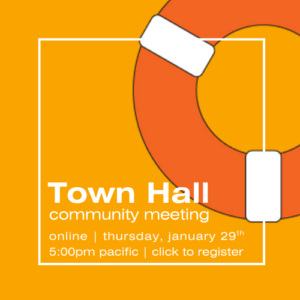](https://lifering-org.zoom.us/meeting/register/Z7xQbfnFQw6QXVsdKB5D3Q)Your Voice, Our Future:
LifeRing Community Town Hall
- **[Link to Meeting Registration](https://lifering-org.zoom.us/meeting/register/Z7xQbfnFQw6QXVsdKB5D3Q)**
- **[Link to Provisional Agenda](https://lifering.org/winter-2026-town-hall/)**
We invite **all LifeRing members, collaborators, convenors, and supporters** to join an essential open-forum discussion. This is your chance to actively shape the future of LifeRing.
---
- **When?** Thursday, January 29, 2026
- **What Time?** 5:00pm Pacific Time
- **Where?** [Online!](https://lifering-org.zoom.us/meeting/register/Z7xQbfnFQw6QXVsdKB5D3Q)
- **Who? YOU!**
---
Come **share your valuable experiences**, ask your pressing questions, and offer suggestions that will directly impact our direction and growth this year.
**This meeting is for all of us. Come share your vision for our future!**
**Categories:** Post, Post 2
**Tags:** alcoholic, cirrhosis, LifeRIng, lifering secular recovery, LifeRing Town Hall, liver, liver awareness, liver meetings, liver patient meetings, the liver spot
---
### [Dry January 2026](https://lifering.org/dry-january-2026/)
**Published:** January 6, 2026
**Author:** Bees
**Excerpt:** Ready for a fresh start? Take the Dry January challenge with LifeRing! Discover health benefits, secular peer support, and a path to a more fulfilling, sober life. Give it a try!
**Content:**
## **TRY IT OUT: Take the Dry January Challenge with LifeRing**
As the start of the new year, many people look for fresh beginnings and healthier habits. One initiative that has gained popularity is [**Dry January**](https://pmc.ncbi.nlm.nih.gov/articles/PMC4684010/) – a month dedicated to abstaining from alcohol. For those exploring a healthier lifestyle or navigating the waters of recovery, this is a perfect opportunity to give it a try! From a LifeRing Secular Recovery perspective, participating in Dry January isn’t just a challenge; it’s an invitation to discover a more fulfilling life.
---
### **Want to Stay Dry in January? Catch a LifeRing!**
LifeRing Secular Recovery is a peer support network designed to empower individuals to take charge of their recovery journey without imposed religious aspects often found in traditional recovery programs. It emphasizes personal responsibility, encouraging individuals to forge their own paths to sobriety. Dry January aligns seamlessly with these principles, offering a structured way for you to evaluate your relationship with alcohol and connect with others on similar paths.
#### **Why You Should Try Dry January**
1. **Reflect on Your Relationship with Alcohol:**
Taking a break from drinking gives you the chance to truly **reflect** on how alcohol fits into your life. Why not use this month to assess its impact on your mood, relationships, and overall well-being? This self-exploration can be incredibly enlightening.
2. **Connect with a Supportive Community:**
Joining Dry January is a fantastic opportunity to engage with others who share your goals. LifeRing emphasizes community support, and participating in this initiative can help you find friends who understand your journey. Sharing experiences during this month can create lasting connections and a sense of belonging.
3. **Experience the Benefits of Sobriety:**
Many participants in Dry January report positive changes in their **mental and physical health**. Improved sleep, increased energy, and a more positive outlook are just a few benefits you might experience. Imagine how great it would feel to embrace these changes!
4. **Create Lasting Change:**
Completing Dry January can be a springboard for a healthier lifestyle beyond January. It proves that a month without alcohol is not only possible but also rewarding. This accomplishment can inspire you to continue prioritizing your health and well-being.
---
#### **How to Make the Most of Your Experience**
If you’re ready to try Dry January, here are some tips that align with LifeRing’s mission:
- **Set Your Intentions**: Before you begin, think about what you hope to achieve this month. Whether it’s better health, a clearer mind, or stronger relationships, setting clear intentions can guide your journey.
- **Join a LifeRing Meeting**: Consider attending a LifeRing meeting during January. It’s a great way to connect with others who are also embracing sobriety. You’ll find support, share stories, and gain insights that can enhance your experience.
- **Discover Non-Alcoholic Options**: Explore the world of non-alcoholic drinks. Experimenting with new beverages can make social situations enjoyable without the pressure of alcohol.
- **Keep a Journal**: Document your journey throughout Dry January. Reflecting on your thoughts and feelings can help you stay mindful of your progress and reinforce your reasons for choosing a sober path
---
### **Join Us on Your Journey!**
We invite you to **give Dry January a try!** Whether you’re curious about sobriety or committed to recovery, this month offers a unique opportunity for growth and connection. Don’t hesitate to reach out to your local LifeRing community or attend a meeting. Together, we can support one another in this exciting journey toward a healthier, alcohol-free life.
As you embark on this month of exploration, remember: **You are not alone.** Let’s embrace Dry January together!
#### **LifeRing Support Resources**
All [LifeRing recovery resources](https://lifering.org/meeting-menu/) provide supportive environments for individuals seeking support to overcome addiction while promoting their mental health. By fostering non-judgmental spaces, these meetings encourage open dialogue and shared experiences, allowing participants to connect with others who understand their struggles. This sense of belonging can significantly reduce feelings of isolation and anxiety, promoting emotional well-being and supporting maintained sobriety. Additionally, LifeRing’s focus on personal empowerment and self-directed recovery helps individuals build resilience, develop coping strategies, and cultivate a positive mindset, ultimately enhancing their overall mental health and quality of life.
- **[LifeRing Local Meetings](https://lifering.org/meeting-menu/local-meetings/)** – LifeRing in-person meetings are a warm and welcoming space where you can share your experiences and challenges without judgment. Here, you’ll connect with others on the same journey, finding the peer support and accountability you need to stay focused on your sobriety goals. You’ll also discover valuable resources and strategies to help you thrive. Join us in building a vibrant community that celebrates sobriety as a shared journey, enriched by the experiences of everyone involved!
- [**LifeRing Online Meetings**](https://lifering.org/online-meetings/) – LifeRing online meetings provide a friendly and accessible space where you can share your experiences and challenges from the comfort of your own home. In these virtual gatherings, you’ll connect with others on a similar journey, gaining valuable peer support and accountability to help you stay committed to your sobriety goals. You’ll also discover practical resources and strategies to navigate your path effectively. Join us in creating a supportive online community that celebrates sobriety as a shared journey, enriched by the diverse experiences of all participants!
- [**LifeRing Workbook Meetings**](https://meetings.lifering.org/meetings/?title=&program=3&audiences=&meetingType=&datetime_nextmeeting=&languages=&location=&coordinates=&scope=) – LifeRing workbook meetings take participants through a discussion of a section of the [*Recovery by Choice*](https://lifering.org/bookstore/books/rbc/) workbook as a jumping-off point for broader discussions of our sobriety, the tools we find useful, and how our perspectives and challenges change over time. **No workbook? No problem!** Convenors screen share sections of the workbook supporting that week’s discussion. The meeting follows a ***How Was Your Week?*** format. Participants have the opportunity to reflect on the past week’s events and how these events have impacted their recovery journey. Positive, supportive crosstalk is welcome.
- [**LifeRing eGroups**](https://lifering.org/email-groups/) – Our private email groups are a safe haven for you to connect and share with others on your recovery exploration. Joining is simple and straightforward-don’t worry if it seems a bit daunting at first! To maintain your privacy, just click on the group name to visit the group website and hit the “Join this Group” button, or send a quick email to the group convenor requesting to be added. Approval is mostly a formality, and as long as you’re a genuine person (not a spammer!), you’ll be welcomed with open arms. Come join us and start building meaningful connections today!
- [**LifeRing ePals**](https://lifering.org/epals/) – New to sobriety or LifeRing? Not sure about joining a group? There are LifeRing members who can lend a private ear and answer questions via email. If the chats and forum are a bit too intimidating right now, this might be a way of getting the information you need.
---
#### **Meetings for the Newly Sober or the Sober Curious**
Whether you are navigating your very first days of sobriety or are simply “sober curious” and re-evaluating your relationship with alcohol, **LifeRing Secular Recovery** offers a practical, person-centered approach to lasting change.
**Getting Started:** [If This is Day One](https://lifering.org/lifering-recovery-menu/if-this-is-day-one/)
[**Local and Online Meetings**](https://lifering.org/meeting-menu/)
- [How Was Your Week?](https://meetings.lifering.org/meetings/?title=&program=2&audiences=&meetingType=&datetime_nextmeeting=&languages=&location=&coordinates=&scope=) \| Both Local and Online meetings throughout the week
[**Online Focus Meetings**](https://lifering.org/meeting-menu/online-meetings/focus-meetings/)
- [LifeRing 101: An Intro to LifeRing](https://meetings.lifering.org/meetings/1255/) \| First Saturday of the month at 9:00am
- [Tool Time](https://meetings.lifering.org/meetings/1130/) \| Tuesdays at 7:00pm Pacific Time
- [Life Skills @LifeRing](https://meetings.lifering.org/meetings/1239/) \| Wednesdays at 10:00am Pacific
- [We Will Rise Up](https://meetings.lifering.org/meetings/1291/) \| Fridays at 3:00pm Pacific
- [Workbook Meeting](https://meetings.lifering.org/meetings/1103/) \| Fridays at 5:00pm Pacific
- [Any Given Sunday](https://meetings.lifering.org/meetings/1120/) Workbook Meeting \| Sundays at 8:00am Pacific
---
**Dear Readers,**
LifeRing is proud to be a **100% peer-run organization** dedicated to supporting individuals on their journey to recovery. Our strength lies in the **personal contributions** of time and financial support from our community members, which enables us to help others like ourselves stay afloat in their recovery.
As we continue to grow, **[we invite you to lend your support](https://lifering.org/get-involved-menu/donate/)** to the increasing number of people who turn to LifeRing as their recovery community. Your contributions make a significant impact, providing resources, support, and a safe space for those seeking sobriety.
[](https://www.guidestar.org/profile/shared/ebb06d6e-eb6d-46a3-9aca-7d211657d3e3)We’re thrilled to share that LifeRing has earned the [**Platinum Seal of Transparency**](https://www.guidestar.org/profile/shared/ebb06d6e-eb6d-46a3-9aca-7d211657d3e3) for the **fourth consecutive year**. This recognition reflects our commitment to accountability and providing our supporters with the confidence that their donations are making a real difference.
Thank you for giving so many individuals a chance to find their way to sobriety. Together, we can continue to build a supportive environment where recovery is possible for everyone!.
Warm regards,
The LifeRing Team
**Categories:** Post, Post 2
**Tags:** addiction meetings, dry january, LifeRIng, lifering secular recovery, non-religious recovery meetings, sober curious
---
### [Choice In Recovery](https://lifering.org/multiple-pathways/)
**Published:** January 13, 2026
**Author:** Bees
**Excerpt:** Ready to take charge of your recovery? It’s time to think "out of the box" about what peer support really looks like.
**Content:**
## ****Out of the Box
#### Beyond the 12 Steps: Embracing a “Many Paths” Approach to Recovery
For decades, the standard narrative of addiction recovery has been synonymous with the 12-step model. Many treatment centers present it not just as an option, but as the *only* option. However, as the landscape of recovery evolves, we are realizing a fundamental truth: **Recovery is an intensely personal voyage, and one size does not fit all.**
If you’ve ever felt that the traditional approach didn’t quite “click” for you, you aren’t alone – and you aren’t failing. It’s time to think “out of the box” about what peer support really looks like.
---
#### The Myth of the “Only Way”
For many, the core tenets of the 12 steps – such as surrendering to a higher power or admitting total powerlessness-can feel like a barrier rather than a bridge. For those who identify as [atheist, agnostic, without a religious affiliation](https://www.pewresearch.org/religion/2025/12/08/religion-holds-steady-in-america/), or simply **prefer a self-empowerment framework**, these requirements can lead to a sense of isolation during an already difficult time.
---
#### The goal is not to find the ‘best’ program,
but the program that is best for *you*.
---
The good news? **Research supports a more inclusive view.** For years, the 12-step model was treated as the gold standard, but the 2018 groundbreaking [Peer Alternatives Study](https://pmc.ncbi.nlm.nih.gov/articles/PMC5884451/) provided evidence that **success isn’t tied to a single philosophy**. The study reveals that secular and self-empowerment-based groups – including [LifeRing](https://lifering.org/), [SMART Recovery](https://smartrecovery.org/) and [Women for Sobriety](https://womenforsobriety.org/) – are [equally effective](https://pmc.ncbi.nlm.nih.gov/articles/PMC5193234/) as AA. This research validates the experiences of countless individuals who have found lasting freedom through diverse methods, proving that whether you prefer a spiritual foundation, a cognitive-behavioral approach, or a secular community, your chosen path is a scientifically sound route to a healthier life.
#### A Toolkit of Diverse Support Groups
Finding the right fit is about matching a program’s philosophy with your personal values. Here are six major peer support groups that offer unique perspectives on the journey to wellness:
- [12-Steps](https://www.aa.org/): Emphasizes a higher power, sponsorship, and a structured 12-step process. with various meeting formats catering to different demographics.
- [LifeRing Secular Recovery](https://lifering.org/): Focus on the “sober self” vs. the “addictive self” with an emphasis on self-empowerment and [individualized recovery plans](https://lifering.org/bookstore/books/rbc/).
- [Recovery Dharma:](https://recoverydharma.org/) A Buddhist-based approach emphasizing inner wisdom, self-empowerment, and compassion, with a focus on both substance use and process addictions.
- [She Recovers Foundation](https://sherecovers.org/): Supporting women in recovery from various challenges, promoting individualized pathways to recovery without criticizing any approach.
- [SMART Recovery](https://smartrecovery.org/): Utilizing cognitive behavioral therapy techniques and catering to a wide range of behavioral disorders; not exclusively abstinence-based
- [Women for Sobriety](https://womenforsobriety.org/): Empowering women to take charge of their lives, create new self-images, and utilize positive reinforcement techniques.
---
#### **Why Choice Matters**
We live in a diverse society where an increasing number of people prefer secular or self-empowered approaches to health. By opening the door to multiple pathways, we remove the “barrier to entry” for recovery.
Effective treatment of addiction is individualized. The [National Institute of Drug Abuse (NIDA)](https://nida.nih.gov/) of the [National Institute of Mental Health (NIMH)](https://www.nimh.nih.gov/) conducted a comprehensive study of treatment methods and found, as the first fundamental principle:
---
#### No single treatment is appropriate for all individuals.
Matching treatment settings, interventions, and services to each individual’s particular problems and needs is critical to \[their\] ultimate success in returning to productive functioning in the family, workplace, and society.
– *[Principles of Drug Addiction Treatment: A Research-Based Guide](https://nida.nih.gov/sites/default/files/podat-3rdEd-508.pdf)*
*National Institute on Drug Abuse (NIA), January 2014*
---
When an individual is empowered to choose a method that resonates with their worldview, their engagement increases – and so do their chances of long-term success. Whether you find strength in spirituality, science, mindfulness, or community-specific empowerment, **your path is valid.**
The goal is not to find the ‘best’ program, but the program that is best for *you*.
---
#### **Your Next Step**
Recovery is about identifying what works so you can live the life you deserve. If you’re feeling stuck, exploring a different peer support meeting might be the spark you need.
Finding the right recovery community is a lot like finding a therapist or a fitness routine – it’s about the “fit.” Because recovery is a deeply personal journey, you have every right to “interview” a group before committing your time and energy to it.
Here is a list of specific questions categorized by the core values mentioned in your journey:
**Philosophy and Foundation**
These questions help you determine if the group’s core beliefs align with your worldview (secular, spiritual, or scientific).
1. How does this group view “power”? Does the program emphasize personal empowerment and self-reliance, or does it focus on surrendering to a higher power?
2. What is the role of spirituality? Is the program strictly secular, or are religious/spiritual practices a requirement for participation?
3. Is the approach evidence-based? Does the group utilize specific psychological tools, like Cognitive Behavioral Therapy (CBT) or mindfulness-based stress reduction?
**Language and Labels**
Language can be a powerful tool or a major deterrent. These questions ensure the group’s communication style feels respectful to you.
1. Are specific labels required? Will I be expected to identify as an “addict” or “alcoholic,” or is the focus on my current “Sober Self”?
2. Is the tone focused on “defects” or “strengths”? Does the group spend more time discussing past mistakes and “character flaws,” or building future skills and positive self-image?
**Meeting Dynamics and Inclusivity** The “vibe” of the meeting is often just as important as the program’s literature.
1. Who is the intended audience? Is this a general group, or is it tailored toward specific demographics (e.g., women-only, LGBTQ+, or secular individuals)?
2. What is the “crosstalk” policy? Do members interact and give feedback to one another, or is it a “listen-only” format where people share without interruption?
3. How are different paths to recovery viewed? If I am using Medication-Assisted Treatment (MAT) or attending other types of meetings, will that be supported or criticized?
**Structure and Success** These questions help you understand the practical “work” involved in the program.
1. Is there a formal “step” process? Is there a linear path I must follow, or can I “pick and choose” the tools that work best for me?
2. What does “success” look like here? Is total abstinence the only goal, or does the group support harm reduction and behavioral changes for various types of habits?
**Quick Comparison Checklist**
Use this table to keep track of your thoughts after attending an “intro” meeting:
| **Feature** | **Group A** | **Group B** |
|---|---|---|
| Felt empowered? | Yes \| No | Yes \| No |
| Felt engaged? | Yes \| No | Yes \| No |
| Aligned with personal philosophies? | Yes \| No | Yes \| No |
| Meeting vibe | Calm \| Intense \| Social | Calm \| Intense \| Social |
| Overall experience | (Rate 1-10) | (Rate 1-10) |
**Tips for “Vetting”**
- **The Three-Meeting Rule:** Try to attend at least three meetings before deciding if a group is for you. Every meeting has a different “flavor” depending on who shows up that day.
- **Look for the “Helpers”:** Pay attention to the people who have been there a long time. Do you want what they have? If their outlook on life resonates with you, you’re likely in the right place.
By presenting these diverse peer support options, we hope to empower individuals to **find the right fit for their recovery journey**, ultimately increasing their chances of success.
In conclusion, LifeRing is a strong advocate for a more inclusive approach to addiction recovery. We encourage everyone to explore the multitude of peer support groups available and to embrace recovery as a deeply personal journey with a variety of paths to healing and growth.
---
**This January**, the U.S. Department of Health and Human Services’[ Substance Abuse and Mental Health Services Administration](https://www.samhsa.gov/) (SAMHSA) is leading a nationwide push to help Americans learn about the importance of Substance Use Disorder (SUD) treatment – with the observance of [SUD Treatment Month](https://www.samhsa.gov/about/digital-toolkits/substance-use-disorder-treatment-month#:~:text=Week%202%20(Jan%2012%20%E2%80%93%2018)%3A%20Multiple%20Pathways%20to%20Recovery). You can follow this social media campaign to help people throughout the United States understand the limitless paths to recovery, the support services that complement treatment, and the importance of having a support system when pursuing recovery: [LifeRing Social Media](https://lifering.org/social-media/).
---
#### [](https://lifering.org/donate/)
#### [Please click here to support choice in recovery with your donations to LifeRing](https://lifering.org/get-involved-menu/donate/).
Thank you!
**Categories:** Post
**Tags:** addiction recovery meetings, life ring, LifeRIng, lifering meetings, lifering online, LifeRing Policies, secular recovery
---
### [LifeRing Newcomers Need ePals](https://lifering.org/lifering-epals-wanted/)
**Published:** July 7, 2022
**Author:** Bees
**Content:**
#### **Would you like to help a newcomer to LifeRing find support and involvement?**
LifeRing receives about 250 requests a year for an ePal – a LifeRing member who can provide one-to-one support and information to a newcomer via email. This is NOT any sort of “sponsor.” Instead, the ePal provides information about the nature of LifeRing and the possible ways to be involved. When someone requests an ePal, they fill out a brief form on the website and the request comes to me. Often the information they provide is extremely limited. I respond with some basic information about LifeRing’s various support options and inform them that I’ll find them an ePal. I then forward the request to the ePals email group so all our volunteers can receive it. The first one to offer to respond to the newcomer offering support and information about LifeRing resources they may benefit from gets the assignment.
With occasional exceptions these are very short term connections. In fact, a pretty high percentage of requesters don’t even respond to the first email they’re sent and if they do, many disappear soon thereafter. Often, they are very tentative in their approach to us, acting on a healthy, but short-lived, impulse. We try to move quickly to get them the support and information they need, but it’s a frustrating task with a low success rate. This can take a toll on the volunteer’s willingness to step-up and so we need to periodically increase our pool of volunteers.
I know long-term, stalwart members of LifeRing who point to their ePals as a decisive factor in their recovery. As is true for LifeRing itself, along with every other recovery organization, our success rate is dismal as a percentage of those who sample what we offer, but a LifeRing ePal can be the crucial first step for some people to turn their lives around..
The only requirement is about 6 months of abstinence. Please contact <karl@lifering.org> if you’d like to help.
– Craig Whalley
**Categories:** Post
---
### [Throw a LifeRing](https://lifering.org/throw-a-lifering/)
**Published:** December 23, 2025
**Author:** Bees
**Excerpt:** Nearly 5,000 people come together to share their trials and triumphs. You can help them to dry land!
**Content:**
## [](https://lifering.org/donate-2025)
### *I was drowning. Someone threw me a LifeRing. Now I’m back on dry land. Safe and Sober!*
***– Jack B, new LifeRing community member***
---
These are the stories we hear every day. Nearly **5,000 people** like Jack come together every week to share their trials and triumphs. We welcome every one.
**You can help more people like Jack find dry land. Throw them a LifeRing!**
[](https://lifering.org/donate-2025)
Help turn “I’m drowning” into “I’m safe” for **thousands more in the coming year**. Thank you for being the lifeline our community depends on.
#### [**Comment**](https://lifering.org/feedback-form/) \| [**Donate**](https://lifering.org/donate-2025/) \| [**Collaborate!**](https://lifering.org/volunteer-form/)
**Categories:** Post
**Tags:** addiction recovery, LifeRIng, non-step recovery support, nonprofit addiction support, nonprofit recovery support
---
### [2025 Winter Holiday Hangouts](https://lifering.org/winter-holiday-hangouts-2025/)
**Published:** December 9, 2025
**Author:** Bees
**Excerpt:** LifeRing is serving up a cup of steaming hot sobriety during the winter holidays! Join us online for our 5th Annual Winter Holiday Hangouts!
**Content:**
## 
## **LifeRing in the New Year!
– online sober celebration –**
#### [**Zoom Link**](https://lifering-org.zoom.us/j/82489408629?pwd=dy3zUbExmFtpf6nPpmRCB4HUuklyLF.1) ● Meeting ID: 824 8940 8629 ● Passcode: lifering
---
### **Wednesday, December 31st – Noon through Midnight \| Pacific Time –**
---
### **Terrible pun – Lots of fun!**
- **When?** Wednesday, December 31st (New Year’s Eve, Y’all!)
- **What Time?** Noon to Midnight+ Pacific Time
- **Where?** [Online](https://lifering-org.zoom.us/j/82489408629?pwd=dy3zUbExmFtpf6nPpmRCB4HUuklyLF.1)!
- *This is a social gathering. Verifications will not be issued.*
---
Join your LifeRing friends and new friends in recovery during our Life**Ring In the New Year** Sober Celebration!!
**We’re saying goodbye to 2025 and welcoming2026.** This year’s Winter Holiday Hangouts were such a great success we thought we’d celebrate again on Wednesday!
LifeRing Secular Recovery is hosting our annual **open-door New Year’s Celebration on December 31st from Noon through Midnight Pacific Time.**
---
### **Kick off the New Year with LifeRing during our final hangout of 2025! Join us online to socialize and make new friends in recovery!**
---
**Welcome in the New Year from Coast to Coast on New Year’s Eve!**
Drop in any time. Stay as long as you like. You’ll be welcomed by your friends in recovery looking for a change of pace during the end o’ year madness.
---
#### A Sober Celebration!
For many of us, New Year’s Eve is cause for celebration. For others, it can be a challenge. Sometimes we just have to step away from the festivities and focus on ourselves. Sometimes, we just need to **chill with your LifeRing Fam!**
---
#### Drop in Anytime!
This isn’t a regular scheduled meeting – Our New Year’s Eve Hangout is just that: A space to hangout on New Year’s Eve!
- **Who’s Welcome?** Everyone! You don’t need to be a LifeRing member. This is for anyone at **any stage of recovery** and the **sober-curious**-just bring your appetite for good company!
- **The Vibe:** Expect to be welcomed by friends in recovery swapping stories and sharing laughs.
- **The Commitment:** Feel free to **drop in anytime** and stay for as long as you like. We support all paths to recovery and everything shared is **confidential**-anonymity is maintained with vigor.
- **Please Note:** This is a social gathering. Verifications will **not** be issued.
**We look forward to sharing New Year’s Eve with you!**
---
### **LifeRing New Year’s Eve Hangout- The Hot Spot to Chill on NYE**
### **New Year’s Hosts \|** *Thanks to all y’all!*
| **Join Us On New Year’s Eve!** |
|---|
| ***Listed in Pacific Time*** |
| #### Noon | #### **Henri C** |
| #### 1:00 PM | #### **Sue B** |
| #### 2:00 PM | #### **Michael A** |
| #### 3:00 PM | #### **Marc O** |
| #### 4:00 PM | #### **Shelly W** |
| #### 5:00 PM | #### **Matt G** |
| #### 6:00 PM | #### **Kelly T** |
| #### 7:00 PM | #### **Lorraine H** |
| #### 8:00 PM | #### **Taresa** |
| #### 9:00 PM | #### **Renee R** |
| #### 10:00 PM | #### **Matt R** |
| #### 11:00 PM | #### **Bruce D** |
| #### Midnight+ | #### **Prax** |
**Categories:** Post, Post 2
**Tags:** addiction recovery, addiction recovery meetings, addiction support meetings, holiday hangouts, LifeRIng, lifering secular recovery, Sober hangout, Sober holiday, sober holliday, sober social, sober socializing
---
### [Create a Circle of Recovery](https://lifering.org/create-a-circle-of-recovery/)
**Published:** December 26, 2025
**Author:** Bees
**Excerpt:** Your donation is an investment in hope. You can promote connection and build hope this season with your holiday gift to the LifeRing Community.
**Content:**
## ****Circle of Recovery Community
As the year draws to a close, many of us pause to take stock of our lives-reflecting on the people we cherish, the blessings we enjoy, and the challenges we face. This year, my reflection began with gratitude: for the loving friends and family surrounding me, for having a safe place to call home, for food on my table, and for living in a country where my secular beliefs are respected. Above all, **I am extremely thankful to be in active recovery.**
But my journey to this place was far from simple. Early on, I tried traditional recovery methods-staying sober for six months, then nine months-but these efforts were only partial victories. I wasn’t truly recovering because I was relying on a support system I couldn’t fully embrace or believe in.
The truth is, recovery is deeply personal. **Each of us needs to find a community that resonates with our values and experiences-a circle of recovery built on shared understanding and respect.** For me, creating a personal recovery plan that includes my sober interests, safe and supportive friends, and meaningful activities was essential. LifeRing Secular Recovery champions this approach with our workbook *Recovery by Choice*, empowering individuals to take ownership of their recovery journey. When you craft your own path, you’re far more likely to stay committed and thrive.[](https://lifering.org/donate-2025/)
By joining LifeRing Secular Recovery, members become part of something bigger than themselves. They connect with others who share their desire for autonomy and respect, find strength in positive support, and in turn, become pillars of encouragement for others. **It’s a community rooted in collaboration and empowerment-and that collective spirit is what makes our impact so powerful.**
This year-end, as you consider your charitable giving, I invite you to support LifeRing Secular Recovery. Your generosity helps us provide a welcoming and empowering space where individuals can build their own recovery, find hope, and create lasting change. Together, we can strengthen this vital community and help more individuals reclaim their lives on their own terms.
#### **Thank you for being part of this journey-and for your support.**
#### **Here’s to a new year filled with hope, healing, and recovery by choice!**
#### [**Comment**](https://lifering.org/feedback-form/) \| [**Donate**](https://lifering.org/donate-2025/) \| [**Collaborate!**](https://lifering.org/volunteer-form/)
**Categories:** Post
**Tags:** addiction recovery, LifeRIng, non-step recovery support, nonprofit addiction support, nonprofit recovery support
---
### [Seeing Double!](https://lifering.org/seeing-double/)
**Published:** December 19, 2025
**Author:** Bees
**Excerpt:** Double your investment in recovery! Take the LifeRing BOD matching gift challenge!
**Content:**
## ****
## Your not seeing double, but your donations will!
We’re coming to the close of an extraordinary year of growth: **New LifeRing members, new convenors, and new mutual-support resources.** LifeRing could not have reached this level of success without LifeRing advocates like you.
But 2026 is right around the corner. To ensure we have the funding needed to continue broadening our support resources for people with substance use challenges, we’ve created the [LifeRing 2025 Matching Gift Challenge](https://lifering.org/matching-gift-2025/)!
#### **Make Your Donations Work Twice as Hard!**
**Great News!** You can double the impact of your donation today! The **LifeRing Board of Directors and Officers** have graciously offered to ***match any new donations dollar-for-dollar made to LifeRing through December 31st, 2025,*** *or until we reach our matching challenge goal of $2,500.00.*
[](https://lifering.org/matching-gift-2025/)
**Your gift will be used directly to:**
- expand our community outreach efforts to **connect with more people** in need of positive, nonjudgmental recovery support,
- add new focus meetings to address **challenges unique to people in recovery** with specific commonalities,.
- empower sustained recovery for people overcoming their substance use challenges.
#### **You Make a Positive Impact!**
Your generosity **directly impacts the lives of 4,700+ individuals** who join LifeRing every week for recovery support. You can provide hope, strength, and sober empowerment to those who need it most.
### [**Please double your impact today with your LifeRing Matching Gift!**](https://lifering.org/matching-gift-2025/)
Thank you for all the good you do. Come to the Winter Holiday Hangouts to witness first-hand how your donation contributes to the lives of so many. Keep your eye open for your invitation!
---
**Please show your support for the LifeRing Community with your tax-deductible donation!**
**LifeRing Secular Recovery is a 501(c)(3) charitable organization, EIN 94-3267919**. All contributions are tax-deductible. No goods or services will be provided in exchange for the contribution. You can support our work with trust and confidence knowing LifeRing has earned the 2025 Candid **Platinum Seal of Transparency** from GuideStar.
**Categories:** Post
**Tags:** addiction recovery, LifeRIng, non-step recovery support, nonprofit addiction support, nonprofit recovery support, Secular Recovery Support
---
### [Invest in Hope This Holiday](https://lifering.org/invest-in-lifering-mission/)
**Published:** December 16, 2025
**Author:** Bees
**Excerpt:** Your donation is an investment in hope. You can promote connection and build hope this season with your holiday gift to the LifeRing Community.
**Content:**
## ****Open the Door for Hope
The urgent need for LifeRing’s unique recovery community is growing exponentially. Every week, we provide hope and essential support to **over 4,300** individuals seeking lasting sobriety.
#### A Reminder of Isolation
It is not so long ago that we all experienced the **debilitating isolation** of the COVID-19 pandemic. The emotional toll of being cut off from our communities and support systems is a feeling we can all recall.
For many in recovery, however, this profound feeling of isolation is not a memory-it is a daily reality that threatens their sobriety. **We can help open the door for hope.**
[](https://lifering.org/donate-2025/)
#### Your Donation Makes the Connection
As we continue to grow and expand our vital reach, we need your help more than ever. Your contributions empower our efforts to create a supportive, nonjudgmental environment and cultivate lasting recovery. With your support, we ensure that **no one has to face their challenges alone**.
Your donation directly funds these tangible resources that make recovery possible:
- **$20 \| Keep Recovery Accessible:** Fund a full month of a single online meeting, providing a safe and supportive space for those seeking help.
- **$50 \| Spark New Beginnings:** Equip a local convenor with a Start-up Kit to launch a brand-new LifeRing meeting in their community.
- **$100 \| Expand Our Reach:** Print an Introduction Packet that empowers professionals to connect more people with LifeRing’s secular recovery support.
Every gift, regardless of size, is deeply appreciated and helps us bring hope to people seeking a safe, nonjudgmental path to sobriety. Together, we can **break down the barriers of isolation** and build a stronger, more inclusive recovery community.
Thank you for being an invaluable part of LifeRing. **Together, we can open the door for hope in recovery.**
#### [**Comment**](https://lifering.org/feedback-form/) \| [**Donate**](https://lifering.org/donate-2025/) \| [**Collaborate!**](https://lifering.org/volunteer-form/)
**Categories:** Post
**Tags:** addiction recovery, LifeRIng, non-step recovery support, nonprofit addiction support, nonprofit recovery support
---
### [A Letter From The Heart](https://lifering.org/letter-from-the-heart/)
**Published:** December 13, 2025
**Author:** Bees
**Excerpt:** A call for partnership from the LifeRing Executive Director: Will you join us in making recovery possible for everyone?
**Content:**
| Dear LifeRing Friends, Collaborators, and Supporters, I am truly honored to connect with you and celebrate the incredible **strength and resilience** within our community. Every day, I witness individuals from all backgrounds courageously taking steps on their recovery journeys, moving toward a life free from the constraints of addiction. These steps can be challenging, but they are essential-and they wouldn’t be possible without your support. At LifeRing, we are passionately committed to ensuring that everyone in recovery can access the **resources, support, and community** they need to thrive. Our focus on **self-direction** and **peer support** is designed to empower individuals to take charge of their own recovery journeys. Through our meetings, recovery resources, and community connections, we aim to build a world where recovery is not just possible, but a thriving reality for everyone. However, our mission requires a collective effort. As we approach the end of the year, I invite you to join us in expanding our reach and impact by participating in our **End-of-Year Giving Campaign**. Your contributions are not merely financial; they represent **hope and support for people seeking recovery who turn to LifeRing for positive, nonjudgmental support.** Every dollar you donate will help us sustain and improve the essential resources that empower the LifeRing Community. Having dedicated over six years to this mission, I have seen how your support drives **real change**. My own recovery journey fuels my commitment to ensure everyone who wants to recover has the opportunity to do so. Together, we can continue to strive for a world where each person affected by substance challenges can find their path to a fulfilling life in recovery. This is more than just a call for donations-it’s **a call for partnership**. As we close out the year, let’s come together to uplift and support recovery for all. Your investments in LifeRing allow us to expand our reach and help others. Please [**donate to the future today**](https://lifering.org/donate-2025/). With your generosity, we can continue transforming lives in the new year. Thank you for being part of our unique community and for your unwavering support. In solidarity and hope, Sue  LifeRing Executive Director sue@lifering.org LifeRing member and advocate since 2019 [](https://lifering.org/donate-2025/) |
|---|
**Categories:** Post, Post 2
**Tags:** addiction recovery, addiction recovery meetings, addiction support meetings, holiday hangouts, LifeRIng, lifering secular recovery, Sober hangout, Sober holiday, sober holliday, sober social, sober socializing
---
### [Power of Community](https://lifering.org/power-of-community/)
**Published:** December 8, 2025
**Author:** Bees
**Excerpt:** LifeRing wasn't just support; it was the lifeline that carried me through post-transplant recovery. Finding people who truly understood my fears changed everything.
**Content:**
## The Community That Saved My Life
**Last week was GivingTuesday-and if your inbox looked anything like mine, you probably saw dozens of messages asking for donations.**
Appeals from the humane society, the hospital where I received my liver transplant, my kids’ colleges, my alma mater, and LifeRing all poured in. Each one represented an incredible organization doing meaningful work.
#### **Did I donate to any of them that day?
Nope.
And honestly, I felt a little bad about it.**
---
But then I reminded myself-GivingTuesday isn’t meant to be a one-day sprint to give. It’s a reminder of the power of generosity and community. **And sometimes, when the noise settles, that’s when real gratitude sinks in.**
When I took a step back and thought about the past year, I realized how much these organizations have given me. The humane society brought Walter, my loyal (and slightly mischievous) puppy, into my life. The hospital gave me something even greater-a second chance at living.
#### And LifeRing gave me strength when I didn’t think I had any left.
There were days during recovery when I felt completely alone-like no one could possibly understand what I was going through. Then I found LifeRing meetings. There, I met people who *did* understand. People who had faced the same fears and doubts. They didn’t offer empty advice-they offered empathy, encouragement, and community.
That’s what changed everything.
LifeRing became a lifeline. It gave me a network of support that carried me through some of the hardest moments of my life. And now, as this year comes to a close, I can’t help but feel immense gratitude-and a desire to give back.
So, this week, I’m doing just that.
---
#### **I’m donating to the organizations that have shaped my life-and LifeRing is at the top of that list.**
---
Your donation to LifeRing, whether it’s $10, $50, or $100, helps more people find recovery support that’s compassionate, peer-led, and truly life-changing. It keeps meetings running, trains convenors, and ensures no one has to go through recovery alone.
**LifeRing is now supporting 625 people every day on their recovery journeys.** With your help, that number can grow even more in 2026.
---
#### If LifeRing has touched your life-or if you believe in the power
of community-please consider joining me in giving back.
---
**Together, we can ensure that someone else finds the same community, courage, and hope that saved my life.**
**– Cathy from the Bay Area**
---
### Your [**one-time and recurring donations**](https://lifering.org/get-involved-menu/donate/) help people like Cathy find their way to sustained sobriety.
– Thank you! –**
[**Comment**](https://lifering.org/feedback-form/) \| [**Donate**](https://lifering.org/get-involved-menu/donate/) \| [**Collaborate!**](https://lifering.org/volunteer-form/)
**Categories:** Post
---
### [GivingTuesday - Beat the Rush](https://lifering.org/givingtuesday-beat-the-rush/)
**Published:** December 1, 2025
**Author:** Bees
**Excerpt:** The holidays are here. Support LifeRing Secular Recovery early! Your donation provides vital sobriety resources and community when people need it most!
**Content:**
## Get ahead of GivingTuesday with your Donation
Thanksgiving has come and gone, yet the holiday season is almost here, and with it comes a flurry of giving. This GivingTuesday, why not beat the rush and make your impact early?
#### **By supporting LifeRing Secular Recovery now, you’re helping us provide a safe, welcoming community for people seeking a secular path to recovery-right when they need it most.**
Your gift helps keep our meetings accessible, our resources up to date, and our network strong for anyone taking those brave first steps towards sobriety.
---
#### **With your support, we can reach even more people during the challenging holiday season and beyond.**
---
It’s a busy time of year. Whether you celebrate Winter Solstice, Christmas, Hanukkah, Kwanzaa, or just the end of the year 2025, we always seem to be rushing to go places and do things. Anticipating and spending time with friends and family in joyful activities embellishes our usual schedules.
Please remember to take a few moments to rest. It can add to the joy of the season to stop for a while to appreciate why we engage in all this activity. GivingTuesday can set the mood for the busy month ahead.
---
### Don’t wait for the year-end frenzy-make your [**GivingTuesday donation**](https://donorbox.org/givingtuesday-2025-853257) today and help LifeRing continue to change lives.
**– Thank you! –**
[**Comment**](https://lifering.org/feedback-form/) \| [**Donate**](https://donorbox.org/givingtuesday-2025-853257) \| [**Collaborate!**](https://lifering.org/volunteer-form/)
**Categories:** Post
---
### [LifeRing Embraces Personal Worldviews](https://lifering.org/lifering-embraces-personal-worldviews/)
**Published:** December 9, 2022
**Author:** Bees
**Content:**
#### ***LifeRing First Generation Pioneer and former LifeRing Executive Director Kathleen G. shares her story of how she found community within our unique secular recovery program.***
---
I got sober in 1981, a time when the only world that existed for an “alcoholic” who wanted to free herself from drinking required turning her will and her life over to a supernatural “Higher Power.” Through the Eighties and Nineties, I struggled over and over to believe that there could be such a world. I was told that being an “alcoholic” made this weird submission necessary. I lived sober through the following 25 years, making friends with other sober people, learning and growing, but always in despair because my worldview could not be supported in the only sober world I could find.
In the early 2000s, I found an excellent book in the public library by Jim Christopher that revealed that I was not alone. I was relieved beyond measure. This book led me to what is now LifeRing.
|  | #### **I donate to LifeRing because it offers the secular support I need for my continuing sobriety. In LifeRing, I am not required to do anything that contradicts my worldview.** |  |
|---|---|---|
LifeRing is free for members who are not in a position to contribute financially – no one is turned away from a meeting because they are unable to donate. But I am fortunate enough to be able to contribute, so I see donating to LifeRing as a responsibility. To be relieved of the feeling of aloneness in my sobriety is worth a lot to me.
– Kathleen G.
LifeRing First Generation
Former LifeRing Executive Director
LifeRing Colorado Regional Representative
---
Dear Readers,

LifeRing is a volunteer-run organization and is highly dependent on personal contributions. **[Please support the growing number of people who turn to LifeRing as their recovery community](https://lifering.org/get-involved-menu/donate/)**.
You can give with trust and confidence knowing LifeRing has earned the [*2022 Gold Seal of Transparency*](https://www.guidestar.org/profile/shared/ebb06d6e-eb6d-46a3-9aca-7d211657d3e3) from *Candid, formally GuideStar.*
**Thank you for giving so many a chance to find their way to sobriety!**
**Categories:** Post
---
### [Next Week is GivingTuesday](https://lifering.org/giving-thanks-and-giving-back-copy/)
**Published:** November 25, 2025
**Author:** Bees
**Excerpt:** Today, we honor the service of US Veterans and support their hidden battles. Learn about the unique challenges of substance use in Veterans and the power of peer recovery.
**Content:**
## **
Giving Thanks and Giving Back:
A GivingTuesday Message**
As we begin to celebrate the spirit of **GivingTuesday**, we pause to reflect on the transformative power of gratitude and generosity. For so many of us, LifeRing Secular Recovery has been a lifeline-**a place where we have found strength, hope, and the priceless gift of recovery.**
One of those individuals is Laura M. She is an in-person meeting convenor in the East Bay Area. Specifically, she convenes two meetings in Pleasant Hill and one in Walnut Creek, CA. Laura recently shared how LifeRing Secular Recovery has impacted her life.
---
#### Words of Wisdom from Laura’s Lived Experience
I am personally grateful for the support and encouragement I’ve received from this community, and **it brings me great joy to give back to the organization that continues to help me-and so many others-maintain our recovery journeys**.
Today, I invite you to join me in giving thanks and giving back to LifeRing. There are many ways to express your gratitude and make a meaningful impact:.
- **Share your story:** Write and submit part of your personal recovery story to inspire others on the LifeRing blog.
- **Volunteer your time:** Become a Meeting Convenor and help shape the future of our community.
- **Lead with purpose:** Explore leadership opportunities, such as serving with one of our work committees, to help guide our mission.
---
#### Another Way to Help
We know that not everyone can give their time right now-and that’s okay. If you’re unable to volunteer, please consider making a heartfelt donation of $5, $10, $20, or any amount that feels right to you. Every contribution, big or small, helps sustain our meetings, resources, and outreach efforts. **Together, we can show our thanks for the gift of recovery** and ensure that LifeRing remains a beacon of hope for all who seek it.
---
#### This GivingTuesday-December 2nd, let’s celebrate our recovery **by giving back-**
**because when we lift each other, we all rise.**
---
**Categories:** Post, Post 2
**Tags:** addiction meetings, crisis awareness, LifeRIng, lifering secular recovery, non-religious recovery meetings, suicide prevention
---
### [GivingTuesday](https://lifering.org/givingtuesday/)
**Published:** November 19, 2025
**Author:** Bees
**Excerpt:** Celebrate National Philanthropy Day! Every gesture of kindness and giving strengthens our community. How will you honor the spirit of giving?
**Content:**
## ****Two Weeks ’til GivingTuesday!
December 2nd**
GivingTuesday is a National Day of Giving that originated to gently **influence people away from the culture of buying and acquiring stuff, toward a practice of sharing** what we have with others.
The numbers from GivingTuesday 2024 tell a remarkable story: $3.6 billion donated in the United States alone-a 16% increase from 2023-with **36.1 million people participating in this global day of generosity.**
Did you know?
GivingTuesday originated in 2012 by the 92nd Street Y, a cultural and community center in New York City, in partnership with the United Nations Foundation. The idea was simple: create **a day focused on giving back** as a counterbalance to the shopping frenzy of Black Friday and Cyber Monday.
---
***GivingTuesday encourages people and organizations to donate time,
resources, or money to causes they care about.***
---
Considering everything going on in our world today, there are many worthy causes to support this GivingTuesday. Your choice to support any of them is honorable and appreciated. Our hope is that you’ll **choose to include LifeRing Secular Recovery in your GivingTuesday or other year-end giving**. Every single donation will be truly valued and used to support new recoveries from substance misuse.
Stay tuned between now and **Tuesday, December 2nd** for personal stories and updates about how your generous gifts help support the LifeRing Secular Recovery Community.
#### [**Comment**](https://lifering.org/feedback-form/) \| [**Donate**](https://lifering.org/get-involved-menu/donate/) \| [**Collaborate!**](https://lifering.org/volunteer-form/)

---
### Your [**one-time and recurring donations**](https://lifering.org/get-involved-menu/donate/) help LifeRing serve those who are hungry for a life free from alcohol and drugs.
**– Thank you! –**
[**Comment**](https://lifering.org/feedback-form/) \| [**Donate**](https://lifering.org/get-involved-menu/donate/) \| [**Collaborate!**](https://lifering.org/volunteer-form/)
**Categories:** Post, Post 2
**Tags:** addiction meetings, crisis awareness, LifeRIng, lifering secular recovery, non-religious recovery meetings, suicide prevention
---
### [National Philanthropy Day](https://lifering.org/national-philanthropy-day-2/)
**Published:** November 15, 2025
**Author:** Bees
**Excerpt:** Celebrate National Philanthropy Day! Every gesture of kindness and giving strengthens our community. How will you honor the spirit of giving?
**Content:**
## ****National Philanthropy Day:** ***Working Together for Good!***
November brings cooler temperatures and the season of gratitude and thanksgiving. It’s a time for reflection, kindness, and sometimes stress, as we navigate our individual challenges. Today, November 15, marks the **40th anniversary of [National Philanthropy Day](https://npdoc.org/)** (NPD) – a day that **celebrates working together** for the common good.
Philanthropy takes many forms: **charitable giving, volunteering, and countless acts of kindness**. On this day, every gesture of generosity is recognized and appreciated. National Philanthropy Day was founded in the 1980s by philanthropist and fundraising professional Douglas Freeman. The first celebration was held in 1986 after President Reagan proclaimed November 15 as National Philanthropy Day. Canada officially recognized the day permanently in 2012, and since then, **communities around the world have joined in honoring the spirit of giving.**
---
***This day highlights the vital services nonprofits provide and acknowledges the profound impact philanthropy has on society’s fabric.***
---
At LifeRing Secular Recovery, we are fortunate to be operated almost entirely by volunteers. We currently have **119 convenors** who generously donate their time and experience each week to lead LifeRing meetings – a true testament to the power of giving and community support.
National Philanthropy Day is an opportunity to **reflect on the meaning of giving** and to recognize how **philanthropy strengthens recovery communities and improves lives** every day. Thank you to all who make this possible!
How will you honor the spirit of philanthropy this season? We invite you to **share your thoughts or acts of kindness** with the LifeRing community.
#### [**Comment**](https://lifering.org/feedback-form/) \| [**Donate**](https://lifering.org/get-involved-menu/donate/) \| [**Collaborate!**](https://lifering.org/volunteer-form/)
[](https://npdoc.org/)
---
### Your [**one-time and recurring donations**](https://lifering.org/get-involved-menu/donate/) help LifeRing serve those who are hungry for a life free from alcohol and drugs.
**– Thank you! –**
[**Comment**](https://lifering.org/feedback-form/) \| [**Donate**](https://lifering.org/get-involved-menu/donate/) \| [**Collaborate!**](https://lifering.org/volunteer-form/)
**Categories:** Post, Post 2
**Tags:** addiction meetings, crisis awareness, LifeRIng, lifering secular recovery, non-religious recovery meetings, suicide prevention
---
### [Summer Walks](https://lifering.org/summer-walks/)
**Published:** August 14, 2025
**Author:** Bees
**Excerpt:** LifeRing helped Cathy regain her life after a liver transplant, enabling her to enjoy summer walks and an active lifestyle -- with Walter! Join them in helping others find recovery.
**Content:**
## Last summer, I couldn’t walk to the mailbox.
**It wasn’t far, maybe 50 feet from my front door, and even downhill, but there was no way I could make it down there and back.**
I was simply too weak. But what I was strong enough to do was get on my computer every morning and grab a LifeRing meeting.
#### **Those meetings gave me something to look forward to every day.**
Camaraderie. Friendship. People who understood me and what I was going through. Because they’d been through it too. I couldn’t believe I could log in at 4 in the morning and hear grown men be so vulnerable with each other, or join a meeting at 10 pm and hear people from around the world share stories about their favorite songs and how they helped them through hard times.
---
#### **People shared about their missteps, their challenges, and their victories, big and small.**
---
When I was at my lowest, I always knew I could find a LifeRing meeting where I could find support. Doing mindful meditation with others, being wished peace, people being happy to see me – all of these things meant so much when I was down. These people were unknowingly throwing liferings in my pools of sadness.
#### Fast forward to this summer
I’m still going to LifeRing meetings for the exact same reasons, but my role in them has shifted a little. Last summer, I desperately needed support, and I definitely got it in those meetings. Non-judgmental support from complete strangers. How amazing is that?
But now, I feel like I’m in a position where I’m able to offer some wisdom and encouragement. It’s been 15 months since my last drink, and I had my liver transplant 9 months ago. And though I certainly still need support, I feel like I’m able to give it, too.
This summer, I can honestly say that I am the healthiest I have been in years. Physically AND emotionally. I can thank the doctors for the physical part, but I thank LifeRing for the emotional part.
Rather than struggling to make it to the mailbox, I’m walking my six-month-old puppy, Walter, 3 miles every morning before I catch a LifeRing meeting.
When I went on vacation this summer, the first time I was healthy enough to take one in many years, I decided I was going to embrace every moment of being alive. So I went parasailing and ziplining, and was taking 4-mile-long walks on the beach. My transplant doctor was happily surprised when I told him that!
---
#### The support system that LifeRing provides has been a true lifesaver for me (no pun intended).
---
If you feel like LifeRing has helped you, like it’s helped me, now’s a great time to give back AND help someone else #grabalifering.
You can do it by sharing your story like I just did (at an [“>online meeting](https://lifering.org/meeting-menu/online-meetings/%20target=), [>local meeting](https://lifering.org/meeting-menu/local-meetings/), or as a [>featured blog!](https://lifering.org/archived-pages/share-your-story/)). You can also join us on one of our many [social media channels.](https://lifering.org/social-media/)
Knowing what others have been through means so much.
– Cathy from the Bay Area
---
### Your [**one-time and recurring donations**](https://lifering.org/get-involved-menu/donate/) help people like Cathy find their way to sustained sobriety.
**– Thank you! –**
[**Comment**](https://lifering.org/feedback-form/) \| [**Donate**](https://lifering.org/get-involved-menu/donate/) \| [**Collaborate!**](https://lifering.org/volunteer-form/)
**Categories:** Post
---
### [What's Cooking This Summer?](https://lifering.org/cooking-this-summer/)
**Published:** August 26, 2025
**Author:** Bees
**Excerpt:** LifeRing is cooking up empowered sobriety. Your contribution is the secret ingredient, helping us serve +150 weekly meetings and support to +3,100 people hungry for recovery.
**Content:**
## You’re invited to this summer’s HOTTEST Spot!
#### ****
#### Grab a seat at our table and check out the specials on the [LifeRing Meeting Menu](https://lifering.org/meeting-menu/)!
**LifeRing is cooking up recovery support across the country.**
This season, you’re invited to join us at the table where **your donation is the secret ingredient** for empowered sobriety.
Whether you’re craving a quick appetizer or prefer to sample from our special menu, your donation helps LifeRing serve up **+150 weekly meetings** and support the **+3,100 participants** who join them!
---
#### LifeRing offers a smorgasbord of recover meetings to satisfy your cravings!
---
**Pull up a chair, explore our menu, and help us keep the LifeRing community thriving – all proceeds support sober self-empowerment!**
## LifeRing Sober Café!
#### **APPETIZERS**
**Meeting de Jour**
Your donation **[supports a single LifeRing meeting for one year](https://meetings.lifering.org/meetings/)!**
- One-time **gift** – $260
- Monthly **sustaining** donation – $20
**Amuse Bouche**
Order up a **new in-person meeting in your neighborhood**!
- New meeting [**starter kit**](https://lifering.org/convenors/starter-kit/) – $50
**Technology ala Carte**
Plating hot new technology!
- **Zoom meeting** per month – $14
- Each **new calendared meeting** – $24
- Monthly **website hosting** – $49
- Monthly **ADA compliance** – $99
#### **TABLESIDE**
**[Chef Special](https://lifering.org/meeting-menu/) \| comes with a huge helping of sobriety!**
All LifeRing donations are used to support our growing community of people striving to live free of alcohol and drugs. You can support our mission and our people with your gift. **El Fresco Sampler Plate**
Help us make a LifeRing Splash during September recovery month events!
- Empower Your Sober Self [**pamphlets** ](https://lifering.org/bookstore/The-EYSS-Pamphlet-p377462284)– $15
- Packet of 60 [**wristbands** ](https://lifering.org/bookstore/3-ea-Wristbands-p568363506)– $15
- Display [**books** ](https://lifering.org/bookstore/Books-c41580488)– $70
- LifeRing **table runner** – $162
#### **SIDES**
Share LifeRing books family-style with a recovery center
- [***Humanly Possible*** ](https://lifering.org/bookstore/Humanly-Possible-p161743472)– $10.00
- [***Empowering Your Sober Self*** ](https://lifering.org/bookstore/Empowering-Your-Sober-Self-p161742544)– $20.00
- [***Recovery by Choice*** ](https://lifering.org/bookstore/Recovery-By-Choice-A-Workbook-p162427560)– $25.00
#### **DESSERT**
How about a little treat for yourself?
- LifeRing [**Lapel Pin**](https://lifering.org/bookstore/LifeRing-Lapel-Pin-p568210068%20target=) – $5.00
## Bon Appétit!
Your generous contribution is **the secret ingredient that transforms hope into healing.** Together, let’s cook up a future where recovery is not just possible – but vibrant, thriving, and deliciously within reach for everyone who needs it.
Every gift you give **fuels the journey, empowers the spirit, and keeps the LifeRing community strong** and growing. Dig in, make your mark, and savor the joy of changing liver!
#### **Let’s make recovery deliciously possible!**
---
### Your [**one-time and recurring donations**](https://lifering.org/get-involved-menu/donate/) help LifeRing serve those who are hungry for a life free from alcohol and drugs.
**– Thank you! –**
[**Comment**](https://lifering.org/feedback-form/) \| [**Donate**](https://lifering.org/get-involved-menu/donate/) \| [**Collaborate!**](https://lifering.org/volunteer-form/)
**Categories:** Post
**Tags:** addiction recovery, addiction support meetings, addictions support, life ring, LifeRIng
---
### [Changing the Narrative](https://lifering.org/out-of-the-darkness/)
**Published:** September 10, 2025
**Author:** Bees
**Excerpt:** Today marks World Suicide Prevention Day. It's time to move the conversation from one of silence and shame to one of hope, understanding, and prevention.
**Content:**
## **
#### ***September is Nation Suicide Prevention Awareness Month. Throughout the month, mental health advocates, prevention organizations, survivors, allies, and community members unite to promote suicide prevention awareness.***
This Sunday, I will join my family in Kentucky for the [Out of the Darkness](https://afspwalks.donordrive.com/pages/2497?eventID=10949) community walk. We are gathering in memory of my niece and nephew, and in honor of everyone impacted by suicide.
It’s with a heavy heart that I once again highlight the critical importance of suicide awareness and prevention. By sharing these tools and resources, I hope to help you or a loved one find a way out of the darkness and into a place of openness, empathy, and support.
---
### Changing the Narrative \| World Suicide Prevention Day 2025
September is [National Suicide Prevention Awareness Month](https://www.nami.org/get-involved/awareness-events/suicide-prevention-month/) and today marks [World Suicide Prevention Day](https://www.who.int/campaigns/world-suicide-prevention-day/2025). This year’s theme, **“Changing the Narrative on Suicide,”** encourages a powerful shift in how we talk about suicide. The goal is to move the conversation away from silence and shame, and toward one of **hope, understanding, and prevention**.
The theme for this year’s World Suicide Prevention Day encourages a fundamental shift in how we talk about and address the issue of suicide. Instead of a narrative rooted in silence, stigma, and misunderstanding, the goal is to create one of openness, empathy, and support.
---
> ***The idea that you can put thoughts of suicide into a person’s head is a myth.
> If you suspect a family member or friend is contemplating suicide, it is important to voice concerns in a calm, non-judgmental, non-confrontational manner.***
---
This calls for several key actions and a change in mindset:
- **Breaking the Silence:** For a long time, suicide has been a taboo subject. *Changing the narrative* means talking about it openly and honestly, which helps to destigmatize it and encourages people who are struggling to seek help.
- **Reducing Stigma:** Suicide is often associated with shame and judgment. This campaign seeks to replace that with compassion and understanding, recognizing that suicidal thoughts are a sign of immense pain and distress, not a character flaw or weakness. It emphasizes that seeking help is a sign of strength.
- **Shifting from Helplessness to Hope:** The narrative can often focus on the tragic outcomes. By “changing the narrative,” the focus shifts to the fact that suicide is preventable, This involves highlighting stories of recovery, emphasizing the effectiveness of support and treatment, and showing that hope is possible.
- **Promoting Empathy and Action:** It’s not just about professionals; it’s about making suicide prevention “everybody’s business.” The campaign encourages individuals, communities, and governments to take action by:
- Listening without judgment.
- Checking in on loved ones.
- Advocating for policies that prioritize mental health and increase access to care.
- Promoting education and awareness.
- **Using Compassionate Language:** The language we use matters. “Changing the narrative” means moving away from outdated or harmful phrases like “committed suicide” (which implies a crime) to more neutral and compassionate terms like “died by suicide” or “suicidal ideation.”
In essence, “changing the narrative” is a call to action to transform the conversation around suicide from a topic of fear and avoidance to one of compassion, hope, and proactive prevention.
---
### Understanding Suicide: A Multifaceted Issue
Suicide is rarely caused by a single event or circumstance. Instead, it’s a complex issue influenced by a range of factors known as [social determinants of health](https://odphp.health.gov/healthypeople/priority-areas/social-determinants-health) – conditions at the [individual, relationship, community, and societal levels](https://www.save.org/social-determinants-of-health-and-their-impact-on-suicide-risk/) that can increase risk. These include mental illness, substance abuse, chronic disease, childhood trauma, social isolation, financial strain, and the loss of a loved one.
The narrative around suicide often overlooks the significant role of [alcohol and drug use](https://www.sciencedirect.com/science/article/pii/S0165178124001069). Disturbances in brain chemistry and the use of alcohol and other drugs can increase impulsivity and elevate suicide risk. A 2024 analysis from the [Drug Abuse Warning Network](https://www.samhsa.gov/data/data-we-collect/dawn-drug-abuse-warning-network) (DAWN) revealed that there were [51 drug-related emergency department (ED) visits involving suicide attempts](https://www.samhsa.gov/data/sites/default/files/reports/rpt42709/ShortReport-EDVisits-SuicideAttempt.pdf) per 100,000 population. **Alcohol**, the most frequently mentioned substance, was associated with 24% of these types of ED visits. Females (sex at birth) accounted for 64 percent of these visits while males (sex at birth) comprised 36 percent.
---
### Recognizing Warning Signs
It’s a common misconception that you can “plant” the idea of suicide in someone’s head by talking about it. The truth is, **openly and calmly discussing suicide can actually reduce the risk** by providing a safe space for someone to express their feelings without judgment. As of 2024, approximately [5.5% of males](https://www.statista.com/statistics/673087/suicidal-thoughts-past-year-us-men/) (up .5% since 2022) and [5.3% of females](https://healthcare.rti.org/insights/sdoh-suicide-prevention) (up .2% since 2022) in the United States reported having serious thoughts of suicide.
Warning signs may include:
- Talking about death or wanting to die.
- Expressing feelings of hopelessness or being a burden.
- Withdrawing from social activities.
- Behaving recklessly or engaging in self-destructive behaviors.
- Experiencing dramatic mood swings.
Suicidal thoughts and attempts are much more common among those with [substance dependence](https://journals.sagepub.com/doi/10.1177/11782218231216233) and/or those who have had a recent [major depressive episode](https://www.statista.com/statistics/560384/suicide-plans-and-attempts-among-us-adults-by-depressive-episode/). In 2024, **29% of U.S. adults** who had a major depressive episode in the past year also had serious thoughts of suicide, compared with just 3.4% of those who did not.
---
### Suicide is Preventable: Taking Action
The “Changing the Narrative” theme emphasizes that **suicide is preventable**. Most individuals who are suicidal desperately want to live; they just can’t see a way out of their current problems. Talking about suicide is not just important – it’s essential.
The National Institutes of Health (NIH) recommends a [simple, actionable framework](https://www.nimh.nih.gov/health/publications/5-action-steps-to-help-someone-having-thoughts-of-suicide#:~:text=You%20can%20also%20help%20them,National%20Institutes%20of%20Health%20(NIH)) to help someone who may be at risk. This framework helps change the narrative from one of passive concern to one of active intervention.
[According to the NIH](https://pubmed.ncbi.nlm.nih.gov/22548324/), the idea that you can put thoughts of suicide into a person’s head is a myth. This is supported by an abstract published in the [National Center of Biotechnology Information](https://pubmed.ncbi.nlm.nih.gov/24998511/) (NCBI), showing that **acknowledging and talking about suicide may reduce, rather than increase suicidal ideation, and may lead to improvement**.
So, if you suspect a family member or friend is contemplating suicide, voice your concerns in a calm, non-judgmental, non-confrontational manner, Ideally, while alone with the person in a quiet setting Talking about suicide can improve mental health-related outcomes and the likelihood of seeking treatment. Opening this conversation helps people explore an alternative view of their existing circumstances.
The [NIH](https://www.nimh.nih.gov/health/publications/5-action-steps-for-helping-someone-in-emotional-pain) recommends these steps to engage with someone you feel may be at risk:
1. **ASK:** Are you thinking about killing yourself?” It’s not an easy question, but studies show that [asking at-risk individuals if they are suicidal does not increase suicides ](https://www.ncbi.nlm.nih.gov/pubmed/15811983)or suicidal thoughts.
2. **KEEP THEM SAFE:** [Reducing a suicidal person’s access to highly lethal items ](https://www.strong4life.com/en/emotional-wellness/depression-and-sadness/reducing-access-to-lethal-means-of-suicide#:~:text=Store%20ammunition%20locked%2C%20and%20in,away%20from%20kids%20and%20teens.)or places is an important part of suicide prevention. While this is not always easy, asking if the at-risk person has a plan and removing or disabling the lethal means can make a difference.
3. **BE THERE:** Listen carefully and learn what the individual is thinking and feeling. Research suggests acknowledging and talking about suicide may [reduce rather than increase](https://www.ncbi.nlm.nih.gov/pubmed/24998511) suicidal thoughts.
4. **HELP THEM CONNECT:** Save the [988 Suicide & Crisis Lifeline number](https://988lifeline.org/current-events/the-lifeline-and-988/) **(call or text 988)** in your phone so they’re there if you need them. You can also help make a connection with a trusted individual like a family member, friend, spiritual advisor, or mental health professional.
5. **STAY CONNECTED:** Staying in touch after a crisis or after being discharged from care can make a difference. Studies have shown the number of [suicide deaths goes down](https://www.ncbi.nlm.nih.gov/pubmed/11376235) when someone follows up with the at-risk person.
***Curious about your state of mental health? [Take the Mental Health America Depression Test](https://screening.mhanational.org/screening-tools/depression/)***
---
### Resources for Support: You Are Not Alone
If you are having suicidal thoughts, or you know someone who is, it is essential to seek help. Many countries have suicide crisis or prevention lines that offer free advice and support in such situations. If you live in the United States, you can reach the [988 Suicide & Crisis Lifeline](https://suicidepreventionlifeline.org/) by simply calling 988 to receive free and confidential support 24/7. **You may call 988 on your own with concerns about someone else, or you can call together with that person and a specialist will help with next steps**.
In addition to the sources linked above, here are a number of recommended resources:
**Reference Portals**
- [BeThe1To](https://www.bethe1to.com/) \| 988-based suicide-prevention promotional resources
- [Find Support](https://www.samhsa.gov/find-support) \| SAMHSA-vetted resources for issues with mental health, drugs, or alcohol
- [LifeRing Crisis Resources](https://lifering.org/crisis-resource/) \| LifeRing-vetted crisis management resources
**Informational Resources**
- [988 Suicide & Crisis Lifeline](https://988lifeline.org/talk-to-someone-now/) \| Immediate help and resources
- [Suicide is Preventable](https://www.suicideispreventable.org/) \| Find the Words – Educational resources to support talking about suicide
- [American Foundation for Suicide Prevention](https://afsp.org/risk-factors-protective-factors-and-warning-signs/) (AFSP) \| Information about risk factors, warning signs, and prevention strategies
- [NIH Suicide Prevention](https://www.nimh.nih.gov/health/topics/suicide-prevention) \| Information about mental health issues, including facts, statistics, and resources for individuals seeking help
- [American Association of Suicidology](https://suicidology.org/september/) \| Tools for preventing suicide and resources for survivors
Remember, you have the power to change the narrative. Your compassion and willingness to talk can save a life.
---
### **LifeRing Support Resources**
All [LifeRing recovery resources](https://lifering.org/meeting-menu/) provide supportive environments for individuals seeking to overcome addiction while promoting their mental health. By fostering non-judgmental spaces, these meetings encourage open dialogue and shared experiences, allowing participants to connect with others who understand their struggles. This sense of belonging can significantly reduce feelings of isolation and anxiety, promoting emotional well-being. Additionally, the focus on personal empowerment and self-directed recovery helps individuals build resilience, develop coping strategies, and cultivate a positive mindset, ultimately enhancing their overall mental health and quality of life.
[**Co-occurring Disorders and Trauma Focus Meetings**](https://meetings.lifering.org/meetings/?title=&program=7&audiences=&meetingType=&datetime_nextmeeting=&languages=&location=&coordinates=&scope=only)
The LifeRing **Co-occurring Disorders focus meetings** are built on the HWYW platform and tailored to people in recovery with co-occurring disorders including alcohol and other substance disorders, and mental and emotional health issues. These meetings are limited to those diagnosed with co-occurring disorders and frequently require cameras to remain on throughout the meeting. Times and meeting links for LifeRing co-occurring disorders meetings are listed on the [Online Meeting Schedule](https://meetings.lifering.org/meetings/?scope=only).
[Crazy Talk](https://meetings.lifering.org/meetings/1246/) \| Tuesdays at 1:00pm Pacific Time
[Strange Attractors](https://meetings.lifering.org/meetings/1244/) \| Thursdays at 6:30pm Pacific Time
[Trauma Recovery on Saturday](https://meetings.lifering.org/meetings/1248/) \| Saturdays at 6:00am Pacific Time
[Mosaic](https://meetings.lifering.org/meetings/1236/) \| Saturdays at 4:00pm Pacific Time
[Trauma Recovery on Sunday](https://meetings.lifering.org/meetings/1245/)\| Sundays at 7:00am Pacific Time
[Shine On, You Crazy Diamond](https://meetings.lifering.org/meetings/1243/) \| Sundays at 9:00am Pacific Time
[Manic Sunday](https://meetings.lifering.org/meetings/1247/) \| Sundays at 5:00pm Pacific
---
#### You can help LifeRing provide peer-to-peer support resources like our Co-Occurring Disorder Meetings with your [**one-time and monthly donations**](https://lifering.org/get-involved-menu/donate/).
Thank you!
#### **[Comment](https://lifering.org/contact-us-menu/) \| [Donate](https://lifering.org/get-involved-menu/donate/) \| [Collaborate](https://lifering.org/volunteer-form/)**
**Categories:** Post, Post 2
**Tags:** addiction meetings, crisis awareness, LifeRIng, lifering secular recovery, non-religious recovery meetings, suicide prevention
---
### [Putting LifeRing Faces On Recovery](https://lifering.org/putting-lifering-faces-on-recovery/)
**Published:** September 28, 2025
**Author:** Bees
**Excerpt:** LifeRing brings our message to the people during National Recovery Awareness Month!
**Content:**
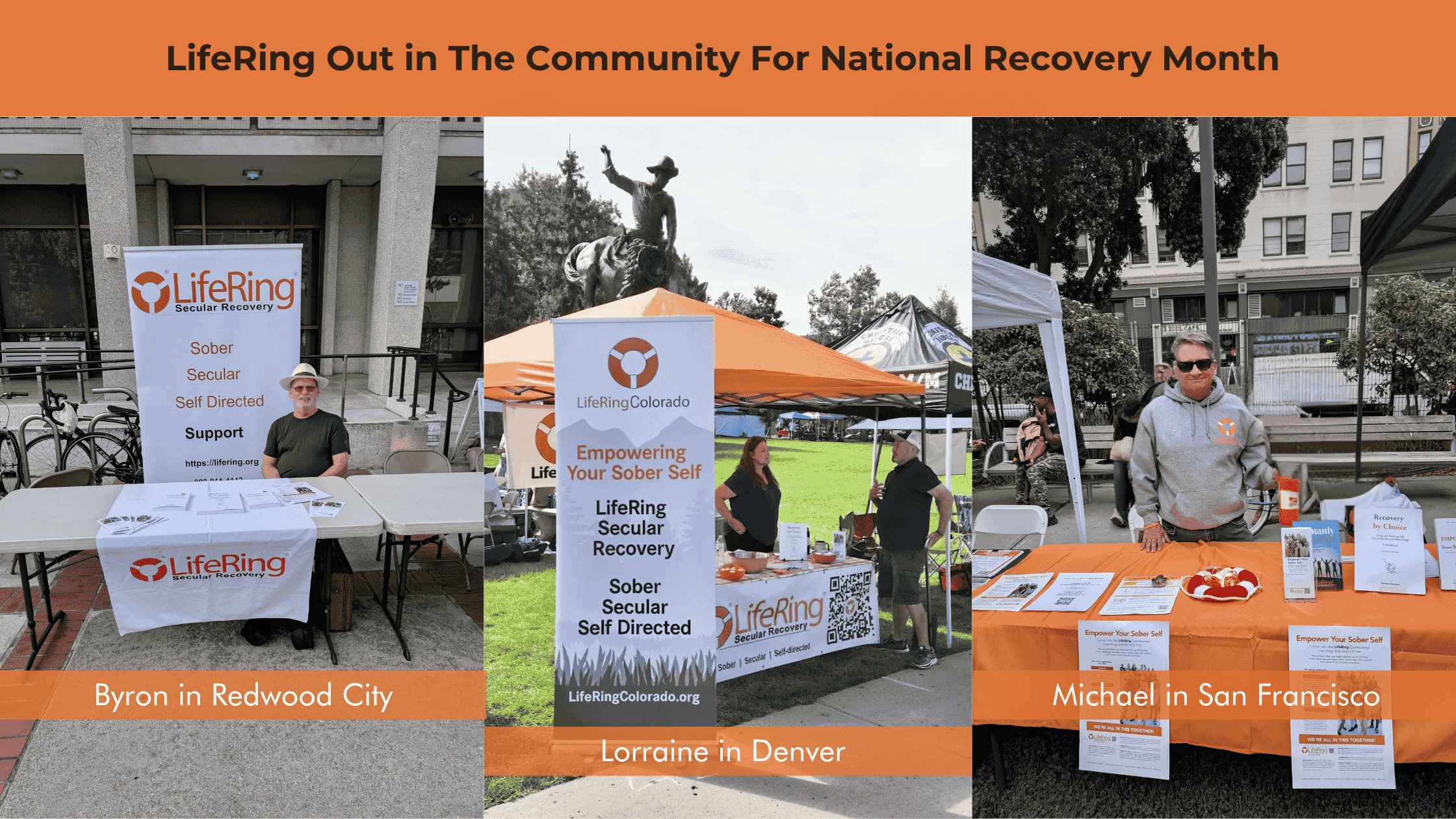
###
###
##
##
## ***September is National Recovery Month, and LifeRing actively participated** **in several community events to promote healing, hope, and transformation in recovery.***
###
###
>
### Denver, CO
LifeRing had a strong presence at Denver’s Annual Rally for Recovery on September 19-20, 2025, which was larger than ever!
LifeRing online convenor Lorraine H,. was joined at the table by LifeRing board member Jonathan M. and former board member Rick T..
The crowd attending this event was incredibly diverse, encompassing all ages, genders, races, and stages of recovery. Attendees ranged from those who had never heard of LifeRing or secular recovery options to those who were familiar but had not yet tried them, as well as individuals who currently attend meetings. This was a fantastic event where hundreds of people celebrated their sobriety journeys, whether it was one day or 30 years, together. Positive vibes were all around when Jonathan and Lorraine shared lots of information about LifeRing Secular Recovery.
You can even check out a video about the Denver rally on LifeRing’s TikTok [here](https://www.tiktok.com/@liferingsecularrecovery/video/7553066702322289934)!
### Redwood City, CA
LifeRing was also represented at Redwood City’s Proclamation Resource Fair on September 9, 2025 by Robert and Byron K. (pictured). This is LifeRing’s 5th time tabling this well-attended event.
> ***“These events are highly inspirational to me, and I believe I do make a difference in the lives of those people who are seeking a choice in recovery,” Robert said.***
### San Francisco, CA
Longtime LifeRingers Robert S. and Michael A. (pictured) attended the San Francisco Recovery Fair at Father Alfred E. Boeddeker Park on September 12, 2025. Robert, who started his LifeRing recovery journey in 2006, said that the event was well-attended, and they met almost 100 people. He said that some had stories to share, some had questions, and others were seeking answers.
This is the 2nd year that LifeRing has been represented at this event, and it was successful in many ways. One way they got the word out about LifeRing was by selling all of the “Recovery by Choice” workbooks they brought and also some volumes of “Humanly Possible.” They also handed out lots of LifeRing wristbands and pamphlets.
### Meetings Online and In Person
The most important way that LifeRing builds communities that make a difference to those in recovery is through meetings that put a face and a voice on recovery. Both Michael and Byron are meeting convenors, in-person and online.
Byron runs a “How Was Your Week?” meeting in-person at[ El Camino Hospital in Mountain View, California at 7:30 pm on Wednesdays](https://meetings.lifering.org/meetings/1026/), which is a popular format of many of our meetings.
Lorraine convenes two popular online meetings: [The Women’s Meeting on Mondays at 5:30pm Pacific](https://meetings.lifering.org/meetings/1232/) and [SNL Early on Saturdays at 5:30pm Pacific](https://meetings.lifering.org/meetings/1095/).
Michael runs several in-person meetings on [Mondays in San Rafael](https://meetings.lifering.org/meetings/1035/) and [Tuesdays in Oakland](https://meetings.lifering.org/meetings/1006/), California. He also convenes the online meetings [OK Boomer at 4:00 pm on Mondays](https://meetings.lifering.org/meetings/1063/) and the [Post-Transplant Liver Spot at 5:30 pm Tuesdays](https://meetings.lifering.org/meetings/1191/).
If you’ve participated in any Recovery Month events in your area you’d like to share with our readers, let us know! Or think about representing LifeRing whenever you get a chance at any event throughout the year!
**Categories:** Post
**Tags:** lifering secular recovery, National Recovery Month, Outreach
---
### [Thanksgiving Day Invitation 2025](https://lifering.org/thanksgiving-day-gathering-2025/)
**Published:** November 8, 2025
**Author:** Bees
**Excerpt:** Join your LifeRing friends for our 5th Annual Thanksgiving Day Social Gathering! Online from 4:00am to midnight+ Pacific Time.
**Content:**
| ## **You’re Invited!** --- ## **LifeRing’s 5th Annual Thanksgiving Social Gathering** #### **Mark Your Calendar!** --- - **When?** Thursday, November 27, 2025 - **What Time?** 4:00am to Midnight+ Pacific Time - **Where?** Online! **[Click To Join Now!](https://lifering-org.zoom.us/j/84659701014?pwd=89YcghXNPvZHCQbKhQNIur2v8fRLMs.1)** [https://lifering-org.zoom.us/j/84659701014?pwd=89YcghXNPvZHCQbKhQNIur2v8fRLMs.1](https://www.google.com/url?q=https://lifering-org.zoom.us/j/84659701014?pwd%3D89YcghXNPvZHCQbKhQNIur2v8fRLMs.1&sa=D&source=calendar&ust=1764676539277654&usg=AOvVaw2IJwtccQK-UfksTD1HzYbx) Meeting ID: 846 5970 1014 \| Passcode: lifering - *This is a social gathering. Verifications will not be issued.* --- #### Pull up a Chair at our virtual Thanksgiving Table! Need a **fun, supportive space** this Thanksgiving? We’ve got you covered from coast to coast – like gravy on… well, everything! The holiday season can bring extra pressure, but it’s also the perfect chance to **connect, unwind, and celebrate** your journey with supportive friends. Whether you’re dodging another Uncle Larry story or simply looking to connect with fellow sober folks, **you are always welcome!** Kick off your winter right with the **LifeRing Annual Thanksgiving Social Gathering** – a full day and night of community, connection, and camaraderie. Drop In Anytime! --- #### Drop in Anytime! This isn’t a formal meeting-it’s an **all-day, all-night social event** designed for anyone seeking a **sober, nonjudgmental space** to spend time with others in recovery. - **Who’s Welcome?** Everyone! You don’t need to be a LifeRing member. This is for anyone at **any stage of recovery** and the **sober-curious**-just bring your appetite for good company! - **The Vibe:** Expect to be welcomed by friends in recovery swapping stories, sharing laughs, and maybe even a recipe or two! - **The Commitment:** Feel free to **drop in anytime** and stay for as long as you like. We support all paths to recovery and everything shared is **confidential**-anonymity is maintained with vigor. **Please Note:** This is a social gathering. Verifications will **not** be issued. We can’t wait to share a moment of **calm and genuine connection** with you this Thanksgiving! **Ready to reserve your spot? Click the link above to register now!** --- ### **We look forward to sharing a moment of calm and connection with you this Thanksgiving!**  |
|---|
**Categories:** Post, Post 2
**Tags:** LifeRIng, sober gathering, Sober holiday, sober party, sober social, sober socializing, sober thanksgiving
---
### [Supporting Veterans in 2025](https://lifering.org/supporting-veterans-2025/)
**Published:** November 11, 2025
**Author:** Bees
**Excerpt:** Today, we honor the service of US Veterans and support their hidden battles. Learn about the unique challenges of substance use in Veterans and the power of peer recovery.
**Content:**
## ** **Veterans Day:
Honoring Service and Supporting Recovery**
As we observe **[Veterans Day](https://department.va.gov/veterans-day/history-of-veterans-day/)**, we honor the profound sacrifices made by those who serve our country. Their dedication protects our freedoms, but for many, the return home brings a new, invisible battle: the struggle with [mental health](https://www.nami.org/your-journey/veterans-active-duty/) and [substance use disorder](https://veteranaddiction.org/substances/) (SUD).
It is vital to shine a light on these unique challenges and underscore that **help is available, and recovery is attainable**.
---
#### The Reality: Invisible Wounds and Substance Use
The transition from military life back into civilian society, coupled with exposure to trauma and the stresses of service, places Veterans at a disproportionately **increased risk of developing SUD**.
- The U.S. Department of Veterans Affairs notes that conditions like [Post-Traumatic Stress Disorder](https://www.va.gov//) (PTSD), anxiety, and depression are common “invisible wounds” among Veterans.
- For some, problematic substance use-including alcohol or drugs-becomes a form of [self-medication](https://deconstructingstigma.org/guides/addiction) to cope with these painful underlying mental health issues.
- It is crucial to understand that **SUD is not a failure of willpower or a moral failing**; it is a complex condition that demands compassion, understanding, and appropriate support. The [stigma surrounding addiction](https://veteranaddiction.org/resources/addiction-stigma/) can make the path to recovery feel isolating, often preventing Veterans from seeking the help they need.
---
#### A Holistic Approach to Healing
Addressing problematic substance use among Veterans necessitates **a holistic approach that encompasses mental, physical, and emotional health**. Treatment must go beyond detoxification to include comprehensive therapies that address underlying issues, including trauma.
- **Therapeutic Interventions:** Proven effective treatments include [Cognitive-Behavioral Therapy (CBT)](https://www.mayoclinic.org/tests-procedures/cognitive-behavioral-therapy/about/pac-20384610#:~:text=CBT%20helps%20you%20become%20aware%20of%20thinking,to%20them%20in%20a%20more%20effective%20way.), group therapy, and **trauma-informed care**. These therapies provide Veterans with crucial coping strategies and supportive environments to process their experiences.
- **Mindfulness and Wellness:** Integrating practices such as yoga and meditation can promote emotional regulation and stress relief. Organizations like the [Wounded Warriors Project (WWP)](https://www.woundedwarriorproject.org/programs/mental-wellness) emphasize this holistic wellness approach.
- **Veteran-Specific Programs:** Tailoring treatment is essential. Many organizations, including the [VA](https://www.va.gov//) (US Department of Veterans Affairs), offer **specialized programs** that incorporate military experiences into treatment, fostering understanding and camaraderie.
---
#### The Power of Peer Support and Community
One of the most powerful tools in combating addiction is **community support**. Veterans thrive in environments where they feel understood, accepted, and can connect with others who share similar experiences.
Building a network through **support groups, community events, or peer mentorship programs** can significantly alleviate feelings of isolation and help dismantle the stigma surrounding mental health and substance use.
---
#### LifeRing Secular Recovery: A Unique Path for Veterans
[**LifeRing Secular Recovery**](https://lifering.org/) offers specialized, secular peer support meetings for Veterans and active personnel, creating a **safe, judgment-free** space focused on **empowerment and self-direction**. By cultivating connection and dismantling the isolation caused by stigma, a holistic model that includes peer support is the key to equipping Veterans with the tools and community they need to successfully take charge of their recovery journey.
[Veteran-Specific Focus Meetings](https://meetings.lifering.org/meetings/?title=&program=&audiences=36&meetingType=&datetime_nextmeeting=&languages=&location=&coordinates=&scope=): LifeRing offers specialized meetings for **Veterans, active personnel, and allies**, creating a safe space for those with similar living experiences.
Examples include:
- - [Wednesday Warriors](https://meetings.lifering.org/meetings/1227/) \| Wednesdays at 6:00am Pacific
- [Veterans and Friends](https://meetings.lifering.org/meetings/1231/) \| Thursdays at 4:00pm Pacific
---
[Co-occurring Disorders Meetings](https://meetings.lifering.org/meetings/?title=&program=7&audiences=&meetingType=&datetime_nextmeeting=&languages=&location=&coordinates=&scope=): LifeRing also hosts meetings tailored to people in recovery with [co-occurring disorders](https://www.nimh.nih.gov/health/topics/substance-use-and-mental-health#:~:text=How%20can%20I%20find%20help,treatment%20for%20opioid%20use%20disorder.), such as SUD alongside mental and emotional health issues.
Examples include:
- - [Shine On](https://meetings.lifering.org/meetings/1243/) \| Sundays at 9:00am Pacific
- [SOAR (Sober & Overcoming ADHD in Recovery)](https://meetings.lifering.org/meetings/1280/) \| Sundays at 3:00pm Pacific
- [Manic Sunday](https://meetings.lifering.org/meetings/1247/) \| Sundays at 5:00pm Pacific
- [Crazy Talk](https://meetings.lifering.org/meetings/1246/) \| Tuesdays at 1:00pmPacific
- [Strange Attractors](https://meetings.lifering.org/meetings/1244/) \| Thursdays at 4:00pm Pacific
---
[Trauma Support Meetings:](https://meetings.lifering.org/meetings/?title=&program=&audiences=32&meetingType=&datetime_nextmeeting=&languages=&location=&coordinates=&scope=) In addition, LifeRing offers meetings tailored for individuals seeking support in [recovery from trauma](https://pmc.ncbi.nlm.nih.gov/articles/PMC3051362/). These meetings provide a safe, peer-driven space for participants to address the role of past trauma in their lives and recovery journeys, alongside substance use disorder (SUD) or other co-occurring challenges.
Examples include:
- - [Trauma Recovery](https://meetings.lifering.org/meetings/1245/) \| Sundays at 7:00am Pacific
- [Surviving Our Truth](https://meetings.lifering.org/meetings/1242/) \| Mondays at 10:30am Pacific
- [Trauma Recovery](https://meetings.lifering.org/meetings/1248/) \| Saturdays at 6:00am Pacific
- [Mosaic](https://meetings.lifering.org/meetings/1236/) \| Saturdays at 4:00pm Pacific
---
[Empowerment Focus:](https://meetings.lifering.org/meetings/) LifeRing emphasizes personal empowerment, equipping individuals with essential tools and strategies to take charge of their recovery journeys. This is core of all LifeRing [meetings and recovery support resources](https://lifering.org/meeting-menu/).
---
#### Moving Forward Together
On this Veterans Day, we must commit to supporting our Veterans year-round. We must advocate for **accessible treatment, fund community programs, and foster environments** where mental health and wellness are prioritized.
If you or someone you know is struggling, reaching out for help is a **sign of strength**, not weakness. Help is available, and recovery is within reach. Let us stand together in support of our Veterans, ensuring they receive the care and respect they deserve.
---
#### **Veteran’s Live Person-to-Person Crisis Resources**
If you are in crisis, or you know someone who is, please seek immediate help.
[Veterans Crisis Line:](https://www.veteranscrisisline.net/)
- - **Call**: 988 and select 1
- **Text**: 838255
- **Chat**: [Start a Confidential Online Chat](https://www.veteranscrisisline.net/get-help-now/chat/)
- **TTY**: 800-799-4889
[Military OneSource:](https://www.militaryonesource.mil/contact-us/#MilLife-Support)
- - **Call**: 800-342-9647
- **TTY/TTD**: Dial 711 and give the toll-free number 800-342-9647
- **OCONUS**: [International Directory](https://www.militaryonesource.mil/resources/tools/international-calling-options/)
- **Chat**: [Start a confidential online chat](https://www.militaryonesourceconnect.org/chat)
---
#### **Additional Veterans Support Resources**
**Mental Health and SUD Support Websites**
- - [VA Mental Health Services](https://www.mentalhealth.va.gov/)
- [WWP \| Mental Health Services for Veterans](https://www.woundedwarriorproject.org/programs/mental-wellness)
- [Military One-Source](https://www.militaryonesource.mil/)
---
**LifeRing Support Resources**
To join a focus meeting (including **Veterans in Recovery and Co-occurring Disorders meetings**) or access LifeRing **recovery resources**, please visit the[ LifeRing Recovery Communities](https://lifering.org/meeting-menu/) webpage.
---
**You can help LifeRing provide peer-to-peer support resources for Veterans, Active Personnel and Allies**
**with your [one-time or monthly donations](https://lifering.org/get-involved-menu/donate/).**
#### **Thank you!**
**Categories:** Post, Post 2
**Tags:** addiction meetings, crisis awareness, LifeRIng, lifering secular recovery, non-religious recovery meetings, suicide prevention
---
### [LifeRing Community Town Hall](https://lifering.org/town-hall-october-2025/)
**Published:** October 22, 2025
**Author:** Bees
**Excerpt:** Your Invited! Join us online Thursday, October 30th at 5:00pm Pacific for the LifeRing Community Town Hall!
**Content:**
## [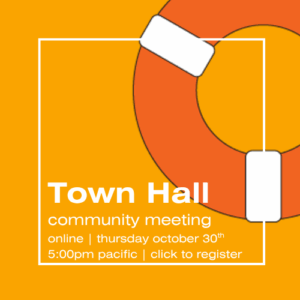](https://www.google.com/url?q=https://lifering-org.zoom.us/meeting/register/xDMYBJjMQH6jNqtbUa1ybw&sa=D&source=calendar&ust=1761411910617954&usg=AOvVaw39TeHjM7rOf-8T-LCcqvqF)Your Voice, Our Future:
LifeRing Community Town Hall
#### **[Provisional Agenda](https://lifering.org/fall-2025-town-hall/)**
We invite **all LifeRing members, collaborators, convenors, and supporters** to join an essential open-forum discussion. This is your chance to actively shape the future of LifeRing.
Come prepared to **share your valuable ex**periences, ask your pressing questions, and offer suggestions that will directly impact our direction and growth in the coming year.
#### **This meeting is for all of us! We need your input.**
- **Date & Time:** Online Thursday, October 30th at 5:00 PM Pacific Time
- **How to Join:** Zoom Meeting Registration: [https://lifering-org.zoom.us/meeting/register/xDMYBJjMQH6jNqtbUa1ybw](https://www.google.com/url?q=https://lifering-org.zoom.us/meeting/register/xDMYBJjMQH6jNqtbUa1ybw&sa=D&source=calendar&ust=1761411910617954&usg=AOvVaw39TeHjM7rOf-8T-LCcqvqF)
#### Come share your vision for our mission!
---
#### **You can support LifeRing’s mission [with your one-time or sustaining donations](https://lifering.org/get-involved-menu/donate/).**
#### **Thank You!**
*Updated from original LifeRing Secular Recovery blog posted on Halloween 2024.*
**Categories:** Post, Post 2
**Tags:** alcoholic, cirrhosis, LifeRIng, lifering secular recovery, LifeRing Town Hall, liver, liver awareness, liver meetings, liver patient meetings, the liver spot
---
### [New ADHD Meeting Up and Running](https://lifering.org/new-adhd-meeting-up-and-running/)
**Published:** October 21, 2025
**Author:** Bees
**Excerpt:** LifeRing is proud to introduce our newest focus meeting: SOAR (Sober & Overcoming ADHD in Recovery).
**Content:**
# And It’s National ADHD Awareness Month!
 SOAR convenor Billy S. with Patricia, an adorable sloth friend he met in Honduras.
Just in time for National ADHD Awareness Month (U.S.), we’re pleased to announce a new online Focus Meeting which just started on Sunday 10/19 called SOAR (Sober & Overcoming ADHD in Recovery).
We conducted a Q&A with the meeting’s convenor, Billy S., who was kind enough to share about himself and his own journey through ADHD and substance use, and not only what led him to recovery, but to LifeRing and his desire to start this meeting:
**How did you get started with LifeRing?**
I checked myself into rehab in April (marking the first time I’ve ever gotten sober in my adult life) and the program there, despite nominally supporting multiple pathways, relied entirely on the 12-Steps. I gave it an honest try, but I just knew it wasn’t for me. A staff member told me about SMART, and it ticked most of the boxes, but my recovery toolkit didn’t quite feel complete. I Googled “secular recovery” and discovered LifeRing. I found it to be more community- centric, and it just felt more warm and inviting. The Danes have a word (“hygge”) which roughly translates to “coziness”. It’s used to describe a kind of homey comfort. And that’s the first word that comes to mind when I think of LifeRing (don’t ask me how it’s pronounced, though).
**Is this your first time convening a meeting, or do you already have another meeting going?**
This is my first meeting! I actually took the SMART facilitator training with the intention of starting a meeting on that platform, but LifeRing kinda stole my heart over the past few months so I knew I wanted to do one here instead.
**What gave you the idea to start this particular meeting? Do you have ADHD yourself?**
I do. As soon as I learned that LifeRing has co-occurring meetings, I knew it had to be done. I think most people think of conditions like depression or PTSD in the context of co-occurring disorders, but there’s a missed opportunity for the “ADHDer market”. My mind was already made up, I just had to wait (eagerly) until I met the 6-months-sober rule for convening a meeting.
**How ADHD has affected your life, and how are you handling it now in recovery?**
ADHD has had a massive impact on my life. I wasn’t diagnosed until high school, so I spent most of my early years struggling and wondering what was “wrong” with me. A lot of people think of ADHD as this harmless, sort of quirky condition that just makes someone a little scatterbrained, but for me, it’s been absolutely devastating. I failed out of college, and that’s around the time I started drinking heavily to cope with the self-loathing that came with feeling like I was constantly falling short. It’s cost me job opportunities, relationships, and a lot of confidence along the way. The world really isn’t designed with ADHDers in mind. We’re held to the same standards at work, in school, and in social situations, so we often have to work twice as hard just to keep up. That can lead to burnout really quickly. Of course, everyone experiences it differently, but for me it’s been a long, difficult road.
Recovery has made a huge difference. I mean, the alcohol definitely wasn’t helping, and now I’m learning how to manage ADHD in healthier ways. People with ADHD have an underdeveloped prefrontal cortex (the part of the brain responsible for executive functions like planning, working memory, and impulse control) so I’ve been focusing on finding strategies to strengthen or supplement those areas. I’ve been reading a lot, experimenting with new tools, and figuring out what works for me.
Unfortunately, ADHD isn’t really something you can “talk therapy your way out of,” but having the right tools makes a big difference. That’s part of why I wanted to start this meeting, to create a space where we can share those tools, learn from each other, and navigate a world that isn’t built for people who have to re-read the same page five times or tear the house apart looking for their car keys every other day (on a side note, thank goodness for remote work — I can’t tell you how many times I showed up late to the office for exactly that reason).
**Do you feel that any of the issues you had with substance use prior to recovery has any direct tie to ADHD? Why or why not?**
Absolutely. I drank as a way of coping with what I deemed to be my failures caused by my ADHD. The self-hatred and frustration that often come with the fallout of ADHD can be crippling.
I was prescribed stimulants, which worked miracles for my ADHD symptoms, but it also fueled my drinking (or at least it allowed me to drink a lot more. I mean, what else is there to do when you’re the only one still awake at 3am on a Tuesday?). Once they started to become less effective I’d get prescribed more and more until I was maxed out, and even that wasn’t enough. Then I drank even more to try to compensate for what I call the “dopamine deficit”. It’s a really insidious negative feedback loop. I definitely wouldn’t place the blame squarely on my ADHD, but it certainly played a huge role in my alcohol use disorder.
**What can people expect in this meeting?**
There will be a big emphasis on sharing what works best for us, both in terms of overcoming our substance use and ADHD. I’d like for us to set small weekly goals and (gently) hold each other accountable (you know, like reading a page of a book or getting started on a project). We’ll celebrate sobriety, complain about our ADHD pitfalls, and of course share some laughs about our more lighthearted ADHD experiences (like how I found myself staring into my freezer last week perplexed by the stick of pepperoni I had apparently placed in there the day prior). Note to self, pepperoni does not belong in the freezer.
**Do you have any other information you’d like to share, or anything else you’d like to add?**
I’d love it if we all had our cameras on; I’m not making it a requirement, but I think that added personal touch is so important in recovery. At the same time, I don’t want to scare away our camera shy participants, but my hope is that they’ll quickly ease into it. This will of course be an exceedingly tolerant and non-judgmental forum where I want everyone to feel comfortable.
I also want to emphasize that you don’t necessarily need a proper ADHD diagnosis to attend; I’m not looking at anyone’s medical charts. If you suspect you have it, that’s sufficient qualification.
Lastly, I just want to say that I’m so excited to start this journey with all of you beautiful Liferingers. See you on Sundays.
**SOAR meetings happen every Sunday at 3:00PM (Pacific Time). Click [here](https://meetings.lifering.org/meetings/1280/) to get the Zoom link and additional meeting info.**
We’d also like to share a few links to some resources for anyone who has a friend or loved one with ADHD, who suspects themselves may have ADHD, or who’s been officially diagnosed and looking for any/all information and helpful how to’s for managing day-to-day life with ADHD. We’ll begin with the the ADHD Awareness Day website:
<https://www.adhdawarenessmonth.org/>
[17 ADHD Hacks That Actually Work](https://www.youtube.com/watch?v=0RxnN-lPV1Y)
[Dr. Edward Hallowell, ADHD expert, author, treatment provider, and fellow traveller on the ADHD journey](https://drhallowell.com/)
[The Dopamine Dispatch on Substack](https://divergentcoachkelly.substack.com/)
**Categories:** Post
---
### [Give the Gift of Hope](https://lifering.org/gift-of-hope/)
**Published:** December 12, 2021
**Author:** Bees
**Content:**
### [](https://lifering.org/donate/)**Hope is Where The Heart Is**
***Let me introduce you to my family. They’ve been with me since I first stumbled over the front steps and crawled up to my room at 15 through the day I told them I was quitting some 35 years later.***
For 35 years, my family lived quietly with the dread of my addiction. They watched as I stumbled over front steps and crawled to my room, not just at 15 but so many times after.
They were the ones who answered the late-night phone calls, the ones who woke with worry, the ones who wondered **where I could be and what could have happened**.
They stood with me in the shadows where I was lost and they celebrated with me during the small moments of brightness that flickered and faded. They never stopped loving me, even when it made it impossible.
---
> #### ***Is this true? Can this really be happening?***
---
On the the day I told them I was quitting, the shock on their faces was almost the same as that first night when I was 15. Again, they asked “Can this be true? Is this really happening?” But this time, their eyes held more than just surprise. Their expressions of bewilderment now shined with **hope**, a reflection of their immense love and their profound desire for me to succeed. They had been silently wishing for this day for so long.
Now, almost three years into my recovery, they are still with me, but in a new way. As my confidence has grown, their hope has grown alongside it. I see it in their faces-the relief, the joy, and the immense **pride**. The infinite sadness they once held has been replaced by a powerful belief in me. **They finally believe in me again, and that is a priceless gift for all of us.**
I fostered my own hope for recovery in a LifeRing Saturday Chatroom with a group of supportive, strong peers-some with more sober time under their belts and others like me, just weaned off the bottle. Us young’uns shared our challenges, built our own toolboxes, and leaned on the experiences of those with more. We all shared a common goal and a common hope: recovery.
I was lucky to find LifeRing. Your donation will help us reach more people searching for self-empowerment through peer-to-peer recovery support. That’s some serious gifting, my friends!
You can give the **gift of hope to other families** with loved ones in recovery by making a one-time or monthly donation:
[](https://lifering.org/donate/)
Thank you from my family and from all of us who live in hope of recovery,
Sue
LifeRing Community Member, 2019
**Categories:** Post
---
### [LifeRing Celebrates Recovery Month: Choice in Recovery](https://lifering.org/lifering-celebrates-recovery-month-choice-in-recovery/)
**Published:** September 13, 2020
**Author:** Bees
**Content:**
One of the major tenets of LifeRing’s secular approach to sobriety is the revolutionary (some would call it rebellious) concept of “choice in recovery.” What does that mean? It means that we are anything but a “one-size-fits-all” support system that not only makes room for the individual sober self living inside all of us but actually accommodates it. I know – blasphemous, right? But the reality is, like a lot of other human afflictions, addiction lies on a spectrum – some of us are high-functioning people managing careers, families, and homes quite successfully in spite of abusing our drugs of choice, and others of us are like part of a new zombie apocalypse, shells of ourselves living out on the streets in cities around the country, who have lost everything to get nothing more than our next fix. High bottom, low bottom, no bottom but death; most of us lie somewhere in between. That is because for as alike as all of us are, we are also as unalike in ways we can’t often explain either to ourselves or to others but that make us the individuals just the way we are, and not everything is going to resonate with everyone all of the the time. Some of us need tough love, some of us need just love, and while they are not mutually exclusive some of us just don’t respond well, if at all, to one or the other. The best part about choice in recovery? It means that if it works for you, then great! Keep doing it! But if it doesn’t work for you, guess what? It doesn’t mean there’s something so fundamentally wrong with you that you are incapable of being helped, it means there’s nothing wrong with you at all, it’s just the one thing or the other you tried didn’t work for you, and that’s OK. Keep looking – give things your time and concerted effort, but know you don’t have settle for something that feels wrong to you because everyone else thinks you should or your recovery isn’t valid. Easy? No. Necessary? You are in recovery – you are not dead, and not everything you do or think or say is wrong by virtue of your having an addiction. In fact, you still have the remarkable ability to make good choices and recognize the road you’re on for what it is right, wrong, or indifferent, and change, stay, or correct the course as needed. A couple of the phrases I’ve heard [in our e-mail groups](https://lifering.org/email-groups) over the years are “It takes what it takes” and “I’ll stand on my head in the middle of the street if it’ll keep me sober”, and both of those things are really the long and the short of any recovery program: They start and end with us. As a prime example of all of the above, I’ll leave you with an invitation to [\#MentalHealthMonday](https://www.eventbrite.com/e/shecelebratesconnection-she-recovers-mental-health-educational-series-tickets-118572330031) an online educational series event hosted by the fantastic [SheRecovers Foundation](https://sherecovers.org/) featuring one of our own, LifeRing Board of Directors member Mary Beth O’Connor happening on Monday, September 14 at 9:00 PDT. Click [here](https://www.eventbrite.com/e/lifering-secular-recovery-she-recovers-mental-health-educational-series-tickets-120072647521?utm-medium=discovery&utm-campaign=social&utm-content=attendeeshare&aff=esfb&utm-source=fb&utm-term=listing&fbclid=IwAR3KIaYlrs5caBRaM-V5n6XkRsZBJZaQTFO1CM9S3ElEDeBf2RCuY8Ubps0) for more information. Take it easy, Bobbi C.
**Categories:** Post
---
### [September is Recovery Month!](https://lifering.org/september-is-recovery-month/)
**Published:** September 1, 2020
**Author:** Bees
**Content:**
LSR is the abbreviation we’re known by: L is for LifeRing, S is for Secular, and R is for Recovery. It’s the R we’re celebrating throughout this month in the U.S. as part of National Recovery Month. Since also we’re an international organization that encourages crafting one’s own recovery program, we’ll quite happily drop the “National” bit and sound the Recovery horn for everyone everywhere who wants to recover, is in the midst of recovering, or has recovered from addiction. It’s a month to focus on the R being who we are, what we’re about, and what we do to share our corner of the recovery community with the world. It’s a month to participate in recovery-related events, curate information from multiple resources, and offer hope, inspiration, and encouragement to those who need it. Check out the following links to see what’s happening this month in your community if you live in the U.S. and online even if you don’t: <https://rm.facesandvoicesofrecovery.org/><https://www.recoverymonth.gov/> You’ll see more from us here, as well. In the meantime, wishing all of you all the best! :) Bobbi C.
**Categories:** Post
---
### [Did You Know LifeRing is on Social Media?](https://lifering.org/social-media/)
**Published:** March 17, 2022
**Author:** Bees
**Content:**
|  |
|---|
One of LifeRing’s greatest successes is our interaction as a community. We’ve extending LifeRing Community platforms to include social media.
LifeRing meetings encourage crosstalk between group members resulting in a deeper understanding of self and personal accountability. This is a rewarding experience, but sometimes you just wanna post up a picture. We get it. We got you!
During the month of February, we showcased long-standing [LifeRing interactive support channels](https://lifering.org/lifering-winter-newsletter-blog/) you may not have known about. Today, we’re focusing on LifeRing social media outlets. Check it out:
[**Reddit**](https://www.reddit.com/r/lifering/)
Created in April 2014, [r/lifering](https://www.reddit.com/r/lifering/) shares upcoming LifeRing events, personal shares and open dialog among people in recovery. It’s not the biggest sub, but you know the folk there speak your language! 129 active members are starting up a new conversation about “[Why Are You a LifeRinger](https://www.reddit.com/r/lifering/comments/stja1h/why_are_you_a_liferinger/)?” Bring your cute little avatar over to [r/lifering](https://www.reddit.com/r/lifering/) and tell us why you’re a ‘Lifer! It’s okay. You can bring a friend, too! [**YouTube**](https://www.youtube.com/@LifeRingVideos)
What?? LifeRing has their own YouTube channel? You betcha! Now, this is worth exploring further! Don’t miss these gems caught on video:
- Longtime ‘Ringer Hawaiian crooner Chet bringing us a [Song for LifeRing](https://www.youtube.com/watch?v=h3PUNharVug)
- [All About LifeRing](https://www.youtube.com/playlist?list=PL-eFWV0C13HgvLQAq2o8kXLo6wyaGuzlt) interviews and presentations
- 2021 LifeRing Annual Meeting Keynote speakers: [LifeRing Co-founder Martin Nicolaus](https://www.youtube.com/watch?v=dOeMS2rBB7M&list=PL-eFWV0C13HgznzRxV5siFBZO7wk766_V&index=2&t=35s), [Dr. KJ Foster](https://www.youtube.com/watch?v=4XgHhQ6RQJs&list=PL-eFWV0C13HgznzRxV5siFBZO7wk766_V&index=1&t=4s), and our own [Dr. Michele Kenny](https://www.youtube.com/watch?v=7dMT0wx142A&list=PL-eFWV0C13HgznzRxV5siFBZO7wk766_V&index=3), author of [Keeping Covid Sober](https://lifering.org/you-are-not-alone/)
This is just a sampling of the good things available on the [LifeRing Secular Recovery YouTube Channel](https://www.youtube.com/channel/UCLux6HXzM1wnAIqQM32uOhg). Pass the popcorn over here!
[**Facebook**](https://www.facebook.com/LifeRingSR)
Looking for a little inspiration? Pop into our new [Facebook page](https://www.facebook.com/LifeRingSR/)! Daily images and supportive posts reach almost 5,500 viewers across the globe. A big shout-out to our very own FaceBrook for keepin’ the beat and keepin’ it strong. Holla!! [**X**](https://x.com/lifering)
LifeRing is also gaining a presence on X with over 655 followers. [**Instagram**](https://www.instagram.com/liferingsecularrecovery/)
Our LifeRingRecovery Instagram page allows us to connect with so many people instantly. Currently boasting 58 inspirational images and motivations, Instagram creates a place for our community to reflect, recharge, and interact with us and each other.
Whatever your social media preference, all LifeRing pages consistently deliver inspiration. Drop in if you “like”.
| ***Too busy to remember all of these links? No problem!** Simply scroll to the footer of any LifeRing webpage and look for the social media icons with quick-links in the bottom right-hand column. Imagine – All of this is only a click away. Go get your social on! Questions or comments about LifeRing Social Media can be sent to <bcampbell@lifering.org>. Thanks, Bobbi!* |
|---|
**Categories:** Post
---
### [Why Summer Splash?](https://lifering.org/why-summer-splash/)
**Published:** August 7, 2025
**Author:** Bees
**Excerpt:** Help people stay afloat this summer! We invite you to support LifeRing's mission to provide secular, peer-to-peer recovery support, ensuring everyone has a lifeline when they need it most.
**Content:**
## **Why Summer Splash?**
Summer is synonymous with water-poolside barbecues, lakeside gatherings, and water-related vacations with family or friends. These moments of joy and togetherness can be powerful reminders of connection and resilience. For those struggling with addiction, summer’s waters can feel overwhelming, but they can also symbolize the possibility of renewal.
---
#### **LifeRing’s logo, imagery of a life preserver-a simple yet powerful tool-reflects our mission: to offer timely, tangible support when someone is struggling to stay afloat.**
---
By channeling the spirit of summer and focusing on sobriety, secularity, and self-empowerment, we invite you to **throw a lifeline** to those seeking recovery.
#### How You Can Be the LifeRing
Everyone has the power to make a difference. This summer, we encourage you to **get involved and help someone in need** of a LifeRing. Here are just a few ways you can assist those needing support:
- When you attend online meetings, **share some of your lived experiences** navigating the treacherous waters of drug and/or alcohol dependence.
- If you prefer in-person meetings, offer to **meet afterward for coffee** to discuss specific recovery challenges.
- LifeRing chat group members can **write about what has been helpful** to get out of the deep end of the pool and into sobriety safety.
#### Where Your Support Goes
Maybe it’s easier for you to donate your support. Every donation ties to a lifeline. Funds raised through this Summer Splash will be dedicated to:
- Preparing **new peer convenors** to lead LifeRing meetings
- Supplying LifeRing [*Recovery by Choice*](https://lifering.org/bookstore/books/rbc/) workbooks to **treatment and recovery centers**
- Contact with recovery professionals to **ensure awareness** of secular and abstinence-based recovery options
With your help, we can ensure no one **faces the choppy waves of recovery** alone.
#### Conclusion
As we gather by the water and savor the summer sun, let’s remember the **power of connection** and compassion. Together, we can offer hope, healing, and a path to recovery-one LifeRing at a time.
We invite you to join us, **throw a LifeRing, and help someone catch the wave of recovery**. If you enjoy LifeRing meetings, think about supporting the organization that supports you. This summer, let’s make a difference that will ripple outward for years to come.
---
### **Throw a LifeRing to people in recovery!
Your [one-time or sustaining donation](https://lifering.org/get-involved-menu/donate/) keeps sobriety afloat!**
Thank you!
**Categories:** Post
**Tags:** life ring, LifeRIng, non-religious recovery, nonreligious addiction recovery, secular recovery
---
### [Grab A LifeRing: Summer Fundraiser](https://lifering.org/grab-a-lifering/)
**Published:** July 30, 2025
**Author:** Bees
**Excerpt:** Summer can be tough, but LifeRing offers a lifeline. Our Summer Splash campaign helps people find sobriety. Your contribution can make all the difference. Join us and throw a LifeRing!
**Content:**
#### 
## ***Join Us to Offer Hope and Healing-One LifeRing at a Time***
Summer is a time of renewal and connection-a season where water invites us to gather, refresh, and restore. Yet, for many individuals and families, summer’s warmth can feel distant, overshadowed by the challenges of substance misuse. As we celebrate sun-filled days and water’s embrace, it’s vital to remember those in our community who are reaching out for support and a chance at recovery.
That’s why we’re launching “Grab a Recovery LifeRing” this summer. Together, we can make this summer a turning point-a time when no one has to swim alone.
---
### **The journey to recovery is not easy, but with the right support, every person has the potential to reclaim their life, rebuild relationships, and rediscover hope.**
---
The journey to recovery is not easy, but with the right support, every person has the potential to reclaim their life, rebuild relationships, and rediscover hope.
#### **Raise a LifeRing-Your Gift Matters**
Just as a life raft tossed into turbulent waters can save a life, your support of LifeRing offers another chance and renewed hope. Here’s how your generosity can change lives:
- **$25** funds **rent** for a local meeting space
- **$50** provides **materials** for a 6-month sober member to start a new meeting
- **$100** buys four Recovery by Choice **books** for rehabilitation centers
- **$1,000** supports operational technology **innovations**
Every donation creates another circle of support, rippling out through our community.
#### **Or Throw a LifeRing-Get Involved**
Are you ready to throw a LifeRing? Here’s how you can make a difference this summer:
- [Volunteer](https://lifering.org/get-involved-menu/volunteer-form/) your time or expertise to advance recovery efforts
- [Tell your story](https://lifering.org/get-involved-menu/share-your-story/) (anonymously or not) so someone else may hear and feel seen
- Share this info on social media with **\#GrabaLifeRing**
- Become a [monthly sustaining donor](https://lifering.org/get-involved-menu/donate/) to support ongoing recovery year-round
As we gather by the water and savor the summer sun, let’s remember the power of connection and compassion. Together, we can offer hope, healing, and a path to recovery-one LifeRing at a time.
We invite you to join us, raise or throw a LifeRing, and help someone grab the wave of recovery.
#### **We believe that recovery is a personal journey, and with the right support, anyone can achieve their goals.**
---
#### **Together, we can empower more personal recovery journeys, whether on the high seas or in our local communities [Please donate today!](https://lifering.org/get-involved-menu/donate/)**
**Thank you!**
**Categories:** Post
**Tags:** life ring, LifeRIng, non-religious recovery, nonreligious addiction recovery, secular recovery
---
### [LifeRing Introduces Our First Family & Friends Weekly Meeting](https://lifering.org/family-and-friends-weekly-meeting/)
**Published:** March 4, 2022
**Author:** Bees
**Content:**

LifeRing Secular Recovery is proud to announce a new weekly Friends and Family meeting every Sunday at 12:00pm Pacific Time. This meeting focuses on the needs of people who have a recovering person in their lives.
The weekly LifeRing Friends & Family meeting is built on the LifeRing “How Was Your Week?” check-in format and follows the principles of all LifeRing meetings: We welcome people who are looking for a safe, nonjudgmental space to express themselves and explore their support objectives. We treat everyone with respect and everything shared is confidential.
This meeting is centered on family and friends who care about someone in substance use recovery. It will be determined by the core group if these meetings may also include those in recovery.
| **LifeRing Secular Recovery Family & Friends** This weekly focus meeting is centered on family and friends who care about someone in substance use recovery. You can find current Family & Friends meetings on the [LifeRing Meeting Calendar](https://meetings.lifering.org/meetings/?title=&program=5&audiences=&meetingType=&datetime_nextmeeting=&languages=&location=&coordinates=&scope=). |
|---|
**Categories:** Post
---
### [The Ultimate Act of Kindness](https://lifering.org/organ-donation-month/)
**Published:** April 19, 2025
**Author:** Bees
**Excerpt:** Give a little piece of yourself! As we observe National Donate Life Month, consider becoming an organ donor and giving someone a second chance at life. It's the ultimate act of kindness.
**Content:**
#### 
## **Why Organ Donation Changes Everything**
Every year, countless individuals face life-threatening illnesses, their hopes hanging on the possibility of a transplant. Among these vital organs, the liver holds a unique and crucial role. It’s the body’s metabolic powerhouse, responsible for detoxification, protein synthesis, and so much more. When the liver fails, the consequences can be devastating. This is why understanding organ donation, particularly liver donation, is so incredibly important.
And as we recognize [**National Donate Life Month**](https://donatelife.net/how-you-can-help/national-observances-celebrations/ndlm/) and [**World Liver Day**](https://worldliverday.org/), it’s a poignant time to reflect not only on the significance of liver health but also on the profound impact of becoming an organ donor.
#### **The Sobering Truth: Liver Disease is a Major Health Challenge**
As highlighted by recent awareness campaigns, liver disease is a significant global health concern. Millions are affected by various conditions, including viral hepatitis, non-alcoholic fatty liver disease, cirrhosis, and liver cancer. For many facing end-stage liver disease, a liver transplant is their only chance at survival. The stark reality is that the need for liver transplants far outweighs the availability of healthy organs.
#### **The Lifeline of Liver Donation: A Second Chance at Life**
Liver donation offers a beacon of hope for those whose lives are threatened by liver failure. A healthy liver, or even a portion of one in the case of living donation, can be transplanted into a recipient, giving them a second chance at life – a chance to see their children grow, to pursue their dreams, and to simply experience more tomorrows.
---
#### **The measure of a life is not its duration, but its donation.** – *Peter Marshall*
---
There are two main types of liver donation:
- **Deceased Donation:** This occurs when a person who has been declared brain dead or has suffered irreversible cardiac death donates their healthy liver. One deceased donor can potentially save the lives of multiple people through organ donation.
- **Living Donation:** Remarkably, the liver is the only internal organ that can regenerate. This makes living liver donation possible, where a healthy individual donates a portion of their liver to someone in need. The remaining part of the donor’s liver will regrow to its normal size and function, as will the transplanted portion in the recipient. This incredible ability offers a lifeline to patients who may not survive the wait for a deceased donor.
#### **International Liver Day: An Opportunity to Raise Awareness**
Observed annually, International Liver Day is a crucial opportunity to raise awareness about liver health, liver diseases, and the importance of early detection and prevention. It also serves as a vital platform to highlight the critical need for liver donation. On this day, healthcare organizations, patient advocacy groups, and individuals come together to educate the public, support those affected by liver conditions, and encourage people to consider becoming organ donors.
#### **Why Become an Organ Donor? The Ripple Effect of Generosity**
Choosing to become an organ donor is a selfless act of compassion that can have a profound impact. It’s about giving the gift of life, offering hope where there was once despair. By registering as an organ donor, you have the potential to:
- **Save Lives:** Your organs, including your liver, can save the lives of individuals suffering from end-stage organ failure.
- **Improve Quality of Life:** For transplant recipients, a new organ means a chance to live a healthier, more fulfilling life, free from the debilitating effects of their illness.
- **Heal Families:** Organ donation provides comfort and hope to the families of recipients, knowing their loved one has been given a second chance. It can also bring a sense of meaning and purpose to the families of donors during a time of profound loss.
#### **Take Action: Register to Be an Organ Donor Today**
The process of becoming an organ donor is simple. You can register online through your local organ donation registry or indicate your wish on your driver’s license. Talk to your family about your decision so they are aware of your wishes.
As we observe International Liver Day, let us not only focus on the importance of maintaining a healthy liver but also recognize the incredible power of organ donation. By choosing to become an organ donor, you can offer a lifeline to someone in need, giving them the most precious gift of all: the gift of life. Consider the impact you could have and register to be an organ donor today. Your decision could be the hope someone desperately needs.
---
#### **How Can I Help?**
**[Be a living donor](https://www.ucsfhealth.org/lp/living-organ-donors)**
The liver of a live donor is back to work within 3 months. This from our friends at [UCSF Health](https://www.ucsfhealth.org/clinics/liver-transplant-program):
- Living donor liver transplants are possible because the liver has the unique ability to regenerate itself. In the procedure, the surgical team removes the diseased liver from the recipient, then transplants a portion of the donor’s liver in its place. [The donor’s remaining portion of liver quickly grows back to its original size, within eight weeks or sooner](https://www.ucsfhealth.org/treatments/living-donor-liver-transplant).
**[Sign up to be an organ donor](https://www.organdonor.gov/sign-up/how)**
Nothing could be easier — just complete the form and apply the sticker to your ID! [**Donate your body to science**](https://meded.ucsf.edu/frequently-asked-questions-willed) (Anatomical Donation)
You can specify that you want transplantable organs to be donated during the registration process **[Support organ regeneration research](https://www.nigms.nih.gov/education/Pages/Regeneration.aspx)**
Cool things are afoot:
- [Liver in a Box ](https://www.mayoclinic.org/medical-professionals/transplant-medicine/news/liver-in-a-box-offers-potential-for-providing-liver-transplant-to-more-patients/mac-20533186)\| Increasing viability and distribution
- [Custom-built Livers](https://pubmed.ncbi.nlm.nih.gov/37322580/) \| 3D Liver Bioprinting
- [Xenotransplantation](https://pmc.ncbi.nlm.nih.gov/articles/PMC9053494/)\| The first [pig-liver transplant](https://www.nature.com/articles/d41586-024-00853-8#:~:text=It%20has%20been%20surgically%20removed,School%20of%20Medicine%20in%20Indianapolis.)
**[Donate to LifeRing](https://lsrtesting.com/get-involved-menu/donate/)** LifeRing hosts a meeting for people in recovery who are also diagnosed with SUD medical conditions. [The Liver Spot](https://lsrtesting.com/lifering-liver-spot/) serves an average of 61 people every week who turn to this meeting for patient-to-patient support. This is only one of the many LifeRing meetings and resources that help people overcome substance use challenges. Support our efforts with your [one-time and recurring donations](https://lsrtesting.com/get-involved-menu/donate/). Please also [consider putting some skin in the game](https://lsrtesting.com/get-involved-menu/)!
---
#### **Support and Information Resources**
#### [**LifeRing Online Meeting: The Liver Spot**](https://lsrtesting.com/lifering-liver-spot/) **\| Wednesdays at 5:30pm Pacific**
LifeRing hosts a focus meeting for people in recovery who are also diagnosed with [health issues resulting from substance use disorders](https://www.cdc.gov/alcohol/facts-stats/?CDC_AAref_Val=https://www.cdc.gov/alcohol/features/excessive-alcohol-deaths.html). The Liver Spot is the first of its kind: Built on the LifeRing “How Was Your Week” (HWYW) check-in format, this special meeting offers an opportunity for open patient-to-patient knowledge exchange.
**[Zoom Meeting Link ](https://us02web.zoom.us/j/85606148917?pwd=T0ZKMk1jVXBud1A0YjRKWnd2bmg4UT09)** \| Meeting ID: 856 0614 8917 \| Passcode: 162086
Contact convenor for more information: <sue@lifering.org>
#### **[American Liver Foundation](https://liverfoundation.org/) (ALF)**
The American Liver Foundation (ALF) was created in 1976 by the American Association for the Study of Liver Disease (AASLD). This organization of scientists and healthcare professionals was concerned with the rising incidence of liver disease and the lack of awareness among both the general public and the medical community. ALF’s mission is to promote education, advocacy, support services and research for the prevention, treatment and cure of liver disease.
#### **[American Association for the Study of Liver Disease](https://www.aasld.org/) (AASLD)**
AASLD is the leading organization of scientists and health care professionals committed to preventing and curing liver disease. We foster research that leads to improved treatment options for millions of liver disease patients. We advance the science and practice of hepatology through educational conferences, training programs, professional publications, and partnerships with government agencies and sister societies.
#### **[Sober Livers](https://soberlivers.org/)**
An organization for patients with alcohol use disorder and alcohol-related liver disease. Patients seeking support that only comes from those that have walked in the same shoes suddenly realized they are not alone.
---
#### **You can help LifeRing provide peer-to-peer resources like The Liver Spot with your [one-time or sustaining donations](https://lsrtesting.com/get-involved-menu/donate/).
Thank you!**
**Categories:** Post
**Tags:** LifeRIng, liver, liver donation, Organ donation, the liver spot
---
### [Celebrating True Independence](https://lifering.org/celebrating-true-independence/)
**Published:** July 3, 2025
**Author:** Bees
**Excerpt:** Celebrate true independence this July 4th: the freedom from what once controlled you. Discover strategies to enjoy the holiday and honor your sobriety with our guide!
**Content:**
#### 
## **Your Sober Guide to a Happy July 4th!**
**Independence Day.** For many, it’s a time of fireworks, barbecues, and gathering with loved ones. It’s also a day that can present unique challenges for those of us in recovery.
The prevalence of alcohol, the pressure to socialize, and the general celebratory atmosphere can feel like a minefield. But here at LifeRing Secular Recovery, and for all members of recovery programs, we want to remind you: **You got this!**
This Independence Day, let’s celebrate a different, and perhaps even more profound, kind of freedom – **the freedom from addiction that we are all working so hard to achieve and maintain.**
What is true independence? **It’s the ability to make your own choices, to live authentically, and to direct your own life.** For us in recovery, **this holiday becomes a powerful reminder of the profound independence we have gained.** We’ve declared our own personal independence from substances that once dictated our lives. We’ve fought for – and continue to fight for – -the right to choose sobriety, clarity, and self-determination. **That’s freedom worth celebrating!**
---
### **Your sobriety is a powerful freedom worth celebrating!**
**Declare your independence this July 4th!**
---
Here are some strategies and reminders to help you to enjoy the holiday while celebrating your hard-won independence!
#### **Plan Your Declaration of Sober Independence** This is your superpower. Join the day with a flexible strategy you can easily navigate.
- **Know your ignitors:** What situations or emotions typically make you crave a drink or use? Acknowledge them. Forewarned is forearmed.
- **Have an exit strategy:** It’s okay to leave if you feel uncomfortable or tempted. Driving yourself or having a ride-share app ready gives you the ultimate freedom to depart when you need to.
- **Pre-arrange sober activities:** Declare your preference! Suggest alcohol-free alternatives to your friends and family. Think about a picnic in the park, a sober board game night, or watching fireworks from a quiet spot.
#### **Prioritize Your Personal Rights**
Remember why you started this journey. Your sobriety is the most important thing you possess – it’s your foundation for true freedom.
- **Pack your own sober beverages:** Bring a cooler filled with sparkling water, non-alcoholic beers, or festive mocktails. This gives you a go-to option and avoids awkward questions, affirming your choice.
- **Eat well:** Staying hydrated and well-fed can help manage cravings and stabilize your mood, keeping your mind clear and independent.
- **Don’t be afraid to say “no”:** A simple “No, thank you” is a complete sentence. You don’t owe anyone an explanation. This is your right to choose.**
#### **Forge Your Alliances**
You are not alone in this fight for freedom!
- **Reach out to your LifeRing peers** (or your program’s equivalent): Text, call, or plan to meet up with fellow members. Share your concerns and strategies. Knowing others are fighting for their own independence can be incredibly empowering.
- **Connect with a trusted friend or family member:** Let them know your plan for staying sober and ask for their support if needed. They are your allies.
- **Bring a “sober buddy”:** If you’re attending a gathering, try to go with someone who supports your sobriety or is also in recovery. Together, you stand stronger.
#### **Embrace the Joys of Sober Independence!**
- **Reflect on your own independence:** Take a moment to appreciate the freedom you’ve gained by choosing recovery. Celebrate that! This holiday is a perfect opportunity to acknowledge your personal victory.
- **Focus on the food!** There are so many delicious BBQ and picnic foods to enjoy. Savor them with a clear palate.
- **Embrace the activities:** Play lawn games, enjoy the music, marvel at the fireworks. Immerse yourself in the non-alcohol-related fun, truly present and engaged.
- **Connect authentically:** Engage in meaningful conversations with loved ones. Sobriety allows for genuine connection without the haze of intoxication – this is the essence of true human connection, free from artificial barriers.
#### **If You Slip Up, Don’t Surrender**
The road to recovery can have bumps. If you find yourself struggling or even slip, remember that one moment does not define your entire journey. Reach out to your support system, attend a meeting, and get back on track. Forgive yourself and recommit to your independence.
This Independence Day, let’s prove to ourselves and each other that a sober celebration is not only possible but can be deeply fulfilling and truly liberating. We are strong, we are resilient, and we are celebrating our ongoing journey to true independence every single day.
#### **Happy and Sober Independence Day to All!**
---
### **You can help others reach their independence from alcohol and drugs with your [one-time or sustaining donations](https://lifering.org/get-involved-menu/donate/).**
Thank you!
**Categories:** Post
---
### [The Battle Inside](https://lifering.org/the-battle-inside/)
**Published:** August 4, 2010
**Author:** Bees
**Content:**
*M. K., one of the residents of the [Ka Hale Ho‘ala Hou No Na Wahine](http://web.archive.org/web/20160123090403/http://reawakeningforwomen.org/index.php) program in Honolulu (see[ earlier post here](http://web.archive.org/web/20101228212530/https://lifering.org/2010/07/hawaii/) and [blog item here](http://liferingconvenor.blogspot.com/2010/07/report-from-hawaii.html)) was turned down for a job because of her drug-related felony conviction. On the trip home, her mind was a battlefield between her “old self” (the addictive self or A) and her “new self” (the sober self, S). Afterward, M. wrote an essay about the experience. Here it is, with names changed:*
### Right Choices
Today I had an employment interview with ABC Insurance Company. I had to meet a Mr. B for a loan officer position.
Mr. B and I spoke about my employment history. I told Mr. B, “I will be honest.” I explained that the education clerk position on my resume was due to my experience while incarcerated. Mr. B then asked, “What was the reason for your incarceration?”
He said the reason he was asking was that his company will overlook certain types of crimes and convictions. However, there are some types of offenses that the company stands firm on their decision not to hire. These crimes include drug trafficking, promoting, distribution, or any language stating selling of drugs. Mr. B also said that he knew of TJ Mahoney \[Ka Hale\] and what the program offers to every individual trying to reintegrate back into society. Due to my charges Mr. B stated that he was grateful that I was honest so we did not waste each others time. In other words, my crime meant I could not work for Mr. B.
Mr. B advised me on how sorry he was that he could not offer me employment. I told Mr. B that he should not be sorry as it is a part of my consequences for my choices. Mr. B said in his eyes, he could tell by my response that I am reformed.
I was extremely disappointed and my old self was just going on and on with negative comments: such as “YOU will never get a job, YOU should just stop and get a drink! SCREW IT ALL!” At that moment I could see the end result of what that choice would bring. And I thought about what I had just said to Mr. B (“It was my choices …”).
I heard myself say in my mind, “what about my son? Did I not learn anything from the five years in prison? Do I want to go back?” It was amazing how quickly and easily I answered myself –“Hell No!”
I could have stopped and went right into a bar, being that China Town is my stomping grounds where I lived from the age of thirteen, being a runaway on the streets. So quick, the choice was right there.
I got off the bus and passed the bars and walked to process these emotions of old self to new self of mind, body and spirit. I even went on the opposite side of Aala Park and plugged my IPod in, listened to my music and just walked. All I did was think about how grateful I am to be able to just walk, smell and see traffic. I realized how close I had come to nearly making a choice that would once again take my FREEDOM of living life and being with my family outside of prison and my son.
I still needed more time to process my emotions and pull it together and realize all that I just went through. I may not have gotten a job today, but I still have my FREEDOM. I will not be running from the LAW nor will I be disappointed in myself tomorrow. You know, “should’ve could’ve, but never.” It is a decision I actually am proud of. And I did it without anyone telling me to do so.
\[July 2010, published by permission\]
**Categories:** Post
---
### [Reclaiming Her Power](https://lifering.org/reclaiming-her-power/)
**Published:** August 4, 2010
**Author:** Bees
**Content:**
[](https://i0.wp.com/images-na.ssl-images-amazon.com/images/I/41LzNdpA3SL._SL110_.jpg?ssl=1)While in Honolulu recently, I met “Jayne Dough,” a slender young woman dressed in a conservative business suit. She works as an occupational counselor, and I learned that she is among the many successful graduates of [Ka Hale Ho‘ala Hou No Na Wahine](http://web.archive.org/web/20160123090403/http://reawakeningforwomen.org/index.php), a community transition program for women who have served prison time. She is also the author of *[The Making of #A0210208](http://www.amazon.com/Jayne-Dough/e/B002BM493Y/ref=ntt_dp_epwbk_0)*, the story of her childhood and her development into a crack addict, prostitute, and dealer.
The east side of the island of Oahu consists of a relatively slim strip of flat or gently sloping land, hemmed in by the Pacific on one side and the Koolau mountain range on the other. The main road passes near the beaches, where the more affluent locals and mainlanders have houses. Between the road and the steep mountain cliffs lies a lush hinterland, home to nurseries, farms, ranches, and the bungalows and shacks of the rural poor. It’s a place where bright, curious, active, gutsy young girls like Jayne grow up. It’s also a place that shelters some of the creepiest men on this planet. When Jayne, then 15, gets pregnant and tells her boyfriend she wants an abortion, he tells her that he’s dying of cancer, and her baby will be the only trace of his having lived. She believes him and has the baby. Then his best friend rapes her, and she has another baby. In frequent fits of rage, her boyfriend beats her and the children, and threatens to kill her if she leaves him. Meanwhile, on a neighboring property, her best friend’s father, a marijuana grower, murders his wife. After one particularly violent explosion from the boyfriend, whose cancer story was just a lie, Jayne leaves the children with her mother and flees to Honolulu, where she has a friend in Chinatown.
Her friend introduces her to crack. Jayne sees it as The Answer to her problems. To buy more crack, she becomes a prostitute. Eventually, the leading cocaine wholesaler in the area takes her under his wing. She stops turning tricks and becomes an expert small-bag dealer for him, always seconds ahead of the police, hugely enjoying the adventure and the money. She’s now able to smoke as much crack as she wants. But that doesn’t last. Her supplier goes to prison, and her life falls apart again. She has become an addict. She has to turn tricks again, and she has to buy from unreliable sources. A shadowy dealer kidnaps her at gunpoint, rapes her repeatedly, and makes her his prisoner in a ghetto apartment. At the end of the book, he puts a gun in her face and tells her she will die now. She tells him to do it, do it! In that moment of choosing death, she begins a new life:
> Tonight I begin to reclaim my power. I know I will never surrender my power again to anyone, ever. I realize that my power has been seeping from me most of my life, sometimes in slow trickles, sometimes in floods. Sometimes given, sometimes taken.
The book is structured in chapters that alternate between Jayne’s rather happy childhood — she loved nature, she was resourceful and self-reliant, she was an outstanding pony rider, she had good friends and a loving Mom — and her dismal young adulthood as an abused woman, prostitute, and addict. The contrasts could not be sharper. She also has a keen eye for the two worlds where she lives:
> Everyone knows what goes on in this part of town, but does anyone *really* know? There are small business owners, the shoppers, the businessmen and women, the average citizen, the police, sharing the same space as the hustlers, dealers, addicts, pimps and prostitutes. Two separate worlds, cohabiting one, each denying the other.
The author vividly describes the broken promises of addict life. On the one hand, she is enveloped by a feeling of community:
> The addict needs the seller and the seller needs the addict. Neither blames the other for anything. There is a sense of community in this place. Not a community most people approve of, but an essential one for those part of it. We each are a vital piece of a larger whole.
But once her wholesale supplier is gone, that community evaporates:
> It is amazing to see how quickly people change when you are no longer rolling big time. People who wanted to befriend me, have now moved on to someone with more to offer. People who I thought respected me, no longer eager to show it. I have become someone in the middle, someone invisible…. I get so lonely. … There really is no such thing as a loyal friend down here. Just opportunities, advantages of temporary bonds to one another.
Jayne came to drugs as a traumatized young woman who had learned to protect herself by hiding her feelings and retreating to an inner space disconnected from her outer experience. She was emotionally comatose. The drug, for her, was a way of experiencing emotions again, and very intensely so:
> I feel it crawling, swirling, winding down my throat and into my lungs, caressing them. Suddenly grabbing my heart with an unexpected jolt, then whispering like wedding bells in my ears, like the whisper of a satisfied lover. Like falling in love for the first time, like getting kissed for the first time, my heart races with freedom, pleasure, security, it feels like I’ve finally found my way Home…. It happens just like that. One second becoming a promise of eternity.
But a minute later, the feeling is gone, and she needs another hit. And another. Months later, she realizes that she has become an addict. Exhilaration turns to desolation.
> There is a sense of desolation when someone realizes they have become an addict. When everything has become nothing. When the wheels of time have changed the purpose of their drug use. When they have gone from using to live toward using to maintain. When the feelings that came with initial use are now intangible, elusive, always a hit away, but never attained. With each new hit, futile hope, then frantic desperation, followed by predictable disappointment, and finalized by the recurring realization that it can never be that way again. It is devastating to become aware that their escape has slowly become their imprisonment, and finding themselves imprisoned yet again, they must now devise another escape.
There is a large body of literature in which addicted persons tell their life stories. Jayne Dough’s *The Making of #A0210208* is a valuable contribution to this genre. The story stops before her incarceration and before she began her recovery. The expected sequel will undoubtedly be worth reading.
**Categories:** Post
---
### [Website Visitors from All Over](https://lifering.org/website-visitors-from-all-over/)
**Published:** August 5, 2010
**Author:** Bees
**Content:**

Visitors to this website are coming from countries across the globe, according to a new web app that tracks visitor locations. In the three days that this feature has been active, lifering.org has received more than 1100 visitors. Visitors have logged on to lifering.org from hundreds of different locations in the continental US, from Hawaii and Alaska, and from:
- Acacia Ridge, Boondall, Brisbane, Concord, Dolan’s Bay, Gladesville, Hampton Park, Heidelberg, Lysterfield, Melbourne, Moonah, Ormiston, Perth, Rooty Hill, Ryde, Saint Albans, Shenton Park, Surry Hills, Sutherland, Sydnia and Yatala, Australia
- Salzburg, Austria
- Gomel, Belarus
- Brussels and Houthalen, Belgium
- Vitoria, Brazil
- Barrie, Burnaby, Calgary, Cambridge, Elliot Lake, Goose Bay, Gravenhurst, Halifax, Kamloops, L’Assomption, Lower Sackville, Markham, Mississauga, Moncton, New Westminster, North Vancouver, Parksville, Peterborough, Scarborough, Surrey, Thunder Bay, Toronto, Vancouver, Vernon, Victoria, and Winnipeg, Canada
- Beijing, Fuzhou, Putian, and Shenzhen, China
- Bogota, Colombia
- Brno, Czech Republic
- Ballerup, Fredericia, and Odense, Denmark
- Unnamed place in Ecuador
- Espoo and Hyvinkää, Finland
- Kunheim and Vanves, France
- Berlin, Frankfurt am Main, Hürth, Köln, Moraas, Nürnberg, and Recklinghausen, Germany
- Guam
- Bangalore, Bhubaneswar, Calcutta, Coimbatore, Delhi, Faridkot, Haora, Hyderabad, Jammu, Karimnagar, Kophapur, Kottayam, Lucknow, Madras, Maisuru, Mangaluru, Mumbai, Nagar, New Delhi, Shimla, Surat, Tezpur, and Visakhapatnam, India
- Jakarta, Indonesia
- Athboy, Ballitore, Cork, Dublin, Kilcock, Limerick, Louth, Mayo, and Waterford, Ireland
- Haifa, Ramat Hasharon, Rishon Le Zion, Israel
- Gavorrano, Italy
- Osaka and three unnamed places in Japan
- Selangor, Malaysia
- Tijuana, Mexico
- Amsterdam and two unnamed places, Netherlands
- Auckland and Christchurch, New Zealand
- Leon, Nicaragua
- Muscat, Oman
- Angeles, Cavite, Cebu, Iloilo, Makati, Manila, Paranaque, Pasig, Quezon, Quezon City, and two unnamed places in the Philippines
- Cracow, Poland
- Moscow, Saint Petersburg, and Velikiy Novgorod, Russia
- Bloemfontein, Johannesburg, and Pretoria, South Africa
- Barcelona, Malaga and Torrelavega, Spain
- Stockholm and Stocksund, Sweden
- Chiang Mai, Thailand
- Istanbul, Turkey
- Kiev and Poltava, Ukraine
- Dubai, United Arab Emirates
- Aberdeen, Aldershot, Aylesbury, Bathgate, Belfast, Bicester, Bristol, Bromsgrove, Buckingham, Cambridge, Cardiff, Chertsey, Dundee, Edinburgh, Glasgow, Guildford, Heywood, Kingston Upon Hull, Littlehampton, London, Luton, Maidenhead, Manchester, Methven, Newtownabbey, Nottingham, Oldham, Richmond, Ringwood, Rotherham, Sant Neots, Sheffield, Southampton, Southend-on-sea, Tattenhall, Telford, Weymouth, Worthing and four unnamed places in the United Kingdom; and
- Hanoi, Vietnam.
The visitor map can be accessed from the website’s Start Page, in the right sidebar, under the heading “Who’s Online.” Click on “Map of Visitors.” The map from the first three days is below.
This kind of mapping program can work because web hosting servers record every visitor’s IP address. The IP address is similar to a telephone number used by Internet sites. A reverse lookup database provides a rough estimate of the visitor’s location. Because of numerous variations and unknowns, the estimate can’t pinpoint the location more precisely than the city, and even that may be off; but on the whole and on the average, IP addresses provide a reliable indication of a visitor’s general location.

**Categories:** Post
---
### [Washington Post Article Challenges AA Approach](https://lifering.org/wapo-article-bashes-aa/)
**Published:** August 11, 2010
**Author:** Bees
**Content:**

A [recent article](http://www.washingtonpost.com/wp-dyn/content/article/2010/08/06/AR2010080602660.html) in the Washington Post will be of interest to many here. It takes AA to task for being ineffective and sees no real purpose for the entire Rehab industry. The author does accept the ‘illness’ concept and is a University of Virginia psychiatrist with ties to the pharmaceutical industry. But he is largely dismissive of the 12-step approach and cites some revealing studies. See it [here](http://www.washingtonpost.com/wp-dyn/content/article/2010/08/06/AR2010080602660.html). The article starts by recounting the news that Lindsay Lohan is beginning her 4th stint in rehab. It goes on to discuss the lack of evidence that rehab, and the whole 12-step approach, provides any statistically verifiable success. The author writes, “We have little indication that this treatment is effective. When an alcoholic goes to rehab but does not recover, it is he who is said to have failed. But it is rehab that is failing alcoholics.”
The article goes on to cite some of the few reasonably trustworthy statistics that exist — that 25% or so of addicts successfully quit entirely on their own, contrary to the ‘powerless’ paradigm. And an old but oft-cited study finding only 5% of those who start AA are still involved a year later. Another study found AA no more effective than those based on different approaches than the 12-step model, and that “almost all of the effect of treatment was achieved after attending a single session. In other words, it was the initial decision to try to get better that determined a person’s chances of succeeding; what followed made little difference.”
Here’s another very important quote from the article: “Although AA doubtless helps some people, it is not magic. I have seen, in my work with alcoholics, how its philosophy can be harmful to patients who chronically relapse: AA holds that, once a person starts to slip, he or she is powerless to stop. The stronger an alcoholic’s belief in this perspective, the longer and more damaging relapses can be.”
**Categories:** Post
---
### [Resiliency: The Drive to Thrive](https://lifering.org/resiliency-the-drive-to-thrive/)
**Published:** August 16, 2010
**Author:** Bees
**Content:**
[](http://web.archive.org/web/20130520081727/http://www.wested.org/cs/we/view/rs/712)Book Review: Bonnie Benard: Resiliency, What We Have Learned.
I came across this book while staffing a LifeRing table at a conference of teachers and other educators devoted to prevention and treatment of tobacco, alcohol and other drug use among students. The book was displayed on a neighboring table. The [publisher](http://www.wested.org/cs/we/print/docs/we/home.htm) is an education specialist, and the [author](http://www.google.com/search?sourceid=chrome&ie=UTF-8&q=Bonnie+Benard) has twenty years of background in youth development, focusing in recent years on resiliency.
Resiliency, like Shiva unfolding his arms, is many things; just how many becomes apparent as the book unfolds. In its most condensed form, resiliency is the answer to the question of how people recover from bad experiences: divorce, brutal parents, death of a loved one, developmental deficits, mental illness, delinquency, homelessness, cults, gang life, violence, sexual abuse, substance abuse, poverty, and so on. The mileage varies, but the dashboard of many studies persistently shows that the majority of children who are exposed to these “risk factors,” as the lingo has it, manage nevertheless to put together stable marriages and jobs, have satisfying relationships, and are responsible citizens in their communities. In other words, they recover; and the shorthand answer to how and why they did it is resiliency.
Much money has been spent on exploring the causes of addiction. Whether this has been on the whole a wise strategic investment in view of the slender returns, is open to debate. For purposes of lighting the path of those who struggle to emerge out of addiction, the urgent counsel of historian William White deserves a greater hearing, namely that we ought to put more energy into researching the causes of recovery. Of course, so long as recovery is thought to be a miracle, a divine act of grace bestowed according to the inscrutable logic of a higher power, recovery research appears to be not only futile but blasphemous, as if Man could classify and quantify the will of God. Fortunately, the 12-step paradigm has made little headway in the field of education, so that progress here is not only possible, but has been made – albeit against other, not unrelated barricades.
Benard opens with a brief survey of the past twenty years of resiliency studies in the US and Europe, and takes aim at three widespread misconceptions.
- One myth is that “risk factors” predict negative outcomes. Wrong. Anywhere from 50 to 80 per cent of a population “at risk” survive and recover; in their lives, the “protective factors” make up a more powerful determinant than the stressors.
- A second misconception is that the difference between young people who recover and those who succumb is due to hardwired variations in their brains, frozen at birth or in early childhood. Wrong. Contemporary neuroscience centers on the discovery of plasticity, the capacity of the brain to rewire itself with experience. This capacity is innate in all persons, and is not the special gift, or its absence the special doom, of a few. Benard deplores what she calls a “non-developmental, medical model” that focuses on defects and deficits and fails to see “the self-righting tendencies” that help people move toward recovery.
- A third error is to conclude that the propensity of most young people to recovery excuses inaction in the face of growing global poverty, abuse, violence and other threats. On the contrary, the growing body of knowledge about the elements of resilience compels the adoption of deliberate policies aimed at strengthening these factors, because people are resilient, but not invincible.
Benard begins unpacking the concept of resiliency in the second chapter. Resiliency consists, very broadly, of four main characteristics, which she calls (1) social competence, (2) problem solving, (3) autonomy, and (4) sense of purpose. Different researchers use different vocabularies to describe these areas, but there is consensus that wherever resilience is found, regardless of ethnicity, culture, gender, geography, and time, something like these four headings will be present.
(1) Social competence in turn has several different facets. At its core, it is the ability to elicit positive responses from others. Emotional intelligence (as described by Goleman et al.) is a foundational skill, as is social communication, empathy, caring, compassion, altruism, forgiveness of self and others.
(2) Problem solving skills are many and diverse. Planning, flexibility, resourcefulness, inventiveness, critical thinking, insight, the ability to think things through and figure things out are all involved.
(3) Autonomy is a catch-phrase for a large subset of attributes revolving around development of one’s sense of self, one’s identity, and one’s power. Research of successful recoveries from adversity suggests that none of the other strengths, alone or in combination, will suffice unless there is also autonomy. Autonomy fosters a sense of interest, dedication, motivation, and commitment, and in its absence, these qualities wither. Autonomy enables a positive sense of identity, including identity as a close-knit member of a group. Essential to achieving a sense of autonomy is development of an internal locus of control and initiative – a sense of being in charge or having personal power. Its opposite, the sense of powerlessness,”has a long history in stress research, experimental psychology, social psychology, and social epidemiology as a major risk factor for disease.” A sense of self-efficacy (Bandura) is the key ingredient to success. Research has shown that “enhancing self-efficacy beliefs is crucial to successful change and maintenance of virtually every behavior crucial to health,” including recovery from addictions. Autonomy also includes adaptive distancing and resistance, self-awareness, mindfulness, and humor.
(4) Sense of purpose embraces a range of strengths such as goal directedness, optimism, creativity, a sense that one’s life has a meaning and that one has a place in the universe. A sense of hope is a key ingredient here. For some, religious or quasi-religious explanations provide this strength, but religious affiliations with a controlling or rigid orientation tend to foster antisocial behaviors. A sense of faith that is anchored in relationships with other people, or confidence in some center of value, rather than any specific religious affiliation, is associated with positive health and relational outcomes.
I was struck, in reading this chapter, how closely this tracks the approach that LifeRing has championed in the addictions recovery field. The “eliciting of positive responses from others,” which Benard identifies as the core of social competence, is also the core of what we do in LifeRing meetings.
*(1) Social competence*. We posit, and we structure the meeting on the axiom, that everyone present has a positive characteristic, which we call the Sober Self, and our foundational purpose in being there is to empower that characteristic in ourselves and others. Hence the radically positive nature of our group interaction, the embrace of crosstalk, all of it based on caring and empathy and contributing to the growth of emotional intelligence. It is not unusual to hear people say – and this is also my own experience – that a period of time in LifeRing meetings brings people out of the isolation into which their addiction so frequently drove them, reawakens the social skills they once had, and allows them to engage in normal, meaningful conversations with others not only within the support group, but out in the all-important “real world.”
*(2) Problem solving skills*. Our “How was your week?” meeting format is nothing if not a workshop in problem solving skills. Here people bring up the challenges of staying clean and sober that they are currently experiencing, and tell how they are solving or intend to solve them; and here others with similar experiences chime in. The extension of problem solving is planning: solving problems before they occur. The LifeRing project of building a Personal Recovery Plan, rather than fitting oneself into an algorithm designed and frozen 70 years ago, is exactly a mode of exercising and developing one’s problem solving skills.
*(3) Autonomy*! This foundational force of all resilience is the core of the LifeRing approach. We choose group support, we actively participate both as producers and consumers in a group process, not in order to lose ourselves in the group, but rather to find ourselves. The whole group process is a workshop for developing our autonomy. We build Personal recovery programs, with a capital P, because matching the program to our individual characteristics is not only good medicine, it makes for deep emotional investment and enduring motivation. We work to empower our sober self – an innate natural force that is always with us – because we dwell inside the protective exoskeleton of treatment and support group meetings only briefly, and we must develop within us the strength and smarts to survive as clean and sober people out in the world. We must not merely trade dependence on drugs for dependence on treatment or groups. We must be, and we can be, clean and sober autonomously.
*(4) Sense of purpose*. People spontaneously search for the larger meanings of things, and some of them will frame this quest in a religious vocabulary. Our secular environment allows LifeRing participants complete freedom to pursue their private quests for meaning; we do not attempt to impose any particular teleology on them. This freedom of belief is much appreciated. Its fans include some who already have firm theological persuasions that are not congruent with God’s job description as laid out in 12-step programs. Participants whose private quest for meaning focuses on service to others find a wide open avenue with LifeRing in the role of convenors.
In short, the LifeRing approach is excellently fitted to foster the four key qualities that make for resiliency.
Benard emphasizes, in the chapters that follow, that the component elements of resiliency are not personality traits that some children have, and others not. They are hardwired into all human beings, but (like genes themselves, in the modern understanding) their expression varies dynamically and with context. The motivation to engage with others, to solve problems, to be autonomous, and to make sense of life is intrinsic and universal, but the healthy development of these qualities depends on the presence of opportunities, resources, support, and other protective environmental factors. Among these protective factors, research identifies caring relationships, high expectations, and opportunities to participate and contribute as paramount. Interesting chapters on the role of parents (they are important, but not exclusively so), schools, and communities fill in many details in this broad outline.
Benard’s conclusion, while addressed to educators, maps rather nicely onto addiction recovery. She writes:
> “I suggest that we need to begin with belief in the innate resilience of every human being and with the metaphor that all of us who work with youth are gardeners, whose young people are flowers in our care. Such gardeners understand that, like seeds, children have with them everything they need to be healthy and successful. In our role as gardeners, we do not need to tamper with the seed – the flower is in there. But we must understand the importance of providing a nurturing environment, one that responds to each individual. … If we can focus on our belief in young people’s innate resilience and developmental wisdom, we are in a position to find what allows each one to thrive.”
That is, we need to begin with belief in the innate sober self within each addicted individual. If we hope to be of use to such a person, we need to act as a gardener, knowing that the individual has within them everything they need to recover. Our job is not to tamper with them, but to provide a nurturing environment, responsive to the individual, where their inborn drive to survive can thrive.
This is, after all, only another way of phrasing the thought with which William White sums up the proper role of the addictions counselor in his masterwork, *Slaying the Dragon*, namely “to create a setting and an opening in which the addicted can transform their identity.”
It may be objected that Benard’s book is based mainly on research with young people, and that its lessons are inapplicable to people in later life, when brains (it is believed) are set in concrete. Yet modern neuroscience is well on the way to debunking this myth; the healthy brain, we now know, retains its ability to learn and to adapt indefinitely. (See, e.g. “This is Your Brain. Aging” by Sharon Begley, *Newsweek*, June 28 2010 p. 64.) The drive to connect with people, to figure things out, to be autonomous, and to make sense of life may well be as vigorous, or more so, in people who have many years of life experience than in those who are just beginning. Resiliency is within reach of all ages.
R**esiliency: What We Have Learned, by Bonnie Benard, WestEd, San Francisco 2004. ISBN 978-0-914409-18-2**.
**Categories:** Post
---
### [On the Nature of Support Groups](https://lifering.org/on-the-nature-of-support-groups/)
**Published:** August 25, 2010
**Author:** Bees
**Content:**
[](http://web.archive.org/web/20101228152411/https://lifering.org/2010/08/on-the-nature-of-support-groups/support-group/)Here’s a quotation from a book entitled “Echoes of the Early Tides” by Tony Moore (Harper Collins, 1994) that I found very impressive and want to share:
“The strengths offered by mutual support groups do not promise certain
recovery; they simply provide for the prospect of gradual change. There are
no simple solutions to the lifelong practices of self-harm. The experiences
of those who have modified intractable habits into manageable life patterns
include a few basic truths: personal vigilance against self-harming ways
must be lifelong; relapses are always waiting patiently to reassert
destructiveness if anyone takes recovery for granted; the way back from each
relapse becomes progressively more difficult; and there is no protection
available for someone who “doesn’t care” or gives up.
As members of such groups know, the effective approach is . . . interested
only in ending pretense, the pretense that “I always manage” and “I can
cope”. It recognizes that the shortest distance between two emotional
point is the truth, and that gentleness toward oneself and others is not an
expression of weakness. . . . members strive to offer goodwill that is
unconditional and tenderness free of gender plays. When loners who share
the same specific sense of difference come together, the bond created can
have the pure beauty of a blessing.”
**Categories:** Post
---
### [Toolbox](https://lifering.org/toolbox/)
**Published:** September 21, 2010
**Author:** Bees
**Content:**
When this newly redesigned Website was unveiled in June, there were some sections that didn’t make the initial transition. Since then, a LifeRing volunteer, Alceon, has done the necessary work to bring back the Keepers section and now has unveiled the new Toolbox section. Both are listed in the Categories menu along the right side of this page and can always be accessed using that link. Alceon’s work is greatly appreciated but she is not resting on her much-deserved laurels: she’ll be moving on to move the old website’s Poetry section next, followed by the Food & Beverages contents. LifeRing gains immensely from the efforts of members such as Alceon.
**Categories:** Post
---
### [Is There Such a Thing as 'Food Addiction'?](https://lifering.org/is-there-such-a-thing-as-food-addiction/)
**Published:** October 20, 2010
**Author:** Bees
**Content:**
[](http://web.archive.org/web/20101228135330/https://lifering.org/2010/10/is-there-such-a-thing-as-food-addiction/food-2/)LifeRing only concerns itself with substance abuse, not other kinds of ‘behavioral’ addictions, like gambling or sex. But many of our members, like much of the population, have problems with food, and overeating, that feel similar in some ways to our experiences with alcohol or drugs. [An article in The Huffington Post](http://www.huffingtonpost.com/dr-mark-hyman/food-addiction-could-it-e_b_764863.html), an on-line magazine, explores that similarity and concludes that the two areas are very connected indeed. The Huffington Post is not by any means a scientific journal, so take a cautious attitude towards the assertions being made, but the ideas presented are interesting indeed.
**Categories:** Post
---
### [Why We Do What We Do](https://lifering.org/why-we-do-what-we-do/)
**Published:** December 18, 2010
**Author:** Bees
**Content:**
# [](http://web.archive.org/web/20101228045401/https://lifering.org/2010/12/why-we-do-what-we-do/sunflowers/)
After spending the morning dealing with the frustrating details (‘whaddaya mean we don’t have the right envelopes!?”) of getting out a mailing to potential LifeRing donors, it was more than heartening to receive a card in the mail from “The Albuquerque Group” with the message, “Dear LifeRing, Thanks for all you do to provide a viable alternative to 12-step recovery” and an added note saying, “I’m grateful for the support LifeRing gave me as I bumbled along in early sobriety (sober nearly 4 years!)” The card was a wonderful reminder of why we do what we do. It made my mad dash to Staples seem totally worth it!
**Categories:** Post
---
### [Marty N., Still A Voice For Sobriety](https://lifering.org/marty-n-still-a-voice-for-sobriety/)
**Published:** January 11, 2011
**Author:** Bees
**Content:**
Former CEO Marty N. is no longer at the head of LifeRing, but that doesn’t mean he’s not still active in promoting sobriety. You can visit his blog at [http://newrecovery.blogspot.com/ ](http://newrecovery.blogspot.com/)and see what he has to say, perhaps by starting with [this recent post](http://newrecovery.blogspot.com/2011/01/walk-away-from-temptation.html) about the value of even relatively light exercise in dealing with the cravings that arise so strongly in early recovery, and less often but with surprising urgency later on.
**Categories:** Post
---
### [New Article From Main Speaker at 2010 LifeRing Annual Meeting](https://lifering.org/new-article-from-main-speaker-at-2010-lifering-annual-meeting/)
**Published:** January 21, 2011
**Author:** Bees
**Content:**
[](http://web.archive.org/web/20110202040203/https://lifering.org:80/2011/01/new-article-from-main-speaker-at-2010-lifering-annual-meeting/shelby-2/)Candice Shelby, Ph.D., who gave a much-talked-about and much-appreciated presentation at the LifeRing Annual Meeting last June in Denver, has written an essay that I am very pleased to publish [here](https://lifering.org/addicts-are-not-powerless/) for the first time. The essay is titled [“Addicts are NOT Powerless — the Trick is Knowing Where the Power Is.”](https://lifering.org/addicts-are-not-powerless/) The essay explores the role of the mind in recovery from addiction and draws on Dr. Shelby’s studies in neurobiology and the nature of the mind.
Dr. Shelby’s piece focuses on the importance, in recovery, of the role played by the unconscious — but trainable — parts of our mental processes. [Click here to see the article](https://lifering.org/addicts-are-not-powerless/).
Dr. Shelby, an associate professor of Philosophy at the University of Colorado Denver campus, earned her M.A. and Ph.D. from Rice University. She served as Chair of the UC Philosophy Dept. for three years and has, in recent years, studied intensively the Philosophy of the Mind. She is currently at work on a book examining addiction from physical and psychological standpoints, focusing in particular on semantic elements in addiction and recovery.
**Categories:** Post
---
### [W.H.O. Report on Worldwide Alcohol Abuse](https://lifering.org/w-h-o-report-on-worldwide-alcohol-abuse/)
**Published:** February 12, 2011
**Author:** Bees
**Content:**
The World Health Organization has just released a [“Global Status Report on Alcohol and Health”](http://www.who.int/substance_abuse/publications/global_alcohol_report/msbgsruprofiles.pdf) which finds that 2.5 million people worldwide die each year from alcohol use. “Alcohol consumption is the world’s third largest risk factor for disease and disability; in middle-income countries, it is the greatest risk. Alcohol is a causal factor in 60 types of diseases and injuries and a component cause in 200 others. Almost 4% of all deaths worldwide are attributed to alcohol, greater than deaths caused by HIV/AIDS, violence or tuberculosis. Alcohol is also associated with many serious social issues, including violence, child neglect and abuse, and absenteeism in the workplace … Yet, despite all these problems, the harmful use of alcohol remains a low priority in public policy, including in health policy. Many lesser health risks have higher priority.”
LifeRing attempts to help individuals overcome alcohol and drug abuse and we know the personal toll addiction takes. It’s important to be aware of the bigger picture as well. See the report [HERE](http://www.who.int/substance_abuse/publications/global_alcohol_report/msbgsruprofiles.pdf).
**Categories:** Post
---
### [Drinking on the Job as an Employee Benefit?](https://lifering.org/drinking-on-the-job-as-an-employee-benefit/)
**Published:** March 15, 2011
**Author:** Bees
**Content:**
[](http://web.archive.org/web/20110417004041/https://lifering.org:80/2011/03/drinking-on-the-job-as-an-employee-benefit/kegerator/)The San Francisco Chronicle, the major newspaper in the Bay Area, carried an article in its Sunday edition that raises some concerns about the culture surrounding the high tech industries that often seem to be re-shaping the world. [The article, entitled “Bar’s open at Startups](http://www.sfgate.com/cgi-bin/article.cgi?f=/c/a/2011/03/13/BUP11I8SF3.DTL),” reports that at prominent companies such as Twitter and Yelp it’s not unusual for beer to be free and available throughout the work day: “At Yelp Inc.’s San Francisco headquarters, a keg refrigerator provides a never-ending supply of beer to employees, letting them drink as much as they like” according to the article.
For those aware of the destructive power of alcohol, and of the difficulties presented to those struggling with addiction when alcohol is omnipresent, this seems like an alarming step backwards towards the days of the “three-martini lunch” (not that those lunches have ever entirely disappeared).
“We treat employees as adults,” said a Twitter spokesperson, “and they act accordingly.” The spokesperson seems to believe that “adults” don’t run into problems with alcohol.
Nobody wants to return to any sort of prohibition, but a greater realization by employers of the dangers alcohol carries, and the damage it does, is surely not too much to ask.
**Categories:** Post
---
### [National Alcohol Screening Day](https://lifering.org/national-alcohol-screening-day/)
**Published:** April 7, 2011
**Author:** Bees
**Content:**
[](http://web.archive.org/web/20110520092753/http://ncadd.org/programs/awareness/index.html)Today, April 7, 2011, is [National Alcohol Screening Day](http://www.mentalhealthscreening.org/events/national-alcohol-screening-day.aspx) in the United States. The event encourages people who use alcohol to consider their personal drinking patterns to determine if they have an alcohol use problem. The [National Survey on Drug Use and Health (NSDUH)](https://nsduhweb.rti.org/) estimates that, in 2009, 19.3 million individuals needed treatment for alcohol.
A new report, released today by the [Substance Abuse and Mental Health Services Administration (SAMHSA)](http://www.samhsa.gov/) shows that only 1.2 percent of the nation’s more than 7.4 million adults with an untreated alcohol abuse disorder perceive they could benefit from treatment. The report highlights the need to raise awareness about adult problem drinking, how to identify when someone has a problem, and how to encourage a problem drinker to get help.
If you have someone in your life who is struggling with alcohol, you might consider telling them about the [National Alcohol Screening Day Website](http://www.mentalhealthscreening.org/) so that they can take the quick, anonymous self-assessment of their drinking behaviors and possible related problems, including depression, and refer them to LifeRing as well.
A copy of the SAMHSA report on pdf can be accessed at: http://oas.samhsa.gov/spotlight/Spotlight034AdultsAlcohol.pdf.
**Categories:** Post
---
### [LifeRing Online: You've Got Mail!](https://lifering.org/lifering-online-youve-got-mail/)
**Published:** April 19, 2011
**Author:** Bees
**Content:**
Several days ago, the first in a series of messages was posted about LifeRing Online. That was about Chat ([click here](http://web.archive.org/web/20110822083645/https://lifering.org:80/2011/04/4554/) to see it). Today, we’ll take a look at E-mail groups.
There are two large LifeRing email groups devoted to recovery support: LSRmail, with about 300 members, and LSRsafe, with about 200. The numbers are a bit deceptive since only a fraction of those who belong to the group actively participate in writing messages. The rest are content to ‘lurk,’ which is the term applied to people who read but don’t post.

Here’s a quick look at how email groups work. A message sent to the group address goes to everyone in the group in their regular email box at whatever address they signed up with. Replies to that email also go to everyone. So if Bob writes in saying he’s concerned about attending his sister’s wedding reception because alcohol will be flowing freely and he’s not sure he’s ready for that sort of situation, other members will reply, telling of their own experiences, or expressing sympathy and understanding, or maybe offering a little advice. All of the messages are there for all group members to read, although not for anyone outside the group to see — that’s one of the main differences between email groups and some other LifeRing venues: the email group is private and not open to the internet. Membership requires approval by the groups webmeister, although membership is available to anyone who is serious about finding a clean and sober life.
It’s common in email groups for the reply to one person’s message to set off a discussion of a different topic that may or may not be related to the original one. Tom may respond to Bob’s message by saying he is facing a similar, but not identical, situation and responses to that message may veer off in a different direction. This, of course, is what happens in regular group discussions as well, although the convenor of an f2f group may want to pull the conversation back to its starting point. Convenors exercise much less control over the discussions in an email group — their main role is to oversee membership matters and, very occasionally, step in to maintain a positive and supportive atmosphere.
Email groups are not structured like regular LifeRing meetings, but there are similarities. Members, particularly those in the earliest recovery, are encouraged to write in often about how they’re feeling and what obstacles they’re running into. Members with longer sobriety also write in when life takes a turn, positive or negative. Regular contributors come to know each other well and take a real interest in how their friends are doing. There are almost always critical points along the path to sobriety when it becomes very difficult, especially for the newly clean and sober. When that happens, the group often swings on a dime and turns full attention and support to the person struggling to get through challenges. It is fascinating to read the genuine concern shared by members who never have and probably never will see each other in person.
If this interests you, visit the Yahoo Group websites for LSRmail — here — and LSRsafe — [here](https://groups.yahoo.com/neo/groups/LSRsafe/info).
**Categories:** Post
---
### [LifeRing's First Foreign Language Chat Meeting](https://lifering.org/liferings-first-foreign-language-chat-meeting/)
**Published:** May 3, 2011
**Author:** Bees
**Content:**

LifeRing has added a Swedish language meeting to it’s Online Chat schedule. The meeting is on Sundays at 10 p.m., CET (Central European Time). The meeting will be convened by Lars B., who has been very successful in helping LifeRing get a firm footing in Sweden. The new meeting is another step forward.
**Categories:** Post
---
### [Full Coverage of the 2011 LifeRing Annual Meeting](https://lifering.org/full-coverage-of-the-2011-lifering-annual-meeting/)
**Published:** June 12, 2011
**Author:** Bees
**Content:**
As mentioned previously, the 2011 LifeRing Annual Meeting was held on June 3, 4 and 5 in Oakland, CA. For a bare-bones recap **click here**. This report will be more comprehensive and will try to give the flavor of the event for those who weren’t there.

A LifeRing gathering of any kind is always as important for its unspoken emotional impact as for the information that flows freely. This is especially true for the Annual Meeting. The atmosphere is rich with an aura of freedom and a life re-gained that so many of us feel – that sense of liberation that comes from dealing once and for all (we hope) with addiction. Those present had anywhere from a few days to a few decades of clean and sober life, but they all shared a real appreciation for recovery and a strong desire to bring it to others.
I remember my first LifeRing Congress, as it was then called. It was in 2002 in Berkeley, CA. I was six months sober, shy and scared, and yet I felt the need to grow closer to the organization, to actually meet with others (all of my recovery work had been done online) who seemed so similar to me, unlike the people in my “real” life. I met people I knew from the LSRmail email group and many, many others. Being there greatly strengthened my commitment to sobriety and to LifeRing. Back then, just as happened last weekend, I breathed the air of freedom and hope, and saw clearly both the need and the opportunity for becoming involved in providing what we offer to others.
**Friday Workshops**
This year we expanded the event to three days, adding a full day of workshops on Friday, June 3, at a conference room down the hall from the LifeRing Service Center in downtown Oakland. Topics dealt with were a bit more ‘hard-core’ that our usual fare – planning issues and the like – and we were very excited by the turnout – not the half dozen we expected, but almost 30 people! The turnout, and the enthusiastic participation during the day, made clear that many, many LifeRingers are deeply interested in the group’s success. The day was organized and led by Lynn C. Here’s her report:
“Although we had originally expected that just a few people would attend Friday’s workshops, it was standing room only all day long! More than 25 people participated in discussions about planning, resources, and outreach. Presenters included Troy S, Bob A, Liz G, Mona H, Rodger H, Fred, Lauretta M, Kathleen G and Lynn C. Highlights included Troy’s and Bob’s presentations about what it is like to try organizing for LifeRing’s initial outreach in a community, and Liz’s presentation on the potential for expanding LifeRing’s toolbox through better organization of our knowledge resources.
“This was the first time we’ve tried full day of workshops at our annual meeting. We learned that if we try workshops again we should perhaps cover fewer topics and provide more time for discussion. But it was certainly a lively time, and the day flew by! It’s clear that there’s enough work ahead for LifeRing that we could develop several workshops related to organizational subjects each and every year.”
**Friday Evening Reception**
After the workshops concluded, tables of light snacks and beverages were set up (thank you Shauna and Njon!) and a reception was held for all LifeRing members to mingle a bit. Much of the mingling was in the hallway of the grand old building that houses the LifeRing office (LifeRing World Headquarters as we sometimes call the tiny 2 room suite). As always happens when LifeRingers gather, the talking came freely and easily, even between people who had never met before. There’s a warmth and intimacy that flows from knowing we each share experience with addiction – even people who became deeply isolated while drinking/using bloom like spring flowers when immersed in a group all of whom have this same condition.
The reception ended fairly early because the office building itself locks things up at 7 p.m. People had the evening free and visitors from outside the area could explore a bit.
**Saturday – the main event!**
Saturday’s activities started early at the home of Lauretta M., a Board member who happens to live practically next door to the Kaiser Hospital tower where the day’s events would take place. Lauretta offered coffee, pastry and a warm greeting to all.
The program was scheduled to begin at 10 a.m., a later-than-normal start necessitated by the heavy use of the conference rooms at the hospital. As it happened, at 10 there was a meeting still going on in the room we expected to be available at 9:30 so it could be set up for our event. We milled in the hall, not knowing what to do, with visions of disaster flowing through a mind or two. But among most attendees, there was complete equanimity. This group truly didn’t sweat the small stuff! And rightly so – after a brief delay, the room was made available and we were able to make some quick emergency trims to the schedule (“welcoming remarks” cut to 30 seconds from 15 minutes, undoubtedly to the relief of the audience) and get back on track.
**LifeRing’s Story**
The first presentation was by founding CEO Martin Nicolaus and his successor (with a title change to Executive Director), Craig Whalley. Marty ran through the history of the formation of LifeRing and Craig tried to give a look at the future. Marty’s talk was fascinating in many ways. Only a few people are still active who were involved in the group’s ancient history (only 10 or 15 years ago!) so it was most enlightening to learn from whence we come. Craig spoke about his hope that LifeRing can become more professional and modern, and called for a year-long planning process to help set the course for the future. He freely admitted that he lacks Marty’s energy and experience and emphasized the need for all concerned members to contribute to the group’s efforts. He praised Marty for the way he handled the transition to new leadership. He also made clear that the role of Executive Director is a stressful one, despite the wholehearted support he had received from all involved for the past year. He’ll be taking a half-step back in the coming year and let someone else take the lead spot.
**The Psychology of Decision Making**
Our first guest speaker was John Monterosso, Ph.D. Dr. Monterosso is a neuropsychologist, who uses functional MRI imaging to elucidate brain function. He talked to us about competing models of impulsivity and self-control, and argued against the notion that more primitive parts of the brain (like the limbic system) were vying for control with more recently evolved portions (like the neocortex). One reason for believing this to be true, he pointed out, was that relapses often involve a great deal of higher-level thinking and planning.
**Neurological Basis for Addiction**

After a break for lunch, we heard from Timothy Durazzo, Ph.D., from the University of San Francisco. Dr. Durazzo shared with us an overview of the brain’s “reward system.” He argues that this system is highly adaptive, and evolved in order to help humans survive; but that powerful, addictive substances can “rewire” the system and give rise to addictive behaviors. The good news is that the system is also capable of recovery. Dr. Durazzo shared with us some exciting preliminary research results suggesting that functional brain imaging can predict who will, and who will not relapse following a standard course of treatment. He did emphasize that the predictions are not determinative – nobody is doomed to relapse, even if there are brain-structure characteristics that seem to make it more likely.
**Workshops**
Simultaneous workshops in separate rooms were next on the agenda: one on Mindfulness in Relapse Prevention, and the other
a Convenors’ Workshop: Inside a Dynamic LifeRing Meeting. The mindfulness session was offered by Lisa Dale Miller, MFT, from the San Francisco area. Ms. Miller trained with Dr. G. Alan Marlatt, Ph.D., a psychologist in Seattle, Washington who became known for developing a program called “Mindfulness-Based Relapse Prevention.” Ms. Miller conducted a workshop for us in which she presented some of the core principles of mindfulness, explained their roles in preventing relapse, and gave us a couple of concrete examples of tools that we could share with others at our meetings.
The convenors workshop featured several veteran convenors interacting with the audience to cover various aspects of running a successful meeting. There was some interest among face-to-face convenors about the possibility of integrating some of the Internet tools already successfully employed online, such as an email group for members of a face-to-face meeting to enhance their contact and support.
**LifeRing’s Growth Hotspots**
The final panel of the day was from several representatives of places outside the Bay Area that have experienced rapid growth in the number of LifeRing meetings. These include Denver, CO; Greenwich, CT; Dublin, Ireland; and Modesto and Sacramento, CA. The central message was not surprising – it takes intensive and persistent effort to grow meetings in an area. Getting others involved not just in attending meetings but taking on other roles is extremely important, and this is much helped by adding a social dimension to LifeRing’s presence.
**Banquet**
Later Saturday evening, almost 40 people gathered at the Cocina Poblana Restaurant for a wonderful meal and some relaxed social interaction. Executive Director Craig Whalley handed out Pioneer Awards to several people, including one to Marty Nicolaus, in recognition of his many years of work for the organization.
**Sunday: The LifeRing Congress**
On Sunday morning, the delegates to the annual LifeRing Congress gathered to give reports about their meetings and carry out official business, including election of members to the Board of Directors and consideration of bylaw amendments. The reports, as always, were often deeply moving as triumphs and setbacks were touched on amidst the details of who, what and when.
There was one proposed change to the bylaws, an item that was tabled last year in Denver. It dealt with the question of compensation for LifeRing officers, which is now forbidden. No current officer is interested in being compensated and there’s no money for that anyway, but the thought was that we should perhaps be prepared for that possibility in the future, especially in terms of having a paid Executive Director. After considerable discussion, the motion was tabled again, available to be discussed at the next Congress in 2012.
Elections for the Board were held, with four seats up. Three terms end every year, plus any mid-term vacancies filled by the Board have to be ratified by the Congress. All four people currently holding the seats ran for re-election and nobody else was nominated, so the incumbants were elected by acclamation.
The election concluded the business of the Congress.
**Board Meeting**
The final event of the weekend was a meeting of the Board of Directors, it’s only opportunity to meet face-to-face all year, since a number of Directors live in various places around the country.
The Board unanimously elected Kathleen Gargan to succeed Craig Whalley as Executive Director for the next year. Craig had asked for a reduction in his responsibilities and Kathleen offered to step in. They plan to work closely together. Craig was elected Chairman of the Board. Robert S. was re-elected Treaurer and Tim R. was re-confirmed as Secretary.
The bulk of the meeting was spent discussing a Planning Framework offered by Lynn C. that creates a “plan for planning” – an outline of a year’s worth of discussions, meetings and (tentative) decision making intended to lead to an actual plan of action for the organization. The majority of the Board wanted more time to consider the Framework, so a final decision on adoption was put off for a month. It is hoped, though not certain, that a final plan will be ready for adoption by the 2012 Congress.
The Board adjourned its meeting at about 2 p.m. and the 2011 Annual Meeting came to a close.
**Categories:** Post
---
### [And Now for Something Completely Different](https://lifering.org/and-now-for-something-completely-different/)
**Published:** June 24, 2011
**Author:** Bees
**Content:**
Miriam C., one of our Irish convenors, sent along an essay that I can’t resist posting, despite it being rather far from the usual fare here:
**“I guess it’s the other part of me that does it”**
We’re the proud and extremely lucky parents of the most amazing son. What makes him so special is that he was born with the wonderful gifts of autism and what is referred to as ‘intellectual disability’.
Among the many amazing phenomena that Andrew (not his real name) has brought into our lives is that he cannot lie. He has no guile whatsoever. The only circumstance in which he can ‘deceive’ us is when he decides to play a practical joke. It’s a good thing – and an astounding one considering the skill he has at this – that he can’t lie outside that because he is masterful at keeping straight-faced while setting us up for the comic come-down – always accompanied by a hyper-gleeful ‘fooled-ya!’ Otherwise he is extremely uncomfortable about lying of any sort and will agonise for days, for example, over not being able to tell his friend that he didn’t really like the present he got from him because pretending that he does is, well, a lie. We suspect that he has secretly laid it on the line for a couple of them anyway. It can get sweaty when we’re on a bus and a nice man with a completely bald head or maybe a very large tum begins to chat to him. It’s only a matter of time before the person will be asked about hair loss or whether he has been eating too much chocolate. (These are actual examples – just two from among countless thousands that have had us wishing a hole would open up in the ground and swallow us away to somewhere else.)
A couple of weeks ago I had an exchange with Andrew that ran like this:
“Andrew!!! Did you eat the entire packet of cakes I put in the cupboard yesterday!”
(Without looking away from his computer) “Yes I did. They were delicious Mum.”
And there was the apple-slogging incident from last autumn when Andrew and his friend Vic showed up with a large bag of eaters.
Andrew: (Feet turned inward, body writhing in obvious discomfort, face red as a beetroot, eye-lids half closed and the sheepiest grin you ever saw on anyone’s face.)
“Mrs O’ Reilly gave us these apples Mum???”
“That was very kind of her.”
“Did I say it right, Vic?”
Vic turns a whiter shade of pale.
Andrew’s friends are understandably terrified of him – he has innocently drawn down storm force gales of parental wrath on them all. I once met him on my way to the shop loping about by himself on a space on our estate known as ‘The Green’.
“Where’s the crew, Andrew?”
“They told me to wait here for a bit because they don’t want me to know what they’re doing in case I get them into trouble.”
I wondered if I should maybe alert the authorities or some parents or something but decided instead not to have heard what he said. They’re all still alive and healthy, thank God. But I can’t speak for any of their potential or actual victims.
Among the many unusual things about him that we love about Andrew are his love of household utensils as play objects – and his uncontrollable fascination with toiletries of every kind. Every Christmas day the same plot unfolds: terrific excitement over the new toys in the morning and by mid-afternoon while I’m busy with the turkey, he’ll shoot past with a clothes hanger (a particular favourite) or maybe the garlic crusher (one he chose himself as a present from us), animatedly enacting some exciting game filled with characters and events that are completely sacrosanct. Whatever world he is in during those solitary games, it’s a place he point blank refuses ever to share the least detail of with us. Once when buying him some clothes for a special occasion, we were at the check-out counter beside which was a box of hangers discarded from clothes that had been sold. Andrew carefully picked out two of them and leaned forward to the assistant sagely, confidentially ‘you know, these hangers are very rare’. Somewhat baffled she made him a present of them.
But it’s the toiletries that are the end point of this narrative. Andrew’s fascination with them has struck me many times as being almost in the realm of addiction. We cannot keep a can of shaving foam safe. EVERY tube of toothpaste ends up squashed out onto the sink and used as a sort of finger-painting exercise on the bathroom sink or mirror or wall – or all three. After numerous near fatal asphyxiation episodes we have had to abandon ever buying anything that comes in aerosol form. Toiletries are a world of irresistible, sensory fun for Andrew.
“You PROMISED us you wouldn’t do this again! You’ve got to try harder about this Andrew!!!”
“But I did try harder! I didn’t do it all afternoon even though I really wanted to. It was only a little while ago that I did it!”
We’ve had to build into our lives an acceptance of the fact that toiletries are a major expense. We can’t keep many things under lock and key because it’s so impractical. Last week I went to our bedroom to find what looked like a scene wherein a small bomb had exploded in a pot of bite and sting ointment – all over my dressing table and its mirror. Let’s just say I didn’t need detectives to work out who was responsible. Resignedly cleaning the awful, clinging, smeary mess up I resolved not to remonstrate with him. Nobody who had the least notion that he was up to no good could leave such an obvious trail.
So, a couple of days later while sitting here at this computer, Andrew arrived in looking for Sudocreme (the ointment in question) for a large spot that had formed in the dead-centre middle of his forehead. A humdinger it was too.
“Well Andrew, I think you know what happened to the Sudocreme?”
“You said it was cream so I put my finger in it to stir it around but it wasn’t like stirring cream, it was very thick and it covered up my whole finger – in fact there was way too much of it for just one finger – in fact it covered up my whole two hands. It was very hard to wipe it off – nothing worked. I had to get a towel out in the end. But then I wondered if you might be cross about all that Mum. ”
“Andrew, please, please will you leave the toiletries alone in future? Once and for all? It’s an awful nuisance when you do this kind of thing, you know.”
“I always say yes when you ask me that and I mean it but I don’t know what it is. I stop and stop and stop and then I just have to do it for some reason. I guess it’s the other part of me that does it.”
**Categories:** Post
---
### [LifeRing to Begin a Year-long Planning Process](https://lifering.org/lifering-to-begin-a-year-long-planning-process/)
**Published:** June 27, 2011
**Author:** Bees
**Content:**
The LifeRing Board of Directors has voted to begin a year-long planning process aimed at strengthening the organization and bringing it to a higher level of efficiency and productivity. The board voted to adopt a “Framework” for planning as suggested by Lynn C., who was also named Planning Coordinator, a new position. The framework is a plan for building a plan and does not set goals and objectives for the group’s future. Lynn has extensive experience both in planning and in working with non-profits. She has been very active in LifeRing’s efforts in Sacramento, CA.
The framework and a related document, a Rationale, are available to read [**HERE**](https://lifering.org/planning/). You can also sign up there to be involved in the planning process. It is hoped, though not certain, that the final plan will be ready to present to the membership at the 2012 Annual Meeting.
**Categories:** Post
---
### [Message from a LifeRing Convenor](https://lifering.org/message-from-a-lifering-convenor/)
**Published:** July 8, 2011
**Author:** Bees
**Content:**
One of LifeRing’s convenors writes:

Tonight’s meeting was just one of those wonderful gatherings in which I felt tremendous love and connectedness with each person present.
A member with 11 months’ sobriety convened the meeting. It’s such a joy to see the transformation that has taken place in him, as he moved from viewing sobriety as a straitjacket to really unfurling his sober wings.
We discussed the importance of continually examining our sober foundation. We agreed that if we build our sober structure on a foundation of anger, resentment, wistfulness, lack of self-honesty, an unbalanced life, then even the slightest gust of wind could be enough to topple that structure. People gave examples of ways in which they blasted off parts of their sober foundation that they found did not serve them well, and replaced it with something that truly supported their sober lives.
I felt the love of those who truly understood my struggles. I felt gifted by a generosity I never experienced prior to my recovery.
It hasn’t always been a rose garden, but my decision to become a convenor, rooted in the purely selfish need for a viable f2f alternative to AA, has been one of the greatest joys I’ve known.
Mary
**Categories:** Post
---
### [Planning Meetings July 11 & 12](https://lifering.org/planning-meetings-july-11-12/)
**Published:** July 10, 2011
**Author:** Bees
**Content:**
[](https://lifering.org/planning/)LifeRing’s year-long planning process will begin in earnest Monday, July 11, with a meeting in the LifeRing chat room at 5, and again at 9 PM Pacific on skype and in chat. On Tuesday morning, July 12 we’ll hold another meeting in skype at 6 AM Pacific.
**Please join us!** This month we’ll be focusing on **Foundations: LifeRing’s core and supporting values and the organization’s beliefs.**
Your ideas and insights will be invaluable to the planning process. But don’t worry if you miss a meeting… we’ll be posting summaries of audio meetings and transcripts of text meetings, and taking comments throughout the year. Please check [the planning web page ](https://lifering.org/planning/)to read the planning framework, see the schedule and check for updates, and join the LifeRing Planning Group on Yahoo.
You can connect on skype via your computer, or very simply by telephone. We’ve set up a skype name for LifeRing activities: LifeRingUSA. Or simply dial our dedicated skype telephone number: 510-550-5356. International callers may dial +1-510-550-5356. By phoning in, you will be connected via audio with all of the
other participants, regardless whether they have connected via skype or by phone.
But there is some real value for using the skype program from your computer. We’ll be using the conferencing features of skype for many planning activities, and these include chat and sharing links and other web-based resources. You can join skype and participate on your phone for audio, and follow the chat and links on your computer if you like.
I’ll be on skype between 6 PM and 9 PM Pacific on Monday to help people test their skype connections. If that time doesn’t work for you, just contact me and we’ll find a time to work on it together.
If you’ve not yet [set up skype](http://www.skype.com/intl/en/get-skype/), please consider doing so. You’ll get more out of your skype experience if you can follow the skype chat window as well as the voice input. You may wish to purchase a headset with a microphone so that voice is fully integrated with your computer.
Looking forward to a great year of planning!
**Categories:** Post
---
### [Interesting Article on Addiction Research](https://lifering.org/interesting-article-on-addiction-research/)
**Published:** July 11, 2011
**Author:** Bees
**Content:**
The New York Times published [an interesting article](http://www.nytimes.com/2011/07/11/health/11addictions.html?emc=eta1) on July 10th that is worth a look. It talks about a growing trend to treat addiction as a medical problem rather than a spiritual, or psychological, disorder. The article speaks of addiction as a “disease” which will bother some. I’d prefer the word “condition.” It compares addiction to diabetes, which is interesting because diabetes is often the result of unhealthful behavior, just as is addiction, although both may have genetic factors. Diabetes is also often completely controlled, though not cured, by following certain dietary strictures, which is of course similar to what happens with addiction.
As a practical matter, moving addiction more firmly into a medical category could lead to both opportunities and dangers. On the positive side, it would help in de-stigmatizing addiction and might lead to research on better treatments. But it also could conceivably make the downside of drinking/using seem even less threatening to people than is currently the case. Diabetes suffers from this phenomenon — even as treatments for type 2 diabetes improve, people ignore the evidence linking it to obesity and continue to overeat. Or look at obesity itself — virtually everyone views it as a serious medical problem, but vast numbers of people ignore the evidence and/or resist the obvious solution.
–Craig W.
**Categories:** Post
---
### [Addictive Personality? You Might be a Leader!](https://lifering.org/addictive-personality-you-might-be-a-leader/)
**Published:** July 25, 2011
**Author:** Bees
**Content:**

There was a fascinating piece in the New York Times that I found very interesting, both for the positive spin it put on the so-called “addictive personality” and for it’s discussion of some current thinking regarding the role of brain chemistry in addiction. [*See it HERE*.](http://www.nytimes.com/2011/07/24/opinion/sunday/24addicts.html?emc=eta1) In summary, the article asserts that the brain physiology of addicts is not defective somehow, but differs from most people’s in particular ways, leaving them less able to feel motivated by the pleasure that comes from what might be called the “normal spectrum” of pleasurable behaviors. They “must seek high levels of stimulation to reach the same level of pleasure that others can achieve with more moderate indulgence.” This makes them \[us?\] more prone to “risk-taking, novelty-seeking and obsessive personality traits often found in addicts.” The author goes on to say that those same traits “can be harnessed to make them very effective in the workplace. For many leaders, it’s not the case that they succeed in spite of their addiction; rather, the brain wiring and chemistry that make them addicts also confer on them behavioral traits that serve them well.”
The article goes on to point out that “some of our most revered historical figures were known to be addicts,” including Charles Baudelaire, Aldous Huxley, Sigmund Freud, Alexander the Great, Winston Churchill and Otto von Bismarck.
Imagine a time perhaps not far off when addiction is seen as a symptom, rather than a disease. And a symptom of a condition that itself is within the normal range of human differences, and one with as many advantages as drawbacks.
— Craig Whalley
**Categories:** Post
---
### [Book Review of "The Addiction Solution" by David Kipper, MD](https://lifering.org/book-review-of-the-addiction-solution-by-david-kipper-md/)
**Published:** August 5, 2011
**Author:** Bees
**Content:**
*The Addiction Solution*, by David Kipper, MD (with Steven Whitney)
Rodale Press 2010, 284 pages, $25.99
Reviewed by Patricia Gauss, August 2011
Written by David Kipper, MD, a Beverly Hills doctor who specializes in addiction, *The Addiction Solution* provides a simple, straightforward account of the brain science underlying addictions. He also proposes that certain individuals are extremely susceptible to addictions, and shows how we get addicted, in part, because of pre-existing chemical imbalances in the brain.
The body’s ability to achieve homeostasis includes not only things like body temperature, blood sugar levels, heart and respiration rates, but also the fluctuations in brain chemicals. If there is a chemical imbalance or deficiency, and homeostasis cannot be achieved, it can cause mental illnesses like depression. It can also lead to addictions, especially if other factors are present, such as genetic predisposition and environmental factors such as stress, peer pressure, family behaviors and exposure to addictive substances. He makes a compelling case for his thesis: “Addiction originates in brain chemistry, is determined by genetics, and is triggered by stress.”
The brain chemistry is fascinating. He looks at what he calls the “big three,” dopamine, serotonin and noradrenalin. Basically, whichever neurotransmitters are out of whack give rise to an addict’s “drug of choice.” The reason for this is that the chemical composition of the drug closely mimics the neurotransmitter that the addict is (unconsciously) trying to self-medicate. Cocaine mimics dopamine, diazepam (Valium) is close in composition to noradrenaline, and Heroin is similar to serotonin. Alcohol abuse is also likely due to a serotonin imbalance. In fact, in each case, the drug appears to be a ramped-up version of its corresponding neurotransmitter. The abused substances offer faster and better relief to the imbalanced neurotransmitters than the brain itself can provide!
It follows then, that knowing what substance someone is addicted to provides a valuable clue to the best treatment for that particular addiction. For tranquilizers, alcohol and opiates, SSRIs and SNRIs are indicated. For stimulants like cocaine and methamphetamines, there are a variety of drugs including Ritalin, Wellbutrin, Seroquel and Abilify (treatment options also depend on whether the patient is ADHD or bipolar).
This information may be common knowledge to the medical community, but it was the first time I’d read about similarities between neurotransmitters and abused substances. The author does a fine job of bringing the elements of his thesis statement (brain chemistry, genetics, and stress) together to provide profiles of people who became addicts. He concludes the book with a number of case studies, including a hypothetical treatment scenario for AA’s Bill W., which illustrate those factors. I’m sure the answers are not always this clear-cut, but the book certainly provides a good starting point for detox and treatment.
**Categories:** Post
---
### [A LifeRing Keeper: Coming Out of Hiding](https://lifering.org/a-lifering-keeper-coming-out-of-hiding/)
**Published:** August 24, 2011
**Author:** Bees
**Content:**
Some of the LifeRing online venues allow members to post relatively long comments and some of these are very well written and informative. What we call “Keepers.” They deserve a wider audience. Here’s a fine recent example from the LSRsafe email group, slightly edited and with names altered:
“When I continue to isolate and hide, I drink – eventually. The
more I risk ‘coming out’ here and in other areas of my life, the less
power my dragon seems to have.”
Tom,
I plucked this out of your longer post because for me it was key. I
think a lot of us have a tendency to isolate, probably for lots of
different reasons, but for me, anyway, it had to do with feeling I
wasn’t “good enough” to be part of things and trying desperately not to
admit it. It was easier to hide than risk criticism and failure. And
alcohol itself became something that masked who I really was. If I
acted the fool, I could always tell myself it was the wine talking, not
the real me–that perfect, infallible creature beloved by all.
Accepting my own imperfections and failures as part of the human
condition was a huge step out of hiding, and it started with admitting I
was an alcoholic. I couldn’t do it in person for quite awhile, it’s why
online venues worked so well for me. When I found LifeRing’s Delphi
forum and came out as an alcoholic, it was the first time I’d said it
anywhere. I really thought the sky would fall. And lo and behold, here
were all these other people–funny, smart, great people–who were
alcoholics, too, and welcomed me with open arms. It made me feel brave
enough to tell a few people in my life, and to open up some
conversations about other failures and imperfections of mine that made
sea changes in my relationships.
I thought I was damaged goods. Turns out, we all are. NOBODY makes it
to adulthood in mint perfect condition, but the only way I found that
out was to start coming out of hiding myself…and after that, I didn’t
need alcohol so much to mask who I am. Not that I don’t still want it
sometimes, but I feel like I can survive without it.
I have a photo on my wall that a friend took from Alcatraz, a former
prison on an island in San Francisco Bay, notorious for its isolation,
and supposedly escape-proof. It’s taken from inside one of the
buildings. There’s a heavy iron door that stands ajar, and looking out
through the crack, you see creamy grayish water stretching away to
distant blue hills. You can just imagine someone looking out that door,
longing for freedom. It’s become a symbol for me of coming out of
hiding. As we shed our alcoholic selves, we’re walking through that
door, dear Tom–and there’s gold in them thar hills. Keep on walking.
Sally
**Categories:** Post
---
### [Former Obama Official Offers His View of Recovery](https://lifering.org/former-obama-official-offers-his-view-of-recovery/)
**Published:** September 2, 2011
**Author:** Bees
**Content:**
In an appearance in New Zealand, President Obama’s former deputy drug “czar” Tom McLellan made some interesting points about “recovering” addicts. He was quoted at voxy.co.nz as commenting on the myth that nobody fully recovers from addiction:
“The fact is about half the people who get treatment for serious addiction relapse in the first year. That’s actually the same relapse rate as for other chronic illnesses such as diabetes, asthma or hypertension, and the factors predicting relapse are usually the same – poverty, lack of social support and co-existing mental illness.
He went on to say:
“In the US alone there are 20 million former addicts who have been stably in recovery for at least five years. Most of us are just unaware of them because you can no longer tell them apart from anyone else, and very few of those who become and remain sober like to brag about it.”
But Professor McLelllan said there is also a lot of confusion about just what recovery is, and that it is not simply about people “trying to get sober”.
“The consensus definition now used for recovery in the US, Britain and France is ‘a voluntary lifestyle characterised by sobriety, good personal health and citizenship’.
“By this definition, sobriety alone is not enough to qualify. The citizenship aspect also means acting in a responsible manner towards those around you. It is widely agreed those who simply stop drinking or using but do not change their attitudes and behaviours are not likely to remain abstinent for long.”
He said this view does have implications for whether a sober person can be said to be in recovery while continuing to smoke cigarettes.
“Logically we’d have to say no. Why would a definition of recovery emphasising abstinence from drugs of abuse and good personal health allow individuals to use nicotine, the most abused drug in the world?”
Of course, this is just one viewpoint, however provocative.
**Categories:** Post
---
### ["To Drink, or not to Drink, That is the Question ... "](https://lifering.org/to-drink-or-not-to-drink-that-is-the-question/)
**Published:** September 15, 2011
**Author:** Bees
**Content:**
[](http://web.archive.org/web/20111107195258/https://lifering.org/2011/09/to-drink-or-not-to-drink-that-is-the-question/hamlet3/)Below is a version of Shakespeare’s most famous soliloquy from Hamlet, revised by Richard, a longtime member of LifeRing and a stalwart of its email groups. If Hamlet were wrestling with addiction, along with his other pressing woes, the Bard might have given him these words to speak:
To drink, or not to drink–that is the question:
Whether ’tis nobler in the mind to suffer
The joys and sorrows of outrageous reality
Or to bend arms against a sea of troubles
And by imbibing, SEEM to end them. To drink, to be conscious
No more–and by getting drunk we hope to shield ourselves from
The heartache, and the thousand natural shocks
That flesh is heir to. ‘Tis a consummation
Devoutly to be wished. To drink, to stagger
To pass out,–perchance to awaken: ay, there’s the rub,
For in that rude awakening what horrors may come
As we shake and vomit in this mortal coil,
Must give us pause. There’s the respect
That makes calamity of the drinking life.
For who would soberly bear the whips and scorns of time,
Th’ oppressor’s wrong, the proud man’s contumely
The pangs of despised love, the law’s delay,
The insolence of office, and the spurns
That patient merit of th’ unworthy takes,
When he himself might his quietus make
With a wine or beer bottle? Who would ordinary living bear,
To grunt and sweat under a sometimes weary life,
But that the dread of something AFTER drunkenness,
The familiar country, from whose miseries
All booze-travelers return, puzzles the will,
And makes us rather bear those ills we have
Than fly to others that we know too well?
Thus sanity does make sobrietists of us all,
And thus the native hue of resolution
deepens in the sunlight of a made up mind,
And reptilian excuses of great pitch and moment
With this regard their currents slither away
And lose the name of action.
**Categories:** Post
---
### [Letter From Pelican Bay Prison](https://lifering.org/letter-from-pelican-bay-prison/)
**Published:** September 20, 2011
**Author:** Bees
**Content:**
[](http://web.archive.org/web/20111107200316/https://lifering.org/2011/09/letter-from-pelican-bay-prison/prison/)LifeRing offers an”e-mail pal” program for people who can’t or prefer not to be involved with our face-t0-face groups. Read about it on this page: [***E-Mail Pals***](https://lifering.org/e-mail-groups/). One of our members exchanges emails with a person looking for some help and offers support, information and, we hope, friendship. Many, many addicts are very isolated and sometimes they need to start making changes in a very safe and non-threatening way. Others literally can’t be involved with face-to-face help, because of handicaps or geographical limitations or other obstacles.
Recently, we’ve added to that program by starting a more old-fashioned service: pen pals for people who lack computer access. That includes prisoners. One of our volunteers (thanks, Tim!) sent along a letter he received from his inmate correspondent that is very much worth sharing. Arturo granted permission for us to offer this. It gives insight into addiction, prisons and the human spirit.
Response from Arturo (typed from his hand-written response to my letter – no corrections have been made). Dated 9/8/11.
Tim – Greetings to you!.
I do hope that this finds you doing well and in the best of heath and recovery on your end. As for myself, I am doing great! I received your letter as well as the LifeRing brochures. Thank you for extending your hand. I appreciate it and would like to begin a correspondence with you.
I intend to thoroughly read all of these brochures and I am sure that I will have questions regarding those. In the meantime I just wanted to briefly introduce myself to you and “break the ice” between strangers. I am an open book and always maintain honesty in my dealings with others. So if you ever want to talk about what I share with you, or whatever, please feel free to do so. I do not easily take offense!
So, with that said, here goes… As you know, recovering alcoholics will always be so, but I have had the ironic fortune of not having had a drink, due to my incarceration, for the last 17 years. I caught my case in 1994 at the age of 16, was tried as an adult, and have been serving a 19 to life sentence ever since. Unfortunately the gang life was my entire life all of these years until 2010 when I made the decision to walk away from that lifestyle forever. My new life is all about reform, parole and hopefully working with the youth one day. But for this to happen I need to earn a date from the parole board and one of their requirements is that I make an effort in the areas of drug and alcohol treatment. This is something that I wanted to do anyways because, really, who wants to get out after all these years just to backslide into alcohol and drugs? I genuinely want to have an approach to alcoholism and that is why I reached out to AA.
AA assigned me to a correspondence sponsor, but right from the start we had problems reconciling my atheistic position with the approach of the program. We still correspond and continue to break down the Big Book of AA though now only from a scholarly perspective. And on the side we are enjoying a science vs. religion discussion (he is a minister). I have learned enough to know that I could never actually be an AA member because I could not work all of the steps nor could I ever give over my “weakness” to a higher power (read: supernatural deity) that I am convinced does not exist. So this is my predicament and I am really hoping that LifeRing will turn out to be the alternative I am seeking. I will go over the brochures this weekend and will talk to you about that in our next correspondence.
I guess I just really wanted to convey to you right from the start that I am serious about my continued recovery and will not “fall off” on you. This life change of mine is real and, I have to tell you, feels so much truer to who I really am! (I look like a typical gang member, but I’m really a nerd! ha ha.) I walked away from the gang for a couple of different reasons, but the result has been very beneficial to my efforts. I am currently housed in a part of the prison reserved for drop-outs who are making the transition back to a mainline setting – I have been in the hole (solitary) for the past 7 years here in Pelican Bay for being identified as a gang member of “status.” In a few months I will be relocated to a prison in Delano, CA, to participate in a drop-out program on the mainline (general population). And I am excited! But now I will have greater access to life programs, education, and have more freedoms than I currently have.
I will also be able to once again receive contact visits and be able to hug my family. We are a small circle consisting of my mother, two brothers (and their women/children) and my two great-aunts. We are from San Jose, CA, but my great-aunts live in Oakland and San Francisco. I can’t wait to visit with them all!
When you respond, I would like to hear a little about yourself that you are comfortable sharing. Also, any thoughts or advice on how you think that I should best approach the Life Ring program would be highly appreciated. Anyhow, I hope that now you may call me your friend. Thank you for taking the time and effort out of your life to reach out to me. You have my sincerest gratitude! Until next time, take great care of yourself.
Respectfully,
Arturo
**Categories:** Post
---
### [Book Review: After the Crises …Second-Nature Sobriety by K.M. Cusack](https://lifering.org/book-review-after-the-crises-second-nature-sobriety-by-k-m-cusack/)
**Published:** September 28, 2011
**Author:** Bees
**Content:**

A LifeRing convenor, K.M. Cusack, has written a book that brings together many themes that will be familiar to those who have been involved with LifeRing meetings. Even the chapter headings will be recognizable from discussions: Barriers to Change, Relentless Self-Honesty, and Commitment, for example. These and other topics are discussed along with revealing insights into Cusack’s own experiences.
The goal of the book is to help the recovering addict to make the choice not to drink or use so deeply ingrained as to become second nature – something that is no longer an active issue. To that end, Cusack covers areas of thought and behavior that may need to be changed during the recovery process. Many of us have learned that we need to change a lot more than just our drinking/using behavior and this little book probes into many of those areas.
The book is an easy read, avoiding deep analysis in favor of accessibility. It can be found at Amazon.com **<http://tinyurl.com/3rhua4c>** . And you can visit the author’s website at www.secondnaturesobriety.com
**Categories:** Post
---
### [LifeRing Recovery and Procrustes](https://lifering.org/lifering-recovery-and-procrustes/)
**Published:** October 3, 2011
**Author:** Bees
**Content:**
[](http://web.archive.org/web/20111107200715/https://lifering.org/2011/10/lifering-recovery-and-procrustes/procrustes/)A LifeRing supporter recently posted to another website a good description of what sets LifeRing apart. Writing to the forum of www.psychcentral.com, a poster identified as Willcat wrote:
In ancient Greek mythology there was a roadside bandit named Procrustes who had a bed in which he forced all travelers to lie. Those who were shorter than the bed, he stretched until their bones cracked; those who were longer, he cut off their feet.
Most alcoholism and addiction programs are like Procrustes and his bed. Everyone has “The Program”: one size fits all. In AA, everyone does the Twelve Steps. In Rational Recovery, everyone does AVRT. In SMART, everyone does REBT. And so on. Each vendor promises that its particular Program is the Answer. In fact, some people are helped by the Steps, some are not, and the same is true of the others. There is no such thing as one Program that works for everybody, and we doubt there will ever be.
LSR is unique in the alcoholism and addiction movement in deliberately not offering a capital-P Program. We have no Program, no panacea, no one-size-fits-all, no cookie cutter, no miracle cure, no magic pill to sell. We reject the whole dichotomy between Program and alcoholic, in which The Program is the active, knowing, healthy protagonist and the alcoholic is the passive, dumb, sick raw material to be stamped and molded into the desired shape. We think that any approach that acts on the alcoholic over time as an outside compulsion, a Program, is doomed to fail with most people most of the time.
No program, including the LSR self-empowerment approach, will work if the person doesn’t have an inner desire to escape from addiction. LSR rests its entire chance of success on the encouragement and rational nurture of that desire.
We hold that each alcoholic or addict needs to construct their own sobriety based on their own experiences and needs. We think each alcoholic not only needs to, but is able to constuct his or her own personal sobriety program, if afforded the support and the tools. The work of puting a program together must be and is done by the newly recovering persons themselves, just as each of us with long-term sobriety has done it for ourselves. We have confidence in the ability of alcoholics and addicts, no matter how serious our history, to pull ourselves together with peer support. We have seen it work. Conversely, we are quite certain that we cannot get and stay sober unless we construct a sobriety program for ourselves. That is why we say that we have no one (big-P) Program; we have as many programs (small p) as we have participants.
**Categories:** Post
---
### [A Vaccine against addiction?](https://lifering.org/a-vaccine-against-addiction/)
**Published:** October 4, 2011
**Author:** Bees
**Content:**
It’s years in the future if it ever happens, and alcohol and marijuana present special problems that prevent them from being included even in the current research, but w0rk is continuing on efforts to create vaccines that prevent drugs like heroin or cocaine from having much, if any, effect on the user. Such a vaccine would not be a cure, but rather it would make the use of the particular drug vaccinated against have little or no effect on the user. So, for example, a user who wanted to be drug-free (that’s pretty much a prerequisite) would finish off a treatment program by getting a shot that would last for about six months. If he used, his immune system then would attack the drug molecules in his blood and destroy them.
You can read about the research in [**an article from the New York Times**.](http://www.nytimes.com/2011/10/04/health/04vaccine.html?pagewanted=1&partner=rss&emc=rss)
The research does raise the alluring possibility that at some time in the future, the day will come when addiction can be treated primarily as a medical problem.
**Categories:** Post
---
### [Medicare, Medicaid to Cover Screening for Alcoholism, Depression](https://lifering.org/medicare-medicaid-to-cover-screening-for-alcoholism-depression/)
**Published:** October 18, 2011
**Author:** Bees
**Content:**
*Here is news that may be of interest both to older readers and ones with older relatives and friends. It’s from the [medpagetoday.com website](http://www.medpagetoday.com/PrimaryCare/PreventiveCare/29085). The article does assume that alcohol abuse is a “disease,” which some may find off-putting.*
WASHINGTON — Medicare will pay for annual screenings for alcohol misuse and depression, the Centers for Medicare and Medicaid Services (CMS) announced.
The new services will be added to other covered preventive services at no additional cost to beneficiaries.
“Preventive services bring relief to Medicare beneficiaries for whom preventive care means early identification of disease and greater opportunity for treatment and recovery,” CMS Administrator Donald Berwick, MD, said in a press release. “It’s just as important for our elderly beneficiaries to enjoy access to preventive services as it is for any American.”
In-office [screening for alcohol misuse is covered](http://www.cms.gov/medicare-coverage-database/details/nca-decision-memo.aspx?NCAId=249) on an annual basis by a primary care provider. If the screen is positive, Medicare will cover up to four “brief, face-to-face” behavioral counseling sessions per year.
Alcohol misuse is defined as risky and harmful drinking that places individuals at risk for future problems.
Risky or hazardous drinking, according to the United States Preventive Services Task Force is defined as more than seven drinks per week or three drinks per occasion for women and more than 14 drinks per week, or more than four drinks per occasion for men.
Misuse of alcohol is linked to cancer, liver disease, and cardiac disease, as well as mental and emotional problems, and contributes to societal problems such as economic losses from illness and injury, according to CMS.
CMS also issued a [separate coverage determination](http://www.cms.gov/medicare-coverage-database/details/nca-decision-memo.aspx?NCAId=251) on depression that covers Medicare beneficiaries for annual screenings in primary care settings that have resources to follow-up with appropriate treatment and referrals.
Depression affects one in six people over the age of 65 and carries an economic burden of more than $83 billion, according to CMS.
The new depression rule does not address treatment coverage.
For both alcohol misuse and depression, counseling must be performed by “qualified primary care physicians or other primary care practitioners in a primary care setting,” and not in emergency departments, inpatient hospital settings, ambulatory surgical centers, independent diagnostic testing facilities, skilled nursing facilities, inpatient rehabilitation facilities, or hospices.
**Categories:** Post
---
### [A LifeRing Keeper: When Relapses Keep Happening](https://lifering.org/a-lifering-keeper-when-relapses-keep-happening/)
**Published:** October 24, 2011
**Author:** Bees
**Content:**
*Here’s a recent posting from LSRmail, the first and largest email group in LifeRing. It’s a response to a member who wrote in after experiencing another in a series of brief relapses. It’s a fine example of the type of response that comes from our online venues.*
Hi xxxxx,
It’s good to ‘see’ you again, even if the circumstances could be happier. I’m encouraged to see that you are doing something about the problem. That’s what stops most people. They suffer, but they don’t do anything. You are doing something, which is infinitely better than doing nothing, but it would seem that you are either not doing quite the right thing, or you are not doing enough of it.
You know, people often like to say that the definition of insanity is doing the same thing and expecting different results. I don’t think that is true. I think that is, in fact, the definition of practice. When we practice something, we get good at it. So it’s likely that you are good at quitting, but you may also be getting good at slipping. If I were going to look somewhere, that is where I would look: not so much at the depression itself, and certainly not at the escalation of the drinking when it starts, but more at what immediately precedes the slip. Do you plan? Do you debate with yourself? How long between the decision to drink and the purchase?
If you know these things, and particularly if you have them written down, you can make plans to counteract them. If you have a plan for an action that you will take as soon as your find yourself planning a slip, or a tool (like a previously prepared T-chart) to use in a debate, or a way to prevent impulse purchases (like asking the closest shop not to sell to you), you can prevent them from happening.
Next, I would suggest overkill. This problem keeps dogging you and degrading your quality of life. Time to beat it once and for all. That’s probably worth a lot of time. If you add up the time you spend actually drinking, the time you spend hungover/stressed/spaced out, and the time you spend worrying about your drinking, I bet it adds up. For me, I was looking at more than half of my waking life. If you were to commit to spending half that time working on sobriety (for me that was four hours a day) you’d still come out ahead. And it sounds like you would not be adverse to more activity anyway. Can you travel to a better meeting? Read advanced books on the brain science of what is going on? Volunteer with an organization that helps addicts on the street? Prepare to start a local Lifering meeting when you have six month sobriety? Commit to posting on this mailing list every day? Join the Lifering Forum? Find a SMART meeting? If you can, why not do all of the above? If you can’t, how about most of the above, or a similar number of different things.
I have been watching people both get sober and slip for many years, and one pattern that I notice is that people who go at it hammer and tongs and do, do, DO things, have a much higher success rate than those who do not. People worry about burnout, but I have not seen that be a problem.
After a few months of all-recovery, all-the-time, you’ll be ripe for engineering the rest of your life so as to build a state in which drinking is unlikely, unattractive and untenable. You might start a new career, or take up meditation, or run for office. But the short term goal has to be getting through those first few months.
Yours,
xxxxxx
**Categories:** Post
---
### [Alcohol Marketers Target Youth](https://lifering.org/alcohol-marketers-target-youth/)
**Published:** October 28, 2011
**Author:** Bees
**Content:**
Here’s part of a piece from an [HIV/AIDS blog](http://www.thebody.com/content/64566/supersized-alcopops-the-dangers-of-excessive-alcoh.html) with information that we’re all probably vaguely aware of, but which bears repeating:
While the popularity of various illegal substances rises and falls, alcohol consistently remains the granddaddy of recreational drugs. New forms of alcoholic drinks began appearing in the 1980s, first with wine coolers and then flavored alcoholic beverages (that’s FAB, for short) and energy drinks. They have gained popularity, especially among youth. Now, just months after the FDA urged the removal of caffeine from alcoholic drinks such as Four Loko, beverage companies are once again shape-shifting their fruity-tasting concoctions and they’re literally bigger than ever: they’ve been supersized. The new packaging, still largely targeting young (and often underage) drinkers, features a 23.5 ounce can with a 12% alcohol content. That’s equivalent to four or five beers (a fact that marketers of the product recently agreed to [change Four Loko’s label to reflect](http://www.ftc.gov/opa/2011/10/fourloko.shtm)). They’re cheap, accessible, and highly potent.
Why is this a concern? The numbers tell the story. 10.7 million underage youth drink alcohol, and about 70% of those youth binge drink, resulting in harmful physical consequences, poor judgment, lower inhibitions, and an abundance of high-risk sexual behaviors. And the concerns extend beyond youth. Excessive consumption of alcohol is a significant health concern for everyone,
**Categories:** Post
---
### [New Study: "Moderate" Drinking Causes Cancer](https://lifering.org/new-study-moderate-drinking-causes-cancer/)
**Published:** November 1, 2011
**Author:** Bees
**Content:**
An article in the Wall Street Journal provides a good response to those who insist that “moderate” alcohol consumption is good for you. See the article [**here**](http://online.wsj.com/article/SB10001424052970204528204577009741133297800.html) . While the article acknowledge some health benefits, a new study points out that there are also negative effects, including an increased chance of cancer of the breast, liver, colon, pancreas, mouth, larynx and esophagus. Even lung cancer risks are increased whether you smoke or not. Among the findings: the risk of breast cancer starts to rise with as few as 3 drinks a week.
“The situation is somewhat similar to tobacco a few decades ago,” with drinking deeply rooted in social habits and promoted in advertising and movies, says Paolo Boffetta, director of the Institute for Translational Epidemiology at Mount Sinai School of Medicine in New York.
The [whole article](http://online.wsj.com/article/SB10001424052970204528204577009741133297800.html) is worth a read.
**Categories:** Post
---
### ["Why I Can't Drink"](https://lifering.org/why-i-cant-drink/)
**Published:** November 3, 2011
**Author:** Bees
**Content:**
One of the hardest things in recovery is simply to remember how bad life was when drinking. Time passes and the painful memories become blurred and they disconnect themselves from the act that brought them about. In a recent note, an e-mail pal sent me a list she had made of why she can’t drink. She wants to remember. I thought I’d share it:
I cannot drink like other people
Once I start I cannot stop until the bottle is empty no matter how drunk I am
Drinking makes me do things destructive and dangerous like drunk driving
I have serious blackouts and cant remember putting kids to bed or what I did, who I spoke to, even what I ate.
I am incapable the next morning of functioning normally
I lose the power to achieve anything unless I can drink thru it
I emotionally neglect my children
I wake up thinking “how little can I get away with doing today”
Drinking makes me depressed, irritable, anxious, scared, paranoid and very guilty…those feelings make me want to drink more
I embarrass my self in front of friends, family and my husband’s work colleagues and even worse my children.
Drinking makes me bloated, tired and unattractive; I eat badly and smoke too much
I lose interest in all the things i used to enjoy and stop growing as a person
I am incapable of forming friendships for fear of being found out so I isolate myself
I am increasing my risk of cancer and heart disease by drinking
I know from the bottom of my very soul that if I carry on drinking I will die very soon.
**Categories:** Post
---
### [Nicotine really is a "Gateway Drug" Says New Study](https://lifering.org/nicotine-really-is-a-gateway-drug-says-new-study/)
**Published:** November 4, 2011
**Author:** Bees
**Content:**
The idea of “gateway drugs” has been a subject of controversy and ridicule for decades. It’s an argument aimed often at people who use marijuana and are told that pot leads to the use of “harder” drugs. It has also been a handy weapon to aim at teenagers who smoke tobacco. [A new study](http://www.nature.com/news/2011/111102/full/news.2011.627.html) suggests that researchers have found the first chemical evidence that there may be something to the theory. An epidemiologist and a neurobiologist at Columbia University led a team that found “epigenetic” changes in mice plied with nicotine. Those mice were far more likely to exhibit addictive behavior when given cocaine than were those not exposed to nicotine.
As is often the case with these sorts of study, the article does not make clear how much nicotine the mice were exposed to — were they massive doses or proportionate to a human smoker? Still, [the article](http://www.nature.com/news/2011/111102/full/news.2011.627.html) — from Nature.com — makes for interesting reading.
**Categories:** Post
---
### ["Addiction and Alcoholism: Beyond 12 Steps"](https://lifering.org/addiction-and-alcholism-beyond-12-steps/)
**Published:** November 11, 2011
**Author:** Bees
**Content:**
The MSN website carried an article by Maia Szalavitz recently that should be of great interest to those seeking an overview of addiction that looks deeper than “spiritual weakness.” It’s a bit long, but worth the effort. Here it is:
Although addiction and alcoholism treatment research has advanced tremendously since [Alcoholics Anonymous](http://www.aa.org/) was founded in 1935, many people do not know that equally effective alternatives to 12-step programs exist—nor do they know how to find them. In popular culture, AA is often portrayed as the only way.
Worse, while reality TV spotlights tough family “interventions” as a way of getting people to enter treatment and often shows rehab as a “boot camp” or exercise in humiliation, research finds that both these approaches have significant risks, and other less risky tactics have equivalent or superior benefits.
So, how can you find evidence-based addiction and alcoholism treatment for yourself or a loved one instead of—or as an addition to—12-step approaches?
Here are five “dos” and five “don’ts” that can guide you to the best treatment.
**1. Do start your search for treatment with a full psychological or psychiatric evaluation from an M.D. psychiatrist or Ph.D. psychologist.**
At least 50 percent of people with alcohol or other drug addictions have an additional mental illness, such as [depression](http://health.msn.com/health-topics/depression/), [anxiety](http://health.msn.com/health-topics/mental-health/articlepage.aspx?cp-documentid=100058763), [attention-deficit disorder](http://health.msn.com/health-topics/adhd/) or [bipolar disorder](http://health.msn.com/health-topics/bipolar-disorder/). But unfortunately, many addiction counselors do not have the expertise to diagnose these disorders—let alone treat them.
“If you go to a barber, you’re going to get a haircut,” says William Miller, Ph.D., emeritus professor of psychology and psychiatry at the University of New Mexico, a leading expert on addiction treatment. “If you go to a substance abuse treatment center you’ll get substance abuse treatment, but they may not be well-equipped to deal with the other things that come along with it.”
Adds Alan Marlatt, Ph.D., Professor and Director of the Addictive Behaviors Research Center at the University of Washington: “If you get a proper diagnosis and evaluation, someone may be able to offer integrated treatment to deal with both without having to be shunted back and forth between substance abuse and mental health centers.”
Since people with mental illness often self-medicate with addictive drugs, treating those conditions can be critical to starting and sustaining recovery. However, in many cases, that isn’t enough: Once someone has developed an addiction, even if the problem that the person was trying to medicate away has been solved, the addiction may continue.
Avoid the chicken-and-egg debate—treat both simultaneously for the best results; also, look for providers who specialize in “dual diagnosis.”
**2. Do look for therapists who use “empirically supported” or “evidence-based” treatments like cognitive behavioral therapy or motivational enhancement therapy.**
Although many people believe that treatments must be proven to work before they can be used in practice, this is not the case for talk therapies like those used for addictions. In many states, an addiction counselor doesn’t even need a high school degree—and some inpatient programs for teens are completely unregulated in terms of staff qualifications and basic health and safety requirements.
Fortunately, there are several talk therapies that have been proven to help with addiction. These include cognitive behavioral therapy, motivational enhancement therapy (sometimes called motivational interviewing) and 12-step facilitation for those who are involved in 12 -step programs.
Cognitive behavioral therapy involves understanding and changing the thinking patterns that produce urges to use psychoactive substances as well as altering habits that drive the addiction. Motivational interviewing helps people increase their ability to change their addictive behavior, by helping them achieve the goals they personally consider important. 12-step facilitation introduces people to 12-step programs like AA and Narcotics Anonymous and helps them affiliate with these support groups.
Matters are complicated by the fact that some people who claim to use specific techniques know all the right buzzwords but haven’t been trained in the therapy, or don’t apply it correctly. Ask about specific training; ideally see a practitioner with a master’s degree or higher and for teens, look for such qualifications in those who treat them day-to-day at any program.
**3. Do make sure you feel safe and understood by the therapist or treatment approach you choose.**
While evidence-based techniques are valuable, their effectiveness relies on the listening skills and empathy of therapists who use them. In fact, therapists’ abilities in these areas are directly linked to good outcomes.
“You should feel respected and feel that the person is interested in understanding your perspective, not imposing their reality on you,” Miller says. While many people feel that an ex-addict or alcoholic counselor will be more likely to empathize, in fact, the counselor’s own experience is less relevant than her actual skills in relating to clients, he adds: “’Is this a kind person?’ ‘Did I come away with skills I didn’t have before?’ is a good litmus test.”
**4. Do get as much social support as possible—and don’t limit your search to traditional support groups.**
The research is clear that social support for a healthy lifestyle is an important part of recovery. But this doesn’t have to come from 12-step groups—it can come from your friends, family, even from a hobby, church group or other interest group that opposes—or simply doesn’t involve—drinking or other drug use. “Look for people who are rooting for you to get free,” Miller says. “If you don’t have them in your natural network, it’s important to find them.”
[SMART Recovery](http://smartrecovery.org/) is one of the largest alternative recovery support groups. Says Tom Horvath, president of SMART, “We’re pushing 400 groups worldwide, with some in correctional facilities and we have a strong presence online.” SMART’s website had about 16,000 unique visitors in March. “It’s a practical, pragmatic, problem-solving approach,” says Horvath, “The tools we incorporate into our meetings have been studied—it’s as close to evidence-based as we can get.”
Other recovery support groups include [Women for Sobriety](http://www.womenforsobriety.org/), [LifeRing Recovery](https://lifering.org) and, for people with drinking problems who want to moderate but not quit, [Moderation Management](http://www.moderation.org/). Many churches, temples and mosques also have religion-specific recovery groups.
**5. Do consider the use of anti-addiction medications.**
Some anti-addiction medications offer considerable help to those trying to kick drugs, when used in conjunction with other support.
For alcohol, [naltrexone](http://health.msn.com/medications/articlepage.aspx?cp-documentid=100106753) (reVia) and [Vivitrol](http://health.msn.com/medications/articlepage.aspx?cp-documentid=100160724) (a longer acting naltrexone, only needed once a month) help reduce craving by blocking opioid receptors and reducing the “high” from drinking.
Acamprosate (Campral) works by calming the brain’s glutamate system, which is believed to be over-active during alcohol withdrawal and thereafter (though some studies failed to find a benefit) and [disulfiram](http://health.msn.com/medications/articlepage.aspx?cp-documentid=100105360) (Antabuse) produces an extremely unpleasant reaction if alcohol is consumed.
Interestingly, Antabuse also seems to reduce cocaine use—and not just by making it impossible for people to drink while trying to come down or by causing a bad reaction to cocaine. “Something’s going on,” says Frank Vocci, Ph.D., director of the Division of Pharmacotherapy for the National Institute on Drug Abuse. “We’re not quite sure what.”
Two other medications that are approved by the U.S. Food and Drug Administration for other conditions, [topiramate](http://health.msn.com/medications/articlepage.aspx?cp-documentid=100060687) (Topamax) and [ondansetron](http://health.msn.com/medications/articlepage.aspx?cp-documentid=100106594) (Zofran), have also been found to help alcoholics quit. “There’s sufficient evidence for physicians to feel comfortable prescribing them,” says Vocci.
For heroin or painkiller addiction, [buprenorphine](http://health.msn.com/medications/articlepage.aspx?cp-documentid=100106603) (Suboxone, Subutex) can be used either for detox or for maintenance and can be prescribed by doctors, not just specialized clinics.
[Methadone](http://health.msn.com/medications/articlepage.aspx?cp-documentid=100078371) is also useful, especially for those who have used opioids for long periods of time at high doses. Maintenance treatment does not mean that the person is still “high” or “not really in recovery”—neither methadone nor buprenorphine produces ongoing impairment when used as prescribed.
For methamphetamine, new research suggests that for people who use less than 18 times a month, the antidepressant [bupropion](http://health.msn.com/medications/articlepage.aspx?cp-documentid=100059342)(Wellbutrin) may help increase abstinence.
**6. Don’t accept treatment that is confrontational, humiliating or degrading.**
For much of the 20th century, addiction treatment involved humiliating rituals like being “confronted” and having your personality flaws attacked in brutal detail. “There’s no evidence that it’s helpful and there is evidence that it’s harmful,” says Miller, “Don’t buy the line that it’s good for you or the only language your addicted child can understand. There’s no scientific evidence for it—it’s simply cruelty.”
**7. Don’t think a formal “intervention,” in which family members confront the addict about his or her problem, is the only way to help.**
Although the reality show “Intervention” presents this as current practice, there are gentler, more productive techniques. [Community Reinforcement and Family Therapy](http://web.archive.org/web/20121022065345/http://casaa.unm.edu:80/craftinfo.html) has been found to be twice as effective in helping families get loved ones into recovery. A book on how to do it if you can’t find a local therapist who practices it is now available.
**8. Don’t assume inpatient treatment is superior to outpatient treatment.**
People tend to believe that more expensive is better—but in fact, research doesn’t find costly inpatient rehab to be superior to outpatient, except for people who are homeless.
“It’s marketed to parents—‘Mortgage your house to pay for our treatment to save your kid’s life,’” Miller says. “But ultimately, the kid has to deal with life back in the community. They’ll say, ‘Sure, you need aftercare.’ Well, what is aftercare? Outpatient treatment! And then the question is why you need hospitalization to begin with.”
“It’s not a sprint, it’s a marathon,” says Horvath, “If you only have a limited amount of money to spend, it’s better to spend over a longer period of time than a shorter one.”
Vocci notes that if people stick with any kind of treatment for 90 days or more, the outcomes are much better. “We don’t know why, but that does seem to be the case,” he says.
**9. Don’t use a facility for “troubled teens” that treats multiple disorders with a one-size-fits-all approach.**
Some “boot camps,” “wilderness programs” and “emotional growth boarding schools” are marketed to parents as solutions for addiction problems. There is no evidence that these are more effective than alternatives which have proven results—and because the regulations on these programs are lax (in some states, non-existent), they can be dangerous. These programs also claim to treat other disorders like depression and Asperger’s syndrome—but the treatment is not individualized. “One size does not fit all,” says Marlatt.
**10. Don’t give up!**
Studies find that smokers—who have what addicts with experience kicking multiple drugs say is the hardest addiction to quit—often try nearly a dozen times before they succeed. “When someone says, ‘I can’t do it, I’ve relapsed four times,’ I say, keep trying, you’re not even halfway there yet,” says Marlatt.
“Persistence is the greatest virtue in recovery,” says Horvath, “If you keep making mistakes but work to understand them, eventually you will run out of mistakes to make. In SMART, we say, if you slip or relapse, please come talk about it because everyone will learn from it.”
“We are blessed with a nice range of evidence-based treatments,” says Miller, “If what you are trying isn’t working, try something else.”
Traditional interventions can produce family rifts and are even implicated in some suicides. “The evidence doesn’t support it,” Marlatt says. “Courtney Love pulled together an intervention on \[rock star\] Kurt Cobain. A few days later, he committed suicide.”
In contrast, CRAFT offers positive steps to help families attract their loved ones into recovery. It teaches practical techniques to families which involve helping the addicted member associate negative consequences with substance use and offering hope, rather than fear, to motivate change.
**Categories:** Post
---
### [Drug Shows Promise for Help in Preventing Relapse](https://lifering.org/drug-shows-promise-for-help-in-preventing-relapse/)
**Published:** November 15, 2011
**Author:** Bees
**Content:**
A new study — on mice, not people — shows promising results with the use of a drug called Mifepristone to reduce relapse stemming from high stress levels. The drug was initially commercialized by the name RU-486, a drug that is widely used for inducing terminations of pregnancy. “It seems to impede the activity of progesterone and cortisol in the brain that play a major role in supporting alcoholism and relapse.” [The article](http://www.healthjockey.com/2011/11/04/fda-approved-drug-prevents-alcohol-relapse/) about the study goes on to say:
“’It’s well-known that stress can lead to relapse in people who are trying not to drink. Until now, we have had very few interventions that showed potential as possible treatments,’ commented senior author Selena E. Bartlett, PhD, director of medications development at the Gallo Center.” The study was conducted by researchers from the University of California San Francisco and the Earnest Gallo Clinic.
Read the full article [HERE](http://www.healthjockey.com/2011/11/04/fda-approved-drug-prevents-alcohol-relapse/)
**Categories:** Post
---
### [New Guide Helps Identify at-risk Kids, 9-18.](https://lifering.org/new-guide-helps-identify-at-risk-kids-9-18/)
**Published:** November 18, 2011
**Author:** Bees
**Content:**
The National Institute on Alcohol Abuse and Alcoholism (NIAAA) has just released a guide for health care professionals to help identify children and teenagers age 9 to 18 who are at risk for alcohol-related problems, provide brief counseling, and refer them to treatment resources if that is indicated.
While aimed at professionals, the guide contains useful information for non-professionals and parents as well.
The evidence-based guide, *Alcohol Screening and Brief Intervention for Youth: A Practitioner’s Guide,* includes a two-question risk assessment as well as links to resources for motivational interviewing. NIAAA developed the guide and supporting pocket guide in collaboration with the American Academy of Pediatrics.
You can download or order the guide HERE
**Categories:** Post
---
### [Alcohol has Different Effects for Women vs. Men, Young vs. Old, Article Says](https://lifering.org/alcohol-has-different-effects-for-women-vs-men-young-vs-old-article-says/)
**Published:** November 25, 2011
**Author:** Bees
**Content:**
An[ article](http://www.thestar.com/atkinsonseries/atkinson2011/article/1092445--alcohol-has-dizzyingly-different-effects-on-women-and-men?bn=1) at the Star.com website of the Toronto (Canada) Star newspaper discusses what researchers have discovered about differences in the effects of alcohol on females — especially adolescent females — from their male counterparts. In both genders, one researcher says, “Quantity and frequency can be a killer for novice drinkers. Adding alcohol to the mix of the developing brain will likely complicate the normal developmental trajectory. Long after a young person recovers from a hangover, risk to cognitive and brain functions endures.”
The article also discusses ongoing studies about differences between the brains of addicts of all kinds and non-addicts. The brain’s reward system, in which certain parts of the brain react to the presence of dopamine by imparting feelings of pleasure, is weaker in addicts. Some of that is an effect of drinking or using: too much stimulation of the system by addictive drinking/using causes a scaling back in the number of receptors, which in turn leads to the “need” for addicts to use more and more of the drug of choice as time passes. It’s possible, though not yet proven, that some individuals are born with a relatively weak brain reward system, predisposing them to being vulnerable to addiction.
Read more by clicking [HERE](http://www.thestar.com/atkinsonseries/atkinson2011/article/1092445--alcohol-has-dizzyingly-different-effects-on-women-and-men?bn=1)
**Categories:** Post
---
### [A LifeRing Keeper: Support, Information and Experience](https://lifering.org/a-lifering-keeper-support-information-and-experience/)
**Published:** November 29, 2011
**Author:** Bees
**Content:**
*Here’s a post from one of the LifeRing email groups. It’s a response to a person who was expressing their despair over how difficult it was to quit drinking. In it, the writer tries to give both support and information while drawing on their own experiences, something common in all LifeRing venues.*
Ah, it all sounds so VERY familiar. I don’t know if it helps or not, but just about every drinker has been exactly where you are — waking up in the morning vowing that this time, I really, really will quit drinking, only to succumb to the urges in the afternoon or evening. That was me, for a very long time.
So you know that doesn’t work. The decision to quit has to come from somewhere else inside of you. Somewhere besides the sour stomach, the aching head, the angry spouse or the deep regrets. These things work differently for different people, but maybe you have to not only want to get away from a destructive and degrading habit, but also want something better. Think about what you want, not just about what you want to avoid. Think about what you want to be, and stop the self-condemnation.
You say your story is “nothing interesting (just like the rest of my life)”. But in fact, your story, like all of our stories, is fascinating. Spell-binding! As I said before, we’ve all been there. But each of us is a little different, and each of our stories conveys reality in a slightly different way. That’s what makes people so interesting! I’m a bookseller. I’m not as well-read as that occupation might imply, but I do know that the best literature isn’t about people who are ‘special;’ it’s about ordinary people facing challenges that may be extraordinary or may be the most common imaginable.
You can quit drinking. You must not think it’s impossible. Your path, like all of our paths, is hard to discern, partly because we never know ourselves well enough and partly because of the haze that addiction causes, making the truth hard to see. But it’s there for you, just as it is for everyone.
I wish I could tell you “do this, and you’ll succeed.” But only you can figure out what “this” is. It may be something that, in hindsight, looks ridiculously simple (for example, changing the way you think about drinking). Or it may be excruciating (changing your friends). To start with, try changing your daily habits and see if that helps. Go out to a fast-food dinner and a movie (at which you drink lots of soda), aiming to get home and go straight to bed. You can’t do that every night, but maybe there are other things you can plan that would make getting through the evening without drinking seem easier. You know sitting there and hoping the cravings won’t hit doesn’t work, so try new things.
But whatever you do, don’t give up. And don’t get down on yourself. You’ve read the messages here — you know how much we all have in common, the courage, the persistance, the willingness to offer support to others even when we’re drowning. We’re the bravest people on this planet, I sometimes think. And you are very much one of us. I’m proud to know everyone here, and I’m proud to know you.
**Categories:** Post
---
### [A Sober Look at Death From Drinking](https://lifering.org/a-sober-look-at-death-from-drinking/)
**Published:** December 7, 2011
**Author:** Bees
**Content:**
[A recent article in The Atlantic](http://www.theatlantic.com/life/archive/2011/12/a-sobering-look-at-alcohol-10-year-study-finds-high-death-rate/249266/) points to a study in Italy that makes the somewhat obvious point that drinking is bad for your health. The article starts out:
“A number of studies in the past few years have suggested health benefits from drinking small or moderate amounts of alcohol. This can encourage people to look at alcohol almost as if it’s medicine. A recent study of alcohol use in Italy paints a much more sobering picture.
“Death rates from infections, diabetes, diseases of the immunological, nervous, cardiovascular, respiratory, and digestive systems, and violent causes all were elevated, as were death rates from many types of cancer. And while women in the study fared better than men, they still fared worse than the rest of the population.
“It’s hardly news that alcoholismis bad for the health. But few studies have examined these effects in such detail and in such a large population.”
Read the entire article [**HERE**](http://www.theatlantic.com/life/archive/2011/12/a-sobering-look-at-alcohol-10-year-study-finds-high-death-rate/249266/)
**Categories:** Post
---
### [Another Myth Debunked: The French Don't Handle Alcohol Any Better Than Other People](https://lifering.org/another-myth-debunked-the-french-dont-handle-alcohol-any-better-than-other-people/)
**Published:** December 12, 2011
**Author:** Bees
**Content:**
Steve S., a member of the LifeRing board of directors, pointed out in a comment on this blog the other day that the idea that Europeans — and particularly the French — deal with alcohol better than Americans is simply not true. He wrote: “France has one of the world’s highest rates of cirrhosis of the liver. The myth of moderate, wine-drinking Mediterranean peoples is largely just that – a myth.” NPR ran a story today that backed that up. The common French practice of allowing, and even encouraging, children to have wine with meals, thought to teach a healthy and balanced view of drinking, instead leads to those children developing alcohol-related problems later in life. Read or listen to the report [**HERE**](http://www.npr.org/blogs/health/2011/12/12/143521104/french-lessons-why-letting-kids-drink-at-home-isn-t-tres-bien)
**Categories:** Post
---
### [Are There Gender Differences in Alcoholism?](https://lifering.org/are-there-gender-differences-in-alcoholism/)
**Published:** January 2, 2012
**Author:** Bees
**Content:**
Could it be that alcohol affects women differently than men? If so, what implications does that have for treatment? That’s the issue discussed in [a recent Scientific American article](https://www.scientificamerican.com/).
It starts out: *“Alcohol abuse does its neurological damage more quickly in women than in men, new research suggests. The finding adds to a growing body of evidence that is prompting researchers to consider whether the time is ripe for single-gender treatment programs for alcohol-dependent women and men.*”
It goes on to state*: “Over the past few decades scientists have observed a narrowing of the gender gap in alcohol dependence. In the 1980s the ratio of male to female alcohol dependence stood at roughly five males for every female, according to figures compiled by Shelly Greenfield, a professor of psychiatry at Harvard Medical School. By 2002 the “dependence difference” had dropped to about 2.5 men for every woman. But although the gender gap in dependence may be closing, differences in the ways men and women respond to alcohol are emerging.* ”
See the entire article [**HERE**](https://www.scientificamerican.com/)
**Categories:** Post
---
### [Deciphering Mixed Messages About Alcohol](https://lifering.org/deciphering-mixed-messages-about-alcohol/)
**Published:** January 23, 2012
**Author:** Bees
**Content:**
A recent [radio broadcast](http://www.npr.org/2012/01/16/145305298/deciphering-mixed-messages-on-drinking-and-healthhttp://www.marketwatch.com/story/famed-addiction-treatment-organization-hazelden-launches-mobile-more-field-guide-to-life-a-new-iphone-app-for-people-in-recovery-2012-01-23) of NPR’s Talk of the Town concerned itself with the stark truth about the toll that Alcohol takes on the American people. Tens of thousands dying each year, millions addicted or dependent, millions more who’ve suffered grievous damage directly related to alcohol use. You can listen to the archived broadcast, or read a transcript, [**HERE**](http://www.npr.org/2012/01/16/145305298/deciphering-mixed-messages-on-drinking-and-health)
**Categories:** Post
---
### [New Study Emphasizes Dangers of Drinking During Pregnancy](https://lifering.org/new-study-emphasizes-dangers-of-drinking-during-pregnancy/)
**Published:** January 24, 2012
**Author:** Bees
**Content:**
The dangers of drinking during pregnancy were underlined in the results of a new study [reported](http://online.wsj.com/article/SB10001424052970203718504577178850309081474.html) on by the Wall Street Journal. The article talks about one result of the study: “For each drink consumed each day over the daily average \[in the study of 1,000 women\] in the second half of the first trimester, the women’s babies were 12% more likely to have a small head circumference, 16% more likely to have low birth weight and over 20% more likely to have a very thin upper lip or lack a vertical indentation between their noses and lips. While seemingly minor, those characteristics are typical of fetal alcohol syndrome, or FAS, and frequently presage cognitive and behavior problems later in life.”
It’s long been widely known that drinking during pregnancy carried danger, but this study shows clearly just how critical those dangers are. “”We found that there is no safe amount of alcohol to drink during pregnancy,” says lead author Haruna Sawada Feldman, a postdoctoral student at the University of California, San Diego.”
Read the full article by clicking [**HERE**](http://online.wsj.com/article/SB10001424052970203718504577178850309081474.html).
**Categories:** Post
---
### [A Haiku](https://lifering.org/a-haiku/)
**Published:** February 2, 2012
**Author:** Bees
**Content:**

David R., a LifeRing meeting Convenor in Fresno, California, wrote a Haiku verse that seems worth sharing. Like all Haikus, it attempts to convey an image and an idea in a very brief format. Here’s what he wrote:
Addiction support group —
Listening …
I hear myself
**Categories:** Post
---
### [Writers and Drinking: The Myth of Creative Synergy](https://lifering.org/writers-and-drinking-the-myth-of-creative-synergy/)
**Published:** February 10, 2012
**Author:** Bees
**Content:**

The author and commentator Christopher Hitchens died a couple of months ago, provoking an outpouring of sympathetic praise from his many admirers, especially among the intelligentsia, where he loomed large, respected for his outspokenness and razor-sharp mind and debating skills.
But in addition to his writing and speaking on subjects of intense current interest, Hitchens was a drinker. Another respected author, Katha Pollit, wrote of this in The Nation magazine. In commenting on his death, she wrote words that surely apply to many, many of the writers and artists who seem to believe that alcohol is an important part of what makes them creative. She wrote:
*His drinking was not something to admire, and it was not a charming foible. Maybe sometimes it made him warm and expansive, but I never saw that side of it. What I saw was that drinking made him angry and combative and bullying… Drinking didn’t make him a better writer either–that’s another myth. Christopher was such a practiced hand, with a style that was so patented, so integrally an expression of his personality, he was so sure he was right about whatever the subject, he could meet his deadlines even when he was totally sozzled. But those passages of pointless linguistic pirouetting? The arguments that don’t track if you look beneath the bravura phrasing? Forgive the cliche: That was the booze talking…. It makes me sad to see young writers cherishing their drinking bouts with him, and even his alcohol-fuelled displays of contempt for them… as if drink is what makes a great writer, and what makes a great writer a real man.*
The description, with some modifications, applies to many, many drug and alcohol abusers.
**Categories:** Post
---
### [Federal Government's New Definition of "Recovery"](https://lifering.org/federal-governments-new-definition-of-recovery/)
**Published:** February 15, 2012
**Author:** Bees
**Content:**

SAMHSA — the Substance Abuse and Mental Health Services Administration — is a division of the federal government’s Health and Human Services department and the leading agency for the government’s approach to substance abuse treatment. It recently revamped the definition it uses for “recovery” in a way that makes it closely parallel the LifeRing approach.
The full definition can be found by clicking [HERE](http://web.archive.org/web/20120413092515/https://lifering.org:80/new-definition-of-recovery-from-the-substance-abuse-and-mental-health-services-administration/). It deals with recovery from mental illness as well as substance abuse and is general in character, but the emphasis throughout is on “self-determination and self-direction” which it says are “the foundations for recovery as individuals define their own life goals and design their unique path(s) towards those goals.”
One section is about “peers and allies” and says “mutual support and mutual aid groups, including the sharing of experiential knowledge and skills, as well as social learning, play an invaluable role in recovery.”
The whole thing is worth a read. See it [HERE](http://web.archive.org/web/20120413092515/https://lifering.org:80/new-definition-of-recovery-from-the-substance-abuse-and-mental-health-services-administration/)
**Categories:** Post
---
### [Millions of American Children Live With Parents Experiencing Alcohol Problems](https://lifering.org/millions-of-american-children-live-with-parents-experiencing-alcohol-problems/)
**Published:** February 23, 2012
**Author:** Bees
**Content:**
More than one in ten children in the United States live with a parent who has had an alcohol disorder within the past year, and are at an increased risk of developing a host of mental health problems, according to [a new study](http://www.samhsa.gov/data/) from SAMHSA, the federal government’s Sustance Abuse and Mental Health Services Administration. The study estimates that 7.5 million children under the age of 18 live with a parent who had an ‘alcohol use disorder.’
See the study results [HERE](http://www.samhsa.gov/data/)
**Categories:** Post
---
### [A LifeRing Keeper: Why Become a LifeRing Convenor](https://lifering.org/a-lifering-keeper-why-become-a-lifering-convenor/)
**Published:** March 2, 2012
**Author:** Bees
**Content:**
[](http://web.archive.org/web/20120426052535/https://lifering.org:80/2012/03/a-lifering-keeper-why-become-a-lifering-convenor/images/)The subject of convening LifeRing meetings came up in one of our email groups the other day and produced a response that’s worth reading:
*\_\_\_\_ wrote last night about convening LifeRing groups and I thought I’d expand a bit on my own experience.*
*Being in an active group is, of course, very helpful to long-term sobriety. But it’s easy to sort of lose interest, to find the (totally necessary) repetition of advice to become tedious, to feel that the stories of the newcomers, struggling through early days, don’t relate well to one’s current life, and to drift away.*
*So I tend to think that working with people experiencing the intense struggles of early days is the best way to insure an ongoing engagement in recovery. Convening gives one just enough responsibility (along with tremendous psychic rewards for playing a “helping” role in the lives of others) to make newcomers a source of real interest and to put the familiar problems in a new light, rather like a teacher facing a new year with the same material but new students. Except the convenor is not a teacher — he/she is mostly an organizer who does the tedious but necessary things to make the group possible. Or at least that’s the LifeRing theory — inevitably, though, the convenor also becomes something of a role model, which can reduce his/her ability to seek support but greatly add incentive to staying on the recovery path.*
*The actual organizing of a face-to-face group is not exactly difficult, but it can be frustrating. Finding a place for free or very cheap is sometimes tough; figuring out how to connect with appropriate potential members, and keeping the discussions on track. And it is an obligation, so you have to show up at every meeting, or arrange for someone to fill in who won’t cause problems.*
*But the rewards can be enormous. You can’t drift away; you can’t “forget” that you have a problem; you witness the pain that drinking causes close-up and with people you grow to love. It does place recovery near the top of one’s life’s activities, but it doesn’t preclude having other activities. And, if you’re as lucky as I’ve been, the people you deal with are incredibly easy to love and care about. It’s a great cure for the isolation that so many of us face after years of drinking/using. The only requirement we set is to have at least six months of sobriety (there’s enough stress involved in starting a group, that we don’t recommend it for people in their early days, even though that’s when enthusiasm is often very high) and a willingness to use the LifeRing approach. We try to offer as much help as we can as an organization, but most of the burden will fall on the new convenor. All I can say is: it’s worth it. VERY worth it.*
**Categories:** Post
---
### [Ten Percent of Americans Say They are "In Recovery"](https://lifering.org/ten-percent-of-americans-say-they-are-in-recovery/)
**Published:** March 6, 2012
**Author:** Bees
**Content:**
A new survey finds that 10% of Americans over the age of 18 say they used to have a problem with drugs, including alcohol, but no longer do. [A story about the survey](http://web.archive.org/web/20120413192019/http://www.marketwatch.com:80/story/survey-ten-percent-of-american-adults-report-being-in-recovery-from-substance-abuse-or-addiction-2012-03-06) appeared on the Market Watch website, a division of the Wall Street Journal. It was carried out last year, asking about 2,500 people “Did you used to have a problem with drugs or alcohol, but no longer do?” It was sponsored by the Partnership for a Drug Free America and funded by the New York State Office of Alcoholism and Substance Abuse Services.
Extrapolating from the results, the surveyors estimated that 23.5 million Americans can be described as “in recovery.”
Of course, “no longer have a problem” is an odd turn of phrase to use since it doesn’t mean “stopped using.” Still, it’s a pretty stunning number of people willing to admit that they ever had a problem with substance abuse.
See the article [HERE](http://web.archive.org/web/20120413192019/http://www.marketwatch.com:80/story/survey-ten-percent-of-american-adults-report-being-in-recovery-from-substance-abuse-or-addiction-2012-03-06)
**Categories:** Post
---
### [One in Six Americans Binges on Alcohol at Least Twice a Month, says CDC Head](https://lifering.org/one-in-six-americans-binges-on-alcohol-at-least-twice-a-month-says-cdc-head/)
**Published:** March 22, 2012
**Author:** Bees
**Content:**
[](http://web.archive.org/web/20120426052449/https://lifering.org:80/2012/03/one-in-six-americans-binges-on-alcohol-at-least-twice-a-month-says-cdc-head/binge/)Everybody knows that binge drinking is a problem among young adults, particularly college students. But in fact, it’s very common among all ages. One in six adults report binging on alcohol one or more times within the past 30 days. That’s 38 million Americans.
This is according to Dr. Robert Brewer**,** head of the CDC’s (Center for Disease Control) Alcohol Program. Brewer was a guest on the NPR program [Talk of the Nation](http://www.npr.org/2012/01/16/145305298/deciphering-mixed-messages-on-drinking-and-health) recently. “Binge drinking” is defined for this study, as 4 or more drinks for a woman and 5 or more for a man. And, perhaps surprisingly, “seniors who reported binge drinking did so more frequently, even than younger people.”
Brewer went on to say, “when we focused in on binge drinkers, we found that, on average, they reported consuming eight or more drinks on average during at least the largest episodes of binge drinking within the past 30 days. So that’s obviously well above the cut point that we use for defining this behavior and certainly a level of consumption that puts the individual, as well as others that they’re with, at substantially increased risk for a whole host of problems.”
Read a transcript of the radio program, or listen to it, HERE
**Categories:** Post
---
### [A LifeRing Keeper: Gratitude](https://lifering.org/a-lifering-keeper-gratitude/)
**Published:** April 24, 2012
**Author:** Bees
**Content:**
This is from a message sent to a LifeRing E-mail group:
While driving to work today I was thinking about how grateful I am to LifeRing. It has become a useful tool in my own sobriety plan, helping to keep sobriety in the forefront by conversations, observations, and affirmations. That has been important in these early days and I hope those who are new to LifeRing take advantage of all it has to offer. But it isn’t a “thing” but rather a group of people who have come together for the common goal of maintaining our sobriety, and I’m grateful to LifeRing for facilitating this “venue.”
For my own part, I have laid out a few personal goals to help get through the early days of sobriety. Maybe they will be useful for someone else too…
1) No Drinking, No Drugs, No Matter What – And have fun doing it!
· This is where LifeRing has been so helpful. As I said above, keeping the conversation going has helped me to consciously maintain my sobriety. For me, if I don’t keep it in the forefront it can easily (as history has shown) be forgotten or treated as unimportant and I slip back in to the old (bad) habits.
· The “have fun” part comes from me being sober now. Without the distraction of being inebriated I’m a greater participant in the lives of those I love and it has been very rewarding. It’s like living each day feeling more alive.
2) Approach each day with an attitude of gratitude
· It’s too easy to focus on the negative and see the negative in all things. I’ve found if I look for the positives in things and be grateful for these things my attitude improves. It makes these early days of sobriety much more palatable, especially in comparison to the darker days of drinking.
3) Set fitness goals
· I was bloated and overweight from all the drinking and the appetite it seemed to increase. So in order to reverse that trend I started a “Couch to 5k” running program when I quit drinking. It’s kind of like a substitution for drinking (and I’m up to 3 miles now).
· I’ve also registered for a Triathlon this summer: ¼ mile swim, 12 mile bike ride, 4 mile run. Having that looming in my future keeps me exercising
All these things have come together to make this trip into sobriety successful so far. Here’s hoping!
**Categories:** Post
---
### [The Economic Cost of "Excessive" Drinking](https://lifering.org/7104/)
**Published:** April 30, 2012
**Author:** Bees
**Content:**

A [report](http://www.ajpmonline.org/article/S0749-3797%2811%2900538-1/fulltext) from the American Journal of Preventive Medicine offers some astonishing figure about the cost of “excessive” alcohol consumption in the United States. The report, compiled in 2009/10, looks at 2006 figures and estimates the total cost to the U.S. economy in that year at $223.5 billion. On a per capita basis, that comes to “approximately $746 per person, most of which is attributable to binge drinking.” On a per drink basis, it comes to $1.90 for each alcoholic drink consumed.
Of course, the economic costs of drinking is only one aspect of the problem. As the report states: “Excessive alcohol consumption causes premature death (average of 79,000 deaths annually); increased disease and injury; property damage from fire and motor vehicle crashes; alcohol-related crime; and lost productivity.” Add to that the human misery that addiction brings.
The whole report is worth looking at — see it [**HERE**](http://www.ajpmonline.org/article/S0749-3797%2811%2900538-1/fulltext)
**Categories:** Post
---
### [Report on the 2012 LifeRing Congress](https://lifering.org/report-on-the-2012-lifering-congress/)
**Published:** May 25, 2012
**Author:** Bees
**Content:**

As part of our Annual Meeting, LifeRing holds its yearly Congress where certain organizational matters are dealt with by official delegates. Delegates include current embers of the board and current Regional Representatives, plus elected representatives of each open LifeRing meeting, face-to-face or online. The Congress hears reports from each of the delegates about the state of their meetings, and has the power to amend the bylaws and to elect new members of the board, as well as to adopt motions and resolutions on other matters. The powers of the Congress are superior to the powers of the board and officers. During the meeting, officers give reports giving their comments as one year comes to an end and another begins.
To read the report submitted by retiring Executive Director Kathleen Gargan, click **here**.
To read the report offered by Board of Directors Chair Craig Whalley, click **here**.
And to read the two financial reports submitted by Treasurer Carola Ziermann, click [**here**](https://lifering.org/wp-content/uploads/2012/05/2011_LifeRing_Income_Expense_Report-Expand.pdf) for the 2011 Income and Expense Report and [**here**](https://lifering.org/wp-content/uploads/2012/05/2011_Balance_Sheet.pdf) for the 2011 Balance Sheet
The Congress considered several possible amendments to the bylaws. First, came a provision endorsed by the current board to allow for the possibility of hiring a paid professional as Executive Director. Since the retirement of Martin Nicolaus, the board has struggled to match his productivity and skills acquired through his many years at the helm of LifeRing. Both his successors, Craig Whalley and Kathleen Gargan, had successful terms, but both were very aware of their limitations in running a growing non-profit. It became increasingly clear to them, and to the board, that at some point it will be desirable to have a person with training and experience, along with time and energy, to continue to move the group forward. At this time, LifeRing lacks the financial resources to move towards hiring anyone, but the board wanted the flexibility for the future. The amendment was approved by the Congress after discussion by a unanimous vote. It can be seen **here**.
The second issue raised this year for consideration had to do with our current practice of requiring a delegate’s physical presence at the annual meeting in order to vote on matters before the group. As LifeRing has grown beyond the Bay Area, many members have felt effectively disenfranchised by the requirement to travel great distances, at considerable expense, to attend the meetings and express their views. The current Board of Directors was largely sympathetic to the idea of establishing a system for absentee voting, but felt that it had not been studied carefully enough to vote at this year’s meeting. The idea carries with it the need for careful examination of existing bylaws to ensure against conflicts and also the creation of a mechanism to bring the new system about. In the end, the Congress approved a resolution asking the board to prepare the ground for absentee voting in such a way that it can be, if adopted by the 2013 Congress, put into immediate effect. See the wording of the resolution **on this page**.
The Congress also considered several other amendments that had been proposed to it for consideration prior to the Congress. These dealt with the size of the board (whether it should be expanded), possible compensation for officers and board members, and the possibility of persons not in recovery serving as board members or convenors. After discussion, all of these proposals were voted down by unanimous vote.
The Congress then moved on to the election of board members. Four of the nine seats were up for vote. Three current members of the board opted to run for re-election and drew no opponents. One vacancy was created by the retirement from the board of Lauretta M., who stepped down reluctantly due to lack of time available. Troy Spears’s name was placed in nomination for that seat. The four candidates for the four seats were then elected without opposition. Each year, three seats on the board become available and are voted on at the Congress.
After the Congress concluded, the board held a brief meeting of its own to see to the election of officers, to welcome Troy Spears to the board, and to bid a fond goodbye to Lauretta. Robert Stump, who also serves as LifeRing’s Office Manager was elected to be the new Executive Director. Robert brings great organizational skills to the job and has long and intimate experience with LifeRing, serving as a convenor for many years and more recently as Treasurer. He brings well-developed computer skills to the job as well. Carola Ziermann, who replaced Robert as treasurer a few months ago, was elected to continue in that position and Tim Reith will continue as Board Secretary. Craig Whalley will continue as Board Chair.
**Categories:** Post
---
### [Economic Costs of Excessive Alcohol Consumption](https://lifering.org/economic-costs-of-excessive-alcohol-consumption/)
**Published:** June 4, 2012
**Author:** Bees
**Content:**

An **[article](http://www.ajpmonline.org/article/S0749-3797%2811%2900538-1/fulltext)** in the American Journal of Preventive Medicine presents some stark numbers about the costs borne by the U.S. economy due to drinking. The study looked at drinking in the following context:
“Excessive alcohol consumption was defined as follows: binge drinking (≥4 drinks per occasion for a woman, and ≥5 drinks per occasion for a man); heavy drinking (>1 drink per day on average for a woman, and >2 drinks per day on average for a man); any alcohol consumption by youth aged <21 years; and any alcohol consumption by pregnant women. Depending on the data source, these drinking patterns were generally ascertained for the past 30 days. This definition is consistent with CDC and NIAAA standards used to identify harmful patterns of alcohol consumption. Because most excessive drinkers are not alcohol dependent and the diagnoses of alcohol dependence/alcohol abuse generally involves a history of excessive drinking over an extended period of time, these diagnoses were considered an outcome of excessive drinking and not the primary basis for assessing economic costs. However, a history of alcohol dependence or abuse was used as a specific indicator of excessive drinking in some analyses (e.g., productivity losses based on lost earnings).”
The study looked at health-care costs, lost productivity, and such things as crime, criminal justice system costs and auto accidents, along with several others.
The conclusion: “The estimated total economic cost of excessive drinking was $223.5 billion in 2006. On a per capita basis, this cost was approximately $746 for each man, woman, and child in the U.S. in 2006.17 Of the total cost, $161.3 billion (72.2%) came from lost productivity; $24.6 billion (11.0%) came from increased healthcare costs; $21.0 billion (9.4%) came from criminal justice costs; and $16.7 billion (7.5%) came from other effects (Table 1). The cost associated with binge drinking was $170.7 billion, underage drinking $27.0 billion, drinking during pregnancy $5.2 billion, and crime $73.3 billion (note that these subcategories are not mutually exclusive and may overlap).”
See the whole report [**here**](http://www.ajpmonline.org/article/S0749-3797%2811%2900538-1/fulltext).
**Categories:** Post
---
### [Seeking an Individual who thrives in a challenging, stimulating, and rewarding environment.](https://lifering.org/seeking-an-individual-who-thrives-in-a-challenging-stimulating-and-rewarding-environment/)
**Published:** June 7, 2012
**Author:** Bees
**Content:**

Qualifications: A person with 6 month sobriety with a desire to convene a meeting of, and interact with, a delightful, funny, highly entertaining and thoughtfully provocative bunch of former drunks and drug addicts.
Time: Meets every Tuesday @ 6:35 pm.
Place: Oakland CDRP, Room 5, 969 Broadway, Oakland, CA (Right next to BART, 2nd floor of the Smart & Final Building)
Length of service: 6 month or longer or trade off with another convenor every other week for 6 months.
Pay: The well-earned gratitude of those whose life is being changed, in part because of you.
Please contact the Service Center at <service@lifering.org> about this fine opportunity or let us know if you’d be interested in convening a LifeRing meeting elsewhere.
**Categories:** Post
---
### [Newspaper Features Article About LifeRing](https://lifering.org/newspaper-features-article-about-lifering/)
**Published:** July 13, 2012
**Author:** Bees
**Content:**
The Bohemian, a weekly newspaper covering the Sonoma, Napa and Marin areas north of San Francisco, has an extensive [article](http://www.bohemian.com/northbay/step-by-step/Content?oid=2305383) dealing with the effort of a Santa Rosa LifeRing convenor to convince local government bodies that they must comply with a federal court decision from several years ago that establishes that government must be evenhanded when requiring people to attend sobriety support meetings. In other words, the court ruled that courts and government supported institutions can’t require AA attendance without offering all available alternatives, including LifeRing.
Byron K., the local convenor, has been struggling to gain cooperation from local agencies. As often happens, those agencies are either unfamiliar with alternatives to AA or hostile towards them. As Kerr is quoted in the article, “This argument is not about whether 12 Step is good, bad or ugly,” says Kerr. “It’s about choice; it’s the law.”
The article cites specific examples of the difficulties Kerr has run into, and the responses he’s received from local governnments. It makes fascinating reading. See it [**HERE**](http://www.bohemian.com/northbay/step-by-step/Content?oid=2305383)
**Categories:** Post
---
### [A LifeRing Keeper: Building a Plan for Sobriety](https://lifering.org/a-lifering-keeper-building-a-plan-for-sobriety/)
**Published:** August 8, 2012
**Author:** Bees
**Content:**
*A member of one of the LifeRing email groups asked for examples of a “plan” for staying sober, since LifeRing places the responsibility for building a plan or program on each of us as we each develop our own approach to getting and staying clean and sober. This is a reply that explains very well what we mean by a “plan”:*
About a plan…..I’ll share a bit about mine and try to give you some ideas of what you can do to empower your sober self.
In the past when I quit for 5-6 months I did it without any support. Eventually I would literally forget why I quit to begin with, I would start feeling better and convince myself I could control or moderate my drinking…NOT.
I knew if I was going to succeed this time I had to do something different and for me that meant reaching out for support (amongst other things)
**First and foremost I quickly made my sobriety the number one priority in my life, nothing or no one comes before it.**
Educate yourself about addictions, you can surf the internet or read books. A book that really helped me a lot is Empowering Your Sober Self by Martin Nicolaus….available on the LifeRing website. This book is based on facts , not myths. Also LifeRing’s Recovery By Choice Workbook. These 2 books will make you aware of how your addicted brain works. You know the saying…. knowledge is power.
Dedicate a certain amount of time each day to your recovery…..for me it’s posting emails ….sometimes I get up a couple of hours early just so I can post before going to work. I start my day by reading the list and end it that way too. As an aside here, I’ve seen many people join this group claim they don’t have time to do all this. When I was drinking I wasted hours and hours every day, I always had time for my addictions. Now I make time for my recovery.
Develop a support network of sober people…maybe there are meetings in your area. LifeRing, SMART, SOS , Women for Sobriety or AA if you can handle it. I attended some meetings at our local mental health clinic in the beginning but soon realized I get much more from my participation on this list …..I post a lot!
Counseling….I was very depressed in the beginning and felt I needed to get counseling. Some people warned me that some of that stuff is better left alone for the first year since our emotions can be all over the place, but I went anyway. uh….turns out they were right. I soon realized that I was coming home from my sessions very upset and would be for several days afterward (a possible trigger for drinking). I stopped going and may resume in the future. Right now my focus is on stabilizing my moods….only YOU can decide what’s right for YOU.
I have a phone meeting with my sister in Arizona every day; she’s in recovery too. ( I live in Canada) We talk about how much better our life is now that we’re sober! **It’s important to give your sane sober voice as much air time as possible, it will make you stronger!**
Share with people in your life that you trust that YOU no longer drink…make yourself accountable.
Change your patterns…i.e.: if you used to stop at the liquor store on your way home from work, change your route! Some people even rearrange their furniture, a certain chair could trigger your brain that it’s time for a drink.
Exercise
Eat properly
Get lots of rest
Avoid dangerous situations. Example…this weekend I was invited to a BBQ…first question, will there be alcohol there? OH…NO thanks, I’ll pass. There is not one single situation that requires my presence if people will be drinking. Weddings, funerals, family reunions…you name it! Weddings, I can go to the ceremony, not the reception. Funerals, I can go to the service , not the wake. Family visiting, (just had that) I arranged my visits early in the day when I knew they wouldn’t be drinking.
Align yourself with people who have what you want, pay attention to what they’re saying, with time you’ll start to believe that YOU can do it too, and YOU CAN.
Be willing to change your plan as your needs change, be flexible!
I have a grateful attitude for my sobriety, I take the time to notice and talk about all the wonderful gifts sobriety has brought me. It makes my sober self POWERFUL!
Today I’m celebrating 8 months of sobriety! Everything, and I do mean **EVERYTHING,** in my life is better now that I’m sober!
PS Hope I don’t sound like I’m preaching….these are just examples of what YOU can do to Empower YOUR Sober Self……in the end it’s about whatever floats YOUR boat!
**Categories:** Post
---
### [If Alcohol Were Discovered Today, Would it be Legal?](https://lifering.org/if-alcohol-were-discovered-today-would-it-be-legal/)
**Published:** September 10, 2012
**Author:** Bees
**Content:**
An [article](http://www.alternet.org/if-alcohol-were-discovered-today-would-it-be-legal?akid=9361.265596.-dRngA&rd=1&src=newsletter706781&t=6&paging=off) from the website Alternet.com discusses a new book just published: Drugs Without the Hot Air, by British author David Nutt (2012 UIT Cambridge). In the book, the author asks the reasonable question of how our society would handle alcohol if it were to appear suddenly as a street drug. An excerpt from the book:
*A terrifying new “legal high” has hit our streets. Methyl-carbonol, known by the street name “wiz,” is a clear liquid that causes cancers, liver problems, and brain disease, and is more toxic than ecstasy and cocaine. Addiction can occur after just one drink, and addicts will go to any lengths to get their next fix – even letting their kids go hungry or beating up their partners to obtain money. Casual users can go into blind rages when they’re high, and police have reported a huge increase in crime where the drug is being used. Worst of all, drinks companies are adding “wiz” to fizzy drinks and advertising them to kids like they’re plain Coca-Cola. Two or three teenagers die from it every week overdosing on a binge, and another 10 from having accidents caused by reckless driving. “Wiz” is a public menace – when will the Home Secretary think of the children and make this dangerous substance Class A?*
The article goes on to cite some very alarming statistics from Great Britain, where, like everywhere else, society seems to be in denial about alcohol’s destructive impact. Don’t miss this article — find it [**HERE**](http://www.alternet.org/if-alcohol-were-discovered-today-would-it-be-legal?akid=9361.265596.-dRngA&rd=1&src=newsletter706781&t=6&paging=off). The book discussed is available from Amazon.com for $12.20.
**Categories:** Post
---
### [LifeRing's Fall, 2012, Newsletter Now Available](https://lifering.org/liferings-fall-2012-newsletter-now-available/)
**Published:** September 21, 2012
**Author:** Bees
**Content:**
[](https://i0.wp.com/web.archive.org/web/20121109163208/https%3A//lifering.org/wp-content/uploads/2012/09/newsletter.jpg)Carola Ziermann, LifeRing board member and chair of the Newsletter Committee, has issued the first new LifeRing newsletter in many years. The newsletter, which can be viewed **[HERE](https://lifering.org/wp-content/uploads/2012/09/LifeRing-Newsletter-Fall-2012.pdf "LifeRing Newsletter Fall 2012.")**, contains articles on subjects including on-line resources, peer-to-peer support and Marty Nicolaus’s 20 year Soberversity. Don’t miss it.
**Categories:** Post
---
### [Martin Nicolaus, LifeRing's Founding Leader, Publishes Article in a Journal for Treatment Providers](https://lifering.org/martin-nicolaus-liferings-founding-leader-publishes-article-in-a-journal-for-treatement-providers/)
**Published:** October 4, 2012
**Author:** Bees
**Content:**
[](https://i0.wp.com/lifering.org/wp-content/uploads/2012/04/Marty2.jpg?ssl=1)Martin Nicolaus, author of Empowering Your Sober Self and Recovery by Choice, has an article in the recent edition of the “Journal of Groups in Addiction and Recovery.” Nicolaus, the founding leader of LifeRing who retired in 2010, still makes regular speaking engagements drawing on his knowledge and experience in the recovery field.
The article, which can be accessed through Nicolaus’s website, www.nicolaus.com, is entitled “Empowering Your Sober Self.” Nicolaus writes:
*An article I wrote late last year about the LifeRing recovery group has now been published in the Journal of Groups in Addiction and Recovery, Vol. 7, 2012. This is a special double issue on the theme “Broadening the Base of Addiction Mutual Support Groups: Bringing Theory and Science to Contemporary Trends.”*
The link to the full article can be found [HERE](http://nicolaus.com/mn/2012/09/my-article-on-lifering-published-in-treatment-groups-journal/) . Readers are advised that access is “for nonprofit educational study purposes only, not for commercial republication.”
**Categories:** Post
---
### [LifeRing Keeper: The Recovery Process](https://lifering.org/lifering-keeper-the-recovery-process/)
**Published:** December 6, 2012
**Author:** Bees
**Content:**
A recent message in a LifeRing email group included this comment: “40 years of smoking pot and 10 years of drinking heavy have probably scrambled my marbles…..eeeesh…..unhealthy coping skills and unhealthy ways of reacting to sadness have not helped.”
That comment drew this response:
*That’s exactly the sort of thing that the whole recovery process can deal with. Pretty much in just the way you’re experiencing: not blocking the emotions with drugs leads to more feelings of sadness, depression and anxiety, which leads to doing something about it — making a series of changes, seeing a therapist, etc. Those steps can be pretty slow to bring benefits, unlike the alcohol and other drugs which acted virtually immediately, but aside from the clear head and better life that sobriety brings, those longer-term, ‘real’ changes improve things on a vastly deeper level. And, after a time, the changes take root and open up a whole new world. Not always a world of “happiness,” but one of hugely more satisfaction. Or at least that was my experience and it sounds like you’re on track for something similar.*
*Try to remember, when you’re feeling bleak about your future, that you have plenty of time to change EVERYTHING. You’re what … 38? Okay, more like 52. But that’s only about 30 years of living as an adult, and your life expectancy is, now that you’re getting all healthy and everything, well into the 80’s. So you’re only half-way through your adult life! Anything can happen (and probably will!).*
**Categories:** Post
---
### [Book Review -- "The Guru Papers: Masks of Authoritarian Power"](https://lifering.org/book-review-the-guru-papers-masks-of-authoritarian-power/)
**Published:** December 11, 2012
**Author:** Bees
**Content:**
*[](https://i0.wp.com/lifering.org/wp-content/uploads/2012/12/Guru-Papers-book-cover.jpg?ssl=1)LifeRing member Charles D. has written the following review of The Guru Papers: Masks of Authoritarian Power by Joel Kramer and Diana Alstad. It’s an older book — 1993 — but still very relevant and available as both a paperback and an e-book. Here’s Charles’s review:*
In the book Empowering Your Sober Self, Martin Nicholas, one of the founders of LifeRing Secular Recovery writes about a divided self causing addictive behavior. One part of the person is called the addictive self and the other part, the sober self. In his view, an addicted person “chooses” to allow the addicted self to have free reign over one’s life and decision making. The addicted self then chooses people and situations that reinforce its power. The road to recovery is then presented as deciding to let the sober self run the show and doing things and associating with people that will reinforce the strength of the sober self and extinguish the addictive self.
Authors Joel Kramer and Diana Alstad, in their book, The Guru Papers: Masks of Authoritarian Power published in 1993, argued that there is a divided self that explains addictive behavior, but in their paradigm, it is the divide itself that is responsible for the loss of control, and it is through the integration of the two selves that true recovery takes place.
The Guru Papers: Masks of Authoritarian Power is a book with a wide scope, looking into how authoritarian structures in human society affect both society and the individual. The rest of the book may be of interest to LifeRing members because the majority of the book tries to deal with authoritarian mind control cults, one of which is Alcoholics Anonymous. They define as authoritarian any situation where one must accept the proposition “we know better than you what is good for you” either in the form of beliefs or rules or an authority figure and under which questioning is not allowed or punished. LifeRing’s decidedly un-authoritarian approach to recovery literally makes it the ultimate Un-Cult, but the better the membership understands how authoritarianism can subtly affect structures created by human beings, the better, IMO.
On the other hand, one of the chapters in the book that should be of great interest to anyone who is trying to solve the riddle of addiction is titled Who Is in Control? The Authoritarian Roots of Addiction. It is in this chapter that Kramer and Alstad attempt to explain the root causes of addictive behavior, whether to substances or activities such as eating, gambling, sex and many other behaviors not commonly thought of as addictions. The basis of their premise is that the individual internalizes an unreachable ideal self which the authors call the “goodself” and the opposite of that called the “badself” which the individual creates because of being unable to attain the unattainable. This “badself” uses addictive behavior to “knock out” or incapacitate the “goodself” so the “badself” is free to express itself in ways it normally can’t. As they say in their book, “Feeling out of control really means the goodself is not in control, but instead an unacceptable part of oneself is.”
The authors admit that the notion of a divided psyche is not new or their creation. They cite not only Freud and Jung but also historical sources such as Christianity and Buddhism. Kramer and Alstad are adding something different because they believe that it is the demonizing or devaluing of the “badself” and over valuing the “goodself” that results in the Dr. Jekyll and Mr. Hyde of addiction and many other human problems.
For instance, our “goodself” may be punctual, orderly, organized and popular with authority figures, but our “badself” may be creative, loyal and democratic. It is because our culture and its authoritarian roots overvalues the “goodself” and it’s librarian like qualities that we need to indulge in the guilty pleasure of the “badself” in the form of drugs, sex and rock and roll. In the process of recovery, therefore, the aim ought to be not the suppression of the “badself” or the glorification of the “goodself”, but rather integration of the two. We can learn that some of the qualities we may find unacceptable in ourselves, such as being judgmental, uncompassionate and hypocritical may come from the “goodself” and that some of the qualities we admire in ourselves come from the “badself”, such as being fun loving, being brave and thinking outside the box. Kramer and Alstad have written a thought provoking book which gives a more nuanced view of the divided self in addiction.
**Categories:** Post
---
### [LifeRing's Winter Newsletter Just Published](https://lifering.org/liferings-winter-newsletter-just-published/)
**Published:** December 17, 2012
**Author:** Bees
**Content:**
[](https://i0.wp.com/lifering.org/wp-content/uploads/2012/12/images.jpg?ssl=1)The [latest edition](http://xa.yimg.com/kq/groups/22969189/672488197/name/LifeRing%20Newsletter%20Winter%202012.pdf) of the LifeRing Newsletter is hot off the press! Edited by LifeRing board member Carola Z., this edition features articles on topics ranging from the value of volunteering to proposed changes in the LifeRing bylaws. There are also articles on surviving the holiday season and LifeRing’s presence at a recent gathering of treatment professionals in San Diego. See the complete Newsletter [**HERE.**](http://xa.yimg.com/kq/groups/22969189/672488197/name/LifeRing%20Newsletter%20Winter%202012.pdf)
**Categories:** Post
---
### [A Solstice Essay](https://lifering.org/a-solstice-essay/)
**Published:** December 24, 2012
**Author:** Bees
**Content:**
A message from LifeRing member Mahala Kephart:
A few days late, but as I thought about how important having a secular choice in recovery has been to me, I thought maybe I’d riff on light and dark today. Whether you’re in Sweden or South Africa, the Yukon or Tierra del Fuego, or somewhere in between, the summer and winter solstice times offer opportunities to notice, and be thankful for, both light and darkness.
Something I found surprisingly peaceful about living for four months pretty much on the equator was the regularity of the days. I think I noticed it the most when we were up at Lake Turkana (formerly Lake Rudolf). Maybe it was because I was surrounded by paleontologists (it’s hard to ignore being in the company of Richard and Maeve Leakey) and thinking a lot not just about human origins but about human strife. There are still prejudices and grudges held between villages and tribes in the Turkana region; one conflict last year that started with a stolen fishing net ended up escalating to stolen goats, stolen cattle, and finally, directly or indirectly, to the deaths of 40 people. Anyway, where we were, there was a lot of silence and opportunity for deep, reflective solitude once I finally got into the rhythm of the place.
The sun always rose a few minutes before 6 am, gently changing the landscape from dark, dark shadows to the muted palette of the desert, the muddy brown of the Turkana River, and the amazing growth of tiny grasses and flowers in the days after an unseasonal downpour. I have always been fond of photographing small, beautiful things growing out of impossible spaces. But that’s kind of what our sobriety is like at the start: a small, beautiful thing growing out of an impossible place, in an inhospitable climate. Then, somehow, over time, the space seems less impossible, the climate less inhospitable, and our ability to flourish in our space on the planet seems more possible.
In the Turkana Basin, the sun always sets 12 hours after it rises. The Turkana have a word-phrase for the end of the short dusk (the sun drops very quickly) which translates, roughly, to “the time when you can no longer see your feet in the sand.” You have to be awake and alert to notice that moment. And it’s a magical one that happens every day, and at that point, the desert begins to cool and what night breeze there is starts to make the mosquito net that hangs above the bed move, ever so slightly, in the darkness. Sleep beckons.
The farther we are from the equator, of course, the longer and shorter our respective days and nights are. In part, I guess I’m trying to say I think of sobriety as being at some kind of emotional equator where different things — good weather and bad, if you will — happen during the days and nights, but that, all in all, the good things and the bad; the darkness and light within ourselves and outside of ourselves somehow find balance.
I’m not sure that makes any sense whatsoever. But it’s been fun to write about the desert and ignore the “wintery mix” falling outside. Wishing each of you (and all of us, together) simple joys, in abundance, for the holiday season and new year.
hugs (and a seasonal fa la la la la)
from ma ha ha la
**Categories:** Post
---
### [Spreading the Word About Alternatives to AA](https://lifering.org/spreading-the-word-about-alternatives-to-aa/)
**Published:** January 7, 2013
**Author:** Bees
**Content:**
[](https://i0.wp.com/lifering.org/wp-content/uploads/2013/01/non-12-step.jpg?ssl=1)Increasing the awareness of AA alternatives is a slow and frustrating task. Headway is made one small step at a time. A recent [article](http://www.huffingtonpost.com/tom-horvath-phd/addiction-treatment_b_1663494.html) on the Huffington Post website marks one of those steps, this one authored by Tom Horvath, President of SMART Recovery. He writes:
“Alcoholics Anonymous (AA) and other 12-step groups are the leading U.S. approach to addiction recovery. Millions have attended these meetings and “worked the steps.” Popular media include countless references to AA-oriented recovery. Many scientific studies show that attending these meetings is associated with recovery.
“However, many individuals will not attend these meetings, or will not attend them long enough to solidify change. Their reasons include not wanting to accept the labels “addict” or “alcoholic,” not wanting to attend groups of any kind, not wanting to consider oneself powerless, not thinking of oneself as having a disease, or not wanting an approach that encourages lifelong attendance.”
Horvath goes on to mention the alternatives to AA, including LifeRing. See the whole article [**HERE**](http://www.huffingtonpost.com/tom-horvath-phd/addiction-treatment_b_1663494.html)
**Categories:** Post
---
### [A LifeRing Keeper: 400 Sober Days](https://lifering.org/a-lifering-keeper-400-sober-days/)
**Published:** January 11, 2013
**Author:** Bees
**Content:**
*From a member of a LifeRing email group:*
I joined LifeRing on December 9th of 2011, it was day 3 for me .
I was miserable! Guilt, shame , self-loathing, remorse and despair had become my constant companions. I felt like I was in a state of perpetual grief; I couldn’t think of one good thing to say about myself. I was terribly lonely, sad and depressed. I was so desperate to change my life…. the drinking that initially brought me relief a long time ago had now taken over my life and kept me in a constant state of misery.
Those first few months were hard at times….early on, some mornings I woke up feeling physically worse then when I was drinking. But I have to say that some days were wonderful simply because….I was doing it, I was going to bed sober and waking up with a clear conscience if not a clear head. I hung in there because the good people of LifeRing kept reminding me that there would be good days as well as bad days. I believed them.
Today is day 400 for me! That’s 399 days of going to bed sober!
So what is my life like today? My life is not perfect by any means….I still face challenges like everyone does, you know…stuff….
The difference is that I don’t obsess about this stuff like I did when I was going to bed drunk every night. I’m much calmer, my moods are stable for the most part. I have moments of joy and laughter in my life…..real laughter. I have hope. I sleep well. I look my age now instead of looking 10 years older. I have color in my cheeks and my eyes are clear. I feel so much lighter having rid myself of my constant companions noted above.
This is in total contrast of the feelings of despair I felt when I was drinking. I love my new sober life!
I don’t crave alcohol and pot anymore….never! I have thoughts of drinking on rare occasion, but they’re just that ….thoughts….I laugh at them! I mean, these thoughts don’t have any power over me…..the sober me is in the driver’s seat now.
I still make sobriety and recovery the number one priority in my life…I will not put myself in dangerous situations. No alcohol in my house, never! I don’t hang out with people who drink….I don’t listen to music that reminds me of drinking and I don’t participate in activities that remind me of drinking.
I take time every day to express gratitude for being sober…..gratitude for the freedom to live my life without guilt, shame and remorse.
I’ll say it again….Everything, and I do mean **everything,** is better now that I’m sober…..even the bad days!
*“The miracle of gratitude is that it shifts your perception to such an extent that it changes the world you see…” Dr.Robert Holden*
__._,_.___
**Categories:** Post
---
### ["Quitting Smoking for Good"](https://lifering.org/quitting-smoking-for-good/)
**Published:** January 24, 2013
**Author:** Bees
**Content:**
[](https://i0.wp.com/lifering.org/wp-content/uploads/2013/01/smoking.jpg?ssl=1)LifeRing doesn’t treat smoking like alcohol and other drugs. We recognize the severe damage it does, and it clearly is an addiction, but we havc all we can do dealing with drinking and drug use. Still, it’s worthwhile to remind ourselves that addiction is addiction, whether it’s alcohol, nicotine or caffeine. [Here](http://well.blogs.nytimes.com/2012/11/12/plan-to-become-an-ex-smoker-for-good/?smid=pl-share) is an informative article about quitting smoking from Jane Brody, the venerable New York Times writer, about smoking.
**Categories:** Post
---
### [Martin Nicolaus Talks About LifeRing](https://lifering.org/martin-nicolaus-talks-about-lifering/)
**Published:** February 11, 2013
**Author:** Bees
**Content:**
Late last year, LifeRing’s founding leader, Martin Nicolaus, addressed a group of San Francisco Bay Area meeting convenors. His words, as usual, eloquently present the LifeRing approach.
**Categories:** Post
---
### [Spring LifeRing Newsletter Published](https://lifering.org/spring-lifering-newsletter-published/)
**Published:** March 19, 2013
**Author:** Bees
**Content:**
[](https://lifering.org/wp-content/uploads/2013/03/LifeRingNewsletter-Spring-2013.pdf)Carola Ziermann, editor, has published the newest LifeRing Newsletter. This quarter’s edition feature stories about the upcoming LifeRing Annual Meeting in Denver at the end of May, along with an explanation of proposed bylaw changes that will enable elected delegates to vote on candidates and issues raised at the LifeRing Congress, held on the last day of the Annual Meeting. Among other articles are a book review of “In the Realm of Hungry Ghosts” by Gabor Mate, the featured speaker at the Denver meeting. See the newsletter by clicking on this link: [LifeRingNewsletter Spring 2013](https://lifering.org/wp-content/uploads/2013/03/LifeRingNewsletter-Spring-2013.pdf)
**Categories:** Post
---
### [A LifeRing Keeper: A Poem From an Irish Convenor](https://lifering.org/a-lifering-keeper-a-poem-from-an-irish-convenor/)
**Published:** March 25, 2013
**Author:** Bees
**Content:**
Philip H., a LifeRing convenor in Belfast, Northern Ireland, wrote this chilling poem about his late former wife:
**Powerlessness**
Two dead mice.
One fresh, one slowly desiccating. Its head chewed, eyeless.
A new lock on the dingy door and new keys.
Inside the wooden floor was covered in something dark, like tar.
A chair upended.
Bottles, more bottles, one open, musty smell.
An expensive wine glass with some wine left.
Defiance and style to the end.
Hmmmm
Is the glass half empty , or half full, or twice as big as it needs to be?.
I smile at my obsessive thinking and gently pour the wine outside the door.
The mice are still there.
A final symbolic act, closure? control at last. If only…
Trust herself to use an expensive glass for her last drink.
I look closer, wedding present.
Shit.
A heaviness in my chest. I looked at her chair where she was found lifeless.
I sit.
Guilt and sorrow. I tried to help but had to go. This was no way to die, alone.
Bottles, bottles and more bottles. Powerlessness.
When did she die? We don’t know……..
The when doesn’t matter
The loneliness does………..
**Categories:** Post
---
### [Study Finds Most People in the World Don't Drink Alcohol](https://lifering.org/study-finds-most-people-in-the-world-dont-drink-alcohol/)
**Published:** April 2, 2013
**Author:** Bees
**Content:**
An **[article on the website www.sciencedaily.com](http://www.sciencedaily.com/releases/2013/03/130304123549.htm)** says, “A new study by the Centre for Addiction and Mental Health (CAMH) shows that alcohol is now the third leading cause of the global burden of disease and injury, despite the fact most adults worldwide abstain from drinking.” The article goes on to cite more material from the Canadian research, including the fact that Europe has the highest per capita alcohol consumption but that the U.S. and Canada “drink more than 50 per cent above the global average, and show a more detrimental drinking pattern than most EU countries, with more bingeing.”
**Categories:** Post
---
### [Survey Results Highlight the Cost of Addiction and the Benefits of Recovery](https://lifering.org/survey-results-highlight-the-cost-of-addiction-and-the-benefits-of-recovery/)
**Published:** April 26, 2013
**Author:** Bees
**Content:**
“The results from the first nationwide survey of persons in recovery from addiction to alcohol and other drugs released today by Faces & Voices of Recovery documents the heavy costs of addiction to the individual and the nation and for the first time, measures and quantifies the effects of recovery over time.” That’s the opening of an article about the results of a survey of people in recovery sponsored by “Faces and Voices of Recovery,” a national organization attempting to “mobilize the recovery community to advocate for recovery and help more Americans overcome addiction to alcohol and other drugs.”
The study’s finding include results such as:
— 50% of respondents in recovery had lost jobs or been suspended at some point in their drinking/using career;
— 50% had been arrested at least once with a third having been incarcerated;
— The total nationwide societal cost comes to an estimated $300+ billion.
For those in recovery, the results are strikingly different:
— a 90% decrease in involvement with the criminal justice system;
— a 50% increase in the persons involvement in family activities; and
— participation in volunteer activities more than doubled, while voting in public elections increased by almost 50%.
The study, of over 3000 persons involved in recovery, was of a relatively small cross-section of the estimated 23,000,000 Americans in recovery. But such studies are rare and the findings of this one are important. Read more and get a link to the complete study by clicking HERE.
**Categories:** Post
---
### [Video of Martin Nicolaus Lecture Returns to this Website](https://lifering.org/video-of-martin-nicolaus-lecture-returns-to-this-website/)
**Published:** June 21, 2013
**Author:** Bees
**Content:**
A video of a lecture given by LifeRing’s founding leader Martin Nicolaus in Victoria, Canada, is now available again. The talk was given to a group of medical professionals at ‘Psychiatric Grand Rounds’ at the Eric Martin Institution in October of 2010. It provides a very good look at the intellectual underpinning of LifeRing. view the video below, or at it’s permanent site [**Here**](http://web.archive.org/web/20131008205621/https://lifering.org:80/video-of-martin-nicolaus-lecture-toward-a-medical-model-of-addiction/)
**Categories:** Post
---
### [A Doctor Who "Gets it" About Offering Choice in Recovery](https://lifering.org/a-doctor-who-gets-it-about-offering-choice-in-recovery/)
**Published:** June 27, 2013
**Author:** Bees
**Content:**
[](https://i0.wp.com/lifering.org/wp-content/uploads/2013/06/Workbook11cover-shad1.jpg?ssl=1)A recent article in ASAMagazine, an online publication that bills itself as “The Voice of Addiction Medicine” features words that are music to the ears of those who believe in the need for doctors and treatment professionals to offer real choices to their patients and clients.
“I have seen many of my colleagues view 12-step recovery as the only option to offer their patients,” say the author, Dr. Alan Wartenberg, an internal medicine doctor specializing in addiction treatment, “we do know that many of our patients are resistant to 12-step concepts such as surrender, a belief in the lifetime nature of addiction, and to the importance of spiritual precepts or of a “Higher Power” in recovery.”
“Many non 12-step programs are available,” says Dr. Wartenberg, “… these programs are abstinence-based and may be appropriate for many of our patients who will either not initially attend, or do not remain in 12-step programs.”
Dr. Wartenberg is himself a proponent of AA as the first choice for his patients, but clearly understands that it’s not for everyone. Read the entire article by clicking [**here**](http://www.asam.org/magazine/read/article/2013/04/12/why-do-so-many-in-our-field-resist-alternative-forms-of-treatment-)
**Categories:** Post
---
### [LifeRing Member Pens "Choice of Support" Article in Online Magazine](https://lifering.org/lifering-member-pens-choice-of-support-article-in-online-magazine/)
**Published:** July 5, 2013
**Author:** Bees
**Content:**
A member of, and convenor for, LifeRing has written an [article](http://www.secularnewsdaily.com/2013/07/when-it-comes-to-sobriety-a-choice-of-support/) that was published in “Secular News Daily,” an online magazine. The article, entitled “[When it comes to Sobriety, a Choice of Support](http://www.secularnewsdaily.com/2013/07/when-it-comes-to-sobriety-a-choice-of-support/)” was written by Byron Kerr, who has started several LifeRing meetings in the Santa Rosa, CA, area and is now concentrating his efforts near San Jose, CA. The article imagines a drunk driver being dealt with by the justice system and being offered only AA for the support group component of the treatment required as part of his punishment — something that happens every day in this country. The article goes on to point out that required attendance at a religion-based treatment program is inherently unconstitutional, egregiously so when alternative groups — equally effective, at least — are available. Kerr has wrestled with local governments over this issue in the Sonoma Country area of California. Read the article [**Here**](http://www.secularnewsdaily.com/2013/07/when-it-comes-to-sobriety-a-choice-of-support/).
**Categories:** Post
---
### [A LifeRing Keeper: "I'm not Wrong, I'm not Insane, I'm not Powerless"](https://lifering.org/a-lifering-keeper-im-not-wrong-im-not-insane-im-not-powerless/)
**Published:** July 8, 2013
**Author:** Bees
**Content:**
*A recent post from a LifeRing email group sums up the experience of many upon finding LifeRing:*
[](https://i0.wp.com/lifering.org/wp-content/uploads/2010/04/EYSS-170w1.jpg?ssl=1) Without being too dramatic, my childhood years were pretty traumatic. I was shuttled around from orphanage to orphanage, foster home to foster home, till I was in my teens. The resounding message that I received from all of that — sometimes verbally, sometimes physically — was that there was something wrong with me.
Fast forward many years, to when I realized I was an alcoholic and I found myself in the midst of a 12-step program. The resounding message from that program was that there was something wrong with me. I was powerless, I was insane, I was….”wrong.”
Even after 20+ years clean and sober, a happy marriage, building a successful business, good, quality relationships, I still kept getting the message that something was wrong with me….I was powerless, insane, and more.
Fast forward to just a few weeks ago when I discovered LifeRing. I got the book “Empower Your Sober Self” as a gift, and while reading that book…it’s like EVERYTHING just came together. And, even though I’ve always been one to smile, I’m smiling bigger than ever because I feel like this great burden has been lifted off of my shoulders. I’m not wrong, I’m not insane, I’m not powerless…I’m just “me”….and it’s the best feeling I’ve felt in a long time.
— Rick G.
**Categories:** Post
---
### [A LifeRing Keeper: Getting and Staying Sober](https://lifering.org/a-lifering-keeper-getting-and-staying-sober/)
**Published:** August 12, 2013
**Author:** Bees
**Content:**
*This was posted recently on a LifeRing Email group by a longtime member:*
In a nutshell, my sobriety support group is LifeRing Secular Recovery.
— the bottom line is to not drink or otherwise use- no matter what
— we believe we have all the power over our addiction as long as we do not drink or use
— whatever it takes to not drink or use is what we are about
For some of us it is about clean sheets after a difficult day. For some of us it is about reading everything we can about the science of addiction. Many of us feel that physical and social activity is very important. A great number of us need face to face support.
If we don’t live in the Bay area or in the other spots that LifeRing (LSR) meetings are available; face to face meetings means SMART, SOS, Rational Recovery, WFS (if a woman), or a 12 step program such as AA/NA. If you know of any other options, please let us know.
If any of us need face to face support and a 12 step program is what is all that is available nearby, please support that tool. All tools do not work for everyone. Our goal here is to Not Drink or Use NO MATTER WHAT. Our email group is to encourage our sober selves.
Please respect the choices each of make to DND (or use) NMW. Please do not put down the options that any of us need.
I have never taken Antabuse, but some have used it with great success; at age 62 I have attended less than 5 AA meetings; I do not read much about addiction (I found this to be a trigger for me), and I do believe in the power of clean sheets. I respect and often learn from others sober tools.
Be kind, accepting, and go to be bed sober tonight.
**Categories:** Post
---
### [A Round or Two with Mike Tyson](https://lifering.org/a-round-or-two-with-mike-tyson/)
**Published:** September 10, 2013
**Author:** Bees
**Content:**
More than a few recovering alcoholics/addicts, myself included, have compared their time in active addiction to getting into the ring with “Iron” Mike Tyson, and for good reason. The former undisputed heavyweight boxing champion of the world (1987 – 1990) was widely known during his heyday for crushing his opponents, sometimes in as little as a few rounds, and then for finding … [interesting ways ](http://www.youtube.com/watch?v=Wkx3NCv2XKg)to take them out even in his decline.
Coupled with some of [his behavior outside the ring](http://www.nytimes.com/1992/03/27/sports/tyson-gets-6-year-prison-term-for-rape-conviction-in-indiana.html?pagewanted=all&src=pmhttp://www.nytimes.com/1992/03/27/sports/tyson-gets-6-year-prison-term-for-rape-conviction-in-indiana.html?pagewanted=all&src=pm) that signified him as a bad, bad dude who would put the hurt on you one way or the other, the comparison was apt: Whatever any of us wanted to believe going in – “Well, maybe just one more round, for old time’s sake.” Or, “One or two rounds never hurt anyone.” Or, one of my personal favorites, “If I could just MAKE myself quit after the third round, I’d be alright,” or any of the other 1,001 things we told ourselves – chances were still better than great that we would wind up getting our asses kicked again and again and again, with little to no variation on the theme.
Finally, our last best hope to become the champions of our own lives was to not just get out of the ring and leave Iron Mike alone, but to STAY out. For good. (READ MORE…..)
So, imagine my surprise when I learned in May’s [ESPN The Magazine article](http://espn.go.com/boxing/story/_/id/9318617/mike-tyson-once-baddest-man-planet-lives-simple-suburban-life-espn-magazine) that Iron Mike has been fighting the same battle with himself – chiefly in the forms of “blow and ho’s” – all these many years, and you have the makings of one of the greatest personal redemption stories of all time.
I found myself not only surprised at the irony of it – “So…huh. Mike Tyson can’t go toe to toe with Iron Mike, either.” – but also surprised by my willingness to grant empathy to someone I would have previously written off as not much more than a moronic thug, a living cautionary tale of a hideous childhood environment morphed into the sad byproduct of too much money and too much notoriety given to those with his prodigious physical gifts. He knows it, too.
“I can say I want to be a new guy, but burying the champ is not going to happen,” he says. “I won’t have any success when I bury that guy. All my life I’ve been trying to bury that guy. That’s why nothing good came out of it. Got to embrace him. Got to embrace him.”
It wasn’t hard to deem his profound honesty, humility, and intelligence refreshing and worthy of applause.
So, imagine my further surprise – and yet, also none – when a couple of weeks ago during a press conference to announce himself as boxing’s newest big-name promoter (move over, Don King!), Tyson – evidently feeling ashamed and guilty (two emotions all addicts know like the backs of our hands) about the inaccurate portrayal of himself as in the ESPN article, came about as clean as one can get without actually taking a public shower: *“[Mike Tyson says he’s on the verge of dying!](http://ftw.usatoday.com/2013/08/mike-tyson-says-hes-on-the-verge-of-dying/)“*
The final sentence in Tyson’s admission includes a phrase most of us have declared as emphatically as we fought back in the good old days – he’s never gonna do it again.
Mike was on Day 6 as of the press conference, and I wish him nothing but success in staying out of the ring, and offer him the hope that his counting goes way past ten.
— Bobbi C.
**Categories:** Post
---
### [Drunk Drivers Not the Only Danger on the Nation's Highways](https://lifering.org/drunk-drivers-not-the-only-danger-on-the-nations-highways/)
**Published:** September 19, 2013
**Author:** Bees
**Content:**
We all know about the dangers of drunk driving, and about the draconian penalties imposed on drivers who test above a certain level for the presence of alcohol in their blood. The level considered “impaired” has dropped considerably over the years and may drop again to a level that catches even relatively small amounts of alcohol. No right-thinking person argues against the need for strict rules.
But it’s interesting to note how slow to respond our society is to other forms of impairment, often just as dangerous. It has become common for the use of cell phones while driving to carry a relatively small penalty, although so-called “hands free” devices are acceptable despite proving to be almost as distracting.
A recent article in the New York Times — [see it HERE](http://www.nytimes.com/2013/08/14/business/to-judge-sleep-aids-us-looks-at-drowsy-driving-in-the-morning.html?hp&_r=1&) — discusses the possible effects from the wide-spread use of sleeping pills such as Ambien on one’s ability to drive safely. In some, the lingering effect of the sleeping pill taken the night before are as pronounced as moderate alcohol consumption.
Interestingly, while searching for an image to illustrate this article, I googled “driving impaired,” which seemed like a blanket term. Hundreds of images were found, virtually all of them dealing only with alcohol impairment. Society seems to be in, well, denial about the dangers of other sorts of impairment.
— Craig Whalley
**Categories:** Post
---
### [A LifeRing Keeper: Lessons Learned After 7 Months of Sobriety](https://lifering.org/a-lifering-keeper-lessons-learned-after-7-months-of-sobriety/)
**Published:** September 23, 2013
**Author:** Bees
**Content:**
*Below is a recent post to one of LifeRing’s email groups, written by a member expressing her great pleasure at reaching 7 months of continuous sobriety. It contains much wisdom that I wanted to share. It speaks both to those new to recovery and to veterans. — Craig Whalley*
Hello all. Altho I don’t post often, I read every day. But I did want to mention some things I’ve noticed in myself now that I’ve been sober for a little over seven months…
\*Boy, do the cravings tone down after those first 90 days (just like folks said). Now, I seldom ever think about drinking, whether at home alone (my old favorite) or out at dinner or wherever.
\*Recognizing the “Addict” voice as separate from the real, sober self is a great help. It can be so sneaky and comes at you in different ways when it thinks you are not looking. These thoughts are not cravings, ***(READ MORE…)*** they are more like rationalizations about why it’s ok for you to drink. I tell that “A” voice, “If you think I’m getting on that Crazy Train — no way!”
\*Anxiety is way down these days. I think the constant generalized anxiety I experienced was created by the drinking — by the guilt, fear, shame, fatigue, blackouts, and all the rest. In its place now is a measure of calmness that I truly treasure. My occasional anxiety these days is over real stuff — a road rage person on my bumper, for example.
\*Guilt — be gone! I can’t actually separate guilt from anxiety, but I feel so relieved to be in the process of forgiving myself for becoming addicted to alcohol. My addictions counselor has been a lifesaver in understanding this process.
\*I sure like people more, now that I’m not carrying my Big Secret. Altho I’m still my introverted self, I do enjoy people more and have learned to seek their company and not isolate (therapist again).
\*Being present. This one is hard to explain — but I feel more “there”….more “present,” especially when talking to people close to me. I think I’m understanding and “hearing” them better. It all seems more real to me & their reactions are positive. The same applies to working in my garden, cooking, doing artwork. Where the heck have I been? Must have been in a pale fog all those years without knowing it.
\*Music is back in my life. This is so strange, but I am no longer afraid of music. It used to make me so emotional (and I’m not talking Country Western songs!) that I avoided listening. Now I enjoy it once again, even sing sometimes.
\*Body Mindfulness. During a meditation class I took early in my sobriety, I was introduced to “movement meditation” and, boy, did my body give me a talking to! It complained about how it had been abandoned and ignored, so it was hurting me to remind me to take better care. So I have! Joined a nice, local, no-Lycra gym and take gentle exercise classes which have been great.
\*Weight. Since I’d put on plenty of alcohol weight over the years, I expected it to all fall off once I quit. Uh, wrong! So finally, I joined Weight Watchers and have lost about 35 lbs to date, with more to come, slow & steady.
All these things have happened slowly, kind of crept up on me without my noticing. However, now that I see them, wanted to share the good stuff with any other newcomers who may be reading quietly at home (like I did for a couple of years before taking the plunge!). Although undeniably tough at first, it gets easier fast, and is SO worth it.
**Categories:** Post
---
### [Nothing Like a Little Good Publicty ...](https://lifering.org/nothing-like-a-little-good-publicty/)
**Published:** September 25, 2013
**Author:** Bees
**Content:**
Dick Sprague, a LifeRing Convenor in Tabernash (Grand County), CO, provided information for an article in SkyHiNews “serving Winter Park, Granby, and Grand County, CO.” The article can be read in full by clicking [**Here**](http://www.skyhidailynews.com/news/8268344-113/group-lifering-recovery-meetings).
Sprague is mentioned in the article and provided most or all of the information for it. Here’s a sample: “LifeRing seeks to build off other’s experiences to help people create a tailored recovery program, or as Dick Sprague, the man who has been convening the meetings locally and is an advocate for the group, puts it: “It gives you arrows to put in your quiver.”
Sprague went on to say, “All personalities have differences, and different things work for different people …”
The Tabernash meeting is weekly on Thursdays at 7 p.m. at The Church of the Eternal Hills. More details are available at the [LifeRing Colorado website.](http://liferingcolorado.org)
Sprague can be contacted at dick.sprague@comcast.net
**Categories:** Post
---
### [In the Beginning...](https://lifering.org/in-the-beginning/)
**Published:** October 2, 2013
**Author:** Bees
**Content:**
*[](https://i0.wp.com/lifering.org/wp-content/uploads/2012/11/logo2010c_300w2.gif?ssl=1)This is the first in what will be a series of stories from LifeRing members about their experience in finding and joining LifeRing.*
In 1999, I was a “functional” addict steadily becoming less functional. I owned a bookstore in Port Angeles, WA, a small town about 50 miles west of Seattle. I’d been drinking for years, of course, and was having less and less success in “controlling” it. Since I was the owner, I could take long lunches and/or go home early in the afternoon. You can guess what I did with the time.
I lived alone. I had left a bad marriage a few years before. One thing that had kept me in the marriage was the realization that living alone, my drinking would get worse. And it did. But by ’99 I was ready to face the fact that not only did I need to quit drinking, I needed help to do that.
I was pretty isolated outside of work and had nobody to talk to about my addiction. The only group available in my town was AA. I had flipped through copies of the “Big Book” when they came in used to my bookshop and had firmly established that it wasn’t for me. But where else could I turn? I searched on Google for “alternatives AA” but only got AA sites. Finally, I hit on the term – “secular” — that brought up LifeRing.
From the first moment of my first visit to the LifeRing website (then unhooked.com; now lifering.org) I felt a surge of hope. These were people like me: people who didn’t feel powerless, just in need of a helping hand; people who didn’t want a heavily structured program powered by slogans and Steps and “higher powers,” people who wanted to deal with present life, not wallow in the black despair of the past.
I joined a LifeRing email group, [LSRmail](https://lifering.org/lifering-on-line/e-mail-groups/), and knew at once that I’d found a home and that the “support” piece of my recovery puzzle was in place. There were other pieces I needed to find and recovery for me was never quick or easy. But LifeRing was always there for me and I’ve remained involved ever since. It truly was a life ring for me.
–Craig Whalley
**Categories:** Post
---
### [Searching For Obamacare](https://lifering.org/searching-for-obamacare/)
**Published:** October 5, 2013
**Author:** Bees
**Content:**
*The following is Part 1 in a series of posts regarding one slightly middle-aged, uninsured gal’s search for affordable, quality health care coverage in the age of Obamacare.*
In spite of the current battle in Washington, where the immediate toll for Congress’s feckless legislative filibustering will injure all but those who’ve waged it (their toll, depending on who “wins” in this latest of fiscal folderols, comes due only in the next election cycle and not a minute sooner – and for some, not even then), I have decided to simply pretend like it’s not happening and go ahead and try to sign up for Obamacare anyway, because this law was made for you and me.
Really, it was! You see, in spite of being a good patient with a history of alcoholism (emphasis on the word history) managing my diabetes fairly well, I nevertheless belong squarely in the “Pre-Existing Condition” category of patient, and therefore (in the great state of California, at least), just by those very facts am rendered what’s lovingly known by insurers everywhere as “uninsurable”. Obamacare is supposed to render that point moot – now they have to cover me anyway. HA!
And yet, I still find myself skeptical as to whether it can actually come to pass. Even though October 1 was the day for everyone who needs coverage to begin shopping via what are being called “Exchanges” (which are, essentially, health insurance carrier marketplaces where one finds a plan that will work for them based on their healthcare and financial needs in exchange for coverage. Handy, no?), I still wonder if any of it’s actually possible, let alone actually going to *happen*.
See, in addition to various and sundry glitches in the sign-up process reported throughout the week, there’s also been rumor and rumors of rumors that, in order to avoid covering folks like me, a lot of carriers have thrown the baby out with the bathwater and simply opted out of the private insurance racket altogether, so…I don’t even know what companies are still left to choose from.
And I wonder how much of my past and current medical history, supposedly rendered moot, will still come back to bite me in the pocketbook: OK, so, they can’t hold my alcoholism, diabetes or any other of my multiple and sundry diseases/disorders/conditions/skin tags against me coverage-wise. Sweet! But…will they make up for it by gouging me good and plenty where it counts?
Then there’s the small matter of figuring out who “they” are. …. Read More
Fortunately, after looking around on the interwebs at various and sundry sites that may or may not have led me in the right direction, I had a friend in the know slip a link into an e-mail to another friend (via one of LifeRing’s delightful e-mail lists) to the following site:
<https://www.healthcare.gov/>
So I jumped on, and, after clicking on the ‘Apply Now’ button at the bottom of the home page and answering a few simple and easy questions about what state I live in and what kind of coverage I’m looking for (for myself or family? What is my household’s annual income? Do I want information about Pre-Existing Conditions policies and plans?), I was directed to visit my state’s exchange at <https://www.coveredca.com/>, where I would ostensibly click on a series of buttons, which would walk me through answering various questions to determine what plans are available (i.e. “right”) for me.
Except…this process is slow-going…the site is likely overwhelmed by people just like me, all trying to click on the same buttons that seemingly go nowhere while my Google Chrome wheel goes round and round, round and round, so…while I wait, I also peruse the following handy-dandy PDF:
<https://www.coveredca.com/PDFs/English/booklets/CC_Health_Plans_Booklet-8-6-13.pdf>
It gives a tremendous amount of information – plan rates and carriers first by county, then by zip code (known as “Regions”), and so on and so forth. Since I won’t qualify for any subsidies, most of it doesn’t apply to me, and, since the wheel never stopped turning, I simply skipped to the bottom of the PDF and decided to start calling companies listed in my region and see how far I get on my own.
NEXT TIME: How Far I Got
**Categories:** Post
---
### [You Are Not Your Habits!! New Book Shows How to Break Free of Them](https://lifering.org/9568/)
**Published:** October 9, 2013
**Author:** Bees
**Content:**
I recently read a book called The Power of Habit: Why We Do What We Do in Life and Business,” by Charles Duhigg. I think that many folks in early recovery, or in contemplation of recovery, will find this book enormously useful. It uses a number of real-life vignettes to illustrate the power of habit, how habits form, and how they can be changed. One of the most intriguing concepts in the book is that of “keystone habits,” seemingly trivial habits that – if altered somehow – create a cascade effect that renders other, more pervasive and intractable habits, amenable to change. Another crucial concept is that actually believing that you have within your power the ability to change your habits is an absolute prerequisite to changing them.
I think that this selection from the last chapter of the book does a fine job summarizing his thesis, and I have copied it for you below:
“Habits are not as simple as they appear. As I’ve tried to demonstrate throughout this book, habits – even once they are rooted in our minds – aren’t destiny. We can choose our habits, once we know how. Everything we know about habits, from neurologists studying amnesiacs and organizational experts remaking companies, is that any of them can be changed, if you understand how they function.
“Hundreds of habits influence our days – they guide how we get dressed in the morning, talk to our kids, and fall asleep at night; they impact what we eat for lunch, how we do business, and whether we exercise or have a beer after work. Each of them has a different cue and offers a unique reward. Some are simple and others are complex, drawing upon emotional triggers and offering subtle neurochemical prizes. But every habit, no matter its complexity, is malleable. The most addicted alcoholics can become sober. The most dysfunctional companies can transform themselves. A high school dropout can become a successful manager.
“However, to modify a habit, you must *decide* to change it. You must consciously accept the hard work of identifying the cues and rewards that drive the habits’ routines, and find alternatives. You must know that you have control and be self-conscious enough to use it – and every chapter in this book is devoted to illustrating a different aspect of why that control is real.
“[A]lmost all the . . . patterns that exist in most people’s lives – how we eat and sleep and talk to our kids, how we unthinkingly spend our time, attention, and money – those *are* habits we know exist. And once you understand that habits can change, you have the freedom – and the responsibility – to remake them. Once you understand that habits can be rebuilt, the power of habit becomes easier to grasp, and the only option left is to get to work.”
Joseph A. Mott, M.D., J.D.
**Categories:** Post
---
### [You are NOT powerless!](https://lifering.org/you-are-not-powerless/)
**Published:** October 16, 2013
**Author:** Bees
**Content:**
[](https://i0.wp.com/lifering.org/wp-content/uploads/2011/01/Shelby.jpg?ssl=1)One of the most-read items on this website is an essay by long-time LifeRing supporter Dr. Candice Shelby, an Associate Professor of Philosopy at the University of Colorado. I thought it might be worthwhile to draw your attention to it again. It encapsulates an important part of what LifeRing stands for. See it [Here.](https://lifering.org/addicts-are-not-powerless/)
**Categories:** Post
---
### [LifeRing is present at Treatment Professionals' Annual Conference](https://lifering.org/lifering-is-present-at-treatment-professionals-annual-conference/)
**Published:** October 23, 2013
**Author:** Bees
**Content:**
[](https://i0.wp.com/lifering.org/wp-content/uploads/2013/10/LRfour.jpg?ssl=1)*LifeRing board member Jeff K. submitted the following report about his attendance at the annual CAADAC conference in Sacramento:*
The 2013 Annual Conference of the California Association of Alcoholism and Drug Abuse Counselors was held in Sacramento earlier in October and LifeRing was there! As in several past years, we set up a table in the Exhibit Hall, with flyers, newsletters, and books on display, as well as the all-important basket of Lifesaver candies to lure counselors to stop by and talk to us about recovery and about LifeRing. We had countless dozens of visitors, and interestingly most had heard of LifeRing already! Talking with folks, it became clear that a large hole in our meeting list is Southern California, and while online support reaches everywhere, it would be beneficial for all to see growth of face-to-face LifeRing meetings in this region. Many thanks to Bob and Jeff for paying for and manning the table, Carola for printing up stacks of (very popular!) LifeRing newsletters, and Robert for putting together the box of flyers and books! Donations of time and money like these, to reach out to professionals and get the word out, are what keeps LifeRing going and growing. –JeffK
**Categories:** Post
---
### [On Counting Sober Time](https://lifering.org/on-counting-sober-time/)
**Published:** October 24, 2013
**Author:** Bees
**Content:**
*A member of the LifeRing board of directors writes about the issue of ‘counting the days’ since one’s last use of alcohol or other drug:*
It was helpful for me to tally the years from birth to about 35 and include them in my sober time, an idea I kind of gleaned (perhaps taking some liberties with the intended concept) when I read Empowering Your Sober Self shortly after finishing an intensive outpatient program a couple of years ago, at age 55. In hindsight, I would say it was helpful not so much in terms of thinking of those 35 years as “sober time” but as “what was I doing, and enjoying doing” during that time.
I went to a knitting workshop by Canadian knitter Sally Melville some years ago, shortly after I moved to Salt Lake City. I was feeling very alone, and cuddling up every night with Mr. Smirnoff at the time. In the workshop, Melville talked about her life’s work and her realization that she was doing what she loved doing when she was a girl/young woman: designing, drawing, creating, and, she noted, “playing teacher.” While that idea struck me at the time, it wasn’t until I was thinking about “what I was doing, and enjoying doing” between say, age 10 and 35 that I started to get a better picture of which threads of my life I wanted to pick up and start weaving together again in my recovery life.
It was that concept, more than accumulating sober time, that helped propel me through the first months of recovery, and still, quite frankly, keeps me going today. When I lose track of “ideas and creative works I want to produce and weave together in new and meaningful ways,” I end up in the weeds. Not, these days, with Mr. Smirnoff, but with the shell of the woman he left behind. She’s not nearly as much fun to be with (for me, or anyone around me) as the woman-with-dreams-and-ideas that require abstinence to accomplish, but aren’t the product of having such-and-such number of days, months, or years of sobriety.
— Mahala Kephart
**Categories:** Post
---
### [A View on LifeRing's "Structure"](https://lifering.org/a-view-on-liferings-structure/)
**Published:** October 29, 2013
**Author:** Bees
**Content:**
*LifeRing member Byron Kerr shares some thoughts on LifeRing’s approach to providing structure in recovery:*
I recently heard a proposal in a LifeRing forum that, “some people just need the structure of 12-Step.” This reflects an assumption that LifeRing is somehow unstructured. While it is true that we do not offer a single “official” structure as to how an individual must achieve sobriety, the LifeRing approach is not unstructured. It is personally structured.
A user/drinker will not succeed in LifeRing without crafting their own structure. We call it your “Personal Recovery Plan.” Your PRP is your best hope for success. Your PRP should be detailed, specific, and well thought out. All persons that succeed in recovery use structure. We simply propose that when you compose your own structure, you will be automatically more invested in your own recovery. If you only read a script and put none of your own effort into your structure, the odds of your success may be diminished.
Can people in recovery benefit from suggestions and guidance? Certainly. We provide those things as a fundamental part of all of our support efforts. We offer ideas from personal experience but stop short of specific, “you should………” type advice.
LifeRing can work for anyone. The notion that there are some people who can only benefit from the “structure” of other support programs is not considering the fact that LifeRing is very much a structured approach. It only works with structure. That’s what we mean by “self-empowerment.”
— Byron Kerr
**Categories:** Post
---
### ['We look at red wine like it's dark chocolate' -- New Book Examines Women and Alcohol](https://lifering.org/we-look-at-red-wine-like-its-dark-chocolate-new-book-examines-women-and-alcohol/)
**Published:** November 4, 2013
**Author:** Bees
**Content:**
Anne Dowsett Johnston is the author of a new book entitled Drink that explores the relationship between women and alcohol. In a [recent interview](http://www.dailymail.co.uk/femail/article-2471887/Generation-functioning-alcoholics-using-drink-self-medicate.html), Johnston said, “‘We look at red wine like it’s dark chocolate, … We know the downsides of the tanning bed and trans fats, but not the downside of our favorite drug.’
Johnston, 60, herself in recovery, is experienced in both journalism and academics and brings both those skills to bear on her contention that women are increasingly being drawn into addiction.
Unlike men, Johnston claims, who tend to drink most in social settings, women more often ‘uncork the bottle at home,’ says Ms Johnston, in order to self-medicate their anxiety and depression.
Read more by clicking [Here](http://www.dailymail.co.uk/femail/article-2471887/Generation-functioning-alcoholics-using-drink-self-medicate.html).
**Categories:** Post
---
### [LifeRing Recognized in Professional Journal](https://lifering.org/lifering-recognized-in-professional-journal/)
**Published:** November 8, 2013
**Author:** Bees
**Content:**
*Martin Nicolaus, LifeRing’s founding leader and author of our three LifeRing books, passes along this mention of LifeRing in a recent article co-authored by the widely-respected writer on addiction William L. White. John Kelly was the other author and the passage appeared in the Journal of Groups in Addiction and Recovery under the title “Broadening the Base of Addiction Mutual-Help Organizations.” Here’s what they said about us:*
LifeRing for Secular Sobriety \[actually, LifeRing Secular Recovery\] is a cognitive-behaviorally oriented support group that emphasizes a tradition of positive psychology rather than spirituality or religious ideas. Founded in 2001, it has grown to about 140 \[more than 170 as of now\] face-to- face meetings as well as online meetings with about 1,000 participants \[at any given time\]. It has already begun surveys of its membership (sample responded = 401) indicating 58% were male, the average age was 47.8 years old, more than 80% had attended some college, and 44% had a bachelors degree. The average length of sobriety was 2.74 years. In the past year, 40% reported attending a religious service of some kind. In keeping with LifeRing’s goal of targeting any kind of substance dependence, survey respondents’ primary substances covered a full range of substances of misuse including tobacco. \[a recently completed new survey will update these results, but probably won’t change them radically\]
The LifeRing approach centers on empowerment of the “sober self” characterized by three major components: recognition, activation, and mastery. Recognition emphasizes insight and empowerment by realizing that the “sober self” is a part of who individuals are and has helped them access help and get to this point in their lives. Activation is about living in sobriety and facing the challenges of recovery, which is discussed in group meetings. Mastery is supported through empowering individual members to develop their own “Personal Recovery Program” (PRP). Individuals’ PRPs can be allowed to occur naturally as things progress, or more strategically by working through the organization’s Recovery by Choice workbook. This facilitates the formation of the PRP across nine different recovery-related domains.
The LifeRing approach is essentially a grassroots experientially based mutual-help group but is informed by the latest treatment and recovery research. Consequently, it incorporates ideas from cognitive-behavioral, motivational, humanistic, existential, and positive psychology areas. No studies have been conducted on LifeRing, but its continued expansion is evidence of its value to many individuals suffering a variety of substance addiction problems. Future research should focus on which individuals may be likely to engage with the organization and on its effectiveness in helping individuals maintain recovery.
**Categories:** Post
---
### [Addiction: Is It a Disease, or ... Something Else](https://lifering.org/addiction-is-it-a-disease-or-something-else/)
**Published:** November 11, 2013
**Author:** Bees
**Content:**
The question of whether addiction constitutes a “disease” is a perennial source of disagreement among the “experts’ and among addicts themselves. Much depends on the definition of “disease.” Used casually, the term implies some sort of breakdown in the body, stemming from bacteria, or viruses or things like cancer which have a clear and negative effect on the sufferer. Addiction clearly isn’t caused by a virus or bacteria or other foreign agent. And while the effects of drinking and drug use cause damage which can lead to conditions that are clearly diseases (cirrhosis, for example), that is not the same as the addiction itself being a disease.
A recent blog post (http://www.psychologytoday.com/blog/the-heart-addiction/201112/is-addiction-really-disease) in the magazine Psychology Today bywriter/physician Lance Dodes (author of the book, Breaking Addiction) gives a very brief history of the label as applied to addiction and then contends that addiction is a behavioral problem, a compulsion, no different – except perhaps in the physical damage it can do – from other compulsive disorders, such as out-of-control gambling:
“When addiction,” he writes, “is properly understood to be a compulsive behavior like many others, it becomes impossible to justify moralizing about people who feel driven to perform addictive acts. And because compulsive behaviors are so common, any idea that “addicts” are in some way sicker, lazier, more self-centered, or in any other way different from the rest of humanity becomes indefensible.”
Dodes holds that the “addictive acts occur when precipitated by emotionally significant events” by which he presumably means events that lead to emotions that are very difficult to deal with. He goes on to say “they can be prevented by understanding what makes these events so emotionally important, and they can be replaced by other emotionally meaningful actions or even other psychological symptoms that are not addictions. Addictive behavior is a readily understandable symptom, not a disease.”
Boy, I wish it had seemed so simple and straightforward to me when I was struggling to get sober! For that matter, I wish I could be certain, after 12 years of sobriety, that I had overcome the underlying cause and didn’t have to worry any more. It’s an interesting way of looking at it that undoubtedly has some truth. But it seems to me that the problem is more complex than he implies. I don’t much care if we call it a ‘disease’ or a ‘condition’ or a ‘problem;’ but I do think it takes every ounce of determination one can marshal, plus some sort of supportive help, to overcome it. It’s not simple, whatever you call it.
— Craig Whalley
**Categories:** Post
---
### [The Role of Abstinence in Treating Addiction](https://lifering.org/the-role-of-abstinence-in-treating-addiction/)
**Published:** November 12, 2013
**Author:** Bees
**Content:**
LifeRing believes strongly that abstinence from all alcohol and other non-medically indicated drugs is the only acceptable goal once addiction has occurred. All of our members accept that as the goal of our approach, and many of our members have years of successful abstinence to point to along with a vastly improved quality of life. I’m one of those and I completely endorse the abstinence approach – I’m convinced that even one drink could lead to a resumption of my addicted life.
But there are other points of view. Phillip H., a LifeRing Convenor of long standing in Northern Ireland, recently shared [an article](http://www.meaning.ca/archives/archive/art_ED_col_may_06_abstinence-addition-treatment_G_Thompson.htm) that takes a slightly different view. The article is very much worth reading for it’s clear and compelling view of the problems created by a focus on “moral failing” in treatment programs based on the 12-Step program and the so-called Minnesota Model still very widely used in the professional treatment system. Throughout the article the author takes a caustic view of an emphasis on total abstinence, although it appears by the end of the lengthy article that his position is one of viewing zero-tolerance policies in treatment facilities as punitive and counter-productive. “Discharging an alcoholic for relapsing” he suggests, “is like discharging a schizophrenic for relapsing: it is not a reason for discharge but a reason to work with the client.”
This compassionate view of relapse is very much what LifeRing tries to practice. We view relapse as a setback, not some sort of moral failing. A favorite image I’ve heard in LifeRing meetings is that “if you’re driving from New York to Seattle and your car has a problem in Chicago, you don’t have to start the trip over in New York if you can fix the car in Chicago.”
The author of the article goes on to suggest that, for some people, continued but reduced use of drugs can lead to an improved life. On this point, LifeRing parts company – too often, “harm reduction” leads eventually to a resumption of full-blown addictive usage. It’s not worth the gamble.
But the article – see it [Here](http://www.meaning.ca/archives/archive/art_ED_col_may_06_abstinence-addition-treatment_G_Thompson.htm) – has much to offer.
— Craig Whalley
**Categories:** Post
---
### [LifeRing and Other 12-Step Alternatives Featured in Professional Journal](https://lifering.org/9928/)
**Published:** November 18, 2013
**Author:** Bees
**Content:**
A [recent magazine article](http://www.socialworktoday.com/archive/111113p12.shtml) on *Alternatives to 12-Step Addiction Recovery* in “Social Work Today” magazine not only is the lead story for that issue, but features LifeRing as an organization and quotes Executive Director Robert Stump.
The article deals with the current situation faced by nearly everyone who seeks treatment for addiction: “there is something that many people in recovery will share as they progress through and out of treatment: They will be asked, if not required, to “work the steps.” Indeed, the process of recovery from addiction has been dominated in the United States by the 12-step method established with the founding of Alcoholics Anonymous (AA) in 1935.”
The Article goes on to explain the appearance in recent decades of non-traditional recovery groups such as LifeRing. “These alternative groups historically have struggled to gain a significant following, but with the advent of new technologies and the rise of a new generation of people in treatment who want more control over their recovery, these groups believe the time has come for social workers and other behavioral health professionals to accept them as part of the mainstream continuum of recovery services.”
*“A big part of what I believe in is choice,” says Robert Stump, executive director of LifeRing, a group based in Oakland, CA. “One shoe does not fit all people. Every day that goes by, there are more and more people who are demanding that choice. \[Alternative groups\] may not cater to a large section of the American public, but we do appeal to a subset of Americans, and professionals should be aware of that.”*
The entire article, available [Here](http://www.socialworktoday.com/archive/111113p12.shtml), is very much worth reading
**Categories:** Post
---
### [Revealing Story of Pain Medication Addiction](https://lifering.org/revealing-story-of-pain-medication-addiction/)
**Published:** November 22, 2013
**Author:** Bees
**Content:**
[Here](http://www.sltrib.com/sltrib/lifestyle/57114354-80/kirby-addiction-center-hope.html.csp) is a harrowing story about pain pill addiction and how easily and savagely it occurs. It’s a story from the Salt Lake Tribune in Utah. It illustrates exceptionally well how easily good people can stumble into addiction, even with their eyes wide open to the dangers. An accomplished, intelligent, award-winning writer becomes addicted not because of childhood abuse, inherited predilections, emotional dysfunction, or moral failure, but instead because of simply using too much of a drug, prescribed properly, for too long.
See the story [Here. ](http://www.sltrib.com/sltrib/lifestyle/57114354-80/kirby-addiction-center-hope.html.csp)
**Categories:** Post
---
### [Court Mandated Referrals to Support Groups Highlighted in Two Articles](https://lifering.org/court-mandated-referrals-to-support-groups-highlighted-in-two-articles/)
**Published:** November 27, 2013
**Author:** Bees
**Content:**
Here are a couple of links to articles dealing with “choice in recovery” and court-mandated attendance at support meetings. One deals with a LifeRing member’s effort to ensure that people referred to treatment by the courts and other public agencies in Sonoma County, California, are told of all recovery support groups available on an equal basis. LifeRing itself has not been involved in such efforts, but we watch them closely and many of our members are strong supporters of the principle that those mandated to support meetings should have a clear say in which organization they must attend. Read about the changes brought about by the persistence of one person by clicking [Here ](http://www.bohemian.com/northbay/step-down/Content?oid=2518753).
And read a more general discussion of court-mandated referrals to AA in this article <http://www.thefix.com/content/court-forced-12-step> from the newly revived website The Fix.com, a site devoted to news and articles of interest to all involved in recovery.
— Craig Whalley
**Categories:** Post
---
### [Choice in Recovery -- Two Articles From Opposite Directions; Similar Conclusions](https://lifering.org/choice-in-recovery-two-articles-from-opposite-directions-similar-conclusions/)
**Published:** December 2, 2013
**Author:** Bees
**Content:**
We often think of AA as being monolithic, speaking in one voice. In fact, AA has members who deviate sharply from the “established” principles. There are “Agnostic” AA groups which try to shed the religious element from the program. Since “religious elements” are central to much of AA’s approach, this is a difficult task, to say the least. A group and website called “AA Agnostica” defines itself as “a space for Agnostics, Atheists and Free Thinkers Worldwide.” A [recent article](http://aaagnostica.org/2012/05/27/the-courts-aa-and-religion/) posted on that website tackles the problem of the U.S. court system declaring any number of times that AA is religious and therefore cannot be mandated by a branch of the government due to the First Amendment. The article contends that the Twelve Traditions, which are much less explicitly religious than the Twelve Steps, should be placed at the heart of AA in place of the Twelve Steps. Some would argue that even the Traditions contain religious elements, including references to “a loving God.” Still, the article is an interesting read, not least because it explicitly accepts the Court’s view of AA as being legally a religiously-based organization. See the article [**Here**](http://aaagnostica.org/2012/05/27/the-courts-aa-and-religion/)
One person who never has had any problem seeing AA as religious is LifeRing’s founding leader Martin Nicolaus. He recently had an article published in *Counselor: The Magazine for Addiction Professionals*. That article, which can be viewed **Here**, gives details about a court ruling, a decision in the case of Hazle vs. Crofoot, which provides the most recent reinforcement of an earlier case (2009) that clearly required government at all levels to offer choice in recovery rather than mandating Twelve Step programs exclusively.
Both articles make for very interesting reading.
— Craig Whalley
**Categories:** Post
---
### [Dr. B.J. Davis Talk on "What is Recovery?"](https://lifering.org/dr-b-j-davis-talk-on-what-is-recovery/)
**Published:** December 12, 2013
**Author:** Bees
**Content:**
A few years ago, Dr. B.J. Davis, clinical director of Strategies for Change, a Sacramento, CA, treatment facility, gave a talk to a LifeRing gathering. Davis is a fine motivational speaker among other accomplishments and has some important things to say about recovery. I’ve placed the talk on our video page, but thought I’d share it here, as well:
**Categories:** Post
---
### [Predicting the Chances of Relapse](https://lifering.org/10014/)
**Published:** December 18, 2013
**Author:** Bees
**Content:**
Dick Sprague, a Colorado LifeRinger, forwards an interesting [**article**](http://www.ncbi.nlm.nih.gov/pubmed/24311394?dopt=Abstract) that deals with predicting relapse. The academic article stems from the distressing fact that more than one-third of liver transplant recipients — most of whom, presumably, need the transplant because of damage from drinking — relapse after the transplant. Pause and think about that — you’ve damaged your liver to the point where it’s function is so compromised that you need a transplant. You convince the doctors that you won’t waste their time, energy and money by resuming drinking; you go through the wait for a donor liver and the trauma of the surgery and recovery … and then you go back to drinking. What an example of the power of addiction!
The article (actually the abstract of the article) offers a list of nine factors that predict the risk of relapse, and most of them certainly don’t just apply to transplant recipients:
*Nine of 25 hypothesized risk factors were predictive of alcohol relapse after liver transplant: absence of hepatocellular carcinoma, tobacco dependence, continued alcohol use after liver disease diagnosis, low motivation for alcohol treatment, poor stress management skills, no rehabilitation relationship, limited social support, lack of nonmedical behavioral consequences, and continued engagement in social activities with alcohol present.*
Read the abstract **[Here](http://www.ncbi.nlm.nih.gov/pubmed/24311394?dopt=Abstract).**
— Craig Whalley
**Categories:** Post
---
### [Stigma and the Language we Use](https://lifering.org/stigma-and-the-language-we-use/)
**Published:** December 27, 2013
**Author:** Bees
**Content:**
Here’s an interesting [**article**](http://commonhealth.wbur.org/2013/12/language-substance-abuse-addiction) about stigma and the language often used when talking about addiction. Gil Kerlikowske is the U.S. “Drug Czar” (director of the office of National Drug Control Policy). He has generally been seen as a breath of fresh air in that role, dispensing with the “War on Drugs” outlook, viewing addictive behavior as a public health issue rather than just a criminal justice issue.
The article probes the issue of stigma and Kerlikowske points out that “The degree of stigma is influenced by two main factors: cause — ‘Did they cause it?’ — and controllability — ‘Can they control it?’ We now know that about half the risk of addiction is conferred by genetics – what you’re born with. On controllability, neuroscience has also taught us that alcohol and other drugs cause profound changes in the structure and function of the brain that radically impair individuals’ ability to stop, despite often severe consequences.”
He goes on to say, “Addiction is like many other medical illnesses, in that there’s an interaction between the genetics and the environment. This makes some people more susceptible. For example, a lot of people are exposed to alcohol in our culture, but not everybody becomes addicted to alcohol. The genes may mediate the liking and wanting of that particular substance. For some people, alcohol is aversive for others, it’s kind of okay; for other people, it becomes everything.”
The whole article is worth a read — see it [**Here**](http://commonhealth.wbur.org/2013/12/language-substance-abuse-addiction).
**Categories:** Post
---
### [Former Heavy Weight Boxing Champ Mike Tyson Writes About His Addiction](https://lifering.org/former-heavy-weight-boxing-champ-mike-tyson-writes-about-his-addiction/)
**Published:** January 6, 2014
**Author:** Bees
**Content:**
Mike Tyson, the famously fearsome heavyweight boxing champion, wrote **[an op-ed](http://www.nytimes.com/2014/01/04/opinion/mike-tyson-fighting-to-kick-the-habit.html)** for the New York Times recently that offers a wrenching look into his life and reveals insights about addiction from an unexpected source. Tyson was champion from 1986 to 1990. Throughout the 1990’s he fought to regain his crown, finally retiring for good in 2006. His career was marked by controversy and appallingly bad behavior, including a rape conviction and a famous incident in which he bit off part of his opponents ear in a fight with Evander Holyfield.
The column is remarkably articulate — much more so than expected from a man with his reputation as a thuggish brawler. Even if he had help with the writing, it shows a great deal of insight into his addiction and his own life. Take this passage, which will resonate with many:
*Even though I possessed incredible discipline when it came to boxing, I didn’t have the tools to stop my slide into addiction. When I got a chance to get high — boom, I’d get high. I wouldn’t call my sponsor, wouldn’t call my therapist, wouldn’t call my sober companions.*
*No, in order to kick it, I had to replace the cravings for drugs or alcohol with a craving to be a better person.*
The piece isn’t long; you owe it to yourself to have a look. See it [**Here**](http://www.nytimes.com/2014/01/04/opinion/mike-tyson-fighting-to-kick-the-habit.html)
**Categories:** Post
---
### [Summary of current medical treatment for Alcohol Disorders](https://lifering.org/summary-of-current-medical-treatment-for-alcohol-disorders/)
**Published:** January 22, 2014
**Author:** Bees
**Content:**
**Here** is a link to an article from Psychiatric Times, an online publication, summarizing current medication usage in the treatment of alcohol disorders. The article covers drug treatments for intoxication, withdrawal and relapse prevention. There’s nothing earth-shattering in the article, but it does provide a concise look at current treatment procedures.
**Categories:** Post
---
### [Video: Alcohol and Your Brain](https://lifering.org/video-alcohol-and-your-brain/)
**Published:** February 5, 2014
**Author:** Bees
**Content:**
Here’s a seven minute video covering the basics of how alcohol affects the brain. It’s simple and straightforward, making up in clarity what it lacks in detail:
**Categories:** Post
---
### [Does AA Have a Problem? An Article Says Yes](https://lifering.org/does-aa-have-a-problem-an-article-says-yes/)
**Published:** February 12, 2014
**Author:** Bees
**Content:**
An interesting [**article**](http://www.psmag.com/navigation/books-and-culture/75-years-alcoholics-anonymous-time-admit-problem-74268/) entitled “After 75 Years of AA, It’s Time to Admit We Have a Problem” appears in the current issue of Pacific Standard magazine (original title, “Kicking the Habit”). The article points to what appear to be unbridgeable gaps between AA doctrine and reality. For example, AA holds that recovery requires reliance on a “Higher Power” facilitated by attendance at AA meetings. LifeRing obviously disagrees with that and offers meetings that have nothing to do with Higher Powers. But beyond that, the article asserts:
*Contrary to popular belief, most people recover from their addictions without any treatment—professional or self-help—regardless of whether the drug involved is alcohol, crack, methamphetamine, heroin, or cigarettes. One of the largest studies of recovery ever conducted found that, of those who had qualified for a diagnosis of alcoholism in the past year, only 25 percent still met the criteria for the disorder a year later. Despite this 75 percent recovery rate, only a quarter had gotten any type of help, including AA, and as many were now drinking in a low-risk manner as were abstinent.*
Of course, many people do need help in overcoming their addictions, but as the article points out:
*This is not to say that there is no benefit at all to 12-step programs: It’s clear from studies of recovery, with or without treatment, that some of the most important factors in success are having social support and a sense of meaning and purpose. Both of those can be provided by AA—at least to those who find its approach amenable. Rather than treating AA as one potentially excellent resource out of many, though, all too many people still regard 12-step programs as the only true way.*
And that is where LifeRing stands: “one potentially excellent resource out of many …” The article contains much more — see it [**Here**.](http://www.psmag.com/navigation/books-and-culture/75-years-alcoholics-anonymous-time-admit-problem-74268/)
**Categories:** Post
---
### [Dealing with PAWS](https://lifering.org/dealing-with-paws/)
**Published:** February 21, 2014
**Author:** Bees
**Content:**
**Categories:** Post
---
### [100 Americans Die Every Day from Drug Overdose](https://lifering.org/100-americans-die-every-day-from-drug-overdose/)
**Published:** March 3, 2014
**Author:** Bees
**Content:**
Phillip Seymour Hoffman, the widely admired and award winning actor, died recently from a drug overdose. That got a lot of publicity and millions of people asked themselves how such a thing could happen to someone like that. Meanwhile, on that same day if it was average, 99 other people died in the same way without the public taking notice, or seeming to care. Overdose is the largest single cause of accidental death in America — beating out car crashes for that “honor.”
[**Here**](http://www.washingtonpost.com/blogs/wonkblog/wp/2014/02/07/100-americans-die-of-drug-overdoses-each-day-how-do-we-stop-that/) is an article from the Washington Post, a lengthy interview with a prominent psychiatrist and leading researcher in the field of addiction. There is much of interest in the article. An example, when the interviewer asks about private detox facilities, the response is scathing:
*It’s such a horrible promise to hold out to desperate people and their families. By the way, those programs are usually cash-pay only. They promise to take away your addiction in two weeks but what they really take is your money….Some \[*very wealthy people*\] are checking into rehabs that don’t seem much different than luxury hotels. I suspect, actually, that you might get better care being a working class veteran, or someone who happens to live near a primary care doctor who has trained him or herself using buprenorphine than you would being a rich and famous person in that luxury tier of care.*
The article is filled with much information and insight. See it [**Here.**](http://www.washingtonpost.com/blogs/wonkblog/wp/2014/02/07/100-americans-die-of-drug-overdoses-each-day-how-do-we-stop-that/)
**Categories:** Post
---
### [Obamacare has Much to Offer Addicts](https://lifering.org/obamacare-has-much-to-offer-addicts/)
**Published:** March 14, 2014
**Author:** Bees
**Content:**
[](https://i0.wp.com/lifering.org/wp-content/uploads/2014/03/obamacare2.jpg?ssl=1)You may be tired of hearing about Obamacare (properly known as the Affordable Care Act), but there are some important provisions that will have a major impact on the treatment of addiction. For example, federal law requires, starting with 2014, that health insurance treat mental health and addiction treatment in the same way it treats physical problems and their treatment — no more arbitrary limits allowed on the number of visits to a therapist, for example.
Of course, the law also makes health insurance far more affordable and accessible for many and greatly boosts the availability of Medicaid in states that have accepted the changes.
The Fix, a news website covering addiction issues, has an article dealing with the changes. See <http://www.thefix.com/content/obamacare-rolls-out-addiction-coverage-transforms>
**Categories:** Post
---
### [LifeRing is Moving Up In The World](https://lifering.org/lifering-is-moving-up-in-the-world/)
**Published:** April 30, 2014
**Author:** Bees
**Content:**
[](https://i0.wp.com/lifering.org/wp-content/uploads/2014/04/moving-up.jpg?ssl=1)LifeRing’s Oakland office, long located at suite 312, 1440 Broadway, is moving to another space in the same building this weekend. The new room, #400, is one floor higher than the old room. It’s a little smaller than the current office, so we will be leasing some storage space in the basement for some of the stuff that has accumulated over the past several years. We’re being kicked out, in a nice sort of way, by the building managers who have a tenant who wants the whole 3rd floor. The move promises to be challenging — among other things our complete stock of the three books LifeRing sells are kept in our office — dozens of 40+ pound boxes. And then there is the office furniture, file cabinets, work stations, etc. Anyone reading this is very welcome to drop by on Friday, Saturday or Sunday, (May 1-3) starting at 9 am and lasting until we poop out, to help. You probably should call first, if, that is, the phones are connected — the number will stay the same, but it has to be transferred to the new space. That’s true for our Internet connection as well. If you can’t come to help, drop by and look at the new digs after we get settled in.
**Categories:** Post
---
### [Spring/Summer LifeRing Newsletter Now Available](https://lifering.org/springsummer-lifering-newsletter-now-available/)
**Published:** May 27, 2014
**Author:** Bees
**Content:**
[](https://i0.wp.com/lifering.org/wp-content/uploads/2014/05/newsletter.jpg?ssl=1)Carola Ziermann, editor, announces that the latest LifeRing Newsletter is hot off the press. See it **[Here](https://xa.yimg.com/kq/groups/21297257/1053625228/name/LifeRing%20Newsletter%20May%202014%2Epdf)**. Featured are a number of articles about LifeRing’s Annual Conference which is coming up later this week. Other articles deal with LifeRing news about new meetings, dealings with other organizations, and how to donate.
**Categories:** Post
---
### [Dr. Candice Shelby's Presentation on "Biocoding" Posted on Website](https://lifering.org/dr-candice-shelbys-presentation-on-biocoding-posted-on-website/)
**Published:** June 3, 2014
**Author:** Bees
**Content:**

Candice Shelby, Ph.D., an associate professor of Philosophy at the University of Denver campus, is a valued friend of LifeRing. She knows a great deal about how brains and minds function, including the biological, psychological and, yes, philosophical factors that determine what we are, and why we are that way. She gave a talk a few years ago at a LifeRing Annual Conference in Denver that was very well-received and continues to draw heavy readership on this website (click [***Here***](https://lifering.org/unused-pages/addicts-are-not-powerless/) for the earlier presentation). Dr. Shelby was kind enough to quickly supply a copy of her talk so that we could post in on lifering.org. The new presentation is concerned with “biocoding” and can be read [***Here***.](https://lifering.org/candice-shelby-ph-d-on-biocoding/) Here is a brief excerpt:
*What I would like to consider specifically today is the way in which the processes of addiction and recovery are connected to processes of meaning development and change. The level of meanings that I’m going to focus on here are at the semantic, psychological, and social levels. These meanings are encoded into individuals through the interaction of their highly complex organic systems with the highly complex environments in which they are embedded. The correlation of the meaning shifts with the transitions into and out of what we generally call addiction is so close that we could reasonably call addiction essentially a phenomenon of meaning, were it not for the oversimplification that such a characterization would invite.*
The concepts dealt with in the talk are fascinating even while sometimes hard to grasp by the layman (or at least by me). Still, it is very much worth a read. Go [***Here***](https://lifering.org/candice-shelby-ph-d-on-biocoding/)
**Categories:** Post
---
### [Martin Nicolaus's Prepared Remarks for the 2014 LifeRing Annual Conference](https://lifering.org/martin-nicolauss-prepared-remarks-for-the-2014-lifering-annual-conference/)
**Published:** June 12, 2014
**Author:** Bees
**Content:**
*Below is the talk that LifeRing’s founding leader wanted to give at our recent Annual Conference. Unfortunately, Martin Nicolaus ran into car trouble which you can read about on his personal blog **Here.** So what follows is what Marty would have presented to the Annual Conference had he made it on time:*
[](https://i0.wp.com/lifering.org/wp-content/uploads/2012/04/Marty1.jpg?ssl=1)Thank you for inviting me to speak here today. To have served this organization as founder and its initial CEO has been an honor and a privilege. I am deeply grateful for the support I’ve received over the years from the LifeRing network.
I get a great warm feeling from seeing the caliber of the people who are taking the lead in serving the organization today. The basic principles of LifeRing address urgent societal needs. A cadre of people with exceptional vision, energy, talent, and endurance has coalesced around these principles. On this basis, the outlook for LifeRing’s future is very good.
The time for me to participate in guiding the organization is past. However, I have been asked for my view of the road ahead. Of course, I have no crystal ball, and life has a way of laughing at our best-laid plans. But here goes.
If you study closely the history of the traditional recovery model, you will learn that the pivotal event in lifting it out of obscurity was its sponsorship by John D. Rockefeller and others among the top one tenth of one per cent of 1940. Three quarters of a century later, that old money is still there, but there are also new voices at the pinnacles of economic power who proclaim the creative disruption of old models. While my personal sympathies lie with the 99 per cent, it may well be that the principles of LifeRing will find resonance among the new one tenth of one per cent who have arisen with the technologies of the 21st century.
LifeRing has achieved miracles on a shoestring budget, but more money would be a big help. What if LifeRing could afford to fly people in for convenor trainings? What if every delegate to the annual meeting had their expenses covered? What if LifeRing could afford to donate books in quantity to deserving hospitals and institutions? What if LifeRing could afford to pay market-rate honorariums to speakers? What if there were a full time professional staff at the Service Center? What if LifeRing could afford to mount exhibits at every recovery oriented conference? What if there were LifeRing-based treatment centers? Amounts of money that would barely be rounding errors for some of the newer tech companies would be life-changing for LifeRing.
Not only the elite, but also the base is changing. The so-called millennial generation is in many ways more congruent with LifeRing than with the legacy approach. The millennials are less religion-centered, more pragmatic, more open to innovation than their parents and grandparents. They are also unfortunately still largely seduced by the bait of the alcoholic beverage industry. But when it comes time for them to get unhooked, they will find LifeRing a compatible and effective recovery environment. They will choose LifeRing. LifeRing is in tune with today and tomorrow.
There is every reason to be optimistic. But I would warn against banking on the expectation of miracles. The establishment of a new movement in the healing arts, broadly conceived, is a marathon, not a sprint. I have seen a study that estimates it takes an average of seventeen years between a movement’s publication of its manifesto and its recognition as an established trend. As has been said about progress in science in the universities, progress in healing institutions moves forward one funeral at a time.
For this reason, I sing the praises of tenacity. Energy, talent, brilliance, creativity are all important; we could not do without them. But the secret of success in the long term is just showing up. When treatment programs ask for alternative meetings, LifeRing needs to be there. When speakers are asked for, LifeRing needs to be there. When meetings are on the meeting list, the convenors need to be there. When journalists approach, LifeRing needs to respond. Where there are committees, conferences, and councils with an interest in addiction and recovery issues, LifeRing needs to show up. Tipping points, where an organization suddenly becomes well lit and magnetic, occur from the accumulation of countless small impressions.
It almost goes without saying, but bears emphasis nevertheless, that in order to go the distance, LifeRing needs to stay united. There is no shame in adopting from the older groups the truth that principles are above personalities. Groups survive when its members practice the arts of encouragement, respect, civility, and negotiation; groups corrode and die when they practice manipulation, control, insult, and intimidation. These guidelines are all the more important when groups rely heavily on online communications.
But the most important quality for the success of LifeRing is personal sobriety. None of the work that has gone into establishing and growing this organization would have been possible without sobriety. The measure of credibility that LifeRing has earned with the treatment profession is based on the reality that what we do has helped us stay clean and sober. If we ever forget this basic truth, LifeRing will be swept away and forgotten. But if we demonstrate in our own lives, and in the lives of our friends and families, that the LifeRing way works for us, that LifeRing is the gateway to a new and sober life, then nothing can stop us. Sobriety silences all critics. Sobriety opens all doors. Sobriety conquers all.
**Categories:** Post
---
### [LifeRing gets mention in Scientific American blog post](https://lifering.org/lifering-gets-mention-in-scientific-american-blog-post/)
**Published:** November 17, 2018
**Author:** Bees
**Content:**
Good afternoon!
Here is a blog post from Scientfic American that mentions Lifering. Enjoy.
[When Beer Becomes the Burden](https://app.mailtag.io/link-event-v2?mt__id=c492661c-e902-11e8-9473-06e5090f0448&mt__url=https%3A%2F%2Fblogs.scientificamerican.com%2Frosetta-stones%2Fwhen-beer-becomes-the-burden%2F)
by Dana Hunter
November 14, 2018
**Categories:** Post
---
### [LifeRing fundraising drive ends December 20!](https://lifering.org/64992-2/)
**Published:** December 15, 2018
**Author:** Bees
**Content:**
Hello,
LifeRing’s annual fundraising drive ends in **less than 1 week!**
With the support of our members and friends/family, **we’ve raised over $6,000 so far**. This is a great start! We’ll be able to fund more new meetings and increase our efforts in spreading awareness about LifeRing. Thank you so much to those who have donated.
**We have less than 1 week left to reach our $15,000 goal.** [**Will you help us reach it?**](https://lifering.us6.list-manage.com/track/click?u=fb4b19a655&id=5f5e5979ae&e=4e0a2a8ad4)
As a small non-profit, any support we receive truly goes a long way. We want those struggling with addiction to know that LifeRing could be the support system they need to stay clean and sober. Your donation directly helps us do that
**Our fundraising drive ends Thursday, December 20. There are two ways to give:**
- [**Click Here**](https://lifering.us6.list-manage.com/track/click?u=fb4b19a655&id=b387535ca5&e=4e0a2a8ad4) to make a one-time or recurring donation.
- Ask your friends or family to donate in lieu of holiday gifts. The link you can provide is: [**https://lifering.org/donations/donation-form/**](https://lifering.us6.list-manage.com/track/click?u=fb4b19a655&id=5f1bdf78ca&e=4e0a2a8ad4)
Thank you for your support! We can do this!
Sincerely,
Jenny Sligh
LifeRing Fundraising Chair
**Categories:** Post
---
### [LifeRing Winter 2019 Newsletter](https://lifering.org/lifering-winter-2019-newsletter/)
**Published:** January 7, 2019
**Author:** Bees
**Content:**
Happy New Year! This is an exciting time for LifeRing. We continue to add meetings around the country and around the world. Keep reading for a recap of some of the hightlights of 2018. [Click here. ](https://us6.campaign-archive.com/?e=fea6fe038e&u=fb4b19a655&id=1a96767859)
**Categories:** Post
---
### [LifeRing gets mention in article on The Fix](https://lifering.org/lifering-gets-mention-in-article-on-the-fix/)
**Published:** February 10, 2019
**Author:** Bees
**Content:**
Check out this article from The Fix about alternative pathways to recovery:
There’s Nothing Wrong With You If AA Doesn’t Work <https://www.thefix.com/theres-nothing-wrong-you-if-aa-doesn-t-work>
**Categories:** Post
---
### [Greetings](https://lifering.org/greetings/)
**Published:** June 13, 2020
**Author:** Bees
**Content:**
Greetings. My name is Ewa C. and I hail from the East coast. I split my time between Boston and the South Coast of Massachusetts, where I started a LifeRing meeting in New Bedford (home of Moby Dick) in 2017, with the the help of my co-Convenor, Jess F. I launched my sober journey with LifeRing many years ago when I googled “secular recovery” and discovered the empowering support of the online LifeRing community. There were no FTF meetings around me at the time, so I joined LSRmail and then LSRsafe, the email groups where I felt accepted and supported while talking about my addiction to alcohol openly for the first time in my life. What a relief that was! Being part of an email group was especially powerful for me, since I find writing to be an incredibly therapeutic tool in both recovery and self-knowledge. I’m so grateful for my sobriety and the role that LifeRing has played in my recovery that I wanted to somehow “give back”; thus, I’ve tried to help out in a variety of ways over the years, such as volunteering to be a pen-pal to prisoners and then taking on the role of Board Secretary back in 2015. Since 2019, I’ve been serving on the Board of Directors and my term will end in 2022. Somewhere along the way I became convinced that the “opposite of addiction is connection” and so my involvement with fellow sobrietists is the foundation of my ongoing growth and well-being. It is amazing to work with all the volunteers who make LifeRing what it is: an open, welcoming recovery organization dedicated to helping us all empower our sober selves. With the isolation imposed on us as a result of the pandemic, it’s become ever more important to keep these important connections alive, and I’m gratified to see how swiftly LifeRing has moved to bring its FTF meetings online….thank you, Zoom! My own little meeting in New Bedford will benefit from this new way of connecting and many Convenors are seeing large numbers at their online meetings. A shout out to Robert, our Executive Director, for helping us all with this transition to online. Our recent Annual Conference and Congress went virtual with a successful turnout at the Convenors Workshops held on Saturday, May 30th. Thank you all for attending and helping us grow our presence in the recovery community worldwide. A lot of great conversations grew out of the workshops and we will now be having monthly Convenors meetings via Zoom. If you are interested in convening, please join us! You can obtain more details by contacting <service@lifering.org> Bobbi C. and I will be taking turns blogging. We’ll be introducing the rest of the Board members as well as updating you on any LifeRing news. Volunteers are needed! We know that there are many talented individuals making up our membership and we urge you to consider helping out as we all continue to work together to keep LifeRing a viable option for those seeking Choice in Recovery. We hope that everyone is taking good care of themselves during these challenging times. Till next time… Ewa C.
**Categories:** Post
---
### [LifeRing in the News](https://lifering.org/lifering-in-the-news/)
**Published:** June 27, 2020
**Author:** Bees
**Content:**
We are always on the look out for a mention of LifeRing in the media, and recently a couple of articles came to our attention so we thought we’d share. The first one talks about the surge in drinking that is happening during the pandemic: <https://www.npr.org/sections/health-shots/2020/06/21/880930319/drinking-has-surged-during-the-pandemic-do-you-know-the-signs-of-addiction> I especially liked what the author said about the importance of maintaining a routine in recovery: “Routine and structure are important to overall mental health because they reduce stress and elements of unknown or unexpected events in daily life…these can trigger individuals in recovery to revert to unhealthy coping skills, such as drinking.” The second is a mention of LifeRing in “Dear Annie”, which is, as you may have immediately guessed, a syndicated advice column: Dear Annie: I was glad to see your column mention the Alcoholics Anonymous meetings available on Zoom. In the small state of New Hampshire alone (where I live), there are hundreds of Zoom meetings weekly, as of this writing. — Paul Dear Paul: These virtual support group meetings have been a lifeline to many during the pandemic. There are also meetings available by telephone, so you don’t even need a computer to participate. Other support groups have made virtual and dial-in meetings available, including Al-Anon Family Groups (<http://al-anon.org/>), Families Anonymous ([www.familiesanonymous.org](http://www.familiesanonymous.org/)), Narcotics Anonymous ([www.na.org](http://www.na.org/)) and LifeRing Secular Recovery ([www.lifering.org](https://lifering.org/)), to name just a handful. For anyone who’s been considering attending a support group meeting but never gotten around to it: There’s no time like the present. These kinds of mentions are very important to LifeRing’s growth. And if you find you’re struggling more than usual, please join us at any one of the online meetings LifeRing is holding via Zoom. This is becoming a highly successful format and we invite you to join us if you haven’t done so already! Be well. Stay safe. And DNDNMW.
**Categories:** Post
---
### [One more media mention](https://lifering.org/one-more-media-mention-2/)
**Published:** June 27, 2020
**Author:** Bees
**Content:**
I just posted about LifeRing being mentioned in the media, on NPR and in a “Dear Annie” advice column. Here is one more, this time on TV, with our very own Kathleen G. being interviewed. Nice to see! <https://www.abc15.com/news/national/coronavirus/for-those-in-addiction-recovery-telehealth-has-pros-and-cons>
**Categories:** Post
---
### [Resilience](https://lifering.org/resilience/)
**Published:** July 1, 2020
**Author:** Bees
**Content:**
“Tomorrow isn’t promised.” It’s a piece of folk wisdom: direct, and based in plain fact. The Coronavirus has taught us, again, that our assumptions about the future are just that–assumptions. We make our plans and do the best we can. Investing in our personal development creates our best chance to build a good future. But tomorrow isn’t promised. The ability to adapt to a changing, uncertain future is one of the most valuable skills a person can develop. Counselors and social scientists call this ability “resilience.” It’s one of the key predicting traits for contentment in adult life. Since humans can’t control every event, they are well served by focusing on controlling their responses. Informally this is often called “playing the hand you’re dealt.” Recovering people are students of resilience. After the chaos and pain of addiction, recovering folks are highly motivated to “live life on life’s terms.” They want to respond to circumstances as they really are, not as one might wish them to be. Recovering people take comfort in knowing that some problems can be fixed, and the ones that can’t be, will pass into memory someday. Connection with others is the safety net that allows them to believe they will survive emotionally as well as physically. Dr. Karl Menninger, one of the founders of the Clinic that bears his name, once said that treatment could make his patients “weller than well.” He was referring to a broader definition of mental and emotional health challenges, but those in recovery from substance use disorders have adopted this idea enthusiastically. When a newcomer makes the commitment to really allow change to occur in his/her life, he/she learns tools, attitudes, and relationship skills that never seemed attainable before. Sobriety provides clarity. Active pursuit of more functional ways of thinking and living presents solutions that would previously have seemed like fantasy. The Coronavirus has changed our lives. If you are a recovering person, and isolation is causing problems for you, contact your sober friends. Try some online meetings. Reach out to newcomers, check in with your friends, and stay in touch with supportive family members. Put in the extra work, and reinforce your sobriety in whatever ways are required. Nothing is worth using again. This too shall pass!” (adapted from PositiveRecovery.com)
**Categories:** Post
---
### [Celebrate Connections during National Recovery Month](https://lifering.org/celebrate-connections-during-national-recovery-month/)
**Published:** September 2, 2020
**Author:** Bees
**Content:**

Your “new life” in recovery is all about sober living, embracing your decision to beat your addiction. As you’ve explored your demons and dedicated your future to living a fulfilling and fruitful existence, positive changes are part of the picture. This may include reevaluating friends you socialized with while you were abusing drugs or alcohol.
As much as these people have shaped your story, spending time with them could be detrimental to your ongoing sobriety, especially when you’re new to recovery and relearning life as a sober individual. Making new friends may be challenging, and could take some time, but the rewards are worth the wait. As for the old friends who can wholeheartedly support your sobriety in a healthy and productive manner, by all means, keep them around, enjoy their company, and spend time strengthening your bonds and shared beliefs.
Friends have many facets, but if the people you associated with pre-sobriety were users/abusers of drugs or alcohol and are still involved in that lifestyle, spending time with them can set you back. Spending time with other sober people “empowers your sober self” as LifeRing’s Empowering Your Sober Self points out. Perhaps months or years down the road you can reacquaint yourself with these people, but when you’re newly sober, it could be risky to actively continue these relationships. Or if it’s important to keep these people currently in your life and if you see these friends in a social setting in which they aren’t using drugs or alcohol, you’ll be safe. Try meeting up for coffee or invite them to your home. They will have to understand that you can no longer partake in your past lifestyle and respect your boundaries. This “weeding out” process will leave you with the friends who have your best interest at heart. Those who can’t appreciate what you’ve been through and where you’re going are not the people who will offer the support you will need as you stay on your sober journey.
That said, your willingness to guide them if and when they are ready to stop using themselves will be a gift. Keep the lines of communication open for this potential scenario. Otherwise, it’s much wiser to steer clear of them and the triggering environments they frequent. Your sobriety is your priority, even if you once considered them good friends.
**Forming New Connections**
Along with the old friends you deem “safe” for your sobriety, it’s also a great time to make new friends who can become part of your new and improved, sober lifestyle. The opportunities to meet new people are endless, especially now in our new Zooming experiences. Staying sober isn’t easy in the beginning, and as they say, “the opposite of addiction is not sobriety…the opposite of addiction is connection”. I believe it was Johann Hari (YouTube) who said that.
Of course, you can find new friends who have nothing to do with your initial recovery but could be encouraging as you stay sober and seek out new adventures. Find friends in the workplace, your religious congregation, in your apartment complex, or via social networking. Friends of friends are easy to meet, so be open to introductions.
Most importantly, be your own best friend. Once you accept your past and applaud yourself for your decision to begin a new, sober lifestyle, you will develop a new, more loving relationship with yourself; and that in itself is very attractive.
So, it’s September and it’s National Recovery month…let’s celebrate the connections we have made and are making in our respective recovery journeys!
**Categories:** Post
---
### [HoneyBees](https://lifering.org/honeybees/)
**Published:** October 26, 2020
**Author:** Bees
**Content:**

On the day I stopped drinking, a cloud of honeybees moved into my bathroom and began hiving under the tub. I’m neither allergic to nor afraid of bees, so this was no real big deal for me. But there sure were a lot of them!
They kept to themselves, humming sweetly during daylight and nesting quietly in candlelight. We got along well with mutual respect and with, I think, a dash of friendly curiosity.
I called in a local beekeeper to see what we could do about humanely rehoming the bees. After poking around the house, he said access to the tub hive would require HVAC removal, holes cut in the supporting floor under the bathtub, destruction, mayhem, etc.
In short – it would cost at least $5k and require a big roll-off duct tape. I knew this wouldn’t sit well with my landlord, so I had a little sit down with the bees.
I thanked them for the honor of their visit but could no longer promise them a safe home and work environment. It would be better for them to seek a new space where they were free to explore their bee-selves without the specter of extermination overshadowing their lives. I whispered to the bees and they heard. I heard, too. The bees were gone on the morning I joined my first LifeRing meeting.
I miss the bees, but I’m glad we’re all on our way to a better place.
**Categories:** Post
---
### [Bees. Recovery. (cont.)](https://lifering.org/bees-recovery-cont/)
**Published:** October 31, 2020
**Author:** Bees
**Content:**
Reading the recent post on honeybees made me think back to how I started out with LifeRing many years ago. There were no face-to-face meetings in my area (yet) and no online meetings at the time, so I joined one of the email groups, LSRmail, and then later, LSRsafe. This was an ideal way for me to get started. I was able to connect with other sober people through writing, which was very therapeutic. And, since I was so ashamed of becoming addicted to alcohol, it was a safe way for me to find my voice early in recovery, at a time when I may not have wanted to share all that much about myself in a face-to-face meeting.
Back to the honeybees. At one point, I began to sign my name along with the following excerpt from a poem by Antonia Machado:
*“Last night, as I was sleeping,*
*I dreamt – marvelous error!-*
*that I had a beehive*
*here inside my heart.*
*And the golden bees*
*were making white combs*
*and sweet honey*
*from my old failures.”*
This gave me great comfort in the early days of recovery. Still does. Hope it does for you as well.
**Categories:** Post
---
### ["I Beat Addiction Without God"](https://lifering.org/i-beat-addiction-without-god-2/)
**Published:** November 12, 2020
**Author:** Bees
**Content:**
A few days ago I posted a link to the Wall Street Journal essay written by our very own Mary Beth O’Connor. For those of you without a subscription to the WSJ who are having trouble accessing the article, Mary Beth has given me permission to post her essay here on our LifeRing blog. So, without further ado, here it is: *OPINION \| COMMENTARY \| HOUSES OF WORSHIP*
*I Beat Addiction Without God
*Twelve-step programs say you can’t recover without the help of a higher power.* *I attended a Narcotics Anonymous meeting during my first day at rehab in 1993. The group discussed the program’s third step: “We made a decision to turn our will and our lives over to the care of God as we understood Him.” When the counselor asked us to identify a higher power, I said I was an atheist. “It’s higher power or relapse,” she replied. To me, this meant recovery would be impossible.*
*I began drinking at age 12, then abused pot, pills and acid before succumbing to a methamphetamine addiction at 16. I managed to graduate from college by exercising some control but afterward returned to daily use to cope with a violent relationship. Meantime, I worked my way down the corporate ladder: from law clerk to office manager to word processor. I didn’t believe I could survive without drugs.*
*By the time I arrived at rehab, I had been an addict for nearly 20 years and desperately wanted to quit. I asked the staff for proof that only one path to recovery existed and required God. They said I was fighting the program. When asked why the cure would be spiritual if addiction is a disease as NA proclaims, my sponsor said we wouldn’t debate the book. But I decided to apply only the concepts I found valuable.*
*We couldn’t consume any drug, including alcohol, to avoid a relapse. Staff provided useful guidance on handling triggers. The “one day at a time” mantra helped too, because I could accomplish that even if I wasn’t confident I could stay sober for long.*
*When others shared their stories, they modeled methods for building a better future and gave me hope.* *I reinterpreted step three as a* *lesson in limited control: I could work toward my goals but couldn’t determine the outcome. Although the damage from earlier trauma in my life was real, the people who broke me weren’t going to fix me. I had to repair myself. But I still felt apprehension when faced with the consensus that* *recovery is impossible absent a higher power.*
*After several months without drugs, I discovered Women for Sobriety. The secular alternative taught that empowered women could build strong recoveries by releasing the past and taking control of their lives. Meetings focused on positive thinking. I felt optimistic using the organization’s introduction: I’m Mary Beth, and I’m a competent woman.*
*Another discovery was Secular Organization for Sobriety, which was succeeded by LifeRing Secular Recovery. This organization emphasized mutual support, rational decision-making, and addicts’ responsibility for their own recoveries.*
*These programs validated my choice to create a plan that didn’t include the supernatural. I began thinking more about Recovery than recovery —that is, being happy and stable without constantly addressing my addiction. The key was turning techniques into habits and reminding myself of what I could achieve before addiction ruined my life.*
*I started paying off debt, helped my family, and showed up for events. I quit smoking cigarettes. Anxiety sprang up as my biggest postrecovery struggle, but through therapy I began resolving the underlying trauma. I took new risks, and my confidence grew when they paid off. I took modest jobs and slowly climbed back up the corporate ladder. All this helped me move on.*
*Recovery wasn’t a perfectly smooth path. Sometimes foreboding would consume me. I worried about my achievements being taken from me whenever I made mistakes. I couldn’t shake these thoughts and overreacted to even a hint of criticism. Yet by my third year of sobriety,* *my brain had been rewired to stay clean. Not using was my new normal. Healthier patterns dominated, and the struggle was over. I went to law school, joined a Silicon Valley firm, and eventually became a federal administrative-law judge.*
*Being forced to find my own path ultimately made me stronger. My pain never has been eradicated, but I can bear what remains. Despite jitters,* *I’m always looking to the next goal.*
*Traditional 12-step programs have helped countless people recover, and I applaud their success. But I’m glad I never accepted the premise that I couldn’t succeed without a higher power.*
Mary Beth O’Connor is a board member of the She Recovers Foundation and LifeRing Secular Recovery. Appeared in the August 14, 2020, print edition. Copyright © 2020 Dow Jones & Company, Inc. All Rights Reserved. This copy is for your personal, non-commercial use only. To order presentation-ready copies for distribution to your colleagues, clients or customers visit https://www.djreprints.com.
**Categories:** Post
**Tags:** addiction, multiple pathways of recovery, recovery, secular recovery, women and sobriety
---
### [Sleeping Sober](https://lifering.org/sleeping-sober/)
**Published:** November 16, 2020
**Author:** Bees
**Content:**
**Sleeping Sober**
**Tips and Tricks for a Dreamy Night**
Surprise! [Alcohol does not help insomnia](https://www.sleepfoundation.org/articles/alcohol-and-sleep); it contributes to it! Be patient and your sleep pattern will return to normal.
Sleep was a real challenge when I quit drinking. When I was a drunk, I had no problem sleeping: face down on the bar, face down on the park bench, face down on the kitchen floor. No problem.
The London Sleep Centre has [studied drunk-sleeping](https://www.menshealth.com/health/a19528597/your-journey-through-drunk-sleep/) and discovered what we already figured: After a long night of boozing you hit the bed or the floor or whatever available platform and fall into a deep, dreamless sleep, but your heartrate goes up and your nervous system goes into overdrive. You are officially passed out and entering into a [sleepless, restless night](https://www.cdc.gov/niosh/emres/longhourstraining/risks.html) resulting in a lousy morning.
Sober sleeping is attainable, but it takes a little practice. The brain is a tricky little critter that must be trained to behave. As you work with your brain to embrace sobriety, you should also prod it to love a good night’s sleep.
Here’s how I approached the Sober Sleep Conundrum:
1. Demarcate a space specifically and exclusively for sleep. I found my bedroom was the best available candidate for this space. Using a space reserved only for sleep will condition your brain and your body to associate your bedroom with sleepytime.
**Things to avoid in your sleep space:**
- - Electronic equipment. If you must have your cellphone at hand, turn on DND and leave your phone somewhere you can’t readily reach. Televisions in the bedroom are just a bad idea in general. Your goal is eliminate the unpleasant [side effects of blue light](https://www.health.harvard.edu/staying-healthy/blue-light-has-a-dark-side)
- Lights. Leave ’em off. Well, you may want to invest in a dim [orange or yellow glowlight](https://www.cdc.gov/niosh/emres/longhourstraining/color.html) if you’re afraid of the dark. (Yup. I’ve got mine!) Black-out curtains can be good friends if you live in a lively neighborhood.
- Reading in bed. I know. I know. Go down the hall and cuddle up in a comfy chair with your book for an hour or two before bedtime. This will help you settle down and focus your mind on something less intrusive than streaming shows or stalking social media.
- Snoring partners. Unfortunately, this is unavoidable for me. Workaround? [Earplugs](https://www.tuck.com/best-earplugs-sleeping/) early and often.
- Tigers.
2. Eat well and include sleepy food to help you through the night. Foods rich in natural [melatonin](https://www.hopkinsmedicine.org/health/wellness-and-prevention/melatonin-for-sleep-does-it-work) and [serotonin](https://www.medicalnewstoday.com/articles/serotonin-deficiency) help you fall asleep and stay asleep. Eat your way to a quiet mind.
**Sleepy food that really worked for me:**
- - Almonds, Walnuts, Pepitas. Leave a bowl of raw walnut halves, raw almonds and roasted pepitas laying around your living place for drive-by noshing.
- Tart Cherry Juice. Mix tart cherry juice and seltzer water over a full glass of ice for a tasty beverage. Try to avoid added sugar in any drinks you keep on hand. (Hint: Add some dried tart cherries to your drive-by bowl of nuts.)
- Kiwis. I eat two a day; one right before bed. Hint: You can quarter a kiwi lengthwise and eat it like an orange slice. (Don’t eat the fuzz. It’s yucky.)
- Turkey. You know how Thanksgiving dinner makes you sleepy? It’s the turkey! I totally cheat off-holiday with a plate of fresh roasted turkey from a local restaurant. Just the turkey. Nothing like popping a big strip of roast turkey on the way to bed.
- Grapes. The skin of red grapes is rich in melatonin. I love having a bowl of frozen red grapes next to the bed for a quick fix when I wake up thirsty.
- [More](https://www.google.com/search?client=firefox-b-1-d&sxsrf=ALeKk02zGett8tNV5ZvJQeiSidrPyQqv0Q%3A1604883253240&ei=NZOoX_6iDrSw0PEP1YSQoAE&q=sleepy+food&oq=sleepy+food&gs_lcp=CgZwc3ktYWIQDDIECAAQRzIECAAQRzIECAAQRzIECAAQRzIECAAQRzIECAAQRzIECAAQRzIECAAQR1DCjgNYwo4DYIygA2gAcAJ4AIABAIgBAJIBAJgBAKABAaoBB2d3cy13aXrIAQjAAQE&sclient=psy-ab&ved=0ahUKEwi-kdyBoPTsAhU0GDQIHVUCBBQQ4dUDCAw). The internet is riddled with ideas for sleep-inducing foods and meals. Get in there and get cooking!
3. Minimize sleep distractors. The more chill you are when you head to bed, the more likely you’ll enjoy a solid night’s sleep.
- - Safety. There’s nothing unusual about harboring a little safety anxiety. You can combat this by finding a system that confirms without a doubt that your doors, windows, etc. are locked. I check and recheck all locks are in place, all gas burners are off, cat’s in the house, and a bowl of frozen grapes is on my nightstand. Then and only then do I head up for bed. If you really want to be sure, you can make a list of what you want to ensure to secure and check off each item as you have your final walk through.
- Critters. Until you have a solid sleep / fall back asleep routine in order, it’s probably best that Spooky and Scout stay out of your room. I’m not big on crating my critters, but I hear it can work well for all involved. I just shut the door. (See also the virtues of earplugs above.)
- Bathroom. So, you may need to roll out of bed sometime in the middle of the night to visit the bathroom. You can minimize the number of wake-up calls you get by not drinking anything for at least an hour before bed (see the frozen-grape solution suggested above). Ensure there are no discarded shoes, coat hangers, or tigers that may trip you up along your way. Once in the bathroom, leave the light OFF. Use a nightlight if you have concerns about what goes where.
- Caffeine. [Coffee is good for your liver!](https://www.liver.ca/coffee/) Who knew? But it’s not good for sleep. Don’t drink any caffeine at least 5 hours before bedtime. Those of us on a 9 to 5 schedule are best to quit caffeinating at noon. Decaf is also good for your liver, so drink up (the coffee, silly!).
- Itchy sheets. Clean, cozy sheets are a beautiful thing. Invest in the best you can afford and wash regularly. I live in a fog bank and find [micro-flannel sheets](https://www.sleepfoundation.org/best-sheets/best-flannel-sheets) to be just right.
These were the cornerstones I used to building a reliable, relaxing nightly sleep. You can explore more at the [Sleep Foundation](https://www.sleepfoundation.org/best-sheets/best-flannel-sheets) and any number of helpful [sleep hygiene](https://getpocket.com/explore/item/shuteye-and-sleep-hygiene-the-truth-about-why-you-keep-waking-up-at-3am?utm_source=pocket-newtab) sites on the Web. Just like recovery support, the best sleep program is the program that works for you!
Nighty-night.
**Categories:** Post
---
### [Thanksgiving Reflection](https://lifering.org/thanksgiving-reflection/)
**Published:** November 29, 2020
**Author:** Bees
**Content:**

Credit Rumble Viral.
Thursday was Thanksgiving and my first real dinner party since beginning recovery. We’ve hosted parties for up to 20 people in a 400 square foot diving (dining/living) room, but yesterday was exclusively for besties and their loved ones.
This year, my friend’s husband came to our house drunk. Not quite passing-out drunk, but a little too animated for such a small space, which totally shattered our long-standing, hard-and-fast party rule: Don’t come drunk.
Annoying? You betcha. But it got me thinking. How many times did I imagine myself “the life of the party” when, in fact, I was the object of ridicule? How many party fouls did my friends forgive when I was too animated for any space? Time to pay it forward and forgive.
We are at the front end of the newly popularized “Season of Giving.” We give thanks. We give gifts. We give love and joy and (at least virtual) togetherness. The Season of Giving vs. Tax Season. Now that’s an easy choice!
But in giving there is also receiving. And for all the good you do, all the times you graciously decline a drink, all the presence and participation you bring, and for all the crooked smiles you offer a spirited friend – you should also give yourself a little credit.
Being kind to others is nice. Being kind to yourself is a gift. Accept it. Try it on and see how it feels. Check the mirror. Looks good on you, doesn’t it? Yeah, it does.
So drape yourself in forgiveness, and go forth into the holiday madness. Or stay at home and sit by the fire with a scorching hot mug of I Got This.
Happy Holidays!
**Categories:** Post
---
### [Here's What I Found under the Seat Cushions!](https://lifering.org/heres-what-i-found-under-the-seat-cushions/)
**Published:** December 22, 2020
**Author:** Bees
**Content:**
The LifeRing Secular Recovery Community is making a huge impact on this year’s fundraising efforts. If you have already made a donation, thank you! You’re Amazing!
If you haven’t had a chance to donate yet, we understand. But we’ll keep the lights on for you and hope you can [donate today](https://donorbox.org/2020-december-fundraiser?amount=5). Think of it as your own personal endowment!
[ Here’s What I Found under the Seat Cushions! ](https://donorbox.org/2020-december-fundraiser?amount=5)
As our community grows, so does our need for additional funding. Your donations are earmarked for LifeRing meetings, maintenance, and outreach for people in recovery, just like yourself. Your [Season of Giving donation](https://donorbox.org/2020-december-fundraiser?amount=5) supports self-help recovery within the unique and non-judgmental environment offered by LifeRing Secular Recovery.
- $10 Covers the shipping cost of training materials for each new convenor.
- $14 Offsets the cost of one online Zoom meeting for a month.
- $45 Provides books and pamphlets for an incarcerated individual in recovery.
- $50 Is needed to purchase onboarding materials for one new convenor.
- $100 Buys one community outreach package to inform others about LifeRing as a secular option for recovery.
We still have matching funds available, so you can double your impact with your donation!
This is all about you, When someone finds help through LifeRing, it’s because of your generosity. You helped someone find hope and support through LifeRing. Look at you!
Thank you for being with us all the way.
**Categories:** Post
---
### [Nobody Left Behind](https://lifering.org/nobody-left-behind/)
**Published:** December 26, 2020
**Author:** Bees
**Content:**
I cannot thank you enough for being there for me when my world was in flames. I hope this contribution will help at least one more bunny escape the fire.”
– Anonymous Donor 2020 [ I Want To Help! ](https://lifering.org/quick-donate/) **This Season of Giving has brought out the best in so many LifeRingers!**
Thank you for helping us reach our goal and supporting our efforts to provide new meetings, new convenors and new outreach materials. We’ve already put your donations toward:
- a new meeting focusing on members battling the physical impact of addiction.
- distribution of training materials to two folks eager to start new meetings.
- new Zoom licenses in preparation for additional meetings to begin in 2021.
**Great News, LifeRing-er!** If you haven’t already, you still have time to [donate today!](https://lifering.org/quick-donate/) Additional resources will allow us more flexibility in our outreach efforts. With enough backing we can host guest visits from counselors in the field of substance use disorder and create a hope chest for face-to-face meetings in 2021 among other programs and projects.
Sound good to you? Then please take a moment to help us reach out and support others just like yourself along their recovery journey. [Join the LifeRing donating community today!](https://lifering.org/quick-donate/) Your generosity will provide the funds needed to offer someone new hope and support through LifeRing Secular Recovery.
**Categories:** Post
---
### [Get back up. Begin again. – Brené Brown](https://lifering.org/get-back-up-begin-again-brene-brown/)
**Published:** January 4, 2021
**Author:** Bees
**Content:**

“To get back up from a fall, to get back up from a setback, to get back up from what we’re in right now, you have to acknowledge that you’re down, that you’ve fallen, made a mistake. You have to be brave enough to acknowledge that you’re hurting, that you’re sad, disappointed, grieving, feeling shame, whatever feeling you’re in, you have to own it. We cannot begin again when we’re dragging unspoken and unexplored emotions behind us. We have to be brave and curious and to dig into the feelings of a fall.”
**Categories:** Post
---
### ["Relapsing Left and Right" - New York Times article](https://lifering.org/relapsing-left-and-right-new-york-times-article/)
**Published:** January 5, 2021
**Author:** Bees
**Content:**
I came across this article in the Times this morning that talked about the effect of the pandemic on people in recovery. I am always curious to read the comments, and found it troubling that there was no mention of any peer support group other than AA. I am going to post a reply in the Comments section. People need to know that there is more than one way to get and stay sober! I invite you to do so as well. Happy (belated) New Year! Let’s make 2021 a satisfying and sober year. Thank you LifeRing.
<https://www.nytimes.com/2021/01/04/nyregion/addiction-treatment-coronavirus-new-york-new-jersey.html>
**Categories:** Post
---
### [Verywell Mind identifies LifeRing as "The Best Secular Group for 2021"](https://lifering.org/verywell-mind-identifies-lifering-as-the-best-secular-group-for-2021/)
**Published:** January 24, 2021
**Author:** Bees
**Content:**
## [Verywell Mind](https://www.verywellmind.com/best-online-sobriety-support-groups-4844603) identifies LifeRing as “The Best Secular Group for 2021”:
How We Chose the Best Online Sobriety Support Groups
The best sobriety support groups were chosen based on the history of the company or organization, the variety of resources offered, accessibility to the general public, and focus on a niche aspect of sobriety support. When choosing a sobriety group, it’s best to consider the specific needs you are looking to address. While Loosid and Club Soda are more geared toward socializing, **LifeRing** and Alcoholics Anonymous (AA) are focused on recovery.”
\_\_\_\_\_\_\_\_\_\_\_\_\_\_\_\_\_\_\_\_\_\_\_\_\_\_\_\_\_\_\_\_\_\_\_\_\_\_\_\_\_\_\_\_\_\_\_\_\_\_\_\_\_\_\_\_\_\_\_\_\_\_\_\_\_\_\_\_\_\_\_\_\_\_\_\_\_\_\_
Verywell Mind is a well respected online resource that provides guidance for those seeking to improve their mental health and find balance. Their website is rich with trusted information that helps more than 30 million people each month to feel better and be healthier.
**Categories:** Post
---
### [Meditation to Empower Your Recovery. A new Online meeting.](https://lifering.org/meditation-to-empower-your-recovery-a-new-online-meeting/)
**Published:** February 21, 2021
**Author:** Bees
**Content:**

LifeRing Introduces our Newest Meeting: Meditation to Empower Your Recovery
LifeRing is excited to announce our newest meeting and introduce our newest convenor. **Will Devine** is joining the Convenor Community after finding LifeRing in 2020. **Meditation to Empower Your Recover** is Will’s weekly meeting open to all beginning [Sunday, February 28th at 8 a.m. Pacific Time](https://us02web.zoom.us/j/85193418930?pwd=cGkrQjk4SE40eGFYRXdBRGk3RWZVUT09).
**Meditation to Empower Your Recovery** is a 1-hour session. The first 30 minutes focus on check-in, mostly identifying old thought or behavior patterns participants want to release, and new thought or behavior patterns participants want to cultivate. The second 30 minutes involve a short, 5-minute preparation, followed by Will leading a guided **Neurosculpting® Meditation**.
**Will Devine** is a Certified Neurosculpting® Facilitator and is eager to share Neurosculpting® with you. This mindfulness technique, if practiced regularly, may further empower your recovery!
**Neurosculpting**® is a 5-step meditation process that can strategically help an individual release the grip of old patterns and entrain their brain to create new and more supportive patterns, habits, and behaviors. Meditation is a great fit for the LifeRing Community because it is a wonderful way to learn to reduce stress and to increase your self-determination.
One of the main barriers to recovery is that many people feel they don’t have enough tools or support in their “recovery toolbox”. **Meditation adds a supportive tool** for calming down the fight or flight response and empowering the Prefrontal Cortex **to create an empowering story of recovery**.
Will is in recovery from PTSD, depression, and alcohol addiction. He has used active meditation and other cross-hemisphere techniques like juggling, to transform his life and the lives of others. He brings this technique to the LifeRing Community with his Sunday meeting.
Will has been engaged with LifeRing since September 2020. He came to LifeRing at the suggestion of a friend who works in a treatment center. Since his entry into our community, Will has had a desire to share the gift of his training in meditation. His training began long ago when his older sister taught him to meditate outdoors.
**Categories:** Post
---
### [Calling All LifeRing Video Stars!](https://lifering.org/calling-all-lifering-video-stars/)
**Published:** April 23, 2021
**Author:** Bees
**Content:**
**Do you have something to say about your LifeRing experience?**
We’d like to include your LifeRing Community video clip during our 2021 Annual Meeting on Saturday, June 5th.
- highlight your experience(s) as a member of the LifeRing Community
- star you and/or anyone in your family and friends support team
- feature your awesome charisma!
- Introduce yourself: Name, location, years of LifeRing involvement.
- How has recovery changed your life?
- What does LifeRing mean to you?
- What role does LifeRing play in your recovery?
**Requirements**:
- Limit to no more than 2 minutes (30 seconds to 1 minute is ideal)
- Record on your smartphone or video camera
- Supportive of the LifeRing Three-S Platform
Deadline for your entry is **Saturday, May 15th**.
Videos should be sent to our [2021 Annual Meeting Video GDrive](https://drive.google.com/drive/folders/1E6v6P_AQwkEbEe7kDZLc2htqEV6ZgQBT) or compressed and sent to our [suggestion box email address](suggestionbox@lifering.org) for consideration. Videos submitted may be exclusively used during the 2021 LifeRing Annual Meeting. Due to time constraints, we may not be able to include all videos submitted and we may have to edit if necessary.
We greatly appreciate your contribution to this project!
**Categories:** Post
---
### [2021 LifeRing’s Annual Meeting and Congress](https://lifering.org/2021_lifering_annual_meeting_congress/)
**Published:** May 10, 2021
**Author:** Bees
**Content:**

### LifeRing Annual Meeting: Saturday, June 5, 2021, 9:00 AM-1:00 PM, Pacific Time
### **June 5, 2021, 9:00 AM-1:00 PM, Pacific Time**
### Saturday’s Highlights
(complete meeting agenda listed below)
- [Marty Nicolaus](https://nicolaus.com/category/my-soap-box/) — Retired JD, co-founder of [LifeRing Secular Recovery](https://lifering.org/) and author of numerous [recovery support books](https://lifering.org/books/).
- [Dr. KJ Foster](https://drkjfoster.org/about-kj31021226) — Ph.D. in Counselor Education, founder, and CEO of [Fostering Resilience™](https://drkjfoster.org/home43269839). Best-selling author of [The Warrior’s Guide to Successful Sobriety](https://www.goodreads.com/en/book/show/45998023-the-warrior-s-guide-to-successful-sobriety)*.*
- [Dr. Michele Kenny](https://www.youtube.com/watch?v=-bbNtru9TVA) — Ph.D., certified Peer Recovery Supporter, and active LifeRing convenor and volunteer. Best-selling author of [Keeping Covid Sober: One Isolated Drinker’s Journey through a Quarantined Pandemic](https://smile.amazon.com/Keeping-Covid-Sober-Isolated-Quarantined/dp/1736306308?asin=1736306308&revisionId=&format=4&depth=1)
- **Convenors Panel** — Representatives from different types of LifeRing meetings talk about their experiences and share convening best practices. Convening opportunities are explored.
- **Committees Panel** — Representatives from active LifeRing Committees talk about their directives and goals. Volunteer opportunities are explored.
- Breakout Session 1– **Recovery by Choice:** Domain X Topic
- Breakout Session 2– **Tips for Convenors:** Convenors from various meetings formats discuss convenor tips and tricks than an open floor for questions
- Session 3 — **Future of LifeRing in the Post-Covid World:** Volunteer opportunities, LifeRing outreach, future online and F2F meetings
[Complete Meeting Agenda](#)9:00am – 9:30am – **Welcome and Year in Review,** Co-Chairs, LifeRing Board of Directors 10:00am – 10:15am – Speaker 2 – **The Secret to LifeRing’s Success,** Dr. Michele Kenny 10:20am – 11:10am – Breakout Sessions (participants choose one session) 11:10am – 11:20am – Personal Break and Video Testimonial **Looking Forward,** LifeRing Committees Panel **LifeRing Outreach: Working with Other Organizations,** Mary Beth O’Connor **LifeRing Meetings Online and F2F in the Future,** LifeRing Regional Representatives 12:05pm – 12:20pm – **Endnote Speaker,** LifeRing Founder Martin Nicolaus
12:20pm – 12:50pm – **Feedback and Q&A** using Padlet 12:50pm – 1:00pm – **Closing Message,** Co-Chairs, LifeRing Board of Directors
### LifeRing Annual Congress: Sunday, June 6, 2021, 9:00 AM-11:30 AM, Pacific Time
**Categories:** Post
---
### [Living Well With a Dual Diagnosis](https://lifering.org/73097-2/)
**Published:** May 15, 2021
**Author:** Bees
**Content:**
# 
# **Living Well With a Dual Diagnosis**
**What is a Dual Diagnosis And Why Does It Matter?**
To be honest, I had never heard the term “[dual diagnosis](https://mhanational.org/blog/may-15th-dual-diagnosis-day-heres-why-its-important)” until I started with LifeRing Secular Recovery. But once I got clear on what that meant, it gave me a powerful framework for understanding myself: my Bipolar diagnosis could feed my anxiety, both of which could feed my addiction. And most importantly, realizing my addiction had spent years feeding my mental disorders created an imperative to end the cycle.
So in a nutshell, dual diagnosis refers to the coexistence, or in your therapist’s lingo, [comorbidity of both a mental disorder and a substance use disorder (SUD)](https://www.nimh.nih.gov/health/topics/substance-use-and-mental-health/). But let’s clear something up: there can be two, three, really an infinite number of mental health disorders along with the addiction disorder—which can also be split into multiple addictions. So “dual” is a bit misleading. There are no shortage of ailments that can confront a person.
Interestingly, an individual’s mental disorder can often be activated and brought on by substance misuse, and substance misuse can cause a mental disorder. They don’t just coexist, they are often completely dependent on the other.
**Getting Your Dual Diagnosis Is A Good Thing**
It can be hard to pin down a dual diagnosis, because both the co-occurring substance use disorder and the mental disorder share risk factors. And it can be hard to figure out what’s going on in your own head. Often, the two or more factors in the dual diagnosis are diagnosed months or even years apart. Once you realize you have a substance use disorder, it can take some time for your care team (who is now focused on treating *just* your SUD) to realize there’s something else going on.
So after a while of being treated for just one problem, and perhaps (since the other is ignored) not reaching any kind of resolution, getting your second diagnosis can be an amazing feeling. It provides a roadmap for treatment, let’s you know that there’s a reason what’s been going on has felt out of your hands, and creates progress out of working with both diagnoses at once.
Knowledge is power. It was clear I had a substance use disorder long before it was clear I suffered from Bipolar, and I had anxiety long before I had a substance use disorder. The more hard drugs I used, the more I felt *wrong*. But it took getting off those substances to see that I also had Bipolar disorder. When the substances were gone but the same problems remained and remained, I went back to the therapy and was quickly diagnosed and medicated for Bipolar. The diagnosis underscored the need to stop abusing drugs–my care team made it clear that Bipolar and substances didn’t mesh. And somehow, some way (perhaps with the clarity of a diagnosis), I was able to hear them.
My team never once used the term “dual diagnosis.” I had only become aware of the concept after joining LifeRing. Since it provides so much clarity for me, I find the lack of chatter about dual diagnoses to be a major shortcoming of modern psychiatry. They are ubiquitous, but not studied as such.
The moment I heard the term “dual diagnosis,” everything clicked for me. First, my anxiety had fed my substance use disorder: it ramped up out of casual and into harmful as soon as I moved to college and suffered increased anxiety about both academia and socialization. That increased anxiety led me to lean more on substances. And over the next few years, I would induce mania with adderall, ecstasy, cocaine, etc. And then when I was no longer doing adderall, ecstasy, and cocaine, I was still manic. It feels like I’ve been manic for ten years. But at least now I know why and I can accept some personal responsibility.
**No Advice, Just What Works For Me**
Things got better when I found my psychiatrist, now of 7 years. I, like many sufferers from a dual diagnosis, am beholden to my insurance. I have Kaiser, and while I’ve complained about them (who *hasn’t* complained about some kind of insurance?), they allowed me to switch and change psychologists and psychiatrists as often as I wanted. I switched therapists a few times, but was lucky enough to land on the right psychiatrist the first time. I am now properly medicated. But I would have taken steps to replace her without a second thought if she turned out to be a poor fit. I am always concerned with getting the absolute best fit.
Getting medicated was the best thing I could do for myself. When treated for depression with medication, I never felt right. Once my Bipolar diagnosis was acknowledged, the corresponding meds were able to do their job. With the right diagnosis, the corresponding medication can perform well. I am so glad I took the time to get the right diagnosis. Medication can only help if it’s treating you for your *actual* problem–and discovering that problem takes time.
What really works for me is taking an active role in my recovery, which I view as not just recovery from substances but from my substance-induced diagnosis–I choose to believe it’s not a death sentence. This does not just mean trying hard and meditating. This means I cancel therapy when I believe the session will stress me out more than it will help me. This means I change therapists when I feel the need. This means I tell my psychiatrist when I feel something is off with my medication dosage. This means being committed and being my own advocate. And of course, this means leaning on supportive groups and people like those in LifeRing Secular Recovery.
\_\_\_\_\_\_\_\_\_\_\_\_\_\_\_\_\_\_\_\_\_\_\_\_\_\_\_\_\_\_\_\_\_\_\_\_\_\_
Vince M.
Dual Diagnosis Day — May 15, 2021
**Categories:** Post
---
### [You Are Not Alone](https://lifering.org/you-are-not-alone/)
**Published:** June 4, 2021
**Author:** Bees
**Content:**
|  |
|---|
# You Are Not Alone
An Interview with Dr. Michele Kenny; author of [***Keeping Covid Sober: One Isolated Drinker’s Journey through a Quarantined Pandemic***](https://smile.amazon.com/Keeping-Covid-Sober-Isolated-Quarantined-ebook/dp/B08SHZMS57). Michele is an active LifeRing Member, Convenor and Committee Coordinator.
**Interviewing Party (IP)**: Michele, what was it like to write about your own recovery path? And what did you learn from your literary journey?
**Dr. Michele Kenny (MK)**: Some parts \[of\] writing about recovery and relapsing in the alcohol life that I made is very painful because in order to write it, I had to relive it in my head.Telling my own story took me to some dark places that I hadn’t gone to for awhile, so I was surprised that I needed to stop writing at some points and just deal with the thought process, but also the writing was cathartic in the way that it helped.
\[My\] writing took place during the self-restriction of Covid and there is a lot of fear here for me about me being isolated. One of the things that writing did for me was help me work through that fear — that fear of I’m going to be a mess, I’m going to drink, I’m not going to make it, I’m not going to be able to do this by myself. And so it was two-fold: There were painful moments, but at the end of it, I learned that it was actually a way for me to get my fear out on paper and make it less of a strong feeling in my head.
**IP**: How long did it take for you to write your memoir?
**MK**: I decided to only journal the first three months of the pandemic because that’s when everybody was under the strictest quarantine, so I just wanted to write about that. I wrote during that 3-month period of time and that was from March until June. And then I wasn’t really prepared for it to grow into a manuscript at that time. It really was more of a journal or diary.
When I saw how much material I had written in June, I decided to look at it a little differently. I looked at it as a manuscript and so with June through August came a lot of rewriting, restyling,reforming — not adding to what I had already written. And then in October 2020 — I started looking for publishing managers to help me self-publish and then the book came out in January of 2021.It was fast. The writing itself took six months. The editing took lots and lots of time. I think I went through 14 full edits with my editor. Once the editing was finished, the publishing came rather quickly. So, it was almost a full year from the beginning of the journal to the publishing of the book.
**IP**: Do you feel your commitment to sobriety supported your commitment to finishing your book? That your experience with fighting your urges to drink helped you fight the urge to abandon your project when, as you say, things turned dark?
**MK**: No. Actually, it was just the opposite. That’s one way to look at it, but my theory is that when I was the most triggered, I wrote the longest. When I was the most afraid, I picked up a pen. It was a real tool; a coping mechanism for me to work through the triggers that I did have.
**IP**: Your recently published memoir *Keeping Covid Sober, One Isolated Drinker’s Journey through a Quarantined Pandemic* is being recognized across the world. You were recently asked by the University of Hong Kong to speak to their students. What was that like? How were you received?
**MK**: I was told beforehand by the professor for that course that their culture doesn’t talk a lot about the nuts and bolts of alcoholism and Substance Abuse Disorder. They know about it intellectually or academically or clinically. They understand that it is something that needs to be treated, needs to be dealt with, is a disease that people don’t ask for or they don’t want. They don’t — and this was a university lecture — they don’t talk about the war stories.
So when I started doing the lecture I was prepared. I talked about the book. I talked a little about writing, but this was \[the students’\] opportunity. They’re highly educated students. They’re in a college classroom. This was an opportunity for them to ask the questions like: We want to know what it feels like. We want to know what you went through.. We want to know what it was like to try to stop drinking. We want to know was it worth your hangovers? Was it worth alcohol poisoning? Was it worth getting sick to continue to drink? What led you back there?
**IP**: Those are some serious questions. That’s very intimate, Michele!
**MK**: Yes. It was. “What about your fantasies?” “What about your blackouts? What’s it like coming out of a blackout?” “What’s it like stealing to get the money to buy alcohol?” “How did you figure out how many stores to go through during the week to buy alcohol so it would look as if you’re not buying it every day?”
They wanted to know the stuff they could not talk about at their dinner table. \[In their culture,\] it is not permissible. It is not appropriate to talk about grandma’s drinking and the fact that she fell down the stairs and broke her hip because she was so drunk she couldn’t walk right. That’s not spoken.
So I was prepared for that by the professor who told me I might be asked these questions. And those were the majority of the questions. The whole course was about addiction in journalism, so they’re getting all the clinical stuff. And in their \[classroom\] they’re getting the intellectual understanding of what alcoholism and substance abuse is, but nobody talks about what it’s really like. And that’s what they wanted to know.
In preparation for the lecture, I gave them a portion of the book that talks about a very painful story … about my own experience with the desperation and the hopelessness and the point where I thought I was at the point of no return. They read that and I think they appreciated there was someone open and honest enough to just \[say\] “Here it is! This is the untarnished, unabridged version. This is what happened to me. This was one of the things that I went through.” And the feedback that I got was that they appreciated knowing that they could ask me follow-up questions based on that entry that they read. So, we already had that intimate connection going in … and I agree with that.
I think that alcoholism and substance use needs to be talked about at that level. I think there are people who are normal drinkers or maybe normal users who don’t understand the kind of emotional pain and the mental struggle and how difficult it is to stop drinking or using and staying stopped for the alcoholic or substance use person. Those are the kinds of stories that are difficult to hear for the normal drinker or the normal user, because it gives it a reality. “Oh — this isn’t like reading a story or watching a Lifetime Movie on this. This is what’s really happening to my mother or my sister, my husband or wife. Oh. I didn’t understand. I thought you were just over there drinking in the corner.” \[They\] didn’t realize the pain and the anguish that an alcoholic or a substance user goes through when they get to that moment of hopelessness and they know that they need to make a change and the process that they go through in making that change.
**IP**: What section of *Keeping Covid Sober* did you suggest to the University of Hong Kong students?
**MK**: The book is broken into three muses. The book was also written to approach the urgent needs of the pandemic. I found a lot of similarities that road along with alcoholism and Covid. At the end of each muse, I pieced together a story of a moment … in my life when I was probably the most desperate and my drinking.
One of the reasons I drank was that I used to have chronic anxiety attacks all the time, and this story takes place around a time where I was alone and I was drinking and the alcohol wasn’t getting me drunk anymore. It was something that I couldn’t stop and I had run out of alcohol. Just kind of spiraling down into a total breakdown of horrific anxiety and panic attack and the desperation of not being able to find any alcohol, because I couldn’t stop drinking. I could not stop drinking. So that’s the story I had the students read before I spoke.
**IP**: How do you think your lecture was received? It sounds like the students were engaged and very curious. Did you get any feedback afterward?
**MK**: I did. I got feedback from the professor, but more importantly, I have a [webpage](http://www.voicepatterns.co) where you can connect with me and I also have an [email](mailto:michelekenny9@gmail.com) that I publicize in the book that you can use to connect with me. I had several students after that lecture who private emailed me to talk with me about some of the issues that they were going through and some of the things that they could identify with or “could you tell me more about this or that.” The best feedback is when the audience or students … want to keep the conversation going. And there were several that did. It was well worth sitting through some of the uncomfortable questions; to get past that to get the student to ask “can I tell you about me?” Absolutely!
**IP**: I think you’re incredibly brave! Let’s talk a little about your LifeRing Experience. As a PhD and certified Peer Recovery Supporter, how do you see LifeRing fitting into traditional and your personal recovery pathways?
**MK**: LifeRing was an eye-opener for me because I didn’t even know it existed until we were in Covid. No one had ever told me about it in all my years in recovery and out of recovery, in treatment, in IOP, and counseling. I never heard of it. The reason I found it is, journaling isn’t enough to keep my mind occupied during the quarantine. The DIY projects, extra books I was reading, the more movies I was watching, the Netflix series I was getting caught up on, the 100,000 piece jigsaw puzzle just wasn’t enough. I have an obsessive mind and I really have to work hard to refocus my thinking.
I live alone and I was very lonely and I’m an isolated drinker.I knew I was falling down a hole I could see myself not coming back from. So I decided, with the wonderful invention of Zoom, to see what online meetings might be available. I’d done 12-step meetings for many years and when I needed them, they were there and they worked, but I always had trouble with the Higher Power concept. So I was looking for a secular 12-step meeting.. And found LifeRing completely by accident.
There are a couple of things I like about LifeRing. It fits really well, I think, in anybody’s recovery plan because LifeRing honors each person’s pathway to recovery and what may work for some individuals doesn’t necessarily work for others — and that’s okay. Peer support is all about that.
Peer support, at least here in Ohio, is getting farther away from putting 12-step programs as the centerpiece to putting the person as the centerpiece of recovery. And saying, “Y’know, you’re the one who’s living your life and you’re the one who’s going to be living a recovery program. Let’s work together to make sure you’re comfortable with what it is that you need to do, to not only stay sober, but to live a meaningful life.” And that’s why we get sober. To live a purposeful life.
The LifeRing philosophy about self empowerment rode right along with the book in that I talk a lot about people needing to design their own pathway. Whatever coping mechanisms you have that works. It might not be clinical textbook coping methods, but if it works and it isn’t harming yourself or anyone else, then these are the right coping methods for you.
As I was writing, I didn’t know I was getting involved with an organization that also had the very same philosophy that I do. That was a nice fit. And actually, I talk about LifeRing in the book without naming it, because the philosophy fits so perfectly, I think, with where recovery is currently at and definitely the direction I feel recovery should be going.
**IP**: Are you considering writing another book?
**MK**: I am. From where I left the book. It’s great for one person to be introspective and talk about belonging to a community of people that have the same issues and being able to feel a part of. But that kind of story really needs to be written with a multiple number of voices. Not just one. It was great to start out talking about my observations, my experiences with Covid, my recovery and where it is today. But really, there’s a call to action here.
The vaccine is wonderful. It’s great. But it’s not going to treat the mental and emotional disorders that have occurred as a result of Covid. Substance Use Disorder. PTSD. Depression. All of these things have skyrocketed during the isolation of Covid. I feel we can’t just leave these people behind. I really don’t think there are going to be enough resources out there to help individuals with mental and emotional disorders.
My goal now is to create a community of people where others can go when they’re suffering and know they’re not alone. Get the kind of support and encouragement and compassion that they need. I think that’s the next story that needs to be written.
We’re living in an unprecedented time and we’re getting through Covid working together. The aftermath is going to be here a lot longer and we won’t be able to just return to our pre-Covid lives. I feel I have a responsibility to put the message out there that together we can create a community of help and support for each other. That book can’t be written in a singular voice. It has to be a plurality of voices. I see that as the next book.
\_\_\_\_\_\_\_\_\_\_\_\_\_\_\_\_\_\_\_\_\_\_\_\_\_\_\_\_\_\_\_\_\_\_\_\_\_\_\_\_\_\_\_\_\_\_\_\_\_
| Michele Kenny is a freelance writer and staunch advocate and supporter of those struggling with alcoholism and other substance use disorders. She has worked alongside alcoholics for over two decades. She also is a recovering alcoholic. Michele has been a passionate member of LifeRing Secular Recovery since it launched on Zoom more than a year ago. She is a meeting convener as well as active in several committees to spread the LifeRing message of “empowering your sober self.” Connect with Michele at michelekenny9@gmail.com or[ www.voicepatterns.co](http://www.voicepatterns.co). |
|---|
**Categories:** Post
**Tags:** LifeRIng
---
### [Juneteenth](https://lifering.org/juneteenth/)
**Published:** June 19, 2021
**Author:** Bees
**Content:**
|  |
|---|
As a queer man, I am struck by the significance of [Juneteenth](http://juneteenth.com). As Pride Month is central to my community–to its shared identity and, well, its sense of pride–so is Juneteenth central to the identity and pride of the Black American community. Knowing we share this relationship to ritualistic commemorations only reaffirms my imperative to write this article sensitively, and with the awareness that, while I *get* marginalization, I am not a Black American and can only hope to do justice to this vibrant community. So here I go, fully aware I might get this all wrong.
Juneteenth commemorates the moment when 2,000 troops moved in on Galveston, Texas on June 19, 1865, and announced that the enslaved were now free. It is a literal independence day for all Black Americans.
But wait. That was in 1865. Why were people still enslaved after the [Emancipation Proclamation](https://www.history.com/topics/american-civil-war/emancipation-proclamation) and [Civil War](https://www.history.com/topics/american-civil-war)? Texas had become a stronghold for slave ownership. Following losses, the most significant of which being the capture of New Orleans by the North, slave owners started migrating to Texas where they could continue owning slaves. Juneteenth marks the last major confederate domino to fall.
Trauma passes down in DNA ([really!](https://www.inthewaitingroom.org/post/intergenerational-trauma-in-the-black-community)), so today the need to celebrate Juneteenth is more important than ever. It is a day to remember that African Americans are, indeed, free. From my perspective, it seems Black Americans continue to spend their lives bound by the chains thrust upon them by white society. So, like my community with Pride, Black American people must find ways to remind themselves that they really are free.
Trauma is one thing, knowledge is another. The knowledge that people had been enslaved in this country until only recently is crushing. This knowledge is a constant reminder that we undervalue our people and alienate our diverse communities. It is a call for change.
So yes, it’s [Pride Month](https://www.loc.gov/lgbt-pride-month/about/). But like Pride Month, Juneteenth goes beyond the calendar. On June 19th, there are conferences, local events, and extensive family gatherings. This is such an important milestone in the African American community that it calls for Christmas-like family festivities.
And that’s understandable. The inhumanity of slavery cannot be overstated. What’s more, the historical implications are still rippling through our time. That’s why it is so important that Juneteenth was finally recognized by the US House of Representatives as a [federal holiday](https://www.washingtonpost.com/politics/juneteenth-federal-holiday/2021/06/16/7be284d8-ceba-11eb-a7f1-52b8870bef7c_story.html). Slavery is done, but racist systems remain in its wake.
Juneteenth is a day to celebrate with certainty that [black is beautiful](https://nmaahc.si.edu/blog-post/black-beautiful-emergence-black-culture-and-identity-60s-and-70s). It is a day to celebrate freedom and all that it means, and all the tragic, beautiful, sad, wonderful human things that come with it.
\_\_\_\_\_\_\_\_\_\_\_\_\_\_\_\_\_\_\_\_\_\_\_\_\_\_
This post was contributed by LifeRing writer Vince.
LifeRing celebrates diversity and inclusivity. [Learn more about Celebrating Juneteenth](https://getpocket.com/collections/essential-reading-celebrating-juneteenth?utm_source=pocket-newtab).
|  |
|---|
**Categories:** Post
---
### [Pride in LifeRing Meetings](https://lifering.org/pride-in-lifering-meetings/)
**Published:** June 27, 2021
**Author:** Bees
**Content:**
|  |
|---|
### **We Can Do Better With Diversity and Inclusion in Recovery This Pride**
Recovery has a diversity and inclusion problem. Throughout the recovery world, we have what seems to be no meetings for the BIPOC population (none that I could find, and I really looked). Recovery is overwhelmingly white and straight from this Queer man’s perspective. At LifeRing, we have two meetings for women and two meetings for the LGBTQIA+ community. Some of these populations, specifically LGBTQ, have a [high prevalence of drug and alcohol abuse–twice that of their heterosexual counterparts.](https://americanaddictioncenters.org/lgbtqiapk-addiction/why-substance-abuse-is-higher-within-the-lgbtq-community) This Pride, I’m going to ask you just two simple questions: Couldn’t we do better? Couldn’t we try?
LifeRing offers as many as ten online meetings a day. In a week: 4 meetings focus on marginalized groups; 2 for Queer people. And I’m bummed. When my Saturday LGBTQ meeting returns to in-person meetings, there will be no meetings for me if they don’t choose to use Zoom (and they haven’t decided).
My above dilemma brings up one problem with diversity and inclusion in recovery. I can’t attend the Sunday 4:00pm LGBTQIA+ meeting due to a conflict, so if I miss my Saturday meeting for any reason, there will be no more identity-specific meetings for me. I imagine ther Queer people are having similar scheduling problems. Safe spaces in recovery are invaluable for any marginalized group, for the simple reason that all marginalized groups face issues unique to them in life and in recovery.
And Queer people really need these meetings. Being Queer in recovery comes with its own unique set of challenges. Being Queer is not a dual diagnosis, but I can understand how it could feel as such. According to the Substance Abuse and Mental Health Services Administration [(SAMHSA)](https://www.harrishousestl.org/gay-in-aa-a-look-at-lgbt-groups-in-alcoholics-anonymous/), “Some LBGTQ clients will need to address their feelings about their sexual orientation and gender identity as part of their recovery process. For some LGBTQ clients, this will include addressing the effects of internalized homophobia. Clinicians sometimes see relapses in LGBTQ persons with lingering negative feelings about their sexual orientation or gender identity.”
Quotes and stats are great, but maybe it would help to hear from a Queer person. Well, keep reading, because this Queer person has something to say. I can vouch for the phenomenon. I had and sometimes still have highly internalized homophobia. I think the most common way this bubbles up is in thinking something is “wrong” with you. We learn this at a very young age, especially those of us even tangentially involved in a church community. Religion class is where I learned that it’s not okay to be Queer. I am still unlearning it (shout out to Ms. Hackerd).
This is why the LGBTQ meeting has been such a gift to me. Just by being with people who are also Queer, I learn that I am whole, I am human, and I deserve everything that comes along with that. I see other queer people in recovery and I say, “Oh. There’s nothing wrong with them, these Queer people are awesome. Maybe I’m awesome, too.” I watch, and I grow from watching, just as I grow from participating. I just wish LGBTQ people had more meetings, more days of the week, at more times.
I have to add a note about recovery in general. So, I asked LifeRing to expand its specific subgroup meetings at the beginning of this article. But diversity and inclusion is a problem in recovery in general. I surveyed the meetings lists of multiple national recovery organizations. They are in our same boat, perhaps even lagging behind us. Outside of LifeRing and women’s recovery pathways, I found zero secular meetings for women, BIPOC, or LGBTQ populations. I’m not a research team, but I did take my time in my search.
I’ve spent this whole article posing questions. If you do one thing for Queer people this Pride, think about those questions and answer them. I love LifeRing. But it seems we could do more for women, more for BIPOC, more for the suffering LGBTQ community within our little microcosm of the recovery world. All it would take would be to set aside a few more meetings for those of us who need our own spaces to truly grow. And that would be the best way I can think of for this wonderful organization to celebrate Pride.
I have to add a footnote to this article. LifeRing’s response was not, “hey, don’t call this out”, it was, verbatim, “Bring me an LGBTQIA+ convenor and I’ll get you a meeting!” And if a response as swift as that is not proactive, empathetic and engendering of Pride, I don’t know what is.
| LifeRing Secular Recovery is launching a nationwide outreach project in August 2021. Our goal is to introduce LifeRing to underrepresented communities and to caregivers who work within these communities. LifeRing meeting attendance has **escalated 583%** since this time last year. There is an obvious need for new convenors and new meetings to support diversity and the exponential growth of the LifeRing Community. If you are active in LifeRing with 6 months continuous sobriety, please consider bringing your experience to others searching for a safe and nonjudgmental space to explore their recovery pathway. LifeRing has hands-on, in-meeting, co-convenor opportunities available now. For more information, please reach out to your convenor directly or contact <service@lifering.org>. You can find details about [starting a new meeting](https://lifering.org/convenor-support/start-a-meeting/) and the [role of a convenor](https://lifering.org/wp-content/uploads/Convenor_Resources/Online_Meetings/06%20Excerpts%20from%20HWYW%20(convenor%20cliff%20notes).pdf) on the [LifeRing Convenor webpage](https://lifering.org/convenor-menu/). |
|---|
**Categories:** Post
**Tags:** dual diagnosis, LifeRIng, lifering secular recovery, pride, secular recovery
---
### [LifeRing Summer Newsletter](https://lifering.org/lifering-summer-newsletter/)
**Published:** July 1, 2021
**Author:** Bees
**Content:**
|  |
|---|
Here we are in the full heat of Summer! Lots of awesome things have been happening since the flurries of December. This is an exciting time for LifeRing. We’re adding new meetings, new committees and (at long last) a new LifeRing introductory pamphlet for distribution this month! We held our 2021 Annual Meeting in June and had over 90 registered attendees. What a great year so far! Keep reading for a recap of some of the highlights to date for 2021.
Thanks to everyone who contributed to the LifeRing 2020 Fundraising Drive! As of January 1, 2021, everyone who contributed to LifeRing in 2020 helped us raise $32,070.00 for the year. Donations made during the 2020 Season of Giving more than doubled our goal of $7,000. Thank you!
We are so grateful and excited about these results. Your donations have helped us overcome the deficit of lost F2F meeting contributions and the surge of technology costs resulting from Covid. Many thanks to the new Fundraising Committee who organized this drive and to all of those who contributed to make this our best fundraising drive ever. [Click here if you would like to make a donation](https://lifering.org/donate/).
You don’t have to be a donor to contribute to LifeRing. There are so many ways you can help others by [volunteering](https://lifering.org/get-involved-menu/volunteer-form/).
LifeRing has dynamic committees always looking for new participants with fresh ideas. Take a peek behind the scenes and explore where to [get your volunteer on](https://lifering.org/get-involved-menu/volunteer-form/)!
- **BOD**
We’re looking for talented and conscientious volunteer board members to lead and strengthen our programs for people struggling with sobriety as well as to assist in preparing individuals with six months or more of continuous recovery to begin convening meetings. If you can contribute your time, thoughtfulness, and leadership one Sunday morning a month, and are interested in being on a committee working on a specific initiative we’d love to talk with you.
- **Finance
Oversight of LifeRing’s fiscal matters. Responsible for managing the annual budget, analyzing data related to incoming and outgoing expenditures. Ensuring that the financial elements of LifeRing are in accord with its vision and mission. Reports monthly accounts to the Board of Directors.
- **Fundraising, Marketing & Communications
The FMC is packed with waterways for volunteers to get their feet wet. Interested in **Fundraising**? FMC drives major and minor themed fundraising and grant proposals. Are you a **Marketing** genius? Of course you are! FMC oversees public relations, branding, advertising, and social media. **Communications** is a kayak on the Klamath River. We enhance communications with convenors, volunteers, donors, LifeRing friends, and general recovery community professionals all while being buffeted about by whitewater from all sides. If you’re a good swimmer, we’d love to bring you onboard!
- **Meetings and Convenor Support
The Meetings and Convenor Support Committee is made up of folk from various backgrounds creating and advancing interactive programs to enhance the 3-S LifeRing experience.
- **Outreach**
The Outreach Committee aspires to raise awareness about LifeRing Secular Recovery to those who struggle with alcohol and substance use disorder.
- **Website**
The Website Committee maintains an evolving, user-friendly website that promotes the LifeRing message through compelling content, optimization strategies and robust member support portals.
Another way to contribute is by [convening](https://lifering.org/convenor-support/start-a-meeting/) a LifeRing Meeting. LifeRing meeting attendance has **escalated 583%** since this time last year. There is an obvious need for new convenors and new meetings to support diversity and the exponential growth of the LifeRing Community.
If you are active in LifeRing with 6 months continuous sobriety, please consider bringing your experience to others searching for a safe and nonjudgmental space to explore their recovery pathway.
LifeRing has hands-on, in-meeting, co-convenor opportunities available now. For more information, please reach out to your convenor directly or [contact service@lifering.org](mailto:service@lifering.org). You can find details about[ starting a new meeting](https://lifering.org/convenor-support/start-a-meeting/) and the[ role of a convenor](https://lifering.org/wp-content/uploads/Convenor_Resources/Online_Meetings/06%20Excerpts%20from%20HWYW%20(convenor%20cliff%20notes).pdf) on the[ LifeRing Convenor webpage](https://lifering.org/convenor-menu/).
LifeRing now offers over 80 [Online](https://lifering.org/online-meetings/), [Hybrid](https://lifering.org/online-meetings/f2f-online-hybrid-meetings/) and [Face-to-Face](https://lifering.org/f2f-meetings/) weekly meetings held across the world.
We are so proud to share three new specialty meetings created this year!
- [LBGTQIA+ & Friends — Come Out and Recover](https://lifering.org/liferings-first-lbgtqia-meeting/) San Diego-based HWYW meeting for the LifeRing LBGTQIA+ Community and Allies
- [Meditation to Empower Your Recovery](https://lifering.org/meditation-to-empower-your-recovery-a-new-online-meeting/) Check-in meeting combined with a guided Neurosculpting® Meditation
- [The Liver Spot](https://lifering.org/online-meetings/) HWYW meeting with focus on recovery and SUD-related medical conditions
- [Women’s Meetings](https://lifering.org/online-meetings/) Weekly meetings for women-identifying members of LifeRing
LifeRing has global reach with active [international meetings](https://lifering.org/f2f-meetings/international-meetings/) held in:
- [Australia](https://lifering.org/f2f-meetings/international-meetings/australia/)
- [Canada](https://liferingcanada.org/)
- [Ireland](http://lifering.ie/)
- [Sweden](https://liferingsverige.wordpress.com/)
- [United Kingdom](https://lifering.uk/)
- And of course, [Hawaii](https://www.youtube.com/watch?v=h3PUNharVug&feature=youtu.be)
We’ll leave you to enjoy the wisdom of [LifeRing co-founder Marty Nicolaus](https://www.youtube.com/watch?v=dOeMS2rBB7M&list=PL-eFWV0C13HgznzRxV5siFBZO7wk766_V&index=2) and the Aloha spirit with our own [Chet G](https://youtu.be/h3PUNharVug).
**Categories:** Post
---
### [The Liver Spot Is Growing!](https://lifering.org/the-liver-spot-is-growing/)
**Published:** July 11, 2021
**Author:** Bees
**Content:**

The Liver Spot LifeRing meeting has captured the attention of [Stanford](https://stanfordhealthcare.org/medical-clinics/liver-transplant-program.html),. [UCSF](https://www.ucsfhealth.org/clinics/liver-disease-and-liver-transplant), [Johns Hopkins](https://www.hopkinsmedicine.org/transplant/programs/liver/index.html) and the [Mayo Clinic](https://www.mayoclinic.org/diseases-conditions/liver-problems/care-at-mayo-clinic/mac-20374513) to name a few medical centers equipped to meet the physical disruption and challenges caused by substance use disorder. Doctors and nurses and therapists are referring patients to The Liver Spot and our attendance is growing!
The Liver Spot is a LifeRing specialty meeting built on the “How Was Your Week” (HWYW) format and tailored to folks who are experiencing [health issues resulting from substance use disorders](https://www.cdc.gov/alcohol/features/excessive-alcohol-deaths.html). The Liver Spot weekly meeting is not limited to those with medical conditions-our meeting is open to all.
We are so proud to offer a space for people to join others and openly share their fears, experiences, and future goals. We speak a language unique among those undergoing treatments and surgeries. In The Liver Spot, we have a strong and shared understanding. We don’t offer medical advice and we’re not medical doctors, but we sure know a lot of ’em!
Now, we are expanding our meeting time to ensure everyone has a chance to share.
The Liver Spot will now begin at **5:30pm Pacific Time** on Wednesdays. Adding a half hour to our original meeting time was something we all voted in. Separating this unique group into breakout rooms was unanimously declined. Increasing the meeting to 1.5 hours was met with an enthusiastic thumbs-up. Of course, we will still formally break at 7:00pm Pacific Time, but like most LifeRing meetings, we’ll keep the doors open for after hours’ levity.
If you haven’t had a chance to check out The Liver Spot-we encourage you to join us. We have a lot to say about the importance of abstinence! **Trigger Warning**: We talk freely and graphically about our medical conditions and treatments.
For many, sharing during The Liver Spot is one way we reassure ourselves that we are all in this together, and we will see another day.
| **The Liver Spot** is a LifeRing specialty meeting built on the HWYW platform and tailored to folks who are experiencing [health issues resulting from substance use disorders.](https://www.cdc.gov/alcohol/features/excessive-alcohol-deaths.html)The Liver Spot is not limited to people with medical conditions-our meeting is open to all**.** We don’t offer medical advice and we’re not medical doctors, but we sure know a lot of ’em! [*Wednesdays, 5:30pm to 7:00pm Pacific Time*](https://lifering.org/online-meetings/) |
|---|
**Categories:** Post
---
### [Special Monthly Meeting: LifeRing 101](https://lifering.org/lifering-101-meeting/)
**Published:** August 1, 2021
**Author:** Bees
**Content:**
|  |
|---|
LifeRing is proud to present a special meeting LifeRing members, friends and families, and people curious about LifeRing Secular Recovery. LifeRing 101 is held on the first Saturday of the month at 9:00am Pacific Time.
| **LifeRing 101 \| Introduction for Members, Friends, and Family** The first Saturday of the Month at 9:00am Pacific [Zoom Meeting Link](https://zoom.us/j/93977022125?pwd=Y2lVaVRzY0dLdExZYllwSnduamRzQT09) Meeting ID: 939 7702 2125 Passcode: lifering |
|---|
Longtime [LifeRing Board member](https://lifering.org/governance/bod/) Mary Beth O’Connor hosts this monthly meeting during which she introduces the 3 S philosophy, LifeRing fundamentals, the personal recovery plan (PRP), meeting format, and additional LifeRing recovery resources. Following the presentation, the meeting is opened for questions and discussions.
**About the convenor:**
Mary Beth resides in the San Francisco Bay Area, where she convenes a LifeRing meeting. She was first elected to the Board in 2017, and her current term will end in 2026. Mary Beth is active in promoting LifeRing’s premise of building a personal recovery plan and multiple paths to recovery. Her essay *[I Beat Addiction without God](https://www.wsj.com/articles/i-beat-addiction-without-god-11597360535)* appeared in the *Wall Street Journal* in August 2020. In 2023, Mary Beth published her acclaimed memoir *[From Junkie to Judge \| One Woman’s Triumph Over Trauma and Addiction](https://www.goodreads.com/en/book/show/61272627#CommunityReviews)*.
**Categories:** Post
**Tags:** addiction recovery meetings, introduction to lifering, life ring, LifeRIng, LifeRing Introdction, lifering meetings, secular recovery
---
### [¿LifeRing Secular Recovery en el Idioma Español? ¡Si!](https://lifering.org/lifering-en-espanol/)
**Published:** August 19, 2021
**Author:** Bees
**Content:**
|  |
|---|
LifeRing Secular Recovery is proud to introduce our first Spanish language HWYW meeting on Saturdays at 4:00pm Pacific Time beginning August 21st. Please join us in welcoming convenor Alejandro Diaz Guerrero!
Born in Mexico and brought up in Inglewood, California, Alejandro is now back in Mexico working as a Spanish medical interpreter. This experience has trained him to handle very sensitive topics with confidentiality. Alejandro enjoys producing podcasts, graphic designing and reading medical terminology as time allows.
Alejandro found LifeRing through a search on the interwebs and has been an active member of the LifeRing Community for several months. He’s had continuous sobriety since his last drink a year ago.
Alejandro writes:
| | I want to bring LifeRing to as many Spanish Speakers as possible and accommodate its resources according to our specific cultural and linguistic needs that are unique to us, the Latin American population, regardless of our current geographical location. | |
|---|---|---|
We’re glad to have Alejandro join the LifeRing Secular Recovery Community and look forward to supporting Spanish speakers along their recovery pathway.
| | [**Zoom Meeting Login Link**](https://zoom.us/j/97307463754?pwd=NEh0VFk3eU1aSjlhRlFYOWVNNjRtUT09) Saturdays at 4:00pm Pacific Time Meeting ID 973 0746 3754** **Passcode: lifering** | |
|---|---|---|
You can access all [LifeRing Secular Recovery Meetings here](https://lifering.org/meeting-menu/).
**Categories:** Post
---
### [Gone](https://lifering.org/gone/)
**Published:** August 30, 2021
**Author:** Bees
**Content:**
|  |
|---|
During winter of 2016, in a smoky, dimly-lit garage, I remember Nate scratching these lyrics into a notebook. He would then strum his guitar, change up a few words and refrains, and take a swig from his bottle. I often hung out with the “boys”; we would sing along with the guitars, wax philosophically, laugh, and always drink, do much drinking. Later that summer, I left San Francisco and every now and then, social media posts would give a bit of an update about the boys. Nate moved to Los Angeles, and worked as a movie set builder. Pictures showed him happy and successful, that was 2017. In the years that followed, Nate’s posts were sparse until they were none.
This spring, I reconnected with one of the boys, and he told me about Nate. Back in San Francisco, Nate sometimes did lines of cocaine. In LA, his drug use was varied and frequent-rocks, bumps, pills, dabs, or whatever he could get his hands on. His addiction became insatiable. He lost his job and stole in order to get the hit he needed. Nate ended up in jail and when he got out, he no longer had a place to live. Nate’s addiction continued, and he disappeared for months at a time. Now and then, his friends would find him and give him food and money. On Valentine’s Day of 2021, Nate disappeared forever. He died alone, on a cold street in Los Angeles, from a drug overdose. He was a month away from his 30th birthday, and his brother met the same fate in Tennessee, five days before Nate’s death.
| Nate’s death still pulls at my heart, and, although personal to me, his drug overdose is not unique. According to the CDC’s preliminary findings, in 2020, there were 93,134 deaths from overdose. This is a 30% increase from 2019. The leading cause of these overdose deaths were synthetic opiates, namely fentanyl. Since 2016, the overdose deaths from fentanyl has been on the rise. Fentanyl is a potent pain killer, 50-100 times stronger than morphine. Illicit forms are frequently created in labs in China, supplying drug cartels. Drug dealers then mix fentanyl into methamphetamines, cocaine, heroin, and ecstasy. Unfortunately, customers do not know that fentanyl is their drug of choice and can overdose. Why would a dealer kill their *customers*? Economics. Many don’t overdose, and typically crave more of the drug. Fentanyl is much cheaper than the other drugs, so dealers ultimately make more money. | |  |
|---|---|---|
When lock-downs were put in place as Covid-19 infection rates rapidly rose, so did the overdose deaths. From February to May of 2020, overdose deaths nearly doubled. Overdose from synthetic opiate deaths were 50% of those deaths. So many resources were unavailable; harm reduction, treatment, and recovery services were limited or closed. At the same time, people were under great mental and economic distress. In order to cope with the loneliness and anxiety, many reached for drugs to escape.
There is some hope from Covid, though. Traditionally, in-person programs and communities, such as LifeRing took their meetings online. Many intensive out-patient programs did the same. Those seeking recovery were also able to do their medically-assisted treatment at home, instead of at clinics. Covid forced us to rethink recovery methods, and flipped inaccessible to more accessible. In LifeRing alone, meeting attendance grew by 586% during Covid. I am one of the statistics that sought recovery during the pandemic and became a LifeRing member.
Still, there are others who are not ready for recovery and the overdose epidemic continues. However, death does not always have to be the result of an overdose. The medication, naloxone (commonly known as [Narcan®](https://www.narcan.com/)) can reverse the effects of opiate overdose. Trainings on how to administer how to administer the drug and where to get it is available here: <https://www.getnaloxonenow.org/#home>. Having naloxone can be an opportunity to save a friend or even a stranger when they are overdosing. I wish my friend Nate had that option. He had so much more ahead of him but now he is gone, having never made it back to Tennessee.
**Categories:** Post
---
### [LifeRing’s First Co-occurring Disorders Meeting](https://lifering.org/co-occurring-disorders-meeting/)
**Published:** September 16, 2021
**Author:** Bees
**Content:**
|  |
|---|
---
**Since our first co-occurring disorders focus meeting on Wednesday, August 23, 2021 – LifeRing has added four new co-occurring disorders meetings throughout the week [including one for Polish-speakers diagnosed with co-occurring disorders](https://lifering.org/polish-speakers-meeting/). To see the latest LifeRing Focus Meetings, please refer to the [LifeRing Online Meetings Page \| Focus Meetings Breakout Menu](https://lifering.org/online-meetings/) at the bottom of the weekly meetings schedule.**
---
LifeRing is proud to introduce our first Co-occurring Disorders specialty meeting. Pioneer Michele K. convenes this new LifeRing meeting about [co-occurring disorders](https://www.bhevolution.org/public/cooccurring_overview.page) that includes alcohol and other substance disorders and mental and emotional health issues. These specialty meetings are held on [Wednesdays at 12:00 pm PST](https://lifering.org/online-meetings/).
Michele has been a LifeRing member via Zoom for well over a year. She has been sober since June, 2019. She serves as a convener for the Tuesday 9:00 a.m. topic meeting as well as serving on the Meeting and Convener’s Committee, and the Outreach Committee. She became a member of the LifeRing board this summer.
In addition to her volunteer work with LifeRing, Michele was certified as a Peer Recovery Supporter by the Ohio Department of Mental Health and Addiction Services and is a member of the Central Ohio Rescue and Restore Coalition, an organization with a focus on fighting human trafficking.
Michele is the author of the book [*Keeping Covid Sober: One Isolated Drinker’s Journey through a Quarantined Pandemic*](https://smile.amazon.com/Keeping-Covid-Sober-Isolated-Quarantined-ebook/dp/B08SHZMS57) and has a website where you can connect with her at [www.voicepatterns.co](http://www.voicepatterns.co/).
| **The Co-occurring Disorders Meeting** is a LifeRing specialty meeting built on the HWYW platform and tailored to people in recovery with [co-occurring disorders](https://www.bhevolution.org/public/cooccurring_overview.page). This meeting is open to all. [*Wednesdays at 12:00 pm Pacific Time*](https://lifering.org/online-meetings/) |
|---|
**Categories:** Post
---
### [LifeRing Migrates to Scotland](https://lifering.org/scotland-meeting/)
**Published:** September 21, 2021
**Author:** Bees
**Content:**
|  |
|---|
LifeRing is proud to introduce our online “How Was Your Week” meeting originating in Scotland, UK. This meeting is convened by well-traveled Edinburgh native Michael T. Michael writes:
LifeRing has had a profound effect on me that I will always be grateful for. I always feel better after a meeting. There is something unique in the way that crosstalk between peers with real lived experience brings out new perspectives. I just want more people who are struggling to know about LifeRing and to remove as many barriers to a better way of living.
I came across LifeRing when working in Austin. It was a really friendly small group of people, who I immediately felt at ease with. I had to leave the US at short notice, when the company I was working for folded. I had a visa which needed an employer who was willing to sponsor. I had just bought a house, so that was a stressful time. At that point I was sober for 1 year. I moved to Ireland (new job) and convinced myself that I could control things again. ¯\_(ツ)\_/¯ I spent the next few years in a downward spiral again.
Then I found LifeRing Ireland, which I will be eternally grateful for. I’ve been sober for almost 4 years now, and have learned a lot in that time.
\_\_\_\_\_\_\_\_\_\_\_\_\_\_
I originally started [LifeRing Scotland/UK](https://lifering.uk/) (Scotland because I intended to try and start up in-person meetings), but \[moved it\] online because of the pandemic \[and because it\] meant I could possibly reach more people ….
Currently [our meeting on Saturday at 10am GMT](https://lifering.uk/welcome-to-lifering-uk/online-meetings/) is attended by people mostly based in Ireland. I have had a few people from the UK join, but in that respect it is still early days. I have recently started meetings at 5pm UK on Monday and Wednesday. I have an appointment to go into a rehab facility to explain what LifeRing is all about, which may result in an in-person or hybrid meeting
In an ideal world there would be more joining from the UK and at some point becoming convenours. I like convening, though I personally only need 1 meeting a week and it would be great to step back a little. It will scale up or down depending on demand but it won’t be going away.
\_\_\_\_\_\_\_\_\_\_\_\_\_\_
In my past life I was a complete workaholic and suffered burn out on many occasions. That has changed in recovery. I practice a simple and informal version of mindfulness, in that I try to be present and enjoy what is around me and be measured in what I feel, think and say.
At heart I am a bit of a quiet geek (not a negative word, geeks fix the world :) I have too many hobbies, and have mastered none of them, from 3d printing, tinkering with home automation (much to my wife’s displeasure), guitar, to inappropriate cross stitch. I made a [princess castle bed](https://photos.google.com/share/AF1QipNW41MauddrXS-xmICNqNR1jaoSHTSvvawp6krd_EZ6oE5QwLByByqnTK21OPBabQ?key=WERqd0sza180WFNXZEUwbUU5Z3lLN3FieVVhRXp3) (in early recovery because I needed something to do) for my daughter, which turned out quite expensive just on the shipping costs between continents.
I left school as early as possible and started work as an apprentice electronics technician and over the years worked on image processing for military companies. I’ve been lucky to get to see a fair bit of the world, but sometimes just to the Army / Air Force base and back home. I’m now a software team lead for a medical imaging company.
\_\_\_\_\_\_\_\_\_\_\_\_\_\_
My home town is Edinburgh in Scotland, but I have lived in Berkshire in England, Austin Texas, Dublin Ireland, and now back home to a small village in the hills, south of Edinburgh. I’m on the [southern upland way](https://dgtrails.org/southern-upland-way/) so there is great scenery and lots of walking. My days of wandering are finished and I am happy to settle down in one place now.
I am still a work in progress, but there is a world of difference in the way I think about life and what is important to me. Counselling (both for me and marriage) has helped also.
I’m a [Glasgow Celtic](https://en.wikipedia.org/wiki/Celtic_F.C.) fan and believe that football is played on the ground and must never be called soccer :-)
**Categories:** Post
---
### [Why Is Choice So Important?](https://lifering.org/choice-is-so-important/)
**Published:** September 28, 2021
**Author:** Bees
**Content:**
|  |
|---|
Finding the right recovery pathway is a deeply personal undertaking. What may work for one person may not for another.
One of my best friends and running buddy quit drinking and using about a month before I did. He chose the 12-step approach while I embraced Lifering’s secular platform.
My choice was right for me. I’m looking at 3 years of sobriety while my friend is looking at 25-to-Life for ten drug-related charges. Does that make his program wrong for him? Not necessarily.
There’s no wrong way to get sober, but no recovery pathway can force you to pursue and celebrate sobriety. Finding a group or groups you can relate to helps foster commitment and accountability which in turn helps you empower your sober self.
LifeRing Secular Recovery encourages our members to explore alternatives. Many of my LifeRing friends participate in more than one recovery program, finding the mix-and-match approach is more effective for them. I have a person in one of my meetings whose primary recovery pathway is a step-program. LifeRing embraces everyone who’s committed to getting sober and staying sober in the way best for them.
Even within LifeRing, it’s good to “shop around.” Each meeting has its own personality — a unique combination of convenor style and group participation. With over 70 weekly online meetings and 80 in-person meetings, LifeRing offers a lot of choices!
**The right recovery pathway is the one that’s right for you!**
|  [Courtesy: Matheus Bertelli](https://www.pexels.com/@bertellifotografia) |
|---|
**Categories:** Post
---
### [LifeRing Outreach Committee](https://lifering.org/lifering-outreach-committee/)
**Published:** October 12, 2021
**Author:** Bees
**Content:**
| **** |
|---|
**A Call to Action**
COVID has transformed the recovery community with the unprecedented rise in alcohol abuse, substance abuse, and suicide. According to the CDC 93,000 individuals died from an overdose in 2020 alone. There has never been a more important time to raise the voice of the nonprofit, self-help recovery support group.
We need to get the LifeRing message out there that we are here for individuals who are still suffering from alcohol and substance use and let them know they do not have to bear the fight alone. We need to make our presence known to more treatment centers, IOP programs, and professionals in the recovery field.
For this reason, LifeRing founded a new volunteer committee – the **Outreach Committee.** But we need your help. We need volunteers who have fresh ideas and creative solutions to spread the LifeRing message.
If this committee sounds like a good addition to your recovery program or you have been thinking of ways to “pay it forward,” please join us. Meetings are held every other **Tuesday** at **2:00 pm (PST)** and last approximately **90 minutes.**
Our first meeting is **Tuesday, October 19th at 2:00pm (PST).** If you are interested, please email Michele Kenny at the [LifeRing Outreach Committee](mailto:outreach@lifering.org). I hope to see you there!
**Categories:** Post
---
### [LifeRing Sober October Coffee Break!](https://lifering.org/sober-october-coffee-break/)
**Published:** October 20, 2021
**Author:** Bees
**Content:**
| [](https://zoom.us/j/4268888595?pwd=cXUxMm96SU40ZGs0NFR1YWlLRW5BQT09) |
|---|
**[Sober October Coffee Break Zoom Meeting Link](https://zoom.us/j/4268888595?pwd=cXUxMm96SU40ZGs0NFR1YWlLRW5BQT09)**
**Categories:** Post
---
### [LifeRing Volunteers Needed: Peer Alternatives for Addiction 2 (PAL2) Study](https://lifering.org/pal2-research-study/)
**Published:** October 26, 2021
**Author:** Bees
**Content:**
|  |
|---|
**RESEARCH PARTICIPATION UPDATE — 11.24.2021:**
**WE’RE PROUD TO ANNOUNCE THAT LIFERING PARTICIPATION NUMBERS HAS BEEN MET. THANK YOU!!** The Peer Alternatives for Addiction (PAL) Study has received the required number of surveys from LifeRing participants, They have closed the online survey while completing survey verifications. We’ll post an update should new participates be needed in the near future.
\_\_\_\_\_\_\_\_\_\_
The original PAL study examined the effectiveness of several mutual-help groups, including **LifeRing**, SMART Recovery, Women for Sobriety, and 12-step groups, and found evidence that all groups are equally effective as recovery supports. The investigators are now seeking volunteers to participate in their new study, which looks more closely at how these mutual-help groups work and which group works best for whom. Results of this important study will help addiction treatment providers to make informed referrals to mutual-help groups. They will also help people seeking peer support to make the best choices possible for their recovery pathways.
Study participants must have attended or led a LifeRing meeting within the past 30 days. Also, study participants must be 18 or older and U.S. residents. Those surveyed for the original PAL study in 2015 may not participate in the current study. Participants will receive Amazon gift certificates totaling up to $115. The study uses strict data security procedures to protect participant confidentiality. To learn more about the study and take the online survey, please visit [www.pal2study.org](http://www.pal2study.org).
**Categories:** Post
**Tags:** Alcohol Research Group, ARG, LifeRIng, lifering secular recovery, National Institute of Heath, NIH, PAL, PAL2, sobriety
---
### [Veterans in Recovery](https://lifering.org/veterans-in-recovery/)
**Published:** October 27, 2021
**Author:** Bees
**Content:**
|  |
|---|
It is our great honor to introduce LifeRing’s newest online special meeting starting this Veterans Day 2021, November 11th at 4:00pm Pacific:
**[Veterans in Recovery HWYW Online Meeting](https://lifering.org/online-meetings/) Thursdays at 4:00pm Pacific Time First Meeting: Veterans Day, November 11, 2021**
Veterans in Recovery is a closed meeting and attendance is reserved exclusively for veterans and active duty personnel. For access to this meeting, please reach out to Mike by email: <mike@lifering.org>
Mike will be convening this closed meeting for Veterans in Recovery. He brings both military experience and convening skills.
Mike served in the United States army with 5 years’ active duty. He joined the LifeRing Community when LifeRing was formed back in 1997. He has been active with LifeRing ever since and is now celebrating 3+ years continuous sobriety.
Along with convening, Mike also contributes his time as a volunteer on the LifeRing Outreach Committee. He sat as a delegate during the LifeRing Annual Conference in 2020.
You can reach Mike by email: <mike@lifering.org>
| **Veterans Day** is a long-standing national holiday honoring living US veterans who served in the military. It was first recognized as “Armistice Day” marking the end of WWI. In 1954, the holiday was changed to “Veterans Day” in order to celebrate US veterans serving in all wars. — [Military.com](https://www.military.com/veterans-day) |
|---|
**Categories:** Post
---
### [SAD – The Season is Upon Us!](https://lifering.org/seasonal-affective-disorder/)
**Published:** November 4, 2021
**Author:** Bees
**Content:**
|  |
|---|
#### With [Daylight Savings Time](https://www.livescience.com/56048-daylight-saving-time-guide.html) right around the corner, it’s time to talk SAD.
Over 10 Million Americans experience Seasonal Affective Disorder. I’m one of them.
Okay, I’m not going to say it’s ironic, or perhaps a little ridiculous, for a person with Seasonal Affective Disorder (SAD) to live in the San Francisco Avenues, but here I am, facing another year of seasonal affective disorder. You would think I’d be used to sun deprivation seeing as how it’s always 56° and overcast – until the rains come. From November to March, weather in The Avenues shifts radically to 56° and overcast with 20% chance of rain. That’s SAD.
#### **What is SAD and what can we do about it?**
According to the [Mayo Clinic](https://www.mayoclinic.org/diseases-conditions/seasonal-affective-disorder/symptoms-causes/syc-20364651):
| **Seasonal affective disorder (SAD) is a type of depression that’s related to changes in seasons – SAD begins and ends at about the same times every year. If you’re like most people with SAD, your symptoms start in the fall and continue into the winter months, sapping your energy and making you feel moody. Less often, SAD causes depression in the spring or early summer.** |
|---|
#### [**Signs and Symptoms**](https://medlineplus.gov/genetics/condition/seasonal-affective-disorder/#:~:text=Seasonal%20affective%20disorder%20does%20not%20have%20a%20clear%20pattern%20of,compared%20to%20the%20general%20public.)
The signs and symptoms that occur during depressive episodes in people with seasonal affective disorder are similar to those of major depressive disorder, including:
- loss of interest or enjoyment in activities
- decrease in energy
- a depressed mood
- low self-esteem
- weight gain due to increased cravings for carbohydrates and
- increase in sleep ([hypersomnia](https://www.hypersomniafoundation.org/)).
Affected individuals with [underlying bipolar disorder](https://www.webmd.com/bipolar-disorder/default.htm) typically have alternating episodes of depression in the fall and winter months and mania during the spring and summer months.
#### [**Treatment for SAD**](https://www.mayoclinic.org/diseases-conditions/seasonal-affective-disorder/diagnosis-treatment/drc-20364722)
Treatments may include light therapy (phototherapy), medications and psychotherapy. Let’s look at treatment options I can personally speak to:
#### [**Light Therapy**](https://www.mayoclinic.org/tests-procedures/light-therapy/about/pac-20384604)
Light therapy is thought to affect brain chemicals linked to mood and sleep, easing SAD symptoms. Using a light therapy box may also help with other types of depression, sleep disorders and other conditions. Light therapy is also known as bright light therapy or phototherapy.
**Please Note:** It’s best to ask your doctor or mental health provider if light therapy is a good option for you prior to purchase. **Application** I have a compact lightbox with a [warmer color temperature](https://insights.regencylighting.com/what-is-correlated-color-temperature-cct-and-how-do-you-choose-it-for-your-lighting) because I like soft things. Purchased from [AmazonSmile](https://lifering.org/amazonsmile-faq/), it quietly glows at me while I’m going through morning emails. They advise about twenty minutes so that’s what I do. Does it make me feel better? Probably. If only for the fact doing nice things for myself makes me feel better in general.
#### [**Aromatherapy**](https://www.healthline.com/health/depression/essential-oils-for-depression#research)
Now, I thought this was my own idea, but it seems [others](https://www.hopkinsmedicine.org/health/wellness-and-prevention/aromatherapy-do-essential-oils-really-work) also agree that scents make sense. I have different sprays for different rooms and different times of the day.
**Application** Whatever makes you happy. For me: Morning? Super Lemon Room Spritz. Daytime? Glade Clean Linen. Shower Time? Lemon Grass. I might nose around for a little bedtime calmbiance with a spritz of Cedarwood.
#### [**Calmbiance**](https://www.youtube.com/watch?v=llPw16EcpWY)
I’m a prisoner of my [circadian rhythms](https://www.cdc.gov/niosh/emres/longhourstraining/light.html). How do I work around this? Waking up and curling up with a [simulated dawn and dusk](https://www.nytimes.com/wirecutter/reviews/best-sunrise-alarm-clock/). While a light therapy of sorts, it’s a [non-clinical treatment](https://pubmed.ncbi.nlm.nih.gov/25885065/) that can help with SAD while encouraging [good sleep and good mornings](https://www.sleepreviewmag.com/sleep-treatments/therapy-devices/light-therapy/light-dawn-simulation/).
**Application** My dawn simulator is just the start to a day of [self-care through hygge](https://www.self.com/story/practicing-hygge-danish-lifestyle). Super plush bunny slippers and fleece, thermostat at 72°, home-perked coffee with admittedly too much cream, a moment of quiet with the houseplants in the study/office/living-dining room. All this before looking at my cell phone. Nice way to start the day, even on a gloomy Thursday.
#### **Other ways you can help yourself through the SAD season:**
- Keep yourself [busy](https://www.jigsawplanet.com/?rc=play&pid=08af15eea02b)
- Start up an [indoor herb garden](https://howtoculinaryherbgarden.com/indoor-herb-garden/)
- Read a good book. Anything by [David Sadaris](https://www.davidsedarisbooks.com/landing-page/david-sedaris-homepage/works-david-sedaris/) can help chase away the wintertime blues.
- Go for a walk in [your neighborhood](https://www.youtube.com/watch?v=YApVVllpJmM)
- Alter your [diet](https://www.healthline.com/health/food-tips-help-ease-winter-blues)
- Throw a [dance party](https://loginportal.funnyjunk.com/gifs/Gif_fb94f1_5323722.gif) in your living room
- Use that extra hour to [volunteer](https://lifering.org/get-involved-menu/volunteer-form/)
- [Go to a meeting](https://lifering.org/meeting-menu/) with your LifeRing friends
#### **Interesting Tidbits:**
- [Psychology Today](https://www.psychologytoday.com/us/conditions/seasonal-affective-disorder) reports that 10 million Americans experience Seasonal Affective Disorder, and 10% to 20% suffer from a lesser form of seasonal mood changes known as the Winter Blues.
- [Studies show](https://medlineplus.gov/genetics/condition/seasonal-affective-disorder/#inheritance) that 25 to 67 percent of people with seasonal affective disorder have one or more relatives with such a disorder.
- [Women have a 1.5 times higher prevalence rate](https://pubmed.ncbi.nlm.nih.gov/16195086/) of SAD than men, and seasonality problems decreased with age in both genders. (Finally — a benefit of getting older!)
Has this piqued your interest? Here’s a wealth of information about [Seasonal Affective Disorder](https://www.nimh.nih.gov/health/publications/seasonal-affective-disorder).
\_\_\_\_\_\_\_\_\_\_\_\_\_\_\_\_\_\_\_\_\_\_\_\_\_\_\_\_\_\_\_\_\_\_\_\_\_\_\_\_\_\_\_\_\_\_\_\_\_\_\_\_\_\_\_\_\_\_\_\_\_\_\_\_\_\_\_\_\_\_\_\_\_\_\_\_\_\_\_\_\_\_\_\_\_\_\_\_\_\_\_\_\_\_\_\_\_\_\_\_\_
If your feelings of depression linger, please be kind to yourself and [reach out to your doctor](https://www.nimh.nih.gov/health/publications/tips-for-talking-with-your-health-care-provider). If you prefer, there are [mental health care resources](https://mhanational.org/finding-help) you can contact.
Major symptoms of depression include feeling sad most of the day almost everyday, feeling hopeless or worthless, having no energy, losing interest in things you enjoy, problems sleeping, changes in appetite, feeling slow or agitated, difficulty concentrating and thoughts of death or suicide.
| **Disclaimer**: Bees is a volunteer LifeRing blogger who makes no claim to any professional background or allegiances whatsoever. Like all good things LifeRing, Bees shares from personal experiences. |
|---|
**Categories:** Post
---
### [California Recoverin' at Café Tropical](https://lifering.org/cafe-tropical/)
**Published:** November 9, 2021
**Author:** Bees
**Content:**
|  |
|---|
LifeRing’s first meeting in Los Angeles, which started in March 2018, has returned to meeting in person at Café Tropical, 2900 W. Sunset Bl., in the beautiful Silver Lake neighborhood, just east of Hollywood.
Café Tropical has been a fixture of the local recovery community through successive owners for many years, offering peer-support meetings of all kinds in a separate, dedicated meeting room. Current owner Daniel Navarro has been especially supportive, moving the meeting room to a larger, airier, newly decorated room in the building.
The meeting is every [Saturday from 1:30 to 2:30pm](https://lifering.org/f2f-meetings/) in the Community Room at the south end of the building. It follows the How Was Your Week format, and has literature available. The café’s only house rule is: no outside food or drink! However, the café offers authentic Cuban sandwiches, pastries, and coffee, all of which are highly recommended. There is street parking only, but attendees have had no problem finding a spot within a block or so.
My hopes for the meeting are to grow LifeRing’s presence in Los Angeles. We are something of a latecomer to the area, and still overshadowed by other groups which do not offer LifeRing’s unique brand of positive, secular, self-directed support. Get the word out, and bring yourself and a friend down to Café Tropical!
| Chris Smith convenes Café Tropical, volunteers on several LifeRing Committees and serves on the LifeRing Board of Directors. **Interesting tidbits** — Chris enjoys Wagnerian opera and was recently gifted with a Shetland pony named Dumpling. |
|---|
**Categories:** Post
---
### [Recovery and Mindful Eating](https://lifering.org/recovery-and-mindful-eating/)
**Published:** November 12, 2021
**Author:** Bees
**Content:**
|  |
|---|
### **Bringing LifeRing to People in Recovery who also struggle with Eating Disorders**
LifeRing is proud to announce our first special recovery meeting for people who also struggle with eating disorders:
| **MINDFUL EATING** |
|---|
| **Tuesdays at 11:00am Pacific Time** |
| [Zoom Meeting Link](https://zoom.us/j/92025497153?pwd=aXVobmhqbXpXZ1Q2cXJqWG12M0xMdz09) **●** Meeting ID: 920 2549 7153 **●** Passcode: lifering |
Sheika is an in-person convenor in Boulder, Colorado who is branching out into LifeRing online meetings. This is her first online meeting and LifeRing’s first Recovery and Eating Disorders special meeting.
**IN SHEIKA’S OWN WORDS:**
It is my intention to give people a safe place to come and
1. share their recovery from drugs/alcohol
2. share their struggles with food.
This is not a diet club, I am not a registered counselor. But, I do have lots of experience with the challenges that come with recovery from both issues. Plus the holidays are practically here! We need support!! I am here to listen, not give advice!! I can certainly share what works for me…and what does not. I want to hear from others what is working for them, too!! I want to start off each week with one small goal. Each person is different, so each person’s goal will be their own. At every meeting I want to hear the successes of each person’s week, and how we can help if there were struggles.
Myself…I am a veteran, Honorably discharged after a near fatal car accident on the Autobahn in Germany in 1989. The head injury I sustained changed my life and my career. I got into drugs and alcohol … for a long time. After treatment centers, prison, and more treatment centers, I finally had my last using spree. I found out about LifeRing in Detox at Centennial Peaks Hospital in Colorado. From then on I only came to LifeRing meetings, I liked the open format of discussion, I liked that I did not have to figure out the why of it all. I kept coming to meetings, but my eating disorder lived on. Over the years I’ve discovered some really helpful ways to overcome my eating disorder, and I want to share them with others.
I live in Boulder Colorado…I love to be outside on my E bike! I love LifeRing and I just want to celebrate recovery!!
I hope I get the chance to connect with some really nice people!!
Sheika
<sheikaelton12@gmail.com>
**Categories:** Post
---
### [Thanksgiving Day Open Door Invitation](https://lifering.org/thanksgiving-day-open-door-invitation/)
**Published:** November 15, 2021
**Author:** Bees
**Content:**
| # **LifeRing Open Door Invitation** |
|---|
| ## **THANKSGIVING DAY – online holiday gathering –** #### [Zoom Link](https://zoom.us/j/91285398966?pwd=WTZHMTU2M1Yza3VoT21UcWFoQUJZQT09) ● Meeting ID: 912 8539 8966 ● Passcode: lifering > ### **Thursday, November 25th from 6:00am to Midnight Pacific Time** #### LifeRing Secular Recovery is offering a place at our table during our open door online **Thanksgiving Day Gathering**. Convenors from across the country will be there when you need a break from your family and friends. \| --- #### The holiday seasons can be a little tricky for those of us in recovery. Sometimes we just have to step away from the festivities and focus on ourselves. --- \| \|---\| #### Drop in any time. Stay for as long as you like. You’ll be welcomed by your friends in recovery looking for a break from the holiday stress. #### Like traditional LifeRing meetings, our Thanksgiving Day Gathering is **open to anyone at any stage in their recovery.** We welcome people who are looking for a safe, nonjudgmental space to focus on themselves and their recovery pathway. We treat everyone with respect and value all paths to sobriety. Everything shared is confidential and anonymity is held as our gold standard. #### We look forward to sharing a moment of peace with you away from all the culinary chaos! #### LifeRing Secular Recovery <mcc@lifering.org> |
|---|
**Categories:** Post
---
### [For recovery to work, people need choice.](https://lifering.org/recovery-support-choices/)
**Published:** December 14, 2021
**Author:** Bees
**Content:**
| [](https://lifering.org/donate) |
|---|
| --- *” My IOP program is still heavily NA/AA formatted. They ask me every week if I have a sponsor. I tell them LifeRing doesn’t do official sponsors, but I have accountability peers in 3 different groups there! ”* *– Ashley, 155 days sober* |
|---|
---
Ashley has recently joined the LifeRing Community. Like many others in programs requiring active recovery meeting attendance, Ashley was handed a list of numerous recovery groups to consider. LifeRing Secular Recovery was tucked away near the bottom of alternative recovery choices.
*I reached out to other groups on the list and got no feedback or replies, but then I reached out to Lifering – and LifeRing reached back! Someone from the email groups reached out to me immediately, which is what I really needed to find some comfort in starting with my first meeting.*
Since that day, Ashley has been a regular contributor in a variety of LifeRing peer-to-peer support meetings. LifeRing seems to be the right choice for Ashley’s recovery journey.
**Will you help us bring LifeRing to others?**
[](https://lifering.org/donate/)
It is our mission to ensure people like Ashley are made aware that the LifeRing support network is a strong recovery choice.
Your tax-deductible gift will support new member outreach efforts to introduce LifeRing to health professionals, local communities, and people in need of a nonjudgmental, peer-to-peer recovery pathway.
With your help, we can raise LifeRing to the top of that list! We may not be the first recovery choice that comes to mind – but for many of us, LifeRing really is the best choice.
**Categories:** Post
---
### [Recovery Needs Community](https://lifering.org/recovery-needs-community/)
**Published:** December 17, 2021
**Author:** Bees
**Content:**
| [](https://lifering.org/donate/) | So, the opposite of addiction is not sobriety. The opposite of addiction is human connection. – Johann Hari |
|---|---|
I attended my first Lifering meeting almost 2 years ago, just before the global pandemic sent so many of us into isolation. Having spent 25 years in active addiction, I was no stranger to isolation. I had sought support in other recovery communities in the past but never quite felt comfortable. In LifeRing, not only do I feel comfortable and safe, but I have also developed a much deeper understanding of why I was so uncomfortable in other programs. In LifeRing, no one is more important than anyone else, and we get to choose what labels we use to identify ourselves and choose what our individualized recovery plan looks like. We’re able to connect and provide support to others at every meeting.
**Whereas so much of life is about community, *everything* about recovery is about community.**
[](https://lifering.org/donate/)
Community is important for people in recovery, especially early recovery, to identify and build a foundation of connection and support. Community can help us maintain and enjoy sobriety by helping avoid feelings of isolation, rediscover who we are without substances, connect, and receive validation from others who may be familiar with what we’re experiencing.
The common denominator of all recovery programs is that they connect people. That can look all kinds of ways for diverse kinds of people. Rachel and I found an amazing community through LifeRing. Then we took it a step further and created the perfect community – for us, and folk like us.
We started “LGBTQIA+ and Friends: Come Out and Recover” as a safe space to unite a community of people who felt like they didn’t fit in other places. It was the kind of recovery meeting that we wish we had when we started our recovery journeys. Since then, we’ve become like a small, queer family. If you feel like you found your family in LifeRing and want to help others reap in the benefits of connecting to a community, [**please make a donation today**](https://lifering.org/donate/).
Happy Holidays, y’all!
Casey C.
LifeRing Secular Recovery, 2020
**Categories:** Post
---
### [Winter Holiday Gatherings](https://lifering.org/winter-holiday-gatherings/)
**Published:** December 19, 2021
**Author:** Bees
**Content:**
| # **LifeRing Open Door Invitation** |
|---|
| ## **Winter Holiday Gatherings – online open door –** #### **[Zoom Link](https://zoom.us/j/98523956359?pwd=ZHE2VnFFeW8vazlsNFc1YVJ0a3lxdz09)** ● Meeting ID: 985 2395 6359 ● Passcode: lifering **Friday, December 24th from 8:00pm to 2:00am ● Saturday, December 25th from 5:00pm to 2:00am****Friday, December 31st from 8:00pm to 2:00am ● Saturday, January 1st from 5:00pm to 2:00am****– All meetings times listed are Pacific Standard Times –** #### **Come pull your chair up in front of our Winter Holiday Fire!** LifeRing Secular Recovery is hosting a series of open door online Winter Holiday Gatherings to close out this awesome year of recovery. Please come join your LifeRing friends and convenors from around the world when you need a break from the holiday crush. There will be surprises shared throughout our Gatherings! \| --- #### The holiday seasons can be a little tricky for those of us in recovery. Sometimes we just have to step away from the festivities and focus on ourselves. Sometimes, we just need to make virtual cookies together! --- \| \|---\| **Join us for a steaming hot cup o’ sobriety!** Drop in any time. Stay as long as you like. You’ll be welcomed by your friends in recovery looking for a little calm and a lot of fun during this season of stress! Brook promises to demonstrate her holiday cookie expertise. Mark suggested he’ll entertain us with his llama-in-the-hat trick, and Chris hinted he may bring Dumpling dressed up in her reindeer antlers. And don’t miss cameo appearances from the LifeRing Holiday GrouchyPants! Like traditional LifeRing meetings, our Winter Holiday Gatherings are **open to anyone at any stage in their recovery.** We welcome people who are looking for a safe, nonjudgmental space to focus on themselves and their recovery pathway. We treat everyone with respect and value all paths to sobriety. Everything shared is confidential and anonymity is held as our gold standard. Our Winter Holiday Gatherings are scheduled to begin when our last weekly online meeting ends. At times during these days when there are no meetings, we will have the LifeRing Chat Room open for check-ins and drop-ins. We look forward to sharing a moment of peace with you away from all the year-end drama! LifeRing Secular Recovery Outreach and Communications Committees Hosted by Z-Master Mark |
|---|
**Categories:** Post
---
### [For recovery to work, people must be empowered](https://lifering.org/sober-self-empowerment/)
**Published:** December 21, 2021
**Author:** Bees
**Content:**
[](https://lifering.org/donate/)
| --- ### *“The most common way people give up their power is by thinking they don’t have any.”* ### – *Alice Walker* |
|---|
---
Before discovering LifeRing Secular Recovery, I wondered why traditional recovery plans required sober-seeking individuals to admit they are powerless. Even the strict religion of my youth touted owning my choices because I made them, regardless of whether the outcomes of those choices were positive or negative. So why would I need a power outside myself to choose not to drink when I had never relied on an external power to make the decisions to drink too much in the first place?
**Empowerment is a lot like autonomy. A person who uses autonomy is in control of the important things that affect them. Being with other empowered individuals at LifeRing meetings is truly invigorating.**
| ### [**Share the gift of Self-Empowerment with your donation**](https://lifering.org/donate) |
|---|
The LifeRing 3-S philosophy helped me realize that I could empower my sober self. Maybe it was finally being ready to change or perhaps the right message came at the right time. Either way, it was like flipping a switch that turned powerlessness off, while turning empowerment on. The connections I’ve made through LifeRing keeps that current flowing.
**Now I choose empowerment over powerlessness every day of the year.**
Lorraine
LifeRing member since 2013
**Categories:** Post
---
### [The Gift of Kindness](https://lifering.org/kindness/)
**Published:** December 24, 2021
**Author:** Bees
**Content:**
| [](https://lifering.org/donate/) |
|---|
I cannot claim to remember Christmas Eve last year. At least not with any genuine clarity thanks to my problem with drinking.
This holiday season is a different story. I am present to embrace every sparkling moment. I finally admitted that alcohol was not my friend and looked for support. I found that support through the kindness of LifeRing and the amazing people also on a recovery journey.
You can give the gift of kindness to people like me who count on LifeRing to be there for support and understanding by making a one-time or monthly donation:
| [](https://lifering.org/donate/) |
|---|
Everyone struggles. The lucky ones find a group that lessens the weight of those struggles. LifeRing has been that group for me. The kindness that you, \*\|FNAME\|\*, can give by donating to LifeRing is a gift that will resonate through the lives of many; the ones who need a soft and accepting place to land as they recover from addiction.
Your donation will help LifeRing pay your generosity forward by reaching other people hoping for relief from their struggles through peer-to-peer recovery support. That’s giving the gift of genuine kindness!
Thank you for caring!
Brook
LifeRing Community Member, 2021
**Categories:** Post
---
### [We Need You On Our Team!](https://lifering.org/join-our-team/)
**Published:** December 28, 2021
**Author:** Bees
**Content:**
| [](https://lifering.org/get-involved-menu/) |
|---|
During this year’s Season of Giving, we brought you stories from volunteers, convenors, and LifeRing meeting participants. We hoped you enjoyed them as much as we enjoyed sharing!
Now it’s time to share with us. We’re asking all LifeRing Community Members to **join our team**.
- [Spare change under your cushions?](https://lifering.us6.list-manage.com/track/click?u=fb4b19a655&id=7725f8660d&e=2d7eb40c70 "Just one more, I promise!") Drop it in the hat!
- [A spare hour to volunteer?](https://lifering.us6.list-manage.com/track/click?u=fb4b19a655&id=7b01830b69&e=2d7eb40c70 "Donate an hour a week to one of our many active committees!") Pull up a seat!
- [Got a recovery story you want to share?](https://lifering.us6.list-manage.com/track/click?u=fb4b19a655&id=6a6c1c489c&e=2d7eb40c70 "Share your LifeRing story with us! ") Share with us!
- [Ready to be a convenor?](https://lifering.us6.list-manage.com/track/click?u=fb4b19a655&id=657869de41&e=2d7eb40c70 "Convening is one of the most rewarding ways to contribute!") Make someone’s day!
The Season of Giving isn’t just about donating money. It’s about contributing to a circle of volunteers and donors who work together to help people in recovery **empower their sober selves**.
Please consider joining our convenors and volunteers to support LifeRing in the new year.
LifeRing is growing and you’re a missing piece in our puzzle. However you contribute, you will **make a direct impact on 15,000+ people** who turn to LifeRing for secular, nonjudgmental peer-to-peer support.
We look forward to working with you in 2022!
**Categories:** Post
---
### [LifeRing Offers a Variety of Meetings](https://lifering.org/lifering-winter-newsletter-blog/)
**Published:** February 11, 2022
**Author:** Bees
**Content:**
### 
| All LifeRing Secular Recovery meetings support people seeking substance use recovery, but not all meetings are online check-in meetings. LifeRing now offers a variety of eGroups, focus meetings, holiday gatherings and we’re happy to report some in-person meetings are reopening! Here’s a sample of some of the many meeting alternatives for you to choose from: |
|---|
### HIGHLIGHTS
---
| ##  | ## | ### **Colorado is Back on the Map! In-person Meetings Make a Comeback** LifeRing Colorado is reopening in-person meetings with a healthy mix of caution and enthusiasm. LifeRing is offering 5 in-person meetings with another 4 on the way. Fancy a little human contact? Come on over to Colorful Colorado … #### **[Rocky Mountain Reading](https://lifering.org/lifering-colorado/)** |
|---|---|---|
---
| ##  | ## | ### **Move Over, Zoom! eGroup Support Alternatives** Are you uncomfortable with in-person or Zoom Meetings? Maybe you’re shy or self-conscious or lack the time or patience for scheduled meetings. You may want to give some thought to joining a LifeRing eGroup… #### **[Read Craig’s Story](https://lifering.org/lifering-egroups/)** |
|---|---|---|
---
|  | ## | ### **Recovery +1: LifeRing Focus Meetings Trending: Special Focus Support Meetings** We’re super excited about the recent growth of LifeRing focus meetings. Have a look at this group of meetings for people in recovery who face additional challenges… #### **[Focus Meetings Roundup](https://lifering.org/wp-content/uploads/2022/02/LifeRing-Focus-Groups.pdf)** |
|---|---|---|
---
|  | ## | ### **What Did You Do for the Holidays? LifeRing Open-Door Holiday Gatherings** LifeRing hosted our first online Holiday Gatherings to support folks during the tough days. These gatherings were open to the public and offered holiday gatherers a safe, sober place to land during the Season of Triggers… #### **[Thanksgiving](https://lifering.org/thanksgiving-day-open-door-invitation/) and [Winter Holidays](https://lifering.org/winter-holiday-gatherings/)** |
|---|---|---|
---
#### **Want to keep up with our news and events? Sign up for upcoming newsletters, blog posts, and LifeRing special announcements.** [**Email Signup**](https://lifering.org/email-signup/)
---
**Categories:** Post
---
### [More People in Recovery Find LifeRing!](https://lifering.org/more-people-in-recovery-find-lifering/)
**Published:** March 22, 2022
**Author:** Bees
**Content:**
A big LifeRing **thank you** to all our one-time and recurring donors and our LifeRing convenors for helping us **reach and support more than 500 people last week**!
[](https://lifering.org/online-meetings/)
**You play an important part in the recovery journey for each of these people!**
Your donations give us the tools to reach people searching for substance use recovery:
- **Zoom Meeting Rooms**: $3.84 per online meeting
- **Workbooks**: $30.82 for Recovery By Choice printing and shipping for a single workbook
- **Pamphlets**: $1,059.08 for printing and shipping to in-person meetings and facilities
- **Postcards**: $1,919.12 for printing and shipping to over 2,000 health care professionals
These tools help people in recovery find LifeRing and work with their LifeRing peers to empower their sober selves.
**LifeRing is growing and you’re making it happen!!**
Thank you!
| **Great Convenors Needed!**Each LifeRing meeting has its own unique flavor based on the convenor, the participants and the number of attendees. [We are actively recruiting new convenors to help us with our exponential growth](https://lifering.org/convenor-menu/be-a-lifering-convenor/). If you have 6-months continual sobriety, an understanding of the LifeRing 3-S principals and a desire to give back, please consider joining the LifeRing Convenor Community. We offer flexible hours and the benefits are great! Please reach out to our [Service Center](mailto:service@lifering.org), complete our [Prospective Convenor Information Form (PCIF)](https://docs.google.com/forms/d/e/1FAIpQLScy-Ih9ltdF615Gdu39RPcuWW68MbA7ptYD9-tDPVcUVIpxqQ/viewform?usp=sf_link) or call 800.811.4142 for more information. |
|---|
**Categories:** Post
---
### [National Alcohol Screening Day](https://lifering.org/alcohol-screening/)
**Published:** April 7, 2022
**Author:** Bees
**Content:**
| [](https://lifering.org/welcome/) |
|---|
## **Take the Test!**
***LifeRing Secular Recovery invites you to participate in this year’s National Alcohol Screening Day. National Alcohol Screening Day is part of April’s National Alcohol Awareness Month. This is a great opportunity to take a moment to reflect on yourself as a person in recovery or as a person considering recovery.***
April 7th, 2022, is [National Alcohol Screening Day](https://nationaltoday.com/national-alcohol-screening-day/) – a day of observance that encourages us to examine our drinking behaviors and habits. This is an annual event that provides information about alcohol and health as well as free, anonymous screening for alcohol-use disorders.
I couldn’t find any screenings in my city, but I did find this online screening resource:
[**Alcohol Assessment Quiz**](https://alcoholscreening.org/): This is a short and surprisingly comprehensive alcohol-use assessment tool made up of 7 interactive questions and a detailed risk assessment report. This questionnaire doesn’t require a login or ask you to provide your email for results. Resulting risk assessment and guidelines are based on [National Institute for Alcohol Abuse and Alcoholism](https://www.niaaa.nih.gov/) (NIAAA) recommendations.
The graphic above is based on the average alcohol consumed by my parents. I never considered them drinkers. They did enjoy an after work cocktail followed by a glass of wine at dinner with the rare nightcap. I was more than a little shocked to find they drank more than 95% of the population!
Here are the results of the questionnaire I completed using my parents’ 1970s drinking behaviors:
| **Moderate**Based on your reported drinking habits: You are drinking beyond recommended healthy guidelines. If you continue to drink at this level you may be at increased risk for developing serious alcohol problems. Drinking at this level, particularly binge drinking, can increase your risk for experiencing alcohol-related health problems, like high blood pressure, stroke, heart disease, liver disease, cancer, and injuries. Because alcohol is a depressant, it could also contribute to emotional and interpersonal problems. You may also be more likely to have problems sleeping, reduced energy and reduced motivation the next day. These may be difficult to see if you have been drinking this way for several years. For those individuals with certain medical conditions, symptoms of certain medical conditions, or taking specific medications, any drinking at all may be hazardous to your health. |
|---|
Pretty sobering!
I had to find out how I’d score back in my drinking days. I took the quiz and it’s probably the first time I’ve gotten a 100% on any test!
See how you score now and how you scored back-in-the-day. If you’re like me, you’ll be happy to see that you really have come a long way along your recovery pathway.
**Have a happy recovery!**
**Categories:** Post
---
### [Tax Tips for Donors](https://lifering.org/tax-tips/)
**Published:** April 15, 2022
**Author:** Bees
**Content:**
| ## LifeRing Donors can now claim up to $600 on their 2021 Federal income tax returns! [](https://lifering.org/donate/) |
|---|
Thank you so much for your donation to LifeRing Secular Recovery in 2021!
Did know that **the Federal government has raised the amount you can claim for charitable donations** on your 2021 income tax returns? Here’s what the IRS has to say about it:
| ##### **[Cash contributions for individuals who do not itemize deductions](https://www.irs.gov/publications/p526#en_US_2021_publink100054790):** For tax years beginning in 2021, cash contributions up to $600 can be claimed on [Form 1040 or 1040-SR, line 10b](https://www.irs.gov/forms-instructions). Enter the total amount of your contribution on line 10b. Don’t enter more than: - $300 if single, head of household, or qualifying widow(er); - $600 if married filing jointly; or - $300 if married filing separately. If you want to itemize your donations, you can claim them on[ Form 1040 Schedule A](https://www.irs.gov/pub/irs-pdf/f1040sa.pdf). |
|---|
Everyone needs a break. Please take advantage of this opportunity to deduct your LifeRing donation on your[ 2021 Tax Filing](https://www.irs.gov/filing) by **Monday, April 18th**.
You can ensure a 2022 tax deduction by donating to your favorite non-profit before the end of this year. Here’s how you can donate to LifeRing:
| [](https://lifering.org/donate/) |
|---|
**LifeRing automatically generates a charitable contribution receipt sent to the email identified on your donation. These are not required by the IRS unless you are itemizing.**
**For your records:**
All contributions are tax-deductible. No goods or services will be provided in exchange for this contribution.
LifeRing Secular Recovery is a 501(c)(3) charitable organization, EIN 94-3267919. Our secular recovery pathway is funded entirely by grants and your donations. Thank You!
---
*For other ways you can contribute to LifeRing, please consider being a* [*LifeRing Volunteer*](https://lifering.org/get-involved-menu/volunteer-form/) *or a* [*LifeRing Convenor*](https://lifering.org/be-a-lifering-convenor/)*.*
---
**Categories:** Post
---
### [It's Our 25th Anniversary!](https://lifering.org/silver-soberversary/)
**Published:** April 18, 2022
**Author:** Bees
**Content:**
| # **LifeRing Open Door Party Invitation** |
|---|
| ### **IT’S OUR SILVER SOBERVERSARY**! – **You’re invited to our party!** – #### **[Zoom Party Link](https://us06web.zoom.us/j/85973226235?pwd=ZmlQWGNpVTMwVXIzaHoyOXgvVmhzUT09)** ● Party ID: 859 7322 6235 ● Passcode: lifering ### **Sunday, April 24th from 2:00pm to 8:00pm Pacific Time** **Come join our Silver Soberversary Party!** We’re celebrating 25 years of recovery support, and the volunteers and members who make LifeRing such a positive recovery community. On Thursday, April 24, 1997 – LifeRing Secular Recovery invited people searching for recovery support to experience a different kind of recovery focusing on self-empowerment and collaboration. On Sunday, April 24, 2022 – LifeRing is inviting you to **come play games, win prizes, and meet sober people** like yourselves! \| --- #### **91.2% of our members would recommend LifeRing.** **We recommend you join us at our Silver Soberversary Party!** --- \| \|---\| **We’re swinging open the door for an evening full of fun and festivities!** Like traditional LifeRing meetings, our Silver Soberversary Party is open to anyone at any stage in their recovery who is looking for a safe, nonjudgmental space to explore their recovery pathway. We’ve come a long way along our recovery journey – And we look forward to celebrating with you! **LifeRing Secular Recovery: 25 years of positive recovery support.** Outreach and Communications Committees Hosted by Z-Master Mark |
|---|
**Categories:** Post
---
### [Polish-speakers Co-Occurring Disorders Meeting](https://lifering.org/polish-speakers-meeting/)
**Published:** April 25, 2022
**Author:** Bees
**Content:**
| [](https://lifering.org/online-meetings/) |
|---|
## **Mówisz po polsku? My też!**
**LifeRing is proud to introduce our first Polish-speakers Co-Occurring Disorders Meeting on Wednesdays at 10:00am Pacific Time beginning April 27th. Please join us in welcoming our Polish-speaking LifeRing community!**
This will be the third LifeRing focus meeting for people in recovery also diagnosed with co-occurring disorders. Rafal opened or is now convening these meetings since he joined LifeRing in September 2021. His goal for the Polish-speakers meeting is to introduce LifeRing into a country where the majority of recovery meetings are run by traditional 12-step programs.
Rafal comes from Poland where he received his B.A. equivalent in acting from the famed Polish Film, Television and Theater Academy. In 1997 he also received an M.F.A. from UCLA. Since 1981 he has acted in multiple productions, and directed well over 20 plays, musicals, operas and theatrical installations.
After 14 years of using, and multiple attempts to recover from his opioid addiction, he was able to stop and has been sober since his birthday on January 7, 2017. Rafal was diagnosed with multiple mood and learning disorders following a mental breakdown that same year — Disorders he has been living with since childhood. Having to leave his beloved theater behind, due to the diagnosis, Rafal found purpose in life in helping others on their mental health and substance misuse recovery paths.
Rafal is a bachelor, and has two sons and two cats. One of whom is a published author courageously living with schizophrenia. The other one is a bum who is studying Mathematics and Computer Science at the University of Oregon. Those are the sons, not the cats. But the cats are also very “productive”.
Rafal has a quirky sense of humor, (see above) and listens (too loud) to a lot of music. LifeRing is lucky to have Rafal as part of our LifeRing Convenors Community!
---
#### **LifeRing Polish-Speakers Meeting**
Focus meeting for Polish-speakers in recovery who are also diagnosed as co-occurring disorders
*This is an open-camera meeting. Attendees are asked to keep their Zoom video-feed on to control and retain the respect, safety, and trust of each group member. Thank you for respecting this practice.*
#### **[Zoom Meeting Link](https://us06web.zoom.us/j/86131566432?pwd=R05pUFQ2S0RVbTFab0swRFNZYjZHdz09)**
Wednesdays at 10:00am
Meeting ID: 861 3156 6432 • Passcode: lifering
**Categories:** Post
---
### [1 in 5: Where Do You Fit In?](https://lifering.org/mental-health-month/)
**Published:** May 3, 2022
**Author:** Bees
**Content:**
| [](https://lifering.org/co-occurring-disorders-meeting/) |
|---|
## **May is National Mental Health Awareness Month**
**1 in 5 people will experience a mental illness during their lifetime and everyone faces challenges in life that can impact their mental health. After two of living with the pandemic, many people are realizing that stress, isolation, and uncertainty have taken a toll on their well-being.**
Mental health is something everyone should care about. LifeRing offers meetings for people in recovery who have also been diagnosed with co-occurring disorders. Here are additional resources to consider during National Mental Health Awareness.
May has been recognized as National Mental Awareness Month since 1949. On April 30, 2014, President Barack Obama proclaimed it official. The President called upon “citizens, government agencies, organizations, health care providers, and research institutions to raise mental health awareness and continue helping Americans live longer, healthier lives.” LifeRing has taken up this challenge and now offers [weekly meetings for people diagnosed with co-occurring disorders](#focus).
We invite you to explore other resources:
---
#### **Mental Health America (MHA): Mental Health Tests**
The MHA offers online screening tests to determine whether you are experiencing symptoms of a mental health condition . Tests include:
| **[Depression](https://screening.mhanational.org/screening-tools/depression/?ref) • [Psychosis](https://screening.mhanational.org/screening-tools/psychosis/?ref) • [PTSD](https://screening.mhanational.org/screening-tools/ptsd/?ref) • [Addiction](https://screening.mhanational.org/screening-tools/addiction/?ref) • [Bipolarity](https://screening.mhanational.org/screening-tools/bipolar/?ref) • [Anxiety](https://screening.mhanational.org/screening-tools/anxiety/?ref)** |
|---|
(I tested “Addiction” and it’s likely I have an “Alcohol or Substance Use Problem.” That about sums it up!)
[Take a test >>>](https://screening.mhanational.org/screening-tools/)
---
#### **National Substance Abuse and Mental Health Services Administration (SAMHSA): Free National Mental Health Awareness Month Webinar Series**
The National Substance Abuse and Mental Health Services Administration (SAMHSA) is offering free webinars every Wednesday in May from 1:00pm to 2:00pm Eastern Time. Wednesday, May 4th is the first of this 4-part webinar series hosted in conjunction with the US Department of Housing and Urban Development (HUD) and will provide a general overview of post COVID-19 mental health issues.
[Read on >>>](https://mailchi.mp/health-emailupdates/save-the-date-hudsamhsa-national-mental-health-awareness-month-webinar-series?e=cb307d8e14)
---
#### **LifeRing Co-Occurring Disorders Focus Meetings:**
**Tuesdays, 11:00am to 12:00pm Pacific Time
[Recovery and Mindful Eating](https://lifering.org/recovery-and-mindful-eating/) – Eating Disorders \| [Zoom Meeting ID: 920 2549 7153 \| Passcode: lifering](https://zoom.us/j/92025497153?pwd=aXVobmhqbXpXZ1Q2cXJqWG12M0xMdz09)**Wednesdays, 10:00am to 11:00am Pacific Time
[Polish-Speakers Meeting](https://lifering.org/polish-speakers-meeting/) – Co-Occurring Disorders Meeting \| [Zoom Meeting ID: 861 3156 6432 \| Passcode: lifering](https://us06web.zoom.us/j/86131566432?pwd=R05pUFQ2S0RVbTFab0swRFNZYjZHdz09)Open Camera Meeting – Attendees are asked to keep their video-feed on **Wednesdays, 12:00pm to 1:00pm Pacific Time
Co-Occurring Disorders Meeting \| [Zoom Meeting ID: 824 4745 9868 \| Passcode: lifering](https://us06web.zoom.us/j/82447459868?pwd=NjA4blVxZ0NmUjBNeVpQcFpCajZVdz09)Open Camera Meeting – Attendees are asked to keep their video-feed on **Sundays, 6:30pm to 7:30pm Pacific Time
Co-Occurring Disorders Meeting \| [Zoom Meeting ID: 883 4266 7574 \| Passcode: lifering](https://us06web.zoom.us/j/88342667574?pwd=dUxHei80SVU1NG9McE9rOWRKRTdYdz09)Open Camera Meeting – Attendees are asked to keep their video-feed on
[Go to a meeting >>>](https://lifering.org/online-meetings/)
---
***Help us help others. Your [donations](https://lifering.org/donate/) allow LifeRing to support new focus meetings for people in recovery who are diagnosed with co-occurring disorders. Thank you!***
***For other ways you can contribute to LifeRing, please consider being a [LifeRing V](https://lifering.org/get-involved-menu/volunteer-form/)[olunteer](https://lifering.org/get-involved-menu/volunteer-form/) or a [LifeRing Conveno](https://lifering.org/be-a-lifering-convenor/)[r](https://lifering.org/be-a-lifering-convenor/).***
---
**Categories:** Post
---
### [The Kidney Klatch](https://lifering.org/kidney-klutch/)
**Published:** May 6, 2022
**Author:** Bees
**Content:**
| [](https://lifering.org/online-meetings/) |
|---|
**LifeRing is proud to introduce The Kidney Klatch, our new focus meeting for people in recovery with related medical conditions. Convened by Mark Fussell, this unique meeting will be rich with supportive crosstalk.**
The Kidney Klatch offers a space for people to join others and openly share their fears, experiences, and future goals. We speak a language unique among those undergoing treatments and surgeries. Here, we don’t offer medical advice and we’re not medical doctors, but we sure know a lot of ’em!
In convenor Mark’s own words:
| The Kidney Klatch is a How-Was-Your-Week meeting but is insanely early (partially for anyone awake and bored at their ‘resort’) and will support medically-related topics (Liver, Kidney, etc.) as desired, similar to “The Liver Spot” meeting. But no one at this meeting is your doctor, so please contact your providers for medical recommendations. I stayed at a lovely resort at 500 Pasteur Drive in Stanford, California… and (kind of) wrote about it and subsequent adventures at <<https://hemodiealysis.com/>>. I’ve been sober for over 18 months, part of LifeRing for more than a year, and alive \[maybe\] for a bit longer than that. |
|---|
The Kidney Klatch meeting is held on **Saturdays from 6:00am to 7:00am Pacific Time** and is open to all, regardless of your medical condition.
For many, sharing during The Kidney Klatch is one way we reassure ourselves that we are all in this together, and we will see another day.
| **The Kidney Klatch** is a LifeRing focus meeting built on the HWYW platform and tailored to folks in SUD recovery with [health issues resulting from substance use disorders.](https://www.cdc.gov/alcohol/features/excessive-alcohol-deaths.html)The Kidney Klatch is not limited to people with medical conditions-our meeting is open to all**.** We don’t offer medical advice – We share our personal experiences. [*Saturdays, 6:00am to 7:00am Pacific Time*](https://lifering.org/online-meetings/) **The Kidney Klatch** \| [Zoom Meeting ID: 9803 715 3571 • Passcode: lifering](https://us06web.zoom.us/j/98037153571?pwd=U3VnbVhTdEsxdDMyNlRwN1FnMUZxQT09) |
|---|
**Categories:** Post
---
### [New Suicide and Crisis Lifeline: 988 ](https://lifering.org/suicide-crisis-hotline/)
**Published:** May 10, 2022
**Author:** Bees
**Content:**
|  |
|---|
## New Suicide and Crisis Lifeline: 988
On May 11, 2022, SAMHSA introduces the [Suicide and Crisis Lifeline (988)](https://www.samhsa.gov/find-help/988?utm_source=SAMHSA&utm_campaign=0a9ac36b35-SAMHSA_Announcements_2022_05_09_1601103&utm_medium=email&utm_term=0_ee1c4b138c-0a9ac36b35-168947258). This new national hotline is the central topic of the second webinar offered in their free May webinar series held during [National Health Month](https://lifering.org/mental-health-month/). The ***988 – What’s on the Horizon*** webinar will also address suicide prevention for youth and the BIPOC community, in addition to touching on substance use.
| ### **[988 – What’s on the Horizon?](https://www.google.com/url?q=https://samhsa.us4.list-manage.com/track/click?u%3Dd0780dc94825e65acd61c17dc%26id%3Dafd0b2cfd7%26e%3Dcb307d8e14&sa=D&source=calendar&ust=1652546810234663&usg=AOvVaw3QLQ3C_BolXz8cOaBw2gUv)** **Wednesday, May 11, from 1:00 – 2:00 PM ET** SAMHSA and HUD introduce SAMHSA’s new [988 Suicide & Crisis Lifeline](https://www.google.com/url?q=https://samhsa.us4.list-manage.com/track/click?u%3Dd0780dc94825e65acd61c17dc%26id%3D5cd3511da7%26e%3Dcb307d8e14&sa=D&source=calendar&ust=1652546810234663&usg=AOvVaw374yo7YHZnNq-gFenuUF9S). Access Code:** *8477433#* |
|---|
In 2020, Congress designated the new 988 dialing code to be operated through the existing National Suicide Prevention Lifeline. SAMHSA sees 988 as a first step toward a transformed crisis care system in America.
There was **one death by suicide every 11 minutes** reported in the US in 2020. Suicide is a leading cause of death for people aged 10-34 years.
But there is hope. Providing 24/7, free and confidential support to people in suicidal crisis or emotional distress works. The Lifeline helps thousands of people overcome crisis situations every day.
**LifeRing will provide more public announcements and personal stories during National Awareness Months throughout the year.**
---
***Help us help others. Your [donations](https://lifering.org/donate/) support people in crisis through LifeRing weekly check-in and focus meetings, our 24/7 eGroups,, and our LifeRing Community. Thank you!***
***For other ways you can contribute to LifeRing, please consider being a [LifeRing V](https://lifering.org/get-involved-menu/volunteer-form/)[olunteer](https://lifering.org/get-involved-menu/volunteer-form/) or a [LifeRing Conveno](https://lifering.org/be-a-lifering-convenor/)[r](https://lifering.org/be-a-lifering-convenor/).***
---
– Copy Credit: [Substance Abuse and Mental Health Services Administration (SAMHSA)](https://www.samhsa.gov/programs/mental-health-awareness-month)
**Categories:** Post
---
### [2022 LifeRing Annual Conference](https://lifering.org/2022_lifering_annual_conference/)
**Published:** May 11, 2022
**Author:** Bees
**Content:**
|  |
|---|
### 2022 LifeRing Annual Conference \| Online: Saturday, June 4th & Sunday, June 5th, 9:00am – 2:00pm Pacific Time
LifeRing Secular Recovery is a network of meetings. The connection with other meetings is as vital to LifeRing as the connection with other sober people is vital to an individual in recovery. The greatest sense of connectedness, the biggest radiation of warmth, and the greatest charge of energy comes from the LifeRing Annual Meeting and Annual Congress.
• [**Saturday, June 4th, 9:00am to 2:00pm+ Pacific Time \| Zoom registration for the LifeRing Annual Meeting**](https://us06web.zoom.us/meeting/register/tZYvduyhqT4sGdalOCkeqVqyhcyrN_ZRdTMb)
• **[Sunday, June 5th, 9:00am to 1:30pm+ Pacific Time \| Zoom registration for the LifeRing Annual Congress](https://us06web.zoom.us/meeting/register/tZUvceGprjgsG9URpuG0CPaH6Gg2Ffw9G52H)**
### **2022 LifeRing Annual Meeting \| Online: Saturday, June 4, 2022, 9:00am – 2:00pm+ Pacific Time**
[Zoom registration for the LifeRing Annual Meeting \| Online](https://us06web.zoom.us/meeting/register/tZYvduyhqT4sGdalOCkeqVqyhcyrN_ZRdTMb)
**The LifeRing Annual Meeting is our Meeting of Meetings! At the Annual Meeting, convenors and the LifeRing Community gather to hear speakers, participate in workshops and socialize. This meeting is open to the registered public. Click [here](https://lifering.org/congress-menu/) for more information.**
### Annual Meeting Highlights \| Saturday
(complete meeting agenda listed below)
**Keynote Speaker**
- [Dr. John F. Kelly](https://www.recoveryanswers.org/team/john-f-kelly-ph-d/) – Ph.D, ABPP \| Founder and Director of [Recovery Research Institute](https://www.recoveryanswers.org/), a leading nonprofit research institute of Massachusetts General Hospital, an affiliate of Harvard Medical School, dedicated to the advancement of addiction treatment and recovery.
**LifeRing Roundtable**
- **LifeRing First Generation** – LifeRing Co-Founders Marty Nicolaus and Tom Shelley are joined by the LifeRing Community First Generation including Carola, Chet, Craig, John O., and Kathleen to share the history and predict the future of LifeRing Secular Recovery. What better way to celebrate our 25th Anniversary?
**Sessions**
- Breakout Session 1 – **Zoom Magic Tricks:** Best practices and unexpected surprises will be revealed in this hour long Zoom review.
- Breakout Session 2 – **Tips for Promoting Your Meeting:** Convenors interested in starting new meetings or promoting existing meetings are invited to explore ways to boost attendance and engage participation.
- Main Room – **Convenors Corner**: A space to talk about whatever’s on your mind with other convenors.
**Workshop**
- **Mindful-Based Stress Reduction** – An interactive hour for all meeting participants. A “thank you” for all the hard work everyone contributed this year,
**Social Hour**
- We’ve worked hard all year, Now’s the chance to meet and socialize with all those folks who also make LifeRing such an awesome space for personal recovery. Thank you!
[Complete Meeting Agenda](#) **Saturday, June 4** **9:00am – 1:30pm Pacific Time**9:00am – 9:30am – **Welcome and Year in Review,** Chair, LifeRing Board of Directors 9:30am – 10:00am – Keynote Speaker, **Dr. John F. Kelly** from the Recovery Research Institute 10:00am – 10:30am – **Q&A and discussion with Dr. Kelly**10:30am – 10:35am – **Introduction to Breakout Rooms**10:35am – 11:30am – **Breakout Sessions** (participants choose one session)
- Breakout Session 1: **Zoom Magic** – Best practices and tricky functionality
- Breakout Session 2: **Tips for Promoting Your Meeting** – How to build up meeting attendance and group participation
- Main Room: **Convenors Corner** – A space to talk about whatever’s on your mind with other convenors
11:45am – 12:00pm – Personal Break 12:00pm -1:00pm – **Workshop** – Mindfulness-Based Stress Reduction 1:00pm – 1:30pm – **LifeRing First Generation Roundtable,** LifeRing Co-Founders and the LSR First Generation share history and look forward 1:30m – 2:00pm – **Closing Message**2:00pm – Close – **Social Hour** – Let’s celebrate! Meet and socialize with the people you know by name, but may have never actually met.
### **LifeRing Annual Congress \| Online: Sunday, June 5, 2022, 9:00am – 1:30pm Pacific Time**
[**Zoom registration for the LifeRing Annual Congress \| Online**](https://us06web.zoom.us/meeting/register/tZUvceGprjgsG9URpuG0CPaH6Gg2Ffw9G52H)
**The LifeRing Annual Congress is our annual business meeting. Delegates will present meeting reports, review candidates for the LifeRing Board of Directors and decide on proposed changes to the LifeRing Bylaws. Congress will use those decisions to prepare an absentee ballot for voting by the LifeRing delegates. Click [here](https://lifering.org/congress-menu/) for more information. This meeting is open to the registered public.**
### **Annual Congress Highlights \| Sunday**
(complete congress agenda listed below)
**Board of Directors and Officer Reports**
- Report from the Board of Directors, including Financial Report
**Review Board of Director Nominees**
- BOD nominees introduce themselves and outline their goals if elected
- Q&A open session
**Review of Motions to Change LifeRing Bylaws**
- Introduction and discussion of motions to change [current LifeRing Bylaws](https://lifering.org/wp-content/uploads/ImportantDocs/Current_Bylaws.pdf)
**Meeting Delegates’ Reports**
- Delegates present meeting reports
**Vote to Approve Absentee Election Ballot**
- Delegates’ vote to approve the candidates and any proposed bylaws changes to be included on the absentee ballot.
**June 2022 Board of Directors Meeting**
- Delegates and members of the LifeRing Community are encouraged to attend.
[Link to 2022 LifeRing Annual Congress Agenda](https://lifering.org/delegates-briefing/#provisional-agenda)
**Categories:** Post
---
### [LifeRing Presents at CCAR | MPRC Conference](https://lifering.org/ccar-mprc-conference/)
**Published:** May 15, 2022
**Author:** Bees
**Content:**
|  |
|---|
**LifeRing outreach efforts met with great success at the May 11-13, 2022 Multiple Pathways of Recovery Conference hosted by CCAR in Colorado Springs, CO.**
LifeRing was asked to join the [CCAR \| MPRC](https://www.ccarconference.org/) national conference this year and [LifeRing Outreach Chair Lorraine Hull](https://www.ccarconference.org/team-1-1/lorraine-hull) was invited to present as a guest speaker. Lorraine addressed a breakout group for over an hour focusing on Liftering’s philosophy and successes as a peer-led secular recovery community. Her audience was made up of healthcare industry professionals and recovery treatment specialists.
The conference schedule included a number breaks allowing presenters and participants time to mingle nd share information. Lorraine took these opportunities to meet stakeholders from other mutual-support recovery groups and to introduce LifeRing to healthcare providers and treatment professionals in attendance. She also distributed a pamphlet crated for the conference targeting recovery healthcare industry leaders and decisionmakers. 45% of people who received the pamphlet went to the linked [LifeRing landing page for professionals](https://lifering.org/professionals/).
Lorraine is also a long-term Board Member and former Board Co-Chair; active weekly HWYW meeting convenor; and Fundraising, Marketing, Communications and Grants Committee Chair. Lorraine juggles
Now that Lorraine has opened the CCAR \| MPRC door for LifeRing, we should keep an eye out for other speaking opportunities. If you have ideas or would like to be a LifeRing Speaker, please contact the new [LifeRing Speakers Bureau](https://lifering.org/get-involved-menu/engagement-opportunities/#speakers).
**Categories:** Post
---
### [National Mental Health Awareness](https://lifering.org/national-mental-health-awareness/)
**Published:** May 17, 2022
**Author:** Bees
**Content:**
|  |
|---|
***Steve Snyder is editor of the Muenster Enterprise and Lindsay Letter newspapers. Steve is also a long-time, active LifeRing convernor and contributor.***
***This blog is an edited version of his May 13 newspaper column.***
---
I have for years, regularly written a column in April about National Child Abuse Prevention Month. I have also, occasionally, written something in October about National Domestic Violence Awareness Month.
It’s been a long time since I’ve said something anywhere about the following topic, but it too needs mentioning.
May is National Mental Health Awareness Month. The COVID pandemic has exacerbated already growing tends in America on two mental health issues – depression and anxiety. Meanwhile, there’s more serious mental health issues that continue to face our country, such as schizophrenia, bipolar disorder and personality disorders such as borderline personality disorder.
Decades ago, laws were changed in states around the country to allow more people with these more serious mental illnesses to live outside of state facilities. The move was a mix of state cost-cutting, libertarian impulses on personal liberty, and problems with many of these institutions, as dramatized in the movie “One Flew Over the Cuckoo’s Nest.”
But, there were problems. In part because of the side effects, many schizophrenics became “non-compliant” on taking Thorazine or other medications on their own. In some cases, auditory hallucinations with schizophrenia or other severe mental illness may have “told” sufferers not to take these medications.
And, all of society pays for the result.
Rough estimates and guesstimates say that America’s homeless population, as far as major causes of their homelessness, split into three major groups, with one being the mentally ill, the other being addicts (including alcoholism here as an addiction, professionally all considered substance use disorders) and another group being those who primarily have had severe adverse financial situations, such as medical or other bankruptcies largely out of their control.
That said, the first two groups overlap. People with severe mental health problems may use alcohol or illicit drugs to self-medicate. Even the non-homeless do this. We all, as a society, pay the costs for this. Diminished lives and livelihoods, crime, property deterioration are just a few of the costs.
People with “less severe” mental health issues, such as the depression and anxiety I mentioned at the top of this column also self-medicate. In all these cases, the mental health problem doesn’t go away; it just goes below consciousness at times, where it can be even more problematic.
It’s estimated that one in five Americans will suffer a mental health problem at some point in their lifetime. So, look around. It may be someone you know.
It’s otherwise a complex issue. Many mental health problems seem to have some degree of genetic heritability. But, they’re not fully heritable, or that close to it. Environmental triggers, or physical illnesses, can cause these mental illnesses to start up. King George III, contra the “Hamilton” musical, appears to have suffered from bipolar disorder, not a blood disease. And, a new biography of him shows that every incident appears to have been triggered by him first suffering some case of the flu or similar.
Depression, especially, even more than anxiety, is not “less severe” in one sense. It, like the other mental health problems I mentioned above, can lead to sufferers considering suicide.
There’s help.
And, that help, as far as initial access, is supposed to be getting easier.
A new three-digit dialing code, like 911 for emergencies, 988 has been designated to take callers to the National Suicide Prevention Lifeline. This dialing code will be available to everyone across the United States starting on July 16.
When people call, text, or chat 988, they will be connected to trained counselors that are part of the existing National Suicide Prevention Lifeline network, per information from the lifeline’s website. These trained counselors will listen, understand how their problems are affecting them, provide support, and connect them to resources if necessary, the website says. In addition, the current Lifeline phone number (1-800-273-8255) will always remain available to people in emotional distress or suicidal crisis, even after [988 is launched nationally on July 16, 2022](https://suicidepreventionlifeline.org/current-events/the-lifeline-and-988/).
If you are worried you have a mental health problem, including addiction, Mental Health America has some self-screening tests. Go to <https://screening.mhanational.org/screening-tools/> to take these tests online.
Finally, if you believe you have a problem, believe that you are worthy of support and help. Believe that you don’t have to suffer in silence. Believe that you are worthy of getting help for any addiction connected to your mental health struggles.
\_\_\_\_\_\_\_\_\_\_\_\_\_\_\_\_\_\_\_\_\_\_\_\_\_\_\_\_\_\_\_\_\_\_\_\_\_\_
Steve Snyder, LifeRing Convenor and *editor of the Muenster Enterprise* and *Lindsay Letter* newspapers
National Mental Health Awareness Month – May 13, 2022
**Categories:** Post
---
### [Meet Dr. John F. Kelly](https://lifering.org/annual-conference-keynote-speaker/)
**Published:** June 2, 2022
**Author:** Bees
**Content:**
### **Dr. John F. Kelly, Keynote Speaker**
2022 LifeRing Secular Recovery Annual Conference
---
**2022 LifeRing Annual Conference \| Online**
Keynote Address: Saturday, June 4th – 9:00am Pacific Time
[**Dr. John F. Kelly**](https://www.recoveryanswers.org/team/john-f-kelly-ph-d/) has graciously volunteered to be our Keynote Speaker at the 2022 LifeRing Annul Meeting on Saturday, June 4th at 9:00am Pacific Time. This is a great honor for LifeRing. Please join us in this special opportunity to hear and talk with Dr. Kelly this Saturday, June 4th
---
**Dr. John Kelly \| Keynote Address — The Mechanics of Behavior**
Dr. Kelly is the Founder and Director of the **Recovery Research Institute**, a leading nonprofit research institute of Massachusetts General Hospital, an affiliate of Harvard Medical School, dedicated to the advancement of addiction treatment and recovery. Dr. Kelly’s Keynote Address will focus on ***The Mechanics of Behavior.*** This a subject that should be deeply interesting to everyone in the LifeRing Community because it addresses the “active elements” or “mechanisms” for recovery and the trajectory of peaks and valleys along the recovery pathway
Dr. Kelly is a pivotal figure in the world of problematic substance use research, studying not just what goes wrong and how to stop addictive behavior, but also how people find their pathways and thrive in recovery. Dr. Kelly is no stranger to many of us here. He has conducted extensive research on evidence-based treatments for addiction disorders. His extensive contribution to reducing stigma associated with addiction and the advancement of addictive recovery management Is recognized and highly respected worldwide.
Please join us for this special opportunity to hear Dr. Kelly speak and present your questions following his Keynote Address.
**[full agenda can be found here](https://lifering.org/2022_lifering_annual_conference/)**
---
*Please help us help others. Your [donations](https://lifering.org/donate/) provide problematic substance use support through LifeRing weekly check-in and focus meetings, our 24/7 eGroups, and our LifeRing Community. Thank you!*
*For other ways you can contribute to LifeRing, please consider being a [LifeRing V](https://lifering.org/get-involved-menu/volunteer-form/)[olunteer](https://lifering.org/get-involved-menu/volunteer-form/) or a [LifeRing Conveno](https://lifering.org/be-a-lifering-convenor/)[r](https://lifering.org/be-a-lifering-convenor/).*
**Categories:** Post
**Tags:** 2022 LifeRing Annual Conference, addiction recovery meetings, addiction support meetings, Dr. John F. Kelly, Dr. John Kelly, LifeRIng, lifering secular recovery
---
### [Focus Meeting for Men in Recovery](https://lifering.org/mens-meeting/)
**Published:** June 7, 2022
**Author:** Bees
**Content:**
|  |
|---|
**The Men’s Group is LifeRing’s newest *How Was Your Week* Focus meetings. It invites all those who define themselves as men to come and support each other in recovery To explore our unique weaknesses, and our unique strengths. To see sobriety through the lens of expectations that have been placed on us as fathers, sons, poets, warriors, husbands, businessmen, caregivers, athletes, etc.**
Every age carries its challenges. And so does ours: what does it mean to be a man in the XXI century?
The time of fragile openness that our wrestling with dependence and sobriety affords us is an opportunity to bask in the light of our victories and to face our defeats and shadows.
I am sure all kinds of names come up when one hears the phrase “Men’s Group”: from Carl Jung to Larry Kramer; from John Wayne to John Waters; from Jordan Peterson to Robert Bly; from Patton to Stalin; from Michelangelo to Caligula, etc. …
So which one, oh which – I hear you say – will you follow in your group, Rafal??
Probably none…
As I said: this is another of LifeRing’s How Was Your Week groups. Its focus won’t differ from that of the Liver Spot, LGBTQ+ or Co-Occurring. It will be the place to fight for the first “S”, keep the second one in heart while supporting each other on the path of discovery our Sober … Man.
\_\_\_\_\_\_\_\_\_\_\_\_\_\_\_\_\_\_\_\_\_\_\_\_\_\_\_\_\_\_\_\_\_\_\_\_\_\_
Rafal Klopotowski, LifeRing Secular Recovery Meeting Convenor
#### **[Zoom Meeting Link](https://us06web.zoom.us/j/83903099135?pwd=N0piTGptSnN5ZGZtMm92Qkl0R3ZnZz09)**
Wednesdays at 11:00am Pacific Time
Meeting ID: 839 0309 9135 • Passcode: lifering
---
***Help us help others. Your [donations](https://lifering.org/donate/) support the growth of more focus meetings for people in recovery who are also in unique subgroups. You can find days and times for LifeRing Recovery focus meetings listed at the bottom our [Online Meetings](https://lifering.org/online-meetings/) menu. Thank you!*** *You can find days and times for LifeRing Recovery focus meetings listed at the bottom our [Online Meetings](https://lifering.org/online-meetings/) menu.*
*For other ways you can contribute to LifeRing, please consider being a [LifeRing V](https://lifering.org/get-involved-menu/volunteer-form/)[olunteer](https://lifering.org/get-involved-menu/volunteer-form/) or a [LifeRing Convenor](https://lifering.org/be-a-lifering-convenor/).*
---
**Categories:** Post
---
### [UFAM Addition Rally and Advocacy Day](https://lifering.org/ufam/)
**Published:** June 10, 2022
**Author:** Bees
**Content:**
|  |
|---|
**LifeRing Special Settings Convenor Josh joins the 5th Annual Rally and Advocacy Day hosted by United to Face Addition at the State Capitol in Lansing, MI.**

UFAM hosts the 5th Annual Rally and Advocacy Day on Thursday, May 19th at the Michigan State Capitol in Lansing, Michigan. This in-person meetup was a great way to bring our cause directly to State lawmakers and served as an excellent opportunity to meet those in recovery as well as those who try to help us achieve our goals. Special Settings Convenor Josh D. was there to represent LifeRing and to mingle with the 217 crew!
The UFAM Michigan Rally is a great opportunity for those in Michigan to be heard! The UFAM Rally creates Strength in Unity to eliminate stigma, highlight improved access to treatment, support prevention, and promote recovery from addiction through advocacy, education, and outreach. As we Rally to unify the voices of Michigan Citizens impacted by the health crisis of addiction and the organizations working to CHANGE the way Addiction and Recovery are perceived and treated all over the country.
Thanks to Josh for bringing LifeRing to this yearly event!
Additional photos of the United to Face Addiction Michigan Rally:
|  |  |  |
|---|---|---|
**Categories:** Post
---
### [LifeRing Year in Review](https://lifering.org/year-in-review/)
**Published:** June 15, 2022
**Author:** Bees
**Content:**
|  |
|---|
## **LifeRing Dives in Our New Year with a Big Splash!**
June 5th was the start of the LifeRing Administrative Year. What better way to kick off our Summer Splash Fundraiser than with a **Year in Review**?
LifeRing Convenors, Volunteers and generous LifeRing Donors contributed so much good last year!
- Online meeting attendance has grown dramatically supporting an average of 200 people every day!
- We currently offer over 80 online meetings every week and our in-person meetings are gaining momentum.
- LifeRing is now being recognized as a strong resource by the Mayo Clinic, UCSF, Stanford Hospital and Johns Hopkins.
- We’re adding new focus meetings every month to support people in recovery within unique subgroups.
We couldn’t have done all this without all of you! Thank you!
Please take a look at our [2022 LifeRing Annual Report](https://lifering.org/2022-annual-report/) featuring some of the LifeRing highlights since our last Summer Splash Fundraiser. This report also provides a peek at a Top Secret project our Tech Team is working on.
If you want to support the continued success of LifeRing, please consider a One Time or Recurring Donation:
[](https://lifering.org/donate/)
Your generous donation helps us support those like ourselves who are struggling with substance use disorder. Your gift will be used to fund in-person meeting start-up kits, new meeting venues, and new member outreach. All donations are tax-deductible.
Please keep an eye out for our Summer Newsletter highlighting the 2022 LifeRing Conference, new focus meetings and other great items of interest are made possible by your thoughtful contribution!
With endless gratitude and best wishes!
The 2022 LifeRing Annual Conference Committee Volunteers
**Categories:** Post
---
### [Mindfulness-Based Stress Reduction](https://lifering.org/mindfulness-based-stress-reduction/)
**Published:** June 16, 2022
**Author:** Bees
**Content:**
|  |
|---|
**Reflections on Mindfulness-Based Stress Reduction**
My recovery journey took many detours, and one of the reasons I often used to delay getting sober was that my life was too stressful. So when the time came to *really* get serious about my own recovery I took a class called Mindfulness Based Stress Reduction (MBSR) at UMass Medical Center. I figured that if I could handle my stress better I may have a better chance at succeeding in recovery.
I found MBSR to be a powerful tool to add to my toolbox, as they say. I began to see that my alcohol use was less a judgment on my character than merely a rather unskilled attempt at meeting life’s challenges, and I learned how to ***respond*** rather than *react* to the ups and downs of life/recovery. And still learning! Rather than being fatally flawed, I was able to work on acquiring those skills that have since helped my navigate my own journey.
And over the years, as my mindfulness practice has deepened, I became very interested in sharing what I’ve learned during that first 8-week MBSR class with the Life Ring community, and am currently enrolled to become certified as an MBSR teacher through Brown University. So what is mindfulness? Mindfulness is nothing more than “paying attention, on purpose, in the present, and without judgment”. And, like sobriety/recovery, mindfulness is simple but it ain’t necessarily easy! And, as with recovery, mindfulness is a transformative process, and often most powerful within a group setting. So I was honored when Life Ring asked if I would do a MBSR workshop at the Annual Meeting! And I hope, if there is interest, to offer a version of the 8-week MBSR course to interested Life Ringers.
---
Ewa is a LifeRing blogger, Convenor Salon speaker, and HWYW convenor. We are very grateful for the workshops she’s presented here at LifeRing and hope she will offer an 8-week MBSR course soon. Keep an eye out for invitations!
**Categories:** Post
---
### [2022 LifeRing Annual Conference Recap](https://lifering.org/2022-annual-conference-recap/)
**Published:** June 24, 2022
**Author:** Bees
**Content:**
|  |
|---|
## **The Meeting of All Meetings!**
#### **LifeRing hosted our 2-day 2022 Annual Conference on June 4th and June 5th. Attendance was high for both days and the events were well received by the LifeRing Community. Following are some of the highlights of this conference and the reactions from some of our participants. [A full agenda for both days can be found here.](https://lifering.org/2022_lifering_annual_conference/)**
---
| ***The LifeRing Annual Conference*** is the umbrella term for this annual, two-day event. The Annual Conference is a virtual event and is hosted through video conferencing. The Conference is open to convenors, volunteers, meeting members and the LifeRing Community. |
|---|
---
#### **2022 LifeRing Annual Meeting: Saturday, June 4th \| 9:00am to 2:00pm Pacific**
***The LifeRing Annual Meeting*** was held on Saturday, June 4, 2022, and was the first day of the Annual Conference. At the Annual Meeting, convenors and the LifeRing Community joined together to hear speakers, participate in workshops and socialize with one another.
87 participants attended our first day of the 2022 Annual Conference. The majority of those in attendance were LifeRing convenors, volunteers, and community members. All also identified themselves as a “Big Fan!” of LifeRing.
The event opened with a slideshow illustrating the year in review. This was followed by the most popular feature of the Annual Meeting: The Keynote Address delivered by **Dr. John F. Kelly**.
---
#### **Dr. John F. Kelly \| Keynote Address: The Mechanics of Behavior**
Dr. Kelly is the Founder and Director of the Recovery Research Institute, a leading nonprofit research institute of Massachusetts General Hospital, an affiliate of Harvard Medical School, dedicated to the advancement of addiction treatment and recovery. Dr. Kelly’s Keynote Address focused on *The Mechanics of Behavior*. This a subject that was deeply interesting to everyone in the LifeRing Community because it addresses the “active elements” or “mechanisms” for recovery and the trajectory of peaks and valleys along the recovery pathway. [You can read more about Dr. Kelly here](https://lifering.org/annual-conference-keynote-speaker/). Dr. Kelly’s Keynote Address will be made available on the [LifeRing YouTube Channel](https://www.youtube.com/channel/UCLux6HXzM1wnAIqQM32uOhg).
---
#### **The LifeRing First Generation Roundtable**
Another exciting feature of the Annual Meeting was the **LifeRing First Generation Roundtable.** This was a LifeRing 25-year historical perspective shared through the stories of LifeRing co-founders **Marty Nicolaus** and **Tom Shelley**. They were joined by First Generation LifeRingers including **Carola**, **Chet**, **Craig**, **Kathleen**, and **Syl**.
Second and Third Generation LifeRingers carried the storyline into the current year. Each participant brought color and a sense of wonder to each of the 25 years LifeRing has been supporting personal recovery. The LifeRIng Roundtable will be made available on the [LifeRing YouTube Channel](https://www.youtube.com/channel/UCLux6HXzM1wnAIqQM32uOhg).
---
#### **Mindfulness-Based Stress Reduction**
Convenor and long-time LifeRing contributor **Ewa** brought the group together for a mindfulness workshop. Ewa writes:
| So what is mindfulness? Mindfulness is nothing more than “paying attention, on purpose, in the present, and without judgment”. And, like sobriety/recovery, mindfulness is simple but it ain’t necessarily easy! And, as with recovery, mindfulness is a transformative process, and often most powerful within a group setting. So I was honored when Life Ring asked if I would do a MBSR workshop at the Annual Meeting! |
|---|
The honor was all ours, Ewa! You can read more about [Ewa’s MBSR journey here](https://lifering.org/mindfulness-based-stress-reduction/). Ewa’s Mindfulness-Based Stress Reduction Workshop will be made available on the [LifeRing YouTube Channel](https://www.youtube.com/channel/UCLux6HXzM1wnAIqQM32uOhg).
---
#### **Breakout Sessions**
Also included during the LifeRing Annual Meeting were two breakout sessions specific to LifeRing’s main meeting platforms.
**Tips for Promoting Your Meeting
Convenors interested in starting new meetings or promoting existing meetings were invited to explore ways to boost attendance and engage participation. **Robert Stump** and **Lisa Swing-Corney** presented ideas and resources for building up meeting attendance and group participation. Establishing and increasing attendance at a new in-person LifeRing meeting can be a challenge – especially if LifeRing is new to the area. You can find [Tips for Promoting Your Meeting slide deck posted here](https://lifering.org/wp-content/uploads/Convenor_Resources/Documents/Promoting%20In-Person%20Meetings%20-%20May%202022%20PDF.pdf?_t=1655307654). **Zoom Magic Tricks** Best practices and unexpected surprises were revealed in this hour long Zoom review. **Mark Fussell** brought his colorful insight into the mysteries and mechanics of all things Zoom.
---
#### **Feedback**
The 2022 Annual Meeting received an overall approval rating of 8.1 out of a possible 10. This is a higher mark than we received in 2021, but leaves room for improvements in 2023.
**Positive**
- The enthusiasm of the participants and hearing stories about the early days
- …. All of it was much smoother and well-planned than I have been used to in these events
- The enthusiasm, support, and inspiration from the members
- Everything was fantastic!
**Negative**
- Short break
- More recognition for Volunteers
- Not having access to all of Dr Kelly’s slides during his presentation
- I thought there was going to be more about what the Life Ring program is and how it works.
---
### **2022 LifeRing Annual Congress: Sunday, June 5th \| 9:00am to 2:00pm Pacific**
***The LifeRing Annual Congress*** was held on Sunday, June 5, 2022, and was the final day of the Annual Conference. The Annual Congress is made up of the Delegates’ Assembly and the LifeRing Secular Recovery Board of Directors meeting.
***Delegates’ Assembly*** is the first segment of the Annual Congress. During the Assembly, BOD nominees and proposed Bylaw changes are brought to the Delegates for review and consideration. Delegates also bring forward their meeting reports for the Assembly to review. You can read the [Delegates Briefing here](https://lifering.org/delegates-briefing/).
***Board of Directors Meeting*** is open to the public and serves as the LifeRing Board Meeting for the month of June. You can find the June agenda here.
[34 Delegates](https://lifering.org/congress-menu/2022-annual-congress-delegates/) and [11 Delegates at Large](https://lifering.org/congress-menu/delegates-at-large/) registered to vote in the 2022 Absentee Election. 39 participants attended the 2022 Annual Congress. The majority of those in attendance were LifeRing Delegates, convenors, and community members. Most also identified themselves as a “Big Fan!” of LifeRing.
The event opened with the [2022 LifeRing Annual Report](https://lifering.org/2022-annual-report/). This was followed by the most popular feature of the Annual Meeting: The Introduction of the BOD Candidates.
---
#### **Board of Directors Nominees**
Board members may serve successive terms without limitation. This year, the terms of five members of the Board of Directors are expiring. Board members may be re-elected indefinitely: **Casey Cannizzaro**, **George Gidaro**, **Paula Gillen**, **Christopher John Smith**, and **Lisa Swing-Corney**. The Office of the Secretary became available at the end of the 2022 Assembly.
Four BOD nominees introduce themselves and outline their goals if elected. Casey and Lisa are running for an elected seat on the Board as are **Michael Toel** and **Rafal Klopotowski**. Their personal presentations were followed by a question and answer period open for Delegates to ask any questions that might support their decision. The[ BOD candidate statements can be found here](https://lifering.org/congress-menu/nominee-list-for-bod/).
The Executive Director also retired at this time. LifeRing has appointed an interim ED and is actively recruiting viable candidates for the position. The full [LifeRing Executive Director job description can be found here](https://lifering.org/get-involved-menu/executive-director-search/).
---
#### **Proposed LifeRing Bylaws Changes**
The next item of business before the LifeRing Delegates was the Proposed LifeRing Bylaws changes to Article 11.5: Executive Director Compensation. This was by far the most debated item brought forward during Congress. A Town Hall was later held by the BOD based on the time convenient for the majority of Delegates to discuss the proposal further. Details about the [Proposed Bylaws change can be found here](https://lifering.org/congress-menu/list-for-proposed-bylaw-changes/).
---
#### **Delegates’ Meeting Reports**
Possibly the most fun event during the 2022 LifeRing Annual Congress was the reading of the Delegates Meeting Reports. Enthusiasm was high and reports ranged from profound to pithy. Questions were asked of the Delegates and complements were paid to many of the meetings represented that day. [Delegates Meeting Reports can be found here](https://lifering.org/congress-menu/delegates-meeting-reports/).
---
#### **BOD Meeting**
Many of the Delegates stayed for the BOD meeting and asked questions of the Board members following the adjournment of Board business.
---
#### **Feedback**
The 2022 Annual Congress received an overall approval rating of 8.2 out of a possible 10. This is a higher mark than we received in 2021, but leaves room for improvements in 2023.
**Positive**
- Hearing from the candidates for the board and from the delegates about their meetings. So much passion for LifeRing was shared.
- Nice to meet everyone
- Great slate of candidates
- Seeing people. Putting names to faces I have only seen in electronic communications.
- Wonderful People.
- It was great to put faces and voices with names of people I’ve seen in the organization or have emailed and corresponded with in the past. I also really enjoyed hearing from other delegates about other meetings around the US and around the world, in all sorts of different meeting formats.
- Seeing a larger segment of the LifeRing community.
- I particularly enjoyed the last-minute chaos surrounding the by-law amendment. These have been a regular feature of many LifeRing Congress gatherings. Some things never change.
**Negative** All negative feedback was based on the proposed bylaws change. This is a sampling representing the majority of complaints.
- I should have examined the bylaw change well in advance. Mea Culpa….
- It was a little disturbing that challenges were being voiced about a legal issue, which had apparently been vetted by the legal firm and a somewhat well qualified board member. The board member in question was not present at the time and the discussion continued for an extended time with no conclusion.
- The voting process and ballot should be formalized before the meeting. I realize that voting on the Board of Directors nominees is pro forma, and they all seemed like great candidates. The change in bylaws language seemed potentially significant, however, at least if it has tax implications for the organization. I would’ve liked to have seen some written summary of the pros and cons of that prior to the meeting, and some clear sense of the potential tax implications, rather than just hearing people discuss it and disagree about it during the meeting. As a result, I did not feel informed enough to vote one way or the other about the proposed change.
---
#### **Post-Annual Congress Town Hall**
The Proposed Bylaws Changes Committee Leader was unable to attend the Annual Congress. In order to better address the concerns brought forward during the Annual Congress, the BOD held a **special Town Hall** to present additional professional evaluations conducted after the Annual Congress to further support the proposed change to [current LifeRing Bylaws](https://lifering.org/wp-content/uploads/ImportantDocs/Current_Bylaws.pdf). The meeting was scheduled at the time most convenient for the Delegates and Delegates at Large.
The Town Hall was conducted prior to the issuance of the Absentee Ballot.
You can read [Post-Congress Evaluations here](https://lifering.org/congress-menu/list-for-proposed-bylaw-changes/). You can read about LifeRing voting practices in our [Election Guidelines](https://lifering.org/congress-menu/election-rules/) and in our [Delegates Briefing](https://lifering.org/delegates-briefing/#voting).
---
### **Please join us next year for the 2023 LifeRing Annual Conference!**
**Categories:** Post
---
### [Happy Independence Day?](https://lifering.org/freedom-through-community/)
**Published:** July 4, 2022
**Author:** Bees
**Content:**
|  |
|---|
***Mary Shortell is a longtime LifeRinger and a regular participant in a number of [LifeRing eGroups](https://lifering.org/email-groups/).* *This post first appeared on [LSRsafe](https://lifering.groups.io/g/LSRsafe) – July 3, 2022***
---
Most years, I reflect on my own personal meaning of Independence Day. I finally made my Declaration of Independence from the tyranny of alcohol, and I now have, not just an opportunity to live in that freedom, but also a responsibility to remain that way and to share those stars and stripes with others.
Today, as I look at the many newcomers, I feel more inclined to celebrate our collective interdepedence. Regardless of where we live, each of us is interdependent on each other. Those with lots of 24 hour periods, are reliant on the dynamics of those who are brand new. In so many ways, the universal laws which govern the world, do not always apply to us. In our world, the more riches we give away, the more we accumulate. What a wonderful world we have created from the ashes of addiction! Wishing you all joy in the freedom from the miseries of active addiction.
---
Mary Shortell is a[ LifeRing News Blog](https://lifering.org/news-blog/) guest writer. This post first appeared in LSRSafe, a LifeRing eGroup, on July 3, 2022. We are grateful to Mary for sharing this stirring portrait of the LifeRing Community.
---
***Help us help others. Your [donations](https://lifering.org/donate/) support the growth of peer-to-peer support communities like LifeRing eGroups. Thank you!***
*For other ways you can contribute to LifeRing, please consider being a [LifeRing Volunteer](https://lifering.org/get-involved-menu/volunteer-form/) or a [LifeRing Convenor](https://lifering.org/be-a-lifering-convenor/).*
---
**Categories:** Post
---
### [Amazon Prime Day!](https://lifering.org/amazonsmile-charity/)
**Published:** July 11, 2022
**Author:** Bees
**Content:**
|  |
|---|
# **Looking for New Beach Togs?**
### **Shop with LifeRing at AmazonSmile During Amazon Prime Day!**
---
### **Amazon Prime Day is On!** Tuesday, July 12th through July 13th
**Did you know that LifeRing is part of the AmazonSmile Donation Program?**
You can support us by making LifeRing your charity and by shopping on [AmazonSmile](https://lifering.us6.list-manage.com/track/click?u=fb4b19a655&id=28ee5b262e&e=6bc5866733) any day of the year! LifeRing joined the [AmazonSmile Donation Program](https://lifering.us6.list-manage.com/track/click?u=fb4b19a655&id=9ea9d8d2ce&e=6bc5866733) as a registered charitable organization back in 2017. You can ever track the contribution you generated with each purchase you from the AmazonSmile website! **How does it work?**
LifeRing has partnered with [AmazonSmile](https://lifering.us6.list-manage.com/track/click?u=fb4b19a655&id=28ee5b262e&e=6bc5866733) to expand our fundraising efforts. Now, when you shop online using [AmazonSmile](https://lifering.us6.list-manage.com/track/click?u=fb4b19a655&id=28ee5b262e&e=6bc5866733), Amazon will donate 0.5% of the purchase price of whatever you buy. You pay nothing extra and you support the great recovery program we all know and love! **It’s easy and it’s free!**
[AmazonSmile](https://lifering.us6.list-manage.com/track/click?u=fb4b19a655&id=28ee5b262e&e=6bc5866733) is a simple and easy way to contribute to LifeRing every time you buy on Amazon. If you shop using the [smile.amazon.com](https://lifering.us6.list-manage.com/track/click?u=fb4b19a655&id=2bf60de16b&e=6bc5866733) shopping site (instead of amazon.com). Amazon will donate 0.5% of the purchase price of whatever you buy online. **When is Amazon Prime Day?**
Amazon Prime Day begins **Tuesday, July 12th and will run through Wednesday, July 13th until midnight**, Pacific Time. **Are AmazonSmile donations only active during Amazon Prime Day?**
No. AmazonSmile extends their donation program all year long. Amazon Prime Day is a opportunity to save when you shop. **But I don’t have an Amazon Prime account!**
No problem.[Just register for a free trial](https://lifering.us6.list-manage.com/track/click?u=fb4b19a655&id=678121b276&e=6bc5866733)! You receive a month of free Prime services with no cost to you. Please note that you will need to [end your membership before the trial ends](https://lifering.us6.list-manage.com/track/click?u=fb4b19a655&id=6c4d671129&e=6bc5866733), or you will automatically be enrolled in their paid plan. **How do I access AmazonSmile?**
Just click the AmazonSmile box on the [LifeRing Donate webpage](https://lifering.us6.list-manage.com/track/click?u=fb4b19a655&id=42b338ab5d&e=6bc5866733)! This will bring you directly to the AmazonSmile site. You can bookmark this link to keep the AmazonSmile shopping site right at your fingertips. **How can I be sure I’m on the AmazonSmile site?**
You will see the AmazonSmile Logo on the top left corner of the AmazonSmile menu bar:

Click on the AmazonSmile menu and confirm that LifeRing is your current charity. If not, you can choose LifeRing on the Change Charity page linked on the “Your AmazonSmile Impact” webpage:

**Are the same items, discounts, and sales available using the AmazonSmile shopping site?**
You bet! Both sites offer identical products and special pricing offers. **Can I use my smartphone?**
Absolutely! To shop using your iOS or Android phone, you need to activate AmazonSmile on your Amazon shopping app. You can find this under the settings on your app. **How do I automatically access AmazonSmile every time?**
For AmazonSmile to work, [you need to log into smile.amazon.com whenever you shop online](https://lifering.us6.list-manage.com/track/click?u=fb4b19a655&id=059920dc1c&e=6bc5866733). Nothing you purchase from the regular Amazon site counts. If you remember to go to AmazonSmile yourself, that’s awesome. For most people, the best thing to do is add a browser extension that automatically redirects you:
- For Google Chrome, check out [Smile Always](https://lifering.us6.list-manage.com/track/click?u=fb4b19a655&id=ccf24bde54&e=6bc5866733).
- For Firefox, check out [Smile Redirect](https://lifering.us6.list-manage.com/track/click?u=fb4b19a655&id=8338d7e7e7&e=6bc5866733).
- For Safari, check out [KeepOnSmiling](https://lifering.us6.list-manage.com/track/click?u=fb4b19a655&id=3971062f84&e=6bc5866733).
**Shoot, all my stuff is in my regular Amazon site shopping cart. What should I do?**
Not to worry — just don’t hit that “Proceed to checkout” button! You can [swap to smile.amazon.com before you finalize your Amazon purchase](https://lifering.us6.list-manage.com/track/click?u=fb4b19a655&id=c8e2a679b0&e=6bc5866733). Simply leave items in your shopping cart, close out Amazon.com and reopen using the [smile.amazon.com](https://lifering.us6.list-manage.com/track/click?u=fb4b19a655&id=c8e2a679b0&e=6bc5866733) link prior to purchasing. Your items will remain in your cart and Amazon will donate 0.5% of the purchase price for whatever you buy. **Is there a specific time to shop Amazon Prime Day?**
Tuesday, July 11th through Wednesday July 13th at midnight Pacific Daylight Time. All purchases you make on AmazonSmile generate a 0.5% donation to LifeRing annually. **Is this posted on the LifeRing website?**
It is! You can find more details on the [LifeRing Donate webpage](https://lifering.org/donate/) and the [AmazonSmile FAQ.](https://lifering.org/amazonsmile-faq/)
---
**[LifeRing is looking for a new Executive Director. Could it be you?](https://lifering.org/get-involved-menu/engagement-opportunities/)**
**Categories:** Post
---
### [Codependency is a Toxic Myth in Recovery](https://lifering.org/codependency-is-a-myth/)
**Published:** July 12, 2022
**Author:** Bees
**Content:**
|  |
|---|
## **Tough love can be deadly to a person in recovery.**
***Maia Szalavitz is a contributing NYT Opinion writer and the author, most recently, of “Undoing Drugs: The Untold Story of Harm Reduction and the Future of Addiction.***
***Following are experts ftom an article first appearing in the New York Times \| June 8, 2022, online edition.***
---
Codependence has long been part of the dominant addiction treatment philosophy in the United States, which is based on the 12 steps of Alcoholics Anonymous. In this approach, people with addiction are taught that they have a disease and that recovery requires surrender to a “higher power,” moral inventory, making amends for wrongs done and attending meetings. (Although its influence has declined slightly, around two-thirds of addiction treatment facilities are still 12-step-focused.)
\[But there\] is little evidence … that codependence actually exists. The diagnosis was rejected by psychiatry’s diagnostic manual, The Diagnostic and Statistical Manual of Mental Disorders, or D.S.M. And unfortunately, what the concept actually enables is harmful treatment. … Codependence doesn’t make the grade as a psychiatric disorder for many reasons. For one, there’s no accepted way to measure it. Other diagnoses better integrate personality traits like being controlling and overly self-sacrificing that are sometimes ascribed to codependency.
Parents \[are\] being labeled sick because they refused to leave their kids homeless or have them arrested, even though both situations can worsen addiction. When someone is ill with any other disorder, relatives are not shamed for obsessively caring or rearranging their lives to help. Instead, those who abandon suffering loved ones are stigmatized. But when it comes to addiction, parents are told that their loving kindness is pathological because they somehow benefit psychologically from keeping their children addicted. Only letting them hit rock bottom will allow recovery, the thinking goes.
When one woman, Susan Ousterman, tried to comfort her son by sending him care packages in rehab, she was told by addiction counselors and others that she was “going to love him to death.” Detach and let him hit bottom, she said they insisted. Her son, Tyler Cordeiro, died of an opioid overdose in 2020 at age 24.
“The tough love narrative taught to parents was absolutely a factor in his death,” she said, describing how being rejected by his family left him hopeless and demoralized. These days, she spends her time advising other parents to think differently.
*To read the full New York Times article, [please click here](https://www.nytimes.com/2022/07/08/opinion/codependency-addiction-recovery.html).*
---
[Maia Szalavitz](https://www.nytimes.com/2022/07/08/opinion/codependency-addiction-recovery.html) is a contributing NYT Opinion writer. She covers addiction and public policy and is the author, most recently, of “[Undoing Drugs](https://www.hachettego.com/titles/maia-szalavitz/undoing-drugs/9780738285757/): The Untold Story of Harm Reduction and the Future of Addiction.”
[Codependency Is a Toxic Myth in Addiction Recovery](https://www.nytimes.com/2022/07/08/opinion/codependency-addiction-recovery.html)
This essay was first posted as a New York Times Opinion \| Guest Essay published n the NYT July 8, 2022 online addition.
**Categories:** Post
---
### [Local Meetings Deep Dive](https://lifering.org/local-meetings-deep-dive/)
**Published:** July 19, 2022
**Author:** Bees
**Content:**

Summer is in full swing and we’re starting to see LifeRing in-person recovery meetings opening again! We’ve opened and reopened 44 in-person meetings worldwide since the beginning of the year. Our latest is held in Edinburgh, Scotland!
**Your tax-deductible donation will help LifeRing reach people who thrive in immersive, local recovery communities.**
**Get Out of the House and Into a Meeting!** You can help start a new LifeRing In-Person Meeting! **Your donation of $50 will help fund the cost needed to get a new local meeting up and running.**

After three years of lockdown, LifeRing participants are eager to get together to support one another. In-person meeting donations will start trickling back in, but we’re still struggling with the 3-year absence of weekly in-person contributions.
**LifeRing needs you to help people in recovery develop local support communities**
In-person meetings offer a unique opportunity for people in recovery to experience peer-to-peer support within their own neighborhoods and with their own neighbors. **Local community comradery fosters deep accountability and reinforces a person’s desire to stay on their personal recovery path.**Here’s how you can fund a new LifeRing Local Meeting:
Unlike online meetings, in-person meetings are supported by analog handbooks, brochures, physical gathering space and meeting room signage. All of these items require funding.
**Your generous contribution will fund a new LifeRing in-person meeting!** For each new in-person meeting, the convenor is equipped with an in-person meeting convenor starter kit at a cost of $50. This kit includes:
- LifeRing Press Books
- LifeRing Introductory Brochures
- LifeRing Meeting Stamps for Unique Location Place Information
- Directional Signs

And **you can track out growth!** Just go to the In-Person Meetings page and the International Meetings page on the LifeRing.org website.
[](https://lifering.org/f2f-meetings/#map)
**Your Donation Makes a Big Difference!**
LifeRing is a volunteer-run organization and is highly dependent on personal contributions from generous donors like you. **Please show your support for the LifeRing Local Community with a donation** using your credit card, PayPal, or direct deposit.
No money? No problem! We have many other ways to contribute to LifeRing. Check out our new [LifeRing Engagement Opportunities](https://lifering.org/get-involved-menu/engagement-opportunities/) webpage for areas in need of your help.
\_\_\_\_\_\_\_\_\_\_\_\_\_\_\_\_\_\_\_\_\_\_
LifeRing Secular Recovery is a 501(c)(3) charitable organization, EIN 94-3267919. All contributions are tax-deductible. No goods or services will be provided in exchange for the contribution.
\_\_\_\_\_\_\_\_\_\_\_\_\_\_\_\_\_\_\_\_\_\_
Help us help others. Your [donations](https://lifering.org/donate/) support the growth of peer-to-peer support local recovery communities. Thank you!
For other ways you can contribute to LifeRing, please consider being a [LifeRing Convenor](https://lifering.org/convenor-menu/be-a-lifering-convenor/) or a [LifeRing Volunteer](https://lifering.org/get-involved-menu/volunteer-form/) or the [LifeRing Executive Director](https://lifering.org/get-involved-menu/executive-director-search/).
**Categories:** Post
---
### [Summer 2022 Newsletter](https://lifering.org/lifering-summer-2022-newsletter/)
**Published:** July 28, 2022
**Author:** Bees
**Content:**
|  |
|---|
Lots of LifeRing newsworthy events and meeting updates have happened since the LifeRing Fall 2021 Newsletter. We’re excited to offer an update of changes and successes happening at LifeRing. We think you’ll be excited, too!
[click here to read the latest LifeRing news](https://lifering.org/wp-content/uploads/2022/07/LifeRing%202022%20Summer%20Newsletter.pdf)
**Categories:** Post
---
### [Pass The Hat](https://lifering.org/pass-the-hat/)
**Published:** August 2, 2022
**Author:** Bees
**Content:**
## **2022 Summer Splash: Pass the Hat**
Do you remember LifeRing meetings before the pandemic? How we always made sure to have a buck or two ready to donate when the group passed the donation hat?
#### **Think of this as LifeRing’s Midyear Pass the Hat!**
If you attend one or more LifeRing online meetings every week, **please consider a tax-deductible monthly donation** during our **Summer Splash Fundraiser**. Not only will your monthly contribution help support your meetings and others like you in recovery – You can write it off on your taxes!
[](https://lifering.us6.list-manage.com/track/click?u=fb4b19a655&id=feba5d8eff&e=6bc5866733)
#### **Your monthly donation makes a big difference!**
LifeRing relies on private donations from people like you. Knowing we can count on your monthly contribution allows us to move forward with confidence – to take proactive steps to bring more meetings to more people in need of LifeRing’s unique brand of recovery support. **Priceless**!
#### **Recurring donations sound scary**
Not at all! You can change or cancel your monthly donation at any time. **It’s super easy**: Just go to the [LifeRing Donate webpage](https://lifering.org/donate/) and select Monthly Donation. Add your donation amount to the Custom Amount field and then click Next. Done and done! You can login, edit or cancel your monthly donation at any time.
#### **Why $5?**
Your $5 monthly donation is the equivalent of putting a dollar in the hat during a weekly in-person meeting. Heck,\*\|FNAME\|\*, if you contributed $5 at every local meeting, or **if you attend more than one LifeRing online meeting weekly, please consider donating a little more**. During meetings, well, you can smile and say “**I’m a LifeRing Monthly Donor. I help make this happen!**” (How great does that make you feel?)
#### **[](https://lifering.us6.list-manage.com/track/click?u=fb4b19a655&id=d8c091787a&e=6bc5866733)**
#### **We put your donation to work!**
A dollar still creates an impact on a nonprofit 501(c)(3) charitable organization like LifeRing. We bundle each donation carefully together to cover the cost of meeting materials and location. We buy new Zoom licenses to support space for our growing number of online meetings. Your donations help us create new and compelling outreach materials to reach more diversified groups of people searching for a strong, secular recovery pathway.
- We bundle each donation carefully together to cover the cost of **in-person meeting materials and location**.
- We purchase new Zoom licenses to support space for our **growing number of online meetings**.
- Your donations help us create new and compelling outreach materials to **reach more diversified groups of people searching for a strong, secular recovery pathway**.
**Your generosity gives LifeRing newcomers and long-timers the resources and support they need to celebrate a life free from alcohol and drugs.** \_\_\_\_\_\_\_\_\_\_\_\_\_\_\_\_\_\_\_\_\_\_ ***Your Donation Makes a Big Difference, LifeRing!***
*LifeRing is a volunteer-run organization and is highly dependent on personal contributions from generous donors like you. **Please show your support for LifeRing communities with a donation** using your credit card, PayPal, or direct deposit.****LifeRing Secular Recovery is a 501(c)(3) charitable organization, EIN 94-3267919.** All contributions are tax-deductible. No goods or services will be provided in exchange for the contribution.*
**Categories:** Post
---
### [18 Years Strong](https://lifering.org/anniversary-of-my-stroke/)
**Published:** August 9, 2022
**Author:** Bees
**Content:**
|  |
|---|
## **Upon the Anniversary of My Stroke**
***Craig Whalley is LifeRing eGroups Regional Representative. Craig is also a long-time, active LifeRing contributor and was our LifeRing Executive Director after co-founder Marty Nicolaus retired in 2010.* *This post first appeared on the [LifeRing LSRsafe eGroup](https://lifering.groups.io/g/LSRsafe) on July 9, 2022.***
---
*(This is a long ramble through a part of my life that is important to me but need not be for you, except for the central message: doing things that damage your heath is foolish, and that includes drinking alcohol!)*Today marks 18 years since I suffered a stroke. As strokes go, it wasn’t too bad. It took about six weeks to regain the ability to walk safely without help. I remained clear-headed from the beginning. It was an ischemic stroke, meaning caused by a blockage in an artery, but it wasn’t a clot. Arteries have an inner lining and one of mine developed a tear in that lining that produced a flap that blocked the blood flow. One of the effects of high blood pressure is damage to that lining. My BP had been high for years which, in true addict fashion, I ignored. So my many years of drinking and neglecting my health almost killed me. I was pretty healthy by the time I had the stroke — sober for almost 3 years and living a much, much healthier lifestyle. My BP was normal, but the damage had, apparently, been done. The stroke left me with some after-effects that have bothered me ever since: poor balance (my proprioception — the system that feeds your brain with information about your body’s position in space — was completely zapped, but gradually came mostly back), a dry eye (something in the tiny little system of tears that keep your eye moist was zapped on one side, leading to continuous problems with that eye), and something called Post Stroke Fatigue (PSF), which is very common and not at all understood. The PSF is by far the most troublesome after-effect for me. It manifests in different ways for different people — some sleep 16 hours a day or feel completely enervated. Some get over it quickly; others never do. For me, it’s a matter of always feeling tired (less than exhausted, more than pooped) regardless of how much I sleep. Sustained concentration is more difficult and sometimes impossible. After my stroke I tried to keep working at my bookstore, hoping the PSF would lift with time. But the sort of multi-tasking required in a small, busy shop (wait on customers, answer the phone, read catalogs, etc. all at once) was too much for me so I gradually reduced my hours of work (you can do that when you’re the owner!). I sold my store several years later, giving up the idea of ever working a “real” job again. By then I was nearly retirement age anyway In 2010, I moved to the San Francisco Bay Area to help out LifeRing. I stayed there for 7 years, about the length of time it takes to get tired of one damn beautiful day after another. Working with a small non-profit was completely different from working with a small bookstore, but I was still plagued by the tiredness and “aversion to effort” of the PSF. Now I’m back in Port Angeles, living an exceedingly quiet life, still tired all the time and trying hard to fight off the effects of an aging body and brain. I’ll be 75 years old in another week and will celebrate my 21st year sober in August. I wouldn’t be here without sobriety and I don’t think I’d have found sobriety without LifeRing. I owe it an unpayable debt. I know many of us here feel the same way about this organization. LSRsafe was here for me when I had the stroke and has remained close to me ever since. I love you guys! ***– Craig Whalley \| LifeRing First Generation and [eGroups](https://lifering.org/email-groups/) Regional Representative***A belated happy birthday, Craig from your LifeRing fans and family.
\_\_\_\_\_\_\_\_\_\_\_\_\_\_\_\_\_\_\_\_\_\_\_\_\_\_\_\_\_\_\_\_\_\_\_\_\_\_
If you are concerned you may be at risk for stroke, please contact your physician. If you have signs or symptoms stroke, call 9-1-1 immediately. The CDC provides this PSA outlining [stoke signs and symptoms](https://www.cdc.gov/stroke/signs_symptoms.htm) as well as related resources in English and [Recursos en Español](https://www.stroke.org/en/about-stroke/recursos-en-espanol).
\_\_\_\_\_\_\_\_\_\_\_\_\_\_\_\_\_\_\_\_\_\_\_\_\_\_\_\_\_\_\_\_\_\_\_\_\_\_
Help us help others. Your [donations](https://lifering.org/donate/) support the growth of peer-to-peer support [LifeRing eGroup recovery communities](https://lifering.org/email-groups/). Thank you!
For other ways you can contribute to LifeRing, please consider being a [LifeRing Convenor](https://lifering.org/convenor-menu/be-a-lifering-convenor/) or a [LifeRing Volunteer](https://lifering.org/get-involved-menu/volunteer-form/) or the [LifeRing Executive Director](https://lifering.org/get-involved-menu/executive-director-search/).
**Categories:** Post
---
### [Recovery Celebration Open Door Invitation](https://lifering.org/recovery-celebration/)
**Published:** September 9, 2022
**Author:** Bees
**Content:**
| # **LifeRing Open Door Invitation** |
|---|
| ## **LifeRing Recovery Celebration! – online social gathering –** #### [Zoom Registration Link](https://us06web.zoom.us/meeting/register/tZckcuuhrD0sGNy1CaTIMbYPub58NHsuGzwt) ● Meeting ID: 839 5292 6628 ● Passcode: lifering ### **Saturday, September 24th 2:00pm to 9:00pm Pacific Time** #### LifeRing Secular Recovery is hosting an online **Recovery Celebration!** Come join our open house to learn more about LifeRing, share stories about your recovery journey and celebrate triumphs big and small. LifeRing members, convenors and volunteers invite you to join in on this social gathering for people in recovery or those who are recovery-curious. \| --- #### In recognition of National Recovery Awareness Month, LifeRing is hosting an open house to Celebrate Recovery! #### The LifeRing Recovery Celebration is a social gathering to explore problematic substance use recovery and your own personal recovery pathway. **Come celebrate with us!** --- \| \|---\| #### Drop in any time. Stay for as long as you like. You’ll be welcomed by your friends in recovery joining together to celebrate recovery and share our own recovery stories. #### Like traditional LifeRing meetings, our Recovery Celebration is **open to anyone at any stage in their recovery.** We welcome people who are looking for a positive support environment where they can focus on themselves and their recovery pathway. We treat everyone with respect and value all paths to sobriety. Everything shared is confidential and anonymity is held as our gold standard. #### This is not a LifeRing meeting, but instead, a virtual social event celebrating the different roads to recovery. We look forward to sharing a moment of joy with you and embracing the many pathways available for recovery. #### LifeRing Secular Recovery Meetings and Convenors Committee |
|---|
**Categories:** Post
---
### [Recovery Should be Celebrated Every Day!](https://lifering.org/recovery-is-every-day/)
**Published:** September 15, 2022
**Author:** Bees
**Content:**
|  |
|---|
## **Recovery is Every Day!**
***Mike M is a longtime LifeRing member, an active LifeRing Convenor and our LifeRing resident grant writer. We’re proud to share Mike’s first contribution to the LifeRing News Blog!***
---
Did you know that September is officially “Recovery Month”? This awareness event is sponsored by SAMHSA [National Recovery Month 2022 \| SAMHSA](https://www.samhsa.gov/recovery-month) and Faces and Voices of Recovery [Home – Recovery Month (facesandvoicesofrecovery.org)](https://rm.facesandvoicesofrecovery.org/).
Let me tell you a metaphor about my recovery and holidays. When I attended college, my friend Jeff and I would sit on a bench in the middle of campus. When people walked by, we would often greet those we knew with a “happy earth day!”. We would do this every day, even though Earth Day was only one day a year. Folks would respond, ‘Today isn’t Earth Day’, to which we would inevitably respond ‘Every day is Earth Day!’ Jeff and I both believed that every day was an Earth Day, even if it was only celebrated officially one day a year.
My recovery is just like Earth Day. Every day is a day in recovery. Every day in recovery has a bit of happiness and satisfaction that I made good choices for one more day. Now I know that September being labeled as Recovery Month is really about raising awareness that recovery is possible for a broad audience of people not in recovery. It is a worthy mission, and I applaud it. I appreciate the effort to destigmatize recovery from substance-use and addiction.
In my LifeRing meetings, it is almost focused on a circle of people experiencing recovery and discovering their own pathway to recovery. While we discuss the world around us and people outside the circle, the support is outwards. I don’t do enough to make people outside of LifeRing aware of what we do or how we do it. Hopefully Recovery Month can help us pay a little bit of attention to raising that awareness for the people outside our circle.
***– Mike M \| LifeRing New Generation*** .
\_\_\_\_\_\_\_\_\_\_\_\_\_\_\_\_\_\_\_\_\_\_\_\_\_\_\_\_\_\_\_\_\_\_\_\_\_\_
**LifeRing is hosting an online, open house Recovery Celebration on September 24th from 2:00pm to 9:00pm Pacific Time**. For more information, please see the [LifeRing News Blog](https://lifering.org/recovery-celebration/), the [LifeRing Events webpage](https://lifering.org/events/) and the [Faces & Voices Recovery Month Calendar](https://rm.facesandvoicesofrecovery.org/event/lifering-recovery-celebration/)
\_\_\_\_\_\_\_\_\_\_\_\_\_\_\_\_\_\_\_\_\_\_\_\_\_\_\_\_\_\_\_\_\_\_\_\_\_\_
Help us help others. Your [donations](https://lifering.org/donate/) support the growth of LifeRing peer-to-peer support communities and the celebration of recovery every day. Thank you!
For other ways you can contribute to LifeRing, please consider being a [LifeRing Convenor](https://lifering.org/convenor-menu/be-a-lifering-convenor/) or a [LifeRing Volunteer](https://lifering.org/get-involved-menu/volunteer-form/) or the [LifeRing Executive Director](https://lifering.org/get-involved-menu/executive-director-search/).
**Categories:** Post
---
### [Requiem for a Meeting Well-Loved](https://lifering.org/saturday-chat/)
**Published:** October 1, 2022
**Author:** Bees
**Content:**
*LifeRing offers over 80 online meetings every week for people looking for substance use support. Our online meeting venues include an interactive chat check-in hosted in the LifeRing Chat Room. This is a fond farewell to one of those meetings.*
The Saturday Chat holds a lot of history for me. This was the very first LifeRing meeting and my first recovery meeting. I found this meeting through an online search – it was the only form of online meetings LifeRing hosted at the time. On Saturday, April 24, 2019, I finally found the courage to join this chat meeting.
I was just beginning to address my addiction. was nervous, confused about what I was supposed to do, and desperately hoping for a warm welcome. As it turns out, a warm welcome from the convenor and the group was all I really needed. 3+ years later, I’m still sober and I’m even stronger because of the support of The Saturday Chat meeting.
I’m sad to see it go, but its passing will make no more than a tiny ripple. LifeRing offers two other check-in meetings scheduled on Zoom during the same time slot.
Yes, The Saturday Chat was a relic. One of the first “online” meetings ever held by LifeRing. The draw of Zoom meetings has contributed to The Saturday Chat meeting attendance to dwindle, but people still popped in and some stayed. For a meeting. For a month. For 3 years. And for one participant – 5 years. It’s time to retire this old workhorse.
**There are other more robust text meetings still being offered**:
- [Tuesdays \| 7:00pm to 8:00pm Pacific](https://meet56243352.adobeconnect.com/r522ss7kd94t/)
- [Fridays \| 6:00pm to 7:00pm Pacific](https://meet56243352.adobeconnect.com/r522ss7kd94t/)
- [Sundays \| 7:00pm to 8:00pm Pacific](https://meet56243352.adobeconnect.com/r522ss7kd94t/)
LifeRing text meetings are a nice way for people new to LifeRing or just starting out on their own recovery journey to get their feet wet and learn about the “LifeRing Culture” at a gentle pace. Unlike Zoom meetings with their literal in-your-face exchanges, chat meetings move slowly allowing time to consider what was shared and time to offer thoughtful feedback. And a backspace key to erase any possible missteps. If only life were this easy!
Chat meetings have a strong core of people who have chosen to grow together and to be accountable to one another. They are a quiet testimony to the success of a LifeRing home group.
These meetings have no audio and no video. Just a keyboard and screen and a shared goal: To be clean and sober and stay clean and sober. Not all of our stories are easy to tell or easy to read. There’s sadness, there are slips and there are emotional setbacks, But there is also hope and joy and triumph.
One of the best things about chat meetings is the warm welcome shared between longtimers and new folk joining LifeRing for their first recovery meeting. Happens more often than one might think. The complete anonymity offered in a chat setting can be very attractive to newcomers and for the camera-shy. Chat meetings move at a mellow pace. This can be cathartic and serves as an easily attainable and comfortable way to “resocialize” after the Great Isolation.
I hope every person in recovery finds at least one meeting to hold dear – like a good friend you look forward to seeing every week.
It’s hard to say goodbye to this old friend, but it’s time to move on. I’m still convening, still volunteering, and still grateful to The Saturday Chat meeting for showing me recovery can be a positive, rewarding experience.
BeesOut.
---
| ***Doing service work at LifeRing has filled a need I didn’t know I had. It’s the first thing I’ve found I have any kind of passion for, and gives me a sense of purpose.”*** ***– Karl H.*** |
|---|
---
LifeRing is currently [recruiting new convenors and co-convenors](https://lifering.org/get-involved-menu/engagement-opportunities/#con-co) to support our growing recovery community. You can learn more about the requirements and the rewards of being a LifeRing convenor on [Be A LifeRing Convenor](https://lifering.org/convenor-menu/be-a-lifering-convenor/).
**Categories:** Post
---
### [October 2022 RingUnion](https://lifering.org/october-ringunion/)
**Published:** October 4, 2022
**Author:** Bees
**Content:**
| # **LifeRing Meetup Invitation** |
|---|
| ## **LifeRing Meetup: Hybrid RingUnion! – in-person and online LifeRing social gathering –** #### **Saturday, October 8th \| 11:00am to 5:00pm Pacific Time \| In-person and Online Venue** #### LifeRing Secular Recovery is hosting an hybrid RingUnion meetup on Saturday, October 8th from 11:00am to 5:00pm Pacific. All members of the LifeRing Community are invited to join this social gathering with other LifeRing members. \| - [2022 Fall LifeRing RingUnion on Saturday, October 8th!](https://www.signupgenius.com/go/10C0F4DA9AD2DA5F9C34-ringunion4) On Saturday, October 8th from 11:00am to 5:00pm Pacific time, there will be a hybrid meeting for LifeRing members to gather together and be together. Join us for the next RingUnion to start off the 2022 Fall season maybe with a nice NA apple cider. Location will be in the Sacramento Area (either Old Sacramento \[Ziggurat\] or Folsom/Rescue). This will also be a hybrid meetup: the online campus at <https://tinyurl.com/liferingcampus> will be active and the location of the online venue. Signup using the following form (in person and virtual): <https://www.signupgenius.com/go/10C0F4DA9AD2DA5F9C34-ringunion4>Suggestions can be made on the signup form or sent to <mark@lifering.org> \| \|---\| #### For this and other events, please see the [LifeRing Events](https://lifering.org/events/) webpage. |
|---|
**Categories:** Post
---
### [LifeRing RingUnion Fall 2022](https://lifering.org/2022-fall-ringunion/)
**Published:** October 10, 2022
**Author:** Bees
**Content:**
|  |
|---|
**The Fall 2022 LifeRing RingUnion was a great success. This is the fourth RingUnion and the second hybrid meeting for LifeRing members to gather together and be together. The Winter 2023 LifeRing RingUnion is scheduled for Saturday, January 21, 2023.**
---
**LifeRing RingUnion Ringmaster Mark Fussell describes the extravaganza:**
On Saturday, October 9th, LifeRing had its sixth quarterly in-person get together in the greater Bay Area, which may have been the largest get together so far… including both in-person and online participants.
ThisRingUnion required a major trek into the Sierra Mountains, so it started out with a hearty breakfast of Bacon and Butter in Sacramento. In spite of our hunger and the potential struggles summiting the Range of Light, the lack of anyone in our party named Donner or Reed enabled the bacon to be both tasty and benign (to our fellow travelers if not the pigs).
After breakfast we headed out for the twelve-hour hike up into the Sierra foothills, and about forty minutes later we arrived at Kemper’s ‘Fantasy Estate’ in our vehicles. We were greeted by a cockatiel named Mr. Roarke and a cornucopia of food, a luxurious pool-sized jacuzzi, and both hot and cold NA drinks. It was all very, very exotic (check out the giant red sunbrella)!
Over the next six hours we found out our collective fantasies included stories of near-death experiences involving roofs, tours of ancient automotive technology, and discussions about LifeRing and what our community means to each of us. The weather, food, venue and company were *par excellence.* I hope even more people will attend the next one, which should be about January 21st ([signup details](https://www.signupgenius.com/go/10c0f4da9ad2da5f9c34-ringunion5)).
**Categories:** Post
---
### [LifeRing Q&A Café](https://lifering.org/lifering-qa-cafe/)
**Published:** October 18, 2022
**Author:** Bees
**Content:**
| # **LifeRing Open Invitation** |
|---|
| ## **LifeRing Q&A Café – online LifeRing social gathering –** #### **Sunday, October 23rd \| 7:00am to 4:00pm Eastern Time [Zoom Meeting Link](https://us06web.zoom.us/j/82267433094?pwd=SU9pU0RTY01jbW1mSC8rdXN4Z01Kdz09) • Meeting ID: 822 6743 3094 • Password: lifering** --- #### **LifeRing is hosting an open house café for people who want to talk sobriety, those who are LifeRing-curious, and friends who want to say Hello! Drop in any time for a little coffee and cheer!** \| [](https://us06web.zoom.us/j/82267433094?pwd=SU9pU0RTY01jbW1mSC8rdXN4Z01Kdz09) \| \|---\| Join us online Sunday, October 23rd \| 4:00am to 1:00pm Pacific Time--- For this and other events, please see the [LifeRing Events](https://lifering.org/events/) webpage. |
|---|
**Categories:** Post
---
### [Sober After Sixty-Something](https://lifering.org/sober-after-sixty/)
**Published:** October 21, 2022
**Author:** Bees
**Content:**
|  |
|---|
**We’re excited to introduce our newest LifeRing online meeting: Sober After Sixty-Something (SASS). This HWYW focus meeting is for LifeRing Community SASS-y members. The first meeting will be held Sunday, October 23rd at 7:00am Pacific.**
**Sober After Sixty-Something is the brilliant idea from LifeRing Community member Brett. In this informal interview, Brett shares his sober history, his goals for this new LifeRing focus meeting, and a little bit about himself.**
**Tell us a little bit about yourself. Please include something out of the box.** Nothing much “Out of the box” with me. Happily married. Turned 64 this past Saturday. And…I race Electric Two-Wheel Scooters. I have one that will hit nearly 70mph (totally INSANE!). How’s that for Out of the Box?
**How did you find out about LifeRing?** I found out about LifeRing from a friend in AA. I mentioned to him that AA no longer resonated with me, and he suggested I try LifeRing. Oddly, this friend was something of a Big Book “Thumper” but was open-minded enough to understand that AA isn’t right for everyone at all stages of recovery.
**How long have you been an active LifeRing member?** Over 3 years.
**How long have you been clean/sober?** At present, 1 year 8 months, however my longest stretch of continuous sobriety was 16 years. When my wife and I met (at an in-person AA meeting actually) we were both in long-term sobriety / recovery. We “went back out” briefly as an experiment, but then mutually decided that Alcohol and Other Drugs were not something we wanted in our life together. So…we “came back in”! Wise choice
**What inspired you to create this meeting?** After attending numerous LR meetings with a variety of Convenors, I began to notice that there seemed to be distinct differences in the issues experienced by younger people in recovery, versus older people such as myself. I thought that a meeting for the 60 years young + age group might be a good and helpful focus
**What are the goals you’ve set for making this meeting successful?** My primary goal would be to help older adults get excited about this phase of their lives in sobriety and recovery. My plan is to suggest discussion topics (I have dozens of them relevant to this age group) but a simple HWYW check-in will be perfectly fine. I have found that in the many LR meetings I have attended, suggested topics almost invariably generate some great discussions
I understand that this meeting will likely start out quite small, and possibly remain that way because it is a subset of the general Recovery population. But as they say, good things come in small packages!
---
**Sober After Sixty-Something (SASS) is a LifeRing focus meeting for people over 60 who want to share the challenges and victories unique to their age group.**
**[Zoom Meeting Link](https://us06web.zoom.us/j/89266380178?pwd=RzZOS3JKNmRLVjlVSTZiQWdwaWpiQT09)**
Sundays at 7:00am Pacific Time
Meeting ID: 892 6638 0178 • Passcode: lifering
---
LifeRing is currently [recruiting new convenors and co-convenors](https://lifering.org/get-involved-menu/engagement-opportunities/#con-co) to support our growing recovery community. You can learn more about the requirements and the rewards of being a LifeRing convenor on our [Be A LifeRing Convenor](https://lifering.org/convenor-menu/be-a-lifering-convenor/) webpage. Other ways you can support LifeRing are listed on our [Engagement Opportunities](https://lifering.org/get-involved-menu/engagement-opportunities/) page.
**Categories:** Post
---
### [The Importance of Peer-Supported Recovery](https://lifering.org/mental-health-peer-support/)
**Published:** November 8, 2022
**Author:** Bees
**Content:**
#### **LifeRing has embraced the power of peer-supported recovery for over 25 years.**

*Following are excerpts from a recent [Slate \| State of Mind](https://slate.com/technology/state-of-mind) article written by Ken Duckworth on October 31,2022: [The Mental Health Care System Is Finally Recognizing the Value of Peer Support](https://slate.com/technology/2022/10/peer-support-mental-health-crisis.html). This serves as an introduction to Kara K, our newest co-occurring disorders meeting convenor. She shares with us her hands-on insight into the good brought by LifeRing mental-health focused meetings.*
---
As we continue to face a mental health crisis, there is a severe shortage of licensed professionals to help, especially if you are not wealthy. [Nearly 60 percent of U.S. counties do not have a single psychiatrist](https://www.newamericaneconomy.org/press-release/new-study-shows-60-percent-of-u-s-counties-without-a-single-psychiatrist/). And it takes a decade to make a psychiatrist-the ultimate supply chain shortage. There are other types of mental health care professionals, too, of course-psychologists, licensed clinical social workers, and others-but there still aren’t enough to help everyone who needs assistance, especially if they aren’t wealthy.
We clearly need more mental health and addiction professionals. Professionals bring training, empathy, and an understanding of the research literature that comes from a commitment to the craft of mental health. They are skilled in making diagnoses and applying treatment options from psychotherapy to medications and more that are tailored to the person seeking care. Yet creating more professionals is a very long-term problem to fix. While you are waiting for professional help, and even if you have it, consider assessing whether one of the many peer resources can be part of your recovery toolbox.
Whether informal or formal, the key to peer support is using lived experience as a guide to help others and give hope to those who are struggling. People with mental illness, typically, we have executive function problems, memory problems, staying on task/focus issues-not all the time, but at various times.
To be clear: Peers cannot diagnose or treat mental health conditions. That is a clear bright line that is essential to keep in mind as you work to navigate your mental health journey.
***– Ken Duckworth, MD \|*** [The Mental Health Care System Is Finally Recognizing the Value of Peer Support](https://slate.com/technology/2022/10/peer-support-mental-health-crisis.html)
[Slate \| State of Mind](https://slate.com/technology/state-of-mind) October 31, 2022 *– Dr. Duckworth is the author of [You Are Not Alone: ](-%20Ken%20Duckworth,%20MD%20and%20author%20of%20You%20Are%20Not%20Alone)[The NAMI Guide to Navigating Mental Help – With Advice from Experts and Wisdom of Real People and Families ](-%20Ken%20Duckworth,%20MD%20and%20author%20of%20You%20Are%20Not%20Alone)*
---
In September 2021, [LifeRing offered our first Co-occurring Disorders focus meeting](https://lifering.org/co-occurring-disorders-meeting/). LifeRing Co-occurring Disorders meetings are specialty meetings built on the HWYW platform and tailored to people in recovery diagnosed with [co-occurring disorders](https://www.bhevolution.org/public/cooccurring_overview.page). These meetings are open to everyone.
Since the original co-occurring disorders meeting, LifeRing now offers 8 weekly co-occ meetings with two more to be opening this month. **These meetings support over 80 LifeRing members every week!**
**Kara K** is our newest LifeRing co-occurring disorders focus meeting convenor. She shares what motivated her to start her meetings and how she sees peer-to-peer support as vital to mental health.
I was diagnosed with Major Depressive Disorder at age eleven. I struggled through my teens with my mental health very much in isolation. In my early twenties, I began to drink heavily. Initially, it was for fun, but it soon went down a dark path that continued for the next ten years.
I started recovery in April 2019. The brunt of our mental health symptoms comes to fruition once the numbing effects of substances are removed. I began with LifeRing in 2020 while working on my mental health disorders (which later were diagnosed as Bipolar Disorder, Type II; Anxiety; PTSD; and ADHD, Inattentive Type) that were exacerbating in parallel. I found the open safe forum I needed for my recovery, but it lacked the mental health support integral to my sobriety journey.
In May 2022, I stumbled upon Rafal’s Co-Occurring Disorders meeting. It inspired me. I had found my people and my home. Within a month, I had my Co-Occurring meeting to convene up and running. I had found my passion. I had found my purpose. (Just recently, I added two more meetings to the weekly lineup as the interest continues to grow and spread.)
These meetings tie into LifeRing recovery in a rather beautiful way. The majority of us who suffer from a substance abuse issue have an underlying mental health disorder in addition. For me, my sobriety depends on the stability of my mental health, and my mental health depends on the strength of my sobriety.
Isolation and being unheard are commonalities between many of us with co-occurring disorders as we try to navigate life and understand ourselves. The primary goal is to create a safe space (community) where we can be heard, supported, and interconnected.
The co-occurring disorder meetings are becoming a phenomenon in their own right simply through the beauty of shared human experiences and connections. I have received an enormous amount of feedback since beginning my group in May. I am hearing that the group is “supportive,” “powerful,” and “informative.” With attendees stating they’ve “never related to so many consecutive shares” or that they never expected to “love the meeting as much as \[they\] do.” Gratitude is continuously expressed by those that have attended, simply by providing a unique and consistent space for these intimate shares.
**[LifeRing Co-Occurring Disorders Meetings](https://lifering.org/online-meetings/)**
- Sunday: 5:00pm Pacific
- Tuesday: 11:00am Pacific
- Wednesday: 1:00pm Pacific
- Thursday: 6:30pm Pacific
- Monday: 6:00pm Pacific *(Starts November 14th)*
- Saturday: 7:00am Pacific *(Starts November 12th) \**
\* *Since posting this blog, there has been a scheduling update to the new LifeRing Saturday Co-Occurring Disorders focus meeting. It was originally posted as beginning on November 12th at 9:30am Pacific, but will now be starting at 7:00am Pacific. [Join Kara and other LifeRing meeting participants this Saturday at 7:00am Pacific!](https://lifering.org/online-meetings/)*
---
LifeRing is currently recruiting new convenors and co-convenors to support our growing recovery community. You can learn more about the requirements and the rewards of being a LifeRing convenor on our [Be A LifeRing Convenor](https://lifering.org/convenor-menu/be-a-lifering-convenor/) webpage. Other ways you can support LifeRing are listed on our [Engagement Opportunities](https://lifering.org/get-involved-menu/engagement-opportunities/) page.
**Categories:** Post
---
### [Warriors Workshop](https://lifering.org/warriors-workshop/)
**Published:** November 11, 2022
**Author:** Bees
**Content:**
|  |
|---|
#### **It is our great honor to introduce LifeRing’s newest online recovery meeting for Veterans starting this Tuesday, November 15, 2022, at 4:00pm Pacific.**
| | **[Warriors Workshop For Veterans](https://lifering.org/online-meetings/) Tuesdays at 4:00pm Pacific Time First Meeting: Tuesday, November 15, 2022** |
|---|---|
**Warriors Workshop for Veterans** is open to veterans, active-duty personnel, and friends. This is the second LifeRing meeting for people in recovery who have also served. The original **[LifeRing Veterans in Recovery](https://lifering.org/online-meetings/)** meeting started on Veterans Day, 2021, and is offered on Thursdays at 4:00pm Pacific.
Warriors Workshop for Veterans is the brilliant idea of LifeRing Community member and retired paratrooper Jose. Jose shares his sober history, his goals for this new LifeRing focus meeting, and a little bit about himself below:
---
Here’s a little bit about me. I’m a recovering alcoholic with two years of sobriety under my belt. I attribute that to LifeRing 100%. LifeRing saved my life.
I am a 82nd airborne Division veteran. I wanted to do a veterans meeting to give back to the community because there are situations, emotions and other things that only veterans can empathize with. For a lot of veterans, it’s hard to even discuss things with non-veterans and I think I can close that Gap a little bit. I also admin 18, 000 paratroopers on the 82nd airborne Division vets Facebook page. On that page we deal with a lot of the same situations, some a little less serious some a lot more serious. Along with the history and brotherhood of being a paratrooper.
I found out about LifeRing through a friend after a failed attempt at contacting another recovery organization. And it actually worked out better because I’m non-religious. What I got out of contacting that other organization was not the most appealing opportunity. Contacting a friend of mine to vent my frustrations. He told me about LifeRing and how it helped him. So, I started to go to the Monday meeting at 4:00 with Janna. That was back in April 2021. And I haven’t looked back.
I’m an avid fisherman and cook. I’ve caught everything from bluegill to bluefin tuna. From Alaska to Zihuatanejo Mexico. I turned into a cookout of necessity because I’m a super picky eater and the only way I can be happy is if I cook it myself. So everything from broiled halibut with a balsamic glazed to prime rib and brisket. I do it all. Both are types of therapy for me I believe.
Along with dealing with my situations I also care for my elderly father on a daily basis. He is also a veteran paratrooper and my hero. After getting my DUI and October 2020 I had a realization that if I wasn’t here he and my cats would be pretty much stranded and I just can’t have that. I can’t screw up again. He’s my main focus for everything these days. And then my cats are a close second on the list
So now I’ve been granted the opportunity with a charter for a veterans meeting through LifeRing. I thought a nice catchy name would be good so I came up with “Warriors Workshop” it will be a Tuesday afternoon meeting at 4:00 p.m. PST.
I’m really hoping that this meeting catches on. I’m excited to give back again.
Not going to lie I’m nervous and excited equally for this opportunity.
– Jose
**Warriors Workshop**
**Tuesdays \| 4:00pm Pacific Time**
**[Zoom Meeting ID: 811 2876 9468 • Passcode: lifering](https://us06web.zoom.us/j/81128769468?pwd=dmVxZmRCL0lQRGd5R0xNVk9aaElrZz09)**
| **Veterans Day** is a long-standing national holiday honoring living US veterans who served in the military. It was first recognized as “Armistice Day” marking the end of WWI. In 1954, the holiday was changed to “Veterans Day” in order to celebrate US veterans serving in all wars. – [Military.com](https://www.military.com/veterans-day) |
|---|
**Categories:** Post
---
### [LSRLife eGroup](https://lifering.org/lsrlife-egroup/)
**Published:** November 12, 2022
**Author:** Bees
**Content:**
|  |
|---|
#### **LifeRing introduces our newest eGroup. This email-based social community is a space for LifeRingers to share about themselves and “just talk” with other LifeRing Community Members. This is an informal, opt-on message board for anyone who’s got something to say. Current topics include pets, holiday recipes, and camping mishaps. Join in today!**
---
**LifeRing LSRLife eGroup Moderator Karl H. shares his vision for the LSRLife eGroup:**
LSRLife is LifeRing’s newest addition to our email support group lineup. It’s a bit different from the other email groups; generally speaking, those are fairly narrowly focused on either getting sober, or staying that way. Some are more tightly focused on areas of special interest as they apply to recovery, such as the [Women Empowered](https://lifering.groups.io/g/LSR-Women-Empowered/topics) group, the [LGBTQIA+](https://lifering.groups.io/g/LifeRing-LGBTQIA) group, and the “[dual-recovery](https://lifering.groups.io/g/liferingSDR)” group where those of us who have issues in addition to “just” addiction can openly talk about those issues. As a rule, there’s not a lot of “chit-chat” about topics that stray very far from the issue of sobriety or the core focus of those specialty groups.
LSRLife, on the other hand, is intended to be less tightly focused on sobriety; more of a social group where we have the chance to “just talk” as we would in the time either before a meeting starts, or after one wraps up… the so-called “meeting before (or after) the meeting.” The focus is on life and living it in a broader sense rather than being confined to a single aspect of life, such as sobriety. “Sober talk” is \*always\* welcome, of course, but here is where we can stray a bit further afield than might be appropriate in the other groups, or in a meeting.
Got a favorite recipe? Share it here! Want to talk hobbies, or pets, or movies? This would be the place! If those interests can be tied in to sobriety in some way, all the better, but they don’t necessarily have to do so.
Having said that, though, this is no more an “anything goes” forum tha any of the other groups or meetings are; we still avoid polarizing or divisive issues, such as “the usual suspects” of politics and religion, and also other divisive issues that see a lot of air-time these days. This isn’t the place to start arguments over one issue or another; we’re all here to support each other, after all!
So, why not pull up a chair and join us in the conversation today?
---
You can subscribe and find out more about LSRLife on the [LifeRing Groups.io](https://groups.io/g/LSRLife). Other eGroups are listed on the [LifeRing Email Groups](https://lifering.org/email-groups/) webpage.
**Categories:** Post
---
### [Join Our Team!](https://lifering.org/national-philanthropy-day/)
**Published:** November 15, 2022
**Author:** Bees
**Content:**
#### **November 15th is** [**National Philanthropy Day**](https://nationaltoday.com/national-philanthropy-day/)**! This day signifies the importance of working together for the common good.**
The [National Institute of Health](https://pubmed.ncbi.nlm.nih.gov/30424992/#:~:text=The%20concept%20of%20the%20%22helper's,associated%20with%20this%20psychological%20state.) says **doing good really is good for you.**
#### So do we!

We invite you to join our LifeRing Convenor, Volunteer, and Advocate Communities! Please consider donating your time as a
- **Convenor or Co-host**:
Directly support LifeRing meeting participants as a convenor or a co-host.
[Sign up to be a Convenor \| Co-host](https://docs.google.com/forms/d/e/1FAIpQLScy-Ih9ltdF615Gdu39RPcuWW68MbA7ptYD9-tDPVcUVIpxqQ/viewform)
- **Committee Volunteer**:
Collaborate with other LifeRing volunteers on projects to better the LifeRing Experience.
[Volunteer for a couple of hours a month](https://lifering.org/get-involved-menu/volunteer-form/)
- **Advocate**:
Our donors are essential to LifeRing. Your donations are used to open new in-person meetings, run online Zoom meetings, and reach underrepresented communities.
[Give a one-time or monthly donation](https://lifering.org/donate/)
Whether you’re a convenor, a co-host, a volunteer or LifeRing donor, you can make a positive impact on over **1,500 people who turn to LifeRing every week** for substance misuse support.
I’ve been a LifeRing volunteer since 2019. Giving back to the recovery community that got me back on my sober feet is my way of saying **“Thank You!”** Seeing the positive impact volunteering has on LifeRing’s one-of-a-kind recovery community is beyond rewarding. The pay is nothing but the benefits are priceless!
I’ve loved every minute. I think you will, too! Please reach out directly with any questions or suggestions you may have. We look forward to having you join our communities of volunteers, convenors and LifeRing Advocates.
Thank you for all the good you do,
Sue
LifeRing Member and Recurring Donor (2019), Convenor and Volunteer (2020)
<sue@lifering.org>
800.811.4142
**Categories:** Post
---
### [2022 LifeRing Thanksgiving Day Invitation](https://lifering.org/2022-thanksgiving-gathering/)
**Published:** November 17, 2022
**Author:** Bees
**Content:**
| | # **LifeRing Open Door Invitation** |
|---|---|
| \|  \| \|---\| ### **Thursday, November 24th \| 6:00am to Midnight Pacific Time** #### [Zoom Link](https://us06web.zoom.us/j/89538640172?pwd=RUdXU3JJMWtaaTUxMlBmakVJd04wZz09) ● Meeting ID: 895 3864 0172 ● Passcode: lifering #### **Pull up a chair at our table**! LifeRing Secular Recovery is hosting our annual open door online Thanksgiving Day Gathering! We’ll be there for you when you need a break from your family and friends. \| --- ### The holiday seasons can be a little tricky for those of us in recovery. Sometimes we just have to step away from the festivities and focus on ourselves. --- \| \|---\| #### **Last year was so successful we thought we’d do it again!** Drop in any time. Stay for as long as you like. You’ll be welcomed by your friends in recovery sharing time together away from the holiday stress. #### The LifeRing Annual Thanksgiving Gathering is an online social event for people who are looking for a sober space to spend time with others in recovery. **You don’t have to be a LifeRing member to join – just bring your appetite for stress-free company!** #### **We look forward to sharing a moment of peace with you during the holiday chaos! ** |
|---|
**Categories:** Post
---
### [CNN: This is Life(Ring)](https://lifering.org/cnn-this-is-life/)
**Published:** November 18, 2022
**Author:** Bees
**Content:**
|  |
|---|
#### **CNN’s Lisa Ling joins LifeRing in Episode 5 of *THIS IS LIFE WITH LISA LING* on CNN this season.**
**In October 2021, LifeRing Regional Representative and BOD member Lisa Swing-Corney was approached by the producers of the award-winning CNN documentary television series *THIS IS LIFE WITH LISA LING*.**
The producers explained that, during the final season of [*THIS IS LIFE*](https://www.cnn.com/tv/schedule/cnn), Lisa wanted to develop an episode about the rise in alcoholism in America, and explore new options available for people who are struggling with this ubiquitous addiction. They recognized LifeRing as an excellent alternative recovery program and requested an opportunity to film an in-person meeting.
---
| #### Much of the public does not hear or know about alternatives to AA. Families struggling from alcohol dependence and their loved ones need options, and it is clear that LifeRing has become one for many people across the country. *– excerpt from production company letter of interest* |
|---|
---
After miles of legwork from LifeRing BOD member and FMC Committee Chair, Lorraine Hull finalized the location and willing participants. Lisa Ling and film crew joined a LifeRing in-person meeting of six held in Denver at [Secular Hub](https://www.secularhub.org/) on January 20, 2022. Additional filming and private interviews were conducted with several Colorado-based LifeRing members.
We have just learned that LifeRing will be included in Season 9: Episode 5 of THIS IS LIFE WITH LISA LING: *We Have a Drinking Problem.* This episode airs on **CNN Sunday, December 18th at 9:00pm ET \| 6:00pm PT**. You better believe LifeRing will be hosting watch parties across the world! Stay tuned for details ….
**Categories:** Post
---
### [2022 Fall Newsletter](https://lifering.org/2022-fall-newsletter/)
**Published:** November 19, 2022
**Author:** Bees
**Content:**
| ###  |
|---|
## **We’ve Been Busy and We’re Getting Busier!**
LifeRing now supports over 1,800 members seeking recovery from substance misuse. That’s almost **2 times more people** than this time last year! In-person meetings are on the rise and we’re closing the gap with over 80 weekly local and national online meetings. But these expanding numbers are just the front end of the house. We’ve been building a lot of good behind the scenes.
### **[Read our Fall highlights here](https://lifering.org/wp-content/uploads/2022/11/LifeRing%202022%20Fall%20Newsletter.pdf)!**
**Categories:** Post
---
### [GivingTuesday](https://lifering.org/giving-tuesday-2022/)
**Published:** November 29, 2022
**Author:** Bees
**Content:**

## **Will you help LifeRing give the gift of sobriety?**
There are so many people in dire need of addiction recovery. But they don’t even know LifeRing exists. We want to change that.
We’re on a mission to grow, which means more meetings in more cities, and more people receiving the support they need.
**But we can’t do this without you.**
If LifeRing has positively changed your life in any way, will you [help us change the lives of others](https://lifering.org/get-involved-menu/donate/)?
**Here’s How:**
- From today (GivingTuesday!) until December 31st, we’re asking our members to **make a one-time or monthly financial donation**.
- Your donation will help us give the gift of sobriety to others struggling with problematic substance use. More specifically, it will help cover the cost of the $50 meeting start-up kits, online meetings, new meeting venues, and new member outreach costs. All donations are tax-deductible.
**There are Two Ways to Give:**
- [Click Here](https://lifering.org/get-involved-menu/donate/) to make a one-time or recurring online donation.
- Ask your friends or family to donate in lieu of holiday gifts. The link you can provide in emails, Facebook posts, etc. is: <https://lifering.org/get-involved-menu/donate/>
Our goal between now and December 31st is $15,000.
**[Will you help us reach it and give the gift of sobriety?](https://lifering.org/get-involved-menu/donate/)**
Thank You!
**Categories:** Post
---
### [Season of Volunteering](https://lifering.org/donate-your-time/)
**Published:** December 15, 2022
**Author:** Bees
**Content:**
## Put your wallet away and grab your calendar!

#### *The Season of Giving isn’t just about financial gifts, it’s also about giving back. Read Karl’s story about why he volunteers to support our LifeRing Community.*
---
If I had money to spare, I’d donate to LifeRing for sure, but as an older retired gent living on Social Security, that can be a bit tough, especially lately… so I donate my time instead. I came to LifeRing with absolutely zero self-confidence or self-esteem, and found a community of the most caring and supportive people I have encountered anywhere in my nearly 70 years.
**It is through this community of people, through LifeRing, that I was finally able to come out from behind my many masks and start being who I genuinely am**, instead of forever acting a role that had to be constantly invented on the fly. I wondered why I felt so isolated, so alone, and it finally dawned on me that in hiding behind masks and acting roles, I was never once genuinely connecting with anyone. That all changed when I found LifeRing. Not overnight, but over time (and not really very much of it), I felt safe enough here to finally open up and dare to be vulnerable. It’s proven to be the best decision I ever made.
[](https://lifering.org/get-involved-menu/volunteer-form/)
It’s only been through giving of my time where I could, primarily through the email support groups and convening an online meeting, that I’ve learned bone-deep that giving truly is better than receiving. It helps not only those I directly help, but **it helps me in ways that over twenty years of professional therapy have been unable to do**. And, it supports the organization that made all of this possible for me: LifeRing.
I now have a degree of **self-confidence and self-worth** that I spent most of my life totally lacking. In short, I came here prepared to take… so it seems entirely reasonable that I should be at least as ready to give back. It costs me little, really, and it gives back so very much!
– Karl H.
LifeRing New Generation
LifeRing Volunteer, Convenor, and eGroup Moderator
---
Dear Readers,

LifeRing is a volunteer-run organization and is highly dependent on personal contributions. **[Please support the growing number of people who turn to LifeRing as their recovery community](https://lifering.org/get-involved-menu/donate/)**.
You can give with trust and confidence knowing LifeRing has earned the [*2022 Gold Seal of Transparency*](https://www.guidestar.org/profile/shared/ebb06d6e-eb6d-46a3-9aca-7d211657d3e3) from *Candid, formally GuideStar.*
**Thank you for giving so many a chance to find their way to sobriety!**
**Categories:** Post
---
### [Paths That Lead to Recovery](https://lifering.org/paths-to-recovery/)
**Published:** December 20, 2022
**Author:** Bees
**Content:**
## **I love hearing how people recover!**
### ***Finding a group or groups to relate with encourages commitment and accountability – which in turn, empowers sobriety. LifeRing supports all pathways to recovery.***
---
In the early days on my path to recovery, I remember thinking, this highly detailed plan, all this structure works for everyone else. Why doesn’t it seem to work for me? I thought I was committed to changing my behavior and thus my life. Every day I said I was. Yet, every time the daily conflicts felt too difficult so I gave in to drinking to deal with them.
**Was there a pathway for me?**
**If there was one, why couldn’t I find it?**
Often the path was too daunting. How could I get through without my dear friend alcohol? What would ease my pain so I could show up and attempt to do my job and meet everyone’s high expectations of me?
As a child and young person, I was told that if I did everything right my path would unfold in a peaceful way. Remember that ‘happily ever after’ story. Why was my path so rocky? It did not appear that my choices were that far off from those others made.
| ##  | ## Why didn’t it seem to work for me? |  |
|---|---|---|
When I heard about LifeRing Secular Recovery, I thought, that has a nice ring to it. Perhaps I should try it. What was different?
They didn’t judge me.
They listened.
They said I didn’t have to believe in a power other than my own.
They offered usable examples of small shifts they had made in their own behavior that mattered in shifting their life’s path.
– Lorraine H.
LifeRing Advocate, Convenor, and Board Member [ Pease help us reach others seeking recovery ](https://lifering.org/get-involved-menu/donate/)
---
Dear Readers,

2023 is almost upon us. Our New Year’s Resolution is to ensure every searching for addiction recovery support can find their way to LifeRing. **[Please support our community outreach efforts with your Season of Giving donation](https://lifering.org/get-involved-menu/donate/).**
You can give with trust and confidence knowing LifeRing has earned the [*2022 Gold Seal of Transparency*](https://www.guidestar.org/profile/shared/ebb06d6e-eb6d-46a3-9aca-7d211657d3e3) from *Candid, formally GuideStar.*
**Thank you for giving so many a chance to find their way to sobriety!**
**Categories:** Post
---
### [Winter Holiday Socials](https://lifering.org/winter-holiday-social/)
**Published:** December 22, 2022
**Author:** Bees
**Content:**
| ##  ## **Winter Holiday Socials – online social gatherings –** #### **[Zoom Link](https://us06web.zoom.us/j/89328066444?pwd=ZlUwc2pqRVBHV3BrL1A3aWR6VUJEQT09)** ● Meeting ID: 893 2806 6444 ● Passcode: lifering --- #### **– Noon to Midnight+ Pacific Time – Saturday, December 24th ● Sunday, December 25th ● Saturday, December 31st** --- #### **Warm Yourself with a Holiday Social!** **Join us for a steaming hot cup o’ sobriety!** Take a break with your LifeRing friends and new friends in recovery during our Winter Holiday Socials! LifeRing Secular Recovery is hosting **open-door social gatherings online December 24th, December 25th, and December 31st from Noon to Midnight+ Pacific Time**. We had so much fun last year that we thought we’d do it again! \| --- For many of us, this is a time for celebration. For others, it can be challenging. Sometimes we just have to step away from the festivities and focus on ourselves. Sometimes, we just need to make virtual cookies together! --- \| \|---\| **Take a break from the holiday crush** – Drop in any time. Stay as long as you like. You’ll be welcomed by your friends in recovery looking for a little calm and a lot of fun during the season of stress! Mark suggested he’ll entertain us with his llama-in-the-hat trick, Katie wats to come wearing her reincat antlers, and someone will always be running their own holiday cooking show in the background. And don’t miss cameo appearances from the LifeRing Holiday GrouchyPants! Winter Holiday Socials are not meetings. They are a time for us to come together and celebrate our successes great and small. These social gatherings are **open to anyone at any stage in their recovery and to the sober-curious.** We welcome everyone who is looking for a safe, nonjudgmental space to be with like-minded friends. As with all things LifeRing, we treat everyone with respect and support all paths to sobriety. Everything shared is confidential and anonymity is maintained with vigor. **We look forward to sharing a moment of calm with you during the holidays!** |
|---|
**Categories:** Post
---
### [LifeRing In The New Year](https://lifering.org/lifering-in-the-new-year/)
**Published:** December 27, 2022
**Author:** Bees
**Content:**
| \|  \| \|---\| ## **LifeRing in the New Year! – online social celebration –** #### **[Zoom Link](https://us06web.zoom.us/j/89328066444?pwd=ZlUwc2pqRVBHV3BrL1A3aWR6VUJEQT09)** ● Meeting ID: 893 2806 6444 ● Passcode: lifering --- #### **– Saturday, December 31st \| Noon to Midnight+ Pacific Time –** --- ### **Terrible pun – Lots of fun!** #### **Join your LifeRing friends and new friends in recovery during our LifeRing In the New Year Social Celebration!!** **We’re saying goodbye to 2022 and welcoming in 2023.** This year’s Winter Holidays Social Gatherings were such a great success we thought we’d celebrate again this Saturday! LifeRing Secular Recovery is hosting an **open-door social gathering online New Year’s Celebration on December 31st from Noon to Midnight+ Pacific Time.** \| --- ### **LifeRing is hosting a safe, sober space to socialize and celebrate the new year!** --- \| \|---\| **Welcome in the new year from Coast to Coast on New Year’s Eve** – Drop in any time. Stay as long as you like. You’ll be welcomed by your friends in recovery looking for a little calm and a lot of fun during the end of year festivities. We may even be able to convince Firebot to replace the hearth with fireworks during our celebration! LifeRing social gatherings are not meetings. They are a time for us to come together and celebrate our successes great and small. These social gatherings are **open to anyone at any stage in their recovery and to the sober-curious.** We welcome everyone who is looking for a safe, nonjudgmental space to be with like-minded friends. As with all things LifeRing, we treat everyone with respect and support all paths to sobriety. Everything shared is confidential and anonymity is maintained with vigor. #### **We look forward to celebrating with you on New Year’s Eve!** |
|---|
**Categories:** Post
---
### [Mocktails, Anyone?](https://lifering.org/mocktails-anyone/)
**Published:** January 13, 2023
**Author:** Bees
**Content:**
#### ***It’s [Dry January](https://en.wikipedia.org/wiki/Dry_January)! While Dry January is not listed on the [National Today Awareness Calendar](https://nationaltoday.com/awareness-holidays/), it is listed as a [National Awareness Month in the UK](https://www.awarenessdays.com/awareness-days-calendar/). This annual movement encourages millions of people give up drinking for the month of January and explore their relationship with alcohol. LifeRing will be posting articles relevant to this movement throughout the remainder of the month. Let’s start with a fun one!***
---
On January 4th, [Slate Magazine](https://slate.com/), a popular online news and views site, published a human-interested piece written by Ian Lecklitner: [My Sober Feud With Nonalcoholic Drinks](https://slate.com/human-interest/2023/01/sober-gripe-nonalcoholic-cocktails-beer-wine.html). This article is written by a person whose relationship with alcohol has been replaced by a relationship with sobriety:
---
| … like [1 in 8 Americans](https://www.washingtonpost.com/news/wonk/wp/2017/08/11/study-one-in-eight-american-adults-are-alcoholics/), I drank enough of it to qualify as having an alcohol use disorder. But because of my past relationship with alcohol-and my current one with sobriety-drinking NA drinks feels kind of like hooking up with an ex; it’s not what it used to be, and once your “cup” is empty, all that’s left is guilt. |
|---|
---
Lecklitner clearly shares his distain for NA drinks and mocktails, seeing them as an inevitable trigger for many embracing sobriety. The growth in the nonalcoholic options is growing. Non-alcoholic beer, which can contain as much as 1.8% alcohol is [the new new for craft beer manufacturers](https://www.forbes.com/sites/hudsonlindenberger/2021/01/25/non-alcoholic-beers-might-be-the-next-big-thing-in-craft-beer/?sh=70d0b17e7011).
The author suggests the growth in the NA product industry is not to support the reduction of alcohol consumption, but as a ploy to win back lapsed customers:
---
| … NA drink manufacturers are hoping that people find themselves in an endless cycle of drinking alcohol, drinking NA drinks, falling off the wagon, and doing it all over again. At the very least, it seems that they want people to stay close to the culture of drinking. |
|---|
---
This article is well worth a read. One of our LifeRing Community members shared this with the LifeRing Convenors group io. Responses were plentiful ranging from NA and mocktail condemnation to tolerance as a tool to support sustainable recovery. No convenor suggested they recommend Zero products in their meetings, but they all agreed that informing meeting participants to use extreme caution. Many said they remind the group that NA beers do contain alcohol as do many common household products and pantry staples.
Lecklitner’s article inspired an exciting exchange of ideas and gave a new twist on Dry January: An opportunity to explore our relationship with no-alcohol beverages.
What do you think?
---
Dear Readers,

LifeRing is a volunteer-run organization. We rely on personal contributions, both financial and time, to help others like ourselves stay afloat. **[Please support the growing number of people who turn to LifeRing as their recovery community](https://lifering.org/get-involved-menu/donate/)**.
You can give with trust and confidence knowing LifeRing has earned the [*2022 Gold Seal of Transparency*](https://www.guidestar.org/profile/shared/ebb06d6e-eb6d-46a3-9aca-7d211657d3e3) from *Candid, formally GuideStar.*
**Thank you for giving so many a chance to find their way to sobriety!**
**Categories:** Post
---
### [¡La vida sobria!](https://lifering.org/spanish-speakers-meeting/)
**Published:** January 17, 2023
**Author:** Bees
**Content:**

Shannon tomó esta foto de un pez espada hecho de nubes nadando a través del cielo. Aprendió que el pez espada simboliza la fuerza, el coraje y la capacidad de superar los obstáculos de la vida.
#### **LifeRing is excited to introduce our newest online focus meeting for Spanish-speakers: [***La vida sobria (the sober life).*** ](https://us06web.zoom.us/j/87135907544?pwd=S01OM1FkdHNSMUF4cCtCcTBqVGluZz09)**This is a How Was Your Week check-in meeting held weekly on Sundays at 5:00pm Pacific.**
[***La vida sobria***](https://us06web.zoom.us/j/87135907544?pwd=S01OM1FkdHNSMUF4cCtCcTBqVGluZz09)
**¿Cómo fue tu semana? Sundays at 5:00pm Pacific Time**
**[*La vida sobria*](https://us06web.zoom.us/j/87135907544?pwd=S01OM1FkdHNSMUF4cCtCcTBqVGluZz09) is the brilliant idea of LifeRing Community member Shannon. In this introduction, Shannon shares personal history, inspirations, and goals for this new LifeRing focus meeting.**
---
I am Guatemalan, Mexican, and Irish, was born and raised in San Francisco, CA, and have spent my life straddling distinct cultures and languages. My Abuelita (grandma) always spoke to me in Spanish. When I was a child, I didn’t understand every word she said to me, but I could feel the love with which they were spoken. I remember asking my Mom why my dad didn’t speak to my Abuelita in Spanish, and she said that it was because the nuns who ran the grade school that my dad and aunts attended ridiculed my grandparents for speaking Spanish to their children. From then on, they mainly communicated with their children in English, resulting in my dad and one of my aunts losing their Spanish.
That story broke my heart, and I vowed to learn the language so that it wouldn’t die in my family and so that I could communicate with my Abuelita in Spanish. I started studying Spanish in high school, and I received a B.A. in Spanish Studies from Santa Clara University. When I was finally able to communicate with her in Spanish, it meant the world to her and to me.
When I first thought about convening a LifeRing meeting, I knew it had to be in Spanish. I can’t think of a better way to start the new year than to merge two very important parts of me, my Spanish-speaking self and my sober self. Sobriety and recovery can be extremely challenging and inspiring, so it’s vital for people to have a space where they can communicate both their challenges and their successes in their native language. **La vida sobria** (the sober life) is a HWYW meeting, and I’m incredibly grateful for this opportunity to provide Spanish-speakers in the LifeRing community an additional space to talk about their week in recovery and to give and receive support in their native language.
Walking and taking photos also help me in my sobriety and recovery. I take daily, long walks at my local park. Movement and creativity are nourishing, and I love sharing photos that I’ve taken on my daily walks with other wonderful members of the LifeRing community.
**– Shannon**
[***La vida sobria***](https://us06web.zoom.us/j/87135907544?pwd=S01OM1FkdHNSMUF4cCtCcTBqVGluZz09)
**Sundays \| 5:00pm Pacific Time** [Zoom Meeting ID: 871 3590 7544, Passcode: lifering](https://us06web.zoom.us/j/87135907544?pwd=S01OM1FkdHNSMUF4cCtCcTBqVGluZz09)
---
LifeRing is currently [recruiting new convenors and co-convenors](https://lifering.org/get-involved-menu/engagement-opportunities/#con-co) to support our growing recovery community. You can learn more about the requirements and the rewards of being a LifeRing convenor on the [LifeRing Start a Meeting](https://lifering.org/get-involved-menu/start-a-meeting/) webpage. Other ways you can support LifeRing are listed on our [Engagement Opportunities](https://lifering.org/get-involved-menu/engagement-opportunities/) webpage.
**Categories:** Post
---
### [We're Rooting For You!](https://lifering.org/rooting-for-you/)
**Published:** January 20, 2023
**Author:** Bees
**Content:**
#### **It’s [Dry January](https://en.wikipedia.org/wiki/Dry_January)! Whether you’re exploring your sobriety or committed to a life free from alcohol and drugs, LifeRing is rooting for you!**
#### **LifeRing is posting articles relevant to the Dry January movement throughout the remainder of the month. Here’s a quick one with words of encouragement for all who challenge their relationship with alcohol.**
---
Below is a clip from the December 28th Recovery Elevator Newsletter article holiday sobriety and a pitch for [Recovery Elevator](https://www.recoveryelevator.com/)‘s intensive [REstore](https://www.recoveryelevator.com/restore/) course for alcohol restoration written by **Odette Cressler.** This article includes the following paragraph that captures the essence of support offered in [LifeRing meetings and in our eGroups](https://lifering.org/meeting-menu/).
---
| > If you are hurting and struggling this week, we are here for you. If you are white knuckling sobriety this week, we are here for you. If you are happily sober this week, we are here for you. If you are doing field research this week, we are here for you. No matter what, we are here for you, rooting for you and thinking of you. YOU ARE NOT ALONE! … \[W\]e believe that we are all trying the best that we can. ….. |
|---|
---
*****–***** ****Odette Cressler*********, It’s the last week of the year!***** Originally posted in the December 28th [Recovery Elevator](https://www.recoveryelevator.com/) Newsletter
**Whether you’re testing out sobriety during Dry January, or committed to a lifetime of abstinence, LifeRing Recovery offers a** [wide variety of support options](https://lifering.org/meeting-menu/) **to get you through the tough times and to reinforce the good**:
**Check-ins**: How Was Your Week? Focus on this and upcoming weeks
[**Topic**:](https://lifering.org/online-meetings/) Discussions of sober-related topics depending on interest of group
[**Focus**](https://lifering.org/wp-content/uploads/2022/11/LifeRing-Focus-Meetings.pdf): Recovery meetings for people with specific commonalities
[**Online**](https://lifering.org/online-meetings/): Virtual meetings; focus on discussion varies
**[In-person](https://lifering.org/f2f-meetings/)**: On location group meetings; focus on discussion varies
**[Hybrid](https://lifering.org/online-meetings/f2f-online-hybrid-meetings/)**: Face-to-Face and online combined; focus of discussion varies
**[EGroups](https://lifering.org/email-groups/):** Email group messaging operating much like a 24/7 online meeting
**[ePals](https://lifering.org/epals/)**: Volunteers work one-on-one to help you navigate LifeRing’s resources
**[Delphi Forum](http://forums.delphiforums.com/lifering)**: LifeRing’s confidential online discussion board
**We’re Rooting for You!**
---
Dear Readers,

LifeRing is a volunteer-run organization. We rely on personal contributions, both financial and time, to help others like ourselves stay afloat. **[Please support the growing number of people who turn to LifeRing as their recovery community](https://lifering.org/get-involved-menu/donate/)**.
You can give with trust and confidence knowing LifeRing has earned another [*Gold Seal of Transparency*](https://www.guidestar.org/profile/shared/ebb06d6e-eb6d-46a3-9aca-7d211657d3e3) from *Candid, formally GuideStar.*
**Thank you for giving so many a chance to find their way to sobriety!**
**Categories:** Post
---
### [From Junkie to Judge](https://lifering.org/junkie-to-judge/)
**Published:** January 24, 2023
**Author:** Bees
**Content:**
#### 
#### ***It is with great excitement that we congratulate Mary Beth O’Connor on the release of her long awaited memoir:* *[From Junkie to Judge: One Woman’s Triumph Over Trauma and Addiction](https://www.amazon.com/Junkie-Judge-Womans-Triumph-Addiction/dp/0757324568/ref=sr_1_1?crid=3R4NYHKPPNYG1&keywords=mary+beth+o+connor&qid=1674588400&sprefix=Mary+Beth+O+%2Caps%2C145&sr=8-1)! Mary Beth O’Connor is a LifeRing BOD member and advocate of multiple paths to recovery.***
---
**Mary Beth O’Connor** is a longstanding contributor to the LifeRing Secular Recovery Community. She was first elected to the LifeRing Board in 2017, and continues to serve in 2023. Mary Beth leads the LifeRing Speakers Bureau and convenes a [monthly meeting introducing LifeRing fundamentals to LifeRing Community friends and family](https://lifering.org/family-and-friends-meeting/). Mary Beth speaks regularly about her personal story, LifeRing, and multiple paths to recovery.
Mary Beth’s memoir *From Junkie to Judge* is written like a novel and immerses the reader in the neglect, abuse, and other traumas that primed Mary Beth for her descent into substance use disorder. She describes her path from alcohol to pot to pills to acid, and then to her drug of choice, methamphetamine. Mary Beth takes the reader into the depths of that addiction and then through her first three years of recovery. As an atheist in a 12-step world, and who was focused on self-empowerment rather than powerlessness, she had to seek out alternate approaches. By synthesizing the concepts she felt would be of value, Mary Beth created a robust foundation for her 29 years of sobriety. She also addresses her efforts to recover from the traumas and resulting anxiety. Professionally, Mary Beth progressed as well, went to law school, and was appointed a federal Administrative Law Judge in 2014. \[[originally posted on Mary Beth’s personal website](https://junkietojudge.com/writer)\]
---
Mary Beth’s compelling memoir has inspired a whirlwind schedule of podcasts, interviews, and appearances nationwide. We’re happy to report that Mary Beth generously continues to credit LifeRing for our supporting role.
In the article *[The Astounding Transformation of a Methamphetamine Junkie Turned Federal Judge](https://thereporters.org/letter/from-the-brink-to-the-bench/)*, published by [The Reporters, Inc.](https://thereporters.org/), Mary Beth tells interviewer Kim Whiting:
| My goal in sharing my story … is to reassure those struggling that recovery is possible and that their future can be amazing! |
|---|
***Excerpts*** ***from*** [***From Junkie to Judge: One Woman’s Triumph Over Trauma and Addiction***](https://www.amazon.com/Junkie-Judge-Womans-Triumph-Addiction/dp/0757324568/ref=sr_1_1?crid=3R4NYHKPPNYG1&keywords=mary+beth+o+connor&qid=1674588400&sprefix=Mary+Beth+O+%2Caps%2C145&sr=8-1)
| I achieved ambitions beyond the wildest imagination of my druggie self. I am happily married, and a reliable aunt and sister and friend. I went to law school , becoming an attorney, and then a judge. I also contribute to my community. I am a board member of LifeRing Secular Recovery and She Recovers Foundation, an essayist, and a recovery speaker. This book is part of that work too. In 2014, twenty years into my sobriety, I zipped up my judge’s robe and looked in the mirror. I smiled at myself, as broadly as my muscles would allow. There was something about my hairstyle that reminded me of my fifth grade picture. Instead of feeling the pain of my younger self, I could see her jumping up and down in excitement. I felt proud. I’d really done it. I’d overcome all of it. This is who I was meant to be. – **Mary Beth O’Connors**, LifeRing Secular Recovery board member + Author of *From Junkie to Judge: One Woman’s Triumph Over Trauma and Addiction* |
|---|
Mary Beth’s 336-page memoir is highly-praised by many prominent leaders in secular recovery including LifeRing Secular Recovery co-founder **Marty Nicolaus**:
| Recovery, like Rome, is a destination with many roads. There is an abundance of stories where recovery is laid at the feet of some notion of God. But only a small minority of addicted persons actually walk that pathway. Much larger numbers find recovery elsewhere. Mary Beth O’Connor’s memoirs begins to fill the information gap about recovery for people who, like many younger Americans today, check ‘none of the above’ when it comes to religious affiliation. Starting in her teens, Mary Beth did about all the drugs you can do. She could have been a poster child for the victims of dysfunctional family life. Yet eventually she pulled out of it. She tried 12-steps and found it wanting. She took charge of her own recovery. She achieved no only abstinence but big-R Recovery, overcoming her inner demons, and demonstrating the competence, intelligence, reliability, and socials skills necessary for professional advancement. This is an inspirational story of survival and renewal. – **Martin Nicolaus**, founder, LifeRing Secular Recovery Author of *Empower Your Sober Self* and *Recovery by Choice* |
|---|
Long-time comrade in arms **Dawn Nickel**, co-founder of She Recovers Foundation, provides the Forward to this memory. She writes:
| Mary Beth offers up the hard, gritty details of her past in addiction because she understands that sharing our recovery narratives can inspire others to choose recovery too. Our stories have power. Mary Beth shares her story with unflinching honesty, grace, humor and, that most important ingredient for anyone in or seeking recovery, hope. With this book, and through her other efforts, this “junkie” turned judge turned advocate will save lives. – **Dawn Nickel**, co-founder, She Recovers Foundation Author of *She Recovers Every Day: Daily Meditations for Women in Recovery* |
|---|
I could quote and praise all day, but I prefer to get back to reading Mary Beth’s inspiring and moving memoir ***From Junkie to Judge: One Woman’s Triumph Over Trauma and Addiction: One Woman’s Triumph Over Trauma and Addiction*** and you should, too. Congratulations, Mary Beth!
---
Dear Readers,

LifeRing is a volunteer-run organization. We rely on personal contributions, both financial and time, to help others like ourselves stay afloat. **[Please support the growing number of people who turn to LifeRing as their recovery community](https://lifering.org/get-involved-menu/donate/)**.
You can give with trust and confidence knowing LifeRing has earned the [*2022 Gold Seal of Transparency*](https://www.guidestar.org/profile/shared/ebb06d6e-eb6d-46a3-9aca-7d211657d3e3) from *Candid, formally GuideStar.*
**Thank you for giving so many a chance to find their way to sobriety!**
**Categories:** Post
---
### [Disaddicted: A recovery meeting for those with disabilities ](https://lifering.org/disaddicted/)
**Published:** January 27, 2023
**Author:** Bees
**Content:**
#### ****
#### **LifeRing is proud to support those in recovery with disabilities. We now offer a new focus meeting for this community of recovery-forward people – Disaddicted. This is a LifeRing focus meeting held weekly on Tuesdays at 7:00pm Pacific.**
***[Disaddicted: A recovery meeting for those with disabilities](https://zoom.us/j/92142879313?pwd=Zlo0UitKejhpdncrMjVjSzJiQ1RGZz09)***
**Meeting is open to all Tuesdays at 7:00pm Pacific Time**
***Disaddicted* is the brilliant idea of LifeRing Community member Jenni. In this introduction, Jenni shares personal history, inspirations, and goals for this new LifeRing focus meeting.**
#### **Happy One Year Soberversary, Jenni!!**
---
Hi, I’m Jenni, your friendly Oklahomie! You’ll often see Evey the Italian Greyhound making a cameo on meetings with me. I collect playing cards and jumbo scrunchies, and I’m a novice metal detectorist. January 27, 2023 marks one year sober for me!
I found out about LifeRing in January 2022 after googling for secular alternatives to traditional twelve-step programs. I attended the Sunday LGBTQ+ meeting, and I’ve been an active member of LifeRing since. I then began covering two weekly meetings for a few months before starting **Disaddicted** in December 2022.
**Disaddicted** is a meeting available to those who have a disability. I wanted to start this meeting because I have a disabling condition requiring occasional use of a rollator or wheelchair, which was negatively impacted by my alcoholism. Some people with disabilities also use substances as a coping mechanism to live with a condition.
I hope with **Disaddicted**, those with disabilities know they have a home where we can discuss our intersectional struggles, or vent to people who understand. I’m especially grateful to have an online platform for this meeting, as it can be difficult for many members of the disabled community to attend in-person recovery meetings.
You don’t have to qualify your disability, or even disclose you have one. Your disability may be physical, developmental, behavioral/emotional, invisible, and more – all are welcome. But, you’re not required to have a disability to join this meeting either! It is open to anyone who needs recovery support.
Hope to see you Tuesdays at 7 p.m. Pacific!
*(If you’re interested in attending this online meeting and have an accessibility concern, please let me know so we can find a solution for you. I hope to make this meeting truly accessible to all.)*
***[Disaddicted: A recovery meeting for those with disabilities](https://zoom.us/j/92142879313?pwd=Zlo0UitKejhpdncrMjVjSzJiQ1RGZz09)***
**Meeting is open to all Tuesdays \| 7:00pm Pacific Time** <https://zoom.us/j/92142879313?pwd=Zlo0UitKejhpdncrMjVjSzJiQ1RGZz09>
Zoom Meeting ID: 921 4287 9313 \| Passcode: lifering
---
LifeRing is currently [recruiting new convenors and co-convenors](https://lifering.org/get-involved-menu/engagement-opportunities/#con-co) to support our growing recovery community. You can learn more about the requirements and the rewards of being a LifeRing convenor on the [LifeRing Start a Meeting](https://lifering.org/get-involved-menu/start-a-meeting/) webpage. Other ways you can support LifeRing are listed on our [Engagement Opportunities](https://lifering.org/get-involved-menu/engagement-opportunities/) webpage.
**Categories:** Post
---
### [White Privilege](https://lifering.org/white-privilege/)
**Published:** February 1, 2023
**Author:** Bees
**Content:**
## ****
## *It wasn’t luck that allowed me to become a judge after meth addiction. It was white privilege.*
Federal Judge, author, and LifeRing Board Member Mary Beth O’Connor contributed this op-ed to the [LA Times printed on November 26, 2022](https://www.latimes.com/opinion/story/2022-11-26/white-privilege-drug-abuse-criminal-record-federal-judge). This insightful piece about the racial disparities at every stage of the criminal legal system reveals how the color of her skin factored into her ability to rise from [junkie to judge](https://lifering.org/junkie-to-judge/).
This is reprinted in its entirety with the permission of the author.
---
#### **It wasn’t luck that allowed me to become a judge after meth addiction. It was white privilege.**
I first shot methamphetamine when I was 17. As an abused child seeking relief from trauma and stress, I’d turned to alcohol at age 12 and had used numerous drugs to excess before sticking that needle in my arm. In 1979, at age 18, I was arrested for possession of meth and syringes.
Knowing I was a good student headed to college, without a prior criminal record, the judge reduced the charges to disorderly person, which was below a misdemeanor. As a result, I was not incarcerated. And when he sentenced me, the judge ordered that my record be expunged if I did not get convicted for the next few years. I also was allowed to leave New Jersey to attend college in California, after a one-year delay, even though I still was on probation. The criminal justice system showed me mercy and allowed me to build a life.
I regained a bit of control over my drug use in college, until I succumbed to a severe meth addiction that lasted from my senior year until I was 32. During that decade, I carried meth with me every day. I was pulled over for tickets multiple times and was in car accidents that involved police response. But the police never searched me. Not even when I had been awake for days and looked like a tweaker, with a scabby face and twitchy hands.
While I had to work hard to build a robust recovery foundation, as everyone does, my UC Berkeley education allowed me to reenter the workforce with relative ease.
I then graduated from Berkeley Law at nine years sober, at the age of 42. When I applied to obtain my law license, due to the expungement, I had a clean criminal record. It was the same years later when I had to pass a security screening to become a federal administrative law judge. Had I had an extensive arrest record, I likely would not have been appointed a judge, despite my 20 years of sobriety at that point.
My drug addiction story has been a humbling series of breaks, granting me second and third chances.
That wasn’t luck. Based on the data, I am confident I benefited from the white color of my skin.
People of color experience [discrimination at every stage of the criminal legal system](https://drugpolicy.org/issues/race-and-drug-war). They are more likely to be stopped, searched, arrested, convicted, harshly sentenced and saddled with a lifelong criminal record. This is particularly the case for drug law violations.
The Public Policy Institute of California has found that Black drivers are [stopped at night at twice the rate of white drivers](https://www.ppic.org/publication/racial-disparities-in-traffic-stops). In addition, police search Black and Latino drivers at a much higher frequency even though the discovery rates of contraband are lower than for white people. Similarly, Black and Latino drivers are overrepresented in being detained and handcuffed.
Black men in California are [42% more likely, and Latino men 32.5% more likely](https://www.sfchronicle.com/politics/article/A-lot-of-cases-will-get-another-look-More-17522777.php), to be sentenced to prison than white men with similar criminal records and convictions.
I do not mean to suggest that the most significant impact from these racial disparities is that I was able to become a judge and those with notable criminal records cannot. The consequences of racial discrimination and white privilege in my life are trivial compared with the effects for victims, which include limited job opportunities, the break-up of families, lost years spent in jail or prison, and the trauma associated with knowing your community does not receive equal or fair treatment.
I am proud of my accomplishments and appreciate that my hard work, on my recovery and professionally, was a prerequisite to my judicial appointment. Still, I also am aware that this success almost certainly would not have been possible had I been a different color.
***[Mary Beth O’Connor](https://junkietojudge.com/), a retired federal administrative law judge, LifeRing Board Member and LifeRing Speakers Bureau Supervisor is the author of the acclaimed “[From Junkie to Judge: One Woman’s Triumph Over Trauma and Addiction.](https://www.amazon.com/Junkie-Judge-Womans-Triumph-Addiction/dp/0757324568/ref=sr_1_1?crid=3R4NYHKPPNYG1&keywords=mary+beth+o+connor&qid=1674588400&sprefix=Mary+Beth+O+%2Caps%2C145&sr=8-1)“***
---
Dear Readers,

LifeRing is a volunteer-run organization. We rely on personal contributions, both financial and time, to help others like ourselves stay afloat. **[Please support the growing number of people who turn to LifeRing as their recovery community](https://lifering.org/get-involved-menu/donate/)**.
You can give with trust and confidence knowing LifeRing has earned the Candid [*2023 Platinum Seal of Transparency*](https://www.guidestar.org/profile/shared/ebb06d6e-eb6d-46a3-9aca-7d211657d3e3) from *GuideStar.*
**Thank you for giving so many a chance to find their way to sobriety!**
**Categories:** Post
---
### [10,000 Drinks](https://lifering.org/10k-drinks/)
**Published:** February 10, 2023
**Author:** Bees
**Content:**

### **Today marks 10,000 drinks. Right now, I would be starting in on alcoholic beverage number 10,000.**
I quit drinking after the memorial for a good bar-buddy who was found dead in a heap at the bottom of his stairs. Pretty sobering stuff. If I count the number of drinks I would have consumed during the duration my continuing recovery, I’d be on track for 10,000 today. Very sobering stuff.
The [National Center for Drug Abuse Statistics](https://drugabusestatistics.org/) features noteworthy drug abuse data, including overdose deaths, demographics, mental health, drug abuse treatment programs, and the cost to taxpayers.
According to [Alcohol Abuse Statistics](https://drugabusestatistics.org/alcohol-abuse-statistics/) published by the Nation Center or Drug Abuse Statistics:
**California taxpayers spent $35,011 billion as a result of excessive alcohol use in 2010; adjusted for inflation, this is equivalent to $47.264 billion or $3.29 per drink in 2022.**
Now, math is not my strong suit, but even I can figure I’ve saved California taxpayers $32,900. If I get out my calculator, I find that I saved myself $70k (just kidding – I used a calculator for both). Not sure where the money went, but I am sure glad I quit!
### **Here are other sobering statistics**:
- [106,000 persons in the U.S. died from drug-involved overdose](https://nida.nih.gov/research-topics/trends-statistics/overdose-death-rates) in 2021, including illicit drugs and prescription opioids according to the [National Institute on Drug Abuse](https://nida.nih.gov/) (NIH).
- [Drug overdose deaths are up 30%](https://drugabusestatistics.org/drug-overdose-deaths/) year-over-year.
- [140,557 deaths](https://www.cdc.gov/alcohol/fact-sheets/states/excessive-alcohol-use-united-states.html) in the US are the result of excessive alcohol use according to the [Center for Disease Control and Prevention](https://www.cdc.gov/) (CDC).
- [1-in-10 Americans](https://drugabusestatistics.org/alcohol-abuse-statistics/) over the age of 12 have Alcohol Use Disorder.
- [60% or over half](https://www.ncbi.nlm.nih.gov/pmc/articles/PMC7763183/#B17-ijerph-17-09189) of US adults over 21 increased their drinking during the pandemic.
### **Here are cool LifeRing statistics**:
It’s no surprise to LifeRing online meeting convenors that 60% of US adults increased drinking during the pandemic. It shows in the steep increase in number of participants. The focus meetings I convene doubled **from 20 to an average of 55 members** since it started on December 23, 2020.
**LifeRing online meeting growth is astronomical!**

LifeRing Zoom meeting growth and retention graphic and stats provided by Mark. Thanks, Mark!
Each bar color represents the month a person began attending LifeRing Online Zoom Meetings. The blue bars represent people who joined prior to July 2021.
- By the end of 2022, LifeRing supported approximately **1,700 unique Zoom online meeting members** to manage substance use challenges.
- LifeRing started with about 700 unique online meeting participants before July 2021 \[the blue base bars or “cohorts”\]
- Net growth of unique online meeting members is about **2.5x in 18 months**
- **LifeRing has a 60% retention rate** for online meeting members joining prior to July 2021 \[indicated by blue cohorts\]
- LifeRing online meetings are on pace to support **2,000 unique participants by the end of 2023Q1**.
So? So LifeRing is helping reduce a lot of expenses to taxpayers all over the country! I recognize this is flawed logic, but I also recognize that LifeRing has helped me not take that first or that 10,000th drink.
How many drinks has LifeRing helped you decline?
[**Please help people like me break the chains of alcohol and drugs with your one-time or recurring donations.**](https://lifering.org/get-involved-menu/donate/)
**Categories:** Post
---
### [2023 Strategic Plan](https://lifering.org/2023-strategic-plan/)
**Published:** February 23, 2023
**Author:** Bees
**Content:**

## **2023 LifeRing Strategic Plan**
**⸺ Public Release ⸺**
The LifeRing Board of Directors is pleased to announce the release of the [2023-2024 LifeRing Strategic Plan](https://lifering.org/wp-content/uploads/Public_Documents/LifeRing%20Strategic%20Plan_v4.pdf), designed to help LifeRing Secular Recovery reach new heights of success. This plan outlines our vision for the future, as well as the steps we need to take to get there. Our plan includes goals to optimize operational practices, enhance our service to the recovery community, and expand our reach.
We are confident that the implementation of this plan will help us achieve our ambitions for the future. The 2023 Strategic Plan is a result of extensive organizational analysis and market research, and we are confident that this plan will enable us to meet and exceed our goals.
This plan was rolled out internally in January 2023, and LifeRing collaborators are already turning to our new plan for operational optimization, and we look forward to sharing our successes with you. We are committed to the positive growth of the LifeRing vision and the community we serve. LifeRing is focused on the future, and our 2023 Strategic Plan will help us get there.
Learn more about the strategic planning process and how we are putting it into practice at the
#### **LifeRing 2023 Strategic Plan Virtual Release Party** on Thursday, March 23rd at 5:00pm Pacific
[**Register Today**](https://us06web.zoom.us/meeting/register/tZcldeqhrz8oGd0jUPBy6pBXA2KkYta156st)**!**
**Categories:** Post
---
### [March is National Disability Awareness Month](https://lifering.org/march-is-national-disability-awareness-month/)
**Published:** March 1, 2023
**Author:** Bees
**Content:**

## **March is National Disability Awareness Month!**
On February 26, 1987, President Ronald Reagan first established the month of March as National Disability Awareness Month (originally National Developmental Disabilities Awareness Month).
It was established to increase public awareness about the needs and potential of people with disabilities, as well as to advocate for, encourage, and provide opportunities for them. Did you know that as many as [one in four people](https://www.cdc.gov/ncbddd/disabilityandhealth/infographic-disability-impacts-all.html) in the United States have some form of disability, including mobility, cognitive, hearing, vision, inability to live independently, and more?
And if you’re not disabled now, you may experience a disability in the future. [One in four people](https://www.ssa.gov/disabilityfacts/facts.html) in the United States will face at least a short-term disability before they turn 65.
#### **Disability + Addiction**
Some people with disabilities [turn to substance use to cope](https://store.samhsa.gov/sites/default/files/pep19-02-00-002.pdf) with pain, isolation, stigma, or other factors associated with their disability. For others, their substance use led to a disability or worsened a disability. And then there are those who struggle with substance use, and just so happen to also be disabled.
Whichever of these is the case, people with disabilities account for [a fifth of those who have Substance Use Disorder (SUD)](https://www.disabled-world.com/medical/pharmaceutical/addiction/serious.php). Additionally, people with disabilities are [more likely to have SUD](https://www.sciencedirect.com/science/article/abs/pii/S1936657413000083) than the general population.
**Recovery from a substance use disorder is already difficult, but people with disabilities often face additional barriers to recovery.**
[According to SAHMSA](https://store.samhsa.gov/sites/default/files/pep19-02-00-002.pdf), these may include “social, environmental, economic, or psychological” barriers. There are also barriers at many treatment facilities themselves, such as physical inaccessibility of outdoor and indoor spaces, lack of resources for the visually impaired (such as braille or large-print reading materials), and lack of technology to communicate with people who are deaf. Staff may not recognize those who have invisible disabilities, making accommodations and treatment more difficult.
[SAHMSA’s guide](https://store.samhsa.gov/sites/default/files/pep19-02-00-002.pdf) discusses ways treatment facilities can work to improve conditions for people with disabilities, including:
- Accessibility
- Admissions/Intake Procedures
- Individualized planning/care
- Trauma-informed care
- Specialized services
- Pain-coping strategies
There are also resources for peer recovery groups. [LifeRing Secular Recovery](https://lifering.org/) offers a [virtual weekly support group meeting](https://lifering.org/online-meetings/) for people with disabilities, called **Disaddicted**. You don’t have to qualify your disability, or even disclose you have one. Your disability may be physical, developmental, cognitive, behavioral/emotional, invisible, and more – all are welcome.
**Join us** [**here**](https://zoom.us/j/92142879313?pwd=Zlo0UitKejhpdncrMjVjSzJiQ1RGZz09) **on Tuesdays at 7 p.m. Pacific**. Contact Jenni at <jenni.g@lifering.org> if you have an accessibility need that you would like to discuss.
Recovery is possible for people who have both a disability and SUD. At [**Disaddicted**](https://lifering.org/disaddicted/), you can join your peers and recover together.
– Jenni G., *LifeRing Convenor and Advocate*
---
LifeRing is currently [recruiting new convenors and co-convenors](https://lifering.org/get-involved-menu/engagement-opportunities/#con-co) to support our growing recovery community. You can learn more about the requirements and the rewards of being a LifeRing convenor on the [LifeRing Start a Meeting](https://lifering.org/get-involved-menu/start-a-meeting/) webpage. Other ways you can support LifeRing are listed on our [Engagement Opportunities](https://lifering.org/get-involved-menu/engagement-opportunities/) webpage.
**Categories:** Post
---
### [Black Balloon Day](https://lifering.org/black-balloon-day/)
**Published:** March 6, 2023
**Author:** Bees
**Content:**
### 
### **March 6th is National Black Balloon Day**
Instead of donning that shell pink cashmere off the shoulder number, consider wearing black. Today is National Black Balloon, a day dedicated to honoring the lives of those lost to problematic substance use. Every year, people around the country come together to remember those who have been lost to substance misuse and support those affected by it.
Black Balloon Day also offers an opportunity to bring awareness to the alarming increase in US-based overdose deaths.
**WARNING: Text contains sensitive content**
### **America, We Have a Problem**
According to the [National Center for Drug Abuse Statistics](https://drugabusestatistics.org/drug-overdose-deaths/):
- Drug overdose deaths are **up 30% year-over-year**.
- US-based **OD death rate increased 256%** between 2000 and 2019.
- **1 million people** have been killed by drug overdoses since 1999.
- Drug overdose is the **leading cause of accidental death** in the United States
- In January 2021, **drug overdose deaths exceeded homicides by 306.7%**.
### **What Can We Do?**
The [Center for Disease Control and Prevention](https://www.cdc.gov/drugoverdose/featured-topics/ioad.html) (CDC) outlines [ways that you can help](https://www.cdc.gov/drugoverdose/featured-topics/ioad.html).
- Learn about [naloxone](https://www.cdc.gov/opioids/overdoseprevention/reverse-od.html?CDC_AA_refVal=https%3A%2F%2Fwww.cdc.gov%2Fdrugoverdose%2Fprevention%2Freverse-od.html), a lifesaving drug that can reverse the effects of an opioid overdose when administered in time.
- Ask your doctor or pharmacist for a naloxone prescription or get naloxone from local organizations if you or a loved one uses illicit drugs, has substance use disorder, takes high-dose prescription opioids, or has other risk factors for opioid overdose.
- Read and share resources about [overdose prevention](https://www.cdc.gov/drugoverdose/prevention/index.html) and raise awareness about the communities that are disproportionately impacted by overdose.
- Learn more about [reducing stigma](https://www.cdc.gov/stopoverdose/stigma/index.html) which can be a major barrier to getting help.
LifeRing is dedicated to supporting all people seeking support to overcome substance use challenges. We are also there for those who survive those who lost the fight. To all our LifeRing Community Members who have lost someone to substance use-related death, we wish you strength and comfort.
### **[Related LifeRing online support focus meetings](https://lifering.org/online-meetings/)**
**The Lost Ones** \| Sundays at 9:00pm Pacific Time
For those who have lost a loved one **Family and Friends** \| Sundays at 12:00pm Pacific
For those with loved ones in recovery
**Categories:** Post
---
### [Aloha, LifeRing](https://lifering.org/aloha-lifering/)
**Published:** March 10, 2023
**Author:** Bees
**Content:**

### New LifeRing In-Person Meeting in Lahaina \| Maui!
LifeRing is excited to introduce our newest in-person meeting: [**LifeRing Maui**](https://lifering.org/f2f-meetings/#city)
**LifeRing goes tropical with this beach-based meeting in Maui this March.**
**[DT Fleming Beach](https://www.mapquest.com/us/hawaii/d-t-fleming-beach-park-438940398)** \| 5855 Lower Honoapiilani Road, Lahaina, HI 96761
Beach Park \| look for signs
Wednesdays from 8:00am to 9:00am \| **Our first meeting will be held on 03/22/2023***Meetings held weather permitting \| Chair or beach blanket recommended*
Contact Stiks at <stikslifering@yahoo.com> for more information.
---
Stiks is my Maui given nickname. It was given to me the first year I lived on the island and it stuck, pun intended. The story is rather long and it is more fun to guess. Trust I have a back story for anything you can come up with.
I have been a LifeRing member and sober for about 8 months depending on when you read this. I discovered the program during my in-patient treatment at [Parker Valley Hope in Colorado](https://valleyhope.org/locations/colorado/parker-treatment-center/). It was the first meeting I attended once I got out of what the other patients lovingly refer to a “The Shake Shack.” I liked wiggle room myself.
After my one month treatment I continued to attend meetings in the Denver area while I completed my IOP at [Northstar Transitions](https://www.northstartransitions.com/) in Boulder. Unfortunately when I returned to Maui, I did not have access to any meeting other than [AA](https://www.aa.org/). The conveners in Denver suggested I start my own meeting on Maui and here we are.
My goal is to offer the additional choices for recovery that were available to me while I was in Colorado. Now they can choose to join a LifeRing meeting right here at Beach Park next to one of our West Maui lifeguard stations. – ironically, sporting a lifering for the the lifeguards.
– Stiks, *LifeRing Convenor and Advocate*
---
LifeRing is opening new doors to welcome everyone searching for addiction recovery support. **[Please support our growing community with your donation](https://lifering.org/get-involved-menu/donate/).**
**Thank you for giving so many a chance to find their way to sobriety!**
**Categories:** Post
---
### [LifeRing Joins Bayside Marin](https://lifering.org/lifering-joins-bayside-marin/)
**Published:** March 24, 2023
**Author:** Bees
**Content:**
### LifeRing and Bayside Marin Treatment Center Join Forces!
> #### Bayside Marin Treatment Center and LifeRing Secular Recovery have aligned to support SUD recovery. This is an in-person meeting held on Mondays at 6:30 PM and is open to anyone searching for support to overcome substance use challenges.
>
> [Bayside Marin Treatment Center](https://www.baysidemarin.com/) \| 718 4th Street, San Rafael, CA 94901 Mondays from 6:30pm to 7:30pm.
> Meeting is open to all. Contact Michael at <michael.a@lifering.org> for more information
---
LifeRing’s new in-person meeting hosted by Bayside Marin Treatment Center is an unique opportunity to bring an in-person meeting to an in-patient recovery facility. As a former resident of Bayside Marin, I will bring a relatable connection to current residents and any alumni or “civilians” looking for an in-person LifeRing meeting to the San Rafael, California area.
I am a recovering alcoholic with 14 months of continuous sobriety logged thus far. If not for LifeRing I would have died of liver failure last summer. I am a 60 year old real estate broker living in Oakland, CA. My passion for craft beers eventually took its toll on my liver and my health quickly deteriorated. In order to take the proper steps to get on the liver transplant list, I admitted myself to Bayside Marin in April 2022, but I only lasted three weeks and had to leave the facility in an ambulance and spent the rest of the summer in the hospital.
As I lay in the hospital, my liver doctors told me about LifeRing and [The Liver Spot](https://lifering.org/lifering-liver-spot/) meeting in particular. While a resident at BaysideMarin, I had a recovery plan that included attending AA meetings and finding a sponsor, even though the religious aspects were not part of my personal belief system. Finding a secular alternative altered the course of my recovery journey. Along with The Liver Spot, I began attending HWYW meetings and realized I was not alone and immediately found my sober support system through the LifeRing fellowship.
As an avid local sports fan and concert goer, I discovered that I could participate in the activities that brought me joy without alcohol and experienced these events with a new and fresh perspective. I was fortunate tp receive my liver transplant on 7/3/22 and thus began my second chance in life and plan to take full advantage of the new opportunities my sober lifestyle has granted.
> – Michael A. \| LifeRing Secular Recovery online and in-person convenor
---
LifeRing now supports over 2,300 people with substance use challenges every week. **[Please support our growing community with your donation](https://lifering.org/get-involved-menu/donate/).**
**Thank you for giving so many a chance to find their way to sobriety!**
**Categories:** Post
---
### [National Alcohol Screening Day](https://lifering.org/national-alcohol-screening-day-2/)
**Published:** April 6, 2023
**Author:** Bees
**Content:**
## **Take the Test!**
***LifeRing Secular Recovery invites you to participate in this year’s National Alcohol Screening Day. National Alcohol Screening Day is part of April’s National Alcohol Awareness Month. This is a great opportunity to take a moment to reflect on yourself as a person in recovery or as a person considering recovery.***
April 6th, 2023, is [National Alcohol Screening Day](https://nationaltoday.com/national-alcohol-screening-day/) – a day of observance that encourages us to examine our drinking behaviors and habits. This is an annual event that provides information about alcohol and health as well as free, anonymous screening for alcohol-use disorders.
I couldn’t find any screenings in my city, but I did find this online screening resource:
[**Alcohol Assessment Quiz**](https://alcoholscreening.org/): This is a short and surprisingly comprehensive alcohol-use assessment tool made up of 7 interactive questions and a detailed risk assessment report. This questionnaire doesn’t require a login or ask you to provide your email for results. Resulting risk assessment and guidelines are based on [National Institute for Alcohol Abuse and Alcoholism](https://www.niaaa.nih.gov/) (NIAAA) recommendations.
The graphic above is based on the average alcohol consumed by my parents. I never considered them drinkers. They did enjoy an after work cocktail followed by a glass of wine at dinner with the rare nightcap. I was more than a little shocked to find they drank more than 95% of the population!
Here are the results of the questionnaire I completed using my parents’ 1970s drinking behaviors :
| **Moderate**Based on your reported drinking habits: You are drinking beyond recommended healthy guidelines. If you continue to drink at this level you may be at increased risk for developing serious alcohol problems. Drinking at this level, particularly binge drinking, can increase your risk for experiencing alcohol-related health problems, like high blood pressure, stroke, heart disease, liver disease, cancer, and injuries. Because alcohol is a depressant, it could also contribute to emotional and interpersonal problems. You may also be more likely to have problems sleeping, reduced energy and reduced motivation the next day. These may be difficult to see if you have been drinking this way for several years. For those individuals with certain medical conditions, symptoms of certain medical conditions, or taking specific medications, any drinking at all may be hazardous to your health. |
|---|
Pretty sobering!
I had to find out how I’d score back in my drinking days. I took the quiz and it’s probably the first time I’ve gotten a 100% on any test!
See how you score now and how you scored back-in-the-day. If you’re like me, you’ll be happy to see that you really have come a long way along your recovery pathway.
**Have a happy recovery!**
---
#### [**Please help people like me break the chains of alcohol and drugs with your one-time or sustaining donations.**](https://lifering.org/get-involved-menu/donate/)
**Categories:** Post
---
### [2023 LifeRing Annual Conference](https://lifering.org/2023_lifering_annual_conference/)
**Published:** May 3, 2023
**Author:** Bees
**Content:**
|  |
|---|
### **2023 LifeRing Annual Conference \| Online** Saturday, June 3rd & Sunday, June 4th, 9:00am – 2:00pm Pacific Time
LifeRing Secular Recovery is a network of meetings. The connection with other meetings is as vital to LifeRing as the connection with other sober people is vital to an individual in recovery. The greatest sense of connectedness, the biggest radiation of warmth, and the greatest charge of energy comes from the LifeRing Annual Meeting and Annual Congress.
### **Register Today for the 2023 Annual Conference**
• [**Zoom Registration \| LifeRing Annual Meeting \| Saturday, June 3th, 9:00am to 2:00pm+ Pacific Time**](https://us06web.zoom.us/meeting/register/tZYsd-uvrzwqEtKTGEmObYLuBoVxvrtiClsG)• [**Zoom Registration \| LifeRing Annual Congress \| Sunday, June 4th, 9:00am to 2:00pm+ Pacific Time**](https://us06web.zoom.us/meeting/register/tZckduGurTIsHtAgiYLnn-dKbHdVwGS3ffxq)
### **2023 LifeRing Annual Meeting \| Online: Saturday, June 3, 2023, 9:00am – 2:00pm+ Pacific Time**
[**Zoom registration for the LifeRing Annual Meeting \| Online**](https://www.google.com/url?q=https://us06web.zoom.us/meeting/register/tZYsd-uvrzwqEtKTGEmObYLuBoVxvrtiClsG&sa=D&source=calendar&ust=1683558945471218&usg=AOvVaw2N2-iTm94yQLLojjbMLqyP)
**This meeting is open to the registered public**The LifeRing Annual Meeting is our Meeting of Meetings! At the Annual Meeting, convenors and the LifeRing Community gather to hear speakers, participate in workshops and socialize.
**[Click here for more information on the 2023 LifeRing Annual Conference](https://lifering.org/meeting-of-meetings/).**
#### **Annual Meeting Highlights \| Saturday, June 3rd**
**Welcome Message \|** 9:00am Pacific
**Keynote Speaker \|** 9:30am Pacific
- **[Dr. Candice Shelby](https://lifering.org/archived-pages/addicts-are-not-powerless/)** – PhD, Philosophy \| Author of [Addiction: A Philosophical Perspective](https://philpapers.org/rec/SHEAAP-4). Dr. Shelby has served as both department chair and executive director for the Center for Ethics at the University of Colorado, Denver where she has been teaching for 25 years.
**Awards Celebration \|** 10:30am Pacific
- **Emily Marcus Awards** – To honor the memory of LifeRing Community Advocate and BOD member Emily Marcus, LifeRing will recognize five outstanding contributors to the [LifeRing vision](https://lifering.org/wp-content/uploads/Public_Documents/LifeRing%20Strategic%20Plan_v4.pdf).
Break \| 10:50am Pacific
**Breakout Sessions \|** 11:00am Pacific
- Session 1 – **In-Person Meetings Discussion \| Rewards and Challenges:** What makes in-person meetings such a dynamic space for recovery \| Lisa Swing-Corney
- Session 2 – **Online Meetings 101:** Fundamentals for online meeting convenors \| Robert Stump
- Main Room – **Chat Corner:** A space to talk about whatever’s on your mind with others in the LifeRing Community
**Breakout Sessions \|** 12:00am Pacific
- Session 3 – **Memoir Writing and Recovery:** Crafting your own memoir to reflect your recovery experience \| Mary Beth O’Connor
- Session 4 – **Professionalism in the Meeting Space:** Best practices for promoting a positive meeting culture \| Lorraine Hull
- Main Room – **Chat Corner:** A space to talk about whatever’s on your mind with others in the LifeRing Community
Break \| 1:00pm Pacific
**Workshop \|** 1:15pm Pacific
- **Mindful Meditation –** Ewa leads the group through a relaxing meditation session
**Closing Statement \|** 2:15pm Pacific
**Social Hour \| Convenor Talent Showcase \|** 2:30pm Pacific to close
- We’ve worked hard all year, Now’s the chance to meet and socialize with all those folks who also make LifeRing such an awesome space for personal recovery. Thank you!
### **LifeRing Annual Congress \| Online: Sunday, June 4, 2023, 9:00am – 2:00pm Pacific Time**
[**Zoom registration for the LifeRing Annual Congress \| Online**](https://us06web.zoom.us/meeting/register/tZUvceGprjgsG9URpuG0CPaH6Gg2Ffw9G52H)
**This meeting is open to the registered public**The LifeRing Annual Congress is our annual business meeting. Delegates will present meeting reports, review candidates for the LifeRing Board of Directors and decide on proposed changes to the LifeRing Bylaws. Congress will use those decisions to prepare an absentee ballot for voting by the LifeRing delegates. **[Click here for more information about the 2023 LifeRing Annual Congress and Delegates Assembly](https://lifering.org/delegates-briefing/).**
#### **Annual Congress Agenda \| Sunday, June 4th**
**Annual Report \|** 9:00am Pacific
Report from the Board of Directors, including Financial Report
- Report from the Board of Directors, including Financial Report
- The complete Annual Report and Financial Report can be found on the LifeRing website. A summary will be presented at the Delegate’s Assembly.
- Questions and comments are invited.
**[Review Board of Director Nominees](https://lifering.org/nominee-list-for-bod/) \|** 9:30am Pacific
- BOD nominees introduce themselves and outline their goals if elected
- Q&A open session
**[Review of Motions to Change LifeRing Bylaws](https://lifering.org/list-of-proposed-bylaw-changes/) \|** 10:00am Pacific
- Introduction and discussion of motions to change current LifeRing Bylaws
**[Meeting Delegates’ Reports](https://lifering.org/2023_delegates-meeting-reports/) \|** 10:30am Pacific
- Delegates present meeting reports
[**Vote to Approve Absentee Election Ballot**](https://lifering.org/delegates-briefing/#voting) \| 11:30am Pacific
- Delegates’ vote to approve the candidates and any proposed bylaws changes to be included on the absentee ballot
**June 2023 Board of Directors Meeting \|** 12:00pm Pacific
- Delegates and members of the LifeRing Community are encouraged to attend
**Categories:** Post
---
### [1 in 5: Mental Health Awareness in May](https://lifering.org/mental-health-awareness-in-may/)
**Published:** May 9, 2023
**Author:** Bees
**Content:**
## **May is National Mental Health Awareness Month**
#### **1 in 5 people will experience mental health challenge during their lifetime and everyone faces challenges in life that can impact their mental health. After living through a seemingly endless pandemic, many people are realizing that stress, isolation, and uncertainty have taken a toll on their well-being.**
Mental health is something everyone should care about. LifeRing offers meetings for people in recovery who have also been diagnosed with co-occurring disorders. Here are additional resources to consider during National Mental Health Awareness.
May has been recognized as National Mental Awareness Month since 1949. On April 30, 2014, President Barack Obama proclaimed it official. The President called upon “citizens, government agencies, organizations, health care providers, and research institutions to raise mental health awareness and continue helping Americans live longer, healthier lives.” LifeRing has taken up this challenge and now offers [weekly online meetings for people diagnosed with co-occurring disorders](https://lifering.org/wp-content/uploads/2022/11/LifeRing-Focus-Meetings.pdf).
We invite you to explore other resources:
---
#### **Mental Health America (MHA): Mental Health Tests**
The MHA offers online screening tests to determine whether you are experiencing symptoms of a mental health condition . Tests include:
| **[Depression](https://screening.mhanational.org/screening-tools/depression/?ref) • [Psychosis](https://screening.mhanational.org/screening-tools/psychosis/?ref) • [PTSD](https://screening.mhanational.org/screening-tools/ptsd/?ref) • [Addiction](https://screening.mhanational.org/screening-tools/addiction/?ref) • [Bipolarity](https://screening.mhanational.org/screening-tools/bipolar/?ref) • [Anxiety](https://screening.mhanational.org/screening-tools/anxiety/?ref)** |
|---|
(I tested “Addiction” and it’s likely I have an “Alcohol or Substance Use Problem.” That about sums it up!)
[Take a mental health test >>>](https://screening.mhanational.org/screening-tools/)
---
#### **National Substance Abuse and Mental Health Services Administration (SAMHSA): Free National Mental Health Awareness Month Resources and Webinars**
The National Substance Abuse and Mental Health Services Administration ([SAMHSA](https://www.samhsa.gov/)) has created a mental health portal featuring daily events, webinars, and SAMHSA support resources.
[Read on >>>](https://www.samhsa.gov/programs/mental-health-awareness-month)
Additional resources to help find healthcare and support for issues with mental health, drugs, or alcohol can be found on the [FindSupport.gov](https://samhsa.us4.list-manage.com/track/click?u=d0780dc94825e65acd61c17dc&id=6c3ae3f25e&e=774ab78548).
---
#### **LifeRing Online Co-Occurring Disorders Focus Meetings**
**Mondays, 6:00pm to 7:30pm Pacific Time
Co-Occurring Disorders Meeting \| [Zoom Meeting ID: 865 9185 9455, Passcode: lifering](https://us06web.zoom.us/j/86591859455?pwd=UFR5RDNlQTNCdkcyVkFLRVJSSjgwZz09)
Open Camera Meeting – Attendees are asked to keep their video-feed on****Tuesdays, 11:00am to 12:00pm Pacific Time
[Recovery and Mindful Eating](https://lifering.org/recovery-and-mindful-eating/) – Mindful Eating \| Overcoming Binge Eating \| [Zoom Meeting ID: 920 2549 7153 \| Passcode: lifering](https://zoom.us/j/92025497153?pwd=aXVobmhqbXpXZ1Q2cXJqWG12M0xMdz09)**Wednesdays, 1:00pm to 2:00pm Pacific Time
Co-Occurring Disorders Meeting \| [Zoom Meeting ID: 824 4745 9868, Passcode: lifering](https://us06web.zoom.us/j/82447459868?pwd=NjA4blVxZ0NmUjBNeVpQcFpCajZVdz09)
Open Camera Meeting – Attendees are asked to keep their video-feed on
**Thursdays, 6:30pm to 7:30pm Pacific Time
Co-Occurring Disorders Meeting \| [Zoom Meeting ID: 883 8000 7729, Passcode: lifering](https://us06web.zoom.us/j/88380007729?pwd=ZTl4d1lEcHNzeVhUOUdnRzZZdE5LZz09)**Sundays, 9:30am to 10:30am Pacific Time
Co-Occurring Disorders Meeting \| [Zoom Meeting ID: 869 2822 3501, Passcode: lifering](https://us06web.zoom.us/j/86928223501?pwd=SEcraFNJc2k2TkxNbmVtL0ovVjNEUT09)
Open Camera Meeting – Attendees are asked to keep their video-feed on
**Sundays, 5:00pm to 6:00pm Pacific Time
Co-Occurring Disorders Meeting \| [Zoom Meeting ID: 883 4266 7574, Passcode: lifering](https://us06web.zoom.us/j/88342667574?pwd=dUxHei80SVU1NG9McE9rOWRKRTdYdz09)
Open Camera Meeting – Attendees are asked to keep their video-feed on
[Read more>>](https://lifering.org/co-occurring-disorders-meeting/)
---
*Please help us help others. Your one time and recurring [LifeRing donations](https://lifering.org/get-involved-menu/donate/) foster a nonjudgmental, positive recovery community for people facing substance use challenges. Thank you!*
*For other ways you can contribute to LifeRing, please consider being a [LifeRing V](https://lifering.org/get-involved-menu/volunteer-form/)[olunteer](https://lifering.org/get-involved-menu/volunteer-form/) or a [LifeRing Convenor.](https://lifering.org/get-involved-menu/start-a-meeting/)*
---
**Categories:** Post
---
### [Nonreligious Recovery Options Bill](https://lifering.org/nonreligious-recovery-options-bill/)
**Published:** May 30, 2023
**Author:** Bees
**Content:**
## **ACTION ITEM FOR NY REGISTERED VOTERS**
*LifeRing fully endorses NY Bill S5332, which requires written notice to a defendant of his or her right to complete court-ordered alcohol or substance use treatment in a nonreligious treatment program. This bill is now before senate. If you are a registered voter in New York State, please take a moment to review and support this bill.*
---
This just in from Cara Berkowitz, New York State Senior Government Relations Leader and Acting Director of [The Coalition of Behavioral Health](https://www.coalitionny.org/) and ASAP’s Policy Center
Great news – this bill S5332, will be voted on by the Senate **TODAY!** We are very optimistic that the bill will pass the Senate as it did last year, but it would be very helpful if before **1pm EST today** **your respective organizations could send an action alert (language below) or send a memo of support (template at conclusion of post) addressed to:
- Andrea Stewart-Cousins – [scousins@gov](scousins@nysenate.gov) \| Senate Majority Leader
- Carolyn Sheridan – <csherida@nysenate.gov> \| Senior Policy Advisor, Senate Committee on Alcohol and Substance Abuse
- Jonathan Lang – <jlang@nysenate.gov> \| Senior Policy Advisor, Senate Committees on Health, Mental Health and Developmental Disabilities,
#### **Action Alert Language**
Dear (FIRST NAME),
**We need your help to pass the Nonreligious Recovery Options bill** ([S5332](https://www.nysenate.gov/legislation/bills/2023/s5332))**.** If passed, this bill would ensure that all individuals mandated by a court in New York to attend recovery support programs are provided with secular options. The bill has passed the Assembly and passed out of committee in the Senate, and is being brought to the Senate floor today for a vote.
**If you live in New York, please take five minutes to make a phone call and/or send an email to your Senator using the instructions below. Hearing from even just a few local constituents can make a big difference.**
Today, individuals with criminal justice involvement account for 47% of all treatment admissions to New York State’s Office of Addiction Services and Support. However, the only support groups available for many participants are based on the traditional and faith-based 12-step model. Too often, individuals in the court system are denied access to nonreligious recovery options that are consistent with their values and personal beliefs.
We need our leaders to pass the Nonreligious Recovery Options bill to make sure New Yorkers have multiple pathways to recovery available to them, including secular options. **Your voice can help make this a reality. Act now using the instructions below.**
Thank you for your activism and continued support!
Sincerely,
(FILL THIS IN AS APPROPRIATE)
**PHONE CALL INSTRUCTIONS:**
If you get a voicemail, please leave a voicemail using the script below. If someone picks up, it will likely be staff. If you’re extra short on time, the most important things to remember are to establish you are a New York voter, mention the organization you are affiliated with, and say you are calling to urge your Senator to support [S5332](https://www.nysenate.gov/legislation/bills/2023/s5332), the Nonreligious Recovery Options bill.
**Phone number: (518) 455-271**
**Script for phone call:**
- My name is (NAME). I’m a New York voter in (CITY/NEIGHBORHOOD IN NEW YORK) and a member of (ORGANIZATION)
- I am calling to urge Senator (SENATOR’s LAST NAME) to urge their support for (), the Nonreligious Recovery Options bill.
- This bill is very simple-it will ensure that nonreligious recovery options are made available for individuals mandated by courts to attend substance use treatment programs.
- This bill protects the First Amendment constitutional rights of individuals in the criminal justice system by preventing our state from coercing attendees to attend faith-based programs. Faith-based recovery programs work for many people, but not for everyone. This bill ensures that multiple pathways to recovery are available so that individuals can choose programs that will work for them.
- I strongly urge the Senate to vote yes on [S5332](https://www.nysenate.gov/legislation/bills/2023/s5332) the Nonreligious Recovery Options. Thank you.
**EMAIL INSTRUCTIONS:**
Simply copy-paste the subject line and text below and submit it on your Senator’s website. You can find your Senator here. Feel free to edit the email and put it into your own words. If you have a personal connection to the issue, please feel free to share it.
**SUBJECT LINE**: Support [S5332](https://www.nysenate.gov/legislation/bills/2023/s5332), Nonreligious Recovery Options
**BODY**: My name is (NAME). I’m a New York voter in (CITY/NEIGHBORHOOD IN NEW YORK) and a member of (ORGANIZATION). I am writing to urge Senator (SENATOR’s LAST NAME) to urge their support for (), the Nonreligious Recovery Options bill.
This bill will ensure that nonreligious recovery options are made available for individuals mandated by courts to attend substance use treatment programs. It protects the First Amendment rights of individuals in the criminal justice system by preventing our state from coercing attendees to attend faith-based programs. While faith-based recovery programs work for many people, they do not work for everyone. This bill ensures that multiple pathways to recovery are available so that individual52525s can choose programs that will work for them.
---
### **Memo of Support: S05332 (Harkham) /A05074 (Epstein)**
Requires written notice to a defendant of his or her right to complete court-ordered alcohol or substance use treatment in a nonreligious treatment program.
**Background**:
The drug addiction epidemic continues to harm our communities, particularly younger New Yorkers and people of color. In 2021, New York City suffered nearly 2,700 drug overdose deaths, and today in New York someone fatally overdoses every three hours. Addressing this epidemic requires using every available tool at our disposal.
By expanding treatment options and mandating that the state court system offer secular options, we can create a more equitable system that works for everyone.
**Issue**:
Incarcerated individuals represent 47% of all treatment admissions to New York State’s Office of Addiction Services and Supports programs. Oftentimes the only support groups available for participants are based on the traditional twelve-step model. While these recovery programs can be effective, they frequently require submission to a higher power which courts have found to be religious in nature. Defendants may be not aware of their First Amendment right to access non-religious treatment programs. As a result, individuals can be denied access to secular treatment options.
It is well-settled law that any individual mandated to attend recovery treatment must be provided with a secular option. Furthermore, offering various treatment paths can improve recovery outcomes. Forty-six percent of New Yorkers are religiously unaffiliated, and accordingly many New Yorkers may find faith-based options are not conducive to their recovery. Additionally, there are cases in which defendants and incarcerated individuals are outright denied a secular option when requested. This was the case in lawsuits in New York and in dozens of additional cases across the country. The problem is not limited to the court system either-in 2022, a Buddhist won a case against their employer and collected $305,000 in damages for being denied a secular recovery option.
**Legislative Solution**:
The Nonreligious Recovery Options bill has two purposes: to shift the burden from defendants to the courts to ensure judicial compliance with the Constitution while improving overall recovery outcomes.
This bill requires New York’s courts, prior to specifying a substance use program, to inquire on the record if the defendant objects to a religious element of the program. If the defendant objects, the court would then be required to identify an alternative equivalent program to which the defendant has no religious objection, and confirm the defendant’s consent on the record.
Regarding the latter-it’s about much more than aligning programs with a defendant’s values. Some faith-based settings stigmatize individuals using Medication-Assisted Treatment (MAT), a life-saving and evidence-based tool strongly endorsed by the Substance Abuse and Mental Health Services Administration (SAMHSA), a federal agency devoted to substance abuse and mental health issues.
**Categories:** Post
---
### [New Grand Rapids In-Person Meeting](https://lifering.org/grand-rapids/)
**Published:** September 12, 2023
**Author:** Bees
**Content:**

## **LifeRing Expands in The Mitten (and Kitten?) State**
#### LifeRing is proud to introduce our first in-person meeting in Grand Rapids, MI. LifeRing Secular Recovery in-person meetings are open to those seeking substance use recovery support in a positive, nonjudgmental setting with like-minded people.
#### **[LifeRing Grand Rapids (LifeRing GR)](https://www.gralanoclub.org/) – Alano Club of Kent County \| Room 3**
1020 College Ave NE, Grand Rapids, Michigan, 49503
Tuesdays at 6:00pm **–** Contact Cindy S. \| <cindy@lifering.org> for more information
#### **Following is a brief interview with new Michigan in-person convenor Cindy S.**
---
***Tell us a little about yourself***
I work in the finance industry. I’m a Fur-Mom to 2 cats that love to attend LifeRing meetings online. I read a lot and in sobriety have found myself engulfed in the world of [Quit Lit](https://www.choosingtherapy.com/quit-lit/). My guilty pleasure is the Real Housewives franchise and I have been known to strike up lively debates over the proper utensil to eat macaroni and cheese with. (It’s a fork–BTW).
I found LifeRing through Google 16 months ago. )Probably don’t need to include that I searched for [non-Jesus online recovery group](https://www.google.com/search?q=non-Jesus+online+recovery+group&sca_esv=564766799&ei=zq4AZeGpOIDNkPIPuJCG4AE&ved=0ahUKEwjhyPPa2qWBAxWAJkQIHTiIARwQ4dUDCBA&uact=5&oq=non-Jesus+online+recovery+group&gs_lp=Egxnd3Mtd2l6LXNlcnAiH25vbi1KZXN1cyBvbmxpbmUgcmVjb3ZlcnkgZ3JvdXAyBRAAGKIEMgUQABiiBEi5L1CFFljaHnABeAKQAQCYAXKgAcECqgEDMC4zuAEDyAEA-AEBwgIEEAAYR-IDBBgAIEGIBgGQBgg&sclient=gws-wiz-serp)-but that’s what happened.). I’m an active LifeRing Community member and a veteran of the annual Joshua Tree Gathering. I’ve been sober for 9 months and feel this meeting will not only help me, but also help others like me, through positive recovery support.
---
> #### **I finally have a meeting where I don’t feel compelled to start every share by pointing to my hand and showing where I’m from in the Mitten State. People will know. Because they will be there!**
---
***What inspired you to start this meeting?*** LifeRing has been a huge part of my recovery program. I’ve been wanting to find a way to give back, but I didn’t want to host an online meeting-though I have attended at least one a day for the last 16 months. I went to an in person meeting in Ludington (up north) Michigan one Friday and it was lovely and I left feeling inspired. Decided on the drive home that was the right next step for my program and then things just moved along really quickly and 3 weeks later, I was on the schedule
I didn’t plan on starting it so soon. I was just going to meet with a lady about a room and I left on the schedule. I didn’t have time to come up with a fun name so for now it is just ***LifeRing GR***, which is okay because the next closest of the [3 existing LifeRing meetings in Michigan](https://lifering.org/f2f-meetings/#map) is almost 100 miles away.
My goal is to provide another secular option for West Michiganders to help foster a sober community where people don’t feel alone. Also, to finally have a meeting where I don’t feel compelled to start every share by pointing to my hand and showing where I’m from in the mitten state. People will know. Because they will be there.
***Join Cindy in-person for*** ***LifeRing GR* Tuesdays at 6:30pm Room 3 of the Alano Club for Kent County
1020 College Ave NE, Grand Rapids, Michigan, 49503**
---
#### [**Please help people like Cindy overcome their substance use challenges with your one-time or sustaining donations. Thank you!**](https://lifering.org/get-involved-menu/donate/)
**Categories:** Post
**Tags:** grand rapids, in-person michigan, meetings grand rapids
---
### [Suicide Prevention](https://lifering.org/suicide-prevention/)
**Published:** September 19, 2023
**Author:** Bees
**Content:**
## **
## **September is National Suicide Prevention Awareness Month**
***September is Nation Suicide Prevention Month. Throughout the month, mental health advocates, prevention organizations, survivors, allies, and community members unite to promote suicide prevention awareness.***
I am not an expert. However, I recently lost my 17-year old nephew to suicide. I wish I knew then what I know now. I hope sharing these tools will help you or help you help a loved-one in crisis.
### **Factors**
Suicide is rarely caused by a single circumstance or event. Instead, a range of factors-at the [individual, relationship, community, and societal levels](https://www.cdc.gov/violenceprevention/about/social-ecologicalmodel.html)-can increase risk. These risk factors are situations or problems that can increase the possibility that a person will attempt suicide. Specific factors that increase the risk of suicide include mental illness, substance abuse, chronic disease, childhood trauma, social loss, financial difficulties, and the loss of a loved one. Recent data from the [Centers for Disease Control and Prevention](https://www.cdc.gov/suicide/) (CDC) show that almost 50% of those who die from suicide have a [diagnosed mental illness](https://www.statista.com/statistics/939763/suicides-us-by-mental-illness-and-gender/). Furthermore, around 27% of [suicide victims had a crisis](https://www.statista.com/statistics/939786/suicides-us-by-life-stressor-and-gender/) around the time of their death, while 21% had a physical health condition
***Substance misuse plays a large role in the crisis of suicide.***
Disturbances in brain chemistry play a major role in suicidal thoughts, and suicidal feelings often arise from disturbances in brain chemistry, The **use of alcohol and other drugs increases impulsivity and increase suicide risk**. A recent report released by the [Drug Abuse Warning Network](https://www.samhsa.gov/data/data-we-collect/dawn-drug-abuse-warning-network) (DAWN) shows there were [51 drug-related emergency department (ED) visits involving suicide attempts](https://docs.google.com/document/d/1yYenbGgLpKySGuYWAZlwdoIZ61Mqzhy-rpgvrZlWVW4/edit#heading=h.o5qnsrxgr6hb) per 100,000 population. **Alcohol**, the most frequently mentioned substance, was associated with 24% of these types of ED visits followed closely by **antidepressants** at 20%. Females (sex at birth) accounted for 64 percent of these visits while males comprised 36 percent.
### **Warning Signs**
It is often difficult to tell when someone is having suicidal thoughts. If you suspect a family member or friend is contemplating suicide, it is important to voice concerns in a calm, non-judgmental, non-confrontational manner. As of 2021, approximately 4.5% of [males](https://www.statista.com/statistics/673087/suicidal-thoughts-past-year-us-men/) and 5.2% of [females](https://www.statista.com/statistics/666448/suicidal-thoughts-past-year-us-women/) in the United States reported having serious thoughts of suicide in the past year.
---
> #### **The idea that you can put thoughts of suicide into a person’s head is a myth.
> If you suspect a family member or friend is contemplating suicide, it is important to voice concerns in a calm, non-judgmental, non-confrontational manner.**
---
Warning signs among those having suicidal thoughts may include talking about death, expressing feelings of hopelessness and loneliness, withdrawing from social activities, behaving aggressively or recklessly, and suffering dramatic mood swings. Suicidal thoughts, plans, and attempts are much more common among those with [drug or alcohol dependence](https://www.statista.com/statistics/252478/suicide-plans-and-attempts-among-us-adults-by-substance-dependence/) and/or those who have suffered a recent major depressive episode. In 2021, around 32% of U.S. adults who suffered a [major depressive episode](https://www.statista.com/statistics/560384/suicide-plans-and-attempts-among-us-adults-by-depressive-episode/) in the past year had serious thoughts of suicide, compared with just 2.4% of those who did not have such an episode.
***Curious about your state of mental health? [Take the Mental Health America Depression Test](https://screening.mhanational.org/screening-tools/depression/)***
### **Prevention**
Suicide is preventable. Most individuals who are suicidal desperately want to live; they are just unable to see alternatives to their problems. Talking about suicide can be difficult, but it is essential.
***If someone is in crisis or depressed, asking if he or she is thinking about suicide can help, so don’t hesitate to start the conversation.***
[According to the NIH](https://pubmed.ncbi.nlm.nih.gov/22548324/), the idea that you can put thoughts of suicide into a person’s head is a myth. In contrast, an abstract published in the [National Center of Biotechnology Information](https://pubmed.ncbi.nlm.nih.gov/24998511/) (NCBI), shows that **acknowledging and talking about suicide may reduce, rather than increase suicidal ideation, and may lead to improvement**.
So, if you suspect a family member or friend is contemplating suicide, voice your concerns in a calm, non-judgmental, non-confrontational manner, Ideally, while alone with the person in a quiet setting Talking about suicide can improve mental health-related outcomes and the likelihood of seeking treatment. Opening this conversation helps people explore an alternative view of their existing circumstances.
The [NIH](https://www.nimh.nih.gov/health/publications/5-action-steps-for-helping-someone-in-emotional-pain) recommends these steps to engage with someone you feel may be at risk:
1. **ASK:** “Are you thinking about killing yourself?” It’s not an easy question, but studies show that asking at-risk individuals if they are suicidal does not increase suicides or suicidal thoughts.
2. **KEEP THEM SAFE:** Reducing a suicidal person’s access to highly lethal items or places is an important part of suicide prevention. While this is not always easy, asking if the at-risk person has a plan and removing or disabling the lethal means can make a difference.
3. **BE THERE:** Listen carefully and learn what the individual is thinking and feeling. Research suggests [acknowledging and talking about suicide ](https://www.ncbi.nlm.nih.gov/pubmed/15811983) may [reduce rather than increase ](https://www.ncbi.nlm.nih.gov/pubmed/24998511) suicidal thoughts.
4. **HELP THEM CONNECT:** Save the [988 Suicide & Crisis Lifeline number](https://988lifeline.org/current-events/the-lifeline-and-988/) **(call or text 988)** in your phone so they’re there if you need them. You can also help make a connection with a trusted individual like a family member, friend, spiritual advisor, or mental health professional.
5. **STAY CONNECTED:** Staying in touch after a crisis or after being discharged from care can make a difference. [Studies have shown ](https://www.ncbi.nlm.nih.gov/pubmed/11376235) the number of suicide deaths goes down when someone follows up with the at-risk person.
### **Resources**
If you are having suicidal thoughts, or you know someone who is, it is essential to seek help. Many countries have suicide crisis or prevention lines that offer free advice and support in such situations. If you live in the United States, you can reach the [988 Suicide & Crisis Lifeline](https://suicidepreventionlifeline.org/) by simply calling 988 to receive free and confidential support 24/7. **You may call 988 on your own with concerns about someone else, or you can call together with that person and a specialist will help with next steps**.
In addition to the sources linked above, here are a number of recommended resources:
**Reference Portals**
- [LifeRing Crisis Resources](https://lifering.org/crisis-resource/) \| LifeRing-vetted crisis management resources
- [BeThe1](https://www.bethe1to.com/) \| 988-based suicide-prevention promotional resources
**Training and Promotion**
- [QPR Institute](https://qprinstitute.com/) \| Question. Persuade. Refer
- [Suicide is Preventable](https://www.suicideispreventable.org/) \| Find the Words
- [QPR Institute](https://qprinstitute.com/) \| Question. Persuade. Refer
**Informational Resources**
- [988 Suicide & Crisis Lifeline](https://988lifeline.org/talk-to-someone-now/) \| Talk to Someone Now
- [American Foundation for Suicide Prevention](https://afsp.org/risk-factors-protective-factors-and-warning-signs/) \| Risk Factors, protective factors and warning signs
- [Suicide is Preventable](https://www.suicideispreventable.org/) \| Find the Words
- [NIH Suicide Prevention](https://www.nimh.nih.gov/health/topics/suicide-prevention) \| Warning signs, risk factors, treatments and therapies, mental health resources
- [American Association of Suicidology](https://suicidology.org/september/) \| Tools for preventing suicide and resources for survivors
### **Related LifeRing Meetings**
[**Co-occurring Disorders Focus Meetings**](https://lifering.org/lifering-focus-meetings/)
The LifeRing **Co-occurring Disorders focus meetings** are built on the HWYW platform and tailored to people in recovery with co-occurring disorders including alcohol and other substance disorders, and mental and emotional health issues. These meetings are limited to those diagnosed with co-occurring disorders and frequently require cameras to remain on throughout the meeting. Times and meeting links for LifeRing co-occurring disorders meetings are listed on the [Online Meeting Schedule](https://lifering.org/online-meetings/).
- **Brilliant Basket Cases** \| Mondays at 6:00pm Pacific Time
- **Crazy Talk** \| Wednesdays at 1:00pm Pacific Time
- **Shine On, You Crazy Diamond** \| Sundays at 9:30am Pacific Time
- **Manic Sunday** \| Sundays at 5:00pm Pacific
---
#### **You can help LifeRing provide peer-to-peer resources like our Co-Occurring Disorder Meetings with your one-time or sustaining donations.
Thank you!**
**Categories:** Post
---
### [From Zoom to Room](https://lifering.org/zoom-to-room/)
**Published:** September 26, 2023
**Author:** Bees
**Content:**
## **[](https://www.uucil.org/)From Zoom to Room: The Importance of In-Person Connection in Sobriety**
#### Long-time LifeRing convenor Geoff L. brings his local online meeting back home to Livermore! LifeRing Secular Recovery in-person meetings are open to those seeking substance use recovery support in a positive, nonjudgmental setting with like-minded people.
[**LifeRing Livermore**](https://www.uucil.org/) – How Was Your Week?
Unitarian Universalist Church \| 1893 N. Vasco Road \| Livermore, CA 94551
Mondays at 6:00pm – Contact Geoff L. \| <geoff@lifering.org> for more information
#### **Geoff shares his motivation for taking this meeting back to the streets.**
---
#### ***About Me***
Hi, my name is Geoff Lane, and I’m a psychologist who lives in Livermore, California. Over 10 years ago, I discovered LifeRing when I was getting serious about sobriety. Prior to this, my only experience with sobriety support groups was through 12-step, which I found to be not very helpful. When I found out about LifeRing, I was excited to join a national network of secular self-help that was based on personal empowerment, looking forward, and eschewing shame-based, religious dogma.
---
> #### **The last three years have taught me the value of human connection –** I think it’s critically important that people have access to the option of in-person LifeRing meetings.
---
#### ***My Motivation for Being a LifeRing Convenor***
My motivation for being a LifeRing convenor has always been pretty simple – it’s been a linchpin of my recovery, particularly in my early days. I always found it important to engage in some sort of regular ‘recovery activity.’ Convening a weekly meeting is what has worked for me, in part because it’s very hard for me to ‘skip out’ on a commitment I have to others!
#### ***Transitioning Back to In-Person Meetings***
During the initial Coronavirus lockdowns, I converted my in-person meeting to Zoom like everyone else. Zoom meetings are very helpful to many, but I’ve now realized that these meetings are not a replacement for the personal connection you make when you are running an in-person meeting for your local community.
So I’ve rebooted my face-to-face meeting that I started almost a decade ago now in Livermore and plan on keeping up that format for as long as is practically possible. The last three years have taught me the value of human connection – I think it’s critically important that people have access to the option of in-person LifeRing meetings. I think something super valuable was lost when we were mandated to move everything online.
#### ***For the COVID-Cautious, Or Other-Virus-Anxious*** ….
Again, this is an in-person meeting where the focus is on face-to-face connection so as to be inclusive to everyone who requires this for their own personal sobriety. Therefore, I plan on utilizing creative options like holding meetings outdoors or looking into other venues to remain compliant with relevant health codes or local policies, such as with mandated community masking or social distancing, should these ever make a serious return in the future.
And again, for those continuing to be cautious in their own lives, I highly recommend LifeRing’s many online meetings. Looking forward to seeing my local Tri-Valley Area LifeRingers!
#### ***Join Geoff in-person*** **[LifeRing Livermore](https://www.uucil.org/) – How Was Your Week?
Unitarian Universalist Church *\|* 1893 N. Vasco Road \| Livermore, CA 94551
Mondays at 6:00pm**
---
#### [**Please help people like Geoff support those with substance use challenges with your one-time or sustaining donations. Thank you!**](https://lifering.org/get-involved-menu/donate/)
**Categories:** Post
**Tags:** in-person california, livermore, meetings livermore
---
### [The Turning Point](https://lifering.org/turning-point/)
**Published:** September 30, 2023
**Author:** Bees
**Content:**
## **The Turning Point in My Recovery**
#### Today is [International Recovery Day](https://internationalrecoveryday.org/) – a global observance held on September 30th each year. It is a time to raise awareness about substance use recovery and celebrate the achievements of individuals who have overcome substance use challenges.
#### The observance of International Recovery Day aims to reduce stigma surrounding addiction and promote understanding and support for those in recovery. It provides an opportunity for people to share their recovery stories, inspire others, and highlight the various pathways to recovery.
#### Long-time LifeRing Recovery Community Member and active collaborator Robert Stump shares his story below.
---
#### ***Prologue***
The road to recovery can be a long and challenging journey, filled with many ups and downs. However, there often comes a moment that marks a turning point in one’s life, where everything changes, and progress becomes life-changing.
#### ***My story – The Turning Point in My Recovery***
**Timeline: January 2006**
I wasn’t feeling so good now. After 35-plus years of drinking, I was consuming a fifth of vodka, if not more, straight out of the bottle most days of the week. Sometimes after a night out, I would not even know how I got home. I was getting sick after drinking and throwing up blood more times than I can remember. This was not good. I needed to go see a doctor and find out what was wrong with me (it is funny how the alcoholic’s mind ignores the obvious).
I finally did see a doctor. They did a bunch of testing. After a week, I was called into the doctor’s office and given the news of my test results. They were not good. It was strongly suggested that if I did not stop drinking, I would have significant organ complications and I could die as a result.
---
> #### **The turning point of my recovery came when I finally acknowledged the severity of my situation and the impact it was having on others.**
---
Now that woke me up. It was quite a shock. I remember thinking that I didn’t want to die this way. Life was much more desirable than death by drink. I wanted to die sober.
At this point, I decided to dedicate the remainder of my life to active recovery. Of course, I still had bills to pay, so I couldn’t just quit my work, but work took a back seat to my recovery quest.
At the end of January 2006, I returned to my recovery home: the 90-day Kaiser outpatient recovery program (I had been there twice before in the previous years – however, that’s another story). I started attending LifeRing meetings during the first week of coming back and was prescribed Antabuse (which I took religiously every day for a couple of years). After I graduated from the Kaiser program, I went the extra step and attended group therapy. I also continued going to LifeRing meetings once a week.
After two years of continuous sobriety, I took on a convenorship role for one of the LifeRing meetings at the Kaiser facility where I started my recovery journey, and the rest is history.
#### ***Reflections on my recovery***
For me, the turning point of my recovery came when I finally acknowledged the severity of my situation and the impact it was having on others. This realization was difficult for me to come to terms with, but it was necessary to motivate me to make the necessary changes in my life.
My recovery team and I, including some of my friends in LifeRing, helped me to commit to the recovery process fully. This included seeking professional help and actively participating in my treatment plan. I started to make significant changes to my lifestyle, such as avoiding triggers and practicing self-care.
Instead of seeing myself as a victim, I took control of my life and accepted responsibility for my own healing. This shift in mindset was incredibly empowering and helped me make significant progress in my recovery journey.
#### ***I****n closing***
I feel it’s important to remember that everyone’s recovery journey is personal, and the turning point may differ for each individual. However, by staying committed to the process and being open to change, I think a person has a good chance of finding their own turning point and making real progress towards healing and long-term recovery. I did.
As of today, I have 17+ years of continuous recovery. Don’t know what the future will bring. All I know is that I need to reconfirm my recovery commitment every day and celebrate the life that the world has given me.
***Robert Stump joined the LifeRing Recovery Community in 2006. He has served as the LifeRing Executive Director, continues as an online convenor and our Operations Manager, and is now an active member on the Board of Directors.***
---
### **Share Your Journey! A Call for Recovery Stories**
**Your story has the power to make a difference!** By sharing your experiences, challenges, and ultimately, your triumphs, you have the opportunity to touch the lives of countless individuals who may be in search of hope and inspiration.
Recovery is a very individual concept and there are as many paths as there are destinations. Each journey has its own unique story, LifeRing encourages us to share our stories with others-not just to encourage them explore positive directions, but support our own recovery journey. We firmly believe that every story of recovery is a beacon of hope, inspiring others to embark on their own path toward healing and self-empowerment.
**It is in this spirit that we invite you to submit your recovery story to be featured in our newest project.**
Over the next few weeks, we are collecting stories like yours to be included in our newest publication: Humanly Possible 2. This book is the second volume of [Humanly Possible](https://lifering.org/books/hp/), LifeRing’s original collection of stories published in 2019.
You can find more information about this project on the LifeRing [Share Your Story](https://lifering.org/get-involved-menu/share-your-story/) webpage.
**Please reach out with your stories or questions to:**Kathleen G., Editor <coloradolifering@gmail.com>
**Categories:** Post
**Tags:** in-person california, livermore, meetings livermore
---
### [Recovery and Reunification](https://lifering.org/reunification/)
**Published:** October 5, 2023
**Author:** Bees
**Content:**
## **CPS: Recovery and Reunification**
#### **LifeRing is proud to introduce Inda Lopez, our newest online meeting convenor. Inda will be convening two groundbreaking recovery meetings specially designed for people in recovery who are also navigating the intricate world of the Child Protective Services (CPS) system. We understand this journey is filled with unique challenges. The new CPS: Recovery + Reunification meetings offer support, understanding, and a safe space for healing.**
> #### *CPS Recovery + Reunification \|* LifeRing meetings focusing on the unique challenges of parents in recovery with CPS cases
> *•* Sundays at 8:00pm Pacific \| [Zoom Meeting ID: 899 6696 8434, Password: lifering](https://lifering-org.zoom.us/j/89966968434?pwd=xJ7OW6XVh5uYhnMSO1hAUDdrjolkDx.1)
> *•* Wednesdays at 9:00pm Pacific \| [Zoom Meeting ID: 898 1317 6233, Passcode: lifering](https://lifering-org.zoom.us/j/89813176233?pwd=F4B8depArC27iF9AcFhRq5BUbjoiez.1)
#### The following is an introduction to Inda and to the new CPS: Recovery + Reunification focus meetings.
---
#### ***About Me***
My name is Inda Lopez. I was born in Nayarit, Mexico. Raised in California since I was 3 years old. I’m fluent in Spanish. I love to draw and paint. It’s one of my many hobbies.
I found out about LifeRing through my Stars Program IOP. They gave me that link to have 6 meeting verifications every 2 weeks. Either that or go into in-person AA meetings. I do both but I prefer LifeRing.
---
> #### **My goal for this meeting is to give parents with CPS cases … hope and friendship**
> **so they can stay sober and learn how to help themselves**
---
I started joining life Ring since i started my IOP in April 12th and been coming into different meetings ever since I’ve been clean and sober since April 8th 2023 and have not relapsed. I’m planning to keep it that way until the day I die.
#### ***My Motivation for These Meetings***
The inspiration came from my personal case I have with CPS, Its my 1st case where they have given me a choice to either give my kids up for adoption or commit to being clean and joining the Stars Program. A Lot of people in my groups have to do meeting verifications and so they join LifeRing, many of us share our experiences with CPS but there are more people in other meetings who can’t relate, I’m always crosstalking with those group of people so I figured it would be nice to have a room for them to talk about their journey in recovery while dealing with a CPS case.
My goal for this meeting is to give parents with CPS cases or even just parents with an addiction hope and friendship that they can stay sober and learn how to help themselves and get knowledge on how to stay sober during a tough time that is a CPS case. In the beginning of my case i was having a tough time getting along with my social worker and my recovery specialist but now we have a close relationship and they are proud of how I’m doing in my recovery. I’m hoping other parents experience the same as me.
#### ***CPS Recovery + Reunification* l LifeRing meetings focusing on the unique challenges of parents in recovery with CPS cases** • Sundays at 8:00pm Pacific \| Zoom Meeting ID: 899 6696 8434, Password: lifering
• Wednesdays at 9:00pm Pacific \| Zoom Meeting ID: 898 1317 6233, Passcode: lifering
---
#### [**Please help people like Inda support those with substance use challenges with your one-time or sustaining donations. Thank you!**](https://lifering.org/get-involved-menu/donate/)
**Categories:** Post
**Tags:** in-person california, livermore, meetings livermore
---
### [Hole-in-One Challenge](https://lifering.org/hole-in-one/)
**Published:** October 10, 2023
**Author:** Bees
**Excerpt:** LifeRing is hosting our second annual hole-in-one challenge fundraiser at Antelope Greens on October 14 and 15, 2023 between 7AM and 8pm Pacific Time.
**Content:**
| ## **LifeRing Hole-in-One Challenge!** – outdoors fundraising event – #### [Antelope Golf Course](https://www.antelopegreensgolf.com/#home-widgets-2) ● 2721 Elverta Road ● Antelope, CA 95843 #### **– Saturday, October 14th and Sunday, October 15th \| 8:00am to 7:00pm Pacific Time –** ### **Try Your Luck on the 13th Hole!** #### **Grab your golf buddies for a weekend of fun during the LifeRing Hole-in-One Fundraising Challenges!** Think you have what it takes to sink the ball in one? Now’s your chance to prove it! We’re offering you a opportunity to win a **cash prize**, **bragging rights**, and a great opportunity to partner with LifeRing in our efforts to provide positive secular recovery support for all those seeking a life without drugs and alcohol. \| --- ### **100 yards, Par 3, Hole 13 — What could be luckier?** --- \| \|---\| Join us for the second annual LifeRing Hole-in-One Challenge at **Antelope Greens Golf Course near Sacramento on Saturday, October 14th and Sunday, October 15th between 8:00am and 7:00pm Pacific Time**. This event promises an unforgettable day of fun, camaraderie, and the opportunity to make a difference in the lives of those overcoming substance use challenges. Don’t miss out on this fantastic opportunity to tee off for a cause! Secure your tee time today. Limited spaces are available, so be sure to register early to guarantee your spot. Call Antelope Greens to schedule your tee-time: (916) 3434-5764 or [book online](https://www.antelopegreensgolf.com/tee-times/). Almost 70 people participated in last October’s Hole-in-One Challenge, but none one the cash prize. This is your chance to go down in history as the first to break the bank! This is a “play through” fundraising event. Players competing in the challenge will receive LifeRing thank-you gifts to show our appreciation. - $10 donation per opportunity. - Closest to the Pin wins 20% of the day’s receipts - A Hole-in-One receives 40% of the day’s receipts By participating in this event, you’ll not only enjoy a day of golfing excitement but also contribute to a cause that helps individuals on their journey to recovery. Your support will enable LifeRing Secular Recovery to continue offering vital resources, support groups, and a safe space for those seeking a secular approach to substance misuse recovery. We look forward to welcoming you to the Hole-in-One Fundraising Event and creating unforgettable memories together. Thank you for your support in helping us make a difference in the lives of people like me who look to LifeRing for secular recovery support. Contact Shane at <shane@lifering.org> for more information. ### **We look forward to seeing you on the green!** |
|---|
**Categories:** Post
---
### [The Sobering Truth](https://lifering.org/sobering-truth/)
**Published:** November 2, 2023
**Author:** Bees
**Content:**
## **
## **The Sobering Truth: Drinking and Liver Transplants**
Before I was diagnosed with end stage alcoholic cirrhosis, I naively thought that if my excessive drinking led to complications I could just have a liver transplant. Not even close. Getting a transplant isn’t like buying a new pair of shoes. And yes, size does matter!
---
In recent years, there has been an alarming increase in alcohol consumption. Whether this escalation is due to stress, social pressure, or simply a desire to escape reality, the repercussions of excessive drinking extend far beyond the immediate effects of intoxication. Excessive and prolonged alcohol intake can cause severe damage to the liver, resulting in conditions such as alcoholic hepatitis, alcoholic cirrhosis, and liver cancer. [As a consequence, individuals with advanced liver disease often require liver transplants to survive](https://abcnews.go.com/Health/excessive-drinking-pandemic-increased-rates-liver-disease-transplants/story?id=103305338).
### **The Current Situation**
The demand for liver transplants far exceeds the available supply of organs, creating significant challenges for healthcare systems. This scarcity of donor organs leads to long waiting lists and delays in receiving life-saving transplants.
[Alcohol Use Disorder](https://www.niaaa.nih.gov/publications/brochures-and-fact-sheets/understanding-alcohol-use-disorder) (AUD), in particular, contributes to the yearly demand for liver transplants. Alcohol-associated liver disease (ALD) is now the most common defined cause for both liver transplant (LT) (31%, 2584 transplants) and listing diagnosis (31%, 3861) in the US. (1)
---
#### **Of the 100,530 liver disease deaths among people ages 12 and older in 2021, 47.4% involved alcohol.** (2)
---
### **Available Livers for Transplant**
The number of available livers for transplantation is primarily dependent on deceased organ donations. In recent years, there has been a steady increase in the number of deceased donors, resulting in a rise in the availability of livers. However, despite these efforts, the demand still outpaces the supply.
1. **Number of Liver Transplants**: In 2022, there were approximately 8,000 liver transplants performed in the United States. While this number may seem substantial, it falls significantly short of the number of individuals in need of a transplant. (3)
2. **Transplant Rates**: The transplant rate, which represents the number of liver transplants performed per 100 people on the waiting list, varies across different regions. On average, the national transplant rate stands at around 47 transplants per 100 waitlisted individuals. (4)
4. **Waiting List Mortality**: Unfortunately, due to the limited availability of livers, some patients on the waiting list do not survive long enough to receive a transplant. On average, the waiting list mortality rate in the United States hovers around 15-20%. (5)
5. **Time on the Waiting List**: The average time a patient spends on the liver transplant waiting list varies based on factors such as blood type, medical urgency, and regional disparities. In general, patients can expect to wait anywhere from several months to several years for a suitable liver. (6)
---
> #### **The average national liver transplant rate stands at around 47 transplants for 100 waitlisted individuals.
> On average, the waiting list mortality rate is 15-20%.**
---
### **Addressing the Issue**
It is important to recognize that the rising demand for liver transplants due to increased alcohol intake is a complex issue that requires a multi-faceted approach. By addressing the root causes of excessive alcohol consumption, promoting early intervention and treatment, improving organ donation processes, providing mental health support, and implementing effective public policies, we can work toward reducing the burden on liver transplant programs and promoting healthier lifestyles. To address the concerning rise in alcohol-related liver diseases and the subsequent need for liver transplants, several steps can be taken:
1. **Education and Awareness:** Increasing public awareness about the risks and consequences of excessive drinking is essential. Education campaigns can highlight the long-term impact on liver health, encouraging individuals to make informed choices about alcohol consumption. (7)
2. **Early Intervention and Treatment:** Early identification and intervention in alcohol-related problems can help prevent severe liver damage. Accessible and effective treatment options, counseling services, and support groups should be readily available to individuals struggling with alcohol addiction. (8)
3. **Organ Donation and Transplantation:** Efforts should be made to increase the availability of donor organs for liver transplantation. This includes improving organ donation processes, raising awareness about the importance of organ donation, and enhancing collaboration between healthcare systems and transplant centers. (9)
4. **Recovery Support:** Positive abstinence-based recovery programs to support substance use challenges are crucial. Connecting with others improves mental health and promotes better lifestyle choices. (10) For those diagnosed with AUD-related medical conditions, these social connections are lifesaving. Connecting with others who are at various stages of their own recovery journeys is emotionally impactful and can build confidence and strength. Patients undergo treatment with a better understanding of the road ahead and improve their chances for success.
5. **Public Policy:** Governments can play a significant role in reducing alcohol consumption and its associated harms. Implementing and enforcing policies that discourage excessive alcohol intake, such as stricter regulations on alcohol marketing, can help mitigate the demand for liver transplants.
### **Next Steps**
The statistics surrounding the availability of livers for transplant versus the number of people in need highlight the urgent need for action. By raising awareness, expanding living donor programs, and refining organ allocation policies, we can work towards reducing the gap and providing timely liver transplants to those who need them most. Organ donation remains a powerful act of compassion, offering hope and a second chance at life for countless individuals.
### **LifeRing Resources**
#### **The Liver Spot \| Wednesdays at 5:30pm Pacific**
LifeRing hosts a focus meeting for people in recovery who are also diagnosed with [health issues resulting from substance use disorders](https://www.cdc.gov/alcohol/features/excessive-alcohol-deaths.html). The Liver Spot is the first of its kind: built on the LifeRing “How Was Your Week” (HWYW) check-in format, this special meeting offers an opportunity for open patient-to-patient knowledge exchange and supports an average of 50 people every week with a core group of 30.
[Zoom Meeting Link ](https://us02web.zoom.us/j/85606148917?pwd=T0ZKMk1jVXBud1A0YjRKWnd2bmg4UT09) \| Meeting ID: 856 0614 8917 \| Passcode: 162086
### **References**
1. [**The Sobering Complexities of Alcoholic Liver Disease and Decisions for Transplant**](https://jamanetwork.com/journals/jamasurgery/article-abstract/2782935#:~:text=Alcohol%2Dassociated%20liver%20disease%20(ALD,%2C%203861)%20in%20the%20US)
[JAMA Network](https://jamanetwork.com/), August 11, 2021, [Kenneth A. Andreoni, MD1,2](https://jamanetwork.com/searchresults?author=Kenneth+A.+Andreoni&q=Kenneth+A.+Andreoni); [Ali Zarrinpar, MD, PhD2](https://jamanetwork.com/searchresults?author=Ali+Zarrinpar&q=Ali+Zarrinpar)
2. **[Alcohol and the Human Body](https://www.niaaa.nih.gov/alcohols-effects-health/alcohol-topics/alcohol-facts-and-statistics/alcohol-and-human-body#:~:text=Of%20the%20100%2C530%20liver%20disease,%2C%20with%2042.8%25%20involving%20alcohol.)**
[National Institute on Alcohol Abuse and Alcoholism](https://www.niaaa.nih.gov/) (NIH), 2023
3. **[UNOS National Liver Data (All Donors)](https://unos.org/data/)**
[United Network of Organ Sharing](https://unos.org/) (UNOS)
4. **[National Liver Waitlist Additions through October 27, 2023](https://insights.unos.org/OPTN-metrics/)**
[Organ Procurement & Transplant Network](https://optn.transplant.hrsa.gov/) (OPTN)
5. **[When alcohol abstinence criteria create ethical dilemmas for the liver transplant team](https://www.ncbi.nlm.nih.gov/pmc/articles/PMC2579412/)** [National Institute on Alcohol Abuse and Alcoholism](https://www.niaaa.nih.gov/) (NIH), May 2006, [K A Bramstedt](https://pubmed.ncbi.nlm.nih.gov/?term=Bramstedt%20KA%5BAuthor%5D) and [N Jabbour](https://pubmed.ncbi.nlm.nih.gov/?term=Jabbour%20N%5BAuthor%5D)
6. **[The Liver Transplant Process](https://www.niddk.nih.gov/health-information/liver-disease/liver-transplant/preparing-transplant#evaluated)**
[National Institute on Alcohol Abuse and Alcoholism](https://www.niaaa.nih.gov/) (NIH), 2017
7. **[American Liver Foundation](https://liverfoundation.org/)**
8. **[**Alcohol Related Liver Disease**](https://www.nhsinform.scot/illnesses-and-conditions/stomach-liver-and-gastrointestinal-tract/alcohol-related-liver-disease/)** \| [National Health Service](https://www.nhs24.scot/Our-Services/NHS-Inform)
9. **[**Health Resources Services Administration**](https://www.organdonor.gov/learn/organ-donation-statistics)** \| [Organdonor .gov](https://www.organdonor.gov/learn/organ-donation-statistics)
10. **[Recommend Evidence-Based Treatment: Know the Options](https://www.niaaa.nih.gov/health-professionals-communities/core-resource-on-alcohol/recommend-evidence-based-treatment-know-options)**
[National Institute on Alcohol Abuse and Alcoholism](https://www.niaaa.nih.gov/) (NIH), May 2022
---
#### **You can help LifeRing provide peer-to-peer resources like The Liver Spot with your one-time or sustaining donations.
Thank you!**
**Categories:** Post
---
### [2023 LifeRing Thanksgiving Day Invitation](https://lifering.org/2023-thanksgiving-gathering/)
**Published:** November 9, 2023
**Author:** Bees
**Content:**
| | # **LifeRing Open Door Invitation** |
|---|---|
| \|  \| \|---\| ### **Thursday, November 23, 2023 \| 6:00am to Midnight Pacific Time** **[Zoom Link](https://lifering-org.zoom.us/j/81668518546?pwd=7rfjWyDVDqWoq9c653SSbfhiNI1os0.1) **Meeting ID: 816 6851 8546 ● Passcode: lifering** ## **Pull up a chair at our table**! #### LifeRing Secular Recovery is hosting our third annual open door online Thanksgiving Day Gathering! \| --- ### Whether you’re escaping another Uncle Larry story or looking to share time with others in recovery – you’re welcome any time! --- \| \|---\| #### The Holiday Season can be a little tricky for those of us in recovery. It can also be a great time to kick back online with your sober friends. Start it off right with LifeRing this Thanksgiving! #### **Last year was so successful we thought we’d do it again!** Drop in any time. Stay for as long as you like. You’ll be welcomed by your friends in recovery sharing time together. #### The LifeRing Annual Thanksgiving Gathering is an online social event for people who are looking for a sober space to spend time with others in recovery. **You don’t have to be a LifeRing member to join – just bring your appetite for stress-free company!** ### **We look forward to sharing a moment of calm with you during the holiday chaos!**  |
|---|
**Categories:** Post
---
### [Nonreligious Recovery Options Bill](https://lifering.org/ny-bill-a5074/)
**Published:** November 15, 2023
**Author:** Bees
**Content:**
## **ACTION ALERT \| Support Nonreligious Recovery Options**
*LifeRing fully endorses [NY Bill S5332/A5074](https://legiscan.com/NY/bill/A05074/2023), which requires written notice to a defendant of their right to complete court-ordered alcohol or substance use treatment in a nonreligious treatment program. This bill has passed the NY Assembly and Senate and delivered to Governor Hochul.*
*Please take five minutes to make a phone call and/or send an email to Governor Hochul. Hearing from constituents and community members makes a difference! Please take a moment to review and support this bill.*
#### The press conference on the **Nonreligious Recovery Options Bill** has been rescheduled to next Monday, November 20th at 11:30am to 12:30pm Eastern Time. This bill has been sent to the Governor’s desk so we could see action soon, but as of now sponsors AM Epstein and Senator Harckham have decided to move forward with the press conference.
---
### **Here’s how you can help:**
1. **Help get folks out to attend the press release. Hold up supportive signs!**
DATE: Monday, November 20, 2023
TIME: 11:30am to 12:30pm Eastern Time
LOCATION: [100 Centre St, NY, NY 10013](https://www.google.com/maps/search/100+Centre+St,+NY,+NY+10013?entry=gmail&source=g)
2. **Send an action alert urging the Governor to sign the bill!**
### **Action Alert Language**
#### **SEND A MESSAGE TO GOVERNOR HOCHUL**
Simply copy-paste the subject line and text below and submit on [Governor Hochul’s website contact form](https://www.governor.ny.gov/content/governor-contact-form). Feel free to edit this message and put it into your own words. If you have a personal connection to the issue, please feel free to share it.
**SUBJECT LINE**: Support NY Bill 5074, Nonreligious Recovery Options
**BODY**: My name is (NAME). I’m \[a New York voter in (CITY/NEIGHBORHOOD IN NEW YORK) and\] a member of LifeRing Secular Recovery. I am writing to urge you to support NY Bill S5332/A5074, the Nonreligious Recovery Options Bill.
This bill will ensure that nonreligious recovery options are made available for individuals mandated by courts to attend substance use treatment programs. It protects the First Amendment rights of individuals in the criminal justice system by preventing our state from coercing attendees to attend faith-based programs. While faith-based recovery programs work for many people, they do not work for everyone. This bill ensures that multiple pathways to recovery are available so that individual can choose programs that will work for them.
#### **PHONE CALL INSTRUCTIONS**
If you get a voicemail, please leave a voicemail using the script below. If someone picks up, it will likely be staff. If you’re extra short on time, the most important things to remember are to \[establish you are a New York voter,\] mention the organization you are affiliated with, and say you are calling to urge Governor Hochul to support 5074, the Nonreligious Recovery Options bill.
**Phone number: (518) 474-8390**
**Script for phone call:**
- My name is (NAME). I’m \[a New York voter in (CITY/NEIGHBORHOOD IN NEW YORK) and\] a member of LifeRing Secular Recovery.
- I am calling to urge Governor Hochul to support 5074, the Nonreligious Recovery Options Bill.
- This bill is very simple-it will ensure that nonreligious recovery options are made available for individuals mandated by courts to attend substance use treatment programs.
- This bill protects the First Amendment constitutional rights of individuals in the criminal justice system by preventing our state from coercing attendees to attend faith-based programs. Faith-based recovery programs work for many people, but not for everyone. This bill ensures that multiple pathways to recovery are available so that individuals can choose programs that will work for them.
- I strongly urge Governor Hochul to pass the Nonreligious Recovery Options bill 5074. Thank you.
---
### **Memo of Support: S05332 (Harkham) /A05074 (Epstein)**
Requires written notice to a defendant of his or her right to complete court-ordered alcohol or substance use treatment in a nonreligious treatment program.
**Background**:
The drug addiction epidemic continues to harm our communities, particularly younger New Yorkers and people of color. In 2021, New York City suffered nearly 2,700 drug overdose deaths, and today in New York someone fatally overdoses every three hours. Addressing this epidemic requires using every available tool at our disposal.
By expanding treatment options and mandating that the state court system offer secular options, we can create a more equitable system that works for everyone.
**Issue**:
Incarcerated individuals represent 47% of all treatment admissions to New York State’s Office of Addiction Services and Supports programs. Oftentimes the only support groups available for participants are based on the traditional twelve-step model. While these recovery programs can be effective, they frequently require submission to a higher power which courts have found to be religious in nature. Defendants may be not aware of their First Amendment right to access non-religious treatment programs. As a result, individuals can be denied access to secular treatment options.
It is well-settled law that any individual mandated to attend recovery treatment must be provided with a secular option. Furthermore, offering various treatment paths can improve recovery outcomes. Forty-six percent of New Yorkers are religiously unaffiliated, and accordingly many New Yorkers may find faith-based options are not conducive to their recovery. Additionally, there are cases in which defendants and incarcerated individuals are outright denied a secular option when requested. This was the case in lawsuits in New York and in dozens of additional cases across the country. The problem is not limited to the court system either-in 2022, a Buddhist won a case against their employer and collected $305,000 in damages for being denied a secular recovery option.
**Legislative Solution**:
The Nonreligious Recovery Options bill has two purposes: to shift the burden from defendants to the courts to ensure judicial compliance with the Constitution while improving overall recovery outcomes.
This bill requires New York’s courts, prior to specifying a substance use program, to inquire on the record if the defendant objects to a religious element of the program. If the defendant objects, the court would then be required to identify an alternative equivalent program to which the defendant has no religious objection, and confirm the defendant’s consent on the record.
Regarding the latter-it’s about much more than aligning programs with a defendant’s values. Some faith-based settings stigmatize individuals using Medication-Assisted Treatment (MAT), a life-saving and evidence-based tool strongly endorsed by the Substance Abuse and Mental Health Services Administration (SAMHSA), a federal agency devoted to substance abuse and mental health issues.
**Categories:** Post
---
### [Growing with LifeRing](https://lifering.org/growing-with-lifering/)
**Published:** December 5, 2023
**Author:** Bees
**Content:**
### **It Wasn’t Always Like This**
#### A Journey of Flourishing Growth
Shortly after I first started down the road of my recovery journey, I came across a sad, scrawny ficus seedling struggling to stay upright propped in a corner of Grocery Outlet amid its thriving siblings. I thought, “Little Tree, I know just how you feel.”
I finished my shopping and, on the way out, saw the little tree again. I asked the security guard whether it was for sale. He snorted and said they’d probably give it to me if I asked. Ask I did and after a quick exchange of a crumpled $20, Little Tree and I headed home.
There’s no magic to bringing a plant back to robust health. It just needs patience, support, and the proper environment to encourage growth.
Little Tree found a friend and the southern window of a city cottage. I found LifeRing and the profound influence of community. Together, our tale epitomizes the unwavering strength and resiliency of the spirit and the transformative force of communal support.
[](https://lifering.org/get-involved-menu/donate/)
The first few months were touch and go. Without the positive support and encouragement I found in LifeRing, I may not have gained the confidence to straighten up and reach for the sun. My story is not unique. I invite you to join any LifeRing meeting where you will hear endless stories of struggles and success.
Little Tree is a fitting representative of my journey toward healing and growth. Just as a sapling needs nurturing, care, and support to flourish, individuals battling addiction require the same sort of love, compassion, and understanding.
Patience is key in both the growth of a tree and the recovery process. As the seedling continues to grow, it starts to bear leaves, offering shade and shelter to those seeking refuge. Similarly, individuals in recovery become beacons of hope, inspiring others with their stories of triumph over adversity. They become pillars of support in their communities, offering understanding, experience, and empathy to those who are still struggling to find their own paths.
[**Your donation of $20 or more**](https://lifering.org/get-involved-menu/donate/) ensures that LifeRing has the funding needed to keep providing our nourishing, transforming environment so critical to those seeking substance use support. From online meetings to in-person meetings, from eGroups to ePals, your donation brings recovery to over 3,000 people every week. Please help us spread out our roots to reach even more people who will be empowered within our unique, positive support community.

*One Leaf at a Time*
Today’s blogger has been with LifeRing all the way since April 2019. They support the growth of others in recovery as a LifeRing convenor, collaborator, and recurring donor. [**You can, too.**](https://lifering.org/get-involved-menu/)
**Categories:** Post
**Tags:** addiction recovery meetings, life ring, LifeRIng, lifering meetings, lifering online, secular recovery
---
### [Rebuilding Trust](https://lifering.org/rebuilding-trust/)
**Published:** December 11, 2023
**Author:** Bees
**Content:**
# The bricks are smaller now
Last weekend, I had the pleasure of building, more accurately, assisting my grandson in building Lego Star Wars helmets. That would not have been possible without the life-changing effects of active and sustained recovery. Long-term recovery made possible for me by LifeRing Secular Recovery.
Much of my brain-addled drinking erased or at least blurred the early memories with my grandson. However, somehow I recall him playing with a Lego farm set when he was three years old on the morning we were getting ready for him to go home after spending the night. I asked him to help put his Legos and his clothes in his little blue suitcase. Instead, he dumped out everything that was already in the suitcase. I had been trying so hard not to drink while he stayed with me but that was it. I got the bottle out of the freezer as I expected preparations to leave to take some time.
Hours later that evening, I woke up on the hard bench of a shared holding cell in a county jail. Turns out I got my grandson home safely but not without blackout drinking/driving and then passing out at the dollar store near his home where he insisted we stop.
It takes years to rebuild lost trust. Trust that was squandered in the space of an afternoon. Especially trust lost with your child who is now a parent. I treasure every single moment I get to spend with my grandson now. I hope to never put him at risk as I did that day years ago. One thing is certain, Lego bricks for growing pre-teens are about 1/16 the size of toddler farm bricks.
[](https://lifering.org/donate/)
If LifeRing Secular Recovery has supported your journey toward sobriety, please give support back today. You can make a donation that will impact the lives of individuals seeking a secular support option on their journey toward recovery.
Thank you for considering this request and for helping to spread the LifeRing Secular Recovery message. Together, we can make a lasting difference in the lives of others who face challenges on their recovery journey.
#### **Check out Captain Rex and Commander Cody!**

**Categories:** Post
---
### [2023 Winter Holiday Social Gatherings](https://lifering.org/winter-holiday-social-2023/)
**Published:** December 17, 2023
**Author:** Bees
**Content:**
| ##  ## **Winter Holiday Socials – online social gatherings –** #### **[Zoom Link](https://lifering-org.zoom.us/j/86998497120?pwd=bT6ouU1mXWS5HnUbei44u2zfPCOIt9.1)** ● Meeting ID: 869 9849 7120 ● Passcode: lifering --- #### **– Noon to Midnight+ Pacific Time – Sunday, December 24th ● Monday, December 25th ● Sunday, December 31st** --- #### **Warm Yourself with a Holiday Social!** **Join us for a steaming hot cup o’ sobriety!** Take a break with your LifeRing friends and new friends in recovery during our Winter Holiday Socials! LifeRing Secular Recovery is hosting **open-door social gatherings online** - **Sunday, December 24th \| Noon to Midnight+ Pacific Time** - **Monday, December 25th \| Noon to Midnight+ Pacific Time** - **Sunday, December 31st \| Noon to Midnight+ Pacific Time**. We had so much fun last year that we thought we’d do it again! \| --- For many of us, this is a time for celebration. For others, it can be challenging. Sometimes we just have to step away from the festivities and focus on ourselves. Sometimes, we just need to make virtual cookies together! --- \| \|---\| **Take a break from the holiday crush** – Drop in any time. Stay as long as you like. You’ll be welcomed by your friends in recovery looking for a little calm and a lot of fun during the season of stress! Robert promises to sing us his favorite holiday carols, we’ll be giving away a prize for the cheeriest costume during the pet holiday costume parade, and someone will always be running their own holiday cooking show in the background. Be sure not to miss a cameo appearances from the LifeRing Holiday GrouchyPants! Winter Holiday Socials are not meetings. They are a time for us to come together and celebrate our successes great and small. These social gatherings are **open to anyone at any stage in their recovery and to the sober-curious.** We welcome everyone who is looking for a safe, nonjudgmental space to be with like-minded friends. As with all things LifeRing, we treat everyone with respect and support all paths to sobriety. Everything shared is confidential and anonymity is maintained with vigor. **We look forward to sharing a moment of sober celebration with you during the holidays!** |
|---|
**Categories:** Post
**Tags:** addiction recovery meetings, addiction support meetings, LifeRIng, lifering secular recovery, sober holliday
---
### [LifeRing In The New Year 2023](https://lifering.org/lifering-in-the-new-year-2023/)
**Published:** December 26, 2023
**Author:** Bees
**Content:**
## 
## **LifeRing in the New Year!
– online sober celebration –**
#### **[Zoom Link](https://lifering-org.zoom.us/j/86998497120?pwd=bT6ouU1mXWS5HnUbei44u2zfPCOIt9.1)** ● Meeting ID: 869 9849 7120 ● Passcode: lifering
---
#### **– Sunday, December 31st \| Noon to Midnight+ Pacific Time –**
---
### **Terrible pun – Lots of fun!**
#### **Join your LifeRing friends and new friends in recovery during our LifeRing In the New Year Sober Celebration!!**
**We’re saying goodbye to 2023 and welcoming in 2024.** This year’s Winter Holidays Social Gatherings were such a great success we thought we’d celebrate again this Sunday!
LifeRing Secular Recovery is hosting an **open-door social gathering online New Year’s Celebration on December 31st from Noon to Midnight+ Pacific Time.**
| --- ### **LifeRing is hosting a safe, sober space to socialize and celebrate the new year!** --- |
|---|
**Welcome in the new year from Coast to Coast on New Year’s Eve** – Drop in any time. Stay as long as you like. You’ll be welcomed by your friends in recovery looking for a little calm and a lot of fun during the end of year festivities. We may even be able to convince Firebot to replace the hearth with fireworks during our celebration!
LifeRing social gatherings are not meetings. They are a time for us to come together and celebrate our successes great and small. These social gatherings are **open to anyone at any stage in their recovery and to the sober-curious.** We welcome everyone who is looking for a safe, nonjudgmental space to be with like-minded friends. As with all things LifeRing, we treat everyone with respect and support all paths to sobriety. Everything shared is confidential and anonymity is maintained with vigor.
#### **We look forward to celebrating with you on New Year’s Eve!**
**Categories:** Post
---
### [LifeRing Heroes 2023](https://lifering.org/lifering-heroes/)
**Published:** December 31, 2023
**Author:** Bees
**Content:**
**With sincere appreciation and thanks to all our incredible supporters for your unwavering dedication and invaluable contributions, which made this a truly exceptional year for LifeRing, Thank you all!**

| **LifeRing In-Person Convenors** | **LifeRing Online Convenors** | **LifeRing Collaborators \| Mods** | **LifeRing Donors** | **LifeRing Recurring Donors** |
|---|---|---|---|---|
| Alex | Alexis | Angela | Aidan | Aaron |
| Anna | Andrew | Bobbi | Alec | Amanda |
| Brian | Anna | Brian B | Alex | Andy M |
| Byron | Ashley | Brian S | Amanda | Andy P |
| Byron | Becky | Carlie | Andy | Ann |
| Chris | Brian | Craig | Ann | Anna |
| Cindy K | Bruce | Daniel | Anne | Anne |
| Cindy S | Chet | David | Anonymous x57 | Anonymous (x18) |
| David | Chris | Jackie | Barbara | Arun |
| Dawn | Dan | Jamie | Billy | Benjamin |
| Doug | David | Jason | [Bluegrass Baking Company](https://bluegrassbakingcompany.com/) | Brett A |
| Fox | Denise | Jennifer | Brian B | Brett B |
| Gary | Ewa | Joe | Brian C | Bridget |
| Geoff | Inda | Josh | Brian D | Bryan |
| Greg | Ivona | Karl | Brien | Carlie |
| Jason | James | Kathleen | Bruce | Chris |
| Joe | Janna | Lars | Bryan | Christopher |
| John | Jeff | Laura | Byron | Christopher John |
| John B | Jim C | Lisa | Carol Ann | Clifton |
| John G | Jim M | Lorraine | Cathy | Craig |
| Josh | Joel | Margit | Charlene | Cynthia G |
| Kathleen | John | Mary Beth | Cheri | Cynthia S |
| Kathy | Jonathan | Michael | Cheyenne | Dani |
| Katlin | Jordan | Mike | Chris | Dave |
| Laura | Jose | Monica | Christine B | David B |
| Lawrence | Josh | Njon | Christine L | David C |
| Lisa | Karl | Pat | Christopher C | David H |
| Lynde | Kemper | Rafal | Christopher D | Douglas |
| Mark | Lorraine | Robert | Cindy | Elizabeth |
| Marty | Mark | Shane | Claire | Ellen |
| Mary Lee | Mary Beth | Sue | Claudia | Gabriele |
| Michael | Melly | Taresa | Colleen | Greg |
| Patrick | Michael | Tom | Conn | Gregory C |
| Robert | Nix | | Coya | Gregory P |
| Ron | Patrick | Craig | Heather |
| Shelia | Penny | Cristine | Ilija |
| Stiks | Rachel | Daniel M | Irene |
| Sue | Rafal | Daniel W | Ishmael |
| Tom | Randy | Daniela H | James |
| Tonya | Ric | Danielle L | Jennifer |
| Tup | Rick | David | Joel |
| Winsor | Robby | David Jason | John |
| Robert | Davin | John W |
| Sepehr | Debra | Jonathan L |
| Shane | Denise | Jonathan M |
| Shannon | Dmitriy | Jonathon |
| Sheika | Donna | Joshua |
| Shelly | Donovan | Karen G |
| Steve | Douglas D | Karen O |
| Steve | Douglas H | Kat |
| Sue | Edgar | Katherine B |
| Sylvia | Elaine | Kathleen |
| Thomas | Elizabeth N | Kathleen C |
| Tim | Elizabeth R | Kathleen W |
| Travis | Ellen | Kathy |
| Twyla | Ewa | Kirk |
| Fred | Lisa |
| Gabriele | Lorena |
| Gail | Lynda |
| Geoffrey | Matt |
| Geoffrey B | Merle |
| George | Michael A |
| Greg | Michael E |
| Greg B | Michael M |
| Ilija | Michelle D |
| Inda | Nichole M |
| Ishmael | Nix |
| Jakub | Peter |
| Jamie | Ponce |
| Jason | Rachel |
| Jeffrey | Rhyen |
| Jennifer | Richard C |
| Jered | Richard K |
| Jerry | Rick |
| Jim | Rob |
| Joe | Robert |
| John A | Robert J |
| John B | Robert U |
| John K | Roxanne |
| John M | Ryan |
| Jose | Sarah |
| Joseph | Shane |
| Joy | Shelly |
| Karl | Stephanie |
| Kathi | Steve |
| Kathleen | Steven J |
| Kathy | Steven S |
| Kelly | Sue |
| Kemper | Sue C |
| Kerro | Travis |
| Kevin | Wendy |
| Kolin | Wendy |
| Larry |
| Lauma |
| Leslie |
| [LifeRing Colorado](https://liferingcolorado.org/) |
| Liliana |
| Linda |
| Liz |
| Lorraine |
| Louie |
| Lynn |
| Marcin |
| Mark |
| Marta |
| Martin |
| Mary Beth |
| Mary P |
| Mary S |
| Mary T |
| Mathew |
| Melissa |
| mervin |
| Michael |
| Michele |
| Monica |
| Monica M |
| N M |
| Nancy |
| Norma |
| Nyo |
| Patricia |
| Paul H |
| Paul M |
| Ricardo |
| Richard |
| Robby |
| Robert M |
| Robert |
| Roger |
| Sally E |
| Sally S |
| Sarah |
| Scott |
| Sean |
| Shakira |
| Shane |
| Shannon |
| Sheika |
| Simon |
| Steve |
| Sue |
| Susan |
| Tailar |
| Teresa |
| Terrie |
| Thomas H |
| Thomas I |
| Thomas S |
| Tim |
| Tom |
| Tony |
| Tracy |
| Tsolak |
| Twyla |
| Valerie B |
| Valerie T |
| Will |
| William |
| Woody |
| Tom |
| Tony |
| Tracey |
| Tracy |
| Tsolak |
| Twyla |
| Valerie |
| Will |
| William |
| Woody |
**Categories:** Post
---
### [LifeRing in My Friends House!](https://lifering.org/new_jersey_meeting/)
**Published:** January 18, 2024
**Author:** Bees
**Content:**
## **New LifeRing In-Person Meeting in The Garden State!**
#### **LifeRing is proud to introduce Michael M from Jersey, our newest online meeting convenor. Michael is braving the snow this winter to start LifeRing’s first in-person meeting in New Jersey. This is a *How Was Your Week?* check-in meeting set in My Friend’s House!**
> [**LifeRing New Jersey**](https://www.mfhrecovery.com/) \| 371 Woodbury-Glasboro Road, Woodbury Heights, New Jersey 08097
> My Friends House \| Suite 2 in the 2nd Floor Meeting Room Sundays at 1:00pm \| Meeting Name: **Room for Improvement**Contact Michael M. \| <SNewJersey@lifering.org> (856) 725-3702 for more information
#### The following is an introduction contributed by Michael:
---
#### ***About Me***
I’m a 66-year-old recent retiree (11/16/23) from a 25-year stint with FedEx Corporation (Ground Division). I’ve spent more than 35 years in and out of the transportation industry as a truck driver, trainer of truck drivers, instructor for defensive driving, safety advocate, customer service administrator, and line haul dispatcher (coordinated the movement of tractor-trailers from one location to another). Between 1990 and 1997, I returned to college (my wife was a neonatal registered nurse for a now shuttered Philadelphia hospital and was the family breadwinner while I masqueraded as Mr. Mom to our two sons), earned a B.A. in History and certification to teach high school Social Studies and Elementary Education in the state of New Jersey. After graduation, I substitute taught for two years attempting to secure a full-time position before I earned a post at a middle school teaching 7th grade Literature & Geography and 8th grade English.
You may notice that none of those subjects was History, the one discipline I *did* have a degree for, but my Elementary certification enabled me to teach those subjects to students in grades 1 through 8 (theoretically), so I jumped at the opportunity after searching for a full-time teaching gig for two years prior. Sometimes, ***“a man must know his limitations”*** (That’s a Clint Eastwood line from one of his early spaghetti westerns). I was in over my head from the jump. I lasted all of one school year, 1996-1997, and struggled to maintain my sanity for the 10 months I was there. The strain of attempting to teach three subjects, classroom discipline issues, meaningless staff meetings, curriculum arguments and parental neglect and/or interference induced dry heaving in the school parking lot in the morning, full scale panic attacks that required medication, and a painful decision to leave the profession. I returned to the transportation industry, found a home with FDX and was able to provide for my family until my exit from the workforce this past November. ***“Life is what happens to you while you’re busy making other plans”.*** I believe that’s a John Lennon quote.
After coming to the realization that I had an alcohol/cannabis abuse disorder a few years ago, I sought a friend’s advice about how to address it and he took me to my first Alcoholics Anonymous meeting the very next morning. That was November of 2019. I never truly accepted the the “program” with its message of “powerlessness”, requirement of spiritual reclamation with a “higher power”, or a “fearless, searching moral inventory” that demands you declare all of your character defects to another person as if he/she were a priest in a confessional. But, I knew I wanted to get clean & sober, so I took what I needed from the meetings (the fellowship with others with the same disorders) and ignored the suggestions from other members to “work the steps”. It wasn’t long before the format of the meetings began to bore and disillusion me (reading aloud from the Big Book, 12 & 12, As Bill Sees It, etc., the constant recollection of “war stories”, run-ins with law enforcement, court appearances…. on and on).
Despite my issues with AA, I can’t minimize what they did for me during my earliest days of sobriety. Those in-person meetings were instrumental in making me accountable to the other members, many of whom I’ll call friends for the remainder of my life. But, then, Covid-19 forced us to the internet and Zoom meetings, and my interest waned to the point of abandonment. Fortunately, I was working 60-70 hours a week and was too exhausted to do anything other than wake up, eat a meal, go to work, come home, eat another meal, sleep, rinse & repeat. But, while Covid had forcibly separated us from human contact, my cravings to drink and/or smoke were fading. When in-person meetings opened up again, I went, just not with the desire to listen again to the same members repeating their same past transgressions, misdeeds and inability to consider any alteration to a ritual that hasn’t changed since its founding in the 1930s. I began to search for alternatives on the “Interwebs”.
Initially, I wanted to find a group meeting with a more free-wheeling philosophy, didn’t push its own list of “commandments” that I could take as “suggestions”, allowed for outside reading materials and welcomed those who landed somewhere on the sliding spiritual scale between seeker, agnostic and atheist. LifeRing was one of the results that appeared when I submitted “Secular Alternatives to AA/NA meetings”. The more I read, the more intrigued I became. This was April of 2023. By this time, I’d had just about 3 1/2 years of sobriety (November 23, 2019 was the last day I succumbed to the desire to drink/smoke) and felt I could probably remain so without attending any recovery support group, but I *did miss* the connection with others who understood the struggle. Simultaneously, I had a solid retirement date of November 16th, 2023, and I was writing down ideas about how I was going to spend it. I knew if I had no plan, I was setting myself up for a probable relapse if I didn’t consider some activities to occupy myself.
So, I downloaded Zoom and began attending online meetings, beginning with “OK Boomer” on Saturday afternoons with Michael A., and “Nest” with Anna B. on the Monday afternoons when I wasn’t working. I’ve also attended a few Workbook meetings that used to be held on Sundays, but I don’t see it posted anymore. No matter. LifeRing was the platform I had been searching for. The concept of having fellow disorder sufferers “convene” meetings with the discretion to design the content of the meetings (within the parameters of LifeRing’s Three “S” philosophy) began to germinate in those moments when I was contemplating my post-employment existence.
My wife of 41 years was forced into an early retirement in 2019 when the hospital she served at for 38 years (Hahnemann Hospital in Philadelphia) was closed and sold to a real estate developer. She found a volunteer group that supplies personal care products to women in need, and the idea of service was prominent in my own mind when looking at that empty block of time I’d need to fill when November finally arrived.
I found a volunteer opportunity suggested by my wife the first week of my retirement that provides food and clothing to the needy (South Jersey Dream Center in West Deptford, NJ). During my second session at their location, I was asked to help unload a couple of vans that contained clothing and toys for Christmas. I’ve loaded and unloaded thousands of trucks during my career in transportation, so this was “just like old times”. On the side of the vans was the name and address of the contributors to the Dream Center’s clients, My Friends House, a drug and alcohol recovery center not very far from where we were, or from my own home. I had been trying to gather information about the recovery centers in my area to ask if I could obtain permission to speak with their administrators about LifeRing, but I was in the early stages of contacting them. But, here was someone right in front of me for whom I could at least plant the seed and ask if there would be anyone willing to meet with me to determine if I might be able to begin a live, in-person meeting that provided an alternative to the traditional AA/NA sanctioned meetings. The young lady I began to speak to was very willing to take my information and tell her husband (they co-founded My Friends House) that I’d be calling him to set up a meeting. He agreed to do so once the New Year arrived, so we set a date.
My meeting with him went very well…. I was introduced to the Executive Director and gave a presentation to her a week later which also went successfully. The only hurdle left to clear was to do the same presentation in front of two of their in-house group meetings to determine if any of their clients would be interested in attending in-person LifeRing meetings. One of them occurred yesterday and I have one more presentation before an evening group tomorrow, but after the first meeting I was given the go-ahead to begin convening meetings as early as this Sunday, January 21st! I still don’t know how to reconcile how one service opportunity provided me with a chance meeting with someone who could allow me another to express the gratitude I feel for finding my own way toward recovery and hopefully improving the lives of others. Serendipity or destiny… who’s to say?
I was asked what I intend to call this meeting. This was something that came to me early on when I embarked on this journey. I’ve decided to call it ***Room for Improvement*** – a double entendre. AA always referred to where meetings occurred as ***the rooms.*** and I’m hoping to provide a venue where those suffering from alcohol and/or drug use challenges are able to discover ***room for improvement*** in their path toward recovery. As I approach this last act of my life, where I can see my own mortality just over the horizon, I’d like to be able to look in the mirror and say to myself that I at least made a valiant effort at improving the life of another. I’d consider it a privilege to have anyone remember me that way.
[**LifeRing New Jersey**](https://www.mfhrecovery.com/) \| 371 Woodbury-Glasboro Road, Woodbury Heights, New Jersey 08097
My Friends House \| Suite 2 in the 2nd Floor Meeting Room Sundays at 1:00pm \| Meeting Name: **Room for Improvement**Contact Michael M. \| <SNewJersey@lifering.org> (856) 725-3702 for more information
---
#### [**Please help Michael support those with substance use challenges with your one-time or sustaining donations. Thank you!**](https://lifering.org/get-involved-menu/donate/)
**Categories:** Post
**Tags:** in-person reccovery meeting, LifeeRing meetings, New Jersey
---
### [LGBTQ Online!](https://lifering.org/lgbtq-online/)
**Published:** January 20, 2024
**Author:** Bees
**Content:**
## **LGBTQ Online!**
#### **LifeRing is proud to introduce Mike K, our newest online meeting convenor. Mike and his rabbit Bun are starting a new focus meeting for the LifeRing LGBTQ community. This meeting provides more time, space, and support for LGBTQ LifeRing members and the unique challenges they face with support, understanding, and a safe space for recovery.**
> #### ***Sounds Gay, I’m In*** \| LifeRing meetings focusing on the unique challenges of the LGBTQ community
> *•* Sundays at 10:00am Pacific \| [Meeting ID: 815 1750 1802, Password: lifering](https://lifering-org.zoom.us/j/81517501802?pwd=ti1h5n31Uk0YO6SSgO3lIv6xSMlOjj.1)
#### The following is an introduction to Mike and to the new *Sounds Gay, I’m In* focus meetings.
---
#### ***About Me***
My name is Mike (they/them) and I’m here with my rabbit Bun to welcome members of the LGBTQ community to a brand new Sunday meeting called “Sounds Gay, I’m In”. I was born and raised in Hollywood (it’s not as glamorous as you’d think), spent some time in the redwood forests of Northern California, and recently moved back to the San Fernando Valley region of Los Angeles.
In my past life, I was an academic studying psychology and a queer community organizer, and then I decided to go into healthcare. I currently work as a triage nurse for the [LA LGBT Center](https://lalgbtcenter.org/) in the heart of Hollywood. Bun is my floppy-eared pal that’ll make many guest appearances at meetings.
---
> #### **We know that LGBTQ people are at higher risk of substance abuse due to the extra barriers and challenges we face.**
> **My goal is to give my community the extra love it deserves.**
---
I found out about LifeRing at a challenging point in my life. Feeling out of place at a Marijuana Anonymous meeting, I searched the internet for alternatives. I’m really glad I did. The kindness and support of the LifeRing community helped me achieve 11 months of sobriety as of February 18th, 2024.
#### ***My Motivation for This Meeting***
I created this meeting to provide more time, space, and support for LGBTQ LifeRing members. We know that LGBTQ people are at higher risk of substance abuse due to the extra barriers and challenges we face…my goal is to give my community the extra love it deserves.
We have the autonomy and power to shape our sobriety through these meetings. They will be flexible and community driven. Thank you for your interest, and I hope to meet you soon.
#### ***Sounds Gay, I’m In*** \| LifeRing meetings focusing on the unique challenges of the LGBTQ community
Sundays at 10:00am Pacific \| [Zoom Meeting ID: 815 1750 1802, Password: lifering](https://lifering-org.zoom.us/j/81517501802?pwd=ti1h5n31Uk0YO6SSgO3lIv6xSMlOjj.1)
---
#### [**Please help Mike and Bun support those with substance use challenges with your one-time or sustaining donations. Thank you!**](https://lifering.org/get-involved-menu/donate/)
**Categories:** Post
**Tags:** in-person california, livermore, meetings livermore
---
### [20 Years Shout-Out!](https://lifering.org/20th-soberversary/)
**Published:** January 22, 2024
**Author:** Bees
**Content:**
## **20 Years Soberversary!**
I always get a thrill celebrating my soberversaries, but this year is particularly significant, as I now have 20 years.
Its significance lies not in the sense of personal achievement or victory, but in awareness of the healing power of community. That very power is available to everyone here, active participants and non-participants alike.
I came to LifeRing 3 months after my last drink. It all began with the accusation, “You drunk!”, spat with utter contempt from the lips of my husband while I was in the midst of yet another blackout. We were both alcoholic drinkers. He was a large man, so his consumption was higher than mine. And he, of all people, was calling ME a drunk! It stopped me in my tracks, as I knew he was absolutely right. I ***was*** a drunk! A contemptible drunk. There was no time for drawing up a plan, no time for goodbyes, no time for wistful backward glances. It was time for action.
With that as the starting point, a self-intervention immediately followed. Since my Vegas blackout horror, I’d been keeping a log of things that were “happening” as a result of drinking. It hit me as a multi-point indictment, one I couldn’t deny.
For many reasons, AA was not a good fit, and so I was hanging on by a thread. I had zero support, zero education, zero community. Even I knew I couldn’t hang on much longer. The internet abounded in charlatans, false promises and wishful, often erroneous reasoning.
In a desperate online search, I finally discovered a tiny, fledgling organization called LifeRing Secular Recovery. Had I won a lottery, it couldn’t compare with my fortune in discovering this sane and compassionate organization. From the start, I knew I’d found the golden key. I was home.
LifeRing was going through growing pains as any young organization does. As much as we hoped for its survival, it sometimes appeared doubtful. There were a handful of oldtimers but most were newcomers, many struggling mightily.
Fast forward 20 years, and LifeRing clearly will be here long after I’m gone. I look around, and see many with very high-quality sober time. We not only put the plug in the jug, but through the collective power of the group, have learned to distinguish rational from irrational reasoning and to connect with our higher selves, our sober selves.
The Sobriety Priority (Sobriety is my Priority. I don’t drink or use no matter what) is my declaration of independence, and of my refusal to be returned to bondage. It is my inner amulet, the treasure of my mind. If I didn’t frequent this place, I’m sure I would have “reasoned” that after all this time, certainly I can drink sensibly. How fortunate I am to recognize the fallacy of the “reasoning” that has snared so many others.
And as the baton of recovery was passed to me from former generations of LifeRingers, so I pass it to my future self and to future LifeRingers.
Thank you to all the amazing people who give this haven its strength. You saved my life.
Mary
PS: I sent a donation to the organization that represents the hearts and minds of you, my closest friends. Thank you.
**Categories:** Post
**Tags:** addiction recovery meetings, life ring, LifeRIng, lifering meetings, lifering online, secular recovery
---
### [LifeRing Book Sale](https://lifering.org/lifering-book-sale/)
**Published:** February 3, 2024
**Author:** Bees
**Content:**
## **Empower Yourself This Valentine’s Day – All LifeRing Books 20% Off!!**
## Treat yourself to a literary recovery journey this February
Get ready to ignite your imagination and embark on an exciting recovery adventure with the **LifeRing Bookstore Sale** **on February 14, 2024**!
Uncover a treasure trove of thought-provoking and uplifting reads that celebrate the joy of sober living and personal growth. From quirky memoirs to bold self-help guides, our collection is bursting with inspiration and insight.
And here’s the cherry on top – **for one day only** – [**these dynamic books**](https://lifering.org/books/) **are available to you and your loved-ones at a 20% discount**! This is your chance to add some support to your bookshelf without breaking the bank.
### **[](https://lifering.org/books/)[Click here on February 14th to take advantage of this 20% discount!](https://lifering.org/books/) \***
- [***Empowering Your Sober Self*, 2nd Edition**](https://lifering.org/books/eyss/)
The one book to read for an introduction to LifeRing. Written for the person who wants to get free of alcohol/drugs, for their friends and relations, and for the professionals who treat them.
- [***Recovery by Choice – A Workbook***](https://lifering.org/books/rbc/)*, Living and Enjoying Life Free of Alcohol and Other Drugs* Effective professionals tailor the treatment to fit the client. This is as true in the treatment of addictions as in any other practice.
- [***Humanly Possible – Stories of Secular Recovery***](https://lifering.org/books/hp/)*. Kathleen Gargan, Editor; M.K. Co-editor This powerful collection of personal stories focus on success in recovery from substance addiction. There are many such books, but what sets Humanly Possible apart is its emphasis on secular recovery.*
- [***How Was Your Week? A Convenor’s Handbook***](https://lifering.org/books/hwyw/)*, Bringing People Together in Recovery the LifeRing Way* This is a critical handbook for the core members of the LifeRing network: the people who start and lead LifeRing meetings, or perform other services that keep the organization humming.
So, grab your reading glasses and get ready to empower yourself through the pages of LifeRing Books. Let us sprinkle some magic into your reading routine and make your literary journey one to remember!
**\*** All LifeRing Books are 20% off on February 14th only. Discounts are included on the final purchase price. **Please limit your book purchases to single copy of each.**
Discounts for large bulk orders are available. Please reach out to the [LifeRing Bookstore](mailto:publisher@lifering.org) for details.
**\_\_\_\_\_\_\_\_\_\_\_\_\_\_\_\_\_\_\_\_\_\_\_**
#### **[Share your own story in our new ](https://lifering.org/get-involved-menu/share-your-story/)[*Humanly Possible*](https://lifering.org/get-involved-menu/share-your-story/)[ collection!](https://lifering.org/get-involved-menu/share-your-story/)**
By sharing your experiences, challenges, and ultimately, your triumphs, you have the opportunity to touch the lives of countless individuals who may be in search of hope and inspiration.
**Categories:** Post
**Tags:** life ring, LifeRIng, Lifering bookstore, recovery books, secular recovery
---
### [Self-Love](https://lifering.org/self-love/)
**Published:** February 14, 2024
**Author:** Bees
**Content:**
## ****
## **Self-love is good for you and good for your recovery!**
#### **Self-love is an important part of the recovery process. It helps provide stability and security in a person’s life, as well as fostering a greater sense of self-worth. Self-love allows us to take responsibility for our actions, which can help us stay on our personal recovery pathways.**
It also encourages us to practice self-care and to [be kind to ourselves](https://www.sciencedaily.com/releases/2019/02/190206200344.htm). In recovery, self-love can help reduce feelings of guilt and shame, and can help us recognize our own strengths and abilities. It is an essential part of the healing process, and it can help create a more positive outlook on life and make it easier to move forward in recovery.
#### **Clearly seeing who you are while forgiving your weaknesses and embracing our strengths is at the core of recovery. It’s critical to develop compassion for yourself while working your sobriety program.**
-Bronwyn McInturff, *[5 Ways to Nurture Ourself with Self-Love During Recovery](https://www.uabmedicine.org/-/5-ways-to-nurture-yourself-with-self-love-during-recovery)*
Self-love is critical to our mental health and wellbeing. It is a state of appreciation for oneself that grows from actions that support our physical psychological. It is about [accepting and appreciating who we are](https://www.medicalnewstoday.com/articles/321309) and understanding our own needs and worth. It involves being kind and compassionate to ourselves and recognizing our own strengths, weaknesses, and potential.
Self-love is dynamic; it grows through our thoughts and actions. With self-love, we learn to have compassion toward ourselves and become more centered on our life purpose and values.
We should all [actively strive to cultivate self-love](https://www.psychologytoday.com/us/blog/get-hardy/201203/seven-step-prescription-self-love) in our lives. Self-love involves having a deep sense of appreciation and respect for ourselves, and it involves actively engaging in behaviors that promote self-care and personal growth. Self-love means being kind to ourselves, treating ourselves with respect, and forgiving ourselves when mistakes are made. It can also involve setting boundaries and protecting our own mental and emotional wellbeing.
[Taking care of our physical and mental health](https://nesslabs.com/self-love) strengthens self-love. This means engaging in activities that make us feel good, such as exercise, relaxation, and healthy eating. It also means looking after our emotional health by practicing self-care, setting boundaries, and seeking help when needed.
Self-love is recognizing that we are all unique and valuable, and recognizing that it is okay to make mistakes. It is about understanding that we are worthy of love and respect, and that we deserve to be happy. Self-love is about taking the time to [nurture our own self-esteem and developing a positive relationship](https://psychcentral.com/lib/how-to-build-a-healthy-relationship-with-yourself-every-day) with ourselves.
Ultimately, self-love is an essential part of a happy, healthy life. It helps to build a strong foundation for physical, mental, and emotional wellbeing, and it can help to foster better relationships with the people in our lives. Like in recovery, [cultivating self-love is a lifelong journey](https://courageousandmindful.com/how-to-love-yourself-27-self-love-tips-from-a-therapist/), but it is one that is well worth the effort.
**Happy Valentine’s Day, y’all!**

#### **[Show the LifeRing Community a little love with your one-time or monthly donation!](https://lifering.org/get-involved-menu/donate/)**
**Categories:** Post
---
### [Guidelines Revamp](https://lifering.org/guidelines_revamp/)
**Published:** February 22, 2024
**Author:** Bees
**Content:**
## **Call To Action**
In a recent survey regarding Board of Directors (BOD) engagement, I shared my thoughts on LifeRing’s commendable efforts within the constraints of a limited diversity pool for a non-profit. I emphasized the need for urgent steps to enhance our communications and policies, fostering inclusivity and equity.
Let’s delve into my perspective:
Fifteen years ago, when I joined LifeRing, demographic surveys indicated a majority of older, white, and highly educated individuals. I didn’t fit this profile at all initially but have since joined the first group (Go Team!). Despite feeling somewhat uncomfortable in similar spaces initially, the welcoming and transparent nature of both my local meeting culture and the organization motivated my increasing participation.
LifeRing, whether intentionally or not, was created with a systemic Diversity, Equity, and Inclusion (DEI) framework embedded in its bones, most notably reflected in the bylaws and the guidelines outlined in the [*How Was Your Week*](https://lifering.org/bookstore-shopping-cart/How-Was-Your-Week-p161743477) convenors handbook. This text highlights the role of the Convenor in curating meetings, empowering members to self-govern, and amplifying traditionally less-heard voices.
Operating as a self-directed organization, LifeRing is strongly influenced by individual members, fostering an inclusive environment. However, governing an organization composed of individuals dealing with adversity and trauma, some with negative experiences from similar organizations, poses challenges. Residual animosity and mistrust may lead to fear, suspicion, and anger, manifesting in rebellious and disruptive behaviors.
In the pre-virtual era, in-person interactions were the norm. Nevertheless we were prompted to create our Terms of Use policy for virtual interactions due to susceptibility to anti-social behaviors. Fast forward to today, and our interactions are primarily virtual, with a new set of challenges requiring adaptation and refinement of policies to protect members and the organization. To best address these, we are currently revising our related [policies and guidelines](https://lifering.org/governance/policies-and-documents/policies/).
**What’s In It For Me (WIIFM):**
**For Members:** Contemporary behavioral guidelines for enhanced meeting integrity and individual safety.
**For Convenors**: Clearer guidance and resources for dealing with incidents in a meeting-specific context.
**For the BOD:** Frameworks and workflows for consistent issue resolution, promoting equity in response and reducing reaction time.
**For All:** Transparent and easily navigable guidelines empowering everyone to understand expectations across various scenarios.
In conclusion, we’re actively enhancing our policies and practices to meet the evolving needs of the organization. This isn’t a solo journey-we encourage all members to contribute. There’s no special requirement; your input and support are invaluable. Consider engaging through the suggested ways listed below; we eagerly await your contributions to these important changes.
- [Complete our Contact Us Form](https://lifering.org/contact-form/)
- Voice Your Thoughts \| 800.811. 4142
- Email Your Thoughts \| <service@lifering.org>
- Join the LifeRing Board of Directors \| [Zoom Link](https://us06web.zoom.us/j/88907758083?pwd=YTVDMStaY0hVdnhHOTlqcnM1MEpYdz09) Meeting ID: 889 0775 8083 • Passcode: lifering
*Public Meeting on the second Sunday of every month at 9:00am Pacific*
- [Collaborate with LifeRing Teams](https://lifering.org/get-involved-menu/volunteer-form/)
---
**Njon Sanders** plays a crucial role on the Board of Directors, contributing significantly to the enhancement of LifeRing’s behavioral guidelines to better support the expanding and diverse LifeRing community. These efforts are aligned with the objectives outlined in the [LifeRing 2023-2024 Strategic Plan](https://lifering.org/wp-content/uploads/Public_Documents/LifeRing%20Strategic%20Plan_v4.pdf).
**More about Njon:**
Njon Sanders <njon@lifering.org> joined LifeRing in January of 2009 and started convening after just a few months. This led him to start several in-person meetings in San Francisco in his first years, and he was asked to run for the BOD at his 2-year anniversary. He went on to host a number of annual meetings and chair the board for 2 terms. Njon was again elected to the board in 2023 and now serves to help LifeRing find its new post-pandemic “normal” in the current volatile environment. His term ends in 2026. [Njon on LinkedIn](https://www.linkedin.com/in/njonsanders/).
**Categories:** Post
**Tags:** addiction recovery meetings, life ring, LifeRIng, lifering meetings, lifering online, LifeRing Policies, secular recovery
---
### [Multiple Paths](https://lifering.org/multiple-paths/)
**Published:** February 27, 2024
**Author:** Bees
**Content:**
## **Out of the Box**
### Recovery + Peer Support does not always = 12 steps.
#### When it comes to addiction recovery, the traditional 12-step program has been the go-to approach for many rehabilitation centers. But is it *really* the only path to recovery? We voice an emphatic ***NO***. Recovery is an intensely personal voyage, and all beneficial support avenues should be accessible to individuals embarking on this journey.
#### [Mary Beth O’Connor](https://junkietojudge.com/), LifeRing BOD member and Speakers Bureau manager, takes up the mantle in her recently published article for Recovered, formerly NCADD.org.
---
> #### **When I got sober in 1994, my rehab insisted, vehemently and adamantly, that the only path to recovery was the 12-step program. They repeatedly said that if I didn’t comply with every aspect of that approach, I would fail.**
>
> [Alternative Steps to Recovery: Why The 12-Step Model Isn’t Right For Everyone](https://recovered.org/blog/why-the-12-step-model-isnt-right-for-everyone)
> Mary Beth O’Connor, [*Recovered*](https://recovered.org/), 23 February 2024
---
This article delves into the experiences of an individual who found success through alternative peer support groups, shedding light on the fact that the 12-step program may not be the right fit for everyone.
Mary Beth shares her personal journey of overcoming addiction and the challenges faced when rehab insisted on the 12-step program as the sole path to recovery. Feeling limited by the program’s emphasis on a higher power, powerlessness, and a focus on defects, Mary Beth sought alternative methods to support her sobriety. This led to the discovery of other peer support groups such as Rational Recovery (now SMART Recovery), Secular Organization for Sobriety, and Women for Sobriety.
The article emphasizes the importance of informing individuals seeking recovery about secular peer support groups, especially in a society where a growing percentage of the population identifies as atheist, agnostic, or without a religious affiliation. It challenges the notion that the 12-step program is the superior option by highlighting the findings of the Peer Alternatives Study, which revealed that various peer support groups, including AA, LifeRing, Women for Sobriety, and SMART, are equally effective.
To provide a comprehensive overview, the article introduces six of the largest peer support groups, showcasing their unique approaches to recovery:
- [12-Steps](https://www.aa.org/): Emphasizing powerlessness, a higher power, and a structured 12-step program, with various meeting formats catering to different demographics.
- [LifeRing Secular Recovery](https://lifering.org/): Focused on sobriety, secularity, and self-help, with an emphasis on self-empowerment and individualized recovery plans.
-
- [SMART Recovery](https://smartrecovery.org/): Utilizing cognitive behavioral therapy techniques and catering to a wide range of behavioral disorders, not exclusively abstinence-based.
-
- [She Recovers Foundation](https://sherecovers.org/): Supporting women in recovery from various challenges, promoting individualized pathways to recovery without criticizing any approach.
- [Women for Sobriety](https://womenforsobriety.org/): Empowering women to take charge of their lives, create new self-images, and utilize positive reinforcement techniques.
- [Recovery Dharma:](https://recoverydharma.org/) A Buddhist-based approach emphasizing inner wisdom, self-empowerment, and compassion, with a focus on both substance use and process addictions.
By presenting these diverse peer support options, the article aims to empower individuals to find the right fit for their recovery journey, ultimately increasing their chances of success.
In conclusion, the article advocates for a more inclusive approach to addiction recovery, recognizing that the 12-step program may not resonate with everyone. It encourages readers to explore the multitude of peer support groups available, emphasizing that recovery is a deeply personal journey with a variety of paths to healing and growth.
**Categories:** Post
**Tags:** addiction recovery meetings, life ring, LifeRIng, lifering meetings, lifering online, LifeRing Policies, secular recovery
---
### [LifeRing Outdoors!](https://lifering.org/lifering_hayward/)
**Published:** March 5, 2024
**Author:** Bees
**Content:**
## **Outdoor In-Person LifeRing Meeting in Hayward, California!**
#### **LifeRing is excited to announce that Greg S. is reviving the LifeRing Secular Recovery in-person meeting at Alden E. Oliver Sports Park in Hayward, California. This weekly meeting will be held outside, rain or shine, beginning on Tuesday, March 12th at 1:00pm near 2550 Eden Park Place by the small ticket office building. The Northside benches there will serve as the gathering point.**
> [LifeRing In Hayward](https://www.haywardrec.org/facilities/facility/details/Alden-E-Oliver-Sports-Park-38) \|** 2580 Eden Park Place, Hayward, California 94545
> Alden E. Oliver Sports Park \| Northside benches by the small ticket office building.
> Tuesdays at 1:00pm \| Meeting Name: **LifeRing in the Park**
> Contact Greg for more information: <starke49@pacbell.net>
---
#### ***About Greg***
Greg has been an active member of LifeRing for over a decade and is celebrating 12 years of sobriety. He discovered LifeRing for over a decade and is celebrating 12 years of sobriety. He discovered LifeRing through [Merritt Peralta Institute](https://www.sutterhealth.org/find-location/facility/merritt-peralta-institute-mpi-treatment-services) (MPI) and his involvement with [Secular Organizations for Sobriety](https://www.sossobriety.org/) (SOS). His passion for recovery grew to include supporting others in recovery through the original LifeRing meeting in Alden Oliver Park. Greg is again inspired to reestablish this meeting to provide vital support to individuals participating in the [Kaiser Chemical Dependency Recovery Program](https://thrive.kaiserpermanente.org/care-near-you/northern-california/gsaa/departments/psychiatry/addiction-medicine-recovery-services-amrs/) (CDRP).
Greg highlights the significance of face-to-face interactions on the journey to recovery, expressing reservations about the efficacy of virtual platforms for individuals in early recovery. His belief in the power of personal connections and the shared experience of a group setting underscore his commitment to providing a safe and welcoming space for individuals to find strength in community.
| **[LifeRing In Hayward](https://www.haywardrec.org/facilities/facility/details/Alden-E-Oliver-Sports-Park-38) \|** 2580 Eden Park Place, Hayward, California 94545 Alden E. Oliver Sports Park \| Northside benches by the small ticket office building. Tuesdays at 1:00pm \| Meeting Name: **LifeRing in the Park** Contact Greg for more information: <starke49@pacbell.net> | 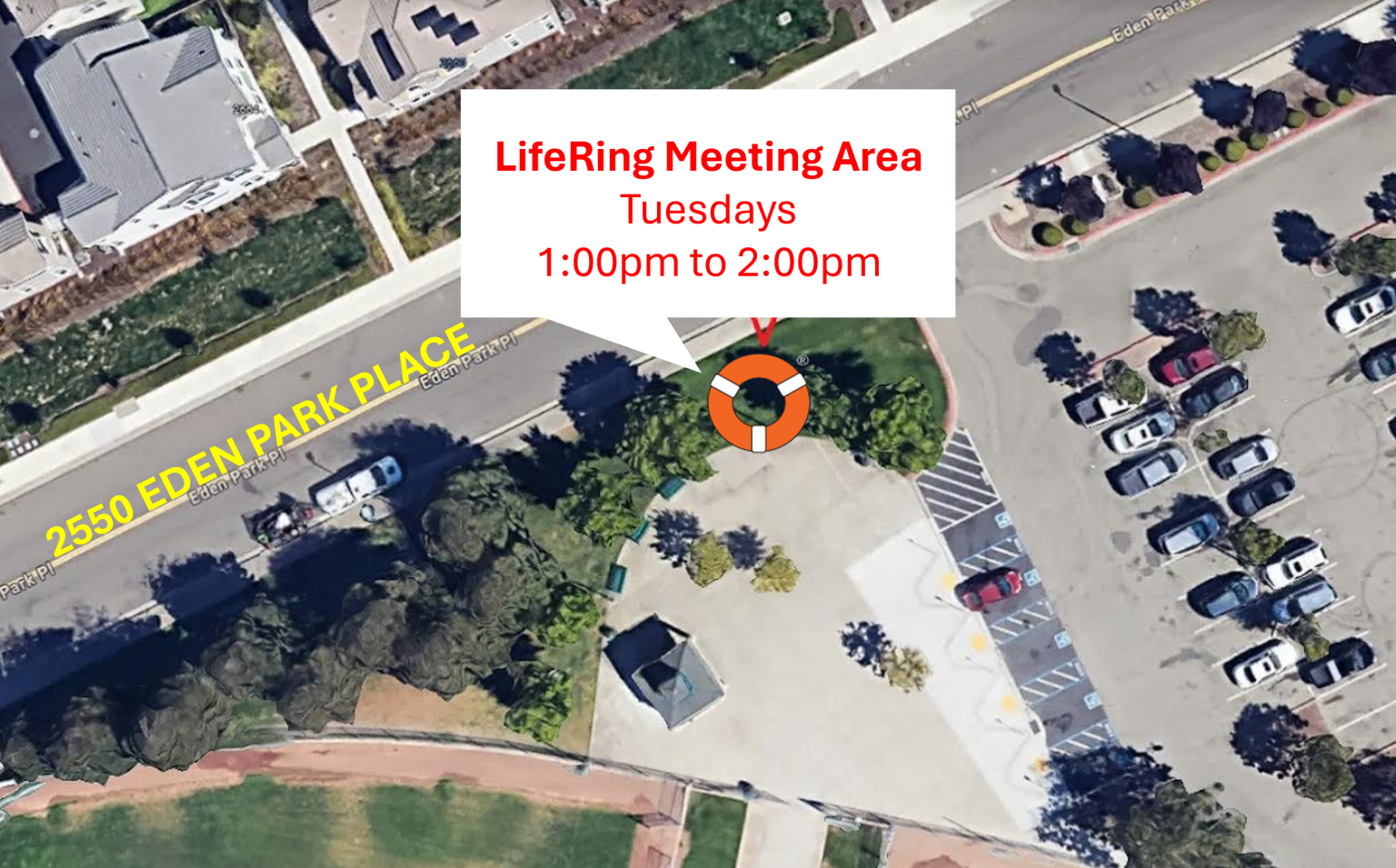 |
|---|---|
---
#### [**Please help Greg support those with substance use challenges with your one-time or sustaining donations. Thank you!**](https://lifering.org/get-involved-menu/donate/)
**Categories:** Post
**Tags:** addiction recovery meetings, in-person reccovery meeting, LifeeRing meetings, LifeRIng, lifering meetings california, lifering meetings hayward, lifering secular recovery, secular recovery
---
### [LifeRing Opens in Oregon!](https://lifering.org/lifering_oregon/)
**Published:** March 26, 2024
**Author:** Bees
**Content:**
## **Great News! The Great Northwest is Reopening!**
#### **LifeRing is excited to announce that LifeRing opened a new in-person meeting in Hood River, Oregon. This is our first in-person meeting in the Great Northwest since closes due to the pandemic. Convenor Dan S. is bringing the LifeRing magic to his hometown of Hood River – and maybe a pizza or two!**
---
> LifeRing Hood River, OR Meeting \|** 2010 Sterling Place, Hood River, OR 97031 [Hood River Valley Adult Center](https://www.hrvac.org/) \| Board Room Mondays at 6:00pm \| Meeting open to everyone Contact Daniel S. \| <liferinghroregon@lifering.org> for more information
---
#### ***About Dan***
My name is Daniel, and I’ve started a new HWYW in-person meeting in my little hometown of Hood River, Oregon. I’ve lived here much of my life, and although I’ve lived many other places, this slice of heaven always called me back. I’ve had many careers; a restaurateur, land surveyor, and today I am an orchardist by day and a vampire by night. Don’t judge, sometimes the harvest isn’t that good!
In all seriousness, I’m 57, working harder than I ever have, so I’m snoozing at night!
Throughout all of this, I’ve been an addict, sober now for 14 months. This journey, filled with 12-Step meetings, one-on-ones with mental health and drug counselors, and of course LifeRing online meetings, has allowed me to remain sober today. What I realized though, is that there is power in the rooms, but essentially no in-person meetings. That feeling I got by attending, and the attraction of the LifeRing model made it a no-brainer for me to start one.
I’ve heard a lot in my journey that people are looking for something different, and I am one of those folks. I’m ready for the next level in my recovery, and giving back by sharing what’s worked for me with LifeRing is my way of leveling-up! I hope to fill the room by providing a comfortable, relaxed space for the newcomers or anyone looking for an alternative to the norm. If that doesn’t work, I’ll bring pizza. Everyone loves pizza.
Nice to meet you all!
Dan :)
| **LifeRing In Hood River, OR Meeting \|** 2010 Sterling Place, Hood River, OR 97031 [Hood River Valley Adult Center](https://www.hrvac.org/) \| Board Room Mondays at 6:00pm , Hayward, California 94545 Contact Dan for more information: <liferinghroregon@lifering.org> | 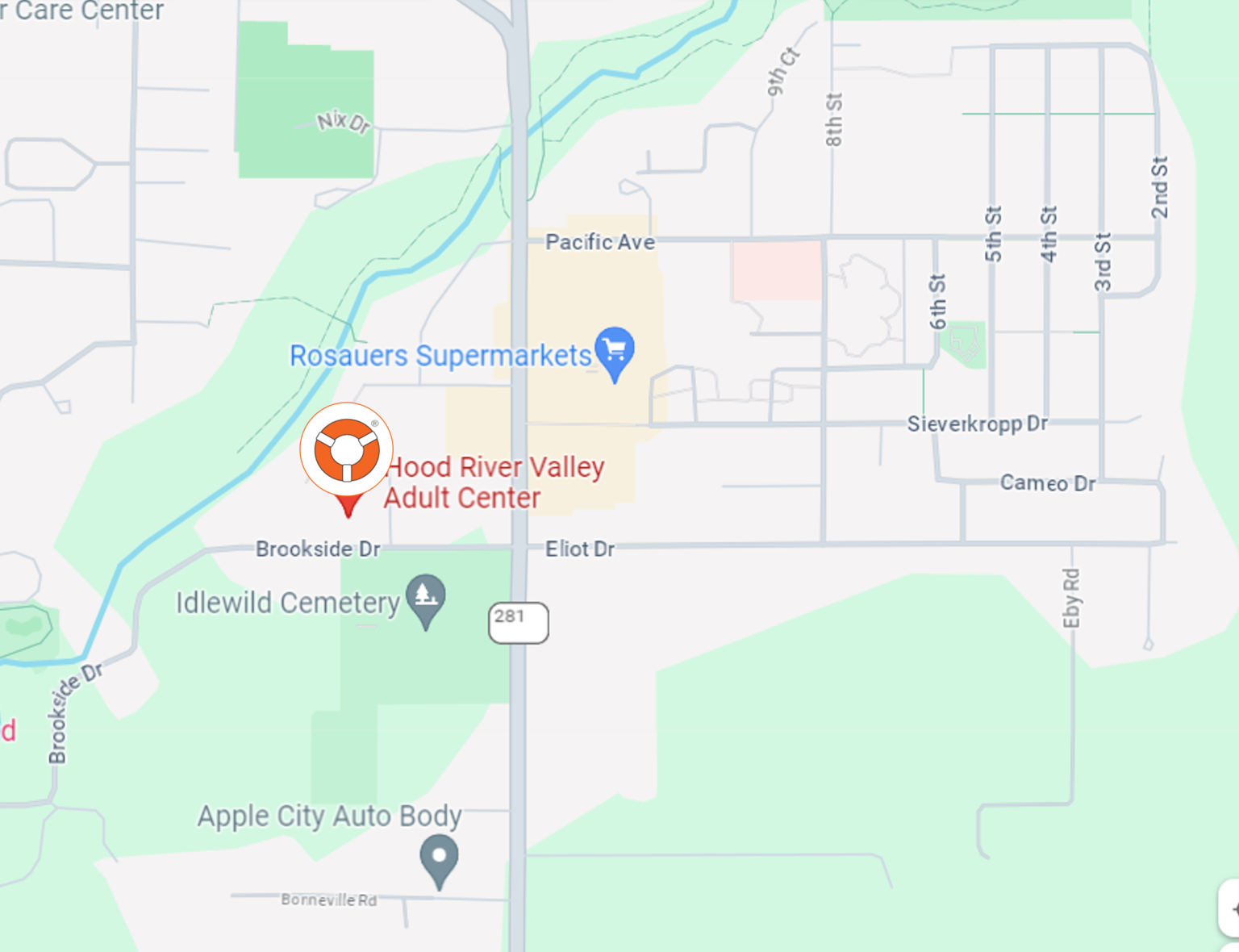 |
|---|---|
---
#### [**Please help Dan support those with substance use challenges with your one-time or sustaining donations. Thank you!**](https://lifering.org/get-involved-menu/donate/)
**Categories:** Post
**Tags:** addiction recovery meetings, addiction recovery meetings in oregon, in-person reccovery meeting, LifeRIng, lifering secular recovery, non-religious recovery, nonreligious addiction recovery, secular recovery
---
### [Happy Anniversary, LSRsafe!](https://lifering.org/lsrsafe_20years/)
**Published:** April 4, 2024
**Author:** Bees
**Content:**
## **Celebrating 20 Years of Positive eSupport!**
Today – 4/4/24 – is the twentieth anniversary of the start of the [LSRsafe email group](https://lifering.groups.io/g/LSRsafe). Starting it was just about the best thing I’ve ever done in my life. When I began it as a sort of offshoot of LSRmail, the original LifeRing email group, I assumed it would appeal to those few people from that group who were looking for a somewhat kinder and gentler support group. LSRmail was unmoderated by design and some of the members there had become, um, “assertive” about the right way and the wrong way to get sober. I decided that some newcomers were much too fragile for that approach. I assumed that a new group emphasizing positive support rather than doctrinal purity would make a nice alternative for those few people who were made uncomfortable by the rough-and-tumble of uncontrolled discussion. Mind you, I liked the debates – arguing about politics, religion and other issues was great fun for me and others in the group. But one day I noticed that a newish member, after being berated for repeatedly trying-and-failing to get sober, disappeared. I thought, “wait a minute … we’re a SUPPORT group; driving people away can’t be part of what we do!”
Starting a new group was very easy even with my limited tech skills. I took heat for the name (someone commented, “What! you mean people aren’t safe here?!” That was pretty much exactly what I had in mind, but I pretended it was just shorthand for Support, Affirmation, Friendship, and Encouragement). I thought a few of the more fragile members might follow me and it would become a small but kind-hearted refuge for a few. But it attracted a lot of people from the other group and gradually supplanted it in size. LSRmail, although still unmoderated, has mellowed over the years and no longer is plagued by fierce arguments. It’s been rare that I intervened in LSRsafe to quell a dispute or over-the-top insistence about the “right” way to get and stay sober. I think LSRsafe is well-synced with the general LifeRing approach to getting and staying sober.
Technically, we have over 400 members right now, but the great majority of those are inactive – they either set their membership to “no mail” or abandoned the email address they had been using. Still, I like to think that many are just reading posts when they feel the need.
Anyway, my heartfelt thanks go to all of our members, past and present, for providing two decades of support to hundreds – maybe thousands! – of LifeRingers, not least to me and to other long-time members who stay involved to help themselves by helping others.
Happy Anniversary to all!
Craig Whalley
---
**Craig Whalley:** I found LifeRing in 1999. I had been resisting attending AA, primarily because I got hold of the Big Book and found nothing in it that jibed with my idea of the help I needed. Searching for alternatives back then was a challenge, but eventually – thanks to the word “Secular” – I stumbled across LifeRing on the internet and joined their LSRmail email group. LifeRing was a perfect fit for me and I soon became involved as a volunteer. In 2004, I launched the LSRsafe email group and have been convening it ever since. I strongly recommend getting involved with LifeRing’s work as a great way to strengthen one’s sobriety while helping others.
**Categories:** Post
**Tags:** addiction recovery meetings, life ring, LifeRIng, lifering meetings, lifering online, recovery resources, secular recovery, secular recovery resources
---
### [Connecting with Journey Magazine](https://lifering.org/connecting_with_journey_magazine/)
**Published:** April 9, 2024
**Author:** Bees
**Content:**
## **LifeRing Connects with Journey Magazine**
### *Journey Magazine* is celebrating its 5th year in publication. LifeRing is featured in Issue 32 hitting the streets this week!
#### Visibility is critical to the next wave of substance misuse recovery. The importance of making recovery and recovery resources visible to everyone is growing as multiple paths become the norm in approaches to personal recovery plans.
#### Maine-based [*Journey Magazine*](https://journey-magazine.com/) was launched in March 2019 by a team of people who saw an opportunity to use media, marketing and publishing to amplify a message of hope about addiction recovery. LifeRing is proud to be a part of their mission.
---
**Byron Kerr,** long-time LifeRing convenor and former BOD chair, stresses the importance of secularity and self-direction as part of his Personal Recovery Plan:
---
> #### **I appreciate the philosophy \[of LifeRing\] in that the individual is responsible for their own sober path. Nobody else made me have a problem with alcohol, it was all me. And I’m the one who’s responsible for correcting it.**
>
> – Byron Kerr
> LifeRing In-Person Convenor and Collaborator [Recovery Program \| LifeRing Secular Recovery](https://journey-magazine.com/lifering-secular-recovery/)
> Kim Wilson, freelance writer, *[Journey Magazine](https://journey-magazine.com/),* April 2024
---
This article features LifeRing Secular Recovery as a positive resource for individuals seeking abstinence from alcohol and drugs. Included is an overview of the LifeRing 3-S philosophy peppered with personal insight from **Byron**. The article also includes *My Recovery Through LifeRing* contributed by BOD member **Mary Beth O’Connor**, and concludes with Frequently Asked Questions:
- What is the LifeRing program?
- What is the LifeRing meeting format? Focused on sobriety, secularity, and self-help, with an emphasis on self-empowerment and individualized recovery plans.
-
- Does LifeRing have sponsors?
-
- Where can I find out more information about LifeRing?
You can read the answers to these commonly asked questions in the **[*Journey Magazine* feature on LifeRing](https://journey-magazine.com/lifering-secular-recovery/)!**For those of you who would like to receive a hardcopy of this and ongoing issues of *Journey Magazine*, the publishers have kindly offered us a **free subscription**. Just sign up here to receive your complementary issues: [https://journey-magazine.com/from-us-to-you/.](https://journey-magazine.com/from-us-to-you/)A special shout out to Lisa-Marie at *Journey Magazine* for being an all-around great person.
**Categories:** Post
**Tags:** addiction recovery meetings, life ring, LifeRIng, lifering meetings, lifering online, LifeRing Policies, secular recovery
---
### [World Liver Day](https://lifering.org/liver-day/)
**Published:** April 19, 2024
**Author:** Bees
**Content:**
## 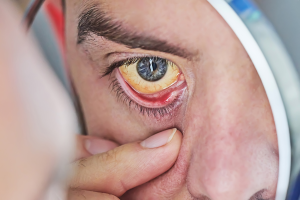
## **Be Kind To Your Liver!**
On March 15, 2019, I attended a celebration of life gathering for a bar buddy who, after another long night drinking at Tradr Sam’s, fell to his death down his own stairs. We found him 4 or 5 days later. I raised my last cocktail in his honor during the memorial. I loved that guy, but I didn’t want that to be that guy.
It wasn’t that easy. Two weeks after my final drink, I blew up. Imagine Violet Beauregarde in *Willy Wonka’s Chocolate Factory*. Like that, but instead of blue – I was yellow. A very disturbing, bilious yellow. On April Fools Day, I was admitted to SF General’s ER. The joke was on me. I was diagnosed with [Stage 4 Alcoholic Liver Cirrhosis.](https://www.mayoclinic.org/diseases-conditions/cirrhosis/symptoms-causes/syc-20351487#:~:text=Advanced%20cirrhosis%20is%20life%2Dthreatening.&text=The%20liver%20damage%20caused%20by,cases%2C%20it%20may%20be%20reversed.) Don’t be this gal.
---
### ****[April 19th is World Liver Day.](https://www.business-standard.com/health/world-liver-day-2024-history-importance-and-all-that-you-need-to-know-124041900559_1.html)** **We invite you to take inventory of what’s really going on in there!****
#### **Understanding the Importance of Liver Health**
When it comes to our health, we often think about our hearts, lungs, and brains, but what about the liver? This vital organ plays a crucial role in keeping our bodies functioning properly, yet it often doesn’t get the attention it deserves. In this blog, we’ll explore what the liver does, the importance of maintaining a healthy liver, and how to promote liver health for a vibrant and energetic life.
---
#### **By understanding the importance of maintaining a healthy liver and taking proactive steps to promote liver health,
we can ensure that this vital organ continues to support us in living our best lives.**
---
#### **What Does the Liver Do?**
The liver is a powerhouse of an organ, performing over 500 essential functions crucial for our well-being. It acts as a filter for toxins and waste products, metabolizes nutrients, produces bile for digestion, and stores essential vitamins and minerals. Additionally, the liver is responsible for regulating blood sugar levels, producing proteins essential for blood clotting, and breaking down medications and toxins. Without a healthy liver, our bodies would struggle to perform these vital functions, impacting our overall health and well-being.
#### **The Importance of Maintaining a Healthy Liver**
Taking care of our liver is paramount for our overall health. A healthy liver supports digestion, helps regulate metabolism, and aids in the body’s detoxification process. When the liver is overburdened or damaged, it can lead to a range of health issues, including fatty liver disease, hepatitis, cirrhosis, and even liver cancer. Your gut will tell you, maintaining a healthy liver is crucial for a long and vibrant life.
#### **Promoting Liver Health**
How can we can promote liver health in our daily lives? Here are a few things you can do:
1. [**Quit Drinking Alcohol**](https://www.niaaa.nih.gov/alcohols-effects-health/alcohol-topics/alcohol-facts-and-statistics/alcohol-and-human-body#:~:text=Of%20the%20100%2C530%20liver%20disease,%2C%20with%2042.8%25%20involving%20alcohol.): Alcohol consumption can lead to liver damage and disease.
2. **[**Eat a Balanced Diet**](https://www.medicalnewstoday.com/articles/323915): Consuming a diet rich in fruits, vegetables, lean proteins, and whole grains provides essential nutrients that support liver function. Avoiding excessive consumption of processed foods, saturated fats, and sugary drinks can help prevent fatty liver disease and promote overall liver health**
3. **[Stay Hydrated](https://www.mayoclinic.org/healthy-lifestyle/nutrition-and-healthy-eating/in-depth/water/art-20044256#:~:text=The%20U.S.%20National%20Academies%20of,fluids%20a%20day%20for%20women)**: Drinking an adequate amount of water supports liver function and helps flush out toxins from the body.
1. **[**Exercise Regularly**](https://www.cdc.gov/physicalactivity/basics/adults/index.htm#:~:text=Physical%20activity%20is%20anything%20that,Physical%20Activity%20Guidelines%20for%20Americans.):** Engaging in regular physical activity not only supports overall health but also promotes liver function by aiding in weight management and reducing the risk of fatty liver disease.
5. **[Avoid Toxins](https://www.journal-of-hepatology.eu/article/S0168-8278(23)00166-6/fulltext#:~:text=Recent%20studies%20indicate%20that%20environmental,and%20physical%20stressors%20such%20as):** Minimize exposure to environmental toxins and chemicals that can harm the liver. This includes being mindful of household cleaning products and pesticides.
6. **[Get Regular Check-Ups](https://my.clevelandclinic.org/health/diagnostics/17366-physical-examination):** It’s important to have regular check-ups with a healthcare professional to monitor liver health and address any potential issues early on.
Our liver is a silent hero, tirelessly working to keep our bodies healthy and functioning optimally. By understanding the importance of maintaining a healthy liver and taking proactive steps to promote liver health, we can ensure that this vital organ continues to support us in living our best lives. Let’s give our livers the love and care they deserve for a healthier, happier future.
### **LifeRing Resources**
#### [**The Liver Spot \| Wednesdays at 5:30pm Pacific**](https://lifering.org/the-liver-spot-is-growing/)
LifeRing hosts a focus meeting for people in recovery who are also diagnosed with [health issues resulting from substance use disorders](https://www.cdc.gov/alcohol/features/excessive-alcohol-deaths.html). The Liver Spot is the first of its kind: built on the LifeRing “How Was Your Week” (HWYW) check-in format, this special meeting offers an opportunity for open patient-to-patient knowledge exchange and supports an average of 50 people every week with a core group of 30.
[Zoom Meeting Link ](https://us02web.zoom.us/j/85606148917?pwd=T0ZKMk1jVXBud1A0YjRKWnd2bmg4UT09) \| Meeting ID: 856 0614 8917 \| Passcode: 162086
---
#### **You can help LifeRing provide peer-to-peer resources like The Liver Spot with your one-time or sustaining donations.
Thank you!**
**Categories:** Post
**Tags:** alcoholic, cirrhosis, lifering secular recovery, liver awareness, liver meetings, liver patient meetings, the liver spot
---
### [2024 LifeRing Annual Conference](https://lifering.org/2024_lifering_annual_conference/)
**Published:** May 12, 2024
**Author:** Bees
**Content:**
## **2024 LifeRing Annual Conference \| 2-Day Online Event**
## Online Saturday, June 8th & Sunday, June 9th 9:00am – 2:00pm Pacific Time
LifeRing Secular Recovery is a network of meetings. The connection with other meetings is as vital to LifeRing as the connection with other sober people is vital to an individual in recovery. The greatest sense of connectedness, the biggest radiation of warmth, and the greatest charge of energy comes from the LifeRing Annual Meeting and Annual Congress.
- [**Zoom Registration \| LifeRing Annual Meeting \| Saturday, June 8th, 9:00am to 2:00pm+ Pacific Time**](https://lifering-org.zoom.us/meeting/register/tZwrdOygqjMvGNRUODDRTWJEz2K5tE7x3oVH)
- [**Zoom Registration \| LifeRing Annual Congress \| Sunday, June 9th, 9:00am to 12:00pm+ Pacific Time**](https://lifering-org.zoom.us/meeting/register/tZwrdOygqjMvGNRUODDRTWJEz2K5tE7x3oVH)
### **PROVISIONAL AGENDA –**
### **2024 LifeRing Annual Meeting \| Online: Saturday, June 8, 2024, 9:00am – 2:00pm+ Pacific Time**
[**Zoom registration for the LifeRing Annual Meeting \| Online**](https://lifering-org.zoom.us/meeting/register/tZwrdOygqjMvGNRUODDRTWJEz2K5tE7x3oVH)
**This meeting is open to the registered public**
The LifeRing Annual Meeting is our Meeting of Meetings! At the Annual Meeting, convenors and the LifeRing Community gather to hear speakers, participate in workshops and socialize. **[Click here for more information on the 2024 LifeRing Annual Conference](https://lifering.org/meeting-of-meetings/).**
### **Annual Meeting Highlights \| Saturday, June 8th**
**Welcome Message \|** 9:00am Pacific
**Keynote Speaker \|** 9:15am Pacific

[**Johann Hari** ](https://johannhari.com/index.php/biography/)– Bestselling Author, Journalist and Producer \| Author of *[Chasing the Scream: The First and Last Days of the War on Drugs](https://www.bloomsbury.com/us/chasing-the-scream-9781620408926/)* (2015),[ *Lost Connections*](https://thelostconnections.com/) (2018), [*Stolen Focus* ](https://www.penguinrandomhouse.com/books/634289/stolen-focus-by-johann-hari/)(2022), and the just published [*Magic Pill*](https://magicpillbook.com/) (2024); amazing TED Talk speaker: *[Everything You Think You Know About Addiction is Wrong](https://youtu.be/PY9DcIMGxMs)* and *[This Could Be Why You Are Depressed or Anxious](https://youtu.be/MB5IX-np5fE)*; and executive producer of Academy Awards nominated *[The United States vs. Billie Holiday](https://www.youtube.com/watch?v=USi-ppCfxEA)* and the provocative Roku series *[The Fix](https://vimeo.com/665391504).*
**Well, there’s been a little change ….**
Johann Hari is under the weather and was unable to record our Keynote Address for the 2024 Annual Conference. But he bravely dragged himself from his sickbed to send us a welcome message. I assure you, it’s full of his signature warmth and charm. We’ll be showing Johann’s inspirational Ted Talk followed by his personal message for the LifeRing Community.
**You won’t be disappointed!**
**Awards Celebration \|** 10:00am Pacific
**Emily Marcus Awards** – To honor the memory of LifeRing Community Advocate and BOD member Emily Marcus, LifeRing will recognize five outstanding contributors to the LifeRing mission and vision.
**Volunteer Appreciation** – A great big Thank You to all our convenors, moderators, and collaborators who make LifeRing such a unique space for recovery!
**Break** \| 10:15am Pacific
**Open Forum \|** 10:30am Pacific
**In the Moment** \| Building Community
Presenter \| All Y’all** Open Discussion: How can we help strengthen a safe community for those seeking substance use recovery support and for those who volunteer to serve that goal?

**Mini Workshop** \| 11:30am Pacific **Going Social:** Navigating the META Maze
**Presenter \| Bobbi Campbell**
Subscribe and Follow!
**Break** \| 11:45am Pacific \| Lunch and Open Discussion
**Workshop 1 \|** 12:15pm Pacific
**Keeping Sober:** Maintaining Long-term Sobriety
**Presenter \| Marty Nicolaus:** LifeRing Co-Founder and Author: [*Empowering Your Sober Self, The LifeRing Approach to Addiction Recovery*](https://lifering.org/bookstore-shopping-cart/Empowering-Your-Sober-Self-p161742544); [*Recover by Choice*, *Living and Enjoying Life Free of Alcohol and Other Drugs*](https://lifering.org/bookstore-shopping-cart/Recovery-By-Choice-A-Workbook-p162427560); and *[How Was Your Week?, Bringing People Together in Recovery the LifeRing Way](https://lifering.org/bookstore-shopping-cart/How-Was-Your-Week-p161743477).***Workshop 2 \|** 1:00pm Pacific
**Open Recovery:** Sharing Your Recovery Story
**Presenter \| Mary Beth O’Connor:** Member of the LifeRing Board of Directors and Award-Winning Author: [*From Junkie to Judge: One Woman’s Triumph over Trauma and Addiction*](https://junkietojudge.com/writer).
**Break** \| 1:45am Pacific
**Workshop 3 \|** 1:45pm Pacific **Mindful Meditation:** Learn to manage stress more skillfully through a relaxing meditation session
**Presenter** \| Ewa Conroy
**Social Hour \| Convenor Talent Showcase \|** 2:30pm Pacific to close
We’ve worked hard all year, Now’s the chance to meet and socialize with all those folks who also make LifeRing such an awesome space for personal recovery. Thank you!
### **LifeRing Annual Congress \| Online: Sunday, June 9th, 9:00am – 12:00pm+ Pacific Time**
[**Zoom registration for the LifeRing Annual Congress \| Online**](https://lifering-org.zoom.us/meeting/register/tZwrdOygqjMvGNRUODDRTWJEz2K5tE7x3oVH)
**This meeting is open to the registered public**The LifeRing Annual Congress is our annual business meeting. Delegates will present meeting reports, review candidates for the LifeRing Board of Directors and decide on proposed changes to the LifeRing Bylaws. Congress will use those decisions to prepare an absentee ballot for voting by the LifeRing delegates. **[Click here for more information about the 2024 LifeRing Annual Congress and Delegates Assembly](https://lifering.org/delegates-briefing/).**
### **Annual Congress Agenda \| Sunday, June 9th**
**Annual Report \|** 9:00am Pacific
Report from the Board of Directors, including Financial Report
- Report from the Board of Directors, including Financial Report
- The complete Annual Report and Financial Report can be found on the LifeRing website. A summary will be presented at the Delegate’s Assembly.
- Questions and comments are invited.
**[Review Board of Director Nominees](https://lifering.org/nominee-list-for-bod/) \|** 9:30am Pacific
- BOD nominees introduce themselves and outline their goals if elected
- Q&A open session
**Review of Motions to Change LifeRing Bylaws \|** 10:00am Pacific
- Introduction and discussion of motions to change current LifeRing Bylaws
**Meeting Delegates’ Reports \|** 10:30am Pacific
- [Delegates present meeting reports](https://lifering.org/2024_delegates-meeting-reports/)
[**Vote to Approve Absentee Election Ballot**](https://lifering.org/delegates-briefing/#voting) \| 11:30am Pacific
- Delegates’ vote to approve the candidates and any proposed bylaws changes to be included on the absentee ballot
**June 2024 Board of Directors Meeting \|** 12:00pm Pacific
- Delegates and members of the LifeRing Community are encouraged to attend
**Categories:** Post
**Tags:** LifeRing Conference
---
### [1 in 5: Where Do You Fit In?](https://lifering.org/mental-health-month-2024/)
**Published:** May 21, 2024
**Author:** Bees
**Content:**
## **May is National Mental Health Awareness Month**
**[1 in 5 people will experience a mental illness during their lifetime](https://namica.org/what-is-mental-illness/facts-statistics/) and everyone faces challenges in life that can impact their mental health. Since the pandemic, many people are realizing that stress, isolation, and uncertainty have taken a toll on their well-being.**
Since 1949, May has been recognized as [National Mental Awareness Month](https://www.thenationalcouncil.org/mental-health-awareness-month/). President Barack Obama proclaimed it official on April 30, 2014. The President called upon “citizens, government agencies, organizations, health care providers, and research institutions to raise mental health awareness and continue helping Americans live longer, healthier lives.”
This year’s theme is **Take the Moment**. The National Alliance on Mental Illness (NAMI) [Take the Moment campaign](https://www.nami.org/press-releases/namis-take-the-moment-campaign-celebrates-mental-health-awareness-month/) encourages us to foster open dialogues, cultivate empathy and understanding and to share resources to support individuals and families on their journey toward mental wellness. LifeRing has taken up this challenge and [currently offers four weekly online meetings for people diagnosed with co-occurring disorders](https://lifering.org/lifering-focus-meetings/).
Here are additional resources to consider during National Mental Health Awareness Month.
---
#### **Mental Health America (MHA): Mental Health Tests**
The [MHA](https://mhanational.org/) offers online screening tests to determine whether you are experiencing symptoms of a mental health condition . Tests include:
| **[Depression](https://screening.mhanational.org/screening-tools/depression/?ref) • [Psychosis](https://screening.mhanational.org/screening-tools/psychosis/?ref) • [PTSD](https://screening.mhanational.org/screening-tools/ptsd/?ref) • [Addiction](https://screening.mhanational.org/screening-tools/addiction/?ref) • [Bipolarity](https://screening.mhanational.org/screening-tools/bipolar/?ref) • [Anxiety](https://screening.mhanational.org/screening-tools/anxiety/?ref)** |
|---|
(I tested “Addiction” and it’s likely I have an “Alcohol or Substance Use Problem.” That about sums it up!)
[Take a test >>>](https://screening.mhanational.org/screening-tools/)[NAMI](https://www.nami.org/) provides an excellent repository of information on their [Warning Signs and Symptoms](https://www.nami.org/about-mental-illness/warning-signs-and-symptoms/) webpage including a video on the 10 Common Warning Signs of Mental Health Conditions.
[Watch it here >>>](https://youtu.be/zt4sOjWwV3M)
---
#### **Finding a Mental Health Care Provider**
NAMI also posts a great blog about [How To Find Mental Health Care Providers](https://namica.org/blog/how-to-find-a-therapist/). This blog provides an easy to follow plan to help you find, engage, and build a relationship with your therapist.
The MHA offers a webpage rich with information about [Finding the Right Clinical Mental Health Care For You.](https://www.mhanational.org/finding-right-mental-health-care-you) This includes
- Where can I go for help?
- Which mental health professional is right for me?
- How to engage with your mental health professional
- Types of treatment
- Am I getting the help I need?
- What about self-help/support groups
The [National Institutes of Health](https://www.nimh.nih.gov/) (NIH) is the US’s primary federal agency for medical research. It’s part of the [Department of Health and Human Services](http://www.hhs.gov/) and is made up of 27 institutes and centers. The NIH’s mission is to improve health, save lives, and reduce illness and disability. They offer the[ Help for Mental Illness resources webpage](https://www.nimh.nih.gov/health/find-help) including a link to [Tips for Talking With a Health Care Provider](https://www.nimh.nih.gov/health/publications/tips-for-talking-with-your-health-care-provider).
The University of California (UCSF) [Department of Psychiatry and Behavioral Sciences](https://psychiatry.ucsf.edu/) provides a list of mental health providers some of whom have identified themselves as specializing in treating particular populations.
[Explore the options >>>](https://psychiatry.ucsf.edu/cope/providers)
---
#### **National Substance Abuse and Mental Health Services Administration (SAMHSA): Free National Mental Health Awareness Month Webinar**
**May 22 at 1:00pm to 2:30pm Eastern Time** \| Join [SAMHSA](https://www.samhsa.gov/mental-health-awareness-month) and the [US Department of Housing and Urban Development](https://www.hud.gov/) (HUD)’s Third Annual Commemoration of National Mental Health Awareness Month free webinar on Wednesday, May 22nd from 1:00pm to 2:03pm Eastern Time. This free webinar will provide a general overview of mental health issues and offers participants an opportunity to learn about the latest developments in mental health resources for HUD-assisted communities. Attendees will receive slides and a mental health resource list after the event.
Participants will learn:
- **How to Save a Life**: Learn from SAMHSA about their [988 Suicide and Crisis Lifeline](https://988lifeline.org/?utm_medium=email&utm_source=govdelivery).
- **Mental Health Resources**: Hear about SAMHSA’s [Certified Community Behavioral Health Clinics (CCBHCs)](https://www.samhsa.gov/certified-community-behavioral-health-clinics) from the national and local levels.
- **Listening Session**: Your opportunity to participate in the conversation on mental health in your communities.
[Click here to register >>>](https://events.intellor.com/?do=register&p=508440&t=7&utm_medium=email&utm_source=govdelivery)
---
#### **[LifeRing Co-Occurring Disorders Focus Meetings:](https://lifering.org/lifering-focus-meetings/) \***
**Tuesdays, 1:00pm to 2:00pm Pacific Time
Crazy Talk – Co-Occurring Disorders Meeting \| [Zoom Meeting ID: 824 4745 9868 \| Passcode: lifering](https://us06web.zoom.us/j/82447459868?pwd=NjA4blVxZ0NmUjBNeVpQcFpCajZVdz09)
Open Camera Meeting – Attendees are asked to keep their video-feed on **Thursdays, 6:30pm to 7:30pm Pacific Time
Strange Attractors – Co-Occurring Disorders Meeting \| [Zoom Meeting ID: 865 9185 9455 \| Passcode: lifering](https://us06web.zoom.us/j/86591859455?pwd=UFR5RDNlQTNCdkcyVkFLRVJSSjgwZz09)
Open Camera Meeting – Attendees are asked to keep their video-feed on **Sundays, 9:00am to 10:00am Pacific Time
Shine On You Crazy Diamond – Co-Occurring Disorders Meeting \| [Zoom Meeting ID: 869 2822 3501 \| Passcode: lifering](https://us06web.zoom.us/j/86928223501?pwd=SEcraFNJc2k2TkxNbmVtL0ovVjNEUT09)
Open Camera Meeting – Attendees are asked to keep their video-feed on **Sundays, 5:00pm to 6:00pm Pacific Time
Manic Sunday – Co-Occurring Disorders Meeting \| [Zoom Meeting ID: 883 4266 7574 \| Passcode: lifering](https://us06web.zoom.us/j/88342667574?pwd=dUxHei80SVU1NG9McE9rOWRKRTdYdz09)
Open Camera Meeting – Attendees are asked to keep their video-feed on
**\*** *All meeting names are chosen by the current convenor.*
[Catch a LifeRing online meeting >>> ](https://lifering.org/online-meetings/)
#### **There are times when you need more than a recovery meeting. We urge you to call or visit one of these crisis resources for help.** [Crisis Resources](https://lifering.org/crisis-resource/)
---
***Help us help others. Your [donations](https://lifering.org/donate/) allow LifeRing to support new focus meetings for people in recovery who are diagnosed with co-occurring disorders. Thank you!***
***For other ways you can contribute to LifeRing, please consider being a [LifeRing V](https://lifering.org/get-involved-menu/volunteer-form/)[olunteer](https://lifering.org/get-involved-menu/volunteer-form/) or a [LifeRing Conveno](https://lifering.org/be-a-lifering-convenor/)[r](https://lifering.org/be-a-lifering-convenor/).***
---
**Categories:** Post
**Tags:** co-morbidity, Co-occurring disorders, co-occurring disorders peer support, mental health peer support
---
### [Memorial Day Reflection](https://lifering.org/memorial-day-reflection/)
**Published:** May 27, 2024
**Author:** Bees
**Content:**
## **Remembering and Honoring \| A Memorial Day Reflection**
As we recognize Memorial Day, a day of remembrance and honor for those who have served and sacrificed for our country, it’s important for us at LifeRing Secular Recovery to take a moment to reflect on the meaning of this day and its significance in our lives.
Memorial Day is often associated with parades, barbecues, and the unofficial start of summer, but its true essence lies in paying tribute to the brave men and women who have given their lives in service to our nation. At LifeRing, we understand the value of sacrifice and the deep impact it can have on individuals and their loved ones.
For many of us, the journey to recovery is a battle in itself. We face our own personal demons, struggles, and setbacks as we work toward a life of sobriety and wellness. On Memorial Day, we are reminded that the fight for freedom and the fight for personal recovery share a common thread of courage, perseverance, and resilience.
As we honor those who have made the ultimate sacrifice, let’s also take a moment to honor the strength and determination of those in recovery. It takes courage to confront addiction, to seek help, and to commit to a journey of healing. Just as we pay homage to the bravery of our fallen heroes, we acknowledge the bravery of every individual who has taken steps toward a life of sobriety and well-being.
Memorial Day serves as a poignant reminder of the fragility of life and the importance of embracing each day. It’s a time to reflect on the value of freedom, both external and internal. The freedom to live a life free from the chains of addiction is a gift that many of us at LifeRing hold dear, and it’s a freedom that we continue to fight for each day.
As we gather with friends and family this Memorial Day, let’s take a moment to express gratitude for the sacrifices of our fallen heroes and to offer support and encouragement to those in our community who are on their own paths to recovery. Let’s celebrate the resilience of the human spirit and the hope that springs eternal, even in the face of adversity.
At LifeRing, we stand in solidarity with those who have lost loved ones in service, and we stand with those who are fighting for a life free from addiction. Let us remember, honor, and support each other as we continue on the journey of recovery, knowing that the courage and sacrifice of others inspire and guide us along the way.
This Memorial Day, as we pay tribute to our heroes, let’s also reaffirm our commitment to living fully, authentically, and in support of one another. Together, we honor the past, embrace the present, and look forward to a future filled with hope, healing, and resilience.
Wishing everyone a reflective and meaningful Memorial Day.
---
**Anna, Benji, Bill, Brett, Christine, Christopher, Connie, George, Janet, Jason, John, Joshua, Kirk, Kishi, Matthew, Michael, Pat, Patrick, Peter** and **Kevin, R.E., Richard, Rick, Robert, Stephanie, Tim, Wanda,** and **William.**
*You are missed.*
**Categories:** Post
**Tags:** addiction recovery meetings, co-morbidity, Co-occurring disorders, co-occurring disorders peer support, LifeRIng, lifering meetings, mental health peer support, secular recovery
---
### [Pass The Hat | Summer Splash](https://lifering.org/pass-the-hat-2024/)
**Published:** July 1, 2024
**Author:** Bees
**Content:**
## ****
### **Question: How do online convenors collect meeting donations?**
### **Answer: They Pass the eHat!**
####
In-person participants donate weekly to support their local meetings. During the LifeRing Summer Splash Fundraiser, we’re asking you to **please support LifeRing online meetings and meeting management with your recurring contribution**.
#### **Think of this as LifeRing’s Mid-Year Pass the Hat!**
If you attend one or more LifeRing online meetings every week, **please consider a tax-deductible monthly donation** during our **Summer Splash Fundraiser**. Not only will your monthly contribution help support your meetings and others like you in recovery – You can write it off on your taxes!
[](https://lifering.org/get-involved-menu/donate/)
#### **Your monthly donation makes a big difference!**
LifeRing relies on private donations from people like you. Knowing we can count on your monthly contribution allows us to move forward with confidence – to take proactive steps to bring more meetings to more people in need of LifeRing’s unique brand of recovery support. **Priceless**!
#### **Recurring donations sound scary**
Not at all! You can change or cancel your monthly donation at any time. **It’s super easy**: Just go to the [LifeRing Donate webpage](https://lifering.org/donate/) and select Monthly Donation. Add your donation amount to the Custom Amount field and then click Next. Done and done! You can login, edit or cancel your monthly donation at any time.
#### **Why $5?**
Your $5 monthly donation is the equivalent of putting a dollar in the hat for a weekly meeting. Heck, if you contributed $5 at every local meeting, or **if you attend more than one LifeRing online meeting weekly, please consider donating a little more**. During meetings, well, you can smile and say “**I’m a LifeRing Sustaining Donor. I help make this happen!**” (How great does that make you feel?)
#### [](https://lifering.org/donate/)
#### **We put your donation to work!**
A dollar still creates a big impact on nonprofit 501(c)(3) charitable organizations like LifeRing.
- We bundle each donation carefully together to cover the cost of **meeting materials and meeting management.**
- We purchase new Zoom licenses to support space for our **growing number of online meetings**.
- Your donations help us create new and compelling outreach materials to **reach more diversified groups of people searching for a strong, secular recovery pathway**.
**Your generosity gives LifeRing newcomers and long-timers the resources and support they need to celebrate a life free from alcohol and drugs.** \_\_\_\_\_\_\_\_\_\_\_\_\_\_\_\_\_\_\_\_\_\_ ***Your Donation Makes a Big Difference!***
*LifeRing is a volunteer-run organization and is highly dependent on personal contributions from generous donors like you. **Please show your support for LifeRing communities with a donation** using your credit card, PayPal, or direct deposit.****LifeRing Secular Recovery is a 501(c)(3) charitable organization, EIN 94-3267919.** All contributions are tax-deductible. No goods or services will be provided in exchange for the contribution.*
**Categories:** Post
**Tags:** addiction recovery meetings, LifeRIng, lifering meetings, nonreligious recovery, online recovery meetings, secular recovery
---
### [2024 LifeRing Elections](https://lifering.org/2024-lifering-election/)
**Published:** July 7, 2024
**Author:** Bees
**Content:**
---
|  | ## **2024 LifeRing Election Results** ### **[2024-2025 Board of Directors Election](https://lifering.org/nominee-list-for-bod/):** #### **Joining the Board:** Michael Anderson **Re-elected to the Board:** Joe Franklin, Monica Foy, and Sue Betts ### **[Proposed Bylaws Change](https://lifering.org/proposed-bylaw-changes-2024/):** #### Unanimously passed and will be reflected in the [LifeRing Bylaws](https://lifering.org/wp-content/uploads/ImportantDocs/Current_Bylaws.pdf) |  |
|---|---|---|
---
#### **Please join us in welcoming new and returning members to the LifeRing Board of Directors during our first 2024-2025 BOD Meeting online Sunday, July 14th at 9:00am Pacific.**
**A Board Meeting is scheduled every month on the second Sunday of the month at 9:00 AM Pacific Time via a Zoom meeting.**
This meeting is open to the public.
**Meeting URL:** <https://zoom.us/j/88907758083?pwd=YTVDMStaY0hVdnhHOTlqcnM1MEpYdz09>
**Meeting ID:** 889 0775 8083
**Passcode:** lifering
**Call-in numbers:** <https://lifering.org/zoom-phone-numbers>
Additional help joining a Zoom Meeting: <https://support.zoom.us/hc/en-us/articles/201362193-Joining-a-Meeting>The provisional Board agenda is posted on the [LifeRing BOD webpage](https://lifering.org/governance/bod/) prior to the meeting. Minutes approved from prior meetings can be found on our [BOD Minutes and Financials webpage](https://lifering.org/governance/policies-and-documents/bod-minutes-and-financials/).
**Categories:** Post
**Tags:** addiction recovery meetings, life ring, LifeRIng, secular recovery
---
### [Summer Splashes](https://lifering.org/summer-splashes/)
**Published:** August 13, 2024
**Author:** Bees
**Content:**
## **The Ripple Effect**
Thinking of summer − and of splashing − reminded me of the river that ran behind the farm home of my youth. I would take my shoes off and cross the river at random places to get to the base of the mountain on the other side quicker than walking to the only bridge. I loved it when the cool water splashed up onto my shorts, arms and sometimes my face.
That “splash” of a pleasant memory is the opposite of a brief trigger moment. Many of us seeking early recovery or in long-term recovery have splashes of moments that remind us of our past history of drinking or using. What if when those trigger moments came, we switched our thoughts to a splash of fun time at the pool, at the beach, near a lake, or at the river?
---
#### **As a wise soul once said, we go to what we focus on. Let’s focus on our positive splashes.**
---
LifeRing Secular Recovery is all about making positive recovery connections to feel supported by others with similar lived experiences. During our meetings, we celebrate and reinforce what went well for us during our weekly or daily activities. Perhaps during your week, you noticed a splash of sunlight peeking through a doorway or through some trees. Maybe water splashed up while you engaged in self-care while taking a relaxing bath. If it rained nearby, you may have noticed summer raindrops as they splashed on your windshield. Wherever you find your splashes of positive reinforcement, try to take notice of them. Simple moments and splashes of summer joyfulness.
*LifeRing Director of Development **Lorraine Hull** contributes this* refreshing *post to support our [LifeRing Summer Splash](https://lifering.org/pass-the-hat-2024/) fundraising efforts.*
\_\_\_\_\_\_\_\_\_\_\_\_\_\_\_\_\_\_\_\_\_\_
### ***Your Donation Makes a Big Difference!***
*LifeRing is a volunteer-run organization and is highly dependent on personal contributions from generous donors like you. **[Please show your support for LifeRing communities with a one-time or recurring donation](https://lifering.org/get-involved-menu/donate/)** using your credit card, PayPal, or direct deposit.*
***LifeRing Secular Recovery is a 501(c)(3) charitable organization, EIN 94-3267919.** All contributions are tax-deductible. No goods or services will be provided in exchange for the contribution.*
**Categories:** Post
**Tags:** addiction recovery meetings, co-morbidity, Co-occurring disorders, co-occurring disorders peer support, LifeRIng, lifering meetings, mental health peer support, secular recovery
---
### [Early Morning Meetings](https://lifering.org/early-morning-meetings/)
**Published:** September 3, 2024
**Author:** Bees
**Content:**
## **Rise and Shine!**
As we kick off [Recovery Awareness Month](https://www.samhsa.gov/recovery-month) this September, it’s the perfect time to start each day with intention and support. LifeRing Secular Recovery’s early morning meetings create a welcoming environment that promotes camaraderie and understanding, reminding us that recovery is not just about facing challenges, but also about celebrating progress.
By beginning the day in community and encouragement, we can cultivate a sense of purpose that carries us through our daily lives.
This month, let’s celebrate every step taken on the path to self empowerment and the connections that uplift us all. Together, we can make this Recovery Awareness Month both meaningful and inspiring, embracing the journey ahead with hope and resilience!
---
### **Meet Our Early Morning Convenors!**
---
**ALEXIS** began his recovery journey in 2021, where LifeRing’s Online Meetings were a major part of his early sobriety. He hosts a *Recovery By Choice* workbook meeting weekly:
**Any Given Sunday \| Sundays at 8:00am Pacific** This [*Recovery By Choice*](https://lifering.org/books/rbc/) Workbook Meeting cycles weekly through the domains of Body, Exposure, Activities, People, Feelings, Lifestyle, History and Culture. The meeting an open-format discussion using the workbook to prompt our sober talk. You don’t need the book to attend, participate, or even just listen.
**SYLVIA** has been with LifeRing since day one of her recovery journey in 2020. She has been convening online since 2022. As a retired clinical psychologist, she provides evidence-based information while emphasizing everyone’s individuality. Her style is playful and she promotes co-healing. She currently convenes the following early morning online meeting:
**Our Garden \| Fridays at 8:30am Pacific** This topic meeting starts with a brief guided meditation, followed by a brief overview of an evidence-based recovery/health and wellness topic, with the focus on a robust conversation about the reviewed topic or any topic requested by participants. Attendance averages 35 people in various stages of recovery. The vibe is playful, informative, and supportive to cultivate personal and collective growth. **Sober After Sixty Something (SASS) \| Sundays at 7:00am Pacific** This is a focus meeting. Topics are generated by any participant or the convenor. Although most participants are 60+, anyone is welcome. Attendance averages 20 people in various stages of recovery. Our crosstalk/conversations are rich and lively.
**TRAVIS** has been with LifeRing since beginning his recovery journey in December 2022. He began convening six months later to give back to the community that had helped him so much. An attorney and producer of music for TV and film, he currently convenes the following meeting:
**All Muse, No Booze \| Thursdays at 6:00am Pacific** This is a HWYW check-in meeting that often touches on how creative endeavors, broadly defined, can help us in recovery. Attendance averages between 25-30 people, some of whom may share recent artwork, music, or writing along with their regular check-ins. Having a creative career or hobby is by no means a requirement, and all are welcome! \_\_\_\_\_\_\_\_\_\_\_\_\_\_\_\_\_\_\_\_\_\_
### ***Your Donation Makes a Big Difference!***
*LifeRing is a volunteer-run organization and is highly dependent on personal contributions from generous donors like you. **[Please support these and other LifeRing resources with your one-time or recurring donation](https://lifering.org/get-involved-menu/donate/)** using your credit card, PayPal, or direct deposit.*
***LifeRing Secular Recovery is a 501(c)(3) charitable organization, EIN 94-3267919.** All contributions are tax-deductible. No goods or services will be provided in exchange for the contribution.*
**Categories:** Post 2
**Tags:** addiction recovery meetings, LifeRIng, lifering meetings, lifering online, lifering secular recovery, secular recovery
---
### [Suicide Awareness | Recognize and Respond](https://lifering.org/suicide-awareness/)
**Published:** September 10, 2024
**Author:** Bees
**Content:**
## **
## **September is National Suicide Prevention Awareness Month**
***September is [Nation Suicide Prevention Month](https://www.nami.org/get-involved/awareness-events/suicide-prevention-month/). Throughout the month, mental health advocates, prevention organizations, survivors, allies, and community members unite to promote suicide prevention awareness.***
Last month, I lost my 24-year old niece to suicide. I am on my way home to offer what support I can to our family and to her friends. I hope sharing these tools will help you or help you help a loved-one in crisis.
### **Factors**
Suicide is rarely caused by a single circumstance or event. Instead, suicide and suicide behavior are influenced by negative conditions sometimes called *[social determinants of health](https://www.cdc.gov/about/priorities/why-is-addressing-sdoh-important.html#:~:text=Healthy%20People%202030%20sets%20data,and%20neighborhood%20and%20built%20environment.).* This range of factors-at the [individual, relationship, community, and societal levels](https://healthcare.rti.org/insights/sdoh-suicide-prevention)-can increase risk. These risk factors are situations or problems that can increase the possibility that a person will attempt suicide. Specific factors that increase the risk of suicide include mental illness, substance abuse, chronic disease, childhood trauma, social loss, financial difficulties, and the loss of a loved one.
***Substance misuse plays a large role in the crisis of suicide.***
Disturbances in brain chemistry play a major role in suicidal thoughts, and suicidal feelings often arise from disturbances in brain chemistry, The **use of alcohol and other drugs increases impulsivity and increase suicide risk**. A recent report released by the [Drug Abuse Warning Network](https://www.samhsa.gov/data/data-we-collect/dawn-drug-abuse-warning-network) (DAWN) shows that there were [51 drug-related emergency department (ED) visits involving suicide attempts](https://www.samhsa.gov/data/sites/default/files/reports/rpt42709/ShortReport-EDVisits-SuicideAttempt.pdf) per 100,000 population. **Alcohol**, the most frequently mentioned substance, was associated with 24% of these types of ED visits. Females (sex at birth) accounted for 64 percent of these visits while males comprised 36 percent.
### **Warning Signs**
It is often difficult to tell when someone is having suicidal thoughts. If you suspect a family member or friend is contemplating suicide, it is important to voice concerns in a calm, non-judgmental, non-confrontational manner. As of 2021, approximately 5% of [males](https://www.statista.com/statistics/673087/suicidal-thoughts-past-year-us-men/) and 5.3% of [females](https://www.statista.com/statistics/666448/suicidal-thoughts-past-year-us-women/) in the United States reported having serious thoughts of suicide in 2022.
---
> #### **The idea that you can put thoughts of suicide into a person’s head is a myth.
> If you suspect a family member or friend is contemplating suicide, it is important to voice concerns in a calm, non-judgmental, non-confrontational manner.**
---
Warning signs among those having suicidal thoughts may include talking about death, expressing feelings of hopelessness and loneliness, withdrawing from social activities, behaving aggressively or recklessly, and suffering dramatic mood swings. Suicidal thoughts, plans, and attempts are much more common among those with [drug or alcohol dependence](https://journals.sagepub.com/doi/10.1177/11782218231216233) and/or those who have suffered a recent major depressive episode. In 2022, 33.2% of U.S. adults who suffered a [major depressive episode](https://www.statista.com/statistics/560384/suicide-plans-and-attempts-among-us-adults-by-depressive-episode/) in the past year had serious thoughts of suicide, compared with just 2.5% of those who did not have such an episode.
***Curious about your state of mental health? [Take the Mental Health America Depression Test](https://screening.mhanational.org/screening-tools/depression/)***
### **Prevention**
Suicide is preventable. Most individuals who are suicidal desperately want to live; they are just unable to see alternatives to their problems. Talking about suicide can be difficult, but it is essential.
***If someone is in crisis or depressed, asking if he or she is thinking about suicide can help, so don’t hesitate to start the conversation.***
[According to the NIH](https://pubmed.ncbi.nlm.nih.gov/22548324/), the idea that you can put thoughts of suicide into a person’s head is a myth. In contrast, an abstract published in the [National Center of Biotechnology Information](https://pubmed.ncbi.nlm.nih.gov/24998511/) (NCBI), shows that **acknowledging and talking about suicide may reduce, rather than increase suicidal ideation, and may lead to improvement**.
So, if you suspect a family member or friend is contemplating suicide, voice your concerns in a calm, non-judgmental, non-confrontational manner, Ideally, while alone with the person in a quiet setting Talking about suicide can improve mental health-related outcomes and the likelihood of seeking treatment. Opening this conversation helps people explore an alternative view of their existing circumstances.
The [NIH](https://www.nimh.nih.gov/health/publications/5-action-steps-for-helping-someone-in-emotional-pain) recommends these steps to engage with someone you feel may be at risk:
1. **ASK:** “Are you thinking about killing yourself?” It’s not an easy question, but studies show that asking at-risk individuals if they are suicidal does not increase suicides or suicidal thoughts.
2. **KEEP THEM SAFE:** Reducing a suicidal person’s access to highly lethal items or places is an important part of suicide prevention. While this is not always easy, asking if the at-risk person has a plan and removing or disabling the lethal means can make a difference.
3. **BE THERE:** Listen carefully and learn what the individual is thinking and feeling. Research suggests [acknowledging and talking about suicide ](https://www.ncbi.nlm.nih.gov/pubmed/15811983) may [reduce rather than increase ](https://www.ncbi.nlm.nih.gov/pubmed/24998511) suicidal thoughts.
4. **HELP THEM CONNECT:** Save the [988 Suicide & Crisis Lifeline number](https://988lifeline.org/current-events/the-lifeline-and-988/) **(call or text 988)** in your phone so they’re there if you need them. You can also help make a connection with a trusted individual like a family member, friend, spiritual advisor, or mental health professional.
5. **STAY CONNECTED:** Staying in touch after a crisis or after being discharged from care can make a difference. [Studies have shown ](https://www.ncbi.nlm.nih.gov/pubmed/11376235) the number of suicide deaths goes down when someone follows up with the at-risk person.
### **Resources**
If you are having suicidal thoughts, or you know someone who is, it is essential to seek help. Many countries have suicide crisis or prevention lines that offer free advice and support in such situations. If you live in the United States, you can reach the [988 Suicide & Crisis Lifeline](https://suicidepreventionlifeline.org/) by simply calling 988 to receive free and confidential support 24/7. **You may call 988 on your own with concerns about someone else, or you can call together with that person and a specialist will help with next steps**.
In addition to the sources linked above, here are a number of recommended resources:
**Reference Portals**
- [LifeRing Crisis Resources](https://lifering.org/crisis-resource/) \| LifeRing-vetted crisis management resources
- [BeThe1to](https://www.bethe1to.com/) \| 988-based suicide-prevention promotional resources
- [Find Support](https://www.samhsa.gov/find-support) \| SAMHSA-vetted resources for issues with mental health, drugs, or alcohol
**Training and Promotion**
- [Suicide is Preventable](https://www.suicideispreventable.org/) \| Find the Words
- [QPR Institute](https://qprinstitute.com/) \| Question. Persuade. Refer
**Informational Resources**
- [988 Suicide & Crisis Lifeline](https://988lifeline.org/talk-to-someone-now/) \| Talk to Someone Now
- [American Foundation for Suicide Prevention](https://afsp.org/risk-factors-protective-factors-and-warning-signs/) \| Risk Factors, protective factors and warning signs
- [Suicide is Preventable](https://www.suicideispreventable.org/) \| Find the Words
- [NIH Suicide Prevention](https://www.nimh.nih.gov/health/topics/suicide-prevention) \| Warning signs, risk factors, treatments and therapies, mental health resources
- [American Association of Suicidology](https://suicidology.org/september/) \| Tools for preventing suicide and resources for survivors
### **LifeRing Support Resources**
All [LifeRing recovery resources](https://lifering.org/meeting-menu/) provide supportive environments for individuals seeking to overcome addiction while promoting their mental health. By fostering non-judgmental spaces, these meetings encourage open dialogue and shared experiences, allowing participants to connect with others who understand their struggles. This sense of belonging can significantly reduce feelings of isolation and anxiety, promoting emotional well-being. Additionally, the focus on personal empowerment and self-directed recovery helps individuals build resilience, develop coping strategies, and cultivate a positive mindset, ultimately enhancing their overall mental health and quality of life.
[**Co-occurring Disorders Focus Meetings**](https://lifering.org/lifering-focus-meetings/)
The LifeRing **Co-occurring Disorders focus meetings** are built on the HWYW platform and tailored to people in recovery with co-occurring disorders including alcohol and other substance disorders, and mental and emotional health issues. These meetings are limited to those diagnosed with co-occurring disorders and frequently require cameras to remain on throughout the meeting. Times and meeting links for LifeRing co-occurring disorders meetings are listed on the [Online Meeting Schedule](https://lifering.org/online-meetings/).
- **Crazy Talk** \| Tuesdays at 1:00pm Pacific Time
- **Strange Attractors** \| Thursdays at 6:30pm Pacific Time
- **Shine On, You Crazy Diamond** \| Sundays at 9:30am Pacific Time
- **Manic Sunday** \| Sundays at 5:00pm Pacific
---
#### **You can help LifeRing provide peer-to-peer support resources like our Co-Occurring Disorder Meetings with your** [**one-time or monthly donations**](https://lifering.org/get-involved-menu/donate/)**.
Thank you!**
**Categories:** Post 2
**Tags:** addiction meetings, crisis awareness, LifeRIng, lifering secular recovery, non-religious recovery meetings, suicide prevention
---
### [A Different Donation Appeal](https://lifering.org/liver-donation/)
**Published:** October 26, 2024
**Author:** Bees
**Content:**
## **
## **Save the Life of Someone You Will Never Meet**
#### [Phil Lesh](https://riffmagazine.com/news/obituary-grateful-dead-phil-lesh-dead-at-84/), bassist of iconic San Francisco bands **Grateful Dead** and **Phil Lesh and Friends**, passed away last night. The exact circumstances surrounding his passing remain private, but **there is no mystery around who kept him alive: Cody.**
---
“*I’m only alive today because a man named **Cody decided he wanted to be an organ donor.** And he did it in the simplest way possible: He turned to someone who loved him and he loved, and said, ‘Hey, if anything happens to me, I’d like to be an organ donor.*‘”
– Phil Lesh, 2022 \| [Donor Rap](https://www.youtube.com/watch?v=WBBLquVZkMI), YouTube, 2022
Lesh made organ donation his personal cause. In the October 25, 2024, New York Times article by reporter [Marc Tracy](https://www.nytimes.com/by/marc-tracy), organ donation became [The Personal Plea Phil Lesh Made Every Time He Took the Stage](https://www.nytimes.com/2024/10/25/arts/music/phil-lesh-liver-transplant.html?ogrp=ctr&unlocked_article_code=1.VE4.Co1-.Z_HaWGDQjwVZ&smid=url-share). The bass player would ask Dead fans to register as organ donors before every encore in an appeal that became known as Donor Rap.
---
> If you need an organ, or someone you love needed an organ and one was available, would you accept it? Of course you would. Well, fair is fair.
> **If you’re willing to accept it, then you should be willing to be a donor, as well.**
>
> — Phiil Lesh\| *[Relix Magazine](https://relix.com/articles/detail/phil-lesh-goes-there-and-back-again-relix-revisited/), March 16, 2015*
---
### **Tell me more**
**[Save the life of someone you’ll never meet](https://www.billboard.com/music/music-news/grateful-lesh-preaches-organ-donation-74696/)**. You may not know the person whose life you save, but you know fellow ‘Ringers who are alive today because of the rare generosity of people like Cody. There are liver transplant survivors attending your meetings, running meetings of their own, sitting on the LifeRing Board of Directors. But they are the lucky few. To put it bluntly, the number of people dying for a new liver far surpasses the number of viable donors.
We posted a blog about [the demand for liver transplants far exceeding the available supply of viable organs](https://lifering.org/sobering-truth/) in November 2023. The numbers appear to be even more sobering today. According to an article on the [Mayo Clinic News Network](https://newsnetwork.mayoclinic.org/discussion/mayo-clinic-performs-its-first-paired-living-liver-donation/#:~:text=At%20any%20given%20time%2C%20there,die%20waiting%20for%20a%20transplant.) this month:
---
At any given time, there are approximately 10,000 people on the waiting list for a liver transplant in the U.S.
Approximately **20% of people on the list will die waiting for a transplant**.
---
Based on reporting from the[ Organ Procurement & Transplant Network](https://optn.transplant.hrsa.gov/data/view-data-reports/national-data/#) (OPTN), **viable liver donations year to date are down 17.6%** in the United States -the lowest donors recovered since 2018:
| **Viable Livers** | **2024** | **2023** | **2022** | **2021** | **2020** | **2019** | **2018** |
|---|---|---|---|---|---|---|---|
| All Donor Types | 9,585 | 11,627 | 10,415 | 10,109 | 9,701 | 9,676 | 8,875 |
| Living Donor | 460 | 659 | 603 | 568 | 491 | 523 | 402 |
As of September 2024, [**there are 9,424 people waitlisted for a liver transplant**](https://www.organdonor.gov/learn/organ-donation-statistics/detailed-description#fig1) according to the[ Health Resources & Services Administration (HRSA)](https://www.organdonor.gov/).
### **How can I help?**
**[Be a living donor](https://www.ucsfhealth.org/lp/living-organ-donors)**
The liver of a live donor is back to work within 3 months. This from our friends at [UCSF Health](https://www.ucsfhealth.org/clinics/liver-transplant-program):
- Living donor liver transplants are possible because the liver has the unique ability to regenerate itself. In the procedure, the surgical team removes the diseased liver from the recipient, then transplants a portion of the donor’s liver in its place. [The donor’s remaining portion of liver quickly grows back to its original size, within eight weeks or sooner](https://www.ucsfhealth.org/treatments/living-donor-liver-transplant).
**[Sign up to be an organ donor](https://www.organdonor.gov/sign-up/how)**
Nothing could be easier — just complete the form and apply the sticker to your ID! [**Donate your body to science**](https://meded.ucsf.edu/frequently-asked-questions-willed) (Anatomical Donation)
You can specify that you want transplantable organs to be donated during the registration process **[Support organ regeneration research](https://www.nigms.nih.gov/education/Pages/Regeneration.aspx)**
Cool things are afoot:
- [Liver in a Box ](https://www.mayoclinic.org/medical-professionals/transplant-medicine/news/liver-in-a-box-offers-potential-for-providing-liver-transplant-to-more-patients/mac-20533186)\| Increasing viability and distribution
- [Custom-built Livers](https://pubmed.ncbi.nlm.nih.gov/37322580/) \| 3D Liver Bioprinting
- [Xenotransplantation](https://pmc.ncbi.nlm.nih.gov/articles/PMC9053494/)\| The first [pig-liver transplant](https://humanprogress.org/first-pig-to-human-liver-transplant-recipient-doing-very-well/)
**[Donate to LifeRing](https://lifering.org/get-involved-menu/donate/)** LifeRing hosts a meeting for people in recovery who are also diagnosed with SUD medical conditions. [The Liver Spot](https://lifering.org/lifering-liver-spot/) serves an average of 61 people every week who turn to this meeting for patient-to-patient support. This is only one of the many LifeRing meetings and resources that help people overcome substance use challenges. Support our efforts with your [one-time and recurring donations](https://lifering.org/get-involved-menu/donate/). Please also [consider putting some skin in the game](https://lifering.org/get-involved-menu/)!
---
#### **You can help LifeRing provide unique peer-to-peer support resources like The Liver Spot with your** [**one-time or monthly donations**](https://lifering.org/get-involved-menu/donate/)**.
Thank you!**
**Categories:** Post 2
**Tags:** addiction meetings, LifeRIng, lifering secular recovery, liver, non-religious recovery meetings, Organ donation, Phil Lesh, the liver spot
---
### [National Liver Awareness Month](https://lifering.org/liver-awareness/)
**Published:** October 31, 2024
**Author:** Bees
**Content:**
#### 
## **Yellow Eyes? Great for a Cat …**
### **… but not so great for you!**
The final day of [National Liver Awareness Month ](https://www.reaganlibrary.gov/archives/speech/proclamation-5542-american-liver-foundation-national-liver-awareness-month-1986) is an opportune time to reflect on the critical role our liver plays in our overall health and well-being, especially for those of us on the journey of recovery.
At LifeRing Secular Recovery, we understand that recovery is a multifaceted process that extends beyond abstaining from substances; it encompasses nurturing our physical, mental, and emotional health. The liver, often overlooked, is a vital organ that can be significantly impacted by substance use, making awareness and education about liver health crucial for individuals seeking a sustainable recovery.
The month of October serves as a reminder to adopt a holistic approach to recovery by understanding how alcohol and drugs affect our bodies. Let’s raise awareness together and empower individuals to make informed choices that support a healthier, substance-free lifestyle for all.
---
###
### **Caring for Your Liver**
LifeRing Secular Recovery community members understand the complexities of overcoming substance use challenges. It’s not just about abstaining from alcohol and drugs; it’s also about embracing a [healthier lifestyle that nurtures our minds and our bodies](https://www.ncbi.nlm.nih.gov/pmc/articles/PMC10206429/). The liver plays a crucial role in our overall health and is often adversely affected by substance misuse. There are currently
#### **Understanding the Importance of Liver Health**
When it comes to our health, we often think about our hearts, lungs, and brains, but what about the liver? This vital organ plays a crucial role in keeping our bodies functioning properly, yet it often doesn’t get the attention it deserves. In this blog, we’ll explore what the liver does, the importance of maintaining a healthy liver, and how to promote liver health for a vibrant and energetic life.
---
#### **By understanding the importance of maintaining a healthy liver and taking proactive steps to promote liver health,
we can ensure that this vital organ continues to support us in living our best lives.**
---
#### **What Does the Liver Do?**
The liver is a powerhouse of an organ, performing over 500 essential functions crucial for our well-being. It acts as a filter for toxins and waste products, metabolizes nutrients, produces bile for digestion, and stores essential vitamins and minerals. Additionally, the liver is responsible for regulating blood sugar levels, producing proteins essential for blood clotting, and breaking down medications and toxins. Without a healthy liver, our bodies would struggle to perform these vital functions, impacting our overall health and well-being.
#### **Promoting Liver Health**
Taking care of our liver is paramount for our overall health. A healthy liver supports digestion, helps regulate metabolism, and aids in the body’s detoxification process. When the liver is overburdened or damaged, it can lead to a range of health issues, including fatty liver disease, hepatitis, cirrhosis, and even liver cancer. Your gut will tell you, maintaining a healthy liver is crucial for a long and vibrant life.
How can we can promote liver health in our daily lives? Here are a few things you can do:
1. [**Quit Drinking Alcohol**](https://www.niaaa.nih.gov/alcohols-effects-health/alcohol-topics/alcohol-facts-and-statistics/alcohol-and-human-body#:~:text=Of%20the%20100%2C530%20liver%20disease,%2C%20with%2042.8%25%20involving%20alcohol.): Alcohol consumption can lead to liver damage and disease.
2. **[**Eat a Balanced Diet**](https://www.medicalnewstoday.com/articles/323915): Consuming a diet rich in fruits, vegetables, lean proteins, and whole grains provides essential nutrients that support liver function. Avoiding excessive consumption of processed foods, saturated fats, and sugary drinks can help prevent fatty liver disease and promote overall liver health**
3. **[Stay Hydrated](https://www.mayoclinic.org/healthy-lifestyle/nutrition-and-healthy-eating/in-depth/water/art-20044256#:~:text=The%20U.S.%20National%20Academies%20of,fluids%20a%20day%20for%20women)**: Drinking an adequate amount of water supports liver function and helps flush out toxins from the body.
1. **[**Exercise Regularly**](https://pennstatehealthnews.org/topics/how-patients-with-liver-disease-can-benefit-from-exercise/):** Engaging in regular physical activity not only supports overall health but also promotes liver function by aiding in weight management and reducing the risk of fatty liver disease.
5. **[Avoid Toxins](https://www.journal-of-hepatology.eu/article/S0168-8278(23)00166-6/fulltext#:~:text=Recent%20studies%20indicate%20that%20environmental,and%20physical%20stressors%20such%20as):** Minimize exposure to environmental toxins and chemicals that can harm the liver. This includes being mindful of household cleaning products and pesticides.
6. **[Get Regular Check-Ups](https://my.clevelandclinic.org/health/diagnostics/17366-physical-examination):** It’s important to have regular check-ups with a healthcare professional to monitor liver health and address any potential issues early on.
Our liver is a silent hero, tirelessly working to keep our bodies healthy and functioning optimally. By understanding the importance of maintaining a healthy liver and taking proactive steps to promote liver health, we can ensure that this vital organ continues to support us in living our best lives. Let’s give our livers the love and care they deserve for a healthier, happier future.
#### **Addressing the Issue of Liver Disease**
The rising demand for liver treatment due to increased alcohol intake is a complex issue that requires a multi-faceted approach. By addressing the root causes of excessive alcohol consumption, promoting early intervention and treatment, improving organ donation processes, providing mental health support, and implementing effective public policies, we can work toward reducing the burden on liver transplant programs and promoting healthier lifestyles. To address the concerning rise in alcohol-related liver diseases and the subsequent need for liver transplants, several steps can be taken:
1. **Education and Awareness:** Increasing public awareness about the risks and consequences of excessive drinking is essential. Education campaigns can highlight the long-term impact on liver health, encouraging individuals to make informed choices about alcohol consumption.
2. **Early Intervention and Treatment:** Early identification and intervention in alcohol-related problems can help prevent severe liver damage. Accessible and effective treatment options, counseling services, and support groups should be readily available to individuals struggling with alcohol addiction.
5. **Organ Donation and Transplantation:** Efforts should be made to increase the availability of donor organs for liver transplantation. This includes improving organ donation processes, raising awareness about the importance of organ donation, and enhancing collaboration between healthcare systems and transplant centers.
6. **Recovery Support:** Positive abstinence-based recovery programs to support substance use challenges are crucial. Connecting with others improves mental health and promotes better lifestyle choices. For those diagnosed with AUD-related medical conditions, these social connections are lifesaving. Connecting with others who are at various stages of their own recovery journeys is emotionally impactful and can build confidence and strength. Patients undergo treatment with a better understanding of the road ahead and improve their chances for success.
7. **Public Policy:** Governments can play a significant role in reducing alcohol consumption and its associated harms. Implementing and enforcing policies that discourage excessive alcohol intake, such as stricter regulations on alcohol marketing, can help mitigate the demand for liver transplants.
Caring for your liver is a vital part of your recovery journey. By understanding the impact of alcohol on liver health and taking proactive steps to support your body, you can enhance your recovery experience and promote long-term wellness. Remember, recovery is not just about abstaining from alcohol; it’s about nurturing a healthier, happier you. Embrace this opportunity to take charge of your health and inspire others in the LifeRing community to do the same. Together, we can support one another on the path to recovery and a brighter future.
---
### **Support and Information Resources**
#### [**LifeRing Online Meeting: The Liver Spot**](https://lifering.org/lifering-liver-spot/) **\| Wednesdays at 5:30pm Pacific**
LifeRing hosts a focus meeting for people in recovery who are also diagnosed with [health issues resulting from substance use disorders](https://www.cdc.gov/alcohol/facts-stats/?CDC_AAref_Val=https://www.cdc.gov/alcohol/features/excessive-alcohol-deaths.html). The Liver Spot is the first of its kind: Built on the LifeRing “How Was Your Week” (HWYW) check-in format, this special meeting offers an opportunity for open patient-to-patient knowledge exchange.
**[Zoom Meeting Link ](https://us02web.zoom.us/j/85606148917?pwd=T0ZKMk1jVXBud1A0YjRKWnd2bmg4UT09)** \| Meeting ID: 856 0614 8917 \| Passcode: 162086
Contact convenor for more information: <sue@lifering.org>
#### **[American Liver Foundation](https://liverfoundation.org/) (ALF)**
The American Liver Foundation (ALF) was created in 1976 by the American Association for the Study of Liver Disease (AASLD). This organization of scientists and healthcare professionals was concerned with the rising incidence of liver disease and the lack of awareness among both the general public and the medical community. ALF’s mission is to promote education, advocacy, support services and research for the prevention, treatment and cure of liver disease.
#### **[American Association for the Study of Liver Disease](https://www.aasld.org/) (AASLD)**
AASLD is the leading organization of scientists and health care professionals committed to preventing and curing liver disease. We foster research that leads to improved treatment options for millions of liver disease patients. We advance the science and practice of hepatology through educational conferences, training programs, professional publications, and partnerships with government agencies and sister societies.
#### **[Sober Livers](https://soberlivers.org/)**
An organization for patients with alcohol use disorder and alcohol-related liver disease. Patients seeking support that only comes from those that have walked in the same shoes suddenly realized they are not alone.
### **Supporting References**
1. **[American Liver Foundation](https://liverfoundation.org/)**
2. **[Addressing Nutrition and Physical Activity in Substance Use Disorder Treatment](https://pmc.ncbi.nlm.nih.gov/articles/PMC10206429/)** [National](https://pmc.ncbi.nlm.nih.gov/)[ Libr](https://pmc.ncbi.nlm.nih.gov/)[ary](https://pmc.ncbi.nlm.nih.gov/)[ of Medicine](https://pmc.ncbi.nlm.nih.gov/), (NLM) May 2, 2023, [Barbara K Campbell](https://pubmed.ncbi.nlm.nih.gov/?term=%22Campbell%20BK%22%5BAuthor%5D), [Thao Le](https://pubmed.ncbi.nlm.nih.gov/?term=%22Le%20T%22%5BAuthor%5D), [Anna Pagano](https://pubmed.ncbi.nlm.nih.gov/?term=%22Pagano%20A%22%5BAuthor%5D), [Caravella McCuistian](https://pubmed.ncbi.nlm.nih.gov/?term=%22McCuistian%20C%22%5BAuthor%5D), [Gail Woodward-Lopez](https://pubmed.ncbi.nlm.nih.gov/?term=%22Woodward-Lopez%20G%22%5BAuthor%5D), [Catherine Bonniot,](https://pubmed.ncbi.nlm.nih.gov/?term=%22Bonniot%20C%22%5BAuthor%5D) [Joseph Guydish](https://pubmed.ncbi.nlm.nih.gov/?term=%22Guydish%20J%22%5BAuthor%5D)
3. **[Alcohol and the Human Body](https://www.niaaa.nih.gov/alcohols-effects-health/alcohol-topics/alcohol-facts-and-statistics/alcohol-and-human-body#:~:text=Of%20the%20100%2C530%20liver%20disease,%2C%20with%2042.8%25%20involving%20alcohol.)**
[National Institute on Alcohol Abuse and Alcoholism](https://www.niaaa.nih.gov/) (NIH), 2023
4. **[UNOS National Liver Data (All Donors)](https://unos.org/data/)**
[United Network of Organ Sharing](https://unos.org/) (UNOS)
5. **[National Liver Waitlist Additions through October 27, 2023](https://insights.unos.org/OPTN-metrics/)**
[Organ Procurement & Transplant Network](https://optn.transplant.hrsa.gov/) (OPTN)
6. **[When alcohol abstinence criteria create ethical dilemmas for the liver transplant team](https://www.ncbi.nlm.nih.gov/pmc/articles/PMC2579412/)** [National Institute on Alcohol Abuse and Alcoholism](https://www.niaaa.nih.gov/) (NIH), May 2006, [K A Bramstedt](https://pubmed.ncbi.nlm.nih.gov/?term=Bramstedt%20KA%5BAuthor%5D) and [N Jabbour](https://pubmed.ncbi.nlm.nih.gov/?term=Jabbour%20N%5BAuthor%5D)
7. **[The Liver Transplant Process](https://www.niddk.nih.gov/health-information/liver-disease/liver-transplant/preparing-transplant#evaluated)**
[National Institute on Alcohol Abuse and Alcoholism](https://www.niaaa.nih.gov/) (NIH), 2017
8. **[**Alcohol Related Liver Disease**](https://www.nhsinform.scot/illnesses-and-conditions/stomach-liver-and-gastrointestinal-tract/alcohol-related-liver-disease/)** \| [National Health Service](https://www.nhs24.scot/Our-Services/NHS-Inform)
9. **[**Health Resources Services Administration**](https://www.organdonor.gov/learn/organ-donation-statistics)** \| [Organdonor .gov](https://www.organdonor.gov/learn/organ-donation-statistics)
10. **[Recommend Evidence-Based Treatment: Know the Options](https://www.niaaa.nih.gov/health-professionals-communities/core-resource-on-alcohol/recommend-evidence-based-treatment-know-options)**
[National Institute on Alcohol Abuse and Alcoholism](https://www.niaaa.nih.gov/) (NIH), May 2022
---
#### [**You can help LifeRing provide peer-to-peer resources like The Liver Spot with your one-time or sustaining donations**](https://lifering.org/get-involved-menu/donate/)**.
Thank you!**
**Categories:** Post 2
**Tags:** alcoholic, cirrhosis, lifering secular recovery, liver, liver awareness, liver meetings, liver patient meetings, the liver spot
---
### [Thanksgiving Day Invitation](https://lifering.org/2024-thanksgiving-gathering/)
**Published:** November 9, 2024
**Author:** Bees
**Content:**
# **LifeRing Open Door Invitation**
| \|  \| \|---\| ### **Thursday, November 28, 2024 \| 6:00am to Midnight Pacific Time** **[Zoom Link](https://lifering-org.zoom.us/j/84607207146?pwd=wEbAQailDLZt3YKNvtsrS4NYf3s3wu.1)** **Meeting ID: 846 0720 7146 ● Passcode: lifering *• This is a social gathering. Verifications will not be issued. •*** ### **You’re Invited!** #### Come join us online **Thursday, November 28th**, for the LifeRing Annual Thanksgiving Social Gathering! This all-day and all-night holiday event kicks off at **9:00am Eastern Time** and runs **through Midnight Pacific Time**. #### We got you covered from Coast to Coast-like gravy on … well, everything! \| --- ### **Whether you’re dodging another Uncle Larry story or simply looking to connect with fellow soberists – you’re always welcome!** --- \| \|---\| #### V #### The holiday season can be challenging for those of us in recovery, but it’s also a perfect opportunity to unwind online with supportive friends. Start your winter off right with LifeRing this Thanksgiving! #### V ### **Pull Up A Chair!** #### **The LifeRing Annual Thanksgiving Gathering** is an online social event perfect for anyone seeking a sober space to spend time with others in recovery. You don’t need to be a LifeRing member to join – just bring your appetite for good company! #### Feel free to drop in anytime and stay for as long a you like. You’ll be welcomed by your friends in recovery swapping stories and maybe a recipe or two! #### This event is not a LifeRing meeting. **This is a social gathering for anyone at any any stage in their recovery and for the sober-curious.** We welcome everyone who is looking for a safe, nonjudgmental space to be with like-minded friends. As with all things LifeRing, we treat everyone with respect and support all paths to recovery. Everything shared is confidential and anonymity is maintained with vigor. #### V ### **We look forward to sharing a moment of calm and connection with you this Thanksgiving!**  |
|---|
**Categories:** Post 2
**Tags:** LifeRIng, sober gathering, Sober holiday, sober party, sober social, sober socializing, sober thanksgiving
---
### [Veterans In Recovery](https://lifering.org/veterans-in-recovery-2/)
**Published:** November 11, 2024
**Author:** Bees
**Content:**
## **
## **Veterans in Recovery**
As we observe [Veterans Day](https://nationalveteransday.org/), it’s vital to highlight the unique challenges faced by our Veterans, particularly concerning mental health and substance use disorder (SUD). The sacrifices made by those who serve our country are profound, and many Veterans return home bearing invisible wounds that can lead to various struggles, including problematic substance use.
### **The Reality of Substance Use Disorder Among Veterans**
Substance use disorder is a complex condition that affects millions, but Veterans are disproportionately impacted. According to the [U.S. Department of Veterans Affairs](https://veteranaddiction.org/resources/veteran-statistics/), Veterans are at an increased risk of developing SUD due to multiple factors, including exposure to trauma, the stresses of military service, and the challenges of reintegrating into society. Many Veterans wrestle with post-traumatic stress disorder (PTSD), anxiety, and depression-conditions that can prompt self-medication through alcohol or drugs.
It’s crucial to understand that SUD is not a failure of willpower or a moral failing but a condition that demands compassion, understanding, and appropriate support. For many Veterans, the path through SUD can feel isolating, as the stigma surrounding addiction may prevent them from seeking the help they need.
### **The Importance of Community Support**
Community support is one of the most powerful tools in combating addiction. Veterans thrive in environments where they feel understood and accepted. Building a network that fosters connection-through support groups, community events, or peer mentorship programs-can significantly alleviate feelings of isolation.
Organizations dedicated to Veteran support play a pivotal role in providing resources and creating safe spaces for discussion. These platforms enable Veterans to share experiences, learn from one another, and find strength in community. Encouraging open conversations about mental health and substance use can help dismantle stigma, making it easier for those struggling to reach out for help.
**LifeRing Secular Recovery** is committed to supporting Veterans on their recovery journey. LifeRing offers a unique, empowering approach to recovery, focusing on self-help and peer support without the spiritual or religious components found in some traditional recovery programs. This secular approach resonates with many Veterans seeking community-based solutions to combat their substance use challenges.
LifeRing’s array of peer support meetings provides Veterans with a safe space to openly discuss their experiences and challenges while forming connections critical to recovery. Through specialized meetings for Veterans, co-occurring disorder sessions, and check-ins, Veterans can share their stories, gain encouragement, and learn from others who have faced similar battles. LifeRing emphasizes personal empowerment, encouraging individuals to take charge of their recovery journeys while equipping them with essential tools and strategies.
### **Holistic Approaches to Healing**
Addressing SUD among Veterans necessitates a holistic approach that encompasses mental, physical, and emotional health. Treatment options should go beyond detoxification to include comprehensive therapies that address underlying issues.
1. **Therapeutic Interventions**: [Cognitive-behavioral therapy](https://www.ncbi.nlm.nih.gov/books/NBK279297/) (CBT), group therapy, and trauma-informed care have demonstrated effectiveness in treating SUD among Veterans. These therapies provide coping strategies and[ help Veterans process their experiences in supportive environments](https://americanaddictioncenters.org/veterans/cbt).
2. **Mindfulness and Wellness: Integrating mindfulness practices, such as yoga and meditation, promotes emotional regulation and stress relief. Programs like the [Wounded Warriors Project](https://www.woundedwarriorproject.org/programs/mental-wellness) (WWP) emphasize holistic wellness and encourage Veterans to discover new coping methods and reconnect with their bodies.**
3. **Veteran-Specific Programs: Tailoring treatment programs to address the unique experiences of Veterans is essential. Many organizations, including the [US Department of Veterans Affairs](https://www.usa.gov/agencies/u-s-department-of-veterans-affairs) (VA). offer specialized programs that incorporate military experiences into treatment, fostering understanding and camaraderie.**
### **Moving Forward Together**
As a society, we must commit to supporting our Veterans by advocating for accessible treatment options, funding community programs, and fostering environments where mental health and wellness are prioritized. It’s vital to remind Veterans that they are not alone in this fight; help is available, and recovery is attainable.
On this Veterans Day, let us honor their service by extending compassion and understanding. By dismantling the barriers surrounding SUD, we can create a more supportive and inclusive environment for our Veterans. Together, we can pave the way toward healing and hope, ensuring that those who have sacrificed so much for our country receive the care and respect they deserve.
If you or someone you know is struggling with substance use disorder, remember that reaching out for help is a sign of strength. Resources are available, and recovery is within reach. Let us stand together in support of our Veterans, today and every day.
### **Crisis Resources**
If you are in crisis, or you know someone who is, it is essential to seek help. There are many [crisis hotlines and support resources](https://lifering.org/crisis-resource/) that offer free advice.
#### **Free Resources Specific for Veterans**
**Veteran’s Live Person-to-Person Crisis Resources**
- - **[Veterans Crisis Support](https://www.veteranscrisisline.net/): Call “988” and select 1** or **TTY 800-799-4889 \| Text 838255 \| [Confidential Online Chat](https://www.veteranscrisisline.net/get-help-now/chat/)**
- **[Veterans Crisis Line](https://www.calvet.ca.gov/): 1-800-273-8255, Press 1; start a confidential chat by texting 838255; if you have hearing loss, call TTY: 800-799-4889**
- **[Military Helpline](https://www.linesforlife.org/get-help-now/services-and-crisis-lines/military-helpline/): 1-888-457-483**8; 24/7 Text “MIL1” to 839863
**Veteran’s Crisis and Mental Health Websites**
- - **[VA Mental Health Services](https://www.va.gov/health-care/health-needs-conditions/mental-health/)**
- **[WWP \| Mental Health Services for Veterans](https://www.woundedwarriorproject.org/programs/mental-wellness?gad_source=1)**
- **[Military One-Source](https://www.militaryonesource.mil/benefits/veterans-crisis-line/)**
---
### **LifeRing Support Resources**
All [LifeRing recovery resources](https://lifering.org/meeting-menu/) provide supportive environments for individuals seeking to overcome addiction while promoting their mental health. By fostering non-judgmental spaces, these meetings encourage open dialogue and shared experiences, allowing participants to connect with others who understand their struggles. This sense of belonging can significantly reduce feelings of isolation and anxiety, promoting emotional well-being. Additionally, the focus on personal empowerment and self-directed recovery helps individuals build resilience, develop coping strategies, and cultivate a positive mindset, ultimately enhancing their overall mental health and quality of life.
To join this and all LifeRing Online Meetings, please go to the [LifeRing Online Meeting Schedule](https://lifering.org/online-meetings/).
[**Veterans in Recovery Focus Meetings**](https://lifering.org/lifering-focus-meetings/)
LifeRing is proud to offer a variety of focus meeting for **Veterans in Recovery**. These meetings provides a safe space for Veterans, active personnel and allies to explore their own recovery pathways in a setting with others with similar living experiences. Links to join meetings can
- **Warriors Workshop** \| Tuesdays at 4:00pm Pacific Time
- **Wednesday Warriors** \| Wednesdays at 5:30am Pacific
- **Veterans and Friends** \| Thursdays at 4:00pm Pacific Time
[**Co-occurring Disorders Focus Meetings**](https://lifering.org/lifering-focus-meetings/)
The LifeRing **Co-occurring Disorders focus meetings** are built on the HWYW platform and tailored to people in recovery with co-occurring disorders including alcohol and other substance disorders, and mental and emotional health issues. These meetings are limited to those diagnosed with co-occurring disorders and frequently require cameras to remain on throughout the meeting.
- **Crazy Talk** \| Tuesdays at 1:00pm Pacific Time
- **Strange Attractors** \| Thursdays at 6:30pm Pacific Time
- **Shine On, You Crazy Diamond** \| Sundays at 9:30am Pacific Time
- **Manic Sunday** \| Sundays at 5:00pm Pacific
---
#### **You can help LifeRing provide peer-to-peer support resources for Veterans, Active Personnel and Allies with your** [**one-time or monthly donations**](https://lifering.org/get-involved-menu/donate/)**.
Thank you!**
**Categories:** Post 2
**Tags:** addiction meetings, crisis awareness, LifeRIng, lifering secular recovery, non-religious recovery meetings, suicide prevention
---
### [Give a Little Bit of You!](https://lifering.org/giving-tuesday/)
**Published:** November 14, 2024
**Author:** Bees
**Content:**
## **
## **Join Us This Giving Tuesday: December 3, 2024**
#### As we embrace the spirit of giving this holiday season, **LifeRing Secular Recovery** invites you to participate in a meaningful way. On **Giving Tuesday**, we are excited to present LifeRing-wide opportunities to contribute and make a difference in our community.
###### X
---
###### X
#### **Anyone Can Be a Giver!** Here are some impactful ways you can share your generosity**:**
- #### **Tell Your Story:** Offer glimpses into your recovery journey, providing hope and encouragement to fellow LifeRing members.
- #### **Share Your Time:** Use your unique skills to inspire and uplift others in their recovery journey.
- #### **Contribute Financially:** Your donations can help sustain and enhance our offerings, ensuring that support is always available.
###### X
#### This Giving Tuesday, let’s **elevate** and **celebrate** the challenging situations we’ve overcome, as well as the incredible work that the LifeRing community does together. Your participation can inspire others and strengthen our collective commitment to recovery.
###### X
#### [**Join us in making a difference!**](https://lifering.org/get-involved-menu/) Together, we can create a ripple effect of generosity and support that resonates throughout our community and beyond.
**Categories:** Post 2
**Tags:** Giving Tuesday, LifeRIng, lifering secular recovery, non-religious recovery meetings
---
### [2024 Winter Holiday Hangouts](https://lifering.org/winter-holiday-social-2024/)
**Published:** December 16, 2024
**Author:** Bees
**Content:**
| ##  # **LifeRing Winter Social Gatherings – online holiday hangouts –** #### [**Zoom Link**](https://lifering-org.zoom.us/j/84633208804?pwd=Dns5HAGPpGumZiJOtF3HTblREj6iIt.1) ● Meeting ID: 846 3320 8804 ● Passcode: lifering --- ### **– Noon through Midnight \| Pacific Time – Tuesday, December 24th ● Wednesday, December 25th ● Tuesday, December 31st** --- ## **Warm Up with a Holiday Hangout!** **Join us for a steaming hot cup o’ sobriety!** Take a break with your LifeRing friends and new friends in recovery during our Winter Holiday Socials! LifeRing Secular Recovery is hosting **open-door social gatherings online** - **Tuesday, December 24th \| Noon to Midnight+ Pacific Time** - **Wednesday, December 25th \| Noon to Midnight+ Pacific Time** - **Tuesday, December 31st \| Noon to Midnight+ Pacific Time**. We had so much fun last year that we thought we’d do it again! \| --- For many of us, this is a time for celebration. For others, it can be challenging. Sometimes we just have to step away from the festivities and focus on ourselves. Sometimes, we just need to make virtual cookies together! --- \| \|---\| **Take a break from the holiday crush** – Drop in any time. Stay as long as you like. You’ll be welcomed by your friends in recovery looking for a little calm and a lot of fun during the season of stress! Robert promises to sing us his favorite holiday carols, we’ll be giving away a prize for the cheeriest costume during the pet holiday costume parade, and someone will always be running their own holiday cooking show in the background. Be sure not to miss a cameo appearances from the LifeRing Holiday GrouchyPants! Winter Holiday Socials are not meetings. They are a time for us to come together and celebrate our successes great and small. These social gatherings are **open to anyone at any stage in their recovery and to the sober-curious.** We welcome everyone who is looking for a safe, nonjudgmental space to be with like-minded friends. As with all things LifeRing, we treat everyone with respect and support all paths to sobriety. Everything shared is confidential and anonymity is maintained with vigor. **We look forward to sharing a moment of sober celebration with you during the holidays!** |
|---|
**Categories:** Post 2
**Tags:** addiction recovery meetings, addiction support meetings, LifeRIng, lifering secular recovery, sober holliday
---
### [LifeRing In The New Year 2024](https://lifering.org/lifering-in-the-new-year-2024/)
**Published:** December 26, 2024
**Author:** Bees
**Content:**
## 
## **Life-Ring in the New Year!
– online sober celebration –**
#### [**Zoom Link**](https://lifering-org.zoom.us/j/84633208804?pwd=Dns5HAGPpGumZiJOtF3HTblREj6iIt.1) ● Meeting ID: 846 3320 8804 ● Passcode: lifering
---
#### **– Tuesday, December 31st \| Noon through Midnight Pacific Time –**
---
### **Terrible pun – Lots of fun!**
Join your LifeRing friends and new friends in recovery during our Life**Ring In the New Year** Sober Celebration!!
**.We’re saying goodbye to 2024 and welcoming in 2025.** This year’s Winter Holidays Social Gatherings were such a great success we thought we’d celebrate again this Tuesday!
LifeRing Secular Recovery is hosting our annual **open-door social gathering online New Year’s Celebration on December 31st from Noon through Midnight Pacific Time.**
---
### **Kick off the New Year with LifeRing during our final hangout of 2024! Join us online to socialize and make new friends in recovery!**
---
**Welcome in the new year from Coast to Coast on New Year’s Eve** – Drop in any time. Stay as long as you like. You’ll be welcomed by your friends in recovery looking for a little calm and a lot of fun during the end of year festivities. We may even be able to convince Firebot to replace the hearth with fireworks during our celebration!
LifeRing social gatherings are not meetings. They are a time for us to come together and celebrate our successes great and small. These social gatherings are **open to anyone at any stage in their recovery and to the sober-curious.** We welcome everyone who is looking for a safe, nonjudgmental space to be with like-minded friends. As with all things LifeRing, we treat everyone with respect and support all paths to sobriety. Everything shared is confidential and anonymity is maintained with vigor.
**We look forward to celebrating with you on New Year’s Eve!**
**Categories:** Post 2
**Tags:** addiction support, LifeRIng, lifering meetings, Sober hangout, Sober New Year, sober socializing
---
### [Dry January 2025](https://lifering.org/dry-january-2025/)
**Published:** January 1, 2025
**Author:** Bees
**Content:**
## **TRY IT OUT: Take the Dry January Challenge with LifeRing**
As January rolls around, many people look for fresh beginnings and healthier habits. One initiative that has gained popularity is [**Dry January**](https://pmc.ncbi.nlm.nih.gov/articles/PMC4684010/)-a month dedicated to abstaining from alcohol. For those exploring a healthier lifestyle or navigating the waters of recovery, this is a perfect opportunity to give it a try! From a LifeRing Secular Recovery perspective, participating in Dry January isn’t just a challenge; it’s an invitation to discover a more fulfilling life.
### **Want to Stay Dry in January? Catch a LifeRing!**
LifeRing Secular Recovery is a peer support network designed to empower individuals to take charge of their recovery journey without imposed religious aspects often found in traditional recovery programs. It emphasizes personal responsibility, encouraging individuals to forge their own paths to sobriety. Dry January aligns seamlessly with these principles, offering a structured way for you to evaluate your relationship with alcohol and connect with others on similar paths.
### **Why You Should Try Dry January**
1. **Reflect on Your Relationship with Alcohol**
Taking a break from drinking gives you the chance to truly **reflect** on how alcohol fits into your life. Why not use this month to assess its impact on your mood, relationships, and overall well-being? This self-exploration can be incredibly enlightening..
2. **Connect with a Supportive Community**
Joining Dry January is a fantastic opportunity to engage with others who share your goals. LifeRing emphasizes community support, and participating in this initiative can help you find friends who understand your journey. Sharing experiences during this month can create lasting connections and a sense of belonging…
3. **Experience the Benefits of Sobriety**
Many participants in Dry January report positive changes in their **mental and physical health**. Improved sleep, increased energy, and a more positive outlook are just a few benefits you might experience. Imagine how great it would feel to embrace these changes!..
4. **Create Lasting Change**
Completing Dry January can be a springboard for a healthier lifestyle beyond January. It proves that a month without alcohol is not only possible but also rewarding. This accomplishment can inspire you to continue prioritizing your health and well-being.
### **How to Make the Most of Your Experience**
If you’re ready to try Dry January, here are some tips that align with LifeRing’s mission:
- **Set Your Intentions**: Before you begin, think about what you hope to achieve this month. Whether it’s better health, a clearer mind, or stronger relationships, setting clear intentions can guide your journey.
- **Join a LifeRing Meeting**: Consider attending a LifeRing meeting during January. It’s a great way to connect with others who are also embracing sobriety. You’ll find support, share stories, and gain insights that can enhance your experience.
- **Discover Non-Alcoholic Options**: Explore the world of non-alcoholic drinks. Experimenting with new beverages can make social situations enjoyable without the pressure of alcohol.
- **Keep a Journal**: Document your journey throughout Dry January. Reflecting on your thoughts and feelings can help you stay mindful of your progress and reinforce your reasons for choosing a sober path.
### **Join Us on Your Journey!**
We invite you to **give Dry January a try!** Whether you’re curious about sobriety or committed to recovery, this month offers a unique opportunity for growth and connection. Don’t hesitate to reach out to your local LifeRing community or attend a meeting. Together, we can support one another in this exciting journey toward a healthier, alcohol-free life.
As you embark on this month of exploration, remember: **You are not alone.** Let’s embrace Dry January together!
---
### **LifeRing Support Resources**
All [LifeRing recovery resources](https://lifering.org/meeting-menu/) provide supportive environments for individuals seeking support to overcome addiction while promoting their mental health. By fostering non-judgmental spaces, these meetings encourage open dialogue and shared experiences, allowing participants to connect with others who understand their struggles. This sense of belonging can significantly reduce feelings of isolation and anxiety, promoting emotional well-being and supporting maintained sobriety. Additionally, LifeRing’s focus on personal empowerment and self-directed recovery helps individuals build resilience, develop coping strategies, and cultivate a positive mindset, ultimately enhancing their overall mental health and quality of life.
[**LifeRing Local Meetings**](https://lifering.org/f2f-meetings/) – LifeRing in-person meetings are a warm and welcoming space where you can share your experiences and challenges without judgment. Here, you’ll connect with others on the same journey, finding the peer support and accountability you need to stay focused on your sobriety goals. You’ll also discover valuable resources and strategies to help you thrive. Join us in building a vibrant community that celebrates sobriety as a shared journey, enriched by the experiences of everyone involved!
[**LifeRing Online Meetings**](https://lifering.org/online-meetings/) – LifeRing online meetings provide a friendly and accessible space where you can share your experiences and challenges without fear of judgment from the comfort of your own home. In these virtual gatherings, you’ll connect with others on a similar journey, gaining valuable peer support and accountability to help you stay committed to your sobriety goals. You’ll also discover practical resources and strategies to navigate your path effectively. Join us in creating a supportive online community that celebrates sobriety as a shared journey, enriched by the diverse experiences of all participants!
[**LifeRing eGroups**](https://lifering.org/email-groups/) – Our private email groups are a safe haven for you to connect and share with others on your recovery exploration. Joining is simple and straightforward-don’t worry if it seems a bit daunting at first! To maintain your privacy, just click on the group name to visit the group website and hit the “Join this Group” button, or send a quick email to the group convenor requesting to be added. Approval is mostly a formality, and as long as you’re a genuine person (not a spammer!), you’ll be welcomed with open arms. Come join us and start building meaningful connections today!
[**LifeRing ePals**](https://lifering.org/epals/) – New to sobriety or LifeRing? Not sure about joining a group? There are LifeRing members who can lend a private ear and answer questions via email. If the chats and forum are a bit too intimidating right now, this might be a way of getting the information you need.
### **Meetings for the Newly Sober or the Sober Curious**
LifeRing is proud to offer a variety of focus meeting for people with commonalities. These meetings provides a safe space for Veterans, active personnel and allies to explore their own recovery pathways in a setting with others with similar living experiences. Links to join meetings can
[**Local and Online Meetings**](https://lifering.org/meeting-menu/)
- **How Was Your Week?** \| Both Local and Online meetings throughout the week
[**Online Focus Meetings**](https://lifering.org/lifering-focus-meetings/)
- **LifeRing 101: An Intro to LifeRing** \| First Saturday of the month at 9:00am
- **Tool Time** \| Tuesdays at 7:00pm Pacific Time
- **Life Skills @LifeeRing** \| Wednesdays at 10:00am Pacific
- **Your Personal Recovery Plan** \| Sundays at 3:00pm Pacific
---
**Dear Readers,**
LifeRing is proud to be a **100% peer-run organization** dedicated to supporting individuals on their journey to recovery. Our strength lies in the **personal contributions** of time and financial support from our community members, which enables us to help others like ourselves stay afloat in their recovery.
As we continue to grow, **[we invite you to lend your support](https://lifering.org/get-involved-menu/donate/)** to the increasing number of people who turn to LifeRing as their recovery community. Your contributions make a significant impact, providing resources, support, and a safe space for those seeking sobriety.
[](https://www.guidestar.org/profile/shared/ebb06d6e-eb6d-46a3-9aca-7d211657d3e3)We’re thrilled to share that LifeRing has earned the [**Platinum Seal of Transparency**](https://www.guidestar.org/profile/shared/ebb06d6e-eb6d-46a3-9aca-7d211657d3e3) for the **third consecutive year**. This recognition reflects our commitment to accountability and providing our supporters with the confidence that their donations are making a real difference.
Thank you for giving so many individuals a chance to find their way to sobriety. Together, we can continue to build a supportive environment where recovery is possible for everyone!.
Warm regards,
The LifeRing Team
**Categories:** Post 2
**Tags:** addiction meetings, dry january, LifeRIng, lifering secular recovery, non-religious recovery meetings, sober curious
---
### [A Dream of Recovery](https://lifering.org/dream-of-recovery/)
**Published:** January 20, 2025
**Author:** Bees
**Content:**

##### Photo Credit: Remembering Martin Luther King Jr. \| Smithsonian Institute Archives
## **EMPOWERING SOBRIETY: A Dream of Recovery**
In the journey toward sobriety, individuals often seek not just the cessation of substance use but also empowerment, hope, and a sense of community. LifeRing Secular Recovery embodies this mission by providing a supportive environment for those striving to live sober lives. Interestingly, the ideals expressed in Dr. Martin Luther King Jr.’s iconic “[I Have a Dream](https://www.youtube.com/watch?v=vP4iY1TtS3s)” speech resonate deeply with the goals of LifeRing, illustrating **a shared vision of empowerment, equality, and a brighter future**.
### **The Vision of Empowerment**
**LifeRing Secular Recovery** aims to empower individuals to take control of their recovery journey. This empowerment is akin to Dr. King’s vision of a society where individuals are not judged by their circumstances but are given the tools and support to rise above them. Dr. King spoke of a time when people would be judged by the content of their character rather than the color of their skin, emphasizing the importance of self-worth and dignity. Similarly, LifeRing encourages members to embrace their identities as sober individuals, fostering a sense of pride and accomplishment.
### **A Community of Support**
Dr. King’s dream was not just about individual freedom but also about a community coming together for a common cause. LifeRing embodies this principle by creating a network of support among its members. In his speech, Dr. King envisioned a world where people would **join hands in solidarity, regardless of their backgrounds**. LifeRing cultivates a similar atmosphere where individuals share their experiences, challenges, and successes, creating a safe space for recovery that transcends differences.
### **Overcoming Challenges**
In “I Have a Dream,” Dr. King acknowledged the challenges faced by African Americans in their quest for equality. He highlighted the need for perseverance and resilience in the face of adversity. Likewise, individuals in recovery encounter numerous obstacles, from cravings to societal stigma. LifeRing provides the tools necessary to overcome these hurdles, empowering members to not only face their struggles but also to emerge stronger, much like Dr. King’s call to rise above the challenges of inequity.
### **A Future of Hope**
At the heart of both LifeRing and Dr. King’s message is an unwavering sense of hope for the future Dr.. King dreamt of a day when all people would be free and equal, living in harmony. This vision aligns perfectly with the aspirations of those in recovery. LifeRing inspires its members to dream of a life filled with opportunities, free from the challenges of substance misuse, and filled with the promise of a better tomorrow.
The dreams of Dr. Martin Luther King Jr. and the mission of LifeRing Secular Recovery share a common thread: **the pursuit of empowerment, community support, resilience, and hope.** As we reflect on Dr. King’s powerful words, let us also acknowledge the importance of empowering individuals on their sobriety journey. Together, we can build a future where everyone has the opportunity to thrive, free from addiction and full of promise. Through this shared vision, we can all work toward a society that uplifts and supports those seeking recovery, echoing the dream that Dr. King so passionately articulated.
[](https://projects.seattletimes.com/mlk/words-blueprint.html#:~:text=Number%20one%20in%20your%20life's,your%20life%20has%20ultimate%20significance.)
– Dr. Martin Luther King, Jr. in address to Barratt Junior High School in Philadelphia on October 26, 1967.
---
**Categories:** Post 2
**Tags:** addiction meetings, I Have a Dream, LifeRIng, lifering secular recovery, Martin Luther King, MLK, non-religious recovery meetings, sober curious
---
### [Platinum Award 2025](https://lifering.org/platinum-award-2025/)
**Published:** April 10, 2025
**Author:** Bees
**Content:**

## **Triple Crown of Transparency: LifeRing Earns Candid Platinum Seal for Third Consecutive Year!**
#### We at LifeRing Secular Recovery are bursting with pride to announce a significant milestone: for the **third year in a row**, we have been awarded the [**Platinum Seal of Transparency**](https://www.guidestar.org/profile/shared/ebb06d6e-eb6d-46a3-9aca-7d211657d3e3) by Candid (formerly GuideStar)! This prestigious recognition underscores our unwavering commitment to openness, accountability, and the responsible stewardship of the resources entrusted to us by our dedicated community.
.
For those unfamiliar, the Candid Platinum Seal is the highest level of recognition offered by the world’s largest source of nonprofit information. It signifies that LifeRing has gone above and beyond the basic requirements of transparency by sharing in-depth information about our goals, strategies, capabilities, and progress. This includes detailed financial data, information about our leadership and staff, and insights into the impact of our peer-led support resources.
#### **What does this mean for you?**
This Platinum Seal isn’t just a badge of honor for us; it’s a testament to our commitment to you:
- **Trust and Confidence:** You can be confident that your contributions, whether time, energy, or financial support, are being used effectively and ethically to further our mission of providing secular peer support for individuals seeking recovery from addiction.
- **Accountability:** We believe in being fully accountable to our community. The Platinum Seal demonstrates our willingness to openly share our operations and impact, allowing you to see exactly how we are working towards our goals.
- **Transparency:** We strive for complete transparency in all aspects of our organization. This seal reflects our dedication to providing clear and comprehensive information about who we are, what we do, and how we do it.
- **Continued Growth and Improvement:** The rigorous process of achieving and maintaining the Platinum Seal encourages us to continually evaluate and improve our practices, ensuring we are operating at the highest standards of nonprofit excellence.
#### **Why is Transparency So Important to All of Us?**
At LifeRing, we understand that trust is paramount. We are a community built on shared experiences and mutual support, and transparency is a cornerstone of that trust. By openly sharing our information, we aim to foster a stronger connection with our members, volunteers, donors, and the wider community. We want you to feel empowered and informed about the community you support.
#### **A Heartfelt Thank You**
This achievement wouldn’t be possible without **the incredible dedication of our volunteers, the unwavering support of our members, and the generosity of our donors**. Your belief in the LifeRing philosophy and your commitment to secular recovery are what drive us forward. This Platinum Seal is a reflection of our collective efforts and a shared commitment to making a positive impact on the lives of those seeking a path to sobriety.
We encourage you to [visit our profile on the Candid website](https://www.guidestar.org/profile/shared/ebb06d6e-eb6d-46a3-9aca-7d211657d3e3) to learn more about our work and see our Platinum Seal in action.
Thank you for being a vital part of the LifeRing community. Together, we will continue to provide accessible, secular support for anyone seeking lasting recovery.
---
#### **You can contribute to our continued success by sharing your**
- [donations](https://lifering.org/get-involved-menu/donate/)
- [time](https://lifering.org/get-involved-menu/volunteer-form/)
- [stories](https://lifering.org/get-involved-menu/share-your-story/)
Your support directly provides the lifeline of community, camaraderie, and connection that empowers sobriety for those who rely on LifeRing. Thank you!
**Categories:** Post 2
**Tags:** addiction support, LifeRIng, LifeRing award, non-aa meetings, non-religious recovery meetings, nonreligious addiction recovery, platinum award
---
### [Craig M.'s Sobriety Tool Collection](https://lifering.org/craig-m-s-monday-night-sobriety-tool-collection/)
**Published:** February 21, 2010
**Author:** Bees
**Content:**
I collected these twenty tested tips for staying sober at the Monday night Berkeley meeting this week:
> 1) Identify what physical needs alcohol met for your body. Alcohol is metabolized into water, an aldehyde, and sugar. Only sugar could satisfy a physical need/craving for your body. So maybe you could just eat sugary foods and eliminate the alcohol middleman. I personally found that a handful of ginger cookies did most of the things for me that vodka did, without as many bad side effects. It made quitting easier. 2) Keep busy. Sign up for a class, take on a big project at work, start a new hobby, build a boat in the basement. It helps a lot if your new activities keep you out of the house during any times of the day you used to regularly drink heavily. 3) Exercise. Walk or bike to work, or walk over lunch. 4) Always have safe beverages nearby. If you become hooked on diet Pepsi or Dr Pepper, you aren’t going to suffer nearly the same consequences as from being addicted to alcohol. The group split pretty much evenly on the issue of Non-Alcoholic Beer, some finding it valuable and safe while others view it as so dangerous that “drinking even one NA beer would be a relapse”. Know yourself and your limits. 5) Get alcoholic hepatitis or pancreatitis – there’s nothing like physical pain and the knowledge that you’ll die if you start drinking again to keep you sober during those challenging first months of sobriety (obviously I’m just kidding on this point, but finding out you are really seriously sick can be a strong motivator).6) Stay away from parties for a while. It doesn’t have to be permanent, but make it easier for yourself at first. If you do go to parties, go with your family or stick close to home so you can easily leave if you get uncomfortable. 7) Be kind to yourself. Use “discomfort with alcohol” as an excuse to skip those boring family events you dread for completely unrelated reasons. Get a massage, sleep in on the weekend, treat yourself to something you want but wouldn’t normally get. 8) Think of sobriety as a possibly temporary thing during the first few months, when things are hard. This may sound dangerous, but it’s not that different than the “one day at a time” approach that some people use. 9) Remember your hangovers, dry heaves, arrests, and other negative consequences. Keep these memories fresh. 10) Do everything in tiny little steps. Don’t jump back to your “normal” patterns too quickly. 11) Examine your alcohol-substitute behaviors, to make sure they aren’t potentially a problem.12) Remind yourself that you “aren’t going to be happy with just one drink, so why have it?” when the thought that “just one wouldn’t hurt” pops into your head. 13) No alcohol in the house. Absolutely. If guests bring it to a dinner or party, make them leave it in the car. 14) Remember that everyone is an individual, and what works for others might not work for you. There is no one true way. 15) Identify situations where you drank in the past, and try to see what it was about them that led you to drink to excess. If you have relapsed, examine everything about it to try to learn what the problem was. Ask others for their feedback, since you might be blind to something about yourself which is obvious to everyone else. 16) You don’t need alcohol to sleep. Alcohol CAUSES sleep pattern problems. It might be hard for a week or two, but after a while you will sleep better than ever before (my own decades-long insomnia has completely vanished). Remember, it may take six months to completely return to your normal sleep patterns, so be patient. 17) Watch out for danger times – be especially vigilant when you are angry, having a hard time being productive, etc. 18) Try meditation. 19) Immerse yourself in recovery – read a lot of books, go to tons of meetings. Take on a leadership role in your recovery meetings (that has the benefit of making it somewhat mandatory to go to the meetings). 20) Be open to introspection. The key to success is the ability to take an honest look at themselves. You have to change some pretty deeply ingrained patterns, and you can’t do it on autopilot.
Craig M., from the Lifering email list, 4/26/97
**Categories:** Post
---
### [Alcoholics Anonymous and the Counseling Profession: Philosophies in Conflict](https://lifering.org/alcoholics-anonymous-and-the-counseling-profession/)
**Published:** August 5, 1995
**Author:** Bees
**Content:**
By *Christine Le, Erik P. Ingvarson, and Richard C. Page*
From **Journal of Counseling & Development, 07-01-1995, p. 603**.
This article describes the contribution of Alcoholics Anonymous (AA) to drug and alcohol treatment. The potential for AA ‘s steps to encourage growth is discussed, and their consistency with counseling philosophy examined. To stimulate constructive discussion, 12 new steps based on counseling theory are proposed and contrasted with AA ‘s steps. The need for counselors to be aware of these differences is emphasized and the move toward more solid boundaries between AA and the counseling profession is advocated.
Since its conception in 1935, Alcoholics Anonymous (AA) has grown to be the most widely used organization for the treatment of alcoholism and substance abuse. Currently consisting of an estimated 1,800,000 members in 134 countries and more than 87,000 local groups (Alcoholics Anonymous World Services \[AAWS\], 1990), AA has become a major force in shaping society’s view of addiction.
AA’s treatment philosophy has changed how many people view themselves, their substance use and abuse, and the roles played by the people around them. The influence of AA is seen not only in the treatment of alcoholism, but also in the range of support groups for varying concerns of eating disorders, drug addiction, and gambling (Browne, 1991; Gifford 1989; Yeary, 1987). AA can provide the individual with an environment in which experiences can be shared and trust can be established. Members can exchange stories and encourage and support each other (Flores, 1988). Feelings of isolation that may be felt by many alcoholics can be reduced through the AA group process (Talbott, 1990). AA meetings are accessible; there is no screening of members, and the free help can be as long term as the member desires. A particular strength of AA is its ability to help members in times of crisis. This idea of assistance originated with AA’s founding members Bill Wilson and Bob Smith. Out of their friendship and support for each other came the AA philosophy that one member can be of aid to another during periods of stress (Kurtz, 1988). Organizations such as AA can be critical in determining whether a crisis will lead to growth and development rather than to increased difficulties such as heightened anxiety and feelings of hopelessness (Slaikeu, 1990). AA is especially well prepared to aid individuals in distress by providing direct support through sponsors. Sponsorship gives AA members the opportunity to have continuous, personal help from individuals who have made some progress in the program (AAWS, 1976b). The use of sponsors has been found to be a significant factor in the recovery process, especially in the initial stages when greater assistance is usually needed (Fagan, 1986).
AA has also been instrumental in bringing about the acceptance of the disease model of alcoholism (Kurtz, 1988). It supports the idea that some people may be “allergic” to alcohol and unable to use it in any form (AAWS, 1976a), and presents alcoholism as a progressive illness that can be arrested but not cured (AAWS, 1984). Although AA’s explanation of alcoholism as a disease is supported by the American Medical Association, its validity continues to be debated in the literature (Erickson, 1992; Miller, 1991; Peele, 1990, 1992). Some of the controversy concerning the disease model has arisen due to a lack of scientific evidence, and from differing definitions of disease (Fingarette, 1988). It is beyond the scope of this article to discuss this debate in detail; however, it should be noted that for many individuals AA’s view has reduced feelings of guilt and shame, clarified the cause of their desire to drink, and removed much of the stigma associated with treatment.
Although AA believes in a medical cause for alcoholism, their treatment program is a nonmedical one that includes both social and emotional elements. At the core of AA’s treatment program lie the 12 steps. These steps were originally adapted from a Christian organization, the Oxford Group. The group emphasized changing one’s life and removing sin by passing through five stages known as the five procedures. These stages involved giving in to God, listening to God’s direction, checking for guidance, achieving restitution, and sharing (Kurtz, 1988).
The majority of professional substance abuse programs in the United States use the 12 steps, either by making them the foundation of their treatment plan or by introducing them to clients as a means of recovery (Bradley, 1988). The use of AA philosophy by professional substance abuse programs is usually perceived as being beneficial to clients (Hulbert, 1992; Irwin & Stoner, 1991; Miller & Mahler, 1991). The benefits of AA are especially emphasized to AA newcomers who are told that sobriety can be achieved if they will “just work the program” and are assured that “there is no reason in the world why it should not work for you” (AAWS, 1984, p. 19).
Research is less clear as to whether working the AA program is helpful in achieving sobriety. Outcome studies have attempted to assess AA’s effectiveness by investigating the relationship between AA attendance and length of abstinence. Several studies have found that AA members report greater abstinence than nonmembers (Cross, Morgan, Mooney, Martin, & Rafter, 1990; Hoffman, Harrison, & Belille, 1983; Thurstin, Alfano, & Nerviano, 1987), and that the longer the membership in AA the greater the length of sobriety (McBride, 1991). Unfortunately, these studies are methodologically flawed due to the voluntary nature of AA membership. With the only criterion for membership being “a desire to stop drinking” (AAWS, 1984, p. 2), it is likely that those attending AA recognize their drinking problem and are motivated to change. Because of this self- selection it becomes impossible to know whether it is AA efficacy or member motivation that is being measured (Bebbington, 1976). Additional problems involved in the scientific research of AA include member anonymity, lack of control groups, and the confounding effects of other treatment programs. These difficulties have led researchers to conclude that the effectiveness of AA has yet to be proven (Bebbington, 1976; Bufe, 1991; Glaser & Ogbome, 1982; Vaillant, 1983) and that the study of AA may need “unprecedented standards of measurement not appropriate to other treatment programs” (Leach, 1973, p. 277).
As research has failed to assess the effectiveness of AA, counseling theory may be a more appropriate standard of measurement. Through a comparison of AA and counseling philosophy, counselors can have the opportunity to decide for themselves if the AA program is consistent with their counseling values and potentially helpful for their clients. This decision is similar to the numerous choices that counselors must make concerning the use of different treatment methods, models, techniques, and schools of thought. Becoming well acquainted with the AA program will help to make this choice easier and will allow counselors to be clearer on the extent to which they wish to integrate AA into their work.
AA’s 12 steps are especially relevant as they represent the AA program and are the member’s main guide to sobriety. Because the counseling profession advocates the use of these steps with a wide variety of clients (Chappel, 1992; Polcin, 1992; Ratner, 1988), it is desirable that counselors be knowledgeable about the steps and aware of any differences between them and their own counseling philosophy. AA’s 12 steps are therefore examined and their consistency with counseling philosophy discussed.
Because of the diversity of philosophies that exist within the counseling field, the AA steps will be looked at in relation to the theories of selected writers including Rogers (1961, 1980); Maslow (1968); Jung (1933); Homey (1950); Frankl (1959); Perls, Hefferline, and Goodman (1951); Ellis (1989); and Bandura (1982). This selection represents a variety of counseling theories and includes the person-centered, humanistic, analytical, neo-Freudian, existential, Gestalt, rational-emotive, and cognitive approaches to counseling. As there is no single inclusive theory of counseling, our choice will necessarily be both subjective and limited. Nevertheless, as the theories chosen place emphasis on change, growth, and the development of the individual, they are representative of the values held by many professionals in the field, and are consistent with what is taught in most graduate programs in counseling.
To help stimulate constructive thought and discussion, 12 new steps will be proposed. AA’s steps have been rewritten by several professionals, including B. F. Skinner (1987), who wished to provide an alternative program for the nonreligious. The goal of this article is not to provide an alternative program, but to offer the reader the chance to compare AA’s steps with steps containing principles drawn from counseling theory. Inconsistencies between AA philosophies and counseling values will be clarified and the possible consequences for the client examined.
***THE 12 STEPS***
**Step 1**
*AA Step 1: We admitted that we were powerless over alcohol, that our lives had become unmanageable.*
*Proposed Step 1: I realize that I am not in control of my use of alcohol.*
AA views the admission of powerlessness as the first step toward sobriety. Here, individuals learn that they are passive victims, resting at the mercy of the greater power of alcohol. Admitting powerlessness has the potential of guiding the individual in one of two directions. The first leads toward the AA program and Step 2. The second, and more dangerous, encourages the individual to view himself or herself as a helpless alcoholic who accepts the futility of trying to stop drinking.
In a profession where empowerment is a widely accepted goal, it seems strange that powerlessness should be the primary focus of the most referred-to substance abuse treatment program. Stensrud and Stensrud (1981) wrote that the helping process can even be dangerous if feelings of powerlessness are increased. It is therefore advisable that, although the first step recognizes that the individual is not in control of his or her use of alcohol, it also has as an underlying rationale the belief that people are capable of self-direction and self-responsibility regardless of their level of alcohol dependence. Egan (1990) pointed out that “if clients are not urged to explore and assume self-responsibility, they may not do the things needed to manage their lives better, or they may do things that aggravate the problem they have” (p. 73). This belief in self-direction and self, responsibility is echoed in the writings of Rogers (1961), Maslow (1968), and Peris et al. (1951).
The AA steps all begin with the plural “we,” which may cause individuals to simply identify with the group as a whole without internalizing the steps for themselves, thus further reducing the need for self- responsibility. Having the steps in the first person (using “I” as opposed to “we”) helps to emphasize the need for individual decision making and responsibility within the group atmosphere. According to Jung, the need to separate oneself from the collective and find one’ s own way is essential for self-realization (Kaufmann, 1989). Because the AA steps are written in the past tense, they tend to imply that once a step has been achieved work in that area has been completed. The use of the present tense in the proposed steps may encourage continuous work on the steps and self in the here and now.
**Step 2**
*AA Step 2: We came to believe that a Power greater than ourselves could restore us to sanity.*
*Proposed Step 2: I acknowledge that a spiritual awakening can help me to find a new direction.*
Having accepted powerlessness, AA’s Step 2 reinforces the idea that change is only possible if a power outside of oneself can come to the rescue. The theme of greater forces saving powerless individuals reminds one more of ancient myths than modern day realities, and for many the promised happy ending never arrives. The goal of being restored to sanity also raises concerns. Even though some individuals in the AA community might have unique interpretations for certain words, for many clients and counselors it is unacceptable to label all problem drinkers as insane. Bufe (1991) pointed out that this step promotes the idea of individual helplessness and encourages dependency, which is directly contrary to the usual therapeutic goals of self-direction and independence. Although individuals in crisis may need direction from outside forces to help restore equilibrium, too much reliance on external powers may prevent the development of internal resources (Gorton & Partridge, 1982). Theorists like Rogers (1961, 1980), along with many professional counselors, place faith in the individual’s ability to grow.
For some counselors, the emphasis on outside forces and greater powers may be attributed to the recognition that a sense of spirituality is one of the factors that correlates with positive treatment outcomes (Ludwig, 1985; Rogers, 1980). Carl Jung expressed his belief in spirituality as an aid to recovery from alcoholism when writing to Bill Wilson (Adler & Jaffe, 1963). Wilson placed less emphasis, however, on recognizing the spirituality that lies within the individual and on helping people to awaken their own spiritual strength.
Although some clients are comfortable with the idea of a “power greater than ourselves” coming to rescue them, others might feel this aspect of spirituality is foreign and alienating. Thus, rather than prescribing the type of spiritual assistance needed for the client, the focus could be changed to developing an individual spiritual awakening. This awakening could lead the client in a new, personal direction developed from within.
**Step 3**
*AA Step 3: We made a decision to turn our will and our lives over to the care of God as we understood Him.*
*Proposed Step 3: I am ready to follow and stay true to the new path I have chosen.*
AA’s third step encourages individuals to turn their “will and lives over to the care of God as we understood Him.” Having completed Steps 1 and 2 it is understandable that this is the main option left for individuals who have accepted their powerlessness and are waiting for a powerful sane force to take control of their lives. Although AA literature states that the interpretation of the nature of God is a personal matter, it makes it clear that any sense of spirituality must come from outside oneself. The main objective of the book Alcoholics Anonymous is stated as being “to find a Power greater than yourself which will solve your problem” (AAWS, 1976a, p. 45). It also states that “any life run on self-will can hardly be a success” (p. 60).
This is directly contrary to the underlying principles of most theories of counseling. As counselors we must ask ourselves if the messages in AA’s steps are ones we wish to send to our clients. A more suitable approach might be to help the client to follow and stay true to his or her individually chosen path. This can allow independence of thought and remains consistent with the belief that individuals are capable of self-direction. Jung, in particular, felt that individuals are not only capable of self-direction, but that movement toward individuation is a vital instinct for achieving wholeness and growth (Kaufmann, 1989).
Although the group may provide support and encouragement, it is important to remember that it is the individual who maintains the ultimate responsibility. The idea that people are responsible for their own individual moral choices, as advocated by Yontef and Simkin (1989), among others, is central to this belief.
**Step 4**
*AA Step 4: We made a searching and fearless moral inventory of ourselves.*
*Proposed Step 4: I have the strength and courage to look within and to face whatever obstacles hinder my continued personal and spiritual development.*
AA’s fourth step demands a “searching and fearless moral inventory of ourselves.” The object of such a search is to “disclose damaged or unsalable goods, to get rid of them promptly without regret” (AAWS, 1976a, p. 64). The idea of being expected to remove immoral or unwanted aspects of the self can set the individual up for exaggerated shame and guilt. The individual may learn that “parts of myself are no good. I must get rid of them, right now. If I cannot, then I am a failure. ”
AA’s idea of looking within the self is excellent, especially if it can be achieved in a nonaccusatory, growth promoting way. Emphasis could be placed on accepting what one is first; not rejecting parts of oneself as if these parts were foreign to the person. Rogers (1961) found that acceptance of the self is crucial to change and growth. The process of change will also be continuous and will not always be prompt and without regrets.
**Step 5**
*AA Step 5: We admitted to God, to ourselves, and to another human being the exact nature of our wrongs.*
*Proposed Step 5: I commit to become fully aware of how my use of alcohol hurt those around me.*
In AA’s Step 5 members must admit to God, to themselves, and to another human being the exact nature of their wrongs. Through repentance, this step attempts to remove some of the guilt that may have been exaggerated by the fourth step. AA suggests that “though we have no religious connection, we may still do well to talk to someone ordained by an established religion” (AAWS, 1976a, p. 74).
Repentance has long been used in religion to remove guilt and to provide a sense of a new beginning. In using the AA steps as part of a treatment program, the counselor needs to be clear that this is in the client’s best interest. One of the difficulties with asking our clients to repent is that we are endorsing the concept of sinful behavior and placing ourselves in a righteous position. AA seems to be demanding that the individual asks for God’s forgiveness, rather than finding internal peace.
For some members, asking for and receiving this forgiveness may lead to internal peace, but for many others it can be alienating and may not produce the desired serenity. Developing awareness of the consequences of behavior might be more useful than insisting on repentance. Awareness involves an internal search that keeps the responsibility with the individual, rather than relying on outside forces. The person is not being judged or forgiven, but can develop insight into how the use of alcohol has harmed those around him or her. With awareness there is often a greater understanding and acceptance of self, which can allow growth to occur.
**Step 6**
*AA Step 6: We were entirely ready to have God remove all these defects of character.*
*Proposed Step: I am changing my life and developing my human potential.*
Having admitted to God the nature of the wrongs, this next AA step prepares the individual to have God “remove all these defects of character. ” It is interesting that what was an action or “wrong” in Step 5 is being described as an integral albeit defective part of a person’s character in Step 6. Labeling parts of the self as defective may increase feelings of shame. Defect can imply failure, and may also establish guilt.
The AA member is advised to prepare to have God take away these broken parts. It is doubtful if there is any therapeutic value in installing shame in clients, yet this is exactly what this step risks doing. The person is discredited, and then left dependent on outside forces to make changes in the self. An alternative step could encourage individuals to develop their human potential. Bandura has pointed out that effective functioning requires not only the development of competence and skills, but also the formation of a strong belief in one’s own efficacy (Evans, 1989).
**Step 7**
*AA Step 7: We humbly asked Him to remove our shortcomings.*
*Proposed Step 7: I am proud of my strength and ability to grow.*
In Step 7 AA members ask “Him” to remove their shortcomings. The message seems to be “parts of myself are defective. I cannot accept or change these parts. Only God can save me by removing them.” Is this a message we want clients to learn? Instead of teaching people dependency and humility, the 12-step program could be aimed toward helping the individual become an active agent in the recovery process, rather than a passive patient who is hoping to be rescued. Emphasis can be changed from removing shortcomings to developing strengths.
Whereas AA seems to believe that personal growth is best achieved by the removal of defects of character, the counseling field usually appreciates the value of working with a client’s strengths (Egan, 1990). Maslow, Rogers, and Ellis strongly advocated waking the client’ s untapped growth forces, no matter what the client’s difficulty (Ellis, 1989). For clients in crisis, emphasis on strengths can help to increase self-esteem and participation in treatment (Gorton & Partridge, 1982). Empowerment often leads to self-respect and faith in one’s ability to follow a new direction.
**Step 8**
*AA Step 8: We made a list of all persons we had harmed, and became willing to make amends to them all.*
*Proposed Step 8: I will do all I can to make up for the ways I have hurt myself and others.*
AA’s Step 8 attempts to remove guilt by repairing past damage. Members are asked to become willing to make amends to all those that they have harmed, and to go to them “in a helpful and forgiving spirit, confessing our former ill feeling and expressing our regret” (AAWS, 1976a, p. 77). Here, the individual is being asked to take on AA’ s accepted feelings of sorrow and regret, regardless of what their true feelings may be. This task may serve to increase guilt as true feelings surface and the individual feels that he or she has failed, or is experiencing the wrong feelings. Not only is this task impossible, but it may also be therapeutically unsound in denying clients the right to their true feelings (Benjamin, 1987; Carkhuff, 1983; Maslow, 1968; Rogers, 1980). As Homey (1950) pointed out: “His not feeling his own feelings makes him unalive, no matter how great his surface vivacity. His not assuming responsibility for himself robs him of true inner independence” (pp. 172-173).
The concept of making amends can be therapeutic, but before one can achieve harmony with others, it is important to be at peace with oneself. Individuals could be encouraged to make up for the ways they have hurt themselves first, and then how they have hurt others. True feelings may be acknowledged, and emphasis could be taken away from making amends with everyone to doing what one can to repair past damage. This more realistic approach may help the individual achieve a harmony undisturbed by feelings of culpability.
**Step 9**
*AA Step 9: We made direct amends to such people wherever possible, except when to do so would injure them or others.*
*Proposed Step 9: I will take direct action to help others in any way that I can.*
Step 9 extends Step 8 by taking the willingness to make amends and converting it into the act of actually doing so. Now the AA member must not only convince himself or herself of benevolent feelings, but must also act on them. The result is likely to involve a mixture of guilt and dissonance. Emphasis on helping all people, regardless of whether they have been the victims of our past wrongs, might help to move a person out of the past and into the present. Clients can focus on helping others in any way that they can, rather than agonizing over those on their list of wronged persons that they have not yet been able to reach. Growth through helping others is reflected by Mosak (1989) in describing the Adlerian goal of therapy as “to release people’s social interest so they may become fellow human beings, cooperators, contributors to the creation of a better society, people who feel they belong to and are at home in the universe” (p. 107).
**Step 10**
*AA Step 10: We continued to take personal inventory and when we were wrong, promptly admitted it.*
*Proposed Step 10: I will strive to be self-aware and follow the new path I have chosen.*
This step repeats the fourth, only now it is stated that personal inventories must be made continuously and wrongs must be promptly admitted. The AA member is advised that this “should continue for our lifetime” and that when wrongs occur “we ask God to remove them at once” (AAWS, 1976a, p. 84). Here it is made clear that continual dependence on higher powers is considered necessary for sobriety. Whether counselors wish to include continual repentance as a part of their treatment programs is doubtful, yet this is exactly what this step encourages.
Yet, striving to be self-aware and working toward following an individually chosen path does not necessarily leave the person dependent on any program or higher power. Parts are not labeled immoral, and the individual is not expected to have them removed. This development of self-awareness, rather than dependence on higher powers, can help to guide the person along his or her chosen path. As Perls (1973) noted: “If we produce our own awareness, if we do it ourselves and do not rely on artifacts, we have all the basis for growth that we need” (p. 133).
**Step 11**
*AA Step 11: We sought through prayer and meditation to improve our conscious contact with God as we understood Him, praying only for knowledge of his will for us and the power to carry that out.*
*Proposed Step 11: I will continue to develop my potential through helping others and strive to become fully conscious of myself and life around me.*
Now that the AA program has instructed individuals on how they should feel and act, Step 11 provides directions on what they should pray for. Suggestions include “How can I best serve Thee-Thy will (not mine) be done” (AAWS, 1976a, p. 85). Some clients may find these prayers valuable, but others may not. It is important that there are programs flexible enough to accommodate both. Greater emphasis on encouraging individuals to continue to develop their own potential through helping others can increase growth and still allow freedom of choice. Particular talents, skills, and interests may be discovered and put to excellent use. The strengthening of cooperation between individuals was particularly valued by Adler, who noted that the development of social interest can lead to increased feelings of confidence, worth, and accomplishment (Ansbacher & Ansbacher, 1979). Clients can also strive toward being fully conscious of themselves and life around them. Rogers realized the importance of developing consciousness, and felt that he would be satisfied with his work as a therapist “if the individual is becoming more able to listen to what’s going on within himself, more sensitive to the reactions he’ s having to a given situation, if he’s more accurately perceptive of the world around him” (Kirschenbaum & Henderson, 1989, p. 75).
**Step 12**
*AA Step 12: Having had a spiritual awakening as a result of these steps, we tried to carry this message to alcoholics, and to practice these principles in all our affairs.*
*Proposed Step 12: I will continue to develop my own human potential and spirituality and will actively help others who cannot control their use of alcohol.*
In this last part of the program, AA members state that they have had a spiritual awakening as a result of these steps, that they will carry the message to all addicts, and will practice the principles in all their affairs. It is interesting that in this last step AA chooses the term spiritual awakening. With AA’s emphasis on greater powers, immorality, and the carrying out of God’s will, it would seem that the steps are more inclined to lead a person to a religious conversion than to a spiritual awakening.
Either way, gains that have been made through working the program are not attributed to the individual, but to the steps. Any pride that the person might have developed is removed and credit is given to AA and to God. Instructing members to carry the message and practice the principles reminds one more of missionary work than sound counseling or guidance. Members are not encouraged to help others control their drinking, but to present the AA message as the solution for all.
Step 12 could encourage individuals to continue developing their spirituality and human potential, and emphasis could be placed on actively helping others to control their drinking. Although there are many different ways in which individuals can help others, an important contribution could be made through modeling. Bandura (1986) pointed out that many behaviors can be learned by observation through modeling. Individuals can act as guides, helping others to expand their knowledge and skills, and acquire new patterns of behavior. Individuals can also help to increase the perceived self-efficacy of others by conveying effective coping strategies (Bandura, Adams, Hardy, & Howells, 1980). Bandura noted that “even the self-assured will raise their perceived self-efficacy if models teach them better ways of doing things” (Bandura, 1986, p. 400). This can be especially helpful, as an increased belief in one’s efficacy has been shown to play an important role in the prevention of relapse (Annis & Davis, 1991; Solomon & Annis, 1990). Aiding other individuals by helping them develop their strengths and self-confidence might be more useful than merely carrying a message.
**DISCUSSION**
Using counseling philosophies as a standard by which to measure AA’ s effectiveness has certain limitations that need to be discussed. The choice of theories included in the study is not without bias. Although care was taken to select a diversity of philosophies, a theory that is significant for one counselor might be less important for another. Theories are also limited by the uncertainties inherent in many of their assumptions, and by their occasional lack of empirical support or structure.
Despite these limitations, it is clear from the preceding review that the principles of the AA program contrast with our interpretation of counseling theory. AA’s steps revolve around themes of powerlessness, dependency, and humility. AA members are encouraged to relinquish self-direction and self-responsibility and to turn their lives over to the care of a power outside of themselves. The steps emphasize removing character defects and personal shortcomings, rather than developing strengths and abilities.
Unlike the AA program, most professionals in the counseling field value helping clients develop their responsibility for self and use their strengths. Individuals are usually encouraged to choose their own direction and personal differences are supported. These philosophical differences may be the reason why AA has been questioned, doubted, and encouraged to change by many working within the counseling field. Ellis and Schoenfeld (1990) questioned AA’s use of religion, Bufe (1991) raised concerns relating to AA’s self- absorption and irrationality, and Trimpey. (1989) was particularly concerned about those who had specific objections to AA philosophies.
The temptation to encourage AA to change its program to fit counseling values is great. But, urging an organization to change its beliefs because they are not similar to one’s own is dogmatic and undesirable. AA is a vital community resource that has particularly contributed to the growth of self-help groups. It has grown to offer several types of groups to help meet differing needs. These include open meetings for all members of the community, closed meetings for those who have a desire to stop drinking, 12-step meetings, and speaker meetings. AA membership is rapidly increasing, not only in the United States, but also throughout the world (Klingemann, Takala, & Hunt, 1992). The AA group atmosphere provides support, feedback, socialization, and encouragement, and in times of crisis AA help is available 24 hours a day through the sponsorship program. Even though AA’s philosophies may differ from those of counseling, AA can still continue to grow and be helpful to many.
Nevertheless, AA is not the right program for everyone. It is not with AA that changes need to occur, but with the relationship the counseling profession has formed with AA. Numerous treatment centers use the 12-step program without considering whether the principles of AA are consistent with their counseling values and acceptable for their clients.
A full 80% of AA members are directed to AA through professional treatment and counseling programs (AAWS, 1990). It is clear that counseling theory and AA principles have become enmeshed and roles have grown confused. If a healthy relationship between the two is to be achieved, then a clarification of boundaries is needed. These boundaries must be solid enough that both clients and counselors are aware of the important differences between AA philosophy and non- AA treatment programs, but flexible enough that clients can be referred to AA, if desirable.
For appropriate referrals, it is important that counselors are not only familiar with the differences between AA and general counseling philosophy, but also with the variations that can exist between AA groups. As AA members can adapt meetings to meet their needs, local groups can greatly differ. By attending open meetings, counselors can become acquainted with their community groups and be better prepared to match groups to client needs. For centers that wish to continue step programs based on counseling principles rather than AA philosophy, this will also mean adopting a new set of steps. It is hoped that through these changes a wider variety of programs will be able to grow alongside AA. Although for both clients and counselors the choice of treatment philosophy should be an individual one, the move towards differentiation needs to be made collectively.
**REFERENCES**
Adler, G., & Jaffe, A. (Eds.). (1963). C.G. Jung: Letters. Princeton, NJ: Princeton University. Alcoholics Anonymous World Services. (1976a). Alcoholics Anonymous (3rd ed.). New York: Author. Alcoholics Anonymous World Services. (1976b). Questions and answers on sponsorship. New York: Author. Alcoholics Anonymous World Services. (1984). This is AA: An introduction to the AA recovery program. New York: Author. Alcoholics Anonymous World Services. (1990). Alcoholics Anonymous 1989 membership survey. New York: Author. Annis, H. M., & Davis, C. S. (1991). Relapse prevention. Alcohol Health and Research World, 15(3), 204-212. Ansbacher, H. L., & Arisbather, R. R. (Eds.). (1979). Superiority and social interest (3rd ed.). New York: Norton. Bandura, A. (1982). Self efficacy mechanism in human agency. American Psychologist, 37, 122-147. Bandura, A. (1986). Social foundations of thought and action. Englewood Cliffs, NJ: Prentice-Hall. Bandura, A, Adams, N. E., Hardy, A. B, & Howells, G. N. (1980). Tests of the generality of self-efficacy theory. Cognitive Therapy and Research, 4, 39-66. Bebbington, P. E. (1976). The efficacy of alcoholics anonymous: The elusiveness of hard data. British Journal of Psychiatry, 128, 572- 580. Benjamin, A. (1987). The helping interview with case illustrations. Boston, MA: Houghton-Mifflin. Bradley, A. M. (1988). Keep coming back. Alcohol Health & Research World, 12(3), 194-199. Browne, B. R. (1991). The selective adaption of the Alcoholics Anonymous program by Gamblers Anonymous. Journal of Gambling Studies, 7(3), 187206. Bufe, C. Q. (1991). Alcoholics Anonymous: Cult or cure? San Francisco, CA: See Sharp. Carkhuff, R. R. (1983). The art of helping. Amherst, MA: Human Resources Development. Chappel, J. N. (1992). Effective use of Alcoholics Anonymous and Narcotics Anonymous in treating patients. Psychiatric Annals, 22(8), 409–418. Cross, G. M., Morgan, C. W., Mooney, A. J., Martin, C. A., & Rafter, J. A. (1990). Alcoholism treatment: A ten-year follow-up study. Alcoholism: Clinical and Experimental Research, 14(2), 169-173. Egan, G. (1990). The skilled helper: A systematic approach to effective helping. Pacific Grove, CA: Brooks/Cole. Ellis, A. (1989). Rational-emotive therapy. In R.J. Corsini & D. Wedding (Eds.), Current psychotherapies (pp. 196-238) Itasca, IL: Peacock. Ellis, A, & Schoenfeld, E. (1990). Divine intervention and the treatment of chemical dependency. Journal of Substance Abuse, 2, 459-468. Erickson, C. K. (1992). A pharmacologist’s opinion: Alcoholism: The disease debate needs to stop. Alcohol and Alcoholism, 27(4), 325-328. Evans, R. I. (1989). Albert Bandura: The man and his ideas–A dialogue. New York: Praeger. Fagan, R. W. (1986). The use of volunteer sponsors in the rehabilitation of skid-row alcoholics. Journal of Drug Issues, 16(3), 321-337. Fingarette, H. (1988). Heavy drinking: The myth of alcoholism as a disease. Berkeley, CA: University of California. Flores, P. L (1988). Alcoholics Anonymous: A phenomenological and existential perspective. Alcoholism Treatment Quarterly 5, 73-94. Frankl, V. (1959). Man’s search for meaning. New York: Washington Square. Gifford, P. D. (1989). AA and NA for adolescents. Journal of Chemical Dependency Treatment, 2(1), 265-284. Glaser, E B., & Ogborne, A. C. (1982). Does AA really work? British Journal of Addiction, 77, 123-129. Gorton, J. G., & Partridge, R. (Eds.). (1982). Practice and management of psychiatric emergency care. St. Louis, MO: Mosby. Hoffman, N. G., Harrison, P. A., & Belille, C. A. (1983). Alcoholics Anonymous after treatment: Attendance and abstinence. International Journal of the Addictions, 18(3), 311-318. Horney, K. (1950). Neurosis and human growth. New York: Norton. Hulbert, R. J. (1992). The Iowa therapeutic community model of chemical dependency treatment. Journal of Substance Abuse Treatment, 9(4), 389393. Irwin, P. P., & Stoner, S. B. (1991). Women’s chemical dependency treatment program: A pilot study. Alcoholism Treatment Quarterly, 8(1), 123-130. Jung, C. G. (1933). Modern man in search of a soul. New York: Harcourt Brace. Kaufmann, Y. (1989). Analytical psychotherapy. In R. J. Corsini & D. Wedding (Eds.), Current psychotherapies (pp. 118-152). ltasca, IL: Peacock. Kirschenbaum, H., & Henderson, V. L. (Eds.). (1989). Carl Rogers: Dialogues. Boston, MA: Houghton-Mifflin. Klingemann, H., Takala, J., & Hunt, G. (1992). Cure, care, or control. New York: State University of New York. Kurtz, E. (1988). A.A: The story. San Francisco, CA: Harper & Row. Leach, B. (1973). Does Alcoholics Anonymous really work? In P. G. Bourne & R. Fox (Eds.), Alcoholism: Progress in research and treatment (pp. 245279). New York: Academic. Ludwig, A.M. (1985). Cognitive processes associated with “spontaneous” recovery from alcoholism. Journal of Studies on Alcohol, 46, 53-58. Maslow, A. H. (1968). Toward a psychology of being. New York: Van Nostrand Reinhold. McBride, J. L. (1991). Abstinence among members of Alcoholics Anonymous. Alcoholism Treatment Quarterly, 8(1), 113-121. Miller, N. S. (1991). Drug and alcohol addiction as a disease. Alcoholism Treatment Quarterly, 8(4), 43-55. Miller, N. S., & Mahler, J. C. (1991). Alcoholics Anonymous and the “AA” model for treatment. Alcoholism Treatment Quarterly, 8(1), 39- 51. Mosak, H. H. (1989). Adlerian psychotherapy. In R. J. Corsini & D. Wedding (Eds.), Current psychotherapies (pp. 65-118). Itasca, IL: Peacock. Peele, S. (1990). Why and by whom the American alcoholism treatment industry is under siege. Journal of Psychoactive Drugs, 22(1), 1-13. Peele, S. (1992). Why is everybody always pickin’ on me? A response to comments. Addictive Behaviors, 17(1), 83-93. Perls, F. S. (1973). The Gestalt approach and eye witness to therapy. Ben Lomond, CA: Science & Behavior. Perls, F. S., Hefferline, R. F., & Goodman, P. (1951). Gestalt therapy. New York: Bantam. Policin, D. L. (1992). A comprehensive model for adolescent chemical dependency treatment. Journal of Counseling & Development, 70, 376- 382. Ratner, E. (1988). A model for the treatment of lesbian and gay alcohol abusers. Alcoholism Treatment Quarterly, 5, 25-46. Rogers, C. R. (1961). On becoming a person. Boston, MA: Houghton-Mifflin. Rogers, C. R. (1980). A way of being. Boston, MA: Houghton-Mifflin. Skinner, B. F. (1987, July/August). A humanist alternative to AAs twelve steps. The Humanist, pp. 5. Slaikeu, A. K. (1990). Crisis intervention: A handbook for practice and research (2nd ed.). Boston, MA: Allyn & Bacon. Solomon, K. E., & Annis, H. M. (1990). Outcome and efficacy expectancy in the prediction of post-treatment drinking behaviour. British Journal of Addiction, 85(5), 659-665. Stensrud, R., & Stensrud, K. (1981). Counseling may be hazardous to your health: How we teach people to feel powerless. The Personnel and Guidance Journal, 59, 300-304. Talbott, G. D. (1990). Commentary on “Divine intervention and the treatment of chemical dependency.” Journal of Substance Abuse, 2, 46-471. Thurstin, A. H., Alfano, A. M., & Nerviano, V. J. (1987). The efficacy of AA attendance for aftercare of inpatient alcoholics: Some follow- up data. International Journal of the Addictions, 22, 1083-1090. Trimpey, J. (1989). The small book. New York: Bantam. Vaillant, G. (1983). The natural history of alcoholism: Causes, patterns, and paths to recovery. Cambridge, MA: Harvard University. Yeary, J. (1987). The use of Overeaters Anonymous in the treatment of eating disorders. Journal of Psychoactive Drugs, 19(3), 303-309. Yontef, G. M., & Simkin, J. S. (1989). Gestalt therapy. In R. J. Corsini & D. Wedding (Eds.), Current psychotherapies (pp. 323-362). ltasca, IL: Peacock.
*Christine Le is a doctoral student in the Counseling Psychology Program at New York University, New York. Erik P. Ingvarson is a mental health therapist in Crestview, Florida. Richard C. Page is a professor in the Department of Counseling and Human Development Services at the University of Georgia, Athens. Correspondence regarding this article should be sent to Richard C. Page, Department of Counseling and Human Development Services, 402 Aderhold Hall, University of Georgia, Athens, GA 30602. Copyright 1995 by American Counseling Association. Text may not be copied without the express written permission of American Counseling Association.*
**Categories:** Post
---
### [The Alcoholism Revolution](https://lifering.org/the-alcoholism-revolution/)
**Published:** August 5, 1996
**Author:** Bees
**Content:**
By James R. Milam, Ph.D., Clinical Psychologist
From: *Professional Counselor*, August 1992.
> ***This conformity makes them not false in a few particulars, authors of a few lies, but false in all particulars. Their every truth is not quite true…so that every word they say chagrins us and we know not where to begin to set them right. — Emerson***
No problem in America has been more costly in lives, misery and money than alcoholism, and no problem has generated more stubborn conflict and confusion in all areas of society. In a historic development during the 1970s, the intense focus on alcoholism research exposed the underlying polarity, the clash of irreconcilable premises that has always generated so much conflict. Although not yet widely known, by the early 1980s this root conflict had been resolved by a scientific and professional revolution, a paradigm shift.
This paper describes the polarity and the shift to the new model that is transforming our entire view of alcoholism (and other drug addictions). I have adapted the terms “psychogenic” (of psychological origin) for the old paradigm and “biogenic” (of biological origin) for the new.
The psychogenic model is based on the nearly universal belief that alcoholism is a symptom or consequence of an underlying character defect, a destructive response to psychological and social problems, a learned behavior. The biogenic model recognizes that alcoholism is a primary addictive response to alcohol in a biologically susceptible drinker, regardless of character and personality. It will help at the outset to realize that compromise is not possible, that the two are not complementary but mutually exclusive alternatives, like a perceptual figure-ground reversal.
The contrast between the two paradigms can be illustrated by Robert Louis Stevenson’s classic parable of addiction, “Dr. Jekyll and Mr. Hyde.” In the psychogenic view, the insane, murderous Hyde is the real person, with Jekyll merely a facade. It taps deep currents in American thought–the notions of original sin and the Freudian Id–that beneath the inhibiting veneer of civilization man is inherently evil. Alcoholism merely releases this deeper ugliness by removing the inhibitions. In vino veritas \[in wine is truth\]. The task of therapy is to engage and civilize Hyde. Treatment fails because the contemptible Hyde is willfully incorrigible. He deserves the stigma and scorn of society.
Within the biogenic paradigm Jekyll is the real person, Hyde a neuropsychological distortion created by the addictive chemical. Hyde exhibits the same kind of deterioration of personality and character as victims of such other progressive brain pathologies as brain syphilis or a brain tumor. Body, mind and spirit (including will-power) are biologically compromised and subverted to serve the addiction. Given time for the healing, in alcoholism the brain syndrome is reversible. The task of therapy is to restore Jekyll to sanity and selfhood, and to start him on a path that will preclude a return to the addictive, transforming chemical.
Although it is conformity to the psychogenic belief that continues to distort and falsify all scientific and clinical knowledge of alcoholism, as the given truth throughout history it has had the advantage of being invisible, of not appearing to be a belief system at all, but simple reality. This was the fatal flaw in the Jellinek “disease concept” of alcoholism. For all his helpful descriptions of the progression of the disease, he endorsed the false belief that alcohol is primarily a sedative drug, and that alcoholism is caused by excessive “relief drinking,” drinking to relieve psycho-social stress. Thus, as a secondary consequence or symptom, the biology of alcoholism could be largely ignored by the establishment in its diligent search for the presumed primary psychiatric cause of the relief drinking.
Following Jellinek, many leading proponents of the disease concept still try to have it both ways, to assimilate the fragments of biological knowledge within the lingering psychogenic hegemony. This conformity necessarily condones the misinformation that continues to tear the country to pieces and helps to delay the emergence of the biogenic paradigm.
**RESEARCH**
By 1960, research studies had determined that the rate of mental illness among predrinking alcoholics was the same as among nonalcoholics. During the 1960s and 70s, a great many additional research studies confirmed that the defective character, the mental illness of alcoholism, is not primary, or underlying, or a “dual diagnosis,” but the neuropsychological consequence of the alcoholism.
When controlled for heredity (abundant independent evidence makes this mandatory), no predrinking psychological or social variable of any kind could be found to correlate with later alcoholism–not child abuse, depression, antisocial attitude, poor self-image, or any other. These problems are familiar consequences and complications of alcoholism, but research clearly showed they are not contributing causes or “risk factors.” Also, the persistent belief in an “alcoholic (or addictive) personality” was found to be false.
The search was broadened in the vain hope of finding some other kind of evidence to validate the psychogenic paradigm. None could be found. Responsible drinking could not prevent alcoholism, and alcoholic drinking could neither be learned nor unlearned. All prevention and treatment efforts to modify the alcoholic’s progressive response to alcohol failed.
Deep, broad, and powerful vested interests in the philosophy of environmental determinism were increasingly threatened by the mounting evidence against the psychogenic paradigm. In their desperate effort to forestall its collapse, defenders of the paradigm resorted to an increasingly blatant double standard, a kind of artificial life support system. Editors, reviewers, critics, and other guardians of the academic alcoholism literature increasingly rejected, distorted, minimized, lacerated with extreme criticism, and ignored–one at a time–the thousands of research and clinical reports that, only when allowed to freely come together, form the biogenic paradigm, a complete definition and explanation of alcoholism.
In contrast, thousands of inadequate, shoddy, or even fraudulent studies were uncritically approved and widely cited if they but seemed to support the psychogenic premise. As an aid in warding off the troublesome biogenic research evidence, alcoholism was renamed “alcohol abuse,” a psychogenic term of moral censure. The word “addiction” was then degraded and stripped of its profound biogenic meaning by applying it to all manner of excessive or repetitive behaviors. Of course it became impossible to identify or diagnose alcoholism and many researchers resorted to drink counting instead, with arbitrary amounts of consumption to identify alcohol “abusers.” Alcoholism was trivialized out of existence as the academic literature became a literature not about alcoholism but about itself.
In spite of this concerted attempt to disguise the fact, by the early 1980s the psychogenic premise had been totally discredited and dismantled by legitimate research. This is the documented conclusion of, among others, one of its most distinguished former advocates, philosophy professor emeritus Herbert Fingarette. It is only from the biogenic perspective that his landmark contribution can be fully appreciated.
In 1988, in his notorious book, “Heavy Drinking,” Fingarette declared, from within the psychogenic paradigm, there is no such thing as alcoholism. In his world he was right. The biogenic model has never been assembled within the academic alcoholism literature because it is impossible to do so. Its parts are either distorted or missing. With no direct clinical experience of his own, Fingarette’s 15 year investigation was limited to what he found in this mandarin literature, and he didn’t find alcoholism. He unwittingly wrote the obituary not for alcoholism but for the psychogenic paradigm in which alcoholism in fact does not exist.
There is wry humor in this whole academic spectacle. It has been a kind of acting out on a grand scale of the old joke about the specialist: one who learns more and more about less and less until eventually he knows everything about nothing. But these misguided academic reveries have had devastating effects on public understanding of alcoholism. For example, with Fingarette as its official consultant on addictions, the United States Supreme Court wistfully argued in 1988 that “…apparently nobody understands alcoholism…it appears to be willful misbehavior.”
Overshadowed by the multitude of researchers who were busy confirming that the psychogenic paradigm is devoid of any data base, many others were quietly compiling evidence that alcoholism is a primary, biogenic disorder. However, the task of assembling the biogenic paradigm is elusive and difficult because not only the academic literature but the whole of society has been limited by the psychogenic view. It is impossible to see out of it. As Thomas Kuhn explained, and Fingarette demonstrated, a new paradigm and its supporting evidence are invisible from within the old. Be forewarned that because the dominant premise is false, “…every truth is not quite true.” It is impossible to assemble this myriad of half-truths into a coherent perception of alcoholism.
To discern the biogenic model, a substantial amount of valid research evidence and clinical knowledge must be winnowed from the psychogenic chaff in the alcoholism literature, and gleaned from original sources scattered throughout the life sciences. It can then be transformed and assembled in the new biogenic configuration, much as all knowledge of geography and navigation were transformed for the earth to become a globe after being flat for so long. No flat fields were lost, but it was necessary to ignore them long enough to form the new model. Once the global perception came together there was a certainty and finality about it, which to those still in the other paradigm seemed totally unjustified by the obvious facts. It couldn’t be helped. The flat earth was gone.
Similarly, the biogenic paradigm includes and is shaped by all valid knowledge of alcoholism. It has an extremely broad data base. Nothing is forced in or left out to argue about. And because all parts are valid, the whole is also validated by internal consistency. It is not a philosophy or a theory. It is a new gestalt, a compelling total perception.
Data is found in many areas in many disciplines. Both animal and human studies have shown repeatedly that alcohol addiction is hereditary. A number of inborn, predrinking biological differences have been discovered in alcoholics, along with many initial and progressive differences in their biological responses to alcohol. Differences have been found in brain wave patterns, in various enzymes, in nerve transmitters, in liver functions, in alcohol metabolism, and in the effect of alcohol on performance, mood and mental abilities.
The problem is not a shortage of data as frustrated researchers suppose, but the fact that they have not been able to integrate the abundance of scattered data. Both gathered and viewed within the compromising psychogenic paradigm, each cluster of research data stands alone in the scientific literature as an isolated anomaly, barely acknowledged in the academic alcoholism literature. Because it seems so self-evident that psychosocial factors must be contributing causes, even biological researchers still think there must be more than one kind of alcoholism.
Once all biological data is assembled within the biogenic paradigm, it explains why all learning theories have failed to distinguish alcoholics from nonalcoholics, why alcoholic drinking can be neither learned nor unlearned. It is the unconditioned response to alcohol that is different, initially and progressively. Alcohol is selectively addictive, and the selection is biological.
Regardless of why, how, or how much an alcoholic initially drinks, the addiction neurologically augments his original reasons for drinking, pushing him to drink amounts consistent with his rising tolerance, and beyond. In human experience there is nothing unusual about physiological imperatives, like hunger or sex, creating mental obsessions and driving and shaping behavior. There are not two or more types of alcoholism. There are merely different complications and different types of people who are alcoholic, with different levels of concern and strategies of damage control.
All of the psychopathology of alcoholism, as alcoholism, is of neuropsychological origin, but this fact is disguised because alcoholism is never diagnosed until after character and personality are distorted and normal emotions are neurologically augmented to abnormal levels of chronic anguish, fear, resentment, guilt and depression. It is these distortions that clinically identify alcoholism, not the original character and personality.
Most often alcoholism is hereditary, but many individuals become chronic alcoholics through cross-addiction to other drugs (prescription or illicit), or as the result of other brain or liver insults. Whether or not accelerated by the potentiation of other drugs or injuries, organic deterioration causes a loss of tolerance and substantially reduced alcohol intake. To the drink counters, both alcoholics progressing into the more ominous low-tolerance stages of their disease and those who necessarily reduce their alcohol intake while using substitute drugs are cases of “spontaneous remission” or improvement.
In addition to the early acute effects of alcohol–the mind expanding life enhancing stimulation and energy–three kinds of progressive brain impairment participate in the personality and character transformation, while augmenting the strength of the emotions, and of the addiction. Between drinking episodes:
(1) All brain cells are in a toxic, malnourished state. Their detoxification and stabilization takes several weeks of total abstinence from alcohol and all other drugs,
(2) Billions of brain cells are damaged. Repair and healing takes several months of abstinence,
(3) Many millions of brain cells die. The loss is permanent, but during a period of some 4 years of total abstinence surviving cells compensate for those that are lost.
Ameliorating during the first several weeks of abstinence, the three kinds of impairment have a combined effect on overall brain function, producing both first-order and second-order psychological symptoms:
(1) First-order symptoms are the direct neuropsychological disturbances, such as mental anguish, memory defects, mental confusion, disorientation, and emotional augmentation.
(2) Second-order symptoms are the patient’s psychological reactions to the first order symptoms and include fear, denial, projection, rationalization, depression, personality distortion, deteriorating self-image and self-confidence, regressive immaturity and other mental and emotional aberrations.
A third order of symptoms is imposed by the psychogenic paradigm, the cultural heritage of both patient and family members, the mistaken belief that the first- and second-order symptoms are caused not by the brain disorder but by an underlying or concomitant psychiatric problem. Both subjectively and to the casual observer, the symptoms are the same. This wrongly places the blame for the abnormal behavior on the person rather than on his organic disease (hence the term “alcohol abuse”) and draws the family into sharing the blame. Third order symptoms include feelings of guilt, shame, remorse, alienation, resentment, helplessness, despair, and depression. Complex states, such as fear, depression, and regressive immaturity are composites of first-, second-, and third-order factors.
When alcoholics quit drinking on their own, as many do, they must live with the cultural stigma and the unrelieved symptoms of anguish, guilt, shame, remorse and depression. In this troubled state, without an enlightened support group, it is not surprising they so seldom achieve a lasting sobriety. These interludes “on the water wagon” between drunks are also included as spontaneous remissions or improvements by the drink counters.
**TREATMENT**
The attempt to force research findings into the psychogenic mold has been paralleled by a similar distortion and suppression in clinical practice.
Psychiatrists have always been regarded as the ultimate authorities on alcoholism in spite of the fact they have never had academic courses or field training in alcoholism. Their credibility has always depended entirely on the culturally shared premise that alcoholism is secondary to psychological and social problems, areas in which they are qualified.
Surveys during the 1960s found that alcoholics consulted psychiatrists from 40 to 100 times as often as nonalcoholics and were hospitalized some 12 times as often. They were never given a primary diagnosis of alcoholism. There wasn’t a hospital in the United States that would admit a patient under a diagnosis of alcoholism, and health insurance would not pay for alcoholism treatment. Alcoholism recovery rates were acknowledged to be zero for all types of psychiatric treatment. Alcoholic drinking, obvious “psychiatric” disorders, and failure to recover were all regarded as evidence of a mysterious perversity in the patient’s character. Alcoholics were considered hopeless, pending further psychiatric research.
Still under the psychogenic paradigm, the whole of the health care and social service establishment, public and private, continues to be a gigantic revolving door for undiagnosed and untreated, or wrongly treated, alcoholics and drug addicts, who, together with their victims, comprise conservatively 60 percent of all caseloads. The vast majority of all prison inmates are there for crimes secondary to addiction. The annual cost to society of tending to the multiple effects of addiction– rampant “psychiatric” problems, family neglect and abuse, poverty, violence and other crimes, illnesses and organ and system failures, accidental injuries and deaths–is in the hundreds of billions of dollars.
Because psychiatrists and other mental health specialists have such an enormous vested interest in the psychogenic paradigm, it could be anticipated that they would be among the last to discover the biogenic alternative. But this alone does not explain why they continue to be such stubborn believers in the face of the mountain of evidence that they are wrong. Their most stultifying problem is that they are trapped in a vicious circle, a self-fulfilling prophesy, that can only be seen from the perspective of the other paradigm.
Alternate states of being supplant each other. The person as transmogrified, transformed by the brain syndrome, enters treatment alone. The original, authentic person is not present. He or she has been superseded, replaced. All therapeutic dialogs with patients during the first weeks of treatment, until Jekyll is allowed to reappear, are dialogs with Hyde, through his “mask of sanity.”
Within the psychogenic paradigm, both therapist and patient mistake the characteristics of the wretched, contorted self of the brain syndrome for attributes of the real self. After a few days of acute detoxification, this miserable self-image is further authenticated as the focus shifts to psychiatric treatment. The third-order symptoms of guilt, shame, denial, defensiveness, resentment and depression, created by the psychogenic paradigm in the first place, are not dispelled by healing and reeducation, but are reinforced as emanating from deep sources in the patient’s character and personality, an underlying or concomitant psychiatric problem. It’s a self-validating practice. The patient now has an iatrogenic (therapist induced) disease.
By locking the patient into this mistaken identity, the therapist creates the chronic psychiatric problem that he then thinks he has merely uncovered. Therefore the dual diagnosis rate is very high, and the recovery rate is near zero. Of course, the patient gets the blame for the treatment failure, the continuing “willful misbehavior,” and the therapist feels justified in his contempt for these uncooperative patients.
In a sense, the recovery rate is worse than zero as many alcoholics die of the iatrogenic disease. They are destroyed by the potentiation of their alcoholism with routinely prescribed addictive drugs, in combination with psychotherapy, which converts the otherwise reversible organic insanity into a hopeless “mental illness” (Judy Garland, Marilyn Monroe).
The biogenic approach is entirely different. By the 1940s Alcoholics Anonymous had clearly demonstrated that alcoholics could stay sober and be restored to sanity with continued total abstinence from alcohol and all other addictive drugs. Special treatment programs came into being to meet the need that AA was not designed to address, the need for control and professional treatment during acute detoxification and the troublesome early weeks of recovery.
The therapist is a kind of mid-wife in the rebirthing of the patient into sanity and true self-hood (Jekyll). With medical management, directive counseling, appropriate nutritional therapy, regulated rest, moderate exercise, and complete reeducation to the neurological origin of the “mental illness,” within a few weeks the brain syndrome and the craving subside. Understandably, in varying degrees all patients experience a crisis of identity during the transition into unfamiliar self-hood. Patients are extremely unstable, biologically and psychologically, during this period. The four-week inpatient program evolved to facilitate the healing and to protect patients from an otherwise high probability of relapse during this period. There is no attempt to reform or to do psychotherapy with the fading, counterfeit self (Hyde). Like a bad dream, it is discredited as “unmanageable” (AA’s first step), left behind and disowned by the patient as not-self (Betty Ford, Elizabeth Taylor).
Restored to sanity, and reeducated to the permanent nature of addiction and how to recover, the alcoholic for the first time has a valid moral choice. He can see that he has a moral imperative to live the way of life that will assure his continued sobriety and recovery. He must understand why he cannot rely on willpower alone. Willpower is a fickle servant that can be quickly redirected at its biological source to serve an awakened Hyde instead of Jekyll. As patients stabilize in sobriety they are ushered into Twelve Step programs for long term sobriety maintenance and self- realization. It is this unbroken sequence that works so well with both alcoholism and other drug addictions.
There is no question that in early recovery patients must face the very depressing psychological and social damage caused by alcoholism–their own and often their parents. But this is reality, not mental illness. With proper addiction treatment, and continuing in health and sanity within a Twelve Step program, patients can cope with the damage and outgrow it. Reality centered counseling and other ancillary services may be needed or helpful during this difficult period. As with all other chronic diseases, even with the best of treatment relapses are often part of the recovery process. Nonetheless, with this treatment model the addiction recovery rate is high, and the actual rate of mental illness, the true dual diagnosis rate, is low, around 5 percent.
From within the psychogenic paradigm the special treatment model is incomprehensible, and the sequence seems arbitrary. Both AA and treatment programs have been endlessly misrepresented in the academic literature. AA is not a “treatment program,” and the special treatment programs are not “Twelve Step programs.” While AA properly stayed true to its original nonprofessional form, by the 1970s, after several decades of evolution, the treatment programs had become fully professional, multidisciplinary, and highly cost-effective.
Both the form and content of treatment evolved out of trial and error experiences of tens of thousands of professionals treating hundreds of thousands of patients in thousands of treatment programs over a period of several decades. Born of the psychogenic paradigm and guided by Jellinek, the movement of these programs toward the biogenic model was not by central control or conscious design, but by the grass-roots discoveries of what worked and what didn’t work in producing recoveries. Those who have more coherently grasped the biogenic paradigm have been rewarded by a quantum improvement in the rate and quality of recoveries.
Nothing is arbitrary. The common sequence of four weeks minimum of intensive inpatient treatment, followed by outpatient aftercare and a start in a Twelve Step fellowship, is simply an optimum program to enable the wisdom of the body and the reeducation process to resurrect the real person from the ashes of the disease, and to prepare him or her to start life in sobriety. Effective alcoholism treatment is hard work, and it takes time.
Through the special treatment programs, millions of alcoholics and other addicts have escaped the revolving doors of the establishment into total abstinence from alcohol and other drugs. After successful addiction treatment, their social service and health costs drop to levels below those of the general population. Cumulative costs saved have been in the tens of billions of dollars. Of course, costs saved by the special programs have been revenues lost to the establishment, which, together with the threat to the psychogenic paradigm, explains the hostile rejection of this major breakthrough in public health. Because referral for effective addiction treatment has become a very real option, the traditional professions and agencies must now be seen as primary “enablers,” and the endless problems they subsidize as iatrogenic.
Unfortunately, the success and high profile of the special addiction treatment programs during the 1980s attracted investors and professionals who brought into the field the psychogenic paradigm. Their low rates of addiction recovery, their “discovery” of a high rate of dual diagnosis, and their extraordinarily high costs of vainly treating the iatrogenic disorders have created major public relations problems for the whole field of addiction treatment.
Not knowing that the dual diagnosis problems they find so prevalent and so frustrating are iatrogenic, mental health professionals imagine that special programs must also be confronting these same psychiatric problems. It is therefore inconceivable to them that “Twelve Step” programs could be having any more success with these stubborn patients than they are. They even imagine that the special programs need their expertise to better treat the difficult psychiatric problems. They don’t. They don’t create them.
Whatever their assumptions, some mental health professionals have diverted attention away from their own failure to get recoveries (e.g., the Rand report) with outrageous allegations that enlightened treatment programs also fail to get recoveries, calling them a “rip-off industry.” This loud minority has jeopardized the lives of untold millions of alcoholics and drug addicts and inflated health care costs by shifting public attention away from effective addiction treatment over to a preoccupation with redesigning the whole health care establishment to more broadly serve the endless iatrogenic problems. It has also helped to unbalance the drug war by justifying the neglect of intervention and treatment (of Jekyll) in favor of an almost exclusive reliance on interdiction and punishment (of Hyde).
Citing the failure of alcohol prohibition in the attempt to justify legalizing other drugs seems reasonable only from the psychogenic premise–the denial of physical addiction that created and still nurtures the drug epidemic. Again, the biogenic view is entirely different. The 10 percent alcoholism rate among drinkers in America always has been a marginally acceptable rate of addiction, barely tolerable by society. Witness the anguish of prohibition and its repeal. Using the disaster of alcoholism to justify legalizing brain-damaging drugs with addiction rates edging toward 100 percent is totally irrational.
**THE END GAME**
That there is no legitimate research evidence available to support the psychiatric premise is highlighted by the fact that bogus research reports are being cited in the media as part of the current political battle to regain control of the patient population. A couple of recent examples:
(1) The report of drinking by fathers and sons purporting to show that alcoholism is not a primary hereditary disorder. This was a ridiculous drink counting study, not an alcoholism study. Alcoholism was not diagnosed in either fathers or sons. It was found that amounts consumed by sons were not affected by whether their fathers drank 2 or more drinks per drinking occasion or customarily drank 1 drink or less. Abstaining genetic alcoholic fathers whose sons are drinking alcoholics are–of course–placed in the “one drink or less” group.
(2) Psychiatrist Frederick Goodwin, then director of the Alcohol Drug Abuse and Mental Health Administration, has co-authored a report alleging that about a third of alcoholics have a dual diagnosis, a psychiatric problem along with their alcoholism. Patients in an alcoholism treatment program were merely asked if “ever in their lifetime” they had been given a psychiatric diagnosis. Thus the rate of historic and continuing misdiagnosis of alcoholics in the revolving doors became, for these authors, a measure of the rate of dual diagnosis.
In recent congressional testimony, psychologist Michael Hogan has inflated this contrived statistic. Arguing that alcoholism funds should be put back under mental health jurisdiction, he stated that “…in over 60 percent of all people with a substance abuse disorder, there is a concomitant mental illness.” It is a frightening prospect for the still sick alcoholic and drug addict that these agents of iatrogenic disease aim to control and “improve” the special addiction treatment programs.
It is impossible to counter the outrageous “research” reports one at a time as they flow into the national communications media from the professional and political high ground. No single research study can refute a nonstudy, and the network of research knowledge that shows it to be absurd is too complicated for a brief rebuttal. Only the familiar standoff can be achieved: “Apparently nobody understands alcoholism.” Once and for all, it is the whole biogenic paradigm that must be communicated.
Some steps have been taken in the right direction. During the early 1980s, the National Institute on Alcohol Abuse and Alcoholism and the National Institute on Drug Abuse shifted their funding emphasis to support research in the biology of addiction. It is hoped they will finally recognize the effectiveness of nutritional therapy and the wisdom of the body in healing the brain syndrome and craving, and not just narrowly search for yet another toxic drug for psychiatrists to prescribe. The destructive methadone program for heroin addicts was never a legitimate model. It seemed promising only in relation to the zero recovery alternatives known to its instigators.
For the longer term, it is encouraging that in 1986 Harvard, Dartmouth and Johns Hopkins broke with academic tradition and announced they were going to inaugurate courses in alcoholism in their medical schools. In the same news release they frankly acknowledged that none of their faculty, including their many psychiatrists, were qualified to teach such courses. The word “inaugurate” underscores the fact that the many thousands of psychiatrists already on university faculties and out in society as authorities are not qualified in alcoholism either by academic courses or clinical training where they could witness recoveries. They are only authorities in the psychogenic paradigm in which alcoholism does not exist. Deeply understood, this paper is an attack not on these untutored professionals, but on the destructive cultural paradigm that has held them in thrall.
Facing up to their deficiency, a significant number of physicians, psychiatrists and psychologists have already defected to the enlightened treatment programs and organizations, first to learn and then to provide professional leadership. They have been generally ignored by mainstream professionals but will form an important nucleus for education and training as larger numbers come over to join them. Until the countless revolving doors are cleared of alcoholics, there will be plenty of productive and highly rewarding work for all who are willing to learn. As their numbers swell, they will finally provide the legitimate clinical window that has been so urgently needed both to guide and to integrate scientific research.
The biogenic paradigm has not yet been systematically articulated by any major organization or presented to the public through any of the national communications media, but having reeducated themselves to the realities of addictive disease, these professionals are now leading the inevitable movement toward the biogenic paradigm.
Two enlightened organizations, the American Society of Addiction Medicine and the National Council on Alcoholism and Drug Dependence, have jointly formulated a new definition of alcoholism that is consistent with the biogenic paradigm, as follows:
“Alcoholism is a primary, chronic disease with genetic, psycho-social and environmental factors influencing its development and manifestations.” The definition is further elaborated, but note especially that psychosocial and environmental factors are no longer primary, contributing causes of alcoholism.
Meanwhile, the ugly battle for control will continue in the political arena. The public has recently heard the hostile allegations that nobody understands alcoholism, that alcoholism does not exist, that it is merely willful misbehavior, that since treatment doesn’t work anyway, only the briefest and least expensive should be funded. “…every word they say chagrins us…” because all of these criticisms are true of the bankrupt psychogenic approach to alcoholism; none, however, is true of the biogenic.
These attacks on the “treatment industry” are merely a reactionary attempt to regain in the social and political arenas the control over alcoholism that has been irretrievably lost in scientific research and clinical practice. Their effectiveness depends entirely on public ignorance of the fact that the paradigm shift has already occurred.
With many millions of lives and hundreds of billions of dollars in the balance, surely it is time to embrace and to reveal the whole truth about addictive disease to decision makers and the public, to present the biogenic paradigm as the comprehensive successor to the disastrous psychogenic model. It will be quickly validated and ratified by an enormous latent fund of public experience and knowledge. Virtually everyone has witnessed the reality of addictive disease and the effectiveness of treatment, both first-hand and in media reports of the lives of a multitude of recovering celebrities.
————————————————————-
***James R. Milam, Ph.D., is a clinical psychologist specializing full time since 1966 in addiction research and treatment. For over 25 years, he was the leading national proponent of the view that alcoholism is a primary neuropsychological disorder, not a symptom or consequence of psychosocial “risk factors,” as commonly believed. It was his Position Paper, written for the Washington State Council on Alcoholism in 1972, that provided the rationale for moving alcoholism out of mental health jurisdiction in Washington State and elsewhere. He is best known as the author, with Katherine Ketcham, of the best seller “[UNDER THE INFLUENCE,” Bantam Books, New York, 1983](http://www.powells.com/biblio/1-9780553274875-2).***
***Cofounder of several demonstration treatment programs, his efforts were focused on the rehabilitation of scientific, professional and public understanding and attitudes about alcoholism and other drug addiction. For more background on Dr. Milam’s work, see his essay [More on the Alcoholism Revolution](http://www.lakesidemilam.com/TheAlcoholismRevolutionMore.htm).***
**Categories:** Post
---
### [Alcohol in the Third World](https://lifering.org/alcohol-in-the-third-world/)
**Published:** August 5, 1996
**Author:** Bees
**Content:**
### THE MOST SENSIBLE THING IS NOT TO DRINK
By Shanthi Ranganathan
Abstinence from alcohol is a value which is deeply rooted in Indian culture and religion, and as such is the only approach to drinking that could be called “sensible” in this country. Hinduism has the largest following in India, and in the Hindu scriptures drinking is referred to as one of the five heinous crimes, which include murder and adultery. According to the laws of Manu it is a sin to consume alcohol, and the only way to atone for it is to have the image of a liquor bottle branded on your forehead. The ancient Tamil poet, Thiruvalluvar, whose work entitled THIRUKURAL offers some foundations for ethical values in society, also condemns alcohol, calling it a social evil and equating a drunkard to a dead body.
The Indian Constitution strongly endorses the principle of prohibition, a concept that was first introduced by Mahatma Gandhi, and total prohibition throughout India was imposed in 1977. It only lasted for two years but the State of Tamil Nadu was “dry” for a total of 23 years, and the State of Gujarat still is. In addition, some states have partial prohibition in the form of a ban on “country liquor”. Even today it appears that most Indian women favour total prohibition, and politicians often advocate some form of it to win their vote.
It is illegal to advertise alcoholic beverages in India, and they do not have a cultural role to play in religious and social activities. Thus it could be said that there is quite a strong “supportive environment” for abstinence here. The modern trend towards serving alcohol at parties reflects the influence of Western culture and is limited to small pockets in urban areas. The large majority of Indians still live in the villages. Furthermore, annual per capita income in India is less than US$ 160, which means that alcohol is a luxury few can afford. For most, it can only be bought at the expense of basic necessities.
Not surprisingly for a country in which the doctor-patient ratio is 1 to 2310, the health services are focused on providing bare essentials such as immunization. When questions of alcohol consumption do arise, the answer is usually simple: “Don’t drink”. Religiously, culturally, socially and economically it is the only answer that makes sense. In other words, for an average Indian abstinence in not a matter of choice but an imperative.– Shanthi Ranganathan
*Mrs Ranganathan is Honorary Secretary of the TT Ranganathan Clinical Research Foundation, at TTK Hospital, 17 IV Main Road, Indira Nagar, Madras 600 020, India. Excerpted from WORLD HEALTH FORUM (World Health Organization) Sept. 1994.*
### Alcohol: a “Gift” of Christianity and European Influence
(Original title: LIVE SENSIBLY, THE REST WILL FOLLOW)
By N.N. Wig
My own experience in India and later in many countries of the Eastern Mediterranean Region, has amply convinced me that alcohol drinking has a different meaning in different countries and also within different communities in the same country. The three major religions with which I have some familiarity, Christianity, Islam and Hinduism, seem to have differing views on the subject. While excessive indulgence in alcohol is condemned by all religions, Christianity seems to be more liberal in accepting its use for social purposes while Islam totally rejects it. The Hindu position lies somewhat in between. Their scriptures generally disapprove of alcohol consumption but seem to condone its occasional use by certain classes of people such as kings, nobles, warriors and manual workers but prohibits its use for priests, students and those seriously following a religious way of life.
When the British and other European colonial powers came to India in the eighteenth and nineteenth centuries, cannabis and opium probably enjoyed more popularity as the drugs of recreation than alcohol. However, under the patronage of British rulers, the popularity of alcohol started increasing. In the public’s mind, alcohol soon got associated with the Western way of life. In the days of the freedom struggle in India, the opening of liquor shops by British rulers was seen as a form of exploitation and was strongly resented. At the time of Independence in 1947, India boldly wrote in the directive principles of State policy in the Constitution that “the State shall endeavour to bring about prohibition of the consumption of intoxicating drinks”. Unfortunately, even the written provision in the Constitution of the country has not been able to prevent the rapid increase in the consumption of alcohol in India during the last few decades.
It seems that most of the developing countries in Asia and Africa have had a similar experience in the matter of alcohol consumption during the last hundred years. Originally, alcohol was not such an integral part of the social scene in most of the countries of Asia and Africa as it was in the Christian communities of Europe, but now it has become very much associated with the concept of “Westernization” and “modernity”. Condemned and regarded as something alien to local cultures a century ago, it is now fast becoming “the in thing”, a sign of social sophistication and a symbol of prestige. Most of the developing countries have now set up their own breweries and distilleries, and the tax on alcohol is a major source of revenue for many of them. High-pressure advertising by the alcohol companies further speeds up the trend.
Barely three decades ago, less than 1% of the cases in psychiatric wards were admitted for alcohol-related problems; now the number exceeds 20% in most of the major psychiatric centres. The position in many newly independent countries of Africa is equally bad or worse.
Thus, in spite of the past social stigma and serious cultural reservations, the use of alcohol has gradually spread to most of the communities in developing countries, except perhaps in the Islamic countries of the Middle East. Since there are no previous cultural norms in this area to refer to, there are no clear social guidelines about when, where and how much to drink. We are witnessing a bewildered social response, usually of an extreme kind. While reformers keep urging a total ban on alcohol, the common people are drinking more and more. Also, people are drinking not so much for social enjoyment as to get intoxicated. It is in this context that I see the relevance of the concept of “sensible drinking” in developing countries–an idea whose time seems to have come. The rapid social change has already overtaken us. The old debates and old solutions have become irrelevant. The first battle to be won in developing countries is to accept the reality of alcohol drinking in our societies, so that we can approach it realistically.
The choices are very hard for developing countries. Any general condonement of drinking alcohol seems sure to increase the number of heavy drinkers. On the other hand, it is equally dangerous not to educate our youth about how much to drink, when we know that very soon they are likely to drink recklessly, especially if uninformed about the consequences. The solution is somewhat similar to the dilemma of sexual education in AIDS programmes. Sexual education may encourage promiscuity and disrupt traditional societies but unsafe sex can lead to the death of our children.
Before we move further in popularizing the concept of sensible drinking, there are many hard questions to answer. Can we isolate drinking behaviour from other personal behaviours? In non-European cultures, in popular imagination, alcohol has become linked with other features of Western lifestyle which give high priority to the pursuit of personal pleasures in life, personal freedom in sexual matters, unlimited consumption, assertiveness in social relations, etc. Can we put a control on drinking behaviour without controlling other aspects of human behaviour? Furthermore, should drinking of alcohol be left only to the discretion of the individual as a private matter or should society set the norm? How much alcohol is good for the individual? Should this be governed by rules made by science or by rules made by religion?
Obviously the answers to such questions will vary according to different cultural perceptions and expectations. Islam has already taken a clear position in this regard. Other cultures have to evolve answers depending on their past history and traditions. Ideas like “sensible drinking” will succeed only if they are conveyed as part of larger programmes of public policy and health education in which moderation in all spheres of human behaviour is accepted as a basis for healthy life, and where the growth and happiness of other members of society are seen to be as important as one’s own. In the matter of personal behaviour, probably science alone cannot set all the rules. Sensible drinking can only be a part of sensible living.
*Dr Wig is former Professor of Psychiatry at the All India Institute of Medical Sciences, New Delhi, and former Regional Adviser in Mental Health at WHO’s Eastern Mediterranean Regional Office. His address is 279 Sector 6, Panchkula, Haryana 134109, India.*
**Categories:** Post
---
### [The Happy Neurons](https://lifering.org/the-happy-neurons/)
**Published:** April 14, 1997
**Author:** Bees
**Content:**
by Mark P.
I have been following the literature on chemical dependency for 17years and always like to get my $.02 in. Especially since this has been a topic of discussion here of late.
The nature of chemical dependency is, to me, one of nature’s really fascinating stories. Why is there such a thing as addiction at all? What even makes such an odd thing possible? If you step back from it, it sure is a goofy-ass thing to have happen to anybody.
“Once upon a time”…. roughly 500 million years ago, evolution came up with one of its most elegant inventions. It happened in some fish-like critter since the land wasn’t populated yet. It was the evolutionary invention of the self rewarding neuron. Imagine it. A “feel good” neuron. A way to manipulate behavior (in evolutionary terms) by having the organism reward itself!! This is, to me, one of the most interesting moments in all of evolution, because it is what makes complex behaviors possible. So here we are 500 million, or so, years later at the end of an intricate evolutionary shaping process.
What makes you feel good? Sex, obviously. If it weren’t for these reward neurons, sometimes called reward centers, there wouldn’t be 5 billion or so sapiens sapiens running around the planet. But these reward systems are much more ubiquitous and subtle. They reward us for all kinds of things from eating a good meal to doing a good job to making a friend. They regulate our social behavior in public. They make possible intricate forms of social learning. There are probably thousands of behaviors that are rewarded by our own little brains, and hundreds of reward systems to deal with them.
Remember, this has been going on for 500 million years, enough time to create some pretty evolutionarily crafty stuff. So there you are, your wife has just given birth to your first child and you see it for the first time and are overwhelmed with good feelings. Reward system in action, big time.
So how about addiction? As I mentioned there are probably hundreds of these reward centers in the brain. Certainly trillions of reward neurons coursing throughout most of the brain. When one ingests what we call addictive chemicals what happens to the brain is that most or all of the these reward centers are set off at once. In a way that was never intended by Mother Nature. The addictive chemicals bind to the receptors on these reward neurons and, if you’re on this email list, you know what happens. Especially in the early stages of addiction: Euphoria. An overwhelming sense of wellbeing. No problems. All is well with me and the world. I look in the mirror and I am 2 inches taller and I can talk to girls at the dance…etc. The effect of all this is BAM!…new brain! The use of the addictive substances reconfigures the whole reward system of the brain. In little pieces these reward systems motivate evolutionarily productive behaviors and, as I mentioned, the success is in the pudding. 5 billion or so.
But, now all of Mr. Brain’s reward neurons have been set off at once and focused on the substance that did it! Holy shit, Mary. The use of the substance, because of its effects on the reward neurons, takes on all the characteristics of the strongest biological drive possible. It surpasses even the drive for self-preservation. Why? Because the brain’s reward systems have been reconfigured to support the use of the substance that sets them off, in the same way that they were originally configured to reward certain behaviors, only now they have become overwhelmed, focused on supporting the use of the addictive substance. We all know what happens from that point on.
At this level of organization an addiction is a relatively simple thing to understand. At the neurochemical level it gets a little more complicated. All brains are not the same. All receptor sites are not created equal. Thus, because some molecule in a person’s dopamine receptor hooks a little left instead of right, cocaine is not addictive to that person but might be to the other 80% of the population. Alcohol we know becomes addictive to those whose neurochemistry manufactures a synthetic opiate out of alcohol. We’ve known this for at least 26 years. Hence the reason alcoholism is hereditary. The possible neurochemistry is coded for in the DNA. It only becomes a problem when it meets alcohol.
So, is this a disease? Certain things are irrefutable. It is organic. It is biologically based. It is a functional disorder of the reward system of the brain. It alters the behavior of trillions of neurons. It causes irreversible damage. You, obviously, can’t have the condition without the addictive chemical but then you can’t have an allergy without the allergic substance.
I will say that, in my humble opinion, the understanding of the nature of addictions represents the finest of what science can do. Parenthetically, the most significant research wasn’t done by people in the alcohol/drug field. As is often the case, old paradigms do not change from within but only change when confronted with new evidence from without.
What is not so nice is what happens in the socio/political world. It has always been difficult for Western culture, particularly American culture, to accept any behavior that is not volitional. We are, after all, captains of our destiny are we not? There is this thing called consciousness and it is the arbiter of all behavior. That’s the way it is for me, by God, and that’s the way it is for you. If you’re “addicted” to a substance it’s your own damn fault, etc.
Most people in A.A. have no real understanding of the biology of addiction. When they talk about the disease (dis- ease \[give me a break!\]) they are usually referring to some kind of characterological disorder (addictive personality or somesuch) as the disease entity. It is all very strange and, of course, interspersed with mysticism.
For some reason many individual resent the idea of being “diseased.” I have never really understood why. Personally I don’t give a tinker’s damn that it might be a “disease.” What matters to me is that there are behavioral techniques and therapies that can be used to put this thing in remission. I think I am grateful that so many people have spent so much time in trying to understand this thing and uncover its nature. It perhaps, someday, will change the attitudes of the general public toward chemical dependency. But, I’m beginning to ramble. I hope the above gives people a context in which discussion can take place about this crazy, deadly thing called addiction.
(Posted April 14, 1997)
**Categories:** Post
---
### [ALCOHOLISM: SOCIAL AS WELL AS PSYCHO-MEDICAL PROBLEM-- THE MISSING "BIG PICTURE"](https://lifering.org/alcoholism-social-as-well-as-psycho-medical-problem-the-missing-big-picture/)
**Published:** August 5, 1997
**Author:** Bees
**Content:**
***By Arthur G. Nikelly***
McKinley Health Center University of Illinois at Urbana
JOURNAL OF ALCOHOL & DRUG EDUCATION Spring 1994, pp. 1-12
**ABSTRACT**
Precapitalist societies did not experience severe problems with alcoholism as they exist today. The broad parameters associated with alcohol abuse have not been explicitly investigated by alcohol educators and researchers. Instead, they focus on group influences and stress individual responsibility to curtail alcohol abuse. Seeking the causes of alcohol abuse within the person diverts attention from the invisible economic, political, and social parameters that promote the lucrative industry of alcohol production and consumption. Advertising earnings and tax revenue from alcohol consumption are dominant economic motives that overlook the social costs. The remedy has been to treat the victims of alcohol abuse rather than to challenge the strong economic and political incentives that promote alcohol consumption. The proposed solution is for economic and political interventions to take precedence over individual education and treatment, making alcohol a highly taxed, and a less “visible” and available commodity. Educational institutions can create environments in which alcohol becomes less important in the lives of students.
**HISTORICAL PERSPECTIVE**
Ethnographic observations of primitive societies suggest that the consumption of alcohol was controlled by sanctioned social customs, that the pathological consequences of alcohol abuse were infrequent, and that the consumption of alcohol had ritualistic, medicinal, and religious uses (Singer, 1986). Although primitive societies produced alcohol, no pathological consequences were associated from its consumption because drinking occurred within a stable social structure and was socially controlled and ritualized. A case in point is African nations that did not experience serious problems with alcohol abuse until the introduction of western alcoholic beverages and their promotion by the mass media. Even earlier, however, colonialism fostered a cash economy that destroyed indigenous subsistence economies and created a large unemployed population that lost dignity and self-esteem. Brewing originally took place in family settings and was a traditional ritual, culturally sanctioned and socially controlled. Post-colonial systems made alcohol available through profitable commercial outlets. Thus, the economic system encouraged social and economic stratification. Producers and distributors enjoyed financial gains and the traditional mode of regulation was destroyed.
Multinational enterprises seek to penetrate and “westernize” underdeveloped countries by promoting consumer products that are not related to such basic needs as nutrition, education, health care, and housing. Moreover, these enterprises often cultivate a single crop for export, thus depriving the local people of the opportunity to raise traditional staples for their own diets. Having lost their arable land, they became low-paid wage earners who were forced to buy imported food from other countries (Elling, 1981). Foreign corporations that seek to make a profit in Third World countries often establish economic domination and create poverty, deculturation, social stratification, and the dissolution of community cohesiveness–ideal conditions for increased alcohol consumption (Singer, 1986).
The situation in pre-industrial England was not so different from the circumstances in underdeveloped countries today. In the easy-going household workshops and cottage manufacturing of pre- industrial England, drinking meant friendship and sociability. With the advent of the industrial revolution, however, a new class of working people was created, apart from the wealthy owners of the large industries, and their heavy drinking was, to a large extent, associated with their subordinate and exploited status and to the cheaply produced and readily available distilled spirits (Sennett & Cobb, 1972). Alcohol abuse occurred in England during the industrial revolution when workers were alienated from the products of their labor and the unemployed were living in poverty. Under these conditions alcohol was consumed to obtain relief from stress and oblivion from misery (Jacobson, Hacker, & Atkins, 1983).
The spread of capitalism, often in the service of “God and profit,” forced workers to concentrate in urban industrial centers and fostered the emergence of a working class. These populations subsequently became vulnerable to social instability and economic fluctuations (Wolf, 1982). Thus, the industrial revolution transformed people’s lives by expanding commodity markets to alcoholic beverages. Dependency on alcohol promotes consumerism and enhances profits. For the same reasons North American and European conglomerates today admit to seeking new markets for their products among women and Third World countries (Jacobson, Hacker, & Atkins, 1983).
**OBSTACLES TO THE CONTROL OF ALCOHOLISM**
Solutions for alcoholism are sought according to how alcohol abuse is defined. Alcoholism is generally studied as the manifestation of either a personal or social problem that often involves family conflicts, personality characteristics, or interpersonal problems. The emphasis has been on the individual alcoholic, as if the rest of the world that produces and promotes alcohol did not exist.
**INDIVIDUALISTIC SOLUTIONS**
The suggested remedy for the addictive use of alcohol has been, for the most part, to teach healthier life styles. The compelling influence of advertising and the devastating effects of social stress and economic pressures that bring on or are associated with alcohol abuse are rarely mentioned as etiological variables. Instead, most persons assume that illness aggravated by the social environment should be solved on a case by case basis by “professional” medical intervention or through individual actions. As a result, a collective assault on the causes of alcoholism–which are social–is way laid. Thus does the medical profession, perhaps unwittingly, serve the interests of those in power and strengthen the status quo (Sanders & Carver, 1985)?
Medical practices are currently based on the assumption that problem drinkers must learn to adapt to an environment that is often the primary cause of their alcohol abuse. Therapy groups, for example, are formed to accommodate students raised with alcoholic parents; yet no measures are taken to alter the economic conditions that in all likelihood are associated with problem drinking. The result has been an increase rather than a decrease in problem drinking (Hasin, Grant, Harford, Hilton, & Endicott, 1990).
The focus on diagnostic techniques and consultation and the emphasis given to counseling, psychotherapy, re-education, and rehabilitation fail to recognize the real issues–the endemic economic structures that support alcohol consumption. Indeed, the mental health professions have been little concerned with economics, focusing instead on the individual and overlooking the importance of the socioeconomic structure. Unwittingly, for the most part, these professions attribute the responsibility for change to the individual, yet, the conditions that increase pathology, stress, maladjustment, and alienation are part of a wider political and economic system (Lerner, 1973; Goldenberg, 1978).
Consider, for example, the following incident: Alarmed over increasing alcohol abuse among students at a large academic institution, officials with the aid of health advocates and educators initiated awareness programs, prevention workshops, and peer education. When the city’s mayor and bar-owners were asked to cooperate in the prevention of alcohol abuse, all agreed in principle with the alcohol awareness and prevention program but asserted that it was the responsibility of the consumer to decide on the amount of alcohol intake. The mayor argued that curtailing the consumption of alcohol would deprive the city of valuable tax revenues. The response to such inconsistencies has been mainly autoplastic, that is, the individual is expected to change, to cope, and to adapt; health is considered to be a personal rather than a structural issue.
**SOCIAL CONTRADICTIONS**
Western society tacitly propagates a self-contained individualism that gives impetus to an acquisitive drive that leads to economic exploitation. In the business world, for example, misleading and confusing information is often used to win consumers without considering the effects of the product on the health of the user. Alcohol advertising, for instance, is countered by warnings from the health professions, but the individual is expected to sort out the contradictory information and make a rational decision. Attempts to undertake prevention programs against alcohol abuse are often met with resistance from those who hold power in the society. Still another inconsistency inherent in the free enterprise system is disdain for those who cannot postpone immediate pleasures for future rewards. At the same time, an endless array of goods that urge wasteful spending and the surrender to hedonism are paraded that encourages immediate gratification and the deferment of less selfish goals.
**THE POLITICS OF ALCOHOLISM AS A DISEASE**
The notion that alcoholism is a disease has serious limitations because it implies treatment for an illness and absolves any blame for being “ill.” Alcoholism as a disease presupposes that medical intervention will effect a cure (Kendell, 1979). The accepted procedure, therefore, is to confront the alcoholic with diagnosis, treatment, re-education and rehabilitation, rather than punishing the abuser with fines and incarceration (Park, 1983). Thus, the “sickness” model commodifies treatment, creating a market that enhances the growth of the health industry. When alcoholism is defined as a medical issue, politicians are provided with an excuse not to make electorally unpopular legislative decisions, such as levying higher taxes on the sale of alcoholic beverages or restricting their availability. Further, politicians can rationalize their reluctance to forbid the advertising of alcohol because such regulation would violate the spirit of competition and free enterprise. Thus, the false impression is conveyed to consumers that normal persons who enjoy drinking are not likely to become alcoholic, and the alcoholic beverage industry is given free reign to produce, distribute, and promote its products without admitting to the public the potential dangers.
The evidence for alcohol abuse and dependence as due to metabolic disorders, physiological abnormalities, or heredity is generally inconclusive; rather, it is the prolonged and excessive use of alcohol that produces biological dependency (Kendell, 1979). These predispositions are likely to be the result of, rather than the cause of, heavy alcoholic consumption (U.S. Department of Health and Human Services, 1980). In addition, biological vulnerability to alcohol abuse is compounded by such overwhelming social factors as stressful life events and emotional conflicts. Vulnerability can also be reinforced through parental modeling and peer pressure and through repeated exposure to advertising (DeFoe & Breed, 1979; Singer, 1986). It should be emphasized that not all persons who are exposed to these circumstances will become alcoholics and that some may become alcohol abusers without experiencing any of them.
All alcoholics are not the same, and the causes of drinking are multiple. Inherited predisposition to alcohol is only one factor, and drinking patterns vary, often in terms of the social context and ongoing stress. Labeling alcohol dependency a “disease” does not absolve the abuser from moral responsibility. Thus, by assigning to the alcoholic a medical debility and moral weakness, the problem is privatized. In turn, the medical professions profit by offering their professional skills and the alcohol industry is absolved from blame and continues to market its products. The outcome: alcohologists become absorbed in the genetic pathogenesis of alcoholism on the one hand, and with the conflicts, stresses, traumata, personality structure, and ego defenses on the other. Thus, the victim is treated and may be changed, but the profiteering multinational alcohol-manufacturing complex is accepted as the normal condition of the society (Singer, 1986).
**THE OVERLOOKED SOCIAL AND CULTURAL FACTORS**
The consumption of alcohol is often associated with success and sophistication, it portrays the social norm, and it constitutes the “right” thing to do (Jacobson, Hacker, & Atkins, 1983). The production of alcohol is not only a lucrative venture but a manipulative strategy to placate people who are stressed and unemployed and who live in the margins of society (Kendell, 1979). Research shows a marked comorbidity between anxiety disorders and alcohol problems; the anxiolytic effects of alcohol reinforce drinking behavior which, in turn, has the potential to promote anxiogenic consequences from pathological drinking (Kushner, Sher, & Beitman, 1990). Heavy alcohol consumption that leads to serious behavioral problems that are beyond personal responsibility is best understood within the context of often overlooked “invisible” economic and political forces. These forces are associated with the dramatic increase in the incidence of alcoholism along with its secondary physical illnesses and its strong association with socioeconomic, cultural, and consumer values. However, even when alcoholism is the outcome of social, economic, and political forces, it does not make the alcoholic entirely blameless.
The correlation between the rising incidence of alcoholism, on the one hand, and mortality from hepatic cirrhosis alone can serve as an independent reliable index for alcohol consumption (Kendell, 1979). Describing trends in the field of mental health, Redlich and Kellert (1978) report that during the 25-year period between 1950 and 1975 there was a significant shift of diagnoses from schizophrenia to alcoholism, which has become a major nosological category that includes 46% of the inpatients in state hospitals, and this category also had the highest readmission rates.
The inexpensive process of distilling and brewing alcohol created an abundance of a cheap commodity available to working people. Consumption soon became heavier among the lower socioeconomic classes, as documented from the larger number of hospital admissions and police arrests. However, a closer examination reveals that persons among the poor classes are more apt to experience problems with alcohol intake because the outcome of their drinking is more visible to the public (Park, 1983). Class divisions have been used to show that alcoholism causes poverty, thereby exonerating an economic structure that exploits workers and maintains social and economic inequality.
The amount of alcohol and the manner in which it is consumed are largely shaped by cultural contingencies. For example, despite the associated stresses of industrialization, modernization, and technological progress in Taiwan and Korea, both Asian countries with the Confucian moral ethic of moderation and temperance, the prevalence of alcoholism in Korea is three times higher than it is in Taiwan (Helzer, Canino, Yeh, Bland, Lee, Hwu, & Newman, 1990). The difference is that Korean culture not only tolerates but encourages alcohol consumption; cultural support is shown by the public display of drinking that symbolizes male mastery, strength, and domination. On the other hand, not only is drunkenness disapproved of in Taiwan, but it denotes degeneration and personal weakness. A similar parallel is observed in the U.S. where alcohol consumption among students living in Greek-letter social organizations is higher than it is among the male college population in general. The explanation lies in peer-reinforced behavior supported by a subculture within the infrastructure of the fraternity system–a finding that has been confirmed by previous studies (Tampke, 1989).
**THE ECONOMICS OF ALCOHOLISM**
The study of patterns of alcohol consumption focuses mainly on naturalistic observations of drinking, on the sociological variants, and on the associated individual cognitive processes. Anthropologists have concentrated their study in isolated cultures and have related problem drinking with normative drinking which, in turn, is referred to the drinking pattern typical of the culture. But alcohol consumption is not a static phenomenon. Rather, the larger, insidious economic and political forces endorse the sale of alcohol as a lucrative commodity and influence consumption. Left out is an important aspect of the political economy that connects and integrates the consumption of alcohol with broader political and economic forces. Individual drinking behavior is best understood in terms of a broader commercial perspective, one that is defined by the relationship between capitalist production and consumption and by the expansion and hegemony of monopolies. The transnational character of the alcohol market and its vast promotional drive creates a $170 billion a year alcohol sales enterprise (Singer, 1986); over one billion dollars a year is spent in advertising campaigns in the U.S. (Jacobson, Hacker, & Atkins, 1983).
DeFoe and Breed (1979) randomly examined college newspapers and found that alcohol advertisements accounted for half of all advertising. These advertisements suggested that those who drink were smarter and happier than those who abstain, that beer can be a substitute for learning, and that alcohol relieves the pressures of college life. Alcohol advertisements exploited the frustrations and stresses of higher education and offered ephemeral escape without making any substantial contribution to the basic goals of education. The alcohol industry claims that its advertising in college newspapers is designed to switch drinkers from other brands to their own product. Compared with the Midwest, however, campus newspapers in the South carried nearly three times the amount of advertising, in a region that has the lowest per capita alcohol consumption. The alcohol industry obviously wants to solicit more consumers, especially those who are experimenting with alcohol and may choose a brand to consume for life. During the last thirty years, millions of university students established drinking patterns that will persist throughout their lives. These investigators contend that the same trend can be expected in the next three decades.
A similar study seven years later showed that the national advertising of alcohol had declined but that the volume of local alcohol advertisements remained the same and encouraged heavier drinking. More emphasis was given to the quality and taste of alcohol and to sponsoring cultural events and sports activities. Attempts were made to form a friendly alliance with students and to make the college environment more accepting of alcohol. Although skepticism exists over the direct influence of alcohol advertising on drinking behavior, constant exposure to advertising of alcohol consumption can reinforce beliefs about drinking behavior in young persons (Breed, Wallack, & Grube, 1990).
The consumption of alcoholic beverages has risen steadily since World War II, and drinking begins at an earlier age (Walsh, 1989). The steady increase in alcohol production and consumption is related to the broader growth of commodity production in industrialized societies in which alcoholic beverages are consumed in tandem with other new forms of commodities and foods (Single, Morgan, & Lint, 1989). In modern industrial economies, alcohol consumption is a significant source of tax and advertising revenue. Despite these economic developments, the tacit role of the state in the logistics of alcohol has been grossly overlooked (Makela, Room, Single, Sulkunen, & Walsh, 1981). The state condones the use of alcohol as it does the consumption of other beverages and foods; however, current policies place restrictions on the consumer rather than curtail the availability of alcohol. Problem drinkers are treated or punished, but the economic interests of the alcohol industry are rarely examined. Moreover, those directly engaged in treatment are not strongly interested in the economics of alcohol consumption. Similarly, those responsible for the production, promotion, and distribution of alcoholic beverages have little interest in prevention. Because alcoholic beverages can be produced cheaply and in large quantities, there is strong pressure to prevent saturation of the market and to expand it in order to assure continued profits.
Economic gains, however, have not been evaluated against social costs. If the government controls opiates, prescription drugs, controlled substances, and harmful food additives, why not alcoholic beverages? One obvious answer is that the control of alcohol in the interests of public health will be strongly resisted by the producers and retailers who have a vested interest in the production and sale of alcohol.
The state plays a significant role in promoting the alcohol industry because it supports the manufacture of a highly taxable commodity that benefits the economy. On the opposite side of the coin, the alcohol industry has the political means to influence the government, to sway it to adopt legislation favorable to the industry. The pro-wine industry of California, for example, is involved with agribusiness, which combines state and private power, and supports the monopoly of the grape owners by forcing small farmers to go out of business (Bunce, 1979).
The Bank of America, one of the largest assets in the U.S., consolidated the wine industry by financing California wine producers and threatening to withdraw lines of credit from producers who did not join the monopoly. Yet, the economic incentives of financial institutions that expanded the market for alcoholic beverages have not been cited as determinants of alcohol consumption in our society in general and on college campuses in particular. For instance, in 1947 the four largest alcohol producing companies controlled 26% of the industry; by 1972 their control had doubled to 53% (Bunce, 1979). The merger of brewing, soft drink, and distilled spirits manufacturers into “multiple beverage conglomerates” (Singer, 1986, p. 121) emerged in the 1980s and granted them the power to target their advertisements to specific groups. With strong control over the wine industry and a large capital investment in vineyards, wine consumption doubled in the 1970s.
**PROPOSED SOLUTIONS**
Many educators have lost touch with the larger social and economic problems of which the alcohol abuse of the individual is only a small part. Counselors concentrate on treatment rather than tackling social issues or challenging a system that fails to provide non-pathological alternatives to drinking. The dilemma has been whether to concentrate on economic reform that leads to a permanent solution or to provide educational or psychological assistance–a temporary remedy. The outcome of the prohibition era indicates that economic and political solutions are difficult to implement in a “free” society. More often than not, the approach has been to educate or to treat the victims of alcohol rather than to indict the political and economic incentives that promote the consumption of alcohol.
The causes of alcohol consumption and abuse are availability, commercial promotion, and weakening of social and legal restrictions, and class stratification (Singer, 1986). The vast majority of recommendations for the prevention of alcoholism, however, have been individualistic remedies that overlook the “big picture,” i.e., the social, cultural, and economic underpinnings of alcohol abuse. For instance, Tampke (1989) proposes that alcohol abuse can be curtailed through education: resistance to social pressures, enhancement of self- esteem, learning to cope with stress, and making responsible decision. On the other hand, Kendell (1979) argues that alcohol abuse is a political issue that requires, in large part, economic and social rather than medical or psychological solutions. He cites the dramatic increase in alcohol use and abuse during times when social sanction against consumption are reduced, when alcohol is readily available, when intense advertising campaigns are under way, and when lower prices prevail. By analogy, Kendell maintains that to reduce the excessive use of alcohol through medical and psychological interventions, is like trying to prevent war by offering better medical services to the wounded. The remedy he proposes is to influence the government to take legislative actions to make alcohol less available, highly taxed, and a less “visible” commodity of consumption.
Urging students to “say no” to alcohol constitutes a hollow solution that blames the victim. Neither does raising the drinking age eradicate alcohol abuse (Davis & Reynolds, 1990). Instead, counselors in colleges and universities need to become advocates for social change. Instead of “treating” students, they must establish a level of intellectual and emotional communication that relieves tension; they must encourage administrative flexibility and constructive change; they must foster respect for individual uniqueness (race, sex, ethnicity, class) and, most important of all, they must give students the opportunity to participate in decisions that enhance their self- esteem and promote personal responsibility.
Raising political and economic awareness, promoting social equality, ensuring student participation in the educational process, reinforcing feelings of solidarity with the academic community, and fostering peace with the physical environment– these are the broader and more pervasive responses to alcohol abuse. The logical conclusion is that treatment must focus on the dynamics of the free market that reflects a hierarchy of class and enslaves many in a patriarchal economic structure from which they cannot escape and for which relief is sought in alcohol abuse. Seeking the causes within the person lessens social dissent, directs attention for the social and economic underpinnings of alcohol abuse, and serves the interests of the market system (Baer, 1989).
**REFERENCES**
Baer, R. (1989). The American dominative medical system as a reflection of social relationships in the larger society. SOCIAL SCIENCE & MEDICINE, 28, 1103-1112.
Bunce, R., (1979). THE POLITICAL ECONOMY OF CALIFORNIA’S WINE INDUSTRY. Toronto: Addiction Research Foundation.
Breed, W., Wallack, J., & Grube, J.M. (1990). Alcohol advertising in college newspapers: A 7-year follow-up. JOURNAL OF AMERICAN COLLEGE HEALTH, 38, 255-262.
Davis, J.E., & Reynolds, N.C. (1990). Alcohol use among college students: Responses to raising the purchase age. JOURNAL OF AMERICAN COLLEGE HEALTH, 38, 263-269.
DeFoe, J.R., & Breed, W. (1979). The problem of alcohol advertisements in college newspapers. JOURNAL OF THE AMERICAN COLLEGE HEALTH ASSOCIATION, 27, 195-199.
Elling, R.H. (1981). The capitalist world system and international health. INTERNATIONAL JOURNAL OF HEALTH SERVICES, 11, 21-51.
Goldenberg, I.I. (1978). OPPRESSION AND SOCIAL INTERVENTION. Chicago: Nelson-Hall.
Hasin, D., Grant, B., Harford, T., Hilton, M., & Endicott, J. (1990). Multiple alcohol-related problems in the United States: On the rise? JOURNAL OF STUDIES ON ALCOHOL, 51, 485-493.
Helzer, J.E., Canino, G.J., Yeh, E.K., Bland, R.C., Lee, K.C., Hwu, H.G., & Newman, S. (1990). Alcoholism–North America and Asia. ARCHIVES OF GENERAL PSYCHIATRY, 47, 313-319.
Jacobson, M., Hacker, G., & Atkins, R. (1983). THE BOOZE MERCHANTS. Washington, DC: Center for Science in the Public Interest.
Kendell, R.E. (1979). Alcoholism: A medical or a political problem? BRITISH MEDICAL JOURNAL, 6160, 367-371.
Kushner, M.G., Sher, K.J., & Beitman, B.D. (1990). The relation between alcohol problems and the anxiety disorders. THE AMERICAN JOURNAL OF PSYCHIATRY, 147, 685-695.
Lerner, M.P. (1973). THE SOCIALIST REVOLUTION. New York: Delacorte Press.
Makela, K., Room, R., Single, E., Sulkunen, P., & Walsh, B. (1981). ALCOHOL, SOCIETY, AND THE STATE (Vol. 1). Toronto: Addiction Research Foundation.
Park, P. (1983). Social class factors in alcoholism. In B. Kissin & H. Begleiter (Eds.). THE PATHOGENESIS OF ALCOHOLISM (pp. 365-404). New York: Plenum Press.
Redlich, F., & Kellert, S.R. (1978). Trends in American mental health. AMERICAN JOURNAL OF PSYCHIATRY, 135, 22-28.
Sanders, D., & Cerver, R. (1985). THE STRUGGLE FOR HEALTH. London: MacMillan.
Sennett, R., & Cobb, J. (1972). THE HIDDEN INJURIES OF CLASS. New York: Vintage Press.
Singer, M. (1986). Toward a political economy of alcoholism: The missing link in the anthropology of drinking. SOCIAL SCIENCE & MEDICINE, 23, 113-130.
Single, E. Morgan, P., & Lint, J. (1981). ALCOHOL, SOCIETY, AND THE STATE (Vol. 2). Toronto: Addiction Research Foundation.
Tampke, D.R. (1989). A STUDY OF UNDERGRADUATE DRINKING BEHAVIOR, ATTITUDES, AND MEMBERSHIP IN GREEK LETTER SOCIAL ORGANIZATIONS. Ann Arbor: University Microfilms International.
U.S. Department of Health and Human Services (1980). FACTS ABOUT ALCOHOL AND ALCOHOLISM. Washington, DC: U.S. Government Printing Office.
Walsh, D.C. (1989). Social responses to substance abuse. In H.E. Freeman & S. Levine (Eds.). HANDBOOK OF MEDICAL SOCIOLOGY (4th ed.) (pp. 128-143). Englewood Cliffs, NJ: Prentice-Hall.
Wolf, E.R. (1982). EUROPE AND THE PEOPLE WITHOUT HISTORY. Berkeley: University of California Press.
*Please address correspondence to author at: University of Illinois Health Center 1109 South Lincoln Avenue Urbana, IL 61801*
![]()
**Categories:** Post
---
### [Griffin v. Coughlin](https://lifering.org/griffin-v-coughlin/)
**Published:** August 5, 1997
**Author:** Bees
**Content:**
**88 N.Y.2d 674 (1996)673 N.E.2d 98649 N.Y.S.2d 903**
### In the Matter of David **Griffin**, Appellant,
v.
Thomas A. **Coughlin**, III, as Commissioner of the New York State Department of Correctional Services, et al., Respondents.
**Court of Appeals of the State of New York.**
Argued February 15, 1996.Decided June 11, 1996.
*Robert N. Isseks*, Middletown, and *Alex Smith* for appellant.
*Dennis C. Vacco*, Attorney-General, Albany (*Julie S. Mereson*, *Victoria A. Graffeo* and *Peter H. Schiff* of counsel), for respondents.
*Marc D. Stern*, New York City, and *Lois C. Waldman* for The American Jewish Congress, amicus curiae.
Chief Judge KAYE and Judges SIMONS, TITONE and SMITH concur with Judge LEVINE; Judge BELLACOSA dissents and votes to affirm in a separate opinion in which Judge CIPARICK concurs.
677\*677LEVINE, J.
On this appeal we hold that, under the Establishment Clause of the United States Constitution’s First Amendment, an atheist or agnostic inmate may not be deprived of eligibility for expanded family visitation privileges for refusing to participate in the sole alcohol and drug addiction program at his State correctional facility when the program necessarily entails mandatory attendance at and participation in a curriculum which adopts in major part the religious-oriented practices and precepts of Alcoholics Anonymous (hereinafter A.A.). Thus, we reverse the order of the Appellate Division and grant judgment in favor of petitioner prohibiting respondents from conditioning petitioner’s participation in the Family Reunion Program on attendance in the subject Alcohol and Substance Abuse Treatment Program (hereinafter ASAT Program) as presently constituted.
In so holding, we in no way denigrate the proven effectiveness of the A.A. approach to alcoholism or drug addiction rehabilitation, nor do we imply that State correctional authorities must discontinue the present ASAT Program if it were conducted on a voluntary basis, or that they could not include a noncoercive use of A.A.’s 12-step regimen as part of an alternative prisoner drug and alcohol abuse treatment effort. Likewise, we have no doubt that the Department of Correctional Services could validly construct a rehabilitation model containing incentives and penalties, as in the ASAT Program, providing it offered a secular alternative to the A.A. component. In that way, the State could maintain the neutrality required by the Establishment Clause (*see*, [*Walz v Tax Commn.*, 397 US 664, 673](http://scholar.google.com/scholar_case?case=17244459473724212413&q=griffin+v.+coughlin&hl=en&as_sdt=2002&as_vis=1); *see also*, [*Bowen v Kendrick*, 487 US 589, 606-608](http://scholar.google.com/scholar_case?case=3830965303605018092&q=griffin+v.+coughlin&hl=en&as_sdt=2002&as_vis=1)).
## Facts
Petitioner, an inmate serving a sentence of imprisonment in the State correctional system, was transferred to the Shawangunk Correctional Facility, Ulster County, in May 1991. In his petition in this CPLR article 78 proceeding, he alleged that, prior to this transfer, he had been approved for participation in the Family Reunion Program. Upon arrival at the Shawangunk Facility, he was told that because his criminal history revealed his use of heroin between 1955 and 1968, his continued eligibility for the Family Reunion Program would be contingent on his participation in the ASAT Program at the facility.
678\*678After attendance at the ASAT Program for several months, petitioner submitted a grievance requesting that he be excused from further involvement in ASAT without forfeiting his right to participate in the Family Reunion Program. Petitioner had a long-time documented history of having declared himself an atheist or agnostic to correctional authorities. He complained that the ASAT Program he had been attending was based upon religious principles embodied in the “Twelve Steps”[\[1\]](http://scholar.google.com/scholar_case?case=2268165578140839775&q=griffin+v.+coughlin&hl=en&as_sdt=2002&as_vis=1#%5B1%5D) and “Twelve Traditions” credos of Alcoholics Anonymous, thereby violating “the portion of the First Amendment of the U.S. Constitution that requires a separation between Church and State.” He attached both manifestos to his grievance.
A member of the facility’s grievance committee initially responded to petitioner’s grievance that “\[a\]t this time the facility does not offer a substance abuse program (therapeutic) without a religious background.” He later averred that, at that time, he was unfamiliar with the actual workings of the ASAT Program and based his conclusion that it was religion-oriented solely upon his reading the Twelve Steps and Twelve Traditions submitted with petitioner’s grievance.
Petitioner’s grievance was denied. After exhausting all administrative opportunities for relief, he brought this CPLR 679\*679 article 78 proceeding seeking a judgment annulling the determination and requiring respondents to discontinue the requirement of petitioner’s attendance in the “religious” program in order to remain eligible for participation in the Family Reunion Program. Petitioner also alleged that, at a hearing with Shawangunk Facility authorities, both staff and inmate representatives acknowledged that the ASAT Program at the facility was a religious program.
Respondents’ answering papers conceded that a major emphasis of the ASAT Program was the inmate’s participation in self-help groups conducted by A.A. or Narcotics Anonymous (N.A.)[\[2\]](http://scholar.google.com/scholar_case?case=2268165578140839775&q=griffin+v.+coughlin&hl=en&as_sdt=2002&as_vis=1#%5B2%5D) volunteers pursuant to A.A.’s Twelve Steps and fully employing the A.A. meeting methodology. Respondents averred that the A.A. practices and precepts have proven to be the most effective method for preventing relapse of the recovering alcoholic or chemical substance abuser. The answering papers characterized the utilization of A.A. and N.A. group practices as a “state of the art” major component of any addiction program. Pointing to A.A. literature,[\[3\]](http://scholar.google.com/scholar_case?case=2268165578140839775&q=griffin+v.+coughlin&hl=en&as_sdt=2002&as_vis=1#%5B3%5D)respondents averred that the references to God actually mean some “higher power as the individual may understand such higher power,” not as the concept would be known by “organized religions.” Thus, respondents claimed that the A.A. component of the ASAT Program “does not make specific references to God as an institutional religion would wherein the individual is required to worship, praise, give thanks or petition to a Creator” (Affidavit of Lorraine Cohen, Senior Correctional Counselor for ASAT, NY St Dept of Correctional Servs).
Supreme Court dismissed the petition without affording petitioner a hearing to develop a record of the facts underlying his complaint. The Appellate Division affirmed (211 AD2d 187). As previously noted, the Appellate Division relied upon the A.A. Big Book and the A.A. Twelve Steps/Twelve Traditions 680\*680 texts to find that, despite the repeated references to “God” in the Twelve Steps and Twelve Traditions, A.A. does not “`demand'” adherence to any particular faith but to “`spirituality'” and “`open mindedness'” (*id.*, at 190 \[quoting the A.A. Big Book and A.A. Twelve Steps/Twelve Traditions\]). The Court also found quite significant that A.A. allows participants to select their own conception of God, as shown by the reference in Step 3 to “God*as we understood Him.*”
On the foregoing basis, the Appellate Division concluded that petitioner’s documentary evidence did not establish that the A.A. component of the ASAT Program was a religious exercise violating the Establishment Clause. Absent proof of a more sectarian actual practice at the A.A. meetings petitioner was required to attend, the Court held that his petition was properly dismissed. We granted petitioner leave to appeal the Appellate Division’s ruling and now reverse.
## Analysis
In our view, the Appellate Division erred in rejecting the petition in this case by applying too narrow a concept of religion or religious activity for Establishment Clause analysis and disregarding the compulsion used to induce petitioner to attend and participate in A.A. meetings heavily laced with atleast general religious content. Moreover, even if we were to agree with the Appellate Division’s holding that the governing principles and practices of A.A., as incorporated in the ASAT Program, do not *necessarily* require an atheist participant to accept the existence of God in the religious sense, or to engage in religious activity, we would, nonetheless, find that the mandatory and exclusive incorporation of A.A. doctrine and practices in the ASAT program violates Establishment Clause principles requiring governmental neutrality with respect to religion (*see*, [*Board of Educ. of Kiryas Joel Vil. School Dist. v Grumet*, 512 US 687, 696-697](http://scholar.google.com/scholar_case?case=9570228045498297559&q=griffin+v.+coughlin&hl=en&as_sdt=2002&as_vis=1); [*Abington School Dist. v Schempp*, 374 US 203, 222](http://scholar.google.com/scholar_case?case=2708202356121821143&q=griffin+v.+coughlin&hl=en&as_sdt=2002&as_vis=1)), and prohibiting governmental endorsement of religion ([*Board of Educ. of Kiryas Joel Vil. School Dist. v Grumet*, *supra*](http://scholar.google.com/scholar_case?case=9570228045498297559&q=griffin+v.+coughlin&hl=en&as_sdt=2002&as_vis=1); [*Allegheny County v Greater Pittsburgh Am. Civ. Liberties Union*, 492 US 573, 592-593](http://scholar.google.com/scholar_case?case=8862797267664944769&q=griffin+v.+coughlin&hl=en&as_sdt=2002&as_vis=1); [*Lemon v Kurtzman*, 403 US 602, 612](http://scholar.google.com/scholar_case?case=6993086659963510613&q=griffin+v.+coughlin&hl=en&as_sdt=2002&as_vis=1)).
## I
A reading of the ASAT Program Operations Manual reveals — and respondents do not dispute — that essential major 681\*681 components, indeed, the heart of the program, are the A.A. Twelve Step manifesto itself and inmate participation in the group sessions conducted by A.A. and N.A. volunteers utilizing the A.A. *modus operandi*. Thus, the ASAT Program Manual lists in its “Mission Statement” its purpose to prepare addicted inmates to return to the community and to reduce recidivism “by providing education and counseling on continued abstinence \* \* \* and participation in self-help groups based on the `12-step’ approach.” The Manual designates as the first element of the “philosophy” of the ASAT Program the “12-step approach,” i.e., “a set of principles which teach an individual how to build a life based on sobriety.” Adopting the basic A.A. methodology, the ASAT Program’s “Philosophy” declares the effectiveness of “*working the 12 suggested steps* \[which\] \* \* \* act as a guide \* \* \* to build a new way of life without the use of alcohol and/or drugs, one day at a time” (emphasis supplied). The Manual describes the ASAT Program content as including education and counseling with a curriculum based upon the “`12-step’ approach to recovery.”
Concededly, there are passages in A.A. literature, relied upon heavily by respondents, the Appellate Division and the dissent here, which, in stressing the openness and inclusiveness of the A.A. movement, eschew any intent to impose a particular sectarian set of beliefs or a particular concept of God upon participants. However, a fair reading of the fundamental A.A. doctrinal writings discloses that their dominant theme is unequivocally religious, certainly in the broad definitional sense as “manifesting faithful devotion to an acknowledged ultimate reality or deity” (Webster’s 9th New Collegiate Dictionary 995 \[9th ed 1990\]). Indeed, the A.A. basic literature most reasonably would be characterized as reflecting the traditional elements common to most theistic religions. Thus, God is named or referred to in five of the 12 steps. “Working” the 12 steps includes confessing to God the “nature of our wrongs” (Step 5), appealing to God “to remove our shortcomings” (Step 7) and seeking “through prayer and meditation” to make “contact” with God and achieve “*knowledge of His Will*” (Step 11 \[emphasis supplied\]). The 12 Traditions include a profession of belief that “there is one ultimate authority — a loving God as He may express Himself in our group conscience.”
While A.A. literature declares an openness and tolerance for each participant’s personal vision of God (“*as we understood Him*” \[Steps 3 and 11\] \[emphasis in the original\]), the writings demonstrably express an aspiration that each member of the 682\*682 movement will ultimately commit to a belief in the existence of a Supreme Being of independent higher reality than humankind. Thus, in the A.A. Big Book — the basic text of A.A. — chapter l, “Bill’s Story,” describes the spiritual transformation of one of the cofounders of A.A., in which he finally achieved salvation from his alcoholism: by “enter\[ing\] upon a new relationship with my Creator \* \* \* \[i\]t meant destruction of self-centeredness. I must turn in all things to the Father of Light who presides over us all” (A.A. Big Book, at 13-14). In chapter 4, entitled “We Agnostics” the theme is unambiguously proselytizing:
> “As soon as we admitted the possible existence of a Creative Intelligence, a Spirit of the Universe underlying the totality of things, we began to be possessed of a new sense of power and direction, provided we took other simple steps. We found that God does not make too hard terms with those who seek Him” (*id.*, at 46).
> “Instead of regarding ourselves as intelligent agents, spearheads of God’s ever advancing Creation, we agnostics and atheists chose to believe that our human intelligence was the last word, the alpha and the omega, the beginning and end of all. Rather vain of us, wasn’t it?
> “We, who have traveled this dubious path, beg you to lay aside prejudice, even against organized religion. We have learned that whatever the human frailties of various faiths may be, those faiths have given purpose and direction to millions. People of faith have a logical idea of what life is all about” (*id.*, at 49).
A.A.’s Twelve Steps/Twelve Traditions volume, describing the spiritual evolution of atheists and agnostics through working the 12 steps, states:
> “Consequently, in Step Three, we turned our will and our lives over to the care of God as we understood Him. For the time being, we who were atheist or agnostic discovered that our own group, or A.A. as a whole, would suffice as a higher power. Beginning with Step Four, we commenced to search out the things in ourselves which had brought us to physical, moral, and spiritual bankruptcy” (A.A. Twelve Steps/Twelve Traditions, at 107).
> 683\*683“So, practicing these Steps, we had a spiritual awakening about which finally there was no question. Looking at those who were only beginning and still doubted themselves, the rest of us were able to see the change setting in. From great numbers of such experiences, *we could predict that the doubter who still claimed that he hadn’t got the `spiritual angle,’ and who still considered his well-loved A.A. group the higher power, would presently love God and call Him by name”* (*id.*, at 109 \[emphasis supplied\]).
The foregoing demonstrates beyond peradventure that doctrinally and as actually practiced in the 12-step methodology, adherence to the A.A. fellowship entails engagement in religious activity and religious proselytization. Followers are urged to accept the existence of God as a Supreme Being, Creator, Father of Light and Spirit of the Universe. In “working” the 12 steps, participants become actively involved in seeking such a God through prayer, confessing wrongs and asking for removal of shortcomings. These expressions and practices constitute, as a matter of law, religious exercise for Establishment Clause purposes, no less than the nondenominational prayer in [*Engel v Vitale* (370 US 421),](http://scholar.google.com/scholar_case?case=14815219471388213647&q=griffin+v.+coughlin&hl=en&as_sdt=2002&as_vis=1) that is, “a solemn avowal of divine faith and supplication for the blessings of the Almighty. *The nature of such a prayer has always been religious*” (*id.*, at 424-425 \[emphasis supplied\]; *see also*, [*Lee v Weisman*, 505 US 577, 603-604 \[Blackmun, J., concurring\]](http://scholar.google.com/scholar_case?case=140480915250262562&q=griffin+v.+coughlin&hl=en&as_sdt=2002&as_vis=1)).
The ASAT Manual not only fails to disclaim and disassociate the prison system’s drug and alcohol addiction treatment program from A.A.’s religious approach to combatting these afflictions, but actually embraces and reinforces worship in the A.A. mold. Thus, the ASAT Manual includes as part of its curriculum, group discussions of “\[w\]hat it means to work the 12 steps;” exploration of “issues of higher power,” with use of a suggested audio entitled “The Will of God;” and prayer and meditation in conjunction with a suggested video entitled “Our Father.”
The dissent does not dispute the accuracy of our documentation of the content of A.A. doctrinal texts. Instead, the dissent disavows the significance of the repeated “deistic symbols and allusions” (dissenting opn, at 697) in fundamental A.A. doctrine, that is, to God as a Supreme Being with whom contact through prayer is exhorted, and the like, although, undeniably, the words used “ha\[ve\] always been religious” ([*Engel v Vitale*, *supra*, at 424-425](http://scholar.google.com/scholar_case?case=14815219471388213647&q=griffin+v.+coughlin&hl=en&as_sdt=2002&as_vis=1)).684\*684We have purposely quoted at length from the A.A. doctrinal texts to eliminate any doubt but that the references to God and prayer in the Twelve Steps were intended in their “conventional sense” ([*Welsh v United States*, 398 US 333, 352 \[Harlan, J., concurring\]](http://scholar.google.com/scholar_case?case=14424655082031578465&q=griffin+v.+coughlin&hl=en&as_sdt=2002&as_vis=1)). That is, the A.A. basic doctrinal writings clearly express a preference for and a conviction favoring a concept of God and prayer which is not merely “`a conscientious social belief, or a sincere devotion to a high moralistic philosophy \[but\] one based upon an individual’s belief in his responsibility to an authority higher and beyond any worldly one'” (*id.*, at 348).[\[4\]](http://scholar.google.com/scholar_case?case=2268165578140839775&q=griffin+v.+coughlin&hl=en&as_sdt=2002&as_vis=1#%5B4%5D)
In an effort to downplay the religiosity of the foregoing A.A. tenets, the dissent suggests, without verification from actual source materials, that the unequivocally proselytizing themes of early A.A. texts have implicitly been superseded by later more secular A.A. writings into which A.A. doctrine has evolved, which will become apparent if one would only examine all of the A.A. doctrinal materials in their historical contexts (*see*, dissenting opn, at 699-700). In this fashion, the dissent discounts entirely, the A.A. Big Book, first written in 1939, instead relying exclusively (*id.*, at 701, 702) on the Twelve Traditions portion of the A.A. Twelve Steps/Twelve Traditions volume published in 1952, particularly because it declares “against sectarian preference” (*id.*, at 701), as though the Establishment Clause only bars State preferences for a particular sect or sects.
The dissent’s thesis that there was an historical evolution of A.A. doctrine and therapeutic/rehabilitative methodology from the initial, more religious A.A. Big Book to the later, essentially secular, Twelve Traditions (*see*, dissenting opn, at 699-700, 702-703), is refuted by the writings themselves. Thus, the 1952 A.A. Twelve Steps/Twelve Traditions volume itself states unequivocally in its Foreword that “\[t\]he book `Alcoholics Anonymous’ \[the 1939 A.A. Big Book\] became the basic text of the Fellowship, *and it still is*” (A.A. Twelve Steps/Twelve Traditions, at 17 \[emphasis supplied\]). The Foreword to the 685\*685 1952 volume also explains the differing roles of the Twelve Steps and the Twelve Traditions. “A.A.’s Twelve Steps are a group of principles, *spiritual in nature*, which, *if practiced as a way of life*, can expel the obsession to drink and enable the sufferer to *become happily and usefully whole*” (A.A. Twelve Steps/Twelve Traditions, at 15 \[emphasis supplied\]). “\[T\]he *spiritual* ideas of the Society were *codified* for the first time in the Twelve Steps” (*id.*, at 17 \[emphasis supplied\]).
The Foreword to the A.A. Twelve Steps/Twelve Traditions also articulates the function and origin of the Twelve Traditions, that “\[t\]hey outline the means by which A.A. *maintains its unity* and*relates itself to the world about it*” (*id.*, at 15 \[emphasis supplied\]). The Twelve Traditions were developed as the A.A. movement began to achieve widespread acceptance, in response to “threatening questions of membership, money, personal relations, public relations, management of groups, clubs, and scores of other perplexities” (*id.*, at 18).
Thus, the 1952 volume, a portion of which the dissent relies upon as demonstrating a basic A.A. doctrinal shift to the secular, itself explains the dichotomy of roles between the A.A. Big Book and Twelve Steps on the one hand, and the Twelve Traditions on the other. The former writings contain A.A.’s spiritual doctrines and therapeutic, rehabilitative modalities, to be “practiced as a way of life” (*id.*, at 15). As we have demonstrated, these texts are unequivocally religious in theme and proselytizing in content.
Conversely, the Twelve Traditions essentially deal with the nondoctrinal, secular problems which can be expected to arise and challenge any popular movement — organizational structure, finances, membership eligibility, management authority and the like. It should come as no surprise, therefore, that the content of the Twelve Traditions is more secular and less religious in tone than its Twelve Steps companion piece in the same volume. That is because it was designed not to supersede the reverent doctrines and practices of the A.A. literature which we have already quoted, but to address the essentially secular issues the A.A. movement confronted as it achieved public acceptance. Even then, the Twelve Traditions portion of A.A. Twelve Steps/Twelve Traditions reaffirms the essential religious convictions of the A.A. society. In the “long form” Twelve Traditions, Tradition Three contains a parable concerning an atheist, “Ed”, who, after joining A.A. protested all of the “God stuff” of practicing the Twelve Steps. Then, as expected, Ed lapsed from sobriety, until, alone and “holed up 686\*686 in a cheap hotel \* \* \* \[a\]s he tossed in bed, his hand brushed the bureau near by, touching a book. Opening the book, he read. It was a Gideon Bible. \* \* \* It was the year 1938. He hasn’t had a drink since” (A.A. Twelve Steps/Twelve Traditions, at 143-145). Thus, while it is of course true that the primary objective of A.A. is to enable its adherents to achieve sobriety, its doctrine unmistakably urges that the path to staying sober and to becoming “happily and usefully whole,” is by wholeheartedly embracing traditional theistic belief.
Even if the dissent’s disavowal of A.A.’s religiosity is found not compelling, the dissenters suggest that the A.A. component of the ASAT Program (1) is essentially insignificant or “attenuated” (*see*, dissenting opn, at 699), albeit requiring at least weekly attendance at A.A. operated group meetings for 26 weeks and constant working of the Twelve Steps in all other parts of the ASAT curriculum; and (2) is readily severable from the predominantly secular ASAT Program (dissenting opn, at 709), although the ASAT Program Manual itself states that participation in the A.A. group meetings is “*essential* to the fulfillment of program goals” (emphasis supplied). These alternative arguments are therefore also unpersuasive.
## II
Once, thus, it has been demonstrated that A.A. tenets and practices necessarily entail religious exercise, the conclusion appears unavoidable that its use by the State correctional system as an essential component of an exclusive, compulsory attendance ASAT Program violates the Establishment Clause. Here, the State, through its correctional authorities at the Shawangunk Facility, has exercised coercive power to advance religion by denying benefits of eligibility for the Family Reunion Program to atheist and agnostic inmates who object and refuse to participate in religious activity which is an inextricable part of the ASAT Program. No secular drug and alcohol addiction treatment program devoid of A.A.’s practices and doctrines, which would qualify an inmate for eligibility to participate in the Family Reunion Program, is offered as a substitute.
## A.
There is no firmer or more settled principle of Establishment Clause jurisprudence than that prohibiting the use of the State’s power to force one to profess a religious belief or participate in a religious activity. As Justice Black explained in the 687\*687 first case applying the Establishment Clause to the States, “\[t\]he `establishment of religion’ clause of the First Amendment means at least this: Neither a state nor the Federal Government can set up a church. \* \* \* Neither can force nor *influence* a person *to go to* or remain away from *church against his will* or force him to profess a belief or disbelief in any religion. *No person can be punished for entertaining or professing religious beliefs or disbeliefs*” ([*Everson v Board of Educ.*, 330 US 1, 15-16](http://scholar.google.com/scholar_case?case=3620075287275437211&q=griffin+v.+coughlin&hl=en&as_sdt=2002&as_vis=1) \[emphasis supplied\]).
The Court in [*Torcaso v Watkins* (367 US 488)](http://scholar.google.com/scholar_case?case=17484916405561277413&q=griffin+v.+coughlin&hl=en&as_sdt=2002&as_vis=1) struck a provision of a State Constitution conditioning the right to hold public office on a declaration of belief in God, holding: “\[w\]e repeat and again reaffirm that neither a State nor the Federal Government can constitutionally *force* a person `*to profess a belief* or disbelief in any religion.’ Neither can constitutionally pass laws or*impose requirements which aid all religions as against non-believers*, and neither *can aid those religions based on a belief in the existence of God* as against those religions founded on different beliefs” (*id.*, at 495 \[emphasis supplied\]).[\[5\]](http://scholar.google.com/scholar_case?case=2268165578140839775&q=griffin+v.+coughlin&hl=en&as_sdt=2002&as_vis=1#%5B5%5D)
Indeed, in [*Lee v Weisman* (505 US 577](http://scholar.google.com/scholar_case?case=140480915250262562&q=griffin+v.+coughlin&hl=en&as_sdt=2002&as_vis=1), *supra*), although the Supreme Court split on whether a junior high school’s inclusion of a nondenominational prayer at its graduation exercises was coercive, the Court was unanimous in condemning State compulsion to attend or participate in a religious practice. Justice Kennedy, writing for the majority, stated ([505 US, at 596](http://scholar.google.com/scholar_case?case=140480915250262562&q=griffin+v.+coughlin&hl=en&as_sdt=2002&as_vis=1)): “\[i\]t is a tenet of the First Amendment that the State cannot require one of its citizens to forfeit his or her rights and benefits as the price of resisting conformance to state-sponsored religious practice.” Concurring in *Lee v Weisman*, Justice Blackmun opined that coerced attendance at a religious exercise is invariably sufficient to establish an Establishment Clause violation ([505 US, at 604,](http://scholar.google.com/scholar_case?case=140480915250262562&q=griffin+v.+coughlin&hl=en&as_sdt=2002&as_vis=1) *supra*): “\[a\]lthough our precedents make clear that proof of government coercion is not necessary to prove an Establishment Clause violation, it is sufficient. *Government pressure to participate in a religious activity is an obvious indication that the government is endorsing or688\*688 promoting religion*” (emphasis supplied). And Justice Scalia for the four dissenting Justices agreed that the Establishment Clause bars coercion by “*force of law and threat of penalty*” (emphasis in the original) to engage in a religious activity, such as requiring a person to “attend church and observe the Sabbath” ([505 US, at 640, 641,](http://scholar.google.com/scholar_case?case=140480915250262562&q=griffin+v.+coughlin&hl=en&as_sdt=2002&as_vis=1) *supra*).[\[6\]](http://scholar.google.com/scholar_case?case=2268165578140839775&q=griffin+v.+coughlin&hl=en&as_sdt=2002&as_vis=1#%5B6%5D)
Thus, it follows that the Shawangunk Correctional Facility may not constitutionally require petitioner “to forfeit his \* \* \* benefits \[eligibility for the Family Reunion Program\] as the price of resisting conformance to state-sponsored religious practice” ([*Lee v Weisman*, *supra*, 505 US, at 596](http://scholar.google.com/scholar_case?case=140480915250262562&q=griffin+v.+coughlin&hl=en&as_sdt=2002&as_vis=1)). The enforced attendance at A.A. meetings as part of the ASAT Program violates the Establishment Clause in that “*an audience gathered by state power* is lent \* \* \* to a religious cause” (Tribe, American Constitutional Law, at 1170 \[2d ed\] \[emphasis supplied\]). In that way the Shawangunk Facility has “apparently employed the machinery of the state to gather an \[involuntary\] audience for religion” (*id.*, at 1173).
## B.
Despite the overwhelmingly religious tone of the A.A. basic texts as quoted above, literally urging performance of quite traditional religious devotional exercises in working the 12 steps, and the pressure put on petitioner to attend A.A. sessions at pain of losing family contacts, the Appellate Division apparently accepted respondents’ position that the Establishment Clause was not violated because other A.A. writings suggest a toleration of belief in a “God” as merely some “Higher Power” without any religious content (*see*, 211 AD2d, at 189-190). Therefore, the Appellate Division concluded, the petition fails even at the pleading stage, in the absence of some extrinsic evidence of religious coercive techniques used in actual practice at A.A. meetings in the Shawangunk Facility 689\*689 (211 AD2d, at 194). Aside from the obvious difficulty in conceptualizing how one could perform a confessional of “wrongs” (Step 5) or seek, through “prayer,” “contact” (Step 11) with a God devoid of religious content, the Appellate Division’s rationale for upholding the A.A. component of the ASAT Program is erroneous in two respects. First, even if respondents are correct that A.A. permits a secular interpretation of its doctrines and practices, undeniably its paramount theme, as we have demonstrated, favors a religious interpretation. Therefore, respondents’ defense fails under the “wholesome `*neutrality*‘” requirement of the Establishment Clause (*see*, [*Abington School Dist. v Schempp*, 374 US 203, 222,](http://scholar.google.com/scholar_case?case=2708202356121821143&q=griffin+v.+coughlin&hl=en&as_sdt=2002&as_vis=1) *supra* \[emphasis supplied\]).
The A.A. volunteers who are invited to conduct the prison self-help group meetings of inmates in the ASAT Program, where the 12 steps are worked, can reasonably be expected to be wholeheartedly imbued with and committed to the religious precepts predominating in the A.A. basic texts. It, therefore, is highly unlikely that the religious indoctrination of A.A. volunteer leaders would not affect the tone and content of A.A. sessions for inmates. Exactly that result was proved at trial before the United States District Court in [*Warner v Orange County Dept. of Probation* (870 F Supp 69 \[SD NY\])](http://scholar.google.com/scholar_case?case=5950967190255482359&q=griffin+v.+coughlin&hl=en&as_sdt=2002&as_vis=1). There, the plaintiff was required to participate in A.A. meetings as a condition of probation upon his State conviction for drunken driving. The United States District Court found that “\[g\]roup prayer was common at the A.A. meetings plaintiff attended. Many of the meetings began with a non-denominational `Serenity Prayer’ \* \* \* and all of the meetings ended with the Lord’s Prayer, which is a specifically Christian prayer. In addition, those attending the meetings were strongly encouraged to pray” (*id.*, at 71). In[*O’Connor v State of California* (855 F Supp 303, 306 \[D Cal\]),](http://scholar.google.com/scholar_case?case=4837802521823530663&q=griffin+v.+coughlin&hl=en&as_sdt=2002&as_vis=1) virtually identical findings were made on the religiously oriented conduct of A.A. meetings, attendance at which had been imposed as an alternate condition of probation.
Infringement of the neutrality principle underlying the Establishment Clause is readily apparent here. The State, through its ASAT Program, delegates to A.A. volunteers a crucial part of the State’s discretionary authority to conduct mandatory treatment programs for alcohol and drug addicted inmates in the State’s prison system. Inmates are pressured to participate in the program by the State’s conditioning eligibility for the Family Reunion Program on attendance. Yet correctional authorities have not incorporated into the ASAT 690\*690 Program any effective means to insure that A.A. meetings for inmates are free of religious content and that rehabilitation and treatment are performed by purely secular means, rather than the unequivocally proselytizing messages of the A.A. Big Book and A.A. Twelve Steps/Twelve Traditions we have previously quoted.
In the foregoing respects, the State-adopted exclusive but mandatory ASAT Program fails to pass Establishment Clause muster for the same reason that the Supreme Court affirmed this Court’s invalidation of the New York statute creating a special school district in *Board of Educ. of Kiryas Joel Vil. School Dist. v Grumet* ([512 US 687,](http://scholar.google.com/scholar_case?case=9570228045498297559&q=griffin+v.+coughlin&hl=en&as_sdt=2002&as_vis=1) *supra*). Here, as in *Kiryas Joel*, the State “departs from \[the constitutional command of neutrality\] by delegating the State’s discretionary authority over \[a required rehabilitation program for prison inmate addicts\] to a group defined” by its literature and governing precepts as committed to encouraging acceptance of religious doctrine; yet the State “gives no assurance that \[such\] governmental power has been or will be exercised neutrally” (*id.*, [512 US, at 696](http://scholar.google.com/scholar_case?case=9570228045498297559&q=griffin+v.+coughlin&hl=en&as_sdt=2002&as_vis=1)).
## C.
In apparently concluding that no Establishment Clause violation occurred here because A.A. does not require a participant to adhere to a sectarian belief in God, but permits one to entertain a secular concept of a Higher Power devoid of religious content, the Appellate Division committed a second error by disregarding application of the second prong of the three-part test (the purpose-effect-entanglement test) for primary Establishment Clause analysis articulated in[*Lemon v Kurtzman* (403 US 602](http://scholar.google.com/scholar_case?case=6993086659963510613&q=griffin+v.+coughlin&hl=en&as_sdt=2002&as_vis=1), *supra*). Contrary to the implicit rationale of the Appellate Division, State-coerced adherence to a religious sect is not necessary to prove an Establishment Clause violation under any portion of the *Lemon* test (*id.*; *see also*, [*Lee v Weisman*, *supra*, 505 US, at 603-604 \[Blackmun, J., concurring\]](http://scholar.google.com/scholar_case?case=140480915250262562&q=griffin+v.+coughlin&hl=en&as_sdt=2002&as_vis=1)). Specifically, under the second prong of the *Lemon* test, State action is invalid if its “primary effect” is to advance or promote religion ([*Lemon v Kurtzman*, 403 US, at 612,](http://scholar.google.com/scholar_case?case=6993086659963510613&q=griffin+v.+coughlin&hl=en&as_sdt=2002&as_vis=1) *supra*).
Since its articulation as the second prong of the *Lemon* test in Establishment Clause jurisprudence, there have been several important refinements to the “primary effect” test. First, a “primary” effect of advancing religion does not connote that the religious consequences of the State action must predominate over any secular objective or consequence. No measurement691\*691 or weighing of the respective secular and religious effects is required. “We do not think that such metaphysical judgments are either possible or necessary. Our cases simply *do not support the notion that a law found to have a `primary’ effect to promote some legitimate end*under the State’s police power *is immune* from further examination to ascertain whether it also has the *direct* and *immediate* effect of advancing religion” ([*Committee for Pub. Educ. v Nyquist*, 413 US 756, 783-784, n 39](http://scholar.google.com/scholar_case?case=749186741957745727&q=griffin+v.+coughlin&hl=en&as_sdt=2002&as_vis=1) \[emphasis supplied\]). A violation also is established if the State action’s “*inevitable effect* \[is\] to aid and advance” religion (*id.*, at 793 \[emphasis supplied\]).
In addition, later decisions construing the second prong of *Lemon* “have refined the definition of governmental action that unconstitutionally advances religion \* \* \* \[by\] pay\[ing\] particularly close attention to whether the challenged governmental practice either has the purpose or effect of `endorsing’ religion” ([*Allegheny County v Greater Pittsburgh Am. Civ. Liberties Union*, 492 US 573, 592,](http://scholar.google.com/scholar_case?case=8862797267664944769&q=griffin+v.+coughlin&hl=en&as_sdt=2002&as_vis=1) *supra*). That concept “`preclude\[s\] government from conveying or attempting to convey a message that *religion* or a particular religious belief is *favored or preferred*‘” (*id.*, at 593 \[quoting [*Wallace v Jaffree*, 472 US 38, 70 (O’Connor, J., concurring)](http://scholar.google.com/scholar_case?case=2471425569650729212&q=griffin+v.+coughlin&hl=en&as_sdt=2002&as_vis=1)\]). The prohibition against governmental endorsement of religion means “at the very least, \[that government is barred\] from appearing to take a position on questions of religious belief or from `making adherence to a religion relevant in any way to a person’s standing in the political community'” (*Allegheny County v Greater Pittsburgh Am. Civ. Liberties Union*, 492 US, at 594, *supra*\[quoting [*Lynch v Donnelly*, 465 US 668, 687 (O’Connor, J., concurring)](http://scholar.google.com/scholar_case?case=13271488269297440249&q=griffin+v.+coughlin&hl=en&as_sdt=2002&as_vis=1)\]). An endorsement violating the Establishment Clause can be determined by examining whether the message that the government’s practice communicates may be fairly understood as favoring or promoting religion (*id.*, at 595). That is, it must be ascertained whether “the challenged governmental action is sufficiently likely to be perceived by adherents of the controlling denominations as an endorsement, and by the nonadherents as a disapproval, of their individual religious choices” ([*Grand Rapids School Dist. v Ball*, 473 US 373, 390](http://scholar.google.com/scholar_case?case=6213016306204910670&q=griffin+v.+coughlin&hl=en&as_sdt=2002&as_vis=1)).
Applying the foregoing criteria we conclude that the inclusion of the A.A. 12 steps and other doctrines and meeting practices in a mandated, exclusive drug addiction and alcoholism rehabilitation program at the Shawangunk Correctional Facility constitutes the prohibited endorsement of religion violating the Establishment Clause. It is simply unimaginable that 692\*692inmates in the inherently authoritarian atmosphere of a prison would not perceive that such a mandatory, exclusive program, facially containing expressions and practices that “ha\[ve\] always been religious” ([*Engel v Vitale*, 370 US, at 424-425,](http://scholar.google.com/scholar_case?case=14815219471388213647&q=griffin+v.+coughlin&hl=en&as_sdt=2002&as_vis=1) *supra*), favors inmates who adhere to those beliefs, and symbolically condones the religious proselytizing those expressions literally reflect ([*Grand Rapids School Dist. v Ball*, 473 US, at 390-391,](http://scholar.google.com/scholar_case?case=6213016306204910670&q=griffin+v.+coughlin&hl=en&as_sdt=2002&as_vis=1) *supra*). Indeed, this very perception of the A.A. component of the ASAT Program was what prompted the initial written response of a facility official to petitioner’s grievance, stating upon reading the Twelve Steps and Twelve Traditions, that the facility did not offer a “program (therapeutic) without a religious background.”
For all the foregoing reasons, a mandatory, exclusive ASAT addiction treatment program at the Shawangunk Correctional Facility incorporating the A.A. Twelve Steps methodology, credo and meeting practices, violates the Establishment Clause.
## III
Before concluding this opinion, we find it necessary to respond to some of the dissent’s criticisms of our holding. First, the dissent misreads our decision in persistently characterizing it (a) as hostilely “root\[ed\] in a proposition” that A.A. itself and its religious practices and precepts are constitutionally “objectionable” (dissenting opn, at 699; *see also, id.*, at 700-701, 705-706, 706); and (b) as implicitly holding that the Establishment Clause was violated merely by the “importation” (dissenting opn, at 705), “permeation” (*id.*, at 706), “religious alchemy” and “profound absorption” (*id.*, at 714) of the incorporation of A.A. materials into the ASAT curriculum. The latter interpretation of our holding appears to underlie the dissent’s criticism that we have found the ASAT curriculum to be “a dominating form of religious coercion” (dissenting opn, at 708), and the dissent’s suggestion that we have empowered petitioner to dictate the content of the ASAT curriculum “`to \[his\] individual preferences'” (*id.*, at 706). This also appears to account for the dissenters’ “puzzle\[ment\]” (*id.*, at 704) respecting our position that incorporation of A.A. components into a truly voluntary inmate drug rehabilitation program could validly be accomplished.
Neither of these two characterizations of our holding finds even inferential support, let alone express substantiation in the majority writing. To the contrary, we have repeatedly indicated throughout the decision that the decisive factor in our analysis was not the incorporation of A.A. doctrine and 693\*693 practices into the ASAT Program, but the facility’s application of coercive pressure to participate in an exclusive inmate drug and alcohol treatment program having that component (*see, supra*, at 686-688, 689-690, 691, 695-696). Rather than condemning A.A. and its practices we specifically acknowledged A.A.’s “proven effectiveness” (*supra*, at 677). Our decree specifically prohibits only the coercive aspects of conditioning petitioner’s eligibility for the Family Reunion Program on attendance in the ASAT Program as presently constituted.
Second, pointing to the commendable secular purposes and effects of both the ASAT Program and A.A. in the battle against alcohol and drug addiction, the dissent appears to conclude that any religious aspects of the incorporation of mandated A.A. devotional materials and practices are out-weighed by the secular purposes and effects of ASAT and A.A. Thus, the dissenters list as “key” to their vote to affirm their evaluation that the ASAT Program and A.A. remain “*over-whelmingly* secular” (dissenting opn, at 698 \[emphasis supplied\]); and repeatedly stress the “predominantly secular” “goal\[s\]”, “aim\[s\]” and “purpose\[s\]” of ASAT and A.A. (*see, id.*, at 697, 701, 706, 708-709, 709). The teaching of the Supreme Court decisions, as we have already noted, rejects subjective assessments purporting to quantify the respective religious and secular purposes and effects of governmental action (*see*, [*Committee for Pub. Educ. v Nyquist*, 413 US 756, 783-784, n 39,](http://scholar.google.com/scholar_case?case=749186741957745727&q=griffin+v.+coughlin&hl=en&as_sdt=2002&as_vis=1) *supra* \[“Our cases simply do not support the notion that a law found to have a `primary’ effect to promote some legitimate end under the State’s police power is immune from further examination to ascertain whether it also has the direct and immediate effect of advancing religion”\]).
Alternatively, the dissent argues that we have too rigorously applied the reach of the Establishment Clause (dissenting opn, at 700-701) and, relying upon Justice Brennan’s concurring opinion in [*McDaniel v Paty* (435 US 618, 638-639, 641) (dissenting opn, at 705)](http://scholar.google.com/scholar_case?case=12884197610625882978&q=griffin+v.+coughlin&hl=en&as_sdt=2002&as_vis=1)attempts to bring this case within the rubric of precedents more loosely applying the Establishment Clause when strict enforcement would conflict with the values reflected in the Free Exercise Clause or the Free Speech Clause of the First Amendment.[\[7\]](http://scholar.google.com/scholar_case?case=2268165578140839775&q=griffin+v.+coughlin&hl=en&as_sdt=2002&as_vis=1#%5B7%5D) Thus, the dissent gives special emphasis to the portion of Justice Brennan’s *McDaniel* opinion 694\*694 stating that the Establishment Clause may not be used “`as a sword to justify repression of religion or its adherents from any aspect of public life'” ([435 US, at 641,](http://scholar.google.com/scholar_case?case=12884197610625882978&q=griffin+v.+coughlin&hl=en&as_sdt=2002&as_vis=1) *supra*) (dissenting opn, at 705). These precedents are entirely inapposite to the instant case, or to our ruling in it. Our holding does not interfere with any inmate’s free choice to avail him or herself of A.A. religious practices in a prison setting to combat alcohol or drug addiction, or freely to enter into the present ASAT Program. Rather, our ruling identifies as the critically objectionable aspect of respondent’s correctional policy here, the application of coercive pressure upon petitioner to attend and participate in a religious exercise at penalty of losing any possibility for cherished, expanded family contacts. Thus, we think more fitting to the issues here are the following excerpts from Justice Brennan’s concurrence in *McDaniel v Paty*:
> “Beyond these limited situations in which government may take cognizance of religion for purposes of accommodating our traditions of religious liberty, government *may not use* religion *as a basis* of classification for the imposition of duties, *penalties, privileges* or *benefits.* \* \* \*
> “Fundamental to the conception of religious liberty protected by the Religion Clauses is the idea that religious beliefs are a matter of *voluntary choice* by individuals and their associations” ([*McDaniel v Paty*, 435 US, at 639-640,](http://scholar.google.com/scholar_case?case=12884197610625882978&q=griffin+v.+coughlin&hl=en&as_sdt=2002&as_vis=1) *supra*\[Brennan, J., concurring\] \[emphasis supplied\]).
Indeed, where we particularly part company with the dissent is in the respective responses to the coercive aspect of correction facility policy regarding the ASAT Program and inmate/family visitation. As we have already quoted, the core principle of the Establishment Clause is that religious observance must be “a matter of voluntary choice” (*id.*, at 640), and that the State may not “*force* nor *influence* a person to go to \* \* \* church against his will or force him to profess a belief” ([*Everson v Board of Educ.*, *supra*, 330 US, at 15-16](http://scholar.google.com/scholar_case?case=3620075287275437211&q=griffin+v.+coughlin&hl=en&as_sdt=2002&as_vis=1)).
695\*695Even those scholars who urge a shift to a more flexible, accommodating approach to Establishment Clause jurisprudence than the present Supreme Court decisions would dictate, recognize the need for retaining the vitality of that principle. Thus, Professor Witte, in the same article relied upon by the dissent (*see*, dissenting opn, at 705), would continue to condemn accommodations of religion which “effectively *coerce public participation* in religious exercises such as *prayer*” (Witte, *The Essential Rights and Liberties of Religion in the American Constitutional Experiment*, 71 Notre Dame L Rev 371, 428 \[emphasis supplied\]). Nor would Witte limit the prohibition to school prayer cases, which the dissent suggests are *sui generis*and totally inapplicable here (dissenting opn, at 713-714). Rather, Witte applies a universal, enduring principle of voluntarism as the central meaning of the Establishment Clause, that to “effectively coerce” a person to attend religious exercises such as prayer violates the Constitution because “\[p\]arties will choose to participate in the prayer \* \* \* not out of *voluntary*conviction, but because of the *civil* and *social advantages* attached to \[it\]” (Witte, *op. cit.*, at 428 \[emphasis supplied\]; *see also*, [*Welsh v United States*, 398 US 333, 356-357,](http://scholar.google.com/scholar_case?case=14424655082031578465&q=griffin+v.+coughlin&hl=en&as_sdt=2002&as_vis=1) *supra*\[Harlan, J., concurring\]; [*Torcaso v Watkins*, 367 US 488, 495,](http://scholar.google.com/scholar_case?case=17484916405561277413&q=griffin+v.+coughlin&hl=en&as_sdt=2002&as_vis=1) *supra*).
The dissent, however, denies that conditioning eligibility for the Family Reunion Program on full attendance and participation in ASAT, including its A.A. component, was coercive, since petitioner “voluntarily chose the course of action that placed his agnosticism” above his desire to achieve extended family contacts and because the facility retained discretion to exclude him from the Family Reunion Program in any event (dissenting opn, at 711). Such a narrow, grudging application of the anticoercive core of the Establishment Clause is inconsistent with the case law, barring even State “influence” to attend a religious exercise ([*Everson*, *supra*](http://scholar.google.com/scholar_case?case=3620075287275437211&q=griffin+v.+coughlin&hl=en&as_sdt=2002&as_vis=1)).
Likewise, in [*Zorach v Clauson* (343 US 306)](http://scholar.google.com/scholar_case?case=4865801292029366499&q=griffin+v.+coughlin&hl=en&as_sdt=2002&as_vis=1) — a case invoked by the dissent (dissenting opn, at 705, 710, 713) for the proposition that petitioner was not coerced by the threat of lost eligibility for the Family Reunion Program — Justice Douglas, in rejecting the Establishment Clause claim, expressly relied upon the total absence of any influence by school authorities on a student’s election to take religious instruction:
> “The present record indeed tells us that the school authorities are neutral in this regard and do no more than release students whose parents so 696\*696 request. If in fact coercion were used, if it were established that any one or more teachers were using their office *to persuade* or force students to take the religious instruction, *a wholly different case would be presented*” (*id.*, at 311 \[emphasis supplied\]).
The dissent’s “voluntary choice” regarding a “discretionary” family visitation program rationalization is identical to the Maryland Court of Appeals’ theory for upholding its State Constitution’s test oath for eligibility for elective or appointive public office in *Torcaso v Watkins*(*supra*), that is, that the petitioner was not under “`compulsion \[to believe in God because\] \* \* \* he is not compelled to hold \[public\] office.'” ([367 US, at 495](http://scholar.google.com/scholar_case?case=17484916405561277413&q=griffin+v.+coughlin&hl=en&as_sdt=2002&as_vis=1).) The Supreme Court rejected that rationale, holding that, while a person may neither be compelled to hold nor have an abstract right to public office, that “cannot possibly be an excuse for barring him from office by state-imposed criteria forbidden by the Constitution” (*id.*, at 495-496).
Nor is the dissent’s position consistent with the constitutional history of the Establishment Clause, which demonstrates an intention to protect religious voluntarism against even subtle governmental pressure. Thus, Justice Brennan in *Abington School Dist.* (*supra*), in interpreting the clause as a mandate to leave religious matters completely to the free conscience of the citizen, quoted the following from the congressional debates on the Bill of Rights: “`the rights of conscience are, in their nature, of peculiar delicacy, and will little bear the *gentlest touch of governmental hand*‘” ([374 US, at 231](http://scholar.google.com/scholar_case?case=2708202356121821143&q=griffin+v.+coughlin&hl=en&as_sdt=2002&as_vis=1) \[quoting Representative Daniel Carroll of Maryland during the debate upon the proposed Bill of Rights in the First Congress, August 15, 1789, I Annals of Cong 730\] \[emphasis supplied\]).
Indubitably, the State through its Shawangunk Correctional Facility officials have applied far more than the “gentlest touch” to make petitioner violate his personal conscience by depriving him of opportunities for increased family visits because he refused to attend and participate in A.A. activities heavily imbued with religious content. Therefore, the State’s requirement that petitioner fully participate in the present ASAT Program in order to qualify for the Family Reunion Program violates the Establishment Clause and cannot be permitted to stand.
Accordingly, the order of the Appellate Division should be reversed, without costs, and judgment granted in favor of 697\*697 petitioner prohibiting respondents from conditioning petitioner’s participation in the Family Reunion Program on attendance in the subject Alcohol and Substance Abuse Treatment Program, as presently constituted.
BELLACOSA, J. (dissenting).
Judge Ciparick and I would affirm the lower courts’ rejection of petitioner’s lawsuit. The majority centers its reversal and grant of relief in this case on coercion. That must, however, be coupled with a finding that the Alcohol and Substance Abuse Treatment (ASAT) Program of the New York State Department of Correctional Services fosters a religious practice in the first place. The building blocks rest also on the attribution to the ASAT Program of “religious-oriented practices and precepts” (majority opn, at 677 *et seq.*) called together from the Alcoholics Anonymous (A.A.) Twelve Step paradigm. The combination, tied together by a tenuous application of a coercion concept, produces a declaration that the Establishment of Religion Clause of the United States Constitution has been violated (US Const 1st Amend).
We conclude that the allegedly compelled religious root — the deistic symbols and allusions selected principally from A.A. literature concerning its Twelve Step Program — does not justify the judicial relief that ultimately excuses petitioner-appellant inmate on First Amendment grounds from the benefits of the ASAT Program, when he wishes to avail himself of the Correctional Services Department’s Family Reunion (expanded visitation) Program. The key premises of our votes to affirm include:
> • The ASAT Program and this case, analyzed within the three-pronged criteria of Establishment Clause review (*see*, [*Lemon v Kurtzman*, 403 US 602](http://scholar.google.com/scholar_case?case=6993086659963510613&q=griffin+v.+coughlin&hl=en&as_sdt=2002&as_vis=1)) and recent, relevant authorities, do not breach constitutional boundaries;
> • The ASAT Program is inappropriately analogized to uniquely sensitive public school settings under First Amendment jurisprudence;
> • The ASAT Program is a rationally justified and voluntary means of serving the important and predominantly secular State goal of treating and reducing inmate substance abuse;
> • The ASAT Program, to the extent that it incorporates suggested aspects of the A.A. Twelve Step Program that some may perceive as somewhat religious, remains overwhelmingly secular in philosophy, objective and operation;
> 698\*698• Petitioner-appellant’s challenge and proffered record lack the quality and quantum necessary to justify this first impression holding.
## I.
ASAT is the primary umbrella program operated by the New York State Department of Correctional Services to provide treatment options for chemically dependent inmates. Not all of the substance abuse programs offered by the Department are considered to be ASAT Programs; only those operated or overseen by ASAT staff and complying with program standards are treated as such. According to the ASAT Program Operations Manual, the primary mission of ASAT is “\[t\]o prepare chemically dependent inmates for return to the community and to reduce recidivism \* \* \* by providing education and counseling focused on continued abstinence from all mood altering substances and participation in self-help groups based on the `Twelve Step’ approach.” The ASAT philosophy declares that it uses the “12-Step approach to recovery” and that “\[b\]y working the 12 *suggested* steps” a person achieves “a realistic understanding of himself/herself” (emphasis added). It continues: “The 12 steps of A.A. act as a *guide* which provide the tools to build a new way of life without the use of alcohol and/or drugs, one day at a time” to prevent relapses upon release (emphasis added).
The services offered through ASAT involve three main components. First, treatment, education and family counseling services are formally part of the ASAT Program. Second, participants are urged to use other academic, vocational, and social or medical services made available to them although not part of the formal ASAT Program. Third, enrollees are required to participate in independent, volunteer-led self-help groups. The self-help group component provides the sole and slender nexus for the controversy here and the declaration of unconstitutionality. In that respect, the ASAT Program Manual states that “\[i\]t should be noted that self-help groups such as A.A. and N.A. *are not part* of the formal ASAT Program but are an important *adjunct* to it. The groups must be *separated* from the ASAT Program and not supervised or chaired by ASAT staff. Affiliation and employee involvement is counter to self-help group traditions” (emphasis added).
699\*699The basic ASAT treatment method encompasses approximately 330 hours of counseling and therapy spread over a 26-week period. This includes mostly lectures, seminars, group discussions, and counseling focused on addiction and recovery. Self-help group participation is not a predominant part and, indeed, constitutes an attenuated feature of the total ASAT experience, consisting of only 26 hours of the total program period. The ASAT Program, rather than commanding some doctrinal hegemony, is thus notable for its diversity, variety, voluntariness and nuanced interplay of various components.
The center of gravity for the resolution of this lawsuit is a finding that the ASAT Program unconstitutionally compels petitioner to join in religious practices as a condition to his receiving the discretionary benefit of the Correctional Services Department’s extra visitation program. The ASAT Program is thus charged with imposing a State endorsement of and entanglement with practices of A.A. deemed religiously intrusive and objectionable. The analysis expressly refers to deistic expressions from A.A.’s Twelve Step modality. Our interpretation of this integral dispositive rationale specifically and fairly identifies its root in a proposition that A.A. advances “religious-oriented practices and precepts” that urge “performance of quite traditional religious devotional exercises” (majority opn, at 677, 688).
A brief overview of A.A. history and its operating principles contradicts the predicate assumptions that drive petitioner’s tenuous theory. A.A. was founded in 1935 as a general concept under which community groups of independent individuals voluntarily join together in common experience and discipline to try to stay sober. The two basic texts of A.A. are Alcoholics Anonymous (Alcoholics Anonymous World Services, Inc. \[3d ed 1976\] \[“the Big Book, The Basic Text for Alcoholics Anonymous”\]) and Twelve Steps and Twelve Traditions (Alcoholics Anonymous World Services, Inc. \[3d ed 1981\]), which were originally published in 1939 and 1952, respectively. Substantially, if not overwhelmingly, they reflect suggested secular and spiritual guideposts, not compulsory religious commandments or tenets of some New-Age or even Old-Time religion.
As the Preface to the “Big Book” states, “\[b\]ecause this book has become the basic text for our Society and has helped such large numbers of alcoholic men and women to recovery, there exists a sentiment against any radical changes being made in it. Therefore, the first portion of this volume, describing the A.A. recovery program, has been left untouched in the course 700\*700of revisions made for both the second and the third editions.” A.A. has thus refrained from revising its founding texts to conform to politically correct themes and times or to excise expressions objectionable to the school of “secular individualism” (Dent, Book Review, 46 J Legal Educ 130, 131-134 \[1996\]).
The United States Supreme Court has itself observed that in considering the principles underlying the Establishment Clause, there may be a “`tendency of a principle to expand itself to the limit of its logic’; such expansion must always be contained by the historical frame of reference of the principle’s purpose, and there is no lack of vigilance on this score by those who fear religious entanglement in government” ([*Walz v Tax Commn.*, 397 US 664, 678-679,](http://scholar.google.com/scholar_case?case=17244459473724212413&q=griffin+v.+coughlin&hl=en&as_sdt=2002&as_vis=1) quoting Cardozo, *The Nature of the Judicial Process*, reprinted in Selected Writings of Benjamin Nathan Cardozo, at 127 \[Hall ed 1947\]). Thus, “the Court consistently has declined to take a rigid, absolutist view of the Establishment Clause. We have refused `to construe the Religion Clauses with a literalness that would undermine the ultimate constitutional objective *as illuminated by history*‘ \[emphasis in original\]. \* \* \* In our modern, complex society, *whose traditions and constitutional underpinnings rest on and encourage diversity and pluralism in all areas*, an absolutist approach in applying the Establishment Clause is simplistic and has been uniformly rejected by the Court” ([*Lynch v Donnelly*, 465 US 668, 678](http://scholar.google.com/scholar_case?case=13271488269297440249&q=griffin+v.+coughlin&hl=en&as_sdt=2002&as_vis=1) \[emphasis added\]; *see also*, [*Walz v Tax Commn.*, 397 US 664, 671,](http://scholar.google.com/scholar_case?case=17244459473724212413&q=griffin+v.+coughlin&hl=en&as_sdt=2002&as_vis=1) *supra*; 4 Rotunda and Nowak, Constitutional Law — Substance and Procedure § 21.3, at 459 \[2d ed 1992\]; Kurland, Religion and the Law of Church and State and the Supreme Court, at 111 \[1962\]).
Rigidity is eschewed because “\[f\]ocus\[ing\] exclusively on the religious component of any activity would inevitably lead to its invalidation under the Establishment Clause” ([*Lynch v Donnelly*, 465 US 668, 680,](http://scholar.google.com/scholar_case?case=13271488269297440249&q=griffin+v.+coughlin&hl=en&as_sdt=2002&as_vis=1) *supra*). The Supreme Court has thus stated that “our precedents plainly contemplate that on occasion some advancement of religion will result from governmental action” ([*Lynch v Donnelly*, *supra*, at 683](http://scholar.google.com/scholar_case?case=13271488269297440249&q=griffin+v.+coughlin&hl=en&as_sdt=2002&as_vis=1)). The Court has made it abundantly clear, however, that “`not every law that confers an “indirect,” “remote,” or “incidental” benefit upon \[religion\] is, for that reason alone, constitutionally invalid'” ([*Lynch v Donnelly*, *supra*, at 683](http://scholar.google.com/scholar_case?case=13271488269297440249&q=griffin+v.+coughlin&hl=en&as_sdt=2002&as_vis=1), quoting [*Committee for Pub. Educ. v Nyquist*, 413 US 756, 771](http://scholar.google.com/scholar_case?case=749186741957745727&q=griffin+v.+coughlin&hl=en&as_sdt=2002&as_vis=1)). We are satisfied that perceived religious aspects of A.A. transmuted into ASAT are indirect, remote and incidental, and neither compulsory nor mandatory (*see*, [*Lynch v Donnelly*, *supra*](http://scholar.google.com/scholar_case?case=13271488269297440249&q=griffin+v.+coughlin&hl=en&as_sdt=2002&as_vis=1)). Yet, the majority 701\*701rules that the United States Constitution and Supreme Court precedents demand a virtually pure secularity (majority opn, at 677, 686, 690). In any event, coercion alone cannot transform such incidentalism into an Establishment Clause violation. There is no theory, case or authority that we know of for a theory with that kind of trumping quality (*see generally*, Glendon, *Law, Communities, and the Religious Freedom Language of the Constitution*, 60 Geo Wash L Rev 672, 679 \[1992\]; *see also*, Gedicks, The Rhetoric of Church and State, at 63-65, 72, 82, 120-121 \[1995\]).
When A.A.’s Twelve Steps are drawn across the Establishment Clause divide, a challenger must bear a very high burden of demonstrating unconstitutionality beyond a reasonable doubt. The objectant must present more than superficial analysis of the operating principles of the challenged State exertion.
A fair review of the totality of the A.A. message and mission reasonably supports our acceptance of its published and principled representation that its renowned singular aim is simply to help people help themselves in attaining and maintaining sobriety — a salutary public objective pursued through personal, voluntary and secular means. Empirical data makes this goal an especially demonstrable imperative for a rehabilitative correctional facility population. Our examination of the deistic references and semantical icons from the A.A. Twelve Steps discloses a concededly spiritually accented landscape, but not a constitutionally objectionable religious core.
The A.A. Traditions helpfully illustrate the primary and principal effect of the ASAT Program. Tradition Six states, “An A.A. group ought never endorse, finance, or lend the A.A. name to any related facility or outside enterprise, lest problems of money, property, and prestige divert us from our primary purpose.” The “Long Form” of Tradition Ten continues this theme, stating: “No A.A. group or member should ever, in such a way as to implicate A.A., express any opinion on outside controversial issues — particularly those of politics, alcohol reform, or*sectarian religion.* The Alcoholics Anonymous groups oppose no one. Concerning such matters they can express no views whatever” (emphasis added). These explicit declarations against sectarian preference or promotion are disdained as irrelevancies in the majority’s dispositional analysis (majority opn, at 681, 687, n 5) and turned into a distortion of our dissenting viewpoint (majority opn, at 684).
702\*702Notably, too, the reliance upon speculative assertions of some prison staff that ASAT might harbor some religious features based on their personal reading of some of the literature is misplaced and does not materially aid in the resolution of this case. Unfounded, ambiguous and unofficial conclusions provide no basis for arriving at definitive findings regarding State action, with the dispositional and precedential consequences of this ruling.
## II.
Our differences, however, must stay focused on the Establishment Clause and the constitutional issue, not on the whole or even selected excerpts of the A.A. message and literature, or A.A. projected into ASAT through A.A.’s original, historical, evolving or modern visage or operational reality. The Supreme Court has stated that “a determination of what is a `religious’ belief or practice” under the Constitution “may present a most delicate question,” but that if the belief turned on the “subjective evaluation and rejection of the contemporary secular values,” such beliefs would not rest on a religious basis because the choice made by the individual would then be “philosophical and personal rather than religious” ([*Wisconsin v Yoder*, 406 US 205, 215-216](http://scholar.google.com/scholar_case?case=519187939794619665&q=griffin+v.+coughlin&hl=en&as_sdt=2002&as_vis=1); *see also*, Tribe, American Constitutional Law § 14-6, at 1183 \[2d ed 1988\]).
A.A. principles unquestionably arise from a secular philosophy and psychology, which espouse a fellowship of different individuals sharing their experiences in a confidential and voluntary manner that can mutually reinforce the individual desire and effort to overcome a terrible addiction and propensity more readily than if people tried to survive and conquer the disabling disease alone. The transcendent, human, spiritual qualities of this commitment and endeavor do not thrust the experience into a religious realm. Nor does the recognition and acceptance of some “Higher Power,” outside of the “Ego,” constitutionally connote a theistic ontology (*see*, Glendon, *op. cit.*, at 679).
Professor Stephen Carter has noted that the religious characterization with which A.A. is sometimes cloaked does not come from its throngs of participants and beneficiaries, and that constitutional hostility to religion may be lessening (*see*, Carter, The Culture of Disbelief, at 121, n, and in context at 120-123 \[1993\]; Carter, *The Resurrection of Religious Freedom?*, 107 Harv L Rev 118, 119, 130-132, 142; *see also*, [*Allegheny County v Greater Pittsburgh Am. Civ. Liberties Union*, 492 US 573](http://scholar.google.com/scholar_case?case=8862797267664944769&q=griffin+v.+coughlin&hl=en&as_sdt=2002&as_vis=1); 703\*703 [*Abington School Dist. v Schempp*, 374 US 203, 205](http://scholar.google.com/scholar_case?case=2708202356121821143&q=griffin+v.+coughlin&hl=en&as_sdt=2002&as_vis=1); Gedicks, *Public Life and Hostility to Religion*, 78 Va L Rev 671; Gedicks, The Rhetoric of Church and State \[1995\]). Professor Philip Kurland, in a seminal work, urged “neutral principles” of adjudication in such controversies and offered these insights:
> “\[T\]he wisdom of the framers of the first amendment \[is\] in their objectives of keeping the church free from domination by government and the state free from alliance with religion. \* \* \* *The freedom and separation clauses should be read as stating a single precept: that government cannot utilize religion as a standard for action or inaction because these clauses, read together as they should be, prohibit classification in terms of religion either to confer a benefit or to impose a burden.* This test is meant to provide a starting point for the solution to problems brought before the Court, not a mechanical answer to them” (Kurland, *op. cit.*, at 111-112 \[emphasis added\]).
Despite the competition of vocabulary and classifications between secularism versus communitarianism and neutrality versus accommodation, no one should lose sight of the relevant analytic framework and fact that this petitioner’s entire claim is predicated on the Establishment of Religion Clause. He makes no complaint whatsoever of restriction of his freedom to exercise religion or nonreligion. Yet, the majority’s vital building block is a coercion element, applied in a novel fashion as a matter of law that echoes between the twin chords of the First Amendment’s religion clauses. This is far beyond the coerced formal prayer in a school setting in [*Lee v Weisman* (505 US 577)](http://scholar.google.com/scholar_case?case=140480915250262562&q=griffin+v.+coughlin&hl=en&as_sdt=2002&as_vis=1) relied on so heavily by the majority (majority opn, at 688, n 6; [*contrast*, *Zorach v Clauson*, 343 US 306](http://scholar.google.com/scholar_case?case=4865801292029366499&q=griffin+v.+coughlin&hl=en&as_sdt=2002&as_vis=1)).
We join, nevertheless, in the majority’s hope for no broader precedential and practical sweep than necessary, and that public officials will continue to recognize and utilize valuable treatment modalities offered through instrumentalities like ASAT and A.A. At the same time, we remain legitimately concerned about how they do so in light of the reasoning that leads to the precise holding. For example, if purely voluntary, unconditional participation in an ASAT-A.A. Program satisfies all the *Lemon* prongs and, thus, would not constitute an Establishment Clause violation in that universe and fact pattern, how 704\*704 and why does the addition of a dominant coercion element transcend and neutralize the satisfaction of the core criteria on establishment grounds? Stated conversely, if coercion of the distinctive kind asserted here is not present, how and why, then, would the same ASAT-A.A. Program, in a purely voluntary regimen, escape the Establishment Clause cloud engendered by the whole of the rationale of this case? The answers to these troublesome queries, for us at least, are elusive, unpersuasive and puzzling.
## III.
The Establishment Clause in 10 words declares that “Congress shall make no law respecting an establishment of religion” and is applicable to the States through the Fourteenth Amendment (US Const 1st, 14th Amends; [*Abington School Dist. v Schempp*, 374 US 203, 205,](http://scholar.google.com/scholar_case?case=2708202356121821143&q=griffin+v.+coughlin&hl=en&as_sdt=2002&as_vis=1) *supra*). The Supreme Court realistically recognizes that total separation of Religion and State in a pluralistic society with this Nation’s history and traditions is not possible or even desirable.
Towards the preservation and recognition of renowned laudatory ends and multifaceted protections, the Supreme Court has stood by a test to determine whether particular government endorsements or entanglements with religion are prohibited by analyzing “the character and purposes of the institutions that are benefited, the nature of the aid that the State provides, and the resulting relationship between the government and the religious authority” ([*Lemon v Kurtzman*, 403 US 602, 615,](http://scholar.google.com/scholar_case?case=6993086659963510613&q=griffin+v.+coughlin&hl=en&as_sdt=2002&as_vis=1) *supra*). In *Lemon*, the Supreme Court declared the well-known tripartite test: “First, the statute must have a secular legislative purpose; second, its principal or primary effect must be one that neither advances nor inhibits religion \* \* \*; finally, the statute must not foster `an excessive governmental entanglement with religion'” (*id.*, at 612-613 \[citations omitted\]).
Individual Justices of the Supreme Court have expressed varying qualms about the continued usefulness and viability of *Lemon* (*see*, [*Allegheny County v Greater Pittsburgh Am. Civ. Liberties Union*, 492 US 573, 655,](http://scholar.google.com/scholar_case?case=8862797267664944769&q=griffin+v.+coughlin&hl=en&as_sdt=2002&as_vis=1) *supra* \[Kennedy, J., concurring in part and dissenting in part\]; [*Edwards v Aguillard*, 482 US 578, 636-640 \[Scalia, J., dissenting\]](http://scholar.google.com/scholar_case?case=3232659778662846156&q=griffin+v.+coughlin&hl=en&as_sdt=2002&as_vis=1); [*Lynch v Donnelly*, 465 US 668, 688-689,](http://scholar.google.com/scholar_case?case=13271488269297440249&q=griffin+v.+coughlin&hl=en&as_sdt=2002&as_vis=1) *supra* \[O’Connor, J., concurring\]). The evident unevenness generated by the*Lemon* approach, as reflected in the Supreme Court’s latest cases, may be rectified someday and, in its place, a less separationist and more communitarian 705\*705 and beneficial approach may emerge (*see especially*, Witte, *The Essential Rights and Liberties of Religion in the American Constitutional Experiment*, 71 Notre Dame L Rev 371, 425-430 \[1996\]; *see, e.g.*,[*Rosenberger v Rectors & Visitors of Univ. of Va.*, 515 US \_\_\_, \_\_\_, 115 S Ct 2510, 2522-2523](http://scholar.google.com/scholar_case?case=5541076601148584638&q=griffin+v.+coughlin&hl=en&as_sdt=2002&as_vis=1);[*Capitol Sq. Review v Pinette*, 515 US \_\_\_, 115 S Ct 2440](http://scholar.google.com/scholar_case?case=9510136217607691229&q=griffin+v.+coughlin&hl=en&as_sdt=2002&as_vis=1); [*Bowen v Kendrick*, 487 US 589](http://scholar.google.com/scholar_case?case=3830965303605018092&q=griffin+v.+coughlin&hl=en&as_sdt=2002&as_vis=1)). The Supreme Court, however, has for the most part held onto the *Lemon* set of guideposts for Establishment Clause jurisprudence, analysis and application (*see*, [*Lamb’s Chapel v Center Moriches Union Free School Dist.*, 508 US 384, 395, n 7](http://scholar.google.com/scholar_case?case=13142111489686248179&q=griffin+v.+coughlin&hl=en&as_sdt=2002&as_vis=1)).
The majority’s overriding emphasis on a coercion prong, however, is disconcerting, especially when applied in this dispositional setting (majority opn, at 680, 686; *compare*, [*Zorach v Clauson*, 343 US 306, 311-312,](http://scholar.google.com/scholar_case?case=4865801292029366499&q=griffin+v.+coughlin&hl=en&as_sdt=2002&as_vis=1) [*supra*; *Grumet v Board of Educ.*, 81 N.Y.2d 518, 527,](http://scholar.google.com/scholar_case?case=2794739699836980445&q=griffin+v.+coughlin&hl=en&as_sdt=2002&as_vis=1) *affd* [512 US 687](http://scholar.google.com/scholar_case?case=9570228045498297559&q=griffin+v.+coughlin&hl=en&as_sdt=2002&as_vis=1); [*New York State School Bds. Assn. v Sobol*, 79 N.Y.2d 333, 339](http://scholar.google.com/scholar_case?case=1109098941838583165&q=griffin+v.+coughlin&hl=en&as_sdt=2002&as_vis=1); [*Matter of Klein \[Hartnett\]*, 78 N.Y.2d 662, 666](http://scholar.google.com/scholar_case?case=10378141624309586908&q=griffin+v.+coughlin&hl=en&as_sdt=2002&as_vis=1); *see also*, Witte, *op. cit.*, at 426-427). Indeed, the primary-and-principal-effects prong of *Lemon* seems to be altered and diluted in a way that may jeopardize other State actions under *Lemon* (majority opn, at 677, 686; Gedicks, The Rhetoric of Church and State, at 72-73).
All experts, scholars and commentary aside, in any event, the First Amendment and the Supreme Court cases dominate. Petitioner’s core claim thus ought to be meticulously examined to see how it measures up against the existing array of authorities — not petitioner’s theoretical construct. His complaint centrally relies upon the importation into the ASAT Program of assertedly objectionable religious symbols from the A.A. Twelve Step method. That*is his lawsuit*, not our characterization of it.
Notwithstanding the majority’s objections to our dissenting viewpoint that analyzes the case as it comes to us, coercion — without a linked religious nucleus that emerges as constitutionally offensive — cannot alone justify the reversal in this case. After all, everything this appellant-petitioner prisoner does or does not do is largely governed by the innately coercive atmosphere of his incarceration. He is in a correctional facility. He should not be allowed in the circumstances of this case to wield the Establishment Clause “as a sword to justify repression of religion or its adherents from any aspect of public life” ([*McDaniel v Paty*, 435 US 618, 641](http://scholar.google.com/scholar_case?case=12884197610625882978&q=griffin+v.+coughlin&hl=en&as_sdt=2002&as_vis=1);*see generally*, Carter, *The Culture of Disbelief*, *op. cit.*). Yet, petitioner is allowed to do just that when he asserts, and the majority agrees, that the Twelve Steps of A.A. unconstitutionally compel him to participate 706\*706 in a collection of content-based, “religious-oriented practices and precepts,” that by permeation into ASAT are together deemed to violate *Lemon*, solely because he wishes and chooses to apply for privileges permitted under a discretionary expanded visitation regulation.
Petitioner, it should be noted, concedes that ASAT’s overriding purpose to treat and reduce substance abuse among prison inmates is secular and, therefore, satisfies *Lemon*‘s first criterion (*see*, [*Boyd v **Coughlin***, 914 F Supp 828, 832](http://scholar.google.com/scholar_case?case=10860770266042706476&q=griffin+v.+coughlin&hl=en&as_sdt=2002&as_vis=1) \[ND NY 1996\]). Thus, petitioner’s claim, taken in the terms of his own argument, rises or falls under *Lemon*‘s second and third criteria, that is, whether ASAT, through A.A., principally or primarily advances religion or impermissibly entangles government with religion.
Whether the primary effect of a governmental policy advances or inhibits religion, in turn, depends on whether the “challenged governmental action is sufficiently likely to be perceived by adherents of the controlling denominations as an endorsement, and by the nonadherents as a disapproval, of their individual religious choices” ([*Grand Rapids School Dist. v Ball*, 473 US 373, 390](http://scholar.google.com/scholar_case?case=6213016306204910670&q=griffin+v.+coughlin&hl=en&as_sdt=2002&as_vis=1)). Mere exposure to religious ideas or pure personal subjectivity do not breach the constitutional “blurred, indistinct, and variable barrier” ([*Lemon v Kurtzman*, 403 US 602, 614,](http://scholar.google.com/scholar_case?case=6993086659963510613&q=griffin+v.+coughlin&hl=en&as_sdt=2002&as_vis=1)*supra*), nor do individuals possess constitutional rights and power to force government “to tailor public school programs \[or the ASAT curriculum, we would respectfully submit\] to individual preferences, including religious \[or nonreligious\] preferences” (*see*, [*Ware v Valley Stream High School Dist.*, 75 N.Y.2d 114, 125](http://scholar.google.com/scholar_case?case=17663689962454204314&q=griffin+v.+coughlin&hl=en&as_sdt=2002&as_vis=1)). This is precisely what petitioner succeeds in doing by this case. Indeed, not “every state action impacting religion is invalid if one or a few citizens find it offensive. People may take offense at all manner of religious as well as nonreligious messages,*but offense alone does not in every case show a violation”* ([*Lee v Weisman*, 505 US 577, 597,](http://scholar.google.com/scholar_case?case=140480915250262562&q=griffin+v.+coughlin&hl=en&as_sdt=2002&as_vis=1)*supra* \[emphasis added\]).
The only references in the ASAT materials to the actual text of the A.A. Twelve Steps — which we believe do not constitute an unconstitutional State-compelled participation in religious practices — are found in Attachment E to the Operations Manual, entitled “ASAT Program Curriculum.” The implementation and underlying focus of the counseling provided pursuant to these steps, however, is functionally and decidedly nonreligious (so far as we know on this record), no matter what the incorporated deistic references semantically purport to invoke, suggest and portray.
707\*707The petitioner objects particularly to the incorporation by reference of A.A. Steps Three, Five, Six, Seven, Eleven and Twelve into the ASAT curriculum, claiming that parts of their text foster or force a theistic point of view upon his agnostic beliefs. Though the majority agrees with petitioner’s argument, we disagree; finer line-drawing is the more progressive and enlightened trend and task (*see*, [*Rosenberger v Rectors & Visitors of Univ. of Va.*, 515 US \_\_\_, \_\_\_, 115 S Ct 2510, 2526,](http://scholar.google.com/scholar_case?case=5541076601148584638&q=griffin+v.+coughlin&hl=en&as_sdt=2002&as_vis=1) *supra* \[O’Connor, J., concurring\]). Thus, petitioner’s claims are not supportable in this case and should not be remediable by the constitutionally rooted relief granted here.
The ASAT curriculum states that the goal of Step Three is “\[t\]o explore the concepts and barriers in accepting a power beyond self” as well as “\[e\]xploration of self-centeredness,” and that the group counseling focus is to “explore issues of fear (feelings) and its relationship to chemical use.” Although the list of *suggested discussion topics* includes “barriers to faith” and “prayer and meditation,” no documentation by the party bearing the heavy burden of proof in such a case is presented that these are anything more than talking points and topics. It cannot be overlooked that, in this group setting, counselors must be prepared to handle inquiries from and concerns of all members of the group, religious and nonreligious alike, and that inhibiting individual inmates from expressing personal views in a secular program may impinge upon their free exercise, free speech and free association rights (*see*, [*Rosenberger v Rectors & Visitors of Univ. of Va.*, *supra*, 515 US, at \_\_\_, \_\_\_, \_\_\_, 115 S Ct, at 2513, 2520, 2523](http://scholar.google.com/scholar_case?case=5541076601148584638&q=griffin+v.+coughlin&hl=en&as_sdt=2002&as_vis=1); [*Capitol Sq. Review v Pinette*, 515 US \_\_\_, \_\_\_, 115 S Ct 2440, 2448-2449,](http://scholar.google.com/scholar_case?case=9510136217607691229&q=griffin+v.+coughlin&hl=en&as_sdt=2002&as_vis=1) *supra*). In a diverse and pluralistic universe, including a prison environment, a curriculum’s identification of faith and neutrally described feelings of hope, fear, and trust do not dissipate or override the significantly secular quality within the over-all treatment regimen. Nor do they project religiosity. Moreover, spirituality is not synonymous with religion generally or constitutionally, no matter what Webster’s dictionary may acontextually assemble as a general definition (majority opn, at 681).
Steps Eleven and Twelve focus on discussions of the effect of addiction on others and continue to maintain a sense of momentum towards the freedom from dependency developed with the help of the program and its participants. Step Eleven does refer to “prayer and meditation” and “contact with God,” but then identifies the goal as: “\[A\]ssist\[ing\] in understanding the relationship between disease and its effects on the next 708\*708 generation” and “viewing parenting in terms of recovery behavior.” Step Twelve refers to a “spiritual awakening,” but rather than having any formalized religious significance or content, the goal of this step is a “\[p\]ersonal exploration of the feelings related to leaving treatment (and prison).” ASAT is, thus, thoroughly free of religious organization, theses, ritual or doctrine, as expressly ordained by its curriculum. The group discussions are cued to family and recovery issues in a therapeutic and nonreligious manner. The talking points accompanying these A.A. Steps do not implicate religious proselytization or preference, except by petitioner’s ingenuously subjective attenuation in this case — and that does not rise to the level of a constitutionally coerced religious entrapment of this petitioner.
In sum, the majority finds that the ASAT “curriculum” suffers from a dominating form of religious coercion and, thus, declares it constitutionally encumbered, sufficiently to justify the final decree of this case. The curriculum focuses principally on assisting inmates on their voyages of self-discovery away from addiction to self-awareness and recovery, and the personal, psychological, social and spiritual means to maintain that state of sobriety or avoidance of dependency once outside the prison walls. Yet, the evidence submitted by petitioner to the courts below to support the constitutional nullification consists principally of the A.A. Twelve Steps sheet distributed as a *“suggested handout”* to ASAT participating inmates in an attempt to explain non-ASAT self-help group dynamics. Thus, the inordinate constitutional inflation of A.A. texts, pamphlets and personal parables to superimpose an assertedly compulsory religious exertion onto petitioner’s participation in ASAT (the only Program at issue in this lawsuit, in which A.A. is not even a party) is seriously flawed because it is not documented by a customary and requisite as-applied record basis.
Persuasively, other courts have concluded that A.A. practices are not constitutionally religious, although they may partake of a blend of secular and spiritual qualities (*see*, [*O’Connor v State of California*, 855 F Supp 303](http://scholar.google.com/scholar_case?case=4837802521823530663&q=griffin+v.+coughlin&hl=en&as_sdt=2002&as_vis=1); [*Stafford v Harrison*, 766 F Supp 1014, 1016](http://scholar.google.com/scholar_case?case=5400139811319110073&q=griffin+v.+coughlin&hl=en&as_sdt=2002&as_vis=1); [*Feasel v Willis*, 904 F Supp 582, 586](http://scholar.google.com/scholar_case?case=3558484955582290120&q=griffin+v.+coughlin&hl=en&as_sdt=2002&as_vis=1)). The District Court in *O’Connor* found that it was “undisputed that the primary purpose of requiring attendance at self-help meetings such as A.A. is to prevent drunk driving and the tragic injuries and deaths that result from it, while at the same time providing treatment for individuals with substance abuse problems. *The `principal and primary effect’ of 709\*709encouraging participation in AA is not to advance religious belief but to treat substance abuse”*([*O’Connor v State of California*, *supra*, at 307](http://scholar.google.com/scholar_case?case=4837802521823530663&q=griffin+v.+coughlin&hl=en&as_sdt=2002&as_vis=1) \[emphasis added\]).
Similar reasoning was employed in the recent decision of [*Boyd v **Coughlin*** (914 F Supp 828 \[ND NY 1996](http://scholar.google.com/scholar_case?case=10860770266042706476&q=griffin+v.+coughlin&hl=en&as_sdt=2002&as_vis=1)\], *supra*), which dismissed an inmate’s complaint alleging that the ASAT Program violated both the establishment and free exercise components of the Religious Clause. The court noted that “the expressly stated principal and primary goal of the \[ASAT\] program is the preparation of chemically dependent inmates for return to the community and to reduce recidivism” (*id.*, at 833). In dismissing the plaintiff’s claim, the court “determine\[d\] that there is no material question of fact as to whether the principal and primary purpose of \[ASAT\] program is to promote or inhibit religion” (*id.*, at 833).
Petitioner and the majority instead misdirect [*Warner v Orange County Dept. of Probation* (870 F Supp 69)](http://scholar.google.com/scholar_case?case=5950967190255482359&q=griffin+v.+coughlin&hl=en&as_sdt=2002&as_vis=1). In examining that plaintiff’s Establishment Clause claim, the District Court stated that its inquiry was limited to “whether the A.A. program *as plaintiff experienced it was essentially religious in nature”* (*id.*, at 70 \[emphasis added\]). It found that the plaintiff had established that “\[g\]roup prayer was common at the A.A. meetings plaintiff attended” and that “those attending the meetings were strongly encouraged to pray,” and therefore concluded that “the A.A. program *that plaintiff experienced* placed a heavy emphasis on spirituality *and prayer*, in both conception and in practice” (*id.*, at 71 \[emphasis added\]). In finding that the A.A. program *as applied* in that case had a direct religious essence and particularized experience, the District Court limited its ruling, stating, “the testimony and evidence *in this case* support the finding that the A.A. *meetings plaintiff attended* were the *functional equivalent of religious exercise”* (*id.*, at 72 \[emphasis added\]). Additionally, *Warner* expressly declined to apply the*Lemon* test (*id.*, at 73, n 2). Thus, it is of no value because it avoided the *Lemon* test and was decided on the unique as-applied facts evidenced in a Federal trial court.
When a “program or regulation has a sufficiently secular effect” and the “secular impact is sufficiently separable” from any conceivable religious impact, no Establishment Clause violation is presented (*see*, Tribe, *op. cit.*, § 14-10, at 1216). In this case, petitioner has failed even minimally to demonstrate that the primary and principal purpose of the ASAT Program is to compel advancement of constitutionally implicated religious practices or to stifle agnostic or atheistic preferences.
## 710\*710IV.
Petitioner also argues, and the majority accepts, that the petitioner is “compelled” to attend the ASAT Program, and that this by itself shows that the primary purpose and effect of ASAT becomes one of advancement of religious practices that violates Establishment of Religion strictures. This argument and analysis are factually and legally incorrect and inapplicable to this case. First, coercion is not an abstraction and must be particularized. Second, the ASAT Program is initially voluntary and intrinsically discretionary.
This situation is not at all appropriately analogized to school prayer settings (*see*, *infra*, part V.). The Supreme Court has stated that “while proof of coercion might provide a basis for a claim under the Free Exercise Clause, it \[is\] not a necessary element of any claim under the Establishment Clause” ([*Committee for Pub. Educ. v Nyquist*, 413 US 756, 786,](http://scholar.google.com/scholar_case?case=749186741957745727&q=griffin+v.+coughlin&hl=en&as_sdt=2002&as_vis=1) *supra*; *see also*, [*Abington School Dist. v Schempp*, 374 US 203, 223,](http://scholar.google.com/scholar_case?case=2708202356121821143&q=griffin+v.+coughlin&hl=en&as_sdt=2002&as_vis=1) [*supra*; *Allegheny County v Greater Pittsburgh Am. Civ. Liberties Union*, 492 US 573, 597, n 47,](http://scholar.google.com/scholar_case?case=8862797267664944769&q=griffin+v.+coughlin&hl=en&as_sdt=2002&as_vis=1) [*supra*; *Engel v Vitale*, 370 US 421, 430](http://scholar.google.com/scholar_case?case=14815219471388213647&q=griffin+v.+coughlin&hl=en&as_sdt=2002&as_vis=1); *compare*, [*Zorach v Clauson*, 343 US 306, 311-312,](http://scholar.google.com/scholar_case?case=4865801292029366499&q=griffin+v.+coughlin&hl=en&as_sdt=2002&as_vis=1) *supra*). Indeed, the special circumstances of prison settings prompted the Supreme Court to hold and pointedly observe:
> “`Lawful incarceration brings about the necessary withdrawal or limitation of many privileges and rights, a retraction justified by the considerations underlying our penal system.’ [*Price v. Johnston*, 334 U.S. 266, 285 (1948)](http://scholar.google.com/scholar_case?case=8145731021014747017&q=griffin+v.+coughlin&hl=en&as_sdt=2002&as_vis=1). The limitations on the exercise of constitutional rights arise both from the fact of incarceration and from valid penological objectives — including deterrence of crime, *rehabilitation of prisoners*, and institutional security \[citations omitted\]. \* \* \* `\[W\]hen a prison regulation impinges on inmates’ constitutional rights, the regulation is valid if it is reasonably related to legitimate penological interests.’ *Turner v. Safley*, *ante*, at 89. This approach ensures the ability of corrections officials `to anticipate security problems and *to adopt innovative solutions to the intractable problems of prison administration,’ ibid., and avoids unnecessary intrusion of the judiciary into problems particularly ill suited to `resolution by decree'”* ([*O’Lone v Estate of Shabazz*, 482 US 342, 348-350](http://scholar.google.com/scholar_case?case=12350208557921449896&q=griffin+v.+coughlin&hl=en&as_sdt=2002&as_vis=1) \[emphasis added\]).
711\*711Petitioner admitted in his original grievance (before a lawsuit and this appeal ensued) that he was not “being forced to attend the \[ASAT\] program, but my attendance is required if I intend to continue participation in the FRP program.” Thus, the institutional and constitutional compulsion of which petitioner now complains must be considered within the qualifying criteria for the discretionary expanded visitation program. This crucial constitutional distinction — the prisoner has an initial choice whether to participate at all in the extended visitation program and the prison officials correspondingly have wide discretion to regulate the participants — is disregarded in the resolution of this key aspect of this appeal.
The Family Reunion Program grants some inmates the opportunity to receive selected visitors for extended time periods (7 NYCRR 220.1). Eligibility is dependent on satisfying specified criteria, including a minimum length of stay at a correctional facility and a clean disciplinary record (7 NYCRR 220.2 \[a\], \[b\]). A relevant feature in this case is attendance by inmates at therapeutic treatment programs related to their particular offenses or over-all histories (7 NYCRR 220.2 \[a\] \[3\] \[ii\]). Because of appellant’s admitted heroin use, correctional authorities properly invoked this regulation to require his participation in ASAT for treatment of his addiction (*see*, 7 NYCRR 220.2 \[a\] \[3\] \[ii\]; 220.8).
Appellant’s claim that this requirement legally converts his attendance and participation in the ASAT Program into a compulsory religious exercise, with Establishment Clause implications and consequences, does not withstand scrutiny. He voluntarily chose the course of action that placed his agnosticism and nonbeliefs at risk because he wished to receive something he is not unqualifiedly entitled to from the State. Yet, he wins this lawsuit and the State is charged with compromising his First Amendment Establishment Clause rights.
In *Matter of* [*Doe v **Coughlin*** (71 N.Y.2d 48),](http://scholar.google.com/scholar_case?case=3388052611967437236&q=griffin+v.+coughlin&hl=en&as_sdt=2002&as_vis=1) this Court stated that:
> “Given the present regulatory scheme of the Family Reunion Program, \[inmates\] could have *no legitimate expectation* that they would be afforded \[visits\]. \* \* \* Although the regulations establish guidelines, the guidelines do not create an entitlement of \[visits\] because the review *system is heavily discretionary* and holds out no more than the possibility 712\*712 of \[visits\] \* \* \*. Moreover, even though an inmate has previously been approved and participated in the program, there can be no legitimate expectation of continued participation because the regulations provide that inmates must reapply each time they seek a visit, and each application is subjected to a new discretionary review” (*id.*, at 55-56 \[emphasis added\]).
This significant precedent from this Court bearing directly on the part of the analysis that the majority self-describes as the dispositive feature of its rationale — coercion — is left entirely unanswered and substantially deflected.
Contrary to petitioner’s present coercion claim, he suffers no subjugation to unconstitutionally offensive religious practices or influences, even if ASAT and A.A. were deemed to harbor proscribed religious attributes in some constitutionally cognizable sense. The correctional officials exercised appropriate regulatory authority over petitioner’s participation in a discretionary visitation program, so long as he also availed himself of a therapeutic program to treat his undeniable substance abuse history that might then earn him the privilege of such extra visitations. This is an appropriate, not “narrow” or “grudging” limitation on petitioner’s expectations and entitlements, because the privilege of special visitations is necessarily circumscribed by the threshold circumstance of his incarceration, the nature of the visitation program and the individualized discretionary assessment (majority opn, at 695; *see*, *Matter of Doe v **Coughlin***, 71 NY2d, *supra*, at 58; *see also*, *Matter of* [*Rivera v Smith*, 63 N.Y.2d 501, 510](http://scholar.google.com/scholar_case?case=5417038065471221536&q=griffin+v.+coughlin&hl=en&as_sdt=2002&as_vis=1); [*O’Lone v Estate of Shabazz*, 482 US 342, 348,](http://scholar.google.com/scholar_case?case=12350208557921449896&q=griffin+v.+coughlin&hl=en&as_sdt=2002&as_vis=1) *supra*).
A keen parallel for this aspect of the case may be drawn from [*Hamilton v Regents* (293 US 245)](http://scholar.google.com/scholar_case?case=9715465847016786306&q=griffin+v.+coughlin&hl=en&as_sdt=2002&as_vis=1). The Supreme Court found no privileges and immunities or due process violations predicated on plaintiffs’ objection on religious and conscientious grounds to a California statute requiring enrollment and completion of a military science and tactics course as a condition to attending the State’s university. Justice Cardozo aptly added his “extra word” to the Court’s holding in his inimitable voice:
> “Manifestly a different doctrine would carry us to lengths that have never yet been dreamed of. \* \* \* *The right of private judgment has never yet been so exalted above the powers and the compulsion of the 713\*713 agencies of government.* One who is a martyr to a principle — which may turn out in the end to be a delusion or an error — does not prove by his martyrdom that he has kept within the law” (*id.*, at 268 \[Cardozo, J., concurring\] \[emphasis added\]).
## V.
Petitioner also presses that the ASAT Program violates the Establishment Clause in that it is similar to requiring public school students to participate in mandatory prayer. This argument, expressly endorsed by the majority, should be flatly rejected. Initially, it must be noted that the petitioner has never claimed that he was required or even urged as part of the ASAT Program to pray or even privately meditate in some religious mode. Thus, at the outset, the ASAT Program can by no stretch of the argumentative method be analogized to the sectarian prayer setting and activity which the Supreme Court condemned as a “state-sponsored religious exercise” in[*Lee v Weisman* (505 US 577](http://scholar.google.com/scholar_case?case=140480915250262562&q=griffin+v.+coughlin&hl=en&as_sdt=2002&as_vis=1), 592, *supra*) and [*Engel v Vitale* (370 US 421](http://scholar.google.com/scholar_case?case=14815219471388213647&q=griffin+v.+coughlin&hl=en&as_sdt=2002&as_vis=1), 424, *supra*). The majority’s transference of these two cases concerning *formal prayer* in *public school settings*into this case is particularly unpersuasive.
This should be contrasted to [*Zorach v Clauson* (343 US 306](http://scholar.google.com/scholar_case?case=4865801292029366499&q=griffin+v.+coughlin&hl=en&as_sdt=2002&as_vis=1), *supra*), for example, where New York’s released time program was upheld. It allowed pupils to leave their public schools during school hours, but only on condition and for compulsory attendance at religious instruction. The opinion of the Court repelled the Establishment Clause challenge and explicitly rejected the argued “coercion” element as irrelevant. Its analysis is even more pertinent to this case, because neither formal public school prayer nor public financial aid to secular religious schools is implicated here. Those features make the instant case exceptionally different from the authorities so intensely relied on by the majority.
The Supreme Court has stated that “there are heightened concerns with protecting freedom of conscience from subtle coercive pressure in the elementary and secondary public schools. \* \* \* Our decisions \* \* \* recognize, among other things, that prayer exercises in public schools carry a particular risk of indirect coercion. The concern may not be limited to the context of schools, but it is most pronounced there” ([*Lee v Weisman*, *supra*, at 592](http://scholar.google.com/scholar_case?case=140480915250262562&q=griffin+v.+coughlin&hl=en&as_sdt=2002&as_vis=1) \[citations omitted\]). In *Lee*, the Court even drew the ironically apt distinction between imposing religion on children and the choices open to adults, adding 714\*714 that it did “not address whether \[the\] choice is acceptable if the affected citizens are mature adults, but we think the State may not, consistent with the Establishment Clause, place primary and secondary school children in this position” (*id.*, at 593).
The reasoning that likens a prison environment to a school’s “inherently authoritarian atmosphere” and prisoners to pupils is wrong. Fundamentally, among other considerations, this ignores the maxim that heightened constitutional analysis governs the protected enclave of students in schools, in contradistinction to the differentiated constitutional protections preserved for mature adults in prisons (*see*, [*O’Lone v Estate of Shabazz*, 482 US 342, 349,](http://scholar.google.com/scholar_case?case=12350208557921449896&q=griffin+v.+coughlin&hl=en&as_sdt=2002&as_vis=1)*supra*; *see also*, [*Pell v Procunier*, 417 US 817](http://scholar.google.com/scholar_case?case=4925628464386229970&q=griffin+v.+coughlin&hl=en&as_sdt=2002&as_vis=1)).
The ASAT Program finally suffers no excessive entanglement between State and religion under*Lemon*‘s third prong. The assertion of a “delegat\[ion of\] the State’s discretionary authority” (majority opn, at 690) is factually unsupportable on this record. Also, *Board of Educ. of Kiryas Joel Vil. School Dist. v Grumet* ([512 US 687,](http://scholar.google.com/scholar_case?case=9570228045498297559&q=griffin+v.+coughlin&hl=en&as_sdt=2002&as_vis=1) *supra*) is totally inapposite in that regard. Here, the State has by no means authorized some religious sect or its functionaries to carry out a public function. Indeed, the majority’s expectation that A.A. volunteers working in the ASAT Program will “wholeheartedly” engage in proselytization and religious indoctrination (majority opn, at 689) is gratuitous and finds no support in the record or in empirical data.
## VI.
Many people may believe that A.A. is an entity of spiritual essence or experience. Referenced incorporation of its literature into ASAT to forge a religious alchemy that implicates the Establishment Clause of the First Amendment by some foreboding compulsion feature, however, is not justified or proven. Greater quantum and quality should be required to cross that constitutionally blurred barrier. Indeed, the repeated evocation of a generalized deity figure and symbol or some nondenominational, secular alternative “Higher Power” fails to support this profound absorption of A.A. and ASAT into the territory of a compulsory, constitutionally forbidden religious encounter. We reiterate, in summary, the cogent resolution of this case by the unanimous Appellate Division:
> “\[I\]t is our conclusion that petitioner has failed to 715\*715 make an adequate record to state a claim for an Establishment Clause violation. The petition cites nothing of a religious nature about this particular ASAT program or its practices other than the fact that it is modeled after the principles of AA which make references to `God’ and a `Higher Power’. We hold that under the facts and limited record in this case, the inclusion of the 12-step AA component into the ASAT program did not make the program a religious exercise and, therefore, did not violate petitioner’s rights under the Establishment Clause of the 1st Amendment” (211 AD2d 187, 194 \[Spain, J.\]).
Nevertheless, this case is now concluded by this Court with a torrent of competing words and interpretations of the record, relevant authorities and constitutional analysis. In the end, Judge Ciparick and I agree with the lower courts and disagree with the reversal decree here because ASAT and A.A., in their essences and practices, have not been shown to compel or proselytize a State-imposed religious activity and participation generally or as to petitioner that violate the precepts of the Establishment Clause of the First Amendment of the United States Constitution.
Order reversed, etc.
[\[1\]](http://scholar.google.com/scholar_case?case=2268165578140839775&q=griffin+v.+coughlin&hl=en&as_sdt=2002&as_vis=1#r%5B1%5D) The “Twelve Steps” are as follows:
“1. We admitted we were powerless over alcohol — that our lives had become unmanageable.
“2. Came to believe that a Power greater than ourselves could restore us to sanity.
“3. Made a decision to turn our will and our lives over to the care of God *as we understood Him.*
“4. Made a searching and fearless moral inventory of ourselves.
“5. Admitted to God, to ourselves, and to another human being the exact nature of our wrongs.
“6. Were entirely ready to have God remove all these defects of character.
“7. Humbly asked Him to remove our shortcomings.
“8. Made a list of all persons we had harmed, and became willing to make amends to them all.
“9. Made direct amends to such people wherever possible, except when to do so would injure them or others.
“10. Continued to take personal inventory and when we were wrong promptly admitted it.
“11. Sought through prayer and meditation to improve our conscious contact with God *as we understood Him*, praying only for knowledge of His will for us and the power to carry that out.
“12. Having had a spiritual awakening as the result of these steps, we tried to carry this message to alcoholics, and to practice these principles in all our affairs” (Alcoholics Anonymous World Services, Inc., Alcoholics Anonymous, at 59-60 \[3d ed 1976\] \[emphasis in original\]).
[\[2\]](http://scholar.google.com/scholar_case?case=2268165578140839775&q=griffin+v.+coughlin&hl=en&as_sdt=2002&as_vis=1#r%5B2%5D) The parties agree that Narcotics Anonymous has adopted the Twelve Steps of A.A. as its guiding principle and that its beliefs and practices do not vary in any significant way from A.A.
[\[3\]](http://scholar.google.com/scholar_case?case=2268165578140839775&q=griffin+v.+coughlin&hl=en&as_sdt=2002&as_vis=1#r%5B3%5D) It is evident that respondents were relying primarily on a book entitled “Alcoholics Anonymous,” subtitled as the “Third Edition of the Big Book, the Basic Text For Alcoholics Anonymous” (Alcoholics Anonymous World Services, Inc. \[3d ed 1976\]) (hereinafter A.A. Big Book), and a text entitled “Twelve Steps and Twelve Traditions” (Alcoholics Anonymous World Services, Inc. \[13th ed 1983\]) (hereinafter A.A. Twelve Steps/Twelve Traditions). Although neither of these works was part of the record in the courts below, apparently they were handed up by respondents and they are referred to at length in the Appellate Division’s decision (*see*, 211 AD2d 187, 189-190).
[\[4\]](http://scholar.google.com/scholar_case?case=2268165578140839775&q=griffin+v.+coughlin&hl=en&as_sdt=2002&as_vis=1#r%5B4%5D) The dissent’s criticism of our “inordinate \* \* \* inflation” of A.A. writings because they are “not documented by a customary \* \* \* record basis” (dissenting opn, at 708) is unwarranted. It was respondents, in all courts throughout this proceeding, who have invoked and cited to these A.A. basic doctrinal texts, ostensibly to show that all references to God and prayer in the Twelve Steps were secular. Not even respondents now claim that these writings are not properly before this Court to explain the A.A. 12-steps credo and methodology incorporated in the ASAT Program.
[\[5\]](http://scholar.google.com/scholar_case?case=2268165578140839775&q=griffin+v.+coughlin&hl=en&as_sdt=2002&as_vis=1#r%5B5%5D) Both the dissent and the Appellate Division rely heavily on A.A.’s “explicit declaration against sectarian preference” as being dispositive (*see*, dissenting opn, at 701; 211 AD2d, at 190). *Torcaso* clearly interdicts governmental pressure favoring religion generally — not merely favoring a particular religious sect or sects. This view of the reach of the Establishment Clause is supported by respected constitutional law scholars (*see*, 4 Rotunda and Nowak, Constitutional Law — Substance and Procedure § 21.3, at 453 \[2d ed\]; *see also*, [*Abington School Dist. v Schempp*, 374 US 203, 216-217,](http://scholar.google.com/scholar_case?case=2708202356121821143&q=griffin+v.+coughlin&hl=en&as_sdt=2002&as_vis=1) *supra*).
[\[6\]](http://scholar.google.com/scholar_case?case=2268165578140839775&q=griffin+v.+coughlin&hl=en&as_sdt=2002&as_vis=1#r%5B6%5D) The foregoing opinions of all nine of the Justices in *Lee v Weisman* dealing with anticoercion as a settled precept of the Establishment Clause either independently or as a prohibited governmental endorsement of religion in violation of the second prong of the three-part Establishment Clause test of [*Lemon v Kurtzman* (*supra*](http://scholar.google.com/scholar_case?case=6993086659963510613&q=griffin+v.+coughlin&hl=en&as_sdt=2002&as_vis=1)), effectively dispose of the dissent’s criticism that we have wrongfully interjected a “dominant” coercion element (dissenting opn, at 704; *see also*, *id.*, at 703), in a “novel” (*id.*, at 703) or “tenuous” manner (*id.*, at 697) unsupported by precedent, to Establishment Clause jurisprudence. See also the views of constitutional scholar Laurence Tribe, quoted *infra*. Our Court also recognized that anticoercion was an essential precept of the Establishment Clause in [*New York State School Bds. Assn. v Sobol* (79 N.Y.2d 333, 337)](http://scholar.google.com/scholar_case?case=1109098941838583165&q=griffin+v.+coughlin&hl=en&as_sdt=2002&as_vis=1).
[\[7\]](http://scholar.google.com/scholar_case?case=2268165578140839775&q=griffin+v.+coughlin&hl=en&as_sdt=2002&as_vis=1#r%5B7%5D) The dissent also invokes language in [*O’Lone v Estate of Shabazz* (482 US 342, 349) (dissenting opn, at 710)](http://scholar.google.com/scholar_case?case=12350208557921449896&q=griffin+v.+coughlin&hl=en&as_sdt=2002&as_vis=1), and relies upon it and other prison inmate cases (*id.*, at 712, 714) in which some limitations on free exercise and free speech rights of inmates have been upheld in balancing those interests against legitimate State penological interests. Moreover, the dissent also cites (*id.*, at 706) with approval [*Boyd v **Coughlin*** (914 F Supp 828)](http://scholar.google.com/scholar_case?case=10860770266042706476&q=griffin+v.+coughlin&hl=en&as_sdt=2002&as_vis=1) wherein the United States District Court did apply a balancing test to an inmate’s Establishment Clause claim (*see*, *id.*, at 831-832). Such balancing has never been applied by the Supreme Court in an Establishment Clause case. Adopting a balancing approach here would be unprecedented and raise serious implications beyond the prison context.
**Categories:** Post
---
### [The Alcohol and Tobacco Industries Should Have Same Standard](https://lifering.org/the-alcohol-and-tobacco-industries-should-have-same-standard/)
**Published:** August 5, 1997
**Author:** Bees
**Content:**
By Jim Gogek and Ed Gogek
While the tobacco industry cowers under a fusillade of million-dollar lawsuits, government regulations and condemnation from all sides, another industry sells its highly addictive and dangerous drug in peace and harmony.
This billion-dollar industry openly manipulates the drug content of its product, catering to addiction. They pitch their ads to youth, presenting the drug as glamorous and hip. And unlike tobacco, they can still advertise on TV.
While the tobacco industry has rightfully become our nation’s corporate pariah, the alcohol industry has been ignored.
Beer, wine and liquor companies nave managed to avoid the spotlight with slick advertising campaigns that condemn underage drinking and drunk driving while encouraging “responsible” use.
The ads present an image of genteel drinkers who nurse one glass through a whole evening, or athletic hard bodies who can quaff a brew or two and never appear drunk
Since most Americans are either teetotalers or occasional drinkers there’s an automatic tendency to assume those ads present an accurate picture of drinking in America.
But they don’t. ***While most people drink moderately — one or two drinks on occasion — that’s not where the alcohol industry makes its money. The Alcohol Research Group in Berkeley has compiled surveys of thousands of drinkers. They found that heavy drinking supports the industry.***
***Among adults, 5 percent of the population drinks 60 percent of all alcoholic beverages sold. Half of all alcohol is consumed by heavy drinkers — those who drink an average of nine drinks every day.***
Most of these are problem drinkers or alcoholics, people so addicted to alcohol they can’t quit without help. Many of the rest are reckless binge drinkers.
This research leads us to question the beer, wine and liquor ads that make it sound like the industry only wants people to drink in moderation. Does this industry really want to eliminate over half its income? Probably not.
What’s more likely is that the alcohol industry wants to avoid the tobacco companies’ nightmare. They want to avoid the public perception that they make their money off people who are addicted, or that they try to get young people started.
But if they’re not after the youth market, why have they introduced so many cheap, sweet wines and wine coolers? Alcohol that looks and tastes like soda pop appeals to kids as surely as Joe Camel ads. And if the industry isn’t catering to the addicted or to young abusers — people who drink only to get drunk— then why are they selling highly fortified wine and malt liquor?
Increasing the alcohol content of wine and beer is no way to encourage “responsible” drinking. And it’s no different than the accusation that tobacco companies manipulate nicotine content. If a cigarette smoker has grounds to sue the tobacco industry for attempting to addict people to nicotine, then a street drunk hooked on Night Train or Cisco could use the same argument.
The alcohol and tobacco industries have a lot in common. Both depend financially on people who are addicted. Both profit from people who use their products dangerously. Both target young people.
Tobacco companies have been accused of manipulating drug content; alcohol companies surely do. Both advertise heavily to the poor and minorities. And both sell products that kill huge numbers each year.
In deaths directly attributable to the drug, tobacco is the bigger killer, claiming 400,000 lives per year to alcohol’s 100,000. And the $20 billion a year in tobacco-related medical costs beats alcohol’s $10 billion.
But alcohol has some ugly statistics of its own. Alcohol is responsible for nearly half of all traffic fatalities. Two-thirds of all murders in the United States involve alcohol. It’s also a major cause of child abuse, domestic violence, welfare dependency and homelessness. Secondhand smoke pales in comparison.
It’s obvious why our society is taking aim at tobacco companies. But why is the alcoholic beverage industry getting off so lightly?
---
*Jim Gogek is an editorial writer and columnist for the San Diego Union Tribune. Ed Gogek is a Phoenix-based psychiatrist who works in community mental health. © 1996 NY Times Features Syndicate.*
**Categories:** Post
---
### [Alcoholics Synonymous: Heavy drinkers of all stripes may get comparable help from a variety of therapies](https://lifering.org/alcoholics-synonymous-heavy-drinkers-of-all-stripes-may-get-comparable-help-from-a-variety-of-therapies/)
**Published:** August 5, 1997
**Author:** Bees
**Content:**
By BRUCE BOWER
From: JANUARY 25, 1997 SCIENCE NEWS, VOL. 151 62-63
**P**sychotherapy studies rarely generate as much anticipation as Project MATCH did. Mental health clinicians and addiction researchers anxiously awaited the results of this 8-year, $27-million investigation that asked whether certain types of alcoholics respond best to specific forms of treatment. The federally funded investigation promised to yield insights that would bring badly needed .guidelines to alcoholism treatment and perhaps allow clinicians to tailor the current hodgepodge of approaches to the particular needs of each excessive imbiber.
The coordinators of Project MATCH have finally served up their findings, but with a shot of disappointment and a twist of irony. At a press conference held last December in Washington, D.C., they announced that alcoholics reduce their drinking sharply and to roughly the same degree after completing any of three randomly assigned treatments.
Trained psychotherapists administered the three programs. In 12-step facilitation therapy, the therapist familiarizes the client with the philosophy of Alcoholics Anonymous (which treats alcoholism as an illness treatable only through abstinence, support from other addicts, and personal surrender to God’s spiritual authority) and encourages attendance at AA meetings. Cognitive-behavioral coping skills therapy focuses on formulating strategies for avoiding or dealing with situations that tempt one to drink. Motivational enhancement therapy helps clients to identify and mobilize personal strengths and resources that can reduce alcohol consumption.
Treatment matching has operated on the assumption that alcoholics fall into categories best served by particular strategies. For instance, 12-step facilitation therapy and AA might work best with alcoholics searching for spiritual and religious meaning in their lives, cognitive-behavioral therapy may suit alcoholics who display serious psychiatric symptoms and thinking difficulties, and motivational enhancement could act as a tonic for heavy drinkers who express little desire or hope for improvement.
The new findings, however, “challenge the notion that patient treatment matching is necessary in alcoholism treatment,” states Enoch Gordis, director of the National Institute on Alcohol Abuse and Alcoholism (N1AAA) in Bethesda, Md. “The good news Is that treatment works. All three treatments evaluated in Project MATCH produced excellent overall outcomes.”
Despite Gordis’ optimism, opinions diverge sharply regarding the study’s implications and the adequacy of its design. Some alcoholism researchers agree with the NIAAA director. They view Project MATCH as a critical step toward the ultimate goal of developing sophisticated therapeutic approaches that thwart the suspected biological causes of uncontrolled alcohol use.
Others dub the federal effort an expensive dud. The absence of a control group of alcoholics who received no specific intervention raises the likelihood that volunteers improved because of intensive personal attention and encouragement rather than any specific treatment techniques, these investigators argue. At best, they contend, the data suggest that AA and other free self-help groups prove effective enough to replace professionally administered alcoholism treatments that command big insurance bucks.
A third perspective holds that flaws in the design of Project MATCH leave open the possibility that many alcoholics benefit from treatment matching or could abandon their addiction on their own, outside the world of clinical interventions and AA.
**S**cientific interest in developing treatments attuned to alcoholics individual characteristics goes back at least 50 years. More than 30 small-scale studies published during the 1980s reported that treatment matching based on a number of individual characteristics held promise for alleviating alcoholism. In 1989, the NIAAA Initiated Project MATCH (which stands for matching alcoholism treatments to client heterogeneity) to examine closely the most promising of those leads.
A total of 1,726 people diagnosed as alcohol-dependent (a condition marked by daily intoxication or extended drinking hinges that disrupt home and work activities) were recruited from outpatient clinics or facilities that provide care following hospital stays. The volunteers were randomly assigned to one of the three designated treatments, which were delivered over 12 weeks at 30 locations by 80 psychotherapists.
Individuals also dependent on drugs other than alcohol were excluded from the study, although more than one in three volunteers reported having recently used an illicit substance.
Alcohol use was monitored for 1 year after treatment ended, with particular attention paid to the influence of the following individual characteristics on recovery: sex, extent of prior alcohol consumption, the presence of psychiatric symptoms, aggressive and criminal tendencies, difficulties In thinking and reasoning, motivation to change, desire to lind meaning in life, and number of family members and friends likely to promote continued alcohol abuse.
Comparably large drops in alcohol consumption occurred for participants after courses of either 12-step facilitation, cognitive-behavioral, or motivational therapy, according to the N1AAA investigation, which appears in the January JOURNAL OF STUDIES ON ALCOHOL Before treatment, volunteers, on average, drank on 25 out of 30 days, a number that fell to 6 days of drinking per month by the end of the follow-up. The amount imbibed on drinking days also dropped markedly after treatment.
In the year of follow-up, 35 percent of volunteers reported not drinking but 40 percent still had periods of heavy drinking on at least 3 consecutive days.
Only one individual characteristic affected treatment responses, notes psychologist Gerard Connors of the Research Institute on Addictions in Buffalo, N.Y., a Project MATCH investigator. Alcoholics exhibiting few or no signs of psychological disturbance achieved abstinence through 12-step facilitation therapy more often than those with pronounced mental symptoms.
It remains possible that treatment methods not included in Project MATCH, such as group or marital therapy, work especially well for certain types of alcoholics, Connors notes.
For now, Gotelis contends, it appears that individual therapies based on a variety of philosophies make approximately the same dent in alcohol use. The development of new drugs that diminish alcohol cravings (SN: 3/16/96, p. 167) will add to the impact of current psychosocial approaches, he holds.
“Treatment matches may become apparent when we get to the core of the physiological and brain mechanisms underlying addiction and alcoholism,” Gordis asserts
**S**ince the Project MATCH results were first openly discussed at a meeting of alcoholism researchers in Washington, D.C., last June, a dissenting interpretation of their significance has been advanced. Because encouragement to attend AA meetings achieves as much as the two professionally administered treatments under study, according to this view, free self-help groups for heavy drinkers may pack enough punch to justify abolishing insurance coverage for paid treatments. The self-help groups are organized by volunteers and supported through donations. “The Project MATCH findings support the idea that selling treatment for heavy drinking alongside free self-help programs such as AA is like selling water by the river, to coin a Zen saying,” contends psychologist Jeffrey A. Schaler of American University in Washington, D.C. “Why buy when the river gives it for free?”
Moreover. the lack of a nontreatment control group that received as much regular attention and support during the 1-year follow-up as the group given treatment makes it impossible to tell whether any of the Project MATCH interventions had a specific impact, asserts psychologist Stanton Peele, a clinician and writer in Morristown, N.J.
Even if the interventions did work, the findings apply only to the minority of alcoholics who voluntarily enter treatment in clinical settings, Peele argues. A majority of those who seek professional or AA-type treatment for substance abuse in the United States do so on the orders of judges (following arrests for drunk driving or other offenses) or employers, according to federal data. .
Recovery from alcohol dependence or milder alcohol abuse most often occurs outside the confines of hospitals, psychotherapists’ offices. or self-help groups, further undermining confidence in such treatments, Peele adds.
For instance, a pair of Canadian telephone surveys—one nationwide and one in Ontario—find that of the randomly selected adults, three in four who had recovered from an alcohol problem 1 year or more previously did so without any outside help or treatment. About one in three of those who recovered in the national sample continued to drink in moderation, a figure that rose to two in three in Ontario, report psychologist Linda C. Sobell of Nova Southeastern University in Ft. Lauderdale, Fla., and her coworkers in the July 1996 AMERICAN JOURNAL OF PUBLIC HEALTH.
Similar results emerged from an analysis of interviews conducted in 1992 with 4,585 U.S. adults who had at some time been diagnosed as alcohol-dependent. In the year before the interviews, about one in four still had mild to severe alcohol problems, a similar proportion had drunk no alcohol, and the rest had imbibed in moderation, asserts NIAAA epidemiologist Deborah A. Dawson.
Those who had received some sort of treatment were slightly more likely than their untreated counterparts to have had alcohol problems in the past year, Dawson reports in the June 1996 ALCOHOLISM: CLINICAL AND EXPERIMENTAL RESEARCH. For those whose recovery lasted 5 years or more, prior treatment raised the likelihood of abstinence, whereas lack of treatment upped the chances of drinking in moderation.
“Treatment studies may not be generalizable to alcoholics who do not seek treatment,” Dawson concludes.
Peele, who views alcoholism not as a medical disease but as a learned behavior employed to cope with life’s challenges, goes further. Such evidence, combined with the fact that the expansion of treatment rolls during the past 20 years has failed to reduce substance abuse rates, indicates that professional and AA-type approaches often present more risks than advantages to alcoholics, particularly those coerced into treatment, he contends.
**G**eorge E. Vaillant, a psychiatrist at Brigham and Women’s Hospital in Boston and director of a 50-year study of male alcoholics (SN: 6/5/93, p. 356), takes a much less radical stance than Peele, although he still has reservations about the design of Project MATCH.
Alcoholics Anonymous and behavioral interventions such as those in the NIAAA investigation provide more help over the long haul than any other forms of treatment, without regard to the personal characteristics of alcoholics, Vaillant argues.
“The Project MATCH findings are exactly what I would have predicted,” the Boston researcher says.
In his opinion, researchers need to examine differences between alcoholics who succeed in recovering and those who fail, rather than limiting themselves to a search for contrasts among professionally ran treatments.
Sustained recovery requires at least two of the following experiences, Vaillant theorizes: some sort of compulsory supervision (such as parole) or a painful alcohol-related event (such as a bleeding ulcer or a spouse’s departure); finding a substitute dependency, such as meditation or AA meeting attendance; forming new, stable relationships that diminish addictive behaviors; and reformulating personal identity and the meaning of one’s life through religious conversion or serf-help group participation.
Such factors went unexamined in Project MATCH, according to Vaillant. Most notably, large segments of all three treatment groups attended AA meetings (and were not discouraged by researchers from doing so), thus obscuring the role played by AA in successful recoveries, he argues.
“Project MATCH was poorly designed, to say the least,” asserts psychologist G. Alan Marlatt of the University of Washington in Seattle, a pioneer in the development of behavioral treatments for alcoholism. “Everybody can now project their own views about alcoholism onto this study.”
Aside from the lack of a control group, the federal study also failed to evaluate directly the practice of patient matching, Marlatt holds. Volunteers were assigned to certain treatments not according to specific personal characteristics but at random; researchers tried to ferret out traits linked to improvement after therapy began.
In addition, the relatively “pure” alcoholics recruited for Project MATCH may respond to treatment differently than the majority of alcohol abusers, who regularly use one or more illicit drugs as well, Marlatt says.
While many questions remain about the effectiveness of alcoholism treatments, several psychotherapy studies—including a large federal study of depression treatments (SN: 1/11/97, p. 21)–find that some therapists are far better than others at fostering Improvement In their clients. The quality of the relationship between a therapist and an alcoholic client probably exerts a major influence on how well a particular treatment works, Marlatt suggests.
To put it another way, therapist-client matching may turn out to hold at least as much research promise as patient-treatment matching–especially since the value of patient-treatment matching, at least for now, remains unclear.
**Categories:** Post
---
### [TO ALL CONCERNED WITH THE DRUG-CRIME EPIDEMIC](https://lifering.org/to-all-concerned-with-the-drug-crime-epidemic/)
**Published:** August 5, 1997
**Author:** Bees
**Content:**
**By** **James R. Milam, Ph.D.**
November 17, 1995
- **“In my opinion, interdisciplinary work does not mean the meeting of specialists in different disciplines, but rather the meeting of different disciplines in the same individual–an adventure that our system discourages, when it does not absolutely forbid it.” – LUCIEN ISRAËL, Conquering Cancer (1978)**
Since its publication (some 30,000 original circulation) copies of the enclosed paper, [The Alcoholism Revolution](file:///C:/Users/Martin%20Nicolaus/Desktop/lifering.org.sandbox/lifering.org%20full%20site%20final%20download/_/sep/alcorevo.htm), are continuing to spread, and there is now clear evidence that this definitive statement is transforming scientific and professional understanding of addiction, inspiring a cleanup of the peer review scandal, and profoundly influencing pending healthcare and criminal justice reforms. Major media stories are already reflecting the more positive attitudes toward treatment and recovery.
Meanwhile, with only stop-gap measures available to address the social and fiscal crises of our time, there is a continuing urgency for this rectifying information to be more widely available in its present form. So I have mailed evolving versions of this letter with its enclosures to scientists, professionals, government officials, media members and others who by their cumulative actions and influence will help to finally put a stop to this cultural calamity. To this end, I ask that you read this information thoughtfully, and share it with still others.
As early responses indicate, The Alcoholism Revolution speaks eloquently for itself, but it is also necessary to address what may otherwise still seem to be an insurmountable obstacle to the more general dissemination of this “heretical” material. Some members of the broader scientific and professional community have been constrained, without substantive comment, to hold the paper in abeyance as extreme, or premature. The reason is as obvious as it is absolute. Everything in the paper is anathema to the long established peer review consensus in alcoholism. There is no interdisciplinary mechanism of substantive appeal, no higher scientific authority, and it is unthinkable for official scientific spokespersons to violate the sacrosanct hegemony of an intradisciplinary peer review procedure. Neither they nor the communications media have had any way to know that in the field of addiction research this obstacle has been more apparent than real. Thus the fact that the peer review process has long been corrupted and subverted is a necessary part of the story of the alcoholism revolution.
Over twenty years ago Mark and Linda Sobell began publishing research reports alleging that controlled drinking was a viable treatment option for alcoholics because having trained twenty to do so, “…many engaged in limited, nonproblem drinking throughout the followup period.” The Maltzman, Pendery, and West investigations (The Winter of Scholarly Science Journals, enclosed) found that both during the Sobell followup and continuing through 1981, with the exception of one patient whose initial diagnosis was questioned, all had been drinking alcoholicly, with multiple hospitalizations and incarcerations. Four had died of alcohol related causes, another had disappeared while drinking, and six had resorted to programs of total abstinence. None had been drinking non-problematically.
Peer review then denied relevant journal access to Maltzman and the other whistle-blowers, as an “investigative” panel of Sobell cohorts castigated the critics and absolved the Sobells, characterizing their research reports as “perhaps too enthusiastic.” The Sobells were defended on the ground that the control group, instructed by the Sobells to abstain, fared no better than those taught to moderate their drinking. This diversionary point is, of course, irrelevant to the fact that the Sobells blatantly lied about their critically important data.
It would be hard to overstate the enormous impact of the Sobells’ “demonstration” on both science and public policy. It was insider knowledge that all other attempts to justify the denial of physical addiction had instead confirmed it that put such heavy pressure on the Sobells to falsify their data, and that made their bogus reports the most widely cited and most influential in shaping the academic addiction literature through the 1970s and ‘80s.
In parallel, by the 1970s the academic chorus of denial, with Timothy Leary singing the lead, had successfully promoted marijuana as a completely harmless, nonaddictive recreational drug with no physical consequences. There was then a sharp rise in cocaine use. At the first sign of public alarm President Carter’s drug czar, psychiatrist Peter Bourne, quelled the concern with a reassuring White House bulletin: “Don’t worry about cocaine. It’s among the most benign of all drugs in widespread use.”
Herbert Fingarette’s 1988 book, Heavy Drinking, was pivotal in the abrupt national regression from the emphasis on intervention and treatment of addicts to almost complete reliance on condemnation and punishment of “abusers.” He cited the Sobells’ reports twenty times in his argument that there is no such thing as physical addiction, that abstinence treatment is both unnecessary and ineffective. Since it had been scientifically proven that alcoholics can learn to drink moderately, society should demand that they do so, and punish them if they don’t. Thus his primary contribution was to elevate the big lie to public prominence and respectability, supporting Stanton Peele’s raucous sound-bite presentation of it in the media. Incredibly, Fingarette has been the US representative on addictions to the United Nations, which explains the global ignorance of the scientific paradigm shift that has occurred behind the scenes of denial in this country, and our meager distorted information about how other countries are coping with the drug crisis.
Fingarette’s gullibility was one thing, but why was society so ready and willing to be duped? The answer was in the changing composition of society. By 1988 members of the aging baby-boom generation were ascending to society’s levers of control. Reared within the academically sanctioned drug culture of denial of addiction—the diabolic spawn of the older moralistic ignorance of addiction—they were programmed to believe that theirs was the enlightened view, and from the beginning consensual validation had precluded any concern with evidence. In flipping society back into its old moralisms, the task was not so much to persuade as merely to pander to the mind set of this rising majority—denial imbedded in ignorance. Never mind that Fingarette’s evidence and argument were specious. Who but a cross-threaded voiceless minority could know?
Although never mentioned in the long lists of psychosocial risk factors blamed for the growing problem of “drug-abuse,” clearly all such factors are preempted by this big lie—the denial of physical addiction—the seminal crime in the drug-crime epidemic. This deception alone, the cultural message that drugs are nonaddictive, and harmless when not being abused, fully accounts for the drug epidemic. Absent the truth freedom of choice is counterfeit, freedom of speech a mockery, and support for the proposal to decriminalize drugs a capitulation to the hoax that generates the problem.
Citing the failure of alcohol prohibition, blaming the current crime epidemic on the fact that drugs are illicit, is as disingenuous as reciting the psychosocial risk factors. While cocaine and other such drugs were legal up through the first decade of this century there was a major drug epidemic. Finally realizing that the drugs were destructively addictive for most users, the public rallied in full support of the Harrison Act, outlawing the drugs, and the epidemic subsided. According to historian David Musto, “Drug prohibition was a complete success.” The difference was that smirking members of academia and a huge entertainment industry were not flouting the law and, through a disinformed press, continuing to promote recreational use of drugs. On the other hand, one major reason alcohol prohibition failed is that for nine out of ten drinkers, regardless of how, why, how much or how long they might choose to drink, alcohol is not an addictive drug, and for them moderate recreational drinking truly is a valid option.
No, psychosocial “risk factors” are not causes of addiction. Along with the big lie, they help to determine exposure, but the cause is the addictive chemical in a biologically susceptible individual, and most drug users are addicted. It is not just the acute drug effect or the illicit drug seeking that are a problem. They are just the beguiling visible tips of the massive addiction-crime connection. Note that tendencies toward violent behavior have always been with us, and that psychosocial factors have always been precipitating causes. As explained in The Alcoholism Revolution, persisting even after drugs have cleared the blood stream, the chronic brain syndrome of untreated addiction increases (neurologically augments) all destructive response tendencies, thus escalating both the frequency and intensity of overt expression of these normally more controlled impulses. Rates of suicide and homicide and all other crimes and excesses are greatly increased regardless of the ready availability of drugs or alcohol. But with addiction commonly excluded from the consideration of causes, and drug use and “abuse” viewed as incidental symptoms, the cause of the whole inflamed response is attributed to the person and to the familiar psychosocial triggers, as though age old sexual tension, domestic conflict and social injustice somehow in recent generations have become extremely provocative of destructively insane behavior. Alternately, it seems that a failed morality has unleashed this abusive torrent, when in fact, naively thrust to the decoy front in this quixotic war, morality has been blind sided and savaged by the camouflaged foe of addiction. Unable to account for the pandemic destructive behaviors, the media can only describe them, as weird, strange, out of character, irrational, bizarre and mysterious.
The familiar comes to seem normal, but the cumulative loss of civilities and moral sensibilities has been devastating as for three decades the whole of society has been contagiously coarsened to accommodate this misattribution of the insanity of addiction. Through screaming music the nihilistic effluvium of toxic brains has been imprinted as social commentary on the brains of each new generation of innocents, the maudlin agonizing of dying brain cells has been flatteringly mistaken for existential angst, senseless violence has been viewed as social protest, and peeing on cultural icons has been hailed as an avant-garde art form.
And it is through this misattribution that society has unwittingly subsidized and enabled addiction by guiltily trying to assuage its abusive consequences instead of demanding and enabling clean and sober recoveries. Predictably, insane behavior, crime, and poverty have increased in proportion to ever increasing expenditures devoted to their reduction. Thus did the drug culture of denial and misattribution assure that all of the heroic social engineering and fiscal gymnastics intended to create the great society would instead produce the great alibi society, this blundering bankrupt world of psychobabble and victimhood.
And no, informing the addict that he has a disease does not let him off the hook for his bad behavior, as widely proclaimed. On the contrary, it is the only convincing way to put him on the proper moral hook, the enforceable imperative to do whatever it takes to get clean and sober, and stay that way, as the only way to heal the brain syndrome that produces the destructive behavior. When coerced into treatment, once detoxified and returned to sanity and selfhood virtually all patients gratefully accept this truth and its moral obligation—if presented unequivocally and explained thoroughly—and become self-motivated. Most fully recover, even many of the “hopeless.” None recover when their psychosocial alibis and complications are mistaken for causes.
By 1988 the lucrative exploitation of the addiction treatment industry by the “substance abuse” mentality had burgeoned out of control, and it was easy to contrive the public backlash against this “rip-off industry.” Contrived, because it was the same Sobell alliance that fostered the exploitation and then orchestrated the media blitz. They focussed the attack not on their own zero recovery psychogenic programs, but exclusively against the “disease concept.” During the two decades of peer review subversion, scientific evidence proving the high cost/effectiveness of the abstinence oriented programs had been purged from public view. Bereft of scientific legitimacy, they were helpless to differentiate themselves or to defend against the attack, and the voice of recovery disappeared from the national dialogue. Well over half of the better private inpatient programs, ranging downward from eight thousand dollars per treatment sequence and yielding full recovery rates of some two-thirds, have been forced to close, and most of their financially starved public funded counterparts have been compromised to become cheap but extremely costly revolving doors. Meanwhile, at some $25,000 per inmate, per year, the prisons are bulging with alcoholics and drug addicts whose predictably recurrent crimes and incarcerations are secondary to the insanity of unrecognized or wrongly treated addiction.
The surviving treatment programs remain impotent pending public disclosure of the truth, and in their silence we hear the loud replay of the hostile code words of the truly failed psychogenic strategies of the 1970s, “We need to try alternative treatments.” The 44 of these highly varied “alternative” programs in the notorious Rand followup study (including anger management, harm reduction, and dual diagnosis treatments) cruelly provided temporary diversions, but uniformly yielded zero recoveries from this progressive fatal disease. Their future failures are predictable because in their inverted view of cause and effect, addiction doesn’t cause dysfunctional behavior, dysfunctional behavior causes substance abuse (John Bradshaw). If we learned anything from the 1970s it was that increased funding of this wrong premise in whatever guise only produces more colossal failures. So keep your eye on the really big money, in the “dual-diagnosis” replay, and the other Trojan Horses–the “harm reduction” and “moderation management” programs that also smuggle the alcoholics’ old alibis back in as causes.
But enough already of the 50-year obsession with alternatives to what works–the cosmetic tweaking and fiddling within the failed paradigm. As sincere curiosity and respect replace programmed ignorance and contempt, academics can discover and help improve, and multiply, the effective abstinence programs. Just honest scientific validation replacing dishonest disparagement will significantly increase patient confidence and therefore treatment effectiveness.
Take heart from the many signs that the revolution is under way, and gaining momentum. In a historic preemptive move, early in 1994 the principal culprits in the subversion of peer review were very visibly hooked off the academic center stage into the wings. Confronting the ensuing disarray, top officials of the American Psychological Association then suspended their campaign to subordinate addiction to mental health, appealed to their biologically oriented members to assert new leadership in this area (APA Monitor, July, 1994), and began a reassessment of peer review procedures. To the same end, top government agencies have just announced prophylactic peer review changes required for future research funding.
Alas, in a face-saving stall some members of the old guard are now attempting to trivialize the biogenic model by equating addiction with the nerve-transmitter effects of heavy drinking, the normal effects also produced by heavy drinking in nonalcoholics, and similar to the effects of excessive running or stamp collecting. But this denial of genetic susceptibility to addiction will not long prevail because enlightenment is spreading too fast, and government alcoholism and drug funding priorities are already shifting to support remedial professional education and training in the disease of addiction. Of course, the broader default position is still psychogenic. Even with unlikely retractions by the Sobells and their cohorts or published repudiations, it could take many years to glean enough valid information from the chaff comprising the vast inverted “substance abuse” literature to assemble the biogenic paradigm. On the other hand, as growing awareness of the true gestalt reaches a kind of critical mass, in an edifying figure-ground reversal the whole academic literature can be quickly flipped right side up.
In a most promising parallel development, the American Bar Association Task Force on the Drug Crisis has recently discovered and adopted the biogenic model.
It is also evident that the broader public pendulum has started to return from its extreme swing to interdiction and punishment. Drug courts are proliferating, and growing numbers of reformers are discovering the hard data confirming the enormous reduction in crime and healthcare costs following comparatively small investments in effective addiction treatment. So now the really huge question is this: To what will the pendulum return? Will selected addicts merely escape the revolving prison doors to join the throng still cycling in the traditional zero recovery healthcare and welfare caseloads, and the financially compromised revolving door programs? Or will there be a substantial reduction of all caseloads through enlightened leadership and rigorous measures of prevention, intervention and treatment of the core problem, addiction? Heaven help us if we merely continue to follow the advice attributed to Yogi Berra, “If you come to a fork in the road, take it.”
**Categories:** Post
---
### [Warner v. Orange County Department of Probation](https://lifering.org/warner/)
**Published:** August 5, 1997
**Author:** Bees
**Content:**
*115 F.3d 1068*
UNITED STATES COURT OF APPEALS
FOR THE SECOND CIRCUIT
————-
No. 1760——August Term, 1994
(Argued: July 20, 1995 Decided: September 9, 1996)
Docket No. 95-7055
————
————————————
ROBERT WARNER,
Plaintiff-Appellee,
v.
ORANGE COUNTY DEPARTMENT OF PROBATION,
Defendant-Appellant.
———————————–
————
Before: Winter, Leval, and Calabresi, Circuit Judges.
————
Appeal from a judgment of the United States District Court for the Southern District of New York (Goettel, J.), after a bench trial, finding the Orange County Department of Probation liable, under 42 U.S.C. § 1983, for violating the First Amendment’s Establishment Clause by recommending plaintiff’s participation in Alcoholics Anonymous as a condition of his sentence of probation. Affirmed.
Judge Winter dissents by separate opinion.
————
ROBERT N. ISSEKS, Goshen, N.Y., (Alex Smith, Middletown, N.Y., Of Counsel), for Plaintiff-Appellee.
RICHARD B. GOLDEN, Orange County Attorney, Goshen, N.Y., (M. Kevin Coffey, Antoinette Gluszak, Laurie T. McDermott, Of Counsel), for Defendant-Appellant.
————
LEVAL, Circuit Judge:
Orange County Department of Probation (“OCDP”), the defendant, appeals from a decision of the district court awarding declaratory judgment, nominal damages of one dollar, and attorney’s fees to plaintiff Robert Warner in his civil action under 42 U.S.C. § 1983. Warner claimed that a probation condition imposed on him as part of a criminal sentence, which required him to attend meetings of Alcoholics Anonymous (“A.A.”), forced him to participate in religious activity in violation of the First Amendment’s Establishment Clause, and that OCDP was responsible, in part because it recommended the A.A. therapy to the sentencing court as a condition of probation. OCDP argues on several grounds that it cannot be liable for Warner’s exposure to A.A. pursuant to a sentence imposed by the court. We reject OCDP’s arguments, and affirm the judgment.
Background
On November 13, 1990, Warner pleaded guilty to driving drunk and without a license in violation of New York law. N.Y. Veh. & Traf. Law §§ 511(2), 1192(1)(McKinney 1986 & Supp. 1996). This was his third alcohol-related driving offense in a period of little more than a year. Judge David L. Levinson, of the Town of Woodbury’s Justice Court in Orange County, New York, accepted the plea and ordered the Orange County Department of Probation to prepare a presentence report.
The OCDP’s report recommended a term of probation with six special conditions, which the department routinely recommends in cases of defendants with alcohol problems. These included that the probationer “totally abstain from the use of intoxicating beverages,” avoid “establishment\[s\] where the primary business is the sale or consumption of alcohol,” and, as the fifth recommended condition, that he “attend Alcoholics Anonymous at the direction of \[his\] probation officer.”
These recommended special conditions were set forth on a standard form rider which OCDP routinely provided to sentencing judges in such cases. Judge Levinson sentenced Warner to three years of probation, imposing the special conditions recommended by the OCDP. In imposing these special conditions, Judge Levinson endorsed the Probation Department’s standard form.
Warner attended A.A. meetings at the direction of his probation officer, Neal Terwilliger, from November 1990 through September 1992. However, in January of 1991, Warner complained to Terwilliger that, as an atheist, he found the religious nature of the A.A. meetings objectionable. The probation officer instructed Warner to continue his attendance. Some months later, Terwilliger determined that Warner lacked sufficient commitment to the program; he directed Warner to attend “Step meetings” and to seek another more advanced A.A. member as a “sponsor” to give him guidance and encourage his adherence to the program. The Step meetings were devoted to discussion of A.A.’s “Twelve Steps,” which represented the heart of the therapy program.
The district court found that the program Warner was required to attend involved a substantial religious component. For example, the “Twelve Steps” included instruction that participants should “believe that a Power greater than ourselves could restore us”; “\[make\] a decision to turn our will and our lives over to the care of God as we \[understand\] Him”; “\[a\]dmit\[\] to God . . . the exact nature of our wrongs”; be “entirely ready to have God remove all these defects . . . \[and\] ask Him to remove our shortcomings”; and “\[seek\] through prayer and meditation to improve our conscious contact with God, as we \[understand\] Him.” (Emphasis in original.)
Group prayer was a common occurrence at the meetings Warner attended. They frequently began with a religious invocation, and always ended with a Christian prayer. The district court found that the program “placed a heavy emphasis on spirituality and prayer, in both conception and in practice.”
In July of 1992, Warner filed a motion in the Town of Woodbury Justice Court challenging the constitutionality of his consignment to A.A. The OCDP — after meeting with representatives from the local district attorney’s office — responded by offering Warner therapy in another program. The municipal court judge then dismissed Warner’s motion as moot. Warner subsequently brought this action in federal district court, seeking damages, as well as a declaratory judgment that OCDP had violated his First Amendment rights. After a bench trial, the district court found that compelling Warner to attend the program violated the Establishment Clause, and further determined that the OCDP was liable for the constitutional injury, notwithstanding that it was the sentencing judge — not the Probation Department — who had imposed the condition of A.A. participation. The court, however, found that Warner’s claims of financially compensable injury were not convincing, and thus awarded nominal damages in the amount of one dollar, plus attorney’s fees.
Discussion
OCDP asserts that the trial court committed a variety of errors. First, it claims that it cannot be liable because, under New York law, the determination of probation conditions is solely the responsibility of the sentencing judge. Second, the OCDP argues that if it is responsible for Warner’s probation terms, it is protected from any damages judgment by a quasi-judicial absolute immunity. Finally, it contests the district court’s conclusion that requiring Warner to attend A.A. violated the Establishment Clause. We disagree with these contentions.
I.OCDP’s Responsibility for the Sentence
To establish OCDP’s liability for his sentence under 42 U.S.C. § 1983, Warner must first demonstrate that his injury resulted from a custom or policy of Orange County, as opposed to an isolated instance of conduct. Monell v. Department of Social Servs., 436 U.S. 658, 690-91 (1978); see also Adickes v. S. H. Kress & Co., 398 U.S. 144, 162-67 (1970)(describing congressional intent in creating liability for custom or practice). The OCDP’s recommendation that Warner be required to participate in A.A. therapy was unquestionably made pursuant to a general policy. This was one of six standard special conditions, set forth on a form captioned “Additional Conditions of Probation Pertaining to Alcohol,” which OCDP routinely submitted to sentencing judges in alcohol cases.
OCDP argues that it is nonetheless not legally responsible because it was the judge’s sentencing decision, not the Probation Department’s recommendation, that caused the harm. The County is certainly correct that in cases brought under § 1983 a super-seding cause, as traditionally understood in common law tort doctrine, will relieve a defendant of liability. Jeffries v. Harleston, 52 F.3d 9, 14 (2d Cir.), cert. denied, 116 S. Ct. 173 (1995); Gutierrez-Rodriguez v. Cartagena, 882 F.2d 553, 561 (1st Cir. 1989); Wagenmann v. Adams, 829 F.2d 196, 212 (1st Cir. 1987). “\[T\]he Supreme Court has made it crystal clear that principles of causation borrowed from tort law are relevant to civil rights actions brought under section 1983.” Buenrostro v. Collazo, 973 F.2d 39, 45 (1st Cir. 1992); see Malley v. Briggs, 475 U.S. 335, 344 n.7 (1986); Monroe v. Pape, 365 U.S. 167, 187 (1961).
However, tort defendants, including those sued under § 1983, are “‘responsible for the natural consequences of \[their\] actions.'” Malley, 475 U.S. at 344 n.7 (quoting Monroe, 365 U.S. at 187). As the First Circuit has explained, an actor may be held liable for “those consequences attributable to reasonably foreseeable intervening forces, including the acts of third parties.” Gutierrez-Rodriguez, 882 F.2d at 561 (citations omitted). 1
A complex chain of events led to Warner’s participation in religious exercises at the A.A. meetings. Two candidates present themselves as possible superseding causes of his injury that might relieve OCDP of liability: First, as the County argues, the judge’s sentencing determination; second, the actions of the A.A. chapter that Warner attended.
A.Act of the Sentencing Judge
As the OCDP correctly points out, under New York law the determination of probation terms is a judicial task, which may not be delegated to probation officers. People ex. rel. Perry v. Cassidy, 257 N.Y.S.2d 228, 229 (N.Y. App. Div. 1965); see also People v. Fuller, 455 N.Y.S.2d 253, 256 (N.Y. 1982)(sentencing court must independently decide how much of probation department report to adopt). The probation department therefore argues that its role was purely advisory, and cannot have been the proximate cause of Warner’s injury.
The Supreme Court, however, in Malley v. Briggs, 475 U.S. 335 (1986), rejected a similar argument. Malley was a civil rights action under § 1983 against a state trooper who had procured a warrant for the plaintiff’s arrest by submitting an affidavit. Plaintiff claimed the affidavit was legally insufficient. The district court had dismissed the case, believing the police officer to be absolutely immune when swearing out a warrant. The Court of Appeals reversed, resuscitating the action. The officer argued in the Supreme Court not only that he was immune, but also that he was shielded from responsibility by his entitlement to rely on the judgment of the judicial officer in finding probable cause and issuing the warrant. The Supreme Court ruled that such reliance was not justified if “a reasonably well-trained officer in \[the same\] position would have known that his affidavit failed to establish probable cause and that he should not have applied for the warrant.” Id. at 345. If such was the case, the officer’s application for a warrant was not objectively reasonable, because it risked an unnecessary danger of unlawful arrest. “It is true,” the Court observed,
that in an ideal system an unreasonable request for a warrant would be harmless, because no judge would approve it. But ours is not an ideal system, and it is possible that a magistrate, working under docket pressures, will fail to perform as a magistrate should. We find it reasonable to require the officer applying for the warrant to minimize this damage by exercising reasonable professional judgment.
Id. Commenting on the claim that the judge’s decision to issue the warrant broke the “causal chain” between the application and the wrongful arrest, the Court noted that such an argument was “inconsistent with our interpretation of § 1983,” which makes defendants “‘responsible for the natural consequences of \[their\] actions.'” Id. at 344 n.7 (quoting Monroe, 365 U.S. at 187); see also Gutierrez-Rodriguez, 882 F.2d at 561 (defendants in § 1983 cases liable for consequences caused by “reasonably foreseeable intervening forces”).
The circumstances in Malley were more favorable than those here to the argument of exoneration by reason of the intervening decision of the judge. That is because a police officer applying for an arrest warrant appears in a partisan role. The magistrate to whom the application is addressed is automatically on notice that the application comes from an interested party and therefore knows that scrutiny is warranted. The probation officer, on the other hand, is not a partisan advocate aligned with either the prosecution or the defendant. He is a neutral adviser to the court. 2 Schiff v. Dorsey, 877 F. Supp. 73, 77 & n.1 (D. Conn. 1994) (describing analogous role of federal probation officer; “the sentencing judge’s need for complete and accurate information about an offender requires that he enjoy a relationship of the utmost trust and confidentiality with the federal probation officer”); see also Sharon Bunzel, Note, The Probation Officer and the Federal Sentencing Guidelines: Strange Philosophical Bedfellows, 105 Yale L.J. 933, 945 (1995) (describing historical role of probation officer as “neutral information gatherer with loyalties to no one but the court”). The district court noted a high likelihood of court adoption of such recommendations by the probation department.
Given the neutral advisory role of the probation officer toward the court, it is an entirely “natural consequence\[\],” Malley, 475 U.S. at 344 n.7, for a judge to adopt the OCDP’s recommendations as to a therapy provider without careful scrutiny. Such action by a judge is neither “abnormal” nor “unforeseen.” Gutierrez-Rodriguez, 882 F.2d at 561.
Court adoption of the probation officer’s recommendation is particularly likely when the recommendation deals with a provider of therapy. Judges are unlikely to possess particularized information about the relative characteristics and merits of different providers of therapy. For this type of information, courts generally rely heavily on probation department recommendations. 3
Whether it was reasonably foreseeable that the sentencing judge would adopt the OCDP’s recommendation that Warner attend A.A. is a question of fact. See Springer, 821 F.2d at 876; Restatement (Second) of Torts § 453 cmt. b (1965). The district judge found a high likelihood that a judge would follow such a recommendation of the probation department. We review this determination for clear error, and find none. Fed. R. Civ. P. 52(a); Anderson v. City of Bessemer City, 470 U.S. 564, 572 (1985).
Finally, the dissent argues that, because Warner — following the advice of his attorney — sampled A.A. sessions prior to sentence and made no objection to their religious content at the time of sentence, the probation department’s recommendation was not a proximate cause of the injury. The dissent argues also that Warner’s conduct constituted consent. We are not persuaded by either argument.
The issue of proximate cause is not resolved by the mere fact that Warner’s failure to object was an intervening event, subsequent to the probation recommendation and prior to the sentence. The issue, as noted above, is whether, when probation made its recommendation, it was reasonably foreseeable that the recommendation would result in the harm. Warner’s failure to object was entirely foreseeable. Assuming his early visits made him aware of the full extent of the religious content of the A.A. therapy, it was not clear that Warner was aware at the time that the religious content gave him any legal basis to object, or that he had even told his lawyer about the religious content.
Furthermore, even if aware of his rights, he might well have been afraid to annoy the sentencing judge by objecting to the standard recommendation of the probation department. In short, for several reasons, it was entirely foreseeable at the time probation made its recommendation that Warner might not object.
For the same reasons and others, Warner’s conduct did not constitute consent. Had Warner either suggested A.A. as a condition of probation, or somehow communicated his agreement to such a condition, we might well agree with Judge Winter. But the mere fact of his presentence attendance, designed to demonstrate his commitment to rehabilitation, did not amount to a consent to the aspect of the sentence that essentially required him to attend religious exercises. A defendant facing sentence may well undertake daily attendance at mass in the hope of convincing the sentencing judge of his penitence. We do not see how such conduct, without more, could be construed as consent to a sentence of probation conditioned on daily attendance at mass. The defendant’s voluntary attendance may suggest that the illegal sentence caused him no great harm and may explain, in part, the setting of damages at $1, but it does not show consent.
B.Acts of Alcoholics Anonymous
The immediate cause of Warner’s injury was not the sentencing judge’s decision to send him to an alcohol rehabilitation program, but rather the actions of those who conducted the A.A. meetings Warner attended. Whether the religion-infused meetings should be regarded as a break in the causal chain between OCDP’s action and plaintiff’s injury, thus shielding the probation department from liability, depends, again, upon whether those actions were reasonably foreseeable to OCDP at the time it made the recommendation. Gutierrez-Rodriguez, 882 F.2d at 561; see also Malley, 475 U.S. at 344 n.7. On this point, the district court made no findings. The probation department was, of course, obligated to use reasonable care to inform itself of the suitability of therapy programs it recommended to the court, especially where such recommendations were repeatedly made as a matter of policy. Furthermore, the parties stipulated prior to trial that OCDP, when it formulated its policy of recommending A.A., was aware of the program’s Twelve Steps and of their deeply religious character. Accordingly, there can be no question as to the reasonable foreseeability of the religious nature of the program OCDP was recommending for Warner; OCDP was well aware of it. The actions of A.A. cannot be considered to have broken the chain of causation. OCDP is responsible for any resulting injury to Warner’s First Amendment rights.
II.Orange County’s Other Defenses
A.Immunities
OCDP contends that even if its recommendation to the judge was a proximate cause of Warner’s sentence, it is immune from liability. It claims that probation department sentence recommendations are so integral a part of the judicial process as to benefit from an absolute quasi-judicial immunity similar to that enjoyed by prosecutors. Cf. Cleavinger v. Saxner, 474 U.S. 193, 200 (1985)(noting “exten\[sion of\] absolute \[judicial\] immunity to certain others who perform functions closely associated with the judicial process”); Imbler v. Pachtman, 424 U.S. 409, 420, 431 (1976)(prosecutor’s actions taken pursuant to prosecutorial function benefit from absolute quasi-judicial immunity).
Were this suit brought against the probation officer, Terwilliger, the claim for absolute immunity would likely have merit. We have held that actions of federal probation officers in preparing and furnishing presentence reports to courts are protected by an absolute immunity from suit for damages. Dorman v. Higgins, 821 F.2d 133, 137 (2d Cir. 1987). In so holding, we noted that this determination was consonant “with the similar conclusions of other circuits with respect to state probation officers operating within similar frameworks.” Id. at 138 (citing Demoran v. Witt, 781 F.2d 155, 157-58 (9th Cir. 1985); Hughes v. Chesser, 731 F.2d 1489, 1490 (11th Cir. 1984)). A district court of this circuit, recognizing the close similarities between the roles of New York state and federal probation officers in preparing presentence reports, has held that New York state probation officers benefit from a similar absolute immunity. Shelton v. McCarthy, 699 F. Supp. 412, 414-15 (W.D.N.Y. 1988).
This case, however, does not require us to determine whether New York state probation officers benefit from immunity covering their submission of presentence reports, for Warner did not name any probation officers as defendants. The suit is brought only against the Orange County Department of Probation. The question is thus whether the claimed immunity extends to the governmental entity. We find that it does not.
Although the Supreme Court has not yet ruled on the applicability of absolute quasi-judicial immunities to municipal government entities, it has repeatedly suggested that such protections are not available. In Leatherman v. Tarrant County Narcotics Intelligence & Coordination Unit, 113 S. Ct. 1160 (1993), Justice Rehnquist explained on behalf of a unanimous Court that past “decisions make it quite clear that, unlike various government officials, municipalities do not enjoy immunity from suit–either absolute or qualified–under § 1983.” Id. at 1162. 4 Similarly, in Kentucky v. Graham, 473 U.S. 159, 166-67 (1985), the Court indicated that the absolute prosecutorial immunity doctrine set forth in Imbler v. Pachtman, 424 U.S. 409 (1976), did not extend to claims brought against government entities under § 1983. “The only immunities that can be claimed in an official-capacity action are forms of sovereign immunity that the entity, qua entity, may possess, such as the Eleventh Amendment.” Id. at 167. These rulings follow directly from the Supreme Court’s decision in Owen v. City of Independence, 445 U.S. 622 (1980), which held that municipalities do not benefit from the qualified immunity of their officers.
Following the direction of these cases, we refused in Pinaud v. County of Suffolk, 52 F.3d 1139 (2d Cir. 1995), to extend the absolute prosecutorial immunity of the Suffolk County district attorney to the County itself. Id. at 1153 (citing Leatherman). 5 The Pinaud ruling guides our decision here, for in origin the quasi-judicial immunities of probation officers and prosecutors are closely linked. Indeed, our holding in Dorman v. Higgins that federal probation officers are protected by an absolute immunity in the preparation of presentence reports was grounded in significant part on the similarities between the prosecutorial function and the task of the probation officer, as well as probation officers’ close relationship to the judicial process. 6 Dorman, 821 F.2d at 136-37. As we have found in Pinaud that the absolute quasi-judicial immunity of prosecutors does not extend to the municipalities that employ them, the answer to the closely parallel question whether any immunity possessed by municipal probation officers would similarly benefit the municipality follows directly. We conclude on the basis of the authorities cited above that no such protection inures in Orange County by virtue of any immunity that may be possessed by its probation officers.
We are fortified in this view by our own opinions and those of other circuits, which have in a variety of contexts refused to extend immunities — either absolute or qualified — to municipalities. As Judge Posner has explained:
\[T\]he municipality’s liability for \[its officials’\] acts extends to acts for which the policy-making officials themselves might enjoy absolute immunity because the acts were legislative or judicial in character. Owen . . . so held with regard to the qualified immunity of municipal officers for their executive acts, and we cannot see why there should be a different result here just because these officers’ immunity is absolute rather than qualified.
Reed v. Village of Shorewood, 704 F.2d 943, 953 (7th Cir. 1983).
Also, in Goldberg v. Town of Rocky Hill, 973 F.2d 70 (2d Cir. 1992), we held that a municipality is liable for the unconstitutional acts of its legislature even though the legislators themselves are protected by absolute immunity. Id. at 74. We stated in that case that “there is no immunity defense, either qualified or absolute, available to a municipality sought to be held liable under 42 U.S.C. § 1983.” Id.; see also Ferran v. Town of Nassau, 11 F.3d 21, 23 (2d Cir. 1993)(“\[T\]he town and county have no § 1983 immunity.”), cert. denied, 115 S. Ct. 572 (1994); Reed, 704 F.2d at 953 (municipality has no absolute legislative or judicial immunity). Indeed, the circuit courts that have addressed the question are unanimous that the absolute immunity of local legislators does not extend to the municipalities they serve. See Berkley v. Common Council of Charleston, 63 F.3d 295, 296 (4th Cir. 1995)(en banc), cert. denied, 116 S. Ct. 775 (1996).
We are similarly not alone in the view that quasi-judicial absolute prosecutorial immunity does not extend to municipalities. The Ninth Circuit made a similar ruling in Ybarra v. Reno Thunderbird Mobile Home Village, 723 F.2d 675, 681 (9th Cir. 1984)(“\[Local governments\] enjoy no immunity under § 1983 for damages.”). At least one circuit has even gone so far as to hold that the absolute judicial immunity of courts themselves does not extend to local governments where a municipal official acts in a judicial capacity. Reed, 704 F.2d at 953; Soderbeck v. Burnett County, 752 F.2d 285, 293 (7th Cir.),
cert. denied, 471 U.S. 1117 (1985); see also Haynesworth v. Miller, 820 F.2d 1245, 1272 n.227 (D.C. Cir. 1987)(noting that “municipality may . . . face § 1983 liability for the conduct of officials who enjoy absolute personal immunity” including liability for “conduct of a judge”). 7 In any event, we hold that even if OCDP’s probation officers are absolutely immune from liability, that protection does not extend to the County itself.
B.Establishment Clause
The County also argues that forcing Warner to attend Alcoholics Anonymous did not violate the First Amendment’s Establishment Clause. We disagree. The Supreme Court has repeatedly made clear that “at a minimum, the Constitution guarantees that government may not coerce anyone to support or participate in religion or its exercise, or otherwise act in a way which ‘establishes a \[state\] religion or religious faith, or tends to do so.'” Lee v. Weisman, 112 S. Ct. 2649, 2655 (1992) (quoting Lynch v. Donnelly, 465 U.S. 668, 678 (1984)); see County of Allegheny v. American Civil Liberties Union, 492 U.S. 573, 591 (1989); Everson v. Board of Educ., 330 U.S. 1, 15-16 (1947); see also Katcoff v. Marsh, 755 F.2d 223, 231-32 (2d Cir. 1985) (observing that army chaplaincy program “meets the requirement of voluntariness by leaving the practice of religion solely to the individual soldier, who is free to worship or not as he chooses without fear of any discipline or stigma”).
The A.A. program to which Warner was exposed had a substantial religious component. Participants were told to pray to God for help in overcoming their affliction. Meetings opened and closed with group prayer. The trial judge reasonably found that it “placed a heavy emphasis on spirituality and prayer, in both conception and in practice.” We have no doubt that the meetings Warner attended were intensely religious events. 8
There can be no doubt, furthermore, that Warner was coerced into participating in these religious exercises by virtue of his probation sentence. Neither the probation recommendation, nor the court’s sentence, offered Warner any choice among therapy programs. The probation department’s policy, its recommendation, and its printed form all directly recommended A.A. therapy to the sentencing judge, without suggesting that the probationer might have any option to select another therapy program, free of religious content. Once sentenced, Warner had little choice but to attend the A.A. sessions. If Warner had failed to attend A.A., he would have been subject to imprisonment for violation of probation. See N.Y. Penal Law §§ 60.01(4), 65.00(2) (McKinney 1987); N.Y. Veh. & Traf. Law §§ 511(2), 1192(1) (McKinney 1986 & Supp. 1996).
Had Warner been offered a reasonable choice of therapy providers, so that he was not compelled by the state’s judicial power to enter a religious program, the considerations would be altogether different. Our ruling depends, as in Lee, on the “fundamental limitation\[\] imposed by the Establishment Clause” that bars government from “coerc\[ing\] anyone to support or participate in religion or its exercise.” 112 S. Ct. at 2655. In circumstances similar to our case, the New York Court of Appeals recently reached the same conclusion. Griffin v. Coughlin, No. 73, 1996 WL 317180 (N.Y. June 11, 1996). In Griffin, the New York court held that a prisoner’s family visiting privileges may not be conditioned on participation in a treatment program that adopts the “religious-oriented practices and precepts of Alcoholics Anonymous.” Id. at \*1. The court emphasized that it was not proscribing A.A. programs offered to prisoners on a voluntary basis. Id. at \*11. It was the coercive circumstances, conditioning a desirable privilege on the prisoner’s participation in a religious program, without alternative, that drove the New York court to find a violation of the Establishment Clause. 9
Orange County argues that even if Warner was forced to attend the meetings, he was not required to participate in the religious exercises that took place. The County argues that, as a mature adult, Warner was less susceptible to such pressure than the children who were required to stand in respectful silence during a school prayer in Lee v. Weisman, 112 S. Ct. at 2658-59; it points out that the Supreme Court expressly questioned whether the obligation imposed by the school in Lee might have been constitutionally tolerable “if the affected citizens \[had been\] mature adults.” Id. at 2658.
We do not find Orange County’s argument convincing. Although it is true Warner was more mature, his exposure was more coercive than the school prayer in Lee. The plaintiff in Lee was subjected only to a brief two minutes of prayer on a single occasion. Warner, in contrast, was required to participate in a long-term program of group therapy that repeatedly turned to religion as the basis of motivation. And when he appeared to be pursuing the Twelve Steps of the A.A. program with insufficient zeal — “Thirteen Stepping” in A.A. parlance — the probation officer required that he attend “Step meetings” to intensify his motivation. Warner was also paired with another member of A.A. as a method of enhancing his indoctrination into the group’s approach to recovery from alcoholism. Most importantly, failure to cooperate could lead to incarceration. Although the trial judge found that Warner’s success in remaining aloof diminished his damages to a token of one dollar, the fact that Warner managed to avoid indoctrination despite the pressure he faced does not make the County’s program any less coercive, nor nullify the County’s liability.
The County argues further that the non-sectarian nature of the A.A. experience immunizes its use of religious symbolism and practices from Establishment Clause scrutiny. The argument is at the very least factually misleading, for the evidence showed that every meeting included at least one explicitly Christian prayer. Furthermore, the claim that non-sectarian religious exercise falls outside the First Amendment’s scrutiny has been repeatedly rejected by the Supreme Court. As the Court made clear in Board of Education of Kiryas Joel v. Grumet, 114 S. Ct. 2481 (1993), “a principle at the heart of the Establishment Clause \[is\] that government should not prefer one religion to another, or religion to irreligion.” Id. at 2491; see also Allegheny, 492 U.S. at 591; School Dist. of Abington Township v. Schempp, 374 U.S. 203, 216-17 (1963). 10
Similarly, the County’s reliance on Marsh v. Chambers, 463 U.S. 783 (1983), is unavailing. In Marsh, the Supreme Court held that the Nebraska state legislature did not violate the Establishment Clause by commencing its sessions with a sectarian prayer. That opinion relied heavily on the long tradition of public prayer in this context. Id. at 786-90, 795 (noting “unbroken practice for two centuries in the National Congress”). The Court in Lee noted the significant differences between the opening ceremony of a state legislative session where adults are free to “enter and leave with little comment and for any number of reasons” and the powerful emotional compulsion for a child to be present at her high school graduation. Lee, 112 S. Ct. at 2660. The differences between the invocation at a session of the state legislature and Warner’s compulsory adherence to the A.A. program are even more obvious. 11
Resolving questions as to the reach of the Establishment Clause “of necessity \[requires\] line-drawing, . . . determining at what point a dissenter’s rights of religious freedom are infringed by the State.” Id. at 2661. We have little difficulty concluding that the constitutional line was crossed here.
Conclusion
We have considered Orange County’s other claims, and find them to be without merit. The judgment of the district court is affirmed.
WINTER, Circuit Judge, dissenting:
I respectfully dissent.
The pertinent facts concerning Warner’s plea and sentencing are not in dispute. He was arrested and pled guilty to his third alcohol-related driving offense in a year. Prior to meeting with the probation officer who would recommend a sentence, Warner voluntarily began to attend Alcoholics Anonymous meetings. This was on the advice of his lawyer, who, according to Warner’s testimony, believed “that the court would look upon me more favorably in the sentencing procedure if I can show that I was pursuing a program of rehabilitation.” The probation officer subsequently recommended to the sentencing court that Warner continue his ongoing attendance at A.A. meetings as a special condition of probation. The sentencing judge, who is obliged by state law to make an independent sentencing decision, imposed that condition. Warner registered no objection at the sentencing hearing and took no appeal. Later, he moved the sentencing court to relieve him of any obligation to attend meetings with a religious component and was quickly accommodated with a non-religious counseling program. Based on these facts, my colleagues hold that the county probation authority may be sued for damages under Section 1983 for violating the Establishment Clause.
My dissent is based on two of the available grounds. First, Warner waived his claim or, applying tort law, consented to the probation officer’s alleged intentional tort of recommending to the court attendance at A.A. meetings as a condition of probation. Indeed, Warner voluntarily began attendance at A.A. meetings before any involvement by the probation office in order to convince the sentencing judge that his voluntary selection of this particular rehabilitative program obviated the need for a stiffer sentence. Moreover, the judge exercised his exclusive authority to determine what sentence should be imposed. The imposition of the sentence by the court was, therefore, an independent cause that superseded the recommendation of the probation officer in causing the injuries. Second, the invocation of the Establishment Clause, rather than the Free Exercise Clause, puts into play a principle that portends changes in our penal system that are not required, in my view, by the Constitution.
I
I turn first to the consent and causation issues.
This lawsuit is an instance of remarkable gall. Warner voluntarily selected and began attendance at A.A. meetings on the advice of counsel in order to impress the sentencing court with his determination to overcome his alcoholism. Now he complains that a subsequent recommendation of a probation officer that he attend such meetings entitles him to monetary damages.
Although we do not have the minutes of the sentencing hearing, Warner’s testimony in the district court stated that his ostensible desire to attend A.A. meetings was to be used as a plus in his favor in persuading the sentencing court to be lenient. The judge thus imposed a condition of probation embraced by Warner on his own initiative. Warner never indicated to the sentencing court his view that a condition of probation requiring attendance at A.A. meetings rendered the proposed sentence unconstitutional. Nor did Warner appeal from the sentence imposed.
By any measure known to me, Warner’s conduct was a waiver, the purposefully planned abandonment of a known right or, in common law tort doctrine, consent to an intentional tort, a full defense under New York law. See Van Vooren v. Cook, 75 N.Y.S.2d 362 (App. Div. 4th Dep’t 1947); see also Prosser and Keeton on the Law of Torts § 18. I would hold, therefore, that his claim for damages is barred.
Even if the principles relating to injuries caused by negligence relied upon by my colleagues are applied, Warner’s claim fails. Warner’s initiative in voluntarily selecting and attending A.A. meetings and his failure to bring his present claim to the court’s attention were the cause of whatever constitutional harm he suffered from the recommendation of the probation officer. As his successful petition for state collateral review under N.Y. Crim. Proc. L. § 440.20(1) and the recent decision in the New York Court of Appeals in Griffin v. Coughlin, 1996 WL 317180 (N.Y. June 11, 1996), demonstrate, relief was his for the asking.
I also cannot agree with the “finding” that the sentencing judge did not make the independent judgment required of him by state law, see People ex rel. Perry v. Cassidy, 257 N.Y.S.2d 228, 229 (N.Y. App. Div. 1965), and that that judgment was not, in the jargon of negligence law, a superseding cause of Warner’s injuries. In my view and that of others, see People ex rel. Brown v. La Vallee, 211 N.Y.S.2d 728, 729 (1961); Honeycutt v. Ward, 612 F.2d 36, 41 (2d Cir. 1979), cert. denied, 446 U.S. 985 (1980), a heavy presumption of correctness attends proceedings such as the one before us where no error was brought to the attention of the sentencing judge. My colleagues, and the district judge, indulge in the contrary presumption, namely, that acceptance of the sentencing recommendation of a probation officer as to sources of treatment is merely “rubberstamping.” They do this notwithstanding testimony that New York judges frequently reject special conditions of probation recommended by probation authorities. They also ignore the possibility that recommendations of probation officers may be tailored to the known views of judges, creating a false appearance of rubberstamping.
Moreover, as noted, the record is not silent as to whether the particular sentencing judge would have imposed the requirement of attendance at A.A. meetings had Warner indicated his concerns about the religious aspects of A.A. In fact, it fairly shouts that the judge would have rejected the condition. After sentencing, Warner complained to the probation officer about the religious aspects of A.A. At this point, of course, the officer lacked power to alter the sentence. Warner then, for the first time, challenged the sentence by filing a petition under N.Y. Crim. Proc. L. § 440.20(1) (McKinney 1995) to set aside the pertinent part of his sentence on the ground that it was invalid. The court ruled that Warner could comply with the conditions of probation by going to a non-religious alcohol counseling program and denied the petition as moot. Indeed, Warner’s complaint alleged that “\[a\]s a result of the Town of Woodbury Justice Court’s Decision and Order, plaintiff is currently no longer required by his probation officer to participate in Alcoholics Anonymous but is, instead, required to attend an alternative program.” In short, Warner’s own papers indicate that as soon as the judge was alerted to Warner’s distaste for the religious aspects of A.A., the judge immediately altered that condition of probation. That being the case, the record support for the finding that the judge merely rubberstamped the recommendation of the probation officer is not apparent to me.
Furthermore, another finding, not made by my colleagues, is necessary to establish the recommendation of the probation officer as the legal cause of Warner’s injuries. To reach my colleagues’ conclusion, we would also have to find that an appeal from the sentence would have been fruitless because the New York appellate courts would simply not have given any consideration whatsoever to Warner’s constitutional challenge out of blind and unhesitating deference to the recommendation of the Orange County probation officer. Quite the contrary, we now know that relief was available. See Griffin.
Malley v. Briggs, 475 U.S. 335 (1986), works against Warner. The procuring of a search warrant is not an adversary proceeding, much less one like sentencing, in which the subject has a constitutional right to counsel and a hearing on the merits. Because the magistrate issuing a warrant is not subject to adversary argument revealing flaws in the application and affidavit, the magistrate’s intervening decision does not immunize the officer’s unreasonable conduct. Malley simply has no application to a proceeding that is adversary and subject to immediate appellate review.
II
I now turn to the use of the Establishment Clause to invalidate a condition of probation that requires attendance at A.A. meetings. I will assume that the religious aspects of A.A. are sufficient to trigger a violation of either the Establishment or Free Exercise Clause if the other requisites of such claims are met. Nevertheless, I do not agree that the Establishment Clause provides a basis for relief to Warner.
In finding an Establishment Clause violation, my colleagues rely heavily upon the fact the probation authority did not recommend to the sentencing court that Warner have a choice between A.A. and a non-religious rehabilitation program. As a result, he was, in their view, coerced into participation in A.A. (In my view, of course, he freely chose A.A.) Although, as my colleagues point out, coerced participation in religious ceremonies may be a factor in finding an Establishment Clause violation, see Lee v. Weisman, 505 U.S. 577 (1992), it is not a necessary element of such a claim, and a choice among all available options is not a remedy for a valid Establishment Clause claim.
Relevant Establishment Clause precedent bars governmental endorsement and support of religion even in contexts in which no coercion exists. The “preservation and transmission of religious beliefs and worship is . . . committed to private sphere,” Lee at 589, and government may not support religious practices even when those engaged in them have freely chosen to do so. Government may not aid “a single religion or religion generally,” School Dist. of Grand Rapids v. Ball, 473 U.S. 373, 382 (1985), but must “maintain a course of neutrality among religions, and between religion and nonreligion.” Id. A law that merely facilitates citizens in the practice of their religion may, therefore, be invalid even though no non-believer is negatively affected — even as a taxpayer. See Board of Educ. of Kiryas Joel Village Sch. Dist. v. Grumet, 114 S. Ct. 2481 (1994).
If attendance at A.A. meetings as a condition of probation violates the Establishment Clause, it is because such a condition entails governmental sponsorship of religion over nonreligion. Following the logic of Establishment Clause jurisprudence, it would seem to me that such a condition is a violation whether or not the only person directly affected, the probationer, preferred a religiously oriented program over a secular one. The lack of governmental neutrality is precisely what caused the Supreme Court in Grumet to strike down a state law establishing a school district for the Village of Kiryas Joel, which was populated only by persons with a common religion. And, in Lee, surely the plaintiff’s constitutional claim could not be satisfied by an offer of an additional ceremony at the high school graduation allowing speakers of her choice to express whatever spiritual or atheistic views — or disagreements with the spiritual or atheistic views of others — that were congenial to her.
Establishment Clause logic, if followed, therefore, would endanger any number of ubiquitous penal programs that are, in my view, clearly permissible. To take just two common examples, prisons may have chaplains, who systematically offer religious counseling, services, and other programs to prisoners. They may be selected, paid, and even monitored by state officials. Also, sentences to community service may involve service at soup kitchens, many of which are operated by churches where a meal begins with a prayer and religious tracts are distributed.
None of the programs described above violate the Establishment Clause in my view. Applying the three-part test established in Lemon v. Kurtzman, 403 U.S. 602, 612-13 (1971), each has a secular purpose in that they all further rehabilitation in one way or another. None have as a principal or primary effect the advancement or inhibition of religion. Any such effect is incidental. Finally, they do not lead to excessive entanglement of the government in religion. I very much doubt that substantial disagreement exists over this point. The state’s control over the lives and activities of prisoners certainly justifies its making religious programs available to them. Indeed, under our caselaw, a state must offer some congregate programs of a sectarian nature. See Salahuddin v. Coughlin, 993 F.2d 306 (2d Cir. 1993); Young v. Coughlin, 866 F.2d 567, 570 (2d Cir.), cert. denied, 492 U.S. 909 (1989). However, I also see no difference between the penal programs described above and Warner’s sentence so far as the Establishment Clause — in contrast to the Free Exercise Clause — is concerned.
To be sure, my colleagues do not hold that attendance at A.A meetings can never be a condition of probation. Indeed, they expressly state that Warner should have been given a choice, a statement I take to mean that persons facing a sentence for alcohol-related offenses may constitutionally be offered a choice between A.A. meetings (or other religiously-based rehabilitation programs) and alternative secular programs as a condition of probation. My disagreement is simply over whether such a choice is required, or even permitted, by the Establishment Clause.
I hasten to add that I do not view compulsory activity with a substantial religious component as a valid penal measure, at least where equally effective secular rehabilitative programs are available. See O’Lone v. Estate of Shabazz, 482 U.S. 342 (1987) (restriction on free exercise rights must be reasonably related to valid penalogical interest). Compulsory attendance at religious ceremonies as part of a penal sentence surely raises serious issues under the Free Exercise Clause and might well require the provision of a choice between secular and sectarian programs. Warner makes no Free Exercise claim, however.
III
This is a decision with important ramifications. It transports tort doctrine of proximate cause and foreseeability drawn from the law of negligence to the judicial process. In so doing, it fails to give any recognition to the more appropriate rules governing intentional torts, to the power of a party to a court proceeding to avoid harm by raising objections and taking appeals, or to the role of the judge as an independent decision-maker. It thus may have implications for advocates as well as for those who advise judges. See Note 6, supra. It also brings to sentencing, probation, and penal institutions Establishment Clause doctrine that may not be easily cabined.
At a practical level, my colleagues’ decision exposes every probation authority in this circuit to suits for damages and attorney’s fees in virtually every case in which a recommendation of attendance at A.A. meetings has been made and accepted within the statute of limitations period, if no available alternative was offered and such recommendations were commonly made. Liability will follow no matter whether the defendant ever brought the constitutional issue to the attention of the sentencing court. Other claims of unconstitutional recommendations under Section 1983 will follow notwithstanding failure to make objections to sentencing courts.
I therefore respectfully dissent.
—- Begin EndNotes —-
1 The First Circuit went on to state:
A negligent defendant will not be relieved of liability by an intervening cause that was reasonably foreseeable, even if the intervening force may have “directly” caused the harm. An “unforeseen and abnormal” intervention, on the other hand, “breaks the chain of causality,” thus shielding the defendant from liability.
See also Stagl v. Delta Airlines, Inc., 52 F.3d 463, 473-74 (2d Cir. 1995)(under New York law liability turns upon whether the intervening act is “a normal and foreseeable consequence of the situation created by the defendant’s negligence”)(quoting Derdiarian v. Felix Contracting Corp., 51 N.Y.2d 308, 315 (1980)); Bonsignore v. City of New York, 683 F.2d 635, 638 (2d Cir. 1982)(same); White v. Roper, 901 F.2d 1501, 1506 (9th Cir. 1990); Marsh v. Barry, 824 F.2d 1139, 1143 (D.C. Cir. 1987)(question in § 1983 case where intervening cause is alleged is “whether the resulting harm was reasonably foreseeable”); Springer v. Seaman, 821 F.2d 871, 876-77 (1st Cir. 1987); Restatement (Second) Torts §§ 442A, 442B, 443, 447 (1965).
2 New York law prohibits a court from sentencing a defendant to a term of probation not agreed upon by the parties without first considering the probation department’s pre-sentence report (“PSR”). N.Y. Crim. Proc. § 390.20 (McKinney 1994). PSR’s include not only material the department thinks appropriate, but also any other information the court may direct the investigation to include. Id. at § 390.30(3)(a). Once written, PSR’s become confidential court documents. Id. at § 390.50(1). Although not formally located within the judicial branch, Bowne v. County of Nassau, 371 N.Y.S.2d 449, 452 (N.Y. 1975), New York statutes intimately tie the probation department to the sentencing process.
3 The dissent suggests that we malign New York’s judiciary by finding that the sentencing judge merely “rubber stamped” the probation office recommendation. We neither find nor imply any such thing. First, to say, as we do, that it was reasonably foreseeable that the sentencing judge would accept probation’s recommendation on this point does not imply that the judge did not make his own determination. Second, our discussion relates only to the selection of a therapy provider and not at all to the court’s determination of appropriateness of probation and of alcohol therapy. The selection of a provider of therapy is not an issue of law, and courts are ill equipped to perform this task without relying heavily on recommendations. For sentences involving alcohol abuse therapy, furthermore, the probation department’s role is particularly significant. New York law allows a judge to sentence a defendant to a term of probation conditioned on “participat\[ion\] in an alcohol . . . abuse program . . . approved by the court after consultation with the local probation department having jurisdiction, or such other public or private agency as the court determines to be appropriate.” N.Y. Penal § 65.10(2)(e)(emphasis added). The statutory requirement that the judge seek advice in approving a particular alcohol abuse program suggests judicial reliance on the department’s expertise in selecting a program.
4 Justice Rehnquist referred in particular to the Court’s decision in Monell v. New York City Dept. of Social Servs., 436 U.S. 658 (1978), overruling Monroe v. Pape, 365 U.S. 167 (1961), and holding that local governments were no longer absolutely immune from suit under § 1983. Monell expressly reserved the question of whether municipalities might be entitled to some more limited form of immunity. 436 U.S. at 701. In Owen v. City of Independence, 445 U.S. 622, 638 (1980), the Supreme Court rejected the notion that the qualified immunity of municipal officials extends to municipalities themselves.
5 See also Baez v. Hennessy, 853 F.2d 73, 75-76 (2d Cir. 1988)(noting Supreme Court’s agreement in dictum with view that absolute prosecutorial immunity does not extend to County government)(citing Kentucky v. Graham), cert. denied, 488 U.S. 1014 (1989). A few district courts had taken a different course, but these opinions were overruled by Pinaud. See Whelehan v. County of Monroe, 558 F. Supp. 1093, 1108 (W.D.N.Y. 1983); Armstead v. Town of Harrison, 579 F. Supp. 777, 782-83 (S.D.N.Y. 1984).
6 We noted, paraphrasing the Supreme Court’s language in Imbler setting forth the limits of prosecutorial immunity, that “a federal probation officer acts as an arm of the court and that . . . task is an integral part of one of the most critical phases of the judicial process.” Dorman, 821 F.2d at 137. And we made clear that federal probation officers deserve absolute immunity because they fall into a class of persons, such as prosecuting attorneys and witnesses testifying in judicial proceedings, whose activities require them to “perform functions \[so\] closely associated with the judicial process” that they “have also been accorded \[absolute judicial\] immunity.” Id. (citation omitted).
7 We do not imply that we would rule similarly where the asserted liability of the municipality derives from the conduct of a judge. A number of questions arise that may distinguish such a case. It is difficult to say that a municipal judge has “final authority to establish municipal policy” under state law at all, Walker v. City of New York, 974 F.2d 293, 296 (2d Cir. 1992), cert. denied, 507 U.S. 961 (1993); City of St. Louis v. Praprotnik, 485 U.S. 112, 123 (1988) (plurality opinion), as such rulings are almost always — as here — appealable to higher courts within the state system. See Eggar v. City of Livingston, 40 F.3d 312, 314-15 & n.3 (9th Cir. 1994), cert. denied, 115 S. Ct. 2566 (1995); N.Y. Uniform Justice Court Act §§ 1701, 1702 (McKinney 1989). “Local” judicial decisions are therefore neither final, nor exclusively local. Eggar, 40 F.3d at 314-15 & n.3.
Moreover, when a municipal judge enforces state law he does not act as a municipal official or lawmaker, but rather serves only to effectuate state policies. See Eggar, 40 F.3d at 314-15; Johnson v. Moore, 958 F.2d 92, 94 (5th Cir. 1992); Bigford v. Taylor, 834 F.2d 1213, 1222 (5th Cir.)(judge’s “‘deliberate or mistaken departure from the controlling \[state\] law’ cannot be said to represent county policy”)(quoting Pembaur v. City of Cincinnati, 475 U.S. 469, 486 (1986)), cert. denied, 488 U.S. 851 (1988); Carbalan v. Vaughn, 760 F.2d 662, 665 (5th Cir.), cert. denied, 474 U.S. 1007 (1985); Familias Unidas v. Briscoe, 619 F.2d 391, 404 (5th Cir. 1980).
Courts have also denied municipal liability where — as is frequently the case — state law makes judges who are casually referred to as “county” officials in fact officers of state government, and a part of the state judicial system. See Eggar, 40 F.3d at 314 & n.3 (power of city judges under Montana law derives from state statutes, and the judges are in the hierarchy of the state judicial system); Woods v. Michigan City, 940 F.2d 275, 279 (7th Cir. 1991)(under Indiana law county courts are a branch of the “state’s constitutional system”); Thompson v. County of Rock, 648 F. Supp. 861, 866-67 (W.D. Wis. 1986)(denying municipal liability for acts of Wisconsin county court commissioners on grounds that they are in fact state officials). Since New York municipal courts are “part of the unified court system for the state,” N.Y. Uniform Justice Court Act § 102 (McKinney 1989), this logic might well apply in New York as well. Finally, we note that even in the event that the law were to allow a municipality to be liable for judicial actions, judges themselves may be protected against providing testimony as to their thought processes in issuing an opinion. A number of courts have so held in the context of federal habeas corpus review of state court decisions. See Weidner v. Thieret, 866 F.2d 958, 963 (7th Cir. 1989)(recommending that state trial judges offer testimony in federal habeas cases, if at all, by voluntary affidavit since “it would be unseemly for a federal district judge to summon the state trial judge as a witness . . . to give testimony and be cross-examined”); Washington v. Strickland, 693 F.2d 1243, 1263 (5th Cir. Unit B 1982)(prohibiting testimony of state trial judges in federal habeas cases on rationale underlying their initial decision, inter alia, for reasons of federalism and comity), rev’d on other grounds, 466 U.S. 668 (1984). A similar logic would apply in collateral review of municipal court decisionmaking under § 1983.
8 As noted above, the district court made no finding on OCDP’s awareness of the religious nature of the A.A. program. We nonetheless found OCDP’s responsibility by reason of the stipulation of the parties that OCDP knew the religious nature of A.A.’s Twelve Steps. The district judge’s finding of a violation of the Establishment Clause was based in part on several factors, recited above, that were not included in the Stipulation covering OCDP’s knowledge — particularly the prayers. Although there was no finding that OCDP knew (or should have known) of the prayers, the finding of Establishment Clause violation and of OCDP’s responsibility are adequately supported by the stipulated facts.
9 See also O’Connor v. California, 855 F. Supp. 303 (C.D. Cal. 1994)(no Establishment Clause violation where probationers were offered a choice between A.A. and a secular program).
10 Orange County relies upon Stafford v. Harrison, 766 F. Supp. 1014 (D. Kan. 1991), for the proposition that A.A. participation is not a religious exercise. Stafford involved a mandatory prison-based substance abuse program, structured around the principles of A.A. The court upheld the program, arguing that A.A.’s notions of a “higher power” and “God” were sufficiently flexible and non-denominational that the program could not be said to constitute a “religion.” This is a misapplication of First Amendment doctrine, which prohibits coerced participation in religious exercise of any variety for its favoritism of religion over non-religion. We decline to follow that case, which has been criticized for misreading relevant Supreme Court precedent. See Scarpino v. Grossheim, 852 F. Supp. 798, 804 n.5 (S.D. Iowa 1994); Warner v. Orange County Dep’t of Probation, 827 F. Supp. 261, 267 (S.D.N.Y. 1993).
11 The parties also offer analyses of this case within the much-maligned but still viable framework of Lemon v. Kurtzman, 403 U.S. 602 (1971). Compare Lamb’s Chapel v. Center Moriches Union Free Sch. Dist., 113 S. Ct. 2141, 2148 n.7 (1993)(noting ongoing viability of Lemon) with Lee, 112 S. Ct. at 2685 (Scalia, J., dissenting)(noting criticism of Lemon) and Lamb’s Chapel, 113 S. Ct. at 2149-50 (Scalia, J., concurring)(same). Whatever other tests may be applicable in the Establishment Clause context, the Supreme Court has made clear that “at a minimum, the Constitution guarantees that government may not coerce anyone to support or participate in religion or its exercise.” Lee, 112 S. Ct. at 2655. Because sending Warner to A.A. as a condition of his probation, without offering a choice of other providers, plainly constituted coerced participation in a religious exercise, we find a violation of the Establishment Clause.
\[http://www.unhooked.com/elements/footer.htm\]
**Categories:** Post
---
### [WRITERS AND ALCOHOL](https://lifering.org/writers/)
**Published:** August 5, 1997
**Author:** Bees
**Content:**
By Ann Waldron
Special to The Washington Post – March 14, 1989, pp. 13-15 (c) The Washington Post
Many giants in American literature have turned to the bottle, yet the link between creativity and alcoholism remains unproven
Do writers drink more than other people? It would seem so. Raymond Carver, acclaimed author of stories about America’s working poor, died last August at the age of 50. “He began achieving recognition as a writer in 1967 when his story Will You Please Be Quiet, Please? was selected for the anthology Best American Short Stories, his obituary said. “But that was also the year he began to drink heavily…After being hospitalized for the fourth time, he turned to Alcoholics Anonymous and quit drinking.”
The same month, Adela Rogers St. John, a very different kind of writer, a “sob sister” and author of romances, died. “Her personal triumphs were accompanied by tragedy…and the conquest of alcoholism,” said her obituary.
David Roberts’ just-published biography of novelist and journalist Jean Stafford reveals the harrowing details of her alcoholism. She started drinking in college, and in her twenties was sipping sherry in the morning while she wrote. Her drinking progressed until “she hardly drew a sober breath,” as a friend recalled. If she went out to dinner, friends had to help her home. She told her sister that she hated to drink, that it made her unspeakably miserable but that she could not stop.
A doctor put her on Antabuse. It worked for a while, but she went back to drinking until she suffered from delirium tremens and endured falls and injuries. Several times she passed out on the floor and stayed there all night. Even after a heart attack and a stroke she drank.
In his biography of Truman Capote, published last spring, Gerald Clarke detailed the horrors of Capote’s drinking. While Capote was writing In Cold Blood, he would have a double martini before lunch, another with lunch and a stinger afterward. After he was arrested for drunken driving on Long Island, he went to Silver Hill, an expensive clinic in Connecticut for alcoholics. Dried out, he was soon drunk again; he fell, cracking his teeth and bloodying his head. He tried Antabuse.
He could stay off the booze for three or four months, and then he went back on it. He went to the Smithers Alcoholism Rehabilitation Unit of St. Luke’s Roosevelt Hospital in New York, which he called the Devil’s Island of alcohol clinics. Capote’s cure did not last. He appeared on a talk show; drunk and rambling. “I drink,” he said after one binge, “because it’s the only time I can stand it.”
Was it ever thus?
A friend of mine was teaching a survey course in American literature one summer session at the University of Houston. In the class were several older students, schoolteachers mostly. A teacher came up to him after class one day and said, “Listen, I just want to know why every single author on our reading list was an alcoholic!” The professor ran his eye down the list. Edgar Allen Poe. Stephen Crane. Theodore Roethke. Herman Melville. Delmore Schwartz. Scott Fitzgerald. William Faulkner. The school-teacher was right. Every writer on his list was an alcoholic.
In 1913, Jack London published a book called John Barleycorn, which his wife suggested he call Alcoholic Memoirs. In it, he tells how he got drunk the first time. He was 5 years old and drank some of the beer in the bucket he was carrying to his stepfather at work in the fields. In his teens, he learned to drink strong men to the floor. For a long time after he turned to writing, he refused to drink until he had done his thousand words a day. Soon he learned to get a “pleasant jingle,” as he called it, after the 1,000 words were on paper but before lunch. Then he acquired another “jingle” before dinner. “It was the old proposition,” he writes. “The more I drank, the more I was compelled to drink in order to get an effect.”
Insomnia and hangovers followed, along with the need for a drink in order to write. “I had the craving,” he said. “And it was mastering me. ” He vividly describes the “white logic” (skepticism) and the “long sickness” of alcohol. Then he quit drinking. But the ravages of the past held sway: He committed suicide three years later at the age of 40.
Tragic Literary Heroes
The prototype in American letters of the alcoholic writer as tragic hero is Ernest Hemingway. The newest biography of Hemingway by Kenneth Lynn deals very forthrightly with his drinking. Hemingway had the same capacity for alcohol that his characters did, and in The Sun Also Rises Jake Barnes and Brett Ashley drank three martinis apiece before lunch, which was accompanied by five or six bottles of red wine.
In 1939, Hemingway was ordered to cut down on his drinking. He tried to hold himself to three Scotches before dinner but he couldn’t do it and, in 1940, he began breakfasting on tea and gin and swigging absinthe, whiskey, vodka and wine at various times during the day. He even let his boys drink hard liquor when one of them was only 10.
His alcoholism brought on hypertension, kidney and liver diseases, edema of the ankles, high blood urea, mild diabetes mellitus and possibly hemochromatosis, recurrent muscle cramps, chronic sleeplessness and sexual impotence. He shot himself to death at age 62.
William Faulkner, who won the Nobel prize in literature in 1950, was hospitalized innumerable times for alcoholism. Then there were Allen Tate, Caroline Gordon, Ring Lardner, Dorothy Parker, Robert Lowell, Eugene O’Neill, John O’Hara, O. Henry, Conrad Aiken, John Berryman, Edmund Wilson–all acclaimed writers in the 1930s. All had trouble with alcohol.
Sometimes it seems that no American writers escaped the bottle.
One notable exception was Upton Sinclair, the muckraking author of The Jungle and a score of other novels, who was a rabid teetotaler. He wrote The Cup of Fury in the 1950s to warn young people against the evils of alcohol. He, too, noticed the prevalence of drinking among writers and talks in the book about all the writers he had known who had problems with alcohol. His list includes O. Henry, Sinclair Lewis (“never had anybody gotten so blind drunk as Sinclair Lewis”), Scott Fitzgerald, Stephen Crane, George Sterling, Maxwell Bodenheim, Sherwood Anderson, Hart Crane, Dylan Thomas and Joaquin Miller, the “frontier poet.”
Donald W. Goodwin, chairman of the department of psychiatry at the University of Kansas Medical Center and author of the recent book Alcohol and the Writer (Andrews & McNeel, $16.95) points out that while objective data on the numbers of writers afflicted with alcoholism is hard to come by, statistics show that, after bartenders, more writers die of cirrhosis of the liver, a disease closely associated with alcoholism, than people in other occupations.
Goodwin looked at the seven Americans who have won the Nobel prize for literature and found that four of them–Sinclair Lewis, Eugene O’Neill, William Faulkner and Ernest Hemingway–were definitely alcoholic, while a fifth–John Steinbeck–drank to excess. The two Nobel winners who weren’t alcoholics were Pearl Buck and Saul Bellow.
Goodwin also discusses the drinking lives of Edgar Allen Poe, Scott Fitzgerald, Hemingway, Steinbeck, Faulkner, O’Neill and Malcolm Lowry. He concludes that alcoholism is an epidemic among 20th-century writers.
Yet the link between alcoholism and creativity remains unproven. Many of the most notable American writers managed to stay away from the bottle. The list includes Nathaniel Hawthorne, Mark Twain, Mary McCarthy, Upton Sinclair, Emily Dickinson, Henry Thoreau, Zane Gray, Ralph Waldo Emerson, Saul Bellow, William Golding, Robert Frost, Edith Wharton, Willa Cather, James Michener, Lillian Hellman, Tom Wolfe and Flannery O’Connor.
Some alcoholic writers, moreover were able to conquer their addiction. John Cheever, for example, after years of alcohol abuse, signed himself into Smithers (Capote’s Devil’s Island) and never took another drink after the 28-day treatment was over. He was like a different man afterward, his daughter Susan wrote in Home Before Dark. “It wasn’t just that he didn’t drink anymore …it was like having my old father back, a man whose humor and tenderness I dimly remembered from my childhood. He was alert and friendly…He was interested in what we were doing and how we felt…In three years, he went from being an alcoholic with a drug problem who smoked two packs of Marlboros a day to being a man so abstemious that his principal drugs were the sugar in his desserts and the caffeine in the…tea that he drank instead of whiskey.”
A little more than a year after he left Smithers, Cheever finished Falconer, his most successful novel. When it was published in 1977, he was on the cover of Newsweek and the book was No. 1 on the best-seller lists. He died at 70, shortly after his last novel, Oh What a Paradise It Seems, was published in the spring of 1982.
Madness and Creativity
Nancy J. Andreasen, a professor of psychiatry at the University of Iowa with a PhD in English, did a 15-year study of 30 creative writers on the faculty of the Iowa Writers’ Workshop, where students and faculty have included well-known writers Philip Roth, Kurt Vonnegut, John Irving, John Cheever, Robert Lowell and Flannery O’Connor. She found that 30 percent of the writers were alcoholics, compared with 7 percent in the comparison group of nonwriters, she wrote in the October 1987 issue of the American Journal of Psychiatry.
Andreasen had begun her investigation to study the correlation between schizophrenia and creativity. She found none. But she did find that 80 percent of the writers had had an episode of affective disorders, i.e. a major bout of depression including manic-depressive illness, compared with 30 percent in the control group. Two thirds of the ill writers had received psychiatric treatment for their disorders. Two of the 30 committed suicide during the 15 years of the study.
The study is small but the relatively high rates of alcoholism and depression buttress the folk wisdom that creative artists are mad, with alcoholism an inevitable part of that insanity.
Freudian psychology has held that creativity is a sublimation of aggressive and sexual impulses or a response to emotional pain. A domineering, cold mother or any kind of unhappy childhood, according to this view, causes neurosis and anxiety, and neurosis is a veritable hotbed, or incubator, for creativity.
Proponents of this theory point out that those same anxieties would cause alcoholism in writers and other artists.
Writers do behave oddly. They can be monomaniacal about their work, obsessional about rewriting, insecure about any success they might have, paranoid about editors and publishers, riddled with anxiety about their talent. They are often nonconformists.
But is this mental illness? Ronald R. Fieve, in his 1975 book Moodswings, concedes that creative individuals tend to be eccentric and erratic, but he does not agree with the general Freudian idea that creativity is simply a response to emotional pain. That thesis “would say that art is rooted in sickness,” he writes. “I would conclude that individuals are creative despite their disorders, but certainly not because of them.”
In 1904, Havelock Ellis, who wrote copiously about psychology and sex around the turn of the century, did a study of 1,030 geniuses in England’s history and found that only 4.2 percent of them were crazy. That’s the same proportion of disturbed people in the general population, according to some estimates.
At the same time, if creativity itself does not cause alcoholism, are there occupational hazards that lead writers to become alcohol abusers?
Perhaps. For one thing, writers usually work alone, facing an empty page that must be filled. There’s no camaraderie at work for the fiction writer. He or she must keep at it day after day alone in a room with a keyboard, writer’s block and fears of failure to even get published. Then there is the horror of hostile criticism. Virginia Woolf suffered from depression of psychotic intensity after unfavorable criticism. Although she did not turn to alcohol as self-treatment for depression, many writers do. No wonder that Jack London’s “pleasant jingle” could become so comforting–and so illusory.
Journalists are not so apt to write alone, but they face other hazards in the midst of the old newspaper culture, where hard drinking is glamorous and macho. Journalists are often away from home and family for long periods in strange places. Hard drinking with colleagues provides some relief from the tedium.
Dr. Anita Stevens, a psychiatrist in New York who is the author of Your Mind Can Cure, treats a number of people in the creative professions. “My writer patients work in isolation, and isolation leads to alcohol,” she said. “Anybody can become addicted, but writing seems to lend itself to addiction. Writers’ enthusiasm will carry them away into the bottle. Then instead of getting more ideas from alcohol, they find their ambition dulled.”
It’s the lulls between writing that are dangerous, Stevens said. Writers try to fill the gap with alcohol. It begins as a pastime and then becomes alcoholism. “It takes a great deal of insight to be able to give it up,” she said.
Steven Levy, a New York psychologist who has worked with several writers, says that different kinds of writers react differently to alcohol. “Journalists have this `belly up to the bar’ attitude,” he said. “Authors do the cocktail party thing, but of course it’s their personal life histories that determine how they’ll handle it.” In what seems to echo the Freudian refrain, Levy added: “Part of creativity is pain.”
To Goodwin, drinking is often an integral part of a writer’s life. He points out that writers make their own hours, so it is easier for them to drink. It’s expected that writers will drink, and writers live up to the expectation. Some writers think they get inspiration from alcohol. Writers are loners and therefore drinkers.
Still, the evidence is anecdotal. Everyone agrees that more work and more biomedical investigation is needed to discover the causes of alcoholism among writers and assess the connection between writing and drinking.
Toll on Literature
The impact of alcoholism on American letters is a subject that attracts increasing attention from literary scholars.
A 1987 article in The American Scholar titled F. Scott Fitzgerald’s Little Drinking Problem takes a new look at Fitzgerald’s drinking and tries to assess how it affected his writing. Between 1933 and 1937, Fitzgerald was hospitalized eight times for alcoholism and arrested at least as often. He abused gossip columnist Sheilah Graham, who lived with him. “We know that alcoholism made Fitzgerald’s days hellish and clearly brought about his early demise,” writes Julie M. Irwin, the author of the article. “Yet given that Fitzgerald worked with this considerable handicap, his productivity becomes all the more impressive…Knowing that Fitzgerald worked under the pressure of alcoholism makes him seem not like an elegant wastrel…but a literary craftsman devoted to producing art regardless of the obstacles that stood in his way. This, finally, is the lesson to be learned from Fitzgerald’s alcoholism: He was a writer who was also the victim of a disease, not a self-destructive drunk bent on wasting the talent he was given.”
Upton Sinclair in The Cup of Fury wrote about Sinclair Lewis and his drinking: “Through a miracle of physical stamina, \[Lewis\] made it to the age of 66. More tragic than any shortage of years was the loss of productivity, the absence of joy.”
If he had not become such a drunk, would Truman Capote have finished Answered Prayers? If she had not turned to alcohol in such a destructive way, would Jean Stafford have finished the novel she worked on for 20 years? Would Caroline Gordon have finished her long novel about explorer Meriwether Lewis?
Imagine a world where Hart Crane continued to write poetry into middle age; where Jack London lived beyond 40 and worked as his talent matured on novels a cut above White Fang, where Ernest Hemingway did not sink in his later years to novels like Across the River and Into the Trees.
It’s impossible to predict what should have happened, of course, if so many writers had not become addicted to alcohol, but it’s impossible not to mourn as teetotaler Sinclair put it, “the loss of productivity, the absence of joy.”
Ann Waldron is a writer in Princeton N.J., and the author of Close Connections, a biography of Caroline Gordon.
**Categories:** Post
---
### [A Letter From My Father](https://lifering.org/a-letter-from-my-father/)
**Published:** October 14, 1997
**Author:** Bees
**Content:**
By Robert B.
This date is a strange anniversary for me. I went down to the Outer Banks of North Carolina, and some time around noon my (ex) wife and I were exchanging vows at the Dare County court house in Manteo. Since this was back in my drinking days, the trip up to Nags Head consisted of half a bottle of Pepto Bismal to try and take care of the night before, and the ceremony was followed by a trip to the nearest bar to get where I needed to be. I had gone ahead with the trip, knowing that my dad was terminally ill at the hospital in Bethesda, Md. When we returned, I called and found out that he had died that morning. Not many folks with that distinction, I reckon. Some time much later my mom sent me some of his writings, including a letter he wrote to her brother Tommy Joe, who was having his low points at the time, and shares our (and his) “taste” for the booze. I posted this before, but thought I’d put it out again, a little reminder of how he felt about sobriety. Hope you indulge an old fart. Like father like son…
April 26, ’72
Dear Tommy Joe,
I remember an evening in late August of 1935 when a cocky young school teacher spent a late evening with some of his equally cocky students gulping down beer at the 24 Hr. Cafe. Late that night the teacher was still sober, sorta, and Ted Burke, Leo Klimboski and a little smart aleck were drunk. I carried the latter one home (he had some cute sisters) and deposited him quietly on the sleeping porch, hoping he would sober up in time for class the next day. He did.
Tommy, I am an alcoholic. I don’t drink. I hope I never drink again. (Mind, I don’t say, “I’ll never drink again as long as I live”. That might be sorta uncomfortable for me to live with.) How did I get down? How did I get up? I have heard from others a million sagas detailing the rationale – irrational in answer to the first of these two questions. They all differ and many are dramatic, tragic, pathetic, frightening, sad – you name it. My own story fits in there somewhere. But, having succumbed to the ailment, its source or sources, though certainly academically important and worthy of pursuit, could for the time be shelved until rehabilitation has been consummated.
The beginning of my own resurrection was rather dramatic. I knew I had a drinking problem. I covered – or attempted to cover. I forgave those who subtly cajoled me to do this or do that. I kept my job. Much absence for illness. Lost too much weight. Wouldn’t eat. Developed dietary, digestive, glandular troubles, high blood pressure, diabetes. At the time there didn’t seem to be much point in changing my life pattern because the damage – physical, emotional, psychological – appeared inoperable. Might just as well live it up, die soon, and hopefully unaware of it all soaked in alcohol. I would have screamed ‘Murder’ had I thought that someone was attempting to enslave me; but I blindly set about enslaving myself to a bottle. Slave to a goddamn bottle!
There were so many other things I liked to do and ought to do. Things got worse. A vacation trip to the Rockies; stopped in a small provincial, red-necked town; charged with minor traffic violation; unconventional hair style, foreign-built car, out-of-state tags; sober; searched, manacled, arrested; charged with felony, possession of and transporting of marijuana; jailed three days and nights; mistreated, possessions impounded; newspaper publicity with pictures; national radio networks; F B eyed up to kazoo; Hoover cleaned; the younger set scurrying to the mountains for ‘Silverweed’, thinking it was grass; a tragicomedy of some moment produced at a cost of only 1 1/2 grand; completely cleared a month later; but the Oklahoma Bradleys disgraced by the oldest son.
Do you perchance remember an essay we studied in English Lit during your senior year at Harrah High School? The author: Alexander Pope; the subject: “Adversity”. Its basic postulation was not really new and in earthy, less elegant language might say: after darkness comes the dawn; or Every cloud has a silver lining; or Things must get better ’cause they can’t get any worse; or God works in wondrous ways; or Shit! Shit! enough is enough! Upon release on bond and in a sad mental and physical state, I retreated to Harmony House, a lovely alcohol and drug rehabilitation foundation in Estes Park, Colorado. Interesting people these addicts; wildflowers; birds; deer; abandoned mines; gold panning; park ranger; psychologists; swimming; cameras; rap sessions; folk songs and barber shop singing; leisurely reading; liquor available – coffee preferable; vitamins; wholesome food; Foundation president and staff all alcoholics; a millionaire Texas oil man; a penniless oil field roustabout; tall storied lies; laughter at our own weaknesses; self appraisal; sobriety. The end of a nightmare.
Tommy, I don’t envision myself as a paragon of virtuosity, a showpiece for sobriety or any other such nonsensical image. There may be by-products of sobriety that enhance one’s empathic approach to other people, but the golden fleece, the silver chalice, is mine. I no longer want to escape adversity. I want to meet it and beat it. Life is fun again. The family doctor is amazed at my vitality and general good health. He thinks he cured me. Maybe he did start the cure when he hinted that I might ‘We’ not be able to ‘hack it’ for very much longer. All of this became a undertaking. It was done with the love and understanding of Teddy, relatives, friends, and alcoholics.
We would love to hear from you. Better yet, come and see us. May I help you to the peaceful sleeping porch again?
Love, Bob
(Posted Oct. 14, 1997)
**Categories:** Post
---
### [That Trip Out of Town](https://lifering.org/that-trip-out-of-town/)
**Published:** November 11, 1997
**Author:** Bees
**Content:**
Diane posted:
I have to attend a professional meeting this upcoming weekend, and I am looking for any suggestions people might have on successfully staying sober through it (anything from “Just don’t drink!” to arcane rituals will be welcome). I’m sure you know the sticky parts: planes, trains, hotel bars, meeting cocktail hours, etc.
Frankly, this has been something I haven’t handled well before (why CAN’T that lady get into room 353? Right room number; ooops, wrong hotel, bye…) and I really intend to succeed this time.
Any tips appreciated.
Mary Ann replied:
Is there a meeting where you’re going? Find out, plan to attend it. Skip the cocktail hour, if you have to go then go late (got caught up in work, networking etc…) have a soda, stay away from the bar and people who are obviously there for the drink. Better yet arrive late, bump into someone causing your drink to spill on you (wear light color, dark stainable juice) then you really must leave to change clothes and don’t go back. Don’t go into the hotel bar. Get a rental car (even if you have to pay for it), drive to a meeting (SOS, AA, NA, Alanon, Alateen). Tips on how to find a meeting: http:/www.unhooked.com (SOS), phone book for AA, NA. Call the local treatment center/hosp. is there a meeting, or someone you can talk with. As for the airport, bring a SOS book, have the airport PA system page “any friend of J. Christopher or Bill W.” to meet you for a mini meeting. Bring a sober friend with you to wait. Use the phone call someone. Do airport have internet terminals now??? Sign on to SOS Email or Friends of Bill W. chat room. Hey, anything in a tempting situation is worth a try. Keep that last experience (oops, wrong hotel) fresh in your mind.
Craig replied:
I am off on a business trip this very week, and for the first time in a while I was apprehensive about booze before I left – I was concerned that being in a small city in Montana at this time of year would be a problem, what with the early sundown and unavailability of the usual outdoor recreational options in this part of the country, as well as the omnipresence of bars in this frosty climate. Well, my concerns were unfounded, I have had absolutely no urge to throw away my life whatsoever. I even turned down repeated offers of beer and wine tonight when I had dinner at a colleague’s home – and you know what? The antelope steaks were still yummy, the conversation was still amusing, and neither he nor his wife thought any less of me because I chose not to drink. I had a really good time, and I know that I behaved well enough that they meant it when they said they wanted to see me again. It’s a good feeling.
You don’t have to drink to have fun. You don’t have to drink to be interesting. There are only two possible reasons to drink: because you want to or because you need to. Since you are here, it is pretty clear that you don’t really want to. And since you are here, you have probably decided that you need not to drink more than you need to drink. So just keep in mind that no matter what, there is no possible reason that you should pick up a bottle, regardless of what others (be they “normal” or drunks like us) do.
Hugh replied:
Diane and all, I haven’t joined in the discussion till now; I’ve just been eavesdropping, but I appreciate this problem, Diane. I’m a historian and these conferences are REALLY tough tests of sobriety. What I’ve done is just flat out tell people I have stopped drinking because too often in the past I have gotten knee-walking and I don’t want to chance that any more. The reaction has been almost uniformly favorable: people were GLAD AND RELIEVED that I would not be making an obnoxious spectacle of myself. People who didn’t know me, didn’t care that I didn’t drink. And what a difference it made! Instead of returning home with an aching head and fervent hopes that I was not wanted by the local police, I had lots of new, useful information for lectures, etc. and, more important, clear memories of good times with old friends I only get to see at these conferences. I really can’t imagine screwing up one of these occasions again for the sake of alcohol. I really enjoy this group and have benefited from it enormously.
Diane responded:
I just wanted to thank you all for the very useful and creative suggestions and support. It has been definitely helpful for me to see how other people handle this kind of situation. I’ve printed all of your e-mails and will be taking them with me this evening.
I also used your suggestions in combination with a technique in the SOS Handbook. I sat down last night and listed off all of the potential PROBLEM situations I could imagine arising and then matched them with possible SOLUTIONS:
“Liking those little bottles of California Chardonnay on the plane” — make sure I have something nonalcoholic to drink.
“Going out with a group of former colleagues” — try just telling them that I stopped drinking — they’ll probably be just as glad; remember that there is no reason for me to pick up a bottle…et cetera.
I realize that this might sound like major overkill (I even called the hotel to make sure the room doesn’t have a minibar!), but this is the first time I have traveled for any reason and I want it to be a success.
Three days later, Diane posted:
Hi!
I just wanted to thank everyone for all of the advice and support re: conference travel. It WORKED! Had a very nice time (actually remember the content of the sessions! — laugh), enjoyed seeing old colleagues — and even attended two receptions fueled by nothing stronger than Diet Coke. (I did skip the invitation to go “brewpub crawling”, however — went back to my hotel and got into the pool instead, then went down for a nice dinner with a good book. I brought all your e-mail with me and it was most helpful to review the suggestions and my plan and to know that I HAD a plan, and options to deal with it.
Didn’t even want to drink on the train ride home — AND got an unexpected bonus from that: turned out my boss was on the same train (unrelated travel) and we didn’t know it till we disembarked (by which time yours truly USUALLY would have had at least three of those cunning little bottles of wine (“oh, they’re SO small….”).
Anyway, thank you all once again, and enjoy a sober Tuesday! (Even if it IS cloudy and Novembery here, it’s not cloudy in my head today. And it doesn’t have to be anymore.
Diane
(Posted Nov. 5 – 11, 1997)
**Categories:** Post
---
### [Thirty Days Sober and What Do You Get?](https://lifering.org/thirty-days-sober-and-what-do-you-get/)
**Published:** December 8, 1997
**Author:** Bees
**Content:**
By Jim S.
Thirty days and what did I get?
I found my self-respect, so long lacking.
I found my business again and am enjoying it.
I found people no longer antagonize me.
I found money in my pockets.
I found much, much, more time on my hands.
I found my real friends are still my real friends.
I found my “alcohol abuser” friends are still alcohol abusers.
I found myself jumping out of bed full of enthusiasm.
I found my employees talking to me about important life matters.
I found I’m a very productive person.
I found the beauty of books once again.
I found I’m not nearly as stupid as I look.
I found that not everyone pukes daily.
I found chocolate.
I found dinner to be special with my family.
I found that my wife does/did not hate me … just the booze.
I found my kids really do love their dad in spite of my faults and foibles.
I found I can be there for them.
I found my paranoia was unfounded.
I found poetry.
I found creative writing.
I found how to fix things heretofore impossible.
I found comedy to be funny.
I found the people in my wife’s church are not all hypocrites.
I found Christmas shopping to be a joy rather than a burden.
I found the damn cats like me sober.
I found strength in numbers.
I found happiness and peace.
I found no pink cloud, just honest to goodness sobriety.
I found I need not project nor forecast the future.
I found (from Pigpen in Charlie Brown’s Christmas) “Frankly, I didn’t think I looked this good.”
I found tolerance of others views.
I found I’m not always right.
I found others are not always right either.
I found there are some very good people in this world.
I found there likewise to be a not-so-short supply of evil.
I found I can enjoy life rather than merely survive it.
I found you folks.
I found some great slice of strength you all seem to possess and exhibit.
I found I never announced anniversaries in AA, as I tended to look to the future with the attitude (or maybe I just never “got it”) that most seemed to treat their time “clean” as time “deprived”. I don’t want to fall into that trap again.
You get bit the first time it’s the dogs fault, the second time its your own fault.
Love and friendship to all you fine people.
I don’t think, or maybe I do, that this is the first month of the rest of my life.
Chaos bless, God bless, Buddha bless, Zoroaster bless, Great Spirit bless, oh and lets not forget Jean Dixon!
Jim
Posted 12/8/97
**Categories:** Post
---
### [Smirnoff Memories](https://lifering.org/smirnoff-memories/)
**Published:** December 28, 1997
**Author:** Bees
**Content:**
by Craig M.
Marty wrote:
> >We’ve been going to movies on this vacation. Just saw the new Bond flick, something about Tomorrow. There’s a scene where he’s waiting for an ex-flame to show up at his hotel room for a very delicate negotiation with possible sex and he’s priming himself by drinking double shots of Smirnoff out of a shot glass. By the time she arrives he’s had three doubles that we’ve seen, who knows how many before that. This scene is nothing but a commercial for Smirnoff. If you liked vodka this has high trigger potential, so watch out.
Smirnoff Vodka… the memories. The sweet burning taste of 100 proof vodka pouring straight from the bottle down my throat until it hit my stomach and made me subtly jerk forward with what remained of my gag reflex. A backpack smuggling the pint bottle with the blue label every time I entered or left the house. Only buying pints because each would be the last (for at least a while), but doing this at least once a day. Eating breakfast primarily because it meant avoiding the pain of the dry heaves when I puked in the bushes in the Berkeley Rose Garden on my way to campus. Not being able to get the right high anymore no matter how much I drank, figuring out that I had reached a point where there was no pleasure left in the bottle, and then continuing to drink nonstop for months anyway. Being freed at crucial times of silly self-imposed constraints like manners and respect, thus enabling me to really do my share in the downward spiral of my marriage.
Smirnoff memories, they might trigger another 3 years of sobriety.
Craig M.
**Categories:** Post
---
### [Reach Out and Touch](https://lifering.org/reach-out-and-touch/)
**Published:** December 31, 1997
**Author:** Bees
**Content:**
by Jane D.
Spent my Xmas with family — some of my most dangerous buttons. Got through it. And it really was OK. The same old conflicts, a bunch of new ones. I didn’t drink and didn’t have much problem with it then even though this is the first holiday season I can remember (literally) having been sober.
So, I’m on Amtrak coming home and I’m not sure whether or not it was that the relief of getting through the holidays wasn’t coming fast enough to suit me or whether it was that I was feeling the need for a reward or boredom or what, but my lizard mind started rationalizing. One glass of wine wouldn’t hurt. After all, I didn’t drink when my buttons were pushed; when the pressure was on, so one glass of wine couldn’t hurt now. My seat was less than one car down from the club car. That made it very convenient.
The power went off. They had to get a diesel to push us to a new power line. But the power was only enough to run the engine — no heat or lights. A three hour trip took me six-plus hours. As the hours grew, and, as I couldn’t smoke on the train, my lizard got stronger. The line to the Club Car got long. As they passed me, I noticed a very young, very harassed mom with baby and started to talk. I offered to get her what she needed so she could sit down with cranky babe in tow. She took me up on it. I got on that line still debating on getting my booze and wanting it real bad by that time. Bought two waters, walked extra cars to find and give it to her. Took the baby in my arms and walked her for an hour or so up and down the aisle; her under my coat to try and give her some warmth in the cold.
As I walked her, that small child reminded me how precious life is; mine included.
That was my small holiday miracle. Happy New Year!
[Return ](http://web.archive.org/web/20101229005211/https://lifering.org/category/keepers/page/6/)
**Categories:** Post
---
### [Drinking "At"](https://lifering.org/drinking-at/)
**Published:** February 8, 1998
**Author:** Bees
**Content:**
By CA, Marianne H., Laura L., Marty N., Carol H.
CA began it:
… I couldn’t sleep because I thought I was going to have to suspend a student, and ended up drinking. …
Marianne replied:
… Hope that next time someone gets in a jam, you won’t punish yourself because of it…
CA responded:
I never thought of it as punishing myself, but maybe that’s what I was doing. You’ve helped me see this in a new way.
Laura joined in:
I had a counselor who referred to this “phenomenon” as “Drinking AT somebody.” During the time(s) when I was lapsing like that, it became very important to me to understand the connection between anger, sadness and shame in my own life. Among others, I drank “at” a staff member who was ultimately terminated. I had given her every chance, encouragement, training, threat, cajoling, etc. I was angry that she was “doing this TO ME” I was sad because I knew, eventually she’d be let go, and I was ashamed because I felt that the failure was mine. I drank at other people too, but she really sticks in my mind for some reason; probably because of the fallacious argument within my own mind, and the faulty logic I used to make myself feel even worse. Hope this makes some kind of sense.
Marty chimed in:
Thank you for that expression, Laura. It really fits. I used to do it all the time.
Marianne responded:
Me, too. My prime client paid me up to $650/day, so I thought I couldn’t justify turning down the work. However, we did not share the same values, so our relationship over the years was uneasy, at best, and unbearable at worst. So I drank \*at\* the organization, and particularly at whichever person represented its side of our latest dysfunctional interaction. Did that for nearly nine years, although nothing changed except I dug myself a deeper and deeper hole.
When I quit drinking in November, I began to think more clearly about that working relationship. And decided to wind it down as quickly and as gracefully as I could. To wind it down, “no matter what,” to coin a phrase, and even though I had no idea where to find replacement income. The day early in January when I mailed my last invoice was, tellingly, the first day I \*knew\* I could stay sober. I wouldn’t need to drink \*at\* my so-called “friends” any more.
Of, course, that wasn’t the only reason I drank. But it was sure a biggie, and it’s nice to have the phrase “drinking at” to remind me that I mustn’t get into that ever again.
Carol picked it up:
… Yesterday, I got angry with a friend and the first thing I thought of was having a beer. And then I remembered that someone on the list had said “I had a counselor who referred to this “phenomenon” as “Drinking AT somebody.” That helped me and for once I didn’t partake of my old friend.
Thanks again.
And CA closed the circle:
Tonight I’m trying Being Sober AT My Students. In other words, I want to be refreshed and clear for them tomorrow.
Posted 1/29-2/8/98
**Categories:** Post
---
### [I want a life much more than I want a drink](https://lifering.org/i-want-a-life-much-more-than-i-want-a-drink/)
**Published:** May 7, 1998
**Author:** Bees
**Content:**
By Diane J.
L. wrote:
> > I can really relate to this thread. At 5:30 pm I celebrated 5 months. Not bad for the first time in over 10 years of daily drugging. I wasn’t having a big problem with craving until about 2 weeks ago. Now I’m going nuts.
Hi!
First, congratulations on the five months and it’s nice to hear from another five-monther here (I’m five months and ten days, personally). And let me throw in some hearty commiseration. I’ve been “going nuts” craving for a solid week myself, after a couple of months of mostly perfect good cheer and lack of strong craving. Last week it kicked in: constant thoughts of drinking (my drug was vodka, with the occasional bottle or two of wine for variation), drunk dreams, EXACTLY and PRECISELY the kind of “logical” thinking (hey, no problem, time for a little relapse, plenty of people do THAT, right?) that you describe.
A specialist friend of mine tells me that 5-7 months sober is often a time of renewed craving, in his observation. You feel better physically, the memories of how bad it got (i.e., why you got desperate enough to stop in the first place) dim a little, you get tired of how much WORK sobriety seems to be and how many changes it seems to require in your life…..maybe some of that applies for you, too? I thought it might help to hear that it doesn’t seem to be that unusual a problem for us addicts.
What helps me not pick up is, when it’s at its worst, keeping the memories dusted off. I don’t dwell on it, but sometimes I need to not-so-gently remind myself that I’ve heard that logic in my head before, and I ran right after it, it was so beautifully plausible. I damn near didn’t survive in one piece to “get sober again.” I’m glad there are people who have “repeater’s luck,” but any thought that I’m one of them is a dangerous fantasy.
Also, I remind myself that I’ve DONE that—and I’m sick of it. I’m tired of drinking/not drinking eating up so much of my life: alcohol can’t be worth the amount of intelligence and passion and effort I’ve devoted to it. I want to USE all of that for something else. And if sitting through craving for a while is the first step, I’ll sit.
> >The only thing that got me thru this weekend was the free HBO and Cinemax on cable. I ended up watching a ton of movies which I found distracted me from my cravings.
I envy you this one, I really do. Television is a trigger for me, unfortunately. I can barely watch anything without an impulse to pick up a bottle of vodka. (Umm…that even includes the Moyers special last week (laugh). Saw that lovely close up of shelves FULL of Majorska bottles and thought, “gee, yeah, why the hell not”–which is an odd thing to be thinking.
I try to find enjoyable distractions–reading works for me–some addiction-related, some not. Going for walks works. Sitting quietly outside on a nice day and reminding myself that feeling this good and calm and pleased with the sun and the breeze and being in my own skin is NOT compatible with getting drunk. And I WANT this feeling. And I’m curious. I can see the progress, even in the craving, over the past months. I want to see what MORE and LONGER will be like for me.
I want a life. Much more than I want a drink.
Hope this helps some and congratulations on getting this far.
Take care,
Diane J.
8 Apr 1998
---
And a month later:
L. wrote:
> > Tomorrow will be 6 months for me. This is the first time in my life I’ve tried to get clean. Yeah for me and my program. It works.
Hip hip hooray from me too. And, BTW, I hit 6 MONTHS myself earlier this week. I’m astonished–that’s the longest I’ve been sober in a quarter of a century!
Thank you, ALL of you, for being here! I had almost absolutely NO hope that this would work when I finally came off a rough long mostly self-detox at the end of October, except for the encouraging words from the detox doctor I finally called when I got too sick to move (“Ummm….yeah, you can do it that way, but why don’t you let me take a look at you and make sure you’re not going to kill yourself in the process”…listened patiently to my rant about how I wasn’t going NEAR anything that LOOKED like AA and about how I wasn’t going NEAR anything that looked like my previous experience with ‘treatment’, and then said the magic words:
“Hey, you know, people get sober without AA all the time. Why not give it a shot? You don’t sound like you’re having much of a good time drinking any more.”
Onward to another six months!!
Thank you all.
Diane J.
(“Hey, I’m an alcoholic–it’s not like I’m powerless or anything.”)
7 May 1998
**Categories:** Post
---
### [No, No, I Don't! Cancel That!](https://lifering.org/no-no-i-dont-cancel-that/)
**Published:** May 22, 1998
**Author:** Bees
**Content:**
by Alice I.
My husband, daughter and I arrived in Ft. Myers FL on Saturday at 3:30 PM. After 20 minutes in the car with my parents I knew that there was no way I would make it through these 5 days with no alcohol. I decided to throw in the towel and start all over upon arrival home.
We went to their house where dad announced to me that he had gotten me beer, it was in the fridge. (This was no big deal, I knew there would be alcohol everywhere. I had not told them that I had stopped drinking, they never really cared when I had before). I avoided the lurking fridge-dwellers for the time until we left for dinner.
At dinner my father asked, “Alice, you want a beer?” I quickly and confidently replied “yes.” The look my husband shot me was like cold water in my face. Immediately I thought “No! no I don’t! Cancel that!” I said nothing. The Miller Lite (my water-beer of choice) arrived as requested. It loomed there before me. By now I knew this was wrong. I REALLY did not want it.
I poured about half into the chilled glass. Waited. Took a sip. It tasted good. I took another. It did not taste good. I guzzled the glass of water and asked for more water. I ended up nursing that beer until half of it was gone. By that time I had had seven 10 ounce glasses of water. I had no buzz (imagine that). I had to pee twice, though.
I never got “high,” never wanted to finish the last half of the beer. I did not have another drink for the entire trip and I do not want or need a drink now. Instead, for the next 72 hours I was never caught without a glass of water in my hand. I was asked again if I wanted beer, but declined. MUCH TO THE CHAGRIN OF MY VERY ALCOHOLIC FATHER! BOY WAS HE MAD! I guess he prefers me drunk when he is drunk….which is always.
I am trying not to look on this as a failure, but as a stepping stone. My parents drank in front of me and were pretty blasted the whole time I was there. This is not new, but SEEING it through CLEAR eyes was. It was horrible. Not the sobriety, but to see people do that to themselves. My parents and I have never been close (although they like to think we are). I almost threw in the towel. But I have come so far, I won’t give up now.
Alice I.
5/22/98
**Categories:** Post
---
### [Survival In the Air](https://lifering.org/survival-in-the-air/)
**Published:** May 27, 1998
**Author:** Bees
**Content:**
by Carolyn, Bob, Alice, Leigh, Mark, Marianne & Carol.
---
I have been on vacation in Gulfport and everything has been going good. I’ve had no urges to drink, etc., even while in the casino. But when thinking of returning to Florida, the thoughts hit me about drinking when I get on the airplane, etc. I’ve been trying to think them through but I am concerned.
Any advice??
Carolyn
---
Just don’t, no matter what!
Bob
---
Try this! When you get on the plane put all your cash in the bottom of a carry-on bag and stash it in the back of an overhead bin that is about three rows away!!
When the stewards come by the inconvenience should overcome the urge to purchase something.
Alice :)
---
What a great idea! or better yet, put your cash in with the baggage that you checked. Then you’ll really be inconvenienced! Sometimes I keep sweets in the trunk of my car rather than in my apartment because once I get started on them, bringing the whole container to the table to eat is very easy, but if I have to go get them out of the car, it doesn’t seem worth the effort.
Leigh
---
Carolyn, Bring a really good book to read during the flight. (I couldn’t read when I was drinking). Call somebody right before your flight. Got any {sobriety} reading material with you? You could read that on the plane. Keep talking it through in your head. You know where drinking gets you. Think the drink through. Everyone in the group is waiting for you to return sober and healthy….and richer???? Call me if you need to talk.
Mark
---
Carol, carry bottled water with you. One more bottle than you think you’ll need. Flavored, if your prefer. Treat yourself to one of those insulated lunch box bags and bum a Ziploc bag to put ice cubes in so you can keep the small bottles cold. Don’t know how you feel about soft drinks, but ask for two glassfuls at a time — they don’t come by all that often these days!
–Marianne
---
I really liked the responses I got, I thought about what Alice wrote about, putting my money somewhere else. It kind of took me when I read that, because I was amazed that I hadn’t thought of that myself. I guess that’s why everyone is here on the list. I took a newspaper on the plane with me and thought about how miserable it would be if I had a drink because I would be riding in a “shared limo,” knowing that I couldn’t “have another one” until I got home. Could you image riding with a bunch of strangers for a hour or two, right after having just “one” beer. That would be torture. Anyway, had a diet coke and enjoyed talking to a young girl beside me. She was from New Orleans and told me she had been shot at the age of 14 from a drive by. We were talking about the crime rate there.
I also made a little over $400.00.
See everyone Friday night in St. Pete
Carolyn
---
Carolyn, All: I too, want to thank everyone as I am going on a flight in a few weeks and had been wondering the same thing as Carolyn. I’m glad she asked and also glad for the responses. I shall print out the responses and keep them for when I have to fly. (I hate flying.)
Thanks, Carol
---
Posted 5/22-5/27/98
**Categories:** Post
---
### [A Chance to Start Over](https://lifering.org/a-chance-to-start-over/)
**Published:** June 5, 1998
**Author:** Bees
**Content:**
By Shirlee B.
*\[Don wrote: Plus, I tend to get angry more than I liked and that is a drag and so I did not want to practice getting mad.\]*
Don,
I stumbled across this myself just recently only it has more to do with why I am “sad” rather than “mad”. Why keep dredging up this old anger stuff and negativity, then write it down and share it with more people, and reinforce it. Lucky you were thrown out. :)
If I want to learn to be a more positive person I have to “act as if I am a positive person”.. So I decided a few days ago to just try to keep my writing and thoughts centered on the “glad” occasions and practice writing out positive statements about my life and myself. And it is amazing what a battle it is to do this. I have to chuck out almost all the past 52 years of seeing everything as what I “can’t” do, what I am “not allowed to do”, start over, and now proceed with what I “can” do.
Being sober has given me a chance to start my life over; not to redo sober what I did while drinking, but to have a whole new way of doing everything. Now before I censor what I just wrote and start hearing in my head about punctuation not being right, and what are “they” going to think, it’s not good enough, etc, etc., yada, yada, yada…. I will send this off.
Shirlee
Posted 5 June 1998
**Categories:** Post
---
### [The Most Positive Action I Have Ever Taken](https://lifering.org/the-most-positive-action-i-have-ever-taken/)
**Published:** June 19, 1998
**Author:** Bees
**Content:**
By Lorne L.
> \[Lynn posted that she was one day sober.\]
Hey, Greetings Lynn and welcome aboard the good ship RECOVERY!!
One day – that’s just great. You know, Lynn, we all have just one day – today. The past is history and the future isn’t here so now is what we have. It takes great courage to make the decision to quit drinking. You have made the choice. That’s the big one and you’ve done it. The rest will fall into place with honesty and determination.
Really, though, you just have to do it for now. The decision I made to quit drinking has been the life-saving, most positive action I have ever taken. When I quit, the game was over for me. The doctor told me that continued drinking would see me dead in less than 2 years. My mind was a mess, my marriage was nearly done and my employer was really upset with me. You see, I was a deputy sheriff and a drunk in that business is bad, bad news. Near the end I remember sitting in a sheriff’s vehicle I had driven to some isolated alley and seriously contemplating using the service revolver – well that’s kind of hard to think about.
But I didn’t and today I am sober and I tell you it’s the greatest feeling to have. My employer helped me and as I got sober my mental and physical health improved each day. My marriage stayed and we just had our 27th anniversary. Yes, Lynn, there’s lots of feelings and emotions but, as a great American statesman once said, “there is nothing to fear but fear itself”.
As I look back now, when I was in my early days of sobriety, what I was afraid of was being afraid. The emotions and feelings I learned to understand by sharing with others just like me. Sobriety is a great thing, Lynn, you learn to live free from booze and drugs. You learn to live with dignity as a person worthy of the best you can do.
I have said to a few people on this list that no one has any more right to recovery than anyone else. We are all people wanting the same thing – a decent and happy life. It does happen – it does!! I have seen it happen in many lives. Just stick around and use this list. I just recently discovered it and think it is the best thing in recovery I have seen for a long time.
I could only tell you my story, Lynn, I hope, in some small way it helped. I have been sober now since 1986. Take care, Lynn, tomorrow is another ‘1 day’. Use this list and feel free to contact me anytime.
A friend in sobriety,
Lorne
**Categories:** Post
---
### [Why I Drank Like I Did](https://lifering.org/why-i-drank-like-i-did/)
**Published:** June 29, 1998
**Author:** Bees
**Content:**
by Tom S.
I spent a lot of time, most of it drinking, trying to “figure out” why I drank like I did. I assumed, owing to circumstances in my family, that I was mentally ill and that my drinking was a means of “self-medicating”. I assumed that the pressures of my job and family caused me to drink to blot out or erase those situations with which I had to deal. I assumed that I drank like I did because I liked to, and, that it was normal and appropriate behavior, both personally and culturally.
Well, at least from my present perspective, all of my assumptions were wrong. I found that I drank like I did because… I drank like I did. I drank like I did as a result of my biology, my metabolism. Certainly, many things internal and external affected my drinking, but the “reason” for my drinking like I did was, simply, that I could. I was unable to drink in any other fashion.
With that understood, I was then able to get about the business of doing something about the “rest of my life.” To that end, I got some counseling, a different job, involvement with other sober people, and began to assemble the myriad other bits and pieces that have gone together to make the fabric of a new, sober, life.
I hope I haven’t beaten this one to death, I just want to make the point that drinking, as we do, is the product of our biology and not a result of bad choices, character defects, or any of a thousand other spurious causal factors.
Spend time on those things that will improve your sober life and leave behind the quest for “why”, it is a “how” question, anyway.
Tom
**Categories:** Post
---
### [Sober Is Better](https://lifering.org/sober-is-better/)
**Published:** July 5, 1998
**Author:** Bees
**Content:**
By Paula B.
Dear Jan,
I’ve had a delightful 4th, followed by a decadent night eating fresh raspberries, blueberries & watermelon while watching pure trash on TV. It don’t get no better than this. I left my email notification program on, heard the beep & wandered out to find your message.
I read your earlier message about being too-what-have-you to understand why you couldn’t stop, and I have a suggestion for you. Instead of thinking about all the things that you (undoubtedly) are, and why can’t you stop, try thinking that you’re gonna stay sober, no matter what, & see what happens.
I have friends on this list who are sober through family illnesses, family deaths, their own serious illnesses (I’m one), their joys in motherhood, their career successes & failures, being victimized by crime and accident and adversity, and all of us who are making it are doing it because, at times, we are willing to settle for an uncomfortable sobriety. For us, and perhaps for you, uncomfortable sobriety beats ‘comfortable’ drunk all to hell.
In my current sober life, I’m an unemployed 44 year old woman, living with 8 ferrets of my own, plus 4 evacuated ferrets from the Florida fires, one dog and one cat. Only one of my animals was store bought, all the rest are rescues or fosters. My rent is paid for several months, and I’m taking some time off to write my history because I want it recorded. I’m awaiting results of more testing to see if my cancer has recurred, and have stopped smoking to help make those tests negative. A lot of this stuff is uncomfortable (do you have any idea how much poop twelve ferrets can create???), but sober is still better.
This is MY life, and I’m living it free from chemical intervention or interpretation, and sober is better than drunk. Something happened with me to change my value system from wanting to be drunk to wanting sobriety. I think it had to do with how I looked drunk, with the loneliness of drinking at the end of it, with my contempt for myself and the lies I had to tell to keep it going…my drinking hurt more than sobriety ever could.
Maybe you can sidestep all the why can’t I stuff, commit yourself to sober, no matter what & see what happens. I hope so. While I wait to find out, I’m gonna let Cady the Dawg out, eat a bowl of Cranberry Almond Crunch with milk and Equal, pet Kelsey the cat, check on the ferrets, and set the sleep timer on cable for zoning…
Join us, Jan. Sober is better.
Best Independent hugs,
Paula
**Categories:** Post
---
### [Big Stuff Going On](https://lifering.org/big-stuff-going-on/)
**Published:** July 8, 1998
**Author:** Bees
**Content:**
By Laura L.
Dear Group:
I don’t know what I might accomplish by doing this, maybe I will get lucky and help myself, as well as someone else.
As some of the folks who have been on here know, I have been going through a very difficult time. The die has been cast, and I will be getting a divorce from my husband, F., when the law allows it. In NC, that means one year of separation. I am as OK with the breakup of my marriage as I suppose anyone can be.
In the meantime, having moved out on my own, I have been sampling the many delights that an Army base full of horny young GIs has to offer. Of all things, I actually developed a crush on a fellow, who has summarily dumped me; I found this out today. He is “so sorry” and “really likes me” and all that other bullshit that people say to ease their own consciences.
In the meantime, I have developed yet another lump in my breast (third one in 18 months) but the doc is hanging back on doing any more “invasive” stuff. Probably just a fibroid anyway.
Add to this the pressure of a job that has just about put me over the edge. As someone who is used to working in the private sector, my experience with local government can only be likened to a pain tolerance test. In the Army, this is called “failure to adapt.”
I have failed to adapt, and that may be the only source of pride that I currently have. I have cried, off and on since 10AM today; I actually had to leave my office because of uncontrollable crying. A wonderful thing for all the new employees there for orientation to see! In fact, I have started crying again just thinking about all this shit. How do small children do this without going insane?
At any rate, with the recent discussion on suicide, I wanted to add my own two cents worth. Although the idea is tempting, I am simply too pissed off to let anybody off the hook.
As far as drinking goes, the facts are as such: I am at the lowest point that I have been since I stopped drinking. I really am. I know it, and I am scared. But the thing that I am scared of is not so much taking a drink or using, it is that I feel that it may be necessary, if this gets worse, to go into some kind of in-patient psychiatric facility. But I will do that, and without hesitation, if I feel my sobriety is threatened.
My psychiatrist is aware of all this, and has been really good about not suggesting fast-acting sedatives or anything that might “wake up” my lizard brain.
The bottom line is this: my life sucks and is presently in a complete f\*\*king shambles. But I am not going to drink “at” it, over it, or try to drink my way “around” it. This is big stuff going on, and I am going to need to have my wits about me to get through all this. I am angry, frightened, sad, horny, pissed off and I can’t sleep worth a “dayum.” Hell, at least I’m not bored! And feeling all this stuff just absolutely beats the hell out of feeling…. nothing … numb … drunk.
Fondest regards to all.
Laura
Posted 8 Jul 1998
**Categories:** Post
---
### [Woke Up Thankful](https://lifering.org/woke-up-thankful/)
**Published:** July 12, 1998
**Author:** Bees
**Content:**
By Colleen C.
Hi gang: Well my cousin who lives here in Nashville asked me to go the stock car races last night so she could peruse the sea of blue collar boys and hopefully snake charm one.
I obliged wondering if I would drink. Dumb maybe but… She was a little stunned when I said I didn’t want a beer and boy beer was aplenty, vendors everywhere and everywhere someone with a beer in hand. Nashville is a chain smokin’ drinkin’ town.
She remembers what a fun drunk I was and was clearly disappointed when I didn’t join her. The races in fact were thrilling for about two hours then I got tired of the noise.
If I had been drinking, this natural curve from enjoyment to wanting it to be over would have been replaced with wanting it to go and on so I could drink, not knowing when to leave the damn fair.
Woke up thankful I hadn’t caved in. Bless me.
**Categories:** Post
---
### [Breaking a Lifelong Pattern](https://lifering.org/breaking-a-lifelong-pattern/)
**Published:** July 17, 1998
**Author:** Bees
**Content:**
by Jane D.
\[Jan had posted: Sorry couldn’t take it any longer. Had to drink, poor judgment but felt good (actually bad). How can I stop, I can’t talk to you guys immediately and I was waiting for some inspirational mail and that didn’t come.\]
Wow! I’ve been feeling just like that for the last week. Couldn’t take it any longer. Major confrontations with mistakes I’ve made in the past. And even some I’m just about sure I’ll make in the future. Felt it would be a relief to drink (even though I knew it would also make me feel bad). I couldn’t wait for inspirational email either — had no access. I felt hurt, and lonely and abused. I felt there was no way out of old patterns — they hurt just a bit too badly.
Made a conscious effort to remember the sobriety priority. Don’t drink, no matter what. Sounded so simplistic, so trivial, so remote — how does this alleviate or even explain the pain? How does it heal gnawing guilt? How is this going to make me a whole person? What’s the point?
Slapped myself in the head. I know I am better sober than drunk. Ok, that’s a start.
When I think about all the stupid risks I’ve made in my life, the `risk’ of trying to live it sober seems so small. Drunk is life-threatening. Sober opens possibilities.
At my family’s house, my sister asked me what I wanted to drink with dinner. I said, water. When she put a glass of wine (my drug of choice, more, the one-time love of my life) by my place setting, I asked her for WATER. When my mother asked me why I wasn’t drinking the wine, I, for the first time to my family, said, I am an alcoholic and I can’t drink. She said abruptly and unkindly, `you’re NOT an alcoholic, one glass won’t hurt you.’ The half-hour conversation that followed was one of the longest of my life. But, long enough for me to finally perceive that they were more uncomfortable with it than I (long discussion about alcoholism in my family).
And, it was liberating cause I saw myself breaking a lifelong pattern. Part of it was, for me, trying to live in the moment (not worrying about coulda, shoulda, woulda), and part of it was not to betray the newly forming trust my children are building in me.
Think I must have read `Drinking At’ a dozen times a day. Stupid me finally figured out, after all that reading, that I really didn’t WANT to drink, I just wanted all of them to stop being at me. Drinking doesn’t stop it. So, I didn’t drink.
I’m learning, (all the time lately, thank the goddess!!) that I don’t have to react. And the world isn’t all about me, but it’s not about them either.
Jane.
Posted 17 Jul 1998
**Categories:** Post
---
### [The "Just-One Genie"](https://lifering.org/the-just-one-genie/)
**Published:** August 1, 1998
**Author:** Bees
**Content:**
By Diane J.
Pauli, you wrote well about the “Just-One Genie”:
> > <snip>Rest of the family knows I’m in a program and either not drinking or only “one.” Yeah, it’s terrible and causes me enormous problems. But a couple of “just ones” in a week is so much better than 18 months ago; I’m putting up with it for now. This is not my goal, however. I have really proven to myself that having just one sets me up to do it again.
I winced when I read this, a little, because I got a fairly lethal visit from the “Just-One Genie” (I LOVE the name) five and a half years ago after I got out of “treatment.” I hated the place, hated AA, was miserable and depressed, but had sort of decided to stay sober… (OK, NOT a good frame of mind….laugh). I even found one of the very early (first incarnation) Rational Recovery groups. Got home for Christmas, two months sober — and COULDN’T WOULDN’T deal with all of the subtle pressure to “drink like a normal person” and PROVE I wasn’t “one of those people in there.”
So I decided I’d just drink a little over Christmas and get sober again in January. Did it, too. There, proved THAT, didn’t I? Now, EASTER, on the other hand … it took me a little LONGER to get sober again, but I did it. And then, since I’d proved to myself I COULD drink under “special circumstances” and get sober again … well, why couldn’t I just drink at parties? After all, that would only be once or twice a month … well, there, you see, I can do THAT … so why couldn’t I maybe have a drink with dinner on Friday nights? Just one, mind you, and just on Friday … which would be only one drink a week, except for weeks with parties or visits or holidays in them, but hey, how many of those ARE there?
And, well, okay, if you’re going to have a drink with dinner on Friday you probably ought to buy a bottle of vodka, but it’s not like you’re going to DRINK any just because it’s in the cupboard, after all, are you? I mean, it’s not like bottles jump out and MAKE you drink them… (Anybody see a pattern emerging here yet? — laugh)
I don’t think, after I was off and running, that I was two days in a row sober for the next four years. All I can tell you is it was a hell of a setup for me, that couple of “just ones” in a week.
It sounds to me like you’ve seen a danger in it for yourself and are working yourself away from it. Good for you. I know how hard that is, when all the pressure is to smooth the issue over and having “Just One” WILL do it. It really will, too. But you can never tell when it’s a present from the “Just-One Genie,” I don’t think.
You write:
> > So—I tell you because I don’t think I can handle the shame with my counselors tomorrow. I think this trip home is the last experience with the “just one” genie. I think, I hope and I intend to make it happen; but I will not beat myself up if I ever slip.
Pauli, don’t shame yourself. And your counselors should certainly know better than to think that shaming someone is either generous or productive. You’ve learned a lot from this trip; your posts show that. And by talking to us about it, you’ll get many ideas for how to handle the situation more to your liking next time. There should be no question of shame. Be proud of yourself for recognizing the subtle traps in the situation and for thinking about how to make that the Just-One Genie’s last appearance.
Take care,
Diane J.
(Aug. 1998)
**Categories:** Post
---
### [What Makes Me Want To Stay Sober?](https://lifering.org/what-makes-me-want-to-stay-sober/)
**Published:** August 14, 1998
**Author:** Bees
**Content:**
By Kathy B.
\[Responding to Lynda’s question why sobriety is better than drinking\]
What makes me want to stay sober? It’s a great question. First, I’d have to say I never want to fall down on the pavement at 2AM and not remember what happened. Or … being followed by some stranger in the wee hours of the morning and not realize the danger. Or … risking a marriage because my husband has had to drag my amnesiac drunk body into the house for the umpteenth time.
What does it take? I enjoy waking up without my hands shaking in the morning, feeling wired to the gills because I need my dose of downer.
I enjoy the freedom I have found without the constant self-hatred.
I love the pride on my son’s face when he talks about his sober alcoholic mother.
I love being able to dedicate myself to my work for the time that I am there and to be able to give of myself because I have something left to give.
I love sleeping at night without waking at 3AM feeling all nervous inside because my central nervous system is on overdrive and wondering how I’m going to make it the next fifteen or so hours without the help of the bottle which has now become my best friend in my mind but my worst enemy in reality.
I love being able to make a promise and keep it. And I love being able to sit still and at the same time feel at peace.
I certainly could go on because there are so many other reasons. Perhaps it would be helpful for you to write down a list of reasons why you want to stay sober vs. reasons why you want to drink.
Despite all that, whatever you decide is more worthwhile, your drinking will get more and more out of control, you will do more things that you regret having done and in the end, if you are like so many of us, you will die of your disease in a state of impoverishment not just of money but of intimacy and dignity. Sobriety sounds pretty good, doesn’t it?
Kathy in Nashville
**Categories:** Post
---
### [Applause for the Struggling](https://lifering.org/applause-for-the-struggling/)
**Published:** September 7, 1998
**Author:** Bees
**Content:**
By Gregg F.
Hi all, I just ran a 5K race this morning. The same race I wanted to run for the past two years. The same race I passed in my car last Labor Day, racing to the bar to get there as soon as it opened. A knot in my gut made worse by viewing the happy faces of the runners.
Something can be learned by me from the runners. It seems the people that struggled the most got the most support, cheers and applause. No one was judged because they didn’t train harder, thus improving their performance. No, everyone was cheered on just the same for being in the race — actually a social run for most.
I think staying sober might be like running. Some of us alcoholically challenged may have an actual talent for staying sober, while for others it is a lot more difficult. I think that from now on I should applaud those even more that are having a difficult time, for there is a lot to say for someone just for being in the race. The motive for being there or the amount of training doesn’t matter, but what matters is that they are with me in the same endeavor.
Those of us that have been doing really well for a long period of time stumble and get back up and go again should really be cheered for it is a challenge to begin again from this new perspective.
Marianne, I raise my diet soda to you this morn and say three cheers to ya. Three cheers to all of us.
Gregg F.
9/7/98
**Categories:** Post
---
### [You Are Not a Failure](https://lifering.org/you-are-not-a-failure/)
**Published:** September 10, 1998
**Author:** Bees
**Content:**
By De W.
Personal experience … Sober 10 years, thought it would be absolutely no problem. Put myself in a very challenging situation, lapsed for 2 years while in that situation. Got my self out (actually not by choice, but it worked out) and now have 2 years again. What didn’t work for me was believing in the one-drink-leads-to-a-drunk. That is what I drank to. Ok. So you fell down.
Here is something I wrote, when I had 24 hours this last time. Maybe it will help someone else.
Because You have a Failure, You are not a Failure.
I choose. I choose what path to follow. I choose which way to go. I may not consciously choose to fail, but I can choose to go in another direction when the failure comes to light. This is what I have been learning.
I am not what I do. If I make a mistake, I am not a mistake. If I do bad things, I am not a bad person.
I am inherently good. Whether or not I do anything with my life, my life has meaning. If I have a failure, it does not mean I am a failure. If I slip it doesn’t mean I am lost. Negative thinking is just that: Thinking. It is not “reality.” If I put my negative thoughts into action, I have chosen to do so.
Whatever I do at any given moment is what I perceive to be the best action. Two seconds later it might seem like the worst possible thing I could have done. In the moment of the decision however, it may have seemed to be to my advantage. I can change the direction at any time. I can be honest about the action taken and move on to the next one.
That’s important for me to admit and move on. Dwelling on it doesn’t help.
I am scared to death to break my abstinence. I can hear myself dare me to do it. I can make the choice not to. If I do however break my abstinence, I am not a failure. I am acting on a compulsion. I choose whether to continue the behavior. Bad behavior does not make a bad person.
People, humanity, is (if not good) at least neutral. My reason for existence is to do what I can to make a difference. A lot of this is regurgitated from other readings and hearings. I am not sure I am totally convinced, except when I remember “I love you.” “I am not convinced I deserve it.” “You don’t have to deserve it. IT JUST IS.” Then I know I am something special. Failures and all. I am living proof that if you have a failure, you are not a failure. I keep picking myself up and moving on.\*\*\*
I read this everyday for quite awhile and since my recent difficulty with new days/new beginnings I have it out again. I thought it might help someone else.
(The conversation was one I had with that ‘still quiet voice’ inside myself about 4 years into my first phase of recovery/discovery. It had a major impact on me then, and still does today.)
De W. — Life is what happens while you are making other plans.
**Categories:** Post
---
### [365 Attaboys](https://lifering.org/365-attaboys/)
**Published:** September 21, 1998
**Author:** Bees
**Content:**
***by Steve C.***
*Posting to “fish for attaboys” on his first sobriety anniversary, Steve recites a long list of things he hasn’t experienced for 365 days — no traffic tickets, no meaningless apologies, no rages at the family, no mysterious ATM withdrawal slips …*
Steve out of San Jose, the consummate lurker here. I just thought I’d send in a message to fish some attaboys. I attained one year of sobriety yesterday, 21 Sep 1998.
No blackouts for 365 consecutive days. I’ve been able to find my car every morning, parked right outside for 365 consecutive days. Not so much as a traffic ticket for 365 days. No meaningless apologies to the wife, kids, and bartender in the morning for 365 days. I have woken up warm and cozy in my own bed for 365 consecutive days. I haven’t found dozens of ATM slips in my wallet that had seriously depleted my funds for 365 consecutive days. No urine or crap in my pants for 365 days. No broken noses, bloody clothes, or black eyes for 365 days. No jail cells for 365 days. No serious arguments with the wife, no storming out of the house, no threating of break-ups in my marriage for 365 days. No two hour long lectures to crying and scared kids for 365 days. No downing of 5 or 6 aspirin in the morning for 365 days. My stomach has settled down for about I’d say only 200 or so days, it took a while. No blank spots in my mind for 365 days. No memories being told to me for 365 days. No holes punched in the wall, kicks in the doors, broken windows, or door jambs for 365 days. No fondling of a shotgun to my mouth for 365 days. No waking up and walking through a mine field of broken glass, tossed furniture, or drywall dust for 365 days. No wasted days to hangovers for 365 days. A whole year and none of this has occurred. Wow.
Please excuse me now as I climb up on a huge pink cloud I see coming my way.
Back to [Keepers listing](http://web.archive.org/web/20160517072734/https://lifering.org:80/category/keepers/)
*Posted 21 Sept. 98*
**Categories:** Post
---
### [I Recognize My Mind Games](https://lifering.org/i-recognize-my-mind-games/)
**Published:** October 10, 1998
**Author:** Bees
**Content:**
By Steve C.
I was about 9 months sober, in June of 1998, when my Dad moved in with my family because of his Lou Gehrig’s disease progression. He drinks nothing without alcohol in it, which means I keep it around the house now. He can’t move his hands, can’t walk, and is beginning to have trouble standing up and swallowing, but he can still suck liquor through a straw. I didn’t choose to have a confrontation over it with him because it’s the last thing he enjoys that he can still do. Plus, from my own experience, you can’t force anyone into sobriety. Prior to this, I had a 1/4 bottle of gin in the freezer for about 3 weeks after I got sober. Eventually, I poured it down the drain because I found myself thinking about it quite a bit.
Anyway, when dad first got here, his thing was warm beer and brandy which wasn’t too bad, since I hate warm beer, and I never cared too much for brandy unless it was in egg nog. But now, since he has trouble swallowing thin liquids, he’s changed to rum and coke, screwdrivers, and greyhounds. All drinks I used to enjoy. I have full liters of brandy, vodka, and rum sitting on my kitchen counter right now. If he gets peppermint schnapps, or switches to gin and tonic, I might really be in trouble. I find myself thinking about just a small sip now and then when I’m carrying his drink over to him, but I know better then to follow through.
But what is scary, is how frightfully easy it could be, just one little mental slip, just one little irrational thought, just one little raise of my arm, and bingo, I’ll probably wake up in the hospital or in jail. I find it interesting, since I really hadn’t craved it too much over the last three months, but for some reason, its creeping back into my consciousness. I find it is getting really hard to mix his drinks, put a straw in it, and then carry it over to him without triggering the little mind game of “just a little sip”, or “just a taste.” Actually, I think maybe the smell of the stuff is what is triggering it. Maybe I should just get a nose plug.
So, what I have been doing is just forcing the smarter part of my conscious to take over, and trying to ignore what Trimpey calls “the beast.” I know that for me, alcohol is extremely dangerous, and when I’m around it, I’m on dangerous ground. I also think the craving must have something to do with the smell of the alcohol, which must trigger something in my body. I’m really beginning to believe that alcoholism is really a disease triggered by a physical craving which causes the so called “mental obsession” (AA stuff) because I don’t know how else to explain it.
Anyway, my wife has been extremely worried about the situation for the last four months, and I have kept telling her “don’t worry” nobody is going to pour it down my throat, but me. But, recently, with the different liquors being brought into the house, it has gotten to be a little bit more worrisome for me due to the mental games that are going on again. I let her know this, and she is going to mix his drinks a little more often for me until I get over this weirdness.
So I guess what I’m saying, is we all have to deal with alcohol in our lives at some point or another, but it’s our minds that may betray us. For me, I think it would be better to just get rid of all the stuff in the house, but I can’t or won’t do that unless I put my dad in a home or something. Plus, I know that deep down, the stuff isn’t going to magically come out of the bottle and land in my throat. I’m at least happy that I can recognize my mind games for what they are.
Oct. 10, 1998
**Categories:** Post
---
### [Proud to Say It](https://lifering.org/proud-to-say-it/)
**Published:** October 21, 1998
**Author:** Bees
**Content:**
By Marianne H.
There is absolutely no shame in being a sober alcoholic. On the contrary, it’s something to be very, very proud of.
At first I, too, didn’t want to tell anybody. Looking back, I think it was because I was afraid that if others knew that \*I\* knew I was alcoholic, I would be ashamed to have them see me drinking ever again, and I didn’t want to give up that very tempting thought that if I just got myself under control, I might get to where I could have just one Brandy Manhattan on a special occasion.
Well, this list taught me the whys of what I already knew — that for me, there was no such thing as one drink occasionally. And as I stayed sober longer after each relapse, I found myself feeling proud of my accomplishment. Because I knew just how hard it had been for me. Still is, for that matter.
Don’t get me wrong. I don’t go around volunteering to everybody and their Aunt Sadie that I’m a sober alcoholic. But when the situation (pre-op exam, or explaining my involvement in LifeRing, for example) makes “I’m a sober alcoholic” appropriate, I’m damn fine proud to say it. And not one person has reacted badly, on the spot or later. Plus, I’m amazed at how many people have responded with “I’m one, too.” Or “So is my daughter.” “Boss.” “Best friend.” Etc.
Be proud of every sober day. There are an awful lot of alcoholics in this world who don’t have the strength and determination (courage, too, I have come to think) that you’ve shown in getting these sober days strung together for yourself.
**Categories:** Post
---
### [Those Old Triggers](https://lifering.org/those-old-triggers/)
**Published:** October 29, 1998
**Author:** Bees
**Content:**
By Laura L.
> > < I had a vision yesterday of a quiet afternoon in a quiet bar, relaxing and sipping a couple of vodka tonics and flipping through a magazine with the television going quietly in the background and occasionally chatting with the bartender. – D. >
Yeah, sitting around at Borders bookstore with a cup of cafe latte doesn’t quite have the same pleasure to it, does it? <g> Maybe in time…
You know, it’s funny how we picture ourselves in these romanticized memories. Eight years ago, when my mother returned to the US, my sister, mother and I went to dinner at a wonderful French restaurant. There was a screw-up with our table, and we had to wait a couple hours to be seated. The restaurant also housed a jazz “club” so we went there. The music was great (live, of course) the ambiance of the place was seductive, and I was so very happy we had been able to convince the authorities that my mom REALLY needed to be allowed to leave England (whole ‘nother story.) At any rate, I was having the de rigeur Diet Pepsi, they were having wine, and all was well. From across the room, I spotted a couple — both stunningly attractive, beautifully dressed, elegant in every way. The woman was holding a snifter of brandy to the light, and swirling it in the glass. That image was so compelling, I was beginning to make plans for my return to “normal” drinking (yeah right!)
Then I began to think about what the scene would be like if it was “me” instead of “her.” Here’s what I realized.
1. It would not be a snifter of brandy, it would be vodka — and WAY more than one.
2. My beautiful dress would not cover up my running makeup, puffy eyes, and slurred speech. In fact, my dress would have been selected on the basis of how many people would be offended by it.
3. This would not have preceded or followed an elegant dinner, and there would be no live jazz, either. It would have been balls to the wall drinking, and the more “dangerous” the setting, the happier I would be.
4. My date would not have on a suit. In fact, my “date” would have been “discovered” after I had consumed five or more drinks.
5. My “date” and I would not be swirling on the dance floor, but would be fumbling and drunk in the dark. More than once, I found that my “date” for the night had relieved me of the contents of my wallet before leaving the apartment.
It’s so easy for us to be led down the garden path of embellished memories. I have found it helpful to recall one moment, frozen in time, to recall. That moment is seeing the elegant couple, and knowing that woman would never be me. It is a waste of time for me to try to emulate her.
Besides, I have more fun being me — sober.
**Categories:** Post
---
### [Sobriety Has Its Own Momentum](https://lifering.org/sobriety-has-its-own-momentum/)
**Published:** November 5, 1998
**Author:** Bees
**Content:**
By Diane J.
> > <I’ve come to the realization that this alcoholism is something that will never go away. There will never be a day when I’ll “get better”.- M.>
I’m glad you posted. I wouldn’t wish this on anyone else either, absolutely not — but since you and I and others on this list seem to share “this”, perhaps we can help each other with it.
You write: “There will never be a day when I will ‘get better.'” That was an important and painful realization for me, the outcome of struggling to “control”, to “learn”, to “limit”, to “keep the drinking down to once a (fill in the rapidly decreasing blank–semester, month, week, only after 7:00 PM, not before 5:00, never in the afternoon…) over and over and over and over, with varying and wearying lengths of partial success leading to total failure AGAIN.
You would think the sheer stupefying repetition would have taught me something (I personally think the wheel of samsara is BEST depicted in a “robot drinking” cycle–laugh). I didn’t begin to get free of it until I understood the true lesson in the failures to “learn how”. The true lesson is that, when it comes to alcohol, I CANNOT learn.
In all those years of trying to learn, I never once succeeded for very long, every clever plan and powerful resolution overwhelmed by the sheer drive to keep drinking, which easily found plausible excuses for doing so and rationales for trying the NEXT clever plan to “learn” to “keep the drinking down to…”. There is nothing to learn except that there is nothing you can learn. Just let go. Drop your end of the rope and the desire to drink will — EVENTUALLY, SLOWLY, INTERMITTENTLY–drop its end and begin to vanish.
The longer you stay completely stopped (and I didn’t believe this either, but it turns out to be strangely and wonderfully true) the less effort it takes to STAY stopped. Sobriety has its own momentum.
But in the beginning, and for a longish time, it takes a great deal of work and effort (I found) to KEEP stopped. So why not let go of all the work it takes to repeat failing to learn and put the energy into whatever tools work for you to stay stopped long enough for the struggle to begin to lessen? As long as you stay in the tug of war, by continuing to get drunk sporadically, you will never get to the “effortless” part you want. Or at least I couldn’t.
I would hardly say, even now, that it’s effortless, but it is easier. And less exhausting, and less self-punishing. And leaves me room to put some energies OUT of myself and into positive change for myself and I hope for others. So let go. Just lose. Admit defeat, and there never was a war (smile). And put the energy where you can learn something valuable. Take care.
**Categories:** Post
---
### [That "One Last Binge"](https://lifering.org/that-one-last-binge/)
**Published:** November 17, 1998
**Author:** Bees
**Content:**
By Diane J.
> > <Why do I keep thinking that I have a binge coming up? Why do I feel I deserve “one last binge”….? I’m actually looking forward to it. Not all the time but it does enter my mind occasionally. Yesterday was the worst so far. I was determined to get beer. On one hand I feel totally in control and then it all escapes me and here I am planning my next drunk. I still feel like I need one more binge…. and I can’t seem to get it out of my head. Any input appreciated. – T.>
I sort of managed to convince myself I needed “one last binge” A LOT–I was one of those people who was always going to quit “next week” when “things’ aren’t quite so “hectic” and I can REALLY REALLY REALLY…oh, what’s the point (laugh)? I never quite DID it. If I had a dollar for every “last bottle” I ever bought I could be spending this weekend on a beach somewhere…. (laugh).
And when I finally “started to stop” (stutter sobriety, I think–laugh) the “one last binge” idea kept coming back at me, too. I finally had “one last binge” last fall. Ummm…. I coulda skipped delirium tremens, I really coulda.
Let me tell you something about that idea about “one last binge,” OK? It’s not going to go away for a while after you stop drinking totally, unfortunately…. Even after that last disastrous binge, well into my first few months of sobriety, I’d find myself thinking about having “a really really really last binge…. better this time (laugh), of course…”. That’s the addiction talking, I think.
Part of getting sober is learning to talk back to it. Put a little reality into those fantasies. Jennifer gave you wonderful advice when she wrote about “thinking the binge all the WAY through”. How good would that binge BE, really? Isn’t the fact that you’re planning one, even though you mean to QUIT for good, proof that there’s something wrong with your drinking, that it’s about time to get it over with? Same thing with the moderation idea, probably, unfortunately.
You DO have “two brains”, sort of, at the moment: there’s the sensible, smart, realistic woman who KNOWS that the drinking’s been out of control and the stuff is bad for her—ah, but then there’s the woman who’s used to drinking a hell of a lot and CRAVES more alcohol and finds the idea of sobriety pretty scary and uncomfortable.
Treat it like a voice in your ear if that helps (I called mine “my addict”: argue with it. Don’t let it push you around. Isn’t it, for example, interesting that the little voice is suggesting BOTH bingeing and drinking “moderately”? Now why would THAT be (laugh)? REAL moderate drinkers don’t sit around planning their next drunk, at least not in my experience.
What that little voice wants is back AT IT–and it takes some willingness to be uncomfortable and sit through craving to get it to shut up. If you feed it it just comes back even louder.
You write:
> > <Perhaps it’s because I’m not educated enough on the science of my addiction. If only I had some scientific proof that I definitely can never drink another drop without falling back into the old patterns, then I could give up on those menacing thoughts that enter my mind on a daily basis>
Good luck (laugh). You can always find somebody, somewhere, who wrote something that with enough concentration and imagination and (possibly five or six drinks in you) you can construe as being “proof” that maybe maybe maybe there’s a little little little possibility that you might possibly possibly be in the tiny percentage of people who–GET TO DRINK AGAIN!
The question is how much pain has drinking already caused you? And, if you weren’t hooked on the stuff in some way, would you EVER believe the pleasure it gives could be worth THAT MUCH pain?
These are tough days, I know. Glad to see you posting and hang in there. Keep arguing with yourself! Take care.
Nov. 17, 1998
**Categories:** Post
---
### [Straight to Blackout](https://lifering.org/straight-to-blackout/)
**Published:** November 21, 1998
**Author:** Bees
**Content:**
By Steve C.
I remember when I was around 19 or 20, I almost beat the hell out of my girlfriend’s father. I broke a few dishes, yelled and screamed at him, and finally, after he called the cops, I split. After about a year of sneaking around behind his back with his daughter, he decided to allow me to come back into his house. At dinner that very evening, he offered me a drink. I said no thanks. He said, it’s okay to drink, you don’t have to quit drinking, just don’t drink so much.
I remember my kids crying to me, telling me that it was okay to drink, just don’t get drunk. My wife told me the same thing, numerous times. I’ve been told the same thing by numerous friends: just be careful. Take a taxi home; don’t drink so much, etc. A totaled car, a couple of motorcycle accidents, a bike wreck, countless fights, one DUI, six or seven other arrests, and several incidents of vandalism and home-wrecking, never convinced me to quit trying.
For over 30 years, I have always gone overboard. I could never consistently control it, and thinking back on it, this was the cause of many negative feelings about myself. What kind of asshole am I. Why did I always go till I passed out. I almost always went straight to blackout, and almost always found myself wondering what I had done, and what had happened.
Well, the answer finally came to me. It was the fact that I took a drink. I can’t remember how many times I went to the bar with extremely pressing business or personal items to take care of that day, that I just blew off. No contact with the world for another day. Waking up to find numerous messages on my answering machine wondering where I was, why I dropped an appointment, or where some work product was.
It took me thirty years of starting with the best of intentions, and going straight to blackout that finally convinced me to just not get started. I remember my DUI back in ‘91, taking the state mandated alcohol treatment program where I learned that alcohol affects the judgement centers of the mind. Kewel, I thought. I just won’t drink when I have pressing things to do. Well, that plan didn’t even work, because it didn’t allow me enough opportunities to get drunk. I figured, I’d only drink while camping or fishing. Only drink where my behavior didn’t have the potential to harm anyone else. Well, it was a big problem. I never did move to a cave or to the streets where maybe I wouldn’t have to worry about anyone else.
I don’t get into a discussion with drinking friends about alcoholism, I just tell them I quit drinking. Period, end of story, give me a Coke. I don’t discuss it with non-drinkers either, never did like or trust them. No matter what anybody else tells me, I just say no. I must, for my sake, the sake of my kids, the sake of my marriage, the sake of my business, for the sake of my friends, and for the sake of society, just say no to the first drink. I finally know and have a deep, deep, deep conviction that I can’t control my drinking. I never have, I never could, and I never will. I never, I think, even wanted just one drink. I wanted or maybe needed to get drunk. This need manifests itself in a million different ways, but in the end, all I need to do is control my right arm. I just don’t hoist it to my lips, no matter what, no matter what anybody says, no matter what anybody does, and no matter how the rest of the world handles it.
Sure, this left a lot of weird feelings at first. I had great emotional difficulty at first. I’m not sure why, and once in a great while, I still get a strong craving. This list, meetings, reading literature, long walks, playing with the dog, playing with the kids, working, learning, and all kinds of other stuff now occupies most of my life. But, I have complete control over my arm that I will lose once I get started drinking. I’m mortally afraid of even trying to take one drink because it was just too damned hard to get to where I am today. I really don’t think I could or would come back. Sure, many others have, but I’m really afraid to even try. The appeal of drunkenness is too great for me. I love to be drunk, I love the feeling of it, and I have gotten drunk at the expense of every thing else that was important in my life. I don’t want to die with alcohol on my breath.
I find it is just easier for me to manage it without using it. It really is a far more simple method for me, and one that gives me a more positive outlook. At remaining completely sober, I have been successful. It removes me from the constant battles that I always lost trying to control it. I can win the war by just not engaging the enemy. I know I can’t drink now. Never now. Maybe next week, but not now.
**Categories:** Post
---
### [To Get To Know Me](https://lifering.org/to-get-to-know-me/)
**Published:** December 7, 1998
**Author:** Bees
**Content:**
By Jennifer S.
> > <One of the things that came up this week at my counselor’s was the fact that I am trying to get away from myself. – D.>
This came up for me several times. I was told, “The problem with trying to get away from yourself is, no matter where you go, there you are”.
When I realized how true this statement was it was kind of scary. I knew I’d have to deal with me sooner or later. In my case, I would drink or use drugs to escape from my life. Problem was, my life wasn’t what I was trying to get away from. It was me.
And no matter how drunk or high I got I was still there. I was there before I drank, while I was getting drunk, and while I was dealing with the consequences of what I did drunk. No matter how hard I tried I just couldn’t get rid of myself.
So after years of trying, I decided to get to know me. There’s a lot I don’t like. And I’m working on those things. But there is a lot I love! I never would have known that if I didn’t stop drinking and using.
**Categories:** Post
---
### [Two Things I’ve Learned](https://lifering.org/two-things-ive-learned/)
**Published:** December 8, 1998
**Author:** Bees
**Content:**
By Jennifer S.
> > <If you wait around until you “feel better” better before you stop drinking, you are probably going to have a long, painful wait. – R.>
Very true. I wasted two years waiting to “feel better.” I thought if I just waited until my marriage was better, until we had money, until I got the house organized, until the kids started school and I could go back to work……etc. I thought that then, I wouldn’t have to drink. When my life was perfect I wouldn’t \*need\* to drink.
I’ve learned two things about this:
> 1\. Life is not now, and will never be, “perfect.”
>
> 2\. Quitting drinking IS what makes you feel better.
Amazingly enough <g> after the alcohol was gone from my life, so were many of the problems I was drinking over.
**Categories:** Post
---
### [I'd Just Rather Be Me](https://lifering.org/id-just-rather-be-me/)
**Published:** February 28, 1999
**Author:** Bees
**Content:**
By Bill McD.
Howdy Everyone:
(A few Mozart-induced thoughts of a gray and drizzly morning)
“to be nobody-but-yourself-in a world which is doing its best, night and day, to make you everybody else – means to fight the hardest battle which any human being can fight; and never stop fighting.” (e.e. cummings)
This appears on my “Zen a day” calendar for last Monday, and I have been thinking about it, on and off, for the rest of the week. It seems to me that cummings, while addressing a more general, “condition of man” kind of thing, may as well have been speaking directly to those of us fighting addiction.
After all, we are all of us on a search for self, something we touched on last week a couple of times, if memory serves. All of us, to some degree or another, lived lives that were not our own, in which we followed the dictates of alcohol and/or drugs and, all too often, the whims and fickle vagaries of some rather questionable companions. And at some point, we all decided that this was not a healthy way to be. So we have this great commonality, but at the same time, we are more diverse. We were, I think, much more alike when we were still using, and what a sorry lot I daresay we were.
Sober, we have a diversity of opinion which is rich and lively, sometimes fun and sometimes angry, by turns profound and mind-numbingly plebeian. All of this is good, and a far cry from the sameness we once exhibited: Thinking ourselves “terminally unique,” to borrow from AA, we were the proverbial dime-a-dozen. Every barroom had a number of us in there, talking shit and meaning it and forgetting it and returning to hold forth some more the next day. Too many living rooms had one of us, watching bad television, cursing our luck in the world and dreading what the next day was going to bring down on us. Cheers!
What binds us now, it seems to me, is something greater even than our common fight for sobriety. Knowing what we were, seeing, possibly for the first time, what each of us has the potential to become, we feel a need to encourage the growth in each other, even when it means we know we’re gonna argue, sometimes even viciously. We are helping each other to become individuals, something we were, for the most part, excruciatingly bad at before. I think we see this mostly in newcomers, who are still fighting the idea that maybe their old “friends” aren’t the best people in the world to hang out with anymore, that maybe they shouldn’t have whiskey in the house or go to happy hour, that the “just one more” bug is poisonous and horrible and wrong. The using society is a hard one to leave behind, for the very simple reason that we got a sense of self, however warped and mangled, from that society.
As we move on toward sobriety, we find that our minds and our souls feel lighter and more free; we become more capable of looking critically at things which once were not only acceptable but even desirable, things that now seem to be stupid and harmful. As we explore that mental/emotional freedom, that new-found critical ability, we slowly, slowly, discover who and what we are.
And it is not easy. It is the most difficult thing most of us will ever do. Because there are some demons in there, deep in our pasts, which have shaped us, and they are not pretty to look at. But they are us, to some degree, and as such have to be accepted or killed off and replaced. We can do that, now, either one. This is a part of becoming “nobody-but-yourself”, I think. When we were a part of that drinking/using “everybody else”, our arguments were loud and crude and meaningless; that which we cannot remember is not a valid lesson, or a valid point. And they were the same arguments, night after night, pounded on again and again because we were so woefully misunderstood and the world just didn’t get it. I myself had EVERY SINGLE PROBLEM IN THE UNIVERSE SOLVED. Absolutely true. ‘Course, I have no idea what my solutions were, but I’m sure they were great.
Somehow, I think I’d just rather be me. Wrong, right, whatever. At least now I know that if I piss somebody off, or if I make them think or laugh, I’ll remember, tomorrow, what I said, and know that I meant it. And that it was me doing the talking and thinking, not thirteen Bass Ales and a multi-colored shooter with a very strange name….
2/28/99
**Categories:** Post
---
### [The best thing that happened](https://lifering.org/the-best-thing-that-happened/)
**Published:** March 2, 1999
**Author:** Bees
**Content:**
By Joy H.
There are forces out there messing with me big time…
Yesterday, started off morning bad with various little things — I woke up with a stiff neck (rare for me), got an electrical shock on the way to work, got to work to process month-end and all the copy machines broke on me, one at a time.
Then found out IRS decided to seize my refund this year because of two ex husband’s returns.
At lunch I got a phone call from the Police Dept that my 17- yr. old son was picked up for truancy (missed 13 days of school) and he had marijuana on him (he’s living with his father right now).
Then, when leaving police dep’t., my car died. Had $60 in bank, thank goodness only a battery, so had enough to cover it.
Then I get home to find a letter in the mail stating I owe a finance company $12,583 for a voluntary repo on a vehicle last year.
When I went to turn in to bed, went to bathroom and it was the coup de grace, perfect end to perfect day – NO toilet paper!
Not sure exactly what kept me from falling off the wagon, but that was the best thing that happened to me yesterday. I didn’t drink.
But frankly, don’t know how much more I can take. So for all of us, when we have bad days, just remember to tap that inner strength and DON’T DRINK NO MATTER WHAT!
Posted 3/2/99
**Categories:** Post
---
### [How Far I Have Come](https://lifering.org/how-far-i-have-come/)
**Published:** March 27, 1999
**Author:** Bees
**Content:**
By Sy S.
Hi to everyone! I was three on Friday!! I would have written then, but the mail server I subscribe to went down. I have had my ups and downs, but my quality of life has changed out of all proportion!!!
I still WELCOME each new day, gone is the dread that each new day brought with it when I was drinking, no more sky about to fall on my head, no more DT’s, and those rats tails I kept seeing everywhere (you know the ones!).
No more of that little man hitting me over the head with a lump hammer each morning. No more hiding away, no sitting in out-of-the way places to drink alone, no more of looking at other people and wondering if I could lead a normal life.
I never thought I’d make it, but life does not stop, it carries on.
Hang in there, don’t ever take your eyes off of that Priority: Keep Sober.
Nothing is ever worth going back to that dark lonely landscape, littered with the tortured corpses of millions who didn’t make it. I see the horizon, but I don’t aim for it, I enjoy the landscape around me, I walk my path, there are days when I can look back and see a clear view, and see how far I have come…
Posted 3/27/99
**Categories:** Post
---
### [Out of Town In a Motel](https://lifering.org/out-of-town-in-a-motel/)
**Published:** April 17, 1999
**Author:** Bees
**Content:**
By Joe B.
Hi all, I just went through the out-of-town-stay-in-a-motel thing for work. My boss and I went out for dinner and I had Coke while he polished off at least 6 Corbin’s and water. It’s a new job (3 weeks) and I’ve mentioned it several times when the conversation got to drinking that I haven’t done that in 10 months now.
No big deal when we went for cocktails beforehand, he ordered his and said ‘You don’t drink, do you?’ to me as I ordered my Coke. “Not anymore” was all I could think of, but it must have been enough to get the message across because it never entered the conversation again.
On the way to find the hotel after our customer call was done and he was mentioning having a few drinks someplace and then getting something to drink, I had the strongest urge to just have a few I have ever had in a long long time. ‘What the heck, we’re out of town, no one will ever know, etc.’ was raging through my head.
Then when I got my room there was this nice little 2-glass complimentary bottle of Gallo sitting there. I thought about drinking it for a while, then changed my mind and decided to steal it instead and show my girlfriend what a hellian I am! I gave it to her, it fit nicely almost to the top of a large wine tumbler and she drank half and left the rest sitting there!
I don’t believe I have ever done that in my life, if it’s opened it needs drank, right? Instead it got poured out the next morning and I felt a tiny satisfaction that I’d passed some sort of test again.
I’ll be on the road a lot in this new job, so I’m so glad I was able to fight off that initial intense urge to just go ahead and have a few with the boss since we are outta town.
Setting that precedent right off the bat will make it easier for the next time I’m sitting in a hotel room looking at the wine or 50 mls of booze with no one to know but myself.
Another point that went through my head was that if I did drink a few I’d have a hard time telling you all about it, and I have enough going through my head with the new job to have to worry about anything new.
Posted 4/17/99
**Categories:** Post
---
### [Our Drinking Relationship: A Long Convoluted Story](https://lifering.org/our-drinking-relationship-a-long-convoluted-story/)
**Published:** April 17, 1999
**Author:** Bees
**Content:**
By Bonnie L.
I have been sober for almost 6 months. My SO drinks and uses. Our relationship has always been affected by drugs and alcohol. We met in a bar. For the first 10 years I don’t think we ever had sex sober! It defined our social activities, our circle of friends, how we communicated to each other and how we resolved (or attempted to resolve) our interpersonal problems and relationship/family issues. Alcohol was either the basis of our problems or how we dealt with a problem. We have been together for 16 years.
I started getting sober about 5 years ago. I now have almost 6 months. What I have discovered these past 5 years as I went through many relapses was how much my drinking patterns influenced his drinking/using patterns. We tried to outdo each other it seemed. But, when I’m not drinking, his drinking diminishes so much, I wonder if he even has a problem sometimes (I know he does though).
The first time I quit – I did so for 2 years via AA. I was convinced (thanks to my sponsor and other supportive (?) people in AA that if K. didn’t also quit our relationship was doomed. I was told that I needed to go to Al-Anon as well as AA (yikes!!). I agonized over it, I pleaded with him to come to AA, I threatened him that I would have to leave – all the time crying inside because he is my best friend, and I didn’t want him out of my life.
This time around, my sobriety feels different. I don’t want to dictate to anyone else how they should handle their addiction/problems nor do I want to lay down expectations around when/if alcohol will be allowed in the house. Now, having said that, it’s a struggle – Hell, I’m no saint, I get really annoyed if he has been drinking and absolutely intolerant if he can’t carry on a conversation with me. But I quit ranting and raving (well, most of the time) about it and now I simply tell him he can’t talk properly nor is he making sense and walk away. That has more influence on him than any of my previous pleading, threats, etc.
So, in many ways, it is easier this time around. Because I have changed — not him. My attitude has changed.
I sincerely hope that K. will also quit and, I kinda think he will, but not because of any rule or threat from me. Anyway, that’s my long, convoluted story about drinking and relationships. Now it is time to get out into that beautiful sunshine – what a glorious spring day it is!!
Posted 4/17/99
**Categories:** Post
---
### [There Is No In-Between For Me](https://lifering.org/there-is-no-in-between-for-me/)
**Published:** April 23, 1999
**Author:** Bees
**Content:**
By Lisa P.
I have been thinking about my recent problems. I figure that I can either “practice alcoholism” or “practice sobriety.” That’s really how I feel about it. Both are actually a technique for coping. And I can make the choice, one way or the other. However, all I have to do is consider the option of do I want to make important decisions while: 1) I am drunk, or 2) I am sober – the choice becomes easy. The fact that I choose to “practice sobriety” all the time is really my business. And making that choice makes me feel empowered.
Have I figured out exactly what I am going to do yet? Nope. But will I do it sober? Yup.
Think about it – do you want to drive a car 1) drunk, or 2) sober? Have conversations with your kids, significant other while you are 1) drunk, or 2) sober? In light of our friend Bill’s situation, care for an ailing loved one while 1) drunk, or 2) sober? Live life: 1) drunk, or 2) sober?
Seems so basic, but I always try to look at things in that light, because there is no “in-between” for me. I am either drunk or I am sober. Yes, I was always sober at work, but I lived the life of a drunk. However now, life sober has been far, far better — maybe some rough moments, but in a word, better. And, SO much easier — and since I am basically lazy, “easy” is a good thing!
Thanks all — feels good “saying” it out loud — Lisa
**Categories:** Post
---
### [Onionism: the Disease](https://lifering.org/onionism-the-disease/)
**Published:** April 24, 1999
**Author:** Bees
**Content:**
By MOG
It is interesting, I have found, that my eyes don’t tear as much when I don’t chop onions.
Some might say that I have a not so rare disease that is always there and manifests itself when the onions appear on the cutting board.
Perhaps.
If I stay away from the onions, it doesn’t seem to matter whether I have onionism.
**Categories:** Post
---
### [Exulting in That Feeling](https://lifering.org/exulting-in-that-feeling/)
**Published:** April 26, 1999
**Author:** Bees
**Content:**
By Kate M.
> Liz wrote: I have just read two emails in a row that mentioned the exhilaration of the early days of not drinking. That’s where I am now, and am very disappointed that it will wear off. Kind of like a new love, I guess…. The exhilaration is what’s keeping me in there fighting right now.
Actually a lot of it’s come back now. It never wore off as such, I just forgot what it was that was producing it every day at first. It didn’t come from nowhere, that feeling — it wasn’t random. It was there every day at the start because I had clearly in my mind the difference between my daily life as a nondrinker and my daily life as a drinker — I couldn’t forget that, it was at the front of my mind back then.
I guess I’ve just let thinking about the difference slide, and taken it all for granted a bit… as I said in my second mail, investing a bit of time in actively remembering why I stopped and the many downsides of drinking have made a world of difference. I’ve caught myself once again walking round my flat thinking “Isn’t this great!! I’m walking round feeling totally well and clearheaded and sober!!” and exulting in that feeling.
It’s important for me to remember what produces that feeling of exhilaration. I find right now that every word I wrote down about how I felt ten or eleven months ago when I stopped is invaluable in reminding me of things that have got a bit vague and blurred with time, even though a bit of hard thinking also brings them back.
Posted April 26, 1999
**Categories:** Post
---
### [My Sobriety is a Treasure](https://lifering.org/my-sobriety-is-a-treasure/)
**Published:** April 27, 1999
**Author:** Bees
**Content:**
By Lisa P.
Well, who said the exhilaration was going to wear off? I still get a particular thrill out of being sober. I heard something about “rose colored glasses” and similar nonsense at AA meetings. When it didn’t wear off for me, people in my aftercare class did their standard — told me I was in denial. Sad, silly people. I believe some people spend too much time wallowing in their despair at giving up alcohol to take advantage of having a new outlook & lease on life.
I am driven forward by the changes I notice. This is what keeps me going, and promotes the continued “exhilaration.” Small things, but I notice. And I take the time to notice. Like my skin looks so much better. My hands don’t shake. I actually have friends and even better, can make plans with them and actually show up! Looking for these changes is like watching your hair grow — it is so slight and infinitesimal, that you could stare in the mirror all day and see nothing. But as time racks up, you can look back and see all of the encouraging changes to your life.
I crave the very “ordinariness” of life now. Not having the additional woes created by myself after a day-turns-into-night of drinking. Having things run “somewhat” smoothly, or at least more smoothly then they ever, ever did when I was drinking. I have learned that life is actually “easier” sober.
It’s the little stuff that still, to this day, impresses me. I buy cheap cut flowers from the street vendor every Friday (money saved from not drinking — wait until you see how this adds up if you want a little exhilaration!) and take them home. It makes me happy. And reminds me how much a treasure my sobriety is.
**Categories:** Post
---
### [Laying the Past to Rest](https://lifering.org/laying-the-past-to-rest/)
**Published:** May 9, 1999
**Author:** Bees
**Content:**
By Pippa M.
This evening my husband and I came home from 3 days in the north of the country on a game farm. It was a strange thing, being there, not 100 km from where I spent most of my childhood, riding through the Kalahari bush that I had not seen in nearly 30 years, all the almost forgotten birds and the animals.
Some weeks before I left I had been feeling very despondent about my capacity to beat this addiction thing. In the drive from Johannesburg airport to the northwestern border of the country, so many memories came flooding back. Riding past my now dead brother’s old property. Seeing all the acacias, all the grass. All of it was almost too painful to bear. I decided that I would never make this struggle, it was going to defeat me for sure, I do not have it in me.
We spent many hours in the early morning and evenings, riding around in an open Land Rover with a game ranger. Many times I thought how nice it would be for you all to see real Africa this way. So many animals for whom life is just the now. No searching for some greater meaning, more understanding, more sanity. Just the now. Where living and dying has nothing to do with choice. Where each creature has its place in the food chain. One morning we came across a pack of seven wild dogs. These one doesn’t often see. They were on a hunt, circling, scheming, trying to find a young buck or other prey. We followed them some three hours, until we lost them. I wasn’t sad we hadn’t seen them find their meal, since they often start eating the animal before they have even killed it. It is so hard to face how cruel nature really is.
But there were many other things also. A huge herd of elephant, and us being mock charged by the matriarch. A mum black rhino not ten metres away, her young calf suckling. Giraffe, impala, springbuck, kudo, gemsbuck, eland, wildebeest, a civet. Saw no big cats though. Warthogs romping in the water hole just outside our cabin. A bateleur eagle with its vivid plumage. Many many birds.
None of this is going to help any of you with your addictions, but it might help me. Reclaiming the past, perhaps, and laying it properly to rest. I didn’t even smoke the weekend, and when the peach brandy came out, which is lethal stuff and right up my addiction alley (a bit like tequila) I wasn’t even tempted to smell it.
So I survived for now. I don’t think my train of thought makes a whole lot of sense tonight, and I hope you’ll forgive the irrelevant content.
Thanks for being in it together.
**Categories:** Post
---
### [Recovery Is a Process](https://lifering.org/recovery-is-a-process/)
**Published:** May 19, 1999
**Author:** Bees
**Content:**
By Ron C.
The state of recovery isn’t an end state of not using … it is a process of sobriety, relapse, success, failure, joy and pain… and a lot of work
If we could all realize that we are addicts and that not using was the answer … and could do that … this list and recovery programs wouldn’t exist.
When I realized that I was alcoholic and must become abstinent … that was the beginning of my discovery of why I used, when I used, what kept me from stopping before and what was preventing me from maintaining sobriety now.
The denial part is: if you don’t see recovery as a process … you are in denial of the difficulty and work that is required … you will self blame and other blame rather than slipping and then immediately getting back to the work of figuring out how the hell that happened so that it won’t happen that way again.
**Categories:** Post
---
### [Focusing On Sobriety](https://lifering.org/focusing-on-sobriety/)
**Published:** May 19, 1999
**Author:** Bees
**Content:**
By Steve B.
There has been a lot said here lately about sobriety and relapse. A lot of this takes the form of confessions, explanations, and remedies. The remedies I am reading here seem to involve pharmacology, psychology, or the distraction of keeping busy in one way or another.
At the present time, I haven’t had a drink for 13 days, and it has been easier than I had expected, so far that is.
I have been reading the posts every day, contributing occasionally, sometimes gathering a few pearls of wisdom from others, sometimes forming some conclusions of my own distilled from what I read as well as from my own experience. I would like to share a few of these.
Sobriety does have a certain momentum once it is set in motion, like a car moving down the road. However, it needs an engine to keep it moving, or it will come to a stop. I reach this conclusion from my experience of relapsing after six month of sobriety that I had initially set in motion through going to AA meetings. When I stopped attending meetings, my determination to stay sober began to weaken.
The support and sharing of thoughts and feelings among alcoholics is the true strength of any recovery group, whatever its ideology or absence thereof. This thought comes from my own experience as well as my noticing of people in this group speaking of needing to go to an AA meeting although they disagree with the most fundamental beliefs of AA.
Whatever we pay attention to grows. Focusing on sobriety, spending time thinking about it, writing about it, and reading about it places an investment in sobriety that makes us less and less inclined to give it up. Focusing on the shame, self-hatred, or helplessness we may feel as a result of relapsing only serves to increase these feelings and does nothing whatever to enhance sobriety itself.
The matter of staying sober is a lifetime commitment, something I will probably never be able to set aside and forget about.
Posted May 19, 1999
**Categories:** Post
---
### [The Fuckit Switch](https://lifering.org/the-fuckit-switch/)
**Published:** July 1, 1999
**Author:** Bees
**Content:**
By Lin L.
> C.W. posted: My last relatively lengthy abstinence ended while I was standing in Rite-Aid. Suddenly, I happened to notice the beer display and The Cloud descended over my head. “Why not?” “Who cares?” “What difference does it make?” These were my thoughts.
Ah, the infamous “fuckit switch”. As in, “Aw, fuckit, I’ll just have one.” Or, “Ah, fuckit, I need a break.” Or, “Ah, fuckit, I deserve a reward.” In other words, any drinking-related thought that begins “fuckit” is probably not a good one.
The use of the word, “fuck” in particular is important. That is a word that has a high emotional load — grown men have been known to commit assault and sometimes even murder when they hear it. It effectively shuts down rational thought (thus the “tripped-circuit” result) and allows only strong emotions to pass through to consciousness. And, what do we do with strong emotions, boys and girls?
Also, the “fuckit” portion is usually only the first half of the equation. The second half is usually one of the many excuses we use to drink. “Ah, fuckit; I deserve this.” “Ah, fuckit; I’ll show those bastards.” “Ah, fuckit, being sober never did me any good anyway.” So, we disarm our ability to think reasonably in a goal-oriented way, and then the little devil on the shoulder moves in for the kill, with a totally irrational thought that we — without the verbal land mine we just dropped on ourselves — would be able to handle in a blink.
Posted June 27 — July 1, 1999
**Categories:** Post
---
### [At First You Fall Down a Lot](https://lifering.org/at-first-you-fall-down-a-lot/)
**Published:** July 27, 1999
**Author:** Bees
**Content:**
By Craig M.
*\[Jan wrote: I sure am having trouble staying sober….\]*
Jan –
You don’t really sound like you enjoy drinking at all anymore. I remember the last months of my drinking – hating every drop of vodka I poured down my throat, yet sneaking out and buying another “last” bottle….every single day.
Once I had decided that I had a problem with alcohol, I was never able to unambiguously enjoy it again – and I suspect that is true for a lot of people. That alone will not keep you from drinking, just from enjoying it.
For me a key realization was: “From now on, you will never be able to drink without feeling a little bad. There’s nothing you can ever do to change that, it’s like trying to run around the house 50 times without thinking of elephants – once you realize that alcohol is killing you, you can’t even try to suppress the thought without thinking it.”
The key thing that got me sober was an accident, but something I could have arranged if I had looked into myself a little deeper. I had all the pieces to the puzzle. Anyway, I have a deep aversion to authority, always have and always will. So this AA-nut-chemical-counselor-who-I-have-to-see-because-that’s-what-my-insurance-sends-me-to says “You’re too stubborn, too much denial. You’re not at a bottom, and I don’t think you’re ready to quit yet.”
Of course the only reaction available in my emotional palette is: “Fuck you. I can too. I’ll show you, bitch.” And I haven’t had a drink since.
So what is it that makes you tick? When you’re too tired to care and can’t even imagine getting up off the couch, what can shoot your blood pressure up 50 points and get you moving? How can you use your strengths (and turn what you might think are your weaknesses into strengths) to beat the bottle?
Right now, I hope you can dump the booze that you have and not buy more. You slipped up last night, that’s pretty common.
Stopping drinking is like learning to ride a bicycle. At first you fall down a lot. You might get mad at the bike, at your parents who bought you that dumb bike that doesn’t work right, or even at people who aren’t having as hard a time learning to balance. But if you keep trying, you eventually “get it” – the falls cease or become very rare, isolated experiences which certainly don’t mean “you can’t do it”. It becomes effortless most of the time, something you don’t even have to think about.
Keep trying and take care of yourself,
Craig
**Categories:** Post
---
### [Day One Again](https://lifering.org/day-one-again/)
**Published:** October 29, 1999
**Author:** Bees
**Content:**
By John E.
I have had so many “Day 1, Agains” over the past 15 years. The first Day 1 found me physically exhausted and weakened beyond reasonable imagination. The next to latest Day 1 found me emotionally and intellectually broken and scarred. The latest Day 1 found me coldly angry and determined to recover.
My Day 1s have been bizarre emotional experiences. Sometimes part of me would be afraid I was going to die and I would be found with my racing heart having ejected itself from my body and my skin having painfully crawled to another room. Another part of me was afraid I would never die and I would have to live my life feeling this way forever. I had literally and quite successfully created my own 24 hour Technicolor hell.
Exactly eight weeks ago I had another Day 1. The latest relapse was about 6 weeks in length after a 6 year abstinence. For good or for ill when I woke up the last still drunk morning I wasn’t ashamed of myself. I just knew I had to stop drinking. I wasn’t afraid of what the next few days would bring, I just had to stop drinking. I checked into a hospital and essentially said, “Keep me safe for a couple of days until I can begin to take care of myself again.” There was no drama, no tears, no self flagellation. Just the simple unadorned knowledge that I had to stop drinking. Again.
After the 48 hour “rest” I came home and got prepared to fight this one more time. I wasn’t sure how I was going to do it since AA was not particularly beneficial to me. Some people have allergies to penicillin, I have a mild allergic response to AA. But I made one important decision for me. I wasn’t going to lie to myself anymore. I am an alcoholic who doesn’t respond to AA so I have to find something else. Within 48 hours I had found the SOS web site and very soon started going to the one SOS meeting in Chicago. (Lucky for me someone decided to go to all the effort to start a meeting). After a fair amount of searching I hired a psychiatrist who specializes in alcoholism (recovering himself) and asked him to help me work through some issues that are bothersome. I met with my most important (financially) client and said, “Here’s the situation. You decide what you need to do.” There was a positive reaction to that. I began to put some of the disassembled pieces back in place.
I read this email list a couple of times a day. Each day someone writes something that contributes strength to my resolve not to drink that day. Each day I read the phrase “sobriety priority” and pay attention to it. Once a week I go to a meeting where a quiet calm supportive environment encourages me and reinforces the reality that this can work. Each day I am as truthful with myself as I know how to be.
For me it is a process. It’s been going on for a long time, it has been exasperating and sometimes painful. But, it is the way I have had to do it. Of course life is already better. But then, of course I knew it would be. Just as I knew 14 weeks ago when I decided to drink, yet again, that my quality of life would almost immediately be diminished. But the nature of my alcoholism is that even though I knew negative things would happen, not drinking wasn’t a priority. It wasn’t important enough. It is today. And I’ll just keep doing what I’ve been doing and I suspect that tomorrow will probably work out OK too.
It’s a hell of a ride. Thanks for reminding me of all of this. My day will be better for it. And I sincerely wish the same for you.
Oct. 29
**Categories:** Post
---
### [Small Triumphs](https://lifering.org/small-triumphs/)
**Published:** November 22, 2002
**Author:** Bees
**Content:**
by Brenda H. in Montreal
No, I don’t post that often, probably because anything I have to say has already been said far more eloquently by someone else. When I reply to other people’s posts, I do it personally, probably because I think if I’m too far off the mark at least only one person will notice this. Semi-lurker? Yes, that probably describes me best.
Today’s personal ramble probably falls into the category of ‘personal’ rather than of use to all. But it’s been on my mind all day, so much so that I actually did have the burning desire to post on the drive home from work. And as the title says, it’s about baby steps and mini-victories.
Perhaps I had hoped sobriety would be something more dramatic, that perhaps I’d have an apocalyptic vision or blinding flashes of wisdom. Maybe I had dreamed that my life would change overnight, that I’d suddenly be sought after by the movers and shakers of the world and recognized for the genius I thought I was. Maybe my debt load, accumulated during the years of wanton spending on alcohol and alcohol-related activities, would suddenly disappear. But last night it suddenly struck me that these changes won’t happen any time soon, perhaps not even in my lifetime. So what has sobriety brought to me, as I begin my third month without substance abuse?
Well, yesterday afternoon a neighbor called to discuss her very difficult first pregnancy. And I took the call. Why is that so astounding? Because for four years I never picked up the phone after my second drink because the slur in my voice would signal to the world that I was well on my way to oblivion. Last night I had to return to work for a special event. There’s nothing new about that. What WAS new was that I actually stayed around half an hour after I was free to come home, just chatting to people. This, too, is unusual because in the past I would beetle out of any social or work-related event at the earliest opportunity so that I could rush home to the waiting arms of my favorite companion, the bottle. Tonight I have a truck-load of things which must be finished by tomorrow. What’s unusual about this is that I willingly brought this burden home, knowing I’d be clear-headed enough to complete everything as the evening wears on because I won’t be unconscious on the sofa.
My fridge contains real food, not alcohol-friendly munchies. It may look like everyone else’s fridge but I know the difference because my fridge seldom contained more than crumbs during a non-pay week. Any spare cash needed to be hoarded in case I ran out of supplies before the following cheque. I can call a friend, walk to the store, drop in on a neighbor after dinner, things every person does without thinking but things I could never do because I could barely stand by dinner time. I can walk the dog for a full hour every morning at 5:30 a.m. because I wake up, under my own steam, and am ready to greet the day.
My sobriety has not brought me brass bands, flowers from strangers or engraved citations signed by famous people. On several occasions it hasn’t even brought me happiness. What it HAS provided me with is an enormous feeling of pride and increased self-confidence. No, I’ll never run a marathon, climb Mount Everest or discover a cure for some dreaded disease. No Nobel Prizes will ever come my way. But I can now carry on conversations without checking my watch, calculating the time it will take me to get home and get buzzed. I can mow the lawn or (more seasonally appropriate) shovel the driveway without first fortifying myself with a drink or six. I can write thank-you notes for gifts and invitations received, knowing I won’t say anything absurd (or any more absurd than most things I say) or outrageous. I can even recall, the next day, what I have said.
No, there were no bells and whistles which came with this condition. But it’s 4:00 p.m. and I’m able to type a note to you. And in a few minutes I’ll go into chat and (perhaps) say something intelligent. At 6:00 I’ll make a well-balanced supper and later on I’ll attack the work I brought home with me, and may actually get everything done. That’s FOUR victories in one short day.
When I first began with LifeRing on Sept. 20 I was told by several people to take ‘baby steps’. What I didn’t hear said was that I should take pride in baby victories. That’s why it took me two full months to recognize the fact that I have had a miraculous vision of sorts. It’s the vision of me actually completing life’s little chores and tasks, fully conscious, fully aware and fully sober.
Thank you LifeRing.
(greyhound) Brenda H. in Montreal
> Posted 11/22/02
**Categories:** Post
---
### [Defined by words or action?](https://lifering.org/2877/)
**Published:** November 26, 2002
**Author:** Bees
**Content:**
by Dan in Canada
“C’mon Dan. There is a holiday gathering at the pub tonight after work.
Let’s go get a beer.”
“No, but thank you for asking.”
“You do not drink, do you, Dan?”
“No. I just choose to not do that.”
“Dan, are you an alcoholic?”
“Because I choose to not drink, I must be an alcoholic?”
“Sure… Everybody but an alcoholic drinks once in a while!”
Dan logically counters, “If you believe that then it follows from the same
logic that because I do not occasionally kill someone, I am a mass murderer,
correct?”
“Well, uhhhhh….”
The discussion ends and Dan goes away with a knowing smile that somehow
looks more like a smirk…
> Posted 11/26/02
**Categories:** Post
---
### [Larry and Alvin Discuss Drinking](https://lifering.org/larry-and-alvin-discuss-drinking/)
**Published:** January 7, 2003
**Author:** Bees
**Content:**
| by Tim in Toronto The scene: A party. Our cast of characters: Larry: Somebody who used to drink too much Alvin: Somebody who enjoys the occasional snifter of brandy And now, Larry and Alvin discuss drinking… **9:00 PM** Alvin: Care for a drink? Larry: No, thanks. Alvin: You don’t drink? Larry: Nope. Alvin: Why not? Larry: I don’t like the taste. Alvin: I’ll mix in some orange juice and you won’t taste the alcohol. Larry: Then what’s the point? Alvin: Uhh… **9:10 PM** Alvin: Here, I made you a Bloody Mary. Lots of tomato juice and only a little bit of vodka. Larry: I told you, I don’t drink. Alvin: But it’s hardly got any vodka in it at all! Larry: I told you, I don’t drink. Alvin: Don’t you like to party? Larry: I’m here, aren’t I? Alvin: Well, here, I’ll just leave it on the table for you. Larry: Somebody might knock it over. Can you take it into the kitchen? Alvin: But I made it for you! Larry: I told you, I don’t drink. Alvin: All right, all right. b Alvin: I’m having a Manhattan. You know what’s in a Manhattan? Larry: No. Alvin: Taste it and see if you can guess. Larry: Do you have any cola left? Alvin: Oh, I can make you a rum and cola! Larry: No, I just want a cola. Alvin: Don’t you want a drink? Larry: I don’t drink. Alvin: Not even water? Heh. Larry: Do you have any mineral water? Alvin: How about a beer? That’s not really like drinking. Larry: Thanks, but no. I don’t drink alcohol. Alvin: Gotta go freshen my Manhattan. Speak to you in a bit. **9:30 PM** Alvin: So … you don’t drink, eh? Larry: Nope. Alvin: What’s up with that? Larry: I don’t eat veal either. Alvin: Huh? Larry: Well, if I didn’t eat meat, would you keep trying to give me a steak? Alvin: Ha ha. This is different. Larry: In what way? Alvin: This is a party! You gotta drink at a party! Larry: Hey, I’m having a good time! Good crowd here, tonight. We were just discussing last night’s — Alvin: So you don’t want a drink, then? Larry: No, it’s okay. Alvin: Why? Larry: I don’t like the way it makes me feel. Alvin: Oh, you mean the hangovers! So just have one little drink! Larry: I’m fine, thanks. Alvin: Okay, okay, I can take a hint. Geez. 9:40 PM Alvin: So, why is it, I mean, why is it you don’t drink? Larry: I partied hearty when I was younger. I’ve turned over a new leaf. Alvin: So now you’re a monk, is that it? Larry: No, it’s just a personal decision. Alvin: Why not have a drink and relax a little? Larry: Nah, that would take the edge off. Alvin: That’s the whole point! Take the edge off. Relax. Larry: I like to keep sharp. Got any coffee? Alvin: Irish coffee! Now there’s a good idea! Larry: No, just plain coffee. Alvin: I’ll go have a look. **9:50 PM** Alvin: Here’s your coffee. Larry: \[sniffs cautiously\] Is this just coffee? Alvin: Well, no. I mean … yes! Larry: Really? Alvin: Well, just about. Larry: What’s in it? Alvin: A bit of whisky. Just a few drops for flavor. The heat of the coffee probably evacor— evaporated all the alcohol anyway. Larry: Alvin, I really don’t want any alcohol. Alvin: Oh, I see. So you’re better than everybody else. Larry: Hardly. I just choose not to drink. Alvin: I don’t get people like you. **10:00 PM** Alvin: Hey, Larry, you gotta check out this 25-year-old Scotch! Larry: Good, is it? Alvin: Itsh amazing! Smooooth as silk! Larry: Three cheers for Scotland, then! Alvin: Here, I’ll pour you a bit so you can see for yourself. Larry: I’ll take your word for it. Alvin: Oh, yeah, you’re the guy who won’t take a drink. Larry: I guess so! Alvin: So what’s with that? You an alkie or something? Larry: People who don’t drink are alcoholics? Alvin: Well, why else wouldn’t you drink? Larry: Just a personal decision. Good health and all that. Alvin: I read somewhere that wine is good for you. It clears up the blood or something like that. Want some wine? Larry: No, thanks. Alvin: Back in a sec. **10:15 PM** Alvin: Dang, they’re outta that great Scotch. Gotta make do with this crap cheap stuff. Larry: We were just discussing last night’s — Alvin: This stuff’s okay, I guess. I can’t really taste the diff’rence. Larry: That’s good. Alvin: I’ll bet you couldn’t tell the difference. Larry: Probably not. Alvin: I’ll bet you ten dollars you can’t. Larry: You’d win that bet. Alvin: Umm. Bet you ten dollars you can tell the diff’rence! Larry: I guess we’ll never know, since they’re out of the good stuff. Alvin: What? Oh. You’re messing with my mind. Larry: Sorry. Alvin: Whatsh with you holy rollers, anyhow? I tell ya, itsh people like this who make us normal people … \[wanders off\] **10:45 PM** Alvin: What’re you looking at? Larry: Excuse me? Alvin: Sorry, man. I mean, whatsh on the TV? Larry: We’re watching the game. Alvin: Letsh toasht team! Larry: I beg your pardon? Alvin: I said … let’s … toast … the … team. Larry: \[raises glass of cola\] To the team! Alvin: Why’s the TV all blurry? **11:00 PM** Larry: Well, Alvin, it’s been an enjoyable evening. I’ve got to get going, now. Alvin: Wha’? Larry: I’m heading out. Thanks for everything. Alvin: One for the road? Larry: That wouldn’t be a good idea. Alvin: You can take a buszh. A buff. A taxi! Larry: I’d rather take my car. Alvin: Let me getcher coat. Larry: I’m wearing it. Alvin: Stand shtill and lemmee get your hat. Gotta have a hat. Larry: I’ve got to go now. Bye, Alvin. Alvin: Don’t wear a hat? Whatsh with people like you? Larry: I didn’t bring a hat. Alvin: You think I’m an alco’lic, dontcha? Larry: An alcoholic? That’s not for me to say. Alvin: I notchyanno. Larry: Excuse me? Alvin: I’m … not … you … know. Larry: Good to hear that. See you at the office tomorrow. Alvin: You mean this isn’t Friday? |
|---|
**Categories:** Post
---
### [Well, it doesn't "work"...people work.](https://lifering.org/well-it-doesnt-work-people-work/)
**Published:** January 7, 2003
**Author:** Bees
**Content:**
By Rick B.
Rick eloquently and accurately explains to a newbie what LifeRing is, and what it IS NOT. “LifeRing is not a pill, or a magic spell, or a secret formula. LifeRing is
simply an organization of people who share a common goal – sobriety, and who share some common basic beliefs about how sobriety may be achieved and maintained.”
Jimmy,
I know that embarrassment and frustration very well. I know the hopeless feeling of continuing to drink after I’d sworn I had to stop, and the fear that my drinking was something beyond my ability to arrest.
Now I know that there was nothing to fear, that sobriety really is achievable, that I don’t have to drink. You will know these things too.
LifeRing is not a pill, or a magic spell, or a secret formula. LifeRing is simply an organization of people who share a common goal – sobriety, and who share some common basic beliefs about how sobriety may be achieved and maintained. We come together any way we can to talk about how our lives are going, what successes or failures we’ve experienced, what works and what doesn’t for us. We care about each other. We care about you, Jimmy, you’re here, you’re one of us.
One of the things we believe is that sobriety is completely the responsibility of the individual who wants it. No Higher Power, no other person, no group or book or slogan can “confer” sobriety on anyone. Breaking an addiction to booze is hard work, particularly at the beginning. Nobody can do that hard work for you. What a group of people can do is share suggestions, moral support, encouragement, and ideas. What a group of people can’t do is put the bottle down for you.
There’s nothing mysterious about stopping addictive drinking. People have been doing it for centuries. Countless books are available which detail what you can expect in terms of physical withdrawal symptoms, the effects of alcohol on your body and your mind, the healing process, and the roles of nutrition, exercise and other life issues in recovery. LifeRing has available a terrific workbook, “Recovery by Choice”, which many of us have found very useful. I find reading to be central to my recovery.
So, how can you stop drinking? My opinion, there are just a few necessary conditions: You must be willing; You must believe it’s possible; You must believe it’s what’s you must do for yourself; You must learn what to expect to feel and experience when you quit, or else you’ll likely be discouraged by the discomfort and get drunk; You must stop choosing to drink…no matter what.
Others will prescribe a different formula. None of us knows the answer for anyone other than ourselves. I can tell you what works for me, there’s no guarantee it’ll work for you. It’s up to you to get started finding out what works for you. It starts with doing something, anything, other than picking up a drink. Your head will clear, your thinking will become rational, your body will begin to heal. If you drink, you start over.
Sobriety can be difficult to achieve. It gets easier to maintain with practice. It becomes a way of life, a habit, an attitude. It’s worth whatever effort is required to get it and keep it. Sobriety is not likely to result from simply trying to not drink and waiting to see what happens. Success comes from action an effort, from intentionally taking responsibility and directing your own life.
So, how does LifeRing work? Well, it doesn’t “work”…people work. LifeRing is a community of people bound by a common belief in the free will of every human being. We are not powerless…quite the contrary. The only thing in the universe that can get Jimmy sober and keep him that way is Jimmy. LifeRing is a place to find folks who’ve done it, folks who’re trying to do it, folks who want to do it.
Tell us about you, Jimmy…your life, your work, your family, yourself. Let us get to know you a bit. And take it easy, you can do this if you want to, but it’ll take some time and maybe a few tries to get a good solid start…you’ll figure it out. We’ll do all we can to help you find your way.
Rick
> Posted 01/07/03
**Categories:** Post
---
### [Abstinence Assists](https://lifering.org/abstinence-assists/)
**Published:** February 17, 2010
**Author:** Bees
**Content:**
Contributed by a member of the Santa Rosa CA LifeRing meeting
These thoughts and actions have helped some achieve abstinence. They may, or may not, be suitable for you.
1\. Change mind set to one of a non-drinker/user. This is easier said than done. Consider how it’s helped quarterbacks, amputees, etc. (Psychocybernetics by Maxwell Maltz.)
2. Write out your plan for recovery. (Recovery by Choice)
3. Set Goals. (Should be realistic, specific, and have timetable.)
Examples:
(a) Health — not using/drinking, quit smoking, lose weight, work out, change diet
(b) Occupation — improve job skills, learn new skills, learn a new field
(c) Education — read a book, study an interesting subject, learn a language, go to the J.C.
(d) Financial
4. Change social setting.
Examples:
(a) Move
(b) Avoid hanging with the old crowd
(c) Develop new clean and sober relationships
5. Develop new interests.
Examples:
(a) Start new hobbies
(b) Pick-up old ones not addiction-related
(c) Do volunteer work
**Categories:** Post
---
### ["Daily Dos"](https://lifering.org/daily-dos/)
**Published:** February 17, 2010
**Author:** Bees
**Content:**
Keeping the Sobriety Priority fresh in our minds is helped with daily reinforcement. The following are excerpts from email posts contributed to a “Daily Do” topic..
- Laura L: One thing that helped me a lot when I got sober was to actually write down how drinking made me feel, and all the guilt, shame etc., the behaviors I exhibited, etc. etc. Just having that small, folded piece of paper in my wallet helped a lot… I rarely even looked at it, because I knew what was written there. This was just a little “daily do” that helped me.
- Marianne: My contribution: take a multi-vitamin with minerals each day, washed down with various flavored waters, soft drinks new to the market since you gave them up for booze, or interesting juices and juice mixes.
- Aram A.: “I give myself a short pep talk when I wake up every morning.”
- Kerrie M.: “One thing that helps me stay sober is a saying I found at a 12-step store. It’s pasted on my bathroom mirror, so I see it every morning. The original got waterlogged, but it goes something like this, ‘I’d rather spend the rest of my life sober, believing I’m an alcoholic, than live it drunk or just a little bit drunk, trying to convince myself I’m not.'”
- Rick G.: “Kerrie … I loved your ‘Daily Do.’ Reminds me of one I saw on a small desk top daily flip chart I once owned. Got it in a book store and I still see them around, if anyone likes the idea check out your local book store recovery section. I used to look forward to the morning ‘flip’ with my coffee…. What I’m calling a “daily flip chart” was actually a small cardboard triangular shaped item about 4″ by 3″ joined at the top by a wire binding. Each card had a delightful positive affirmation on it as a sort of ‘thought for the day.’ I had it for about the first year clean and sober until I got bored with it. Looking back now, I think it may have been written by an AAer because the messages were mostly simple ‘peace and serenity’ thoughts, but without anything specifically related to AA. I think it helped, a little bit anyway, level out the irrational b.s. going on in my head in the first few months clean and sober. I still see items like the one I described above, in my favorite book store.I remember in the first few months a sober employee who has been with me for many years, would come into my office, see me sitting there gritting my teeth and say ‘lighten up a bit Rick! Jeeeezzz! We liked you better drunk all the time.’ That helped level me out for a few days.”
- Mark P.: “I am a big fan of making one’s living space a constant reminder for sobriety. I have several ‘reminders’ posted about my apartment. In the kitchen I have a small ‘I will not be destroyed by my alcoholism,’ others posted about are ‘The Sobriety Priority,’ ‘I don’t drink no matter what.’ I leave some kind of recovery literature in view at all times.. I collect articles on recovery and there is usually one on the night stand. My bookshelf has many volumes on recovery which are visible. I have videos on recovery sitting by my VCR. It would be impossible to be in my house for more than 20 seconds without knowing that I am an alcoholic in recovery. That’s the way I want it. Whatever room I am in there is something to remind my brain (lizard and otherwise) that I am in recovery…. I also check this e-mail forum first thing every morning before I go to work. It is a nice way to start a sober day.”
- Marty N: “I try to do something every day to remind myself that I am an alcoholic and cannot drink or use, no matter what. At first it was drinking decaf in the morning, instead of caf, that reminded me. Then I started taking B-complex vitamins to restore my depleted body chemistry, and swallowing those horse-sized pills every morning definitely jogged my brain. Moreover, the vitamins turned my urine neon-yellow, so that the reminder repeated itself throughout the day. Then I mentally associated tooth brushing with affirming my alcoholism, and that worked for a time. Lately I’ve been using my participation in this email list as my Daily Do.”
- Larry D.: “Most AA slogans made me want to puke, more so the more often I heard them. But two were really useful to me:”The first was ‘Easy does it!’ I put a bumper sticker up high in the rear window of my jeep, the only time I was tempted to use my car as a temperance billboard, and I got some great reactions to it. I was surprised to learn how generic the slogan was; I got recognition from alcoholics, drug abusers, overeaters, gamblers, wife-abusers, and once from somebody in an organization for pedophiles in recovery. My sticker was transparent and faced outward, so when I looked in the rearview mirror the message read normally, left-to-right. Especially in my earliest days of sobriety (or was it because I was younger then?), I needed that message often, and I think the sticker helped me a lot. For sure, it saved me a few speeding tickets.”The other slogan is more germane to recent discussions: ‘There is no problem I’ve got that is so bad that taking a drink won’t make it worse.’ An elaboration on the theme of the slogan: ‘I don’t drink no matter what,’ it made me stop and think at a couple very critical times. I didn’t dust it off very often, but in a crisis situation, it was a lifesaver.”
- Sherry F.: “My mantra borrowed from my stop-smoking days ‘Drinking (smoking) never makes anything better’ — the only response that seems to apply to most situations. Although the aforementioned is not a daily affirmation, it is an affirmation nonetheless, pulled out on an as needed basis.”
- Dudley A: “I have no specific Daily Dos to remind me that drinking is not the best path for me. On the other hand, as I pack up my tennis gear for the trip to the courts every morning, I can’t help but be reminded that were I still drinking (and smoking), I wouldn’t be heading to the tennis courts at all. Not a bad trade-off, and my memory is such that I have no desire whatsoever to return to my less than blissful reality of yesteryear.”
- Ben B.: “…I can offhand think of three things I do on a daily basis … that keep me sober: 1. I don’t drink. 2. I don’t drink. 3. Lastly, but certainly not least, I don’t drink. These have been the only three things that I have consistently done every day over the last eight years. Okay, so they are all one thing. I think you get the idea… I haven’t had an urge to drink in a while, so I really don’t feel the need to do any ritual around it.”
**Categories:** Post
---
### [Dealing with Cravings and Feelings](https://lifering.org/dealing-with-cravings-and-feelings/)
**Published:** February 17, 2010
**Author:** Bees
**Content:**
Set Up the Projector
> If I wondered why I didn’t drink yesterday, I’d never get this morning’s breakfast or probably lunch made. I have discovered that my superhuman, superheterodyne, Hoover Dam-powered intellect doesn’t do me much good when I have to fight off the desire for drink or cigarettes.
>
> I use the part of the brain that tells me that I am not a drinker and not a smoker. When some part of the brain pops up and says: “Why not?” I ask it if it would like to see some old film clips of what happens when I drink. If it wants to see them, I set up the projector and play as much as any of us can take from my archives.
>
> Then I go and make breakfast.
>
> — MOG
Make a Big Painting
> I submit not a unique idea but one that helped me much: when the irrational idea of wanting a drink came powerfully at me, I would say yes to it in my head and then follow it through, watching the ensuing consequences. Buy a big bottle of wine, no two or three, since I didn’t want to get caught having to drive out for more. Feel much better half hour later. Feel a little dizzy an hour later and want to call a lot of people and tell them lots about myself these days. But also want to make a big painting that shows exactly how I feel about everything. Screaming at the world after three hours. Asleep on couch. Wake in morning with stomach pain and head made of burnt matches and dreadful curdled sense of self. I then figure that I really don’t want to go and buy a bottle of wine and don’t.
>
> — MOG
Sitting With My Feelings
> The time of recovery began when I was willing to sit there and feel whatever pain my mind and body would create and still not take the drink. I got to the point of that “sitting with” when I couldn’t find anything else that worked … moderation, only one, every-other, day … support groups … and reading … .After the “sitting with” the support group, education, and involvement with other alcoholics was of great help. BUT, the “sitting with” was only one millimeter this side of a feeling of total destruction.
> After the “sitting with” I could use daily schedules, commitments, self-examination into why alcohol worked so well for me in the beginning and the beginning of a lifelong study of being an alcoholic.
>
> Seventeen years after the “sitting with” it still remains the most traumatic memory of my recovery. There is wisdom among those of us who practice recovery in the secular way…wisdom that needs to be shared with those who approach us and say help, I don’t know how to do this thing. With so many “Ways” and the great need for each individual to find their own way … the more we share the process, the more we offer suggestions, techniques, and philosophical rantings that have resulted in our individual sobriety, the more human beings will make it.
>
> Being sober ain’t an easy thing. If it were we would all know how it is done. For me it began with “THE SITTING WITH.” I didn’t think I would survive, but life is now things I couldn’t even imagine back at that time. Life is worth stopping.
>
> –Ron C, 4/19/97
The Acceptance Valve
> Gary Emery uses the metaphor of an “acceptance valve,” the portal through which our experience flows. Free flowing experience = emotional and psychological equilibrium. A partially closed acceptance valve reduces the flow of experience causing something like emotional constipation. In other words, resistance to experience (expressed physically as tension and “bracing”) narrows the acceptance valve, creating “friction” and causing emotional pain, just as the wires in a toaster resist the flow of electricity causing heat.
>
> The system is self-reinforcing. Resisting negative emotions/experiences magnifies them, making them more painful than they have to be. Resistance delays efficient processing of experience causing painful experiences to last longer. Chronically clogged acceptance valves can create a logjam of undigested, unprocessed, unresolved experiences which — consciously or unconsciously — persist over time, as they are regularly “replayed” like discordant notes on a piano when triggered by thoughts and external events. Acceptance valves that remain clogged over many years represent so-called “neurotic” personalities as well as other physical and mental health problems. I believe that this process has complicity in some addictions: an inability to efficiently process experience, thus the need to medicate ourselves.
>
> This may sound vague and almost mystical; and it certainly fits in nicely with Martin’s discussion of “effortless” and the Tao. However, it is not nearly as intangible as it may sound. It is simply a choice (or lack of one) about how we react to the FACT of experience. We all have experiences; good, bad, neutral. We cannot prevent experience, nor should we try to. But we do have very considerable choice about how we think about and react to those experiences, and that makes all the difference.
>
> This is NOT an exercise in surrender, pacifism, or masochism. It is healing, and is in fact empowering in a great number of ways.
>
> I am becoming overlong, but it would be unfair to sign off here without at least offering a tidbit of a technique for practicing acceptance. I find that a secularized version of the “Serenity Prayer” can be helpful: Replace “Gawd, grant me….” with “I am developing the capacity (serenity)…”
>
> Also, direct from Emery: When a painful experience happens, you say to yourself (as in an “I-thou dialog”) “I accept that I am really pissed off that the dog peed on the carpet again … and I am moving toward my vision of a clean house and well-behaved mutt.” It is important to note that the act of acceptance is toward (and of) your EXPERIENCE; it is not about the act of the dog or the damage to the carpet; because some behaviors and circumstances can of course be quite unacceptable and intolerable.
>
> Try it with something that is bugging you, and see if it gets you through the experience more quickly and comfortably, and leaves you calmer, able to do more effective problem solving.
>
> — Rex A, 8/98
Re-Engage the Senses
> Here’s another toolbox item: I can be going along in sobriety just fine and then WHAM! a craving hits. My awareness and consciousness fly away and I forget to inhabit my body. The trick is to re-engage my five senses: squeeze my legs and arms, touch my face and hair, hop or skip, eat a breath mint, smell a flower, etc.
>
> My most dangerous “war zone” is behind the wheel of a car. The car goes on automatic pilot within this little plastic tube (amazingly similar to the hamster habitat, but designed for alcoholics) to the nearest drugstore or supermarket where wine is sold. So at all times I carry my Sobriety Survival Kit. It contains, among other things, a jar of bubbles, a harmonica, a kaleidoscope, Tic Tacs, raisins, perfumed skin lotion, a feather duster, a foot roller/massager, castanets, a copy of “[Keepers](http://lifering.com/)“, (a book of the best messages from the early days of this list), a journal and pen, a clown nose, a Koosh ball, and a pair of white gloves. If I have to go into the grocery store for regular shopping, I put on those gloves because it’s impossible to reach for the liquor shelf without noticing them as a reminder of my commitment to sobriety.
>
> Of course, all of this is just stage props if I choose to override my intention. But it has saved my ass more than a time or two.
>
> Kindly, Sally
> 7/9/01
**Categories:** Post
---
### [Four Tools That Help Me](https://lifering.org/four-tools-that-help-me/)
**Published:** February 21, 2010
**Author:** Bees
**Content:**
By Mark C.
People. I have found that if I am alone or with people who are still using then it’s usually just a matter of time before I start to find excuses to use. Being around people who are not using, and specifically people in recovery I find excuses not to use.
Establish Phone Buddies: Because it can be awkward to ask for help when I really need it I have found it useful to call one or two phone buddies on a regular basis (every day for me) just to say hi and check in.
When I really need them for support I have already established a relationship and it comes natural to mention any current dilemma and get the support I need. I can also be there to support them, which helps me feel useful.
Minimize Drama: Too much drama takes me out every time. For myself I find my personal drama has three etiologies:
1\) I divert my attention from what is happening in my life.
2\) I feed my narcissistic desire to be the center of attention.
3\) I have poor decision making capabilities when it comes to how much I should become involved in other people’s drama.
The key for me is to find out where my drama is coming from and choose to address it in a healthier way.
Debriefing at the end of the day: I get together with a friend on the phone or in person and we talk about how our day went. I try to answer the following questions:
1\) How did my feelings change throughout the day?
2\) What I did for my sobriety?
3\) In what ways did I jeopardize it?
4\) What do I need to do tomorrow?
5\) Tell something good about myself.
I usually feel better about how the day went when I do this.
12/5/01
**Categories:** Post
---
### [Heath's Eight Ideas to Get Through Early Recovery](https://lifering.org/heaths-eight-ideas-to-get-through-early-recovery/)
**Published:** February 21, 2010
**Author:** Bees
**Content:**
Heath M., in recovery in Atlanta, posted this personal list of things he did to ease his way through early sobriety, on the LSR Email List (1998).
What helped me during initial sobriety:
> 1\. Make sure you have a VCR and a blockbuster card, rent all the Godfathers, and that should keep you occupied for a while.
>
> 2\. Buy a Nintendo or Playstation…interactive entertainment can be much more stimulating than watching TV….
>
> 3\. Keep sober friends and invite them over, loneliness can sting…
>
> 4\. Eat well and often…be good to yourself…if you have a craving for any sort of food, eat it and eat as much as you want…initially I had weird cravings, usually sugar related, so I ate tons of Ben and Jerry’s and kept lots of mini peanut butter cups around…
>
> 5\. When you feel up to it…get physically active in one way or another…. I play ping-pong (hell, I obsess over it) and activities that can only be done (well) sober are great motivators…
>
> 6\. Don’t over-extend yourself…I tried to pour myself into my research…I found complete exhaustion to be a trigger of sorts…. But initially, if you want to substitute workaholism for drugs or alcohol, go for it…just remember that balance is the key…
>
> 7\. Volunteer your time…. I volunteered at the local humane society…nothing gave me more of a sense of purpose than that…it keeps you busy, introduces you to great people, boosts your self-esteem, and reminds you how fortunate you are…I’ve heard of others volunteering at old folks homes, children’s hospitals, AIDS hospices, etc.
>
> 8\. Get a million hobbies…make sure you have alternatives to drinking and using….
These are only a few of the things I’ve found that help me…if everyone could submit one unique idea, we could have a cool keeper, and a helpful chapter in the next edition of [SOS Sobriety](http://www.lifering.com/)…
**Categories:** Post
---
### [Rex's Short List of Recovery Necessities](https://lifering.org/rexs-short-list-of-recovery-necessities/)
**Published:** February 21, 2010
**Author:** Bees
**Content:**
By Rex A.
Sobriety sometimes takes longer to “get” for some than for others. I don’t know why. The more you struggle with it, the closer you get to success. What do you need to do to achieve sobriety? I don’t know! But YOU know. You know, even if you don’t think that you know. Here is my short list of some of the things that have been necessary to recovery for some of us:
> 1\. Go to a lot of skin meetings. (90/90)
> 1a. Go to “Brand X” meetings if no SOS available.
>
> 2\. Make sober friends.
>
> 3\. Get professional counseling.
>
> 4\. Become more educated about alcoholism generally and as it applies to us personally: reading, discussing, attending classes & programs, self observation, behavior mod techniques, etc.)
>
> 5\. Avoid slippery places and activities (bars, parties, etc.)
>
> 6\. Making key lifestyle and social changes (leaving an addicted spouse, stop hanging with the old crowd, changing jobs that demand drinking, moving to a less slippery part of town, etc.).
>
> 7\. Pro-actively getting involved with new hobbies and other recreations that are alcohol free.
>
> 8\. If idle, finding ways to fill your time. If over scheduled, finding ways to free up time. If isolated, spending more time around people. If dependently and compulsively social, learning to tolerate spending some time alone.
>
> 9\. “Positive lifestyle changes.” Paying attention to health & fitness, diet, exercise, stress management, meditation, etc.
There is nothing mysterious about these strategies. They come up over and over on this list in one form or another, and are restated in a myriad of ways in the dozens of books available in the Self Help section of the book store. AA would add a religious strategy to the list, and that is clearly helpful for some people. I am sure that you can add to the list yourself with no difficulty.
Which ones are most important? Hard to say. It’s different for different people. This ain’t rocket science, but one suggestion is that those strategies which scare you most, or seems the most repulsive may be the ones you need to consider the most seriously. Sorry.
I do know alcoholics who seem to have been able to stop drinking, and then go about their business as if nothing had happened, changing little of their life and lifestyle. I think, however, those people are rare exceptions. Just as I believe there are some really hard cases who need (as in can’t make it without it) very extreme strategies such as “Tough Love”, Synanon or the like. Most people, I imagine, are somewhere between those two extremes.
However, the naive believe that one can “get it” without having to do some things that s/he doesn’t particularly want to do–or without giving up some things that s/he doesn’t want to up–or make some changes that s/he doesn’t particularly want to make is delusional. It is as common as salt, among us alcoholics, but it is delusional.
So what are you willing to do to recover? How important is it to you? What will you do today to move toward that goal? If you don’t have answers, what steps can you take today to help you find some answers? In the now immortal words of that inspiring actor, Tom Cruise “Show me the money!”
(Posted on LSR Email List 6/98)
**Categories:** Post
---
### [A Surefire Way to Quit DrinkingUsing](https://lifering.org/a-surefire-way-to-quit-drinkingusing/)
**Published:** February 21, 2010
**Author:** Bees
**Content:**
by Bob J. (Santa Rosa CA)
> Change your self-image to a non-drinker/user. While this is much easier said than done, consider the benefits once it’s achieved.
>
> 1. You don’t feel sorry for yourself because you can’t drink or use because you don’t want to.
> 2. You aren’t jealous of people who do drink or use because that’s not you anymore.
> 3. You won’t relapse because, eventually, you won’t even get the urge.
> 4. You don’t have to attend endless meetings to stay clean and sober.
> 5. You don’t have to worry about never being able to drink or use again because you don’t want to anymore.
> 6. You avoid all the baggage associated with “alcoholic” (whatever that means) because you are a “non-drinker”.
>
> How to get there:
>
> The mind is a powerful thing controlling all our behavior. Consciously, or subconsciously, we all act on or reflect our self-image. Consider the come-from- behind victories won by Joe Montana and Michael Jordan. They knew they were going to win, their teammates knew they were going to win, and, I’ll bet, even their opponents knew they were going to win. Positive thinking brings positive results.
>
> Technique:
>
> Tell yourself you’re a non-drinker/user. When the urge comes DON’T GIVE IN! Say: “I’m a non-drinker/user”. Then distract yourself with another activity until it passes and you’ve won that round. Don’t give in the next time. Tell yourself the same thing. The urges become weaker and less frequent as this process continues until they disappear and you’ve become a non-user/drinker. You’re just like the huckster who falls for his own line.
>
> I’m not saying this is an easy task. It is not. In fact it is difficult and takes time and effort. However, if you decide to abstain and commit yourself to this process you will find your urges almost disappear and you will be enjoying a vastly improved life free from having to decide whether you should drink/use or not.
>
> Results:
>
> I guarantee that this technique works. It’s essential that you make the decision to quit and a commitment to that effort. Thinking about it, discussing it or reading about it won’t suffice. Decide to DO IT. One of our members with 2 months sobriety used this technique. He enjoyed drinking fine wines with friends. The first time the group went out after his decision it was difficult for him to abstain. Later it became easier. Last night he said that abstaining didn’t bother him at all because he is a non-drinker.
>
> This has worked for some. I hope it works for you.
**Categories:** Post
---
### [Todd's Personal List After 2 Years](https://lifering.org/todds-personal-list-after-2-years/)
**Published:** February 21, 2010
**Author:** Bees
**Content:**
Here is how I got and am staying sober (your mileage may vary):
> 1\) Know your enemy, go on the web and research the effects of alcohol on the body and mind. Learn about alcoholism.
>
> 2\) Eat well. Especially early on your body needs help repairing the damage done. Avoid/cut back on caffeine (I switched to tea, many varieties to try and about ½ the caffeine of coffee). Watch out for foods with processed sugar. The last two items will stabilize your blood sugar level, which for me is vital to felling well.
>
> 3\) Exercise. It does several things, such as giving a good endorphin rush, gives you something to focus and learn about and it makes you healthy. I personally like biking, running working out at a gym, Frisbee golf, …
>
> 4\) Replay in your mind the bad experiences you have had as a result of drinking (I either focus on a few really bad things or just start listing off as many as I can).
>
> 5\) I looked myself strait in the eye (a mirror helps greatly!) and said “I am Todd W, I am an alcoholic. I will not drink today, because if I do something bad will happen such as <fill in the blank with something different every day>.”
>
> 6\) Don’t worry about drinking tomorrow, all I gotta do is not put the shit in my mouth at this moment.
>
> 7\) I counted days, then weeks then months, now years.
>
> 8\) Realize that drinking is no longer an option so don’t sweat it (I read a book titled “Plato not Prozac” that really help to come to terms with the fact that I can’t drink like most people)
>
> 9\) When the urge strikes, strike back! Don’t put it out of mind, take it head on and use some of the above tools.
>
> 10\) When at a party, study the really drunk people and realize that it isn’t cool to get tanked.
>
> 11\) Enjoy the mornings!!
>
> For those of you starting out or having a tuff time, just keep at it. It is worth the struggle.
Todd W., LSRMail list, 7/11/01
**Categories:** Post
---
### [A Recovery Tool Sampler](https://lifering.org/a-recovery-tool-sampler/)
**Published:** February 21, 2010
**Author:** Bees
**Content:**
Compiled by John M. Price
| **Tool**: A means by which something is done or obtained. Have you ever tried to fix or adjust something without the proper tool? It makes your work much harder. Following is a list of “tools” for the clean and sober life. These should not be construed as a mandatory set of rules, but rather as a list of suggestions. Every tool included in this “toolbox” is taken from the personal toolbox of an addicted person in recovery. You may find them all helpful, or just a few, or possibly none at all. The point is to provide the person who is new to recovery, or who is struggling with it, with a concrete list of suggestions that they can pick and choose from. This list is by no means comprehensive or exclusive. My hope is that you will use it as a starting point, and that you will add tools of your own design at whatever point you find conducive to your sobriety. Maintaining life-long abstinence from all non-medically indicated mood-altering substances is the goal of LifeRing Secular Recovery members. I hope that these tools will aid you in reaching that goal for yourself. — John M Price 4/07/04 |
|---|
| **Awesome & Anonymous**1\. LifeRing chats (especially for urgent drinking urges) 2\. LifeRing email lists (read daily as a “daily do” for maintenance) 3\. LifeRing forum on Delphi (reminds me of how it was in beginning) 4\. Recovery by Choice Workbook (especially preventing relapse section) 5\. Doing a web search for internet cafes before taking trip. 6\. Taking a non-drinking support person with me to activities. 7\. Telling myself this is like an earthquake and will be over soon. 8\. Taking a tiny stuffed “sobriety support” teddy bear with me. — Contributed by Anonymous |
| **It’s Your Way or the Highway**I cannot tell anyone else how to get sober. I can only tell you what worked to get ME sober. Something I repeat often in LifeRing meetings! I try to explain the idea that recovery is about finding out what works for you and that our meeting are about exchanging tools and ideas – we have no ‘hard and fast rules’ as there simply is no such thing as a ‘program’ that works for everyone. — Contributed by Jill T. |
| **No Matter What** 1. Seriousness – This is nothing less than sober life versus using death. 2. Information – Retrain your brain. Stimulate your mind with substance abuse related education. Books, audiotapes, videos or DVD’s; pamphlets and meetings; television and radio, newspaper and magazine articles are all good sources of info. The more you learn about what substances do to your body and mind, the less likely you are to abandon abstinence. 3. People – Human contact and relationships can be a powerful motivator. Interaction (especially with fellow sobrietists) fights the old pattern of isolation. 4. Honesty – A valuable tool. It is much harder to deceive your friends and loved ones and relapse after they have learned the true extent of your substance abuse. Life can be dealt with reasonably when the light of truth is shined upon it. 5. Listening – Not only to people with long-term sobriety, but also to your own inner sober voice. 6. Taking notes – Anytime, but especially in early sobriety when memory can be a problem. 7. Share your history – it is surprisingly therapeutic when done honestly. 8. Openness – Try not to reject ideas without considering them. 9. Exercise – Good health is a great way to combat temptation. 10. Do It Now – Procrastination is an anti-tool that works against developing good self esteem 11. Credit Yourself – You are staying sober; you deserve the praise. Others may have helped, but you are maintaining the “Sobriety Priority” — Contributed by Larry B. |
| **Five Terrific Tips For the Sober Life** 1. Stay away from parties in early sobriety. It does not have to be permanent, but make it easier for yourself until you are firmly in control of your sobriety. 2\. Remember your hangovers, arrests, drug overdoses. Keep these memories fresh and do not allow yourself to romanticize the “good old days”. 3\. Know that alcohol does not help insomnia, it CAUSES it. Be patient, and your sleep pattern will return to normal, given enough substance free time. In the meantime, watch your caffeine intake, especially later than six hours before you go to sleep. 4\. Try meditation and/or yoga, especially if your substance of choice was a stimulant. You will be amazed at how effectively it will relax you! 5\. Remember that everyone is an individual, and what works for others might not work for you (and vice versa). There is no one true way. — Contributed by Craig M. |
| **Volunteer For Sobriety!** Volunteer your time – humane societies, AIDS hospices, retirement homes, political campaigns, soup kitchens and homeless shelters, any cause that is close to your heart and help makes the lives of others better is a wonderful way to build your self esteem and keep busy, and therefore clean and sober. — Contributed by Heath |
| **The Write Way To Stay Sober** Keep a journal. Record how using made you feel, including guilt, shame, poor behavior, embarrassment, etc. When you are feeling better and staying abstinent, record those positive feelings as well. Keep those entries handy, so that you can compare them during times of cravings or temptation. — Contributed by Laura L. |
| **A Home With A Sober Foundation** I am a big fan of making one’s living space a constant reminder for sobriety. I have “reminders” posted around my apartment. They include notes stating, “I will not be destroyed by my alcoholism” and “The Sobriety Priority”. I leave recovery literature in view at all times. I collect articles on recovery and there is usually one on my nightstand. My bookshelf has many volumes on recovery that are visible. It would be impossible to be inside my home for more than twenty seconds without knowing that I am an alcoholic in recovery. That’s the way I want it. — Contributed by Mark P. |
| **Let’s Rock!** 1.If you drink at home after work, DON’T GO HOME! Go to the gym, or the library, or the movies, or a “safe” friend’s home. Go to a fast food or other restaurant friendly to your tastes. Change your routine. Put off going home until you have eaten and are tired. 2.If you MUST go home, because of pets or children, take a different route. Drive through a residential neighborhood. Be observant and see what the non-drinkers are doing (like watering their lawns or playing with their kids, even talking to their neighbors). THIS COULD BE YOU! 3.Lose the unstructured free time! Make a plan. Don’t find yourself sitting around wondering what to do. If you do, your addiction will tell you what to do. Plan for your days off, at least three or four days in advance. Write it down, and then follow through. 4.Get every single bit of drug and/or alcohol related items out of your house. Leave nothing; nothing for company, no cooking wines or sherry, nothing whatsoever. You don’t keep gasoline in your cupboards, why would you keep any other poisons there? By keeping it on hand, you run the risk of having Lloyd the Bartender (aka the Limbic Brain) call your number sometime when you are feeling rough or have had a bad day. 5\. Did you know that they took the skull and crossbones off the labels for poisons because they were concerned that it was frightening people? It should frighten people! Every time you see a package of liquor or drugs, imagine that it has a skull and crossbones on its label. If only it did! — Contributed by Laura AKA Bones |
| **My Personal Clean and Sober Toolkit** 1. No Matter What – There is no valid reason on Earth to drink or use again. 2\. Commitments – If you make them, keep them. You demonstrate a lot to yourself and others when you do. 3\. Sharing – Surprisingly therapeutic when done honestly. Free yourself from holding in your feelings. 4\. Phones – Get plenty of numbers of other recovering people and don’t be afraid to use them. 5\. Willingness – Allow yourself to change. You have nothing to lose by doing this, and much to gain. 6\. Approachability – Don’t make it difficult for people to connect with you on a basic level. Isolation can be deadly. 7\. Help Other Alcoholics/Addicts – You really can keep it by giving it away. 8\. Avoid “Slippery” People, Places and Things – If you cannot avoid them, you must be aware that they are dangerous to your sobriety and proceed with caution. 9\. Action – No matter how small it seems. 10\. Look at active addicts – Especially when they are trying to pass as clean and sober. Is that a wonderful life? — Contributed by Larry B. |
| **Watch the Behavior!** Even though over the years I have added a lot of tools to my toolbox, changing my behavior made sense then and makes sense now. The first change was, obviously, from drinking/drugging behavior to sober behavior. Then my changes had to be oriented to maintaining the sober state of being. My old friend, Lucybelle, says “Watch the behavior.”, as it is the best predictor of future outcomes. I have a lot of tools. Among them, the fact that I consider the use of my sobriety tools, daily, akin to exercise or eating. I have to do these things to maintain my health and strength. I ran across a quote attributed to J.R.R. Tolkien. “It does not pay to leave a dragon out of your calculations if you live near him.” While I am loathe to personify my addiction, I’ll buy the metaphor. I also talk to my family about staying sober. I have been fortunate to have been married to the same woman for twenty-four years. Her love and help have been of inestimable value in my getting and staying sober. So, it is a natural and comfortable part of my life to share my sobriety thoughts and to talk with her. And with my daughter, too; who is here only by reason of the fact that I got sober and stayed sober. My sobriety is a part of all of our lives. — Contributed by Tom Shelley, one of the founders of LifeRing. |
| **Set Up The Mental Projector!** If I spent time wondering why I didn’t drink yesterday, I would never get this morning’s breakfast or probably lunch made. I have, however, discovered that my superhuman, super heterodyne, Hoover Dam powered intellect doesn’t do me much good when I have to fight off the desire for drink. I use the part of my brain that tells me that I am not a substance abuser. When some part of the brain pops up and says “Why not?”, I ask it if it would like to see some old film clips of what happens when I drink. If it wants to see them, I set up the mental film projector and play as much as I can take from my archives. I’m still sober. — Contributed by MOG |
| **The Simple Tools of My Sobriety** I found simple things to nurture myself that did not cost money or require anyone else. Things like clean sheets, good soap, discovering new types of music, hours in a book store. All of these things are still very helpful to me. I keep a paper lunch bag with slips of paper in it. Written on the slips are things I want to know more about. When I was/am antsy I pull out a piece of paper and begin researching it – usually online. I left old relationships. Not only those associated with my using but those that caused me inner turmoil as well, like the people who were constant complainers, and the folks that enjoy monologues – theirs. And last, but not least, I make eye contact with strangers. When I feel alone, or when I have felt damaged, it helps. I realized that so many of us feel the same way, addicts or not. I have become a people watcher. — Contributed by Jane K. |
| **A Rock-in Sobriety** The very best thing I have ever done to keep the urges at bay is to move rocks. This may seem like a joke, but it truly works. Not only does it keep you busy, but physical labor leaves me with no strength to want to drink. And not just rocks, but also organizing closets or cleaning out the fridge. It’s amazing; if you can get your mind busy with something other than using and/or drinking, it will usually take the hint. — Contributed by Denise S. |
| **Short & Sweet Sobriety Tips** 1. Self-help books on recovery, coping skills, anger management, depression, etc. 2\. Private Therapy 3\. Clubs (Not the kind that serve drinks or sell “medical” marijuana.) 4\. Hobbies 5\. EXERCISE EXERCISE EXERCISE 6.Chinese Medicine — Contributed by Jason K. |
| **Keep the Beast At Bay**1\. Take a snapshot of yourself at your worst. Refer to it when you are tempted to have a drink. Just a glance at my picture is usually enough for me. Even guilt can be used as a tool, don’t wallow in it. 2\. Get to recognize “the beast”. Treat him as someone else who inhabits your brain, but cares nothing for you, and will do or say anything to get high. 3\. As soon as you can manage, plan lots of sober activities. We use car clubs, gaming groups, volunteer work, casual dating or dates with your spouse, luncheons, bird watching, rowing, work around the house. — Contributed by George |
| **Clean and Sober**Put the drink down and go and have a shower. Put on clean clothes and brush my hair nicely. Now I look acceptable enough to face the rest of my life….write myself a list of what I am going to be doing with it. — Contributed by Tania M. |
| **Practically Profound** 1. People. I have found that if I am alone or with people who are still using that it is usually just a matter of time before I start to find excuses to use. Being around people who are not using, and specifically people in recovery, I find excuses not to use. 2\. Establish Phone Buddies: Because it can be awkward to ask for help when I really need it, I have found it useful to call one or two phone buddies on a regular basis (every day for me) just to say hi and check in. When I really need them for support I have already established a relationship and it comes naturally to mention any current dilemma and get the support I need. I can also be there to support them, which helps me feel useful. 3\. Minimize Drama: Too much drama takes me out every time. For myself I find my personal drama has three etiologies: A) I divert my attention from what is happening in my life. B) I feed my narcissistic desire to be the center of attention. C) I have poor decision making capabilities when it comes to how much I should become involved in other people’s drama. The key for me is to find out where my drama is coming from and choose to address it in a healthier way. 4\. Debriefing at the end of the day: I get together with a friend on the phone or in person and we talk about how our day went. I try to answer the following questions: A) How did my feelings change throughout the day? B) What did I do for my sobriety? C) In what ways did I jeopardize my sobriety? D) What do I need to do tomorrow? E) What is something good about myself (different each day). I usually feel better about how the day went when I do this. — Contributed by Mark C. |
| **Sobriety Survival Kit** My most dangerous “war zone” is behind the wheel of a car. The car goes on automatic pilot to the nearest drugstore or supermarket where wine is sold. So at all times I carry my Sobriety Survival Kit. It contains, among other things, a jar of bubbles, a harmonica, a kaleidoscope, Tic Tacs, raisins, perfumed skin lotion, a feather duster, a foot roller/massager, castanets, a copy of “Keepers”, (a book of the best messages from the early days of the LifeRing e-mail list), a journal and pen, a clown nose, a Koosh ball, and a pair of white gloves. If I have to go into the grocery store for regular shopping, I put on those gloves because it’s impossible to reach for the liquor shelf without noticing them as a reminder of my commitment to sobriety. Of course, all of this is just stage props if I choose to override my intention. But it has saved my butt more than a time or two. — Contributed by Sally |
| **I Don’t Drink!** I can offhand think of three things I do on a daily basis that keep me sober: 1. I don’t drink. 2. I don’t drink. 3. Lastly, but certainly not least, I don’t drink. These have been the only three things that I have consistently done every day over the last eight years. Okay, so they are all one thing. I think you get the idea… I haven’t had an urge to drink in a while, so I really don’t feel the need to do any ritual around it. — Contributed by Ben B. |
| **A Sobriety Affirmation** My mantra borrowed from my stop-smoking days ‘Drinking never makes anything better’ — the only response that seems to apply to most situations. Although the aforementioned is not a daily affirmation, it is an affirmation nonetheless, pulled out on an as needed basis. — Contributed by Sherry F. |
| **Sloganeering in Sobriety** Most slogans made me want to puke, more so the more often I heard them. But two were really useful to me: 1\. The first was ‘Easy Does It!’ I put a bumper sticker up high in the rear window of my jeep, the only time I was tempted to use my car as a temperance billboard, and I got some great reactions to it. I was surprised to learn how generic the slogan was; I got recognition from alcoholics, drug abusers, overeaters, gamblers, abusive spouses, and once from somebody in an organization for pedophiles in recovery. My sticker was transparent and faced outward, so when I looked in the rearview mirror the message read normally, left-to-right. Especially in my earliest days of sobriety (or was it because I was younger then?), I needed that message often, and I think the sticker helped me a lot. For sure, it saved me a few speeding tickets. 2\. The other slogan is more germane to recent experiences: ‘There is no problem I’ve got that is so bad that taking a drink won’t make it worse.’ An elaboration on the theme of the LSR slogan: ‘I don’t drink no matter what,’ it made me stop and think during a couple of very critical times. I didn’t dust it off very often, but in a crisis situation, it was a lifesaver. — Contributed by Larry D. |
| **Sober Juice** My contribution: take a multi-vitamin with minerals each day, washed down with various flavored waters, soft drinks new to the market since you gave them up for booze, or interesting juices and juice mixes. — Contributed by Marianne H. |
| **Sobriety Daily Do** One thing that helped me a lot when I got sober was to actually write down how drinking made me feel, and all the guilt, shame, the behaviors I exhibited, etc. Just having that small, folded piece of paper in my wallet helped a lot… I rarely even looked at it, because I knew what was written there. This was just a little “daily do” that helped me. — Contributed by Laura L |
| **My Sobriety Toolbox** What worked for \*me\*: 1\. The ‘Eureka’ moment – accepting at a gut level what my rational mind had always known – that my drinking career was a very slow and torturous method of committing suicide. If I want to die, why not just go ahead and neck myself?” Which led to: “I’m not ready to die yet – not without at least one serious attempt at a life of accepting reality instead of hiding in a bottle.” 2\. The paradox of knowing something emotionally vs. rationally finally resolved itself – years of reading Albert Ellis and other writers on CBT/REBT which made perfect sense but which I could never seem to put into practice finally “gelled”. I got it at last – at least as far as drinking is concerned. 3\. Going back on fluoxotine – finally experiencing the full effects of an anti-depressant without the depressing effects of alcohol countering it – so simple, so true and a revelation to experience to be sure! 4\. The ambition to provide an alternative to twelve step groups and the determination to start LifeRing meetings in Australia once I had enough sober time (and even then I pushed the envelope by starting my first meeting at 3 months sober). 5\. Long term, my most powerful personal sobriety tool has been the commitment to LifeRing and the meetings – no way could drinking ever substitute for the personal satisfaction I get from my involvement. After years of being totally self-obsessed, the focus outwards has been a real breath of fresh air to me. If that makes me a co-dependent, tough titties. 6\. Calling myself “Crusader Rabbit” when I get too serious and/or self-critical about my progress or lack thereof with LifeRing Australia! 7\. A series of mental tricks or shortcuts or whatever that remind me of my personal realities – over time just repeating the words mentally bring the whole picture into my mind, eg: 8\. “C’mon Scarlett” – my method for turning off obsessive thoughts of any kind. Remember the line from Gone With The Wind – “If I think about that now I’ll go crazy … I’ll think about it tomorrow”. 9\. “Why not me?” to counter the “Why me?” syndrome. “What’s so special about me that I \*should\* get life on my terms when nobody else on the planet does?” A reminder to get out of the “entitlement” mind-trap. 10\. “Life wasn’t meant to be easy” – a renowned quote from one of our former Prime Ministers. 11\. Knowing that feelings are just that – feelings. They are not reality, they are subject to change without notice and are definitely not imperatives that I have to act on immediately! They will pass and change and evolve – they aren’t stars to plot my course by! 12\. “I will be my own best friend in recovery instead of my harshest critic”. I would not speak to my worst enemy the way I habitually spoke to myself as a drunk. 13\. My personal name for the Beast or the LB or Lloyd the Bartender or whatever – “the drunk”. “So the drunk wants a drink? Too damn bad!” 14\. I know there are more mental tricks if I could only remember them – but basically they all boil down to variations of CBT/REBT. I am responsible for my own feelings – it is what I tell myself about other people’s actions that upsets me, not the actions in and of themselves. And that applies especially to me – focusing in on what I am telling myself about myself to upset myself! In other words – “What I tell myself about myself is a self-fulfilling prophecy”! — Contributed by Jill T. – LifeRing Australia |
| **The Joy of Sober Life**What I found most useful was tools I used to stop smoking 16 years ago. Stay physically active. Also the use of the old shower when cravings hit. Hard to either smoke or drink in the shower. I would just tell myself if I can get through these few minutes, it will pass and I will be okay. It is very important I found to discover peer groups whose main occupation is not the consumption of alcohol. I joined a lot of tennis leagues and started playing duplicate bridge. At social functions I went prepared, especially early in sobriety. I took my own drinks to conventions that were out of town. I also planned and did meet someone new at these events who I would tell I did not drink. That way if I thought about drinking there was a new friend who would be surprised if I did. I let my close friends know that I was an alcoholic and would not drink anymore. There was a lot of support for me there and from my spouse, who also stopped drinking (he never did drink much). I volunteered to do an online support group as soon as I qualified so I could start to give back to others. Most important in early sobriety to me was to PLAN ahead in situations that might be a problem. I always had an exit plan if I was at a drinking event and felt “tempted”. My most important tool was constantly reminding myself that some day I would be just a plain old non-drinker and that alcohol would not even get my attention. My latest tool that I am using now is to stay involved with other people. I give of myself by being on boards and working with charities. Now that I am retired and have all this time, I am spending it being involved with people in my community and not drinking myself to death…cause I sure had the time and the money to do that. I know that everyone is different and that is sure what makes the world go round. The support I found in LifeRing has certainly been very important to me. That is the tool that helped me make it those first few days, weeks and months. Those times when I could not imagine life without that bottle close by when the going got rough…or good…or just going. Sometimes the laughter and fun in the group was much more important than talking about staying sober. I was so scared in early sobriety that I would not make it, that I would die a drunk. To be able to laugh about screw-ups and situations with others who had been through the same stuff really helped. A friend from LifeRing online called me last night. It was so great to hear the happiness in her voice. This joy of life is of course the final reward for being sober. — Contributed by Leslie JO |
**Categories:** Post
---
### [The LifeRing Recovery Toolbox](https://lifering.org/the-lifering-recovery-toolbox/)
**Published:** March 17, 2010
**Author:** Bees
**Content:**
[](http://web.archive.org/web/20130303145831/https://lifering.org:80/2010/03/the-lifering-recovery-toolbox/sobrietytoolbox/)
There are as many different ways to get clean and sober as there are alcoholics and addicts. There is no magic formula that works for everyone at all times. All the different “Programs” contain some useful ideas. No one approach has a “lock” on recovery. Every method produces some success stories. Every method produces some relapses.
The LifeRing approach to recovery lays emphasis on self-help and on learning through experimentation. LifeRing members are not expected to present identical profiles, and there is no fixed therapeutic pathway through which everyone must pass. The common goal is a full life with zero consumption of alcohol and addictive mind-altering drugs; but there are many roads to get there, and all are equally valid. You, as a recovering person, are a scientist conducting a series of experiments of which you are also the subject. You will try different ideas and different behaviors and see if they help keep you sober. If they work for you, you will probably retain them; if they lead you into relapse, you are encouraged to change them and try something else. The set of ideas and behaviors that work for you compose your personal recovery program.
As a participant in LifeRing groups, you will be exposed to ideas that have worked for others, and you will be encouraged to try those that appeal to you. But you will not be required to model your program after anyone else’s. Ordinarily, no one will offer to tell you what to do, or give you advice, unless you expressly ask for it. However, participants will freely share what worked and didn’t work for them. You may see a considerable diversity of approaches. Feel free to pick and choose whatever appeals to you.
You will get support from other participants for each milestone you pass. The credit for each day of your sobriety belongs to you. LifeRing will not try to take away the credit for your sobriety efforts. And if you fall, LifeRing will not try to shame you or make you feel that you were not following The Program (there is none). On the contrary: a relapse may be a key part of your learning experience. “A fall into the pit, a gain in your wit.” If you have a relapse, feel free to share the experience with your group promptly, and pick up where you left off.
The ideas in this section are called “tools” because they worked to keep some people sober. This section presents only a small sampling of the universe of possible sobriety tools. People invent new ones all the time, and you are encouraged to add yours as you develop them. This toolbox is like a potluck, with everyone bringing their favorites to share. None of these is compulsory. In fact, some people say they don’t use any tools at all; they just don’t drink or use, period.
Much of the material that follows was originally published in the *Handbook of Secular Recovery* by LifeRing Press (now out of print). A much expanded set of tools is comprised in the Recovery by Choice workbook from LifeRing Press. Also check out the [Keepers](http://web.archive.org/web/20160517072734/https://lifering.org:80/category/keepers/) section of this website for additional sobriety ideas.
From LifeRing Press:
[](http://web.archive.org/web/20130221053932/https://lifering.org:80/2010/03/the-lifering-recovery-toolbox/workbook/)
A tool for building your
personal recovery program.
300 pg.
**Categories:** Post
---
### [Another First Amendment Case: Hazle v. Crofoot (2010)](https://lifering.org/another-first-amendment-case-hazle-v-crofoot-2010/)
**Published:** May 1, 2010
**Author:** Bees
**Content:**
For a news summary of this case, google “Hazel v. Crofoot”
Full opinion below:
————————————————————————————–
Hazle v. Crofoot, No. 2:08-cv-02295-GEB-KJM (E.D.Cal. 04/06/2010)
\[1\] IN THE UNITED STATES DISTRICT COURT FOR THE EASTERN DISTRICT OF CALIFORNIA
\[2\] No. 2:08-cv-02295-GEB-KJM
\[3\] 2010.ECA.0004719< http://www.versuslaw.com>
\[4\] April 6, 2010
\[5\] BARRY A. HAZLE, JR., PLAINTIFF,
v.
MITCH CROFOOT, INDIVIDUALLY AND AS PAROLE OFFICER OF THE CDCR; BRENDA WILDING, INDIVIDUALLY AND AS UNIT SUPERVISOR OF THE CDCR; MATTHEW CATE, INDIVIDUALLY AND AS SECRETARY OF THE CDCR; SCOTT KERNAN, INDIVIDUALLY AND AS CHIEF DEPUTY SECRETARY OF ADULT OPERATIONS OF THE CDCR; TIM HOFFMAN, INDIVIDUALLY AND AS DIRECTOR OF THE DIVISION OF ADULT PAROLE OPERATIONS IN CALIFORNIA; DEPUTY COMMISSIONER JALLINS, INDIVIDUALLY AND AS DEPUTY COMMISSIONER; AND WESTCARE, DEFENDANTS.
\[6\] The opinion of the court was delivered by: Garland E. Burrell, Jr. United States District Judge
\[7\] ORDER GRANTING PLAINTIFF’S MOTION FOR PARTIAL SUMMARY JUDGMENT, GRANTING DEFENDANT WESTCARE’S MOTION FOR SUMMARY JUDGMENT, and DENYING PLAINTIFF’S CROSS-MOTION FOR PARTIAL SUMMARY JUDGMENT\*fn1
\[8\] Pending are three motions for summary judgment or summary adjudication concerning Plaintiff’s claims that Defendants violated his rights under the Establishment Clause of the First Amendment. Specifically, Plaintiff argues these rights were violated when he was required to participate in a “12-step” drug rehabilitation program containing religious components as a condition of his parole.
\[9\] Plaintiff filed a motion for partial summary judgment (“Partial Mot.”) on December 23, 2009. Plaintiff seeks a ruling in this motion that Defendants Mitchell Crofoot (“Crofoot”), Brenda Wilding (“Wilding”), and Richard Jallins (“Jallins”) are liable for violating his rights under the Establishment Clause by not relieving Plaintiff from a condition of his parole requiring him to attend a 12-step program with religious components after Plaintiff objected to the religious components. Defendant Westcare California, Inc. (“Westcare”) also filed a motion for summary judgment (“Westcare Mot.”) on December 23, 2009, in which it argues Plaintiff is unable to establish a causal connection between Westcare’s activities and his Establishment Clause claim. Westcare also argues in its motion that Plaintiff’s request for a taxpayer’s injunction enjoining Defendants from using state resources and funds to require parolees to participate in 12-step programs with religious components is moot. Lastly, Plaintiff filed a cross-motion for partial summary judgment (“Cross Mot.”) on January 26, 2010, in which he seeks a ruling that Westcare liable for violating his Establishment Clause rights. For the following reasons, Plaintiff’s partial motion seeking to establish the liability of Crofoot, Wilding, and Jallins is GRANTED; Westcare’s motion is GRANTED; and, Plaintiff’s cross-motion against Westcare is DENIED.
\[10\] I. Background
\[11\] Plaintiff “was incarcerated at California Rehabilitation Center, Norco, from February 27, 2006 to February 27, 2007, on charges pertaining to possession of illegal substances.” (Westcare’s Statement of Undisputed Facts in Support of Motion for Summary Judgment (“Westcare SUF”) ¶ 1.) “\[Plaintiff\] was released . . . on February 26, 2007, \[and placed\] on parole with the single condition that he attend and complete a 90-day \[’12-step’\] residential drug treatment program.” (Id. ¶ 2; Statement of Undisputed Facts In Support of Plaintiff’s Motion for Partial Summary Judgment (“Partial Mot. SUF”) ¶ 1; Statement of Undisputed Facts in Support of Plaintiff’s Cross Motion for Partial Summary Judgment (“Cross Mot. SUF”) ¶ 12.) Defendant “Mitch Crofoot was \[Plaintiff’s\] parole agent at the time Plaintiff \[participated in the drug treatment program\].” (Partial Mot. SUF ¶ 4.)
\[12\] Westcare “contracts with the \[California Department of Corrections and Rehabilitation (“CDCR”)\] as a regional Substance Abuse Services Coordination Agency (“SASCA”) for Parole Region I in California.” (Westcare SUF ¶ 11; Cross Mot. SUF ¶ 1.) As a SASCA, “Westcare creates a network of treatment facilities for parolees with drug-related convictions, and coordinates with the State to place parolees in these programs.” (Cross Mot. SUF ¶ 3.) “Westcare’s standard form contract with residential providers prohibits the providers from requiring the ‘SASCA participants to attend religious events or participate in religious activities. Any such participation is entirely optional for the SASCA participants and contractors may not impose a penalty for lack of participation.'” (Cross Mot. SUF ¶ 6.) A residential treatment facility is required to abide by the above provision in order to contract with Westcare. (Cross Mot. SUF ¶ 7; Smith Dep. 24:23-26:6.) “Empire Recovery Center (“Empire”) is a non-profit corporation which contracts with Westcare to provide substance abuse treatment and re-entry services to parolees upon release from prison.” (Westcare SUF ¶ 6.) “Empire is an independent contractor under the terms of the contract with Westcare.” (Westcare SUF ¶ 7.)
\[13\] “Prior to his release on parole in February 2007, \[Plaintiff\] told correctional authorities and Westcare representatives that he was an Atheist, and requested placement in a treatment facility that did not contain religious components to fulfill the condition of his parole.” (Cross Mot. SUF ¶ 13.) “A Westcare representative advised him that he should ask to be assigned to \[Empire\].” (Cross Mot. SUF ¶ 13.) Plaintiff was assigned to Empire in Redding, California. (Partial SUF ¶ 2; Westcare SUF ¶ 4.) Empire utilizes a 12-step recovery program, developed by Alcoholics Anonymous and Narcotics Anonymous, which includes references to God and a higher power. (Cross Mot. SUF ¶ 14; Partial Mot. SUF ¶ 3.)
\[14\] “While at Empire, \[Plaintiff\] notified Westcare representatives and told them that he objected to the religious 12-step program used by Empire, and asked to be transferred to a secular alternative.” (Cross Mot. SUF ¶ 15.) “\[Plaintiff\] also asked \[Crofoot\] whether he could fulfill his parole requirement through a secular recovery program.” (Partial Mot. ¶ 7; Cross Mot. SUF ¶ 16.) “\[Plaintiff\] told Crofoot that he objected to participating in the Empire program because he was an atheist.” (Partial Mot. SUF ¶ 6.) “Crofoot told \[Plaintiff\] that he needed to continue at Empire while Crofoot looked into the issue of whether secular programs were available, and told \[Plaintiff\] not to leave the Empire class in the meantime.” (Cross Mot. SUF ¶ 17.) “Crofoot called Westcare to ask whether a non 12-step program was available for \[Plaintiff\].” (Cross Mot. SUF ¶ 18.) “Westcare informed Crofoot that there were no secular treatment programs in the Northern California area.” (Westcare SUF ¶ 24.) “While waiting to hear back from Crofoot, \[Plaintiff\] contacted Westcare and again explained that he was an atheist and asked whether he could attend a secular program in lieu of Empire’s religious 12-step program.” (Cross Mot. SUF ¶ 19.) “Westcare representative Dawn Hall told \[Plaintiff\] that the only other available program was a faith-based program called Cornerstone, and that if he ‘didn’t like Empire, he really wasn’t going to like it at Cornerstone.'” (Cross Mot. SUF ¶ 20.) “After making inquiries, Crofoot told \[Plaintiff\] that there were no programs that were ‘non 12-step.'” (Partial Mot. SUF ¶ 9.) “Crofoot told \[Plaintiff\] that he could file an Inmate/Parolee Appeal \[known as a “602 Appeal”\], but that in the meantime \[Plaintiff\] should continue to participate in the Empire Program or he would be returned to prison.” (Partial Mot. SUF ¶ 10.) “\[Plaintiff\] presented Crofoot on April 3, 2007 with a 602 Appeal that set forth the basis for his objection to participation in the Empire program.” (Partial Mot. SUF ¶ 11) Plaintiff’s 602 Appeal states:
\[15\] As an Atheist I object to forced participation in any spiritual/religious activities. I am currently required to attend 90 days on in-patient treatment at the Empire Recovery Center in Shasta County. I have been told by my parole officer that I must complete the 90 days of spiritual treatment because there are no available secular recovery alternatives. \[¶\] Since the CDC cannot provide me with a secular alternative to 12-step based treatment I would like the in-patient treatment stipulation removed from my parole conditions so that I may return home ASAP.
\[16\] (Heller Decl. Partial Mot. Ex. B; Heller Decl. Cross Mot. Ex. L.) Plaintiff also attached to his 602 Appeal a document further explaining his beliefs as an Atheist and a summary of judicial opinions in support of his request. (Id.)
\[17\] “According to Crofoot, representatives of Empire told Crofoot on April 6, 2007, that \[Plaintiff\] ‘has been disruptive, though in a congenial way, to the staff as well as other students.'” (Partial Mot. SUF ¶ 12; Cross Mot. SUF ¶ 30.) “Crofoot’s understanding from the Empire representatives was that \[Plaintiff\] ‘was not being loud; he wasn’t throwing things around; he wasn’t stomping around; he wasn’t being boisterous and that sort of thing.'” (Partial Mot. SUF ¶ 13; Cross Mot. SUF ¶ 31.) “He was ‘sort of passive aggressive.'” (Partial Mot. SUF ¶ 13; Cross Mot. SUF ¶ 31.) “Crofoot spoke with his Unit Supervisor, Defendant Brenda Wilding, and concluded that the right thing to do was to refer Plaintiff to \[the Board of Parole Hearings (the “BPH”)\] on a parole violation for failing to participate in the BPH-ordered program.” (Partial Mot. SUF ¶ 15.) “Wilding understood that \[Plaintiff\] objected to participating in the Empire \[\] program because he was an atheist.” (Partial Mot. SUF ¶ 20.) “Wilding understood that Crofoot told \[Plaintiff\] that \[Plaintiff\] had to either participate in the \[program\] or be returned to prison.” (Partial Mot. SUF ¶ 21.) “Crofoot and Wilding decided together that \[Plaintiff\] needed to be returned to prison so that he could argue his case before the BPH.” (Partial Mot. SUF ¶ 16.) “Crofoot arrested \[Plaintiff\] on April 6, 2007 and booked him into the Shasta County Jail.” (Partial Mot. SUF ¶ 17.) “After arresting \[Plaintiff\], Crofoot called the \[California Rehabilitation Center (the “CRC”)\], explained the circumstances pertaining to \[Plaintiff\], explained that he was requesting that \[Plaintiff\] be returned to custody, and obtained an oral order of return authorized by Deputy Commissioner Richard Jallins.” (Partial Mot. SUF ¶ 18.) “After the oral order of return was authorized from Deputy Commissioner Jallins, \[Plaintiff\] was sent back to prison.” (Partial Mot. SUF ¶ 19.) The “oral order questionnaire/authorization” signed by Crofoot and approved by Jallins, states in the Comments section: “Refusing to participate in residential program. Causing problems with staff that is effecting \[sic\] the other residents.” (Heller Decl. Partial Mot. Ex. C; Cross Mot. SUF ¶ 34.)
\[18\] “\[Plaintiff\] was incarcerated for more than 100 days, the bulk of which he spent in state prison in Norco, California.” (Cross Mot. SUF ¶ 35.) “On June 27, 2007, while Plaintiff was still in prison, he received a response from CDCR to his 602 appeal, denying the appeal.” (Cross Mot. SUF ¶ 36.) The response to Plaintiff’s 602 Appeal states:
\[19\] It would behoove you to take advantage of the tools that are offered to you to help you with your addiction, behavior, and adjustment to society. Per your Agent of Record, Mr. Crofoot, he has made attempts to locate treatment facilities to accommodate your preference, per Mr. Crofoot, Empire Recovery was the best suited for you. Your negative behavior toward staff caused you to be discharged from that program leaving your Agent of Record no other choice but to return you to CRC for further treatment. Therefore, your request is denied.
\[20\] (Heller Decl. Partial Mot. Ex. I.) The response is signed by William Crisologo, Associate Chief Deputy Commissioner, Board of Parole Hearings. (Id.)
\[21\] Plaintiff filed his Complaint in this case on September 29, 2008. After Plaintiff filed his Complaint, on November 18, 2008, the CDCR issued Directive No. 08-06, which states:
\[22\] Case law filed on September 7, 2007 in the United States Court of Appeals For The Ninth Circuit established that placement of a parolee into a religious based substance abuse program at the objection of the parolee was unconstitutional. As such, the Division of Adult Parole Operations (DAPO) cannot compel a parolee to participate in Alcoholics Anonymous (AA), Narcotics Anonymous (NA) or any other religious-based substance abuse treatment program as a condition of parole. \[¶\] Effective immediately, Parole Agents assigned to DAPO, shall not require that a parolee attend AA, NA, or any other religious based program if the parolee refuses to participate in such a program for religious reasons. Under these circumstances, the parolee shall be referred to an alternative non-religious program.
\[23\] (Cross Mot. SUF ¶ 37; Heller Decl. Cross Mot. Ex. O.) “Westcare did not receive a copy of this directive until it was produced in discovery in this action.” (Cross Mot. SUF ¶ 38.) “Westcare does not know what the term ‘alternative non-religious program’ as used in the Directive means.” (Cross Mot. SUF ¶ 39.) “The Directive has not altered the way in which Westcare conducts business.” (Cross Mot. SUF ¶ 40.) “To date, Westcare continues to contract solely with residential providers that use the 12-step program ‘in some form or fashion.'” (Cross Mot. SUF ¶ 41.)
\[24\] II. Legal Standard
\[25\] A party seeking summary judgment bears the initial burden of demonstrating the absence of a genuine issue of material fact for trial. Celotex Corp. v. Catrett, 477 U.S. 317, 323-24 (1986). If this burden is satisfied, “the non-moving party must set forth . . . specific facts showing that there is a genuine issue for trial.” T.W. Elec. Serv., Inc. v. Pacific Elec. Contractors Ass’n, 809 F.2d 626, 630 (9th Cir. 1987) (quotations and citation omitted) (emphasis omitted). “All reasonable inferences must be drawn in favor of the non-moving party.” Bryan v. McPherson, 590 F.3d 767, 772 (9th Cir. 2009). “Here, cross-motions for summary judgment are at issue. \[The Court\] evaluate\[s\] each motion separately, giving the nonmoving party in each instance the benefit of all reasonable inferences.” A.C.L.U. of Nevada v. City of Las Vegas, 466 F.3d 784, 790-91 (9th Cir. 2006).
\[26\] III. Analysis
\[27\] A. Hazle’s motion for summary judgment on whether Defendants Crofoot, Wilding, and Jallins are liable for violating Hazle’s Establishment Clause rights
\[28\] Plaintiff seeks a partial summary judgment finding that Defendants Crofoot, Wilding, and Jallins (the “Parole Defendants”) are liable for violating his Establishment Clause rights by requiring him to participate in a 12-step drug rehabilitation program that contained religious components. Specifically, Plaintiff argues the Parole Defendants violated his First Amendment right under the Establishment Clause as follows: (1) “requiring him, upon threat of arrest or incarceration, to continue participating in a ’12-step’ program that contained religious components”; (2) “rejecting his requests to fulfill the treatment condition of his parole through a secular and non-religious program”; and (3) “arresting and incarcerating him based on his resistance.” (Partial Mot. 7:15-20.) The Parole Defendants respond, arguing it was Plaintiff’s “disruptive behavior” and “not \[Plaintiff’s\] self-professed status as an Atheist \[that\] caused his dismissal from his substance abuse program, . . . arrest\[,\] and subsequent reincarceration . . . .” (Parole Defs.’ Opp’n to Partial Mot. 4:1-10.)
\[29\] “For the government to coerce someone to participate in religious activities strikes at the core of the Establishment Clause of the First Amendment, whatever else the Clause may bar.” Inouye v. Kemna, 504 F.3d 705, 712 (9th Cir. 2007). The Ninth Circuit articulated the following test in Inouye v. Kemna “with regard to determining whether \[Plaintiff\] was \[subject to\] governmental coercion of religious activity . . . : ‘first, has the state acted; second, does the action amount to coercion; and third, is the object of the coercion religious rather than secular?'” Id. at 713. “First, \[Crofoot\] acted in his official state capacity as a parole officer to order \[Plaintiff into a 12-step program that contained religious components\]. That the state did not run the program itself is ‘of no moment.'” Id. (quoting Kerr v. Farrey, 95 F.3d 472, 479 (7th Cir. 1996)). It is undisputed that Crofoot, Wilding, and Jallins were acting in their official state capacities when they required Plaintiff to participate in the 12-step drug treatment program as a condition of his parole, and subsequently removed and incarcerated him for not participating in the program.
\[30\] Further, the Parole Defendants’ “action was clearly coercive: \[Plaintiff\] could be imprisoned if he did not attend and he was, in fact, ultimately returned to prison in part because of his refusal to participate in the program.” Inouye, 504 F.3d at 713 (emphasis added). The Parole Defendants argue Plaintiff was returned to prison because he was “disruptive” in the program. This argument rings hollow in light of the undisputed facts showing Plaintiff was only “disruptive” in the program “‘in a congenial way'” and “was ‘sort of passive aggressive.'” (Partial Mot. SUF ¶¶ 12, 13.) It is also undisputed that Plaintiff communicated his objection to participation in the Empire program and that Crofoot told Plaintiff he “should continue to participate in the Empire Program or he would be returned to prison.” (Id. ¶ 10.) It is further undisputed that Crofoot and Wilding concluded that “the right thing to do” was to refer Plaintiff to the Board of Parole Hearings “on a parole violation for failing to participate in the BPH-ordered program.” (Id. ¶ 15.) It is also undisputed that Deputy Commissioner Jallins authorized Plaintiff to be returned to prison because of Plaintiff’s failure to participate in the program. (Id. ¶¶ 18-19, 24.)
\[31\] “The final element requires somewhat more discussion.” Kerr, 95 F.3d at 479. It is undisputed that “Empire used a 12-step program that included references to God and a ‘higher power.'” (Partial Mot. SUF ¶ 3.) Further, Plaintiff’s following averments in his declaration have not been controverted:
\[32\] Shortly after arriving at Empire, I discovered that Empire used a “12-step” recovery program based \[on\] the principles of Alcoholics Anonymous (“AA”) and Narcotics Anonymous (“NA”), which contains religious components. Among other features, the “12-step” method used by Empire made references to God, involved acknowledgment of a “higher power,” and included prayer. \[¶\] I am an atheist, and was one in 2007. The substantial religious components to the “12-step” program administered by Empire conflicted with my beliefs. Prior to my release on parole, I had notified correctional authorities of my Atheism, and requested placement in a treatment facility that did not contain religious components.
\[33\] (Hazle Decl. ¶¶ 2, 3.) The Parole Defendants do not dispute that the Empire’s 12-step program contained religious components. “As such, on this summary judgment record and given the lack of dispute between the parties in question, . . . the third prong of \[Plaintiff’s\] Establishment Clause test has been met as well.” Inouye, 504 F.3d at 713-14. Therefore, “the program runs afoul of the prohibition against the state’s favoring religion in general over non-religion,” because of the program’s use of a religious concept of a Higher Power through references to God and prayer. Kerr, 95 F.3d at 480. Accordingly, Plaintiff’s partial motion for summary judgment against the Parole Defendants is granted.
\[34\] B. Plaintiff and Westcare’s cross motions for summary judgment on Plaintiff’s Establishment Clause claim
\[35\] Westcare and Plaintiff each seek summary judgment on Plaintiff’s Establishment Clause claim. Westcare argues Plaintiff “cannot establish a casual connection between Westcare’s alleged acts and the violation of \[Plaintiff’s\] rights.” (Westcare Mot. 6:3-4.) Westcare further argues “Plaintiff has no evidence to support coercion on the part of Westcare.” (Westcare Mot. 9:10-11.) Plaintiff argues Westcare “set in motion” the series of events leading up to the violation of his rights by “contract\[ing\] exclusively with 12-step facilities.” (Plt.’s Opp’n to Westcare Mot. 19:5-23.) Plaintiff also argues Westcare is liable for “ignor\[ing\]” Plaintiff’s “objections to the religious components of the program” once it became aware of them. (Plt.’s Opp’n to Westcare Mot. 22:20-23:2.)
\[36\] It is undisputed that Westcare contracts with the State of California to “create a network of treatment facilities for parolees with drug-related convictions, and coordinates with the State to place parolees in these programs.” (Cross Mot. SUF ¶ 3.) It is also undisputed that Westcare does not have the authority to require a parolee to attend or remain within a specific residential treatment facility once there. (Westcare SUF ¶ 15.) It is further undisputed that parolees can be transferred to treatment facilities in other counties to fulfill their parole conditions upon the approval of the parolee’s parole agent. (Cross Mot. SUF ¶ 22.) Since Plaintiff has not controverted Westcare facts with specific facts showing that Westcare had authority to require Plaintiff to attend or remain within a specific residential treatment facility, Westcare’s motion is granted, and Plaintiff’s motion is denied.
\[37\] C. Westcare’s Motion for Summary Judgment on Plaintiff’s Injunction
\[38\] Westcare also seeks summary judgment of Plaintiff’s request for an injunction, arguing that CDCR Directive No. 08-06, issued November 18, 2008, moots Plaintiff’s request. (Westcare Mot. 11:4-5.) The Directive states:
\[39\] Case law filed on September 7, 2007 in the United States Court of Appeals For
\[40\] The Ninth Circuit established that placement of a parolee into a religious based substance abuse program at the objection of the parolee was unconstitutional. As such, the Division of Adult Parole Operations (DAPO) cannot compel a parolee to participate in Alcoholics Anonymous (AA), Narcotics Anonymous (NA) or any other religious-based substance abuse treatment program as a condition of parole. \[¶\] Effective immediately, Parole Agents assigned to DAPO, shall not require that a parolee attend AA, NA, or any other religious based program if the parolee refuses to participate in such a program for religious reasons. Under these circumstances, the parolee shall be referred to an alternative non-religious program. (Heller Decl. Cross Mot. Ex. O.) Plaintiff responds, arguing Westcare has not met its burden of showing that his claim for an injunction is moot. (Opp’n to Westcare Mot. 23:22-23.)
\[41\] “A case m\[ay\] become moot if subsequent events ma\[ke\] it absolutely clear that the allegedly wrongful behavior c\[annot\] reasonably be expected to recur.” United States v. Concentrated Phosphate Ass’n, 393 U.S. 199, 203 (1968). Here, the uncontroverted Directive adopts a new policy that complies with the Ninth Circuit’s holding in Inouye. Such a conclusive change in policy, absent any indication that it was promulgated only in response to ongoing litigation, is sufficient to render the request for an injunction moot. See White v. Lee, 227 F.3d 1214, 1243-44 (9th Cir. 2000) (finding that a “memorandum represent\[ing\] a permanent change” in policy, that was “unequivocal in tone,” and “fully supportive of First Amendment rights,” mooted plaintiff’s claims for prospective relief). Therefore, this portion of Westcare’s motion is granted.
\[42\] IV. Conclusion
\[43\] For the stated reasons, Plaintiff’s partial motion for summary judgment on Defendants Crofoot, Wilding, and Jallins’ liability is granted, Westcare’s motion for summary judgment is granted, and Plaintiff’s cross-motion for partial summary judgment on Westcare’s liability is denied. Further, Westcare’s prevails on its argument that Plaintiff’s request for an injunction is moot.
Opinion Footnotes
\[44\] \*fn1 This matter is deemed suitable for decision without oral argument. E.D. Cal. R. 230(g).
20100406
© 1992-2010 VersusLaw Inc.
**Categories:** Post
---
### [Denver Diary, by Craig Whalley](https://lifering.org/denver-diary-by-craig-whalley/)
**Published:** June 15, 2010
**Author:** Bees
**Content:**
*\[Reposted from the LSRSafe email list by permission\]*
## Day Minus One
After 4 hours on a bus, 3 hours sitting at the airport and a 2 hour flight, I arrived in Denver for the 2010 LifeRing Expo.
I came a day early, partly reflecting my relatively new status as a footloose semi-retiree, and partly so I could attend a regular f2f LifeRing meeting, something I’ve never done in all my years with LifeRing online. I met Shauna, erstwhile LifeRinger who flew in from San Francisco at about the same time, at the Denver airport and she rented a car and drove us to the 6 p.m. meeting.
Online has always worked very well for me. The e-mail group approach has a sort of non-threatening intimacy to it that appeals to me. It doesn’t arouse my social anxieties and yet allows me to feel close to other people with whom I share the problem of addiction and a certain attitude about it. I’ve made real and close friendships with people I’ve met online. But it’s become increasingly clear to me that sitting in a room with people offers something missing from online contacts. Online was what I needed to get sober, but perhaps I’ve been missing something important by not finding a way to meet with real people in real time in a real place to deal with some of the subtler aspects of the recovery process. I even considered attending an AA meeting in my little town recently, but, with all due respect to the virtues of that organization, I just couldn’t overcome my distaste for their approach.
I enjoyed the Denver LifeRing meeting a lot. It did bring out a touch of those social anxieties I mentioned, but LifeRingers always put me at ease faster than other people and this group was no exception. It was a “How was your week?” meeting and each person there, at various stages of the recovery process, shared exactly that. One or two people brought up problems they were mulling and wanted input on. Advice was freely given with a wide range of views expressed, and no real consensus, which reflects the lack of group-think that LifeRing rightly prides itself on.
I brought up my move towards full retirement and the difficulties I’m having with how to structure my new-found free time in a way that feels healthy and productive. There were several retired people present who offered their experiences. It was helpful to know I’m not the only one who struggles with the transition from a career to retirement.
In an f2f meeting, of course, communication is more complicated and subtle — richer — than in email exchanges. This is both good and bad. Good, because much more information is conveyed when the person speaking is right there in front of you — all the non-verbal stuff — and bad (or at least more confusing for me) because the messages received are harder to focus on than an email, which can be read slowly and without distraction.
The meeting ended too soon for me — one advantage of an active email group is that the time for reading and responding to emails can be stretched or shortened to fit one’s needs and desires. I do a lot of stretching. I wonder how a hybrid of the two approaches would work — a group of 10-20 people who met regularly but also could communicate between meetings through their own little email group?
After the meeting, Shauna and I went to dinner with Fred, another early arrival from the Bay Area and Tom, who lives in Denver and is very active in promoting LifeRing. Much conversation ensued!
Shauna dropped me off at my motel and went off to where she’s staying — with a Denver LifeRinger named Bonnie.
It was a fine first day of my 2010 Expo Adventure!
## **Day One**
Friday in Denver dawned warm and got warmer — the upper 80’s as the day went on. Back home, we haven’t yet quite hit 60 this year, so there’s been some adjustment required. Still, I spent most of the day outside in very pleasant surroundings.
I woke up too early, after getting to bed too late, but that gave me an hour or two of quiet time before meeting with Shauna, Lynn C., and a few of the Denver LifeRingers at a sidewalk cafe, where much pleasant talk ensued. Kathleen G., was there. She has been at the heart of LifeRing’s growth in Denver, where there are now at least half a dozen meetings. Kathleen has been tireless in her work for LifeRing — she’s on the Board of Directors for the group and is in line, under the reorganization to be discussed by the LifeRing Congress on Saturday, to be the primary ‘outreach’ person for most of the country.
After that leisurely start to the day, Shauna and Lynn and I went to a park and walked a bit, talking constantly about Life, The Universe, and Everything Addiction. After that, we dropped Lynn of at her motel and I convinced Shauna to take me on a busman’s holiday visit to The Tattered Cover, one of the iconic independent bookstores in the country. Back in the 70’s, when I thought it would be a great idea to own a bookstore in a small town, some people with more ambition started stores in big cities and became hugely successful — A Clean Well Lighted Place for Books, Elliot Bay Book Company, The Tattered Cover, and a number of others changed the face of bookselling. Of course, in the 90’s, the corporate big box stores came along and ‘borrowed’ their best ideas — encouragement for people to hang out in the stores, coffee and food, author appearances and a laid back atmosphere — and independent bookselling started a long slide downhill. Fortunately, some stores, like The Tattered Cover, have continued to thrive. But I digress …
After a brief rest, it was time for the opening event of the 2010 Expo — a reception at the local Unitarian church, where other events also will be held. There, as happens every time I go to these events, I was intensely pleased to see and talk with people I’ve ‘known’ for years but have rarely or never actually seen. The recovery process is very intimate, of course. By joining together to help one another, we open ourselves to a degree that is rare in our lives. Sharing our dark secrets, our messy lives, our fragile emotions, we draw strength from the shared honesty. Even people who haven’t been directly involved in our own recovery but whom we know to have gone through the same process are viewed as friends of a high order — they’ve walked the same rocky path successfully.
I was extremely pleased to meet Mary S., from Albuquerque, who used to be a very active participant in LSRsafe and who convenes a group in her city. She wears a very charming bracelet with a lifering at it’s center. Mona arrived direct from the airport and lit up the room with her presence. We had met last year in Berkeley and, despite the recent tragedy that struck her family, she looked great!
I talked with Marty N., founder and, by far, the most important leader of LifeRing for the past 10+ years, who is stepping down, or at least ‘back,’ from an active leadership role. He was his usual irrepressible self. And I spoke with Jim R., who is expected take on a leadership role as Marty transitions out, but is not going to replace Marty on his own. Spreading the work out while remaining unified is the task that faces LifeRing over the next year or two. And, of course, continuing to grow and strengthen. Basically, a new generation of leaders is taking the helm and there will be many challenges to face during the transition.
I met Michael W., who’s done excellent work getting LifeRing going in the Victoria, Canada, area. Victoria is only 20 miles from where I live, but it’s 20 miles of water, and an international border, so I haven’t made it over there yet. But he’s an impressive guy and I may have to make the effort. He and Adam, another Victorian, drove to Denver — I should have hitched a ride since their trip started with a ferry trip that left them two blocks from my home! It was a 4 day drive through country that alternates between spectacular and spectacularly dreary. Michael recently stepped down from the LifeRing Board to free up more time and energy for developing LifeRing in Canada. Hmmm … their road trip sparks an idea for future annual meetings — putting together a road trip that includes visits to LifeRingers along the way. Now that I have much more free time, I could head south to the Bay Area next year and stop along the way to visit Marie not terribly far from me, Bobbi and Lindajean in Eugen, Heather, Bob O., Lynn and others in Northern California. If I had a bus, I could pick people up along the way! We could call the bus ‘Farther’ (or maybe ‘Further’, I don’t remember which it was) and be a latter-day, sober version of Ken Kesey and the Merry Pranksters. Okay, maybe not …
By 8 o’clock, my energy was fading, but I hadn’t actually had dinner and neither had Shauna or Mona, so we went off to find some eats. Shauna driving, as she did all weekend, much to my relief. We found a nice place, settled in, and talked for hours. It’s hard for me to express my pleasure at actually being with my LifeRing friends — I may have been a little brain-dead as the evening wore on, but to have spent an entire day in close contact with my fellow journeyers
was a wonderful experience.
I didn’t get to bed until after 11 — the middle of the night, for me! — and I still managed to wake up, against my will, at 5 this morning (sobriety doesn’t fix everything) but I’m so looking forward to another day of constant interaction with LifeRing and its members. My enthusiasm for the group is at a very high level. I feel so at home here, in this city I’ve never been to before.
## **Day Two**
Saturday was the day for speakers, with the banquet in the evening.
We all gathered at the site — the Unitarian Church — at about 8 a.m. for coffee and some light fare (much healthier stuff than the donuts and pastries that usually dominate at previous Expo events. There was fruit!). The talking during these leisure times is always intense. Even with so many people who’ve never met one another, there’s an ease between people that invites quick intimacy. Maybe this is something that affects me, with my vigorous social anxieties, more than others, but I can’t escape the feeling that this condition that we share, along with the shared approach to dealing with the condition, bonds us at a deep level, overriding the usual barriers (age, social status, gender, etc.).
The first speaker, Bill Staudenmaeir, a clinical psychologist, spoke on the value of ‘mindfulness’ in recovery. I’m not going to try to summarize his talk, but it was fascinating and enlightening. New Agey without being woowoo is how I thought about it. I, of course, am old and went through the 70’s when New Age thinking swept over my generation, including me. I still think fondly of the Carlos Castaneda books. But for me, who has a strong businessman streak, the enthusiasm for non-Western and spiritual approaches faded into pretty much nothingness over time. I continued to sell LOTS of books on consciousness and Eastern thought, but I stopped reading them. Then, in the later 80’s, those sorts of books stopped selling well (people started buying real estate books and parenting books instead) except for a smaller audience. And those were the years when my own cynicism about spiritual matters deepened. Meanwhile, though, people were exploring some of the ideas, about meditation, for example, separate from spiritual matters. (None of this discussion was in the talk — it’s early here and I was up late and my mind is wandering a bit.) Anyway, it was a fascinating talk about the psychological benefits — especially for recovery — to the use of ‘mindfulness’ techniques.
The second speaker, Candice Shelby, is a Philosophy teacher with a great interest in — and knowledge of — neuroscience. Again, I won’t try to summarize her talk for fear of butchering it, but it was fascinating, having to do with what neuroscience says about various theories of why people drink, why they crave and why successful treatment is so elusive with current approaches. Perhaps others will offer their recollections of the talks, or there may be summaries at [www.lifering.org](https://lifering.org/).
We broke for lunch and Mona, Shauna and Bonnie — a delightful Denver Liferinger who has been hosting Shauna — and me went looking for lunch. Have I mentioned that it was hot in Denver? Damn hot! I’ve been complaining for months about the dreary cold weather at home where it hasn’t warmed up above 60 yet this year, and now I’m complaining about it being too hot — upper 80’s. There’s just no pleasing me! Anyway, we walked several blocks looking for a likely spot and found nothing better than a small Mexican place which at least had some outdoor tables. Who cares about the quality of the food when you’re sitting with such good friends!
We returned to the Church, which was well-placed and well-sized for our events, but isn’t air-conditioned, so things were getting warm inside. The next speaker, Ann Hatcher, talked about offering support for families and loved-ones of addicts. This is an area where LifeRing has been weak — remember, we’re still very young and can’t do everything at once — but there is interest in doing more.
After a brief break, Dru, a convenor from the Bay Area, led a discussion of issues facing meeting convenors of all sorts. (‘convenors’, for those who may not know, is the LifeRing term for the ‘moderator’ (but not ‘leader’) of meetings — I’m the convenor of LSRsafe). Since most of those attending the Expo are convenors of various meetings (mostly face-to-face) the discussion was spirited, if a little unstructured. Mona spoke about her phone meetings and there was considerable interest.
That discussion ran long and there wasn’t much time for the last subject of the meeting, which was a discussion of some by-law changes that will enable (we hope) the LifeRing organization to adapt to the retirement of founder and, by far, chief source of labor of all kinds, Marty N. I led that discussion which, with everybody hot and dealing with sore butts from sitting so long, was mercifully short. Governance issues can raise passions, but the groundwork for the changes (see [lifering.org](https://lifering.org/) for details) was well-laid and we’ll vote on the changes on Sunday without, I think, any controversy.
Next on the schedule was dinner at a nice local restaurant. There was almost 40 people there for the dinner (and probably about that for most of the rest of the events) and a fine time was had by all, I think. I sat next to Marty at a long table across from a bevy of beautiful babes, which made dinner even more enjoyable. Awards were presented for people who started new meetings or did important work (I got one for the Expansion Committee work!), but there was little speechifying. Lots of talking, though! As we broke up and stepped outside the restaurant, there was a spectacular sunset to greet us, which fit the moment perfectly.
## **Day Three**
Sunday in Denver started out warm and got much warmer — mid-90’s. I’ll never again complain about the sub-60 Spring temperatures in My Fair City. Sunday was the day for the official LifeRing Congress where we would be locked into a room with no air-conditioning and make decisions important to the future of the organization.
First came some reports — minutes of the last annual meeting, a Treasurer’s report, and Marty’s Annual Report, which provides an overview of the past year in the organization. All these reports, I suspect, are or will be available at the www.lifering.org website. The biggest news was that there are now over 140 LifeRing f2f groups, with a concentration in the San Francisco area and fast-growing numbers in several areas, including Canada, Denver, Bellingham WA, and Mona’s groups in New York. The records of what meetings are where has been updated and verified, something that hasn’t been done for years. There’s no doubt that the numbers of meetings are growing, but since older records are less than reliable, an accurate estimate of the rate of growth is impossible. Marty suggests a 10% increase was a good ballpark figure — an extremely positive number.
After the reports, the Congress Delegates discussed and voted on the Expansion Plan, intended to provide a framework for future growth and for replacing the one-guy-does-it-all approach with a teamwork approach. Still all-volunteer, but with the Board parceling out tasks to different Board members and to new people who take on specific tasks. After discussion, and with minor admendments (the proposal changed Chief Executive Officer to President, but the group decided to go for the more toned-down “Executive Director”). The proposal, as amended, was adopted unanimously by the delegates, much to the relief of members of the committee who worked on the plan, including me.
Then came elections for the Board of Directors. There were five of the nine seats up for election. Two member’s terms were at an end and they opted to run again and were re-elected without opposition. Three seats were vacant due to resignations, including Marty’s and Michael W.’s (he needs more time to work on LifeRing Canada’s expansion, which he has worked on tirelessly and very effectively). Jim R., who had been considered the leading candidate for the new Executive Director position, announced his sudden decision not to seek that job and to resign from the board on Saturday morning, much to the dismay of all. Jim is much-admired for his analytical skills and attention to detail, but he apparently felt overwhelmed by the magnitude of the job and chose to opt out, for what I hope will be a limited time. Far from condemning his last-minute decision, I and others feel strongly that that is a choice we all must be ready to make, at any time and in any situation, to avoid the sort of stress and anxiety that might somehow lead us into trouble.
I was chairing this part of the meeting, as Marty retired to the back of the room. (I once brought a hardcover edition of Robert’s Rules of Order to a particularly contentious LifeRing Congress and that led people to jump to the conclusion that I knew how to run a meeting.) I called for nominations for the other three seats and three names were offered, Tom, Joe (sorry, I’m unsure of last initials) and (gasp) moi. Nobody else came forward so the three of us were elected unanimously. This was followed, (memories are hampered by sleep deprivation so I may not have the order of events quite right) by a mini-roast of Marty by our own Shauna, who has known him for many years. She brought down the house with some highlights gleaned from Google about Marty’s earlier (much earlier) publications, including a translation of a Karl Marx book from German to English, and some uninformed speculation she found on an obscure website about his subsequent career (his death being one of the more unlikely postings). Nobody laughed harder than Marty.
On that note, the Congress came to an official close and, after a break, the new Board met for the first time, likely the only time until the next annual meeting that the full Board (almost: one member, Robert B. from West Virginia, couldn’t make it to the Expo this year) will meet f2f. The first order of business was the election of an Executive Director, a title that replaces the CEO designation that Marty had. I was selected, with the clear understanding that I would serve only until a better candidate came along. I have some skills that I’ll be happy to put to use for the organization, but I’m weak in some important areas (Internet stuff, fund raising, outreach to the professional recovery community), plus I live in a small town far from the Service Center office and I’ve attended one f2f LifeRing meeting in my life, and that was 3 days ago.
As the reality of the task set in over the past several hours, I’ve vacillated between fear and anxiety on the one hand, and, on the other, a sense that this role, even if I only handle it briefly, is (this is going to sound pretty over-the-top) something I’ve been preparing for over the last ten years at least. I’m not certain I can do the job that’s needed, but I’m going to try. And I’m even going to try to have a damn good time doing it.
I’ve been toying with the idea of moving from my little town over the past year or so, with the SF Bay Area as the foremost candidate for a new place to live. LifeRing, and the opportunity to engage with it more fully, was a prime motivating factor in that thought (the chance for occasional sunshine was another). I never expected to engage THIS fully, and it’s a huge challenge for me to overcome my ‘issues’ and really make this change a positive thing for me and for LifeRing, but I’m going to try.
After the Board meeting — which was kept short to facilitate people catching planes — the Congress, and the Expo, adjourned until next year in Berkeley. Kathleen G., the prime Denver LifeRing leader who did the organizing work deserves much praise. A gathering like this seems easy from the outside, not unlike starting a LifeRing meeting. Find a place, arrange to rent/use it and invite people. In fact, though, there are dozens — hundreds — of little details that must be dealt with, from providing coffee, arranging chairs, reserving a place for the banquet, and on and on. Kathleen did a great job.
Mona, Shauna, Kathleen and I went out to dinner at a local, excellent-yet-reasonably-priced French restaurant and were joined by a few other LifeRingers. Talk, as happened all weekend, was warm, rich, open and non-stop. We left only when the restuarant closed.
I stayed in Denver Sunday night with Monday devoted to traveling home to Port Angeles, which is going to seem a world removed from this weekend. I will be busy in the days and weeks ahead, but I’ll always look back on the past few days as life-changing and incredibly positive (if a bit scary). I feel a deep gratitude to the members of LSRsafe for all that they’ve done — mostly unknowingly — to strengthen me.
I hope you ALL come to the 2011 LifeRing Annual Meeting in Berkeley, CA!!
**Categories:** Post
---
### [LifeRing celebrates Pride!](https://lifering.org/lifering-celebrates-pride/)
**Published:** June 22, 2010
**Author:** Bees
**Content:**

For the first time, LifeRing will have a booth at the [San Francisco Pride](http://www.sfpride.org/) celebration in Civic Center this Sunday, June 27, 2010. Look for us at Location S-14 in Civic Center on Sunday! If you would like to help, please contact Lauretta at <lm.lifering@gmail.com>. Your [donations ](https://lifering.org/bookstore/#ecwid:category=280369&mode=category&offset=0&sort=normal)are appreciated to defray the booth and literature costs. For more information on the event, [click here](http://www.sfpride.org/).
**Categories:** Post
---
### [Letter to Dr. Phil](https://lifering.org/letter-to-dr-phil/)
**Published:** June 25, 2010
**Author:** Bees
**Content:**
Dale in St. Cloud FL posted this letter to the convenor list:
> ### Letter to the Dr. Phil show:
>
> Dr. Phil, I was alternately moved by and dismayed with your show today on alcoholic women. You expressed a limited knowledge of the current state of the addiction field. A few comments:
>
> You said addiction was a choice. I disagree. Recovery is a choice, not addiction.
>
> You used confrontational interviewing techniques to ‘break down’ your guest’s resistance to treatment. Reputable studies have shown that such methods do not produce client alliance, an important factor in the outcome of the treatment process.
>
> Lastly, you refer to a 12Step facility without mentioning the many alternatives available today. Studies of AA recidivism rates, as reported in their publication “The Grapevine” show a retention rate of only 5% after a year.
>
> La Hacienda claims that their ‘internal studies’ show a successful outcome of over 60% using 12Step methodology as a primary treatment modality. This far exceeds treatment outcomes reported by many other facilities.
>
> One problem with these statistics is there is no standard definition for treatment success.
>
> I want you to know about an effective alternative option for the suffering addict. LifeRing is an international secular recovery organization. It was formed in 2001.
>
> LifeRing is a self-help recovery network for individuals who seek group support to achieve abstinence from alcohol and other addictive drugs, or who are in relationships where chemical dependency is a problem.
>
> LifeRing is a poly-abstinence group that welcomes everyone without distinction based on “drug of choice.
>
> LifeRing includes people of all religious faiths and none. Meetings are free of religious observances.
>
> LifeRing supports participants in working out their own personal recovery programs, and requires no particular steps other than abstinence from alcohol and other addictive drugs.
>
> LifeRing meetings are autonomous except in matters affecting other meetings. A basket may be passed for voluntary donations but there is no charge for participation. LifeRing is a free-standing, self- supporting organization and is not affiliated with any other.
>
> LifeRing meetings are conducted by peer volunteers called convenors.
>
> For more information about the LifeRing approach and philosophy, and to connect with LifeRing participants, visit www.lifering.org.
>
> You can get LifeRing books and other literature online at www.lifering.com.
>
> You may contact me by telephone at 407-556-3876 or by email at Stcloudlifering@gmail.com.
>
> I have thirty years in recovery, much of it in 12Step programs before I found LifeRing. It makes a lot more sense to me. I would not ask a doctor to heal a broken leg through prayer.
>
> Thank you.
>
> Dr. Phil, I was alternately moved by and dismayed with your show today on alcoholic women. You expressed a limited knowledge of the current state of the addiction field. A few comments: You said addiction was a choice. I disagree. Recovery is a choice, not addiction. You used confrontational interviewing techniques to ‘break down’ your guest’s resistance to treatment. Reputable studies have shown that such methods do not produce client alliance, an important factor in the outcome of the treatment process. Lastly, you refer to a 12Step facility without mentioning the many alternatives available today. Studies of AA recidivism rates, as reported in their publication “The Grapevine” show a retention rate of only 5% after a year. La Hacienda claims that their ‘internal studies’ show a successful outcome of over 60% using 12Step methodology as a primary treatment modality. This far exceeds treatment outcomes reported by many other facilities. One problem with these statistics is there is no standard definition for treatment success. I want you to know about an effective alternative option for the suffering addict. LifeRing is an international secular recovery organization. It was formed in 2001.LifeRing is a self-help recovery network for individuals who seek group support to achieve abstinence from alcohol and other addictive drugs, or who are in relationships where chemical dependency is a problem. LifeRing is a poly-abstinence group that welcomes everyone without distinction based on “drug of choice.LifeRing includes people of all religious faiths and none. Meetings are free of religious observances. LifeRing supports participants in working out their own personal recovery programs, and requires no particular steps other than abstinence from alcohol and other addictive drugs. LifeRing meetings are autonomous except in matters affecting other meetings. A basket may be passed for voluntary donations but there is no charge for participation. LifeRing is a free-standing, self- supporting organization and is not affiliated with any other. LifeRing meetings are conducted by peer volunteers called convenors. For more information about the LifeRing approach and philosophy, and to connect with LifeRing participants, visit www.lifering.org. You can get LifeRing books and other literature online at www.lifering.com. You may contact me by telephone at 407-556-3876 or by email at Stcloudlifering@gmail.com. I have thirty years in recovery, much of it in 12Step programs before I found LifeRing. It makes a lot more sense to me. I would not ask a doctor to heal a broken leg through prayer. Thank you.
\[Reposted here by permission\]
**Categories:** Post
---
### [LifeRing gets website plug](https://lifering.org/lifering-gets-website-plug/)
**Published:** July 3, 2010
**Author:** Bees
**Content:**
Kudos to Dianna Narciso, blogger for the website *examiner.com* of San Francisco (no relation to the Examiner newspaper) for mentioning LifeRing among “rational alternatives to AA” in her article on the 75th anniversary of AA. Her article asks the important question, “why … AA works for the few it does help out of addiction,” and answers that it’s probably simply the fact that it’s a group, because group support works for many kinds of afflictions. She sees AA as basically a religious group (in agreement with court decisions on the issue) that substitutes “religious fervor” for substance addiction, and enjoys “a very low success rate.” Read her blog post [here](http://www.examiner.com/x-47473-Rationalism-Examiner~y2010m6d30-75-years-on-AA-gets-more-respect-than-it-deserves).
Dianna also links to a recent article on the AA anniversary in *Wired* magazine, [here](http://www.wired.com/magazine/2010/06/ff_alcoholics_anonymous/all/1). Brendan Koerner, the author there, seems aware of some of the modern research on AA outcomes. He writes,
> One thing is certain, though: AA doesn’t work for everybody. In fact, it doesn’t work for the vast majority of people who try it.
Koerner then goes on a dubious path of speculation and rationalization about AA’s effectiveness in the few cases when it works. He concludes :
> The sad fact remains that the program’s failures vastly outnumber its success stories. According to Tonigan \[a University of New Mexico professor\], upwards of 70 percent of people who pass through AA will never make it to their one-year anniversary, and relapse is common even among regular attendees.
Actually, according to AA’s own membership surveys compiled by Don McIntire in the *Alcoholism Treatment Quarterly*, the “upwards of 70 per cent” figure should read “upwards of 95 per cent.” But close enough. Despite these rather discouraging conclusions, which have been well known in professional circles for a decade or more, the writer can’t find one word to say about the alternative support groups that have been on the scene since the foundation of Women for Sobriety in the 1970s. Koerner’s tortured article is like the proverbial drunk who knows that his life is a failure but just can’t see any alternative — even when it’s just a few clicks away on the web.
— Marty N.
**Categories:** Post
---
### [Pix, Report from Pride Event](https://lifering.org/pix-report-from-pride-event/)
**Published:** July 4, 2010
**Author:** Bees
**Content:**
From Lauretta M., who spearheaded the LifeRing presence at the Pride event in San Francisco June 27 (see [advance post here](http://web.archive.org/web/20101228214826/https://lifering.org/2010/06/lifering-celebrates-pride/)):

Thanks all, I have been so busy I haven’t had a chance to properly thank people that helped. Wesley helped set up. Njon, Rand, Mary hung out with me. Lynn, and Ernie helped wrap out.
Marty and my friend Eva gave me graphics help. Robert expedited paperwork.
Thanks everyone! I would say it was a success. It wouldn’t have happened without you all.
People came by in fairly steady intervals. We estimated people stopped every 7-8 minutes or so. This included people from other programs, counselors, and the curious, and clearly some folks in the contemplative phase.
My favorite thing was to see people staring at the banner from about 20ft away. Some eventually sidled up for a brochure. Seeds of sobriety were planted.
Happy to hear about our new Sacramento friend. I remember talking to him. He talked of his frustration with another program and was so happy to see us. He said, “No prayers, right?!…okay!”
We didn’t have to do any selling of our organization. We tended to let people have the room to just ask, and found that to be the best thing.
**Categories:** Post
---
### [Letter from Canada](https://lifering.org/letter-from-canada/)
**Published:** July 4, 2010
**Author:** Bees
**Content:**

Michael Walsh, Executive Director of LifeRing Canada, writes:
We are a non-profit entity with a Board of Directors and are expecting to have charitable status this year. The website is being updated and will offer much more information about the board, LifeRing’s mandate in Canada and other neat gadgets before the end of the summer. \[…\] The board is made up of a local Doctor/Addiction Specialist, two counselors/educators, a lawyer, CA, and two — soon to be three — LifeRing members. There has been a lot of outside help getting Board Governance together and setting a strategy for the future. We have help with graphic design, marketing and event-planning. Everyone is volunteering their time. There have been some setbacks with some tasks not being fulfilled or are being revised and it takes time to put this together.
Locally, LifeRing members have stepped forward in a HUGE way and it is really wonderful. We have a good base of Convenors who facilitate, but also jump forward when called upon to attend events. Professionally, I am pleasantly astounded by the support offered toward LifeRing and even though we only have six groups right now, the legwork is paying off for the future, here and beyond. One of our members has talked about starting a telephone or Skype meeting, so that we can reach others where there are no groups. Perhaps we can spawn something there and if others in Canada are interested in trying it let us know.
LifeRing USA, as wonderful and supportive as they are and will continue to be, are not in Canada. They cannot possibly do for Canada what they have done in the USA. We need to have representation here in the form of a website, collateral material, social-networking site, a central office and those in any cities to act as representatives for LifeRing and do their part to shake things up. Garry in Ontario is doing just that. Emulating what the USA has done, is the right way to go and it is easy, but it is proving to be taking more time than I thought and I want to make sure we have our ducks in a row, so that we can act like a central office and support convenors, members and groups fully.
The groundwork is almost done and Victoria is where we will begin to spawn more meetings and spread the word up island, over on the mainland and across the country. We do need the support of others in Canada to help do this, so as I have reached outside of Victoria before, I am reaching out again to ask for your help in getting us off the ground. We are making history here!!
In order to do this we will need some kind of funding to: cover fixed costs (which are minimal), attend conferences to set-up a trade tables, print literature in Canada to lower the cost for the end-user by avoiding cross-border shipping/duty and exchange rate costs, ship starter-kits from Victoria and pay for people like Marty Nicolaus to come up and talk in Victoria. Right now I heard one R\[ecovery\] B\[y\] C\[hoice\] Workbook costs $12 to ship to Canada and with the exchange rate fluctuation, one book was landing here at a cost of $36-$39 Canadian. There will be other costs as we go along and basket revenues will never be enough and we don’t even need to use that money when there is other funding possibilities.
Marty Nicolaus has been funded to come up here the last week of September 2010 for three and a half days. We have many things planned including a lecture at U\[niversity of\] VIC\[toria\], book signing at Chapters, meeting a Member of Parliament and the head of M\[ental\] H\[ealth and\] A\[ddiction\] S\[services\] at V\[ancouver\] I\[sland\] H\[ealth\] A\[authority\], Psychiatric Grand Rounds at EMP and of course visiting a LifeRing meeting in action. The local TV station ‘A’ Vancouver Island will be producing a P\[ublic\] S\[service\] A\[nnouncement\] on LifeRing this September in the community and run it for 30 days at their cost of over $100K (yes, $100K). This PSA will be able to be used on the Canadian website and for promotional purposes as we start to reach out beyond Victoria. There is a major fund-raising event called Dry Wit which we are planning for the end of November 2010 here in Victoria during National Addiction Awareness Week and there will be more news about that soon. We could never do any of this without LifeRing Canada being set-up the way it is right now. We would not be credible and people would not support something like this with no Canadian ties. An example of a creative idea I had was to raise a few bucks so that one person a week would be given a RBC Workbook somewhere in Canada. There are endless possibilities, just like there are endless dollars out there if one looks and knocks.
Not long after I started with LifeRing, I reached out to other Convenors to stir up some interest in getting something going in Canada. Locally we have been inundated with help and Garry in Ontario has reached out to give us a hand and will join the board soon. I am not going to wait 10 years to get 20 meetings started in Canada, so we in Victoria are going to create this group called LifeRing Canada and take it across the country. Again, I ask for your help in doing this.
Negative news of the Charity Directorate in Canada has been a challenge for some in the past, but every case is different. As long as things are accountable (which they are and will continue to be) then there will not be a problem. There will be challenges with many things in life and I am just not going to give up on something because a few have a hard time or have been burned. We have a Chartered Accountant assisting us with reporting and a wonderful organization called [www.queenswoodconsulting.com](http://www.queenswoodconsulting.com/) assisting with Board Governance and Strategy. This is not a fly-by-night operation here. There is a lot of thought being put into this.
LifeRing Canada is not going out on it’s own. Just like multi-national organizations, LifeRing USA can and should have satellite offices and representation, as it can only increase their visibility. We are very connected to LifeRing USA. I have been to two Congresses and will be attending next year in SF. I am very committed to helping LifeRing Canada and USA grow and we can benefit from each other as we move this forward and WORK TOGETHER. I am not always active on here, because I am quite busy in Victoria and find it challenging keeping up with the Jones’s. I can assure you that major work is being done here and if you talk to anyone involved in LifeRing in Victoria, I am sure they will tell you we are making progress.
\[…\] If you are interested to know more about what we are doing, please follow us at [www.liferingcanada.org](http://www.liferingcanada.org/) or on the Canadian Ning site or send me an e-mail and I will be very happy to share any information with you. I do communicate with the new Executive Director of LifeRing Craig Whalley, Marty Nicolaus and board members, because it is hugely important to me and we have a mutual level of respect for what we are trying to achieve. We are all in this together and we are making history in this world. When I am gone I hope there are 200 groups in Canada!
Michael Walsh
Executive Director
LifeRing Secular Recovery (Society Canada)
**Categories:** Post
---
### [Hometown Paper Features New LifeRing CEO](https://lifering.org/hometown-paper-features-new-lifering-ceo/)
**Published:** July 27, 2010
**Author:** Bees
**Content:**

The Peninsula Daily News in Washington State is running a feature story on Craig Whalley, the newly elected Executive Director of LifeRing. Craig recently sold the bookshop he bought 39 years ago in Port Angeles, and will be moving to Berkeley in a matter of days to concentrate on serving LifeRing. Read the story on the paper’s [website here](http://peninsuladailynews.com/article/20100727/news/307279989/port-angeles-bookseller-leaves-to-run-recovery-organization), or as a [PDF here](https://lifering.org/wp-content/uploads/2010/07/Craig-bookshop.pdf).
**Categories:** Post
---
## Pages
### [LifeRing Secular Recovery](https://lifering.org/)
**Published:** August 26, 2024
**Author:** Ben Hooks
**Content:**
# The Opposite of Addiction is a LifeRing Connection
[Online Meetings](https://meetings.lifering.org/meetings/?scope=only)[Local Meetings](https://meetings.lifering.org/meetings/?scope=hide) 
## Empower Your Sober Self
 [Find a Meeting](https://lifering.org/meeting-menu/)
We have a wide range of meetings from in-person to online for you to pick and choose from. Which meeting is right for you? Find one here!
 LifeRing News! [News Blog](https://lifering.org/news-blog/)
Want to know what’s new and happening within LifeRing and in the world of recovery all around us? This is the place to find out.
 [Resources](https://lifering.org/lifering-resources/)
Where you can go, what you can do, and who can help you along the way. Find it here in LifeRing’s resources.
## The LifeRing 3-S Philosophy
### **Sobriety**
Sobriety means abstinence from alcohol and other addictive drugs, unless medically indicated and taken as prescribed. LifeRing views medically-assisted recovery as a decision made between patients and their treatment providers.
### **Secularity**
Out of respect for people of all faiths and none, LifeRing conducts meetings in a secular way, meaning LifeRing does not use prayer or religion.
### **Self-Empowerment**
Recovery is based on self-empowerment, motivation, and individual efforts. Each person decides what works and builds their sobriety upon that foundation.
## Crosstalk
Crosstalk is the heart of all LifeRing meetings. This conversational exchange of shared experiences and methods supports the development and maintenance of personal recovery plans.
## OUR VISION
### To be a global leader in positive recovery support.
## OUR MISSION
### Provide abstinence-based, secular, and self-directed recovery pathways through meetings and support communities.
## The LifeRing Experience:
Connection and Community
The LifeRing approach works mainly by bringing people together. The main purpose of our meetings is to reinforce the desire to get sober that lives within each of us. LifeRing recovery meetings exist not to judge you or shame you or guilt you, but to support you in building your sober present and future. LifeRing is uncompromising about the need for abstinence, but very flexible about how you get there and stay there. You will be asked to take only one step: don’t drink or use, no matter what. You will be encouraged to make sobriety your priority in life, and to make any changes that may be necessary toward that end. [Click Here to Read LifeRing Success Stories](https://lifering.org/lifering-success-stories/)
**Categories:** 1000 Landing Pages
**Tags:** Front Page
---
### [LifeRing Organization Chart](https://lifering.org/lifering-organization-chart/)
**Published:** October 21, 2026
**Author:** Lisa
**Content:**
## LifeRing Oranization Chart
> [Volunteer Form](https://lifering.org/volunteer-form/)
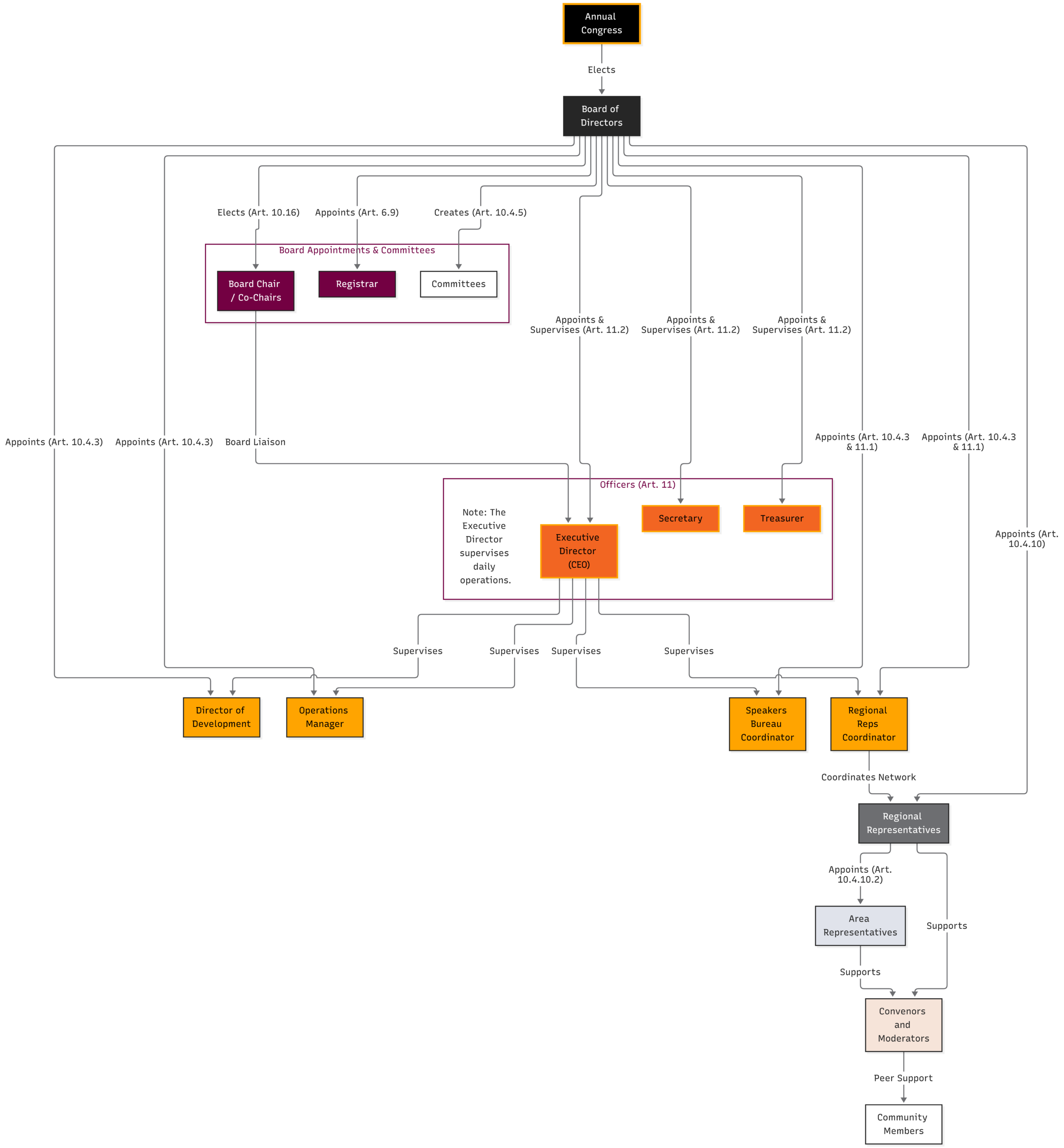
**Categories:** 5000 Governance
---
### [2026 Public Documents](https://lifering.org/governance-menu/policies-and-documents/bod-minutes-and-financials/2026-public-documents/)
**Published:** December 14, 2025
**Author:** webmaster @lifering.org
**Content:**
## 2026 Public Documents
### Minutes
[January](https://lifering.org/wp-content/uploads/Public_Documents/2026/Minutes/01_2026_BOD_Minutes.pdf)
[February](https://lifering.org/wp-content/uploads/Public_Documents/2026/Minutes/02_2026_BOD_Minutes.pdf)
[March](https://lifering.org/wp-content/uploads/Public_Documents/2026/Minutes/03_2026_BOD_Minutes.pdf)
[April](https://lifering.org/wp-content/uploads/Public_Documents/2026/Minutes/04_2026_BOD_Minutes.pdf)
[May](https://lifering.org/wp-content/uploads/Public_Documents/2026/Minutes/05_2026_BOD_Minutes.pdf)
[June](https://lifering.org/wp-content/uploads/Public_Documents/2026/Minutes/06_2026_BOD_Minutes.pdf)
[July](https://lifering.org/wp-content/uploads/Public_Documents/2026/Minutes/07_2026_BOD_Minutes.pdf)
[August](https://lifering.org/wp-content/uploads/Public_Documents/2026/Minutes/08_2026_BOD_Minutes.pdf)
[September](https://lifering.org/wp-content/uploads/Public_Documents/2026/Minutes/09_2026_BOD_Minutes.pdf)
### Financials
[January](https://lifering.org/wp-content/uploads/Public_Documents/2026/Financial/01_2026_IncomeExpense_Report.pdf)
[February](https://lifering.org/wp-content/uploads/Public_Documents/2026/Financial/02_2026_IncomeExpense_Report.pdf)
[March](https://lifering.org/wp-content/uploads/Public_Documents/2026/Financial/03_2026_IncomeExpense_Report.pdf)
[April](https://lifering.org/wp-content/uploads/Public_Documents/2026/Financial/04_2026_IncomeExpense_Report.pdf)
[May](https://lifering.org/wp-content/uploads/Public_Documents/2026/Financial/05_2026_IncomeExpense_Report.pdf)
[June](https://lifering.org/wp-content/uploads/Public_Documents/2026/Financial/06_2026_IncomeExpense_Report.pdf)
[July](https://lifering.org/wp-content/uploads/Public_Documents/2026/Financial/07_2026_IncomeExpense_Report.pdf)
[August](https://lifering.org/wp-content/uploads/Public_Documents/2026/Financial/08_2026_IncomeExpense_Report.pdf)
[September](https://lifering.org/wp-content/uploads/Public_Documents/2026/Financial/09_2026_IncomeExpense_Report.pdf)
### **990**
**Categories:** 5000 Governance
---
### [HP](https://lifering.org/bookstore/books/hp/)
**Published:** November 9, 2019
**Author:** Bees
**Content:**
# Humanly Possible
### Stories of Secular Recovery
[](https://lifering.org/bookstore/Humanly-Possible-p161743472)*Humanly Possible* is about success in recovery from substance addiction. There are many such books, but what sets this one apart is its emphasis on secular recovery. This book shows that recovery without religion is not only conceivable but readily achievable. These stories come from members of LifeRing Secular Recovery, SMART Recovery, and AA Freethinkers. These organizations seek to help people free themselves from addiction without pressuring them to believe things that are foreign to their worldviews.
New and in its first edition, *Humanly Possible* is available online, from the [LifeRing Bookstore,](https://lifering.org/bookstore/How-Was-Your-Week-p161743477) or from your local LifeRing Meeting. This edition of *Humanly Possible* is professionally printed and bound with a handsome full-color cover. 191 pp. 9″ x 6″, paperback. ISBN 978-0-5785037-0-7. 1st edition, 2019.
***Humanly Possible* is available for purchase [here](https://lifering.org/bookstore/Humanly-Possible-p161743472) using your Credit Card or PayPal account.**
Special Arrangements:
- For institutional customers, booksellers, and convenors looking for discounted pricing and shipping quotes, please email <publisher@lifering.org>.
### **From the preface**
“Narration is the quintessential form of customary knowledge”
-Jean-Francois Lyotard “We tell ourselves stories in order to live.”
-Joan Didion
Stories are said to be as necessary to humankind as food and shelter, and love. They compel, entertain, and delight us; they soothe our fears and give shape to our hopes and dreams. They are like mirrors where we recognize ourselves in the struggles of champions and monsters alike. They overcome the distances between us by allowing us to identify with each other. These are some of the ways that narrative gives meaning to lives.
For those of us who seek relief from substance use disorder, stories are essential in a concrete way. Narrative is a kind of evidence, and as such it has power; and power is famously assumed to be lacking for people with addictions. The power of narrative evidence is in its capacity to inspire belief in the possibility of recovery.
Certainly, as anecdotal evidence, narrative does not carry the weight of rigorous scientific studies. But the experimental study of addiction has thus far not brought the kind of relief that would make other kinds of evidence unnecessary. This slow progress may be the result of the extraordinarily complicated nature of addiction, involving, as it does, both the body and more illusively, the mind. It may be the result of moral and political prejudice. In either case, in the absence of a conclusive medical explanation of addiction, narrative provides strong evidence for demonstrating the varied “mechanics” of secular recovery.
The stories offered in this volume, of individuals living free of addictions by means of purely secular ideas, tools, and practices, provide powerful testimony that what was not long ago thought to be possible only by means of supernatural intervention is also “humanly” possible. This volume was inspired by the need for such evidence. Without it, countless people whose worldview is strictly secular have had little basis for believing that they might live according to their own conscience and be free of addiction at the same time.
According to Aristotle and other students of rhetoric, individual stories can often be tracked according to the following universal structure of drama: first, the rising action, which portrays a conflict between a protagonist and an antagonist, then a crisis or turning point, and finally a resolution. Even if life itself is rarely so clearly organized, this dramatic structure has proven useful and is often characteristic of the lives of many recovering people.
Many of the stories in this volume are written by people who have recovered with the help of tools learned in part from LifeRing Secular Recovery. They are not professional writers, but their stories follow the universal structure of drama. The rising action in many LifeRing stories describes a progressive path to recovery in terms of a give and take between a Sober Self and an Addicted Self. The turning point in many of our stories involves making peace between the Sober Self and the Addicted Self. The resolution is accomplished by taking action on behalf of the Sober Self, which we believe exists in every person who is suffering from active addiction. It is the Sober Self within us all, that human-sized protagonist, living in a fully natural world, that we learn to nourish as the hero in ourselves and each other in LifeRing. LifeRing and other secular recovery organizations are composed of sober selves joining together to affirm and celebrate their sobriety.
The word secular derives from the Latin seculum, meaning “of this time or age”. Those of us in secular recovery do indeed conduct our lives, not on the basis of what was believed at an earlier time, or on what may happen in another world after we die, but according to what is known thus far by means of practical evidence. This means that our stories describe what has worked for us from the ideas, tools and practices that derive from the natural world, here and now. It is our hope that this volume might contribute to the mounting evidence that secular recovery is possible for those who need it.
Kathleen Gargan
April 21, 2019
Denver, Colorado
**Categories:** 4000 Shop
**Tags:** Bookstore
---
### [EYSS](https://lifering.org/bookstore/books/eyss/)
**Published:** May 14, 2010
**Author:** Bees
**Content:**
# Empowering Your Sober Self
### The LifeRing Approach to Addiction Recovery
[](https://lifering.org/bookstore/Empowering-Your-Sober-Self-p161742544)*Empowering Your Sober Self*, 2nd Edition. The one book to read for an introduction to LifeRing. Written for the person who wants to get free of alcohol/drugs, for their friends and relations, and for the professionals who treat them
“A sophisticated, insightful, well-documented view of the philosophy and practice that are at the heart of the LifeRing approach. This book offers a perspective on recovery that can motivate change in clinicians and researchers as well as among individuals struggling to find their sober selves.”
-Carlo DiClemente, Ph.D., professor and chair, Department of Psychology, University of Maryland, Baltimore, and author, Addiction and Change “With impressive analytical clarity and therapeutic generosity, Nicolaus presents a well-argued brief for understanding the complexities of addiction treatment and accepting the full range of diverse paths to recovery. . . . \[Anyone\] wanting insight and balance on a vitally important public health issue will appreciate the author’s lively and respectful presentation.”
-Judith Herman, M.D., author, Trauma and Recovery
Now in its second printing, *Empowering Your Sober Self* is available online from the [LifeRing Bookstore](https://lifering.org/bookstore/Empowering-Your-Sober-Self-p161742544) or from your local LifeRing meeting. *Empowering Your Sober Self*, 276 pp. 6″ x 9″, paperback. ISBN 978-0-9659429-6-6. Second edition, 2014. Martin Nicolaus is the author of this book and co-founder of LifeRing Secular Recovery.
***Empower Your Sober Self* is available [here](https://lifering.org/bookstore/Empowering-Your-Sober-Self-p161742544) using your Credit Card or PayPal account.**
Special Arrangements:
- For institutional customers, booksellers, and convenors looking for discounted pricing and shipping quotes, please email <publisher@lifering.org>.
**[Table of Contents and Sample Content](/wp-content/uploads/lifering-press/EYSS/EYSS2-FP_TOC_Chapter-Summary_References.pdf)**
**[Readers Reviews](/wp-content/uploads/lifering-press/EYSS/EYSS2-Readers-Say.pdf)**
**Categories:** 4000 Shop
**Tags:** Bookstore
---
### [Board of Directors](https://lifering.org/governance-menu/bod/)
**Published:** May 22, 2010
**Author:** Bees
**Content:**
# Board of Directors
LifeRing operates under the guidance of a democratically elected Board of Directors. In alignment with [LifeRing Bylaws \| New Window \| Opens PDF \| New Window](https://lifering.org/wp-content/uploads/ImportantDocs/Current_Bylaws.pdf), individuals wishing to serve on the Board or hold an officer position must have a minimum of two years of continuous sobriety. This requirement ensures that all directors and officers are individuals in recovery who bring valuable lived experiences to their roles, allowing them to effectively guide their work and support [LifeRing’s mission \| New Window \| Opens PDF \| New Window](https://lifering.org/wp-content/uploads/Public_Documents/Current_Strategic_Plan.pdf). The Board convenes annually at the LifeRing Congress via video conferencing and holds monthly meetings in the interim to maintain ongoing communication and collaboration.
## LifeRing Board of Directors
**Anna Bedolla** <<anna@lifering.org>> lives in Austin, Texas, hence her screen name: Anna ATX. She joined LifeRing in late 2020 and currently convenes two online meetings, co-hosts another, and monitors <meetingsupport@lifering.org>. She completed training as Certified Peer Support Specialist in 2025. Anna was invited to join the LifeRing Board of Directors in 2022 and was appointed to fill a vacancy in 2026. Anna was again elected during the 2026 Annual Conference. Her term end is 2029.
**Bobbi Campbell** <[bcampbell@lifering.org \| Opens Email](mailto:bcampbell@lifering.org)> lives in the Los Angeles area with her husband and fellow LifeRinger Richard, who met as members of the LSRsafe email group, which she credits as her primary source of recovery support as well as the LifeRing Delphi Forum and LSR Women’s Empowered email group. Thanks to these groups she’s been sober since November of 2007 and since then previously volunteered to manage LifeRing’s social media pages – a gig she recently returned to – and wrote for the blog, and is now pleased to be a part of the governing body in addition to serving on the Fundraising, Marketing, and Communication Committee. She writes and does paper crafting on the side, but still doesn’t know what she wants to be when she grows up. Bobbi was appointed to the LifeRing Board of Directors in December 2022, elected to the board in 2023, and reelected in 2025 and now serves as the Board Chair. Her term ends in 2028.
**Ivona Szudelski** <[ivona@lifering.org \| Opens Email](mailto:ivona@lifering.org)> lives in Long Beach, California and discovered the LifeRing community in late 2020. Ivona is an online convenor and was elected to the board in 2025. Her term ends in 2028.
**Jonathan Magid** <[jonathan@lifering.org \| Opens Email](mailto:jonathan@lifering.org)> lives in Denver, Colorado and joined LifeRing in January 2023. Jonathan was appointed to the board in 2025. Jonathan was elected during the 2026 Annual Conference. His term end is 2029.
**Lisa Swing-Corney** <[lisas@lifering.org \| Opens Email](mailto:marybeth@lifering.org)> joined the LifeRing Community in late 2012 and has celebrated continuous sobriety since 2001. She is a LifeRing in-person meeting convenor in Akron, Ohio, and serves as the LifeRing Frontier Regions Coordinator and International Meetings Coordinator. In 2024, Lisa lead a team of BOD members to create LifeRing’s first [Strategic Plan \| New Window \| Opens PDF \| New Window](https://lifering.org/wp-content/uploads/Public_Documents/LifeRing%20Strategic%20Plan_v4.pdf), which continues to serve as our guide to meeting our ambitious but attainable objectives. Lisa is passionate about choosing her own path in recovery and helping others to bring LifeRing to their communities. In 2021, Lisa was nominated with unanimous consent to fill a vacancy on the LifeRing Board of Directors. In her free time, Lisa enjoys spending time with her dog Audrey, kitty cat Eve, and consuming all things *Star Trek.* Her term ends in 2028.
**Michael Anderson** <[michael.a@lifering.org \| Opens Email](mailto:marybeth@lifering.org)> is a lifetime Oakland, CA resident and first joined the LifeRing Community in June 2022. Initially serving as an online convenor, Michael now hosts two in-person meetings in local recovery facilities. Michael was tapped in 2024 to take over the role of California Regional Representative and is tasked with promoting and supporting new local meetings. His hands-on approach encourages both new and long-term California convenors. He is a certified Medi-Cal Peer Support Specialist (CalMHSA) and Mental Health First Aider (National Council for Mental Wellbeing). Michael is often joined in meetings by his trustworthy pitbull Chutney. His term ends in 2027.
**Monica Foy** <[monica@lifering.org \| Opens Email](mailto:monica@lfiering.org)> has been in recovery since 2016, when she attended her first LifeRing meeting. She convened an in-person meeting from 2018-2020, transitioning its venue to the San Francisco LGBT Center, then to an online format during the pandemic. She has been a Member of the LifeRing Communications Committee (2019), Delegate at Annual Conference (2019), and Convenor Workshop Presenter (2020). She served as Secretary and has served as Treasurer since 2024. Monica attributes her successful recovery to LifeRing’s model of self-direction and peer counseling. Her term ends in 2027.
**Sue Betts** <[sue@lifering.org \| Opens Email](mailto:sue@lifering.org)> is a San Francisco transplant enjoying her fifth year of sobriety. She joined LifeRing in 2019 and was encouraged shortly thereafter to convene one of LifeRing’s original online meetings – The Saturday Morning Chat. Sue created The Liver Spot in 2020. When Sue began volunteering on LifeRing committees in 2020, she helped establish the Fundraising Marketing Communications Committee affectionately known as FunMarCom and now coordinates marcom efforts. She is also chairs the Meetings and Convenor Collaboration team (MCC) and collaborates on all active LifeRing teams. Sue was invited to join the LifeRing Board of Directors in 2021 where she served as Board Chair until retiring in 2026. Her term ends in 2027.
**Travis Boozer** <[travis@lifering.org \| Opens Email](mailto:travis@lifering.org)> is an intellectual-property attorney and musician living near Memphis, Tennessee. He found the LifeRing community in late 2022 and began convening an online meeting 6 months later. Travis was appointed to the board in 2026 to fill a vacancy. Travis was elected during the 2026 Annual Conference. His term end is 2029.
[Qualifications needed for the Board of Directors \| Opens PDF](https://lifering.org/wp-content/uploads/BOD_Resources/BOD_Commitment_Letter.pdf)
### Current LifeRing Officers
Sue Betts, Executive Director <[sue@lifering.org \| Opens Email](mailto:sue@lifering.org)>
Ewa Conroy, Secretary <[ewa@lifering.org \| Opens Email](mailto:ewa@lifering.org)>
Monica Foy, Treasurer <[monica@lifering.org \| Opens Email](mailto:monica@lifering.org)>
### Board Meetings
A Board Meeting is scheduled every month on the second Sunday of the month at 9:00 AM, Pacific Time via a Zoom meeting.
This meeting is open to the public.
Meeting URL: [https://zoom.us/j/88907758083?pwd=YTVDMStaY0hVdnhHOTlqcnM1MEpYdz09 \| New Window \| New Window](https://zoom.us/j/88907758083?pwd=YTVDMStaY0hVdnhHOTlqcnM1MEpYdz09)
Meeting ID: 889 0775 8083
Passcode: lifering
Call-in numbers[:](https://lifering.org/governance-menu/bod/zoom-phone-numbers/) [https://lifering.org/governance-menu/bod/zoom-phone-numbers/ \| New Window \| New Window](https://lifering.org/zoom-phone-numbers)
Additional help joining a Zoom Meeting: [https://support.zoom.us/hc/en-us/articles/201362193-Joining-a-Meeting \| New Window \| New Window](https://support.zoom.us/hc/en-us/articles/201362193-Joining-a-Meeting)
[BOD Provisional Agenda \| October 11, 2026](https://lifering.org/wp-content/uploads/2026/10/Provisional_BOD_Meeting_Agenda_10-11-2026.pdf)
### Current Regional Representatives
[Regional Representatives – Who are they and what do they do. \| New Window \| New Window](https://lifering.org/convenor-menu/regional-representative/)
### Co-founder and CEO 1997-2010
Martin Nicolaus
### Martin Nicolaus – LifeRing Documents
[Current LifeRing Bylaws \| New Window \| Opens PDF \| New Window](https://lifering.org/wp-content/uploads/ImportantDocs/Current_Bylaws.pdf)
[LifeRing 2025-2026 Strategic Plan \| New Window \| Opens PDF \| New Window](https://lifering.org/wp-content/uploads/Public_Documents/Current_Strategic_Plan.pdf)
[LifeRing’s 501(c)(3) IRS Determination Document \| New Window \| Opens PDF \| New Window](https://lifering.org/wp-content/uploads/ImportantDocs/501(c)(3)IRSletter.pdf)
[California Articles of Incorporation \| New Window \| Opens PDF \| New Window](https://lifering.org/wp-content/uploads/ImportantDocs/CaliforniaArticlesOfIncorporation.pdf) (1997)
### Legal Notice
LifeRing Press, LifeRing Recovery, LifeRing Secular Recovery, and the LifeRing graphic design are registered trademarks/service marks of LifeRing Inc. All rights reserved. The LifeRing meeting charter and Bylaws are official publications of LifeRing Inc., approved by the LifeRing Congress. All other publications, including, without limitation, the content of posts, blog items, comments, books, brochures, flyers, other publications, and linked sites on this website, represent the opinions of their authors.
**Categories:** 5000 Governance
**Tags:** Top Bar Menu
---
### [Promotional Resources](https://lifering.org/lifering-resources/promotional-resources/)
**Published:** September 13, 2026
**Author:** Bees
**Content:**
## Promotional Resources
[Bookstore and Packets](https://lifering.org/bookstore/)
Promote recovery in your community with LifeRing’s official event materials, presentation decks, and shareable informational resources. For information about **outreach Promote recovery in your community with LifeRing’s official event materials, presentation decks, and shareable informational resources. For information about outreach projects**, please reach out to the [LifeRing Service Center](mailto:service@lifering.org). .
---
#### One-Sheets
| [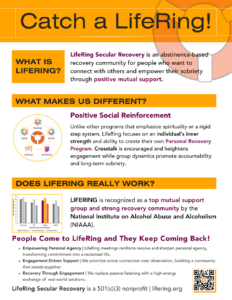](https://lifering.org/wp-content/uploads/2026/09/Catch-a-LifeRing_Print-Use_Updated-08232026.pdf) | [Catch a LifeRing](https://lifering.org/wp-content/uploads/2026/09/Catch-a-LifeRing_Print-Use_Updated-08232026.pdf) One-sheet briefly introducing LifeRing. For use as a table-topper, handout, inclusion in media packets. - **What Is LifeRing** - What Makes LifeRing Different** - **Efficacy of LifeRing** |
|---|---|
| [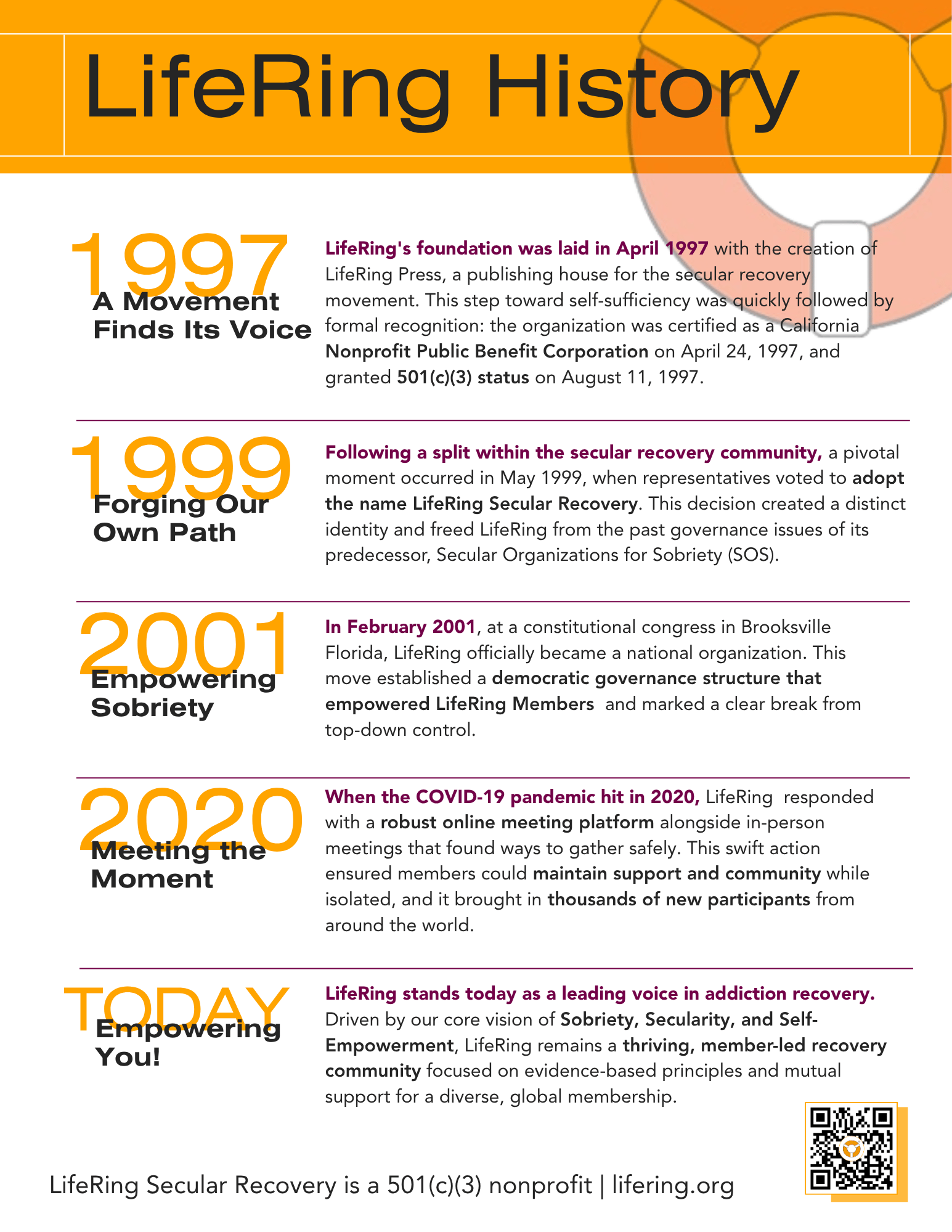](https://lifering.org/wp-content/uploads/2026/09/LifeRing-History_Event-Flyer.pdf) | [LifeRing History](https://lifering.org/wp-content/uploads/2026/09/LifeRing-History_Event-Flyer.pdf) One-sheet outlining the history of LifeRing. For use as a table-topper, handout, mailer, inclusion in media packets. - **Foundation** - Evolution** - **Present day** |
| [](https://lifering.org/wp-content/uploads/2026/09/Rebuilding-Trust-Flyer_09122026.pdf) | [Rebuilding Trust](https://lifering.org/wp-content/uploads/2026/09/Rebuilding-Trust-Flyer_09122026.pdf) Repair relationships through your choices, your actions, and honest conversations For use as a table-topper, handout, mailer, inclusion in media packets. - **Rebuilding trust through action** - Personal Accountability Plan** - **They Want You To Succeed** |
|  | [Family & Friends Trust](https://lifering.org/wp-content/uploads/2026/09/Family-and-Friends-Trust.pdf)Outlines how family & friends can support a loved-one in recovery. For use as a table-topper, handout, mailer, inclusion in media packets. - **Rebuilding a relationship with a person in recovery** - Growing Trust Through Positive Support** - **Prioritizing Your Own Healing** |
#### Pamphlets
| [](https://lifering.org/bookstore/pamphlets/) | [LifeRing Continuum of Care \| Introduction Pamphlet for Professionals](https://lifering.org/wp-content/uploads/lifering-press/pamphlets/Pro%20Pamphlet.pdf) Tri-fold pamphlet introducing LifeRing as a partner in the continuum of care tailored for healthcare professionals and treatment specialists. Content includes: - **Introduction to LifeRing** - How LifeRing integrates with the continuum of care** - **Efficacy of LiferRing** |
|---|---|
| [](https://lifering.org/bookstore/pamphlets/) | [LifeRing Empower Your Sober Self (EYSS) \| Introduction Pamphlet for Potential Participants](https://lifering.org/wp-content/uploads/lifering-press/pamphlets/EYSS_Pamphlet.pdf) Tri-fold pamphlet introducing LifeRing as a positive recovery resource for those interested in overcoming substance use challenges. Content includes: - **Introduction to LifeRing** - How LifeRing supports personal recovery plans** - **What to expect in a LifeRing meeting** |
| [](https://lifering.org/bookstore/pamphlets/) | [LifeRing Empower Your Sober Self (EYSS) \| Poster](https://lifering.org/wp-content/uploads/lifering-press/pamphlets/EYSS_Flyer.pdf) 11×18 poster introducing LifeRing as a positive recovery resource for those interested in overcoming substance use challenges. Content includes: - **Introduction to LifeRing** - How LifeRing supports personal recovery plans** - **What to expect in a LifeRing meeting** |
#### Videos
| [](https://www.youtube.com/watch?v=QnN8LmD5AZ4) | [90-Second Overview of LifeRing](https://www.youtube.com/watch?v=QnN8LmD5AZ4) This elevator speech is a must-see video covering the basics of LifeRing. Content includes: - **Introduction to LifeRing** - The “3-S” Philosophy** - **What to expect in a LifeRing meeting** |
|---|---|
|
(opens in new tab)
**Categories:** 1030 Resources
**Tags:** Brochures, collateral, Flyers, LifeRIng, LifeRing Resources, Posters, Promotional Materials
---
### [The Liver Spot](https://lifering.org/the-liver-spot/)
**Published:** July 20, 2026
**Author:** webmaster @lifering.org
**Content:**
## ****The Liver Spot \| Wednesdays 5:30pm – 7:00pm+ Pacific
The Liver Spot is a LifeRing Focus Meeting for **people in recovery who are also diagnosed with related medical conditions**. Now, this might sound grim, because honestly, it is. But the meeting is not. The Liver Spot is a LifeRing specialty meeting built on the “How Was Your Week” (HWYW) check-in format for people in recovery who have also been diagnosed with [health issues resulting from substance use disorders](https://www.hopkinsmedicine.org/health/conditions-and-diseases/alcoholinduced-liver-disease). The Liver Spot weekly meeting is not limited to those with medical conditions-our meeting is open to all.
The Liver Spot is the first of its kind. It was introduced on December 23, 2020, in response to a LifeRing Convenor asking, “Will someone please start a liver transplant meeting? I can’t understand a word they’re talking about.”
We’re an active and engaged community who **join together to support our own recovery and the recovery of others**. Many of our participants are referred by their physicians and treatment specialists.
The Liver Spot has the attention of medical providers including [UCSF](https://www.ucsfhealth.org/clinics/liver-disease-and-liver-transplant), [Stanford](https://stanfordhealthcare.org/medical-clinics/liver-transplant-program.html), [Sutter Health CPMC, ](https://www.sutterhealth.org/cpmc)[Johns Hopkins](https://www.hopkinsmedicine.org/transplant/programs/liver/index.html) and the [Mayo Clinic](https://www.mayoclinic.org/diseases-conditions/liver-problems/care-at-mayo-clinic/mac-20374513). It’s common for people to join this meeting from their hospital beds.
---
#### ***The Liver Spot has been a lifesaver for SO many of my patients!
I am so grateful to this community for their incredible support!***
**Courtney Sherman, MD** \| ****UCSF Health****
Director of the [UCSF HALT (Healing Alcohol-associated Liver disease Together) Clinic](https://www.ucsfhealth.org/clinics/healing-alcohol-associated-liver-disease-together-halt)
---
This LifeRing focus meeting **supports an average of 60 people every week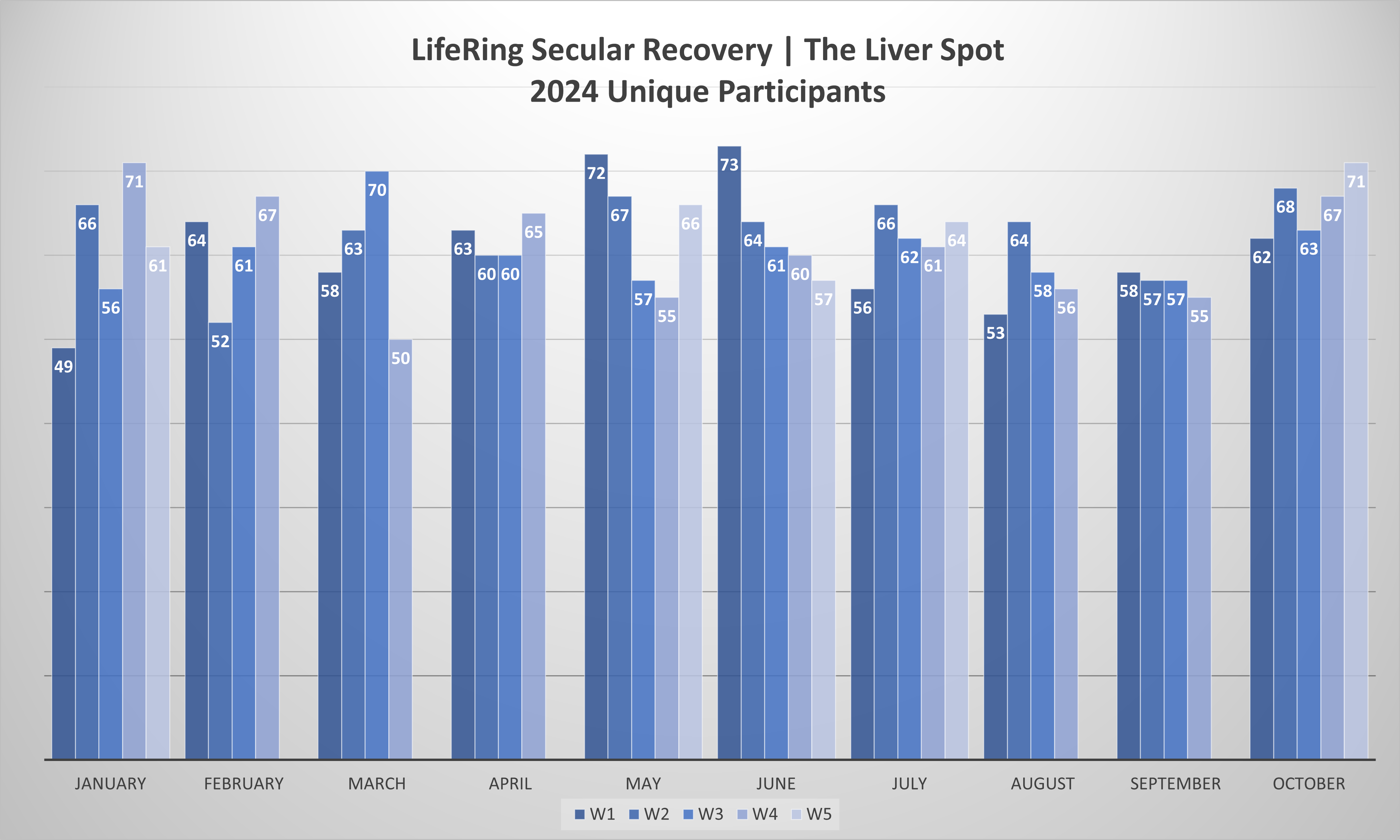** with a core group of about 40. We’ve made it through 8 losses, 1 slip, 22 transplants, and countless endoscopies. Dozens of participants in our group have successfully navigated the rigorous [National Liver Review Board](https://optn.transplant.hrsa.gov/news/national-liver-review-board-is-implemented/) to achieve and maintain a spot on the highly competitive [National Liver Transplant Waitlist](https://unos.org/transplant/frequently-asked-questions/#Waiting). (Hint: Family and Cheerfulness.) We are all fully aware that we have a [77.7% chance of receiving a transplant](https://www.organdonor.gov/learn/organ-donation-statistics) once on the list, a 10% chance of dying within a year of the transplant, and a 30% chance we won’t make it to 5 years. But there is hope!
#### **Many of us have improved our MELD score through SUD recovery and no longer qualify for a transplant. This is a *VERY* good thing!**
Support for surviving the wait and the aftershock is what makes the Liver Spot so unique. **We share our recovery journeys from a patient’s perspective with crosstalk from a patient’s perspective.** Participants voted to expand our core time by 30 minutes to allow time for more shares and more comprehensive feedback. It’s not unusual for this meeting to run for two and a half hours. Who knew liver failure could be this much fun?
The Liver Spot is a safe and compassionate space to share stories and share hope. Shares and crosstalk are graphic in nature, so The Liver Spot may not be for everyone, but it is open to everyone. If nothing else, this meeting serves as a really sobering experience for people who have never considered the long-term effects of drinking. Emotions run high and camaraderie is deep. And we all get a little misty-eyed when a loved-one joins to learn what they can do to help.
*Charmaine, Anna, John, Kirk, Benji, Pat, Phil, Kevin, CeeCee, and Danny \| You are missed*
---
The Liver Spot is a LifeRing focus meeting for people in recovery who are also diagnosed with related medical conditions. We offer peer support from a patient’s perspective.
**Wednesdays from 5:30pm to 7:00pm Pacific**
---
***Help us help others. Your [donations](https://lifering.org/get-involved-menu/donate/) support the growth of peer-to-peer support communities like The LifeRing Liver Spot. Thank you!***
*For other ways you can contribute to LifeRing, please consider being a [LifeRing Volunteer](https://lsrtesting.com/get-involved-menu/volunteer-form/) or a [LifeRing Convenor.](https://lsrtesting.com/get-involved-menu/start-a-meeting/)*
---
**OTC Anti-Itch stuff we really like**: [Sarna Sensitive Anti-Itch Lotion](https://sarnalotion.com/products/sarna-sensitive-anti-itch-lotion/) \[lotion\], [Curél Hydra Therapy Itch Defense](https://www.curel.com/en-us/products/hydra-therapy-itch-defense/) \[wet skin moisturizer\], [Olay Ultra Moisture Coconut Oasis](https://www.olay.com/products/olay-ultra-moisture-coconut-oasis-body-wash-22-oz) \[body wash\]
**Categories:** 2500 The Liver Spot
---
### [Introducing The Liver Spot | Living](https://lifering.org/meeting-menu/online-meetings/liver_spot_living/)
**Published:** February 1, 2026
**Author:** Bees
**Content:**
## The Liver Spot \| Living – Supporting Life with ALD
***The LifeRing community is expanding our reach once again! We are incredibly excited to announce the launch of our newest addition to The Liver Spot Community: The Liver Spot \| Living.***
Recovery is rarely a straight line, and when you add complex medical conditions into the mix – especially as a younger adult – the path can feel treacherous. This new space is specifically tailored for the “next generation” who face a unique set of life transitions, social pressures, and digital-age challenges.
Following the successful model of our original [Liver Spot Community meetings(opens in new tab)](https://lifering.org/the-liver-spot-community/), **The Liver Spot \| XYZ** integrates the worlds of [substance use disorder(opens in new tab)](https://my.clevelandclinic.org/health/diseases/16652-drug-addiction-substance-use-disorder-sud) (SUD) recovery and [alcohol-related liver disease(opens in new tab)](https://www.hopkinsmedicine.org/health/conditions-and-diseases/alcoholinduced-liver-disease) (ALD) clinical care. We provide a collaborative space where younger adults can master the balancing act of clinical recovery and long-term sobriety as they navigate their way to a resilient, sustainable lifestyle.
Join [The Liver Spot \| Living(opens in new tab)](https://meetings.lifering.org/meetings/1300/) on **Fridays at 5:30pm Pacific Time** to learn from the journey and share from the … heart!
---
**A Space for the Next Generation of Liver Patients in Recovery**
**The Liver Spot \| Living** is a welcoming and supportive recovery community specifically for younger patients navigating the intersection of substance use recovery (SUD) and alcohol-related liver disease (ALD).
If you’re looking to connect with others who understand the reality of being an ALD patient, this is the place for you. In many recovery spaces, the physical toll of illness is secondary; here, it is the heart of the conversation. We recognize that facing serious health diagnoses at a younger age brings a unique set of questions, social pressures, and life transitions. This meeting offers more than just support – it offers **patient-tested insights** for navigating the road ahead.
Whether you are managing early-stage health concerns or navigating a long-term medical journey, you’ll find a warm welcome and a safe space to share your struggles and your successes with peers who truly “get it.” This is a place for **honest sharing, deep camaraderie, and finding hope** built on shared, lived experience.
**What to Expect: Shared Experience, Collective Strength**
The Liver Spot \| Living is more than just a support group; it’s a community where we trade the real-life insights necessary to navigate life as a younger person in recovery.
When you join The Liver Spot \| Living meeting, you can expect to:
- **Exchange Lived Insights:** Connect with peers who are navigating the same social and physical hurdles of being a younger patient. We don’t just share space; we share the wins, the frustrations, and the hard-won lessons of managing a serious diagnosis in the prime of your life.
- **Learn Through Shared Journeys:** In this safe, non-judgmental environment, your story becomes someone else’s survival guide. We believe in the power of open dialogue – by listening to one another, we learn how others handle everything from navigating complex medical appointments to maintaining a vibrant, active social life while prioritizing our health.
- **Refine Your Path Through Peer Dialogue:** This isn’t a lecture; it’s a conversation. By hearing how others empower their “new normal,” you gain a toolkit of perspectives to help you handle your own medical and recovery milestones. Your peers are often the best resource for learning how to stay resilient when the road gets rocky.
- **Master the Balancing Act:** We help each other bridge the gap between doctor’s orders and recovery goals. Together, we learn how to apply the LifeRing philosophy of **“Empower Your Sober Self”** in a way that truly honors your journey.
No matter your current diagnosis or where you are in your recovery, you will find a warm welcome and a community that speaks your language.
---
**Get Connected**
Whether you are in the early stages of a diagnosis, navigating the transplant list, or managing long-term recovery, there is a Spot waiting for you. We learn from each other’s experiences so that none of us has to figure it out alone.
**The Liver Spot Community: Finding Your People**
The Liver Spot started with a simple idea: That people living with SUD-related medical conditions have a unique kind of perspective to offer one another. As we’ve grown, we’ve created specialized spaces so you can connect with peers who truly understand your specific journey:
- **The Liver Spot** – *The Liver Spot meeting that started it all.* Known for its high-energy, “all-in” vibe, this meeting is a space where we trade insights and encouragement about the realities of living with medical conditions in recovery.
Wednesdays at 5:30pm Pacific \| Learn more and click to join: [The Liver Spot(opens in new tab)](https://meetings.lifering.org/meetings/1241/)
- **The Liver Spot \| Post-Op** – *A specialized Spot for transplant recipients.* Life after a transplant comes with its own set of intricacies. This exclusive meeting offers a dedicated space for transplant recipients to connect with others who have walked that same path.
Tuesdays at 5:30pm Pacific \| Learn more and click to join: [The Liver Spot \| Post-Op(opens in new tab)](https://meetings.lifering.org/meetings/1191/)
- **The Liver Spot \| Living** – *Our focus Spot for the next generation.* Tailored for the younger patients, this meeting is all about building a community where health and sobriety thrive together.
Fridays at 5:30pm Pacific \| Learn more and click to join: [The Liver Spot \| Living
(opens in new tab)](https://meetings.lifering.org/meetings/1300/)
- #### **(opens in new tab**
**The Liver Spot \| El Punto del Hígado** – *Nuestro Espacio para la comunidad de habla hispana.* Aquí nos aseguramos de que el idioma nunca sea una barrera para acceder al apoyo mutuo en la recuperación médica que salva vidas. [The Liver Spot \| El Punto del Hígado ](https://meetings.lifering.org/meetings/1309/)
---
**A Growing Movement of Support**
What began on December 23, 2020, with a single meeting with just 18 participants has blossomed into a vital network supporting over **100 liver patients who come together every week** to share their journeys from a patient’s perspective. The Liver Spot has become more than just a meeting; it is a **blueprint for success**. We are honored to frequently host leaders from other recovery communities who join us to experience – and bring back to their own organizations – the open, engaging, and patient-centered environment we’ve built together.
---
**Endorsed by Medical Experts**
The critical social impact of The Liver Spot Community’s unique patient-to-patient connection is **recognized and relied upon by leading University Medical Centers.** Our members are referred by treatment specialists and medical teams at [UCSF(opens in new tab)](https://www.ucsfhealth.org/clinics/liver-disease-and-liver-transplant), [Stanford(opens in new tab)](https://stanfordhealthcare.org/medical-clinics/liver-transplant-program.html), [Sutter Health CPMC(opens in new tab)](https://www.sutterhealth.org/cpmc), [UC Davis(opens in new tab)](https://health.ucdavis.edu/internal-medicine/gastroenterology-hepatology/our-services/liver-disease), [UT Southwestern](https://utswmed.org/conditions-treatments/liver-transplant/), [Johns Hopkins(opens in new tab)](https://www.hopkinsmedicine.org/gastroenterology-hepatology/specialty-centers/hepatology), [Vanderbilt(opens in new tab)](https://www.vanderbilthealth.com/locations/vanderbilt-hepatology-and-liver-and-kidney-transplant-center), and the [Mayo Clinic(opens in new tab)](https://www.mayoclinic.org/diseases-conditions/liver-problems/care-at-mayo-clinic/mac-20374513). People often join us directly from their hospital beds-and yes, hospital gowns are always welcome! It’s a very supportive and genuine space.
Trusted by participants and leading medical experts, The Liver Spot Community provides a vital connection with peers who don’t just sympathize – they truly *understand* the journey. This is the critical, **real-world support** healthcare professionals recognize as essential for thriving in long-term recovery.
---
**The Liver Spot Communities: Connection and Understanding**
***When facing the complexities of addiction-related medical conditions, the greatest breakthroughs often come not from a doctor’s chart, but from a peer’s experience.***
**The Liver Spot Community** is a unique group of LifeRing specialty meetings built on the How Was Your Week check-in format and tailored to folks who are experiencing serious [medical conditions related to substance use disorder (SUD)(opens in new tab)](https://www.hopkinsmedicine.org/health/conditions-and-diseases/alcoholinduced-liver-disease).
[The Liver Spot(opens in new tab)](https://meetings.lifering.org/meetings/1241/), [The Liver Spot \| Post-Op(opens in new tab)](https://meetings.lifering.org/meetings/1191/), [The Liver Spot \| Living(opens in new tab)](https://meetings.lifering.org/meetings/1300/), and [The Liver Spot \| El Punto del Hígado](https://meetings.lifering.org/meetings/1309/) are more than just meetings – they are **powerful, thriving lifelines** where individuals find **unmatched peer support.** We are dedicated to the simple and profound idea that the best guidance and deepest understanding often come from someone who has authentically walked the same path.
While the medical realities we discuss can be grim, the feeling of the community is anything but. This is a place for **honest sharing, deep camaraderie, and finding hope** built on shared, lived experience.
For more information about this **unique and powerful recovery community**, please reach out to Sue Betts \| [sue@lifering.org(opens in new tab)](mailto:sue@lifering.org)
#### We Do Brave Things Here!
**Categories:** Post, Post 2
**Tags:** alcohol related liver disease, ALD support, cirrhosis support, cirrhosis support group, lifering meetings, liver spot, Liver Transplant Support, the liver spot
---
### [The Liver Spot Community](https://lifering.org/the-liver-spot-community/)
**Published:** August 6, 2026
**Author:** Bees
**Content:**
## ****
## The Liver Spot Community \| Support From a Patient’s Perspective
***When facing the complexities of addiction-related medical conditions, the greatest breakthroughs often come not from a doctor’s chart, but from people who truly understand the journey. We do brave things here.***
[Jump to Meetings Information](#meetings)
The Liver Spot Community is a specialized network of online focus meetings hosted by [LifeRing Secular Recovery](https://lifering.org/welcome/). Built on LifeRing’s supportive *“How Was Your Week?”* check-in format, these **100% patient-led meetings** provide a place for **honest sharing, deep camaraderie, and finding practical hope.**
---
### Support From a Patient’s Perspective
Whether you are newly diagnosed, navigating the complexities of getting waitlisted for a organ match, or managing life years after a major surgery, you don’t have to figure it out alone. **The Liver Spot Community** is here to foster the resilience and community spirit you need to thrive. **The Liver Spot** is a welcoming, judgment-free space where patients come together to ask questions, share insights, and learn from those walking the same path. This is an authentic lifeline where members don’t just sympathize with your diagnosis – we truly understand it from the inside out.
While the medical topics we discuss can be serious, the community vibe is deeply encouraging, warm, and grounded in practical hope. People often join us directly from their hospital beds – and yes, **hospital gowns are always welcome!** The Liver Spot Community is a very supportive and genuine space.
---
### Endorsed by Medical Experts
The critical impact of our patient-to-patient connections is Liver Spot Community’s unique patient-to-patient connection is **recognized and trusted** by leading university medical centers. Treatment specialists and clinical teams routinely refer patients to The Liver Spot from top institutions, including: [UCSF(opens in new tab)](https://www.ucsfhealth.org/clinics/liver-disease-and-liver-transplant), [Stanford(opens in new tab)](https://stanfordhealthcare.org/medical-clinics/liver-transplant-program.html), [Sutter Health CPMC(opens in new tab)](https://www.sutterhealth.org/cpmc), [UC Davis(opens in new tab)](https://health.ucdavis.edu/internal-medicine/gastroenterology-hepatology/our-services/liver-disease), [UT Southwestern](https://utswmed.org/conditions-treatments/liver-transplant/), [Johns Hopkins(opens in new tab)](https://www.hopkinsmedicine.org/gastroenterology-hepatology/specialty-centers/hepatology), [Vanderbilt(opens in new tab)](https://www.vanderbilthealth.com/locations/vanderbilt-hepatology-and-liver-and-kidney-transplant-center), and the [Mayo Clinic(opens in new tab)](https://www.mayoclinic.org/diseases-conditions/liver-problems/care-at-mayo-clinic/mac-20374513).
***The Liver Spot has been a lifesaver for SO many of my patients!
I am so grateful to this community for their incredible support!***
**Courtney Sherman,** Director of the [UCSF HALT (Healing Alcohol-associated Liver disease Together) Clinic(opens in new tab)](https://www.ucsfhealth.org/clinics/healing-alcohol-associated-liver-disease-together-halt)
Trusted by participants and leading medical experts, The Liver Spot Community provides a vital connection with peers who don’t just sympathize – they truly *understand* the journey. This is the critical, **real-world support** healthcare professionals recognize as essential for thriving in long-term recovery.
---
#### **.**
### The Liver Spot Community Meetings: Connection and Understanding
Welcome to The Liver Spot, a warm, judgment-free space built entirely on a patient-to-patient model. Living with a liver condition can feel deeply isolating, but here, you are surrounded by friends who truly understand your diagnosis from the inside out. Consider this your authentic lifeline – a community where you can freely ask questions, share insights, and find genuine encouragement from others walking with you along this path to recovery.
[Jump to The Liver Spot Calendar](https://meetings.lifering.org/meetings/?title=&program=&audiences=105&meetingType=&datetime_nextmeeting=&languages=&location=&coordinates=&scope=)
#### [**The Liver Spot**(opens in new tab)](https://meetings.lifering.org/meetings/1241/) – The OG \| Open to Everyone
- **The Vibe:** High-energy, “all-in,” and deeply collaborative.
- **The Focus:** Open to all people diagnosed with ALD or other SUD-related medical conditions, caregivers, and those looking for a sobering, deep perspective on the journey.
- **The History:** Launched on December 23, 2020, after a LifeRing convenor recognized the urgent need for a dedicated space where patients didn’t have to translate their complex medical realities to outsiders.
- **When We Meet:** Online every Wednesday at 5:30pm Pacific Time. Learn more and click to join: [The Liver Spot meeting(opens in new tab)](https://meetings.lifering.org/meetings/1241/).
---
#### [The Liver Spot \| Post-Op(opens in new tab)](https://meetings.lifering.org/meetings/1191/) – Targeted Support \| Post-Transplant Patients
- **The Vibe:** Nurturing, confidential, and highly focused on the specific post-operative journey.
- **The Focus:** Specifically for **liver transplant recipients**. It serves as a vital peer-to-peer complement to clinical post-transplant care, helping patients navigate the unique emotional and medical intricacies of life after a transplant.
- **The History:** Launched in January 2025 as a groundbreaking partnership between LifeRing and UCSF Health’s HALT Clinic.
- **When We Meet:** Online every Tuesday at 5:30pm Pacific Time. Learn more and click to join: [The Liver Spot \| Post-Op meeting(opens in new tab)](https://meetings.lifering.org/meetings/1191/).
---
#### [The Liver Spot \| Living(opens in new tab)](https://meetings.lifering.org/meetings/1300/) – Real Life with ALD \| Open To Everyone
- **The Vibe:** Welcoming, empowering, and focused on thriving while balancing alcohol-associated liver disease (ALD).
- **The Focus:** Tailored for anyone navigating daily life, wellness, and long-term vitality alongside serious clinical diagnoses.
- **The History:** Opened on January 30, 2026 to provide a welcoming and supportive recovery community for younger people who are navigating both ALD medical conditions and active, fulfilling lives.
- **When We Meet:** Online every Friday at 5:30pm Pacific Time. Learn more and click to join: [The Liver Spot \| Living meeting(opens in new tab)](https://meetings.lifering.org/meetings/1300/).
---
#### [The Liver Spot \| El Punto del Hígado(opens in new tab)](https://meetings.lifering.org/meetings/1309/) – Apoyo Dirigido \| Apoyo para la EAA (Enfermedad del Hígado por Alcohol) para Hispanohablantes
- **El Ambiente:** Culturalmente rico, inclusivo y llevado a cabo completamente en español.
- **El Enfoque:** Específicamente para **personas de habla hispana**. Abierto a cualquier persona diagnosticada con EAA (ALD) u otras afecciones médicas relacionadas con el TUS (Trastorno por Uso de Sustancias), cuidadores y aquellos que buscan una perspectiva profunda y reflexiva sobre este camino.
- **La Historia:** Creado el 18 de abril de 2026 para garantizar que el idioma nunca sea una barrera para el apoyo mutuo de recuperación médica que salva vidas. Esta reunión lleva los principios fundamentales de *The Liver Spot* a la comunidad hispanohablante.
- **Cuándo Nos Reunimos:** En línea todos los lunes a las 5:30pm, hora del Pacífico. Infórmate más y haz clic para unirte: [The Liver Spot \| El Punto del Hígado reunión](https://meetings.lifering.org/meetings/1309/).
---
#### [The Liver Spot \| El Punto del Hígado(opens in new tab)](https://meetings.lifering.org/meetings/1309/) – Targeted Support \| ALD Support for Spanish Speakers
- **The Vibe:** Culturally rich, inclusive, and fully conducted in Spanish.
- **The Focus:** Specifically for **Spanish-language speakers**. Open to all people diagnosed with ALD or other SUD-related medical conditions, caregivers, and those looking for a sobering, deep perspective on the journey.
- **The History:** Created on April 18, 2026 to ensure that language is never a barrier to life-saving peer medical recovery support. This meeting brings the core principles of The Liver Spot to the Spanish-speaking community.
- **When We Meet:** Online every Monday at 5:30pm Pacific Time. Learn more and click to join: [The Liver Spot \| El Punto del Hígado](https://meetings.lifering.org/meetings/1309/)
---
### We Do Brave Things Here
**Come Join Us!** We offers more than just weekly meetings – The Spot is **powerful, thriving lifeline** where individuals facing serious [medical conditions related to substance use disorder (SUD)(opens in new tab)](https://www.hopkinsmedicine.org/health/conditions-and-diseases/alcoholinduced-liver-disease) find **unmatched peer support.** We are dedicated to the simple and profound idea that the best guidance and deepest understanding often come from someone who has authentically walked the same path.
For more information about this **unique and powerful LifeRing recovery community**, please reach out to Sue Betts \| [sue@lifering.org(opens in new tab)](mailto:sue@lifering.org)
---
**The Liver Spot Community** is a specialized focus community within **LifeRing Secular Recovery** created for people navigating liver disease, transplantation, ALD/SUD recovery, and the challenges that accompany them.
Through shared experience, practical wisdom, and mutual encouragement, members help one another build healthier futures while strengthening both recovery and overall well-being.
**Stronger Together.**
**Categories:** 2500 The Liver Spot
**Tags:** ald, cirrhosis, cirrhosis support, cirrhosis support group, lifering liver spot, liver disease, liver meetings, liver spot, liver spot community, liver support, liver support meetings, the liver spot
---
### [The Liver Spot Community](https://lifering.org/meeting-menu/online-meetings/liver-spot-community/)
**Published:** June 4, 2026
**Author:** Bees
**Content:**
## ****
## The Liver Spot Community \| Support From a Patient’s Perspective
***When facing the complexities of addiction-related medical conditions, the greatest breakthroughs often come not from a doctor’s chart, but from people who truly understand the journey. We do brave things here.***
[Jump to Meetings Information](#meetings)
The Liver Spot Community is a specialized network of online focus meetings hosted by [LifeRing Secular Recovery](https://lifering.org/welcome/). Built on LifeRing’s supportive *“How Was Your Week?”* check-in format, these **100% patient-led meetings** provide a place for **honest sharing, deep camaraderie, and finding practical hope.**
---
### Support From a Patient’s Perspective
Whether you are newly diagnosed, navigating the complexities of getting waitlisted for a organ match, or managing life years after a major surgery, you don’t have to figure it out alone. **The Liver Spot Community** is here to foster the resilience and community spirit you need to thrive. **The Liver Spot** is a welcoming, judgment-free space where patients come together to ask questions, share insights, and learn from those walking the same path. This is an authentic lifeline where members don’t just sympathize with your diagnosis – we truly understand it from the inside out.
While the medical topics we discuss can be serious, the community vibe is deeply encouraging, warm, and grounded in practical hope. People often join us directly from their hospital beds – and yes, **hospital gowns are always welcome!** The Liver Spot Community is a very supportive and genuine space.
---
### Endorsed by Medical Experts
The critical impact of our patient-to-patient connections is Liver Spot Community’s unique patient-to-patient connection is **recognized and trusted** by leading university medical centers. Treatment specialists and clinical teams routinely refer patients to The Liver Spot from top institutions, including: [UCSF(opens in new tab)](https://www.ucsfhealth.org/clinics/liver-disease-and-liver-transplant), [Stanford(opens in new tab)](https://stanfordhealthcare.org/medical-clinics/liver-transplant-program.html), [Sutter Health CPMC(opens in new tab)](https://www.sutterhealth.org/cpmc), [UC Davis(opens in new tab)](https://health.ucdavis.edu/internal-medicine/gastroenterology-hepatology/our-services/liver-disease), [UT Southwestern](https://utswmed.org/conditions-treatments/liver-transplant/), [Johns Hopkins(opens in new tab)](https://www.hopkinsmedicine.org/gastroenterology-hepatology/specialty-centers/hepatology), [Vanderbilt(opens in new tab)](https://www.vanderbilthealth.com/locations/vanderbilt-hepatology-and-liver-and-kidney-transplant-center), and the [Mayo Clinic(opens in new tab)](https://www.mayoclinic.org/diseases-conditions/liver-problems/care-at-mayo-clinic/mac-20374513).
***The Liver Spot has been a lifesaver for SO many of my patients!
I am so grateful to this community for their incredible support!***
**Courtney Sherman,** Director of the [UCSF HALT (Healing Alcohol-associated Liver disease Together) Clinic(opens in new tab)](https://www.ucsfhealth.org/clinics/healing-alcohol-associated-liver-disease-together-halt)
Trusted by participants and leading medical experts, The Liver Spot Community provides a vital connection with peers who don’t just sympathize – they truly *understand* the journey. This is the critical, **real-world support** healthcare professionals recognize as essential for thriving in long-term recovery.
---
#### **.**
### The Liver Spot Community Meetings: Connection and Understanding
Welcome to The Liver Spot, a warm, judgment-free space built entirely on a patient-to-patient model. Living with a liver condition can feel deeply isolating, but here, you are surrounded by friends who truly understand your diagnosis from the inside out. Consider this your authentic lifeline – a community where you can freely ask questions, share insights, and find genuine encouragement from others walking with you along this path to recovery.
[Jump to The Liver Spot Calendar](https://meetings.lifering.org/meetings/?title=&program=&audiences=105&meetingType=&datetime_nextmeeting=&languages=&location=&coordinates=&scope=)
#### [**The Liver Spot**(opens in new tab)](https://meetings.lifering.org/meetings/1241/) – The OG \| Open to Everyone
- **The Vibe:** High-energy, “all-in,” and deeply collaborative.
- **The Focus:** Open to all people diagnosed with ALD or other SUD-related medical conditions, caregivers, and those looking for a sobering, deep perspective on the journey.
- **The History:** Launched on December 23, 2020, after a LifeRing convenor recognized the urgent need for a dedicated space where patients didn’t have to translate their complex medical realities to outsiders.
- **When We Meet:** Online every Wednesday at 5:30pm Pacific Time. Learn more and click to join: [The Liver Spot meeting(opens in new tab)](https://meetings.lifering.org/meetings/1241/).
---
#### [The Liver Spot \| Post-Op(opens in new tab)](https://meetings.lifering.org/meetings/1191/) – Targeted Support \| Post-Transplant Patients
- **The Vibe:** Nurturing, confidential, and highly focused on the specific post-operative journey.
- **The Focus:** Specifically for **liver transplant recipients**. It serves as a vital peer-to-peer complement to clinical post-transplant care, helping patients navigate the unique emotional and medical intricacies of life after a transplant.
- **The History:** Launched in January 2025 as a groundbreaking partnership between LifeRing and UCSF Health’s HALT Clinic.
- **When We Meet:** Online every Tuesday at 5:30pm Pacific Time. Learn more and click to join: [The Liver Spot \| Post-Op meeting(opens in new tab)](https://meetings.lifering.org/meetings/1191/).
---
#### [The Liver Spot \| Living(opens in new tab)](https://meetings.lifering.org/meetings/1300/) – Real Life with ALD \| Open To Everyone
- **The Vibe:** Welcoming, empowering, and focused on thriving while balancing alcohol-associated liver disease (ALD).
- **The Focus:** Tailored for anyone navigating daily life, wellness, and long-term vitality alongside serious clinical diagnoses.
- **The History:** Opened on January 30, 2026 to provide a welcoming and supportive recovery community for younger people who are navigating both ALD medical conditions and active, fulfilling lives.
- **When We Meet:** Online every Friday at 5:30pm Pacific Time. Learn more and click to join: [The Liver Spot \| Living meeting(opens in new tab)](https://meetings.lifering.org/meetings/1300/).
---
#### [The Liver Spot \| El Punto del Hígado(opens in new tab)](https://meetings.lifering.org/meetings/1309/) – Apoyo Dirigido \| Apoyo para la EAA (Enfermedad del Hígado por Alcohol) para Hispanohablantes
- **El Ambiente:** Culturalmente rico, inclusivo y llevado a cabo completamente en español.
- **El Enfoque:** Específicamente para **personas de habla hispana**. Abierto a cualquier persona diagnosticada con EAA (ALD) u otras afecciones médicas relacionadas con el TUS (Trastorno por Uso de Sustancias), cuidadores y aquellos que buscan una perspectiva profunda y reflexiva sobre este camino.
- **La Historia:** Creado el 18 de abril de 2026 para garantizar que el idioma nunca sea una barrera para el apoyo mutuo de recuperación médica que salva vidas. Esta reunión lleva los principios fundamentales de *The Liver Spot* a la comunidad hispanohablante.
- **Cuándo Nos Reunimos:** En línea todos los lunes a las 5:30pm, hora del Pacífico. Infórmate más y haz clic para unirte: [The Liver Spot \| El Punto del Hígado ](https://meetings.lifering.org/meetings/1309/)[reunión](https://meetings.lifering.org/meetings/1309/).
---
#### [The Liver Spot \| El Punto del Hígado(opens in new tab)](https://meetings.lifering.org/meetings/1309/) – Targeted Support \| ALD Support for Spanish Speakers
- **The Vibe:** Culturally rich, inclusive, and fully conducted in Spanish.
- **The Focus:** Specifically for **Spanish-language speakers**. Open to all people diagnosed with ALD or other SUD-related medical conditions, caregivers, and those looking for a sobering, deep perspective on the journey.
- **The History:** Created on April 18, 2026 to ensure that language is never a barrier to life-saving peer medical recovery support. This meeting brings the core principles of The Liver Spot to the Spanish-speaking community.
- **When We Meet:** Online every Monday at 5:30pm Pacific Time. Learn more and click to join: [The Liver Spot \| El Punto del Hígado](https://meetings.lifering.org/meetings/1309/)
---
### We Do Brave Things Here
**Come Join Us!** We offers more than just weekly meetings – The Spot is **powerful, thriving lifeline** where individuals facing serious [medical conditions related to substance use disorder (SUD)(opens in new tab)](https://www.hopkinsmedicine.org/health/conditions-and-diseases/alcoholinduced-liver-disease) find **unmatched peer support.** We are dedicated to the simple and profound idea that the best guidance and deepest understanding often come from someone who has authentically walked the same path.
For more information about this **unique and powerful LifeRing recovery community**, please reach out to Sue Betts \| [sue@lifering.org(opens in new tab)](mailto:sue@lifering.org)
---
**The Liver Spot Community** is a specialized focus community within **LifeRing Secular Recovery** created for people navigating liver disease, transplantation, ALD/SUD recovery, and the challenges that accompany them.
Through shared experience, practical wisdom, and mutual encouragement, members help one another build healthier futures while strengthening both recovery and overall well-being.
**Stronger Together.**
**Categories:** 2000 Meetings
**Tags:** alcohol related liver disease, ALD support, cirrhosis support, cirrhosis support group, lifering meetings, liver spot, liver spot community, the liver spot
---
### [LifeRing Recovery Celebration Open House](https://lifering.org/lifering-recovery-celebration-open-house/)
**Published:** August 29, 2026
**Author:** Bees
**Content:**
[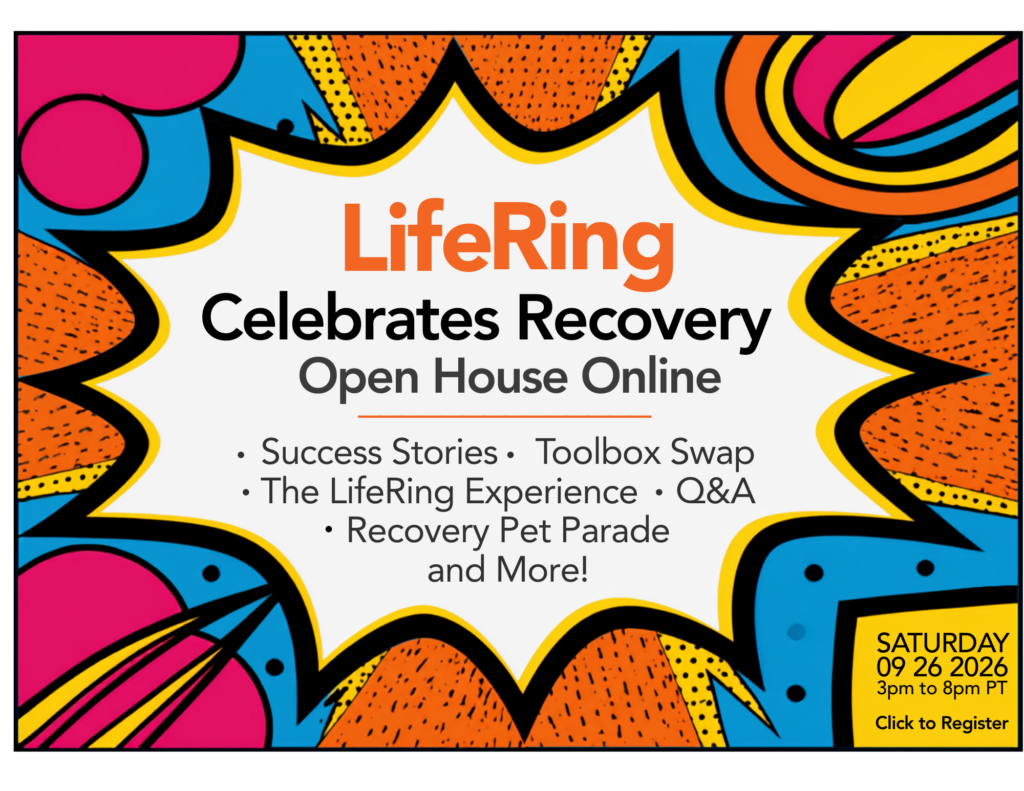](https://lifering-org.zoom.us/meeting/register/0Lk3tyQaT_e9KAhSNcLBmA)
**Tags:** lifering event, LifeRing Open House, Recovery Awareness Month
---
### [Test Map](https://lifering.org/test-map/)
**Published:** May 25, 2026
**Author:** webmaster @lifering.org
**Content:**
---
### [Online Meeting Format](https://lifering.org/meeting-menu/online-meetings/online-meeting-format/)
**Published:** June 20, 2010
**Author:** Bees
**Content:**
# Online Meeting Format and Code of Conduct
#### The **LifeRing Online Meeting Format and Code of Conduct** page outlines the structure, operational rules, and behavioral expectations for participating in LifeRing’s secular online recovery meetings.
[Jump to Online Meetings Code of Conduct](#conduct)
## What to Expect in a LifeRing Online Meeting
**Introduction**
- Meetings are based on the “3-S” Philosophy of **Sobriety**, **Secularity**, and **Self-Empowerment**. You can find a full overview of the[ LifeRing 3-S philosophy](https://lifering.org/lifering-resources/the-three-s-philosophy/) here.
- The Convenor is the host of the meeting and controls the flow and speaking times of the individuals in the meeting. The convenor will occasionally appoint others (co-host) to help out in the meeting.
- Meetings are normally one hour long, but the convenor and others will frequently stay afterward if demand warrants it.
- Meetings can be formatted in the following ways:
- **How was your week? (HWYW)** – This format is used for the majority of the meetings. The attendee checks in with their first name and, if they want, recovery time. They then talk about their past week in recovery and whether there is anything coming up in the following week related to recovery which may be worrisome or exciting.
- **Focus meeting** – LifeRing Focus meetings bring together specific communities of individuals with commonalities that may not be adequately represented in LifeRing general meetings. Click on the titles below for more information about these unique meetings.
- **Topic meeting** – This meeting format is usually reserved for smaller groups or for special meetings. The convenor or attendees will introduce a recovery topic to discuss during the meeting.
- **WorkBook meeting (WB)** – These meetings are based on LifeRing’s *Recovery by Choice, A Workbook* which offers a structured approach for the recovering person to build an abstinence-based “Personal Recovery Program (PRP).
**Controlling the flow of the meeting.**
An “**Opening Statement**” will be read or presented as a slideshow at the beginning of the meeting.
- Since the quality of the connections over the internet varies with each person, the convenor will turn off the mikes of those people who are not speaking. Therefore, during the check-ins (HWYW format), it’s best to mute your connection while others are checking in. You can indicate (make some visible sign, raise your hand, or type in chat) if you wish to respond with positive, supportive cross-talk and the convenor will acknowledge you.
- The convenor might need to turn off your mic when you are not talking and possibly your video if deemed necessary. This is to prevent disruption in the online meeting environment. The convenor can remove someone from the meeting if an extreme case warrants it. We want to provide an open, non-judgmental meeting where everyone can participate in a free manner. If you’re not actively sharing, please mute your mic so as not to distract others with background noise.
- Additional examples of when the convenor might need to turn off an attendee’s video or sound or remove an attendee from the meeting.
- Attendee is having a conversation with someone in their location or on the phone. If the conversation is in person, and the attendee is not wearing headphones, they should turn off the sound so the meeting cannot be overheard.
- Something inappropriate visible in the background. e.g. a naked child, someone drinking.
- Attendee is being abusive or disruptive to other meeting participants or the convenor. (e.g. critical/non-constructive feedback, personally attacking other individuals at the meeting, continuing a disruptive behavior after being advised to stop, etc.)
- Use of alcohol, drugs, or smoking/vaping on camera.
**Chat Box Policy**
- Conduct yourself as you would while talking in the meeting. If it wouldn’t be appropriate to say in the meeting then it isn’t appropriate to type it in chat.
**Time Management**
- Please be mindful of the number of people in attendance and adjust your speaking time to allow everyone a chance to participate. The convenor may manage the time as well.
**When to Be Silent**
- If you are under the influence of alcohol or non medically indicated drugs, we appreciate the courage that it takes to attend but we ask that you please remain silent during the meeting. Please identify yourself using chat and indicate if you would like to speak with members afterward if they are available.
**Outside Attendees**
- If you are not in recovery but would like to attend the meeting, please identify yourself and tell the group why you are there.
**Anonymity – This is the internet and things can happen beyond our control.** Please see our [Code of Conduct](https://lifering.org/meeting-menu/online-meetings/online-meeting-format/#conduct) posted here for preventative measures LifeRing enforces to promote safe, judgment free meetings.
- LifeRing enforces a strict no recording policy. Screenshots, photos, or recording of any sort is strictly prohibited and may result in termination of membership.
- If you have concerns, please change your screen name and leave your camera off. Use voice only. You may also choose to phone into the meeting.
- Please feel free to share what you have learned in the meeting but please do not do or say anything that could reveal who was present there.
- Use headphones or be somewhere where the meeting cannot be overheard.
- LifeRing does not record recovery meetings.
A “**Closing Statement**” will be read or presented as a slideshow at the end of the meeting. Following the meeting, participants may request a verification of attendance:
**Verification of attendance**
Meeting verification is about recognizing your dedication to recovery, not about being “checked up on.” Understanding the process ensures a smooth and stress-free experience.
**Pathcheck**, a service of **Pathminder** – the leading recovery meeting management system – makes verifying your attendance easy, especially for LifeRing public online meetings.
Here’s how Pathcheck benefits you:
- **Proof of Progress:** A clear testament to your proactive steps in recovery.
- **Efficient Process:** Incredibly efficient and automated for online attendees.
- **Immediate Results:** Get your attendance proof within minutes, not days.
- **Total Control:** You choose who to share your verification with.
- **Reduced Stress:** Eliminates the hassle and wait times of manual approvals.
- **Simplified Journey:** Brings immediate peace of mind and simplifies your recovery path.
For more information and support resources, explore the new [**Attendance Verification Support**](https://lifering.org/verifications-101/%22) overview.
---
#### **.**
## **Code of Conduct**
#### These guidelines encourage a supportive and respectful environment for all members who are actively participating in LifeRing online meetings.
- **Behavioral Consistency: Members are expected to apply the same behaviors in online meetings as they would in in-person meetings and as outlined in the [Terms of Use](https://lifering.org/wp-content/uploads/Public_Documents/Policy_Statements/BOD_and_Convenor_Email_Groups_TOU_Policy.pdf). This includes being mindful of actions and behaviors that other members can see and hear, as well as the attending member’s location/environment.**
- **Convenor Meeting Management:** Meeting convenors reserve the right to take immediate actions to manage participation in online meetings. This may include muting or removing members who are being disruptive.
- **No Recording Policy:** LifeRing does not record weekly online recovery meetings, and members/convenors are prohibited from recording recovery meetings for any reason. Screenshots, photos, or recording of any sort is strictly prohibited and may result in termination of membership.
- **Appropriate Comments:** LifeRing does not tolerate divisive and incendiary comments of any sort. Violation may result in the removal and banning from additional meetings.
- **Confidentiality:** Members must ensure the confidentiality of the meeting by attending meetings in a space where their screens are not visible to people not attending the meeting, and where other members cannot be heard. This can be achieved by using headphones and selecting a private location.
- **Muting Etiquette**: When not speaking, members should mute themselves to avoid potential noise distractions.
- **Prohibition of Addictive Substances**: Meeting attendees may not consume or otherwise display addictive substances, paraphernalia, or advertisements of these during meetings.
- **No Smoking or Vaping on Camera:** Members should refrain from smoking or vaping on camera, as this can be triggering to other members.
- **Respectful Chat:** Meeting chat must remain respectful, and members should apply the same language and tone as they would at in-person interactions.
- **Observers under the Influence:** Anyone under the influence of addictive substances may attend as observers, but they are asked to remain silent with their cameras off during the meeting. They may indicate in chat if they would like to speak with members after the meeting, if they are available.
- **Reporting:** If you believe a convenor or other meeting member has overstepped these guidelines or has breached the Terms of Conduct, please complete the [Feedback Form](https://lifering.org/feedback-form/) to initiate review.
#### For further clarification, please refer to [LifeRing Policy Statements](https://lifering.org/governance-menu/policies-and-documents/policies/).
**Categories:** 2000 Meetings
**Tags:** meetings
---
### [Policies](https://lifering.org/governance-menu/policies-and-documents/policies/)
**Published:** October 6, 2011
**Author:** Bees
**Content:**
# Policy Statements
[Terms of Use (TOU)](https://lifering.org/wp-content/uploads/Public_Documents/Policy_Statements/BOD_and_Convenor_Email_Groups_TOU_Policy.pdf)
[Conflict of Interest Policy](https://lifering.org/wp-content/uploads/Public_Documents/Policy_Statements/Conflict_of_Interest_Policy.pdf)
[Conflict Resolution Policy](https://lifering.org/wp-content/uploads/Public_Documents/Policy_Statements/Conflict_Resolution_%26_Compllaints_Policy.pdf)
[Corrective Action Policy](https://lifering.org/wp-content/uploads/Public_Documents/Policy_Statements/Corrective%20Action%20Policy.pdf)
[Document Retention Policy](https://lifering.org/wp-content/uploads/Public_Documents/Policy_Statements/Document_Retention_Policy.pdf)
[Emergency Board Action Policy](https://lifering.org/wp-content/uploads/Public_Documents/Policy_Statements/Emergency_Board_Action_Policy.pdf)
[Nondiscrimination Policy](https://lifering.org/wp-content/uploads/Public_Documents/Policy_Statements/Nondiscrimination_Policy.pdf "Privacy Policy")
[Policy Statement Regarding the LifeRing Service Center and Other Operational Entities](/wp-content/uploads/Public_Documents/Policy_Statements/Policy_statement_for_the_LifeRing_Office.pdf)
[Predation Policy](https://lifering.org/wp-content/uploads/Public_Documents/Policy_Statements/Predator_Policy.pdf)
[Privacy Policy](https://lifering.org/wp-content/uploads/Public_Documents/Policy_Statements/Privacy_Policy.pdf "Privacy Policy")
[Sobriety Policy Statement](https://lifering.org/wp-content/uploads/Public_Documents/Policy_Statements/Sobriety_Policy_Statement.pdf)
[Special Meetings Policy](https://lifering.org/wp-content/uploads/Public_Documents/Policy_Statements/Special_Meetings_Policy.pdf)
[Whistleblowers Protection Polic](https://lifering.org/wp-content/uploads/Public_Documents/Policy_Statements/Whistleblower%20Protection%20Policy%20_%20Approved%2003_08_2026.pdf)y
[LifeRing Investment Policy](https://lifering.org/wp-content/uploads/Public_Documents/Policy_Statements/LifeRing_Investment_Policy.pdf)
**Categories:** 5000 Governance
**Tags:** Governance
---
### [Online Meetings](https://lifering.org/meeting-menu/online-meetings/)
**Published:** April 18, 2024
**Author:** webmaster @lifering.org
**Content:**
# Online Meetings
[ Online Meeting Calendar ](https://meetings.lifering.org/meetings/?scope=only)

**LifeRing Online Meetings \| Universal Access to Positive Recovery Support**
LifeRing online meetings provide a confidential and supportive space for individuals committed to achieving and maintaining sobriety. During these conversational gatherings, a **convenor** (a person in recovery themselves) hosts an open discussion, typically asking, “How was your week?” Participants share their current recovery experiences and future plans, focusing on present-day events in a relaxed, living-room-like atmosphere.
**The only requirement to participate is a desire to be sober**, and you must be sober to share or crosstalk. To ensure a positive environment, “war stories” about past substance use, unsolicited advice, and discussions on religion or politics are avoided. Meetings often conclude with applause for sobriety, and while participation is free, **voluntary contributions are accepted**. These meetings are **confidential**, and attendance can be credited by courts and treatment programs.
---
### LifeRing Online Meetings Resources
**[Quick Instructions for Finding an Online Meeting](https://lifering.org/online-meetings/quick-instructions-for-a-video-meeting/)**
**[LifeRing Focus Meetings \| Online Community Hubs](https://lifering.org/meeting-menu/online-meetings/focus-meetings/)**
**[The Online Meeting Format and Code of Conduct](https://lifering.org/online-meetings/online-meeting-format/)**
**[Verification of Attendance for an Online Meeting](https://lifering.org/attendance-verification-support/)**
---
All meetings included on the **LifeRing Meetings Calendar** are official LifeRing meetings, which possess a [LifeRing Meeting Charter](https://lifering.org/wp-content/uploads/Convenor_Resources/Documents/LifeRing_Meeting_Charter_Protected.pdf) and are required to abide by the LifeRing philosophy of Sobriety, Secularity, and Self-Empowerment. Any other meetings using the LifeRing name or materials may be unofficial meetings, and may not be wholly representative of LifeRing.
**[Online Meetings Representative](https://lifering.org/convenors/regional-representative/): Robert Stump** \| <onlinemeetings@lifering.org>
**Categories:** 2000 Meetings
**Tags:** behavioral expectations, behaviors, code of conduct, conduct, guidelines, LifeRing Online Meetings Format, meetings, Online Meetings Code of Conduct, participant code of conduct, participation, policies
---
### [LifeRing Event Tabling Guide for Convenors](https://lifering.org/convenors-menu/lifering-event-tabling-guide-for-convenors/)
**Published:** July 28, 2026
**Author:** webmaster @lifering.org
**Content:**
## **LifeRing Event Tabling Guide for Convenors**
So, you’re planning for an event-that is fantastic! Stepping out into the community to host an informational table is one of the most impactful ways to grow our network and offer hope to those who need it.
As you prepare, remember that you aren’t just getting the word out about local meeting times and locations. You are the face of LifeRing. For many attendees, healthcare professionals, and individuals seeking recovery, you will be their very first introduction to our community. By representing LifeRing with a warm smile, an organized display, and an open heart, you are breaking down barriers and showing the world exactly what self-empowered recovery looks like in action.
Thank you for your dedication, your time, and your service. Use this guide to make your planning seamless, your packing foolproof, and your event day an absolute success!
### **Pre-Event Planning & Logistics**
Before heading to the event, make sure you have the logistical basics covered:
- **Weather & Backup Plans:** If the event is outdoors, **check if there is a rain date** or a severe weather backup location.
- **Supply Check:** Clarify exactly what you need to supply versus what the venue provides. Specifically ask: *Will tables and chairs be supplied?* \*
- **Recruit Backup:** If possible, find another “LifeRinger” to assist you with the table.
### **Materials Checklist**
Gather these items before heading out to ensure a smooth setup:
- **The Essentials:** \* Table and chairs (if not supplied by the venue).
- A simple tablecloth (unless supplied, event tables usually show their wear and use).
- **Table Attraction:** \* **Candy** (A small bowl of candy is a great, low-pressure way to encourage people to pause at your table and start a conversation!).
- **Handouts:**
- Books for display
- EYSS pamphlets
- History flier – optional
- Local flier or bullet -point document with local meeting days and times
### **Be well versed with:**
- [**The “3-S” Philosophy**](https://lifering.org/lifering-recovery/the-three-s-philosophy/)
LifeRing fundamental principles: Sobriety, Secularity, and Self-Empowerment.
- [**The “A” and the “S” Conflict**](https://lifering.org/lifering-recovery/the-a-and-the-s-conflict/)Imagine inside you there is the “A” (the addicted self) and the “S” (the sober self).
- [**90 Second LifeRing introduction**](https://www.youtube.com/watch?v=QnN8LmD5AZ4)
- [Sobriety Policy Statement](https://lifering.org/wp-content/uploads/Public_Documents/Policy_Statements/Sobriety_Policy_Statement.pdf)
### **The following resources are helpful for being prepared to answer questions**
- [Frequently Asked Questions](https://lifering.org/about-us/faqs/).
- [LifeRing Overview](https://lifering.org/wp-content/uploads/Convenor_Resources/LifeRing_Overview.pdf). A couple of copies of this could be helpful. You can skip the cover or print in B&W. This could serve as a quick reference if you get a question like “Do you have an email group specifically for dual diagnosis individuals.” Don’t assume you’ll have a good cell signal to quickly look something up on Lifering.org.
### **Table Setup & Display**
When it is time to set up, focus on making the table look professional, inviting, and easy to navigate.
- **Signage Tip:** If you do not have a banner or sign, [**LifeRing posters**](https://lifering.org/wp-content/uploads/Convenor_Resources/Posters/LR_Poster_Letter_Poster_WithStroke.pdf) can be used prominently at your table.
- **Literature Layout:** Place [**EYSS pamphlets**](https://lifering.org/bookstore/The-EYSS-Pamphlet-p377462284) with local contact info in an easy-to-grab location on the table.
- **Book Display:** Set up your display books prominently to catch people’s eyes.
- Local flier or [Bullet point document](https://docs.google.com/document/d/e/2PACX-1vTr3Or8G5Kvu8sfGC4FXaob69muKulXKzPrytZ-tnCVsQl3xpMzpDhwAUIfieiAmwYDNmQp-iZKPDJy/pub) (easily customizable with local meeting and contact information) – professionals appreciate the format that allows for a quick review. Can be sent in any format you need.
- [LifeRing History\_Event Flyer.pdf](https://drive.google.com/file/d/1V_kQNPtG-hWevWdj3fCme4EyEYqEHql7/view?usp=drive_link) – access with your [LifeRing.org](http://lifering.org) account
- **Wind & Crowd Control:** If you aren’t using rigid pamphlet holders, make sure to have some kind of **paperweights** available so your literature doesn’t blow away or get messy (especially important for outdoor events!).
- Small tabletop easels can be used to maximize space.
**Categories:** 3000 Convenors
---
### [promotional-resources-and-suggestions-local-meetings](https://lifering.org/convenors-menu/promotional-resources-and-suggestions-local-meetings/)
**Published:** August 6, 2025
**Author:** webmaster @lifering.org
**Content:**
### Resources and Suggestions for Promoting Local Meetings
If you are in the greater Denver area, please work with the Colorado Regional Representative, Kathleen G., at <coloradolifering@gmail.com> for suggestions specific to the region.
**LifeRing Speakers Bureau**
Here are some of the speakers bureau resources available:
- Provide an outline and slide presentation for local speaking engagements
- Work with convenors to practice upcoming engagements
- Provide speakers – most likely virtual
[**90 Second LifeRing introduction**](https://www.youtube.com/watch?v=QnN8LmD5AZ4)
[LifeRing Event Tabling Guide for Convenors](https://lifering.org/convenors-menu/lifering-event-tabling-guide-for-convenors/)
[Press Release \| LifeRing In-Person Reopen](https://docs.google.com/document/d/17rwm4jMXqrroZc2VKVoy_KLIgJInHhGZ-c0Zrv13LRg/edit#heading=h.4ssx1x15kt7r)
Can be customized to fit meeting and circumstances. Either make a copy for your google drive or copy and paste into a document in your preferred word processing program
- [EventBrite](https://eventbrite.com) free
- [Relink](https://portal.relink.org/) free
- [Meetup](https://www.meetup.com) not free
[LifeRing Overview for Professionals ](https://lifering.org/for-professionals/) – includes links to two published papers from the **PAL ONE** study.
**Book Excerpts and Overviews**
[EYSS Excerpt abridged](https://docs.google.com/document/d/e/2PACX-1vSJVFa0uACkFJDjA7YmRell9qbLWtLqaUMzx2RTtDKHou0AiKET3vp-paKTBkw5K6NvNAJ41kfxYuz1/pub)
[Recovery By Choice](https://docs.google.com/document/d/e/2PACX-1vR8j-mn6qGI7VZt6lRrCCGHflwa42iiRIWNUICtCGy1Mh_gc1B7KqVbB9UJIpKvHvCTlBRyLdlpRU4P/pub)
[How Was Your Week](https://docs.google.com/document/d/e/2PACX-1vQDMFSHHHScWInxhNtbDSjc-nf_oqVG3UkgYh3QtVd66VcnO3unm4BjS8Jm8zK-L3-NbnIe6cALcUpQ/pub)
[Humanly Possible](https://docs.google.com/document/d/e/2PACX-1vRMcb09WBP9lCtAby6L1AwquvQ9iR7VVAsXSA-QioXLKBqQGGqTKX32AUHsM-WIIGL_Mv82yQ5xGT2h/pub)
[**Outreach and calendar request examples**](https://docs.google.com/document/d/e/2PACX-1vSrFvJzgN5BwWkdCYUEp3zvd-XcEvvRtBRuZTo3ff7y9THkBW2oKXJK37iM1e5r7FrlSHl6VIuNrG3E/pub)
**Libraries – pamphlets**
how to get books on shelves – don’t assume that if books are donated to your local library that they will end up on the shelf. This can be a complex process – contact Lisa <Lisas@lifering.org> for more information
**Currently Available Promotional Materials**
- [EYSS ](https://lifering.org/bookstore/The-EYSS-Pamphlet-p377462284)pamphlet (easiest way to customize is mailing labels – requires a printer)
- [Event Kits (contact your regional representative)](https://docs.google.com/presentation/d/e/2PACX-1vQeAGZ1mQpY_5s_0TjfRb6wBLg9IXj4tnnOaAL1El3eCjpct00lR61rtid7X9GKBlYwLs9OyASfm-wF/pub?start=false&loop=false&delayms=3000)
- [Bullet point document](https://docs.google.com/document/d/e/2PACX-1vTr3Or8G5Kvu8sfGC4FXaob69muKulXKzPrytZ-tnCVsQl3xpMzpDhwAUIfieiAmwYDNmQp-iZKPDJy/pub) (easily customizable) – professionals appreciate the format that allows for a quick review. Can be sent in any format you need.
**Categories:** 3000 Convenors
---
### [Copy of Winter 2026 LifeRing Community Town Hall](https://lifering.org/summer-2026-town-hall/)
**Published:** July 23, 2026
**Author:** Bees
**Content:**
## Your Voice, Our Future:
### LifeRing Community Town Hall
- [**Link to Meeting Registration**](https://lifering-org.zoom.us/meeting/register/0nQ_t6r7QVGYMsRXsIR3zw)
- **When:** Online Thursday, July 30, 2026, 5:00pm Pacific
- **Duration:** 90 minutes
- **Format:** Interactive, Open-Mic & Dialogue-Driven
We invite **all LifeRing members, collaborators, convenors, and supporters** to join an essential open-forum discussion. This is your chance to actively shape the future of LifeRing
**Online Thursday, July 30, 2026, 5:00pm Pacific \| [Registration Required](https://lifering-org.zoom.us/meeting/register/0nQ_t6r7QVGYMsRXsIR3zw)**
---
#### *LifeRing Forward: Strategy, Stories & Recovery Month*
**Our Goal:** Less lecturing, more connecting. We’re here to share where LifeRing is heading, hear what’s on your mind, spark ideas for Recovery Month, and build the future of our community ***together***.
This is a provisional agenda. Focus and specific items may change.
| #### **Welcome & Community Connection** |
|---|
| **5:00pm** | **Welcome & Warm-up** |
| | - **Kickoff & Icebreaker \|** Jump into chat! Share your home group, where you’re tuning in from, and your favorite recovery win this year. |
| | - **How Tonight Works \|** Quick updates from us, big floor time for you! To contribute: Ask questions via **Q&A**, drop ideas in the **chat**, or **raise your hand** to contribute. |
| | |
| **5:05pm** | **Unfiltered: Meet the BOD & the Get the Game Plan** |
| - [Who’s Who on the Board](https://lifering.org/governance-menu/bod/) **\|** A rapid-fire introduction to the Board of Directors – who we are and why we’re here**.** |
| - [The 4 Big Goals](https://lifering.org/wp-content/uploads/Public_Documents/The_Current_Strategic_Plan.pdf) **(in Plain English)** \| A quick review of where LifeRing is heading and how we’re making it happen: - **Getting the Word Out** (Increase Brand Awareness) - **Building Our Community** (Increase Engagement) - **Making Things Run Smoothly** (Optimize Operations) - **Fueling the Movement** (Fund Our Mission) |
| - What’s New \| What’s on the Horizon |
| #### **LifeRing Stakeholders \| Let’s Talk!** |
| **5:15pm** | **Spotlight Session:** Recovery Month & Representation |
| - **[Rallying Around Recovery Month](https://nationaldaycalendar.com/celebrations/national-recovery-month-september):** How can we make noise this September? Simple, fun ways to showcase secular recovery (and LifeRing!) |
| - **Idea Incubator:** What resources do you wish you had? |
| - **Strategy Check:** How do we reach people who still don’t know about LifeRing? |
| **5:40pm** | **Open Floor: Q&A, Ideas & Hot Topics** |
| - **Ask Us Anything (AUA):** Board members and team leads take live questions directly from the room – governance, tech, future plans, practical meeting support, etc. |
| - **Convenor & Volunteer Mic:** What’s working on the ground? Where are you hitting friction, and how can we support you better? |
| - **Dream Time:** If you had a [spear and magic helmet](https://www.youtube.com/watch?v=5kH0Bag0akc), what’s the first thing you’d build or change about the LifeRing community? |
| #### **Quick Hits & Wrap-up** |
| **6:00pm** | **Voices of Momentum: Open Stakeholder Forum** |
| | - What is **the most important question** we *didn’t* ask tonight? |
| | - What is **one thing you are taking away** from this Town Hall to share with your home group? |
| #### **LifeRing Stakeholders Resources** |
|---|
| **Quick References** |
| - [LifeRing News Blog](https://lifering.org/about-us/news-blog/) |
| - [LifeRing Social Media](https://lifering.org/social-media/) |
| - [Engagement Opportunities](https://lifering.org/volunteer-opportunities/) for you! |
| - [All About LifeRing](https://lifering.org/lifering-resources/) for everyone |
| - [Welcome to LifeRing](https://lifering.org/welcome/) for new meeting members |
| - [LifeRing Overview](https://lifering.org/for-professionals/) for professionals |
| **Meetings and eGroups** |
| - [LifeRing Meeting Calendar](https://meetings.lifering.org/meetings/) |
| - [LifeRing Focus Meetings](https://meetings.lifering.org/meetings/?title=&program=6&audiences=&meetingType=&datetime_nextmeeting=&languages=&location=&coordinates=&scope=) |
| - [LifeRing Discussion Groups](https://lifering.org/meeting-menu/email-groups/) |
| - [LifeRing Discussion Forum ](http://forums.delphiforums.com/lifering) |
| **Events** |
| - Events to be announced during Town Hall |
**Categories:** 7000 General Pages
**Tags:** addiction support, LifeRIng, lifering meetings, LifeRing Town Hall, lifering townhall
---
### [Local Convenor Portal Sign-in](https://lifering.org/convenors-menu/local-convenor-portal-sign-in/)
**Published:** January 17, 2021
**Author:** Bees
**Content:**
# Local Convenor Resources
### Best Practices for Convenors
### [ Local Convenor Portal \| Password Protected ](https://lifering.org/convenors-menu/local-convenor-portal/ "Local Convenor Portal | Password Protected")
[Forgot the password? Email your Regional Representative! Click here.](https://lifering.org/convenors-menu/regional-representative/)
## [Crisis Resources for Convenors](https://lifering.org/crisis-resource/)
**Categories:** 3000 Convenors
---
### [Online Convenor Portal Sign-in](https://lifering.org/convenors-menu/online-convenor-portal-sign-in/)
**Published:** September 10, 2020
**Author:** Bees
**Content:**
# Online Convenor Support Resources
### Best Practices for Online Convenors
### [ Online Convenor Portal \| Password Protected ](https://lifering.org/convenors-menu/online-convenor-portal/ "Online Convenor Portal | Password Protected")
For help or the password, please email <onlinemeetings@lifering.org>
## [Crisis Resources for Convenors](https://lifering.org/crisis-resource/)
**Categories:** 3000 Convenors
**Tags:** convenor support
---
### [LifeRing Engagement Opportunities](https://lifering.org/engagement-opportunities/)
**Published:** June 15, 2022
**Author:** Bees
**Content:**
# **LifeRing Engagement Opportunities**
**Share your interests and your skills!** LifeRing has several micro-volunteering opportunities for people who want to give back, but may have limited time to commit. These “bite-sized” engagement opportunities change frequently, so keep an eye out for updates or [complete the volunteer form](https://lifering.org/volunteer-form/) for information about current projects underway. We’re looking for people who want to do more than keep the lights on. We’re looking for people who want to make LifeRing shine!
We are currently recruiting for these volunteer opportunities:
**[**Convenors** \| **Co-Convenors**](#con-co) • [**Committee Collaborators**](#collaborators) • [Email Pals](#ePals) • [**Graphic Designers**](#designers) • [ **MarCom Writers**](#writers) • [**LifeRing Speakers**](#speakers)**
Details and contact information follow below. All LifeRing engagement opportunities are volunteer positions offering no monetary compensation. But the job satisfaction is priceless! Knowing that you help support over 200 people in recovery every day is an excellent reward. Many of us volunteer as part of our personal recovery plan. Come join the LifeRing Volunteer Community!
---
####
#### **EMAIL PALS**
LifeRing offers an Email Pal Program to link newcomers with a volunteer for one-to-one email support and information. About 200 people a year ask for a LifeRing “ePal.” Many are very tentative and fail to reply even to the initial response to their request; others respond gratefully and can be steered towards a meeting; a few form lasting relationships with their ePal.
**For more information,** [**click here**](https://lifering.org/lifering-epals-wanted/). **Salary**: Volunteer position \| No monetary compensation at this time
**Job Type**: This is a part-time, remote position requiring only empathy and reasonable writing skills, along with an understanding of the LifeRing approach to recovery.
**Contact**: <karl@lifering.org>.
---
####
#### **CONVENORS AND CO-CONVENORS**
LifeRing is recruiting in-person and online meeting convenors and co-convenors to support our growing community. Convenors must have 6-months of continuous abstinence and be willing to commit to 6-months as a convenor. Co-convenors must have 3-months of continuous abstinence and work directly with a convenor.
**For more information,** [**click here**.](https://lifering.org/convenor-menu/be-a-lifering-convenor/)**Salary**: Volunteer position \| No monetary compensation at this time
**Job Type**: This is a part-time position requiring time based on number of meetings
**Contact**: Complete the [Prospective Convenor Information Form (PCIF)](https://docs.google.com/forms/d/e/1FAIpQLScy-Ih9ltdF615Gdu39RPcuWW68MbA7ptYD9-tDPVcUVIpxqQ/viewform). Once the form is filled out, the appropriate Regional Representative will reach out and work with you to onboard.
---
####
#### **COMMITTEE COLLABORATORS**
LifeRing is recruiting committee collaborators for our active committees. This is an ideal opportunity who want to make the LifeRing experience better or want to contribute to the growth of LifeRing. Committee meetings are scheduled bi-weekly and run for approximately 1 hour . Objectives and projects vary depending on committee focus.
**For more information,** [**click here**](https://lifering.org/get-involved-menu/volunteer-form/). **Salary**: Volunteer position \| No monetary compensation at this time.
**Job Type**: This is a part-time, remote position requiring time based on committee projects
**Contact**: [Complete our LifeRing Volunteer Form](https://lifering.org/volunteer-form/). Once the form is filled out, the appropriate committee representative will reach out and work with you to onboard.
---
####
#### **GRAPHIC DESIGNERS**
LifeRing is recruiting graphic designers to collaborate with various LifeRing Committees on print and media projects. Designers should have a flexible perspective and a keen eye for perfection. This is an ideal opportunity for someone who wants to make a direct impact on the growth of LifeRing and enhance the LifeRing website user experience.
**For more information,** [**click here**](https://lifering.org/get-involved-menu/volunteer-form/). **Salary**: Volunteer position \| No monetary compensation at this time
**Job Type**: This is a part-time, remote position requiring time based on committee project
**Contact**: [Complete our LifeRing Volunteer Form](https://lifering.org/volunteer-form/). Once the form is filled out, the appropriate committee representative will reach out and work with you to onboard.
---
####
#### **MARCOM WRITERS**
LifeRing is recruiting volunteer writers to contribute blog posts, social media posts, promotion and outreach communications, and marketing pieces.
**For more information,** [**click here**](https://lifering.org/get-involved-menu/volunteer-form/). **Salary**: Volunteer position \| No monetary compensation at this time
**Job Type**: This is a part-time, remote position requiring time based on designated assignments
**Contact**: [Complete our LifeRing Volunteer Form](https://lifering.org/volunteer-form/). Once the form is filled out, the appropriate committee representative will reach out and work with you to onboard.[](https://lifering.org/get-involved-menu/volunteer-form/)
---
####
#### **SPEAKERS BUREAU**
Got a knack for yackin’? Consider joining the LifeRing Speakers Bureau! The Speakers Bureau provides speakers for recovery houses, podcasts, conferences, presentations, and other opportunities. Topics include LifeRing Secular Recovery, multiple paths for recovery, personal recovery stories, and similar.
If you know of an event where a LifeRing speaker can present about LifeRing or other topics, please email the LifeRing Service Center <<service@lifering.org> with the event details and contact information.
**Salary**: Volunteer position \| No monetary compensation at this time
**Job Type**: This is a part-time, remote position requiring time based on designated speaking engagements
**Contact**: [Complete our LifeRing Volunteer Form](https://lifering.org/volunteer-form/). Once the form is filled out, the appropriate committee representative will reach out and work with you to onboard.
---
####
#### **APPLICATION PROCESS**
**Job descriptions listed above are not a contract – LifeRing reserves the right to change its content at any time.**
LifeRing complies with the guidelines set forth in the Americans with Disabilities Act of 1990 and does not discriminate on the basis of race, color, religion, national origin, ancestry, sex, age, disability, or status as a disabled veteran or veteran of the Vietnam era.
[LifeRing is an Equal Opportunity Employer](https://lifering.org/wp-content/uploads/Public_Documents/Policy_Statements/Nondiscrimination_Policy.pdf).
update: 07/28/2025
**Categories:** 1050 Engage
**Tags:** Get Involved
---
### [Donate](https://lifering.org/donate/)
**Published:** September 10, 2019
**Author:** Bees
**Content:**
| ### **Thank You For Empowering LifeRing This Summer!** Your support ensures LifeRing Secular Recovery can reach more people seeking a **safe, nonjudgmental path to sobriety**. Together, we can **break down barriers** and build a **stronger, more inclusive** recovery community. ### ***Thank you for your support and belief in the power of choice, community, and hope.***  Your thoughtful donations help us support those like ourselves who are actively overcoming our substance use obstacles. Your gift will be used to fund **in-person meeting start-up kits**, **new meeting venues**, and **new member outreach**. **LifeRing Secular Recovery is a 501(c)(3) charitable organization, EIN 94-3267919.** All contributions are tax-deductible. No goods or services will be provided in exchange for the contribution. You can support our work with trust and confidence knowing LifeRing has earned the 2026 Candid **Platinum Seal of Transparency** from GuideStar. |
|---|
<b
### Donate by Credit Card, PayPal, or Direct Deposit
You can leave your contact information if you wish or donate anonymously.
LifeRing is a 501(c)(3) charitable organization, EIN 94-3267919.
All contributions are tax-deductible. No goods or services will be provided in exchange for the contribution.
## Donation by Check
### Mail checks to:
LifeRing Secular Recovery
25125 Santa Clara St, #E-359
Hayward, CA 94544
**Categories:** 7000 General Pages
---
### [LifeRing Collaboration Opportunities](https://lifering.org/volunteer-opportunities/)
**Published:** October 29, 2025
**Author:** Bees
**Content:**
[ Sign Up ](https://lifering.org/engage-magamenu/volunteer-form/) [ Ask Questions ](mailto:service@lifering.org)
## LifeRing Engagement Opportunities!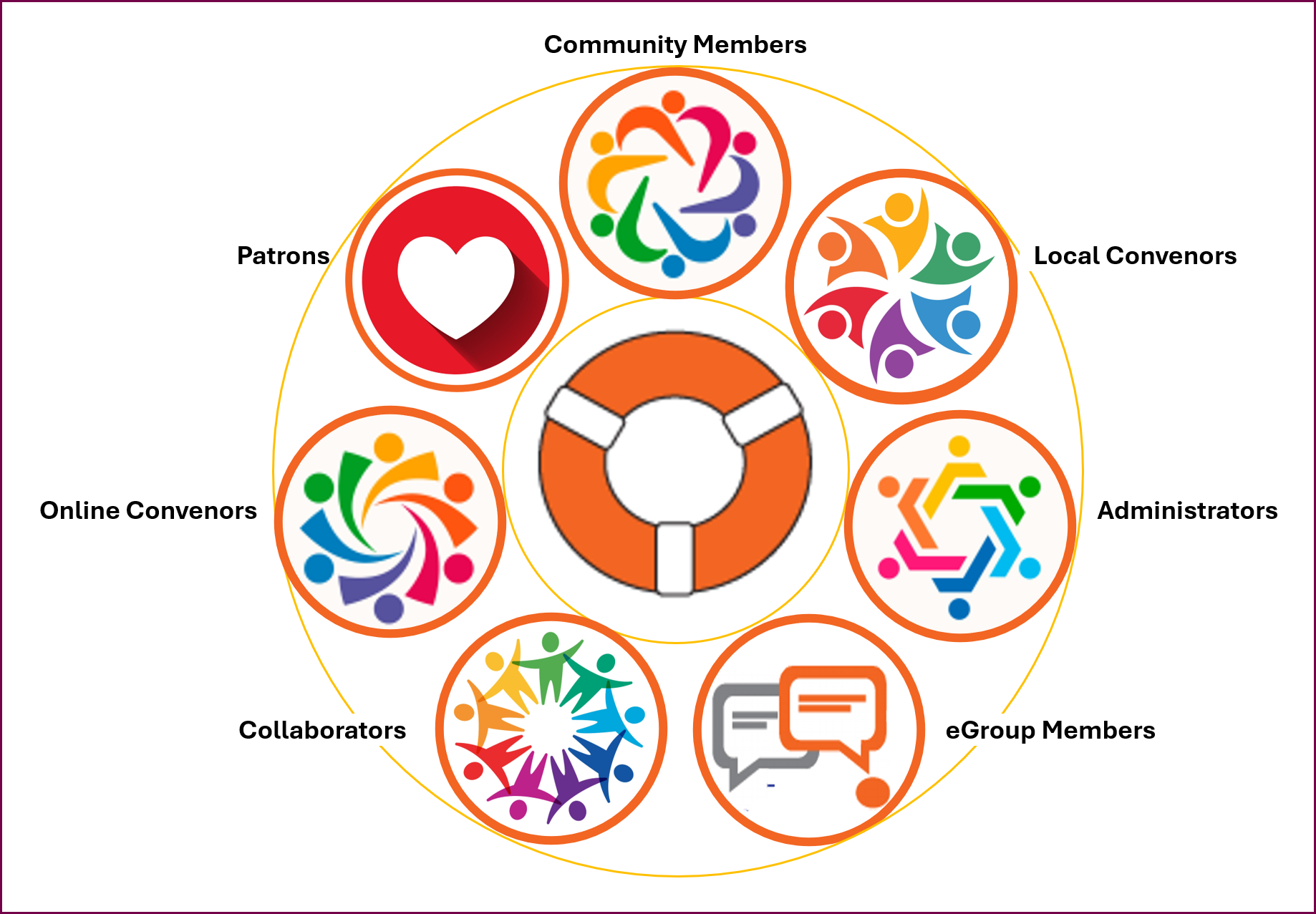
---
LifeRing is experiencing a pivotal and truly exciting time in our history! We’re celebrating a **record-breaking year** with a **10.5% uptick** in meeting membership, now supporting **over 4,500 weekly participants** across our global community.
This remarkable growth generates an **urgent demand** for more capacity to serve every person seeking self-empowered recovery. These **life-changing connections** ate only possible because of our volunteers.
We invite you to **join us now** to leverage this incredible momentum. Your personal contribution as a volunteer is not just appreciated – it’s essential to ensuring LifeRing continues to thrive, evolve, and touch even more lives in the year ahead.
**Answer the Call!** You can directly impact our community and secure LifeRing’s future. Your engagement is our lifeline – read on to find your place on Team LifeRing!
---
#### Start a LifeRing Meeting!
**If supporting others along their recovery journey appeals to you, let’s get you started!**
LifeRing is always recruiting dedicated volunteers to start or support weekly meetings. Here’s how you can get started:
- [Start a LifeRing Meeting!](https://lifering.org/start-a-meeting/)
- [Not quite ready? Click here to start with a mentor! ](https://forms.gle/LAqembSHk2LmDxYp7)
- [Explore additional LifeRing meeting support roles here.](https://lifering.org/convenors-menu/online-meeting-support-roles/)
---

#### Be the Engine of Change \| Join a LifeRing Action Team!
**Your Insight. Our Mission. Global Impact.** We need your creativity, insight, and collaborative effort to power **LifeRing’s vision** as a global leader in recovery support. Sign up today to contribute to realizing our Strategic Plan to better serve those who choose LifeRing as a pathway to recovery.
---
#### ****FINANCE \| Shape LifeRing’s Fiscal Future!
**Are you ready to apply your financial expertise?** Join the Finance Team and help us ensure strong fiscal stewardship and accountability. Your deliverable is maintaining the systems that secure our long-term sustainability and provide the board with the clear financial insights needed to grow LifeRing responsibly.
**Projects include:** Team budgets, refining funding requests and management, and executing internal audits. This work delivers the detailed monthly reporting that guides the Board’s strategic decisions.
**Invest Your Talent in LifeRing’s Future!**
---
#### ****FUNDRAISING, MARKETING, AND COMMUNICATIONS (FMC) \| Amplify the Message of Recovery!
**Can you move mountains? We’ve got just the team for you!** The FMC is the engine that powers LifeRing’s outreach, drives funding for our mission, and gets the word out about our amazing organization. If you’re passionate about advancing our mission, we invite you to use your enthusiasm to:
- - **Secure Resources:** Develop and execute fundraising campaigns, write grants, and manage donations to ensure our long-term stability.
- **Build Community:** Strategically market LifeRing to foster positive public perception and build a supportive, growing community.
- **Lead Communication**: Drive our messaging across all channels – from website announcements and marketing collateral to social media and digital marketing.
**Your dedication directly translates to lives changed.**
---
#### ****MEETINGS & CONVENORS COLLABORATION (MCC) \| Elevate the LifeRing Experience!
**Do you thrive on collaboration and improving experiences?** Join the MCC Team to directly contribute to the growth and retention of our meetings, eGroups, and forums. You will be helping coordinate and implement support programs that **empower our convenors,** ensuring every LifeRing member continues to receive positive, engaging recovery support.
**Become an MCC Collaborator and empower our community!**
---
****
#### OUTREACH \| Forge Partnership and Expand Our Footprint!
**Are you a natural connector and advocate?** Join the Outreach Team to drive the expansion of our life-changing resources. We are looking for dedicated people to **raise awareness** and **expand our reach** so that no one misses out on the support they need.
**Break Through the Noise: Join the LifeRing Outreach Committee!**
---
#### ****WEBSITE & TECHONOLOGY \| Code for Recovery!
**Do you have the skills to build a better online experience?** We need your web development, design, and maintenance skills to power our online presence. You can help us manage, maintain, and significantly improve the technological aspects of our services. Put your expertise to work managing, maintaining, and improving the critical online services we provide to LifeRing recovery community. Your work will enhance accessibility and user experience.
We are actively seeking contributors to:
- - **Redesign and Enhance:** Improve website navigation focusing on **accessibility** and a more **intuitive interface** for users seeking resources and meetings.
- **Develop Systems:** Advance the technological aspects of our website and various online services.
- **Drive Strategy:** Execute strategic initiatives that support LifeRing’s long-term growth objectives.
**Your digital skills will directly empower individuals in their pursuit of a sober life.**
---
#### ****LifeRing ePals! \| Open the Door to Recovery!
Do you want to be the **crucial first step** that helps a newcomer turn their life around? You can be that dedicated member who provides **one-to-one sobriety support and information** via email.
This is a **short-term, high-impact assignment** perfect for those with at least **six months of abstinence** who are willing to quickly reach out to a tentative newcomer. The ePal connection could be a **decisive factor** in their long-term recovery!
- - **Your role is simple:** Offer basic support, information on LifeRing’s resources, and a welcoming invitation to get involved.
- **Your commitment is flexible:** You respond to requests via a group email and take an assignment only when you are the first to volunteer.
**[Be the compassionate contact who empowers a new journey in sobriety!](https://lifering.org/lifering-epals-wanted/)**
---
#### 
#### LifeRing Donors Circle \| Sustain the Momentum **–** Empower Sobriety!
**Are you ready to make a tangible impact on someone’s journey to sobriety?** Every person deserves a choice in their recovery. Your donation is more than a gift; it’s the fuel that keeps the LifeRing community strong, welcoming, and accessible.
Right now, your generosity is needed to:
- - **Launch New Support:** Fund in-person meeting start-up kits so new groups can form immediately.
- **Find New Homes:** Secure new meeting venues to serve growing communities.
- **Expand Our Reach:** Power outreach projects that ensure every person struggling with addiction knows about our vital secular support.
**Don’t just believe in self-empowerment – help fund it. [Give a One-Time Gift or Start a Recurring Donation Today!](https://lifering.org/get-involved-menu/donate/)**
**Categories:** 7000 General Pages
---
### [Contact Us](https://lifering.org/contact-us-menu/)
**Published:** August 9, 2021
**Author:** Bees
**Content:**
## Contact LifeRing
#### Want to get in touch? You’ve come to the right place! We’ve created a few different forms and direct email links to make sure your message gets to the right people.
#### **[Contact Form](https://lifering.org/contact-form/)**
Have a question or a general inquiry? Want to connect with someone or need support? Please fill out the form below and let us know what’s on your mind. We’re here to help!
---
#### **[Feedback Form](https://lifering.org/feedback-form/)**
Please tell us about your experience or submit your ideas for improvement. LifeRing is always looking to build on and improve the delivery of our message and your experience in our meetings. Hearing from you actually helps us achieve that goal.
---
#### **[Website Feedback Form](https://lifering.org/bug-suggestion-feedback-form-july-2025-beta-testing/)**
Spot a bug or an issue you want to report? Is something on our website not working quite right? Please let us know! We’re always working to improve the user experience.
---
#### [LifeRing Team Sign-Up Form](https://lifering.org/volunteer-form/)
Ready to give back? Joining a LifeRing Collaboration Team is a great way to share your skills and passion with others in recovery. We’d love to hear from you! Please complete our [Volunteer Form](https://lifering.org/volunteer-form/) with your areas of interest!
---
#### [**Business Inquiries**](mailto:service@lifering.org)
If you have a business question, want to start a meeting at your facility, or are interested in scheduling a LifeRing speaker, please reach out!. We look forward to connecting with you! <service@lifering.org>
---
#### [General Inquiries](mailto:info@lifering.org)
Do you have questions about LifeRing, or want to learn more about our self-empowering recovery program? We’re happy to help! [info@lifering.org](info@lifering.org)
**Categories:** 1080 Contact
---
### [2026 LifeRing Annual Conference Hub](https://lifering.org/annual-conference-hub-2026/)
**Published:** March 5, 2026
**Author:** Bees
**Content:**
# **2026 LifeRing Annual Conference Hub**
## **– Online Saturday, June 6th and Sunday, June 7th –**
*Both days start at 9:00am Pacific. See agendas for specific times and events.*
---
***Welcome to the LifeRing Annual Conference! This two-day event brings together the LifeRing community and representatives of the LifeRing network of recovery resources. We’ve organized the links below to help you easily find the sessions, resources, and information you need to be an active contributor to this event and to the future of LifeRing.***
---
### 2026 Annual Election Results
#### [2026-2027 BOD Candidates](https://lifering.org/meeting-of-meetings/nominee-list-for-bod-2026/)
| **Anna Bedolla** | Elected for a 3-year term |
|---|---|
| **Jonathan Magid** | Elected for a 3-year term |
| **Travis Boozer** | Elected for a 3-year term |
#### [Proposed Bylaws Changes](https://lifering.org/2026-proposed-bylaw-changes/)
| **Proposal 1: Meeting Eligibility**Updates the requirement for meetings to send delegates from “public” to “active and chartered.” This ensures all officially recognized LifeRing groups have equal representation. | **Passed** |
|---|---|
| **Proposal 2: **Delegate Sobriety****Establishes a minimum requirement of three months of continuous sobriety for all delegates, aligning delegate standards with Board requirements. | **Passed** |
| **Proposal 3: BOD Nomination Process** Standardizes deadlines for Board nominations and moves to a pre-registration system (removing nominations from the floor) to ensure all candidates are vetted before the Congress. | **Passed** |
---
#### **Annual Conference General Information**
- [**The Meeting of Meetings**](https://lifering.org/meeting-of-meetings/) \| Overview of this two-day annual conference including supporting resources.
- **[General Information About Congress](https://lifering.org/general-information-about-congress/)** \| Overview of the nature and purposes of the Congress and the key Bylaws provisions that govern selection and power of Congress delegates.
- **[2026 LifeRing Annual Conference Provisional Agenda](https://lifering.org/2026-annual-conference/)** \| Agenda of the LifeRing Annual Conference two-day event.
---
#### **What’s the Difference Between the Annual Conference, Annual Meeting, Annual Congress and Delegate’s Assembly?**
- ***Annual Conference*** is the umbrella term for the two-day event. The Annual Conference is a virtual event and will be hosted through video conferencing. The Conference is open to convenors, volunteers, meeting members and the LifeRing Community.
- ***Annual Meeting*** is held on Saturday, June 6, 2026, and is the first day of the Annual Conference. At the Annual Meeting, convenors and the LifeRing Community gather to hear speakers, participate in workshops and socialize.
- ***Annual Congress*** is held on Sunday, June 7, 2026, and is the final day of the Annual Conference. The Annual Congress is made up of the Delegates’ Assembly and the LifeRing Secular Recovery Board of Directors meeting.
- ***Delegates’ Assembly*** is held on Sunday, June 7, 2026, and is the first segment of the Annual Congress. During the Assembly, BOD nominees and proposed Bylaw changes are brought to the Delegates for review and consideration. Delegates also bring forward their meeting reports for the Assembly to review.
---
#### **Annual Congress \| Roles and Responsibilities**
- **[LifeRing Meeting Delegates Eligibility Determination and Registration Process](https://lifering.org/meeting-delegates/)** \| Introduction to the requirements for and roles of LifeRing Meeting Delegates including registration deadlines.
- **[LifeRing Delegates at Large Eligibility Determination and Registration Process](https://lifering.org/congress-menu/delegates-at-large/)** \| Introduction to the requirements for and roles of LifeRing Delegates at Large including registration deadlines.
- **[Eligibility Determination for BOD Nominees](https://lifering.org/eligibility-for-bod-nominees/)** \| Introduction to the requirements for and roles of LifeRing Board of Director members including nomination deadlines.
- **[Eligibility Determination for Proposed Bylaw Changes and BOD Directives](https://lifering.org/congress-menu/eligibility-determination-for-proposed-bylaw-changes/)** \| Key Bylaws provision that governs proposals for Bylaws Amendments and Board Actions.
---
#### Delegates’ Assembly **\| Online, Sunday June 7th beginning at 9:00am Pacific**
- **[Election Guidelines](https://lifering.org/congress-menu/election-rules/)** \| Covers BOD nominee campaigning and the voting process.
- **[LifeRing Bylaws](https://lifering.org/wp-content/uploads/ImportantDocs/Current_Bylaws.pdf)** \| Governing rules of LifeRing.
- **[2026 Delegates’ Meeting Reports](https://lifering.org/2026_delegates-meeting-reports/)** \| Collection of 2026 meeting reports provided by convenors and representatives.
- [**Delegates’ Briefing**](https://lifering.org/delegates-briefing/) \| Comprehensive outline of delegate roles and responsibilities including provisional Annual Congress agenda.
- **[Nominees for the Board of Directors](https://lifering.org/meeting-of-meetings/nominee-list-for-bod-2026/)** \| 2026 BOD nominees and candidate statements.
- **[Proposed Bylaw Change(s) and BOD Directives](https://lifering.org/2026-proposed-bylaw-changes/)** \| 2026 proposed change to Current Bylaws.
---
#### **Deadlines:**
- ***April 6, 2026 \| Delegate Nominations Email Invitation:*** *Issued on 03/07/2026 with follow up Q&A meeting 03/14/2026.*
- ***April 23, 2026 \|** **Meeting Registration**: All meetings must have an active charter. Contact your [Regional Representative](https://lifering.org/regional-representative/) with questions.*
- ***May 7, 2026 \|*** **[Delegate Registration Deadline](https://lifering.org/meeting-delegates/):** *All delegates must be registered by this date.*
- ***May 7, 2026 \| [Bylaws Changes and BOD Directives](https://lifering.org/eligibility-determination-for-proposed-bylaw-changes/): *Proposals must be submitted by this date.****
- ***May 30, 2026 \| [BOD Nominations](https://lifering.org/eligibility-for-bod-nominees/): *All board member nominations must be submitted by this date.****
- ***May 30, 2026 \| [Meeting Reports](https://lifering.org/2026_delegates-meeting-reports/): *All written meeting reports must be submitted by this date for public posting.****
**Categories:** 6000 Annual Meeting
**Tags:** LifeRIng, LifeRing Conference, LifeRing events, LifeRing Governance
---
### [Email Groups](https://lifering.org/meeting-menu/email-groups/)
**Published:** October 23, 2019
**Author:** Bees
**Content:**
# LifeRing Email Discussion Groups

---
### **[Join our LSR Life eMail Discussion Group Today!](https://groups.io/g/LSRLife)**
LSR Life is an email group for our meeting members where people can get together and engage in sober conversation, share a pic, talk about food, a favorite vacation spot, or any activity promoting a substance-free lifestyle. The group will be lightly monitored to encourage sane and sober exchanges. [Click here to subscribe](https://groups.io/g/LSRLife).
---
All of the LifeRing e-mail groups are private, meaning that joining requires approval by the group convenor (largely a formality), and the members’ names and messages are not accessible through the general Internet, or to search engines. Joining an e-mail group can seem a bit daunting, but it’s very easy. To ensure privacy, membership has to be approved by the group Convenor. That’s accomplished just by either clicking on the group name, which takes you to the group website where you can click the “Join this Group” button or writing an e-mail to the group’s convenor asking to be signed up. It’s almost automatic if you’re an actual human and not a spammer. For a more detailed look at how email groups work, see [Email Discussion Groups: a Guide](/wp-content/uploads/ImportantDocs/Email_Support_Groups_Guide.pdf)
Before you sign up, please review the [Terms of Use](https://lifering.org/wp-content/uploads/Public_Documents/Policy_Statements/BOD_and_Convenor_Email_Groups_TOU_Policy.pdf "Terms of Use") – these terms apply to *all* the LifeRing email groups.
## Secular Sobriety Email Discussion Groups
[**LSRsafe**](https://lifering.groups.io/g/LSRsafe): An email list for those seeking Support, Affirmation, Friendship, and Encouragement (S.A.F.E.). It’s a strong, secure place where we seek to nurture the ‘sober self’ that exists inside us all. This list is lightly moderated in an attempt to discourage disruptive or abusive postings, and personal attacks on members are not tolerated.
To subscribe is a two-step process:
- Step 1: click on the link <https://lifering.groups.io/g/lifering-email-groups> and then click the “Join Button”. Once you have joined, you will receive an email from Groups.io with subscription options.
- Step-2: click on this link: <https://lifering.groups.io/g/LSRsafe> and then click on the “Apply For Membership In This Group” button. Once approved by the moderator, you can send your first email.
[**LSRmail**](https://lifering.groups.io/g/LSRmail): The original LifeRing e-mail group. In its third decade of providing online sober support. The membership includes both those new to sobriety and folks with many years clean and sober. Originally created to bring together those without access to face-to-face groups, it has grown to include many who use it as an adjunct to their in-person meetings. Support is freely given and received from members around the world at almost any hour of the day or night. Overseen by founder and continuing listmeister Tom Shelley, LSRmail offers a friendly, comfortable, unmoderated atmosphere. All list communication is confidential to members only.
To subscribe is a two-step process:
- Step 1: click on this link: <https://lifering.groups.io/g/lifering-email-groups> and then click on the “Join Button”. Once you have joined, you will receive an email from Groups.io with subscription options.
- Step-2: click on this link <https://lifering.groups.io/g/LSRmail> and then click on the “Apply For Membership In This Group” button. Once approved by the moderator, you can send your first email.
[**LifeRing Sober Living**](https://lifering.groups.io/g/liferingsoberliving): Have you been sober for a year or more? Are you comfortable with sobriety as a way of life, but still desiring interaction with a sobriety support group? Sober Living was formed for sober people who no longer struggle with cravings or the day-to-day effort of staying sober. If you want to know “what now?” maybe this group is for you.
To subscribe is a two-step process:
- Step 1: click on the link: <https://lifering.groups.io/g/lifering-email-groups> and then click the “Join Button”. Once you have joined, you will receive an email from Groups.io with subscription options.
- Step-2: click on this link <https://lifering.groups.io/g/liferingsoberliving> and then click on the “Apply For Membership In This Group” button. Once approved by the moderator, you can send your first email.
[**LifeRing Secular Dual Recovery**](https://lifering.groups.io/g/liferingSDR): Sometimes those seeking sobriety also suffer from emotional and mental challenges that can make recovery more difficult. LifeRing SDR is a safe place to discuss those highly personal issues among people who may not share the particular problem, but who understand what it’s like to deal with life-limiting issues in addition to addiction. Whether the difficulty is depression, or anxiety, or some other emotional/psychological challenge, the members of this group will listen and respond with positive and supportive messages.
To subscribe is a two-step process:
- Step 1: click on the link: <https://lifering.groups.io/g/lifering-email-groups> and then click the “Join Button”. Once you have joined, you will receive an email from Groups.io with subscription options.
- Step-2: click on this link <https://lifering.groups.io/g/liferingSDR> and then click on the “Apply For Membership In This Group” button. Once approved by the moderator, you can send your first email.
[**LSR Women Empowered**](https://lifering.groups.io/g/LSR-Women-Empowered) – This list is designed for women and/or women-identifying individuals seeking support for recovery from any type of substance addiction. This is a space where WE can open up about anything in our lives that challenges or contributes to our sober lives. WE seek to share empowerment with each other to build trust and strengthen sobriety. Come join us for some open, honest, and lively discussion!
To subscribe is a two-step process:
- Step 1: click on the link: <https://lifering.groups.io/g/lifering-email-groups> and then click the “Join Button”. Once you have joined, you will receive an email from Groups.io with subscription options.
- Step-2: click on this link <https://lifering.groups.io/g/LSR-Women-Empowered> and then click on the “Apply For Membership In This Group” button. Once approved by the moderator, you can send your first email.
[**LifeRing LGBTQIA+ Come Out and Recover!**](https://lifering.groups.io/g/LifeRing-LGBTQIA) – This group is a safe space for members of our community, and our allies, to give and receive support that is specific to the intersection of our identities and our recovery. Within these walls you will find support, community, connection, and affirmation around all things recovery. Whether you’ve been around a while, or are sober-curious, this could be the place for you! Support is provided 24/7 and there are no meetings to attend (though if you prefer an online meeting format, those are available too.)
To subscribe is a two-step process:
- Step 1: click on the link: <https://lifering.groups.io/g/lifering-email-groups> and then click the “Join Button”. Once you have joined, you will receive an email from Groups.io with subscription options.
- Step-2: click on this link [https://lifering.groups.io/g/LifeRing-LGBTQIA ](https://LifeRing.groups.io/g/LifeRing-LGBTQIA)and then click on the “Apply For Membership In This Group” button. Once approved by the moderator, you can send your first email.
## **International Email Support Group**
**[LSR-UK](https://lifering.groups.io/g/LSRUK)**: An email list for anyone in and around the UK who is interested in secular sobriety.
To subscribe is a two-step process:
- Step 1: click on the link <https://lifering.groups.io/g/lifering-email-groups> and click the “Join Button”. Once you have joined, you will receive an email from Groups.io with subscription options.
- Step 2: click on this link <https://lifering.groups.io/g/LSRUK> and then click on the “Apply For Membership In This Group” button. Once approved by the moderator, you can send your first email.
**Categories:** 2000 Meetings
**Tags:** Mega Menu
---
### [Medicaid Notice For The Liver Spot Community](https://lifering.org/medicaid-notice-the-liver-spot/)
**Published:** July 1, 2026
**Author:** Bees
**Content:**
## Medicaid Work Requirements \| Preparing for 2027
#### [**CMS Launches Nationwide Framework to Implement Medicaid Work Requirements**](https://www.cms.gov/newsroom/press-releases/cms-launches-nationwide-framework-implement-medicaid-work-requirements)
The Centers for Medicare & Medicaid Services (CMS) released an [Interim Final Rule with Comment (IFC)](https://www.cms.gov/newsroom/fact-sheets/medicaid-community-engagement-requirement-certain-individuals-interim-final-rule-comment-period-cms) requiring that certain adult Medicaid applicants and enrollees must, as a condition of Medicaid eligibility, meet an **80 hours per month work requirement, through employment, education, work programs, or community service**. The rule establishes a nationwide operational framework designed to promote economic stability, self-sufficiency, and independence.
---
### Quick Links:
- **Medicaid Documentation Checklists \| Preparing for 2027:** <https://lifering.org/medicaid-documentation-checklists/>
- **Medicaid Flyer For The Liver Spot Community PDF:** <https://lifering.org/wp-content/uploads/2026/07/Medicaid-Flyer-July-1-2026.pdf>
- **Medi-Cal Changes**: <https://www.dhcs.ca.gov/medi-cal/updates/medi-cal-changes/>
- **Medicaid Community Engagement Requirement Interim Final Rule (CMS-2454-IFC) Press Release:** <https://www.cms.gov/newsroom/press-releases/cms-launches-nationwide-framework-implement-medicaid-work-requirements>
- **Full copy of Medicaid Community Engagement Requirement for Certain Individuals Interim Final Rule with Comment Period (CMS-2454-IFC):** <https://www.cms.gov/newsroom/fact-sheets/medicaid-community-engagement-requirement-certain-individuals-interim-final-rule-comment-period-cms>
- **National Medicaid number:** 1-877-267-2323.
- **Medicaid State Contact Directory:** <https://www.medicaid.gov/about-us/where-can-people-get-help-medicaid-chip>
Because Medicaid is administered at the state level, the best way to get personalized help is to call your specific state’s Medicaid office. Find your state’s direct phone number by using the Medicaid State Contacts Directory.
---
# Medicaid Community Engagement Requirements
**What The Liver Spot Participants Need to Know \| Information current as of June 2026**
## Why are we talking about this?
Beginning no later than **January 1, 2027**, many states will begin implementing new federal Medicaid Community Engagement Requirements (sometimes called “Medicaid work requirements”). These new rules may affect whether some adults remain eligible for Medicaid.
For people living with advanced liver disease, recovering from alcohol use disorder, awaiting transplant, or adjusting to life after transplant, maintaining health insurance is often essential for ongoing medical care.
The Liver Spot wants participants to understand these changes so we can prepare-not panic.
---
## Frequently Asked Questions
#### What is the Medicaid Community Engagement Requirement?
Certain adults enrolled through Medicaid Expansion may be required to complete **80 hours per month** of qualifying activities to keep Medicaid coverage.
Qualifying activities may include:
- Employment
- Job training
- Education
- Community service
- Approved work programs
Some people may also qualify by earning a minimum monthly income established by federal rules. Activities may be combined to reach the 80-hour monthly requirement.
---
#### When does this start?
Federal law requires states to implement these requirements **no later than January 1, 2027**, although some states may begin earlier.
---
#### Does everyone on Medicaid have to comply?
No.
The requirements apply only to certain Medicaid beneficiaries. Many people are exempt.
#### Who may be exempt?
Federal guidance includes exemptions for many individuals, including:
- Pregnant individuals
- Postpartum individuals
- People considered medically frail
- Many people with disabilities
- Certain caregivers
- Former foster youth
- American Indians and Alaska Natives
- People already meeting similar SNAP or TANF work requirements
Additional state-specific exemptions may also exist.
---
#### What does “medically frail” mean?
This is an important question.
CMS recognizes that some individuals have serious medical conditions that make work requirements inappropriate.
Examples may include people with:
- Serious chronic illnesses
- Complex medical needs
- Conditions requiring ongoing treatment
- Physical or mental limitations
States will determine how medical frailty is documented using federal guidelines. Some aspects of these determinations are still being clarified.
---
#### I have liver disease. Am I automatically exempt?
Not necessarily.
Each person’s situation is unique. Having liver disease alone does not automatically qualify someone for an exemption. However, many Liver Spot participants may qualify if they are considered medically frail or meet another exemption category.
---
#### I am waiting for a liver transplant. Will this affect me?
Possibly.
Many transplant candidates have serious medical conditions that may qualify for exemptions, but eligibility will depend on state implementation and individual circumstances.
If you are listed for transplant, discuss this with:
- Your transplant coordinator
- Your hepatologist
- Your Medicaid case worker
Do not assume your exemption will happen automatically.
---
#### I already work. Do I have anything to worry about?
Possibly.
Even if you are working enough hours, you may still have to report or verify your work. Many experts note that maintaining eligibility may depend not only on meeting the requirement but also on completing any required documentation.
---
#### I can’t work because of my health. What should I do?
If your medical condition limits your ability to work:
- Speak with your physician.
- Ask whether your condition may qualify as medically frail.
- Keep copies of important medical documentation.
- Stay in communication with your Medicaid office.
---
#### Does volunteering count?
In many cases, yes.
Community service is listed as one of the qualifying activities under the federal rule. Specific qualifying activities will ultimately be determined by your state’s implementation.
---
#### Does school count?
Yes.
Enrollment in an educational program at least half-time can satisfy the federal requirement.
---
#### Can different activities be combined?
Yes.
Federal rules allow combinations of work, education, community service, and qualifying programs to reach the required monthly hours.
---
#### What happens if I don’t meet the requirement?
States are required to notify individuals if they cannot verify compliance and generally must provide an opportunity-typically 30 days-to demonstrate compliance or show that an exemption applies before taking action on eligibility.
---
#### Could I lose Medicaid because of paperwork?
Potentially.
Some health policy experts and researchers point to earlier state experiences in which eligible people lost coverage because of reporting or administrative issues rather than because they were not working. This is one reason it is important to respond promptly to notices and keep documentation up to date.
---
## What Liver Spot Members Can Do Now
#### Stay informed.
Rules will be implemented by each state.
---
#### Keep your contact information updated.
Don’t miss important Medicaid notices.
---
#### Save important medical records.
Keep copies of:
- physician letters
- transplant status
- hospital discharge summaries
- disability documentation
---
#### Talk with your healthcare team.
Ask: “**Will my medical condition qualify me for an exemption?**“
---
#### Don’t ignore mail from Medicaid.
Deadlines matter.
---
#### Reach out early if you receive a notice.
Waiting can make problems harder to resolve.
---
## Remember
The Liver Spot is a peer-support community.
We are **not** attorneys, insurance specialists, or Medicaid caseworkers.
We encourage every participant to discuss their individual situation with:
- Their transplant center
- Their hepatology team
- Their Medicaid eligibility office
- A qualified benefits counselor or legal aid organization, if needed
---
## Final Thoughts
For many people in recovery and living with liver disease, Medicaid is more than an insurance program-it can be the pathway to transplant evaluation, medications, counseling, laboratory monitoring, and long-term recovery support.
The new Community Engagement Requirements introduce additional responsibilities for some beneficiaries, but they also include exemptions and appeal processes. Understanding the rules early, keeping documentation organized, and staying connected with healthcare providers can help reduce the risk of interruptions in coverage.
---
| ###  | ### *Liver Support From A Patient’s Perspective* The Liver Spot Community is a welcoming, judgment-free space where patients com together to ask questions, share insights, and learn from others walking the same path. This is an authentic lifeline where members don’t just sympathize with your diagnosis-we truly understand it from the inside out. ### The Liver Spot: We Do Brave Things Here \_\_\_\_\_\_\_\_\_\_\_\_\_\_\_\_\_\_\_\_\_\_\_\_\_\_\_\_\_\_\_\_\_\_\_\_\_\_\_\_\_\_\_\_\_\_\_\_\_\_\_\_\_\_\_\_\_\_\_\_\_\_\_\_\_\_ ***The Liver Spot** is a specialized community of **LifeRing Secular Recovery**. [Come check us out!](https://lifering.org/meeting-menu/online-meetings/liver-spot-community/)* |
|---|---|
**Categories:** 1000 Landing Pages
**Tags:** lifering liver spot, Medicaid Community Engagement Requirements, Medicaid Work Requirements, the liver spot, The Liver Spot Communities, The Liver Spot Community
---
### [Medicaid 2027 | Medical Documentation Checklist For The Liver Spot Community](https://lifering.org/medicaid-documentation-checklists/)
**Published:** July 6, 2026
**Author:** Bees
**Content:**
#### Medicaid Documentation Checklist \| Preparing for 2027

[CMS Launches Nationwide Framework to Implement Medicaid Work Requirements](https://www.cms.gov/newsroom/press-releases/cms-launches-nationwide-framework-implement-medicaid-work-requirements)
The Centers for Medicare & Medicaid Services (CMS) released an [Interim Final Rule with Comment (IFC)](https://www.cms.gov/newsroom/fact-sheets/medicaid-community-engagement-requirement-certain-individuals-interim-final-rule-comment-period-cms) requiring that certain adult Medicaid applicants and enrollees must, as a condition of Medicaid eligibility, meet an **80 hours per month work requirement, through employment, education, work programs, or community service**. The rule establishes a nationwide operational framework designed to promote economic stability, self-sufficiency, and independence.
While many states have not yet finalized all implementation procedures, **individuals who may be subject to the Community Engagement Requirement should consider maintaining an organized file** of Medical and Documentation records. Because Medicaid is administered at the state level, the best way to get personalized help is to **call your specific state’s Medicaid office**. Find your state’s direct phone number by using the Medicaid State Contacts Directory.
**Medicaid State Contact Directory:** <https://www.medicaid.gov/about-us/where-can-people-get-help-medicaid-chip>
---
### A Practical “Medicaid Readiness Folder” Checklist
A simple checklist could include:
☐ Government ID
☐ Medi-Cal/Medicaid correspondence
☐ Hepatology records
☐ Transplant records (if applicable)
☐ Hospital discharge summaries
☐ Medication list
☐ Laboratory results
☐ Substance use disorder treatment documentation (if applicable)
☐ Functional limitation documentation
☐ Employment or income records
☐ Contact information for providers and transplant coordinators
---
### CONTACT INFORMATION AND ADMINISTRATIVE RECORDS
Many coverage interruptions occur because beneficiaries miss notices.
**Create a dedicated folder**-paper or electronic-for all Medi-Cal/Medicaid correspondence.
- Current mailing address on file with Medi-Cal/Medicaid
- Updated phone number and email address
- Copies of Medi-Cal/Medicaid notices
- Records of submitted forms
- Confirmation numbers from online submissions
- Notes from phone conversations with county eligibility workers
---
### MEDICAL RECORDS
For people with **alcohol-associated liver disease (ALD)**, **liver transplant candidates**, **post-transplant recipients**, and members of **The Liver Spot Community**, the most important thing to understand is that **diagnoses alone may not be enough**. If Medi-Cal/Medicaid requests verification, documentation that demonstrates how a condition affects daily functioning or eligibility for an exemption may be especially valuable.
#### Liver Disease Records
Keep copies of:
- Hepatology clinic notes
- Gastroenterology clinic notes
- Hospital discharge summaries
- Emergency room records
- Imaging reports (ultrasound, CT, MRI)
- Laboratory results
- MELD score history, if applicable
- Medication lists
These records help establish the existence and severity of liver disease
#### Functional Limitations Documentation
Often the most useful evidence is documentation describing how a medical condition affects daily life.
Examples include **provider notes** describing:
- Severe fatigue
- Muscle weakness or sarcopenia
- Cognitive impairment related to hepatic encephalopathy
- Frequent medical appointments
- Inability to maintain regular work hours
- Restrictions on lifting, driving, or physical activity
- Need for caregiver assistance
#### Physician Statement
A **physician statement describing functional limitations** may be more persuasive than simply listing a diagnosis such as cirrhosis. Members of [The Liver Spot Community](https://lifering.org/meeting-menu/online-meetings/liver-spot-community/) may find it helpful to ask providers to document:
- How liver disease affects daily functioning
- Whether fatigue limits work capacity
- Cognitive effects of hepatic encephalopathy
- Frequency of medical appointments
- Physical limitations
- Medication side effects
- Infection risks
- Recovery needs following transplant surgery
Specific descriptions of limitations are often more useful than general statements that a patient has liver disease.
---
### DOCUMENTATION \| SUD Recovery
**Treatment Participation Records**
If participating in treatment, maintain records such as:
- Admission and discharge paperwork
- Treatment attendance records
- Counselor verification letters
- Intensive outpatient program records
- Residential treatment records
- Medication-assisted treatment documentation
- Recovery program participation records when available
Federal exemptions specifically include participation in qualifying substance use disorder treatment programs.
#### Recovery-Related Health Documentation
Consider retaining:
- Addiction medicine provider notes
- Behavioral health treatment summaries
- Recovery care plans
- Documentation of ongoing monitoring or counseling
These records may help establish continued medical needs even after formal treatment ends.
---
### DOCUMENTATION \| Transplant Candidates
People awaiting transplantation often have extensive medical records.
Important documents include:
- Transplant center evaluation records
- Waitlist status documentation
- Transplant coordinator correspondence
- Appointment schedules
- Hospitalization records
- Specialist referrals
These records may help demonstrate ongoing treatment needs and the practical impact of serious liver disease.
---
### DOCUMENTATION \| Post-Transplant Recipients
Post-transplant recipients should consider maintaining:
- Transplant surgery records
- Follow-up clinic notes
- Immunosuppression medication records
- Laboratory monitoring results
- Biopsy reports, if applicable
- Rejection treatment records
- Infection-related hospitalizations
- Documentation of complications
Not all transplant recipients will need exemption documentation, but those experiencing ongoing complications may benefit from maintaining comprehensive records.
---
### DOCUMENTATION \| Income and Employment
Even individuals who qualify for exemptions should keep basic eligibility records, including:
- Pay stubs
- Employer letters
- Tax returns
- Benefit award letters
- Unemployment records
- School enrollment verification, if applicable
- These documents may be necessary for routine Medi-Cal eligibility reviews.
---
### QUICK LINKS:
- **Medicaid Work Requirements \| Preparing for 2027:** <https://lifering.org/medicaid-notice-the-liver-spot/>
- **Medicaid Flyer For The Liver Spot Community PDF:** <https://lifering.org/wp-content/uploads/2026/07/Medicaid-Flyer-July-1-2026.pdf>
- **Medi-Cal Changes**: <https://www.dhcs.ca.gov/medi-cal/updates/medi-cal-changes/>
- **Medicaid Community Engagement Requirement Interim Final Rule (CMS-2454-IFC) Press Release:** <https://www.cms.gov/newsroom/press-releases/cms-launches-nationwide-framework-implement-medicaid-work-requirements>
- **Full copy of Medicaid Community Engagement Requirement for Certain Individuals Interim Final Rule with Comment Period (CMS-2454-IFC):** <https://www.cms.gov/newsroom/fact-sheets/medicaid-community-engagement-requirement-certain-individuals-interim-final-rule-comment-period-cms>
- **National Medicaid number:** 1-877-267-2323.
- **Medicaid State Contact Directory:** <https://www.medicaid.gov/about-us/where-can-people-get-help-medicaid-chip>
Because Medicaid is administered at the state level, the best way to get personalized help is to call your specific state’s Medicaid office. Find your state’s direct phone number by using the Medicaid State Contacts Directory.
---
## Remember
The Liver Spot is a peer-support community.
We are **not** attorneys, insurance specialists, or Medicaid caseworkers.
We encourage every participant to discuss their individual situation with:
- Their transplant center
- Their hepatology team
- Their Medicaid eligibility office
- A qualified benefits counselor or legal aid organization, if needed
---
## Final Thoughts
For many people in recovery and living with liver disease, Medicaid is more than an insurance program-it can be the pathway to transplant evaluation, medications, counseling, laboratory monitoring, and long-term recovery support.
The new [Community Engagement Requirements](https://lifering.org/medicaid-notice-the-liver-spot/) introduce additional responsibilities for some beneficiaries, but they also include exemptions and appeal processes. Understanding the rules early, keeping documentation organized, and staying connected with healthcare providers can help reduce the risk of interruptions in coverage.
---
| ###  | ### *Support From A Patient’s Perspective* The Liver Spot Community is a welcoming, judgment-free space where patients com together to ask questions, share insights, and learn from others walking the same path. This is an authentic lifeline where members don’t just sympathize with your diagnosis-we truly understand it from the inside out. ### The Liver Spot: We Do Brave Things Here \_\_\_\_\_\_\_\_\_\_\_\_\_\_\_\_\_\_\_\_\_\_\_\_\_\_\_\_\_\_\_\_\_\_\_\_\_\_\_\_\_\_\_\_\_\_\_\_\_\_\_\_\_\_\_\_\_\_\_\_\_\_\_\_\_\_ ***The Liver Spot** is a specialized community of **LifeRing Secular Recovery**. [Come check us out!](https://lifering.org/meeting-menu/online-meetings/liver-spot-community/)* |
|---|---|
**Categories:** 1000 Landing Pages
**Tags:** lifering liver spot, Medicaid Community Engagement Requirements, Medicaid Work Requirements, the liver spot, The Liver Spot Communities, The Liver Spot Community
---
### [The LifeRing Liver Spot](https://lifering.org/meeting-menu/online-meetings/lifering-liver-spot/)
**Published:** July 16, 2022
**Author:** Bees
**Content:**
## ****The Liver Spot \| Wednesdays 5:30pm – 7:00pm+ Pacific
The Liver Spot is a LifeRing Focus Meeting for **people in recovery who are also diagnosed with related medical conditions**. Now, this might sound grim, because honestly, it is. But the meeting is not. The Liver Spot is a LifeRing specialty meeting built on the “How Was Your Week” (HWYW) check-in format for people in recovery who have also been diagnosed with [health issues resulting from substance use disorders](https://www.hopkinsmedicine.org/health/conditions-and-diseases/alcoholinduced-liver-disease). The Liver Spot weekly meeting is not limited to those with medical conditions-our meeting is open to all.
The Liver Spot is the first of its kind. It was introduced on December 23, 2020, in response to a LifeRing Convenor asking, “Will someone please start a liver transplant meeting? I can’t understand a word they’re talking about.”
We’re an active and engaged community who **join together to support our own recovery and the recovery of others**. Many of our participants are referred by their physicians and treatment specialists.
The Liver Spot has the attention of medical providers including [UCSF](https://www.ucsfhealth.org/clinics/liver-disease-and-liver-transplant), [Stanford](https://stanfordhealthcare.org/medical-clinics/liver-transplant-program.html), [Sutter Health CPMC, ](https://www.sutterhealth.org/cpmc)[Johns Hopkins](https://www.hopkinsmedicine.org/transplant/programs/liver/index.html) and the [Mayo Clinic](https://www.mayoclinic.org/diseases-conditions/liver-problems/care-at-mayo-clinic/mac-20374513). It’s common for people to join this meeting from their hospital beds.
---
#### ***The Liver Spot has been a lifesaver for SO many of my patients!
I am so grateful to this community for their incredible support!***
**Courtney Sherman, MD** \| ****UCSF Health****
Director of the [UCSF HALT (Healing Alcohol-associated Liver disease Together) Clinic](https://www.ucsfhealth.org/clinics/healing-alcohol-associated-liver-disease-together-halt)
---
This LifeRing focus meeting **supports an average of 60 people every week** with a core group of about 40. We’ve made it through 8 losses, 1 slip, 22 transplants, and countless endoscopies. Dozens of participants in our group have successfully navigated the rigorous [National Liver Review Board](https://optn.transplant.hrsa.gov/news/national-liver-review-board-is-implemented/) to achieve and maintain a spot on the highly competitive [National Liver Transplant Waitlist](https://unos.org/transplant/frequently-asked-questions/#Waiting). (Hint: Family and Cheerfulness.) We are all fully aware that we have a [77.7% chance of receiving a transplant](https://www.organdonor.gov/learn/organ-donation-statistics) once on the list, a 10% chance of dying within a year of the transplant, and a 30% chance we won’t make it to 5 years. But there is hope!
#### **Many of us have improved our MELD score through SUD recovery and no longer qualify for a transplant. This is a *VERY* good thing!**
Support for surviving the wait and the aftershock is what makes the Liver Spot so unique. **We share our recovery journeys from a patient’s perspective with crosstalk from a patient’s perspective.** Participants voted to expand our core time by 30 minutes to allow time for more shares and more comprehensive feedback. It’s not unusual for this meeting to run for two and a half hours. Who knew liver failure could be this much fun?
The Liver Spot is a safe and compassionate space to share stories and share hope. Shares and crosstalk are graphic in nature, so The Liver Spot may not be for everyone, but it is open to everyone. If nothing else, this meeting serves as a really sobering experience for people who have never considered the long-term effects of drinking. Emotions run high and camaraderie is deep. And we all get a little misty-eyed when a loved-one joins to learn what they can do to help.
*Charmaine, Anna, John, Kirk, Benji, Pat, Phil, Kevin, CeeCee, and Danny \| You are missed*
---
The Liver Spot is a LifeRing focus meeting for people in recovery who are also diagnosed with related medical conditions. We offer peer support from a patient’s perspective.
**Wednesdays from 5:30pm to 7:00pm Pacific**
---
***Help us help others. Your [donations](https://lifering.org/get-involved-menu/donate/) support the growth of peer-to-peer support communities like The LifeRing Liver Spot. Thank you!***
*For other ways you can contribute to LifeRing, please consider being a [LifeRing Volunteer](https://lsrtesting.com/get-involved-menu/volunteer-form/) or a [LifeRing Convenor.](https://lsrtesting.com/get-involved-menu/start-a-meeting/)*
---
**OTC Anti-Itch stuff we really like**: [Sarna Sensitive Anti-Itch Lotion](https://sarnalotion.com/products/sarna-sensitive-anti-itch-lotion/) \[lotion\], [Curél Hydra Therapy Itch Defense](https://www.curel.com/en-us/products/hydra-therapy-itch-defense/) \[wet skin moisturizer\], [Olay Ultra Moisture Coconut Oasis](https://www.olay.com/products/olay-ultra-moisture-coconut-oasis-body-wash-22-oz) \[body wash\]
**Categories:** 2000 Meetings
**Tags:** meetings
---
### [The LifeRing Liver Spots](https://lifering.org/meeting-menu/online-meetings/lifering-liver-spots/)
**Published:** September 22, 2025
**Author:** Bees
**Content:**
## ****The Liver Spot Community \| Support From a Patient’s Perspective
***When facing the complexities of addiction-related medical conditions, the greatest breakthroughs often come not from a doctor’s chart, but from a peer’s experience.***
[](https://meetings.lifering.org/meetings/?title=&program=&audiences=105&meetingType=&datetime_nextmeeting=&languages=&location=&coordinates=&scope=)
The Liver Spot Community offers more than just weekly meetings-it is a **powerful, thriving lifeline** where individuals facing serious [medical conditions related to substance use disorder (SUD)](https://www.hopkinsmedicine.org/health/conditions-and-diseases/alcoholinduced-liver-disease) find **unmatched peer support.** We are dedicated to the simple and profound idea that the best guidance and deepest understanding often come from someone who has authentically walked the same path.
While the medical realities we discuss can be grim, the feeling of the community is anything but. This is a place for **honest sharing, deep camaraderie, and finding practical hope** built on shared, lived experience.
---
### Endorsed by Medical Experts
The critical social impact of The Liver Spot Community’s unique patient-to-patient connection is **recognized and relied upon by leading University Medical Centers.** Our members are referred by treatment specialists and the medical teams of [UCSF](https://www.ucsfhealth.org/clinics/liver-disease-and-liver-transplant), [Stanford](https://stanfordhealthcare.org/medical-clinics/liver-transplant-program.html), [Sutter Health CPMC](https://www.sutterhealth.org/cpmc), [UC Davis](https://health.ucdavis.edu/internal-medicine/gastroenterology-hepatology/our-services/liver-disease), [UT Southwestern](https://utswmed.org/conditions-treatments/liver-transplant/), [Johns Hopkins](https://www.hopkinsmedicine.org/gastroenterology-hepatology/specialty-centers/hepatology), [Vanderbilt](https://www.vanderbilthealth.com/locations/vanderbilt-hepatology-and-liver-and-kidney-transplant-center), and the [Mayo Clinic](https://www.mayoclinic.org/diseases-conditions/liver-problems/care-at-mayo-clinic/mac-20374513). People often join us directly from their hospital beds-and yes, hospital gowns are always welcome! It’s a very supportive and genuine space.
---
***The Liver Spot has been a lifesaver for SO many of my patients!
I am so grateful to this community for their incredible support!*****Courtney Sherman, MD** \| ****UCSF Health****
Director of the [UCSF HALT (Healing Alcohol-associated Liver disease Together) Clinic](https://www.ucsfhealth.org/clinics/healing-alcohol-associated-liver-disease-together-halt)
---
Trusted by participants and leading medical experts, The Liver Spot Community provides a vital connection with peers who don’t just sympathize – they truly *understand* the journey. This is the critical, **real-world support** healthcare professionals recognize as essential for thriving in long-term recovery.
---
### The Liver Spot Community: Connection and Understanding
**Welcome to The Liver Spot, a warm, judgment-free space built entirely on a patient-to-patient model. Living with a liver condition can feel deeply isolating, but here, you are surrounded by friends who truly understand your diagnosis from the inside out. Consider this your authentic lifeline – a community where you can freely ask questions, share insights, and find genuine encouragement from others walking with you along this path to recovery.**
#### [**The Liver Spot – The OG \| Open to Everyone**](https://meetings.lifering.org/meetings/1241/)
The Liver Spot is the first of its kind. It was introduced on **December 23, 2020**, in response to a LifeRing Convenor asking, “Will someone please start a liver transplant meeting? I can’t understand a word they’re talking about.” Built on the LifeRing “How Was Your Week” check-in format, The Liver Spot provides a **safe space to openly share** the unique challenges of managing recovery and complex health issues.
We’re an active and engaged community who **join together to support our own recovery and the recovery of others**. Many of our participants are referred by their physicians and treatment specialists.
**Who It’s For:** People in recovery **diagnosed with related medical conditions**, as well as anyone else seeking a sobering perspective or a deeper understanding of this journey.
**The Focus:** This wildly popular meeting unites people at every stage of recovery who connect to share vital insights and resources. This **knowledge exchange** empowers participants to better understand their medical issues and promote more informed and effective conversations with their health providers.
**When We Meet:** [Online every Wednesday at 5:30 PM Pacific Time.](https://meetings.lifering.org/meetings/1241/)
**Learn more about The Liver Spot:** [The Liver Spot Is Growing](https://lifering.org/the-liver-spot-is-growing/) \| [The LifeRing Liver Spot](https://lifering.org/meeting-menu/online-meetings/lifering-liver-spot/%22)
---
#### [**The Liver Spot \| Post-Op – Supporting Post-Transplant Patients**](https://meetings.lifering.org/meetings/1191/)
This groundbreaking meeting originated in partnership with UCSF Health’s HALT Clinic in January 2025. The Liver Spot \| Post-Op offers **specialized support for liver recipients** wanting to connect with others who understand the intricacies of life post-transplant.
**Who It’s For:** Exclusively for liver post-transplant patients. This connection ensures those on the **intensive post-operative journey** have a dedicated, confidential peer community.
**The Focus:** This unique meeting offers a nurturing environment tailored specifically for **navigating the emotional and medical complexities** of the post-operative journey.
**When We Meet:** [Online every Tuesday at 5:30 PM Pacific](https://meetings.lifering.org/meetings/1191/).
**Learn more about The Liver Spot \| Post-Op:** [UCSF and LifeRing Join Forces to Empower Liver Post-Transplant Patients](https://lifering.org/ucsf-liver-spot/)
---
#### [**The Liver Spot \| XYZ – Supporting the Next Generation \| Open To Everyone**](https://meetings.lifering.org/meetings/1300/)
The Liver Spot \| XYZ is a welcoming and supportive recovery community for **younger people who are navigating both substance use recovery and related medical conditions.** If you’re looking to connect with others who understand what it’s like to be a patient in recovery, this is the place for you. No matter your current condition or age, you’ll find a warm welcome and a safe space to share your journey.
**Who It’s For:** Gen X, Y, and Z people in recovery **diagnosed with related medical conditions**, as well as anyone else seeking a sobering perspective or a deeper understanding of this journey.
**The Focus:** This open meeting invites **younger people at every stage of recovery to share vital insights and resources**. This **knowledge exchange** empowers participants to better understand their medical issues and promote more informed and effective strategies to thrive.
**When We Meet:** [Online every Friday at 5:30 PM Pacific Time.](https://meetings.lifering.org/meetings/1300/)
**Learn more about The Liver Spot \| XYZ:** [The Liver Spot \| XYZ – Supporting The Next Generation](https://lifering.org/meeting-menu/online-meetings/liver_spot_xyz/%22)
---
#### [**El Punto de Hígado – The Liver Spot en Español**](https://meetings.lifering.org/meetings/1191/)
Esta innovadora reunión se originó en colaboración con la Clínica HALT de UCSF Health en abril de 2026. **El Punto de Hígado** ofrece un espacio seguro para compartir abiertamente los desafíos únicos de gestionar la recuperación y los problemas de salud complejos.
Somos una comunidad activa y comprometida que se une para apoyar nuestra propia recuperación y la de los demás.
**A Quién Va Dirigido:** Personas en recuperación diagnosticadas con condiciones médicas relacionadas, así como cualquier otra persona que busque una perspectiva seria y consciente, o una comprensión más profunda de este camino.
**El Enfoque:** Esta reunión, que cuenta con una gran popularidad, une a personas en todas las etapas de la recuperación que se conectan para compartir recursos e información vital. Este intercambio de conocimientos empodera a los participantes para comprender mejor sus problemas médicos y promover conversaciones más informadas y efectivas con sus proveedores de salud.
**Cuándo Nos Reunimos:** [En línea todos los lunes a las 5:30 PM, hora del Pacífico.](https://meetings.lifering.org/meetings/1309/)
****Más Información:**** [Cultivando Comunidad y Equidad Lingüística](https://lifering.org/el-punto-del-higado-conoce-a-maristella/)
---
### We Do Brave Things Here
Join the community where your health journey is understood from the inside out. Whether you’re navigating the complex process of getting waitlisted or managing life years after a transplant, **The Liver Spot** communities are here to foster the resilience and community spirit you need to thrive.
For more information about this **unique and powerful recovery community**, please reach out to Sue Betts \| <sue@lifering.org>
---
**The Liver Spot Community** is a specialized focus community within **LifeRing Secular Recovery** created for people navigating liver disease, transplantation, ALD/SUD recovery, and the challenges that accompany them.
Through shared experience, practical wisdom, and mutual encouragement, members help one another build healthier futures while strengthening both recovery and overall well-being.
**Stronger Together.**
**Categories:** 2000 Meetings
**Tags:** alcohol related liver disease, ALD support, cirrhosis support, cirrhosis support group, lifering meetings, liver spot, the liver spot
---
### [2026 Annual Congress Absentee Ballot](https://lifering.org/2026-annual-congress-absentee-ballot/)
**Published:** June 15, 2026
**Author:** Bees
**Content:**
# **2026 Annual Congress Absentee Ballot**
### Twenty-Sixth Annual Congress \| Sunday, June 7, 2026
### **Introducing the 2026 LifeRing Election Ballot**
LifeRing is pleased to present the 2026 LifeRing Election ballot. This election is securely hosted on the [OpaVote platform](https://opavote.com/) and will utilize **rank-choice voting**. **Participation is limited exclusively to registered Meeting Delegates and Delegates at Large.** Any questions about the 2026 LifeRing Election should be addressed to the LifeRing Registrar: [registrar@lifering.org.](mailto:registrar@lifering.org)
---
#### Absentee Election Timeline**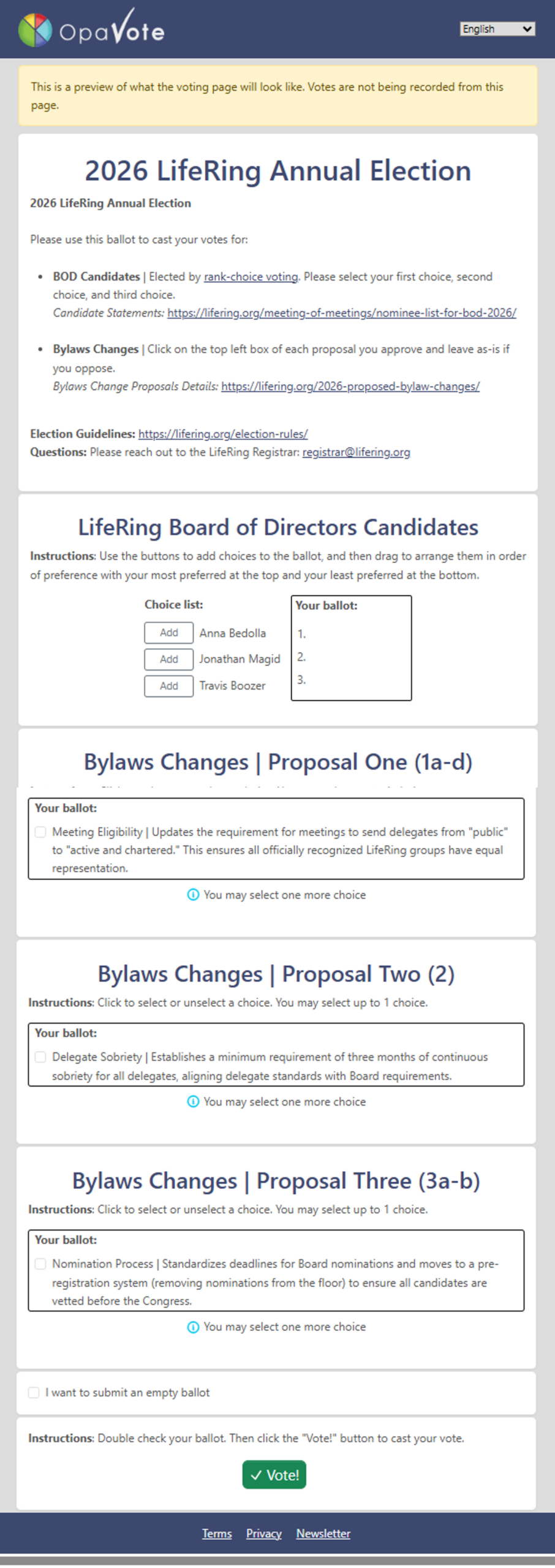**
In alignment with the LifeRing Bylaws, the Absentee Ballot is published on the LifeRing Secular Recovery website within ten days following the Delegates Assembly. Registered Meeting Delegates and Delegates at Large will be issued voting instructions sent voting instructions to the email they provided at the time of registration. **The voting period for the Absentee Election will remain open for fifteen days,** or until all registered Delegates have cast their votes, whichever comes first.
---
#### Results
Upon the close of the voting period, all votes will undergo a thorough verification, tallying, and certification process. The **certified results will then be publicly posted on the LifeRing Secular Recovery website**. We encourage all eligible delegates to participate in this important process.
---
#### **Matters being voted on during the Absentee Election**
- [**Candidates for the Board of Directors**](https://lifering.org/meeting-of-meetings/nominee-list-for-bod-2026/) \| 2026 BOD nominees and candidate statements. BOD candidates are elected by [rank-choice voting](https://lifering.org/election-rules/).
- [**Proposed Bylaws Changes** ](https://lifering.org/2026-proposed-bylaw-changes/)\| 2026 proposed changes to Current Bylaws. Proposed changes to the Bylaws are approved by selection.
---
#### Supporting Reference Resources
- **[Election Guidelines](https://lifering.org/election-rules/)** \| Information about BOD nominee campaigning and the voting process.
- **[LifeRing Bylaws](https://lifering.org/wp-content/uploads/ImportantDocs/Current_Bylaws.pdf)** \| Governing rules of LifeRing
**Categories:** 6000 Annual Meeting
---
### [Welcome!](https://lifering.org/welcome/)
**Published:** June 11, 2021
**Author:** Bees
**Content:**
## 
## **Welcome to LifeRing!**
---
**We’re glad you’re here! Whether you’re looking to enrich your personal recovery plan or you’re testing the waters for the first time, we’ve got you covered. LifeRing Secular Recovery offers online and in-person meetings to support your recovery and to empower your sober self.**
If you are a healthcare provider or treatment specialist interested in learning how LifeRing can help your clients, [please click here for a LifeRing Overview for Professionals](https://lifering.org/for-professionals)[.](https://lifering.org/professionals/)
| #### **Empower Your Sober Self!** You have the power to overcome your substance use disorder. It’s hard, there are often setbacks, but in every person facing addiction, there exists the desire to find lasting sobriety. Substance use disorder is not a character flaw. It is not the product of psychological defects. It is a problem you can overcome with self-determination. Finding the right recovery plan is an important first step to empowering your sober self. When you’re ready, LifeRing is ready for you. #### **LifeRing Can Help** LifeRing welcomes you, whether you are struggling to pull together 24 hours of sobriety or are searching for new ideas to strengthen your recovery. We provide a free, abstinence-based, secular, and self-empowered substance use disorder recovery pathway through our meetings, books, and evidence-based approach. We offer a safe haven where people can anonymously share their trials and triumphs in a supportive, nonjudgmental environment. Unlike many other recovery support organizations, LifeRing promotes **crosstalk** in our meetings. Crosstalk is a conversational exchange of experiences and methods for maintaining abstinence from alcohol and other addictive drugs. These supportive, engaging interactions assist LifeRing members as they develop and improve upon their recovery path. In our meetings, we share, listen, and encourage. We focus on the challenges and successes of the past week and plans for tackling the next week. Peers talking Sober-Self to Sober-Self learn and gaining strength from each other. We’re all in this together! | #### | #### **[LifeRing offers a ](https://lifering.org/meeting-menu/)[variety of recovery support resources](https://lifering.org/meeting-menu/)** #### Not sure where to start? LifeRing offers a variety of meeting formats and over 160 online and in-person meetings every week and 9 active discussion groups. --- **Peer Support Meetings** LifeRing Secular Recovery offers a wide variety of online and local meetings throughout the world. In our meetings, we share, listen, and encourage. We focus on the challenges and successes of the past week and plans for tackling the next week. [**How Was Your Week?**](https://meetings.lifering.org/meetings/?title=&program=2&audiences=&meetingType=&datetime_nextmeeting=&languages=&location=&coordinates=&scope=) (HWYW): Check-in meetings focusing on the present [**Topic**](https://meetings.lifering.org/meetings/?title=&program=4&audiences=&meetingType=&datetime_nextmeeting=&languages=&location=&coordinates=&scope=): Recovery-based discussion determined by meeting participants **[Focus](https://meetings.lifering.org/meetings/?program=6&audiences=&meetingType=1&datetime_nextmeeting=&languages=&location=&coordinates=):** Recovery meetings for unique affinity groups including LGBTQIA+ • Veterans • Co-Occurring Disorders • Family & Friends • Seniors • SUD-related Medical Patients • CPS • Survivors of Domestic Violence **[Chat](https://meetings.lifering.org/meetings/?title=&program=9&audiences=&meetingType=&datetime_nextmeeting=&languages=&location=&coordinates=&scope=)**: Text-based meetings focusing on the present --- **Meeting Platforms** [**Online**](https://meetings.lifering.org/meetings/?scope=only): LifeRing meetings hosted online. Camera requirements are determined by meeting format. **[Local](https://meetings.lifering.org/meetings/?scope=hide)**: In-person and online meetings for people to connect with others in their region. **[Hybrid](https://meetings.lifering.org/meetings/?title=hybrid&program=&audiences=&meetingType=&datetime_nextmeeting=&languages=&location=&coordinates=&scope=)**: In-person and online combined in one meeting. --- **Virtual Gathering Spaces** In addition to meetings, LifeRing also provides secular sobriety support eResources: **[Discussion Groups](https://lifering.org/email-groups/)**: Group messaging operates much like a 24/7 online meeting **[ePals](https://lifering.org/epals/)**: Volunteers work one-on-one to help you navigate LifeRing’s resources **[Delphi Forum](http://forums.delphiforums.com/lifering)**: LifeRing’s anonymous online discussion board |
|---|---|---|
#### **How Does LifeRing Work?**
Founded in 1997, LifeRing Secular Recovery is an abstinence-based, worldwide network of individuals seeking to live in recovery from substance use disorder. We offer each other peer-to-peer support in ways that embrace personal growth and continued learning through personal empowerment.
Our approach is based on developing, refining, and sharing continued abstinence and crafting a rewarding life in recovery. In short, we are sober, secular, and self-directed.
We often hear that something unique happens at LifeRing meetings-you can honestly be yourself! There are as many ways to live free of drugs and alcohol as there are stories of successful sober people. LifeRing respectfully accepts what works for each individual.
#### **Principles**
LifeRing guiding principles are evidence based and evolve as new science emerges. The three fundamentals of LifeRing are sobriety, secularity and self-help. These principles are what make LifeRing Secular Recovery a healthy and accessible recovery option for everyone!
LifeRing is not a 12-step program. There’s only one “step” – Don’t Drink Or Use No Matter What (DDOUNMW). Some people add “step two” – Get a Life. It’s back to basics here.
The philosophy is equally bare-bones: The “Three S” Philosophy: Sobriety, Secularity, Self-Help.
**Sobriety**
Sobriety means abstinence from alcohol and other drugs, unless medically indicated and taken as prescribed. This includes medically-assisted treatment, which LifeRing views as a decision you make with your treatment providers.
LifeRing believes you succeed when you make sobriety your #1 priority. Living each day free from alcohol and other addictive drugs-living as our “sober self”-is our top goal.
Our meetings are open to people looking for positive support.
**Secularity**
Out of respect for people of all faiths or none, LifeRing conducts meetings in a secular way, which means we do not use prayer or talk about religion.
Our common shared belief is dedication to personal effort and the sober self through scientifically based recovery methods. We support each other in taking responsibility for our own recovery and learning the skills necessary to live a long-term sober life.
All meetings, publications and peer support activities focus on personal recovery.
**Self-Help**
Empowering your sober self means taking action and maintaining a perspective that supports living drug and alcohol free. Joining meetings and using various tools at your disposal brings recovery within your reach.
Your recovery is based on self empowerment, your motivation and your efforts. You decide what works for you and build your sobriety upon that foundation.
This is your journey. We’re here for support.
**Categories:** 1000 Landing Pages
---
### [El Punto del Hígado | Conoce a Maristella](https://lifering.org/el-punto-del-higado-conoce-a-maristella/)
**Published:** June 9, 2026
**Author:** Bees
**Content:**
### ****Cultivando Comunidad y Equidad Lingüística:
### [The Liver Spot \| El Punto de Hígado](https://lifering.org/meeting-menu/online-meetings/the-liver-spot-en-espanol/)
###### .
#### ***Conozca a nuestra coordinadora más reciente de Liver Spot: Maristella M***
Para Maristella, el camino hacia su **trasplante de hígado** fue un viaje de tres años marcado por la incertidumbre, el miedo y el pesado fardo de lo desconocido. Incluso rodeada por el amor de su familia, a menudo sentía una profunda sensación de aislamiento que solo quienes enfrentan una enfermedad potencialmente mortal pueden comprender verdaderamente.
Todo cambió el 27 de marzo de 2025, cuando Maristella recibió el regalo de la vida en UCSF de parte de un donante vivo anónimo; un acto desinteresado de un extraño que redefinió su sentido de esperanza y fe. Esta experiencia encendió en ella el fuego de asegurar que nadie más tenga que navegar a solas por la oscuridad de la **Enfermedad Hepática Asociada al Alcohol (ALD, por sus siglas en inglés)**.
La inspiración de Maristella para lanzar una **reunión de Liver Spot en español** nace de un profundo compromiso por derribar las barreras que el idioma crea en la atención médica y la recuperación. Su corazón se conmovió al ver a una niña de diez años obligada a actuar como traductora de su madre durante una crisis médica, un momento que evidenció la necesidad desesperada de **espacios donde los hispanohablantes puedan buscar apoyo en su propio idioma**.
Maristella reconoció que, si bien el sistema médico proporciona traductores, este no puede traducir la “calidez de la experiencia compartida” que define la verdadera sanación. Siguiendo la filosofía central de la comunidad de The Liver Spot, Maristella lidera esta reunión no como un recurso supervisado u obligatorio, sino como una comunidad activa y comprometida donde la **conexión de paciente a paciente** es el principal motor de cambio. Al despojarse de la frialdad clínica de un diagnóstico y reemplazarla con el consuelo de la compasión, Maristella crea **un espacio donde la recuperación es un trabajo en equipo colectivo en lugar de una lucha solitaria**. El propósito único de esta reunión radica en su ciclo de fuerza mutua.
Habiendo pasado ella misma más de un año en la lista de trasplantes, Maristella sabe que conectar con compañeros que realmente entienden el camino es la medicina más potente disponible. En esta “zona libre de juicios”, está creando un ecosistema donde **los miembros de habla hispana pueden expresar sus temores y celebrar sus logros** sin la carga de la barrera del idioma. Al extender su mano para guiar a los recién llegados, Maristella transforma su propio viaje médico en un triunfo colectivo, demostrando que cuando nos apoyamos mutuamente, encontramos la herramienta definitiva para mantenernos íntegros.
**Acompañe a Maristella en línea todos los lunes a las 5:30 p.m. del Pacífico en** [**The Liver Spot \| El Punto de Hígado**](https://meetings.lifering.org/meetings/1309/)
.
#### **¡Aquí hacemos cosas valientes!**
.
---
#### Reuniones de apoyo Liver Spot de LifeRing para SUD \| ALD
**[The Liver Spot](https://lifering.org/wp-content/uploads/2026/06/The-Liver-Spot-Calendar-Flyer.pdf)** es una comunidad especializada de **LifeRing Secular Recovery**. Ofrecemos apoyo entre pares desde la perspectiva del paciente. [¡Venga a conocernos!](https://meetings.lifering.org/meetings/?title=&program=&audiences=105&meetingType=&datetime_nextmeeting=&languages=&location=&coordinates=&scope=)
- **The Liver Spot** – Abierto a cualquier persona en cualquier etapa de su salud hepática. Nuestra reunión semanal principal es una comunidad vibrante de más de 60 compañeros. Este es un espacio para la conexión auténtica que se centra en conversaciones reales, experiencias compartidas y apoyo centrado en el paciente.
[Miércoles a las 5:30 p.m. del Pacífico](https://meetings.lifering.org/meetings/1241/)
- **The Liver Spot \| Post-Op** – Exclusivamente para pacientes postrasplantados de hígado. Esta reunión única ofrece un entorno enriquecedor diseñado específicamente para navegar las complejidades emocionales y médicas del viaje postoperatorio.
[Martes a las 5:30 p.m. del Pacífico](https://meetings.lifering.org/meetings/1191/)
- **The Liver Spot \| XYZ** – Específicamente para pacientes hepáticos más jóvenes. Esta reunión abierta invita a los jóvenes en cualquier etapa de la recuperación a compartir conocimientos y recursos vitales. Este intercambio de conocimientos empodera a los participantes para comprender mejor sus problemas médicos y promover estrategias más informadas y efectivas para salir adelante.
[Viernes a las 5:30 p.m. del Pacífico](https://meetings.lifering.org/meetings/1300/)
- **El Punto de Hígado \| The Liver Spot en Español** – Un espacio en línea dedicado a pacientes hepáticos de habla hispana para compartir sus experiencias, su salud y su esperanza.
[Los lunes a las 5:30 p.m. hora del Pacífico](https://lifering.org/meeting-menu/online-meetings/the-liver-spot-en-espanol/)
#### .
---
***Ayúdenos a ayudar a otros. Sus [donaciones](https://lifering.org/donate/) permiten a LifeRing expandir nuestro apoyo para todas las personas en recuperación.***
#### *¡Muchas gracias!*
***Para conocer otras formas en las que puede contribuir con LifeRing,* *por favor considere ser [Voluntario de LifeRing](https://lifering.org/get-involved-menu/volunteer-form/) o [Coordinador de LifeRing](https://lifering.org/meeting-menu/start-a-meeting/).***
---
---
### [LifeRing Delegates Assembly | Meeting Reports](https://lifering.org/2026_delegates-meeting-reports/)
**Published:** March 7, 2026
**Author:** Bees
**Content:**
# **2026 LifeRing Meeting Reports – Delegates Assembly**
The Delegates Assembly offers an opportunity for convenors and meeting participants to report on what’s relevant to their meeting and of interest to their group. Sharing and hearing Delegates Meeting Reports are a major agenda item for the Delegates Assembly. Below you will find meeting reports listed by meeting time and type.
There is no required format, but Delegates are encouraged to provide a copy of their meeting reports prior to the Annual Conference or 7 days prior to the Delegates’ Assembly. These reports should be submitted to the [Service Center](mailto:service@lifering.org) and are posted here for public review.
See also [Eligibility Determination of Meeting Delegates](https://lifering.org/meeting-delegates/) and the [Delegates Brief](https://lifering.org/delegates-briefing/).
Akron Meetings \| Local
[Akron Ohio Meetings](https://liferingakron.org/) • Meeting Convenors Vary • Times Vary • In-person, Hybrid, Local Online
---
**2026 LifeRing Akron Delegates Report**
Our long-standing Tuesday in-person and Thursday local online meetings continue. While overall attendance is down, we maintain a dedicated core group that consistently shows up to support one another. Meanwhile, attendance has been up at our Saturday hybrid topic meeting, which is hosted at the Summit Recovery Hub-a local Recovery Community Organization (RCO) that embraces a variety of alternative recovery pathways. Additionally, one of our longtime members convenes a private HWYW meeting at a community-based correctional facility.
LifeRing Akron continues to foster connection through a daily Signal chat, and our members remain especially generous with donations to support our host facilities, outreach efforts, and the broader LifeRing organization.
**New Grant Opportunity & Institutional Outreach**
The LifeRing Director of Development identified a grant opportunity through the Ridgecliff Foundation, and LifeRing Akron created the plan and is assisting with the proposal preparation. If the grant is awarded, the project will launch in Summit County in early 2027, hosting quarterly educational webinars and placing “BRIDGE Box” toolkits in 20 local courts, jails, and rehab centers.
The acronym BRIDGE stands for Building Recovery Infrastructure for Diverse Guidance & Education. Each self-contained toolkit will contain staff instructions, free recovery books for clients, and printed local meeting lists. These boxes provide institutional staff with a seamless pipeline to help more people find a secular path to long-term recovery.
**Community Events**
Building on our community outreach, we tabled at the OhioCAN Summit Fest in June of 2025 and will be participating again this year, with the event likely moving to September. We are also excited to expand our reach by tabling at Akron Pride this August.
LifeRing in Ohio is always growing, adapting, and evolving!
**Doug D.** on behalf of all of Ohio’s LifeRing meetings
Mondays, 4:00am Pacific \| West Coast Early Birds \| Online
Matt C • Meeting Convenor • Mondays at 4:00am Pacific Time • Online
#### [West Coast Early Birds ](https://meetings.lifering.org/meetings/1067/)\| Meeting ID: 1067 \| HWYW
---
**Meeting Delegate: Stephanie M.**
**West Coast Early Birds** \| What a way to start your day and week!
This How Was Your Week (HWYW) meeting has been hosted by Australian convener, **Matt C**. for the last six months. His open and honest approach to the recovery journey, with crosstalk highly encouraged, makes for a lively, respectful and caring atmosphere. Matt takes time to allow all to share and contribute to the meeting.
The twenty to thirty regular members range from 20-60 plus in age and attend from the U.S., Australia, the U.K., Pakistan, Bali and more. All participants **welcome and encourage newcomers** to this first meeting of the week.
This meeting is vital to my recovery, a place I feel **safe, accepted and loved**. The 4am timeslot is a very necessary meeting time which keeps opportunities for share time available in later meetings.
Stephanie Mosquito
Delegate: West Coast Early Birds
Mondays, 6:00am Pacific \| Case of the Mondays \| Online
Ivona S • Meeting Convenor • Mondays at 6:00am Pacific Time • Online
#### [Case of the Mondays](https://meetings.lifering.org/meetings/1116/) \| Meeting ID: 1116 \| HWYW
---
**Meeting Delegate: Kevin T.**
#### Meeting Statistics
| Founded | 2022 |
|---|---|
| Original & Current Convenor | Ivona S. |
| Co-Convenors and Co-hosts | Jad G., Mike R. |
| Opening Format | 3-S Read by Convenor |
| Meeting Format | Online, HWYW, All Welcome, English |
| Average People in Attendance | 45 |
| Average People on Camera | 22 |
| Average Sobriety Time | Highly varied. Day 0 – Decades |
| Average % who also attend 12-step or other | 60% (estimated based on shares) |
| States & Countries Represented | Heavy CA, Sprinkle of states across the US, and occasional attendance from EMEA |
#### Meeting Insights & Feedback
| Typical Meeting Experience | Our meeting has consistent attendance from regular attendees who use this meeting as a way to kick start their week. It also attracts a healthy number of newer attendees within their first year of sobriety, and there is typically at least one or more attending a LR meeting for the first time. In general, this meeting is very supportive, inclusive, and fosters a safe space to share, regardless of where someone is in their recovery journey. |
|---|---|
| Use of Zoom | Zoom has been a reliable platform, and most everyone seems comfortable with it. I don’t see a need to change platforms, but it could be helpful to designate someone to inform Convenors of version updates that may impact the usability, or meeting controls. |
| Experience Using Zoom Chat | Zoom chat has proven to be a healthy way for members to interact during a meeting. Especially for day 1 attendees who may be looking for an easier way to interact and be heard, without having to come on camera for a full share. For safety, I do recommend keeping the ability to share links and photos to just the Convenots and co-hosts. |
| Suggested Zoom Improvements | Safety should remain one of the key factors for using this platform. Again, a designated person who is staying on top of changes, and communicating improvements could be helpful in keeping our space safe for all online meetings. |
| Meeting Verification Process | Posted 10-15 minutes before the meeting closes. No issues that I’m aware of. |
| Raise Hand or Called On To Share? | Both. We call on folks who have camera on (typically indicates they are open to sharing), and give priority to raised hands and/or crosstalk |
| Crosstalk | Crosstalk continues to be one of the most supportive and meaningful difference for LR. Our members provide consistent, healthy, crosstalk when someone is open to it. |
| Newcomer Experience | We ask at the start if anyone is new to LR so that we can welcome them and invite them to share, if they are comfortable. |
| How We Support Sobriety Time | We ask if anyone is celebrating clean/sober time so that we can applaud, use emojis, and celebrate them in chat. |
| How We Support Relapse | No shame. We applaud anyone who has experienced relapse and is still working towards abstinence. We provide supportive crosstalk, links to LR resources (including books), and share are own experience. No advice. |
Mondays, 12:00pm Pacific \| Sober Salon \| Online
Anna B • Meeting Convenor • Mondays at Noon Pacific Time • Online
#### [Sober Salon ](https://meetings.lifering.org/meetings/1126/)\| Meeting ID: 1126 \| HWYW
---
**Meeting Delegate: Michael M**
Hello LifeRing:
This is the second consecutive year I’ve been selected as the delegate for the **Sober Salon** online Lifering meeting that is held each Monday at noon PST hosted by **Anna B**. I have been attending this HWYW meeting regularly for the past two years and it’s become an essential part of my week and my continued sobriety (for six and a half years). This meeting has been in existence for approximately three years with Anna as its founder and convenor for its entirety.
Our attendance varies anywhere from **35 to as many as 50 people** who surface each week, demonstrating continued growth for the length of my association with it. The membership in the group is essentially split 50-50 between men and women with an age range from approximately 25 years old to 80 years. If I were to hazard a guess, about 60% of the attendees are regulars who appear weekly, but even those whose attendance is sporadic often return following brief absences. The length of sobriety spans the spectrum ranging from the newly sober (a few days to a week) to the veterans with as much as five years or more of complete abstinence.
At the risk of appearing felicitous, perhaps the most enduring characteristic of the **Sober Salon** is the universal acceptance of and support lent amongst the members of this online community, and I don’t believe it would be a stretch to say this trait is directly attributable to the patience, warmth, kindness, and enlightened guidance of its founder and convenor, Anna B.
Rarely does a week pass when we don’t have a newcomer pay a visit to the meeting, states at the end of their initial share or in the chat how at ease and welcome they have been made to feel and express an ardent desire to return. Anna’s skill as someone who both hears you and listens to you, and her continuous efforts to acquire as much knowledge as she can as a peer support volunteer establish her as **one of LifeRing’s preeminent convenors** and the standard to which others should strive.
Michael McCauley (Michael M.)
Delegate: Sober Salon
<mccauleym57@yahoo.com>
Mondays, 4:00pm Pacific \| OK, Boomer \| Online
Michael A. • Meeting Convenor • Mondays at 4:00pm Pacific Time • Online
#### [OK, Boomer](https://meetings.lifering.org/meetings/1063/) \| Meeting ID: 1063 \| HWYW
---
**Meeting Delegate: Christopher H.**
**OK, Boomer** was originally launched on Saturday, December 23, 2023. This popular “How Was Your Week” (HWYW) meeting eventually transitioned to its current time slot every Monday at 4:00 p.m. PT. It has since grown into a thriving gathering, drawing a consistent average of 40-50 attendees each week. Advertised as “not your parents’ recovery meeting” it is open to all generations that wish to unite in Recovery. OK, Boomer was the very first meeting Michael A. convened.
Michael A
Convenor of Record \| OK. Boomer
Mondays,5:30pm Pacific \| El Punto de Hígado \| Online
Maristella M• Meeting Convenor • Mondays at 5:30pm Pacific Time • Online
#### [El Punto de Hígado](https://meetings.lifering.org/meetings/1309/) \| Meeting ID: 1309 \| HWYW open to all
---
**The Liver Spot en Espanole**
**The Liver Spot \| El Punto del Hígado** es una reunión de enfoque de LifeRing que conecta a personas que viven con condiciones médicas de TUS/EHA. Ahora, esto puede sonar sombrío, porque sinceramente, lo es. Pero esta reunión está llena de esperanza y apoyo.
Esta es una reunión de especialidad de LifeRing basada en el formato de “intercambio de la semana” (¿Cómo estuvo su semana?) diseñada específicamente para personas en recuperación que enfrentan problemas de salud derivados de trastornos por el uso de sustancias. La reunión semanal no se limita a quienes tienen condiciones médicas: nuestra reunión está abierta a todos.
---
#### **Una Conexión de Paciente a Paciente**
**[The Liver Spot](https://lifering.org/meeting-menu/online-meetings/lifering-liver-spots/)** es el primero de su tipo, nacido de la necesidad de entender un lenguaje médico complejo que a menudo parece un idioma extranjero. Pero sabemos que para muchos, las conversaciones más difíciles y profundas sobre la vida, la muerte y la sobriedad se expresan mejor en la lengua materna.
---
#### ***¡The Liver Spot ha sido un salvavidas para MUCHÍSIMOS de mis pacientes!
¡Estoy tan agradecida con esta comunidad por su increíble apoyo!***
**Courtney Sherman, MD \| UCSF Health**
**Directora de la Clínica [HALT de UCSF (Healing Alcohol-associated Liver disease Together)](https://www.ucsfhealth.org/clinics/healing-alcohol-associated-liver-disease-together-halt)**
---
Somos una comunidad activa y comprometida que se une para apoyar nuestra propia recuperación y la de los demás. Muchos de nuestros participantes son referidos por sus médicos y especialistas en tratamientos de centros de renombre como **[UCSF](https://www.ucsfhealth.org/clinics/liver-disease-and-liver-transplant), [Stanford](https://stanfordhealthcare.org/medical-clinics/liver-transplant-program.html), [Sutter Health CPMC](https://www.sutterhealth.org/cpmc), [UC Davis](https://health.ucdavis.edu/internal-medicine/gastroenterology-hepatology/our-services/liver-disease), [UT Southwestern](https://utswmed.org/conditions-treatments/liver-transplant/), [Johns Hopkins](https://www.hopkinsmedicine.org/gastroenterology-hepatology/specialty-centers/hepatology), [Vanderbilt](https://www.vanderbilthealth.com/locations/vanderbilt-hepatology-and-liver-and-kidney-transplant-center),** y la **[Mayo Clinic](https://www.mayoclinic.org/diseases-conditions/liver-problems/care-at-mayo-clinic/mac-20374513).** No es inusual que las personas se unan a esta reunión desde sus camas de hospital – y sí, ¡las batas de hospital siempre son bienvenidas!
#### **Nuestra Comunidad en Números y Esperanza**
Esta reunión de enfoque apoya a una comunidad vibrante que ha navegado junta por los momentos más críticos:
- Hemos superado biopsias, endoscopias y la montaña rusa del puntaje MELD.
- Docenas de nuestros participantes han navegado con éxito el proceso para alcanzar y mantener un lugar en la Lista Nacional de Trasplantes.
- Compartimos la realidad: las estadísticas son duras, pero la esperanza es real.
El apoyo para sobrevivir la espera y el “impacto posterior” del diagnóstico es lo que hace que The Liver Spot \| El Punto del Hígado sea tan único. Compartimos nuestros viajes de recuperación desde la perspectiva del paciente con comentarios (crosstalk) desde la perspectiva del paciente.
#### **Un Espacio Seguro y Valiente**
**The Liver Spot \| El Punto del Hígado** es un espacio seguro y compasivo para compartir historias y compartir esperanza.
- **Advertencia:** Las participaciones pueden ser gráficas por naturaleza debido a la realidad de los tratamientos médicos, por lo que puede no ser para todos, pero está abierta a todos.
- Para aquellos que nunca han considerado los efectos a largo plazo del consumo, esta reunión sirve como una experiencia profundamente aleccionadora.
- Las emociones son intensas y la camaradería es profunda. Incluso nos emocionamos un poco cuando un ser querido se une para aprender cómo puede ayudar.
#### **Únase a Nosotros**
No importa en qué punto de su camino se encuentre-ya sea navegando el proceso de lista de espera o manejando la vida años después de un trasplante-esta comunidad está aquí para fomentar la resiliencia que usted necesita para prosperar.
**Cuándo nos reunimos:** En línea todos los lunes por la tarde a las 5:30 PM, hora del Pacífico. *A partir del lunes 25 de mayo.*
[](https://meetings.lifering.org/meetings/1309/)
#### **¡Aquí hacemos cosas valientes!**
---
*¿Tiene preguntas sobre cómo integrar esta reunión en su plan de cuidado o el de sus pacientes? Contacto <liver.spot@lifering.org>.*
Mondays, 5:30pm Pacific \| LifeRing Salem Oregon (Salem’s Lot) \| In-person
Kelly T • Meeting Convenor • Mondays at 5:30pm Pacific Time • In-Person
#### LifeRing Salem Oregon (Salem’s Lot) \| Salem, OR \| Meeting ID: 1292 \| HWYW + Topic
---
[**LifeRing Salem Oregon \| Salem’s Lot**](https://meetings.lifering.org/meetings/1292/)
299 Cottage Street NE
Bay Room at IKE Box Café
Salem, OR 97301
Mondays at 5:30pm Pacific \| All are welcome
**Early Beginnings & Long-Term Plans**
With nearly two years of recovery at the time, Kelly T. hosted the inaugural gathering at IKE Box Café on December 1, 2025, making it the only currently active, in-person LifeRing meeting in Oregon. In the past, there have been other meetings in Oregon, but the Oregon state capital now stands alone. However, we intend to change that. Our goal is to establish five active LifeRing meetings across Oregon by the end of 2027, targeting key, populous locations such as Bend, Corvallis, Eugene, and Portland.
**Venue & Vibe: The Mausoleum Turning Lives Around**
Our gathering place is in downtown Salem, located on the corner of major cross streets, has cheap, easy parking, and is served by public transit. It is housed inside a historic building, a beautifully converted mausoleum. Because of this unique history, we affectionately call ourselves ‘Salem’s Lot, yet we’re not vampires (at least no one claims to be)! Quite the opposite, we aim to help breathe life back into people building newly sober, or long-term recovered lives.
IKE is cozy, inviting, a little eclectic and serves as an active community hub with a wide variety of drinks, snacks, and visitors. Our meeting information prominently hangs on the main bulletin board. The Bay Room is tucked into a corner, is private, ADA accessible, and gender-neutral restrooms are available. No competing recovery meetings occupy our time slot, and IKE’s staff have been consistently welcoming and supportive.
**Attendance & Demographics**
Today, Jonathan S., Michael F., one other individual, and I round out the “Core Four.” Expect to see one of them serving as our delegate next year. Attendance started as just two people (Kelly +1) and has grown to a consistent four, including Jonathan and Michael. Our room has a comfortable capacity for twelve, or slightly more, when the day comes.
Our current demographics and dynamics include:
- Age Range: 39 to 66 years young
- Composition: One woman and three men
- Recovery Length: Six months to over three decades of continuous sobriety
One individual anchors the group with over 35 years of lived recovery experience, an asset to have in a room this young. We have welcomed four one-time attendees since December, including a couple of people in the earliest days of their recovery who ultimately did not return. We have never had court-ordered participants or anyone requesting attendance verification. We are ready though.
**Meeting Format & Culture**
Our baseline format is HWYW. We expect to incorporate a topic, the LifeRing Workbook, once a month after some growth. We begin our meeting with a short 10-minute grounding meditation. Crosstalk is actively encouraged, though anyone may opt out. Custom opening and closing statements are clear, succinct documents adapted from LifeRing templates. Our closing borrows from the Desiderata “*Go placidly among the noise and haste and remember how much recovery there can be in community and connection.*” They will continue to evolve alongside the meeting.
As for warm-blooded newcomers, we greet them with suspicion, garlic, and crosses. Just kidding. Open arms, every time. Two attendees, who came early in their recovery and did not return, inspired the revamping of the [If Today is Day 1](https://lifering.org/lifering-recovery-menu/if-this-is-day-one/) flyer, which is a current work in progress. Speaking of works in progress, we have yet to celebrate formal sobriety milestones, but we may in the future, and IKE Box has excellent food and dessert options when we do.
We keep LifeRing’s [Empower Your Sober Self](https://lifering.org/wp-content/uploads/lifering-press/pamphlets/EYSS_Pamphlet.pdf) (EYSS) pamphlets on the table, circulate member contacts within the group, and have a shared Google Drive folder that contains critical meeting documents. We’ve already managed one informal potluck BBQ, with more social gatherings to be planned. We have not yet passed the basket, but that is firmly on our road map as we recently established that a business meeting will occur every 6 weeks.
**Outreach: The Next Frontier**
Our first six months were about building a stable foundation. Months six through twelve are about visibility and growth. We are approaching outreach on multiple fronts:
- **Local Government:** In April 2026, Kelly presented before the Salem City Council regarding secular recovery options, which officially planted a flag for LifeRing in local civic awareness. Drug courts are where we’ll *sink our teeth into* next.
- **Local Recovery Centers:** We are preparing to reach people who are already seeking recovery resources: professionals, systems, and facilities who work with people in recovery. Treatment centers, IOP programs, and addiction counselors are all targets of our affection.
We begin tabling at Serenity Lane, an Oregon-centric treatment center in Eugene, on June 28 and will host a LifeRing meeting there after their outreach event. We hope to make this a monthly or every other month effort.
- **National Collaboration:** We meet every other month with Lisa in Akron and Laura in the Bay Area to discuss our outreach strategy and beg, borrow, and steal best practices.
- **Digital Presence:** We are actively listing and updating on Facebook, Reddit, Nextdoor, and Eventbrite to catch people searching for secular options online. Links below. **Facebook**: [Group Page](https://www.facebook.com/LSR1292) ▪ **Reddit:** [April Post](https://www.reddit.com/r/SALEM/comments/1t0wcin/life_ring_meeting/) ▪ **Nextdoor:** [Meeting Link](https://nextdoor.com/p/6DqLdkhK579X/) ▪ **Eventbrite:** [Meeting Link ](https://www.eventbrite.com/e/lifering-secular-recovery-meeting-tickets-1989066426225)
**‘Salem’s Lot is *born*. ‘Salem’s Lot is *young*. ‘Salem’s Lot is *growing*. And we don’t bite…*much*.**
Appreciatively submitted,
Kelly Thomas
Convenor of Record & 2026 Delegate
*2026 LifeRing Annual Congress*
Mondays, 6:30pm Pacific \| BaysideMarin LifeRing Meeting \| In-person
Michael A • Meeting Convenor • Mondays at 6:30pm Pacific Time • In-Person
#### [BaysideMarin LifeRing Meeting](https://meetings.lifering.org/meetings/1035/) \| Meeting ID: 1035\| HWYW
---

**Meeting Delegate: Markell**
[**BaysideMarin LifeRing Meeting**](https://lifering.org/lifering-joins-bayside-marin/) takes its name from the Bayside Marin Treatment Center in San Rafael, California. Bayside runs residential programs from their hillside campuses overlooking the San Francisco Bay Area, as well as outpatient services from their building on Fourth Street in downtown San Rafael. We are fortunate for their support in providing us a location at the downtown Bayside Building for our meetings at 6:30 pm on Mondays.
Our inaugural meeting was convened on March 27, 2023, by **Michael A**., who was eager to connect his residential experience at Bayside with his evolving sober life. Michaels commitment to the principles of LifeRing have continued to grow far beyond the Bayside Chapter, as convener and participant in a wide variety of other meetings across the region. Michael serves on the board of the LifeRing national organization, with a focus on new meeting development.
It’s hard to imagine a nicer place to hold in-person meetings than the Bayside Building. It’s a large room with comfortable furniture, a tall ceiling, recovery materials on tables and on the walls. A big white board which we have used occasionally. There’s enough space and chairs to make a circle for 20 – which is how the room is typically arranged when we arrive. Even when the group only numbers four or five, I can’t remember a time when we moved the chairs in and closed up that big circle.
These smaller meetings would be our “core group”. Two of us came out of Bayside’s residential program, another out of Olympia House, and two of us attained sobriety without any residential program at all. We are generally 5 years or less sober, with the notable exception of ‘**D**‘, who brings more than 15 years of lived recovery experience to the group. ‘We have had a few “topic meetings”, but the core group most often follows the “**How Was Your Week**?” format. After all, our backstories are familiar, and we each arrive with our own up-to-the-minute rolling narrative. It’s comfortable, and there’s plenty of time to talk. A group of this size and familiarity can get pretty lively.
It’s common for the group to be two to four people larger when members of the public join us in search of non-12-step peer support. Some are newly out of a residential program, some are wondering where to start in overcoming their addictive behavior, some are well along in their recovery but always on the lookout for friendly sober mates. We may not see them a second time, or they may hang with us for a few weeks.
And then – some nights our group has been doubled in size by virtue of our relationship with Bayside. We regularly welcome groups of three, four, or more who are on a “fieldtrip” from Bayside’s residential program, an outpatient PHP, or a nearby SLE. Often it is their first contact with LifeRing, maybe even their first ever in-person peer- support experience. These folks are welcomed warmly, and Michael dusts off his excellent introduction to the principles and premises of LifeRing. These meetings typically don’t follow the “how was your week” format. For one thing, the core group will usually offer a bit of personal history – “*how **they** got to where **we** are*“. And of course the visiting folks each come equipped with their own stories that we’ve never heard before.
These larger meetings provide great synergy, and a delightful element of unpredictability. Of course, as the group size grows time can run short. There have been nights when we had to rush our shares. So far we’ve not filled our circle of 20, but as of late our meetings have been solidly in the teens.
Common to all meetings is our propensity for cross-talk. It’s one way we demonstrate to each other that we’re listening – that the stories are important – that we are both absorbing and reflecting. And it’s our opportunity to toss around some two cent coins.
In closing, I will 1) recommend LifeRing Bayside Marin as a worthy meeting, 2) thank everyone involved for their contributions, 3) borrow the words of our very best cross- talker and the man with the mantras:
“And that’s all I have to say about that.”
Respectfully submitted,
Markell
Delegate for the 2026 LifeRing Annual Congress on behalf of LifeRing Bayside Marin
Tuesdays, 12:00pm Pacific \| Choose to Recovery Mindfully \| Online
Ewa C • Meeting Convenor • Tuesdays at Noon Pacific Time • Online
#### [Choose To Recover Mindfully](https://meetings.lifering.org/meetings/1240/) \| Meeting ID: 1240 \| HWYW
---

**Meeting Delegate: Savannah J**
**[Choose to Recover Mindfully](https://lifering.org/recover-mindfully/)** is a *How Was Your Week?* meeting hosted by Ewa. We start with a brief meditation, which often sparks beautiful crosstalk from LifeRingers about their experiences during the meditation.
**Ewa** leads the meeting with compassion for all as well as some great recovery facts and resources including the **[Sober Synthesis](https://sobersynthesis.com/2024/07/05/alcohol-liver-disease/)** blog started by a fellow LifeRing member. **Sylvia** often co-hosts, which is great because she also provides scientific info related to recovery.
The meeting has grown! We usually have about 35 to 45 people in attendance with recovery times varying from newly sober to years/decades of sobriety.
Come join us at 9 AM EST on Tuesdays!
Savannah J
Tuesdays, 12:00pm Pacific \| Kaiser Oakland AMRS \| In-Person
Michael A • Meeting Convenor • Tuesdays at Noon Pacific Time • In-Person
#### [Kaiser Oakland AMRS](https://meetings.lifering.org/meetings/1011/) \| Meeting ID: 1011 \| HWYW meeting open to all
---
**LifeRing’s** roots date back to the late 1990s at Oakland Kaiser Chemical Dependency Recovery Program (CDRP). While the COVID-19 pandemic temporarily halted these gatherings, meetings successfully resumed on February 12, 2024, convened by Michael A. Because the meeting is open to the public, it attracts a diverse and vibrant mix of current Kaiser AMRS clients and individuals from the broader recovery community. Today, attendance remains strong, averaging 18-20 attendees each week.
The ever-changing mix of attendees fosters lively discussion. **Michael A.** is an excellent convenor who maintains an effective pace, ensuring everyone has the opportunity to share without feeling rushed. He pays close attention to what is being said and often has more to add to the discussion – and it is a discussion with plenty of crosstalk. I personally find the insights shared by other attendees to be invaluable additions to my sobriety toolkit, supporting my continued recovery.
Michael P
Meeting Delegate \| 2026 Annual Congress
Tuesdays, 1:00pm Pacific \| LifeRing in San Francisco Kaiser AMRS \| In-Person
Tim S • Meeting Convenor • Tuesdays at 1:00pm Pacific Time **• In-Person**
#### [LifeRing in San Francisco Kaiser AMRS](https://lifering.org/sf/) \| [Meeting ID: 1041](https://meetings.lifering.org/meetings/1041/) \| HWYW meeting open to all
---
**LifeRing opened this HWYW meeting on February 13, 2024 at the invitation of the San Francisco Kaiser Permanente AMRS. It’s held in Room 6B in the Ellis Street Kaiser AMRS building every Tuesday at 1:00pm.**
**A bit of history:** The very first and only in-person meetings I attended were in this exact room prior to the pandemic. The convenor, Jim V. was amazing and made it all look so easy. Jim remains a role model for me and I am grateful for all the positivity and empathy he brought to those LifeRing meetings.
**Attendance in Room 6B** is made up of an average of 20 people primarily from the Kaiser AMRS Program who are just starting out on their recovery journey. Participants rotate based on enrollment in the Day Program and the IRT, so community is trickier to build, but there are a number of folk who come back even after treatment. This is particularly impactful as those returning represent folk who have been through the Kaiser program and continue to maintain their sobriety. This is very encouraging for participants in the very early stages of recovery and the dynamic provides a nice balance of crosstalk.
[**San Francisco Kaiser Permanente AMRS**](https://thrive.kaiserpermanente.org/care-near-you/northern-california/sanfrancisco/locations/chemical-dependency-recovery-program-cdrp/) \| **Tuesdays at 1:00pm**
**Room 68 \| 939 Ellis Street @ Van Ness**
Contact <timmylou13@gmail.com> to learn more about this meeting
[LifeRing Secular Recovery](https://lifering.org/welcome/) \| 800.811.4142
**Empower Your Sober Self in LifeRing face-to-face meetings with others in recovery here in the City by the Bay!**
Tim
San Francisco
Tuesdays, 5:30pm Pacific \| The Liver Spot \| Post-op \| Online
Michael A • Meeting Convenor • Tuesdays at 5:30pm Pacific Time • Online
#### [The Liver Spot \| Post-op](https://meetings.lifering.org/meetings/1191/) \| Meeting ID: 1191 \| Focus Meeting intended for post-liver transplant individuals.
---

**Meeting Delegate: Joe A**
**[The Liver Spot \| Post-Op](https://lifering.org/ucsf-liver-spot/)** was created in collaboration with **UCSF** to provide a recovery support meeting for transplant recipients. Michael A. convened the very first meeting on January 20, 2025. While initial attendance was slow, increased participation from transplant hospitals across the country has since driven steady growth, bringing weekly attendance to a consistent 18-20 members.
**Meet Our Delegate**
I was referred to **[The Liver Spot](https://lifering.org/meeting-menu/online-meetings/lifering-liver-spots/)** meeting by the [UW Seattle liver team](https://www.uwmedicine.org/locations/liver-transplant-uwmc) after my transplant at UW in December of 2025. I started attending a week after discharge and have only been late to one meeting since then. I look forward to the Tuesday meeting each week. I have been concurrently attending [Betty Ford](https://www.hazeldenbettyford.org/rehab-treatment/outpatient-treatment) for IOP and now OP. The Post Transplant call is very different from Betty Ford.
During **The Liver Spot \| Post-Op** meeting, the therapy provided by talking with post-transplant patients is invaluable for achieving a full recovery and continuously gaining knowledge on how to cope with daily challenges. The meeting changes every week as the group discusses a wide range of topics that patients have faced or might face. I learned more about how to move forward each day from the Tuesday meeting than I could have learned in any other forum.
I volunteered to participate and serve as a delegate to spread the word and enhance the call to the best of my ability. As always, I look forward to the meeting this coming Tuesday night.
Cheers,
Joe A
Tuesdays, 5:30pm Pacific \| Celebrate Life, Y’all! \| Online
Sue Betts • Meeting Convenor • Tuesdays at 5:30pm Pacific Time • Online
#### [Celebrate Life, Y’all!](https://meetings.lifering.org/meetings/1124/) \| Meeting ID: 1124 \| HWYW meeting open to all
*We are honored to be represented by **Delegate Jimmy V**! Jimmy has been a strong participant in the Y’all! meeting sharing his strong commitment and sense of humor to every meeting he attends.*
---

**Celebrate Life, Y’all!** is a long-running meeting spinning off from the original Celebrate Life meeting passed down from convenor to convenor since September 2022.
This is an early evening **How Was Your Week** check in meeting that serves as a safe space to wind down after work or before bed depending on your time zone! Core members in this meeting are friendly and welcoming. They’re not shy about sharing their own stories and providing positive crosstalk with others. This is a warm and inviting growing meeting community where you can explore and develop your personal recovery plan.
We secretly call this meeting: Rambunctious Recovery. Come on in for a spot of sober irreverence.,
Sue
San Francisco
Tuesdays, 8:00pm Pacific \| Dark Knight Sobriety \| Online
Daniel E • Meeting Convenor • Tuesdays at 5:30pm Pacific Time • Online
#### [Dark Knight Sobriety](https://meetings.lifering.org/meetings/1293/) \| Meeting ID: 1293 \| HWYW meeting open to all
---
**Dark Knight Sobriety** is a recovery-forward Tuesday night meeting where Gotham meets self-empowerment. We frame the meeting with readings from *The Daily Stoic* and *Empowering Your Sober Self*, then open into HWYW shares centered on current recovery, upcoming challenges, celebrations, and the practical work of protecting sobriety one week at a time.
This meeting has a Gotham flavor on purpose: bats, noir, gothic energy, and the reminder that recovery is not about pretending the night does not exist, but learning how to move through it with skill, honesty, and support. The deeper theme is resilience: when life gets dark, we do not glamorize the struggle; we help each other navigate it.
We average about 20 to 30 participants and rely on supportive, voluntary crosstalk to create the kind of social reinforcement that helps people stay connected and keep going. Newcomers are especially welcome, and no one is required to adopt labels or language that does not fit their recovery.
Even Batman has Alfred, Superman, and the Justice League. Around here, nobody fights alone.
The night is darkest just before the dawn, and the dawn is coming.
Daniel E (aka: Bat Dan)
Links:
[The Dark Knight Sobriety Opening and Closing Statements](https://docs.google.com/presentation/d/1Tl-9sxI5d66eQEITRJ8lb2Nz2iN1bHyfJdMPaFrr11g/edit?usp=sharing)[The Dark Knight Sobriety Vault](https://docs.google.com/document/d/1kl2cfzM9FApBoR4it9cskJt1HoO4e5TWMRwiVi4jiDY/edit?tab=t.0) Wednesdays, 4:00am Pacific \| Recovery Reveille \| Online
Matt C • Meeting Convenor • Wednesdays at 4:00am Pacific Time • Online
[**Recovery Reveille** ](https://meetings.lifering.org/meetings/1118/)\| Meeting ID: 1067 \| HWYW
---
**Meeting Delegate: Michele P.**
**Recovery Reveille** \| What a way to start your day and week!
Recovery Reveille is an early morning “How Was Your Week?” check-in meeting. Passed down through a line of dedicated convenors, it is currently led by Matt. This meeting provides a safe, welcoming space to start your day. Because of the early hour, the atmosphere is casual, featuring a tight-knit group of regulars who are exceptionally welcoming to newcomers.
**Convenor: Matt Chiaruttini (Bali/Australia)** Matt is attentive, kind, and deeply compassionate. He is incredibly generous with his time, often staying late to ensure everyone has an opportunity to share. While his quick wit keeps the group on their toes, his gentle meeting style creates a comfortable, supportive environment for all.
**Attendance and Group Dynamics:** The meeting averages 25 attendees each week, with sobriety ranging from Day 1 to many years. The group is diverse, with regulars tuning in from the US, Canada, the UK, Australia, and Bali. Despite the global reach, the size of the group allows for a true “family” feel. Positive cross-talk and encouragement are staples of the meeting; members celebrate life’s victories together and lift one another up during the tougher moments of the recovery journey.
**Importance of the 4:00 AM Time Slot:** While 4:00 AM meetings are understandably smaller than later slots , they draw a dedicated and consistent turnout. When these meetings are removed from the schedule, they are deeply missed. Furthermore, losing this slot causes the 6:00 AM meetings to become overcrowded, and forces out those who cannot attend later due to work commitments. I am personally so incredibly thankful to Matt for stepping up to keep two of these vital 4:00 AM meetings open.
Michele P.
Delegate: Recovery Reveille
Wednesdays, 12:00pm Pacific \| The Nest \| Online
Anna B • Meeting Convenor • Wednesdays at 9:00am Pacific Time • Online
#### [The Nest ](https://meetings.lifering.org/meetings/1126/)\| Meeting ID: 1102 \| HWYW
---
**Meeting Delegate: Maria C.**
This meeting is an How Was Your Week meeting, convened by **Anna** and co-hosted by **Sylvia** and **Andy**. The meeting is well attended, with numbers averaging between 35 and 50 participants. I have personally attended this meeting for over a year, and participation has grown over that period. Many of the participants are regular attendees (approx. 75%+), and newcomers are welcomed warmly and often become regulars. Attendees range in sobriety from Day One to multiple years.
Attendees are encouraged to raise their hand to share. Anna starts the meeting by introducing **LifeRing’s 3-S philosophy** and shares how it has related to her own recovery, followed by describing the books LifeRing offers to help in recovery, especially the *[Recovery by Choice](https://lifering.org/bookstore/books/rbc/)* workbook.
**Crosstalk** is encouraged during the meeting so long as the person sharing is open to it. Once a share is finished, Anna always engages with the person, and when possible, relates in a personal way to show understanding, and makes sure the person is open to crosstalk before allowing others to speak. The **chat** feature is available for people to write encouraging or celebratory messages to attendees, and allows Anna and the co-hosts to add information regarding LifeRing books or special events, and [step-by-step instructions](https://lifering.org/verifications-101/) for obtaining meeting verification through Pathcheck.
This meeting is a very warm and friendly place to be. The group celebrates milestones by either visually clapping on camera or using react tools in Zoom. When someone is struggling, the group reaches out with empathy either through crosstalk or using the meeting tools.
**Quote from regular participant:**
*I’ve never encountered a better meeting convenor than Anna. She’s unfailingly encouraging, sympathetic, empathetic, warm, calm, insightful… what more could anyone ask for?*
Maria Collett
Delegate: The Nest
Wednesdays, 5:30pm Pacific \| The Liver Spot \| Online
Sue Betts • Meeting Convenor • Wednesdays at 5:30pm Pacific Time • Online
#### [The Liver Spot](https://meetings.lifering.org/meetings/1241/) \| Meeting ID: 1241 \| Focus meeting open to all
*We are honored to be represented by **Delegate Lyn G**! Lyn is The Liver Spot OG and has been instrumental in shaping this chill, community space. Lyn brings her compassion, commitment, and sense of humor to every meeting.*
---

[**The Liver Spot**](https://lifering.org/lifering-liver-spot/) is a LifeRing Focus Meeting for people in recovery who are also managing SUD/ALD related medical conditions. This meeting embraces the LifeRing’s 3-S philosophy of “sobriety, secularity, and self-empowerment” and offers a platform for patient-to-patient knowledge exchange.
The Liver Spot is an active and engaged community of folk who join to support their own recovery and the recovery of others. LifeRing’s peer-to-peer support model has proven an incredibly powerful tool for core and newcomers. Crosstalk is huge and the camaraderie is unparalleled. It’s peer-to-peer support and candid crosstalk that makes The Liver Spot such a unique resource for people in recovery and as a supporting resource for healthcare providers.
---
**Delegate’s Report**
I have been attending this meeting since it started. I have seen so many lives changed. I do attend and have attended many different meeting through LifeRing, AA, and Dharma. I have **stuck with LifeRing because of the community**. It isn’t judgmental and all the conveyors I have had have always created a safe place.
My favorite meeting is The Liver Spot because **Sue** gives so much of herself to this meeting. It’s a very unique group. The crosstalk that is allowed is always rewarding. It’s one of my favorite things about LifeRing. Also Sue allows us to staying longer after the meetings to discuss whatever we want. The time after the meeting is very grounding and it allows you to decompress and separate from your disease.
I have been sober now for over 5 and a half years. Without the support of the LifeRing community I don’t know if I would have stayed sober. The people I have talked to feel the same way. Thank you all who have helped and been there for so many.
Lyn G
Delegate: The Liver Spot \| 2026
---
*Charmaine, Anna, John, Kirk, Benji, Pat, Phil, Kevin, CeeCee, and Susan*
*you are missed*
Wednesdays, 5:30pm Pacific \| Los Angeles LifeRing \| Local Online
Chris S • Meeting Convenor • Wednesdays at 5:30pm Pacific Time • Local Online
#### [Los Angeles LifeRing Local Online](https://meetings.lifering.org/meetings/1030/) \| Meeting ID: 1030 \| HYWY
---
Los Angeles LifeRing Local Online, meeting # 1030, is a Local Online meeting which began in July 2021 and is listed on the Local Meetings page. It is one of two local meetings in Southern California.
The meeting has steadily declined over the years and currently has 2-3 remaining regular members. New attendees are infrequent, and none have stayed.
Members are older (60+), about evenly split between men and women, and are all longtime regular members of the group. Participation rate is 100%.
It is a How Was Your Week meeting using the standard opening statement.
Chris S.
convenor
Wednesdays, 9:00pm Pacific \| You, Me, and ADHD \| Online
Matt C • Meeting Convenor • Wednesdays at 9:00pm Pacific Time • Online
#### [You, Me, and ADHD](https://meetings.lifering.org/meetings/1295/) \| Meeting ID: 1295 \| HWYW meeting open to all
---
**Overview and Meeting Purpose**
**You, Me, and ADHD** is a specialized LifeRing focus meeting tailored to individuals navigating the unique intersections of substance recovery and Attention-Deficit/Hyperactivity Disorder (ADHD). Recognizing that traditional, larger meeting formats can sometimes feel overwhelming or disconnected for neurodivergent individuals, this meeting was intentionally designed as a smaller, intimate gathering. By fostering a tight-knit environment, the meeting successfully accommodates the crucial importance of focused connection, active listening, and deeply constructive peer-to-peer cross-talk.
**Attendance and Group Dynamics**
Because this meeting deliberately prioritizes a smaller footprint to ensure everyone has a meaningful opportunity to share, attendance typically averages a dedicated core group of 10 to 15 participants weekly. This intentional constraint creates a safe, low-stimulation environment where members can comfortably express their challenges without the anxiety of a fast-moving, high-occupancy room.
The group dynamics are highly collaborative. Members frequently share that the smaller room size allows them to track the conversation more easily, minimize typical ADHD-related conversational drift, and build strong, ongoing bonds of accountability.
**Keys to Successes**
Over the year, the meeting has focused on practical, real-world strategies for building a personal recovery program while managing executive dysfunction. The greatest success of “You, Me, and ADHD” has been its retention. Newcomers who have struggled to find their footing in broader recovery formats report feeling an immediate sense of “belonging” here. The intentional focus on deep, unhurried connection has made it a vital lifeline for its members.
**Future Outlook**
As the demand for neurodivergent-friendly recovery spaces grows, our primary challenge is maintaining the small, focused scale that makes this meeting successful without turning away those in need, while preserving the small-group magic.
Respectfully submitted,
**Matt** *Convenor/Delegate, You, Me, and ADHD* Australia / Bali
Thursdays, 9:00am Pacific \| The Thursdays Are The Hardest Days \| Online
Marc O • Meeting Convenor • Thursdays at 9:00am Pacific Time • Online
#### [The Thursdays Are The Hardest Days](https://meetings.lifering.org/meetings/1249/) \| Meeting ID: 1249 \| Topic meeting open to all
---
**The Thursdays Are The Hardest Days** just celebrated our 1 year anniversary. From the start we have had a vibrant and active community. We can’t thank **Robert** enough for giving us an active meeting to inherit.
We have explored and discussed a number of topics from fears around recovery to celebrating our recovery accomplishments and everything in between. We have found that the topic format is a good way get a discussion kicked off. However it is always surprising to see the different directions the discussion develops. We are usually far away from the chosen topic by the end of the hour.
By encouraging (but not requiring) the use of the webcam we have a very supportive room. We have also made it an effort to make meeting attendees aware of other LifeRing resources like the e-Pals and other recovery programs. We also make it a point to celebrate new LifeRing meetings and those that may be relevant to someone’s specific share. Having an excellent co-host is the only way this could be possible.
The most rewarding aspect of hosting has been seeing new members (many completely new to recovery) come week after week and become valuable members of our community. One even confirmed that their \*first\* LifeRing meeting was the \*first\* Thursdays Are The Hardest, and they are now active in selecting topics and even bringing a guest speaker to an upcoming meeting.
We (Marc and **Ron**) always end meetings by saying that this meeting and community are essential to our recovery and we feel like we get more benefit from the meeting than effort we put into it. It is an essential part of both our Personal Recovery Programs.
In the coming year we are hopeful we can continue to explore (and think up) more topics for discussion, however there is plenty still to be mined from topics we have discussed in the past. We hope to see our community grow and have more and diverse regular participants, but also hold a place for those who want to be there quietly.
—
Marc Olson
<olson.marc@gmail.com>
Fridays, 12:00pm Pacific \| LifeRing in San Francisco City Hall \| In-Person
Sue Betts • Meeting Convenor • Fridays at 12:00pm Pacific Time • In-Person
#### **[LifeRing in San Francisco City Hall](https://meetings.lifering.org/meetings/1023) \| Meeting ID: 1023\| HWYW meeting open to all**
*We are honored to be represented by **Delegate Geoffrey S**! Geoffrey has been a strong participant in our City Hall meeting since our inaugural meeting. He brings his strong commitment and sense of humor to every meeting he attends.*
---

[San Francisco City Hall](https://lifering.org/meeting-menu/local-meetings/sf/) \| LifeRing opened its HYWY meeting in San Francisco City Hall on February 3rd, 2023. This is the first in-person meeting to run in San Francisco since the pandemic shut down our SF onsite locations. This is a weekly “How Was Your Week” check-in meetings for people seeking support with substance use challenges.
We offer a recovery-forward meeting held on Fridays at 12:00pm noon in Room 278 in San Francisco City Hall. All people who want to be free from alcohol and drugs and stay free from alcohol and drugs are welcome.
**Participants** \| Our core group is made up of 15 very smart and very likable people who make recovery a focus in their lives.
City Hall may seem like an odd space to hold a check-in meeting, but **The City** offered space in the seat of San Francisco government and who could resist that? Our room is basically a small conference room which is nice. No accidental knee-knocks or encroachment on personal space (I’m a sprawler by nature). We’re on the **second floor in Room 278** – there’ll be a sign outside of the door. If you know your north and south, we’re about midway down the far north corridor – City Hall faces East. Or – if you come in the front door (metal detectors), we’re one up flight due right. I recommend taking the elevators otherwise you’ll be dodging all the wedding photographers! I encourage you to spend a little time walking around after the meeting because it really is a beautiful building. Look forward to seeing you this Friday or in the near future!
[**San Francisco City Hall**](https://sf.gov/location/san-francisco-city-hall) \| **Fridays at 12:00pm Noon**
**Room 278 \| 1 Dr. Carlton B. Goodlett Place @ McAllister**
Contact <sue@lifering.org> to learn more about LifeRing!
[LifeRing Secular Recovery](https://lifering.org/welcome/) \| 800.811.4142
City Hall is easily accessible by BART and MUNI, and bike parking is available on nearby sidewalks. Metered parking is accessible on Van Ness, McAllister, Grove, and Dr. Carlton B. Goodlett Place. There is also a Civic Center Garage located on McAllister, between Dr. Carlton B. Goodlett Place and Larkin. [Public Transportation to San Francisco City Hall](https://moovitapp.com/index/en/public_transit-San_Francisco_City_Hall-SF_Bay_Area_CA-site_18197559-22)
**Empower Your Sober Self in LifeRing face-to-face meetings with like-minded people in recovery here in the City by the Bay!**
Sue
San Francisco
**go warriors!**
Fridays, 12:00pm Pacific \| Face-To-Face Fridays. Pleasant Hill, CA \| In-Person
Laura M • Meeting Convenor • Fridays at 12:00pm Pacific Time • In-Person
#### [Face-To-Face Fridays](https://meetings.lifering.org/meetings/1258) \| Meeting ID: 1258 \| HWYW meeting open to all
---
**The When and Where:**
[**Face-to-Face Fridays**](https://meetings.lifering.org/meetings/1258) \| 12:00pm to 1:30pm PST
399 Gregory Lane
Pleasant Hill CA 94523
**The History:**
The Friday meeting was established in Dec 2011. It was originally started at Walnut Creek Kaiser. It was formed after the Wednesday LifeRing meeting members said that they wanted to meet twice weekly. During COVID we met in the parking lot since no community meetings were allowed in the building.
After several years, we were still not allowed to return inside the building but it was becoming problematic to continue meeting outdoors. We decided to search out a new venue. In June of 2023 we had our first meeting in Pleasant Hill. Same group, different location.
**Who We Are:**
Our meetings are attended by those in all stages of recovery. We have some with several decades of continuous sobriety and some who only have a few days. Some of us have been together for a decade and others for more than 5 years. We welcome all newcomers and many decide to stay awhile. All are a part of our meeting “family.”
We average 12-15 people in attendance each week. The meeting is 1 ½ hours so there is plenty of time to share. If you need to come late or leave early, that’s ok by us. We are just glad you came.
**What We Do:**
Our meeting supports people in recovery from all over the San Francisco Bay Area. Some travel only a few miles and some have come from as far as 50 miles each week.
We offer literature at our meeting and often offer refreshments. We always offer support.
We also continue to support our sister meeting at Kaiser in Walnut Creek when it was formed and sponsored by the Wednesday and Friday Pleasant Hill meetings. We help out financially and a few core members in our group support by attending regularly.
Our current outreach project is supplying ” Little Free Libraries” with LifeRing literature. Because we have attendees from multiple counties, we can supply books to a wide area.
**Final Words:**
Our Face-to-Face Friday meeting feels a tremendous amount of gratitude for our recovery as individuals and as a group. We support each other on our sober journeys and cry and laugh along the way. That’s just what families do.
Fridays, 2:15pm Pacific \| MPI-LifeRing in Oakland, CA \| In-Person
Karen F. • Meeting Convenor • Fridays at 2:15pm Pacific Time • In-Person
#### [MPI-LifeRing \| Oakland CA](https://meetings.lifering.org/meetings/1006/) \| Meeting ID: 1006 \| HWYW meeting open to all
---
**MPI-LifeRing** \| Fridays at 2:15pm Pacific
3012 Summit St., 5th Floor Board Room
Oakland, CA, 94609
**Join me in welcoming our newest in-person convenor: Karen F!**
LifeRing’s partnership with Oakland’s Merritt-Peralta Institute runs deep, spanning back to the in-person meetings held before the pandemic. When MPI was ready to welcome groups back, they invited LifeRing to resume their weekly HWYW meetings. Re-launched by Michael A. on February 18, 2025, this meeting is open to the public but primarily supports current MPI clients, drawing a close-knit group of 8-14 attendees each week. Beginning June 5, 2026, this meeting will be moved to Fridays at 2:15 pm and convened by MPI Alum Karen F.
Michael A
Previous Convenor \| MPI-LifeRing
Fridays, 5:30pm Pacific \| The Liver Spot XYZ \| Online
Shane K • Meeting Convenor • Fridays at 5:30pm Pacific Time • Online
#### [The Liver Spot \| XYZ](https://meetings.lifering.org/meetings/1300/) \| Meeting ID: 1006 \| HWYW meeting open to all
---
## The Liver Spot \| XYZ – Supporting the Next Generation
***The Liver Spot Community is expanding our reach once again! We are incredibly excited to introduce The Liver Spot \| XYZ.***
Recovery is rarely a straight line, and when you add complex medical conditions into the mix – especially as a younger adult – the path can feel treacherous. This new space is specifically tailored for the “next generation” – **Gen X, Millennials, and Gen Z** – who face a unique set of life transitions, social pressures, and digital-age challenges.
Following the successful model of our original [Liver Spot Community meetings](https://lifering.org/meeting-menu/online-meetings/lifering-liver-spots/), **The Liver Spot \| XYZ** integrates the worlds of [substance use disorder](https://my.clevelandclinic.org/health/diseases/16652-drug-addiction-substance-use-disorder-sud) (SUD) recovery and [alcohol-related liver disease](https://www.hopkinsmedicine.org/health/conditions-and-diseases/alcoholinduced-liver-disease) (ALD) clinical care. We provide a collaborative space where younger adults can master the balancing act of clinical recovery and long-term sobriety as they navigate their way to a resilient, sustainable lifestyle.
Join [The Liver Spot \| XYZ](https://meetings.lifering.org/meetings/1300/) on **Fridays at 5:30pm Pacific Time** to learn from the journey and share from the … heart!
---
**A Space for the Next Generation of Liver Patients in Recovery**
**The Liver Spot \| XYZ** is a welcoming and supportive recovery community specifically for our **Gen X, Millennials , and Gen Z** members navigating the intersection of substance use recovery (SUD) and alcohol-related liver disease (ALD).
If you’re looking to connect with others who understand the reality of being an ALD patient, this is the place for you. In many recovery spaces, the physical toll of illness is secondary; here, it is the heart of the conversation. We recognize that facing serious health diagnoses at a younger age brings a unique set of questions, social pressures, and life transitions. This meeting offers more than just support – it offers **patient-tested insights** for navigating the road ahead.
Whether you are managing early-stage health concerns or navigating a long-term medical journey, you’ll find a warm welcome and a safe space to share your struggles and your successes with peers who truly “get it.” This is a place for **honest sharing, deep camaraderie, and finding hope** built on shared, lived experience.
**What to Expect: Shared Experience, Collective Strength**
The Liver Spot \| XYZ is more than just a support group; it’s a community where we trade the real-life insights necessary to navigate life as a younger person in recovery.
When you join The Liver Spot \| XYZ meeting, you can expect to:
- **Exchange Lived Insights:** Connect with peers who are navigating the same social and physical hurdles of being a younger patient. We don’t just share space; we share the wins, the frustrations, and the hard-won lessons of managing a serious diagnosis in the prime of your life.
- **Learn Through Shared Journeys:** In this safe, non-judgmental environment, your story becomes someone else’s survival guide. We believe in the power of open dialogue – by listening to one another, we learn how others handle everything from navigating complex medical appointments to maintaining a vibrant, active social life while prioritizing our health.
- **Refine Your Path Through Peer Dialogue:** This isn’t a lecture; it’s a conversation. By hearing how others empower their “new normal,” you gain a toolkit of perspectives to help you handle your own medical and recovery milestones. Your peers are often the best resource for learning how to stay resilient when the road gets rocky.
- **Master the Balancing Act:** We help each other bridge the gap between doctor’s orders and recovery goals. Together, we learn how to apply the LifeRing philosophy of **“Empower Your Sober Self”** in a way that truly honors your journey.
No matter your current diagnosis or where you are in your recovery, you will find a warm welcome and a community that speaks your language.
---
**Get Connected**
Whether you are in the early stages of a diagnosis, navigating the transplant list, or managing long-term recovery, there is a Spot waiting for you. We learn from each other’s experiences so that none of us has to figure it out alone.
**The Liver Spot Community: Finding Your People**
The Liver Spot started with a simple idea: That people living with SUD-related medical conditions have a unique kind of perspective to offer one another. As we’ve grown, we’ve created specialized spaces so you can connect with peers who truly understand your specific journey:
- **The Liver Spot** – *The meeting that started it all.* Known for its high-energy, “all-in” vibe, this meeting is a space where we trade insights and encouragement about the realities of living with medical conditions in recovery.
Wednesdays at 5:30pm Pacific \| Learn more and click to join: [The Liver Spot](https://meetings.lifering.org/meetings/1241/)
- **Post-Transplant Liver Spot** – *A specialized circle for transplant recipients.* Life after a transplant comes with its own set of intricacies. This exclusive meeting offers a dedicated space for transplant recipients to connect with others who have walked that same path.
Tuesdays at 5:30pm Pacific \| Learn more and click to join: [The Post-Transplant Liver Spot](https://meetings.lifering.org/meetings/1191/)
- **The Liver Spot \| XYZ** – *Our newest focus group for the next generation.* Tailored for the younger generation, , this meeting is all about building a community where health and sobriety thrive together. It’s a space to connect with peers who prove that navigating your medical journey can be an empowering and shared experience.
Fridays at 5:30pm Pacific \| Learn more and click to join: [The Liver Spot \| XYZ](https://meetings.lifering.org/meetings/1300/)
---
**A Growing Movement of Support**
What began on December 23, 2020, with a single meeting with just 18 participants has blossomed into a vital network supporting approximately **100 liver patients who come together every week** to share their journeys from a patient’s perspective. The Liver Spot has become more than just a meeting; it is a **blueprint for success**. We are honored to frequently host leaders from other recovery communities who join us to experience – and bring back to their own organizations – the open, engaging, and patient-centered environment we’ve built together.
**Endorsed by Medical Experts**
The critical social impact of The Liver Spot Community’s unique patient-to-patient connection is **recognized and relied upon by leading University Medical Centers.** Our members are referred by treatment specialists and medical teams at [UCSF](https://www.ucsfhealth.org/clinics/liver-disease-and-liver-transplant), [Stanford](https://stanfordhealthcare.org/medical-clinics/liver-transplant-program.html), [Sutter Health CPMC](https://www.sutterhealth.org/cpmc), [UC Davis](https://health.ucdavis.edu/internal-medicine/gastroenterology-hepatology/our-services/liver-disease), [UT Southwestern](https://utswmed.org/conditions-treatments/liver-transplant/), [Johns Hopkins](https://www.hopkinsmedicine.org/gastroenterology-hepatology/specialty-centers/hepatology), [Vanderbilt](https://www.vanderbilthealth.com/locations/vanderbilt-hepatology-and-liver-and-kidney-transplant-center), and the [Mayo Clinic](https://www.mayoclinic.org/diseases-conditions/liver-problems/care-at-mayo-clinic/mac-20374513). People often join us directly from their hospital beds-and yes, hospital gowns are always welcome! It’s a very supportive and genuine space.
Trusted by participants and leading medical experts, The Liver Spot Community provides a vital connection with peers who don’t just sympathize – they truly *understand* the journey. This is the critical, **real-world support** healthcare professionals recognize as essential for thriving in long-term recovery.
---
**The Liver Spot Communities: Connection and Understanding**
***When facing the complexities of addiction-related medical conditions, the greatest breakthroughs often come not from a doctor’s chart, but from a peer’s experience.***
**The Liver Spot Community** is a unique group of LifeRing specialty meetings built on the How Was Your Week check-in format and tailored to folks who are experiencing serious [medical conditions related to substance use disorder (SUD)](https://www.hopkinsmedicine.org/health/conditions-and-diseases/alcoholinduced-liver-disease).
[The Liver Spot](https://meetings.lifering.org/meetings/1241/), [The Liver Spot \| XYZ](https://meetings.lifering.org/meetings/1300/), and the [The Post-Transplant Liver Spot](https://meetings.lifering.org/meetings/1191/) are more than just meetings – they are **powerful, thriving lifelines** where individuals find **unmatched peer support.** We are dedicated to the simple and profound idea that the best guidance and deepest understanding often come from someone who has authentically walked the same path.
While the medical realities we discuss can be grim, the feeling of the community is anything but. This is a place for **honest sharing, deep camaraderie, and finding hope** built on shared, lived experience.
For more information about this **unique and powerful recovery community**, please reach out to <liver.spot@lifering.org>
#### We Do Brave Things Here!
Saturdays, 9:30am Pacific \| San Leandro Saturday \| Local Online
Anne L • Meeting Convenor • Saturdays at 9:30am Pacific Time • Local Online
#### [San Leandro Saturday](https://meetings.lifering.org/meetings/1265/) \| Meeting ID: 1265 \| HWYW
---
**San Leandro Saturday** was originated by **John Owens** who sadly passed away last year. **Anna** has stepped up as the next Convenor for this “How was your week?” based meeting that goes back to 2011. The meeting is open and welcoming of those just starting to end addiction focusing on the discussion of our daily challenges and successes in maintaining sobriety.
Crosstalk is encouraged by Anna and our core group that contains 4 LifeRing convenors from previous face-to-face meetings, many at Kaiser chemical dependency gatherings.
Most of our attendees are in the Bay Area, but we encourage people from all over to attend.
We offer help, hope and some laughs during the one-hour sessions.
Greg S.
2026 Annual Congress Delegate \| San Leandro Saturday LifeRing Meeting
Saturdays, 11:00am Mountain \| Salt Lake City Saturday \| In-person
Lawrence C • Meeting Convenor • Saturdays at 11:00am Mountain Time • In-person
#### [Salt Lake City](https://meetings.lifering.org/meetings/1015/)\| Meeting ID: 1015 \| HWYW
---
**Salt Lake City Saturday** \| Saturdays at 11:00am Mountain
First Baptist Church \| Second Floor, Library Room
777 South 1300 East
Salt Lake City, UT 84102
**LifeRing Utah Meeting Report for 2026 Annual Congress Delegates Assembly**
The following is an annual update on the LifeRing meeting in **Salt Lake City**. LifeRing Utah has operated a “How Was Your Week?” meeting midday on Saturdays since 2013. The original convenor was **Mahala C**., who helped found a LifeRing chapter in Utah. Since 2017, we have met from 11:00 AM to 12:30 PM Saturdays at First Baptist Church of Salt Lake City, and it has been a welcoming venue for us. We are not charged for use of a room or for parking, and the church is also conveniently located near mass transit access. I became the regular convenor for the Saturday meeting in 2018. Our alternate convenors are **Michelle F.** and **Kade H.** Weekly attendance varies but is usually somewhere between and 8 people. The meeting format has remained consistent as a “How Was Your Week?” meeting.
In the past, we have also offered additional meetings on other days of the week, most recently on Wednesday evenings. At present however we only have one weekly in- person meeting, and recommend LifeRing’s extensive schedule of online zoom meetings as
additional resources to current and prospective meeting attendees.
We solicit donations and utilize those funds to make annual donations to the church for use of the room, and for any materials or supplies for the meeting. **Colin B.** serves as our treasurer. Our largest expenses are the fees for registration and webhosting of the LifeRing Utah website: [www.liferingutah.org](https://www.liferingutah.org/). We have found that the website is an effective way for people to find out about LifeRing and our local meetings. Our website is maintained and updated by our volunteer webmaster, **Rob W.** We pay for website hosting once every three years, and may revisit the status of the website the next time a payment is due. For the time
being, we do not expect to make any changes to it.
LifeRing has now had an active presence in Salt Lake City for more than a dozen years, and that reflects the work of our volunteers, and the community our meetings have fostered. LifeRing Utah also appreciates the national leadership of LifeRing, and all the
volunteer work that makes its success possible.
Lawrence C.
[Salt Lake City Saturday](https://meetings.lifering.org/meetings/?title=&program=&audiences=&meetingType=&datetime_nextmeeting=&languages=&location=salt+lake+city&coordinates=25&scope=hide) LifeRing Meeting Convenor
Sundays, 6:00am Pacific \| I’m Just Going To Live Sunday \| Online
Jad G. • Meeting Convenor • Sundays at 6:00am Pacific Time • Online
#### [I’m Just Going To Live Sunday](https://meetings.lifering.org/meetings/1094/) \| Meeting ID: 1094 \| HWYW
***Meeting Delegate: Mike R***
---
**I’m Just Going To Live Sunday** is a HWYW meeting hosted by **Jad G** and co-hosts **Annie O** and **Mike R**. This meeting was started on Father’s Day 2025 and was picked for the Sunday spot because there was no Sunday meeting and sobriety/recovery doesn’t take any days off.
Meeting Flow:
- - **Celebrations:** We start by asking if anyone is celebrating a special day (sober anniversary, birthday, wedding anniversary, graduation, etc.).
- **Gratitude:** I ask members to share one thing they are grateful for during their share.Z I ask members to share one thing they are grateful for during their share. ZThe meeting has regulars from the 6-7 A.M. Pacific group and averages 30-40 members in attendance, with sobriety ranging from a few days to several years.Join us Sunday mornings at 6 A.M. Pacific and ***I appreciate ya.***
Jad G
Convenor of Record and all around great guy
**Categories:** 6000 Annual Meeting
**Tags:** LifeRIng
---
### [Meeting Menu](https://lifering.org/meeting-menu/)
**Published:** October 16, 2019
**Author:** Bees
**Content:**
# LifeRing Meetings and Recovery Communities
[ 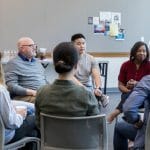 ](https://lifering.org/meeting-menu/local-meetings/)
[Local Meetings](https://lifering.org/meeting-menu/local-meetings/)
LifeRing offers a variety of local meetings designed to support you wherever you are on your recovery journey. Each meeting, whether in-person, hybrid, or local online, is led by a qualified LifeRing convenor.
[  ](https://lifering.org/meeting-menu/online-meetings/)
[Online Meetings](https://lifering.org/meeting-menu/online-meetings/)
Online Meetings are regularly scheduled virtual LifeRing meetings, structured in much the same way as LifeRing’s face-to-face meetings. They are hosted by experienced meeting convenors. Anyone around the globe can attend an online meeting.
[  ](https://lifering.org/meeting-menu/online-meetings/focus-meetings/)
[Online Focus Meetings](https://lifering.org/meeting-menu/online-meetings/focus-meetings/)
Focus meetings bring together specific communities of individuals with commonalities that may not be adequately represented in LifeRing general meetings.
[  ](https://lifering.org/international-meetings/)
[International Meetings](https://lifering.org/international-meetings/)
Check out LifeRing’s international meetings. Find out about the LifeRing experience in other countries.
[  ](https://lifering.org/meeting-menu/email-groups/)
[Email Discussion Groups](https://lifering.org/meeting-menu/email-groups/)
These private email lists are a vital part of the LifeRing community, convened and moderated by experienced LifeRing members. They provide a supportive space for ongoing connection and sharing.
[  ](https://lifering.org/meeting-menu/epals/)
[LifeRing ePals – One-to-One Sobriety Support](https://lifering.org/meeting-menu/epals/)
New to sobriety or LifeRing? Not sure about joining a group? There are LifeRing members who can lend a private ear and answer questions via email. If the chats and forum are a bit too intimidating right now, this might be a way of getting the information you need.
[  ](http://forums.delphiforums.com/lifering)
[LifeRing Forum](http://forums.delphiforums.com/lifering)
A place of conversation and connection where sharing your experience, questions and suggestions are not only welcome but encouraged. Come and participate with us; we’re a friendly, diverse, and international bunch.
**Categories:** 2000 Meetings
**Tags:** meetings, Mega Menu, Top Menu
---
### [The Meeting of Meetings](https://lifering.org/meeting-of-meetings/)
**Published:** March 26, 2022
**Author:** Bees
**Content:**
# **The Meeting of Meetings**
### **2026 LifeRing Annual Conference \| Online Saturday, June 6th and Sunday, June 7th**
#### ***The 2026 Annual Conference brings together our LifeRing community and representatives of the LifeRing network of recovery meetings.***
***[click for supporting materials](#links)***
LifeRing Secular Recovery is a network of meetings. The connection with other meetings is as vital to LifeRing as the connection with other sober people is vital to an individual in recovery. The greatest sense of connectedness, the biggest radiation of warmth, and the greatest charge of energy comes from the LifeRing Annual Meeting and Congress.
This is an overview of the nature and purposes of the Congress and outlines the key Bylaws provisions that govern selection and power of Congress delegates.
---
**What’s the difference between the LifeRing Secular Recovery Annual Conference, Annual Meeting, Annual Congress, and Delegate’s Assembly?**
- ***The Annual Conference*** is the umbrella term for the two-day event. The Annual Conference is a virtual event and will be hosted through video conferencing. The Conference is open to convenors, volunteers, meeting members and the LifeRing Community. \[See also [Rules of Procedures](https://lifering.org/delegates-briefing/#rules)\]
- ***The Annual Meeting*** is held online Saturday, June 6, 2026, and is the first day of the Annual Conference. At the Annual Meeting, convenors and the LifeRing Community gather to hear speakers, participate in workshops and socialize.
- ***The Annual Congress*** is held on Sunday, June 7, 2026, and is the final day of the Annual Conference. The Annual Congress is made up of the Delegates’ Assembly and the LifeRing Board of Directors meeting.
- ***The Delegates’ Assembly*** is held online Sunday, June 7, 2026, and is the first segment of the Annual Congress. During the Assembly, BOD nominees and proposed Bylaw changes are brought to the Delegates for review and consideration. Delegates also bring forward their meeting reports for the Assembly to review. Prior to adjournment, Delegates will vote to approve the absentee ballot including BOD nominees and proposed Bylaw changes. The Delegates’ Assembly is followed by the LifeRing Board of Directors meeting.
---
**The Annual LifeRing Conference** Three main things happen at the LifeRing Annual Conference.
- **Socializing:** This is the one chance of the year for most LifeRing people from different parts of the country and the world to actually meet each other, reaffirm old friendships and build new ones. It’s a time for people who only knew one another through emails to meet face-to-face in a video conference.
- **Education:** LifeRing conferences, to varying extents, have an educational component: Workshops, seminars, lectures, slide shows, or guest speakers, to which the LifeRing Community and the public are invited.
- **Self-Government:** The heart of the conference is the **Assembly of Delegates** or business meeting, which is the Congress proper. It is during this event that reporting and voting take place.
---
**Annual Congress Roles and Responsibilities** The major players at the Annual Congress are the Meeting Delegates, BOD Nominees, LifeRing Directors and Officers.
- **Meeting Delegates** give a report on the status and concerns of their particular meeting during the past year. This is followed by a general discussion. Delegates are also responsible for voting on Board of Director candidates and any proposed Bylaw changes.
- **BOD Nominees** are invited to introduce themselves, and bring forward their goals as a board member. Following the Nominee’s introductions, the floor will be open for Delegates to ask any questions that might support their decision.
- **Directors and Officers:** The **Executive Director** presents the Annual Report of LifeRing business since the last Annual Conference. The **Treasurer** presents a financial report. The **Secretary** presents the minutes of the previous Congress.
---
**Key Points in the Bylaws** Following is a list of some of the main points of the Bylaws as they pertain to the Congress: who can attend, how voting is done, what is the organizational structure generally, who has the power to do what.
- [**Delegate Selection**](https://lifering.org/meeting-delegates/). Any LifeRing member can attend the Congress, but only delegates may vote in the Assembly. Except in special settings, the meeting convenor is not automatically the delegate. There are various ways to become the meeting convenor, but to become the delegate there has to be a vote by the meeting’s members. The delegate’s role includes the express power to vote at the Congress, the implied duty to report to the Congress on the meeting’s status, and the implied duty to report back to the meeting after the Congress.**
- [**Directors and Officers**](https://lifering.org/eligibility-for-bod-nominees/). Any adult LifeRing participant who is in recovery from a substance addiction and has a minimum of two years’ continuous abstinence can serve on the board of directors. Officers (ED, Treasurer, and Secretary) need a minimum of two years continuous sobriety. Officers’ are appointed and serve at the pleasure of the LifeRing Board of Supervisors. Director terms are for three years. Relapse results in automatic resignation. Directors, Secretary, and Treasurer serve without pay or compensation.
- **Powers of the Board**. The board is mandated to act as a steward of the organization’s resources and its reputation, appoint and discharge the officers, and oversee the national operating entities (such as LifeRing Service Center, LifeRing Press). The board has no executive authority over the meetings; it cannot, for example, appoint or dismiss meeting convenors, prescribe meeting formats, or levy dues. In extreme cases, where a meeting has consistently and substantially violated one or more of the three philosophical foundations of LifeRing (sobriety, secularity, self-direction), the board is empowered to cancel that meeting’s charter; but the board must defend such an action at the next following Congress.
- **Powers of the Congress**. The Congress proper – **The Delegates’ Assembly** – is the supreme legislative authority of LifeRing Secular Recovery. It decides all issues within its authority and elects the members of the board. The LifeRing Congress may not repeal the fundamental philosophy of LifeRing (sobriety, secularity, self-empowerment). Congress is not answerable to any outside power. LifeRing has no financial sponsor and is no one’s subsidiary. LifeRing is a freestanding, self-supporting, self-governed, and self-managed organization.
- **One Meeting. One Delegate, One Vote**. Each active, chartered LifeRing meeting is entitled to select one individual to serve as its delegate. This delegate, acting as the sole voice of that meeting, is authorized to cast one vote on any matter brought before Congress.
---
**Conclusion**
The bottom line is that each LifeRing meeting is part of a larger network of meetings, which is ultimately an extended family of people. Like every organization, LifeRing has its business side and its internal politics. Whether a convenor chooses to become involved in LifeRing’s business and politics is, of course, up to the individual. But it is part of the convenor’s role “to bring people together,” and nowhere does this mission bring a higher, larger, and more satisfying result than in the LifeRing Congress.
#### **.**
---
**Supporting Resources:**
- [Annual Conference Information Hub](https://lifering.org/annual-conference-hub-2026/)
- [Annual Conference Agenda ](https://lifering.org/2026-annual-conference/)
**Governance**
- [LifeRing Bylaws](https://lifering.org/wp-content/uploads/ImportantDocs/Current_Bylaws.pdf)
- [Mission and Vision Statements](https://lifering.org/wp-content/uploads/Public_Documents/LifeRing%20Strategic%20Plan_v4.pdf)
- [2025-2026 LifeRing Strategic Plan](https://lifering.org/wp-content/uploads/Public_Documents/LifeRing%20Strategic%20Plan_v4.pdf)
- [Current Board of Directors and LifeRing Officers](https://lifering.org/governance/bod/)
**Elections**
- [Election Guidelines](https://lifering.org/congress-menu/election-rules/)
- [Board of Directors Nominees](https://lifering.org/meeting-of-meetings/nominee-list-for-bod-2026/)
- [Proposed Amendment(s) to Current Bylaws](https://lifering.org/2026-proposed-bylaw-changes/)
**Delegates Assembly**
- [Meeting Delegates](https://lifering.org/meeting-delegates/)
- [Delegates at Large](https://lifering.org/congress-menu/delegates-at-large/)
- [Delegates Briefing](https://lifering.org/delegates-briefing/)
- [Meeting Reports](https://lifering.org/2026_delegates-meeting-reports/)
**Categories:** 6000 Annual Meeting
**Tags:** annual meeting, LifeRIng, lifering secular recovery
---
### [LifeRing Colorado](https://lifering.org/meeting-menu/local-meetings/lifering-colorado/)
**Published:** February 10, 2022
**Author:** Bees
**Content:**
|  |
|---|
### **LifeRing Colorado is Back on the Map!**
| ##  | #### | #### **This winter, Colorado has been busy at work opening old and new in-person meetings. This is exciting news and we hope it’s a forecast for in-person meetings opening across the country.** LifeRing in Colorado is adapting to the circumstances brought on by Covid. We have **five in-person meetings** and fourteen online meetings. There are **plans for four new in-person meetings**, one in the Limon Correctional Facility in Limon, Colorado. Our convenors continue to meet quarterly and we have maintained our weekly in-person coffee group on Saturday mornings. Our Sunday morning in-person meeting in downtown Denver still attracts ten to twelve participants and meets in a nearby cafe after the meeting. If you visit Colorado, there will be plenty of LifeRingers to welcome you! |
|---|---|---|
---
#### [**Did you know there are region-specific LifeRing Secular Recovery websites?**](https://lifering.org/f2f-meetings/)
| **LifeRing United States**- [LifeRing California](https://lifering.org/meeting-menu/local-meetings/ca/) - [LifeRing Colorado](https://liferingcolorado.org/) - [LifeRing Connecticut](https://www.liferingct.org/) - [LifeRing Florida](http://www.liferingtampabay.com/) - [LifeRing Ohio](https://liferingakron.org/) - [LifeRing San Francisco](https://lifering.org/meeting-menu/local-meetings/sf/) - [LifeRing Utah](http://www.liferingutah.org/) | **LifeRing International** - [LifeRing Canada](https://liferingcanada.org/) - [LifeRing Ireland](http://lifering.ie/) - [LifeRing Sweden](https://liferingsverige.wordpress.com/) - [LifeRing UK](https://lifering.uk/) |
|---|---|
---
###### – Copy Credit: Kathleen G.
**Categories:** 2000 Meetings
**Tags:** meetings
---
### [Annual Reports](https://lifering.org/annual-reports/)
**Published:** November 4, 2024
**Author:** webmaster @lifering.org
**Content:**
# **Annual Reports**
The **LifeRing 2022 Annual Conference** marked a significant milestone, as our fifth Executive Director revitalized the tradition of showcasing our journey during the Annual Congress. The **Annual Report** provides a comprehensive look at our administrative year, showcasing our **mission**, **key achievements**, and the **positive impact** we’ve made on the lives of those we serve. We’re grateful for the unwavering support of our **volunteers**, **members**, and **advocates**, who help drive our commitment to recovery and self-empowerment.
We invite you to explore these reports and see how **your contributions** have helped us foster **hope** and build a **brighter future**-together!
**[2021-2022 Annual Report](https://lifering.org/wp-content/uploads/Public_Documents/2022/2022_Annual_Report.pdf)**
[**2022-2023 Annual Report**](https://lifering.org/2022-2023-annual-report/)
[**2023-2024 Annual Report**](https://lifering.org/2023-2024-annual-report/)
[**LifeRing 2024 Year-End Review**](https://lifering.org/wp-content/uploads/2025/01/LifeRing-Year-End-Review-2024.pdf)
[**LifeRing 2024-2025 Annual Report**](https://lifering.org/2024-2025-annual-report)
[**LifeRing 2025 Year-End Review**](https://lifering.org/wp-content/uploads/2026/05/LifeRing-Year-End-Review-2025.pdf)
**Categories:** 1060 Professionals
---
### [LifeRing Delegates' Briefing](https://lifering.org/delegates-briefing/)
**Published:** April 5, 2022
**Author:** Bees
**Content:**
## Delegates’ Briefing:
### **LifeRing Annual Congress Delegates’ Assembly \| Online Sunday, June 7, 2026**
### Introduction
**LifeRing is governed by the people for the people. The Delegates’ Assembly is your opportunity to ensure LifeRing continues to provide a positive, supportive recovery community. Thank you all for volunteering your valuable time and your invaluable insight.**
**The LifeRing Secular Recovery Congress proper meets on Sunday morning, June 7th, 2026 at 9:00am Pacific Time.** This is a virtual meeting and will be hosted through video conferencing. If you have any questions about this briefing, please contact [The Registrar](mailto:registrar@lifering.org).
**Contents:**
- [What is the Annual Conference?](#what-is-the-annual-conference)
- [Provisional agenda for the Delegates’ Assembly](#provisional-agenda)
- [Draft motion(s) for discussion and decision](#bylaws-ratification)
- [Board of Directors elections](#board-nominees)
- [Approval of Ballot](#ballot)
- [Voting](#voting)
- [Rules of procedure](#rules)
- [Meeting reports for delegates – ideas and examples](#ideas)
- [Meeting reports from non-delegates](#reports)
- [Thank you](#thank-you)
**The LifeRing Congress proper meets on Sunday morning, June 7th, 2026 at 9:00am Pacific Time.** This is a virtual meeting and will be hosted through video conferencing.
**Useful background reading on the delegate’s role:**
- [2026 LifeRing Delegates Eligibility](https://lifering.org/meeting-delegates/)
- [General Information about LifeRing Congress](https://lifering.org/congress-menu/general-information-about-congress/)
- [The Meeting of Meetings – Roles and Responsibilities](https://lifering.org/meeting-of-meetings/)
- [Chapter 9 of *How Was Your Week: A Convenor’s Handbook* v.1](https://lifering.org/wp-content/uploads/Convenor_Resources/Documents/HWYW_Version_1.pdf)
- [LifeRing Bylaws: Article 6 – Annual Congress; Delegates](https://lifering.org/wp-content/uploads/ImportantDocs/Current_Bylaws.pdf)
**Relevant resources:**
- [LifeRing Bylaws](https://lifering.org/wp-content/uploads/ImportantDocs/Current_Bylaws.pdf)
- [Articles of Incorporation](https://lifering.org/wp-content/uploads/ImportantDocs/CaliforniaArticlesOfIncorporation.pdf)
- [LifeRing Strategic Plan](https://lifering.org/wp-content/uploads/Public_Documents/LifeRing%20Strategic%20Plan_v4.pdf)
**Deadlines:**
- April 6, 2026 \| **Delegate Nominations Email Invitation:** *Issued on 03/07/2026 with follow up Q&A meeting 03/14/2026.*
- April 23, 2026 \| **Meeting Registration:** *All meetings must have an active charter. Contact your [Regional Representative](https://lifering.org/regional-representative/) with questions.*
- May 8, 2026 \| [Delegate Registration Deadline](https://lifering.org/meeting-delegates/): *All delegates must be registered by this date.*
- May 8, 2026 \| [Bylaws Changes and BOD Directives](https://lifering.org/eligibility-determination-for-proposed-bylaw-changes/): *Proposals must be submitted by this date.*
- May 30, 2026 \| [BOD Nominations](https://lifering.org/eligibility-for-bod-nominees/): *All board member nominations must be submitted by this date.*
- May 30, 2026 \| [Meeting Reports](https://lifering.org/2026_delegates-meeting-reports/): *All written meeting reports must be submitted by this date for public posting.*
- June 13, 2026 \| [Absentee Voting Opens ](https://lifering.org/congress-menu/election-rules/)
- July 2, 2026 \| **Close of Voting**
- July 12, 2026 \| **Election Results are Posted**
---
####
### **What’s the difference between Annual Conference, Annual Meeting, Annual Congress and Delegate’s Assembly?**
- ***Annual Conference*** is the umbrella term for the two-day event. The Annual Conference is a virtual event and will be hosted through video conferencing. The Conference is open to convenors, volunteers, meeting members and the LifeRing Community.
- ***Annual Meeting*** is held on Saturday, June 6, 2026, and is the first day of the Annual Conference. At the Annual Meeting, convenors and the LifeRing Community gather to hear speakers, participate in workshops and socialize.
- ***Annual Congress*** is held on Sunday, June 7, 2026, and is the final day of the Annual Conference. The Annual Congress is made up of the Delegates’ Assembly and the LifeRing Secular Recovery Board of Directors meeting.
- ***Delegates’ Assembly*** is held on Sunday, June 7, 2026, and is the first segment of the Annual Congress. During the Assembly, BOD nominees and proposed Bylaw changes are brought to the Delegates for review and consideration. Delegates also bring forward their meeting reports for the Assembly to review.
---
####
### Provisional Agenda for the Delegates’ Assembly – Sunday, June 7th, 2026
**9:00am Pacific Time** Board of Directors and Officer Reports
- Report from the Board of Directors, including Financial Report
- The complete Annual Report and Financial Report can be found on the LifeRing website. A summary will be presented at the Delegate’s Assembly.
- Questions and comments are invited.
**9:30am Pacific Time** [Board of Director Nominees](https://lifering.org/meeting-of-meetings/nominee-list-for-bod-2026/)
- New BOD nominees introduce themselves and outline their goals if elected.
- Following the Nominee introductions, the floor will open for Delegates to ask any questions that might support their decision.
**10:00am Pacific Time** Introduction and discussion of [motions to change current LifeRing Bylaws](https://lifering.org/2026-proposed-bylaw-changes/)
- Proposed amendments to Bylaws an BOD Actions are introduced.
- The floor will open for Delegates to ask any questions that might support their decision.
- See also [Draft Motion(s) for Discussion and Decision](#bylaws-ratification)below
**10:30am Pacific Time** Delegates’ approve the candidates and any proposed bylaws changes to be included on the absentee ballot. **10:35am Pacific Time** [Delegates’ Reports](https://lifering.org/2026_delegates-meeting-reports/)
- Oral reports from the Meeting Delegates – Each report must be no longer than two (2) minutes long.
- If a Delegate’s report requires more than the allotted time, the Delegate should present a brief summary at the Delegates’ Assembly and provide the full meeting report 7 days prior to the Delegates’ Assembly.
- These reports should be submitted to the [Service Center](mailto:service@lifering.org) and will be posted on the LifeRing website.
- See the following [Ideas for Giving a Report on Your Meeting](https://lifering.org/delegates-briefing/?fl_builder&fl_builder_ui_iframe#ideas).
- See also [Meeting Reports from Non-delegates ](#reports) following below.
**12:00pm Pacific Time** Delegates’ Assembly Adjournment
- The Board of Directors will hold their final 2025-2026 Board Meeting meeting directly following Delegates’ Assembly Adjournment. Delegates and members of the LifeRing Community are encouraged to attend.
---
####
### Draft Motion(s) for Discussion and Decision
A meeting delegate may submit proposals for Bylaws changes and Board Actions in writing to the BOD by way of the Service Center at least 30 days prior to the Annual Congress and no later than 6:00pm Pacific Time on May 8, 2026. For more information about submitting bylaw changes, please see [LifeRing Bylaws: Article 7 – Proposals for Bylaws Amendments and Board Actions](https://lifering.org/wp-content/uploads/ImportantDocs/Current_Bylaws.pdf).
All proposed Bylaws amendments will be posted here and on the [2026 LifeRing Annual Conference Portal](https://lifering.org/annual-conference-hub-2026/) following review.
**Amendments require a two-thirds majority vote.**
Bylaw ratification resources:
- [2026 Proposed Bylaw Changes](https://lifering.org/2026-proposed-bylaw-changes/)
- [Eligibility Determination for Proposed Bylaws Changes](https://lifering.org/eligibility-determination-for-proposed-bylaw-changes/)
- [LifeRing Bylaws Article 7 – Proposals for Bylaws Amendments and Board Actions](https://lifering.org/wp-content/uploads/ImportantDocs/Current_Bylaws.pdf)
---
####
### **Elections for the Board of Directors**
Candidates for the Board of Directors must be in recovery from a substance addiction, at least 21 years old, and have at least two years continuous sobriety. **Nominations for the Board may be made by Meeting Delegates and Delegates at Large in attendance for qualified nominees in attendance at the time of the Delegates’ Assembly. [Details on requirements and restrictions for Board nominations can be found here.](https://lifering.org/eligibility-for-bod-nominees/)**
(§ 6.5) Board terms run for three years. (§ 6.2) The Board meets directly after the Delegates’ Assembly as it does throughout the remainder of the year.
Board members may serve successive terms without limitation. This year, the terms of three members of the Board of Directors are expiring and one member is vacating their seat. Board members may be re-elected indefinitely.
[2026-2027 LifeRing Board of Directors Candidates and Candidates Statements](https://lifering.org/meeting-of-meetings/nominee-list-for-bod-2026/)
- Anna Bedolla \| Online Convenor, Collaborator, Board Member
- Jonathan Magid \| Collaborator, Executive Committee Member, Board Member
- Travis Boozer \| Online Convenor, Executive Committee Member, Legal Liaison, Online Convenor
[Active Board Members:](https://lifering.org/governance/bod/)
- Anna Bedolla (2026)
- Bobbi Campbell (2028)
- Jonathan Magid (2026)
- Lisa Swing-Corney (2028)
- Michael Anderson (2027)
- Monica Foy \| Treasurer (2027)
- Sue Betts \| Chair (2027)
- Travis Boozer \| Legal Liaison (2026)
Additional election resources:
- [Eligibility Determination of BOD Nominees](https://lifering.org/congress-menu/eligibility-for-bod-nominees/)
- [List and Statements of BOD Nominees](https://lifering.org/meeting-of-meetings/nominee-list-for-bod-2026/)
- [Election Rules and Guidelines](https://lifering.org/congress-menu/election-rules/)
- [LifeRing Bylaws: Article 8 – Board Nominations](https://lifering.org/wp-content/uploads/ImportantDocs/Current_Bylaws.pdf)
- [LifeRing Bylaws: Article 10 – Board of Directors](https://lifering.org/wp-content/uploads/ImportantDocs/Current_Bylaws.pdf)
---
####
### Approval of Absentee Ballot
**Registered Delegates and Delegates at Large shall be the only persons qualified to vote on the matters before the Annual Congress.**
Delegates vote to approve the Absentee Ballot by in-meeting poll prior to the adjournment of the Delegates’ Assembly.
Delegates vote tp approve BOD Nominees and proposed bylaws changes for inclusion on the Absentee Ballot. If approved, this ballot will be emailed to Delegates and Delegates at Large within 10 days of Congress.
Delegates and Delegates at Large will have until the end of June to cast their votes during the [Absentee Election](https://lifering.org/congress-menu/election-rules/).
---
####
### Voting
**The delegate’s role includes the express power to vote at the Congress, the implied duty to report to the Congress on the meeting’s status, and the implied duty to report back to the meeting after the Congress.**
Delegates are encouraged to ask BOD Nominees questions about their experience and objectives, and of the Bylaw Committee regarding proposed changes to the [Current LifeRing Bylaws](https://lifering.org/wp-content/uploads/ImportantDocs/Current_Bylaws.pdf) to make an informed decision on how to vote in the Absentee Election.
****Registered delegates shall be the only persons allowed to vote on the matters before the Annual Congress**.** Delegates’ vote to approve the **Absentee Ballot** before the adjournment of the Delegates’ Assembly. Delegates will vote which BOD Nominees and proposed bylaws changes to be included on the Absentee Ballot.
The **Absentee Ballot** will be posted on the website within ten (10) days of the Delegates’ Assembly. Once posted, **Absentee Election** voting is opened and continues for fifteen (15) days. Votes will be verified and tallied and certified prior to the results being publicly posted on the LifeRing Secular Recovery Website.
**One meeting. One delegate. One vote** – Each active, chartered meeting is entitled to select one individual to serve as its delegate. This delegate, acting as the sole voice of that meeting, is authorized to cast one vote during the **Absentee Election**. For more information, please contact the [Registrar](mailto:registrar@lifering.org).
Additional voting resources:
- [Election Guidelines](https://lifering.org/congress-menu/election-rules/)
- [Delegates’ Assembly Roles and Responsibilities](https://lifering.org/meeting-of-meetings/)
- [LifeRing Bylaws Article 9 – Elections](https://lifering.org/wp-content/uploads/ImportantDocs/Current_Bylaws.pdf)
---
####
### Rules of Procedure
Normally, the Delegates’ Assembly is open to all LifeRing participants and guests, but the Assembly has the power to restrict participation and/or attendance at the gathering. All LifeRing participants are invited to audit the Board of Directors’ meeting and to speak during the open forum period, except if the Board is discussing personnel matters, at which time the meeting may be closed.
The Bylaws provide generally that “Robert’s Rules of Order shall apply to the procedures of the Congress to the extent they are not inconsistent with these Bylaws or with procedural rules the Congress may adopt.” §5.10. In practice, past Congresses have run on a consensus-building model, and parliamentary maneuvering (point of order, point of personal privilege, etc.).
---
####
### Meeting Reports
A major agenda item for the Delegate’s Assembly is sharing and hearing meeting reports. There is no required format, but Delegates are encouraged to provide a copy of their meeting reports one week (7 days) prior to the Delegates’ Assembly. These reports should be submitted to the [Service Center](mailto:service@lifering.org) and will be posted on the LifeRing website.
[2026 Meeting Reports](https://lifering.org/2026_delegates-meeting-reports/) are added to the LifeRing website as they become available. Delegates may present an oral report during the Delegates Reports segment of the [Delegates’ Assembly](https://lifering.org/delegates-briefing/?fl_builder&fl_builder_ui_iframe#provisional-agenda).
**Ideas for All Meeting Types**
Following are some ideas of topics that might go into a meeting report. These are just suggestions to help you get started. Please only report on what’s relevant to your meeting and of interest to your group.
- The day, time, and geographical location (or url) of the meeting.
- History of the meeting: who was the founding convenor, how long has it been in existence, what other locations did it used to meet at before its current location, if any. How many different members have been convenors of this meeting?
- Is there a meeting co-host, co-convenor or alternate convenor?
- What kind of place or facility or web server hosts the meeting? Is this a good location or are there problems with it? Are there other recovery meetings in the same time slot at the same location?
- Does the meeting have a special public that it serves? For example, women only, LGBTQIA+, prisoners, co-occurring, etc.
- About how many people attend the meeting on the average during the past year? Is attendance growing, holding, or shrinking; how many men, how many women, the approximate age spread.
- About how many people who attend the meeting are regulars? About how many people tend to show up only once or a few times?
- What range of sobriety times are represented? How many people have more than six months clean and sober? About how many people have more than one year, more than two years? Do you have a lot of people who need meeting attendance verification? Do you have a lot of people who are court-ordered? Do you have a lot of people who also attend 12-step meetings?
- About what percentage of the participants in an in-person meeting also participate in LifeRing online? About what percentage of the participants in an online meeting also participate in an in-person LifeRing meeting?
- What opening statement does the meeting use, if any? Who usually reads it?
- What is the usual meeting format? Do you use the “How Was Your Week” format? Do you use a topic, and if so, how do you select it? How do you handle crosstalk? Do you ask people to say how long they’ve been clean and sober? Do you usually applaud them when they state their sober time? What do you do to mark the close of the meeting?
- Has the meeting experienced any particular problems, issues, challenges, events, or victories? For example, has it been flooded with Salvation Army folks, has there been a problem with disruptive individuals, have counselors or students monitored the meeting, has it had good word of mouth from referral sources, have any of its members distinguished themselves in the world, have people met and got married in the meeting?
**Ideas Specific to Online Meetings**
- How many different countries and states of the US are represented?
- Do meeting attendees spend too much time playing in the chat window?
- How do you feel about the time taken to provide Verification Links?
- Do you like Zoom as a meeting tool?
- How can we make Zoom meetings better?
**Ideas Specific to In-Person Meetings**
- Do you circulate member phone lists and email lists?
- About what percentage of the participants in an in-person meeting also participate in LifeRing online? About what percentage of the participants in an online meeting also participate in an in-person LifeRing meeting?
- Is LifeRing literature normally displayed at the meeting? Does the meeting have a supply of pamphlets and books to give out, lend, and sell? If online, is there a regular reminder or referral to LifeRing literature?
- How does the meeting treat newcomers?
- Has the meeting experienced any particular problems, issues, challenges, events, or victories? For example, has it been flooded with Salvation Army folks, has there been a problem with disruptive individuals, have counselors or students monitored the meeting, has it had good word of mouth from referral sources, have any of its members distinguished themselves in the world, have people met and got married in the meeting.
- What if anything does the meeting do to get out the word about its existence? Do members speak to audiences, do you post flyers or signs around your meeting place, etc. What kind of relations does the meeting have with referral sources such as treatment professionals, counselors, etc.? Does the meeting have any contacts with the media? Do members table at recovery events?
- Does the meeting normally pass the basket? How does the meeting handle the money it collects and what expenditures, if any, has the meeting encountered? Does the meeting contribute to the Service Center?
- Does the meeting hold any social events such as going out to a restaurant after the meeting, or going to movies or on outings together?
- Does the meeting maintain contacts with other LifeRing meetings? Does the convenor attend convenor workshops? Do participants in this meeting also attend other LifeRing meetings?
---
####
### Meeting Reports From Non-Delegates
To ensure the widest possible sharing of information and experience, the Delegates’ Assembly also encourages participation by non-delegate reporters.
For example:
- A convenor convenes two meetings. One of the meetings does not have a delegate present. The convenor reports on one meeting as its delegate, and on the other meeting as a non-delegate reporter.
- A meeting was formed too recently to qualify to send a delegate. Anyone present who participates in that meeting or has other knowledge about it may present a report on the meeting as a non-delegate reporter.
- A meeting is represented at the Congress by its delegate, but a non-delegate participant in the meeting wants to present additional information about it, or has a different viewpoint than the delegate. That person may present a report as a non-delegate reporter.
- Non-delegates are encouraged to provide a copy of their meeting reports 7 days prior to the Delegates’ Assembly. Non-delegate reports should be submitted to the [Service Center](mailto:service@lifering.org) and will be posted on the LifeRing website LifeRing website.
---
####
### Thank You!
The Elections Committee and the LifeRing Secular Recovery Board of Directors would like to **thank all the delegates, the convenors, and the LifeRing Community** for their support and participation in the 2026 LifeRing Annual Congress. LifeRing is made stronger with your voice and your vote.
**Categories:** 6000 Annual Meeting
**Tags:** annual meeting
---
### [The Liver Spot | El Punto del Hígado](https://lifering.org/meeting-menu/online-meetings/the-liver-spot-en-espanol/)
**Published:** May 11, 2026
**Author:** Bees
**Content:**
## The Liver Spot \| **El Punto del Hígado**
#### Lunes 5:30pm Pacifico \| [Ver página de la reunión](https://meetings.lifering.org/meetings/1309/)
**The Liver Spot \| El Punto del Hígado** es una reunión de enfoque de LifeRing que conecta a personas que viven con condiciones médicas de TUS/EHA. Ahora, esto puede sonar sombrío, porque sinceramente, lo es. Pero esta reunión está llena de esperanza y apoyo.
Esta es una reunión de especialidad de LifeRing basada en el formato de “intercambio de la semana” (¿Cómo estuvo su semana?) diseñada específicamente para personas en recuperación que enfrentan problemas de salud derivados de trastornos por el uso de sustancias. La reunión semanal no se limita a quienes tienen condiciones médicas: nuestra reunión está abierta a todos.
---
#### **Una Conexión de Paciente a Paciente**
**[The Liver Spot](https://lifering.org/meeting-menu/online-meetings/lifering-liver-spots/)** es el primero de su tipo, nacido de la necesidad de entender un lenguaje médico complejo que a menudo parece un idioma extranjero. Pero sabemos que para muchos, las conversaciones más difíciles y profundas sobre la vida, la muerte y la sobriedad se expresan mejor en la lengua materna.
---
#### ***¡The Liver Spot ha sido un salvavidas para MUCHÍSIMOS de mis pacientes!
¡Estoy tan agradecida con esta comunidad por su increíble apoyo!***
**Courtney Sherman, MD \| UCSF Health**
**Directora de la Clínica [HALT de UCSF (Healing Alcohol-associated Liver disease Together)](https://www.ucsfhealth.org/clinics/healing-alcohol-associated-liver-disease-together-halt)**
---
Somos una comunidad activa y comprometida que se une para apoyar nuestra propia recuperación y la de los demás. Muchos de nuestros participantes son referidos por sus médicos y especialistas en tratamientos de centros de renombre como **[UCSF](https://www.ucsfhealth.org/clinics/liver-disease-and-liver-transplant), [Stanford](https://stanfordhealthcare.org/medical-clinics/liver-transplant-program.html), [Sutter Health CPMC](https://www.sutterhealth.org/cpmc), [UC Davis](https://health.ucdavis.edu/internal-medicine/gastroenterology-hepatology/our-services/liver-disease), [UT Southwestern](https://utswmed.org/conditions-treatments/liver-transplant/), [Johns Hopkins](https://www.hopkinsmedicine.org/gastroenterology-hepatology/specialty-centers/hepatology), [Vanderbilt](https://www.vanderbilthealth.com/locations/vanderbilt-hepatology-and-liver-and-kidney-transplant-center),** y la **[Mayo Clinic](https://www.mayoclinic.org/diseases-conditions/liver-problems/care-at-mayo-clinic/mac-20374513).** No es inusual que las personas se unan a esta reunión desde sus camas de hospital – y sí, ¡las batas de hospital siempre son bienvenidas!
#### **Nuestra Comunidad en Números y Esperanza**
Esta reunión de enfoque apoya a una comunidad vibrante que ha navegado junta por los momentos más críticos:
- Hemos superado biopsias, endoscopias y la montaña rusa del puntaje MELD.
- Docenas de nuestros participantes han navegado con éxito el proceso para alcanzar y mantener un lugar en la Lista Nacional de Trasplantes.
- Compartimos la realidad: las estadísticas son duras, pero la esperanza es real.
El apoyo para sobrevivir la espera y el “impacto posterior” del diagnóstico es lo que hace que The Liver Spot \| El Punto del Hígado sea tan único. Compartimos nuestros viajes de recuperación desde la perspectiva del paciente con comentarios (crosstalk) desde la perspectiva del paciente.
#### **Un Espacio Seguro y Valiente**
**The Liver Spot \| El Punto del Hígado** es un espacio seguro y compasivo para compartir historias y compartir esperanza.
- **Advertencia:** Las participaciones pueden ser gráficas por naturaleza debido a la realidad de los tratamientos médicos, por lo que puede no ser para todos, pero está abierta a todos.
- Para aquellos que nunca han considerado los efectos a largo plazo del consumo, esta reunión sirve como una experiencia profundamente aleccionadora.
- Las emociones son intensas y la camaradería es profunda. Incluso nos emocionamos un poco cuando un ser querido se une para aprender cómo puede ayudar.
#### **Únase a Nosotros**
No importa en qué punto de su camino se encuentre-ya sea navegando el proceso de lista de espera o manejando la vida años después de un trasplante-esta comunidad está aquí para fomentar la resiliencia que usted necesita para prosperar.
**Cuándo nos reunimos:** En línea todos los lunes por la tarde a las 5:30 PM, hora del Pacífico. *A partir del lunes 25 de mayo.*
[](https://meetings.lifering.org/meetings/1309/)
#### **¡Aquí hacemos cosas valientes!**
---
*¿Tiene preguntas sobre cómo integrar esta reunión en su plan de cuidado o el de sus pacientes? Contacto Sue Betts <liver.spot@lifering.org>.*
**Categories:** 2000 Meetings
**Tags:** meetings
---
### [General Information about the LifeRing Congress](https://lifering.org/general-information-about-congress/)
**Published:** May 15, 2017
**Author:** Bees
**Content:**
# **General Information about the LifeRing Annual Congress**
Every year, LifeRing holds the [LifeRing Annual Conference](https://lifering.org/meeting-of-meetings/). The purpose of this event is to provide a meeting place for the Board, LifeRing members, and the general LifeRing public to get together and talk about what is on their minds.
On **Saturday** the Annual Meeting will meet via the Zoom platform. Generally, LifeRing will host convenor workshops, Q&A sessions, and maybe a speaker or two on a specified topic. This meeting will be open to the registered public. The registration link and agenda will be posted prior to the event.
On **Sunday,** Congress will meet via a Zoom meeting and select candidates for the LifeRing Board of Directors and decides on proposed changes to the LifeRing Bylaws. Congress will then prepare an absentee ballot for voting by the LifeRing delegates. This meeting will be open to the registered public. The registration link and agenda will be posted prior to the event.
**[Click here for the Annual Conference 2-day Provisional Agenda and Conference Registration Link](https://lifering.org/2026-annual-conference/)**
### **LifeRing Board Candidates**
Every year three individuals from the LifeRing community are voted in to be on the LifeRing Board. If you or someone you know is interested in running, we welcome you. We especially encourage women, minorities, LGBTQIA+, anyone from the online meetings, and members of our international community to apply. We are a working board whose members engage with the public and take an active role in promoting the LifeRing organization and its mission in the recovery population. Potential LifeRing directors must meet the following [Eligibility Determination](https://lifering.org/congress/eligibility-for-bod-nominees/). We hope you will consider running!
**[Click here for the LifeRing BOD Candidates Statements](https://lifering.org/meeting-of-meetings/nominee-list-for-bod-2026/)**
### **LifeRing Bylaws and BOD Directives**
Now’s your chance to change the bylaws governing LifeRing. Read something you don’t like or don’t understand. Want to add more people to the board – or less? Maybe changes how the money is spent? Read the [current Bylaws](https://lifering.org/wp-content/uploads/ImportantDocs/Current_Bylaws.pdf) and propose a bylaw change. Attend BOD meetings and propose new BOD directives. Deadline to submit Bylaws changes and BOD directives proposals is May 8, 2026.
**[Click here for proposed Amendments to the Current Bylaws](https://lifering.org/2026-proposed-bylaw-changes/)**
### **Delegates**
[**LifeRing Congress Delegates**](https://lifering.org/meeting-delegates/)
Each meeting, including each online group, is entitled to one delegate, who will cast the group’s vote in the general election. An absentee ballot will be emailed to the delegate, and the completed ballot is returned via email. Once the voting deadline passes, the votes are totaled, certified, and the results are announced on the website. Please see the [Election Guidelines](https://lifering.org/congress/election-rules/) for more information. The election is a ‘representative democracy’ so each delegate is elected by the meeting members. The only requirement for being a delegate is to have six months of sobriety. If you have the slightest interest in being a delegate, please let your meeting group know. Or if you want to suggest someone from your group, let your convenor know. See [Eligibility Determination of Meeting Delegates](https://lifering.org/meeting-delegates/) for more information.
[**LifeRing Delegates at Large**](https://lifering.org/congress-menu/delegates-at-large/)
[6.8](https://lifering.org/wp-content/uploads/ImportantDocs/Current_Bylaws.pdf). Current members of the Board of Directors, officers, and current Regional Representatives shall be delegates to Congress.
#### [**Other resources are linked on the LifeRing Conference Information Hub**](https://lifering.org/annual-conference-hub-2026/)
For more information, please email the LifeRing Registrar of Voters <registrar@lifering.org>.
**Categories:** 6000 Annual Meeting
**Tags:** annual meeting
---
### [2026 Proposed Bylaw Changes](https://lifering.org/2026-proposed-bylaw-changes/)
**Published:** May 14, 2026
**Author:** Bees
**Content:**
# **Proposed LifeRing Bylaw Changes**
## Twenty-Sixth Annual Congress \| Sunday, June 7, 2026
### **PROPOSED CHANGES TO THE LIFERING BYLAWS**
#### [Current LifeRing Bylaws](https://lifering.org/wp-content/uploads/ImportantDocs/Current_Bylaws.pdf)
**Overview of Proposed Bylaw Changes**
1. **Meeting Eligibility (Proposal 1a-d):** Updates the requirement for meetings to send delegates from “public” to “active and chartered.” This ensures all officially recognized LifeRing groups have equal representation.
2. **Delegate Sobriety (Proposal 2):** Establishes a minimum requirement of three months of continuous sobriety for all delegates, aligning delegate standards with Board requirements.
3. **Nomination Process (Proposal 3a-b):** Standardizes deadlines for Board nominations and moves to a pre-registration system (removing nominations from the floor) to ensure all candidates are vetted before the Congress.
How to Read These Proposals
To provide full transparency on the proposed updates to the LifeRing Bylaws, the text below uses the following formatting:
- ***Bold Text Within The Articles:** Indicates **new language** being added to the Bylaws.*
- ***Strikethrough Text**: Indicates current language being **removed or replaced**.*
- ***Standard Text:** Indicates existing language that will remain unchanged.*
### **Proposal 1**
Clarification of meetings eligible to elect a delegate to the Annual Congress:
**1a. Article 6: Annual Congress \| Proposed Language Change**
****Current Language****
**6.4** Each public (as defined in Section 6.5 below) LifeRing Secular Recovery meeting may select one delegate to the Annual Congress. The term of service of each delegate shall be from the time of selection through the forthcoming Annual Congress for which that delegate was selected and shall expire immediately after the Absentee Election related to and following that Annual Congress.
**Proposed New Language**
*6.4 Each public (as defined in Section 6.5 below) **active, chartered (as contained in Article 12 below)** LifeRing Secular Recovery meeting may select one delegate to the Annual Congress. The term of service of each delegate shall be from the time of selection registration through the forthcoming Annual Congress for which that delegate was selected and shall expire immediately after the Absentee Election related to and following that Annual Congress. **A meeting must maintain its active, chartered status continuously from the time of delegate registration through the close of the Absentee Election in order for its delegate to remain eligible to vote at the Annual Congress and in the Absentee Election. In the event a meeting’s charter is suspended or revoked at any point during that period, the delegate’s voting eligibility shall be suspended or revoked accordingly and any votes cast by that delegate after the effective date of the suspension or revocation shall be deemed invalid.***
**1b.** **Eliminate Section 6.5**
**6.5** A meeting is “public” for the purposes of these Bylaws if it convenes in a location accessible to the public and if its location, day, and time are posted in a manner likely to give public notice. The term “location” may also include Internet address.
**1c. **Sections 6.6 through 6.14 shall be renumbered accordingly****
**1d. Article 9, Section 9.4 \| Proposed language change**
**Current Language**
**9.4** Each registered delegate may cast one vote per matter listed on the Absentee Ballot in the Absentee Election, without regard to the number of unique qualifications held by that delegate.
**Proposed New Language:**
**9.4** *Each registered delegate may **representing a meeting that maintains active, chartered status through the close of the Absentee Election may** cast one vote per matter listed on the Absentee Ballot in the Absentee Election, without regard to the number of unique qualifications held by that delegate.*
**Proposal 1 – Rationale**
- Replacing “public” with “active, chartered” ensures all meetings formally operating under a LifeRing charter may send delegates to Congress, including private meetings that meet the chartered standard
- This change recognizes that private chartered meetings are equally committed to LifeRing’s principles of sobriety, secularity, and self-empowerment and should have equal representation in the democratic process of the organization
- Chartered status must be maintained throughout the entire voting process, preventing a meeting whose charter has been suspended, revoked, or whose meeting has permanently closed from continuing to influence governance through its delegate
- The start of a delegate’s term is clarified to begin at registration rather than selection, creating a clear and verifiable record of eligibility
- Section 6.5, which defined “public” meetings, is eliminated as it is no longer needed under the revised standard
---
### **Proposal 2**
Addition of Delegate Eligibility Language – Add section 6.4.1
**Article 6: Annual Congress \| Proposed Language Addition**
***6.4.1 In order to be eligible to serve as a delegate, a person must have maintained continuous sobriety, defined as complete abstinence from alcohol and illicit or non-medically indicated drugs, for a minimum of three (3) months immediately prior to the final date of their registration as delegate. Delegates must maintain sobriety during their term of service as a delegate.***
**Proposal 2 – Rationale**
- The current bylaws require sobriety of Board members and officers, but impose no equivalent standard on delegates, creating an inconsistency within the organization’s governance structure
- This proposal closes that gap by establishing a minimum three-month continuous sobriety requirement for delegate eligibility, consistent with LifeRing’s core principle of sobriety
- The three-month minimum recognizes that newer members in recovery play valuable roles in their meetings and should have the opportunity to participate in the democratic process of the organization
---
### **Proposal 3**
Clarification of Annual Congress BOD nomination practices:
**3a. Article 8: Board Nominations \| Proposed Language Change**
**Current Language**
**8.2** Delegates in absentia may submit nominations for Board directors in connection with an Annual Congress so long as such nominations are submitted in writing to LifeRing, either by email at service@lifering.org, or by mail at the mailing address listed on LifeRing’s website, at least seven days prior to the Annual Congress.
**Proposed Language:**
*Delegates in absentia may submit nominations for Board directors in connection with an Annual Congress so long as such nominations are submitted in writing to LifeRing, either by email at <service@lifering.org> **at least seven days prior to the Annual Congress,** or by regular mail at the mailing address listed on LifeRing’s website and **postmarked** at least seven **fourteen** days prior to the Annual Congress. **No nominations for Board directors shall be accepted from the floor of the Annual Congress. Any nomination not submitted in accordance with the deadlines and methods set forth in this section shall be deemed invalid.***
**3b.** **Eliminate 8.3**
8.3 Absentee nominations shall be presented to each Annual Congress,
**Proposal 3 – Rationale**
- The current “in absentia” language creates ambiguity about whether delegates present at Congress may submit nominations through the formal process
- Removing this distinction ensures all nominations follow the same advance written submission process regardless of the submitting delegate’s attendance status
- Separate deadlines for email and mail submissions reflect the practical difference in delivery times between the two methods
- Floor nominations are explicitly prohibited to ensure all nominees can be evaluated in advance against the uniform guidelines required by Section 8.1
- Section 8.3 is eliminated as it is no longer necessary once the absentee distinction is removed
---
**IMPACT:**
**Impact of Bylaws Amendments**
The proposed amendments to the Current Bylaws would impact language included in the Eligibility Requirements currently and annually posted on the LifeRing website during the Annual Conference Season.
**Operational Impact**
The impact on vetting processes for meetings, meeting delegates, and board nominees should be minimal.
**Financial Impact**
None.
**Impact on Nonprofit Status**
None.
**Support for Bylaws Amendment Request**:
Proposed Bylaws Changes were submitted by the LifeRing Meetings & Convenors Collaboration Committee.
**Categories:** 6000 Annual Meeting
**Tags:** LifeRing Annual Congress, LifeRing Bylaws, lifering secular recovery
---
### [Eligibility Determination of Meeting Delegates](https://lifering.org/meeting-delegates/)
**Published:** March 17, 2016
**Author:** Bees
**Content:**
# Eligibility Determination of Meeting Delegates
### [**Calling 2026 LifeRing Annual Congress Delegates!
Online Sunday, June 7th \| Ask your meeting convenor!**](https://lifering.org/meeting-of-meetings/)
### **Your Voice. Your Choice.**
Represent your home meeting during this year’s Annual LifeRing Congress online Sunday, June 7th. Directly influence the policies and leadership that shape your recovery community. This isn’t just another meeting; it’s your opportunity to **elect members to the Board of Directors, propose vital bylaw changes, and bring the concerns of your fellow members directly to the forefront.**
### **Don’t just participate, LEAD!**
The Congress is the supreme deliberative and legislative body of the LifeRing organization. This is your chance to **directly influence LifeRing’s direction**, elect leaders, and champion your meeting’s concerns.
\_\_\_\_\_\_\_\_\_\_\_\_\_\_\_\_\_\_\_\_\_\_\_\_\_\_\_\_\_\_\_\_\_\_\_\_\_\_
### **STEP UP AND BE HEARD!**
**This is your chance to:**
- **Champion your meeting’s voice:** Bring forward ideas and concerns, ensuring they are addressed by LifeRing’s leadership.
- **Elect your leaders:** Participate in the Board of Directors election and guide the future of LifeRing.
- **Shape the rules:** Vote on proposed bylaw changes that impact every LifeRing member.
### **How to Become a Delegate:**
- Talk to the convenor at your next meeting.
- Meet the eligibility requirements following below.
- Register with the Registrar of Voters (<registrar@lifering.org>) on or before Thursday, May 7, 2026.
- Be prepared to represent your meeting during the online LifeRing Annual Conference on Sunday, June 7th, 2026! You may choose to serve in absentia, but where’s the fun in that?
### **Eligibility Determination for Delegates:**
- You must be a member in good standing of a public LifeRing meeting.
- Ideally, you should be selected democratically by meeting participants or appointed by the convenor. If you are a convenor and no other participant is eligible, you may serve as the Delegate.
- In order to vote in the Absentee Election, you must provide your email address where the Absentee Election Ballot will be sent, and the basis for eligibility (which meeting are you representing) to the Registrar of Voters, <registrar@lifering.org>. You can also mail this information to the LifeRing Service Center, [service@lifering.org.](mailto:service@lifering.org)
- Your registration must be submitted no less than 30 days prior to Congress. **This year, the Delegate Registration Deadline is Thursday, May 7, 2026.**
- Once you have been credentialed (verified that you are representing a valid LifeRing meeting), you will receive an email from the Registrar of Voters indicating they are eligible to vote. Additional information and the Delegate’s Briefing will be included with this confirmation email.
### **Powers and Responsibilities of Delegates and Delegates at Large:**
- Registered delegates shall be the only persons allowed to vote on the matters before the Annual Congress.
- Delegates may submit Board of Director nominees.
- Delegates may submit proposals for Board actions and amendments to the Bylaws.
- Delegates report on the status and concerns of the active meeting they represent.
- Delegates in attendance are responsible for approving the absentee ballot.
- Delegates vote on Board of Director nominees
- Delegates vote on proposed Board actions and Bylaw changes.
### **Relevant LifeRing Bylaws Articles:**
- [Article 6](https://lifering.org/wp-content/uploads/ImportantDocs/Current_Bylaws.pdf): Annual Congress; Delegates
- [Article 7](https://lifering.org/wp-content/uploads/ImportantDocs/Current_Bylaws.pdf): Proposals for Bylaws Amendments and Board Actions
- [Article 8](https://lifering.org/wp-content/uploads/ImportantDocs/Current_Bylaws.pdf): Board Nominations
- [Article 9](https://lifering.org/wp-content/uploads/ImportantDocs/Current_Bylaws.pdf): Elections
For any questions, please email the LifeRing Registrar of Voters at <registrar@lifering.org>.
### **This is more than just a vote. It’s your opportunity to be a driving force in the LifeRing community.**
**Categories:** 6000 Annual Meeting
**Tags:** annual meeting
---
### [Proposed Bylaw Changes 2025](https://lifering.org/proposed-bylaw-changes-2025/)
**Published:** March 27, 2025
**Author:** Bees
**Content:**
# **Proposed LifeRing Bylaw Changes**
## Twenty-Fifth Annual Congress \| Sunday, June 8, 2025
### **Notice of Proposed Bylaws Amendment to Change**
BYLAW AMENDMENT TO REPLACE DATED AND STIGMATIZING LANGUAGE IN CURRENT LIFERING BYLAWS AND PROVIDE CLARITY OF LANGUAGE IN THE LIFERING MEETING CHARTER.
**ACTION:**
Throughout [LifeRing Secular Recovery’s Bylaws](https://lifering.org/wp-content/uploads/ImportantDocs/Current_Bylaws.pdf), “self-help” shall be changed to “self-empowerment.” If the membership votes to do so, the Board shall similarly revise LifeRing’s [Articles of Incorporation](https://lifering.org/wp-content/uploads/ImportantDocs/CaliforniaArticlesOfIncorporation.pdf).
In **Articles 1 and 12** of LifeRing Secular Recovery’s Bylaws, “recovering alcoholics and addicts” shall be replaced with “people overcoming substance use challenges.” If the membership votes to do so, the Board shall similarly revise LifeRing’s Articles of Incorporation.
In **Section 6.7.1** of LifeRing Secular Recovery’s Bylaws, “halfway houses and similar institutions with highly transient populations” shall be changed to “residential treatment centers and similar facilities with frequent resident turnover.”
In **Section 10.4.10** of LifeRing Secular Recovery’s Bylaws, “on-line” shall be changed to “online.”
In **Article 12** of LifeRing Secular Recovery’s Bylaws, “location or internet address” shall be changed to “name of meeting, and either location or internet address.”
In **Article 12** of LifeRing Secular Recovery’s Bylaws, a semicolon shall be added after “for the Meeting” and after “or description.”
---
**PROPOSED LANGUAGE CHANGES:**
**BYLAWS PREAMBLE**
**Current Language:**
We, the members of LifeRing, Inc., in order to establish a free-standing, democratic recovery support network based on sobriety, secularity, and self-help, adopt the following Bylaws:
**Proposed Language:**
We, the members of LifeRing, Inc., in order to establish a free-standing, democratic recovery support network based on sobriety, secularity, and self-help self-empowerment, adopt the following Bylaws:
---
**BYLAWS ARTICLE 1, PURPOSES**
**Current Language:**
LifeRing, Inc. is chartered as a nonprofit corporation to serve recovering alcoholics and addicts, and persons involved in relationships with them, and the general public, by holding meetings and public forums and similar activities, and by publishing and disseminating educational materials relative to alcoholism, addiction, and recovery therefrom, and by engaging in all other activities incidental or appropriate thereto, all based on the principles of sobriety, secularity and self-help.
**Proposed Language:**
LifeRing, Inc. is chartered as a nonprofit corporation to serve recovering alcoholics and addicts people overcoming substance use challenges, and persons involved in relationships with them, and the general public, by holding meetings and public forums and similar activities, and by publishing and disseminating educational materials relative to alcoholism, addiction, and recovery therefrom, and by engaging in all other activities incidental or appropriate thereto, all based on the principles of sobriety, secularity and self-help self-empowerment.
---
**BYLAWS SECTION 5.1, MEETINGS**
**Current Language:**
The coming together of two or more persons for the purpose of sobriety, secularity, and self-help using the LifeRing name and principles constitutes a meeting of LifeRing Secular Recovery.
**Proposed Language:**
The coming together of two or more persons for the purpose of sobriety, secularity, and self-help self-empowerment using the LifeRing name and principles constitutes a meeting of LifeRing Secular Recovery.
---
**BYLAWS SECTION 6.7.1, ANNUAL CONGRESS; DELEGATES**
**Current Language:**
For LifeRing meetings held at in-patient facilities and at halfway houses and similar institutions with highly transient populations, or in the event any LifeRing meeting fails to elect a delegate, the convenor of that LifeRing meeting shall be recognized as the delegate.
**Proposed Language:**
For LifeRing meetings held at in-patient facilities and at halfway houses and similar institutions with highly transient populations residential treatment centers and similar facilities with frequent resident turnover, or in the event any LifeRing meeting fails to elect a delegate, the convenor of that LifeRing meeting shall be recognized as the delegate.
---
**BYLAWS ARTICLE 10.4.10, BOAD OF DIRECTORS:**
**Current Language:**
The Board shall have the power to appoint and remove regional representatives of LifeRing (“Regional Representatives”), who shall provide support to existing meetings and encouragement for the formation of new meetings within a region specified by the Board, including one or more on-line regions.
**Proposed Language:**
The Board shall have the power to appoint and remove regional representatives of LifeRing (“Regional Representatives”), who shall provide support to existing meetings and encouragement for the formation of new meetings within a region specified by the Board, including one or more on-line online regions.
---
**BYLAWS ARTICLE 10.4.2, BOAD OF DIRECTORS:**
**Current Language:**
In order to protect the good name of the LifeRing organization, the Board shall have the power to suspend or revoke any charter, to refuse to issue a charter, or refuse to recognize a meeting as a legitimate LifeRing meeting in cases where a group, or its convenor, persistently and substantially violates a fundamental principle of LifeRing, Inc. as to sobriety, secularity, or self-help, or persistently and substantially violates a policy statement currently published by LifeRing.
**Proposed Language:**
In order to protect the good name of the LifeRing organization, the Board shall have the power to suspend or revoke any charter, to refuse to issue a charter, or refuse to recognize a meeting as a legitimate LifeRing meeting in cases where a group, or its convenor, persistently and substantially violates a fundamental principle of LifeRing, Inc. as to sobriety, secularity, self-help self-empowerment, or persistently and substantially violates a policy statement currently published by LifeRing.
---
**BYLAWS ARTICLE 12, LIFERING MEETING CHARTER:**
**Current Language:**
LifeRing, Inc. hereby grants the (location or Internet address) meeting this charter to display the LifeRing logo and to use the name, “LifeRing Secular Recovery” and any short forms thereof, to promote sobriety, secularity and self-help.
**Proposed Language:**
LifeRing, Inc. hereby grants the (location or Internet address) (name of meeting, and either location or internet address) meeting this charter to display the LifeRing logo and to use the name, “LifeRing Secular Recovery” and any short forms thereof, to promote sobriety, secularity and self-help self-empowerment.
**Current Language:**
In turn, the Meeting promises to keep the LSR Service Center informed of the current name, address, phone number, and if applicable, email address of at least one contact person for the Meeting, to notify the Center promptly of any change in its meeting time, place, Internet address if applicable, or description, and to support LifeRing, Inc. financially to the extent the Meeting sees fit.
**Proposed Language:**
In turn, the Meeting promises to keep the LSR Service Center informed of the current name, address, phone number, and if applicable, email address of at least one contact person for the Meeting,**;** to notify the Center promptly of any change in its meeting time, place, Internet address if applicable, or description**;** and to support LifeRing, Inc. financially to the extent the Meeting sees fit.
**Current Language:**
LifeRing, Inc., owner of the LifeRing logo and of the service mark “LifeRing Secular Recovery,” is chartered as a nonprofit corporation to serve recovering alcoholics and addicts, and the general public, by organizing meetings dedicated to sobriety, secularity and self-help, and by providing educational information toward that end.
**Proposed Language:**
LifeRing, Inc., owner of the LifeRing logo and of the service mark “LifeRing Secular Recovery,” is chartered as a nonprofit corporation to serve recovering alcoholics and addicts people overcoming substance use challenges, and the general public, by organizing meetings dedicated to sobriety, secularity and self-help self-empowerment, and by providing educational information toward that end.
**Categories:** 6000 Annual Meeting
---
### [Eligibility Determination of BOD Nominees](https://lifering.org/eligibility-for-bod-nominees/)
**Published:** March 21, 2014
**Author:** Bees
**Content:**
# **Eligibility Determination of BOD Nominees**
Thank you for your interest in serving on the LifeRing Board of Directors. To be eligible, you must be nominated by an actively registered Meeting Delegate or Delegate at Large **at least 7 days prior to the Annual Congress.** This year’s deadline is Saturday, May 30, 2026.
Once nominated, you must confirm you meet the **Board Member Requirements** listed below, adhere to the **Commitment Letter** linked below, and provide **Personal Information** identified below to the Registrar of Voters (<registrar@lifering.org>) on or before May 30, 2026.
## **Board Member Requirements**
- You must be a person in recovery with lived experience with substance misuse.
- You must be a member in good standing of LifeRing Secular Recovery.
- You must be at least 21 years of age.
- You must have abstained from alcohol or nonmedically indicated drugs continuously for at least two years before commencing service.
- [Conflict of Interest Policy](https://lifering.org/wp-content/uploads/BOD_Resources/Conflict_of_Interest_Policy_without_the_form.pdf)
---
## **Board Member Commitments**
**You agree to abide by these conditions if elected to the Board of Directors** [Full BOD Commitment Letter](https://lifering.org/wp-content/uploads/BOD_Resources/BOD_Commitment_Letter.pdf)
### **Time Commitment**
- As a Board Member, you will participate in our monthly Board meetings, which are usually held by conference call on the second Sunday of each month and last about ninety minutes. Please take the time to prepare for these meetings by reading any document sent to you before each meeting.
- We encourage you to take on one of the Officer positions (such as Secretary or Treasurer) or any other of the administrative positions, since all work at all levels, except for our part-time office administrator, is done by volunteers.
- We expect that you will be active in the organization in other ways as well, by starting a LifeRing meeting in your area, helping to convene existing ones, or by serving as a local, regional, or online coordinator. Alternatively, you could serve on one of our committees for fundraising, outreach, website planning, annual conference planning, etc.
- Five to six hours of your time per month should suffice to meet these obligations. However, you are more than welcome to build your commitment as your situation allows.
- You are strongly recommended to attend the LifeRing Annual Meeting and Congress. Traditionally, this is a two-day event opening with the Annual Meeting and concluding with the Annual Congress. The dates and gathering format are selected by the board and usually occur in early June.
### **Fundraising**
- We ask that you as an individual set an example by making such regular financial contributions to LifeRing as your personal circumstances allow.
- LifeRing’s continued success depends on fundraising. Fundraising is a critical Board function and the Board’s Fundraising Chair has the lead responsibility here. However, each member of the Board must commit to working together with the Fundraising Committee, the Board Chair, and the Executive Director to develop an effective plan for improved performance in this area. You will be asked to participate in the organization’s regular fundraising operations, such as mailings, follow-ups, and writing thank-you notes.
- We hope that you will be active in helping to identify sources of potential grant money, and to solicit individuals whom you know or members of your community with whom you are connected to make donations to LifeRing.
### **Electronic Communications**
- Communication is crucial to a well-run organization.
- LifeRing, because of costs and the diverse location of board members, relies on email communication between monthly meetings to get the work done. As a result, we request that you, as a board member, make a conscious and routine effort to check your board email every day and respond if applicable in a prompt and appropriate manner.
- To help with LifeRing communications, each board member will be given a LifeRing email address. All Board communication will use this LifeRing email address.
- All board meetings use Zoom. You need access to a computer, tablet, or smartphone with video/audio availability and a reliable internet connection to participate. Call-in numbers are available for phone use as a backup. The LifeRing office will provide the meeting credentials and phone numbers for the Zoom service as needed.
### **Personal Commitment**
- LifeRing Board Members not only represent the organization and what it stands for but are also exemplars for other people in recovery who come to LifeRing for help and support. Members of the Board of Directors must themselves be in recovery and have at least two years of sobriety at the beginning of their term. Board Members who do not remain sober automatically resign their positions.
- Unless there is a compelling reason agreed to by the rest of the Board to the contrary, your name and your LifeRing email address (see “Electronic Communications” above) will be published on our website, and your name and short biography may be included in grant applications that we submit to organizations or individual grant givers.
- You will be protected by LifeRing’s Directors and Officers Liability Insurance in the unlikely case a claim is filed against the organization during the time you serve on the Board of Directors.
– ***End of BOD Commitment Letter Summary –* –**
---
## **Personal Information Required of BOD Candidates:**
- Location (City and State/Province information will be posted on the website)
- Telephone number (not posted on the website)
- Personal email address (not posted on the website)
- Length of consecutive sobriety time (posted on the website)
- Length of time with LifeRing
- Personal Statement \| Why do you want to be on the Board of Directors? What talents and abilities will you bring to the Board? (posted on the website)
Please forward this information to the Registrar of Voters (<registrar@lifering.org>) or by postal mail (LifeRing address listed in the footer) on or before May 30, 2026.
**Note: Your name, location, length of continuous sobriety, length of time with LifeRing, and your Personal Statement will be posted on the website. Other personal information will be used for internal messaging and will not be posted publicly.**
**Categories:** 6000 Annual Meeting
**Tags:** annual meeting
---
### [Start A Meeting](https://lifering.org/start-a-meeting/)
**Published:** November 2, 2016
**Author:** Bees
**Content:**
# Want to Start a LifeRing Meeting?
## Become a LifeRing Convenor
[ Not quite ready? Click here to start with a mentor! ](https://forms.gle/LAqembSHk2LmDxYp7)
## Your Roadmap to Becoming a LifeRing Convenor
Are you in recovery and looking for a meaningful way to give back? Becoming a **LifeRing Convenor** is a powerful way to do just that. Convenors are the heart of the LifeRing community, bringing people together for weekly meetings-either in person or online-to support each other on their recovery journeys.
This roadmap will guide you through the process, from eligibility to the rewarding experience of becoming a convenor.
---
### Step 1: Meet the Requirements
Before you get started, make sure you meet the basic criteria to become a convenor:
- **Continuous Sobriety**: You must have at least **six months of continuous sobriety** from alcohol and illicit or non-medically indicated drugs. Not there yet? [Please consider a meeting support role!](https://lifering.org/convenors-menu/online-meeting-support-roles/)
- **Familiarity with the 3-S Philosophy**: Understand and embrace LifeRing’s [**Sobriety, Secularity, and Self-Empowerment**](https://lifering.org/lifering-resources/the-three-s-philosophy/) philosophy.
- **Willingness to Give Back**: Feel a genuine desire to support others in their recovery by sharing your time and experience.
---
### Step 2: Educate Yourself[](https://lifering.org/bookstore/books/hwyw/)
While there is no test to become a convenor, you need to be knowledgeable about the LifeRing approach.
- **Attend Lifering Meetings:** The first and most crucial step is to regularly attend LifeRing meetings as a participant. This will help you understand the format, principles, and culture of the organization. You’ll see how active convenors host meetings and how the group interacts. You can find meetings on the Lifering Meetings Calendar.
- **Read the Literature**: The primary resource for convenors is the handbook [“How Was Your Week?”](https://lifering.org/bookstore/books/hwyw/) This book, along with others, is available in the new convenor’s “Starter Kit.”
- **Know Your Stuff:** Familiarize yourself with additional [LifeRing Convenor Resources:](https://lifering.org/convenors-menu/convenor-toolkit/)
- [How to Convene a Dynamic Meeting](https://lifering.org/dynamic-meetings/)
- [LifeRing Convenors FAQs](https://lifering.org/become-a-convenor/)
- [LifeRing Communities](https://lifering.org/meeting-menu/)
- [LifeRing Recovery Resources](https://lifering.org/lifering-resources/)
- [What Are LifeRing Meetings Made Of?](https://lifering.org/welcome/)
- [Overview of LifeRing Services](https://lifering.org/wp-content/uploads/Convenor_Resources/LifeRing_Overview.pdf)
- [Additional Online Meeting Support Roles](https://lifering.org/convenors-menu/online-meeting-support-roles/)
- [Additional Information – Local Meetings](https://lifering.org/more-information-about-starting-a-local-meeting/)
- **Expectations:** Convenors are representatives of LifeRing and are expected to conduct themselves in a manner that is consistent with LifeRing’s mission and values. Convenors are peers in recovery, not professionals. As such, convenors do not give advice, although they may talk about their own experiences in recovery and share resources as appropriate.
- Start the meeting on time.
- Encourage participants to share and crosstalk as a means of building connection.
- Facilitate shares and manage time to ensure people who would like to share have time to do so.
- Promote crosstalk and ensure it is respectful, supportive, and nonjudgmental.
- Direct participants who appear to be in crisis to the appropriate crisis resources.
- Redirect individuals whose shares go off-topic or become inconsistent with the goal of the meeting.
- Protect the safety of meeting participants and ensure compliance with [LifeRing policies](https://lifering.org/governance-menu/policies-and-documents/policies/) and practices.
- Close the meeting.
---
### Step 3: Get Started
When you’re ready to start your journey, it’s time to connect with the LifeRing Service Center.
- **Contact your Regional Representative:** [LifeRing Regional Reps](https://lifering.org/convenors-menu/regional-representative/) are *your* support team! Reach out by email to the Regional Rep in your territory or contact the Online Rep to start the onboarding process.
- **Request a Starter Kit**: For local meetings, convenors may choose to purchase a Starter Kit at cost. [Meeting Starter Kits](https://lifering.org/convenors-menu/starter-kit/) include essential literature, supplies, and information to help you begin. Please contact your [Regional Representative](https://lifering.org/regional-representative/) for details. For online meetings, please contact the [Online Meetings Representative.](mailto:onlinemeetings@lifering.org)
- **Receive Your Charter**: Once your meeting is up and running, you will receive a personalized **LifeRing Meeting Charter\***, which grants you permission to use the LifeRing name and logo to promote your meeting.
- **Additional Meetings:** We advise new convenors to **wait at least 3 months** before adding new meetings to their convening calendar.
---
### Step 4: Convene A Meeting
As a convenor, your role is to act as a peer and host, bringing people together and keeping the meeting focused on recovery. Your responsibilities may include:
- **Local Meetings**: Find a suitable meeting space, set up the room, provide literature, welcome attendees, facilitate discussions, and manage the flow of the meeting.
- **Online Meetings**: Host video or chat meetings, moderate email lists, and contribute to online forums.
- **Connecting with the Community**: Post flyers, connect with local treatment professionals, and act as a representative for LifeRing in your community.
---
### Step 5: Stay Connected and Grow
Being a convenor is a continuous learning experience. LifeRing provides a robust support network to help you succeed.
- **Utilize Your Resources**: Stay in contact with your [Regional Representative](https://lifering.org/convenors-menu/regional-representative/) and other convenors.
- **Join the Email List**: Contact your [Regional Representative](https://lifering.org/convenors-menu/regional-representative/) about joining the convenors’ email list, where you can share ideas and find support.
- **Participate**: Consider attending convenor workshops, participating in the annual LifeRing Congress, or even serving on the [LifeRing Board of Directors](https://lifering.org/governance-menu/).
By following this roadmap, you’ll be well on your way to becoming a LifeRing Convenor and a vital part of the recovery community. The personal satisfaction of helping others, along with the strengthening of your own recovery, is the greatest reward.
---
## Pick a Meeting Format!
[Local Meeting Format](https://lifering.org/meeting-menu/local-meetings/local-meeting-format/) \| [Online Meeting Format](https://lifering.org/meeting-menu/online-meetings/online-meeting-format/)
| ## **[LifeRing offers a ](https://lifering.org/meeting-menu/)[variety of recovery meeting formats](https://lifering.org/meeting-menu/)** LifeRing offers over 150 online and local meetings every week in a variety of formats. You pick! [**Check-in**](https://meetings.lifering.org/meetings/?title=&program=2&audiences=&meetingType=&datetime_nextmeeting=&languages=&location=&coordinates=&scope=): **How Was Your Week? (HWYW)** \| HWYW meetings explore current and upcoming weeks. New convenors are encouraged to either start or adopt a HWYW meeting. [**Co-Occurring Disorders**](https://meetings.lifering.org/meetings/?title=&program=7&audiences=&meetingType=&datetime_nextmeeting=&languages=&location=&coordinates=&scope=only): These meetings allow participants to explore how additional conditions impact their recovery. Convenors are themselves diagnosed with co-occurring disorders. [**Family & Friends**](https://meetings.lifering.org/meetings/?title=&program=5&audiences=&meetingType=&datetime_nextmeeting=&languages=&location=&coordinates=&scope=only): Shares and crosstalk explore the needs of people who on family and friends who care about someone in substance use recovery. **[Focus](https://meetings.lifering.org/meetings/?program=6&audiences=&meetingType=1&datetime_nextmeeting=&languages=&location=&coordinates=):** Recovery meetings for people with specific commonalities including: • LGBTQIA+ • Veterans • Co-Occurring Disorders • Family & Friends • Seniors • SUD-related Medical Conditions • CPS • Survivors of Domestic Violence • Creativity [**Topic**](https://meetings.lifering.org/meetings/?title=&program=4&audiences=&meetingType=&datetime_nextmeeting=&languages=&location=&coordinates=&scope=): Focus of discussion varies. This sounds easy, but this can be a tough format for a new convenor. [**Workbook:**](https://meetings.lifering.org/meetings/?title=&program=3&audiences=&meetingType=&datetime_nextmeeting=&languages=&location=&coordinates=&scope=only) Ongoing discussion of a section of the [*Recovery by Choice*](https://lifering.org/bookstore/books/rbc/) workbook. |
|---|
## LifeRing Secular Recovery Meeting Charter
*LifeRing, Inc. hereby grants the* (Local Meeting Location or Online Meeting Number) *this charter to display the LifeRing logo and to use the name, “LifeRing Secular Recovery” and any short forms thereof, to promote sobriety, secularity, and self-empowerment. This charter is valid so long as the Meeting remains actively dedicated to these goals.*
*For the duration of this charter, LifeRing Secular Recovery Service Center promises to list the Meeting on the LifeRing meeting list, to notify the Meeting of any publications or events that may affect it, to include the Meeting in the democratic internal decision-making process of LifeRing, Inc. pursuant to the LifeRing Bylaws, and to serve the Meeting’s needs to the best of its ability.*
*In turn, the Meeting promises to keep the LSR Service Center informed of the current name, address, phone number, and if applicable, email address of at least one contact person for the Meeting; to notify the Center promptly of any change in its meeting time, place, Internet address if applicable, or description; and to support LifeRing, Inc. financially to the extent the Meeting sees fit.*
*LifeRing, Inc., owner of the LifeRing logo and of the service mark “LifeRing Secular Recovery,” is chartered as a nonprofit corporation to serve people overcoming substance use challenges, and the general public, by organizing meetings dedicated to sobriety, secularity, and self-empowerment, and by providing educational information toward that end. By “sobriety,” LifeRing means complete abstinence from alcohol and illicit or non-medically indicated drugs.*
**Categories:** 1050 Engage
---
### [Verifications 101 Walkthrough](https://lifering.org/verifications-101/)
**Published:** November 2, 2025
**Author:** Bees
**Content:**
# LifeRing Verifications 101 Walkthrough
### **Managing Your Meeting Attendance Verifications**
We’ve created the following step-by-step walkthrough of the **LifeRing meeting attendance verification process**. Below, you’ll find screenshots guiding you through setting up an **account plan**, how to locate **verification codes**, and examples of actual **meeting attendance verification notices**.
- **[Verification Management Account Setup](#setup)**
- **[Verification Management](#management)**
- **[Resolving Common Issues](#resolve)**
- **[Additional Resources](#more)**
Meeting verification is an excellent tool for anyone in recovery, whether you’re embracing accountability for yourself or fulfilling requirements from a third party. This simple process can be a powerful way to **document your commitment to recovery**, and serve as a record of your progress.
To request a meeting verification, please follow the guidelines below.
#### **.**
---
### **Verification Management Account Setup**
LifeRing uses an outside vendor to manage our meeting calendar and our verification process. In order to manage your verifications, **you must first sign up for a Pathcheck verification plan.**
This service is **free if you request verifications within 7 days** of the meeting. If you need verifications for meetings held later than that, Pathcheck offers a couple of paid options you can explore.
1. **Sign up** for a [Pathcheck Verification Reporting Plan:](https://www.pathcheck.com/#pricing)

2. Add your contact information, then click “Continue”: This will prompt an email from Pathminder with your **one-time 6-digit verification code**. This is sent to the email address you added here:
3. Go to your email account and **copy the one-time 6-digit code**, then add here:
4. Create your **account password**:
5. Click to **continue**:
6. Set up your **Pathcheck account information**:
7. Add the **screen name** you use to log into the meeting:
8. **Congratulations!** This is your Pathcheck Verification Account!
9. You can make **changes to your personal information**:
10. You can make **changes to your identification information**:
11. You can **change your email address** where verifications are sent and **add others** you want to receive your verification confirmations.
#### **.**
---
### **Verification Management**
#### Congratulations! You’re all set to submit a meeting attendance verification request!
The easiest way is to use the [LifeRing Instant Verification form](https://meetings.lifering.org/meetings/verifications/).
1. You can find the [LifeRing Instant Verification form](https://meetings.lifering.org/meetings/verifications/) at the top of every[ LifeRing Meetings Calendar](https://meetings.lifering.org/meetings/) page:
2. Use the [Instant Verification search form](https://meetings.lifering.org/meetings/verifications/) drop down menus to **find the meeting you joined**:
3. This will take you to the appropriate **Get a Verification confirmation** page:
If you are unable to find the meeting listed on the Instant Verification Form, the **link to the Meeting Attendance Verification form** is also **posted on the meeting record**:
4. If you were not in attendance or the **screen name you signed in with does not match the screen name listed on your Verification Account,** you will receive a screen notification. You can make adjustments directly to the Get a Verification confirmation page:
If you are **unable to remember the screen name you used to log in**, you can find step-by-step directions to help you [manage screen name information and changes here](https://lifering.org/attendance-verification-support/#resolve).
1. Once approved, a meeting attendance verification will be sent to the email address listed in your Pathcheck account.
**Email Subject: Pathcheck Verification for \[your name\] (verification number and date):**

2. Here’s the **anatomy of a LifeRing Meeting Attendance Verification**. Note that this meeting ran for 44 minutes, but **the record shows 100% attendance.**
Your attendance report reflects the **percentage of time you were logged into the active meeting**.
- If you are present for the entire duration of the meeting, from start to finish, you get **100% attendance credit**. This is true even if the meeting ends earlier than scheduled. The “end time” is simply when the meeting officially concludes or the scheduled end time, **whichever comes first.**
- If you leave the meeting before it ends, your attendance credit will be a percentage less than 100%. Attendance time is calculated on the total scheduled time the meeting was active versus the amount of time you were present.
If you feel **your attendance time does not accurately reflect your attendance**, please reach out directly to Pathcheck using their [support form](https://www.pathcheck.com/support) or email <support@pathcheck.com>.
#### **.**
---
### **Resolving Common Issues**
[Additional solutions can be found on our Verifications FAQ webpage](https://lifering.org/attendance-verification-support/)
- **Meeting verification record is missing:**
If you cannot find the verification record, it is either because **the meeting has not been closed or the data has not yet been uploaded to Pathcheck.** Please check back later. Please note that actual **meeting end times may be later than scheduled end times** to support additional shares or extended topic discussions. [See Verification Management above.](https://lifering.org/verifications-101/#management)
- **Pathcheck can’t find your screen name for a specific meeting:**
Your Zoom Screen Name **must match the screen name that you used when you logged in**. Look on **your personal Zoom account profile** to find your default screen name.
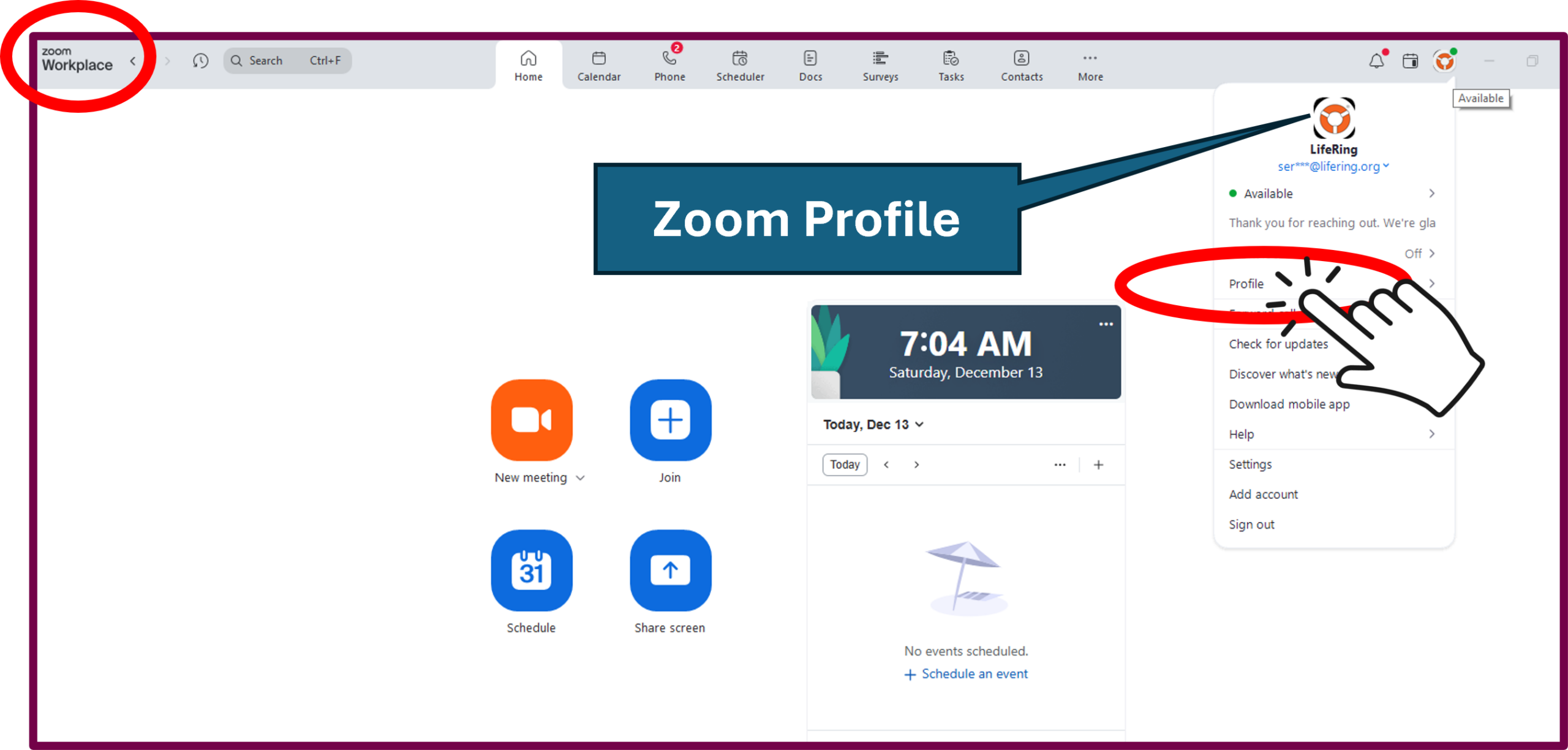
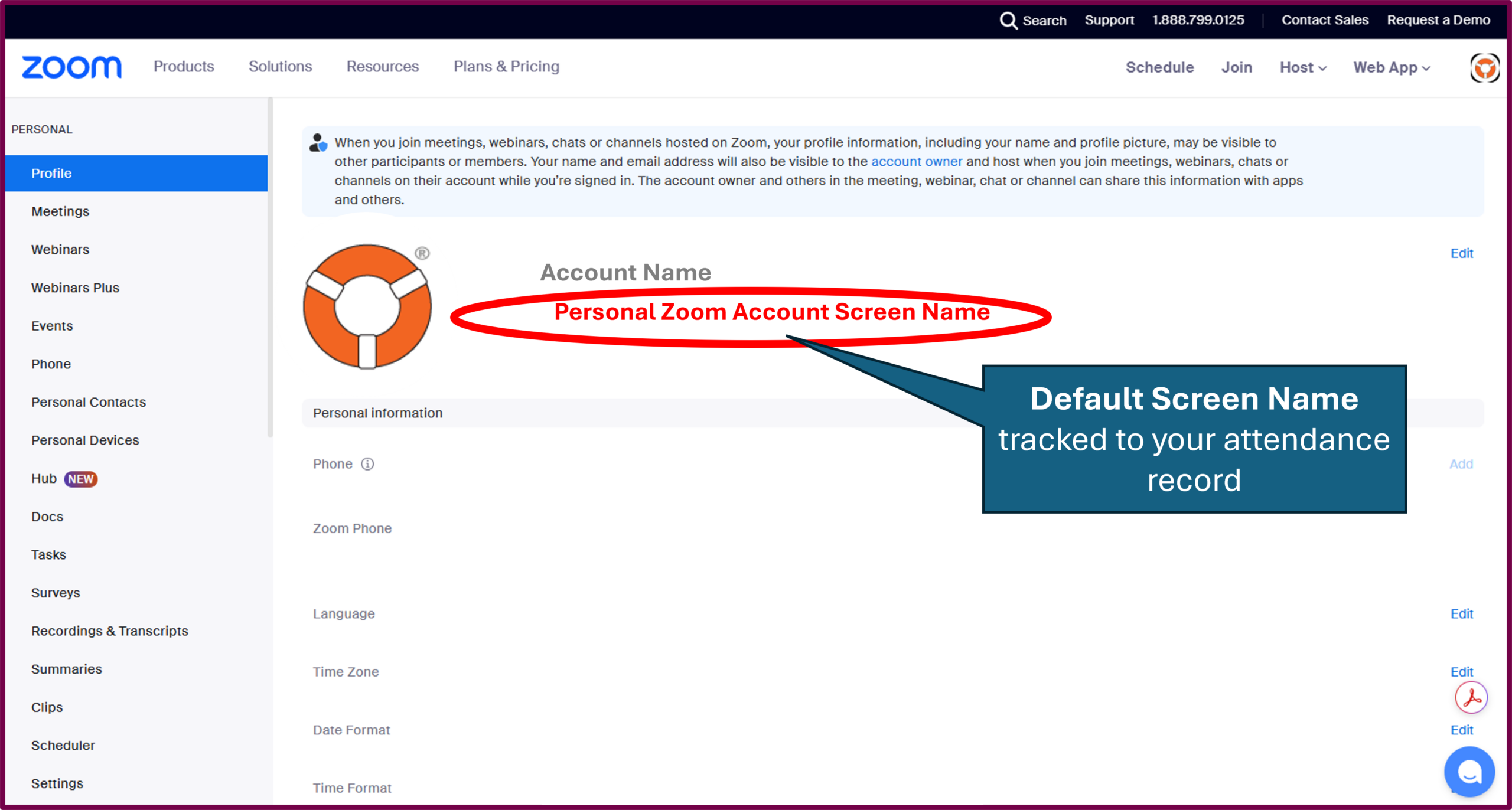
**SmartPhone:**
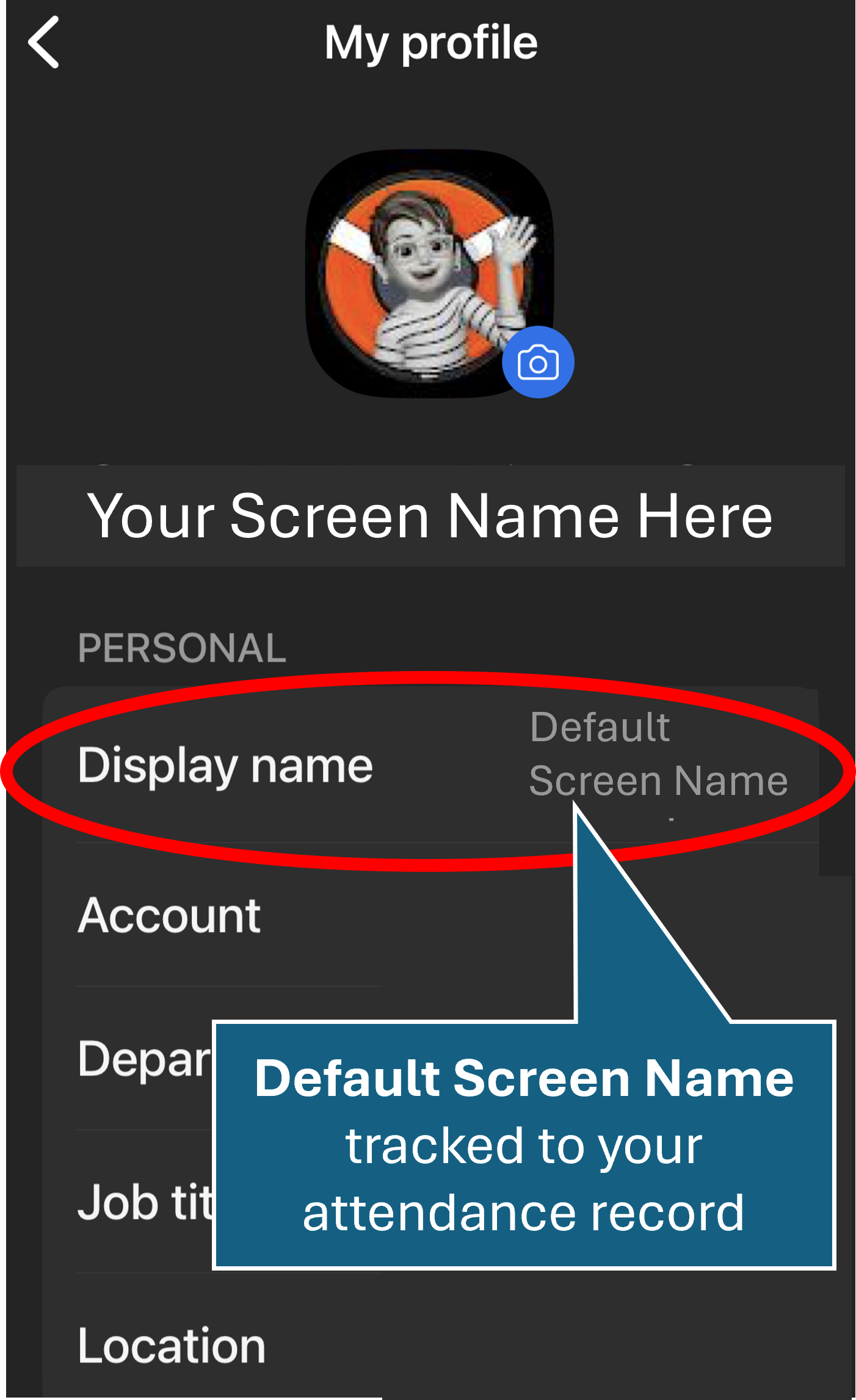
[Here are step directions to help you manage screen name information and changes](https://lifering.org/attendance-verification-support/#resolve).
- **Verifications for meetings held more than 7-days ago:**
Verification attendance reporting is a free service if you submit verifications **within 7 days of the meeting**. If you need verifications for meetings outside of that window, [Pathcheck offers additional verification management plans you can explore](https://www.pathcheck.com/#pricing).
- **Attendance time discrepancies:**
If you feel **your attendance time does not accurately reflect your attendance**, please reach out directly to Pathcheck using their [support form](https://www.pathcheck.com/support) or email <support@pathcheck.com>.
#### **.**
---
### Additional Resources
- [**All About Verifications Video \| Mobile**](https://drive.google.com/file/d/1QFgyX2z1m2xMAWb1HIvfjjNuUkFp5aTs/view?usp=sharing) \| *Thanks, Mandy!*
- **[All About Verifications Video \| Laptop](https://lsrtesting.com/wp-content/uploads/2025/07/video1819452883.mp4?_=3)** \| *Thanks, Taresa!*
- [**LifeRing Meeting Attendance Verifications FAQ**](https://lifering.org/attendance-verification-support/)
- **General Questions:** LifeRing Verification Support \| <verifications@lifering.org>
- **Questions about attendance time or missing verification emails:** Pathcheck Support \| [support form](https://www.pathcheck.com/support) or email <support@pathcheck.com>.
---
**Do you have any questions about how Pathcheck integrates with LifeRing**, or other ways to manage your meeting verifications? Reach out to <verifications@lifering.org>.
**Categories:** 2000 Meetings
---
### [In-Person Crisis Management](https://lifering.org/meeting-menu/local-meetings/in-person-crisis-management/)
**Published:** March 25, 2026
**Author:** webmaster @lifering.org
**Content:**
## In-Person Crisis Management
*Developed from online medically reviewed mental health sources.*
## **Most Important: Know Your Facility**
- **Convener Role:** The convener needs to know when, where, and how to get help.
- **Follow Guidelines:** Know and follow any specific guidelines of the facility where the group meets.
- **Know When to Call for Help:** Some facilities may require calling mental health professionals, medical professionals, security guards, or law enforcement to handle specific issues.
Mental Health Crisis Support
While the group can provide support, if the group or the person in crisis becomes overwhelmed, it may be best for someone to speak to them one-on-one.
**Plan Ahead:** Have a plan for who might step aside with the person and who will continue to act as the convener for the remaining group.
**Things to Do**
1. **Set Reasonable Expectations:** Let them know they have your support while making it clear you are not a professional.
“I’m happy to support you, but I want to make sure you also have professionals in your corner. Can I help you contact anyone?”
1. **Name Needs and Boundaries:** If you are uncomfortable with the intervention, say so and try to find someone who is comfortable.
2. **Actively Listen:** Avoid distractions, ask clarifying questions, and summarize what they have said.
3. **Validate:** Let the person know you see and understand their perspective.
4. **Support Their Solutions:** Generally, people do not want advice unless requested. If they move from venting to problem-solving, use reflective questions to help them find their own solutions.
“Have you been in a situation like this before? What helped then?”
**Helpful language:**
- “You are not alone in this.”
- “I am here for you.”
- “I may not understand exactly how you feel, but I care about you and want to help.”
- “You are important to me and the group”
**Things to Avoid:**
- **Minimizing or Comparing:**
This often happens inadvertently, as an attempt at consolation.
Avoid phrases like ” It could be worse” or “at least” (No matter how trivial you think someone’s concern is, avoid giving the impression that you are brushing it off.)
- **Making decisions without their consent**
*Whenever possible,* involve the person in any and all decisions that impact them
[LifeRing Crisis Resource](https://lifering.org/crisis-resource/)
Anger Management and De-escalation
If you encounter someone who is angry, use verbal de-escalation to calm them down.
- **Key Concept:** You cannot reason with an enraged person. Your only objective is to reduce their level of arousal so discussion becomes possible.
**Your Demeanor:** Appear calm, even if you do not feel calm.
| **4 Things To Do** | **4 Things To Avoid** |
|---|---|
| 1. ### **Focus on Calming:** Remember you are not trying to do anything except calm the person down. | 1. ### **Do Not Yell:** Don’t get loud or try to yell over a screaming person. |
| 1. ### **Neutral Expression:** Keep your face neutral. A smile could be misinterpreted as mockery. | 1. **Avoid constant eye contact:** Allow the person to break their gaze and look away. |
| 1. ### **Create Space:** Allow extra physical space between you and the person. | 1. ### **Don’t act Defensively:** This is not about *you*. Don’t take things personally. |
| 1. ### **Give Choices:** Offer positive, safe alternatives (e.g., “Would you like to talk one-on-one or take a break from the group?”). | 1. **Don’t Interpret Feelings:** Don’t ask how a person is feeling (you can see they are angry). |
Substance Use Scenarios
Consider the following scenarios and plan a response that you and the group are comfortable with ahead of time.
**Scenario 1: Attendee requires medical intervention** If someone is showing physical or mental signs of being under the influence:
- Is medical intervention needed? (Call 911/National Emergency Number) .
- Are you familiar with the “[Good Samaritan Laws](https://www.safeproject.us/good-samaritan-laws)” in your state?.
- Do you administer [Naloxone for overdose reversal](https://nida.nih.gov/publications/drugfacts/naloxone) after calling 911?
**Scenario 2: Impaired driving** If someone attends under the influence but intends to drive home, ask yourself:
- Do you confiscate their keys?.
- Do you pay for a Lyft or Uber? If so, does the money come from the group or personal contributions?.
- Do you drive the person home and have someone follow you?.
- Is the person a stranger or known to the group? Is the situation safe?.
- Do you call law enforcement to protect potential victims of a DUI?.
## **Summary**
1. Know any requirements set out by the facility where the group meets.
2. Plan ahead with your chosen responses as much as is practical and foreseeable.
3. Ask for help if needed. (this could be from other group members, resources at the facility where you meet, medical professionals, law enforcement or any other resources available to you.)
## **Resources:**
Mental Health
[Crisis Resources – LifeRing Secular Recovery](https://lifering.org/crisis-resource/)
[The Do’s and Don’ts of Supporting Someone in a Mental Health Crisis](https://www.healthline.com/health/mental-health/supporting-someone-in-a-mental-health-crisis#set-expectations)
[How to Be Emotionally Supportive: 13 Tips, Tools, and Strategies](https://www.healthline.com/health/mental-health/emotional-support#physical-affection)
Anger Management
[20 Expert Tactics for Dealing With Difficult People \| Psychology Today](https://www.psychologytoday.com/us/blog/living-the-questions/201503/20-expert-tactics-for-dealing-with-difficult-people)
[Keeping ambulance officers safe \| Tasmanian Department of Health](https://www.health.tas.gov.au/hospitals/ambulance/ambulance-services-tasmanians/keeping-ambulance-officers-safe#learn-techniques-to-help-us)
**Categories:** 2000 Meetings
---
### [Australia](https://lifering.org/international-meetings/australia/)
**Published:** September 8, 2020
**Author:** Bees
**Content:**
# Australia

## Meeting link to the General Online Australia meeting
Check this link for the day and time of the meeting based on your local time zone.
<https://meetings.lifering.org/meetings/1115/>
## Friday night Wollongong LifeRing Meeting!
Come join us for the Friday night Wollongong LifeRing meeting! We are currently having a regional online meeting and look forward to connecting with you.
- **When:** Fridays at **7:00 PM (AEST/AEDT)**
- **How to Join:** To receive the meeting link, please email the convenor, **Eddie**, at **<eddie.b.au@lifering.org>**.
Rather than traditional one-person “shares,” we aim for a more casual, loungeroom-style discussion. We encourage “cross-talk” and celebrate the variety of personal recovery plans that members build to empower their sober selves. **This group is for anyone Australia-wide at this stage.** We welcome those who prefer a secular, choice-promoting environment to maintain and build the connection that is so often cited as the opposite of addiction.
**Categories:** 2000 Meetings
**Tags:** meetings
---
### [Eligibility Determination for Delegates at Large](https://lifering.org/delegates-at-large/)
**Published:** March 14, 2019
**Author:** Bees
**Content:**
# Eligibility Determination for Delegates at Large
- In order to vote in the Absentee Election, the Delegate at Large must provide their full name, an email address where the eBallot is to be sent, and the basis for eligibility (BOD member or a Regional Representative) to the Registrar of Voter, <registrar@lifering.org>. Delegates at Large may also mail this information to the LifeRing Service Center. The mailing address is listed below.
- Delegates at Large must register no less than 30 days prior to Congress.
- Once a Delegate at Large has been credentialed (verified that they are on the BOD or are a Regional Representative), they will receive an email from the Registrar of Voter indicating they are eligible to vote.
- Delegates at Large are only permitted a single vote during the Absentee Election
**Categories:** 6000 Annual Meeting
**Tags:** annual meeting, LifeRIng, lifering secular recovery
---
### [How Was Your Week?](https://lifering.org/bookstore/books/hwyw/how-was-your-week/)
**Published:** May 16, 2010
**Author:** Bees
**Content:**
[](https://lifering.org/bookstore/How-Was-Your-Week-p161743477)
*How Was Your Week?* is the starter topic for most LifeRing meetings – an invitation to report on the person’s recovery work since the last meeting, and look forward to the challenges of the coming week. This book describes the deeper healing processes that are at work beneath the surface of this simple format and empowers the meeting facilitator to set these forces in motion and keep them on track.
*How Was Your Week?* is a handbook for the core members of the LifeRing network: the people who start and lead LifeRing meetings, or perform other services that keep the organization humming. To “convene” means to bring people together. Bringing people together in recovery the LifeRing way is what LifeRing meeting facilitators do, which is why they are known in the organization as “convenors.”
The book covers the basic model of the LifeRing recovery process: the division of the addicted mind into an addict self (A) and a sober self (S). It outlines the fundamental process at work in LifeRing meetings: empowerment of the sober self. It explains the proper role of the convenor in facilitating this process. It looks at the dynamics at work in the meeting room. It discusses common issues and problems that may arise and suggests methods of handling them. The work also looks at the nuts and bolts of the meeting framework, such as door signs, signup sheets, passing the basket, and distributing literature. There is a chapter on the LifeRing process online in chat rooms and other web venues, and a chapter on the annual LifeRing Congress.
Discussion of the basic philosophy of LifeRing – the three S – is a major portion of the book. Chapters on Sobriety (Abstinence), Secularity, and Self-Help offer the deepest and most detailed analysis of these foundations in print. A separate chapter introduces the basics of building a personal recovery program. Although aimed primarily at the convenor, the book is accessible to anyone who wants a deeper understanding of what LifeRing is about.
A major chapter (Ch. 15) outlines the work involved in starting a new LifeRing meeting. Everything is covered here, from the initial contacts to the final successful passing of the baton. This chapter is the indispensable guide for the pioneers who establish a LifeRing presence in new territory.
*How Was Your Week* is available exclusively online from [the LifeRing bookstore.](https://lifering.org/bookstore/) Click “Add to Bag” to order a copy using your Visa/MasterCard or PayPal account.
*How Was Your Week*, 252 pp. 8.5″ x 6″, spiral-bound binding. ISBN 0-9659429-4-5. First edition, 2003. US$25.00 + S/H.
## How Was Your Week
[Sample Content](https://lifering.org/wp-content/uploads/lifering-press/HWYW/HWYW2-FP_TOC_ch1_ch2_index.pdf)
[A free, older PDF version of HWYW (How Was Your Week)](https://lifering.org/wp-content/uploads/Convenor_Resources/HWYW_Version_1.pdf) ENTIRE BOOK – PDF VERSION
## Kudos for *How Was Your Week?*
“A masterful job. … Many recovery mutual aid groups have floundered or collapsed because they failed to clearly define their mission and methods. *How Was Your Week?* defines the mission and methods of LifeRing Secular Recovery with remarkable clarity and enthusiasm. This book is a significant achievement that will be an invaluable aid …” — **Bill White, Author, Slaying the Dragon: The History of Addiction Treatment and Recovery in America.**
“Through his books and articles, LifeRing author Martin Nicolaus provides the recovery community with what it most needs — a wide variety of individual paths toward sobriety and improved living. For those who have failed to find a comfortable place in the twelve-step community, Nicolaus’s books lead the way to another chance. — **Lonny Shavelson. Author of Hooked: Five Addicts Challenge Our Misguided Drug Rehab System.**
The current print and electronic edition of How Was Your Week? is Version 1.0, published in spiral-bound format to indicate that it is a work in progress. A major update is in preparation, scheduled for release in the near future.
**Categories:** 4000 Shop
**Tags:** Bookstore
---
### [HWYW](https://lifering.org/bookstore/books/hwyw/)
**Published:** December 17, 2019
**Author:** Bees
**Content:**
# How Was Your Week?
### The Convenor’s Handbook
[](https://lifering.org/bookstore/How-Was-Your-Week-p161743477)
*How Was Your Week?* is the starter topic for most LifeRing meetings – an invitation to report on the person’s recovery work since the last meeting, and look forward to the challenges of the coming week. This book describes the deeper healing processes that are at work beneath the surface of this simple format and empowers the meeting facilitator to set these forces in motion and keep them on track.
*How Was Your Week?* is a handbook for the core members of the LifeRing network: the people who start and lead LifeRing meetings, or perform other services that keep the organization humming. To “convene” means to bring people together. Bringing people together in recovery the LifeRing way is what LifeRing meeting facilitators do, which is why they are known in the organization as “convenors.”
The book covers the basic model of the LifeRing recovery process: the division of the addicted mind into an addict self (A) and a sober self (S). It outlines the fundamental process at work in LifeRing meetings: empowerment of the sober self. It explains the proper role of the convenor in facilitating this process. It looks at the dynamics at work in the meeting room. It discusses common issues and problems that may arise and suggests methods of handling them. The work also looks at the nuts and bolts of the meeting framework, such as door signs, signup sheets, passing the basket, and distributing literature. There is a chapter on the LifeRing process online in chat rooms and other web venues, and a chapter on the annual LifeRing Congress.
Discussion of the basic philosophy of LifeRing – the three S – is a major portion of the book. Chapters on Sobriety (Abstinence), Secularity, and Self-Help offer the deepest and most detailed analysis of these foundations in print. A separate chapter introduces the basics of building a personal recovery program. Although aimed primarily at the convenor, the book is accessible to anyone who wants a deeper understanding of what LifeRing is about.
A major chapter (Ch. 15) outlines the work involved in starting a new LifeRing meeting. Everything is covered here from the initial contacts to the final successful passing of the baton. This chapter is the indispensable guide for the pioneers who establish a LifeRing presence in new territory.
Now in its second edition, *How Was Your Week?* is available online, from the [LifeRing Bookstore,](https://lifering.org/bookstore/) or from your local LifeRing Meeting. Originally published in 2003, How Was Your Week? is now in its second edition (2015). This edition of How Was Your Week? is updated, expanded, easier to read, and professionally printed and bound with a handsome full-color cover. 359 pp. 9″ x 6″, paperback. ISBN 978-1-5152865-6-1. 2nd edition, 2015. Martin Nicolaus is the author of this book and co-founder of LifeRing Secular Recovery.
***How Was Your Week?* is available for purchase [here](https://lifering.org/bookstore/How-Was-Your-Week-p161743477) using your Credit Card or PayPal account.**
Special Arrangements:
- For institutional customers, booksellers, and convenors looking for discounted pricing and shipping quotes, please email <publisher@lifering.org>.
**[Sample Content](/wp-content/uploads/lifering-press/HWYW/HWYW2-FP_TOC_ch1_ch2_index.pdf)**
**Categories:** 4000 Shop
**Tags:** Bookstore
---
### [Engage Menu](https://lifering.org/engage-menu/)
**Published:** March 22, 2025
**Author:** webmaster @lifering.org
**Content:**
## Engage
[ Sign Up ](https://lifering.org/engage-magamenu/volunteer-form/) [ Learn More ](https://lifering.org/volunteer-opportunities/)
[Start a Meeting](https://lifering.org/meeting-menu/start-a-meeting/)
[Share Your Story](https://lifering.org/engage-magamenu/share-your-story/)
[Join a Collaboration Team](https://lifering.org/engage-magamenu/volunteer-form/)
[Engagement Opportunities](https://lifering.org/engage-magamenu/engagement-opportunities/)
[Team LifeRing](https://lifering.org/volunteer-opportunities/)
**Categories:** 1050 Engage
---
### [It All Comes Down to This](https://lifering.org/it-all-comes-down-to-this/)
**Published:** May 30, 2022
**Author:** Bees
**Content:**
| |
|---|
**Categories:** 0010 Sue's Play Area
---
### [Lifering Resources Quick Links](https://lifering.org/resources-quick-links/)
**Published:** January 31, 2026
**Author:** Bees
**Content:**
## LifeRing Resources: Quick Links
| #### **LifeRing Stakeholders Resources** |
|---|
| **Quick References** |
| - [LifeRing News Blog](https://lifering.org/about-us/news-blog/) |
| - [LifeRing Social Media](https://lifering.org/social-media/) |
| - [Engagement Opportunities](https://lifering.org/volunteer-opportunities/) for you! |
| - [All About LifeRing](https://lifering.org/lifering-resources/) for everyone |
| - [Welcome to LifeRing](https://lifering.org/welcome/) for new meeting members |
| - [LifeRing Overview](https://lifering.org/for-professionals/) for professionals |
| - [Start a Meeting Roadmap](https://lifering.org/start-a-meeting/) for new convenors and the convening curious |
| **Meetings and eGroups** |
| - [LifeRing Meeting Calendar](https://meetings.lifering.org/meetings/) |
| - [LifeRing Focus Meetings](https://meetings.lifering.org/meetings/?title=&program=6&audiences=&meetingType=&datetime_nextmeeting=&languages=&location=&coordinates=&scope=) |
| - [LifeRing International Meetings](https://lifering.org/international-meetings/) |
| - [LifeRing ePals](https://lifering.org/meeting-menu/epals/) |
| - [LifeRing eGroups ](https://lifering.org/meeting-menu/email-groups/) |
| - [LifeRing Forum ](http://forums.delphiforums.com/lifering) |
| **Events** |
| - Events to be announced during Town Hall |
**Categories:** 7000 General Pages
**Tags:** addiction support, LifeRIng, lifering meetings, LifeRing Town Hall, lifering townhall
---
### [Winter 2026 LifeRing Community Town Hall](https://lifering.org/winter-2026-town-hall/)
**Published:** January 20, 2026
**Author:** Bees
**Content:**
## **LifeRing Community Town Hall
*Your Voice, Our Community: LifeRing Forward*
### **LifeRing Town Hall \| Winter 2026**
#### Thursday, January 29, 2026, 5:00pm Pacific \| Duration: 90 minutes
#### **[Registration Required](https://lifering-org.zoom.us/meeting/register/Z7xQbfnFQw6QXVsdKB5D3Q)**
This is a provisional agenda. Focus and specific items may change.
| #### **Welcome & Community Connection** |
|---|
| **5:05pm** | **State of LifeRing: Sharing Our Accomplishments** |
| - [Strategic Plan](https://lifering.org/wp-content/uploads/Public_Documents/The_Current_Strategic_Plan.pdf) \| LifeRing Operational Roadmap |
| - [Annual Report](https://lifering.org/2024-2025-annual-report/) \| 2024-2025 BOD Year |
| - What’s New \| What’s on the Horizon |
| #### **LifeRing Stakeholders \| Let’s Talk!** |
| **5:15pm** | **Expansion Strategy:** Moving from *Maintaining* to *Multiplying* |
| - **Cultivating Communities:** Where are we needed and how do we reach underserved communities? |
| - **Optimizing the S-to-S Connection:** What can we do to ensure easy accessibility to meetings? |
| - **Outreach Objectives:** How can we spread the word about LifeRing? |
| - **Expanding Home-Grown Resources:** How can we empower local meetings to promote new groups? |
| **5:30pm** | **Empowering the Engine: Engagement Momentum** |
| - **The “Convenor Support” Initiative:** Exploring new ways to prevent burnout and support our convenors. |
| - **Frictionless Volunteering:** Discussing improvements to the onboarding process. What can we do to make it easier for *you* to join the momentum? |
| - **Micro-Volunteering:** High-impact, low-time-commitment roles that keep the organization moving forward. |
| **5:45pm** | **LifeRing Forward: 2026 and Beyond** |
| - **The 2030 Vision:** What would you like LifeRing to look like in 5 years? What innovative projects or engagements should we explore? |
| - **New Frontiers:** What specific populations are we currently underserving and how do we reach them? |
| - **Technology:** What digital tool or resource could most improve the LifeRing experience? |
| #### **Voices of LifeRing \| The Floor is Yours!** |
| **6:00pm** | **Voices of Momentum: Open Stakeholder Forum** |
| | - What is **the most important question** we *didn’t* ask tonight? |
| | - What is **one thing you are taking away** from this Town Hall to share with your home group? |
| #### **LifeRing Stakeholders Resources** |
|---|
| **Quick References** |
| - [LifeRing News Blog](https://lifering.org/about-us/news-blog/) |
| - [LifeRing Social Media](https://lifering.org/social-media/) |
| - [Engagement Opportunities](https://lifering.org/volunteer-opportunities/) for you! |
| - [All About LifeRing](https://lifering.org/lifering-resources/) for everyone |
| - [Welcome to LifeRing](https://lifering.org/welcome/) for new meeting members |
| - [LifeRing Overview](https://lifering.org/for-professionals/) for professionals |
| **Meetings and eGroups** |
| - [LifeRing Meeting Calendar](https://meetings.lifering.org/meetings/) |
| - [LifeRing Focus Meetings](https://meetings.lifering.org/meetings/?title=&program=6&audiences=&meetingType=&datetime_nextmeeting=&languages=&location=&coordinates=&scope=) |
| - [LifeRing eGroups ](https://lifering.org/meeting-menu/email-groups/) |
| - [LifeRing Forum ](http://forums.delphiforums.com/lifering) |
| **Events** |
| - Events to be announced during Town Hall |
**Categories:** 7000 General Pages
**Tags:** addiction support, LifeRIng, lifering meetings, LifeRing Town Hall, lifering townhall
---
### [Takeaways](https://lifering.org/takeaways/)
**Published:** November 4, 2024
**Author:** webmaster @lifering.org
**Content:**
# **[Takeaways](https://lifering.org/pamphlets/)**
These pamphlets serve as an **introduction to our philosophy**, programs, and the supportive community we encourage. Inside, you’ll find:
- **Information about LifeRing’s principles and methods**
- **Success stories from individuals who have embraced recovery**
- **Resources for finding local meetings and support groups**
We believe that recovery is a personal journey, and with the right support, anyone can achieve their goals.
### For Clients
### For Professionals
 [  ](https://lifering.org/wp-content/uploads/lifering-press/pamphlets/Pro%20Pamphlet.pdf)
##### Buy in packs of 50
##### [ PDF Download ](https://lifering.org/wp-content/uploads/lifering-press/pamphlets/EYSS_Pamphlet.pdf "PDF Download")
##### Buy in packs of 50
##### [ PDF Download ](https://lifering.org/wp-content/uploads/lifering-press/pamphlets/Pro%20Pamphlet.pdf "PDF Download")

**Categories:** 7000 General Pages
---
### [For Professionals](https://lifering.org/for-professionals/)
**Published:** January 14, 2022
**Author:** Bees
**Content:**
| # LifeRing Overview for Professionals #### **Participation in LifeRing Secular Recovery is compatible with a wide variety of abstinence-based therapeutic and counseling programs.** |
|---|
| #### **[Peer Alternatives for Addiction (PAL) Study](#lifering_participation_peer_alternatives_for_addiction_study) • [LifeRing Publications](#lifering_secular_recovery_publications)** #### **Empower Your Programs and Your Clients** **LifeRing Secular Recovery** is a peer-to-peer nonprofit organization that embraces the philosophy that there are multiple pathways to recovery. LifeRing serves as a recovery network, empowering those seeking support in recovery from substance use disorders, both as a stand-alone resource and as a supplement to other recovery programs. Our groups and meetings are abstinence-based, but we understand that everyone’s recovery journey is unique. We welcome individuals at all stages of recovery. We ask that participants under the influence abstain from sharing in our forums; however, convenors (meeting facilitators) and members may offer individual support outside of the group setting. We recognize that some members use medically indicated, psychoactive medications prescribed by an informed physician, which may include medication-assisted recovery (MAT/MAR) and pain management medications. We practice a “3-S” philosophy: 1. **Secularity**: There is no promotion, proselytization, or attack on religious practices in LifeRing forums. We welcome individuals of all faiths and none. This does not mean members cannot engage in religious or spiritual practices or refer to these in meetings; we just ask that members neither promote nor denounce these practices. 2. **Sobriety**: We focus on abstinence, wellness, and personal growth as goals. 3. **Self-Empowerment**: We believe the key to recovery is individual motivation and effort. Each member is encouraged to create their personalized recovery plan. LifeRing has no hierarchical structure, and members are encouraged to self-identify as they see fit. We encourage members to see themselves as empowered and not powerless. Polite engagement, or crosstalk, is not only allowed but encouraged in meetings. Many of our meetings focus on the topic “How Was Your Week?” Here, members share challenges and milestones from the past and current weeks and discuss what they are actively doing to maintain their recovery. LifeRing also offers and supports the creation of [focus meetings](https://lifering.org/meeting-menu/online-meetings/focus-meetings/) designed to **support specific needs** of various demographic cohorts. These include • LGBTQIA+ • Veterans • Co-Occurring Disorders • Family & Friends • Seniors • SUD-related Medical Conditions • CPS (Child Protective Services) • Survivors of Domestic Violence | #### | #### **[LifeRing offers a ](https://lifering.org/meeting-menu/)[variety of recovery support meetings](https://lifering.org/meeting-menu/)** #### Not sure where to start? LifeRing offers a variety of meeting formats and approximately 200 online and in-person meetings every week. Have a look: #### **Peer Support Meetings** LifeRing Secular Recovery offers a wide variety of online and in-person meetings throughout the world. Our meetings are anonymous and designed to strengthen your commitment and help you build a personal recovery program. [**Check-in**](https://meetings.lifering.org/meetings/?title=&program=2&audiences=&meetingType=&datetime_nextmeeting=&languages=&location=&coordinates=&scope=): How Was Your Week? Focus on current and upcoming weeks [**Topic**](https://meetings.lifering.org/meetings/?title=&program=4&audiences=&meetingType=&datetime_nextmeeting=&languages=&location=&coordinates=&scope=): Focus of discussion varies **[Focus](https://meetings.lifering.org/meetings/?program=6&audiences=&meetingType=1&datetime_nextmeeting=&languages=&location=&coordinates=):** Recovery meetings for people with specific commonalities including: • LGBTQIA+ • Veterans • Co-Occurring Disorders • Family & Friends • Seniors • SUD-related Medical Conditions • CPS • Survivors of Domestic Violence [**Online**](https://meetings.lifering.org/meetings/?scope=only): Virtual meetings; focus on discussion varies **[Local](https://meetings.lifering.org/meetings/?scope=hide)**: On location group meetings; focus on discussion varies depending on interests of group **Hybrid**: In-person and online combined; focus of discussion varies **[Chat Meeting](https://meetings.lifering.org/meetings/?title=&program=9&audiences=&meetingType=&datetime_nextmeeting=&languages=&location=&coordinates=&scope=)**: Online text meeting #### **Virtual Gathering Spaces** In addition to meetings, LifeRing also provides secular sobriety support eResources: **[eGroups](https://lifering.org/email-groups/)**: Group messaging operates much like a 24/7 online meeting **[ePals](https://lifering.org/epals/)**: Volunteers work one-on-one to help you navigate LifeRing’s resources **[Delphi Forum](http://forums.delphiforums.com/lifering)**: LifeRing’s anonymous online discussion board |
|---|---|---|
#### **How Does LifeRing Work?**
Founded in 1997, LifeRing Secular Recovery is an evidence-based, worldwide network of individuals seeking to live in recovery from substance use. We offer peer support in ways that embrace personal growth and continued learning through self-empowerment. Our approach is based on developing, refining, and sharing support and crafting a rewarding life in recovery. In short, we are sober, secular, and self-directed.
Our mutual support network is compatible with a wide variety of treatment modalities. LifeRing’s evidence-based and therapeutic orientation is pragmatic and eclectic. The expert may readily identify elements of CBT, motivational interviewing, REBT and other schools of thought in our practices.
#### **Principles**
Our motivational principles are evidence-based and evolve as the science of recovery develops. The Sobriety, Secularity, and Self-Empowerment principles allow us flexibility and make LifeRing Secular Recovery a healthy and accessible recovery option for everyone.
LifeRing is not a 12-step program. There’s only one “step” – Don’t drink or use, no matter what. The philosophy is equally bare-bones: The “Three S” Philosophy: Sobriety, Secularity, Self-Empowerment.
**Sobriety** Sobriety means wellness including abstinence from alcohol and other drugs, unless medically indicated and taken as prescribed (eg. MAT/pain management). **Secularity** Out of respect for people of all faiths or none, our meetings are secular in nature, which means we do not use prayer or talk about religion. Our common shared belief is behavioral modification and the strengthening of one’s “sober self” through group support and clinical recovery methods. **Self-Empowerment** [Empowering Your Sober Self](https://lifering.org/bookstore/books/eyss/) means taking action and maintaining a perspective that supports living well and free from substance use and its related behaviors. Attending meetings and making human connections with peers helps reestablish hope and validates one’s efforts throughout the recovery process. Members become self-empowered and come to decide what meets their individual needs. We help visualize and build recovery upon that foundation. This is your journey. We’re here for support.
---
#### **LifeRing Participation in Peer Alternatives for Addiction (PAL) Study and Ongoing PAL2 Study**
**On May 6, 2022, The NIAAA (National Institute on Alcohol Abuse and Alcoholism)** released its new report [*Recommend Evidence-Based Treatment: Know the Options*](https://www.niaaa.nih.gov/health-professionals-communities/core-resource-on-alcohol/recommend-evidence-based-treatment-know-options). This report reviews the benefits of mutual support groups **naming LifeRing in the top three secular support groups** and includes data from the Peer Alternatives for Addiction (PAL) Study detailed below: *Research suggests that three of the largest known secular groups in the U.S.-SMART Recovery, LifeRing, and Women for Sobriety-appear comparable in effectiveness to 12-step programs for people who have a goal of abstinence. People in any of these mutual help groups have greater success in achieving abstinence if they become actively involved with their group, as measured by, for example, meeting attendance, having a sponsor or close friend in the group, or volunteering for the group.*
**In 2018, the Alcohol Research Group** published the findings from their **Peer Alternatives for Addiction (PAL) Study**. LifeRing played an integral part in this national study comparing 12-step groups to mutual help alternatives. Here are two abstracts based on this study published in the [PubMed Central® (PMC) at the U.S. National Institutes of Health’s National Library of Medicine (NIH/NLM](https://pubmed.ncbi.nlm.nih.gov/29606223/)):
| **[A longitudinal study of the comparative efficacy of Women for Sobriety, LifeRing, SMART Recovery, and 12-step groups for those with AUD](https://www.ncbi.nlm.nih.gov/pmc/articles/PMC5884451/)****Conclusions**: This study makes a valuable contribution in view of the extremely limited evidence on mutual help alternatives. Results tentatively suggest that WFS, LifeRing, and SMART are as effective as 12-step groups for those with AUDs, and that this population has the best odds of success when committing to lifetime total abstinence. An optimal care plan may thus involve facilitating involvement in a broad array of mutual help groups and supporting abstinence motivation. ###### *Zemore, Sarah E et al. “A longitudinal study of the comparative efficacy of Women for Sobriety, LifeRing, SMART Recovery, and 12-step groups for those with AUD.” Journal of substance abuse treatment vol. 88 (2018): 18-26. doi:10.1016/j.jsat.2018.02.004* |  |
|---|---|
| **[Comparison of 12-step groups to mutual help alternatives for AUD in a large, national study: Differences in membership characteristics and group participation, cohesion, and satisfaction](https://www.ncbi.nlm.nih.gov/pmc/articles/PMC5193234/)****Conclusions**: Results suggest differences across 12-step groups and their alternatives that may be relevant when advising clients on a choice of mutual help group. Meanwhile, findings for high levels of participation, satisfaction, and cohesion among members of the mutual help alternatives suggest promise for these groups in addressing addiction problems. ###### *Zemore, Sarah E et al. “Comparison of 12-step groups to mutual help alternatives for AUD in a large, national study: Differences in membership characteristics and group participation, cohesion, and satisfaction.” Journal of substance abuse treatment vol. 73 (2017): 16-26. doi:10.1016/j.jsat.2016.10.004* |  |
---
#### **LifeRing Publications**
Martin Nicolas, co-founder of LifeRing Secular Recovery, has published a number of engaging books for individuals seeking recovery and for service professionals wanting a greater understanding of LifeRing’s core ideas and recovery support strategies. Those seeking a solution to alcohol and other drug problems and professionals assisting people with Substance Use Disorder will find great value in these books published through LifeRing Press.
| [](https://lifering.org/books/eyss/) | [***Empowering Your Sober Self*, 2nd Edition**](https://lifering.org/bookstore/books/eyss/) The one book to read for an introduction to LifeRing. Written for the person who wants to get free of alcohol/drugs, for their friends and relations, and for the professionals who treat them. “A sophisticated, insightful, well-documented view of the philosophy and practice that are at the heart of the LifeRing approach. This book offers a perspective on recovery that can motivate change in clinicians and researchers as well as among individuals struggling to find their sober selves.” –**Carlo DiClemente**, Ph.D., professor and chair, Department of Psychology, University of Maryland, Baltimore, and author, *Addiction and Change* “With impressive analytical clarity and therapeutic generosity, Nicolaus presents a well-argued brief for understanding the complexities of addiction treatment and accepting the full range of diverse paths to recovery. . . . \[Anyone\] wanting insight and balance on a vitally important public health issue will appreciate the author’s lively and respectful presentation.” –**Judith Herman**, M.D., author, *Trauma and Recovery* |
|---|---|
| [](https://lifering.org/books/rbc/) | *[**Recovery by Choice – A Workbook**](https://lifering.org/bookstore/books/rbc/), Living and Enjoying Life Free of Alcohol and Other Drugs* Effective professionals tailor the treatment to fit the client. This is as true in the treatment of addictions as in any other practice. **The National Institute on Drug Abuse (NIDA)**, after a nationwide study of addiction treatment programs, found that: “*No single treatment is appropriate for all individuals. Matching treatment settings, interventions, and services to each individual’s particular problems and needs is critical to his or her ultimate success in returning to productive functioning in the family, workplace, and society*.” *Recovery by Choice* is the first workbook that applies this basic principle of effective professional treatment to the recovering person’s own self-treatment, or self-empowerment. It provides a structure for the recovering person to build an abstinence-based recovery plan that matches his or her particular problems and needs – an abstinence-based Personal Recovery Program. Based on ten years’ work in support groups, the book presents the recovering person with a series of real-life choices. The options are highly detailed, concrete, and knowing. |
| [](https://lifering.org/books/hwyw/) | *[**How Was Your Week? A Convenor’s Handbook**,](https://lifering.org/bookstore/books/hwyw/) Bringing People Together in Recovery the LifeRing Way* This is a critical handbook for the core members of the LifeRing network: the people who start and lead LifeRing meetings, or perform other services that keep the organization humming. The *How Was Your Week? Handbook* offers an in-depth exploration of the basic model of the LifeRing recovery process: the division of the addicted mind into an addict self (A) and a sober self (S). It outlines the fundamental process at work in LifeRing meetings: empowerment of the sober self. A major portion of this book focuses on the basic philosophy of LifeRing – the three S philosophy. Chapters on Sobriety (Abstinence), Secularity, and Self-Empowerment offer the deepest and most detailed analysis of these foundations in print. A separate chapter introduces the basics of building a personal recovery program. Although aimed primarily at the convenor, the *How Was Your Week?* handbook is accessible to anyone who wants a deeper understanding of what LifeRing is about. |
| [](https://lifering.org/bookstore/books/hp/) | *[**Humanly Possible – Stories of Secular Recovery**.](https://lifering.org/bookstore/books/hp/) Kathleen Gargan, Editor; M.K. Co-editor* This powerful collection of personal stories focus on success in recovery from substance addiction. There are many such books, but what sets *Humanly Possible* apart is its emphasis on secular recovery. These are the stories shared by members of LifeRing Secular Recovery and other secular recovery pathways who successfully battled their substance use disorders through self-empowerment. They are living proof that recovery without religion is not only conceivable but readily achievable. The stories offered in this volume, of individuals living free of addictions by means of purely secular ideas, tools and practices provide powerful testimony that what was not long ago thought to be possible only by means of supernatural intervention, is also “humanly” possible. This volume was inspired by the need for such evidence. Without it, countless people whose worldview is strictly secular, have had little basis for believing that they might live according to their own conscience and be free of addiction at the same time. |
---
#### For more information or to speak directly with a LifeRing Representative, please email: <service@lifering.org> or call: 800.811.4142
##### **LifeRing Secular Recovery provides an abstinence-based, secular, and self-empowered substance use recovery pathway through our network of peer-to-peer support meetings. LifeRing is a 501(c)(3) charitable organization – EIN 94-3267919**
**Categories:** 1060 Professionals
**Tags:** about us Menu
---
### [Policies and Documents](https://lifering.org/governance-menu/policies-and-documents/)
**Published:** June 19, 2018
**Author:** Bees
**Content:**
# Policies and Documents
LifeRing is committed to transparency and accountability, and as part of this commitment, we provide access to essential public-facing business documents. These include annual reports, meeting minutes, financial statements, and articles of incorporation. These documents serve to inform stakeholders and the community about LifeRing’s activities, financial health, and organizational structure. By making this information readily available, LifeRing promotes trust and encourages engagement from individuals interested in our mission and operations, ensuring that all stakeholders have the opportunity to stay informed and involved in our journey.
LifeRing is proud to announce that we have received the prestigious [**Candid Platinum Seal of Transparency**](https://www.guidestar.org/profile/shared/ebb06d6e-eb6d-46a3-9aca-7d211657d3e3) for the third consecutive year. This esteemed recognition is awarded by GuideStar and signifies a commitment to transparency and accountability in nonprofit operations. Notably, fewer than 1% of nonprofits in the United States have achieved this level of distinction. The Platinum Seal represents the highest standard of recognition from Candid, an organization dedicated to providing valuable insights into the social sector. This achievement underscores LifeRing’s dedication to maintaining open communication and fostering trust with our stakeholders and the communities we serve.
**[LifeRing Strategic Plan](https://lifering.org/wp-content/uploads/Public_Documents/The_Current_Strategic_Plan.pdf)**
**[Bylaws](https://lifering.org/wp-content/uploads/ImportantDocs/Current_Bylaws.pdf)**
**[Policy Statements](https://lifering.org/governance-menu/policies-and-documents/policies/)**
**[Formation Documents](https://lifering.org/governance-menu/policies-and-documents/formation-documents/)**
**Categories:** 5000 Governance
**Tags:** Governance
---
### [Crisis Resources](https://lifering.org/crisis-resource/)
**Published:** June 7, 2021
**Author:** Bees
**Content:**
## **Crisis Resources**
There are times when you may need more than a meeting. Support is available through these crisis resources.
#### Live Person-to-Person Hotlines
- [Suicide and Crisis Lifeline](https://988lifeline.org/): Call or text 988 \| [Confidential chat](https://988lifeline.org/chat/)
- [Prevencion del Suicidio y Crisis Línea](https://988lifeline.org/es/home/): Marque o texie 988 \| [Confidential chat](https://988lifeline.org/es/chat/)
- [National Emergency](https://www.911.gov/) Call or Text “Help” to 911
- [Crisis Text Line](https://www.crisistextline.org/): Text “Home” to 741741
- [Veterans Crisis Support](https://www.veteranscrisisline.net/): Call 988 \| Text “Help” to 838255 \| [Confidential Online Chat](https://www.veteranscrisisline.net/get-help-now/chat/)
- [The Trevor Project](http://www.thetrevorproject.org/) 1-866-488-7386 \| Text “Start” to 678-678 [Trevor Project Cha](https://chat.trvr.org/)t (LGBTQ+)
- [National Sexual Assault Hotline](https://rainn.org/) 1-800-656-4673 \| Text 64673 [Online Chat](https://hotlines.rainn.org/?messaging_service_key=d6cfe807-61dd-48b5-aa15-7a9e1cb94bc6&task_sid=WT43aa03a7c1213985460c9f4dc474eed5)
- [National Domestic Violence Hotline ](https://www.thehotline.org/)1-800-799-7233 \| Text: Text “Start” to 88788 [Online Chat](https://www.thehotline.org/get-help/)
- [ International Suicide Hotlines – Suicide Stop](https://www.suicidestop.com/call_a_hotline.html)
#### Helplines
- [SAMHSA’s (Substance Abuse and Mental Health Services Administration) National Helpline](https://www.samhsa.gov/find-help/national-helpline) 1-800-662-4357 (Created for those with questions with alcohol abuse or drug abuse problems.)
- [Postpartum Support International](https://postpartum.net/) 1-800-944-4773 \| Text “Help” to 800-944-4773 (Resources and current information to help support perinatal mental health.)
- [NAMI (National Alliance for the Mentally Ill) Helpline](https://www.nami.org/nami-helpline/) 1-800-950-NAMI \| 800-950-6264 (A nationwide service that provides mental health information and resources.)
- [Trans Lifeline](http://www.translifeline.org) 1-877-565-8860 (A trans-led organization that provides community connection, resources, and support for transgender people to survive.)
####
Mental Health Website
- [Suicide Prevention Resource Center](https://sprc.org/) (A collection of suicide prevention resources.)
- [Veterans](https://www.nami.org/service-members-and-veterans/) (Resources specifically for veterans and military service members.)
- [VA Mental Health Services \| Veterans Affairs](https://www.va.gov/health-care/health-needs-conditions/mental-health/) (Connects Veterans, local VA and community mental health resources.)
- [Postpartum Support International](http://www.postpartum.net/) (Resources and current information to help support perinatal mental health.)
- [Trans Life Line](http://www.translifeline.org/) (This trans-led organization provides community connection, resources, and support for transgender people to survive.)
- [The Trevor Project ](https://www.thetrevorproject.org/)(Provides non-judgmental crisis intervention and suicide prevention services to LGBTQ+ Youth under 25 years old.)
- [Servicios en español](https://mhanational.org/es/resources/) (Encuentre artículos sobre problemas de salud mental, bienestar en comunidades diversas e influencias ambientales.)
- [American Indian, Alaska Native, Indigenous People](https://www.nami.org/community-and-culture/indigenous/) (Resources that integrate indigenous beliefs, practices, identity and cultural background.)
- [African American](https://www.nami.org/community-and-culture/black-african-american/) (Resources about mental health from a Black perspective.)
- [Asian/Pacific Islander](https://www.naapimha.org/mh-resource-directory) (Culturally sensitive Community health resources.)
- [LGBTQ+](https://www.nami.org/community-and-culture/lgbtq/) (Resources with a cultural sensitivity approach to sexual orientation and gender identity.)
#### Overdose Reversal
[Overdose Reversal with Naloxone](https://nida.nih.gov/publications/drugfacts/naloxone)
---
This webpage has been updated and is managed by LifeRing local meeting convenor Laura M. **Thank you, Laura!**
**Categories:** 1000 Landing Pages
**Tags:** Mega Menu
---
### [Opening & Closing Statements](https://lifering.org/convenors-menu/opening-closing-statements/)
**Published:** July 17, 2018
**Author:** Bees
**Content:**
# Opening and Closing Statements
Most LifeRing meetings begin with the reading of an “Opening Statement.” It serves, as the book “How Was Your Week” says, as “the spoken ritual that launches the meeting” It is intended to give, as briefly as possible, information about LifeRing’s approach to recovery and how our meetings are conducted. It gives both a bit of guidance to brand new people who may have no idea what to expect at our meetings, and sets a tone for those who are already familiar with LifeRing. The original opening statement, from “How Was Your Week,” is still the most popular version but meetings and their convenors are free to try their hands at variations. Here are several.
Examples of Opening Statements often do not include other important parts of the meeting format the convenor will want to add, such as announcements, meeting member introductions, a treasury report, [guidelines for crosstalk](https://lifering.org/wp-content/uploads/Convenor_Resources/Suggested%20guidelines%20for%20crosstalk.pdf), and a [donation request](https://docs.google.com/document/d/e/2PACX-1vSry6DEpgC0iZxrv8KQZB5GjmIsyWithTphR4ASyIXTNSI2Fu0DEULs5PlyPE3db6cnZi-1iMcamqia/pub). The convenor may also wish to be sure their Opening Statement includes a statement about confidentiality and/or anonymity; most of the Opening Statements here include a confidentiality statement.
The expanded version of the How Was Your Week Opening Statement presented below is a model for adding these elements, which can be applied to other Opening Statements.
## Opening Statements
[01 Opening Statement from HWYW](https://lifering.org/wp-content/uploads/Convenor_Resources/OpeningClosingStatements/01_OpeningStatementfromHWYW.pdf)
[02 Opening Statement.pdf ](https://lifering.org/wp-content/uploads/Convenor_Resources/OpeningClosingStatements/02_OpeningStatement.pdf)
[03 Opening Statement-2pages.pdf](https://lifering.org/wp-content/uploads/Convenor_Resources/OpeningClosingStatements/03_OpeningStatement-2pages.pdf)
*NOTE: While some of this statement is outdated (LifeRing no longer uses the “Welcome to LifeRing” brochure), it contains a clear description of the 3 ‘S’s, and a colorful description of the meeting format and crosstalk. Convenors may wish to adapt or borrow from this Opening Statement.*[04 Opening Statement.pdf](https://lifering.org/wp-content/uploads/Convenor_Resources/OpeningClosingStatements/04_OpeningStatement.pdf)
*NOTE: Opening Statement from LifeRing Canada*[05 Opening Statement.pdf](https://lifering.org/wp-content/uploads/Convenor_Resources/OpeningClosingStatements/05_OpeningStatement.pdf)
*NOTE: Rather than creating a statement to cover all contingencies, the original intent of this statement was to shorten it considerably, and to create a template that could be built upon by groups with specific needs. Some will wish to add language regarding persons attending “under the influence”, while others don’t really need it. Some will delve deeper into feedback, advice, limited speaking time, etc., while others have no need. The hope is that we can provide a base for convenors to build upon to meet the specific audience of their meeting.*[06 Opening Statement.pdf](https://lifering.org/wp-content/uploads/Convenor_Resources/OpeningClosingStatements/06_OpeningStatement.pdf)
*NOTE: This is a good concise version of the Opening Statement.*[07 Opening Statement-2pages.pdf](https://lifering.org/wp-content/uploads/Convenor_Resources/OpeningClosingStatements/07_OpeningStatement-2pages.pdf)
*NOTE: This opening statement has a good description of the 3 Ss and the meeting format.*[PDF Slide Deck – Opening Message](https://lifering.org/wp-content/uploads/Convenor_Resources/OpeningClosingStatements/PDF%20Slide%20Deck%20-%20Opening%20Message.pdf)
*NOTE: Download this slide deck and edit it to reflect your LifeRing meeting*
[PowerPoint Slide Deck – Opening Message](https://lifering.org/wp-content/uploads/Convenor_Resources/OpeningClosingStatements/Power%20Point%20Slide%20Deck%20-%20Opening%20Message.pptx)
## Closing Statements
- [01 Closing Statement from HWYW.pdf](https://lifering.org/wp-content/uploads/Convenor_Resources/OpeningClosingStatements/01ClosingStatementfromHWYW.pdf)
- [02 Closing Statement.pdf](https://lifering.org/wp-content/uploads/Convenor_Resources/OpeningClosingStatements/02ClosingStatement.pdf)
- [Closing Message Slideshow](https://docs.google.com/presentation/d/1PK12EG8kPY4LYlQHU07MYTc7oG_Pu9IyQvzXBYq0owM/edit?usp=sharing) – download and edit to reflect your LifeRing meeting
*This is a Closing Statement template adapted from Akron LifeRing. In it, one of our typical Closing Statements is adapted to incorporate language more inclusive of people in varying stages of recovery and to include information about additional LifeRing resources, the meeting’s contact person, and other available meetings.*
- [Akron LifeRing Closing Statement Template](https://lifering.org/wp-content/uploads/Convenor_Resources/OpeningClosingStatements/AkronLifeRingClosingStatementtemplate.pdf)
**Categories:** 3000 Convenors
**Tags:** convenor support
---
### [International Meetings](https://lifering.org/international-meetings/)
**Published:** March 5, 2019
**Author:** Bees
**Content:**
# International Meetings
[  ](https://lifering.org/international-meetings/australia/)
### [**Australia**](https://lifering.org/international-meetings/australia/)
[  ](http://liferingcanada.org/)
### **[Canada](http://liferingcanada.org/)**
[  ](http://lifering.ie/)
### **[Ireland](http://lifering.ie/)**
[  ](https://www.lifering.se/)
### **[Sweden](https://www.lifering.se/)**
**[International Representative](https://lifering.org/convenors/regional-representative/): Lisa Swing-Corney** \| <internationalcoordinator@lifering.org>
**Categories:** 2000 Meetings
**Tags:** Canada, International, Ireland, Sweden
---
### [2025 Public Documents](https://lifering.org/governance-menu/policies-and-documents/bod-minutes-and-financials/2025-public-documents/)
**Published:** January 19, 2025
**Author:** webmaster @lifering.org
**Content:**
## 2025 Public Documents
### Minutes
[January](https://lifering.org/wp-content/uploads/Public_Documents/2025/Minutes/01_2025_BOD_Minutes.pdf)
[February](https://lifering.org/wp-content/uploads/Public_Documents/2025/Minutes/02_2025_BOD_Minutes.pdf)
[March](https://lifering.org/wp-content/uploads/Public_Documents/2025/Minutes/03_2025_BOD_Minutes.pdf)
[April](https://lifering.org/wp-content/uploads/Public_Documents/2025/Minutes/04_2025_BOD_Minutes.pdf)
[May](https://lifering.org/wp-content/uploads/Public_Documents/2025/Minutes/05_2025_BOD_Minutes.pdf)
[June](https://lifering.org/wp-content/uploads/Public_Documents/2025/Minutes/06_2025_BOD_Minutes.pdf)
[July](https://lifering.org/wp-content/uploads/Public_Documents/2025/Minutes/07_2025_BOD_Minutes.pdf)
[August](https://lifering.org/wp-content/uploads/Public_Documents/2025/Minutes/08_2025_BOD_Minutes.pdf)
[September](https://lifering.org/wp-content/uploads/Public_Documents/2025/Minutes/09_2025_BOD_Minutes.pdf)
[October](https://lifering.org/wp-content/uploads/Public_Documents/2025/Minutes/10_2025_BOD_Minutes.pdf)
[November](https://lifering.org/wp-content/uploads/Public_Documents/2025/Minutes/11_2025_BOD_Minutes.pdf)
[December](https://lifering.org/wp-content/uploads/Public_Documents/2025/Minutes/12_2025_BOD_Minutes.pdf)
### Financials
[January](https://lifering.org/wp-content/uploads/Public_Documents/2025/Financial/01_2025_IncomeExpense_Report.pdf)
[February](https://lifering.org/wp-content/uploads/Public_Documents/2025/Financial/02_2025_IncomeExpense_Report.pdf)
[March](https://lifering.org/wp-content/uploads/Public_Documents/2025/Financial/03_2025_IncomeExpense_Report.pdf)
[April](https://lifering.org/wp-content/uploads/Public_Documents/2025/Financial/04_2025_IncomeExpense_Report.pdf)
[May](https://lifering.org/wp-content/uploads/Public_Documents/2025/Financial/05_2025_IncomeExpense_Report.pdf)
[June](https://lifering.org/wp-content/uploads/Public_Documents/2025/Financial/06_2025_IncomeExpense_Report.pdf)
[July](https://lifering.org/wp-content/uploads/Public_Documents/2025/Financial/07_2025_IncomeExpense_Report.pdf)
[August](https://lifering.org/wp-content/uploads/Public_Documents/2025/Financial/08_2025_IncomeExpense_Report.pdf)
[September](https://lifering.org/wp-content/uploads/Public_Documents/2025/Financial/09_2025_IncomeExpense_Report.pdf)
[October](https://lifering.org/wp-content/uploads/Public_Documents/2025/Financial/10_2025_IncomeExpense_Report.pdf)
[November](https://lifering.org/wp-content/uploads/Public_Documents/2025/Financial/11_2025_IncomeExpense_Report.pdf)
[December](https://lifering.org/wp-content/uploads/Public_Documents/2025/Financial/12_2025_IncomeExpense_Report.pdf)
### **990EZ**
**Categories:** 5000 Governance
---
### [Resources for Diversity and Inclusion](https://lifering.org/resources-menu/resources-for-diversity-and-inclusion/)
**Published:** August 12, 2025
**Author:** Lisa
**Content:**
### **Resources for Diversity and Inclusion**
[LifeRing is an Equal Opportunity Employer](https://lifering.org/wp-content/uploads/Public_Documents/Policy_Statements/Nondiscrimination_Policy.pdf)
LifeRing Secular Recovery complies with the guidelines set forth in the Americans with Disabilities Act of 1990 and does not discriminate on the basis of race, color, religion, national origin, ancestry, sex, age, disability, or status as a disabled veteran or veteran of the Vietnam era.
---
#### **Understanding Key Concepts**
- **Implicit Bias:** Explore your own biases with the [Harvard Implicit Association Tests.](https://implicit.harvard.edu/implicit/takeatest.html)
- **Gender Identity:** Use this guide to understand different [gender identity terms](https://www.npr.org/2021/06/02/996319297/gender-identity-pronouns-expression-guide-lgbtq).
- **Ageism:** Understand what [ageism](https://www.verywellmind.com/what-is-ageism-2794817) is and its effects.
- **Ableism:** [Take a quiz](https://www.washingtonpost.com/wellness/interactive/2023/ableist-thinking-disability-bias-quiz/?itid=sr_1) to reflect on your own biases or watch TEDx talks
- [Exploring Ableism – An Invitation to create an inclusive society](https://youtu.be/EFhL9Bf6a_I)
- [Disabling Ableism: The Modern Pathway to Inclusion](https://youtu.be/ah_NWrE291o)
- **Weight Stigma:** Learn about the [global impact of weight stigma](https://today.uconn.edu/2021/06/weight-stigma-is-a-burden-around-the-world-and-has-negative-consequences-everywhere/#)
- **Neurodiversity:** [Neurodivergent & Neurodiversity: Meanings & Examples](https://exceptionalindividuals.com/neurodiversity/)
- **Prisoner Re-Entry:** Learn about [The Challenges of Prisoner Re-Entry Into Society](https://online.simmons.edu/blog/prisoner-reentry/)
#### **Communication and Language**
- **Recovery Language:** Explore how [Language Matters in the Recovery Movement](https://facesandvoicesofrecovery.org/language-matters-in-the-recovery-movement/).
- **Speech & Language Disorders:** [Day in the Life: Understanding the Experiences of People With Speech & Language Disorders](https://www.inclusionhub.com/articles/understanding-experiences-speech-language-disorders).
- **Reframing Language:** Access resources on [Reframing Language](https://e4center.org/wp-content/uploads/2022/09/Combined-Language-Guides-2.pdf).
#### **Research and Articles**
- **Language and Bias:**.[Substance use, recovery, and linguistics: The impact of word choice on explicit and implicit bias](https://pubmed.ncbi.nlm.nih.gov/29913324/) – Read an abstract or the full paper.
- **SCARF Model:** Learn about this brain-based model for influencing and collaborating with others [SCARF: a brain-based model for collaborating with and influencing others](https://schoolguide.casel.org/uploads/sites/2/2018/12/SCARF-NeuroleadershipArticle.pdf).
**Categories:** 1030 Resources
---
### [ePals](https://lifering.org/meeting-menu/epals/)
**Published:** March 25, 2020
**Author:** Bees
**Content:**

## **LifeRing ePals – One-to-One Recovery Support**
#### Want to Request a LifeRing ePal?
New to sobriety or LifeRing? Not sure about joining a LifeRing meeting or an email group? There are LifeRing members who can lend a private ear and answer questions via email. If the online meetings and forums are a bit too intimidating right now, this might be a way of getting the information you need. **Please fill out the form below and click the Submit button.** Someone will answer within 24 to 36 hours.
#### Want to BE a LifeRing ePal?
Already familiar with LifeRing? You can support others in recovery by becoming a LifeRing ePal! **[Click here for information.](https://lifering.org/lifering-epals-wanted/)**
Today's Date \*Clear Date
Name \*
Email \*
Name Email Today's
Message \*
Submit
**Categories:** 2000 Meetings
**Tags:** meetings
---
### [LifeRing San Francisco](https://lifering.org/meeting-menu/local-meetings/sf/)
**Published:** January 31, 2023
**Author:** Bees
**Content:**
#### 
### **Welcome to LifeRing Meetings in San Francisco!**
#### **Empower Yourself with our San Francisco-based LifeRing local meetings!**
Join us for a transformative experience! LifeRing is all about empowering individuals on their journey to recovery from addiction. In the heart of San Francisco, we create a supportive and uplifting community where you can share your experiences, strength, and hope with others who understand.
- [San Francisco Kaiser AMRS](https://meetings.lifering.org/meetings/1041/) \| Tuesdays at 1:00pm** Meetings Are Open To All \| [Details](#SFKaiser)
- **[San Francisco City Hall](https://meetings.lifering.org/meetings/1023/) \| Fridays at 12:00pm Noon
Meetings Are Open To All** \| [Details](#SFCityHall)
At our in-person meetings, you’ll find a warm and welcoming atmosphere, filled with positivity and encouragement. Whether you’re new to recovery or have been on this path for a while, everyone is invited to participate. **Together, we celebrate victories, learn from setbacks, and inspire one another to move forward.**
#### **Come Join Us!**
We warmly welcome anyone seeking freedom from alcohol and drugs, whether you’re just starting your recovery journey or have been on the path for a while. Our meetings provide a safe, supportive environment where you can connect with others facing similar challenges.
#### **What You Can Expect**
- **Supportive Community:** Meet like-minded individuals who are committed to personal growth and recovery.
- **Empowering Environment**: Share your story and hear from others in a space free of judgment.
- **Flexible Meetings:** We offer various times and locations to fit your schedule.
Come as you are, and discover the strength that comes from community support. **Let’s lift each other up and thrive together!** Join us for our next meeting and take a step towards a brighter future!
####
---
#### **LifeRing Kaiser AMRS Program Meeting Has a New Home!**
Join us every Tuesday at 1:00pm for our open recovery-focused meetings. This is a fantastic group of folks just starting on their recovery journey and those who have personal experiences to share! Everyone who is looking to break free from alcohol and drugs and those committed to maintaining their sobriety are warmly welcomed.
#### **[San Francisco Kaiser AMRS](https://healthy.kaiserpermanente.org/northern-california/facilities/San-Francisco-Medical-Center-100328/departments/addiction-medicine-dlp-104960) \| Tuesdays at 1:00pm** Meetings Are Open To All
**939 Ellis Street (between Franklin and Van Ness)**
**Floor 6 \| Room 6B**
Contact <sue@lifering.org> to learn more about this meeting! [Directions to 939 Ellis Street \| Kaiser AMRS](https://healthy.kaiserpermanente.org/kp-directions)
Free Valet Parking is Available!
####
---
#### **You’ll Feel at Home in City Hall!**
**Join us every Friday at 12:00pm Noon at San Francisco City Hall for our recovery-focused meetings.** This is a fantastic group of thoughtful, forward-thinking folk in recovery. Everyone who is looking to break free from alcohol and drugs and those committed to maintaining their sobriety are warmly welcomed.
#### **[San Francisco City Hall](https://www.sf.gov/location/san-francisco-city-hall) \| Fridays at 12:00pm Noon** Meetings Are Open To All
Room 278 \| 1 Dr. Carlton B. Goodlett Place (at McAllister)
Contact <sue@lifering.org> to learn more about this meeting!
[Public Transportation to San Francisco City Hall](https://moovitapp.com/index/en/public_transit-San_Francisco_City_Hall-SF_Bay_Area_CA-site_18197559-22)
---
### Empower Your Sober Self in LifeRing face-to-face meetings with like-minded people in recovery here in the City by the Bay!
go warriors!
**Categories:** 2000 Meetings
**Tags:** meetings
---
### [Make It a Double! Matching Gift Donation](https://lifering.org/matching-gift-2025/)
**Published:** December 19, 2025
**Author:** Bees
**Content:**
## Make It A Double!

## **Donate today to double your impact!**
**Great News!** Now through December 31st, you can **double the impact** of your donation today!
The LifeRing Board of Directors and Officers have graciously offered to ***match any new donations dollar-for-dollar*** made to LifeRing through December 31st, 2025, or until we reach our matching challenge goal of $2,500.00.
Your contributions support LifeRing’s mission and the nearly **5,000 people** who turn to us for support.
---
### Make Your Donation Work Twice as Hard!
**Please donate today by Credit Card, PayPal, or Direct Deposit**
**Thank you for your investment in the power of choice, community, and hope.**
**LifeRing is a 501(c)(3) charitable organization,** EIN 94-3267919.
All contributions are tax-deductible. No goods or services will be provided in exchange for the contribution.
## Donation by Check
### Mail checks to:
LifeRing Secular Recovery
25125 Santa Clara St, #E-359
Hayward, CA 94544
**Categories:** 7000 General Pages
**Tags:** Addiction Recovery Resources, LifeRIng, lifering secular recovery, nonreligious recovery support, Support LifeRing
---
### [Local Meetings](https://lifering.org/meeting-menu/local-meetings/)
**Published:** April 18, 2024
**Author:** webmaster @lifering.org
**Content:**
# Local Meetings
[ Local Meetings Calendar ](https://meetings.lifering.org/meetings/?scope=hide)

**LifeRing local meetings provide a confidential and supportive space for individuals dedicated to sobriety. A convenor, who is a person in recovery, hosts the open discussion. While many meetings are small, circular gatherings that follow a “How was your week?” format, others may be larger or focus on specific topics. Regardless of the size or format, participants share their recovery experiences and plans, keeping the focus on present-day events in a relaxed, living-room-like atmosphere. The only requirement for attending meetings is a desire to be sober**. You do need to be sober to speak during the meeting. To ensure a supportive environment, “war stories” about past substance use, unsolicited advice, and discussions on religion or politics are avoided. Meetings often conclude with applause for sobriety, and while participation is free, **voluntary contributions are welcomed**. These meetings are **confidential**, and attendance can be verified for courts, treatment programs, personal accountability, and other purposes.
---
### LifeRing Local Meetings Resources
#### [What to Expect in a LifeRing Local Meeting](https://lifering.org/meeting-menu/local-meetings/local-meeting-format/)
#### [State and Regional LifeRing Hubs](https://lifering.org/meeting-menu/local-meetings/state-and-regional-websites/)
#### [International Meetings](https://lifering.org/international-meetings/)
---
All meetings included on the [**LifeRing Meetings Calendar** ](https://meetings.lifering.org/meetings/?scope=hide)are official LifeRing meetings, which possess a [LifeRing Meeting Charter](/wp-content/uploads/Convenor_Resources/Documents/LifeRing_Meeting_Charter_Protected.pdf) and are required to abide by the LifeRing philosophy of Sobriety, Secularity, and Self-Empowerment. Any other meetings using the LifeRing name or materials representative of LifeRing.
**For more information, please contact: <in-person-meetings@lifering.org>**
---
| **While we strive to keep all posted meeting information as accurate and up-to-date as possible, we suggest contacting the meeting convenor prior to attending a meeting for the first time.** [**LSR Health and Safety Guidelines**](https://lifering.org/wp-content/uploads/Public_Documents/Special-Documents/LSR_Health_and_Safety_%20Guidelines.pdf) |
|---|
**Categories:** 2000 Meetings
**Tags:** meetings
---
### [End Of Year Donations](https://lifering.org/donate-2025/)
**Published:** December 13, 2025
**Author:** Bees
**Content:**
## Will you join us in making recovery possible for everyone?
[](https://lifering.org/donate-2025/)
## **This season, you have the power to change a life.**
With your support, LifeRing Secular Recovery can reach more people seeking a **safe, nonjudgmental path to sobriety**. Together, we can **break down barriers** and build a **stronger, more inclusive** recovery community.
#### **Thank you for your support and belief in the power of choice, community, and hope.**
Your thoughtful donations help us support those like ourselves who are actively overcoming our substance use obstacles. Your gift will be used to fund **in-person meeting start-up kits**, **new meeting venues**, and **new member outreach**. All donations are tax-deductible.
**LifeRing Secular Recovery is a 501(c)(3) charitable organization, EIN 94-3267919.** All contributions are tax-deductible. No goods or services will be provided in exchange for the contribution.
---
### You Can Make Recovery Possible!
**Please donate today by Credit Card, PayPal, or Direct Deposit**
You can leave your contact information if you wish or donate anonymously.
LifeRing is a 501(c)(3) charitable organization, EIN 94-3267919.
All contributions are tax-deductible. No goods or services will be provided in exchange for the contribution.
## Donation by Check
### Mail checks to:
LifeRing Secular Recovery
25125 Santa Clara St, #E-359
Hayward, CA 94544
**Categories:** 7000 General Pages
**Tags:** Addiction Recovery Resources, LifeRIng, lifering secular recovery, nonreligious recovery support, Support LifeRing
---
### [Online Meeting Convenor Chat Resources](https://lifering.org/online-meeting-convenor-chat-resources/)
**Published:** December 28, 2024
**Author:** Bees
**Content:**
## Online Meeting Convenor Chat Resources
Online meeting convenors can copy items from this page and paste them into the meeting chat.
**Help Crisis Resources:**
<https://lifering.org/crisis-resource/>
---
**For those of you new to LifeRing: Welcome! We’re happy you’re here! Here are some things that you may like to explore:**
LifeRing Library including our Recovery by Choice workbook: <https://lifering.org/bookstore-shopping-cart/>
The LifeRing News Blog: <https://lifering.org/news-blog/>
Sign up for our email list: <https://lifering.org/email-signup/>
Other LifeRing Recovery Resources: <https://lifering.org/meeting-menu/>
---
**Choice in Recovery**
Because choice is so important in recovery, consider exploring these other non-12-step recovery options:
\*\*Smart Recovery: a science-based, self-empowered addiction recovery program.- <https://www.smartrecovery.org/>
\*\*Recovery Dharma: a Buddhist-based recovery program.- <https://recoverydharma.org/>
For women only
\*\*Women for Sobriety: a recovery program for women.- <https://womenforsobriety.org/>
\*\*SheRecovers.org: a program to inspire hope, reduce stigma and empower women.- <https://sherecovers.org/>
**Donation Requests**
<https://donorbox.org/support-online-meetings-in-2025>
**Enjoy This Meeting?**
You can support this and other LifeRing meetings with your [**one-time or monthly donations**](https://donorbox.org/support-online-meetings-in-2025)❤️
---
**Website links:**
LifeRing <https://www.lifering.org>
LifeRing Meeting Menu: <https://lifering.org/meeting-menu/>
Bookstore <https://www.lifering.org/bookstore>
Please support meetings like this and help others like you. Donate at <https://lifering.org/donate/>.
The LifeRing YouTube Channel: <https://www.youtube.com/@LifeRingVideo>
Join us for the Winter Holiday Social Events: <https://lifering.org/winter-holiday-social-2024/>
---
**Online Meeting Verification**
Verifications are available after the meeting is officially closed by the convenor and attendance information has been populated in the verification history record.
The quickest way to request verifications is to use the Instant Verification Form:
<https://meetings.lifering.org/meetings/verifications>You can find step-by-step instructions for navigating the verification request application here on our
Verifications 101 webpage:
> [Verifications 101 Walkthrough](https://lifering.org/verifications-101/)
---
**Meeting Management**
I am not comfortable with how you are behaving in this meeting. If you are unable to be respectful and constructive, please leave. You are welcome to return when you are able to behave according to the expectations of this meeting. If you don’t agree with this decision, please complete the LifeRing Feedback Form: <https://lifering.org/feedback-form/>
**For those of you new to LifeRing: Welcome! We’re happy you’re here!**
Here are some things that you may like to explore:
LifeRing Library including our Recovery by Choice workbook: <https://lifering.org/bookstore-shopping-cart/>
The LifeRing News Blog: <https://lifering.org/news-blog/>
Sign up for our email list: <https://lifering.org/email-signup/>
Other LifeRing Recovery Resources: <https://lifering.org/meeting-menu/>
---
**We Need Convenors: Online and In-Person.**
If you are someone with at least 6 months of continuous sobriety, you can become a convenor! Or if you have at least 3 months of continuous sobriety, you can facilitate meetings as a co-convenor! Anyone can help out as co-host. Ask your convenor if you’d like to help out by letting people in and marking off listeners. Here’s a list of the roles: <https://lifering.org/online-meetings/online-meeting-support-roles/>
All roles are highly fulfilling and a great way to add accountability to your recovery plan, while giving back to the recovery community. For more info: <https://lifering.org/get-involved-menu/start-a-meeting/>
We are always looking for conveners, both online and in-person. You need six months of continuous recovery. If you are interested, please email ‘<service@lifering.org>‘ or contact your convenor.
LifeRing has several formats to explore. Online Meetings, In-Person Meetings, LOCAL Online Meetings, ePals, and LSRSafe email.
For a List of all Secular Meetings (Not just LifeRing): <https://www.worldwidesecularmeetings.com/meetings>
**Categories:** 3000 Convenors
---
### [BOD Minutes and Financials](https://lifering.org/governance-menu/policies-and-documents/bod-minutes-and-financials/)
**Published:** November 9, 2013
**Author:** Bees
**Content:**
## Public Documents
LifeRing is dedicated to fostering an environment of **transparency and accountability**. To that end, essential public-facing business documents, such as **meeting minutes, financial statements, and annual reports** are made readily available. These resources provide stakeholders and the community with vital information regarding our activities, financial health, and organizational structure, promoting trust and engagement.
---
[2012 Public Documents](https://lifering.org/2012-public-documents/)
[2013 Public Documents](https://lifering.org/2013-public-documents/)
[2014 Public Documents](https://lifering.org/2014-public-documents/)
[2015 Public Documents](https://lifering.org/2015-public-documents/)
[2016 Public Documents](https://lifering.org/2016-public-documents/)
[2017 Public Documents](https://lifering.org/2017-public-documents/)
[2018 Public Documents](https://lifering.org/2018-public-documents/)
[2019 Public Documents](https://lifering.org/2019-public-documents/)
[2020 Public Documents](https://lifering.org/2020-public-documents/)
[2021 Public Documents](https://lifering.org/2021-public-documents/)
[2022 Public Documents](https://lifering.org/2022-public-documents/)
[2023 Public Documents](https://lifering.org/2023-public-documents/)
[2024 Public Documents](https://lifering.org/2024-public-documents/)
[2025 Public Documents](https://lifering.org/governance-menu/policies-and-documents/bod-minutes-and-financials/2025-public-documents/)
[2026 Public Documents](https://lifering.org/governance-menu/policies-and-documents/bod-minutes-and-financials/2026-public-documents/)
**Categories:** 5000 Governance
**Tags:** Governance
---
### [Quick Donate](https://lifering.org/quick-donate/)
**Published:** November 17, 2020
**Author:** Bees
**Content:**
| | ### **Meet the LifeRing Matching Gift Challenge Today** #### **** **Your Matching Gift will give LifeRing members the support resources they need to meet substance use challenges!** You can **double the impact of your new tax-deductible donation**! Thanks to the generosity of LifeRing’s Board of Directors and Officers, we now have a chance to double the impact of all new donations made during the final days of this year’s Season of Giving. You matching gift will create more meetings for current members and all people seeking problematic substance use support. Your donation will be used to: **• rebuild our in-person meetings map • add new online meetings • reach new people in need of support**. Please show your support for the LifeRing Community with your **LifeRing Matching Gift!** | ## |
|---|---|---|
You can **donate to the future of people in secular recovery** with your donation using your Credit Card, PayPal, or Direct Deposit.
**Earmark your donation for The LifeRing Matching Gift Challenge** on the donation form. You may leave your contact information or donate anonymously.
\[donate\]
LifeRing is a 501(c)(3) charitable organization, EIN 94-3267919.
All contributions are tax-deductible. No goods or services will be provided in exchange for the contribution.
**Categories:** 0010 Sue's Play Area
---
### [More Information About Starting a Local Meeting](https://lifering.org/more-information-about-starting-a-local-meeting/)
**Published:** July 30, 2025
**Author:** Lisa
**Content:**
## **Getting Started: Preparing to Start and Convene a Local Meeting**
Before convening a LifeRing meeting, convenors should become familiar with several key aspects of the organization and its philosophy:
- **LifeRing Philosophy:** Understand the LifeRing Secular Recovery philosophy , including [“The 3-S” Philosophy ](https://lifering.org/lifering-resources/the-three-s-philosophy/)and [“The A and the S” Conflict](https://lifering.org/lifering-resources/the-a-and-the-s-conflict/).
- **Convening Principles:** Review ***How Was Your Week – The Convenor’s Handbook,*** particularly chapters 2, 3, 4, 8, and 12.**
- **LifeRing Sobriety Policy Statement:** Familiarize yourself with [LifeRing’s sobriety policy](https://lifering.org/wp-content/uploads/Public_Documents/Policy_Statements/Sobriety_Policy_Statement.pdf).
- **Healthy Meetings:** Learn about convening [dynamic meetings](https://lifering.org/dynamic-meetings/) .
Ready to learn more? Please submit the [Prospective Convenor Information](https://docs.google.com/forms/d/e/1FAIpQLScy-Ih9ltdF615Gdu39RPcuWW68MbA7ptYD9-tDPVcUVIpxqQ/viewform?usp=sf_link) form.
If you would like to become a co-convenor, backup convenor, or the new primary convenor for an existing local meeting please submit the [Convenor Contact Form -existing in-person meetings.](https://docs.google.com/forms/d/e/1FAIpQLScCA0KUSP8Zxvj5nfFAN0YqnAKwZfBFY5yhOSTDpk5Hmzum6w/viewform)
Have questions? Reach out to your [regional representative](https://lifering.org/convenors/regional-representative/).
**Categories:** 2000 Meetings
---
### [Attendance Verification Support](https://lifering.org/attendance-verification-support/)
**Published:** August 6, 2025
**Author:** Bees
**Content:**
# **MEETING ATTENDANCE VERIFICATION SUPPORT**
Meeting verification is an excellent tool for anyone in recovery, whether you’re embracing accountability for yourself or fulfilling requirements from a third party. This simple process can be a powerful way to **document your commitment to recovery**, and serve as a record of your progress.
To request a meeting verification, please follow the guidelines below.
- [**All About Verifications Video \| Mobile**](https://drive.google.com/file/d/1QFgyX2z1m2xMAWb1HIvfjjNuUkFp5aTs/view?usp=sharing)
- **[All About Verifications Video \| Laptop](https://lsrtesting.com/wp-content/uploads/2025/07/video1819452883.mp4?_=3)**
- [**Verification Management Account Setup \| Step-By-Step Guide**](https://lifering.org/verifications-101/#setup)
- **[Verification Management Walkthrough \| Step-By-Step Guide](https://lifering.org/verifications-101/#management)**
---
### **Resolving Common Issues**
[Note that additional solutions can be found below](#resolve):
- **Meeting verification record is missing:** If you cannot find the verification record, it is either because the meeting has not been closed or the data has not yet been uploaded to Pathcheck. Please check back later.
**Please note** that actual meeting end times may be later than scheduled end times to support additional shares or extended topic discussions.
- **Pathcheck can’t find your screen name for a specific meeting:**
Your Zoom Screen Name must match the screen name that you used when you logged in. Look on **your personal zoom account profile** to find your default screen name.
- Pathcheck is a free service if you **submit verifications within 7 days of the meeting**. If you need verifications for meetings held later than that, [Pathcheck offers a couple of paid options you can explore](https://www.pathcheck.com/#pricing).
[Here are step-by-step directions to help you manage screen name information and changes](https://support.zoom.com/hc/en/article?id=zm_kb&sysparm_article=KB0061891)
---
### **Verification Self-Management Guidelines**
- [Why meeting verifications matter](#matter)
- [Making verification easy and efficient](#easy)
- [Create Pathminder verification account](#create)
- [Access the verification request link](#access)
- [ Quick guide to requesting online meeting attendance verification](#guide)
- [Verification distribution process](#distribution)
- [Resolving issues](#resolve)
- [Anatomy of a meeting record](#anatomy)
#### **.**
---
**Why Verification Matters**
Meeting verification isn’t about someone “checking up” on you; it’s a testament to your proactive steps in recovery. He[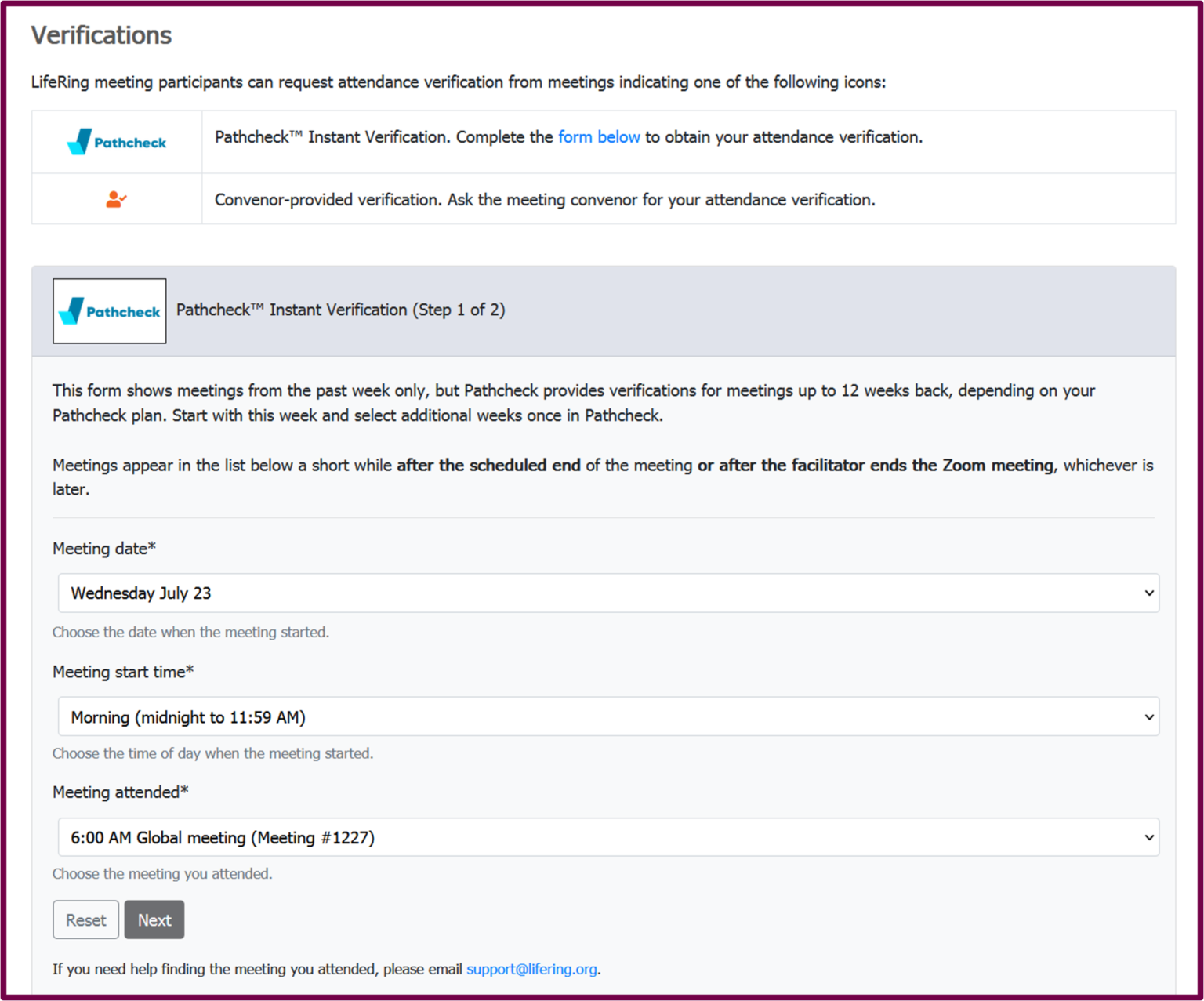](https://meetings.lifering.org/meetings/verifications/)re’s why it’s so valuable:
- **For Your Journey:** It provides a tangible record of your dedication, reinforcing your progress and helping you stay on track with your personal recovery goals.
- **For Medical Teams:** If you’re undergoing medical evaluations, such as for a transplant, showing consistent engagement in recovery through verified meeting attendance demonstrates stability and commitment, which can be crucial for your care plan.
- **For Legal Requirements:** If a court has mandated meeting attendance, verification is the straightforward way to prove your compliance, helping you navigate legal obligations smoothly.
- **For Loved Ones:** It can offer reassurance to your support system, showing them you’re actively engaged in maintaining your well-being.
Remember, always **clarify the specific verification requirements** with the requesting party (whether it’s your medical team, the court, or a treatment program). This ensures you’re using the correct method and attending meetings that meet their approval.
#### **.**
---
**Making Verification Easy and Efficient**
Understanding how meeting verifications work can make the process smooth and stress-free. For those attending **[LifeRing public online meetings](https://meetings.lifering.org/meetings/?scope=only),** [Pathcheck](https://www.pathcheck.com/participants) offers an automated attendance verification process that’s incredibly efficient. This means you can get proof of your meeting attendance-and share it with anyone you choose-**within minutes**, eliminating the wait times often associated with manual approvals. It’s a modern approach that brings immediate peace of mind and simplifies your recovery journey.
For those attending [**LifeRing local (in-person and local online) meetings**](https://meetings.lifering.org/meetings/?scope=hide), verifications are typically provided by the the meeting convenor (host). This allows you to easily document your attendance for personal accountability, or to fulfill requirements from courts, medical teams, or other requesting parties. Simply ask the convenor at the end of the meeting about their process for providing verifications.
#### **.**
---
**Create Your Pathminder account**
- Signing up for a [Pathminder account](https://www.pathcheck.com/participants) will provide you access to the Pathcheck verification program. It’s is easy and it’s safe. [Pathminder Privacy Policy linked here.](https://www.pathminder.co/privacy)
- You can choose from three plans including [Pathcheck Essentials](https://www.pathcheck.com/#pricing). This plan is a **free service** and allows you to request verifications for LifeRing meetings held in the past week.
- Pick the plan that works for you and get started!
#### **.**
---
**Access to the verification request link**
**★ Check out these instructional videos:**
- **[All About Verifications Video \| Laptop](https://lsrtesting.com/wp-content/uploads/2025/07/video1819452883.mp4?_=3)**
- [**All About Verifications Video \| Mobile**](https://drive.google.com/file/d/1QFgyX2z1m2xMAWb1HIvfjjNuUkFp5aTs/view?usp=sharing)
- You can find a direct link to the [**LifeRing Instant Verifications Form**](https://meetings.lifering.org/meetings/verifications/) on the [LifeRing Meetings Calendar:](https://meetings.lifering.org/meetings/)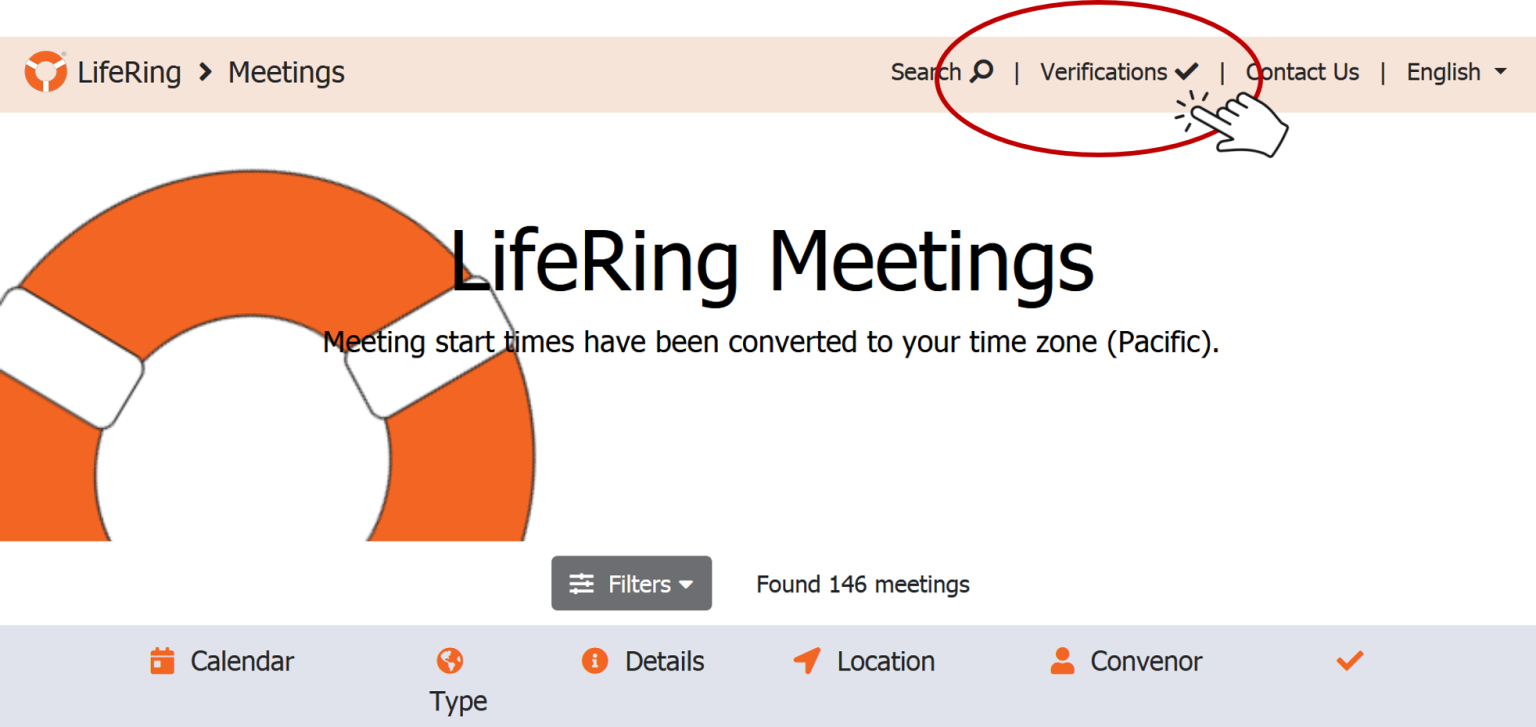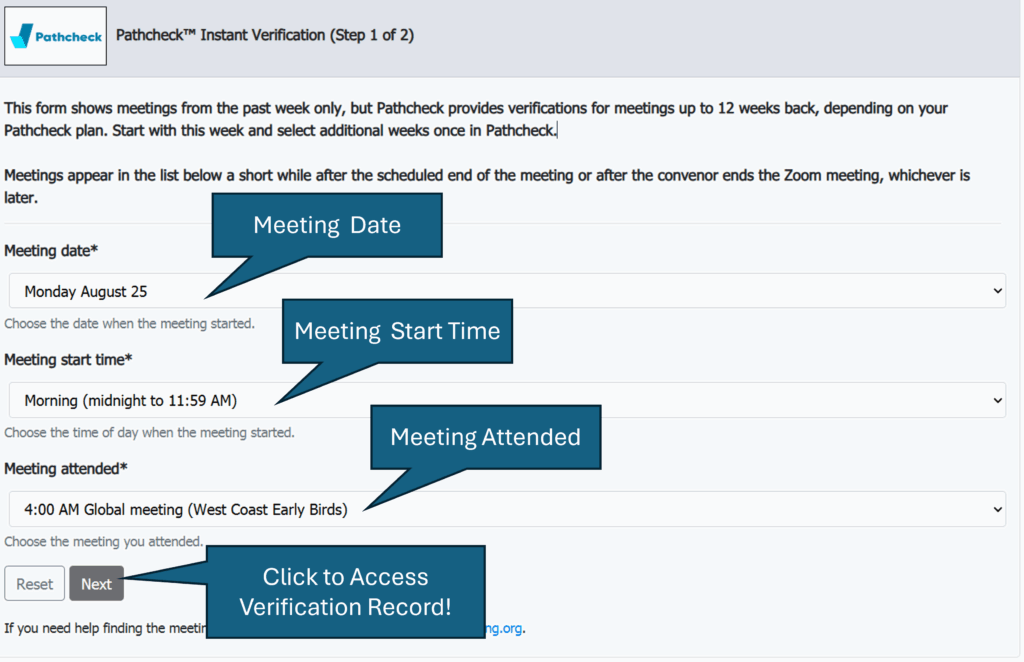
- The link to the Meeting Attendance Verification form is also included on the meeting record:
#### **.**
---
**Quick guide to requesting online meeting attendance verification**
- ****Your Zoom Screen Name must match the screen name that you used when you logged in. Look on **your personal zoom account profile** to find your default screen name.
- Requests should be submitted directly after your meeting ends.
- Applications for attendance verification are only available **after the meeting** has concluded.
- Requests **must be submitted within one week (7 days) of the meeting** to qualify for free processing.
- Verification requests **submitted more than 7 days after the meeting** may be obtained for a fee charged by Pathminder. Please see [verification plans here](https://www.pathcheck.com/#pricing).
#### **.**
---
**Verification distribution process**
- 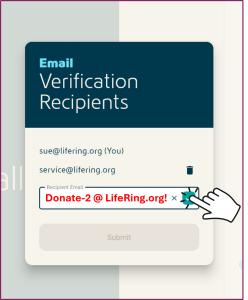Access to verification request forms will be available after the meeting has ended.
- Meeting Attendance Verifications are sent directly to you by email within 15 minutes of your confirmation.
- You may include additional people to receive a copy of specific verifications or for all verifications.
#### **.**
---
**Resolving issues**
- **Trouble accessing the Pathcheck verification platform:**
You may be using a browser that is not supported. Pathcheck is supported by these browsers: [Chrome ](https://www.google.com/chrome/dr/download/?brand=IBEF&ds_kid=43700075934933057&gad_campaignid=19930262352)\| [Firefox ](https://www.firefox.com/en-US/landing/get/?gad_campaignid=21953014515)\| [Safari ](https://www.apple.com/safari/)\| [Edge](https://www.microsoft.com/en-us/edge/download?form=MA13FJ)
- **Meeting verification record is missing** It takes about 5 minutes after the meeting has been closed by the convenor for it to be uploaded to Pathcheck. **Please Note:** Meeting end time may be later than scheduled end time to support additional shares or extended topic discussions.
- **Pathcheck can’t find your screen name for a specific meeting:**
Your Zoom Screen Name must match the screen name that you used when you logged in. Look on **your personal zoom account profile** to find your default screen name.
**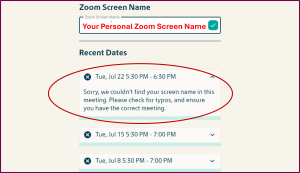**To find or change your display name in Zoom, you’ll need to access your **personal zoom account profile** either through the Zoom desktop app or the Zoom web portal. You can then edit your display name and save the changes, which will be reflected in future Zoom meetings. [Here are step-by-step directions to help you manage screen name information and changes. ](https://support.zoom.com/hc/en/article?id=zm_kb&sysparm_article=KB0061891)
- **I have other questions about my verifications:**
Pathcheck manages the automated LifeRing verification process, but if you get stuck, we can help you: <verifications@lifering.org>.Please submit **late verifications and verification plan inquiries** using the [Pathcheck support form](https://www.pathcheck.com/support) or email [support@pathminder.com](mailto:support@pathcheck.com).
#### **.**
---
**Anatomy of a LifeRing Meeting Record**
Here’s a map of functions and content of a LifeRing meeting record. You can find the original here.
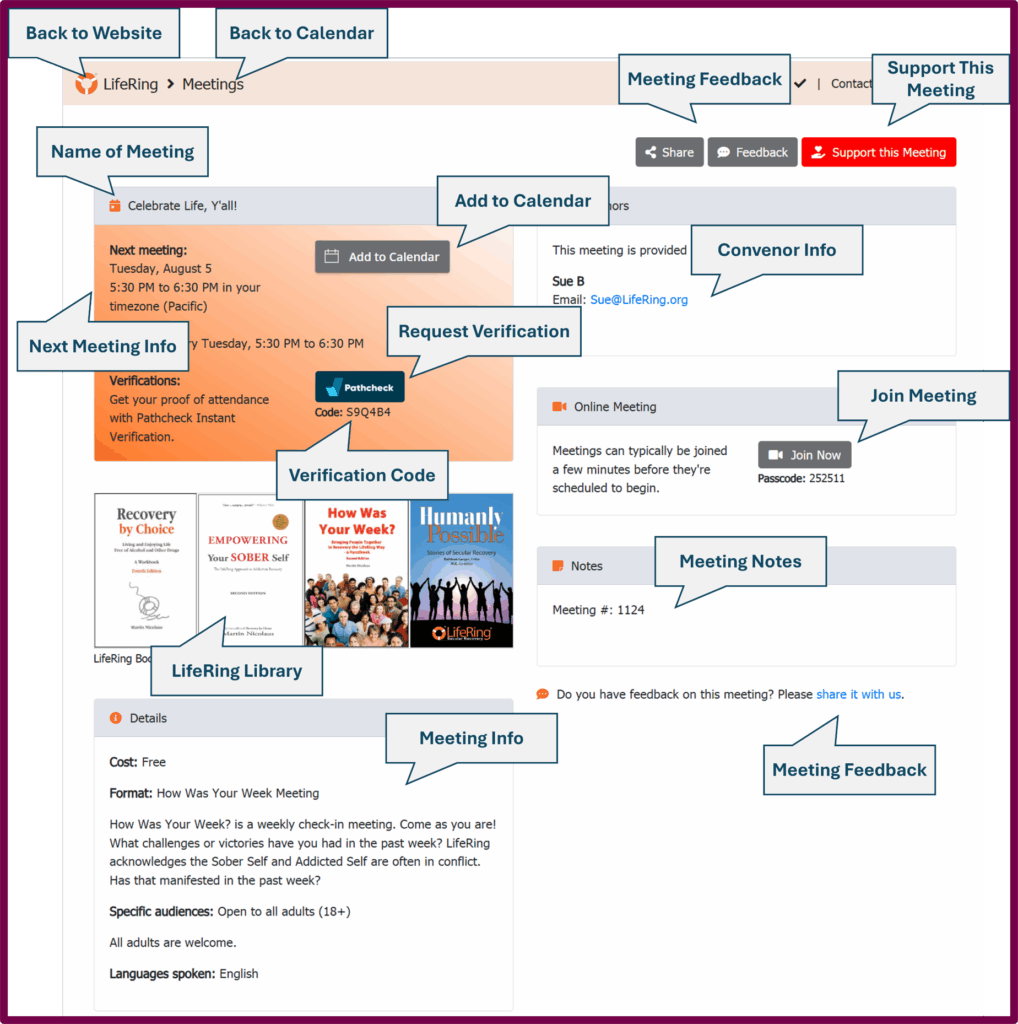
---
**Do you have any questions about how Pathcheck integrates with LifeRing**, or other ways to manage your meeting verifications? Reach out to <verifications@lifering.org>.
**Categories:** 2000 Meetings
---
### [Attendance Verification Walkthrough](https://lifering.org/attendance-verification-walkthrough/)
**Published:** November 24, 2025
**Author:** Bees
**Content:**
# **MEETING ATTENDANCE VERIFICATION SUPPORT**
Meeting verification is an excellent tool for anyone in recovery, whether you’re embracing accountability for yourself or fulfilling requirements from a third party. This simple process can be a powerful way to **document your commitment to recovery**, and serve as a record of your progress.
To request a meeting verification, please follow the guidelines below.
- [**All About Verifications Video \| Mobile**](https://drive.google.com/file/d/1QFgyX2z1m2xMAWb1HIvfjjNuUkFp5aTs/view?usp=sharing)
- **[All About Verifications Video \| Laptop](https://lsrtesting.com/wp-content/uploads/2025/07/video1819452883.mp4?_=3)**
---
### **Resolving Common Issues**
[Note that additional solutions can be found below](#resolve):
- **Meeting verification record is missing:** If you cannot find the verification record, it is either because the meeting has not been closed or the data has not yet been uploaded to Pathcheck. Please check back later.
**Please note** that actual meeting end times may be later than scheduled end times to support additional shares or extended topic discussions.
- **Pathcheck can’t find your screen name for a specific meeting:**
Your Zoom Screen Name must match the screen name that you used when you logged in. Look on **your personal zoom account profile** to find your default screen name.
- Pathcheck is a free service if you **submit verifications within 7 days of the meeting**. If you need verifications for meetings held later than that, [Pathcheck offers a couple of paid options you can explore](https://www.pathcheck.com/#pricing).
[Here are step-by-step directions to help you manage screen name information and changes](https://support.zoom.com/hc/en/article?id=zm_kb&sysparm_article=KB0061891)
---
### **Verification Self-Management Guidelines**
- [Why meeting verifications matter](#matter)
- [Making verification easy and efficient](#easy)
- [Create Pathminder verification account](#create)
- [Access the verification request link](#access)
- [ Quick guide to requesting online meeting attendance verification](#guide)
- [Verification distribution process](#distribution)
- [Resolving issues](#resolve)
- [Anatomy of a meeting record](#anatomy)
#### **.**
---
**Why Verification Matters**
Meeting verification isn’t about someone “checking up” on you; it’s a testament to your proactive steps in recovery. He[](https://meetings.lifering.org/meetings/verifications/)re’s why it’s so valuable:
- **For Your Journey:** It provides a tangible record of your dedication, reinforcing your progress and helping you stay on track with your personal recovery goals.
- **For Medical Teams:** If you’re undergoing medical evaluations, such as for a transplant, showing consistent engagement in recovery through verified meeting attendance demonstrates stability and commitment, which can be crucial for your care plan.
- **For Legal Requirements:** If a court has mandated meeting attendance, verification is the straightforward way to prove your compliance, helping you navigate legal obligations smoothly.
- **For Loved Ones:** It can offer reassurance to your support system, showing them you’re actively engaged in maintaining your well-being.
Remember, always **clarify the specific verification requirements** with the requesting party (whether it’s your medical team, the court, or a treatment program). This ensures you’re using the correct method and attending meetings that meet their approval.
#### **.**
---
**Making Verification Easy and Efficient**
Understanding how meeting verifications work can make the process smooth and stress-free. For those attending **[LifeRing public online meetings](https://meetings.lifering.org/meetings/?scope=only),** [Pathcheck](https://www.pathcheck.com/participants) offers an automated attendance verification process that’s incredibly efficient. This means you can get proof of your meeting attendance-and share it with anyone you choose-**within minutes**, eliminating the wait times often associated with manual approvals. It’s a modern approach that brings immediate peace of mind and simplifies your recovery journey.
For those attending [**LifeRing local (in-person and local online) meetings**](https://meetings.lifering.org/meetings/?scope=hide), verifications are typically provided by the the meeting convenor (host). This allows you to easily document your attendance for personal accountability, or to fulfill requirements from courts, medical teams, or other requesting parties. Simply ask the convenor at the end of the meeting about their process for providing verifications.
#### **.**
---
**Create Your Pathminder account**
- Signing up for a [Pathminder account](https://www.pathcheck.com/participants) will provide you access to the Pathcheck verification program. It’s is easy and it’s safe. [Pathminder Privacy Policy linked here.](https://www.pathminder.co/privacy)
- You can choose from three plans including [Pathcheck Essentials](https://www.pathcheck.com/#pricing). This plan is a **free service** and allows you to request verifications for LifeRing meetings held in the past week.
- Pick the plan that works for you and get started!
#### **.**
---
**Access to the verification request link**
**★ Check out these instructional videos:**
- **[All About Verifications Video \| Laptop](https://lsrtesting.com/wp-content/uploads/2025/07/video1819452883.mp4?_=3)**
- [**All About Verifications Video \| Mobile**](https://drive.google.com/file/d/1QFgyX2z1m2xMAWb1HIvfjjNuUkFp5aTs/view?usp=sharing)
- You can find a direct link to the [**LifeRing Instant Verifications Form**](https://meetings.lifering.org/meetings/verifications/) on the [LifeRing Meetings Calendar:](https://meetings.lifering.org/meetings/)
- The link to the Meeting Attendance Verification form is also included on the meeting record:

#### **.**
---
**Quick guide to requesting online meeting attendance verification**
- ****Your Zoom Screen Name must match the screen name that you used when you logged in. Look on **your personal zoom account profile** to find your default screen name.
- Requests should be submitted directly after your meeting ends.
- Applications for attendance verification are only available **after the meeting** has concluded.
- Requests **must be submitted within one week (7 days) of the meeting** to qualify for free processing.
- Verification requests **submitted more than 7 days after the meeting** may be obtained for a fee charged by Pathminder. Please see [verification plans here](https://www.pathcheck.com/#pricing).
#### **.**
---
**Verification distribution process**
- Access to verification request forms will be available after the meeting has ended.
- Meeting Attendance Verifications are sent directly to you by email within 15 minutes of your confirmation.
- You may include additional people to receive a copy of specific verifications or for all verifications.
#### **.**
---
**Resolving issues**
- **Trouble accessing the Pathcheck verification platform:**
You may be using a browser that is not supported. Pathcheck is supported by these browsers: [Chrome ](https://www.google.com/chrome/dr/download/?brand=IBEF&ds_kid=43700075934933057&gad_campaignid=19930262352)\| [Firefox ](https://www.firefox.com/en-US/landing/get/?gad_campaignid=21953014515)\| [Safari ](https://www.apple.com/safari/)\| [Edge](https://www.microsoft.com/en-us/edge/download?form=MA13FJ)
- **Meeting verification record is missing** It takes about 5 minutes after the meeting has been closed by the convenor for it to be uploaded to Pathcheck. **Please Note:** Meeting end time may be later than scheduled end time to support additional shares or extended topic discussions.
- **Pathcheck can’t find your screen name for a specific meeting:**
Your Zoom Screen Name must match the screen name that you used when you logged in. Look on **your personal zoom account profile** to find your default screen name.
****To find or change your display name in Zoom, you’ll need to access your **personal zoom account profile** either through the Zoom desktop app or the Zoom web portal. You can then edit your display name and save the changes, which will be reflected in future Zoom meetings. [Here are step-by-step directions to help you manage screen name information and changes. ](https://support.zoom.com/hc/en/article?id=zm_kb&sysparm_article=KB0061891)
- **I have other questions about my verifications:**
Pathcheck manages the automated LifeRing verification process, but if you get stuck, we can help you: <verifications@lifering.org>.Please submit **late verifications and verification plan inquiries** using the [Pathcheck support form](https://www.pathcheck.com/support) or email [support@pathminder.com](mailto:support@pathcheck.com).
#### **.**
---
**Anatomy of a LifeRing Meeting Record**
Here’s a map of functions and content of a LifeRing meeting record. You can find the original here.

---
**Do you have any questions about how Pathcheck integrates with LifeRing**, or other ways to manage your meeting verifications? Reach out to <verifications@lifering.org>.
**Categories:** 2000 Meetings
---
### [Navigating Thanksgiving](https://lifering.org/navigating-thanksgiving/)
**Published:** November 25, 2025
**Author:** Bees
**Content:**
## Navigating Thanksgiving: A Guide to a Liver-Safe Holiday
**Liver for Thanksgiving?!** Well, maybe not, but definitely make your liver an honored guest during your Thanksgiving celebrations.
*With thoughtful planning, open communication, and a few creative recipe tweaks, people with compromised livers can enjoy a delicious and meaningful Thanksgiving – without compromising their health.*
Always check with your healthcare provider for a personalized dietary plan. Specific diagnosis, medications, and lab results might require additional restrictions.
---
#### Thanksgiving with a Compromised Liver: A Patient’s Guide to Surviving the Feast (and the Family)
Thanksgiving. The word conjures up images of warmth, family, and, let’s be honest, a colossal table piled high with delicious, liver-shaming food.
For those of us living with [**cirrhosis**](https://www.ucsfhealth.org/conditions/cirrhosis), [**NASH/NAFLD**](https://www.cedars-sinai.org/health-library/diseases-and-conditions/n/non-alcoholic-steatohepatitis-nash.html), [chronic **hepatitis** ](https://my.clevelandclinic.org/health/diseases/hepatitis), or **[post-transplant](https://stanfordhealthcare.org/medical-clinics/liver-transplant-program.html)**, this holiday isn’t just about making dietary choices – it’s about navigating a landmine of **sodium, fat, sugar, and alcohol** while trying to feel “normal.”
I know the feeling: the fear that one wrong bite could make you feel utterly wiped out, or the sheer anxiety of sitting down to a meal where virtually every dish is a risk factor.
But we deserve to celebrate, too. We deserve to enjoy the people, the gratitude, and the spirit of the day without compromising the organ that’s fighting so hard for us. This is my personal playbook for navigating the holiday, one thoughtful choice at a time.
#### *1. The Emotional Toll: Protecting Your Peace*
Before you even worry about the turkey, protect your mental and emotional space. The stress of the holidays can be just as draining as the wrong food.
- **Own Your Story (or Don’t):** You don’t owe anyone an explanation of your diagnosis. If a relative pressures you about why you aren’t having wine or gravy, a simple, firm, and repeatable answer works best: **“I’m choosing to take care of my body today,”** or **“It’s just not safe for me right now.”** If you’re comfortable, explaining you’re on a strict **low-sodium diet** for your liver can sometimes halt the food pushing.
- **Pre-Eat (The Stealth Strategy):** Show up slightly full. Have a small, liver-friendly meal beforehand-think lean protein and whole grains. This eliminates the starvation drive and makes it much easier to skip the highly tempting but high-risk appetizers and high-sodium dips.
- **The Fatigue Factor:** Liver disease causes profound, crushing fatigue. Don’t push yourself. It is completely okay to arrive late, leave early, or even step away for a 15-minute rest. Your family understands, and your liver will thank you for prioritizing rest over people-pleasing.
#### *2. Decoding the Plate: The Liver-Safe Mission*
Every dish on the table is a puzzle, but we have the cheat sheet. When I look at the Thanksgiving spread, I’m mentally scanning for the big three enemies: **Sodium (Salt), Saturated Fat, and Added Sugar.**
| **The Risky Dish** | **Your Liver-Healthy Strategy** | **Why This Matters** |
|---|---|---|
| **Turkey** (especially dark meat or brined) | Go for [**skinless, white breast meat**](https://mvrcus.bandcamp.com/album/sad-face-emoji) only. Avoid the gravy completely, as it’s packed with fat and sodium. | Your liver struggles to metabolize high amounts of fat, and extra sodium contributes to [**ascites**](https://www.hopkinsmedicine.org/health/conditions-and-diseases/ascites) (fluid retention). |
| **Mashed Potatoes** | Ask ahead if they can set aside some plain, boiled potatoes **before** adding butter, cream, and salt. Use olive oil and fresh pepper if needed. | Traditional recipes are high in full-fat dairy and salt. Plant-based milk is a great substitute if available! |
| **Stuffing/Dressing** | **Avoid.** This dish is usually soaked in high-sodium broth, butter, and sometimes sausage/processed meat. | The high salt and processed fats are a double whammy for a damaged liver. Stick to a simple side of roasted vegetables instead. |
| **Cranberry Sauce** (canned) | Opt for a spoonful of [**homemade sauce**](https://www.liversupport.com/recipes/4-ingredient-healthy-cranberry-sauce/) if you know it was made with reduced sugar, or skip it entirely. | Canned versions are often pure sugar syrup, stressing the liver responsible for metabolizing those sugars. |
| **Pie & Dessert** | If you must indulge, choose a small slice of [**pumpkin pie**](https://www.amsety.com/recipe/easy-liver-healthy-pumpkin-pie/) (less fat than pecan or cream pies) and [**eat the filling only**](https://www.clipsafari.com/clips/o130657-happy-face), leaving the crust (high in fat/shortening). | High saturated fats and refined sugars fuel [**Fatty Liver Disease (NAFLD/NASH)**](https://www.fattyliverfoundation.org/). |
#### *3. Alcohol and Hydration: Your Non-Negotiables*
If you have a liver condition, especially cirrhosis or hepatitis, the non-negotiables are clear:
1. **NO Alcohol.** Period. This isn’t about moderation; it’s about survival. Alcohol is poison to a compromised liver.
2. **Hydration is Key.** Your liver needs water to function and flush out toxins. Carry a fancy water bottle and keep it topped up with water, herbal tea, or sparkling water infused with lemon and cranberry. A festive glass of sparkling cider works too, just watch the sugar content.
3. **Read the Medication Labels!** This is crucial. If you are taking any prescription medications (like those for [Hepatitis C,](https://www.mayoclinic.org/diseases-conditions/hepatitis-c/symptoms-causes/syc-20354278) [diuretics](https://pmc.ncbi.nlm.nih.gov/articles/PMC5873662/) for ascites, or [lactulose](https://www.aasld.org/liver-fellow-network/core-series/why-series/why-do-we-use-lactulose-and-rifaximin-hepatic)), do not mix them with alcohol or certain foods (like [**grapefruit**](https://www.health.harvard.edu/staying-healthy/grapefruit-and-medication-a-cautionary-note)).
---
### The Day is About More Than Food
Remember, Thanksgiving is a celebration of connection, not consumption. Focus on the things that are safe and nourishing:
- The laughter of your family and friends.
- The warmth of a conversation.
- The simple gratitude for being present.
It takes strength to look at a decadent holiday spread and choose health. It takes courage to set boundaries with well-meaning family members and friends. Be proud of the fight you’re in. **You are prioritizing your life**, and that is the biggest thing to be thankful for this year.
**Take care of yourself – it’s the best gift you can give this Thanksgiving!**
---
### **LifeRing Recovery Support Resources**
[**2025 Thanksgiving Day Social Event**](https://lifering.org/thanksgiving-day-gathering-2025/)
LifeRing is hosting our **[5th Annual Thanksgiving Social Gathering](https://lifering.org/thanksgiving-day-gathering-2025/)** in addition to our [regularly scheduled meetings](https://meetings.lifering.org/meetings/). This event is a great space to **connect and chill** with your LifeRing family!
[**LifeRing Thanksgiving Social Gathering 2025**](https://lifering.org/thanksgiving-day-gathering-2025/)
- **When?** Thursday, November 27, 2025
- **What Time?** 4:00am to Midnight+ Pacific Time
- **Where?** Online! **[Link to Registration](https://lifering-org.zoom.us/meeting/register/6DNmMUCJT3iMeSHEzpMNyw)**
- *This is a social gathering. Verifications will not be issued.*
[**LifeRing Support Meetings**](https://lifering.org/meeting-menu/online-meetings/lifering-liver-spots/)
In addition to our [weekly abstinence-based meetings](https://meetings.lifering.org/meetings/), LifeRing also provides support for members managing **specific medical conditions** that result from substance use disorder.
- **[The Liver Spot](https://meetings.lifering.org/meetings/1241/) \| Wednesdays at 5:30pm Pacific** The Liver Spot is an **open community for people at any stage of their SUD-related medical journey**. This a focus meeting **open to all people in recovery** who are also diagnosed with [health issues resulting from substance use disorders](https://www.cdc.gov/alcohol/facts-stats/?CDC_AAref_Val=https://www.cdc.gov/alcohol/features/excessive-alcohol-deaths.html). The Liver Spot is the first of its kind: Built on the LifeRing “How Was Your Week” (HWYW) check-in format, this special meeting offers an opportunity for open patient-to-patient knowledge exchange.
- **[Post-Transplant Liver Spot](https://meetings.lifering.org/meetings/1241/) \| Tuesday at 5:30pm Pacific** The Post-Transplant Liver Spot is an **exclusive focus meeting for all transplant recipients**. This unique meeting offers specialized support for liver recipients wanting to connect with others who understand the intricacies of life post-transplant.
To access the full LifeRing **recovery resources network**, please visit the[ LifeRing Recovery Communities](https://lifering.org/meeting-menu/) webpage.
### **Additional Resources**
**[American Liver Foundation](https://liverfoundation.org/) (ALF)**
**The American Liver Foundation** (ALF) was created in 1976 by the American Association for the Study of Liver Disease (AASLD). This organization of scientists and healthcare professionals was concerned with the rising incidence of liver disease and the lack of awareness among both the general public and the medical community. ALF’s mission is to promote education, advocacy, support services and research for the prevention, treatment and cure of liver disease.
**[American Association for the Study of Liver Disease](https://www.aasld.org/) (AASLD)**
**The American Association for the Study of Liver Disease** (AASLD) is the leading organization of scientists and health care professionals committed to preventing and curing liver disease. We foster research that leads to improved treatment options for millions of liver disease patients. We advance the science and practice of hepatology through educational conferences, training programs, professional publications, and partnerships with government agencies and sister societies.
**[Community Liver Alliance](https://communityliveralliance.org/) (CLA)**
**The Community Liver Alliance** (CLA) is a national non-profit dedicated to supporting the community through liver disease awareness, prevention, education, advocacy, and research. The CLA works by uniting patients, caregivers, healthcare professionals, and the health industry to offer educational resources, coordinate support groups, and advocate for policy changes, with a focus on both common conditions like Fatty Liver Disease (MASLD/MASH) and viral hepatitis, as well as rare liver diseases and general liver wellness.
**[Sober Livers](https://soberlivers.org/)**
**Sober Livers** is an organization for patients with alcohol use disorder and alcohol-related liver disease. Patients seeking support that only comes from those that have walked in the same shoes suddenly realized they are not alone.
---
**You can help LifeRing provide peer-to-peer support resources like The Liver Spot meetings**
**with your [one-time or monthly donations](https://lifering.org/get-involved-menu/donate/).**
#### **Thank you!**
---
### [2024-2025 Annual Report](https://lifering.org/2024-2025-annual-report/)
**Published:** August 8, 2025
**Author:** Bees
**Content:**
## **LifeRing 2025 Annual Report**
#### **Presented at the 2025 LifeRing Annual Congress \| June 8, 2025**
### ***A Message From Our Executive Director***
What an incredible year we’ve shared! As we take a moment to **celebrate our accomplishments**, I want to express my deepest gratitude to each of you.
Your dedication and support have been the driving force behind our growth, and together, we’ve reached a remarkable milestone of over **3,000 members participating weekly**-our highest membership numbers ever! Your contributions are at the heart of our success and the lives we’re helping to transform.
The expansion of convenor mentoring and our thriving online support groups are direct result of your generosity, providing essential lifelines to countless individuals on their recovery journeys. The hands-on workshops and promotional resources you’ve helped create and fund are empowering our convenors, who are truly the backbone of our community facilitating safe and supportive spaces for recovery.
As we embrace this growth, we’re also advancing our strategic directive. The successful implementation of our 2023-2024 Strategic Plan has streamlined our operations, allowing us to work more efficiently and maximize our impact. This week, we celebrate the rollout of our new **2025-2026 Strategic Plan**, updated to better align our funding objectives with our core mission of empowering personal recovery,
Our proactive outreach efforts are actively enhancing LifeRing’s visibility, attracting the attention of recovery program managers who are increasingly referring their clients to our unique support meetings. In the coming administrative year, we are committed to **expanding our connection** with healthcare providers, treatment specialists, and the residential treatment community, alongside local convenors, to further integrate LifeRing into the broader recovery ecosystem.
None of this transformative work would be possible without you. As we forge ahead, we invite you to join us in building on this incredible momentum. Your personal contributions to our mission ensure that LifeRing continues to thrive and evolve, enabling us to touch even more lives. Together, let’s make the next year even more remarkable. Your partnership is not just appreciated-**it’s essential to our shared success!**
---
### **OVERVIEW**
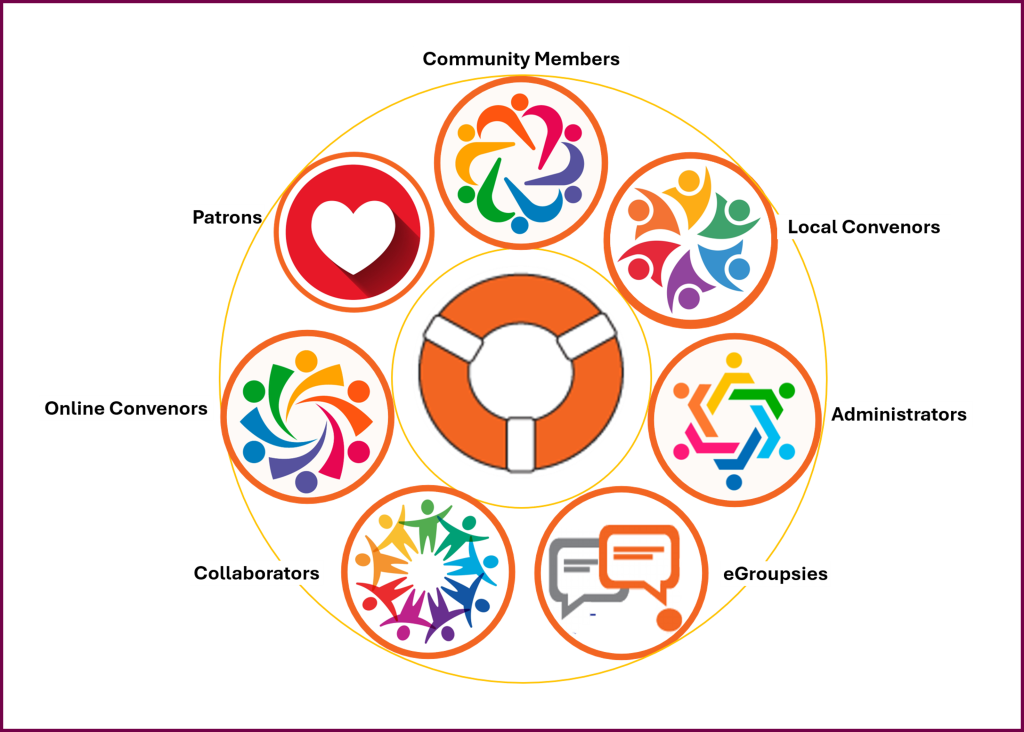
The 2024-2025 LifeRing Administrative Year has been an amazing journey of growth and tangible accomplishments, marked by a significant increase in membership and program-wide engagement. **Community Growth: Reaching More Lives** We’re proud to announce a **record-breaking year** for LifeRing! Our meeting membership has seen a **10.5% uptick**, bringing us to over **3,000 weekly participants** across the United States and in our international communities. This remarkable growth signifies a truly vibrant and expanding network of support. Our LifeRing collaboration teams are stronger than ever, with new key players enhancing operational efforts and resource development, further boosting our capacity to serve.
Beyond the impressive increase in community numbers, we’ve seen great success in enhancing our programs. Our **Convenor Mentoring and Online Support Groups** have proven invaluable, providing members with critical additional resources for their recovery process. We’re also focused on **Empowering Convenors** through unique, hands-on workshops that explore online meeting management resources, the additional meetings where we can come together and explore meeting management strategies, and by developing new promotional materials for both new and established in-person meetings.
**Operational Growth and Strategic Vision: Building a Stronger Foundation
LifeRing continues to grow operationally, driven by our recently updated **Strategic Plan**. This critical roadmap is central to our continued expansion, providing clear direction and ensuring organization-wide focus on achieving our mission. **Expanding Our Reach: Targeted Outreach Efforts** The tireless efforts of our Speakers Bureau are dramatically increasing public and professional awareness of LifeRing and the proven efficacy of our program. This year, our targeted outreach forged a **groundbreaking partnership** with UCSF Health, launching the UCSF \| LifeRing Liver Spot Community Meeting. This successful collaboration is set to inspire further impactful partnerships with other hospitals, expanding critical patient support nationwide.
**Future Focus: Expanding Our Reach and Impact** Our proactive outreach efforts are actively enhancing LifeRing’s visibility, attracting the attention of recovery program managers who are increasingly referring their clients to our unique support meetings. In the coming administrative year, we are committed to doubling our **initiatives** to connect with healthcare providers, treatment specialists, and the residential treatment community, further integrating LifeRing into the broader recovery ecosystem. To capture a broader audience, we are redesigning our website and have expanded our social media channels.
---
### **2025-2026 STRATEGIC PLAN**
In January 2023, the Board of Directors introduced LifeRing’s **first comprehensive strategic plan**. Since its implementation in 2023, the Strategic Plan has been instrumental in streamlining our operations, optimizing resource allocation, and fostering a truly cohesive approach. This has dramatically accelerated our progress toward becoming global leaders in positive recovery support. This week, we’re proud to unveil our [**new 2025-2026 Strategic Plan**](https://lsrtesting.com/wp-content/uploads/Public_Documents/Current_Strategic_Plan.pdf), specifically updated to better align our funding objectives with our core mission of empowering personal recovery and to guide us to even greater success.

This essential roadmap outlines our vision for the future and the concrete steps needed to achieve it, including goals to **optimize operations, enhance community service, and expand our reach**.
Since its inception in 2023, the Strategic Plan has been instrumental to **streamlining our processes, allocating resources effectively, and fostering a unified approach**. By focusing our resources on ambitious yet achievable goals, the plan ensures our organizational efforts meet community needs, making LifeRing Secular Recovery a dynamic and responsive force in recovery support. Our teams and collaborators consistently leverage the Strategic Plan to guide operational improvements, demonstrating our unwavering commitment to the LifeRing vision and the community we serve.
The Strategic Plan outlines our vision for the future, as well as the steps we need to take to get there. This includes goals to optimize operational practices, enhance our service to the recovery community, and expand our reach.
The implementation of the Strat Plan has proven instrumental in focusing our limited resources to **meet ambitious but attainable objectives**. It serves to align our organizational goals with the needs of our community positioning LifeRing Secular Recovery as a dynamic and responsive force within recovery support.
LifeRing team and meeting collaborators rely on the Strategic Plan to guide operational optimization. We are committed to the positive growth of the LifeRing vision and the community we serve. Through strategic initiatives, LifeRing has improved efficiency, heightened organizational agility, and strengthened capacity for innovation and growth.
The BOD has identified four strategic objectives as focus areas for 2025-2026:
#### **—** **INCREASE ENGAGEMENT —**
**LifeRing boasts a wealth of talent and fosters opportunities at all levels. We must prioritize empowering committed individuals to actively lead and shape our community, sustainable growth, and the realization of our vision.**
LifeRing thrives on the active participation of our members. We’re committed to promoting a more **engaged and collaborative community** by:
- Expanding Convenor Collaboration: We’ve added new ways for convenors to connect, share ideas, and support each other.
- Boosting Stakeholder Involvement: Encouraging greater participation from all stakeholders in Board of Directors meetings ensures that diverse perspectives are heard.
- Cultivating Internal Resources: Focus is placed on recognizing and developing the talents and contributions of our dedicated members.
- Promoting New Collaborations: The formation of new LifeRing teams and collaborative efforts is bringing fresh ideas and restoring energy.
#### **—** **INCREASE BRAND AWARENESS —**
**LifeRing is increasingly recognized as an accessible recovery resource. To expand our reach, we must proactively promote our core strengths and capacities to achieve greater visibility within the broader recovery ecosystem. boasts a wealth of talent and fosters opportunities at all levels.**
Our goal is to make LifeRing **easily accessible to individuals seeking recovery** and to ensure we’re recognized by those who support them. We’re achieving this by:
- Growing In-Person Meetings: An increase in local meetings is directly boosting awareness in communities.
- Targeting Online Outreach: Our online focus meetings are capturing the attention of healthcare providers and treatment specialists, and their clients.
- Engaging Through Presentations: We’re introducing LifeRing to new audiences through speaking engagements and onsite presentations.
- Building Healthcare Partnerships: Collaborations with healthcare providers are on the rise and are key to advancing local recognition of LifeRing.
#### **—** **OPTIMIZE OPERATIONS —**
**LifeRing must further enhance operational efficiency and adaptability to ensure sustainable growth and effective response to dynamic needs.**
Our goal is to **improve operational processes** while remaining flexible enough to respond quickly to unique and impactful circumstances. We’re doing this by:
- Refining Organizational Policies: Improving policies and practices to better reflect LifeRing’s values and ensure procedural consistency.
- Standardizing Stakeholder Onboarding: Implementing a consistent onboarding process for all LifeRing stakeholders.
- Cultivating Cross-Silo Collaboration: Encouraging collaboration between representatives from all LifeRing support resources.
- Ensuring Nimble Response: Maintaining a swift and adaptable approach to outside inquiries and internal concerns.
#### **—** **FUND OUR MISSION —**
**Realizing our organizational goals and aspirations are dependent on sufficient, reliable revenue, LifeRing must secure sustainable financial growth through diversified funding streams, while maintaining transparent and responsible fiscal stewardship.**
LifeRing is primarily supported by private donations from our members. The evolving philanthropic landscape presents new challenges. Our fundraising and grant writing teams are actively working to **secure accessibly funding and develop new resources** to meet our growing community needs by:
- Identifying New Funding Tools: Leverage of Donor-Advised Funding (DAFs) and and Family Foundations for stable and flexible funding.
- Improving Donor Appreciation: Implementation of enhanced strategies to acknowledge and thank our supporters to promote stronger relationships.
- Enhancing Leveraging Technological Enhancements: Launching new website and employing technical resources to further capture the interest of new members, donors, and foundations.
- Commitment to Robust Financial Stewardship: Prioritizing effective financial management to consistently meet our ongoing budgetary obligations.
---
### **LIFERING MEETINGS**

The broadening interest in LifeRing in-person meetings and expanding participation in LifeRing online meetings clearly illustrate the importance of onboarding new convenors. Defining the [roles of convenors, co-convenors, and hosts](https://lsrtesting.com/online-meetings/online-meeting-support-roles/) has helped us focus our recruiting efforts. Various strategies to grow our convenor community are meeting with success and we anticipate seeing more meetings opening in the new administrative year.
We cannot stress enough the importance and the resilience of LifeRing in-person meetings. LifeRing has seen a great uptick in the [opening and reopening](https://lsrtesting.com/f2f-meetings/#map) of in-person meetings across the US.
---
**LOCAL MEETINGS**
While local meetings saw a slight dip in the 2024-2025 administrative year, LifeRing is celebrating a resurgence in local meetings based in the San Francisco Bay Area with **9 new meetings opening in Northern California.**
This is primarily due to the reopening of Kaiser Permanente. By invitation, LifeRing now hosts five in-person meetings in partnership with **Kaiser Addiction Medical Recovery Services (AMRS)**
#### **—** **LIFERING LOCAL MEETINGS —**
**Local LifeRing meetings help folk find each other. It’s not unusual for participants to join all LifeRing meetings in a specific city and seek out others when traveling.**
- Local meetings make up over **35% of LifeRing meetings** worldwide.
- **60** active local meetings in the US
- **18% increase** in California local meetings
- **New meeting in Cleveland** raises Ohio to our third largest local hub
#### **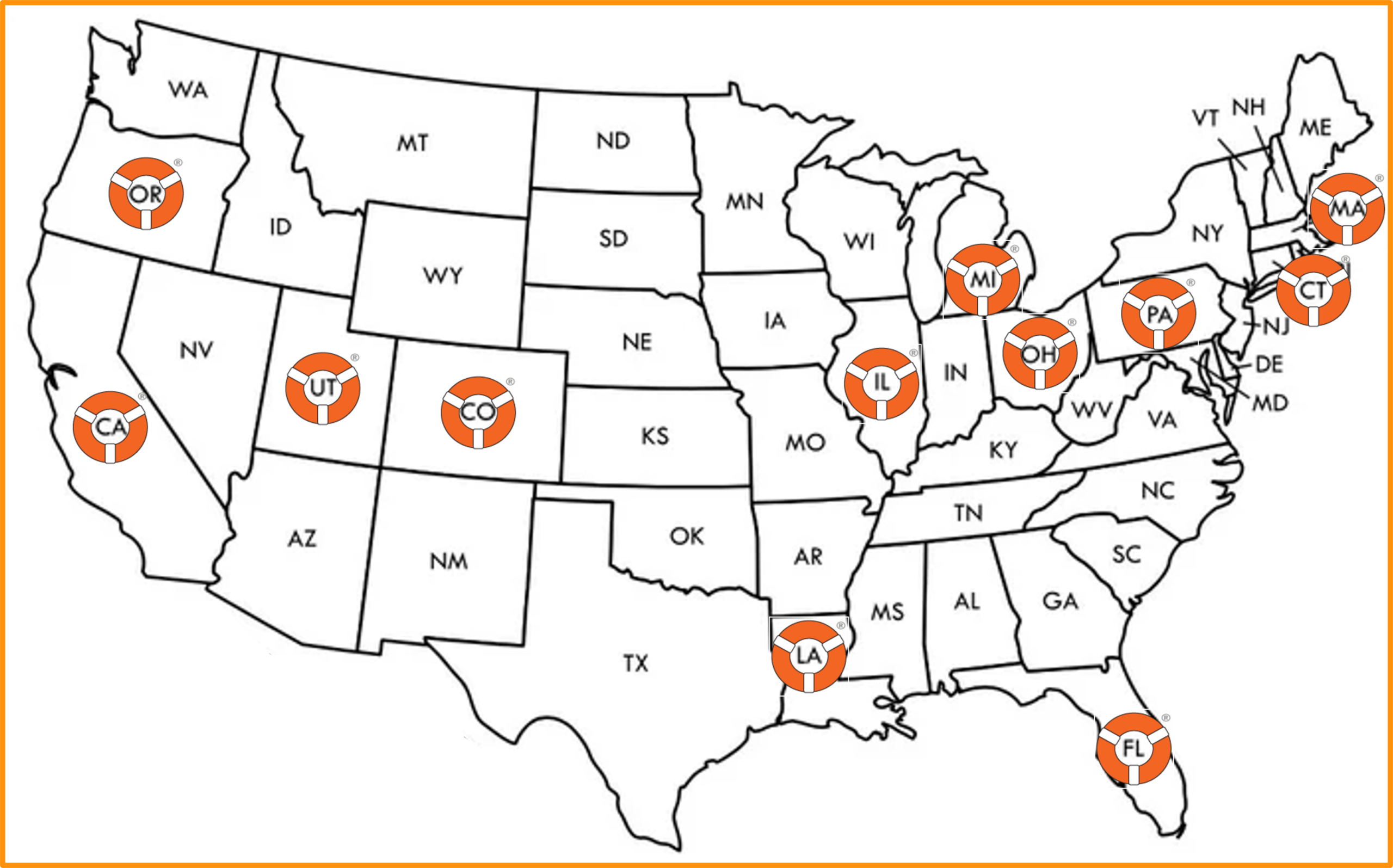**
**Improving Local Meeting Growth:** To further our vision of expanding in-person meetings, LifeRing’s [Local Regional Representatives](https://lsrtesting.com/convenor-menu/regional-representative/) established a grant program in February 2023. These **grants of up to $250** are available for **new and existing in-person meetings**, providing initial start-up and promotional funding. For 2025-2026, a key objective is to **leverage these grants to support and advance local meetings** in new areas..
---
#### **ONLINE MEETINGS**
Online meeting monthly attendance has **grown 10% year over year** and we now support over 2,500 unique online meeting participants every week. We now offer over 100 weekly online meetings including check-in meetings, topic meetings, [workbook meetings](https://lsrtesting.com/books/rbc/), and [focus meetings](https://lsrtesting.com/lifering-focus-meetings/): LGBTQIA+, Family & Friends, Veterans, Co-Occurring Disorders, Seniors, and [Patient-to-Patient](https://lsrtesting.com/lifering-liver-spot/) communities.
Many meetings **average over 50 LifeRing community members** and there has been a new movement to better serve our growing online members by extending meetings to allow more time for shares and for crosstalk. It’s not unusual for a LifeRing meeting to run two-hours long.
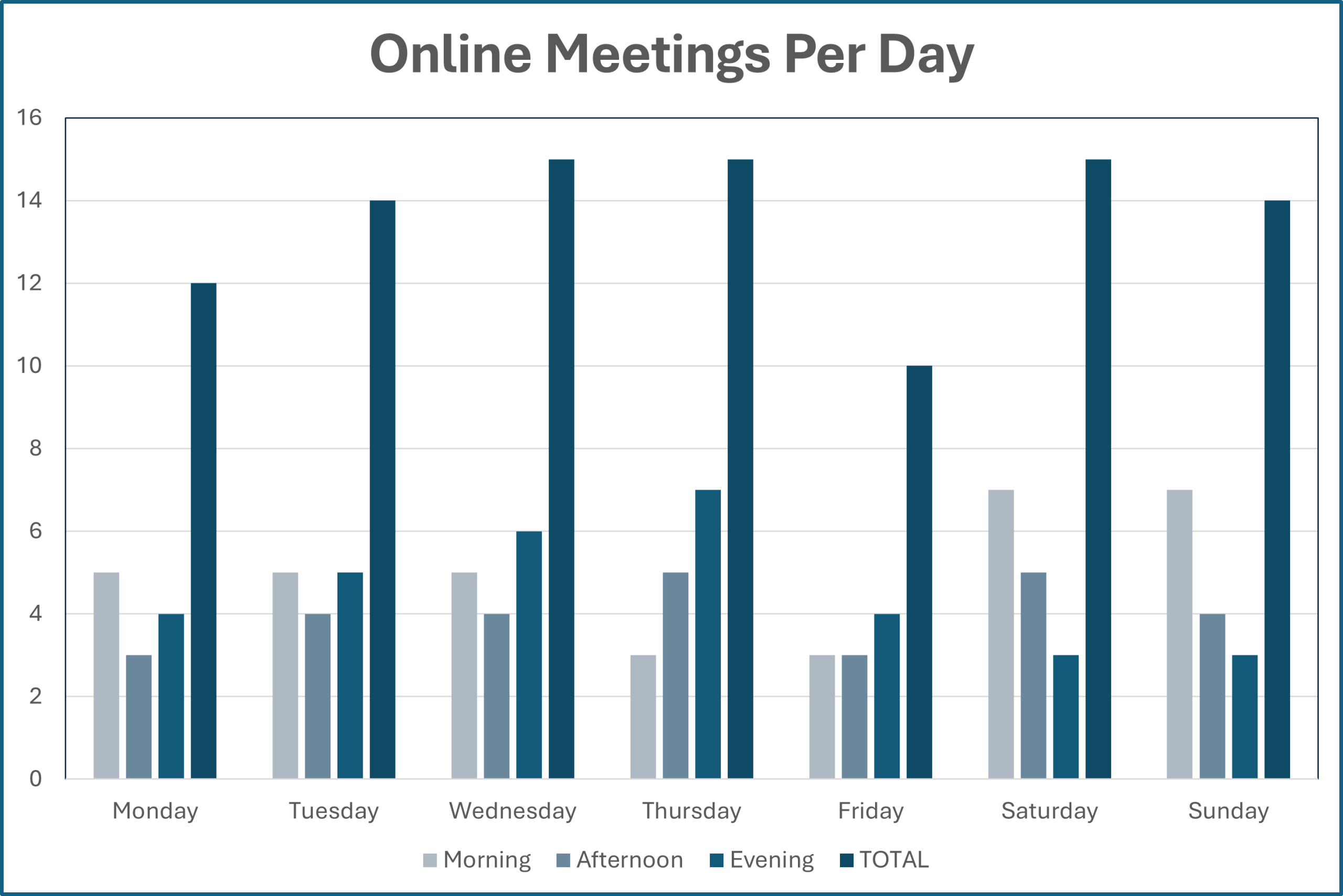
We have streamlined our onboarding practices for new online convenors and clearly defined the roles of [convenors, co-convenors, and co-hosts](https://lsrtesting.com/online-meetings/online-meeting-support-roles/) to sharpen our recruiting efforts. In addition, we have added the role of Online Convenor Recruiter to identify potential convenors from the active LifeRing online community. The implementation of new strategies to expand our online meeting convenor community is yielding positive results, and we anticipate seeing an increase in scheduled meetings in the coming administrative year.
While our “How Was Your Week” check-in meetings remain the core of LifeRing meetings, we excited t offer **[20 specialized focus meetings](https://lsrtesting.com/lifering-focus-meetings/)** designed for individuals with shared experience. These focus groups promote **unique and supportive communities**, playing a vital role in promoting **long-term recovery**.
#### **—** **LIFERING ONLINE MEETNGS —**
**LifeRing Online is on fire! New meetings are opening and the increase in meeting participants and retention continues to grow!**
- **10% increase in online meetings** including chat meetings move to Zoom
- **100+** online meetings serving over **2,500** LifeRing members every week
- **18% new online convenors**
- **20 focus meetings** support people in recovery with commonalities
---
#### **eGROUPS and FORUM**
[LifeRing eGroups](https://lsrtesting.com/email-groups/) and [LifeRing Forum](http://forums.delphiforums.com/lifering) continue to be vibrant and stable communities, consistently seeing active participation and a steady number of subscribers.
This administrative year, [LifeRing ePals](https://lsrtesting.com/epals/) has emerged as our fastest-growing email-based recovery resource. It has already provided one-on-one email recovery support to over 100 individuals. This platform offers a unique and personal way for LifeRing to demonstrate the profound importance of connecting with a positive recovery community.
#### **—** **LIFERING eGROUPS —**
LifeRing eSupport has seen a substantial uptick in eGroups subscriptions and ePals involvement.
- **9 community-based eGroups**
- **1,872** opt-in subscribers
- Over **2,300 messages shared monthly**
- **59 ePals** respond to over **200 inquiries annually**
#### **—** **LIFERING FORUM —**
The LifeRing Forum is one of our longest running and engaging eResources:
- Over **95,900 posts** since launching in 1999
- **5,833 members**
- **20-50 guest visitors every day**
- **2-5 members return daily**
---
#### **REGIONAL REPRESENTATIVES: Catalysts for Growth and Support**
[LifeRing’s Regional Representatives](https://lsrtesting.com/convenor-menu/regional-representative/)[](https://lsrtesting.com/convenor-menu/regional-representative/) (RRs) are central to our strategic growth and the robust support of our meeting network. They’re essential to delivering our mission, greatly aided by our deeply committed convenors.
RRs actively foster growth by facilitating the expansion of meetings. Our **online meeting count has grown to 102**, reflecting continuous expansion. We’ve also seen significant increases in in-person meetings, with **remarkable growth in facility meetings across both California and the Frontier Regions**. This expansion directly aligns with **increasing engagement and increasing awareness** as outlined in the [LifeRing Strategic Plan](https://lsrtesting.com/wp-content/uploads/Public_Documents/LifeRing%20Strategic%20Plan_v4.pdf).
Beyond facilitating growth, RRs provide **comprehensive support for both meetings and convenors**. They offer vital **Convenor Support** by onboarding new volunteers and providing ongoing assistance to our dedicated base. These efforts directly underscore our commitment to **optimizing operations**.
Despite the profound engagement of our convenors, the rising demand for meetings means we’re continuously seeking to expand this vital pool of volunteers. Recruiting additional convenors remains a key focus, allowing us to meet new demands and further extend our services, directly supporting our broader strategic objectives.
---
#### **TEAMS**

**LifeRing Collaborative Teams** drive the BOD-identified objectives outlined in the Strategic Plan. Seven very active teams work with LifeRing officers and directors to ensure resources are available to advance all LifeRing objectives that support our vision as global leaders in positive recovery support. It is the insight, creativity, and collaborative efforts of these teams that lay the foundation of our current success. In brief we have seen outstanding contributions from our committee volunteers. Team Status Reports are provided to the board during the BOD monthly meeting.
#### **FINANCE**
The Finance Team is back! Treasurer Joe Franklin resuscitated this defunct committee earlier this year, Since its return, this hard working team has created team budgets, improved upon funding requests and management practices, as well as performed internal audits. Detailed reporting is now included on the monthly board agenda and provides insight into our fiscal situation and stewardship.
#### **FUNDRAISING, MARKETING, AND COMMUNICATIONS (FMC)**
Personal donations continue to climb and we saw a **64.8% increase in sustaining donors** who contribute over 75% of monies received through our online donation platform. A workgroup is leading the charge to support donor retention initiatives and we are **on pace to exceed last year’s personal donations by +5% YE 2023**. Communications has been the driving force behind this continual rise in personal donations as well as attracting the interested of [healthcare professionals and treatment specialists](https://lsrtesting.com/professionals/).
[New collateral](https://lsrtesting.com/pamphlets/) supports both local online and online meeting convenors and is being included in funding case statements. One of our pressing goals is to develop easily obtainable meeting metrics to serve as the foundation for **monthly retention and efficacy reporting** in 2025.
#### **MEETINGS & CONVENORS COLLABORATION (MCC)**
This lively team is made up of representatives from all LifeRing recovery resources: Local and Online meetings, eGroups and our Delphi Forum. Collaboration focuses on **coordinating efforts to ensure our convenors and moderators** have the support and guidance they deserve – and to ensure every LifeRing member receives the positive recovery to empower their personal recovery program.
This year we focused on providing convenor with directions and [resources for supporting members in crisis](https://lsrtesting.com/crisis-resource/), as well as empowering our convenors with guidelines to ensure meetings remain a safe space free of disruptions through our **Empower Your Cyber Self hands-on workshop**. The success of this team is showcased in continued meeting, eGroup, and forum participation growth and retention.
****
#### **OUTREACH**
LifeRing is working to support multiple paths to recovery. This year, **LifeRing’s targeted Outreach** forged a groundbreaking collaboration with UCSF Health. , launching the **UCSF \| LifeRing Liver Spot Community Meeting**. This innovative initiative provides vital support for liver transplant patients, offering a vibrant online community where they can connect and navigate recovery together. This successful partnership, stemming directly from LifeRing’s proactive engagement, is set to inspire further impactful collaborations with other hospitals, expanding critical patient support nationwide.
We made a great splash at **August 2024 CCAR \| MPRC** in New Haven, CT. BOD member and award-winning memoirist Mary Beth O’Connor presented a LifeRing 101 breakout session during this well-attended conference for healthcare providers and treatment specialists. In the upcoming administrative year, we plan to advance **“Lunch and Learn” presentations** within recovery treatment programs in LifeRing hubs.
#### **WEB & TECH**
The **Website Team** is hard at work undertaking a comprehensive redesign of our [website](https://lsrtesting.com/) to enhance user experience and accessibility for people seeking support in their recovery journey. This initiative aims to create a more intuitive interface, making it easier for users to navigate resources, find meetings, and connect with a community of like-minded individuals. The redesign will also incorporate modern design elements and mobile responsiveness to ensure that the site is inviting and functional across all devices. Through this effort, LifeRing hopes to foster a welcoming online environment that empowers individuals in their pursuit of a sober life. We hope to see the **Tech Team** resurrected in the coming year with initiatives to support LifeRing Strategic Plan objectives.
---
#### **GOVERNANCE**
The LifeRing Board will see a high churn this administrative year with three BOD members terming-out and the early retirement of another. Incumbent board members will be joined by a new candidate in this year’s election.

LifeRing is proud to announce that we have received the prestigious [**Candid Platinum Seal of Transparency**](https://www.guidestar.org/profile/shared/ebb06d6e-eb6d-46a3-9aca-7d211657d3e3) for the fourth consecutive year. This esteemed recognition is awarded by GuideStar and signifies a commitment to transparency and accountability in nonprofit operations. Notably, fewer than 1% of nonprofits in the United States have achieved this level of distinction. The Platinum Seal represents the highest standard of recognition from Candid, an organization dedicated to providing valuable insights into the social sector. This achievement underscores LifeRing’s dedication to maintaining open communication and fostering trust with our stakeholders and the communities we serve. **Policies**
During the administrative year, the board focused on updating existing policies and practices while creating new ones to better suit the current LifeRing culture. An uptick in formal complaints from community members has inspired a formal review process to ensure equal treatment of each concern brought forward. **Involvement**
LifeRing 2024-2025 BOD members are extremely active in the LifeRing Community:
- All members lead or are active volunteers on a [LifeRing collaboration team](https://lsrtesting.com/get-involved-menu/volunteer-form/)
- 5 members are [online convenors](https://lsrtesting.com/online-meetings/online-meeting-format/)
- 4 members are on the [Speakers Bureau](https://lsrtesting.com/get-involved-menu/engagement-opportunities/#speakers)
- 3 members are [local convenors](https://lsrtesting.com/f2f-meetings/meeting-format/)
- 2 members are active in [LifeRing eGroups](https://lsrtesting.com/online-meetings/online-meeting-format/)
- 1 member manages our [social media platforms](https://lsrtesting.com/social-media/)
Public participation during monthly board meetings has increased dramatically during the 2024-2025 administrative year. We hope you’ll join us this year!
---
## **LifeRing 2024-2025 Financial Report**
#### **Presented at the 2025 LifeRing Annual Congress \| June 8, 2025**
**For the Period June 1, 2024 – May 31, 2025**
This report provides a summary of LifeRing Secular Recovery’s financial activities for the fiscal year spanning June 1, 2024, to May 31, 2025. The organization operated on an accrual basis, and the data presented offers insights into its revenue generation, operational costs, and overall financial health.
## **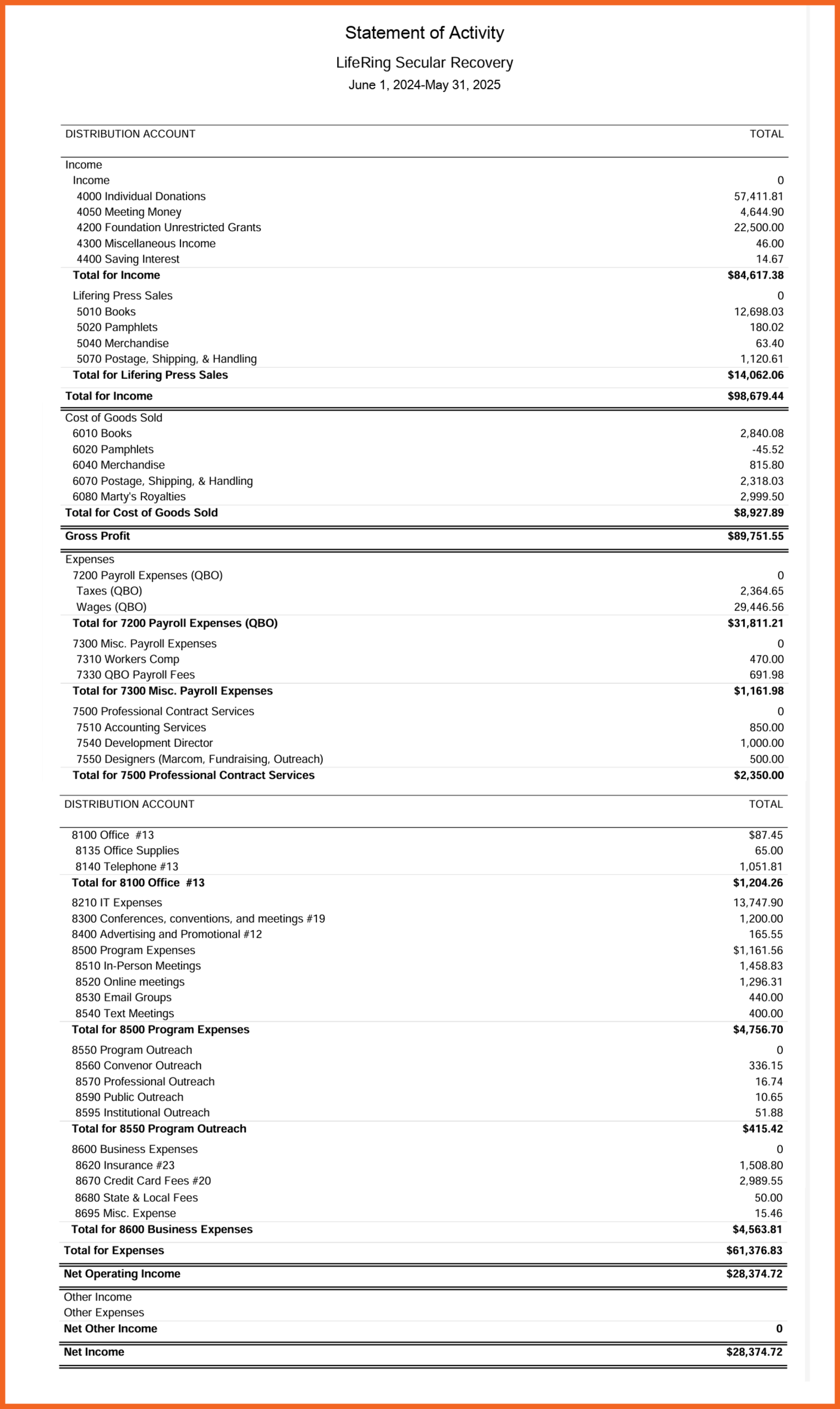**
**Key Financial Highlights**
LifeRing Secular Recovery concluded the fiscal year with a **Net Income of $28,374.72**, indicating a healthy surplus from its operations. This positive outcome is largely driven by robust income streams and diligent management of expenses.
**Income Streams: Where the Funding Comes From**
The organization’s total gross income for the period was **$98,679.44**. A significant portion of this revenue, **$84,617.38**, came from core income sources, highlighting strong community and foundational support:
- **Individual Donations** were the primary income driver, contributing **$57,411.81**. This underscores the vital role of individual supporters in the organization’s financial stability.
- **Foundation Unrestricted Grants** provided a substantial **$22,500.00**, demonstrating successful grant acquisition efforts.
- “Meeting Money” also contributed a notable **$4,644.90**, reflecting engagement from its community.
In addition to core income, **Lifering Press Sales** generated **$14,062.06**, primarily from book sales ($12,698.03). This segment represents an important revenue diversification strategy.
**Cost of Goods Sold and Gross Profit**
The **Cost of Goods Sold** for Lifering Press amounted to **$8,927.89**. It’s worth noting a negative figure for “Pamphlets” (-$45.52), which might indicate a return or adjustment. After accounting for these costs, the organization achieved a strong **Gross Profit of $89,751.55**, demonstrating efficient management of its publication efforts relative to sales.
**Expense Analysis: Where the Money Goes**
Total expenses for the period were **$61,376.83**. Understanding these expenditures provides insight into the organization’s operational priorities:
- **Payroll Expenses** (including taxes and wages) represent the largest expenditure at **$31,811.21**, reflecting the investment in its human resources.
- **IT Expenses** were substantial at **$13,747.90**, indicating a significant reliance on technology for operations, which is common for organizations with online meeting components.
- **Program Expenses** totaled **$4,756.70**, covering various meeting formats (in-person, online, email groups, text meetings). This category directly supports the organization’s mission of providing recovery support.
- **Business Expenses**, including insurance and credit card fees, amounted to **$4,563.81**.
- **Professional Contract Services** (accounting, development, designers) totaled **$2,350.00**, showing investment in specialized external expertise.
- **Office Expenses** were **$1,204.26**, covering typical administrative needs.
**Conclusion**
LifeRing Secular Recovery has demonstrated sound financial management over the past fiscal year, ending with a positive net income. The organization’s financial health is bolstered by diverse income streams, particularly strong individual donations and foundation grants. While payroll and IT expenses are significant, they **align with the operational needs of a modern non-profit**. The consistent investment in program delivery and outreach further solidifies **our commitment to our mission**. Readers may find the detailed breakdown of income and expenses valuable for understanding the operational priorities and financial sustainability of LifeRing Secular Recovery.
---
## **TEAM LIFERING \| Thank You!**
#### **So many people contribute to making LifeRing a remarkable recovery community.**
**LifeRing Patrons:**

Aaron, Adrian, Aidan, Alex, Alfredo, Amanda, Amy, Andy, Ann, Anna, Anne, Anthony, rezoo, Arun, Aubrey, Barbara, Benjamin, Brad, Brent, Brett, Brian, Bridget, Bruce, Bryan, Byron, C, Carlie, Carol Ann, Cathy, Cheyenne, Chris, Christina, Christine, Christopher, Christopher John, Cindy, Claire, Clifton, Comeau Foundation, Conn, Craig, Cristine, Cynthia, Daniel, Danielle, Dave, David, David Jason, Debra, Denise, Diana, Dmitriy, Don, Dona, Donna, Donovan, Douglas, Dustin, Elaine, Elizabeth, Ellen, Ellin & Ned, Ely, Eric, Ewa, Exu, Flore, Fred, Frederick, Gabriele, Gail, Geoffrey, George, Gerard, Gordon, Greg, Gregory, Heather, Henry, Ian, ilija, Inda, Irene, Ishmael, Jack, Jaime, Jakub, James, Jamie, Jarred, Jason, Jeffrey, Jennifer, Jerry, Jim, Jodie, jody, Joe, Joel, John, John W, Jonathan, Jonathon, Jose, Joseph, Joshua, Joy, Judith, Karen, Karl, Katherine, Kathleen, Kathy, Katie, Kelly, Kemper, Kerro, Kevin, Kristine, Krystal, Larry, Lauma, Lee, LifeRing, Liliana, Liz, Lorena, Lorraine, Louie, Lynda, Marcin, Margaret, Maria, Marietta Family, Mark, Marlayna, Martin, Mary, Mathew, Matt, Melissa, Merle, mervin, Michael, Michele, Michelle, Monica, N, Nancy, nathan, nichola, Nichole, Nix, Nora, Norma, Patricia, Paul, peter, Ponce, Rachel, Rafael, Renee, Rhyen, Ricardo, Richard, Rick, rob, robert, Roger, Roxanne, Ryan, Sally, Sara, Sarah, Sean, Shane, Shannon, Sheika, Shelly, Sherri, Simon, Stacey, Stephanie, Stephen, Steve, Steven, Sue, Susan, Tailar, Tara, Terrie, Thomas, Tim, Tom, Tony, Tracey, Tracy, Travis, Trung, Twyla, Valerie, Wendy, Will, William, Woody, and Zachary!
**LifeRing Local Meeting Convenors:**
Alex I, Alex K, Anna L, Brian P, Byron K, Chris F, Chris S, Cindy K, Courtney P, Daniel S, Dawn W, Doug D, Erin P, Fox S, Gary B, Gary S, Geoff, Greg H, James M, Jason K, Jeremy M, Joe F, Joe H, John G, Jonni C, Josh D, Kade H, Kathleen G, Katlin J, Laura M, Lawrence C, Lisa S, Maddy, Mark K, Mary Lee P, Michael A, Nadine K, Patrick R, Patrick S, Ryan M, Stephanie H, Sue, Tom S, Tonya J, and tup!
**LifeRing Online Meeting Convenors:**
Alexis L, Andrew C, Anna B, Anne D, Arthur S, Ashley P, Becky H, Brian S, Bruce E, Bruce M, Chet G, Chris H, Christina M, Courtney D, Cynthia H, Dan C, Dan K, Daniel M, David H, David R, Denise U, Ewa C, Gerry O, Henri C, Ivona S, Jad G, James F, James K, Jeff K, Jennifer C, Jenny T, Jim M, John G, Jody E, Joy M, Karl H, Kristoffer W, Lisa S, Lorraine H, Mandy D, Marc O, Mark K, Mary Beth O, Matt G, Matty W, Michael A, Michael H, Michael M, Mickey W, Nia C, Nicole M, Nix L, Patrick D, Patrick K, Prax M, Rachel H, Rafal K, Randy D, Renee R, Ric R, Rick M, Sepehr T, Shane S, Shelly W, Steve B, Steve S, Sue, Sylvia W, Taresa N, Thomas P, Tim C, and Travis B!
**LifeRing eGroups and Forum Contributors:**
Angela Nolan, Brian Butters, Craig Whalley, Jackie Jones, Jason Groce, Jennifer Majkut, Jim Ringland, Karl Harris, Kris A, Lisa Swing-Corney, Lorraine Hull, Margit Hanna, Michael Cant, Michael2, Robert Stump, Sue Betts, Tim Culhane, and Tom Shelly!
**LifeRing Collaborators:**
Anna Bedolla, Bobbi Campbell, Carlie Lawson, Cathy Felder, Craig Whalley, Dave in Canada, Jason Walling, Joe Franklin, Josh McAdams, Kathleen Gargan, Kemper Martin, Kevin Keogh, Laura Mosley, Lisa Swing-Corney, Lorraine Hull, Margit Hana, Mark Franklin, Mary Beth O’Connor, Michael Anderson, Monica Foy, Njon Sanders, Rafal Klopotowski, Robert Stump, Sarah Miller, Shane Simons, Sue Betts, and Taresa Nephew!
## 
**Categories:** 7000 General Pages
---
### [Shop Menu](https://lifering.org/shop-menu/)
**Published:** August 21, 2025
**Author:** webmaster @lifering.org
**Content:**
# LifeRing Shopping
[The LifeRing BookStore](https://lifering.org/bookstore/)
[LifeRing Books](https://lifering.org/books)
[LifeRing Pamphlets and Flyers](https://lifering.org/pamphlets/)
[Lapel-Pins and Wristbands](https://lifering.org/bookstore/lapel-pins-and-wristbands/)
[LifeRing Merch](https://www.cafepress.com/shop/LifeRingMerch/products)
**Categories:** 4000 Shop
---
### [Volunteer Form](https://lifering.org/volunteer-form/)
**Published:** November 13, 2020
**Author:** Bees
**Content:**
## **Make A Difference – VOLUNTEER WITH LIFERING!**
#### ****
## **LifeRing Needs You!**
### **Do you have an hour to spare? Share it with us!**
Over the past year, LifeRing meeting membership has nearly doubled. Over 1000 people turn to LifeRing every week to support their personal recovery plans. Volunteers are often the first point of contact for LifeRing members, active convenor support, and sustaining revenue. **Sign up today to make a difference to the growing number of people who rely on LifeRing every day!**
#### **Active LifeRing Committees**
**[Specific Volunteer Opportunities are listed here.](https://lifering.org/engagement-opportunities/)**
**Meeting days and times are determined by the Committee Chair. Committee Meetings are held by video conferencing.**
- **Finance Committee:** Responsible for managing the annual budget, and analyzing data related to incoming and outgoing expenditures. Ensuring that the financial elements of LifeRing are in accord with its vision and mission. Reports monthly accounts to the Board of Directors.
**[Read more here](https://lifering.org/volunteer-opportunities/)**
- **Fundraising/Marketing/Communications Committee (FMC):**
- Responsible for managing LifeRing’s donations, developing and implementing fundraising campaigns, identifying available resources and target audiences, and grant writing. Reports monthly activities to the Board of Directors.
- Marketing is dedicated to advancing the mission and goals of LifeRing through strategic and impactful marketing and public relations initiatives. We strive to raise awareness, foster positive public perception, and build a supportive community for individuals affected by addiction and their families.
- Communication venues include website announcements, the organization’s blog, quarterly newsletters, PSAs, digital marketing, and social media.
**[Read more here](https://lifering.org/volunteer-opportunities/)**
- **Meetings & Convenors Committee (MCC)**: The MCC oversees online and in-person new and existing meetings. Responsible for creating support resources for meeting convenors and regional coordinators, managing meeting schedules, and maintaining a database of current meetings, including international meetings, the LifeRing forum, email groups, and ePals. Reports monthly meeting changes to the Board of Directors.
**[Read more here](https://lifering.org/volunteer-opportunities/)**
- **Outreach Committee:** The Outreach Committee aspires to raise awareness about LifeRing Secular Recovery to those who struggle with alcohol and substance use disorder.
**[Read more here](https://lifering.org/volunteer-opportunities/)**
- **Tech/Website Committee:** This group is dedicated to managing, maintaining, and improving the technological aspects of our website and the various online services we provide to the recovery community.
**[Read more here](https://lifering.org/volunteer-opportunities/)**
#### **If you are interested in becoming a LifeRing volunteer please fill out our brief survey below and tell us about your interests, skills, and abilities.**
Name \*First
Last
share been Standing
Email \*Email
Confirm Email
Phone Number
Time Zone \*Please enter your time zone
How long have you been with the LifeRing community \*
Are you a convenor?
- Yes
- No
Standing Committees – Description above
- Finance Committee
- FMC Committee
- MCC Committee
- Outreach Committee
- Website/Tech Committee
Meeting schedule as per chairperson.
What skills or interests do you have that may contribute to your volunteer activities (Check all that apply):
- Analytical experience
- Problem solving
- Fundraising
- Project management
- Copywriting
- Education/Curriculum
- MS Publisher/InDesign
- Internet communications
- Working with budgets
- Accounting
- Writing/Editing
- Public speaking
- Grant writing
- Digital marketing
- Website design
- Digital graphics
- WordPress
- Develop surveys
- Online databases
- Interpersonal communications skills
- Branding/Marketing/Advertising experience
- Organizational abilities
- Creativity skills in concepts and ideas
- Social media knowledge
- Interpretation/translation
- Strategies to measure success
- Non-Profit Executive Skills
Is there anything else you would like to share about your volunteer interests?
Submit
For questions, please email <service@lifering.org>.
**Categories:** 1050 Engage
---
### [Pamphlets](https://lifering.org/bookstore/pamphlets/)
**Published:** May 16, 2010
**Author:** Bees
**Content:**
# LifeRing Pamphlets & Flyers
### EYSS Pamphlet
[  ](https://lifering.org/bookstore/The-EYSS-Pamphlet-p377462284)
##### [ Buy in packs of 50 ea. ](https://lifering.org/bookstore/The-EYSS-Pamphlet-p377462284 "Buy in packs of 50 ea.")
[PDF – Download](https://lifering.org/wp-content/uploads/lifering-press/pamphlets/EYSS_Pamphlet.pdf)
### Professional Pamphlet
[  ](https://i0.wp.com/lifering.org/wp-content/uploads/lifering-press/pamphlets/Pro%20Pamphlet-front%20cover%20.png?ssl=1)
##### Free
[PDF – Download](https://lifering.org/wp-content/uploads/lifering-press/pamphlets/Pro%20Pamphlet.pdf)
### EYSS Flyer
[  ](https://lifering.org/wp-content/uploads/lifering-press/pamphlets/EYSS_Flyer.pdf)
##### Free
[PDF – Download](https://lifering.org/wp-content/uploads/lifering-press/pamphlets/EYSS_Flyer.pdf)
**Categories:** 4000 Shop
**Tags:** Bookstore
---
### [Outside Resources](https://lifering.org/lifering-resources/outside-resources/)
**Published:** September 25, 2024
**Author:** webmaster @lifering.org
**Content:**
## Outside Resources
LifeRing members, volunteers, and convenors have collected wisdom from all corners of the earth. We encourage you to explore all the options and resources available as you create your own personal recovery plan.
**Help Right Now**
- [Crisis Resources](https://lifering.org/crisis-resource/)
- [Warmlines](https://www.warmline.org/)
- [HeyPeers](https://heypeers.com/)
**Recovery Organizations**
- [12-Step Groups](https://mindremakeproject.org/2019/04/13/support-groups-for-recovery/)
- [Monument](https://joinmonument.com/)
- [Native American Support ](https://whitebison.org/wellbriety-meeting-flyers/)
- [Reason and Recovery](https://www.reasonandrecovery.org/)
- [Recovery Dharma](https://recoverydharma.org/)
- [Recovery Research Institute](https://www.recoveryanswers.org/)
- [Refuge Recovery](https://www.refugerecovery.org/)
- [She Recovers](https://sherecovers.org/)
- [SMART Recovery](https://smartrecovery.org/)
- [Sober Faction](https://thesatanictemple.com/pages/sober-faction)
- [Sonder](https://sonderrecovery.org/)
- [Stand-Up 4 Recovery](https://www.standup4recovery.com/)
- [The Luckiest Club](https://www.theluckiestclub.com/)
- [The Phoenix](https://thephoenix.org/)
- [Women for Sobriety](https://womenforsobriety.org/)
- [Y12SR](https://www.y12sr.com/)
**Podcasts, Videos, and YouTube Channels**
- [Elise Loehnen](https://www.eliseloehnen.com/episodes)
- [Huberman Lab](https://www.hubermanlab.com/podcast)
- [Pleasure Unwoven](https://www.youtube.com/playlist?list=PLA8F89537FD4C3FD1)
- [Recovery Elevator](https://www.recoveryelevator.com/podcasts/)
- [Rehab: Last Week Tonight with John Oliver](https://www.youtube.com/watch?v=hWQiXv0sn9Y)
- [Shari Hampton](http://sharihampton.com/resources/)
- [Ted Talk: Being Your Own Life Coach](https://www.ted.com/talks/john_muldoon_being_your_own_life_coach?subtitle=en)
- [Vital Absorbing Creative Interest (VACI) – SMART Recovery](https://www.youtube.com/watch?v=vDqwnLR2e3A)
**Meeting Lists**
- [Online Secular Recovery Meetings](https://docs.google.com/spreadsheets/d/1AuWy7FKCG-R_pyRZzEjFXkH-Rw_0VEzi/edit?pli=1&gid=656871302#gid=656871302)
- [TST Sober Faction Online Meeting Schedule](https://docs.google.com/spreadsheets/d/1u8hPFdOKgE1dUQ3cy5QNfVAAeN8jBEyQAfHowOeFL-M/edit?gid=504291383#gid=504291383)
- [Worldwide Secular Meetings](https://www.worldwidesecularmeetings.com/meetings)
**Apps and Tools**
- [Feelings Wheel](https://feelingswheel.com/)
- [SoberCalc by Kemper](https://sobercalc.com/)
- [Wellness Recovery Action Plan (WRAP)](https://www.wellnessrecoveryactionplan.com/)
- [I Am Sober App](https://iamsober.com/)
**Books**
- *From Junkie to Judge: One Woman’s Triumph over Trauma and Addiction* by Mary Beth O’Connor
- *How to Do the Work* by Nicole LePera
- *Loosening the Grip: A Handbook of Alcohol Information* by Jean Kinney
- *Push Off From Here* by Laura McKowen
- *Quit Like a Woman* by Holly Whitaker
- *The Red Road* to Wellbriety: In The Native American Way by White Bison
- *This Naked Mind* by Annie Grace
- [Quit-Lit](https://lifering.org/wp-content/uploads/2025/08/Quit-Lit.pdf) collection of recovery-based books contributed by Cindy
**Blogs**
- [AA Agnostica](https://aaagnostica.org/)
- [Sober Synthesis](https://sobersynthesis.com/)
[**Articles**](https://lifering.org/lifering-resources/outside-recovery-articles/)
**Categories:** 1030 Resources
---
### [RBC](https://lifering.org/bookstore/books/rbc/)
**Published:** May 14, 2010
**Author:** Bees
**Content:**
# Recovery By Choice
### A Workbook
[](https://lifering.org/bookstore/Recovery-By-Choice-A-Workbook-p162427560)Effective professionals tailor the treatment to fit the client. This is as true in the treatment of addictions as in any other practice. The National Institute on Drug Abuse (NIDA), after a nationwide study of addiction treatment programs, found that:
“No single treatment is appropriate for all individuals. Matching treatment settings, interventions, and services to each individual’s particular problems and needs is critical to his or her ultimate success in returning to productive functioning in the family, workplace, and society.”
*Recovery by Choice*, written by Martin Nicolaus, the co-founder of LifeRing, is the first workbook that applies this basic principle of effective professional treatment to the recovering person’s own self-treatment, or self-help. *Recovery by Choice* provides a structure for the recovering person to build an abstinence-based recovery plan that matches their particular problems and needs – an abstinence-based Personal Recovery Program. Based on ten years’ work in support groups, the book presents the recovering person with a series of real-life choices. The options are highly detailed, concrete, and knowing. Readers quickly recognize themselves and their world and take up the work of making seemingly small decisions that, when strung together, will constitute their personal recovery pathway. The opening chapter presents a tool for making everyday decisions that reinforce recovery. The book then moves through nine big problem areas (“Domains”) where most people in recovery find they have work to do:
- My Body
- My Exposure to Addictive Substances
- My Activities
- My People
- My Feelings
- My Life Style
- My History
- My Culture
- My Treatment and Support Groups
A chapter on relapse summarizes and deepens the material. The concluding chapters lead the reader through the process of building a Personal Recovery Program for periods as short as a day and as long as a lifetime. The basic idea here is that the client attains the capacity to make wise choices – heavily impaired in addiction – through the repeated and progressive exercise of the choice-making “muscles.” It is a strength-based, empowering approach that resonates with the best elements within the recovering psyche. It respects the recovering person’s intelligence and the sincerity of their desire to recover. Building a Personal Recovery Program with *Recovery by Choice* stimulates the client’s motivation to get well. Through dozens of worksheets and other exercises, the client engages in an intensely personal reconstruction effort that yields deep learning and personal investment in recovery. Recovery by Choice offers an eclectic, pragmatic, empathetic, positive, optimistic and sometimes humorous perspective. The author clearly has “been there.” Hundreds of authentic recovering voices speak in its pages. The text is gender-neutral and includes a broad and diverse range of people, situations, and resources. Sidebars grounded in the best modern research anchor the presentation. Reader response to Recovery by Choice is overwhelmingly positive (see a sample of testimonials, below). Most readers take it up individually as bibliotherapy. Some use it for group study within the LifeRing support group network. A growing number of solo professionals provide it for their clients at intake. Inpatient, outpatient, and criminal justice programs use *Recovery by Choice* wherever an abstinence-based, structured, positive, secular complement to the 12-step approach is called for.
*Recovery by Choice* plays well with any abstinence-based recovery philosophy. Now in its fourth printing, *Recovery by Choice* is available online from the [LifeRing Bookstore](https://lifering.org/the-store-menu/) or from your local LifeRing meeting. *Recovery by Choice, A Workbook*, 310 pp. 8.5″ x 11″, stay-flat binding. ISBN 978-0-9659429-3-5. Fourth edition, 2016. Martin Nicolaus is the author of this book and co-founder of LifeRing Secular Recovery.
***Recovery by Choice* is available for purchase [here](https://lifering.org/bookstore-shopping-cart/Recovery-By-Choice-A-Workbook-p162427560) using your Credit Card or PayPal account.**
Special Arrangements:
- For institutional customers, booksellers, and convenors looking for discounted pricing and shipping quotes, please email <publisher@lifering.org>.
- Treatment providers in for-profit settings must obtain reprint permission from the author, Martin Nicolaus at <manicolaus@gmail.com>, to copy material from the work for use with clients.
- Treatment providers in nonprofit settings are hereby granted permission to copy reasonable amounts from the work for use with clients. In case of doubt, email at <manicolaus@gmail.com> for questions.
**[Table of Contents and Sample Content](/wp-content/uploads/lifering-press/RBC/RBC4-FP_TOC_Ch1-2_References.pdf)**
**[Readers Reviews](/wp-content/uploads/lifering-press/RBC/RBC4-Reader_Say.pdf)**
**Categories:** 4000 Shop
**Tags:** Bookstore
---
### [Fall 2025 LifeRing Community Town Hall](https://lifering.org/fall-2025-town-hall/)
**Published:** October 30, 2025
**Author:** Bees
**Content:**
## **LifeRing Community Town Hall
*Our Voices, Our Future: Strengthening Community Support*
#### Fall 2025 LifeRing Town Hall
#### Thursday, October 30, 2025, 5:00pm Pacific
Duration: 90 minutes
#### [Registration Required](https://lifering-org.zoom.us/meeting/register/xDMYBJjMQH6jNqtbUa1ybw)
| #### **Welcome & Community Connection** |
|---|
| **5:05pm** | **State of LifeRing: Sharing Our Accomplishments** |
| - [Strategic Plan](https://lifering.org/wp-content/uploads/Public_Documents/Current_Strategic_Plan.pdf) \| LifeRing Operational Roadmap |
| - [Annual Report](https://lifering.org/2024-2025-annual-report/) \| 2024-2025 BOD Year |
| - What’s New \| What’s on the Horizon |
| #### **LifeRing Stakeholders \| Let’s Talk!** |
| **5:15pm** | **LifeRing Operations: Driving Our Business** |
| - How can we expand local meetings into underserved areas? |
| - What would improve our community communications channels? |
| - How can we spread the word about LifeRing? |
| **5:30pm** | **LifeRing Engagement: Serving Our Community** |
| - How can we support convenors when they need a break? |
| - What improvements would make our online resources more valuable? |
| - What’s holding you back from volunteering? |
| **5:45pm** | **LifeRing Forward: Shaping Our Future** |
| - What innovative projects or engagements should we explore? |
| - What focus meetings would you like to see added? |
| - Where do you see LifeRing in 3-5 years and how do we get there? |
| #### **LifeRing Stakeholders \| Voices of LifeRing** |
| **6:00pm** | - What’s on your mind? Participants are invited to bring forward a topic of their choice. This will, no doubt, roll into discussions. Fantastic! Lengthy topics will be revisited after everyone has had a chance to share. There is an open-ended meeting. |
| #### **LifeRing Stakeholders Resources** |
| **Quick References** |
| - [LifeRing News Blog](https://lifering.org/about-us/news-blog/) |
| - [LifeRing Social Media](https://lifering.org/social-media/) |
| - [Engagement Opportunities](https://lifering.org/volunteer-opportunities/) for you! |
| - [All About LifeRing](https://lifering.org/lifering-resources/) for everyone |
| - [Welcome to LifeRing](https://lifering.org/welcome/) for new meeting members |
| - [LifeRing Overview](https://lifering.org/for-professionals/) for professionals |
| **Meetings and eGroups** |
| - [LifeRing Meeting Calendar](https://meetings.lifering.org/meetings/) |
| - [LifeRing Focus Meetings](https://meetings.lifering.org/meetings/?title=&program=6&audiences=&meetingType=&datetime_nextmeeting=&languages=&location=&coordinates=&scope=) |
| - [LifeRing eGroups ](https://lifering.org/meeting-menu/email-groups/) |
| - [LifeRing Forum ](http://forums.delphiforums.com/lifering) |
| **Events** |
| - LifeRing Thanksgiving Gathering \| November 27th |
| - Giving Tuesday \| December 2nd |
| - LifeRing Winter Gatherings \| December 24th and December 25th |
| - LifeRing New Years Gatherings \| December 31st |
**Categories:** 7000 General Pages
---
### [Convenor Toolkit](https://lifering.org/convenors-menu/convenor-toolkit/)
**Published:** October 6, 2024
**Author:** webmaster @lifering.org
**Content:**
# Convenor Toolkit
#### Meeting Content
---
**[Meeting Topics](https://lifering.org/convenors-menu/meeting-topic-suggestions/)**
Ideas for recovery-related discussions **[Opening & Closing Statements](https://lifering.org/convenors-menu/opening-closing-statements/)**
Content and format suggestions
#### Local Convenor Resources
---
**[Books, Pamphlets, & Meeting Money](https://lifering.org/convenors/book-pamphlets-and-meeting-money/)**
Meeting collateral and donation collection **[Meeting Starter Kit](https://lifering.org/convenors/starter-kit/)**
Resources to get you started **[Local Convenor Portal](https://lifering.org/convenors-menu/local-convenor-portal-sign-in/)**
Repository of resources for local convenors
Password Protected
Contact your [Regional Rep](https://lifering.org/regional-representative/)
#### Online Convenor Resources
---
For Books and Pamphlet information
contact [onlinemeetings@lifering.org](onlinemeetings@lifering.org). [**Online Meeting Support Roles**](https://lifering.org/convenors/online-meeting-support-roles/)
Meeting collateral and donation collection [**Chat Quick Links**](https://lifering.org/convenors/online-meeting-convenor-chat-resources/)
Resources to respond to FAQs **[New Calendar and Verification Resources](https://lifering.org/convenors/meetings-and-verifications/)**
Quick links to meeting schedule and verification FAQs [**Online Convenor Portal**](https://lifering.org/convenors-menu/online-convenor-portal-sign-in/)
Repository of resources for online convenors
Password Protected
Contact [onlinemeetings@lifering.org](onlinemeetings@lifering.org).
**Categories:** 3000 Convenors
**Tags:** Main Menu
---
### [Starter Kit](https://lifering.org/convenors-menu/starter-kit/)
**Published:** February 20, 2020
**Author:** Bees
**Content:**
# Starter Kit for US Meetings
A Starter Kit costs $50.00. Approval by your **[Regional Representative](https://lifering.org/convenor-menu/regional-representative/)** (RR) is needed to be able to get this special pricing.
The Meeting Starter Kit contains the following books, pamphlets, and posters and includes free shipping
- [How Was Your Week, A Convenor’s Handbook](https://lifering.org/hwyw/)
- [Empowering Your Sober Self](https://lifering.org/eyss/)
- [Recovery by Choice, A Workbook](https://lifering.org/rbc/)
- [Humanly Possible](https://lifering.org/bookstore/books/hp/)
- [“Empowering Your Sober Self” (EYSS) pamphlets Pack of 50 each](https://lifering.org/wp-content/uploads/lifering-press/pamphlets/EYSS_Pamphlet.pdf)
- [3 ea. 8.5×11 in. posters](https://lifering.org/wp-content/uploads/Convenor_Resources/Posters/LR_Poster_Letter_Poster_WithStroke.pdf)
- 10 free LifeRing wristbands
- Free Shipping in the US
Once your **Regional Representative** has approved you**,** email <publisher@lifering.org> to place an order. Include in your order, an email address, shipping address, contact name, and phone number. An invoice will be generated and sent to your email address, along with a [payment link](https://lifering.org/payment-options/). Once paid for, your order will be processed and shipped within two business days.
**A cost of $50.00 is required before shipping. If prepayment is not possible because of financial hardship, please contact your Regional Representative to arrange other payment options.**
**Please note that a “Starter Kit” is not required to start a meeting. Talk to your Regional Representative for more information.**
**Categories:** 3000 Convenors
**Tags:** convenor support
---
### [Online Meeting Support Roles](https://lifering.org/convenors-menu/online-meeting-support-roles/)
**Published:** May 11, 2023
**Author:** Bees
**Content:**
# 
# **LifeRing Online Meetings Support Roles**
#### **Empowering others on their recovery journey is deeply fulfilling and can help to support your own recovery plan. Here’s a quick breakdown of meeting support roles. To apply for these support roles, please review the following and complete the appropriate form linked at the bottom of this webpage. We hope you find this an enriching experience and one you look forward to every week.**
---
####
Co-Hosts** (Zoom support)
**Requirements:**
- No continuous sobriety requirements.
**Experience:**
- Well versed in online meeting practices
- Have a solid understanding of Zoom functionality and interface
***A co-host manages the meeting backend functions including****:*
- Let people into the meeting
- Identify people who only want to listen
- Mute mics as needed
- Alert convenor of people who may want to share
####
Convenor Mentorship w/Convenor** (Convenor training/ convenor support)
**Requirements:**
- 3-months continuous sobriety
- Completed [LifeRing Mentoring Program](https://docs.google.com/forms/d/e/1FAIpQLSfLamJ0N2Hh1YZFkrCnG6fpzZMSk6KoZoQJqIki2B0qVQ9mgQ/viewform) form
- Vetted by the Online Meetings Regional Representative
- Assigned to designated mentor(s)
**Experience:**
- Familiar with LifeRing fundamentals,
- Well versed in online meeting practices, and
- Have a solid understanding of Zoom functionality and interface
***A vetted convenor mentorship participant with under 6-months continuous sobriety may:***
- Convene the meeting if an active convenor is in the meeting and willing to step in as needed
- Respond to chat questions
- Cut audio feed
- Cut video feed
- Remove participant from room if behavior warrants
#### **Co-Convenor** (Convenor support)
**Requirements:**
- 3-months continuous sobriety
- Vetted by the Online Meetings Regional Representative
- Completed Potential Convenor Information Form \| \| Contact your [Regional Representative](https://lifering.org/regional-representative/) for access to this form.
**Experience:**
- Familiar with LifeRing fundamentals,
- Well versed in online meeting practices, and
- Have a solid understanding of Zoom functionality and interface
***A vetted convenor mentorship participant with under 6-months continuous sobriety may:***
- Convene the meeting if an active convenor is in the meeting and willing to step in as needed
- Respond to chat questions
- Cut audio feed
- Cut video feed
- Remove participant from room if behavior warrants
#### **Co-Convenors without Lead Convenor Present (Substitute convenor)
**Requirements:**
- 6-months continuous sobriety
- Vetted by the Online Meetings Regional Representative
- Completed Potential Convenor Information Form \| \| Contact your [Regional Representative](https://lifering.org/regional-representative/) for access to this form.
**Experience:**
- Familiar with LifeRing fundamentals,
- Well versed in online meeting practices, and
- Have a solid understanding of Zoom functionality and interface
***A vetted co-convenor with at least 6-months continuous sobriety may:***
- Convene the meeting if the convenor is unable
- Respond to chat questions
- Cut audio feed
- Cut video feed
- Remove someone from the room if necessary
- Convene a breakout room
####
Alternate (Alternate convenor)
**Requirements:**
- 6-months continuous sobriety
- Vetted by the Online Meetings Regional Representative
- Completed [Convenor Contact Information Form \| Ongoing Online Meetings](https://docs.google.com/forms/d/e/1FAIpQLSdXKah6qMM0KkiCzTM5OIr45RWQj5OfsQHbqKZkMRcRRZAlow/viewform?usp=sf_link) form
**Experience:**
- Familiar with LifeRing fundamentals,
- Well versed in online meeting practices, and
- Have a solid understanding of Zoom functionality and interface
***A vetted co-convenor with at least 6-months continuous sobriety may:***
- Convene the meeting if the convenor is unable
- Respond to chat questions
- Cut audio feed
- Cut video feed
- Remove someone from the room if necessary
- Convene a breakout room
####
Convenor** (Lead convenor of a LifeRing meeting)
**Requirements:**
- 6-months continuous sobriety.
- Vetted by the Online Meetings Regional Representative
- Completed Potential Convenor Information Form \| \| Contact your [Regional Representative](https://lifering.org/regional-representative/) for access to this form.
**Experience:**
- Familiar with LifeRing fundamentals,
- Well versed in online meeting practices, and
- Have a solid understanding of Zoom functionality.
***A vetted convenor with at least 6-months continuous sobriety may:***
- Take over an existing meeting
- Act as alternate convenor for an existing meeting
- Convene as a substitute for existing meeting
- Start a new LifeRing meeting
- Mentor potential convenors
---
#### **Definition Key** (what do we mean)
- **LifeRing Fundamentals**: 3-S Philosophy and convening best practices outlined in [*HWYW Convenor Handbook*](https://lifering.org/bookstore/books/hwyw/)
- [**Sobriety**](https://lifering.org/wp-content/uploads/Public_Documents/Policy_Statements/Sobriety_Policy_Statement.pdf): Complete abstinence from all alcohol and non-medically prescribed drugs
- **Continuous Sobriety**: The amount of time without a return to use
- **Vetted**: Has completed the appropriate co-convenor/convenor forms *AND* has met with the Online Meetings Regional Representative for final approval
#### **Application Forms** (how to get the ball rolling)
- Potential Convenor Information Form \| LifeRing member/ active convenor wants to start a new meeting \| Contact your [Regional Representative](https://lifering.org/regional-representative/) for access to this form.
- [Convenor Contact Form](https://docs.google.com/forms/d/e/1FAIpQLSdXKah6qMM0KkiCzTM5OIr45RWQj5OfsQHbqKZkMRcRRZAlow/viewform?usp=sf_link) \| LifeRing member/ active convenor wants to take over or co-convene an existing meeting
- [LifeRing Convenor Mentoring Program signup form](https://docs.google.com/forms/d/e/1FAIpQLSfLamJ0N2Hh1YZFkrCnG6fpzZMSk6KoZoQJqIki2B0qVQ9mgQ/viewform?usp=sf_link) \| LifeRing member wants to work with a convenor
**Categories:** 3000 Convenors
**Tags:** meetings
---
### [Regional Representative](https://lifering.org/convenors-menu/regional-representative/)
**Published:** May 2, 2021
**Author:** Bees
**Content:**
# **Meet Your Regional Representatives!**
#### **Meet the LifeRing Regional Representatives!**
**Our Regional Representatives are your support team!** The specific responsibilities of a LifeRing Regional Representative may vary, but their main role is to serve as a **point of contact and support** for individuals and groups within their designated region. They act as a liaison between the organization and the local LifeRing groups, providing **information, resources, and assistance** as needed. Regional Representatives are responsible for **maintaining communication** with the local LifeRing groups in their region, and address any inquiries or requests from the groups. They also stay in contact with convenors, co-convenors and other individuals in meeting support roles.
---
#### **Local (In-Person, Hybrid, and Local Online) Meetings Representatives:**
- **California Local Meetings: Michael Anderson** \| <liferingcalifornia@lifering.org>
Michael’s got a Jeep and he knows how to use it! You never know when this charismatic, orange-clad, traveling salesman will drop in on local meetings in California (or other other states)! Keep an eye on the door!
- **Colorado Local Meetings: Kathleen Gargan** \| [colorado](mailto:coloradolifering@gmail.com)[lifering@gmail.com](mailto:coloradolifering@gmail.com)
Kathleen is La Grande Dame of LifeRing. Her legacy harkens back to the very inception of LifeRing. She leverages her entrepreneurial spirit to grow out the Colorado region into a thriving recovery community!
- **Additional US States: Lisa Swing-Corney** \| [frontier\_coordinator@lifering.org](mailto:frontier_coordinator@lifering.org)
Lisa is a passionate supporter of new meetings and an invaluable guide for both new and existing convenors. She’s here to help grow the LifeRing community and is available to assist anyone looking to start a meeting.
- **International Meetings: Lisa Swing-Corney** \| <internationalcoordinator@lifering.org>
Lisa empowers people across the globe to bring LifeRing to their communities. She is here to guide new convenors through the process of starting a meeting and is a passionate supporter of all our international groups.
#### **Online Meetings Representative:**
- **All Online Meetings:** **Robert Stump** \| <onlinemeetings@lifering.org>
Robert is the mastermind behind LifeRing’s addition of video-based meetings. He’s our Old Salt and keeps our meetings in ship-shape order.
For **Convenor, Co-Convenor and other meeting support sign-up forms**, please see [Meeting Support Roles](https://lifering.org/online-meetings/online-meeting-support-roles/).
---
#### **Roles \| Regional Representatives**
The primary function of the RR is to act as a communications conduit between the LifeRing Organization on one hand and the convenors within a region on the other. These are some of the tasks performed by regional representatives.
- Provide information and support for the formation of new meetings
- Maintain contact with and provide support and info to existing meetings
- Perform various administrative tasks such as maintaining meeting databases and posted schedules and issuing new meeting charters
- Facilitate speaker, literature, and other treatment provider requests in areas with an in-person presence
**Categories:** 3000 Convenors
**Tags:** convenor support
---
### [Meeting Topic Suggestions](https://lifering.org/convenors-menu/meeting-topic-suggestions/)
**Published:** October 22, 2020
**Author:** Bees
**Content:**
# Meeting Topic Suggestions
[**PDF List of 75 Topics**](https://lifering.org/wp-content/uploads/Convenor_Resources/Documents/75_Recover-Related_Topics.pdf)
*Most often, LifeRing meetings come to life with cross-talk stimulated by members’ check-ins. But sometimes discussion lags and the convenor tries to enliven things by raising a topic. Often, the convenor, or a member of the group, can come up with something easily; at other times a convenor can be left groping for ideas. A group of LifeRing convenors were asked for ideas for topics and came up with some suggestions:*
— As I get new people in I generally will find a point after a person has talked to let everyone know that the best resource they have is the group. As many people are repeat attendeeds, they have personal knowledge of things like filing for disability, leave of absence, and dealing with work/ bureaucracy. Also which meetings they recommend when signatures are an issue, and how well they like them. Another topic I like is how people can distract themselves from triggers or urges with hobbies, walks or hiking, going to the gym, and so forth.
— I have often tried to get people to talk about stuff they used to like to do (reading, music, exercise, etc.) or have always wanted to do that they might start thinking about resuming in early recovery.
— How about asking “What does sobriety look like to you?” or “What does living sober mean to you?” Trying to get them to think past the image of just missing being able to drink, and to expand on how to fully embrace their sober selves. Or “How has your relationship to alcohol (or other substance) changed?”
— Every so often one of us at my meeting will bring a quote or sentence or poem or something we’ve read recently that’s spoken to us about recovery — generally speaking it’s not DIRECTLY about recovery, but something like Mary Oliver’s “Wild Geese” poem as a conversation starter. If I bring something like that, I’ll usually share some vignette about “and this is how I tie this idea to my recovery.”
— My group doesn’t really respond well to topics a lot of the time. If we have time left after check -ins, we have started watching a couple of minutes of a LifeRing video and then talking about it. People are responding really well to it. Right now we’re on Marty’s talk about the “Medical Model of Addiction”. We may only watch 10 minutes and talk about it for 5.
— A member brought up a topic that really impressed him from a San Francisco Kaiser IOP LifeRing meeting. The convenor asked, “How has your sobriety allowed you to be of service to others?”
— We spoke tonight about the little evidences and great rewards in regaining the trust of family/friends.
— You could ask the group for ideas.
— I’ll bet you can get ideas from the workbook …. just take some fill in the blank completion item and throw it out there.
— Triggers — Get folks to share examples of triggers. Self medication – Get folks to talk about their perceived benefits from drinking and why it doesn’t work. Costs – Get folks to talk about the money they spend to maintain their addiction; the things they do to hide it. Tools – What have folks tried before to break their addiction
— Domains – Take a look at “Recovery by Choice” … some great ideas there.
— Is there a clean and sober place inside of me, and if so, what does it look like? A clean and sober dream or vision I have for my life. A clean and sober memory that I have. A good time that I have spent with clean and sober friends. People I know who love me as a clean and sober person.
— What recovery tools have you fund most helpful? — How to recognize cravings and urges, and what can we do when we have one?” — How can we recognize when we seem to be in relapse mode? — Are there times when you feel your “addict self” waking up? What are they and what do you do?
— We had a discussion once about “recovery triggers” – things that remind you of recovery (as opposed to triggers to use). We have two people who always wear the LR orange wristband which is what made me think about the topic.
**Categories:** 3000 Convenors
**Tags:** convenor support
---
### [Convenors Menu](https://lifering.org/convenors-menu/)
**Published:** March 22, 2025
**Author:** webmaster @lifering.org
**Content:**
## Convenors
[Regional Representatives](https://lifering.org/convenors/regional-representative/)
[Convenor Toolkit](https://lifering.org/convenors-menu/convenor-toolkit/)
[Local Convenor Portal](https://lifering.org/convenors-menu/local-convenor-portal-sign-in/)
[Online Convenor Portal](https://lifering.org/convenors-menu/online-convenor-portal/)
**Categories:** 3000 Convenors
---
### [SUICIDE PREVENTION Outside Resources](https://lifering.org/resources-menu/suicide-prevention-outside-resources/)
**Published:** August 13, 2025
**Author:** Lisa
**Content:**
## In a Crisis? Help is Available Now.
If you or someone you know is in immediate danger, please call 911 or go to the nearest emergency room.
For immediate support, you can connect with people who can support you by calling or texting 988 anytime in the US and Canada.
- **Call or Text:** 988
- **Chat:**[988lifeline.org/chat/](https://988lifeline.org/chat/)
## Additional Suicide Prevention and Mental Health Resources
These organizations offer a range of support services, information, and community programs.
### American Foundation for Suicide Prevention (AFSP)
The AFSP is a leading organization dedicated to saving lives and bringing hope to those affected by suicide. They fund research, create educational programs, advocate for public policy, and provide support for survivors of suicide loss.
- **Crisis Support:** Call or Text 988 (The AFSP partners with the 988 Lifeline)
- **Website:**[afsp.org/find-support/resources/](https://afsp.org/find-support/resources/)
---
### Alliance of Hope for Suicide Loss Survivors
The Alliance of Hope provides compassionate support to those suffering after the loss of a loved one to suicide. They offer a 24/7 online forum moderated by mental health professionals where survivors can connect, share their stories, and begin the healing process.
- **Website:**[allianceofhope.org](https://www.allianceofhope.org/)
---
### The Trevor Project
This is the leading national organization providing crisis intervention and suicide prevention services to lesbian, gay, bisexual, transgender, queer & questioning (LGBTQ+) young people under 25.
- **Crisis Line:**[1-866-488-7386](tel:1-866-488-7386)
- **Website:**[thetrevorproject.org](https://www.thetrevorproject.org/)
## Informational and Awareness Resources
### National Institute of Mental Health (NIMH)
The NIMH is a federal agency that conducts and supports research on mental illnesses. Their website provides expert-reviewed information on a wide range of topics, including risk factors, warning signs, and treatment options for suicide and other mental health conditions.
- **Website:**[nimh.nih.gov/health/topics/suicide-prevention/](https://www.nimh.nih.gov/health/topics/suicide-prevention/index.shtml)
---
### Suicide Prevention Resource Center (SPRC)
The SPRC is a comprehensive resource center for suicide prevention. They provide information, training, and tools for professionals and the public to help prevent suicide. The SPRC also works with the 988 Suicide & Crisis Lifeline.
- **Website:**[sprc.org](https://www.sprc.org/)
## Awareness and Observances
- **September:** National Suicide Prevention Awareness Month
- **September 10:** World Suicide Prevention Day
**Categories:** 1030 Resources
---
### [LifeRing Resoures](https://lifering.org/lifering-resources/)
**Published:** August 24, 2020
**Author:** Bees
**Content:**
# LifeRing Resources

## Welcome to LifeRing Secular Recovery
**You have the power to overcome substance use challenges. LifeRing is here to help you succeed!**
LifeRing is a worldwide, peer-led community dedicated to helping individuals achieve freedom from alcohol and non-medically indicated drugs. Our approach centers on **personal empowerment**, encouraging you to develop and strengthen your **Sober Self** to achieve and maintain abstinence. We believe there are as many paths to a substance-free life as there are successful sober people. Through **mutual support and the sharing of practical experiences**, our network provides a **safe, non-judgmental space** to help you on your recovery journey.
#### Strengthen Your Sober Self
LifeRing is dedicated to helping you **strengthen your Sober Self** and weaken the Addicted Self. Our local and online meetings provide a community where individuals can connect Sober-Self to Sober-Self. We share knowledge, understanding, and encouragement, focusing on our current lives rather than past hurts. This direct, **peer-to-peer connection** empowers you to learn from others and build your own strength.
We believe that within every person facing substance use challenges, there’s a desire for lasting sobriety-what we call the **Sober Self**. While addiction can suppress this part of you, it’s always there. We also recognize the **Addicted Self**, which seeks to control decisions and perpetuate substance use.
#### Your Path, Your Power
At LifeRing, we deeply **respect your unique path to recovery**. We understand that sobriety is a personal journey, and we celebrate the diverse ways people achieve it. Many of our members find success by participating in various recovery programs, and we fully support those choices.
What we offer is a focus on **positive, practical, present-day solutions** that can help transform despair into hope and resolve. We’ve seen this approach work for countless individuals, regardless of their past experiences or previous methods of seeking recovery. Ultimately, we **respectfully embrace whatever works for you** in your pursuit of a substance-free life.
#### Your Own Personal Recovery Program
Unlike approaches that rely on external steps, higher powers, or sponsors, LifeRing believes **you are the expert** in designing your own **Personal Recovery Program (PRP)**. You know what you need to embrace, what to let go of, what triggers cravings, and what brings healthy pleasure. You are the only one who can truly navigate your path to recovery, and LifeRing provides the supportive community to help you succeed.
#### How LifeRing Supports You
LifeRing provides support for you to get and stay addiction-free. You do the hard work, and we offer information, advice, understanding, and lots of support:
- **Information and Knowledge Exchange:** Practical tools and insights from those with lived experience.
- **Understanding and Encouragement:** A non-judgmental community that truly gets it.
- **Supportive Connections:** Find safe and empowering connections through LifeRing’s [local meetings](https://lifering.org/meeting-menu/local-meetings/), [online meetings](https://lifering.org/meeting-menu/online-meetings/), [Email groups](https://lifering.org/meeting-menu/email-groups/), and various publications from the [LifeRing Book Store](https://lifering.org/bookstore/) – all here to help your recovery success.
**We believe that recovery is a personal journey, and with the right support, anyone can achieve their goals.**
[  ](https://lifering.org/lifering-recovery/faqs/)
**[FAQs](https://lifering.org/lifering-recovery/faqs/)**
**Have Questions?** Click here for answers to [Frequently Asked Questions](https://lifering.org/about-us/faqs/).
[  ](https://lifering.org/lifering-recovery/the-three-s-philosophy/)
**[The “3-S” Philosophy](https://lifering.org/lifering-recovery/the-three-s-philosophy/)**
LifeRing fundamental principles: **Sobriety, Secularity, and Self-Empowerment.** [Learn more here.](https://lifering.org/lifering-recovery/the-three-s-philosophy/)
[  ](https://lifering.org/lifering-recovery/the-a-and-the-s-conflict/)
**[The “A” and the “S” Conflict](https://lifering.org/lifering-recovery/the-a-and-the-s-conflict/)**
Imagine inside you there is the “A” (the addicted self) and the “S” (**the sober self**). [Click here to explore!](https://lifering.org/lifering-recovery/the-a-and-the-s-conflict/)
[  ](https://lifering.org/lifering-recovery/success-stories/)
**[Success Stories](https://lifering.org/lifering-recovery/success-stories/)**
Looking for inspiration? [Check out these success stories!](https://lifering.org/lifering-recovery/success-stories/)
[  ](https://lifering.org/lifering-recovery/if-this-is-day-one/)
**[If This Is Day One](https://lifering.org/lifering-recovery/if-this-is-day-one/)**
If this is Day One for you or you’re sober curious-you’ve come to the right place! [Find support for your recovery journey here.](https://lifering.org/lifering-recovery/if-this-is-day-one/)
[  ](https://lifering.org/lifering-recovery/recovery-toolbox/)
**[Recovery Toolbox](https://lifering.org/lifering-recovery/recovery-toolbox/)**
There are as many different ways to empower your sober self. Check out the [LifeRing Recovery Toolbox](https://lifering.org/lifering-recovery/recovery-toolbox/) for tips and ideas to maintain long term recovery,
[  ](https://lifering.org/lifering-recovery-menu/outside-recovery-articles/)
**[Recovery Articles](https://lifering.org/lifering-recovery-menu/outside-recovery-articles/)**
PDF articles that address different domains of our recovery journey [Click here to see the articles](https://lifering.org/lifering-recovery-menu/outside-recovery-articles/).
[  ](https://lifering.org/lifering-recovery-menu/outside-recovery-articles/)
[**Outside Resources**](https://lifering.org/lifering-resources/outside-resources/)
These are the [tools, books, websites, apps, and other recovery organizations](https://lifering.org/lifering-resources/outside-resources/) recommended by our convenors and participants over the years.
**Categories:** 7000 General Pages
**Tags:** LifeRing Resources
---
### [Focus Meetings](https://lifering.org/meeting-menu/online-meetings/focus-meetings/)
**Published:** August 10, 2023
**Author:** Bees
**Content:**
# Focus Meetings
[ Focus Meetings Calendar ](https://meetings.lifering.org/meetings/?title=&program=6&audiences=&meetingType=&datetime_nextmeeting=&languages=&location=&coordinates=&scope=)
LifeRing Focus meetings bring together specific communities of individuals with commonalities that may not be adequately represented in LifeRing general meetings. Times and meeting links for LifeRing Focus meetings are listed on the [LifeRing Online Meetings Calendar](https://meetings.lifering.org/meetings/?title=&program=6&audiences=&meetingType=&datetime_nextmeeting=&languages=&location=&coordinates=&scope=).
---

LifeRing [**Co-occurring Disorders meetings**](https://meetings.lifering.org/meetings/?title=&program=7&audiences=&meetingType=&datetime_nextmeeting=&languages=&location=&coordinates=&scope=) are LifeRing focus meetings built on the HWYW platform and tailored to people in recovery with co-occurring disorders, including alcohol and other substance disorders and mental and emotional health issues. These meetings are limited to those diagnosed with co-occurring disorders and frequently require cameras to remain on throughout the meeting. To find current co-occurring disorders meetings, please click on the [LifeRing Meetings Calendar](https://meetings.lifering.org/meetings/?title=&program=7&audiences=&meetingType=&datetime_nextmeeting=&languages=&location=&coordinates=&scope=).
---
[**CPS: Recovery + Reunification**](https://meetings.lifering.org/meetings/?title=cps&program=&audiences=&meetingType=&datetime_nextmeeting=&languages=&location=&coordinates=&scope=)
These groundbreaking recovery meetings are specifically designed for people in recovery who are also navigating the intricate world of the Child Protective Services (CPS) system. We understand this journey is filled with unique challenges. The CPS: Recovery + Reunification meetings offer support, understanding, and a safe space to heal. To find current CPS-focused meetings, please click on the [LifeRing Meetings Calendar](https://meetings.lifering.org/meetings/?title=cps&program=&audiences=&meetingType=&datetime_nextmeeting=&languages=&location=&coordinates=&scope=).
---
**Friends & Family Weekly Meeting**
The weekly **Family & Friends meeting** centers on family and friends who care about someone in substance use recovery. This meeting is built on the LifeRing “How Was Your Week?” check-in format and follows the principles of all LifeRing meetings: We welcome people who are looking for a safe, nonjudgmental space to express themselves and explore their support objectives. We treat everyone with respect, and everything shared is confidential. It will be determined by the core group if these meetings may also include those in recovery. To see current LifeRing Family & Friends meetings, please click on the [LifeRing Meetings Calendar](https://meetings.lifering.org/meetings/?title=&program=&audiences=28&meetingType=&datetime_nextmeeting=&languages=&location=&coordinates=&scope=).
---
**LGBTQIA+ – Come Out and Recover**
LGBTQIA+ meetings offer a safe space for those with varying sexual and/or gender identities to be witnessed, heard, and accepted by a community of supportive and diverse individuals in recovery. These weekly meetings are open to everyone who is a part of or who wants to support this amazing community. To see current LifeRing LGBTQIA+ focus meetings, please click on the [LifeRing Meetings Calendar](https://meetings.lifering.org/meetings/?title=&program=&audiences=66&meetingType=&datetime_nextmeeting=&languages=&location=&coordinates=&scope=).
---
**LifeRing 101 \| Introduction for Members, Friends, and Family**
The **Introduction to LifeRing** meeting is open to LifeRing members. friends and family, and to people curious about LifeRing Secular Recovery. This monthly focus meeting opens with a presentation about LifeRing’s 3-S philosophy and principles, the personal recovery plan process, LifeRing meeting formats, and accessing additional information about LifeRing. Following the presentation, the meeting is open for questions and discussions. To see current LifeRing Family & Friends meetings, please click on the [LifeRing Meetings Calendar](https://meetings.lifering.org/meetings/?title=&program=&audiences=28&meetingType=&datetime_nextmeeting=&languages=&location=&coordinates=&scope=).
---
**
The Liver Spots** The Liver Spot and The Liver Spot Post-Transplant meetings are built on the “How Was Your Week” (HWYW) format and are tailored to folks who are experiencing health issues resulting from substance use disorders. **The Liver Spot** weekly meetings are not limited to those with medical conditions-this meeting is open to all. **Post-Transplant Liver Spot** is exclusively open to post-liver transplant recipients wanting to connect with others on the same journey. To see current Liver Spot meetings, please click on the [LifeRing Meetings Calendar](https://meetings.lifering.org/meetings/?title=liver&program=&audiences=&meetingType=&datetime_nextmeeting=&languages=&location=&coordinates=&scope=).
---
**[](https://lifering.org/mens-meeting/)Men in Recovery** The LifeRing Men in Recovery focus meeting invites all those who define themselves as men to come and support each other in recovery. To explore our unique weaknesses and our unique strengths. To see sobriety through the lens of expectations that have been placed on us as fathers, sons, poets, warriors, husbands, businessmen, caregivers, athletes, etc. To find current LifeRing men’s meetings, please click on the [LifeRing Meetings Calendar.](https://meetings.lifering.org/meetings/?title=&program=&audiences=37&meetingType=&datetime_nextmeeting=&languages=&location=&coordinates=&scope=)
---
**Sober After Sixty-Something (SASS)[](https://lifering.org/sober-after-sixty/)**
Sober After Sixty-Something is a focus meeting for people over 60 who want to share the challenges and victories unique to their age group. The primary goal of this meeting is to help older adults get excited about this phase of their lives in sobriety and recovery through the introduction of discussion topics. This meeting is open to all. To find current boomer+ meetings, please click on the [LifeRing Meetings Calendar](https://meetings.lifering.org/meetings/?title=sixty&program=&audiences=&meetingType=&datetime_nextmeeting=&languages=&location=&coordinates=&scope=only).
---
**Trauma Recovery Support Meetings** Crisis Recovery Support meetings serve as a vital resource for survivors of violence and trauma. These meetings provide a safe and supportive environment where individuals in recovery can come together, share their experiences, and connect with others who understand the profound impact of trauma. LifeRing recognizes that recovery is a personal and often challenging process, and these focus meetings are tailored to address the unique needs of each participant.
These are open-camera meetings to ensure the safety and security of our meeting members. Please respect this expectation. To find current trauma-focused meetings, please click on the [LifeRing Meetings Calendar](https://meetings.lifering.org/meetings/?title=&program=&audiences=32&meetingType=&datetime_nextmeeting=&languages=&location=&coordinates=&scope=)[.](https://meetings.lifering.org/meetings/?title=&program=&audiences=36&meetingType=&datetime_nextmeeting=&languages=&location=&coordinates=&scope=)
---
**Veterans in Recov[ery](https://lifering.org/warriors-workshop/)** LifeRing is proud to offer a variety of focus meetings for Veterans in Recovery. These meetings provide a safe space for veterans, active personnel, and allies to explore their own recovery pathways in a setting with others with similar living experiences. To see current Veterans meetings, please click on the [LifeRing Meetings Calendar.](https://meetings.lifering.org/meetings/?title=&program=&audiences=36&meetingType=&datetime_nextmeeting=&languages=&location=&coordinates=&scope=)
---
**Women in Recovery**
LifeRing Women in Recovery meetings explore the world of sobriety within a community of supportive women-identifying persons. To see current women’s meetings, please click on the [LifeRing Meetings Calendar.](https://meetings.lifering.org/meetings/?%20title=&program=&audiences=33&meetingType=&datetime_nextmeeting=&languages=&location=&coordinates=&scope=)
**Categories:** 2000 Meetings
---
### [Success Stories](https://lifering.org/lifering-resources/success-stories/)
**Published:** October 21, 2016
**Author:** Bees
**Content:**
# Success Stories
Please enjoy these success stories of members who have benefited from LifeRing recovery over the years since our founding in 1997 – we hope you take hope, comfort, and inspiration from all of them. If you would like to share your story, we require only that you simply write it (up to 500 words) and email it to “Success Stories” in the subject line.
LifeRing’s latest book [*Humanly Possible*](https://lifering.org/bookstore/Humanly-Possible-p161743472): Is a collection of stories from people who have used a secular strategy to recover from substance addiction.
[ Share Your Story! Click Here ](https://lifering.org/get-involved-menu/share-your-story/)
#### **Anonymous**
I had a happy childhood with parents who loved us and each other. I was a ‘highly strung’ child with phobias and was therefore a soft target for classroom bullies. I went to university and on the first social occasion (a university union vodka promotion!) realised that alcohol would provide me with ‘Dutch courage’.
I got married to a very kind man and when we were saving up for a deposit to buy a house we restricted our drinking to a bottle of wine on Friday and Saturday nights with our meal. They were happy times however they couldn’t last.
I made some attempts to stop. I assumed my drinking was because I had a very hard life. I was incapable of taking responsibility for anything in my life. I was utterly selfish and miserable.
Eventually, after a 24-hour bender I stumbled into AA. I credit AA with drumming into me that I had lost the ability to control my drinking – if I had ever had any control. That I needed to be totally abstinent from alcohol and to take life one day at a time. Fear kept me away from alcohol. I did eventually work through the AA programme although I always struggled with the idea of surrendering to a higher power.
I was brought up to believe that it was my own efforts in life that would bring results, that I was not powerless. I did the AA steps again a few years back. I liked the self-honesty required however I felt the programme encouraged within me a passivity around life (just ‘hand it over’) and a sense of failure when I was incapable of accepting my fate. When I stated to AA friends that I believe I kept myself sober it was often met with a sharp intake of breath.
A friend who I love and respect had moved away from AA and into LifeRing. She was living proof that people leave AA and don’t necessarily drink. I asked her about LifeRing and she steered me to the website. I ordered ‘Empowering Your Sober Self’. It made so much sense to me. At last! I had ‘permission’ to craft my own programme (which I had really been doing anyway). The only thing to do was not to drink or drug no matter what.
In my 21 years of sobriety I have experienced bereavement, unemployment, illness, major surgery and financial instability. This stuff has affected my life as it is part of my life. I have made the decision during the dark times not to pick up a drink (or a drug). When I make that decision, I have clenched my fists in preparation for a fight. I have been on my guard against forgetting my drinking past – especially during the good times, of which there have been many. I take responsibility for my behaviour today. The old addict self is much diminished but is still there waiting for its chance. I know that I must help other addicts and alcoholics. In fact, I no longer refer to myself as being alcoholic as I now find the term too exclusive as it forces people to identify themselves as being different from other people with alcohol problems. I volunteer with a drug and alcohol recovery service and see that alcohol affects many people badly and one doesn’t need to hit a ‘rock bottom’ to stop and learn the nature of their addiction. I have just started a LifeRing meeting at the Recovery Centre as I am determined that other addicts should have a choice and not have 12-Step fellowships as their only option (AA did LifeRing a big favour here!)
I am an unremarkable woman with an unremarkable drinking story. What is remarkable is the fact that I am one of the lucky few people in the world who became addicted to alcohol and managed to stop drinking. Everything else is a bonus!
#### **Anonymous**
I struggled with my addiction to alcohol for decades. Most of the time I was a ‘functioning’ alcoholic. Sometimes I would abstain for a week or two until I was convinced I could handle my liquor. Try as I might I never could for long as a couple of beers turned into a couple of drinks and soon I was only drinking beer as a chaser after a long pull off of a big bottle.
From the fall of 2014 until the spring of 2015 I was at my absolute worst. After alienating my family, losing my job and experiencing multi-day blackouts I finally took action by calling the VA.
I had my last drink June 16th of 2015 and started in an IOP program on Monday the 22nd. While in IOP I began to wonder what I was going to do once I graduated. I knew from previous experience that for me Alcoholics Anonymous was more likely to make me drink than keep me sober. After seeing a post on a bulletin board advertising a LifeRing Secular Recovery meeting in the hospital, I did some research and found a couple of face to face meetings within a half an hour of my home. I began attending LifeRing in July and took over convening a meeting the following February.
I can honestly say that without LifeRing there is no way I would be sober today. I got myself sober with the help of the VA but LifeRing meetings are what have kept me going. The help, encouragement and support are fantastic. Convening meetings had given me even more confidence which in turn gives me the opportunity to help others.
LifeRing has made a world of difference in life and my success in sobriety. I enjoy being a link in the support chain for others as well as that only strengthens my own resolve.
#### **Anonymous**
I have no idea whether my slip into full-blown into alcoholism was unusual or altogether typical but I do know that on my 40th birthday I woke up knowing that I had a problem and that I needed to address it. I can’t explain why it took me another 22 years to make a commitment to real sobriety nor why I never got DUI, lost my lifelong partner or got fired from my job. My best guess is that I was exceedingly lucky on all counts.
During those two decades I went through an extended outpatient program as well as a month-long residential program. Both were 12-step programs and neither enabled me to stay sober for more than a few months. I don’t know whether that was because of the nature of the programs or because I was not yet ready to stop drinking.
What I do know is that early in 2015 I entered a five-day detox program, and while there I attended my first LifeRing meeting. At that meeting I found myself among a group whose members believe that a program of collective empowerment was more likely to be effective than any confession of complete powerlessness over alcohol.
I have been attending meetings since that day and now serve as the convenor of a small group. Can I say with confidence that absent LifeRing I would probably still be drinking today? I do not know. What I do know is that LifeRing has been essential as I approach the end of my second year of abstinence and for that I am exceedingly grateful.
#### **Anonymous**
I was a small town bookseller living alone after a difficult marriage and divorce when I finally acknowledged to myself that I needed help to quit drinking.
We had copies of the AA “Big Book” at my bookstore and I would flip through it at times, hoping to find The Answer but was always disappointed. To start with I’m not religious at all and the idea of being “powerless” was offensive to me.
When I found LifeRing on the internet, I knew instantly that I’d found what I was looking for: supporters who weren’t concerned with my spiritual life, didn’t insist on a one-size-fits-all approach but rather emphasized that it is each person’s responsibility for building their own personal recovery plan. Addiction wasn’t labeled a character defect but rather a condition rooted in genetics, psychology and life-experiences.
LifeRing had no meetings anywhere near me so not knowing what to expect I joined a LifeRing email group on the internet. It functioned like a slow motion, 24/7/365 support meeting that I could enter or leave whenever I chose without missing anything. It was a perfect fit for me. I participated actively and knew that the “support” piece of the recovery puzzle was in place.
Support isn’t the only thing needed however and it still took me a good long time to get sober for good. I had to learn things about myself, about the nature of addiction and about what I needed to change and what I needed to hold on to. But it’s been more than 15 years now since I had a drink. I’m not Mr. Happy now – my life isn’t filled with joy every minute. But I’ve regained my health and my self-respect.
People entering recovery need to know that there are choices. I’m so glad I made the right choice.
#### **Anonymous**
In 1970, at age 30, I recognized that I had an alcohol problem. I consulted with my MD and he wrote me a prescription for Antabuse. Because AA was, by choice, not an option, I had no support and soon relapsed.
About eight years later I managed, with virtually no withdrawal discomfort/anxiety, to stop smoking and drinking, which began a cycle of sobriety/relapse lasting the next twenty-nine years. After getting out of detox the last time, one of my sisters told me of a woman she knew from the League of Women Voters who was married to a man from an organization called LifeRing, a non-religious support group.
I took the information and went to my first LifeRing meeting. That was October, 2007. I found an approach that respects everyone’s individuality, indeed urging you to discover what you need to do to maintain your sobriety. I hope that acknowledging that many of us need multiple sober/relapse episodes before achieving a comfortable, not-taken-for-granted sobriety will lend needed support, not shame, to those for whom relapse prevention is still a 24/7 concern
#### **Mykel H**
*A few months back our Service Center received a letter from a earnest young man incarcerated in Elmwood Correctional Facility in Milpitas, California named Mykel Hall, who was requesting information about our program to help him find another way to recover besides the 12 Steps – the only recovery group available in the majority of prisons throughout the U.S. – while finishing his sentence.*
*As is often the case, our own Craig Whalley not only sent Mykel our materials, but took it upon himself to begin corresponding with Mykel. Mykel found that LifeRing was right for him, but knew his fellow inmates at Elmwood would want to participate in it, too – so he started his own meeting. And it’s been a great success!*
*Here are a few letters, the first from Mykel, expressing what LifeRing’s meant to people at his meeting who want to better themselves on the inside so they can continue bettering themselves on the outside, as well. Their stories offer hope and encouragement.*
11-14-16
##### **Dear Craig,**
Thank you for your wonderful letter and quick response I love the newsletter. Because we don’t have access to the internet it really helps to having things to read on LifeRing business.
Of course you can use my full name if you need to tell my or our story. I have no problem with that, anything I can do to help.
Enclosed you will find letters from some of our Sunday Sunraisers meeting members. I wanted to have them write to share what LifeRing has done for them and also to give some encouragement to the Board that supporting our efforts will spread the LifeRing message.
Feel free to post my name and contact info. for anyone who would like to correspond and assist with furthering our cause. If the guy who is composing your annual fundraising needs more background on me I am more than willing to share my story. I really like the idea of the donate button. Each week I donate cups of coffee to groups members so when they come it feels like what you would find at an outside NA or AA meeting.
I really would like to take LifeRing to other facilities once I am released. 12 Steps dominate here in Elmwood but as more men learn about LifeRing they are taking it and running with it.
I will keep you posted on the happenings and changes here. I look forward to hearing how the Board of Directors meeting went. Anything I can do to help LifeRing please let me know.
Sincerely,
Mykel H
#### **Paul C**
LifeRing meetings have helped me express how my struggle with addiction has affected me. I had heard about it before, but was hesitant to attend any meetings, or seek help. I thought that I could do it by myself. While I had success, trying to recover by myself left me without any resources or support to assist me when things got difficult. Talking in a a group about our short timer goals the past week and the future week allowed me to stay focused and to receive helpful tips and new perspectives offered by the group. LifeRing meetings have made my recovery easier, without me needing to rely on outside help, or focus on things that don’t help me.
#### **Phyl C**
As an inmate, my personal experience with LifeRing has been a good one. One of the first things that stood out was the atmosphere and the warm welcome one receives automatically when they enter the circle. This was important to me because it set the foundation of what to expect from its group holder. Because of the warm welcome I instantly want to be open to the idea of sharing my personal conflicts that I was facing during the week. Because it’s designed not to so much focus on one’s personal religious background it allowed me to feel more comfortable in sharing my personal feelings and opinions about a particular subject without having to feel worried about being religious or politically correct about the matters. LifeRing I found to be another good resource to help relieve tension that one might feel by allowing the participant to freely discuss issues and a safe environment while being receptive to positive cross talk among his peers in which who might be experiencing similar feelings about a particular topic. Saying all that I definitely can see the benefits from its material. Anything that helps one be at peace with himself is a good group to be a part of, especially in a hostile environment as jail could be without the proper means to a degree.
#### **Joe S**
My name is Joe. I have been attending LifeRing meetings with Mykel since he first introduced what LifeRing was all about. Prior to LifeRing AA was the place to be, but out with the higher power and in with the self-power! With empowerment, encouragement, and openness our LifeRing meetings bring, I have been able to face lifelong challenges I’ve been struggling with since, when? Either addiction, or coping from addiction, LifeRing has provided me with the courage and oomph to break out of my hiding spot of a shell! I believe with this secular support, I can achieve greater heights from my old self! Thank you, LifeRing!
#### **Loneal H**
I attended my first meeting this week and I have to say that it was really fruitful so I will be attending regularly. I was invited without knowing what it was and found out quickly that it was an alternative to NA, which I have attended a couple of times and knew it wasn’t for me. I appreciate the material, program layout and Mykel and the others who attend the meeting for being supportive. I would like to thank you for caring enough about ours and others’ sobriety to put together a program like this.
#### **Cedrick A**
My name is Cedrick A. and I am here in Elmwood Jail and I attended LifeRing meetings here and since I attended my first meeting I have been hooked that there is a way to stay clean other than NA. Thanks to LifeRing for saving my life.
#### **Gabriel F**
I have found LifeRing to be a major tool in helping me keep a positive mentality and for giving me a new hope that recovery is possible. I was never one to dive into recovery and to be looking forward to my future without using alcohol or drugs. Being that AA/NA was my support group then. But now that I found LifeRing this time around I am eager to see what I can do for myself and maintain a sober lifestyle upon my release. I have been attending the Sunday Sunriser meeting here held by Mykel H. and he has encouraged me and inspires me to want to better myself. I will be released soon within the next few weeks so I know I will need the LifeRing support when I get out and would like some advice from you guys on the outside. I am very grateful that LifeRing has made it in these rooms and has reached the addict because people need to know there are other ways to stay clean and sober without AA or NA and I believe that LifeRing will be what works for me.
#### **Anonymous**
I sat down to a Central European breakfast of buttered bread and sliced peppers with my partner, hung over and wondering how I acted during my latest blackout. She announced that she could not live with me if I behaved like I did the night before. I said that I would try to stop drinking.
12 years earlier I had an alcohol-caused should-have-been fatal car accident which led to PTSD and eventually a drunk tank. New friends that I met in 12 Step meetings in my liberal USA home town gave me a hand back into life. I moved to the Czech Republic and initially went to 12 Step meetings here. Confronted with dogma and students of the bible, I soon dropped out. After three sober years, I decided that with my PTSD cured I could resume drinking. I was shocked to find myself hopelessly on a path to self-destruction. Czech-mate.
I went to a lunchtime 12 Step meeting hours after that breakfast because I desperately wanted to stop drinking. I attended daily weekday meetings while I researched my problem on the internet. I also emailed a sober friend from my home town who had helped me before.
In cyberspace, I found self-declared secular support groups for agnostics, atheists and freethinkers associated with 12 Step programs. Every such resource I explored ended up with my feeling ambushed by religion.
I finally Googled key words which led to lifering.org. As a science Ph.D. and atheist, LifeRing’s message that maintaining abstinence does not require religious faith was both rational and reassuring. Reading EMPOWERING Your SOBER Self: The LifeRing Approach to Addiction Recovery and completing the free relapse prevention download gave me a fact-based understanding of my return to addiction and a non-judgmental framework to analyze my five decades of drinking, respectively. This was exactly what I needed: knowledge is my higher power. I implemented my personal recovery plan.
Two months after my last drink I adopted LSRSafe as my sole support for my now thirteen months of abstinence. LSRSafe is a warm environment in which advice and encouragement are offered without an our-way-or-the-highway attitude. I can post or just browse depending on my evolving recovery needs. As an overseas American, I am grateful for the worldwide reach of LifeRing’s online support network which I log into every morning.
#### **Anonymous**
From the moment of my first drunk at the age of 40, I knew I was in the grip of something I could not control. The story of my descent is not a sterile one. Indeed, I don’t think anyone’s addiction story is ever anything other than a degrading tale of perceived inability to take positive action.
I came to my Day One following a devastating blackout that finally got my attention. In order to benefit from a program I have to believe in its precepts. I walked into my first AA meeting with an open mind and great hope only to quickly discover that the group was too far removed from my core beliefs to be of benefit.
Horror at the realization of how far I had let alcohol take me empowered me to remain abstinent for 100 days. Knowing I needed some helpful guidance to be able to hang on any longer, I began a desperate online search for 12 Step alternatives. I persisted until I found a group called LifeRing Secular Recovery. The name appealed to me. I joined one of the email lists and from the start knew I was home. The people on the list presented me with a sane, logical, no-nonsense, no-excuses brand of sobriety. They clearly communicated the facts of sober life and convinced me that I possessed the resources to live a life of permanent freedom from alcohol.
My last drink was on January 13, 2004 and it is no exaggeration to say that without LifeRing I’d still be drinking today. I have no words to express the depth of my gratitude.
#### **Steve G**
I started increasing my drinking when I had insomnia right after my kids were born. It happened slowly over the course of almost a decade, but I eventually got to drinking every day, plus sleeping pills and cannabis. One thing led to another and I ended up blacking out and “sleep walking” several times a week. I tried IOP but it was too religious for me and the idea of me being helpless was foreign. I went to a few AA meetings, but also not for me. I started going to LifeRing meetings. I read the books, I did the workbook, I cleaned all the alcohol out of the house. I have now been clean and sober for almost two years. LifeRing saved my life. They gave me the tools that I needed to develop my own plan and the support I needed to stick to it.
**Categories:** 1030 Resources
---
### [The "A" and the "S" Conflict](https://lifering.org/lifering-resources/the-a-and-the-s-conflict/)
**Published:** August 2, 2020
**Author:** Bees
**Content:**
# The “A” and the “S” Conflict
Imagine that inside of each person who is struggling with drug and/or alcohol issues, there is a conflict between a voice that wants to keep drinking/using, and another voice that wants to be free of the drug and lead a better life. We abbreviate these voices as the “A” (the addicted self) and the “S” (the sober self).

That is not only an imaginary situation, it is a common experience for people who have got into addictive substances deeper than they expected.
When two or more people get together who have this inner conflict, two outcomes are possible. Too often, the “A” in one reaches out and connects with the “A” in the other. “Let me buy you a drink!” “Sure, and I’ll get the next one.” They set up a feedback loop that reinforces the “A” in both of them and suppresses the “S.” This is a vicious cycle with harmful consequences ultimately leading to premature death.

But if the “S” in one person connects with the “S” in the other, they reinforce one another’s sobriety. “I’m fed up with my drinking/drugging life. I want something more.” “That’s my feeling too.” “I didn’t think I could do it but I stayed sober today.” “If you can do it, I guess I can too.” “Last week I celebrated a birthday without drinking – I’m so pleased!” “Good for you!”
After each meeting, the “S” in each person is stronger than before. At some point, the person experiences a transformation. The “S” grows stronger than the “A” and rises to the top. Sobriety stops being an uphill battle and becomes almost second nature. So long as people avoid putting alcohol/drugs into their body, they can realize whatever potential lies within them and live full, productive lives.
This “S-to-S” connection is the engine of the LifeRing recovery process as we practice it in our meetings, both in-person and online. We call it “Empowering Your Sober Self.”
[](https://lifering.org/eyss/)
The LifeRing [*Recovery By Choice Workbook*](https://lifering.org/bookstore/books/rbc/) contains further illustrations. You can find much more detailed and in-depth explanations in the popular book [*Empowering Your Sober Self*](https://lifering.org/eyss/), and in the LifeRing convenor’s handbook, “*[How Was Your Week?](https://lifering.org/hwyw/)*“, both available in the LifeRing [bookstore](https://lifering.org/bookstore/).
The main thing to remember is that the LifeRing process is strength-based; it works by positive reinforcement of qualities that you already have.
**Categories:** 1030 Resources
**Tags:** Discover LifeRing
---
### [Contact Form](https://lifering.org/contact-us-menu/contact-form/)
**Published:** March 3, 2020
**Author:** Bees
**Content:**
# Contact Form
### **Mailing Address:**
#### LifeRing Secular Recovery
25125 Santa Clara St, E-359
Hayward, CA 94544
1.800.811.4142
[service@lifering.org](mailto:service@lifering.org?subject=Request%20for%20information)
Name \*First
Last
Email \*
Comment or Message \*
Custom Captcha \*
What is 7+4?
Submit
**Categories:** 1080 Contact
---
### [Taresa's Play Area](https://lifering.org/taresas-play-area/)
**Published:** October 24, 2024
**Author:** webmaster @lifering.org
**Content:**
/ Email Text
Dropdown \*— Select Choice —BugSuggestionOther feedback
Website / URL \*What URL does your feedback apply to?
Paragraph Text \*If a bug, please include the steps you took so we can reproduce it. What was the expected result? What happened instead? Thank you!
Email \*We’ll contact you with questions. Thank you!
Submit
Testing as always
**Categories:** 0020 Taresa Play Area
---
### [Bug / Suggestion / Feedback Form - July 2025 Beta Testing](https://lifering.org/bug-suggestion-feedback-form-july-2025-beta-testing/)
**Published:** July 16, 2025
**Author:** Bees
**Content:**
This is a temporary form just to make it easy for folks to enter bug reports during the beta phase of our Aug 1 2025 Website launch.
Dropdown \*— Select Choice —BugSuggestionOther feedback
Website / URL \*What URL does your feedback apply to?
Paragraph Text \*If a bug, please include the steps you took so we can reproduce it.
What was the expected result?
What happened instead?
Thank you!
Paragraph Dropdown Email
Email \*We’ll contact you with questions. Thank you!
Submit
**Categories:** 1000 Landing Pages
---
### [SheRecovers.org with board member Mary Beth O'Connor](https://lifering.org/sherecovers-org-with-board-member-mary-beth-oconnor/)
**Published:** October 24, 2020
**Author:** Bees
**Content:**
# SheRecovers.org with board member Mary Beth O’Connor
LifeRing Secular Recovery board member, Mary Beth O’Connor quite eloquently shared her recovery experiences and explained the basics about LifeRing on SheRecovers Mental Health Monday earlier today. She covered LifeRing’s three S philosophy, the conflict of the sober self and the addicted self, as well as the importance of creating one’s own personal recovery plan. I’m so glad I got to see it and to notice the Facebook group’s great questions that were responded to by Robert and Lisa. This was great exposure for LifeRing as many of the attendees said they had ordered one of the LifeRing books and/or planned to review the LifeRing website to find a meeting to attend in the future.
**Categories:** 9000 Archive
---
### [LifeRing Success Stories](https://lifering.org/lifering-success-stories/)
**Published:** April 28, 2010
**Author:** Bees
**Content:**
Great site that has helped many people. I would, and have, recommended LifeRing to friends and family. Lots of supportive and knowledgeable people. Many thanks, — Tom W., Chicago
\*\*\*
I’m writing this to let you know that there’s one more LifeRing success story. My name is Nancy A and I was a regular member of a LifeRing email list and also a chat room member from around 2001 to 2004 when I got clean and sober.
I used drugs of any sort almost daily from age 15 to 30. When I quit drugs at age 30, my alcohol intake increased. In 2001 I had reached the point where it was either quit drinking or suicide. I’d been drinking a fifth of vodka daily for 4-5 years. Thanks to The Betty Ford Clinic, I learned of LifeRing. I struggled with relapses for a couple of years. My last drink was sometime in October of 2004 and my only regret is that I waited so long to quit.
Since age 20 I’d been diagnosed with clinical depression, but a year or two after I quit drinking I was finally diagnosed accurately – Bipolar Disorder II, PTSD, Dissociative Disorder NOS, and adult ADD.
Some intense events have occurred since I quit. My father died; I located my biological mother and four half-sisters, I was hospitalized eight times; was evicted from my apartment; had five surgeries; my brother took his own life, and I lost both of my kitties. I can only imagine how badly I would have handled any one of these events had I still been drinking.
I’m now on a combination of meds that are working, and for the past 13 months I’ve not only been stable, but I’m growing and discovering who I am and that I like me! I also sense that something will be calling for my talents and passion in the near future. Guess I’ve got things to do before I go. Who’da thunkit?
Sobriety is so OMG worth it! I’ve donated all of my LifeRing materials and books to a county mental health agency in hopes that the help will be passed on.
I’ll never forget the group of people who were there during the time period that I was. There’s a bond there that nothing can break. Heartfelt thanks to LifeRing! — Nancy A.
\*\*\*
LifeRing has helped me to make a huge difference in my life. I have 3 weeks short of a year sober/clean right now. LifeRing gives you a choice and helps you realize that you have the power within yourself to fight this addiction. With the support of others on the LifeRing site I have made it almost a year now without any alcohol or drugs and to me, that is a miracle. — Angie, MI
\*\*\*
I never could go to an AA meeting, even the first step could not be taken. After 25 years of hard drinking and many attempts at quitting I met LifeRing (then named SOS) about 13 years ago, and after one false start got sober Jan 7, 1997, and have remained so. 11 years yesterday. LifeRing helped me forge my own program, unlike anyone else’s that I have heard of, and it still works for me. Kudos to all those intelligent, caring and helpful people I met here. — Gil, Benicia CA
\*\*\*
LifeRing has really saved me. I love the positive feedback that is allowed. I also go to NA for the structure aspect. Doing both programs have helped me in so many ways. If I had to choose one over the other, LifeRing would win hands down. I have almost 18 months of being clean & sober this time. We have a family at LifeRing and it helps to see the same faces every week, which tells me it works. I’ve been a convenor in No Cali for almost a year now and it is one of the best service position I’ve had. If this is your first time getting clean and sober and you’re struggling like most of us are, just remember whatever you’re going through will pass, it will pass…. — Sharon B., San Leandro CA
\*\*\*
I was at wits end trying to find support that wasn’t a 12-step meeting. There are no secular organizations meeting in Northern Virginia! If I hadn’t found LifeRing online I don’t know what I’d do! I’ve been struggling with addiction for the past 15 years, and I’ve been on the road to sobriety for the past 6 months. I know I can do this, it just feels too good being sober! And now I know it’s going to be all the more easier with the support of LifeRing – thank you!! — Vanessa, Alexandria VA
\*\*\*
I am so grateful there was an alternative for me when I needed it. I was in trouble and did not want to lose my job, but I just could not get the message with NA or AA. I am a Christian and proud of it but some of the principles they had put more doubt in my mind. With LifeRing I was able to be myself and still recover. I am proud to say I have 9 years clean and still working my program abstaining from the use of my drug of choice. … I learned a lot of information that I still carry with me even to this day. I went from a person looking for help, to a convenor and a woman with a message of hope to help someone get what I had. … Life Ring is the best. — Bettye D., Madison TN
\*\*\*
I had the good fortune to find LifeRing a couple months into sobriety. I was miserable with the 12 step approach, and had fallen prey to the propaganda that they were the only game in town. I have never been more pleased to be so wrong in my life. I fell in love at first chat! I have just over a year sober now, using LifeRing as my sobriety support and it is still working great. My friends here have helped me through positive and negative occurrences in my life with an attitude of true supportiveness. — Kat (Kishimojun), Chicago area, IL.
\*\*\*
I feel like I have a support group right at my fingertips. I find I can ask, comment, search others’ thoughts, and help balance the insecurities that come along with this healing. I will add to my testimonial as I continue to attend this chat and meetings. I do face to face meetings also that I enjoy but I seem to break out in laughter in my living room, and laugh without censor. Thank you for being here. One month anniversary as of yesterday. — Diane, Wisconsin USA
\*\*\*
I never thought you could get treatment on the computer but LifeRing \[chat\] is the meeting that helps me the most these days. — Mike, Indianapolis IN
\*\*\*
I’m new to LifeRing but I can tell my sobriety travels will be easier! — Scott, Portland OR
\*\*\*
I can relate to the people on here, they’ve “been there done that,” no one dictates to you, only compassionate advice and sharing of experiences. Only on day 19 but couldn’t have done it without LifeRing. — Dan, Golden, BC Canada.
\*\*\*
My thanks in particular to the British section of LifeRing, LSRUK. My friends there have encouraged me to become and stay sober, and you can also get some fairly informed discussion on the weather and where people are going on their holidays which, let’s face it, is also quite important. — Ruth aka Ukamoeba, London, England
\*\*\*
I was a drug addict, alcoholic, sex addict. I’ve been in recovery for 9 years. I got a few 24 hours and would relapse. This went on for years. I was a dope dealer and knew I couldn’t drink, every time it got me in trouble. I got hooked on meth, coke. Been in jails and institutions. I tried 12 step programs but didn’t fit in there. Then I found LifeRing. It’s truly amazing. I fit here. I get support. I got great caring friends. Thank you all. — James Gibson (chat name warpedone), 2 years clean and sober.
\*\*\*
I’m so grateful I found LifeRing on the Net. When I first started coming to the chat March 2007, I was absolutely hanging by a string. All the wonderful people I met on the chat helped me pull through and get sober. I totally appreciate you all with all my heart. Now being sober only a few days has made a total difference in my thinking and life. Without LifeRing I fear I may have drank myself to death! Thanks LifeRing friends. — Lisa, Dayton OH
\*\*\*
Hello to all out there in the beautiful world of recovery — I just recently found LifeRing, and couldn’t be happier. I have been sick with pneumonia and unable to go to my usual outside meetings. I was going stir-crazy and had cabin fever, but was still too sick to go anywhere. One night I got on my computer and started looking around for something to do. I found you while looking for sights related to recovery. My favorite is the livingroom chat room. I found many nice people there willing to talk about the solution and have wonderful advice and experience to share. I am so blessed to have found you. I visit your site every day now, and have made some good friends. Keep doing what you are doing. It works! Now I know I can get to a meeting no matter where I am. — Kristy, Port Angeles WA
\*\*\*
Greetings LifeRing Family! This is my second testimonial. My first was at 90 days. I’m proud to say that I’m now at 6.5 months. LifeRing has given me an opportunity to stay clean, be around great likeminded folks trying to attain the same as me (Clean & Sober). LifeRing meetings give me a chance to say what I feel & listen to others. LifeRing is the support I needed to break away for my addictions I’ve had for 35 years. The addiction is still there, and its a lot of hard work, but having LifeRing in my life is a huge positive in my life. If you have 6 months or more clean time, consider convening a new LifeRing meeting in your city. Refer to the Convenors pages on the website or contact the Service Center at 1 (800) 811-4142 or <service@lifering.org>. — Rick, Northern California
\*\*\*
HI I am new to this and I have never asked for help. I suppose pride got in the way. Now I have learned that needing support and guidance is the way to stay on track. I live in Hampshire in England and I am pleased to see from the testimonials the help LifeRing has given so many people hope and belief in themselves. — Skinny B., Southampton, England
\*\*\*
Finding LifeRing has been the most life changing experience for me. I too had tried AA, but it was not for me. I now know that the power to stay clean and sober comes from within me, and the support in the chat room is second to none, thank you all so much. — Gary B., England, UK
\*\*\*
I love LifeRing because I found some good friends here. — Helena, San Francisco
\*\*\*
It’s my first time here and I thought some people are really helpful. — Dharryl, Los Angeles.
\*\*\*
Five years ago, at the age of 77, I quit drinking. You might wonder what took so long. I wondered that myself. It came to me later…months later, in fact…that I truly believed I COULDN’T quit drinking. Every time I told myself to stop, I’d think: I can’t! I love drinking. What’ll I do at parties? The truth was there weren’t that many parties; I was mostly drinking alone at home. At least I wasn’t driving drunk, so I wasn’t hurting anyone. I frequently went to bed tipsy, but what did that matter?
I also figured out (later, as well), that not only was I unable to quit, but I was drinking more and more. (Is that bottle empty already? I just bought it! Oh well…)
One night I got really plastered during a holiday gathering while many of my family members were here, grandkids and all. I went to bed before I passed out in my chair, staggering up the stairs, obviously out of control. It was embarrassing and humiliating, and my family was concerned, but infuriated too.
When I woke the next morning, I said, “That’s it. No more.” It was painful to accept the shame I felt, but that helped cement my resolve. I talked to a psychologist at Kaiser. I followed his recommendation and began going to LifeRing the following week.
The help of all the people at Life Ring, people with all sorts of addiction problems, was an invaluable blessing. I learned how to prepare myself for parties knowing I wouldn’t drink. I figured out how to break the five o’clock habit every day. I prepared for the sudden urges to drink. I learned to be honest in the meetings and to myself.
There’s good news. I wake every day with a clear head and a clear conscience and a clear reminder of what I could lose if I ever drank again. I feel wonderful. My family, friends, and increasing self-respect keep me safe and sober.
Sometimes I wish I had stopped drinking sooner. I remind myself that I quit in time to mend broken fences that I created with my drinking. I am grateful for my family, friends, and the strangers who became friends through that very tough first year. Each day becomes easier, and I am living my happiest life now, even with my 82 year-old body. The joy is beyond explaining, but I am so glad it was within reach.
Give yourself the gift if you are in need. There are people out there ready to help. — Mary Bradford, San Rafael CA
\*\*\*
Because now when I go too long into the Internet I have to think about where I’m going and why. I know there is another option for me than have a couple of drinks and chatting randomly with strangers who don’t know or care what I’m going through. I’ve only visited LifeRing a handful of times but have already made new friends and feel at home. It’s a quicker option than trying to find an AA meeting and it’s right at my finger tips. Thanks, LifeRing. — Sharon, Haines City FL
\*\*\*
I now live an alcohol-free life. I practice FEARLESS LIVING through the participation in LifeRing and affiliation with its members. LifeRing stretches my ability to choose and make sober decisions that ultimately have led me to a full and fully enjoyable life. — Helen, Oakland CA
\*\*\*
Hello LifeRing Family, I’ve been clean now 90 days after 34 years of abuse. My first self help meeting was LifeRing. I’ve also attended many NA meetings in these last 3 months. Yes I needed structure in my life to help me with my new journey to stay clean, and the 12 step programs are life savers to those who choose them. LifeRing allows me the freedom of talking & sharing exactly when I need it. Each & every meeting allows me to speak openly with my LifeRing family. Respectful crosstalk is what I love about LifeRing & yearn for in my recovery. LifeRing is where I want to be. — Rick H., Hayward CA
\*\*\*
The AA 12-step thing was not for me, then I found LifeRing. This web site has literally saved my life. Thanks to all the members for their true caring, experience, love and support. Couldn’t have done it without ya. — Lois, Louisville.
\*\*\*
I enjoy LifeRing because it’s lots of fun along with being educational. Thanks for being a companion when it’s raining buckets outside and hard to go to meetings. Also, if you have no ride to make 90 meetings in 90 days — LifeRing is a constant friend with all the accessible new friends via the internet. Amen…! A BELIEVER, Friendswood TX
\*\*\*
LifeRing has turned out to be the magic pill that seems to be saving my liver and my life. I could always go to detox and stay sober about a year, but then because I hated AA so much I couldn’t face going to those meetings. And without support I’d always relapse. Since I found LifeRing meetings everything’s changed for me. — Gail, Burlingame CA
\*\*\*
I am happy that LifeRing is alive and well because I am alive and well now that I found freedom of choice and dignity is making my own recovery decisions. — Helen, Oakland CA
\*\*\*
LifeRing gave me back my life, it gave me hope, some of the best friends I have ever had. It gave me a chance to live life to its fullest as the mother of my son. I am thankful to have learned of it in my healthcare recovery counseling group. — Laura H., San Ramon CA
\*\*\*
I am so happy to have found LifeRing. Like so many others, the 12 step approach did not fit me at all! I became very depressed and my self-esteem diminished after each meeting. I knew there had to be something else. I went to Assisted Recovery Center in Phoenix and heard about LifeRing. I hope to begin a face to face meeting here in the San Joaquin Valley, California. I have 28 days sober! — Connie, Moraga CA
\*\*\*
Thank you LifeRing for allowing me to remain a free thinker as well as being alcohol free. LifeRing has also benefited me by letting me get to know my fellow members through discussions at meetings and many of these members have become friends outside of meetings also. — Helen, Oakland CA
\*\*\*
I like LifeRing because its meetings encourage crosstalk, and thereby give recovering people the opportunity to experience normal group interaction soberly, and to practice social skills in a supportive environment. — David, San Rafael CA
\*\*\*
I have carried the sobriety message in fluent AA for a number of years — and have found that there is a real need for a different point of view and a different language. I have found both in LifeRing. — Ralph, San Francisco
\*\*\*
My first LifeRing was exciting as well as comforting for me. I felt at ease and began talking immediately, which I never talked much before, when I was using. Now, I am also a convenor of our own meeting. I love the openness that LifeRing brings to me. — Ted, Lafayette CO
\*\*\*
I think therefore I am … sick. That used to be my AA schema of the world. I found LifeRing and other secular sobriety programs and now I just think. — Gary P., Redondo Beach CA
\*\*\*
If I had not found LifeRing Secular Recovery, my chances of staying clean and sober would most certainly have not been good. I’m making a start at bringing LifeRing meetings to this area so others will have the best tools available to them to remain abstinent. — Rodney ,Kankakee, IL
\*\*\*
Starting on a sober path I thought I might be the only person who understood self empowerment. Then I found LifeRing Secular Recovery. What a great group of free thinkers! — Jessica H., Houston TX
\*\*\*
Once there was a girl
who flew away
sucked into an insane, but sober, societal whirl.
the liquid demon revisits now
from time to time.
for feeling however illusive still eludes.
The demon opens a channel there
where the divine could be (namaste)
instead she turns her head in hands
caught in an unholy dare.
She used to drink to keep loneliness at bay
This is twice as hard
for now she knows there’s another way
It’s up to me, only me,
only I can row this boat safely ashore.
This demon offers false hope.
LifeRing offers the real thing.
— Dee, Great Falls MT
\*\*\*
I don’t like being told what to do. LifeRing met me on my terms and helped me stay focused. That’s all I was looking for. It was a good fit. — Dan K., Joliet IL
\*\*\*
What LifeRing means to me is having a community that is built around and assumes sobriety. I’ve made lifelong personal friends and my weekly participation — now over 8 years — keeps me away from the ‘slippery slope.’ — Donna, Berkeley CA
\*\*\*
Getting sober solo wasn’t working, but I wasn’t looking forward to a group — what could be drippier than a group of reformed alcoholics? What a joy it was to discover sober rebel spirits in LifeRing! — Bill, Berkeley CA
\*\*\*
I really like LifeRing because it allows for individuation and that’s crucial for me. I guess I’m not much of a blind follower. I know what’s best for me. I’m the one that lives in my skin. The group process of LifeRing is what works for the thinking person. — Sam, Seattle WA
\*\*\*
I love LifeRing because when I first went to treatment at Kaiser and learned about different support groups, I knew that a 12 step program would not be for me. I welcomed the alternative. Over the years it has given me the courage to come back to Sobriety after being lost to Alcoholism. I feel strongly enough about LifeRing to take over convening one of my local meetings and to plan to start a meeting when I move to the Midwest. — Paul, Berkeley CA
\*\*\*
LifeRing does not insult my intelligence. — Brian M., Berkeley CA
\*\*\*
LifeRing saved — or at least greatly changed — my life when I came across it on the Internet. It was exactly what I needed. — Craig, Port Angeles WA
\*\*\*
I have attended several 12 step programs and could never accept the view of labeling myself. Yes I have an addiction but it does not define who I am. LifeRing has let me deal with my addiction and learn to move on with life as I fight it. The support from the group and their coping skills have helped me get back into life. — Cathy K., Nanaimo BC Canada
\*\*\*
After lots of AA meetings, I wanted to explore emotions other than humility, gratitude, denial, and shame. I especially didn’t want my recovery to replace my life, but rather have recovery be an active part of my life. LifeRing offered me the ideal arena. — John Charles, Oakland CA
\*\*\*
My first AA meeting was at 25. Obviously I belonged there; yet most assuredly I did not. I spent the next 30 years drinking and drugging with sincere attempts at sobriety. Two years ago my doctor medically detoxed me so I wouldn’t die during a grand mal seizure due to withdrawal. This time I chose sobriety through empowerment not helplessness in LifeRing. Now I have the joy intelligence and meaning I always craved. all along. — Susan, Lafayette CA
\*\*\*
LifeRing is a breath of fresh air, especially given my addictive personality. I have the empowerment to ask penetrating and challenging questions without being sanctioned for stepping off topic, or, heaven forbid, for challenging the status quo. – Wayne P., Ladysmith B.C. Canada
\*\*\*
LifeRing has afforded me the tools and contacts to enhance my journey beyond my expectations. I have developed friendships with kindred souls through convening and attending F2F meetings as well as online. While I benefited greatly in early recovery from a 12 step program, when I hit the wall I was very glad to have LifeRing on hand. Here’s to happy living. — Mike, Keene NH
\*\*\*
I have always insisted on being the “captain of my own ship,” and LifeRing offers the framework in which I can create my own recovery plan – one that fits ME! — Kathy, Nanaimo BC Canada
\*\*\*
The lack of dogma drew me to LifeRing. What keeps me coming back is the people: smart, emotionally honest, non-judgmental, and compassionate. LifeRing’s culture encourages thoughtful self help, without pretending to know all the answers. — Mark, Walnut Creek CA
\*\*\*
I am glad I found LifeRing because here I am sober because I simply don’t drink or use, not because I’m working a program. — Dale, Philadelphia PA
\*\*\*
I got sober, but had a job staying sober. AA did not suit me. I found LifeRing online and it has helped me stay sober for 6 years now. — Jenny, London England
\*\*\*
There are no face-to-face secular meetings in the UK that I know of so one of my main sobriety tools is online support. This has in fact saved my arse — I’m grateful and I give back what support I can. LifeRing is good. — Owen B., London England
\*\*\*
After yet another relapse, I was looking for new answers, since the ones in use seemed to be lacking. I found a pamphlet for LifeRing at my counselor’s office and decided to give it a 6 week trial. My life is so much fuller now and I have started to realize I have the power to change my life. LifeRing taught me that and so much more. — Debby, Long Island NY
\*\*\*
Thanks to all the kind people of LifeRing for their support, encouragement, and caring, I’ve been sober 11 months! It’s been so helpful to find people to help me through the rough times, so: THANK YOU FOR BEING MY LIFE RING! — Joyce, Walnut Creek CA
\*\*\*
I could not grasp the AA way and I felt I had no place else to go. I was referred to LifeRing by my therapist and I’ve been sober ever since. – Jonathan B., Los Angeles
\*\*\*
I was told there was NO ALTERNATIVE. I found LifeRing through a search on the Internet … I’m sober now. Thanks, LifeRing! — Jeffrey L., Los Angeles
\*\*\*
The pink cloud faded and I could not grasp the 12 step meetings. Funny that LifeRing was like an Eskimo in a snow storm… I only attend LifeRing meetings now. — P.H., Los Angeles
\*\*\*
Now I have options … LifeRing saved my life. — Tim M., Los Angeles
\*\*\*
LifeRing recovery in Denver has given me hope, strength and a sense of purpose to keep me sober, cleaner and healthier by empowering my sense of reason, and a chance to share our stories. – Rick B., Denver
\*\*\*
The people in Denver’s LifeRing have been a fundamental part of my recovery and continue to be a valued source of support, strength and joy. – Katy O., Denver
\*\*\*
LifeRing has shown me to maintain sobriety that it comes from the power within me and the support of other LifeRing participants. – Don N., Denver
\*\*\*
I’ve been sober quite a while and have benefited a lot from 12- step groups. However, I am so relieved to find LifeRing because now I am able to share my questions and thoughts more openly. – Kathleen G., DenverI feel empowered in LifeRing because I can do the things to make my sobriety successful on my own terms – Scott, Denver
\*\*\*
Life Ring gives me a place to build my own sobriety program that lets me do what I need to do for me. Steve B., Denver
\*\*\*
I am agnostic and always had difficulty conforming to the ‘spiritual’ expectations of the traditional recovery groups. In LifeRing, I found a recovery program best suited for me, not one based on a ‘one size fits all’ philosophy. I am glad to have found a viable alternative to 12 step support groups. – Paul W., Denver
\*\*\*
Involvement in LifeRing means so much to me and my sobriety. It is by far the best experience I have had in my recovery. – Ted E, Denver
\*\*\*
**Categories:** 1000 Landing Pages
---
### [Become a Convenor](https://lifering.org/become-a-convenor/)
**Published:** June 2, 2014
**Author:** Bees
**Content:**
# Giving Back — Become a Convenor
---
#### What is a LifeRing Convenor?
A **LifeRing Convenor** is a vital resource in the LifeRing recovery community-a person in recovery from substance use who helps bring others together. Convenors host weekly local or online meetings, acting as peers supporting others on their recovery journey.
#### Who can become a Convenor?
To become a Convenor, you need at least **six months of continuous sobriety**. You should also be familiar with LifeRing’s “3-S” philosophy: **Sobriety, Secularity, and Self-Empowerment**. If you’re looking to start a new meeting or assist with an existing one, becoming a Convenor is your next step.
#### Why become a Convenor?
As you make progress in your recovery, you’ll likely gain a clearer perspective on your journey and appreciate the profound positive impact LifeRing meetings have had on your life. It’s natural to feel grateful and want to give back to the community that has supported you.
While financial contributions are always welcome and needed to support our community, you can also offer something even more valuable: **your time and abilities**.
The word “convenor” means “someone who brings people together.” By starting, facilitating, or supporting a LifeRing meeting, you embody this role, connecting individuals in recovery. LifeRing Convenors are the essential connectors at the heart of the LifeRing support network. They are ordinary people in recovery, yet their contribution is truly special.
---
Ready to give back to the LifeRing community? Become a Convenor and start a new LifeRing meeting, or assist existing Convenors as a co-convenor.
[  How Was Your Week? The Convenor’s Handbook ](https://lifering.org/hwyw/)
### Questions and Answers about Convening
**Who can be a LifeRing convenor?**
Anyone with a personal history of recovery from addictive substances who has at least six months of continuous sobriety can be a LifeRing convenor. People may also choose to volunteer as meeting co-hosts or co-co-convenors.
**Do I have to take a test to be a convenor?**
No, there’s no test. However, it’s essential that the potential convenors or co-convenor be familiar with LifeRing literature – particularly the convenor handbook: *[How Was Your Week](https://lifering.org/bookstore/books/hwyw/)?*.
Convenors are peers in recovery, not treatment professionals, so no license or certificate is required. That said, being a convenor is a deeply educational experience. Many veteran LifeRing convenors, through their personal experience and readings, could likely teach classes on SUD recovery. Key qualities of a good convenor include being a **good listener, modesty, and a positive outlook.**
**What kinds of things do convenors do?**
Convenors act as vital connectors, bringing together people in recovery, linking recovering individuals with relevant communities, and connecting with other convenors. Here are some examples:
- **Local Meetings:** In addition to convening the meeting, convenors find suitable meeting rooms, set up the space, provide LifeRing literature, organize meeting supplies, welcome attendees, invite someone to read the opening statement, facilitate discussion, keep conversations on topic, manage the flow, pass the basket, and lead the closing applause.
- **Online Meetings:** Convenors host video or chat meetings, moderate email lists and forum boards, and contribute to the LifeRing news blog.
- **Getting the Word Out:** Convenors connect with treatment professionals and other referral sources. They ensure flyers and schedules are posted where needed, speak to recovery audiences, classrooms, and the general public about the LifeRing approach, and may engage with the press, appearing on radio and TV if invited.
- **Connecting with Other Convenors:** Convenors stay in contact with their contact with their [Regional Representative](https://lifering.org/convenor-support/regional-representative/), attend convenor workshops, collaborate with LifeRing teams, participate in convenor email lists, and discuss convenor literature. They may also help prepare for and become delegates at the annual LifeRing Congress, or even serve on the LifeRing Board of Directors and/or as officers of LifeRing Inc.
- **Other Contributions:** Convenors may also serve as writers, editors, publicists, accountants, fundraisers, administrators, or take on other useful roles not directly tied to a specific meeting. Any role that directly or indirectly brings people together in recovery the LifeRing way is a convenor role.
**What resources exist for convenors?**
The mission of the [LifeRing Service Center](mailto:service@lifering.org) is to “Serve the Meetings,” making it a primary resource for LifeRing convenors. The volunteers at the Service Center offer a friendly ear and a range of material supplies to help you get a new meeting off the ground or grow an existing one.
A highly valuable, newer resource is the abundance of [online LifeRing meetings](https://meetings.lifering.org/meetings/?scope=only). New convenors can familiarize themselves with the LifeRing meeting process by attending various online meetings to get a sense of how a typical meeting is convened. Once you’ve experienced this, you can decide whether to continue in the online world or find a place to start a local meeting.
Among other resources, your [Regional Representative](https://lifering.org/convenors/regional-representative/) can:
- Send you a **Meeting Starter Kit** with all the essential literature and supplies to get you going.
- For online meetings, the [Online Meetings Representative](mailto:onlinemeetings@lifering.org) can provide you with a Zoom connection for your online meeting.
- Send you a **LifeRing meeting charter**.
- Help you started on the **LifeRing convenor email list**.
- Include your meeting on the [LifeRing Meetings Calendar](https://meetings.lifering.org/meetings/) and keep your listing updated as you provide new information.
- Keep you posted about **events and publications** of interest to LifeRing convenors.
**What are the rewards of being a convenor?**
The main reward for a convenor is the profound satisfaction of being useful in other people’s recovery journeys. For many, the convenor role also strengthens their own recovery and provides a much deeper insight into life. For someone whose past life may have been isolated and centered on drugs or alcohol, the experience of being a LifeRing convenor opens up a whole new world.
Convenors are connected. They matter. They are like midwives to the seeming miracles of healing and recovery. Convenors can hold their heads high and look people in the eye. They become walking storehouses of collected wisdom, earning appreciation and respect.
---
Ready to start this rewarding experience? Contact the LifeRing Service Center at **service@lifering.org** to begin.
**Categories:** 1000 Landing Pages
**Tags:** meetings
---
### [Dynamic Meetings](https://lifering.org/dynamic-meetings/)
**Published:** August 14, 2025
**Author:** Lisa
**Content:**
### **A Good Convenor Empowers the Group**
In a healthy LifeRing meeting, there is broad **participation and engaging conversation**, involving practically everyone at some point during the meeting. The convenor’s distinct responsibility is to **facilitate and protect the sober connections** of all members with each other. When the convenor has laid the foundation properly, meeting members can engage in “**[sober-sober communication](https://lifering.org/lifering-resources/the-a-and-the-s-conflict/)**” with one another throughout the meeting.
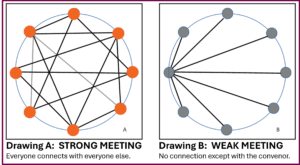
The meeting is not about the convenor. The meeting is about encouraging sober connections within the group, so that the participants themselves become **connected and empowered**. In an established LifeRing meeting where everyone is familiar with the format, the convenor may be almost invisible. It’s only when there is a snag in the meeting’s process that you may discover who the convenor is. The key difference between a convenor’s role and that of a member is the focus of the convenor is on the needs of others.
A strong meeting has connections between every participant, as shown in Drawing A in the diagram provided. A **robust exchange of supportive engagement** is the goal of a convenor. A weak meeting, on the other hand, is one where all communication only goes through the convenor, as in “Drawing B”. This type of convenor acts more like a lecturer or guru, not a convenor.
The ultimate aim is to build a **vibrant, interconnected community** where every voice is heard and every member feels empowered, knowing that the strength of the group lies in the connections they forge with one another.
**Categories:** 3000 Convenors
---
### [About Us](https://lifering.org/about-us/)
**Published:** September 11, 2020
**Author:** Bees
**Content:**
# About Us
[  ](https://lifering.org/lifering-resources/)
**[LifeRing Resources](https://lifering.org/lifering-resources/)**
LifeRing’s network of support offers abstinence-based, secular, and self-empowered pathways for individuals seeking to achieve and maintain recovery.
[  ](https://lifering.org/professionals-menu/)
**[For Professionals](https://lifering.org/professionals-menu/)**
LifeRing is a 501(c)(3) nonprofit exclusively run by peers in recovery. We empower those searching for substance use support, and serve as a companion to other programs supporting SUD recovery.
[  ](https://lifering.org/governance/)
[**Governance**](https://lifering.org/governance/)
LifeRing Secular Recovery is a free-standing, self-supporting, democratically run organization. LifeRing is not affiliated with any other group.
[  ](https://lifering.org/news-blog/)
**[News Blog](https://lifering.org/news-blog/)**
LifeRing news, events, and recovery information.
[  ](https://lifering.org/email-signup/)
**[Email Signup](https://lifering.org/email-signup/)**
Get the newsletter, blog posts, and general LifeRing announcements.
[  ](https://lifering.org/about-us/podcasts/)
[**LifeRing Podcasts**](https://lifering.org/about-us/podcasts/)
Insightful conversations about recovery with LifeRing’s public speakers.
**Categories:** 1070 About
**Tags:** about us Menu
---
### [Connections](https://lifering.org/connections/)
**Published:** March 22, 2025
**Author:** webmaster @lifering.org
**Content:**
## Connections
[Meetings](https://lifering.org/meeting-menu/)
[eGroups](https://lifering.org/meeting-menu/email-groups/)
[ePals](https://lifering.org/meeting-menu/epals/)
[LifeRing Forum](https://forums.delphiforums.com/lifering?gid=2083382663)
[Social Media](https://lifering.org/social-media/)
**Categories:** 1040 Connections
---
### [Website Privacy Policy](https://lifering.org/privacy-policy/)
**Published:** August 5, 2025
**Author:** Ben Hooks
**Content:**
Lifering.org is highly sensitive to the privacy interests of consumers and visitors and believes that the protection of those interests is a important responsibility. In acknowledgment this, LifeRing Secular Recovery has adopted the following Privacy Policy, applicable to information about consumers and visitors that it acquires in the course of its business:
Acquisition of Information. We do not acquire any more information about consumers or [website](https://ko-websites.com/) visitors than is required by law or is otherwise necessary to provide a high level of service efficiently and securely.
Our Employees and Privacy. We train all of our employees about the importance of privacy. We give access to information about consumers only to those employees who require it to perform their jobs.
Security Measures. We make access to privacy-sensitive information subject to rigorous procedural and technological controls, consistent with legal requirements and the demands of customer service.
Disclosure to Third Parties. We will provide individually-identifiable information about consumers to third parties only if we are compelled to do so by order of a duly-empowered governmental authority, we have the express permission of the consumer, or it is necessary to process transactions and provide our services.
Privacy and Our Business Partners. When we make our technology or services available to business partners, we will not share with them any more consumer information than is necessary, and we will make every reasonable effort to assure, by contract or otherwise, that they use our technology and services in a manner that is consistent with this Privacy Policy
.
Questions. If you have questions about this privacy policy please send an e-mail to webmaster(@)lifering.org
---
### [Meetings and Verifications Quick Links](https://lifering.org/meeting-menu/meetings-and-verifications/)
**Published:** August 6, 2025
**Author:** Bees
**Content:**
## **NEW MEETING CALENDAR AND VERIFICATION RESOURCES**
Quick Links for Quick Reference!
---
#### **Verification Chat Language**
[Link to Verifications FAQ for members](https://lifering.org/attendance-verification-support/)
---
**Cut and Paste Language for Zoom Chats**:
We’ve moved to a new verification management system! [You can find details here](https://lifering.org/attendance-verification-support/):
<https://lifering.org/attendance-verification-support/>and [here](https://www.pathcheck.com/):
<https://www.pathcheck.com/>Want to give it a try? You will need to [set up a Pathcheck account first](https://www.pathcheck.com/participants). Here’s how:
<https://www.pathcheck.com/participants>You can also find a direct link to the [Verifications Form](https://meetings.lifering.org/meetings/verifications/)
[https://meetings.lifering.org/meetings/verifications/ ](https://meetings.lifering.org/meetings/verifications/)on the [LifeRing Meetings Calendar](https://meetings.lifering.org/meetings/).
<https://meetings.lifering.org/meetings/>Is it safe? Sure it is! Check out the [Privacy Policy](https://www.pathminder.co/privacy):
<https://www.pathminder.co/privacy>**Important Note:**
The screen name you sign in with is the screen name that is used to locate your attendance record. You can [find your original screen name and/or change it](https://support.zoom.com/hc/en/article?id=zm_kb&sysparm_article=KB0061891) for your next meeting by following these steps:
<https://support.zoom.com/hc/en/article?id=zm_kb&sysparm_article=KB0061891>
---
**Video Walkthrough**
Here’s a link to the All About Vouchers video you can share after the meeting if you choose:
[All About Vouchers](https://lsrtesting.com/wp-content/uploads/2025/07/video1819452883.mp4?_=3)
<https://lsrtesting.com/wp-content/uploads/2025/07/video1819452883.mp4?_=3>
#### **Meetings Calendars and Records**
[Link to Pathminder Meeting Management](https://www.pathminder.co/)
---
**New meeting calendars:**
- [All Active LifeRing Meetings](https://meetings.lifering.org/meetings/)
- [Local Meetings](https://meetings.lifering.org/meetings/?scope=hide)
- [Online Meetings](https://meetings.lifering.org/meetings/?scope=only)
---
**Request changes to new meeting records:**
- [Local Meetings Records \| Change Form](https://docs.google.com/forms/d/e/1FAIpQLSexSJJgn93JeEU6IJmG18AsyFClwVusdraOSjXpWg9gzYNdmg/viewform?usp=header)
- [Online Meetings \| Change Form](https://docs.google.com/forms/d/e/1FAIpQLSd9bYslbXOx6wPy6npZSNXK0rpvsOubsTSMNj9qqvCwieIG7g/viewform?usp=sharing&ouid=115795670155015508321)
---
**How to change your Zoom user name:**
To change your display name in Zoom, you’ll need to access your profile settings, either through the Zoom desktop app or the Zoom web portal. You can then edit your display name and save the changes, which will be reflected in future Zoom meetings.
[More detail here](https://support.zoom.com/hc/en/article?id=zm_kb&sysparm_article=KB0061891)
#### **New Resources Training**
[Link to All Kinds of Good Stuff](https://lsrtesting.com/aug-1-new-website-and-verification-system/)
---
**Video walkthroughs:**
- [High Level Overview of Changes](https://lsrtesting.com/wp-content/uploads/2025/07/Overview.mp4?_=1)
- [Overview of Meetings Calendar](https://lsrtesting.com/wp-content/uploads/2025/07/Meeting-List-Demo.mp4?_=2)
- [All About Verifications](https://lsrtesting.com/wp-content/uploads/2025/07/video1819452883.mp4?_=3)
---
**Categories:** 2000 Meetings
---
### [Payment Options](https://lifering.org/convenors-menu/payment-options/)
**Published:** July 19, 2018
**Author:** Bees
**Content:**
# Payment Options for Convenors
**Payment of invoices can be made here., Please include the invoice number.**
**Convenors, meeting money for In-Person Meetings can be paid here. Please include a meeting number or your meeting location for proper credit to your meeting.**
## Checks
LifeRing Secular Recovery
25125 Santa Clara St, #E-359
Hayward, CA 94544
## Credit Card or PayPal
For payment of Meeting Money and Invoices.
Name \*First
Last
Email \*Email
Confirm Email
Please indicate in the "Payment Description" field if the payment is for Meeting Money (indicate Meeting #, Location, or Convenor's email address) or is for payment of an invoice (please enter the invoice number). \*
Description" for Please
Payment Amount \*Minimum Price: $10.00
Payment Method \*
- PayPal
- Credit Card
Stripe Credit Card \*
Card
Name on Card
PayPal Commerce \*PayPal CheckoutCredit Card
Card Number
Expiration Date
Security Code
Card Holder Name
Submit

Questions <webmaster@lifering.org>
**Categories:** 3000 Convenors
**Tags:** convenor support
---
### [Book, Pamphlets, and Meeting Money](https://lifering.org/convenors-menu/book-pamphlets-and-meeting-money/)
**Published:** January 17, 2021
**Author:** Bees
**Content:**
# Book, Pamphlets, and Meeting Money Information
**Displaying of books and p**amphlets** at In-Person LifeRing meetings**
All Convenors are urged to display at least one copy of each title at their meeting and have the “Welcome to LifeRing” brochure available for distribution. Please review the instructions below and order as funds become available. This will help LifeRing thrive and grow as an organization. If you are starting a new in-person meeting, please see [Starter Kits](https://lifering.org/convenor-menu/starter-kit/).
**Book and **Pamphlets** Pricing to Convenors**
We can offer Convenors book pricing of $5.00 off the retail cost. LifeRing will also pay for shipping costs and taxes. This service is provided to registered convenors only.
LifeRing Books – Retail Pricing:
- [*Recovery by Choice, A Workbook*](https://lifering.org/books/rbc/) – Retail- $25.00. For registered convenors – $20.00.
- [*Empowering Your Sober Self*](https://lifering.org/books/eyss/) – Retail – $20.00. For registered convenors – $15.00.
- [*Humanly Possible*](https://lifering.org/books/hp/) – Retail – $10.00. For registered convenors – $5.00.
- [*How Was Your Week*](https://lifering.org/books/hwyw/) – Retail – $15.00. For registered convenors – 10.00.
- Payment of sales tax by LifeRing.
- Free shipping in the US
The other items that can be purchased are:
- [“Empowering Your Sober Self” (EYSS) pamphlet](https://lifering.org/wp-content/uploads/lifering-press/pamphlets/616_LSR_Pamphlet-06-18-2021.pdf) – Each pamphlet pack (50 counts) is $15.00
- Free shipping in the US.
View and download LifeRing brochures [here](https://lifering.org/pamphlets/).
**Convenors:** email <publisher@lifering.org> to place an order. Along with this order, please include an email address, shipping address, contact name, and phone number. An invoice will be generated and sent to your email address along with a payment link\*\*. Once paid for, your order will be processed and shipped the next business day.
***\*\*Note:** If prepaying your invoice is not possible because of financial hardship, you can pay for it in one of these three ways:*
- *Set up a payment plan (interest-free).*
- *Sell your books on consignment (to be paid for only when sold at your meeting).*
- *Ask for financial relief.*
*Please include one of these above alternate payment methods in your email order. The payment method will be reflected on your invoice.*
**Meeting Money for in-person meetings**
If you “pass the hat,” meeting money can be sent to the Service Center using this [payment link](https://lifering.org/convenor-support/payment-options/).
**Categories:** 3000 Convenors
**Tags:** shop
---
### [Be a LifeRing Convenor!](https://lifering.org/convenors-menu/be-a-lifering-convenor/)
**Published:** August 29, 2021
**Author:** Bees
**Content:**
# **Be a LifeRing Convenor!**
---
| #### **“I convene a LifeRing meeting because I feel better about myself, my day, and my life after a meeting. It helps me in my recovery.”** – *Mike M., SoCal Convenor* |
|---|
---
#### **LifeRing is recruiting new convenors to help people seeking recovery support**
#### **Do you remember when you first started out on your Recovery Journey?**
I was scared. I was embarrassed. I was ashamed. But I was also lonely. None of my buddies had any idea how hard I was struggling. Because, of course,[](https://lifering.org/convenor-menu/start-a-meeting/) *they* could quit if they really wanted to. I needed to talk with someone who understood, who shared my goals and who would allow me the space to explore my own pathway to sobriety.
I dipped my toes into several recovery groups, but nothing really clicked. I was made to feel even worse about myself while I was working so hard on becoming better. Then I found LifeRing. It was love at first meeting!
#### **A Call for New Convenors**
There is an obvious need for new convenors to meet the growing number of people searching for recovery support. If you are active in LifeRing with 6 months continuous sobriety, please consider bringing your experience to others searching for a safe and nonjudgmental space to explore their recovery pathway. [Here’s how to get started](https://lifering.org/become-a-convenor/).
LifeRing has hands-on, in-meeting, co-convenor opportunities available now. For more information, please reach out to your convenor directly or contact <service@lifering.org>. You can find details about [starting a new meeting](https://lifering.org/convenor-support/start-a-meeting/) and the [role of a convenor](https://lifering.org/wp-content/uploads/Convenor_Resources/Online_Meetings/06%20Excerpts%20from%20HWYW%20(convenor%20cliff%20notes).pdf) on the [LifeRing Convenor Toolkit webpage](https://lifering.org/convenors/convenor-toolkit/).
#### **What’s in it for You?**
A really, really big slice of satisfaction knowing you’re helping others just like you who are seeking a secular recovery pathway.
#### **Call-a-Convenor**
If you want to start your own recovery meeting or learn more about being a LifeRing Convenor, please reach out to our [Service Center](mailto:service@lifering.org), complete the [Prospective Convenor Information Form (PCIF)](https://docs.google.com/forms/d/e/1FAIpQLScy-Ih9ltdF615Gdu39RPcuWW68MbA7ptYD9-tDPVcUVIpxqQ/viewform?usp=sf_link) or call 800.811.4142. A LifeRing volunteers will get in touch with you to talk about why they convene and why you should, too!
All [Co-Convenors and Co-Hosts](https://lifering.org/get-involved-menu/engagement-opportunities/#con-co) (aka tech support) should be familiar with LifeRing fundamentals and well versed in online meeting practices. **Co-Hosts** (aka tech support) No continuous sobriety requirements. Should be
- well versed in online meeting practices, and
- have a solid understanding of Zoom functionality.
**Co-Convenors w/Convenor Present** (any convenor in the meeting willing to step in as needed) 3-months continuous sobriety. Should be:
- familiar with LifeRing fundamentals,
- well versed in online meeting practices, and
- have a solid understanding of Zoom functionality.
**Co-Convenors with No Convenor Present** (convening alone or convening a breakout room)
6-months continuous sobriety.
Should be:
- familiar with LifeRing fundamentals,
- well versed in online meeting practices, and
- have a solid understanding of Zoom functionality.
**Categories:** 3000 Convenors
**Tags:** convenor support
---
### [Retention and Efficacy Report](https://lifering.org/retention-and-efficacy-report/)
**Published:** November 4, 2024
**Author:** webmaster @lifering.org
**Content:**
## Retention and Efficacy
**The Efficacy of LifeRing Secular Recovery**
It is difficult to fully capture retention data and abstinence rates because LifeRing is an anonymous recovery community and does not require members to sign in or pay a membership fee.
**NATIONAL PEER ALTERNATIVES FOR ADDICTION STUDY**
On May 6, 2022, The NIAAA (National Institute on Alcohol Abuse and Alcoholism) released its new report [*Recommend Evidence-Based Treatment: Know the Options*](https://www.niaaa.nih.gov/health-professionals-communities/core-resource-on-alcohol/recommend-evidence-based-treatment-know-options). This report reviews the benefits of mutual support groups **naming LifeRing in the top three secular support groups** and includes data from the Peer Alternatives for Addiction (PAL) Study detailed below.
LifeRing was invited to participate in the *[Alcohol Research Group national Peer Alternatives for Addiction (PAL) Study](https://pubmed.ncbi.nlm.nih.gov/29606223/)*. LifeRing’s efficacy was compared to other secular recovery and to Alcoholics Anonymous. This study found that LifeRing is comparable in effectiveness to 12-step programs:
*Research suggests that three of the largest known secular groups in the U.S.-SMART Recovery,* ***LifeRing****, and Women for Sobriety-****appear comparable in effectiveness to 12-step programs for people who have a goal of abstinence****. People in any of these mutual help groups have greater success in achieving abstinence if they become actively involved with their group, as measured by, for example, meeting attendance, having a sponsor or close friend in the group, or volunteering for the group.*
Responses from study participants show LifeRing members have a greater level of abstinence than other secular recovery programs:
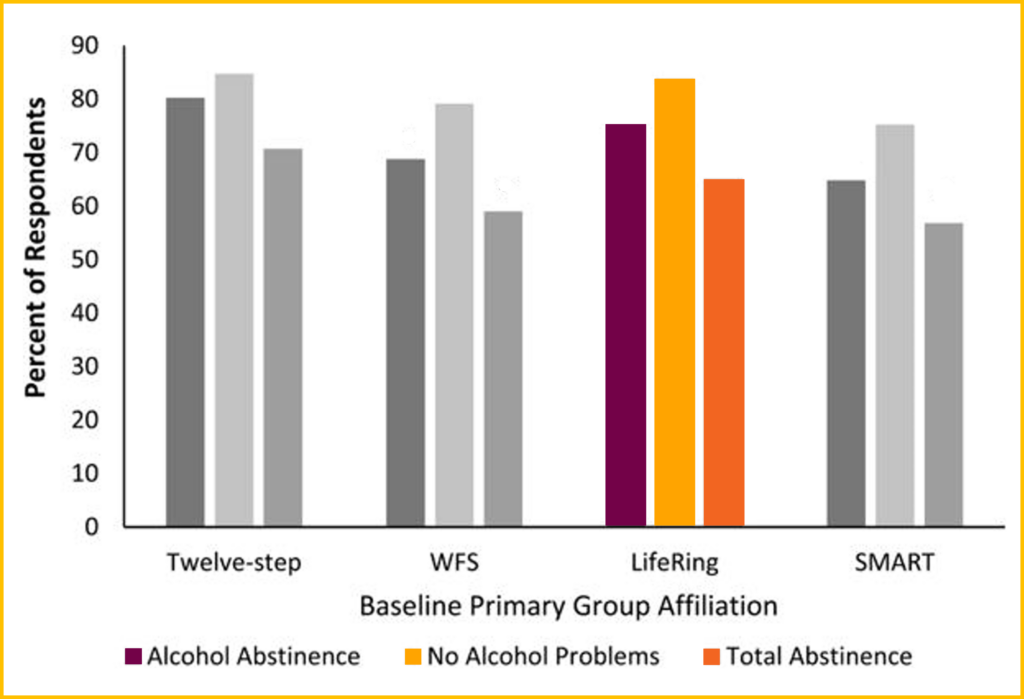
[NIH: A Longitudinal Study of the Comparative Efficacy of Women for Sobriety, LifeRing, SMART Recovery, and 12-step Groups for those with AUD](https://www.ncbi.nlm.nih.gov/pmc/articles/PMC5884451/)
[NIH: Comparison of 12-step Groups to Mutual Help Alternatives for AUD in a Large, National Study: Differences in Membership Characteristics and Group Participation, Cohesion, and Satisfaction](https://www.ncbi.nlm.nih.gov/pmc/articles/PMC5193234/)
LifeRing was also invited to participate in the [PAL2 Study](https://pal2study.org/) and we look forward to sharing reports resulting from this study when they become available.
\_\_\_\_\_\_\_\_\_\_\_\_\_\_\_\_\_\_\_\_\_\_\_\_\_\_\_\_\_\_\_\_\_\_\_\_\_\_\_\_\_\_\_\_\_\_\_\_\_\_\_
**LIFERING MEETINGS PARTICIPATION and RETENTION RATE**
LifeRing is recognized by the National Institute on Alcohol Abuse and Alcoholism (NIAAA) as [a top secular mutual support group and a strong recovery community](https://www.niaaa.nih.gov/health-professionals-communities/core-resource-on-alcohol/recommend-evidence-based-treatment-know-options). LifeRing community members join to empower our sober selves and overcome our substance use challenges. People seeking recovery support find LifeRing and they keep coming back.
Based on the attendance of LifeRing online meeting participants identified by unique IP addresses:
- LifeRing supports approximately **2,500** unique online meeting members every week
- The net growth of unique online meeting members is approximately **6.9%** year over year
- **50%** of people return after attending their first LifeRing online meeting; and
- Returning participants have a 6-month retention rate of approximately **30%**
- **91%** of participants would recommend LifeRing to a friend
LifeRing currently offer [100+ weekly online meetings](https://meetings.lifering.org/meetings/?scope=only) that are complemented by eight [active eGroups](https://lifering.org/meeting-menu/email-groups/) and other [LifeRing online support systems](https://lifering.org/meeting-menu/). LifeRing [local ](https://lifering.org/meeting-menu/local-meetings/)meetings have grown **11.8%** year over year with 8 new [Kaiser Permanente](https://healthy.kaiserpermanente.org/) meetings in Northern California
\_\_\_\_\_\_\_\_\_\_\_\_\_\_\_\_\_\_\_\_\_\_\_\_\_\_\_\_\_\_\_\_\_\_\_\_\_\_\_\_\_\_\_\_\_\_\_\_\_\_\_
**ADDITIONAL RESOURCES**
- [LifeRing Overview for Professionals](https://lifering.org/about-us/for-professionals/)
- [LifeRing Strategic Plan](https://lifering.org/wp-content/uploads/Public_Documents/Current_Strategic_Plan.pdf)
- *[Empowering Your Sober Self](https://lifering.org/bookstore/books/eyss/), The LifeRing Approach to Addiction and Recovery*
- *[Recovery by Choice](https://lifering.org/bookstore/books/rbc/), A Workbook*
- [Empower Your Sober Self](https://lifering.org/wp-content/uploads/lifering-press/pamphlets/EYSS_Pamphlet.pdf) pamphlet for future LifeRing Community members
- [Professional](https://lifering.org/wp-content/uploads/lifering-press/pamphlets/Pro_Pamphlet_09_07_2024.pdf) pamphlet for health care providers and treatment specialists
#### For more information or to speak directly with a LifeRing Representative, please email: <service@lifering.org> or call: 800.811.4142
##### **LifeRing Secular Recovery provides an abstinence-based, secular, and self-empowered substance use recovery pathway through our network of 100% peer-run meetings.**
##### **LifeRing is a 501(c)(3) charitable organization – EIN 94-3267919**
**Categories:** 1060 Professionals
---
### [FAQs](https://lifering.org/lifering-resources/faqs/)
**Published:** October 16, 2019
**Author:** Bees
**Content:**
# Frequently Asked Questions (FAQs)
**What is LifeRing?**
LifeRing is a **network of support resources** for people who want to live free of alcohol and non-medically indicated drugs. We believe in your power to empower your sober self and overcome substance use challenges. **How does LifeRing work?**
LifeRing works through **positive social reinforcement**. All LifeRing recovery resources focus on empowering the **Sober Self** within each of us. **What is the LifeRing program?**
The hallmark of a quality recovery program is to match the treatment to the individual. We adopt that same approach in our self-empowerment work. Instead of a one-size-fits-all approach, LifeRing encourages each participant to develop their own **Personal Recovery Program (PRP)**. Our group meetings serve as a workshop for this process. We also offer a helpful guide – the “**Recovery by Choice**” workbook to support you in building your PRP. **What is the LifeRing meeting format?**
Meeting formats vary, but most center around the question “**How Was Your Week?”** Participants share their successes and challenges from the past week and plan for the week ahead. **Conversation (“crosstalk”)** **is encouraged**, fostering direct interaction. We discourage detailed accounts of past substance use (“drunkalogues”) to keep the focus on the present and future. Each meeting typically ends with applause, celebrating everyone’s successes big or small. **Where can I find more information about LifeRing?**
This website is an excellent starting point! For deeper insights, explore the **LifeRing Press bookstore** for publications. For quick answers and connections, check out our **online communities**. You can also reach us directly by emailing <service@lifering.org> or call 1-800-811-4142. **Is LifeRing affiliated with another organization, or is it a subsidiary of something else?**
No. LifeRing is an **independent, freestanding organization**. We’re not a subsidiary or affiliate of any other group. However, we respect and support **multiple paths to recovery** and encourage our members to choose what works best for them. **How is LifeRing financed?**
LifeRing is a **nonprofit with 501(c)(3)** charitable status. We’re supported by voluntary contributions at meetings (“passing the basket”), sales of our literature from LifeRing Press, and individual donations. **Who runs LifeRing?**
LifeRing is run by its members. Each local and online meeting can elect a delegate to participate in the annual **LifeRing Congress**. The Congress then elects the **Board of Directors**, who appoint the officers. You can find more details in the [LifeRing Bylaws](https://lifering.org/wp-content/uploads/ImportantDocs/Current_Bylaws.pdf). **How come I’ve never heard of LifeRing before?**
LifeRing was founded as a national organization in 1997. The LifeRing story is continually reaching more people. **How successful is LifeRing?**
LifeRing is successful for individuals who find our **secular, self-directed approach** a good fit for their recovery journey. The best way to understand our success is to **attend a LifeRing meeting** and connect with our members. You can find a [national study comparing LifeRing’s efficacy with other recovery programs](https://lifering.org/for-professionals/#lifering_participation_peer_alternatives_for_addiction_study) on our Overview for Professionals webpage. **Can friends and loved ones of alcoholics/addicts attend LifeRing?**
Yes, provided they are sober at the time of the meeting. We also offer [meetings for Family and Friends](https://meetings.lifering.org/meetings/?title=&program=&audiences=28&meetingType=&datetime_nextmeeting=&languages=&location=&coordinates=&scope=) which can be found on our meetings calendar. **Is LifeRing a 12-step program?**
No. LifeRing is not a 12-step program. We offer a **distinct, secular approach to recovery** that centers on your personal power and self-direction. Our model isn’t based on steps, but rather on **empowering your “Sober Self”** to achieve and maintain abstinence. **Can I attend LifeRing if I’m also involved in other recovery programs?**
Absolutely. We encourage you to explore and participate in **any activities that support your personal recovery plan**. Many LifeRing members find success by engaging with various recovery programs, whether they are 12-step, SMART Recovery, Recovery Dharma, or others. We respect and support your individual choices on your path to sobriety. **Is LifeRing a treatment program?**
No, LifeRing is not a treatment program. We are a **network of peer-led support resources**. While we often work alongside professional treatment centers, we are not therapists or counselors. LifeRing is made up exclusively of people in recovery with their own lived experiences and a desire to give back. **Does LifeRing have sponsors?**
The concept of a sponsor in LifeRing differs from other recovery programs. Because we emphasize **individual self-direction**, there’s no need for a “program guide” to lead you through a set of steps. However, we highly value **supportive connections between meetings**. We foster this by creating deep connections between members and their core groups. In a sense, all participants in a LifeRing meeting “sponsor” one another through **mutual support**. **Do I have to call myself an “alcoholic” or “addict” in LifeRing?**
No. In LifeRing, we believe these labels can sometimes be **stigmatizing or unhelpful**. Whether you choose to identify with labels like “alcoholic” or “addict” is entirely **optional and up to you**. The core requirement for participation is a commitment to stop drinking and using drugs. **What about smoking?**
LifeRing meetings are **non-smoking environments**. While we don’t require you to quit smoking to participate in our groups, we are here to offer encouragement, education, and support when you feel ready to quit. **Are the meetings confidential?**
Yes, we highly value **confidentiality and protect our members’ anonymity**. However, we also believe in empowering individuals. Members are welcome to disclose their own participation if they feel that being open will strengthen their personal recovery journey. **Is LifeRing only for people with alcohol-related issues?**
No. We view recovery from alcohol and drug use as fundamentally similar. We warmly **welcome everyone into our meetings, regardless of their “drug of choice.”****Is LifeRing primarily for atheists or agnostics?**
No. LifeRing is a **secular program**, meaning it’s not based on religious or spiritual beliefs. This makes it a welcoming space for people of all backgrounds, including those with religious or spiritual beliefs, as well as atheists and agnostics. Your personal beliefs remain private and do not become a topic of discussion in meetings. We do not permit religious proselytizing or attacks on religion in our meetings. **Does LifeRing cost anything?**
No. There is **no charge to participate** in LifeRing meetings. We typically pass either a basket or virtual basket for voluntary contributions to help cover expenses, but contributing is entirely optional. **How is LifeRing similar to AA or NA?** LifeRing is **abstinence-based** and utilizes **group support** as a core component of recovery. Our meetings also uphold **confidentiality** for all members. **How is LifeRing different from other recovery programs?**
LifeRing stands apart in several key ways:
- **Personal Empowerment:** We believe the power to get clean and sober resides within each individual, focusing on the “Sober Self.”
- **No “Higher Power” Requirement:** Your belief or disbelief in a ‘higher power’ is not a factor in your ability to get clean and sober with LifeRing.
- **Inclusive for All Substances:** We welcome people regardless of their “drug of choice.”
- **Open Communication:** We encourage crosstalk and direct interaction during meetings.
- **Individualized Recovery:** We emphasize and support each person in building a **Personal Recovery Program** tailored to their unique needs and experiences.
- **Abstinence-based Platform:** LifeRing recommends **complete abstinence** rather than moderation as a goal in recovery. Many of our members have found moderation to be an impossible goal to achieve. Discussions of moderation can be unsettling for some members. If you’re exploring moderation as a recovery model, please speak with a convenor after the meeting.
**Categories:** 1030 Resources
**Tags:** about us
---
### [Treasury Information for Local Meetings](https://lifering.org/convenors-menu/treasury-information-for-local-meetings/)
**Published:** August 6, 2025
**Author:** Lisa
**Content:**
### **In-Person Meetings Treasury Information**
There is never a charge to attend LifeRing meetings. Financial support, however, is necessary to continue LifeRing’s mission to help as many people as possible to find and benefit from recovery.
Colorado convenors should read the [**Colorado In-Person Meetings Treasury Information**](https://lifering.org/convenors-menu/treasury-information-for-local-meetings/colorado-in-person-meetings-treasury-information/)
**Donations make this possible!**
Each LifeRing meeting is financially independent and makes its own decisions on how to spend its money. [LifeRing meeting charter](https://lifering.org/wp-content/uploads/Convenor_Resources/Documents/LifeRing_Meeting_Charter_Protected.pdf)
The donations from individual meetings can be used to pay any rent for meeting spaces, pay for literature and other expenses such as refreshments, special events etc.
Surplus meeting donations can be directed to the national organization to fund the literature printing, website expenses, special events, meeting promotions, community outreach, and other necessary expenses.
Payment Information <https://lifering.org/convenor-menu/payment-options/>
**Collection of Money**
Traditionally, donations are made when “passing the basket” at each meeting.
(The exception to this would be at locations where meeting participants are not able to donate. This may include prisons, psychiatric facilities and some inpatient treatment programs or similar places.)
You can mention other ways to give back to LIfeRing such as helping to get the word out. Ways to do this include giving the Empower Your Sober Self pamphlet to doctors, community groups, judges, lawyers, recovery groups, DUI classes and sober living housing. LifeRing posters or fliers can be put on public bulletin boards.
The container you use to collect donations can be a basket, or any other container you choose. Some have used a bag, box, envelope etc.
Choosing when to start passing the basket is up to the convenor. (You may want to experiment with the timing.) Keep in mind that if you pass the basket at the beginning of the meeting, any latecomers may miss the opportunity to donate. If you wait until just before closing the meeting, those who need to leave early may not get the opportunity to donate. Some choose to pass the basket at the midway point in the meeting, between personal shares.
Whenever you choose to pass the basket, it is helpful to establish and hold to a regular pattern so that it becomes part of the custom of every meeting. It is also helpful to make an announcement reminding meeting attendees of the value of their donations and thank those who are able to contribute.
Some convenors place a labeled donation container on a literature table and make an announcement reminding meeting attendees of the value of their donations and a word of thanks to those who can donate. This works best if the table is near where the attendees enter/exit so that it serves as a visual reminder of the opportunity to donate.
Other convenors place the donation container in the middle of the circle either on the floor or on the table if one is being used.
It may also be useful to provide a variety of money denominations so people can make change. Some people may also contribute larger amounts less frequently than at every meeting. It is up to each individual to contribute however much and however often they choose.
In addition to the above methods, the convenor may also remind those in the meeting that personal donations can be made directly to LifeRing through the website.
Choosing the Treasurer**
As the convenor, you may choose to be the treasurer or someone else in the group may fill that role. When selecting a treasurer, it is wise to choose someone who is financially responsible and stable in their recovery.
The meeting convenor may choose to consult the meeting attendees before making this decision. Once a treasurer is selected, it is important that they review this document and then either the convenor or new Treasurer can communicate to the group which appropriate methods will be used to handle the meeting monies.
The Treasury**
Once donation money has been collected, there is the matter of how to handle the treasury records, how to store the money and how to donate any money to the LifeRing organization.
**The Records:**
When the meeting is over, the Treasurer counts the contributions. Depending on the dollar amount, you may want to have a second person verify the amount.
There are 2 types of records: Donation records and full accounting records that include income and expenses. (The Account Book)
Donation records can be as informal as the back of an envelope or as formal as a computer spreadsheet. Whatever type of record you use, it is advisable to keep the donation account record in 2 places in the event that one record is misplaced or lost. One record can stay in the meeting supply box and the second stays with the Treasurer as part of the Account Book.
The meeting Treasurer’s Account Book is where all donations and expenses are recorded. Expenses may include rent, literature purchases and incidental expenses such as refreshments, special events etc.
**Where to Keep the Money**:
Treasurers may decide where to keep the meeting money.
**Method 1**: The “Shoebox System” This means having a dedicated place for the meeting monies that is separate from the treasurer’s personal money. This can be a shoebox, money pouch (available free at anyone’s personal bank upon request) or any other kind of container of choice.
**The cash container should not be kept at the meeting location.**
When it comes time to pay the rent, other expenses or donate to LifeRing, they take the money out of the shoebox and arrange a convenient method of payment. Some treasurers will pay out cash directly and some take out the cash and then use their personal Credit Card, checks or other method of payment.
**Method 2**: Commingling with Personal Money. Some Treasurers put the donation monies into their personal accounts after making careful and accurate records in the Account Book and secondary record kept with the meeting supplies. Bills are then paid by a convenient means such as personal check or credit card. (Money kept this way are usually in small enough sums so as not to affect the treasurer’s personal income tax returns.)
**Method 3**: Business Account. If the meeting has larger sums of money or the Treasurer changes frequently, setting up a business account with checking and or credit/debit card access may be easiest. Meetings that choose this method may find it helpful to consult with the LifeRing Treasurer through the Service Center.
It is also a good policy to keep the meeting cash reserves to a minimum to avoid the accumulation of large surpluses. Each Treasurer will need to determine this amount based on the method of keeping money and the expenses of the group.
**In summary**, the financial support through donations plays a crucial role in sustaining LifeRing’s efforts to provide a safe and supportive space for individuals on their recovery journey. We appreciate all the individual efforts of convenors and Treasurers that enable LifeRing to continue its mission of providing non-judgmental support to those seeking sobriety.
**Categories:** 3000 Convenors
---
### [Colorado In-Person Meetings Treasury Information](https://lifering.org/convenors-menu/treasury-information-for-local-meetings/colorado-in-person-meetings-treasury-information/)
**Published:** August 6, 2025
**Author:** Lisa
**Content:**
**Colorado In-Person Meetings Treasury Information**
There is never a charge to attend LifeRing meetings. Financial support, however, is necessary to continue LifeRing’s mission to help as many people as possible to find and benefit from recovery.
**Donations make this possible!**
Each LifeRing meeting is financially independent and makes its own decisions on how to spend its money. [LifeRing meeting charter](https://lifering.org/wp-content/uploads/Convenor_Resources/Documents/LifeRing_Meeting_Charter_Protected.pdf)
The donations from individual meetings can be used to pay any rent for meeting spaces, pay for literature and other expenses such as refreshments, special events etc.
Surplus meeting donations can be given or sent to the Colorado treasurer – Joseph Franklin <<lrcotreasurer@gmail.com>> to fund the literature, website expenses, special events, and other necessary expenses.
LifeRing Colorado sends surplus funds to the national organization to fund the literature printing, website expenses, special events, meeting promotions, community outreach, and other necessary expenses.
**Collection of Money**
Traditionally, donations are made when “passing the basket” at each meeting.
(The exception to this would be at locations where meeting participants are not able to donate. This may include prisons, psychiatric facilities and some inpatient treatment programs or similar places.)
You can mention other ways to give back to LIfeRing such as helping to get the word out. Ways to do this include giving the Empower Your Sober Self pamphlet to doctors, community groups, judges, lawyers, recovery groups, DUI classes and sober living housing. LifeRing posters or fliers can be put on public bulletin boards.
The container you use to collect donations can be a basket, or any other container you choose. Some have used a bag, box, envelope etc.
Choosing when to start passing the basket is up to the convenor. (You may want to experiment with the timing.) Keep in mind that if you pass the basket at the beginning of the meeting, any latecomers may miss the opportunity to donate. If you wait until just before closing the meeting, those who need to leave early may not get the opportunity to donate. Some choose to pass the basket at the midway point in the meeting, between personal shares.
Whenever you choose to pass the basket, it is helpful to establish and hold to a regular pattern so that it becomes part of the custom of every meeting. It is also helpful to make an announcement reminding meeting attendees of the value of their donations and thank those who are able to contribute.
Some convenors place a labeled donation container on a literature table and make an announcement reminding meeting attendees of the value of their donations and a word of thanks to those who can donate. This works best if the table is near where the attendees enter/exit so that it serves as a visual reminder of the opportunity to donate.
Other convenors place the donation container in the middle of the circle either on the floor or on the table if one is being used.
It may also be useful to provide a variety of money denominations so people can make change. Some people may also contribute larger amounts less frequently than at every meeting. It is up to each individual to contribute however much and however often they choose.
In addition to the above methods, the convenor may also remind those in the meeting that personal donations can be made directly to LifeRing through the website.
Choosing the Treasurer**
As the convenor, you may choose to be the treasurer or someone else in the group may fill that role. When selecting a treasurer, it is wise to choose someone who is financially responsible and stable in their recovery.
The meeting convenor may choose to consult the meeting attendees before making this decision. Once a treasurer is selected, it is important that they review this document and then either the convenor or new Treasurer can communicate to the group which appropriate methods will be used to handle the meeting monies.
The Treasury**
Once donation money has been collected, there is the matter of how to handle the treasury records, how to store the money and how to donate any money to the LifeRing organization.
**The Records:**
When the meeting is over, the Treasurer counts the contributions. Depending on the dollar amount, you may want to have a second person verify the amount.
There are 2 types of records: Donation records and full accounting records that include income and expenses. (The Account Book)
Donation records can be as informal as the back of an envelope or as formal as a computer spreadsheet. Whatever type of record you use, it is advisable to keep the donation account record in 2 places in the event that one record is misplaced or lost. One record can stay in the meeting supply box and the second stays with the Treasurer as part of the Account Book.
The meeting Treasurer’s Account Book is where all donations and expenses are recorded. Expenses may include rent, literature purchases and incidental expenses such as refreshments, special events etc.
**Where to Keep the Money**:
Treasurers may decide where to keep the meeting money.
**Method 1**: The “Shoebox System” This means having a dedicated place for the meeting monies that is separate from the treasurer’s personal money. This can be a shoebox, money pouch (available free at anyone’s personal bank upon request) or any other kind of container of choice.
**The cash container should not be kept at the meeting location.**
When it comes time to pay the rent, other expenses or donate to LifeRing, they take the money out of the shoebox and arrange a convenient method of payment. Some treasurers will pay out cash directly and some take out the cash and then use their personal Credit Card, checks or other method of payment.
**Method 2**: Commingling with Personal Money. Some Treasurers put the donation monies into their personal accounts after making careful and accurate records in the Account Book and secondary record kept with the meeting supplies. Bills are then paid by a convenient means such as personal check or credit card. (Money kept this way are usually in small enough sums so as not to affect the treasurer’s personal income tax returns.)
**Method 3**: Business Account. If the meeting has larger sums of money or the Treasurer changes frequently, setting up a business account with checking and or credit/debit card access may be easiest. Meetings that choose this method may find it helpful to consult with the LifeRing Treasurer through the Service Center.
It is also a good policy to keep the meeting cash reserves to a minimum to avoid the accumulation of large surpluses. Each Treasurer will need to determine this amount based on the method of keeping money and the expenses of the group.
**In summary**, the financial support through donations plays a crucial role in sustaining LifeRing’s efforts to provide a safe and supportive space for individuals on their recovery journey. We appreciate all the individual efforts of convenors and Treasurers that enable LifeRing to continue its mission of providing non-judgmental support to those seeking sobriety.
**Categories:** 3000 Convenors
---
### [Share Your Story](https://lifering.org/share-your-story/)
**Published:** April 24, 2023
**Author:** Bees
**Content:**
## **Share Your Journey! A Call for Recovery Stories**
#### Are you ready to share your story? Reach out with yours to **<sue@lifering.org>**!
We’re looking for [guest bloggers](https://lifering.org/about-us/news-blog/) and book submissions!
Your story has the power to make a difference. By sharing your experiences, challenges, and ultimately, your triumphs, you have the opportunity to touch the lives of countless individuals who may be in search of hope and inspiration.
Here are a few guidelines to consider when submitting your story:
1. **Focus**: These short stories focus on the turning point in their stories: that moment when there was a change of direction in your path – from addiction to recovery. [Here’s an example of a story shared about a person’s secular recovery turning point](https://lifering.org/turning-point/). If you have a story about a time in your recovery that is important to you, we want to read it!
2. **Authenticity**: Please share your story in an honest and genuine manner. Reflect on your journey, including the obstacles you faced, the turning points, and the strategies that helped you overcome addiction.
3. **Impact**: Share how your recovery has positively influenced your life and the lives of those around you. How has it transformed your relationships, career, and overall well-being? We encourage you to highlight the ripple effects of your recovery.
4. **Resilience**: Discuss the strategies, therapies, or support networks that have played a pivotal role in your recovery. By sharing the tools and resources that helped you navigate the challenges, you can empower others on their own recovery journeys.
5. **Confidentiality**: While we encourage you to be open and authentic, we also understand the importance of privacy. You may choose to use a pseudonym or request that certain identifying details be omitted from your story.
We kindly ask you to adhere to the 250 to 300 word limit, but we understand your story may require more. Once we have received all the stories, our team will carefully review each submission and select the most compelling ones for inclusion in our project. If your story is chosen, we will contact you to discuss any necessary edits and obtain your consent for publication.
**By sharing your journey, you are contributing to a collective narrative of resilience, hope, and transformation. Together, we can break the stigma surrounding substance use challenges and provide a platform for individuals to find solace, inspiration, and support.**
Thank you for considering this invitation. We look forward to reading your powerful addiction recovery story and working together to create a world where recovery is celebrated and supported.
**Please reach out with your stories or questions to:**
Sue Betts
<sue@lifering.org>
**Categories:** 1050 Engage
---
### [2022-2023 Annual Report](https://lifering.org/archived-pages/2022-2023-annual-report/)
**Published:** January 26, 2025
**Author:** Bees
**Content:**

## **LifeRing 2023 Annual Report**
#### **Presented at the 2023 LifeRing Annual Congress \| June 3, 2023**
### **OVERVIEW**
The 2022-2023 LifeRing Administrative Year has been an amazing journey of growth and accomplishments. For the past year, we have seen a significant increase in membership as well as program-wide engagement with active participants. As a result, we are proud to announce that this year marks our highest ever membership numbers with over 2,500 individuals participating weekly in LifeRing meetings across the United States and in our international communities.
In addition to increased membership numbers, we have also seen great success with many of our programs including convenor mentoring and online support groups which provide members with additional resources for their recovery process. Unique, hands-on workshops to explore online meeting management resources, and new promotional resources for new and ongoing in-person meetings offer additional support to our convenor community.
Operationally, LifeRing is growing up. We are successfully implementing our first Strategic Plan which serves as a roadmap to attain our developmental objectives. Quarterly Town Halls encourage program-wide collaboration and bridge the gaps between LifeRing recovery support resources.
The seemingly tireless efforts of our Speakers Bureau are increasing public and professional awareness of LifeRing and the efficacy of our program. Healthcare providers and treatment specialists across the country are referring their clients to LifeRing and to specific focus meetings for patient-to-patient recovery support.
Finally, this past year saw us launch several initiatives aimed at increasing awareness about addiction recovery options targeting both adults and youth populations alike with the introduction of the LifeRing Mobile App and the upgrade in LifeRing Social Media Channels.
---
#### **2023-2024 STRATEGIC PLAN**
In January 2023, the Board of Directors introduced LifeRing’s **first Strategic Plan**. This operational roadmap is designed to help LifeRing Secular Recovery reach new heights of success in 2023-2024. The Strategic Plan outlines our vision for the future, as well as the steps we need to take to get there. Our plan includes goals to optimize operational practices, enhance our service to the recovery community, and expand our reach.
[](https://lifering.org/wp-content/uploads/Public_Documents/LifeRing%20Strategic%20Plan_v4.pdf)We are confident that the implementation of this plan will help us achieve our ambitions for the future. The 2023 Strategic Plan is a result of extensive organizational analysis and market research, and we are confident that this plan will enable us to meet and exceed our goals.
LifeRing team and meeting collaborators are turning to the Strategic Plan to guide operational optimization. We are committed to the positive growth of the LifeRing vision and the community we serve. LifeRing is focused on the future, and our 2023-2024 Strategic Plan will help us get there.
---
#### **IN-PERSON MEETINGS[](https://lifering.org/f2f-meetings/#map)**
We cannot stress enough the importance and the resilience of LifeRing in-person meetings. LifeRing has seen a great uptick in the opening and reopening of in-person meetings across the US.
During the fiscal year, LifeRing added **thirteen new in-person meetings bringing our total 33 active weekly meetings across the country**.
There has been a resurgence this year in local meetings based in the San Francisco Bay Area with the addition of 4 new meetings. Our reach in the North East is growing and we now host an in-person meeting on the beach in Maui!
| #### **In-person meetings have generated approximately $1,800 during the LifeRing fiscal year.** |
|---|
To support our vision to advance our in-person meeting presence, the US In-Person Regional Representatives created a grant program for new and ongoing meetings approved by the BOD in February 2023. These grants of up to $250 per new and existing in person meeting are allocated for initial funding of a **start-up and promotional grants**. While no grants have been awarded to date, the In-Person Meetings Regional Representatives anticipate allocation as convenor interest is identified.
---
#### **ONLINE MEETINGS**
[](https://lifering.org/online-meetings/)
Online meeting attendance: June 2022 through April 2023 \| Color cohorts indicate individual start month. Blue cohorts represent people who joined prior to July 2021.
LifeRing online meeting attendance has grown exponentially with reports showing a 583% increase since the beginning of the Pandemic. We are currently offering 90 online meetings every week with additional meetings on the horizon.
Monthly attendance has grown **approximately 32.6% and support 2,500 unique users every week.** Many meetings average over 50 LifeRingers in attendance and there has been a new movement to better serve our growing online members by extending meetings to allow more time for shares and for crosstalk. It’s not unusual for a LifeRing meeting to run two-hours long.
These numbers clearly illustrate the importance of onboarding new convernors. We have streamlined our new convenor onboarding practices and defined the roles of convenors, co-convenors, and hosts to focus our recruiting efforts. Various strategies to grow our online meeting convenor community are meeting with success and we anticipate seeing more meetings scheduled in upcoming months.
---
#### **eGROUPS and FORUM[](https://lifering.org/email-groups/)**
LifeRing **eGroups** and our **Delphi Forum** members are here to stay. We’ve seen a steady number of subscribers and active participants throughout the administrative year. Two new eGroups were added to our groups.io: **LSRLife** and **LifeRing-LGBTQI+**. In addition to these new eGroups, **LSRsafe** now offers an online meeting for their subscribers.
Our largest growth in email-based recovery resources clearly sits with our LifeRing ePals. So far this year, **LifeRing ePals** have provided 1-to-1 email recovery support for over 127 people – an uptick of 66.7% YoY. This platform offers a unique opportunity for LifeRing to show them the importance of finding a positive recovery community.
---
#### **COMMITTEES**
LifeRing Committees drive the BOD-identified objectives outlined in the Strategic Plan. LifeRing teams work with the Treasurer and BOD to ensure all resources are used to advance all LifeRing objectives that support our vision as A Global Leader in Positive Recovery Support. It is the insight, creativity, and collaborative efforts of these teams that lay the foundation of our current success. In brief we have seen outstanding contributions from our committee volunteers:
**[](https://lifering.org/get-involved-menu/volunteer-form/)Fundraising, Marketing, and Communications**
Personal donations continue to climb and we saw a **64.8% increase in sustaining donors** who contribute over 50% of monies received through our online donation platform. A workgroup is leading the charge to support donor retention initiatives and we are on pace to exceed last year’s personal donations by +5% YE total in 2023.
**Outreach**
Another phenomenal show by our Speakers Bureau this year! We made a great splash at the **CCAR \| MPRC in Punta Gordo, Florida** this January where LifeRing hosted a breakout group and table during this well-attended conference for healthcare providers and treatment specialists.
**Meetings and Convenors**
This lively team is made up of representatives from all LifeRing recovery resources: In-person and Online meetings, eGroups and our Delfi Forum. Collaboration focuses on **coordinating efforts to ensure our convenors and moderators have the support and guidance they deserve** – and to ensure every LifeRing member receives the positive recovery support they need to overcome their substance use challenges. The success of this team is showcased in continued meeting, eGroup, and forum participation growth and retention.
---
#### **GOVERNANCE [](https://www.guidestar.org/profile/shared/ebb06d6e-eb6d-46a3-9aca-7d211657d3e3)**
The LifeRing Board will see a churn this administrative year with two exceptional long-time BOD members terming-out and the introduction of 3 new BOD candidates. These candidates will be introduced to the LifeRing Community during the **2023 Annual Congress**. Nominees are offered an opportunity to speak about their involvement with LifeRing and their objectives if elected to the LifeRing Board of Directors. Delegates are invited to interview the candidates during an open Q&A session. For a list of BOD candidates, click here.
**Policies**
In addition to creating LifeRing’s first Strategic Plan, the board has also been busy creating and revising LifeRing Policy Statements. During this Board Year, the Conflict of Interest Policy was adopted on 3/12/2023, and three standing policies were updated:
- BOD and Convenor E-mail Groups Terms of Use (TOU) (11/13/2022)
- Privacy Policy (01/8/2023)
- Nondiscrimination Policy (04/09/2023)
**Involvement**
LifeRing 2022-2023 BOD members are also extremely active in the LifeRing Community:
- All members lead or are active volunteers on a LifeRing collaboration team
- 5 members are online convenors
- 4 members are on the Speakers Bureau
- 3 members are in-person convenors
- 2 members are active in LifeRing eGroups
- 1 member manages our social media platforms
The LifeRing Executive Search Committee has identified an exceptional candidate to serve as the **LifeRing Director of Development**. The budget to support this contractor will come from surplus resources bequeathed to LifeRing this year. We look forward to finalizing this advantageous arrangement during the final 2022-2023 Board meeting.
Public participation during monthly board meetings has increased during the 2022-2023 year. We hope you’ll join us this year!
---
## **LifeRing 2023 Financial Report**
#### **Presented at the 2023 LifeRing Annual Congress \| June 3, 2023**
### **OVERVIEW**
LifeRing’s financial health from Jun 2022 to May 2023 is overall very good. We ended the last 12 months with a **surplus of $62,589 and a cash balance of $134,799**. In the past 12 months, LifeRing received two, one time “grants” totaling $45,000. We believe that we will get an additional grant of $20,000 in the coming months from one of the same grantors. While these and previous government grants are tagged as “one time”, LifeRing has successfully increased these income streams year over year and is working on staffing a more permanent position to apply for and obtain grants like this in the future.
**[](https://lifering.org/bookstore-shopping-cart/)Donations and the LifeRing Press make up 65% of our revenue sources**. Book printing/shipping and Payroll makes up 65% of our expenses.
In the last 12 months, the ***Recovery by Choice* workbook was our best selling book** with 237 units sold. “Empowering your Sober Self” was our second best selling book. Martin Nicolaus is paid a royalty for all books but “Humanly Possible”. Book sales are down more than 35% year over year.
#### **Deficit (no longer) Spending**
Excluding grants and one time donations, we had a **surplus of $17,062, which was the first such surplus in several years!** This puts LifeRing on a sustainable path to continue its operations. In addition, we will be staffing a dedicated person to write and obtain grants which should continue to add a large income stream to fund various projects at LifeRing.
#### **Cash Reserves and Special Projects**
While LifeRing’s cash reserves are excellent and put the organization on a sustainable path, grants have been given to us with the expectation that we spend the money to expand or improve our operations. A plan to spend that money has been put in place, however, we have not been able to make significant progress against that plan. When we get grants/gifts like the ones that we’ve just received, it creates an expectation that we spend the money on useful endeavors. Keeping the money in a low interest savings account for extended periods of time will make organizations less likely to give us money in the future. The new 2023-2024 Board of Directors should make it a priority to re-evaluate the plan and determine how they can execute on each of the projects.
**Categories:** 9000 Archive
---
### [Resources Menu](https://lifering.org/resources-menu/)
**Published:** March 22, 2025
**Author:** webmaster @lifering.org
**Content:**
## Resources
[If This Is Day One](https://lifering.org/lifering-resources/if-this-is-day-one/)
[Recovery Tool Box](https://lifering.org/lifering-resources/recovery-toolbox/)
[News Blog](https://lifering.org/about-us/news-blog/)
[Videos](https://lifering.org/lifering-resources/videos/)
[Outside Resources](https://lifering.org/lifering-resources/outside-resources/)
**Categories:** 1030 Resources
---
### [Lapel Pins and Wristbands](https://lifering.org/bookstore/lapel-pins-and-wristbands/)
**Published:** October 24, 2024
**Author:** webmaster @lifering.org
**Content:**
## LifeRing Lapel-Pin and Wristband
[  ](https://lifering.org/bookstore/LifeRing-Lapel-Pin-p568210068) [  ](https://lifering.org/bookstore/3-ea-Wristbands-p568363506)
**Categories:** 4000 Shop
**Tags:** Bookstore
---
### [EYSS TOC](https://lifering.org/bookstore/books/eyss/eyss-toc/)
**Published:** September 17, 2020
**Author:** Bees
**Content:**
# Empowering Your Sober Self – Table of Contents
---
### Foreword by William L. White
### Acknowledgments
### Introduction
My Story
I Get the Wake-up Call
Beginning Treatment
First Encounters
The LifeRing Philosophy
Some Similarities and Differences with 12-Step
The Majority of Recoveries Happen Outside AA
Calling for Help on the Front Lines
Voices from the Field
AA Retains Five Percent of Those Who Approach It
My Client-Side Perspective
### (1) A Person Addicted Is A Person In Conflict
The Divided Self
The Divided Self is a Clinical Reality
Addictive Substances Hijack the Brain
The Impact on Our Lives
“A” (Addicted Self) Versus “S” (The Sober Self)
A Radical Simplification
In Conflict Lies Hope
### (2) Prepare Your Sober Self For Action
Reinforcing Your Sober Self
Stop Beating Yourself Up
No S is Too Small to Start
Listen For Your Wake-up Call
Motivating Yourself to Start
Addiction is Not A Defect of Character
Every Personality Type is Liable to Become Addicted
The Power of Habit
The Power of Self-Conditioning
Different Styles of Breaking the Habit
Develop your choice muscles
### (3) How LifeRing Works
The LifeRing Meeting
Reinforcing Our Sober Selves
Labels Are Optional
How Was Your Week?
An X-Ray of the Meeting Dynamic
The Neurobiological Dimension
Horizontal Synergy
Feedback and Cross-Talk
Mirror Neurons
The Spiritual Dimension
### (4) Building A Personal Recovery Program
Why Build a Personal Recovery Program
The *Recovery by Choice* Workbook
The Nine Work Areas for a Personal Recovery Program
Abstinence, the Common Element in All LifeRing Personal Recovery Programs
Building A Personal Recovery Program on Your Own
The Challenges and Rewards of A Personal Recovery Program
Building A Personal Recovery Program Is Not Everyone’s Cup of Tea
Self Help and Professional Help
### (5) About Powerlessness
Choice or Powerlessness
The Augustinian Doctrine of Alcoholics Anonymous
The Problems of the Zero Power Doctrine
Augustine Won the Battle but Pelagius Won the War
How the Powerlessness Doctrine Drives Out Newcomers
The First Drink and the Second
Feelings of Powerlessness Lead People to Drink
The 12-Step Gauntlet of Negative Emotions
Powerlessness for Women and Minorities
The Addict Needs To Fight, Not To Surrender
### (6) About The Disease Theory Of Alcoholism
The “Medical Business”
Disease as the Hammer to Induce Powerlessness
Enter the Alcohol Industry and Marty Mann
Disease Is the Money Word
AA And the Alcohol Industry
A Political but Not a Scientific Triumph
The “Medical Business” Conquers AA
The Comparison to Tobacco
Drinking and Public Health
Does The Disease Theory Reduce Social Stigma?
The Disease Concept and Abstinence
The Disease Concept and the Supreme Court
Why Physicians Have Trouble with the Disease Concept
Disease Treatment without Doctors
The Perfect Storm That Made the Treatment System
The Cure for the Disease Model
### (7) Genetic Headlines Meet Laboratory Realities
Headline Fantasies v. Laboratory Research
Twin Studies
Molecular Studies
Searching For the Alcoholism Gene
Guarded Generalities
A Genetic Trait That Protects Against Alcoholism
The High Risk of Low Responsiveness
The Dangers of Genetic Fatalism
Genetic Fatalism and Eugenics
Alcoholics Are Not a People Apart
### Conclusion
Recovery as Liberation
An Invitation to LifeRing
### Supplement for the Second Edition
Publications of Interest About Addiction Treatment
The Genomics Revolution
Schuckit’s Low Responsiveness Hypothesis
Epigenetics
Conclusion
### References For The First Edition
### About the Author
### Index
**Categories:** 4000 Shop
**Tags:** Bookstore
---
### [Excerpts for EYSS](https://lifering.org/bookstore/books/eyss/excerpts-for-eyss/)
**Published:** May 14, 2010
**Author:** Bees
**Content:**
# Empowering Your Sober Self
## Excerpts From the Book
From the Foreword by William L. White:
Not everyone will agree with the ideas and approaches set forth here, but for the past decade, individuals and families have used LifeRing Secular Recovery as an effective framework to initiate and maintain long-term recovery from life-impairing addictions. Those recoveries are cause for celebration, and this book details how they did it. Those seeking a solution to alcohol and other drug problems and professionals assisting people with such problems will find great value in these pages. — William L. White, Author, [Slaying the Dragon: The History of Addiction Treatment and Recovery in America ](http://www.amazon.com/Slaying-Dragon-Addiction-Treatment-Recovery/dp/093847507X/ref=sr_1_1?ie=UTF8&s=books&qid=1226040494&sr=1-1)
### From the Introduction
One Saturday afternoon, my elder boy, then 10, came into the living room holding a chapter book they were reading in middle school. *The Great Horned Spoon*, it was; about the California gold rush days. One chapter features a brawl in a saloon. With the air of a boy looking for help with homework, wanting a vocabulary word explained, he spoke to me:
“Dad, you’re a ‘*drunkard*,’ aren’t you?”
I had no shields for that word, coming from him. The missile went straight into my heart. I was blowing the Daddy act. \[…\]
Lots of good people have grown up without fathers. But I wanted my kids to have it better. Now I was blowing it. I pondered whether a kid who has a drunkard for a dad is worse off than a kid who has no dad at all. Instead of making a better life for my kids than I had, maybe I was making it worse.
That brief conversation with my eldest boy left me changed inside, at least temporarily. The balance between the “me” that wanted to get free of drinking, and the “me” that wanted to die drunk, had tipped.
Within a few days, while the impact of my son’s one-child, one-word intervention still burned inside of me, I telephoned the Alcohol and Drug Abuse Program of the Kaiser Permanente HMO, to which the family belonged. It seemed like hours before someone answered the ring. My hands shaking, voice straining to sound casual, I made an appointment.
### From Chapter 1: A Person Addicted is a Person in Conflict
The person in the grip of dependency on an addictive substance is a person in conflict. Their personality has split into two antagonistic camps. There is the old, original person, the person they used to be before addictive substances became a priority in their lives. And there is the more recent person, the addict, who lives in the person’s mind/body like a parasite, sucking up more and more resources, and driving the person toward a premature death.
The inner struggle between these two personalities inhabiting the same person is the central psychological reality of life as an addict. So typical is this inner split that “Dr. Jekyll and Mr. Hyde” is hands down the favorite modern metaphor for the condition.
In Robert Louis Stevenson’s *Dr. Jekyll and Mr. Hyde*, Hyde was the addict who committed unspeakable crimes while under the influence. Dr. Jekyll was the rational physician, a pillar of the community, always helping and doing good. The great hair-raising thrill of the story to this day is the audience’s gradual dawning that they were in fact one and the same person.
### From Chapter 2: Prepare Your Sober Self for Action
People who use addictive substances are notoriously hard on themselves. The reason is partly that the world is hard on people whose substance use has become too obvious, and we internalize those value judgments. There are elements in the traditional recovery protocol that reinforce these negative judgments, as we’ll see in later chapters of this book. But there’s an internally generated reason as well.
In the previous chapter, I showed how there’s an A and an S inside of the addicted person. The A is the voice that tells you to drink and use. It does more. It tries to keep you in the appropriate state of mind so that you will keep feeding it. That state of mind is miserable and stressed.
The A does not want you to feel good about yourself, to feel confident, to feel capable, except perhaps in an exaggerated, grandiose way that makes you seem foolish and that deepens your despair when your tall schemes come to nothing. If you begin to see your strengths realistically and to make small but real gains that give you confidence, you may no longer want or need to keep using the substances. So, when you “beat yourself up,” what’s really happening is that your A is beating up your S.
### From Chapter 3: How LifeRing Works
• Addiction is not a sin. People in LifeRing groups tend to have a matter-of-fact attitude about substance addiction. Chemical dependency is not a sin that you have to confess and atone for. It happens to people with all kinds of personalities, including people who are warm and caring, brilliant and generous. LifeRing meetings exist not to judge you or shame you or guilt you for your substance-influenced past, but to support you in building your substance-free present and future. The point is to make a fresh start.
• It stays positive. The LifeRing approach is thoroughly positive. LifeRing works by giving encouragement and support to your sober qualities and efforts. You are reinventing yourself as a person who has a life without drinking or using, and in that process you are supporting others in doing the same. What you are doing is worthwhile and important, not only for yourself, but for the group and for the whole community.
• You’re a grown-up. Although you may count your sober time as a rebirth and celebrate sober baby birthdays, you are an adult and need to understand some adult truths. The tooth fairy will not come in the night and take your problems away. Only you can get you sober. The group cannot get you sober. Its purpose is to support you in getting yourself sober. Your purpose as a group member is to give others the same support you would want for yourself.
### From Chapter 4: Building a Personal Recovery Program
One hallmark of a substance abuse treatment program that operates in a professional manner is its focus on building and carrying out a personalized treatment program for each patient.
It would be absurd if the individuals whose recovery it is were to set for themselves a lower standard than that which professionals have recognized as necessary. If a professional needs to respond to the needs of each individual, then the individual can do no less in his or her self-help work. If “one size fits all” does not work in professional treatment, it certainly has no place in self-treatment.
LifeRing embraces the modern, evidence-based principle of individualized treatment and applies it to self-treatment. Apart from the prime directive, not to put addictive substances into the body, which we all share, LifeRing dismisses the notion that any single program is appropriate for all our participants. Matching our program to our individual problems and needs is what each of us does and should do. Building a LifeRing Personal Recovery Program is what both science and common sense indicate.
### From Chapter 5: About Powerlessness
In the fourth century AD, at the dawn of the Dark Ages, not long after Christianity became the official religion of the remnants of the Roman Empire, there lived two wandering teachers.
One was a Christian monk named Pelagius. Born in the remote provinces of the British Isles, he found his way to the imperial capital, and also visited and taught in Carthage and in Palestine. He led an exemplary life of poverty, modesty, and virtue. Even those who opposed his teachings respected his life style. He preached that God had endowed human beings with the power and the freedom to make moral choices, both for evil and for good.
The other teacher was, by his own public admission, a fornicator, a thief, a drinker, and the father of an illegitimate child, among other vices. He was a Manichean – a religion that holds that everything composed of matter, including all living beings, is dark, corrupt, and evil, but that the forces of light, which exist outside of material things, will eventually prevail. His sudden mid-life conversion to Christianity and his quick promotion to bishop of the North African city of Hippo aroused so much popular skepticism that he felt it politic to write a 160,000-word “Confessions” in his own defense. He preached, in opposition to Pelagius, that man was powerless to choose virtue, and could only choose sin; whatever human beings achieve that is good, they achieve exclusively through the power and grace of God, and God alone deserves the credit.
When my chemical dependency counselor on my Day One in 1992 held up for me the two schedules of the two kinds of recovery support group meetings – the groups that became LifeRing, and the 12-step groups — I had no inkling that I stood before a modern edition of the dispute between the virtuous monk Pelagius and the converted sinner, Augustine of Hippo.
### From Chapter 6: About the Disease Theory of Alcoholism
In this chapter, I’ll tell the fascinating story of how the disease concept of alcoholism came to be part of AA’s teaching. You’ll see the psychological utility as well as the economic and political interests behind the disease concept. You’ll learn why the AA version of the disease model of alcoholism has failed to persuade many thoughtful people, including people within the medical and scientific communities. You’ll see that leading advocates of the disease model themselves undermine its credibility because their approach to treating alcoholism has little in common with accepted modern medical practice. Finally, I’ll present a brief summary of the pros and cons of the disease model and suggest a guideline for making up your mind whether to embrace it or not.
If you become part of LifeRing, you’ll have complete freedom of opinion on the disease issue. LifeRing as an organization does not take a position on it. Sometimes we have debates within the organization between partisans of different lines on it. Our experience is that people who love the disease model, people who hate it, and people who are on the fence about it can all stay clean and sober. And that’s what matters.
### From Chapter 7: Genetic Headlines Meet Laboratory Realities
My friend Kevin comes from a mixed Native American and Irish background. On his father’s side, all the male ancestors as far back as anyone can remember died of alcoholism, directly or indirectly. Six of his mother’s sisters died of alcoholism, and so did both maternal grandparents. It is a safe bet that if alcoholism comes in the genes, Kevin has those genes. But Kevin doesn’t drink or do other drugs. He’s had a few nips now and then at ceremonial occasions but as a general rule he doesn’t touch the stuff. It just doesn’t appeal to him.
Sarah was Jewish. Nobody in her family tree, going back at least four generations, has ever had an issue with drinking or other addictions. Sarah started drinking in a college sorority, started doing pills not long after, and kept this up for almost three decades. When I met her, her friends said she was drinking two liters of vodka per day. Her skin was yellowing, a sign of liver failure. She refused to consider slowing down or stopping. She died at 49.
These examples touch only the surface of the problem of determining what role genetic factors play in the development of alcoholism and other addictions. Almost everyone knows a heavy drinker with a long family history of alcoholism who very probably inherited alcoholism in their genes. But almost everyone also knows people who break that stereotype, people like Kevin who should be alcoholics by family history but who don’t drink, and others like Sarah who have no sign of genetic background but drink and suffer with the worst of them.
Newspapers headlines occasionally announce that “the alcoholism gene” has been found. Headlines appear such as “Born to the Bottle” and “Gene and Tonic: Science Proves that Alcoholics Can’t Help it.” Popular excitement follows. But when the research is checked by other laboratories, the claims become smaller, and soon they evaporate.
### From the Conclusion
There is, in sum, no rational cause to set addicted persons apart by their nature, character, or constitution from the rest of humanity, to view them as inferior, or to accord them less empathy and respect. To put it more personally, there is no reason for us, who know addiction from the inside, to view ourselves as different, inferior, or less worthy of empathy and respect.
To see the sober person inside the addict is not to flip from one absolute to its opposite, from contempt to admiration, but rather to see the person as a living contradiction, a person living two lives and balancing two personalities. To see addicted persons as living contradictions is to understand why liberation is the fitting metaphor for recovery.
Liberation as a metaphor points to the sober self imprisoned within the addicted brain and affirms its inherent dignity and value. Liberation conceives recovery as the empowerment of the sober self, bursting the shackles of chemical dependency, and emerging as the original sober person, newly freed and reborn.
Although this may sound revolutionary, it is in reality a restoration. Addiction has hijacked the person’s original self; it has stolen its energies, feelings, thoughts, and dreams, its very identity. Recovery gives them back. What we recover when we recover is our original self, the authentic us, the sober person we were meant to be and really are.
### References
Ader, R, and N Cohen. “Conditioning of the immune response.” The Netherlands Journal of Medicine 39, no. 3-4 (October 1991): 263-73.
Alford, G S, E N Jouriles, and S C Jackson. “Differences and similarities in development of drinking behavior between alcoholic offspring of alcoholics and alcoholic offspring of non-alcoholics.” Addictive Behaviors 16, no. 5 (1991): 341-7.
Allen, Arthur. “The Disappointment Gene: Why genetics is so far a boondoggle. .” Slate, October 18, 2005. http://www.slate.com/id/2128292.
American Psychiatric Association. American Psychiatric Association. Diagnostic and Statistical Manual of Mental Disorders, Fourth Edition, American Psychiatric Press, Washington, D C (1994).
Anthony, James C. “Epidemiology of Drug Dependency.” In The American Psychiatric Publishing Textbook of Substance Abuse Treatment, 52, 1999.
Ashcraft, Lori H., and William A. Anthony. “Breaking Down Barriers.” Behavioral Healthcare (April 2008).
Asyyed, Asma, Daniel Storm, and Ivan Diamond. “Ethanol activates cAMP response element-mediated gene expression in select regions of the mouse brain.” Brain Research 1106, no. 1 (August 23, 2006): 63-71.
“Atherosclerosis Risk Factors, Prevention and Wellness Tips.” Wellness Tips. http://www.recoverymedicine.com/atherosclerosis\_wellness\_tips.htm.
Augustine of Hippo. Confessions. Vol. 10. Pusey Translation. http://ccat.sas.upenn.edu/jod/augustine/Pusey/book10 .
B Rush, M Bass, M Stewart, E McCracken, M Labreque, and S Bondy. “Detecting, preventing, and managing patients’ alcohol problems.” Canadian Family Physician Médecin De Famille Canadien 40 (September 1994): 1557-66.
Ball, David. “Addiction science and its genetics.” Addiction (Abingdon, England) 103, no. 3 (March 2008): 360-7.
Bandura, Albert. Self-efficacy: The Exercise of Control. W.H. Freeman, 1997.
Barrett, Stephen, and Harriett Hall. “Dubious Genetic Testing.” Quackwatch, 2002. http://www.quackwatch.com/01QuackeryRelatedTopics/Tests/genomics.html.
Beeder, Ann B., and Robert Millman. “Patients with Psychopathology.” In Substance Abuse: A Comprehensive Textbook, 1997.
Begleiter, Henri. “What is inherited in the predisposition toward alcoholism? A proposed model.” Alcoholism: Clinical and Experimental Research 23, no. 7 (1999): 1125-1135.
Bischof, Gallus, Hans-Jürgen Rumpf, Christian Meyer, Ulfert Hapke, and Ulrich John. “Stability of subtypes of natural recovery from alcohol dependence after two years.” Addiction (Abingdon, England) 102, no. 6 (June 2007): 904-8.
Blum, Kenneth G. , John R. Cull, Eric E. Braverman, and David Comings. “Reward Deficiency Syndrome.” American Scientist 84 (March 1, 1996): 132-145.
Boettinger, Charlotte. “UCSF News Office – Brain imaging and genetic studies link thinking patterns to addiction.” http://pub.ucsf.edu/newsservices/releases/200712262.
“Book Review.” Journal of the American Medical Association 113, no. 16 (October 14, 1939). http://www.silkworth.net/bbreviews/01007.html.
Brown, Sally, and David Brown. A Biography of Mrs. Marty Mann: The First Lady of Alcoholics Anonymous. Hazelden, 2005.
—. “Marty Mann and the Evolution of Alcoholics Anonymous \[Excerpts\],” 2001. http://www.barefootsworld.net/aamartymann.html.
Burnham, John C. Bad Habits: Drinking, Smoking, Taking Drugs, Gambling, Sexual Misbehavior. NYU Press, 1994.
Carr, Allen. The easy way to stop smoking. \[Rev. and updated\]. New York: Sterling Pub. Co., 2004.
Cherpitel, Cheryl J. “Injury and the Role of Alcohol: County-Wide Emergency Room Data.” Alcoholism: Clinical and Experimental Research 18, no. 3 (June 1994): 679-684.
Ciccocioppo, ROBERTO, and PETRI Hyytia. “The genetic of alcoholism: learning from 50 years of research.” Addiction Biology 11, no. 3-4 (2006): 193-194.
Clarke, Toni-Kim, Jens Treutlein, Ulrich S. Zimmermann, Falk Kiefer, Markus H. Skowronek, Marcella Rietschel, et al. “HPA-axis activity in alcoholism: examples for a gene-environment interaction.” Addiction Biology 13, no. 1 (March 2008): 1-14.
Cohen, N, J A Moynihan, and R Ader. “Pavlovian conditioning of the immune system.” International Archives of Allergy and Immunology 105, no. 2 (October 1994): 101-6.
Cohen, Peter D. A. “Is the Addiction Doctor the Voodoo Priest of Western Man?.” Addiction Research & Theory 8, no. 6 (2000): 589.
Comings, D E, and K Blum. “Reward deficiency syndrome: genetic aspects of behavioral disorders.” Progress in brain research 126 (2000): 325-41.
Conrad, Peter. The Medicalization of Society: On the Transformation of Human Conditions. JHU Press, 2007.
Crabbe, John C. “Genetic contributions to addiction.” Annual review of psychology 53 (2002): 435-62.
Crabbe, John C., J. C. Crabbe, Jr, and R. Adron Harris. The Genetic Basis of Alcohol and Drug Actions. Springer, 1991.
Crabbe, John C., Tamara J. Phillips, R. Adron Harris, Michael A. Arends, and George F. Koob. “Alcohol-related genes: contributions from studies with genetically engineered mice.” Addiction Biology 11, no. 3-4 (2006): 195-269.
Dawson, Deborah A. “Correlates of Past-Year Status Among Treated and Untreated Persons with Former Alcohol Dependence: United States, 1992.” Alcoholism: Clinical and Experimental Research 20, no. 4 (1996): 771-779.
Deroche-Gamonet, Veronique, David Belin, and Pier Vincenzo Piazza. “Evidence for Addiction-like Behavior in the Rat.” Science 305, no. 5686 (August 13, 2004): 1014-1017.
“Diabetic Diet (Diabetes Diet) Information on MedicineNet.com.” Diabetic Diet (cont’d). http://www.medicinenet.com/diabetic\_diet/page4.htm#toce.
Dick, Danielle M. “Identification of Genes Influencing a Spectrum of Externalizing Psychopathology.” Current Directions in Psychological Science 16, no. 6 (December 2007): 331-335.
“Diet and Hypertension.” http://www.ext.colostate.edu/pubs/foodnut/09318.html.
DiFranza, Joseph R. “Hooked from the first cigarette: New findings reveal that cigarette addiction can arise astonishingly fast. But the research could lead to therapies that make quitting easier..” Scientific American (May 2008): 82-87.
Dimeff, Linda, and Alan Marlatt. “Relapse Prevention.” In Handbook of Alcoholism Treatment Approaches, 176, 1995.
Dodes, Lance M. The Heart of Addiction. HarperCollins, 2002.
Doran, Neal, Mark G Myers, Susan E Luczak, Lucinda G Carr, and Tamara L Wall. “Stability of heavy episodic drinking in Chinese- and Korean-American college students: effects of ALDH2 gene status and behavioral undercontrol.” Journal of Studies on Alcohol and Drugs 68, no. 6 (November 2007): 789-97.
Doumas, Diana M, Christine M Blasey, and Cory L Thacker. “Attrition from Alcohol and Drug Outpatient Treatment Psychological Distress and Interpersonal Problems as Indicators .” Alcoholism Treatment Quarterly 23, no. 4 (June 9, 2005): 55-67.
Edenberg, Howard J. “The Collaborative Study on the Genetics of Alcoholism: an update,” September 22, 2002. http://findarticles.com/p/articles/mi\_m0CXH/is\_/ai\_106731236.
Edenberg, Howard J., and Tatiana Foroud. “The genetics of alcoholism: identifying specific genes through family studies.” Addiction Biology 11, no. 3-4 (2006): 386-396.
Elliott, Victoria. “Addictive cocktail: Alcoholism and genetics … American Medical News.” American Medical News, February 5, 2001. http://www.ama-assn.org/amednews/2001/02/05/hlsa0205.htm.
Emrick, Chad. “Alcoholics Anonymous: Emerging Concepts. Overview.” In Galanter: Recent Developments in Alcoholism: Treatment Research, 7:, 1989.
Emrick, Chad, and J Scott Tonigan. “Alcoholics Anonymous and Other 12-Step Groups.” In Galanter: Recent Developments in Alcoholism: Treatment Research, 433, 2004.
Eng, Mimy Y, Susan E Luczak, and Tamara L Wall. “ALDH2, ADH1B, and ADH1C genotypes in Asians: a literature review.” Alcohol research & health : the journal of the National Institute on Alcohol Abuse and Alcoholism 30, no. 1 (2007): 22-7.
Eng, Mimy Y., Marc A. Schuckit, and Tom L. Smith. “The level of response to alcohol in daughters of alcoholics and controls.” Drug and Alcohol Dependence 79, no. 1 (July 1, 2005): 83-93.
Evans, Suzette M, and Frances R Levin. “Response to alcohol in females with a paternal history of alcoholism.” Psychopharmacology 169, no. 1 (August 2003): 10-20.
Fan, Li, Frederick Bellinger, Yong-Liang Ge, and Peter Wilce. “Genetic study of alcoholism and novel gene expression in the alcoholic brain.” Addiction Biology 9, no. 1 (March 2004): 11-18.
Farnsworth, Dorothy. “Quality Assurance Report.” CAADAC, November 6, 2007. http://www.capwiz.com/caadac/attachments/qa\_final\_report\_12\_07\_\_fin.pdf.
Farren, Conor K., and Keith F. Tipton. “Trait Markers for Alcoholism: Clinical Utility.” Alcohol Alcohol. 34, no. 5 (September 1, 1999): 649-665.
Ferri, M, L Amato, and M Davoli. “Alcoholics Anonymous and other 12-step programmes for alcohol dependence.” Cochrane database of systematic reviews (Online) 2006, no. 3. http://www.mrw.interscience.wiley.com/cochrane/clsysrev/articles/CD005032/frame.html.
Fields, Howard. “Alcoholism: Vice or Disease? A Conversation with Howard Fields, Part 3 of 3 – UCSF Science Café.” http://www.ucsf.edu/science-cafe/conversations/fields3/.
Finn, Deborah A., and John C Crabbe. “Exploring Alcohol Withdrawal Syndrome.” Alcohol Health and Research World 21, no. 2 (1997): 149.
Fischer, Monika, Leah Flury Wetherill, Lucinda G Carr, Min You, and David W Crabb. “Association of the aldehyde dehydrogenase 2 promoter polymorphism with alcohol consumption and reactions in an American Jewish population.” Alcoholism, Clinical and Experimental Research 31, no. 10 (October 2007): 1654-9.
Flatscher-Bader, Traute, Marcel van der Brug, John W Hwang, Peter A Gochee, Izuru Matsumoto, Shin-ichi Niwa, et al. “Alcohol-responsive genes in the frontal cortex and nucleus accumbens of human alcoholics.” Journal of Neurochemistry 93, no. 2 (April 2005): 359-370.
Fletcher, Anne M. Sober for Good: New Solutions for Drinking Problems–Advice from Those Who Have Succeeded. Houghton MifflinCookbooks, 2002.
Flynn, William R. “A Biography of Mrs. Marty Mann: The First Lady of Alcoholics Anonymous \[Book Review\].” Am J Psychiatry 159 (November 2002): 1950-1951.
Fuchs, Rita A., R. Kyle Branham, and Ronald E. See. “Different Neural Substrates Mediate Cocaine Seeking after Abstinence versus Extinction Training: A Critical Role for the Dorsolateral Caudate-Putamen.” J. Neurosci. 26, no. 13 (March 29, 2006): 3584-3588.
Gardner, Eliot. “Brain-Reward Mechanisms.” In Substance Abuse: A Comprehensive Textbook, 1997.
Geller, Anne. “Comprehensive Treatment Programs.” In Substance Abuse: A Comprehensive Textbook, 425-429, 1997.
Gill, K, M Eagle Elk, Y Liu, and R A Deitrich. “An examination of ALDH2 genotypes, alcohol metabolism and the flushing response in Native Americans.” Journal of Studies on Alcohol 60, no. 2 (March 1999): 149-58.
Gladwell, Malcolm. The Tipping Point: How Little Things Can Make a Big Difference. Back Bay, 2002.
Glantz, Stanton A., NetLibrary, Inc, and Inc NetLibrary. The Cigarette Papers. University of California Press, 1998.
Goedde, H W, D P Agarwal, S Harada, F Rothhammer, J O Whittaker, and R Lisker. “Aldehyde dehydrogenase polymorphism in North American, South American, and Mexican Indian populations.” American journal of human genetics 38, no. 3 (March 1986): 395-9.
Goldstein, Avram. Addiction: From Biology to Drug Policy. 2nd ed. Oxford University Press, 2001.
Gordis, E. “Accessible and affordable health care for alcoholism and related problems: strategy for cost containment.” Journal of studies on alcohol 48, no. 6 (November 1987): 579-85.
Granfield, Robert, and William Cloud. Coming Clean: Overcoming Addiction Without Treatment. NYU Press, 1999.
Hahn, Cheng-Yi, San-Yuan Huang, Huei-Chen Ko, Chau-Hsiang Hsieh, I-Hui Lee, Tzung-Lieh Yeh, et al. “Acetaldehyde involvement in positive and negative alcohol expectancies in Han Chinese persons with alcoholism.” Archives of general psychiatry 63, no. 7 (July 2006): 817-23.
Hall, Carl T. “Smokers, your addiction is all in your head, study finds.” San Francisco Chronicle, January 25, 2007. http://www.sfgate.com/cgi-bin/article.cgi?f=/c/a/2007/01/25/BAG89NOCVN9.DTL&feed=rss.news.
Hartigan, Francis. Bill W.: A Biography of Alcoholics Anonymous Cofounder Bill Wilson. Macmillan, 2000.
Heberlein, Ulrike. “Research.” Ernest and Julio Gallo Research Center. http://www.galloresearch.org/site/HeberleinLab/section.php?id=187.
Heilig, Markus. “Imagen: implications for addiction science and science policy.” Addiction (Abingdon, England) 102, no. 11 (November 2007): 1699-700.
Helm, Jeffrey. “Myth of an ‘Addict Gene’.” The Tyee, July 28, 2006. http://thetyee.ca/News/2006/07/28/AddictGene/.
Herman, Judith Lewis. Trauma and Recovery: The Aftermath of Violence–From Domestic Abuse to. Basic Books, 1997.
Hester, Reid K., and William R. Miller. Handbook of Alcoholism Treatment Approaches: Effective Alternatives . 2nd ed. Allyn & Bacon, 1995.
Higgins, Stephen T. “Principles of Learning in the Study and Treatment of Substance Abuse.” In The American Psychiatric Publishing Textbook of Substance Abuse Treatment, 65, 2004.
Hiroi, N, and S Agatsuma. “Genetic susceptibility to substance dependence.” Mol Psychiatry 10, no. 4 (December 7, 2004): 336-344.
Holden, Constance. “Behavioral Genetics : New Clues to Alcoholism Risk.” Science 280, no. 5368 (May 29, 1998): 1348b-1349.
Horgan, Constance. Substance Abuse: A Comprehensive Factbook. Robert Wood Johnson Foundation, 2001.
Jellinek, Elvin Morton. The Disease Concept of Alcoholism. Hillhouse Press, 1960.
Jones, Douglas C, and Gary W Miller. “The effects of environmental neurotoxicants on the dopaminergic system: A possible role in drug addiction.” Biochemical Pharmacology (May 20, 2008).
Joseph, Jay. “Twin Studies in Psychiatry and Psychology: Science or Pseudoscience?.” Psychiatric Quarterly 73, no. 1 (March 1, 2002): 71-82.
Kalivas, Peter W., Jamie Peters, and Lori Knackstedt. “Animal Models and Brain Circuits in Drug Addiction.” Mol. Interv. 6, no. 6 (December 1, 2006): 339-344.
Kasl, Charlotte Davis, and Charlotte S. Kasl. Many Roads, One Journey: Moving Beyond the Twelve Steps. Harpercollins, 1992.
Kelly, John F. “Toward an Addiction-ary: A Proposal for More Precise Terminology.” Alcoholism Treatment Quarterly 22, no. 2 (June 21, 2004): 79-87.
Kessler, R C, K A McGonagle, S Zhao, C B Nelson, M Hughes, S Eshleman, et al. “Lifetime and 12-month prevalence of DSM-III-R psychiatric disorders in the United States. Results from the National Comorbidity Survey.” Archives of general psychiatry 51, no. 1 (January 1994): 8-19.
Ketcham, Katherine, and William Asbury. Beyond the Influence: Understanding and Defeating Alcoholism. Bantam , 2000.
Khazaal, Y, E Frésard, and D Zullino. “\[Exposure to addictogenic substances, conditioned response and treatment of the exposure with response prevention\].” L’Encéphale 33, no. 3 Pt 1: 346-51.
Kiberstis, Paula, and Leslie Roberts. “It’s Not Just the Genes.” Science 296, no. 5568 (April 26, 2002): 685.
Kliesthernes, Christopher, and John Crabbe. “Genetic independence of mouse measures
of some aspects of novelty seeking.” PNAS 103, no. 13 (March 28, 2006): 5-18.
Koob, George, and Michel Le Moal. Neurobiology of Addiction. Academic Press, 2006.
Koob, GF, and FE Bloom. “Cellular and molecular mechanisms of drug dependence.” Science 242, no. 4879 (November 4, 1988): 715-723.
Kurtz, Ernest. “Alcoholics Anonymous and the Disease Concept of Alcoholism.” Alcoholism Treatment Quarterly 20, no. 3/4 (2002): 5-40.
—. Not-God: A History of Alcoholics Anonymous. Hazelden, 1991.
Layman with a Notebook, A. What Is The Oxford Group? Oxford University Press, 1933. http://www.stepstudy.org/downloads/what\_is.pdf.
Le, Christine, Erik P. Ingvarson, and Richard C. Page. “Alcoholics Anonymous and the Counseling Profession: Philosophies in conflict.” Journal of Counseling and Development; http://unhooked.com/sep/aacouns.htm (July 1, 1995): 603.
Lester, David. “The Heritability of Alcoholism: Science and Social Policy.” In Gomberg, Current Issues in Alcohol/drug Studies, 1990.
Lin, Show W., and Robert Anthenelli. “Genetic Factors in the Risk for Substance Use Disorders.” In Substance Abuse: A Comprehensive Textbook, 2004.
Lincoln, Abraham. “Temperance Address .” Sangamo Journal, March 25, 1842. http://www.druglibrary.org/schaffer/History/ancient/TempAddr.htm.
Lobdell, Jared. This Strange Illness: Alcoholism and Bill W. Aldine Transaction, 2004.
Lovinger, David M., and John C Crabbe. “Laboratory models of alcoholism: treatment target identification and insight into mechanisms.” Nature Neuroscience 8, no. 11 (November 2005): 1471.
Lowinson, Joyce H. Substance Abuse: A Comprehensive Textbook. 3rd ed. Lippincott Williams& Wilkins, 1997.
Lu, Ru-Band, Huei-Chen Ko, Jia-Fu Lee, Wei-Wen Lin, San-Yuan Huang, Tso-Jen Wang, et al. “No alcoholism-protection effects of ADH1B\*2 allele in antisocial alcoholics among Han Chinese in Taiwan.” Alcoholism, Clinical and Experimental Research 29, no. 12 (December 2005): 2101-7.
MacDonald, E B, and A R Patel. “Attitudes towards alcoholism.” British Medical Journal 2, no. 5968 (May 24, 1975): 430-1.
Malone, Stephen M., William G. Iacono, and Matt McGue. “Drinks of the Father: Father’s Maximum Number of Drinks Consumed Predicts Externalizing Disorders, Substance Use, and Substance Use Disorders in Preadolescent and Adolescent Offspring.” Alcoholism: Clinical and Experimental Research 26, no. 12 (December 2002): 1823-1832.
Marlatt, Alan, Kimberly Barrett, and Dennis Daley. “Relapse Prevention.” In The American Psychiatric Publishing Textbook of Substance Abuse Treatment, 357.
Matsushita, Sachio, and Susumu Higuchi. “\[A review of the neuroimaging studies of alcoholism\].” Nihon Arukoru Yakubutsu Igakkai Zasshi = Japanese Journal of Alcohol Studies & Drug Dependence 42, no. 6 (December 2007): 615-21.
McGue, Matt. “A Behavioral-Genetic Perspective on Children of Alcoholics.” Alcohol Health and Research World 21, no. 3 (1997): 210-217.
McIntire, Don. “How Well Does A.A. Work? An Analysis of Published A.A. surveys (1968 – 1996) and Related Analyses/Comments.” Alcoholism Treatment Quarterly 18, no. 4 (2000): 1-18.
McIntire, Steve. “Welcome to the McIntire Lab.” Ernest and Julio Gallo Research Center. http://www.galloresearch.org/site/McIntireLab/.
McLellan, A T, Deni Carise, and H D Kleber. “Can the national addiction treatment infrastructure support the public’s demand for quality care?.” Journal of Substance Abuse Treatment 25 (2003): 117-121.
McLellan, A T, D C Lewis, C P O’Brien, and H D Kleber. “Drug dependence, a chronic medical illness: implications for treatment, insurance, and outcomes evaluation.” JAMA: The Journal of the American Medical Association 284, no. 13 (October 4, 2000): 1689-95.
Mercadante, Linda A. Victims and Sinners: Spiritual Roots of Addiction and Recovery. Westminster John KnoxPress, 1996.
Merikangas, Kathleen Ries, and Neil Risch. “Genomic Priorities and Public Health.” Science 302, no. 5645 (October 24, 2003): 599-601.
Midanik, Lorraine T. Biomedicalization of Alcohol Studies: Ideological Shifts and Institutional. Aldine Transaction, 2006.
—. “What’s in a name? Proposed name changes of the US National Institute on Drug Abuse and the US National Institute on Alcohol Abuse and Alcoholism.” Addiction 103, no. 1 (January 1, 2008): 1-3.
Milam, James R. “The Alcoholism Revolution.” Professional Counselor, August 1992. http://www.lakesidemilam.com/TheAlcoholismRevolution.htm.
Milam, James R., and Katherine Ketcham. Under the Influence: A guide to the Myths and Realities of Alcoholism. Bantam , 1983.
Milgram, Gail Gleason. “The Need for Clarity of Terminology .” Alcoholism Treatment Quarterly 22, no. 2 (June 12, 2004): 89-95.
Miller, William R., and William White. “Confrontation in Addiction Treatment.” Counselor (October 4, 2007). http://www.counselormagazine.com/content/view/608/63.
Moos, Rudolf H. “Iatrogenic effects of psychosocial interventions for substance use disorders: prevalence, predictors, prevention.” Addiction 100, no. 5 (May 12, 2005): 595-604.
National Institute on Alcohol Abuse and Alcoholism. “Alcohol Alert #60,” July 2003. http://pubs.niaaa.nih.gov/publications/aa60.htm.
National Institute on Drug Abuse. Principles of Drug Abuse Treatment — A Research-Based Guide . NIDA, 1999.
Neumark, Y D, Y Friedlander, H R Thomasson, and T K Li. “Association of the ADH2\*2 allele with reduced ethanol consumption in Jewish men in Israel: a pilot study.” Journal of Studies on Alcohol 59, no. 2 (March 1998): 133-9.
Nicolaus, Martin. How Was Your Week? Bringing People Together in Recovery the LifeRing Way. Oakland CA: LifeRing Press, 2003.
—. Recovery by Choice: Living and Enjoying Life Free of Alcohol and Drugs, a Workbook. 3rd ed. Oakland CA: LifeRing Press, 2006.
—. “The Role of Mirror Neurons in Addiction and Recovery.” Denver CO; Nashville TN, 2007. http://www.unhooked.com/discussion/index.htm#mirror.
Oakes, Edward T. “Original Sin: A Disputation.” First Things: The Journal of Religion, Culture, and Public Life (November 1998): 16-24.
Paz Filho, G J, L J Sato, M J Tuleski, S Y Takata, C C Ranzi, S Y Saruhashi, et al. “\[Use of the CAGE questionnaire for detecting alcohol use disorders in the emergency room\].” Revista Da Associação Médica Brasileira (1992) 47, no. 1: 65-9.
Pert, Candace B. Molecules Of Emotion: The Science Behind Mind-Body Medicine. 1st ed. Simon & Schuster, 1999.
Pfaff, Donald W., Wade H. Berrettini, and Tong H. Joh. Genetic Influences on Neural and Behavioral Functions. CRC Press, 1999.
Powell v. Texas, 392 U. S. 514 (1968). http://supreme.justia.com/us/392/514/case.html.
Powell, David J. “It’s time for a national approach on staff development.” Behavioral Healthcare (March 2006). http://www.behavioral.net/.
Rhodes, Justin S, and John C Crabbe. “Gene expression induced by drugs of abuse.” Current Opinion in Pharmacology 5, no. 1 (February 2005): 26-33.
Rhodes, Justin S., and John C. Crabbe. “Progress towards finding genes for alcoholism in mice.” Clinical Neuroscience Research 3, no. 4-5 (December 2003): 315-323.
Robins, L N. “The sixth Thomas James Okey Memorial Lecture. Vietnam veterans’ rapid recovery from heroin addiction: a fluke or normal expectation?.” Addiction (Abingdon, England) 88, no. 8 (August 1993): 1041-54.
Robins, L N, J E Helzer, and D H Davis. “Narcotic use in southeast Asia and afterward. An interview study of 898 Vietnam returnees.” Archives of General Psychiatry 32, no. 8 (August 1975): 955-61.
Robins, Lee N, and Sergey Slobodyan. “Post-Vietnam heroin use and injection by returning US veterans: clues to preventing injection today.” Addiction (Abingdon, England) 98, no. 8 (August 2003): 1053-60.
Roeber, Jim. “Excessive drinking, not alcoholism, may lead to most alcohol-related problems.” Eureka Alerts, January 25, 2007. http://www.eurekalert.org/pub\_releases/2007-01/ace-edn011807.php.
Roizen, R. “Jellinek’s Phantom Doctorate,” 1997. http://www.roizen.com/ron/index.htm.
—. “Marty Mann: An Experiment that Failed.” Alcohol Sociology Home Page, 1997. http://www.roizen.com/ron/mann.htm.
—. The American Discovery of Alcoholism, 1933-1939. PhD. Dissertation, Sociology, University of California, Berkeley, 1991. http://www.roizen.com/ron/dissch8.htm.
—. “The Great Controlled Drinking Controversy.” Alcohol Sociology Home Page, 1987. http://www.roizen.com/ron/cont-dri.htm.
Room, Robin. “Alcohol.” In Detels: Oxford Textbook of Public Health. Oxford University Press, 2002. http://www.robinroom.net/alcohol.htm.
—. “Sociology and the Disease Concept of Alcoholism.” In Research Advances in Alcohol and Drug Problems, 7:47-91. New York and London: Plenum Press, 1983. http://www.robinroom.net/sociolog.pdf.
—. “What if we found the magic bullet? Ideological and ethical constraints on biological alcohol research and its application.” Robin Room, 2004. http://www.robinroom.net/magic.doc.
Schermer, Michael. “Adam’s Maxim and Spinoza’s Conjecture.” Scientific American, March 2008.
Schneekloth, T D, R M Morse, L M Herrick, V J Suman, K P Offord, and L J Davis. “Point prevalence of alcoholism in hospitalized patients: continuing challenges of detection, assessment, and diagnosis.” Mayo Clinic Proceedings. Mayo Clinic 76, no. 5 (May 2001): 460-6.
Schuckit, Marc. Drug and Alcohol Abuse: A Clinical Guide to Diagnosis and Treatment. Springer, 2000.
—. “Reactions to Alcohol in Sons of Alcoholics and Controls.” Alcoholism: Clinical and Experimental Research 12, no. 4 (1988): 465-470.
—. “Vulnerability Factors for Alcoholism.” In Neuropsychopharmacology: The fifth Generation of Progress, 1399-1411. American College of Neuropsychopharmacology, 2002. http://www.acnp.org/Docs/G5/CH98\_1399-1412.pdf.
Schuckit, Marc, T L Smith, J Kalmijn, J Tsuang, V Hesselbrock, and K Bucholz. “Response to alcohol in daughters of alcoholics: a pilot study and a comparison with sons of alcoholics.” Alcohol and alcoholism (Oxford, Oxfordshire) 35, no. 3 (June 2000): 242-8.
Schuckit, Marc, Tom L Smith, Victor Hesselbrock, Kathleen K Bucholz, Laura Bierut, Howard Edenberg, et al. “Clinical implications of tolerance to alcohol in nondependent young drinkers.” The American Journal of Drug and Alcohol Abuse 34, no. 2 (2008): 133-49.
Schuckit, Marc, and Tom L. Smith. “The clinical course of alcohol dependence associated with a low level of response to alcohol.” Addiction 96, no. 6 (June 15, 2001): 903-910.
Schumann, Gunter. “Okey Lecture 2006: identifying the neurobiological mechanisms of addictive behaviour.” Addiction (Abingdon, England) 102, no. 11 (November 2007): 1689-95.
Senay, Edward C. “Diagnostic Interview and Mental Status Examination.” In Substance Abuse: A Comprehensive Textbook, 1997.
Shavelson, Lonny. Hooked: Five Addicts Challenge Our Misguided Drug Rehab System. New York: The New Press, 2001.
Siegel, Daniel J. The developing mind: toward a neurobiology of interpersonal experience. Guilford Press, 1999.
Singer, Emily. “Technology Review: More Effective Alcoholism Treatment.” Technology Review Published by MIT, October 27, 2006. http://www.technologyreview.com/read\_article.aspx?id=17669&ch=biotech.
Sober, E., and D. Wilson. Unto Others: The Evolution and Psychology of Unselfish Behavior. Cambridge MA: Harvard University Press, 1998.
Sontag, Susan. Illness as Metaphor and AIDS and Its Metaphors: And, AIDS And Its Metaphors. Macmillan, 2001. http://www.susansontag.com/illnessasmetaphorexcrpt.htm.
Sparks, Robert D. “Watch Your Language! .” Alcoholism Treatment Quarterly 22, no. 2 (June 21, 2004): 97-100.
Stoltenberg, Scott F., and Margit Burmeister. “Recent progress in psychiatric genetics–some hope but no hype.” Hum. Mol. Genet. 9, no. 6 (April 1, 2000): 927-935.
Straus, R. “Medical Practice and the Alcoholic,.” Annals of the American Academy of Political and Social Science, 315, no. 1 (1958): 117-124 .
Substance Abuse and Mental Health Administration. “Overarching Principles To Address the Needs of Persons With Co-Occurring Disorders .” SAMHSA, 2006. http://www.coce.samhsa.gov/cod\_resources/PDF/OverarchingPrinciples(OP3).pdf.
“Take Kids Away from Alcoholic Parents.” Daily Record (UK), February 19, 2007.
Takeshita, Tatsuya. “Gene-environmental interactions in alcohol-related health problems–contributions of molecular biology to behavior modifications.” Nippon eiseigaku zasshi. Japanese Journal of Hygiene 58, no. 2 (May 2003): 254-9.
Tarter, R E. “What is inherited in the predisposition to alcoholism: new model or more muddle?.” Alcoholism, Clinical and Experimental Research 24, no. 2 (February 2000): 246-50.
Traynor v. Turnage, 485 U. S. 535 (1988). http://supreme.justia.com/us/485/535/.
Trimpey, Jack. Rational Recovery: The New Cure for Substance Addiction. Pocket Books, 1996.
Tu, G C, and Y Israel. “Alcohol consumption by Orientals in North America is predicted largely by a single gene.” Behavior Genetics 25, no. 1 (January 1995): 59-65.
Vaillant, George E. “Interview: A Doctor Speaks.” The A.A. Grapevine, May 2001.
—. The Natural History of Alcoholism Revisited. Harvard University Press, 1995.
Vogel, Friedrich, and Arno G. Motulsky. Human genetics: problems and approaches.
Volkow, Nora D., Gene-Jack Wang, Henri Begleiter, Bernice Porjesz, Joanna S. Fowler, Frank Telang, et al. “High Levels of Dopamine D2 Receptors in Unaffected Members of Alcoholic Families: Possible Protective Factors.” Arch Gen Psychiatry 63, no. 9 (September 1, 2006): 999-1008.
Volpicelli, Joseph, and Maia Szalavitz. Recovery Options: The Complete Guide. John Wiley & Sons, 2000.
W, Bill, and Alcoholics Anonymous. Alcoholics Anonymous: the story of how many thousands of men and women have recovered from alcoholism . 3rd ed. Alcoholics Anonymous World Services, 1976.
Wall, T L, S H Shea, K K Chan, and L G Carr. “A genetic association with the development of alcohol and other substance use behavior in Asian Americans.” Journal of Abnormal Psychology 110, no. 1 (February 2001): 173-8.
Wall, Tamara L, Lucinda G Carr, and Cindy L Ehlers. “Protective association of genetic variation in alcohol dehydrogenase with alcohol dependence in Native American Mission Indians.” The American Journal of Psychiatry 160, no. 1 (January 2003): 41-6.
Walters, Glenn D. “The Heritability Of Alcohol Abuse And Dependence: A Meta-Analysis Of Behavior Genetic Research .” The American Journal of Drug and Alcohol Abuse 28, no. 3 (2002): 557.
Warren, Jazmin I, Judith A Stein, and Christine E Grella. “Role of social support and self-efficacy in treatment outcomes among clients with co-occurring disorders.” Drug and alcohol dependence 89, no. 2-3 (July 10, 2007): 267-74.
Washton, Arnold, and Richard Rawson. “Substance Abuse Treatment Under Managed Care: A Provider Perspective.” In The American Psychiatric Publishing Textbook of Substance Abuse Treatment, 2004.
“Wave–particle duality – Wikipedia, the free encyclopedia.” http://en.wikipedia.org/wiki/Wave%E2%80%93particle\_duality.
White, William. “A Disease Concept for the 21st Century.” Counselor 2, no. 4 (April 2001). http://www.bhrm.org/papers/Counselor4.pdf.
—. “Addiction as a Disease: Birth of a Concept.” Counselor 1, no. 1 (2000). http://www.bhrm.org/papers/Counselor1.pdf.
—. “Addiction Disease Concept: Advocates and Critics.” Counselor 2, no. 2 (February 2001). http://www.bhrm.org/papers/Counselor3.pdf.
—. “The Rebirth of the Disease Concept of Alcoholism in the 20th Century..” Counselor 1, no. 2 (2000): 62-66.
White, William . “It’s time to stop kicking people out of addiction treatment.” Counselor (April 2005). http://www.bhrm.org/papers/AD-PDF.pdf.
—. Slaying the Dragon: The History of Addiction Treatment and Recovery in America. Chestnut Health Systems, 1998.
Wilbourne, Paula, and Ken Weingardt. “Therapeutic outcome research and dissemination of empirically based treatment for alcohol use disorders.” Translation of Addictions Science Into Practice (2007): 259-276.
Willett, Walter C. “Balancing Life-Style and Genomics Research for Disease Prevention.” Science 296, no. 5568 (April 26, 2002): 695-698.
Williams, Cecil, and Rebecca Laird. No Hiding Place: Empowerment and Recovery for Our Troubled Communities. HarperSanFrancisco, 1992.
Wilson, Bill. “Statement Before the U.S. Senate,” July 24, 1969. http://www.hopenetworks.org/bill\_w.htm.
—. “What Happened to Those Who Left?,” 1965. http://www.silkworth.net/aahistory/billw2/gsc1965.html.
—. “Why Alcoholics Anonymous is Anonymous.” The A.A. Grapevine, January 1955. http://silkworth.net/grapevine/whyaaanonymous.html.
Wing, Nell. Grateful to Have Been There: My 42 Years with Bill and Lois, and the. Hazelden, 1998.
Winick, Charles. “Epidemiology.” In Substance Abuse: A Comprehensive Textbook, 10-16, 1997.
Wise, Roy A. “Addiction.” In Steven’s Handbook of Experimental Psychology, 801-839, 2002.
—. “Addiction Becomes a Brain Disease.” Neuron 26, no. 1 (April 2000): 27-33.
Woerle, Sandra, Jim Roeber, and Michael G Landen. “Prevalence of alcohol dependence among excessive drinkers in New Mexico.” Alcoholism, Clinical and Experimental Research 31, no. 2 (February 2007): 293-8.
World Health Organization. Neuroscience of Psychoactive Substance Use and Dependence. World Health Organization, 2004.
Wu, Da-Yu. “Decoding Drug Abuse in Noncoding RNA?.” The Scientific World Journal 7, no. S2 (2007): 142-145.
Yokoyama, Akira, and Tai Omori. “Genetic polymorphisms of alcohol and aldehyde dehydrogenases and risk for esophageal and head and neck cancers.” Japanese Journal of Clinical Oncology 33, no. 3 (March 2003): 111-21.
**Categories:** 4000 Shop
**Tags:** Bookstore
---
### [Bookstore Shopping Cart](https://lifering.org/bookstore-shopping-cart/)
**Published:** June 2, 2014
**Author:** Bees
**Content:**
# Featured Products
[Sold out
Recovery By Choice – A Workbook](https://lifering.org/bookstore-shopping-cart/Recovery-By-Choice-A-Workbook-p162427560 "Recovery By Choice - A Workbook")
[
Humanly Possible](https://lifering.org/bookstore-shopping-cart/Humanly-Possible-p161743472 "Humanly Possible")
[
Empowering Your Sober Self](https://lifering.org/bookstore-shopping-cart/Empowering-Your-Sober-Self-p161742544 "Empowering Your Sober Self")
# Books
[
Empowering Your Sober Self](https://lifering.org/bookstore-shopping-cart/Empowering-Your-Sober-Self-p161742544 "Empowering Your Sober Self")
[
How Was Your Week?](https://lifering.org/bookstore-shopping-cart/How-Was-Your-Week-p161743477 "How Was Your Week?")
[
Humanly Possible](https://lifering.org/bookstore-shopping-cart/Humanly-Possible-p161743472 "Humanly Possible")
[Sold out

Recovery By Choice – A Workbook](https://lifering.org/bookstore-shopping-cart/Recovery-By-Choice-A-Workbook-p162427560 "Recovery By Choice - A Workbook")
# Pamphlets
[
The EYSS Pamphlet](https://lifering.org/bookstore-shopping-cart/The-EYSS-Pamphlet-p377462284 "The EYSS Pamphlet")General overview of LifeRing and how it works
[Sold out
Pro Pamphlet](https://lifering.org/bookstore-shopping-cart/Pro-Pamphlet-p698350752 "Pro Pamphlet")Pro Pamphlet for Professionals
# Lapel Pins and Wristbands
[
LifeRing Lapel Pin](https://lifering.org/bookstore-shopping-cart/LifeRing-Lapel-Pin-p568210068 "LifeRing Lapel Pin")
[
3 ea. Wristbands](https://lifering.org/bookstore-shopping-cart/3-ea-Wristbands-p568363506 "3 ea. Wristbands")
- [ My Account ](https://lifering.org/bookstore-shopping-cart/account)
- [ Track Orders ](https://lifering.org/bookstore-shopping-cart/account)
- [ Shopping Bag ](https://lifering.org/bookstore-shopping-cart/cart)
Powered by Lightspeed
Display prices in:USD
### **International orders, institutional customers, booksellers, and convenors. Looking for discounted pricing and shipping quotes? Please email <publisher@lifering.org>.**
**Categories:** 4000 Shop
**Tags:** Bookstore
---
### [RBC Reader Reviews](https://lifering.org/bookstore/books/rbc/rbc-reader-reviews/)
**Published:** October 13, 2020
**Author:** Bees
**Content:**
# Reader Reviews
## Reader Reviews here:
- After reading just about all of the published addictions self-help literature for almost 25 years, your workbook is simply the most useful, well written, pithy, thoughtful, inclusive book I’ve read of its kind that I’ve come across. We’ve used worksheets from the workbook with our clients almost from the first day or two of reading it, with excellent results and feedback. — Catherine Trestrail, Director, A Positive Alternative.
- Do order the workbook! It’s a good structure to start on the sobriety path. — S.Y.
- I’m really excited because I plan to attend my first LifeRing meeting this coming Saturday. I am committed to this step after having worked with the workbook — which I highly recommend! — S.A
- I’m going to use it as a ‘sober souvenir,’ to help during those tough times to remind me how much better I feel now that I’m a sober person. The workbook really has made me re-evaluate my life and helped me through some tough times already.’ — N.D.
- I have absolutely loved the workbook …. I can tell this book is going to make a lot of difference. — R.B.
- I am very pleased. I was especially impressed with Chapter 8 – My History. W.G.
- I’ve got to say I love this book, I wish I had done this when I first got sober, the questions make me think, think, think! — J. H.
- I still adore my Recovery By Choice book and have become voracious about letting people know that designing your own recovery program, the one that works for you, is possible and extremely satisfying. — M.G.
- I just worked through the Recovery By Choice book offered at unhooked.com and it was phenomenal for me. I think everyone of us should have it, and work it at your own pace. It’s intense but so hugely helpful. The workbook is like a hand to hold. I needed it so much. — L.M.G.
- I have done some introspection over the years, but this workbook is really specific. It’s helping me put my finger on what my real issues have been. How I “solved” problems before, and what my options are now. — M.G.
- I think you’ll really like the workbook. It is easily the most useful exercise book I’ve ever seen. Simply full of wisdom for building a recovery program. — J.X.
- I got the workbook quite recently and have started completing parts. It is a very useful book and I personally found the chapter on feelings extremely enlightening. — M.O.
- I think it’s excellent, it helped me a lot. — G.L.
- I have the workbook and love it , it really makes you think about your addiction, hope you get one! You’ll love it too. — Liz FL
- I was amazed at the depth of the workbook, and go to it when I need some extra support or things to ponder late at night. — L.F.
- It is helping clients of all ages (16-60). I am a licensed addictions counselor. — V.S.
- It is an excellent book — helped me immensely. Besides being a workbook in which you can fill out answers to checklists and other questions, it has hints, tips, and suggestions that have worked for other people. These suggestions were very valuable to me. — G.M.
- You will be amazed by what it will show you about yourself. I was shocked! It is also kind of fun to go through. — RP.
- The workbook is a cool thing, its main purpose seems to be to make you think about yourself, your life. As you sit there reading it, by yourself, you can’t really lie to yourself. — B.M.
- The workbook helped me to create a staying-sober plan that has worked well. Now I’m off to review it and make some updates. One whole year with NO hangovers and NO regrets! — L.L.
- The Recovery by Choice workbook is a godsend (Can I use that word on a secular board?). — F.J.
- Received my workbook 3 days ago and have spent about 5 hours working with it. Really stirred up a lot of thinking and self-realization. Still sober, day 13. It feels like I’m really “getting it.” — R.M.
- My Lifering workbook arrived yesterday and it is brilliant. At least now I can read in bed of an evening and see the words, and remember in the morning what I read! — T.D.
- I am quite impressed. Planning to make a meeting just to show it off. — W.N.
- This book has been helpful for my clients. I intend to use it more. — [V.S., LCPC, CCDC](https://lifering.org/bookstore/recovery-by-choice-workbook/)
- This is the most comprehensive, clear, practical, and effective tool I’ve seen in 30 years of reading recovery literature. Hands down. The section on relapse is far and away the best I’ve ever seen. I’d call it a must read. — Gloria M.
- I have found the workbook very helpful and go back to it often. It’s straightforward, makes a lot of sense and is very practical. Great job! — Angela N.
- It will help you notice those “curve balls” before you can pretend you didn’t see them coming. — Jeanne M.
- Anyone recovering from addiction to alcohol or drugs would benefit immensely from a thorough study of this valuable tool. – John D.
- We don’t have a Big Book, we don’t have a small book, but we do have a workbook! — Margherita M.
- I am greatly impressed.… It has a depth that is wonderful to find, addressing those many questions that WE all know but which are so hard to get TO much less to grow past. I know already that this will be the mainstay of my work. – Anthony W.
- Your workbook is a dream! – Charles B.
- I knew you/we (all in recovery) had something special the first time I opened my beta copy. … There’s nothing else like it out there that I have found. – Ben G.
- It’s GREAT! – Amy L.
- We’ve had excellent feedback from using this workbook. MUCH MORE positive feedback than I’ve heard about other ‘methods,’ so I’ll continue to use it. One \[patient\] said it’s the first time (in several attempts at treatment) that they’ve had to ‘work’ and it was helpful. Thanks again. – Sue H.
- A VERY helpful and well-written workbook. – Roger L.
- I highly recommend it … It is really changing how I look at sober life, relapses, and my life in general. – Cynthia M.
- The workbook is a tremendous tool and an outstanding body of work. – Mike C.
- I think it will be quite useful for people at many different stages of recovery. – Bill W.
- A marvelous piece of work. It’s been helpful to me. – Richard B.
- The workbook is awesome. I have given two of them to friends in recovery and had nothing but good reviews. – Patrick B.
- I was knocked out by the range and quality of information in the book. – Aongus C.
- “Recovery by Choice” is absolutely excellent. It has a wealth of information, checklists, etc. that helped me make a plan of “how” I would do this. It costs about $20, but it is well worth every penny, in my opinion. By the way, a person doesn’t need to order the book on-line, if you’d rather not – it is possible to print out an order form and send a check, if you prefer. That is what I did, and it only took a couple days for me to get the book. I am so glad I got this book, it was very helpful for me. — Gal M.
**Categories:** 4000 Shop
**Tags:** Bookstore
---
### [Books](https://lifering.org/bookstore/books/)
**Published:** September 16, 2020
**Author:** Bees
**Content:**
[  ](https://lifering.org/bookstore/books/eyss/)
**[Empowering Your Sober Self](https://lifering.org/bookstore/books/eyss/)**
**[Review](https://lifering.org/bookstore/books/eyss/)**
[  ](https://lifering.org/bookstore/books/rbc/)
**[Recovery by Choice – A Workbook](https://lifering.org/bookstore/books/rbc/)**
**[Review](https://lifering.org/bookstore/books/rbc/)**
[  ](https://lifering.org/bookstore/books/hp/)
[**Humanly Possible**](https://lifering.org/bookstore/books/hp/)
[**Review**](https://lifering.org/bookstore/books/hp/)
[  ](https://lifering.org/bookstore/books/hwyw/)
[**How Was Your Week**](https://lifering.org/bookstore/books/hwyw/)
[**Review**](https://lifering.org/bookstore/books/hwyw/)
**Categories:** 4000 Shop
**Tags:** Bookstore
---
### [Bookstore](https://lifering.org/bookstore/)
**Published:** July 10, 2010
**Author:** Bees
**Content:**
# The LifeRing Bookstore
# Featured Products
[Sold out

Recovery By Choice – A Workbook](https://lifering.org/bookstore/Recovery-By-Choice-A-Workbook-p162427560 "Recovery By Choice - A Workbook")
[
Humanly Possible](https://lifering.org/bookstore/Humanly-Possible-p161743472 "Humanly Possible")
[
Empowering Your Sober Self](https://lifering.org/bookstore/Empowering-Your-Sober-Self-p161742544 "Empowering Your Sober Self")
# Books
[
Empowering Your Sober Self](https://lifering.org/bookstore/Empowering-Your-Sober-Self-p161742544 "Empowering Your Sober Self")
[
How Was Your Week?](https://lifering.org/bookstore/How-Was-Your-Week-p161743477 "How Was Your Week?")
[
Humanly Possible](https://lifering.org/bookstore/Humanly-Possible-p161743472 "Humanly Possible")
[Sold out

Recovery By Choice – A Workbook](https://lifering.org/bookstore/Recovery-By-Choice-A-Workbook-p162427560 "Recovery By Choice - A Workbook")
# Pamphlets
[
The EYSS Pamphlet](https://lifering.org/bookstore/The-EYSS-Pamphlet-p377462284 "The EYSS Pamphlet")General overview of LifeRing and how it works
[Sold out

Pro Pamphlet](https://lifering.org/bookstore/Pro-Pamphlet-p698350752 "Pro Pamphlet")Pro Pamphlet for Professionals
# Lapel Pins and Wristbands
[
LifeRing Lapel Pin](https://lifering.org/bookstore/LifeRing-Lapel-Pin-p568210068 "LifeRing Lapel Pin")
[
3 ea. Wristbands](https://lifering.org/bookstore/3-ea-Wristbands-p568363506 "3 ea. Wristbands")
- [ My Account ](https://lifering.org/bookstore/account)
- [ Track Orders ](https://lifering.org/bookstore/account)
- [ Shopping Bag ](https://lifering.org/bookstore/cart)
Powered by Lightspeed
Display prices in:USD
**International orders, institutional customers, booksellers, and convenors. Looking for discounted pricing and shipping quotes? Please email <publisher@lifering.org>.**
**Categories:** 4000 Shop
**Tags:** Bookstore
---
### [Formation Documents](https://lifering.org/governance-menu/policies-and-documents/formation-documents/)
**Published:** January 22, 2020
**Author:** Bees
**Content:**
# Formation Documents
[IRS 501(c)(3) determination letter and confirmation letter](https://lifering.org/wp-content/uploads/ImportantDocs/501(c)(3)IRSletter.pdf)
[California Corporate Charter](https://lifering.org/wp-content/uploads/ImportantDocs/CaliforniaArticlesOfIncorporation.pdf)
**Categories:** 5000 Governance
**Tags:** Governance
---
### [2012 Public Documents](https://lifering.org/governance-menu/policies-and-documents/bod-minutes-and-financials/2012-public-documents/)
**Published:** June 20, 2014
**Author:** Bees
**Content:**
# 2012 Public Documents
### Board Minutes
[January](https://lifering.org/wp-content/uploads/Public_Documents/2012/Minutes/1_2012_01_BoD_Minutes.pdf)
[February](https://lifering.org/wp-content/uploads/Public_Documents/2012/Minutes/2_2012_02_BoD_Minutes.pdf)
[March](https://lifering.org/wp-content/uploads/Public_Documents/2012/Minutes/3_2012_03_BoD_Minutes.pdf)
[April](https://lifering.org/wp-content/uploads/Public_Documents/2012/Minutes/4_2012_04_BoD_Minutes.pdf)
[2012 Annual Congress](https://lifering.org/wp-content/uploads/Public_Documents/2012/Minutes/5_2012_Annual_Congress.pdf)
[2012 Annual Meeting](https://lifering.org/wp-content/uploads/Public_Documents/2012/Minutes/5_2012_Annual_Meeting.pdf)
[July](https://lifering.org/wp-content/uploads/Public_Documents/2012/Minutes/7_2012_07_BoD_Minutes.pdf)
[August](https://lifering.org/wp-content/uploads/Public_Documents/2012/Minutes/8_2012_08_BoD_Minutes.pdf)
[September](https://lifering.org/wp-content/uploads/Public_Documents/2012/Minutes/9_2012_09_BoD_Minutes.pdf)
[October](https://lifering.org/wp-content/uploads/Public_Documents/2012/Minutes/10_2012_10_BoD_Minutes.pdf)
[November](https://lifering.org/wp-content/uploads/Public_Documents/2012/Minutes/11_2012_11_BoD_Minutes.pdf)
[December](https://lifering.org/wp-content/uploads/Public_Documents/2012/Minutes/12_2012_12_BoD_Minutes.pdf)
### Financials
[January](https://lifering.org/wp-content/uploads/Public_Documents/2012/Financial/01-2012_IncomeExpense_Report.pdf)
[February](https://lifering.org/wp-content/uploads/Public_Documents/2012/Financial/02-2012_IncomeExpense_Report.pdf)
[March](https://lifering.org/wp-content/uploads/Public_Documents/2012/Financial/03-2012_IncomeExpense_Report.pdf)
[April](https://lifering.org/wp-content/uploads/Public_Documents/2012/Financial/04-2012_IncomeExpense_Report.pdf)
[May](https://lifering.org/wp-content/uploads/Public_Documents/2012/Financial/05-2012_IncomeExpense_Report.pdf)
[June](https://lifering.org/wp-content/uploads/Public_Documents/2012/Financial/06-2012_IncomeExpense_Report.pdf)
[July](https://lifering.org/wp-content/uploads/Public_Documents/2012/Financial/07-2012_IncomeExpense_Report.pdf)
[August](https://lifering.org/wp-content/uploads/Public_Documents/2012/Financial/08-2012_IncomeExpense_Report.pdf)
[September](https://lifering.org/wp-content/uploads/Public_Documents/2012/Financial/09-2012_IncomeExpense_Report.pdf)
[October](https://lifering.org/wp-content/uploads/Public_Documents/2012/Financial/10-2012_IncomeExpense_Report.pdf)
[November](https://lifering.org/wp-content/uploads/Public_Documents/2012/Financial/11-2012_IncomeExpense_Report.pdf)
[December](https://lifering.org/wp-content/uploads/Public_Documents/2012/Financial/12-2012_IncomeExpense_Report.pdf)
### 990EZ Tax Return
[2012 990EZ.pdf](https://lifering.org/wp-content/uploads/Public_Documents/2012/2012-990EZ.pdf)
**Categories:** 5000 Governance
**Tags:** Governance
---
### [2014 Public Documents](https://lifering.org/governance-menu/policies-and-documents/bod-minutes-and-financials/2014-public-documents/)
**Published:** June 13, 2014
**Author:** Bees
**Content:**
# 2014 Public Documents
### Board Minutes
[January](https://lifering.org/wp-content/uploads/Public_Documents/2014/Minutes/01_2014_BOD_Minutes.pdf)
[February](https://lifering.org/wp-content/uploads/Public_Documents/2014/Minutes/02_2014_BOD_Minutes.pdf)
[March](https://lifering.org/wp-content/uploads/Public_Documents/2014/Minutes/03_2014_BOD_Minutes.pdf)
[April](https://lifering.org/wp-content/uploads/Public_Documents/2014/Minutes/04_2014_BOD_Mintues.pdf)
[May](https://lifering.org/wp-content/uploads/Public_Documents/2014/Minutes/05_2014_BOD_Mintues.pdf)
[June Annual Meeting](https://lifering.org/wp-content/uploads/Public_Documents/2014/Minutes/06_2014_Annual_Meeting_Minutes.pdf)
[July](https://lifering.org/wp-content/uploads/Public_Documents/2014/Minutes/07_2014_BOD_Mintues.pdf)
[August](https://lifering.org/wp-content/uploads/Public_Documents/2014/Minutes/08_2014_BOD_Minutes.pdf)
[September](https://lifering.org/wp-content/uploads/Public_Documents/2014/Minutes/09_2014_BOD_Minutes.pdf)
[October](https://lifering.org/wp-content/uploads/Public_Documents/2014/Minutes/10_2014_BOD_Minutes.pdf)
[November](https://lifering.org/wp-content/uploads/Public_Documents/2014/Minutes/11_2014_BOD_Minutes.pdf)
[December](https://lifering.org/wp-content/uploads/Public_Documents/2014/Minutes/12_2014_BOD_Minutes.pdf)
### Financials
[January](https://lifering.org/wp-content/uploads/Public_Documents/2014/Financial/01-2014_IncomeExpense_Report.pdf)
[February](https://lifering.org/wp-content/uploads/Public_Documents/2014/Financial/02-2014_IncomeExpense_Report.pdf)
[March](https://lifering.org/wp-content/uploads/Public_Documents/2014/Financial/03-2014_IncomeExpense_Report.pdf)
[April](https://lifering.org/wp-content/uploads/Public_Documents/2014/Financial/04-2014_IncomeExpense_Report.pdf)
[May](https://lifering.org/wp-content/uploads/Public_Documents/2014/Financial/05-2014_IncomeExpense_Report.pdf)
[June](https://lifering.org/wp-content/uploads/Public_Documents/2014/Financial/06-2014_IncomeExpense_Report.pdf)
[July](https://lifering.org/wp-content/uploads/Public_Documents/2014/Financial/07-2014_IncomeExpense_Report.pdf)
[August](https://lifering.org/wp-content/uploads/Public_Documents/2014/Financial/08-2014_IncomeExpense_Report.pdf)
[September](https://lifering.org/wp-content/uploads/Public_Documents/2014/Financial/09-2014_IncomeExpense_Report.pdf)
[October](https://lifering.org/wp-content/uploads/Public_Documents/2014/Financial/10-2014_IncomeExpense_Report.pdf)
[November](https://lifering.org/wp-content/uploads/Public_Documents/2014/Financial/11-2014_IncomeExpense_Report.pdf)
[December](https://lifering.org/wp-content/uploads/Public_Documents/2014/Financial/12-2014_IncomeExpense_Report.pdf)
### 990EZ Tax Return
[2014 990EZ.pdf](https://lifering.org/wp-content/uploads/Public_Documents/2014/2014-990EZ.pdf)
**Categories:** 5000 Governance
**Tags:** Governance
---
### [2024 Public Documents](https://lifering.org/governance-menu/policies-and-documents/bod-minutes-and-financials/2024-public-documents/)
**Published:** January 31, 2024
**Author:** webmaster @lifering.org
**Content:**
## 2024 Public Documents
### Minutes
[January](https://lifering.org/wp-content/uploads/Public_Documents/2024/Minutes/01_2024_BOD_Minutes.pdf)
[February](https://lifering.org/wp-content/uploads/Public_Documents/2024/Minutes/02_2024_BOD_Minutes.pdf)
[March](https://lifering.org/wp-content/uploads/Public_Documents/2024/Minutes/03_2024_BOD_Minutes.pdf)
[April](https://lifering.org/wp-content/uploads/Public_Documents/2024/Minutes/04_2024_BOD_Minutes.pdf)
[May](https://lifering.org/wp-content/uploads/Public_Documents/2024/Minutes/05_2024_BOD_Minutes.pdf)
[June](https://lifering.org/wp-content/uploads/Public_Documents/2024/Minutes/06_2024_BOD_Minutes.pdf)
[July](https://lifering.org/wp-content/uploads/Public_Documents/2024/Minutes/07_2024_BOD_Minutes.pdf)
[August](https://lifering.org/wp-content/uploads/Public_Documents/2024/Minutes/08_2024_BOD_Minutes.pdf)
[September](https://lifering.org/wp-content/uploads/Public_Documents/2024/Minutes/09_2024_BOD_Minutes.pdf)
[October](https://lifering.org/wp-content/uploads/Public_Documents/2024/Minutes/10_2024_BOD_Minutes.pdf)
[November](https://lifering.org/wp-content/uploads/Public_Documents/2024/Minutes/11_2024_BOD_Minutes.pdf)
[December](https://lifering.org/wp-content/uploads/Public_Documents/2024/Minutes/12_2024_BOD_Minutes.pdf)
### Financials
[January](https://lifering.org/wp-content/uploads/Public_Documents/2024/Financial/01_2024_IncomeExpense_Report.pdf)
[February](https://lifering.org/wp-content/uploads/Public_Documents/2024/Financial/02_2024_IncomeExpense_Report.pdf)
[March](https://lifering.org/wp-content/uploads/Public_Documents/2024/Financial/03_2024_IncomeExpense_Report.pdf)
[April](https://lifering.org/wp-content/uploads/Public_Documents/2024/Financial/04_2024_IncomeExpense_Report.pdf)
[May](https://lifering.org/wp-content/uploads/Public_Documents/2024/Financial/05_2024_IncomeExpense_Report.pdf)
[June](https://lifering.org/wp-content/uploads/Public_Documents/2024/Financial/06_2024_IncomeExpense_Report.pdf)
[July](https://lifering.org/wp-content/uploads/Public_Documents/2024/Financial/07_2024_IncomeExpense_Report.pdf)
[August](https://lifering.org/wp-content/uploads/Public_Documents/2024/Financial/08_2024_IncomeExpense_Report.pdf)
[September](https://lifering.org/wp-content/uploads/Public_Documents/2024/Financial/09_2024_IncomeExpense_Report.pdf)
[October](https://lifering.org/wp-content/uploads/Public_Documents/2024/Financial/10_2024_IncomeExpense_Report.pdf)
[November](https://lifering.org/wp-content/uploads/Public_Documents/2024/Financial/11_2024_IncomeExpense_Report.pdf)
[December](https://lifering.org/wp-content/uploads/Public_Documents/2024/Financial/12_2024_IncomeExpense_Report.pdf)
## Reports
[Annual Report](https://lifering.org/wp-content/uploads/2025/01/LifeRing-Year-End-Review-2024.pdf)
**Categories:** 5000 Governance
**Tags:** Governance
---
### [2023 Public Documents](https://lifering.org/governance-menu/policies-and-documents/bod-minutes-and-financials/2023-public-documents/)
**Published:** January 30, 2023
**Author:** Bees
**Content:**
## 2023 Public Documents
### Minutes
[January](https://lifering.org/wp-content/uploads/Public_Documents/2023/Minutes/01_2023_BOD_Minutes.pdf)
[February](https://lifering.org/wp-content/uploads/Public_Documents/2023/Minutes/02_2023_BOD_Minutes.pdf)
[March](https://lifering.org/wp-content/uploads/Public_Documents/2023/Minutes/03_2023_BOD_Minutes.pdf)
[April](https://lifering.org/wp-content/uploads/Public_Documents/2023/Minutes/04_2023_BOD_Minutes.pdf)
[May](https://lifering.org/wp-content/uploads/Public_Documents/2023/Minutes/05_2023_BOD_Minutes.pdf)
[June](https://lifering.org/wp-content/uploads/Public_Documents/2023/Minutes/06_2023_BOD_Minutes.pdf)
[July](https://lifering.org/wp-content/uploads/Public_Documents/2023/Minutes/07_2023_BOD_Minutes.pdf)
[August](https://lifering.org/wp-content/uploads/Public_Documents/2023/Minutes/08_2023_BOD_Minutes.pdf)
[September](https://lifering.org/wp-content/uploads/Public_Documents/2023/Minutes/09_2023_BOD_Minutes.pdf)
[October](https://lifering.org/wp-content/uploads/Public_Documents/2023/Minutes/10_2023_BOD_Minutes.pdf)
[November](https://lifering.org/wp-content/uploads/Public_Documents/2023/Minutes/11_2023_BOD_Minutes.pdf)
[December](https://lifering.org/wp-content/uploads/Public_Documents/2023/Minutes/12_2023_BOD_Minutes.pdf)
### Financials
[January](https://lifering.org/wp-content/uploads/Public_Documents/2023/Financial/01_2023_IncomeExpense_Report.pdf)
[February](https://lifering.org/wp-content/uploads/Public_Documents/2023/Financial/02_2023_IncomeExpense_Report.pdf)
[March](https://lifering.org/wp-content/uploads/Public_Documents/2023/Financial/03_2023_IncomeExpense_Report.pdf)
[April](https://lifering.org/wp-content/uploads/Public_Documents/2023/Financial/04_2023_IncomeExpense_Report.pdf)
[May](https://lifering.org/wp-content/uploads/Public_Documents/2023/Financial/05_2023_IncomeExpense_Report.pdf)
[June](https://lifering.org/wp-content/uploads/Public_Documents/2023/Financial/06_2023_IncomeExpense_Report.pdf)
[July](https://lifering.org/wp-content/uploads/Public_Documents/2023/Financial/07_2023_IncomeExpense_Report.pdf)
[August](https://lifering.org/wp-content/uploads/Public_Documents/2023/Financial/08_2023_IncomeExpense_Report.pdf)
[September](https://lifering.org/wp-content/uploads/Public_Documents/2023/Financial/09_2023_IncomeExpense_Report.pdf)
[October](https://lifering.org/wp-content/uploads/Public_Documents/2023/Financial/10_2023_IncomeExpense_Report.pdf)
[November](https://lifering.org/wp-content/uploads/Public_Documents/2023/Financial/11_2023_IncomeExpense_Report.pdf)
[December](https://lifering.org/wp-content/uploads/Public_Documents/2023/Financial/12_2023_IncomeExpense_Report.pdf)
### Reports
[Annual Report](https://lifering.org/2023-annual-report/)
**Categories:** 5000 Governance
**Tags:** Governance
---
### [2022 Public Documents](https://lifering.org/governance-menu/policies-and-documents/bod-minutes-and-financials/2022-public-documents/)
**Published:** April 10, 2022
**Author:** Bees
**Content:**
## 2022 Public Documents
### Minutes
[January](https://lifering.org/wp-content/uploads/Public_Documents/2022/Minutes/01_2022_BOD_Minutes.pdf)
[February](https://lifering.org/wp-content/uploads/Public_Documents/2022/Minutes/02_2022_BOD_Minutes.pdf)
[March](https://lifering.org/wp-content/uploads/Public_Documents/2022/Minutes/03_2022_BOD_Minutes.pdf)
[April](https://lifering.org/wp-content/uploads/Public_Documents/2022/Minutes/04_2022_BOD_Minutes.pdf)
[May](https://lifering.org/wp-content/uploads/Public_Documents/2022/Minutes/05_2022_BOD_Minutes.pdf)
[June](https://lifering.org/wp-content/uploads/Public_Documents/2022/Minutes/06_2022_BOD_Minutes.pdf)
[July](https://lifering.org/wp-content/uploads/Public_Documents/2022/Minutes/07_2022_BOD_Minutes.pdf)
[August](https://lifering.org/wp-content/uploads/Public_Documents/2022/Minutes/08_2022_BOD_Minutes.pdf)
[September](https://lifering.org/wp-content/uploads/Public_Documents/2022/Minutes/09_2022_BOD_Minutes.pdf)
[October](https://lifering.org/wp-content/uploads/Public_Documents/2022/Minutes/10_2022_BOD_Minutes.pdf)
[November](https://lifering.org/wp-content/uploads/Public_Documents/2022/Minutes/11_2022_BOD_Minutes.pdf)
[December](https://lifering.org/wp-content/uploads/2023/BOD%20Financials%20and%20Minutes/BOD%20Minutes%20December%2011%202022.pdf)
### Financials
[January](https://lifering.org/wp-content/uploads/Public_Documents/2022/Financial/01_2022_IncomeExpense_Report.pdf)
[February](https://lifering.org/wp-content/uploads/Public_Documents/2022/Financial/02_2022_IncomeExpense_Report.pdf)
[March](https://lifering.org/wp-content/uploads/Public_Documents/2022/Financial/03_2022_IncomeExpense_Report.pdf)
[April](https://lifering.org/wp-content/uploads/Public_Documents/2022/Financial/04_2022_IncomeExpense_Report.pdf)
[May](https://lifering.org/wp-content/uploads/Public_Documents/2022/Financial/05_2022_IncomeExpense_Report.pdf)
[June](https://lifering.org/wp-content/uploads/Public_Documents/2022/Financial/06_2022_IncomeExpense_Report.pdf)
[July](https://lifering.org/wp-content/uploads/Public_Documents/2022/Financial/07_2022_IncomeExpense_Report.pdf)
[August](https://lifering.org/wp-content/uploads/Public_Documents/2022/Financial/08_2022_IncomeExpense_Report.pdf)
[September](https://lifering.org/wp-content/uploads/Public_Documents/2022/Financial/09_2022_IncomeExpense_Report.pdf)
[October](https://lifering.org/wp-content/uploads/Public_Documents/2022/Financial/10_2022_IncomeExpense_Report.pdf)
[November](https://lifering.org/wp-content/uploads/Public_Documents/2022/Financial/11_2022_IncomeExpense_Report.pdf)
[December](https://lifering.org/wp-content/uploads/Public_Documents/2022/Financial/12_2022_IncomeExpense_Report.pdf)
### Reports
[Annual Report](https://lifering.org/wp-content/uploads/Public_Documents/2022/2022_Annual_Report.pdf)
**Categories:** 5000 Governance
**Tags:** Governance
---
### [2021 Public Documents](https://lifering.org/governance-menu/policies-and-documents/bod-minutes-and-financials/2021-public-documents/)
**Published:** February 17, 2021
**Author:** Bees
**Content:**
## 2021 Public Documents
### Minutes
[January](https://lifering.org/wp-content/uploads/Public_Documents/2021/Minutes/01_2021_BOD_Minutes.pdf)
[February](https://lifering.org/wp-content/uploads/Public_Documents/2021/Minutes/02_2021_BOD_Minutes.pdf)
[March](https://lifering.org/wp-content/uploads/Public_Documents/2021/Minutes/03_2021_BOD_Minutes.pdf)
[April](https://lifering.org/wp-content/uploads/Public_Documents/2021/Minutes/04_2021_BOD_Minutes.pdf)
[May](https://lifering.org/wp-content/uploads/Public_Documents/2021/Minutes/05_2021_BOD_Minutes.pdf)
[June](https://lifering.org/wp-content/uploads/Public_Documents/2021/Minutes/06_2021_BOD_Minutes.pdf)
[July](https://lifering.org/wp-content/uploads/Public_Documents/2021/Minutes/07_2021_BOD_Minutes.pdf)
[August](https://lifering.org/wp-content/uploads/Public_Documents/2021/Minutes/08_2021_BOD_Minutes.pdf)
[September](https://lifering.org/wp-content/uploads/Public_Documents/2021/Minutes/09_2021_BOD_Minutes.pdf)
[October](https://lifering.org/wp-content/uploads/Public_Documents/2021/Minutes/10_2021_BOD_Minutes.pdf)
[November](https://lifering.org/wp-content/uploads/Public_Documents/2021/Minutes/11_2021_BOD_Minutes.pdf)
[December](https://lifering.org/wp-content/uploads/Public_Documents/2021/Minutes/12_2021_BOD_Minutes.pdf)
### Financials
[January](https://lifering.org/wp-content/uploads/Public_Documents/2021/Financial/01_2021_IncomeExpense_Report.pdf)
[February](https://lifering.org/wp-content/uploads/Public_Documents/2021/Financial/02_2021_IncomeExpense_Report.pdf)
[March](https://lifering.org/wp-content/uploads/Public_Documents/2021/Financial/03_2021_IncomeExpense_Report.pdf)
[April](https://lifering.org/wp-content/uploads/Public_Documents/2021/Financial/04_2021_IncomeExpense_Report.pdf)
[May](https://lifering.org/wp-content/uploads/Public_Documents/2021/Financial/05_2021_IncomeExpense_Report.pdf)
[June](https://lifering.org/wp-content/uploads/Public_Documents/2021/Financial/06_2021_IncomeExpense_Report.pdf)
[July](https://lifering.org/wp-content/uploads/Public_Documents/2021/Financial/07_2021_IncomeExpense_Report.pdf)
[August](https://lifering.org/wp-content/uploads/Public_Documents/2021/Financial/08_2021_IncomeExpense_Report.pdf)
[September](https://lifering.org/wp-content/uploads/Public_Documents/2021/Financial/09_2021_IncomeExpense_Report.pdf)
[October](https://lifering.org/wp-content/uploads/Public_Documents/2021/Financial/10_2021_IncomeExpense_Report.pdf)
[November](https://lifering.org/wp-content/uploads/Public_Documents/2021/Financial/11_2021_IncomeExpense_Report.pdf)
[December](https://lifering.org/wp-content/uploads/Public_Documents/2021/Financial/12_2021_IncomeExpense_Report.pdf)
**Categories:** 5000 Governance
**Tags:** Governance
---
### [2020 Public Documents](https://lifering.org/governance-menu/policies-and-documents/bod-minutes-and-financials/2020-public-documents/)
**Published:** September 10, 2020
**Author:** Bees
**Content:**
# 2020 Public Documents
### Minutes
[January](https://lifering.org/wp-content/uploads/Public_Documents/2020/Minutes/01_2020_BOD_Minutes.pdf)
[February](https://lifering.org/wp-content/uploads/Public_Documents/2020/Minutes/02_2020_BOD_Minutes.pdf)
[March](https://lifering.org/wp-content/uploads/Public_Documents/2020/Minutes/03_2020_BOD_Minutes.pdf)
[April](https://lifering.org/wp-content/uploads/Public_Documents/2020/Minutes/04_2020_BOD_Minutes.pdf)
[May](https://lifering.org/wp-content/uploads/Public_Documents/2020/Minutes/05_2020_BOD_Minutes.pdf)
[June](https://lifering.org/wp-content/uploads/Public_Documents/2020/Minutes/06_2020_BOD_Minutes.pdf)
[July](https://lifering.org/wp-content/uploads/Public_Documents/2020/Minutes/07_2020_BOD_Minutes.pdf)
[August](https://lifering.org/wp-content/uploads/Public_Documents/2020/Minutes/08_2020_BOD_Minutes.pdf)
[September](https://lifering.org/wp-content/uploads/Public_Documents/2020/Minutes/09_2020_BOD_Minutes.pdf)
[October](https://lifering.org/wp-content/uploads/Public_Documents/2020/Minutes/10_2020_BOD_Minutes.pdf)
[November](https://lifering.org/wp-content/uploads/Public_Documents/2020/Minutes/11_2020_BOD_Minutes.pdf)
[December](https://lifering.org/wp-content/uploads/Public_Documents/2020/Minutes/12_2020_BOD_Minutes.pdf)
### Financials
[January](https://lifering.org/wp-content/uploads/Public_Documents/2020/Financial/01_2020_IncomeExpense_Report.pdf)
[February](https://lifering.org/wp-content/uploads/Public_Documents/2020/Financial/02_2020_IncomeExpense_Report.pdf)
[March](https://lifering.org/wp-content/uploads/Public_Documents/2020/Financial/03_2020_IncomeExpense_Report.pdf)
[April](https://lifering.org/wp-content/uploads/Public_Documents/2020/Financial/04_2020_IncomeExpense_Report.pdf)
[May](https://lifering.org/wp-content/uploads/Public_Documents/2020/Financial/05_2020_IncomeExpense_Report.pdf)
[June](https://lifering.org/wp-content/uploads/Public_Documents/2020/Financial/06_2020_IncomeExpense_Report.pdf)
[July](https://lifering.org/wp-content/uploads/Public_Documents/2020/Financial/07_2020_IncomeExpense_Report.pdf)
[August](https://lifering.org/wp-content/uploads/Public_Documents/2020/Financial/08_2020_IncomeExpense_Report.pdf)
[September](https://lifering.org/wp-content/uploads/Public_Documents/2020/Financial/09_2020_IncomeExpense_Report.pdf)
[October](https://lifering.org/wp-content/uploads/Public_Documents/2020/Financial/10_2020_IncomeExpense_Report.pdf)
[November](https://lifering.org/wp-content/uploads/Public_Documents/2020/Financial/11_2020_IncomeExpense_Report.pdf)
[December](https://lifering.org/wp-content/uploads/Public_Documents/2020/Financial/12_2020_IncomeExpense_Report.pdf)
**Categories:** 5000 Governance
**Tags:** Governance
---
### [2019 Public Documents](https://lifering.org/governance-menu/policies-and-documents/bod-minutes-and-financials/2019-public-documents/)
**Published:** February 24, 2019
**Author:** Bees
**Content:**
# 2019 Public Documents
### Board Minutes
[January](https://lifering.org/wp-content/uploads/Public_Documents/2019/Minutes/01_2019_BOD_Minutes.pdf)
[February](https://lifering.org/wp-content/uploads/Public_Documents/2019/Minutes/02_2019_BOD_Minutes.pdf)
[March](https://lifering.org/wp-content/uploads/Public_Documents/2019/Minutes/03_2019_BOD_Minutes.pdf)
[April](https://lifering.org/wp-content/uploads/Public_Documents/2019/Minutes/04_2019_BOD_Minutes.pdf)
[May](https://lifering.org/wp-content/uploads/Public_Documents/2019/Minutes/05_2019_BOD_Minutes.pdf)
[June](https://lifering.org/wp-content/uploads/Public_Documents/2019/Minutes/06_2019_BOD_Minutes.pdf)
[July](https://lifering.org/wp-content/uploads/Public_Documents/2019/Minutes/07_2019_BOD_Minutes.pdf)
[August](https://lifering.org/wp-content/uploads/Public_Documents/2019/Minutes/08_2019_BOD_Minutes.pdf)
[September](https://lifering.org/wp-content/uploads/Public_Documents/2019/Minutes/09_2019_BOD_Minutes.pdf)
[October](https://lifering.org/wp-content/uploads/Public_Documents/2019/Minutes/10_2019_BOD_Minutes.pdf)
[November](https://lifering.org/wp-content/uploads/Public_Documents/2019/Minutes/11_2019_BOD_Minutes.pdf)
[December](https://lifering.org/wp-content/uploads/Public_Documents/2019/Minutes/12_2019_BOD_Minutes.pdf)
### Financials
[January](https://lifering.org/wp-content/uploads/Public_Documents/2019/Financial/01_2019_IncomeExpense_Report.pdf)
[February](https://lifering.org/wp-content/uploads/Public_Documents/2019/Financial/02_2019_IncomeExpense_Report.pdf)
[March](https://lifering.org/wp-content/uploads/Public_Documents/2019/Financial/03_2019_IncomeExpense_Report.pdf)
[April](https://lifering.org/wp-content/uploads/Public_Documents/2019/Financial/04_2019_IncomeExpense_Report.pdf)
[May](https://lifering.org/wp-content/uploads/Public_Documents/2019/Financial/05_2019_IncomeExpense_Report.pdf)
[June](https://lifering.org/wp-content/uploads/Public_Documents/2019/Financial/06_2019_IncomeExpense_Report.pdf)
[July](https://lifering.org/wp-content/uploads/Public_Documents/2019/Financial/07_2019_IncomeExpense_Report.pdf)
[August](https://lifering.org/wp-content/uploads/Public_Documents/2019/Financial/08_2019_IncomeExpense_Report.pdf)
[September](https://lifering.org/wp-content/uploads/Public_Documents/2019/Financial/09_2019_IncomeExpense_Report.pdf)
[October](https://lifering.org/wp-content/uploads/Public_Documents/2019/Financial/10_2019_IncomeExpense_Report.pdf)
[November](https://lifering.org/wp-content/uploads/Public_Documents/2019/Financial/11_2019_IncomeExpense_Report.pdf)
[December](https://lifering.org/wp-content/uploads/Public_Documents/2019/Financial/12_2019_IncomeExpense_Report.pdf)
### 990EZ Tax Return
[2019 990EZ.pdf](https://lifering.org/wp-content/uploads/Public_Documents/2019/2019-990EZ.pdf)
**Categories:** 5000 Governance
**Tags:** Governance
---
### [2018 Public Documents](https://lifering.org/governance-menu/policies-and-documents/bod-minutes-and-financials/2018-public-documents/)
**Published:** May 16, 2018
**Author:** Bees
**Content:**
# 2018 Public Documents
### Board Minutes
[January](https://lifering.org/wp-content/uploads/Public_Documents/2018/Minutes/01_2018_BOD_Minutes.pdf)
[February](https://lifering.org/wp-content/uploads/Public_Documents/2018/Minutes/02_2018_BOD_Minutes.pdf)
[March](https://lifering.org/wp-content/uploads/Public_Documents/2018/Minutes/03_2018_BOD_Minutes.pdf)
[April](https://lifering.org/wp-content/uploads/Public_Documents/2018/Minutes/04_2018_BOD_Minutes.pdf)
[May](https://lifering.org/wp-content/uploads/Public_Documents/2018/Minutes/05_2018_BOD_Minutes.pdf)
[June](https://lifering.org/wp-content/uploads/Public_Documents/2018/Minutes/06_2018_BOD_Minutes.pdf)
[July](https://lifering.org/wp-content/uploads/Public_Documents/2018/Minutes/07_2018_BOD_Minutes.pdf)
[August](https://lifering.org/wp-content/uploads/Public_Documents/2018/Minutes/08_2018_BOD_Minutes.pdf)
[September](https://lifering.org/wp-content/uploads/Public_Documents/2018/Minutes/09_2018_BOD_Minutes.pdf)
[October](https://lifering.org/wp-content/uploads/Public_Documents/2018/Minutes/10_2018_BOD_Minutes.pdf)
[November](https://lifering.org/wp-content/uploads/Public_Documents/2018/Minutes/11_2018_BOD_Minutes.pdf)
[December](https://lifering.org/wp-content/uploads/Public_Documents/2018/Minutes/12_2018_BOD_Minutes.pdf)
### Financials
[January](https://lifering.org/wp-content/uploads/Public_Documents/2018/Financial/01_2018_IncomeExpense_Report.pdf)
[February](https://lifering.org/wp-content/uploads/Public_Documents/2018/Financial/02_2018_IncomeExpense_Report.pdf)
[March](https://lifering.org/wp-content/uploads/Public_Documents/2018/Financial/03_2018_IncomeExpense_Report.pdf)
[April](https://lifering.org/wp-content/uploads/Public_Documents/2018/Financial/04_2018_IncomeExpense_Report.pdf)
[May](https://lifering.org/wp-content/uploads/Public_Documents/2018/Financial/05_2018_IncomeExpense_Report.pdf)
[June](https://lifering.org/wp-content/uploads/Public_Documents/2018/Financial/06_2018_IncomeExpense_Report.pdf)
[July](https://lifering.org/wp-content/uploads/Public_Documents/2018/Financial/07_2018_IncomeExpense_Report.pdf)
[August](https://lifering.org/wp-content/uploads/Public_Documents/2018/Financial/08_2018_IncomeExpense_Report.pdf)
[September](https://lifering.org/wp-content/uploads/Public_Documents/2018/Financial/09_2018_IncomeExpense_Report.pdf)
[October](https://lifering.org/wp-content/uploads/Public_Documents/2018/Financial/10_2018_IncomeExpense_Report.pdf)
[November](https://lifering.org/wp-content/uploads/Public_Documents/2018/Financial/11_2018_IncomeExpense_Report.pdf)
[December](https://lifering.org/wp-content/uploads/Public_Documents/2018/Financial/12_2018_IncomeExpense_Report.pdf)
### 990EZ Tax Return
[2018 990EZ.pdf](https://lifering.org/wp-content/uploads/Public_Documents/2018/2018-990EZ.pdf)
**Categories:** 5000 Governance
**Tags:** Governance
---
### [2017 Public Documents](https://lifering.org/governance-menu/policies-and-documents/bod-minutes-and-financials/2017-public-documents/)
**Published:** March 6, 2017
**Author:** Bees
**Content:**
# 2017 Public Documents
### Board Minutes
[January](https://lifering.org/wp-content/uploads/Public_Documents/2017/Minutes/01_2017_BOD_Minutes.pdf)
[February](https://lifering.org/wp-content/uploads/Public_Documents/2017/Minutes/02_2017_BOD_Minutes.pdf)
[March](https://lifering.org/wp-content/uploads/Public_Documents/2017/Minutes/03_2017_BOD_Minutes.pdf)
[April](https://lifering.org/wp-content/uploads/Public_Documents/2017/Minutes/04_2017_BOD_Minutes.pdf)
[May](https://lifering.org/wp-content/uploads/Public_Documents/2017/Minutes/05_2017_BOD_Minutes.pdf)
[June](https://lifering.org/wp-content/uploads/Public_Documents/2017/Minutes/06_2017_BOD_Minutes.pdf)
[July](https://lifering.org/wp-content/uploads/Public_Documents/2017/Minutes/07_2017_BOD_Minutes.pdf)
[August](https://lifering.org/wp-content/uploads/Public_Documents/2017/Minutes/08_2017_BOD_Minutes.pdf)
[September](https://lifering.org/wp-content/uploads/Public_Documents/2017/Minutes/09_2017_BOD_Minutes.pdf)
[October](https://lifering.org/wp-content/uploads/Public_Documents/2017/Minutes/10_2017_BOD_Minutes.pdf)
[November](https://lifering.org/wp-content/uploads/Public_Documents/2017/Minutes/11_2017_BOD_Minutes.pdf)
[December](https://lifering.org/wp-content/uploads/Public_Documents/2017/Minutes/12_2017_BOD_Minutes.pdf)
### Financials
[January](https://lifering.org/wp-content/uploads/Public_Documents/2017/Financial/01_2017_IncomeExpense_Report.pdf)
[February](https://lifering.org/wp-content/uploads/Public_Documents/2017/Financial/02_2017_IncomeExpense_Report.pdf)
[March](https://lifering.org/wp-content/uploads/Public_Documents/2017/Financial/03_2017_IncomeExpense_Report.pdf)
[April](https://lifering.org/wp-content/uploads/Public_Documents/2017/Financial/04_2017_IncomeExpense_Report.pdf)
[May](https://lifering.org/wp-content/uploads/Public_Documents/2017/Financial/05_2017_IncomeExpense_Report.pdf)
[June](https://lifering.org/wp-content/uploads/Public_Documents/2017/Financial/06_2017_IncomeExpense_Report.pdf)
[July](https://lifering.org/wp-content/uploads/Public_Documents/2017/Financial/07_2017_IncomeExpense_Report.pdf)
[August](https://lifering.org/wp-content/uploads/Public_Documents/2017/Financial/08_2017_IncomeExpense_Report.pdf)
[September](https://lifering.org/wp-content/uploads/Public_Documents/2017/Financial/09_2017_IncomeExpense_Report.pdf)
[October](https://lifering.org/wp-content/uploads/Public_Documents/2017/Financial/10_2017_IncomeExpense_Report.pdf)
[November](https://lifering.org/wp-content/uploads/Public_Documents/2017/Financial/11_2017_IncomeExpense_Report.pdf)
[December](https://lifering.org/wp-content/uploads/Public_Documents/2017/Financial/12_2017_IncomeExpense_Report.pdf)
### 990EZ Tax Return
[2017 990EZ.pdf](https://lifering.org/wp-content/uploads/Public_Documents/2017/2017-990EZ.pdf)
**Categories:** 5000 Governance
**Tags:** Governance
---
### [2016 Public Documents](https://lifering.org/governance-menu/policies-and-documents/bod-minutes-and-financials/2016-public-documents/)
**Published:** February 29, 2016
**Author:** Bees
**Content:**
# 2016 Public Documents
### Board Minutes
[January](https://lifering.org/wp-content/uploads/Public_Documents/2016/Minutes/01_2016_BOD_Minutes.pdf)
[February](https://lifering.org/wp-content/uploads/Public_Documents/2016/Minutes/02_2016_BOD_Minutes.pdf)
[March](https://lifering.org/wp-content/uploads/Public_Documents/2016/Minutes/03_2016_BOD_Minutes.pdf)
[April](https://lifering.org/wp-content/uploads/Public_Documents/2016/Minutes/04_2016_BOD_Minutes.pdf)
[May](https://lifering.org/wp-content/uploads/Public_Documents/2016/Minutes/05_2016_BOD_Minutes.pdf)
[June](https://lifering.org/wp-content/uploads/Public_Documents/2016/Minutes/06_2016_BOD_Minutes.pdf)
[July](https://lifering.org/wp-content/uploads/Public_Documents/2016/Minutes/07_2016_BOD_Minutes.pdf)
[August](https://lifering.org/wp-content/uploads/Public_Documents/2016/Minutes/08_2016_BOD_Minutes.pdf)
[September](https://lifering.org/wp-content/uploads/Public_Documents/2016/Minutes/09_2016_BOD_Minutes.pdf)
[October](https://lifering.org/wp-content/uploads/Public_Documents/2016/Minutes/10_2016_BOD_Minutes.pdf)
[November](https://lifering.org/wp-content/uploads/Public_Documents/2016/Minutes/11_2016_BOD_Minutes.pdf)
[December](https://lifering.org/wp-content/uploads/Public_Documents/2016/Minutes/12_2016_BOD_Minutes.pdf)
### Financials
[January](https://lifering.org/wp-content/uploads/Public_Documents/2016/Financial/01_2016_IncomeExpense_Report.pdf)
[February](https://lifering.org/wp-content/uploads/Public_Documents/2016/Financial/02_2016_IncomeExpense_Report.pdf)
[March](https://lifering.org/wp-content/uploads/Public_Documents/2016/Financial/03_2016_IncomeExpense_Report.pdf)
[April](https://lifering.org/wp-content/uploads/Public_Documents/2016/Financial/04_2016_IncomeExpense_Report.pdf)
[May](https://lifering.org/wp-content/uploads/Public_Documents/2016/Financial/05_2016_IncomeExpense_Report.pdf)
[June](https://lifering.org/wp-content/uploads/Public_Documents/2016/Financial/06_2016_IncomeExpense_Report.pdf)
[July](https://lifering.org/wp-content/uploads/Public_Documents/2016/Financial/07_2016_IncomeExpense_Report.pdf)
[August](https://lifering.org/wp-content/uploads/Public_Documents/2016/Financial/08_2016_IncomeExpense_Report.pdf)
[September](https://lifering.org/wp-content/uploads/Public_Documents/2016/Financial/09_2016_IncomeExpense_Report.pdf)
[October](https://lifering.org/wp-content/uploads/Public_Documents/2016/Financial/10_2016_IncomeExpense_Report.pdf)
[November](https://lifering.org/wp-content/uploads/Public_Documents/2016/Financial/11_2016_IncomeExpense_Report.pdf)
[December](https://lifering.org/wp-content/uploads/Public_Documents/2016/Financial/12_2016_IncomeExpense_Report.pdf)
### 990EZ Tax Return
[2016 990EZ.pdf](https://lifering.org/wp-content/uploads/Public_Documents/2016/2016-990EZ.pdf)
**Categories:** 5000 Governance
**Tags:** Governance
---
### [2013 Public Documents](https://lifering.org/governance-menu/policies-and-documents/bod-minutes-and-financials/2013-public-documents/)
**Published:** November 9, 2013
**Author:** Bees
**Content:**
# 2013 Public Documents
### **Board Minutes**
January
February
March
April
May
June
July
August
September
October
November
December
### Financials
[January](https://lifering.org/wp-content/uploads/Public_Documents/2013/Financial/01-2013%20Income%20&%20Expense%20Report.pdf)
[February](https://lifering.org/wp-content/uploads/Public_Documents/2013/Financial/02-2013%20Income%20&%20Expense%20Report.pdf)
[March](https://lifering.org/wp-content/uploads/Public_Documents/2013/Financial/03-2013%20Income%20&%20Expense%20Report.pdf)
[April](https://lifering.org/wp-content/uploads/Public_Documents/2013/Financial/04-2013%20Income%20&%20Expense%20Report.pdf)
[May](https://lifering.org/wp-content/uploads/Public_Documents/2013/Financial/05-2013%20Income%20&%20Expense%20Report.pdf)
[June](https://lifering.org/wp-content/uploads/Public_Documents/2013/Financial/06-2013%20Income%20&%20Expense%20Report.pdf)
[July](https://lifering.org/wp-content/uploads/Public_Documents/2013/Financial/07-2013%20Income%20&%20Expense%20Report.pdf)
[August](https://lifering.org/wp-content/uploads/Public_Documents/2013/Financial/08-2013%20Income%20&%20Expense%20Report.pdf)
[September](https://lifering.org/wp-content/uploads/Public_Documents/2013/Financial/09-2013%20Income%20&%20Expense%20Report.pdf)
[October](https://lifering.org/wp-content/uploads/Public_Documents/2013/Financial/10-2013%20Income%20&%20Expense%20Report.pdf)
[November](https://lifering.org/wp-content/uploads/Public_Documents/2013/Financial/11-2013%20Income%20&%20Expense%20Report.pdf)
[December](https://lifering.org/wp-content/uploads/Public_Documents/2013/Financial/12-2013%20Income%20&%20Expense%20Report.pdf)
### 990EZ Tax Return
[2013 990EZ.pdf](https://lifering.org/wp-content/uploads/Public_Documents/2013/2013-990EZ.pdf)
**Categories:** 5000 Governance
**Tags:** Governance
---
### [2015 Public Documents](https://lifering.org/governance-menu/policies-and-documents/bod-minutes-and-financials/2015-public-documents/)
**Published:** February 18, 2015
**Author:** Bees
**Content:**
# 2015 Public Documents
### Board Minutes
[January](https://lifering.org/wp-content/uploads/Public_Documents/2015/Minutes/01_2015_BOD_Minutes.pdf)
[February](https://lifering.org/wp-content/uploads/Public_Documents/2015/Minutes/02_2015_BOD_Minutes.pdf)
[March](https://lifering.org/wp-content/uploads/Public_Documents/2015/Minutes/03_2015_BOD_Minutes.pdf)
[April](https://lifering.org/wp-content/uploads/Public_Documents/2015/Minutes/04_2015_BOD_Minutes.pdf)
[May](https://lifering.org/wp-content/uploads/Public_Documents/2015/Minutes/05_2015_BOD_Minutes.pdf)
[June](https://lifering.org/wp-content/uploads/Public_Documents/2015/Minutes/06_2015_BOD_Minutes.pdf)
[July](https://lifering.org/wp-content/uploads/Public_Documents/2015/Minutes/07_2015_BOD_Minutes.pdf)
[August](https://lifering.org/wp-content/uploads/Public_Documents/2015/Minutes/08_2015_BOD_Minutes.pdf)
September – no quorum
[October](https://lifering.org/wp-content/uploads/Public_Documents/2015/Minutes/10_2015_BOD_Minutes.pdf)
[November](https://lifering.org/wp-content/uploads/Public_Documents/2015/Minutes/11_2015_BOD_Minutes.pdf)
[December](https://lifering.org/wp-content/uploads/Public_Documents/2015/Minutes/12_2015_BOD_Minutes.pdf)
[2015 Congress](https://lifering.org/wp-content/uploads/Public_Documents/2015/Minutes/2015_Congress.pdf)
### Financials
[January](https://lifering.org/wp-content/uploads/Public_Documents/2015/Financial/01_2015_IncomeExpense_Report.pdf)
[February](https://lifering.org/wp-content/uploads/Public_Documents/2015/Financial/02_2015_IncomeExpense_Report.pdf)
[March](https://lifering.org/wp-content/uploads/Public_Documents/2015/Financial/03_2015_IncomeExpense_Report.pdf)
[April](https://lifering.org/wp-content/uploads/Public_Documents/2015/Financial/04_2015_IncomeExpense_Report.pdf)
[May](https://lifering.org/wp-content/uploads/Public_Documents/2015/Financial/05_2015_IncomeExpense_Report.pdf)
[June](https://lifering.org/wp-content/uploads/Public_Documents/2015/Financial/06_2015_IncomeExpense_Report.pdf)
[July](https://lifering.org/wp-content/uploads/Public_Documents/2015/Financial/07_2015_IncomeExpense_Report.pdf)
[August](https://lifering.org/wp-content/uploads/Public_Documents/2015/Financial/08_2015_IncomeExpense_Report.pdf)
[September](https://lifering.org/wp-content/uploads/Public_Documents/2015/Financial/09_2015_IncomeExpense_Report.pdf)
[October](https://lifering.org/wp-content/uploads/Public_Documents/2015/Financial/10_2015_IncomeExpense_Report.pdf)
[November](https://lifering.org/wp-content/uploads/Public_Documents/2015/Financial/11_2015_IncomeExpense_Report.pdf)
[December](https://lifering.org/wp-content/uploads/Public_Documents/2015/Financial/12_2015_IncomeExpense_Report.pdf)
### 990EZ Tax Return
[2015 990EZ.pdf](https://lifering.org/wp-content/uploads/Public_Documents/2015/2015-990EZ.pdf)
**Categories:** 5000 Governance
**Tags:** Governance
---
### [Recovery Toolbox](https://lifering.org/lifering-resources/recovery-toolbox/)
**Published:** July 22, 2020
**Author:** Bees
**Content:**
# Recovery Toolbox
#### Your Path to Recovery: A Self-Empowered Journey
Recovery from substance use challenges is a deeply personal journey, with no single “magic formula” that works for everyone. At LifeRing, we recognize that every individual is unique, and we empower you to be the architect of your own recovery.
Your personal recovery program is a series of experiments. You’ll try different ideas and behaviors, and if they help you stay sober, you’ll keep them. If they lead to a relapse, you’re encouraged to learn from the experience and try something new. The ideas and behaviors that work for you are what make up your personal program.
---
**How LifeRing Supports You**
The LifeRing approach to recovery lays emphasis on self-help and on learning through experimentation. LifeRing members are not expected to present identical profiles, and there is no fixed therapeutic pathway through which everyone must pass. The common goal is a full life with zero consumption of alcohol and addictive mind-altering drugs, but there are many roads to get there, and all are equally valid. You, as a recovering person, are a scientist conducting a series of experiments of which you are also the subject. You will try different ideas and different behaviors and see if they help keep you sober. If they work for you, you will probably retain them; if they lead you into relapse, you are encouraged to change them and try something else. The set of ideas and behaviors that work for you compose your personal recovery program.
As a participant in LifeRing groups, you will be exposed to ideas that have worked for others, and you will be encouraged to try those that appeal to you. But you will not be required to model your program after anyone else’s. Ordinarily, no one will offer to tell you what to do, or give you advice, unless you expressly ask for it. However, participants will freely share what worked and didn’t work for them. You may see a considerable diversity of approaches. Feel free to pick and choose whatever appeals to you.
You will get support from other participants for each milestone you pass. The credit for each day of your sobriety belongs to you. LifeRing will not try to take away the credit for your sobriety efforts. If you fall, LifeRing will not try to shame you or make you feel that you were not following “The Program” (there is none). On the contrary: a relapse may be a key part of your learning experience. “A fall into the pit, a gain in your wit.” If you have a relapse, feel free to share the experience with your group promptly, and pick up where you left off.
The ideas in this section are called “tools” because they worked to keep some people sober. This section presents only a small sampling of the universe of possible sobriety tools. People invent new ones all the time, and you are encouraged to add yours as you develop them. This toolbox is like a potluck, with everyone bringing their favorites to share. None of these is compulsory. In fact, some people say they don’t use any tools at all; they just don’t drink or use, period.
A much-expanded set of tools is comprised of the *[Recovery by Choice](https://lifering.org/rbc/)* workbook from LifeRing Press. Also, check out the book [*Humanly Possible*](https://lifering.org/bookstore/books/hp/) for stories of people using recovery tools for their secular recovery.
---
**How These Tools Can Support You**
***Tool*:** A means by which something is done or obtained. Have you ever tried to fix or adjust something without the proper tool? It makes your work much harder. Following is a list of “tools” for a clean and sober life. These should not be construed as a mandatory set of rules, but rather as a list of suggestions. Every tool included in this “toolbox” is taken from the personal toolbox of an addicted person in recovery. You may find them all helpful, or just a few, or possibly none at all. The point is to provide the person who is new to recovery, or who is struggling with it, with a concrete list of suggestions that they can pick and choose from. This list is by no means comprehensive or exclusive. My hope is that you will use it as a starting point and that you will add tools of your own design at whatever point you find conducive to your sobriety. Maintaining life-long abstinence from all non-medically indicated mood-altering substances is the goal of LifeRing Secular Recovery members. I hope that these tools will aid you in reaching that goal for yourself. – John M Price
---
**Awesome & Anonymous**
1. LifeRing chats (especially for urgent drinking urges)
2. LifeRing email lists (read daily as a “daily do” for maintenance)
3. LifeRing forum on Delphi (reminds me of how it was in beginning)
4. Recovery by Choice Workbook (especially preventing relapse section)
5. Doing a web search for internet cafes before taking a trip.
6. Taking a non-drinking support person with me to activities.
7. Telling myself this is like an earthquake and will be over soon.
8. Taking a tiny stuffed “sobriety support” teddy bear with me.
– Contributed by Anonymous
---
**It’s Your Way or the Highway**
I cannot tell anyone else how to get sober. I can only tell you what worked to get ME sober. Something I repeat often in LifeRing meetings! I try to explain the idea that recovery is about finding out what works for you and that our meetings are about exchanging tools and ideas – we have no ‘hard and fast rules’ as there simply is no such thing as a ‘program’ that works for everyone.
– Contributed by Jill T.
---
**No Matter What**
Seriousness – This is nothing less than a sober life versus using death.
1. Information – Retrain your brain. Stimulate your mind with substance abuse-related education. Books, audiotapes, videos or DVD’s; pamphlets and meetings; television and radio, newspaper and magazine articles are all good sources of info. The more you learn about what substances do to your body and mind, the less likely you are to abandon abstinence.
2. People – Human contact and relationships can be a powerful motivator. Interaction (especially with fellow sobrietists) fights the old pattern of isolation.
3. Honesty – A valuable tool. It is much harder to deceive your friends and loved ones and relapse after they have learned the true extent of your substance abuse. Life can be dealt with reasonably when the light of truth is shined upon it.
4. Listening – Not only to people with long-term sobriety but also to your own inner sober voice.
5. Taking notes – Anytime, but especially in early sobriety when memory can be a problem.
6. Share your history – it is surprisingly therapeutic when done honestly.
7. Openness – Try not to reject ideas without considering
8. Exercise – Good health is a great way to combat temptation.
9. Do It Now – Procrastination is an anti-tool that works against developing good self-esteem
10. Credit Yourself – You are staying sober; you deserve the praise. Others may have helped, but you are maintaining the “Sobriety Priority”
– Contributed by Larry B.
---
**Five Terrific Tips For the Sober Life**
1. Stay away from parties in early sobriety. It does not have to be permanent, but make it easier for yourself until you are firmly in control of your sobriety.
2. Remember your hangovers, arrests, and drug overdoses. Keep these memories fresh and do not allow yourself to romanticize the “good old days”.
3. Know that alcohol does not help insomnia; it CAUSES it. Be patient, and your sleep pattern will return to normal, given enough substance free time. In the meantime, watch your caffeine intake, especially later than six hours before you go to sleep.
4. Try meditation and/or yoga, especially if your substance of choice was a stimulant. You will be amazed at how effectively it will relax you!
5. Remember that everyone is an individual, and what works for others might not work for you (and vice versa). There is no one true way.
– Contributed by Craig M.
---
**Volunteer For Sobriety!**
Volunteer your time – humane societies, AIDS hospices, retirement homes, political campaigns, soup kitchens and homeless shelters, any cause that is close to your heart and help makes the lives of others better is a wonderful way to build your self-esteem and keep busy, and therefore clean and sober.
– Contributed by Heath
---
**The Write Way To Stay Sober**
Keep a journal. Record how using made you feel, including guilt, shame, poor behavior, embarrassment, etc. When you are feeling better and staying abstinent, record those positive feelings as well. Keep those entries handy, so that you can compare them during times of cravings or temptation.
– Contributed by Laura L.
---
**A Home With A Sober Foundation**
I am a big fan of making one’s living space a constant reminder for sobriety. I have “reminders” posted around my apartment. They include notes stating, “I will not be destroyed by my alcoholism” and “The Sobriety Priority”. I leave recovery literature in view at all times. I collect articles on recovery, and there is usually one on my nightstand. My bookshelf has many volumes on recovery that are visible. It would be impossible to be inside my home for more than twenty seconds without knowing that I am an alcoholic in recovery. That’s the way I want it.
– Contributed by Mark P.
---
**Let’s Rock!**
1. If you drink at home after work, DON’T GO HOME! Go to the gym, or the library, or the movies, or a “safe” friend’s home. Go to a fast food joint or other restaurants friendly to your tastes. Change your routine. Put off going home until you have eaten and are tired.
2. If you MUST go home, because of pets or children, take a different route. Drive through a residential neighborhood. Be observant and see what the non-drinkers are doing (like watering their lawns or playing with their kids, even talking to their neighbors). THIS COULD BE YOU!
3. Lose the unstructured free time! Make a plan. Don’t find yourself sitting around wondering what to do. If you do, your addiction will tell you what to do. Plan for your days off, at least three or four days in advance. Write it down, and then follow through.
4. Get every single bit of drug and/or alcohol-related items out of your house. Leave nothing; nothing for company, no cooking wines or sherry, nothing whatsoever. You don’t keep gasoline in your cupboards, why would you keep any other poisons there? By keeping it on hand, you run the risk of having Lloyd the Bartender (aka the Limbic Brain) call your number sometime when you are feeling rough or have had a bad day.
5. Did you know that they took the skull and crossbones off the labels for poisons because they were concerned that it was frightening people? It should frighten people! Every time you see a package of liquor or drugs, imagine that it has a skull and crossbones on its label. If only it did! – Contributed by Laura AKA Bones
---
**My Personal Clean and Sober Toolkit**
1. No Matter What – There is no valid reason on Earth to drink or use again.
2. Commitments – If you make them, keep them. You demonstrate a lot to yourself and others when you do.
3. Sharing – Surprisingly therapeutic when done honestly. Free yourself from holding in your feelings.
4. Phones – Get plenty of numbers of other recovering people and don’t be afraid to use them.
5. Willingness – Allow yourself to change. You have nothing to lose by doing this, and much to gain.
6. Approachability – Don’t make it difficult for people to connect with you on a basic level. Isolation can be deadly.
7. Help Other Alcoholics/Addicts – You really can keep it by giving it away.
8. Avoid “Slippery” People, Places, and Things – If you cannot avoid them, you must be aware that they are dangerous to your sobriety and proceed with caution.
9. Action – No matter how small it seems.
10. Look at active addicts – especially when they are trying to pass as clean and sober. Is that a wonderful life?
– Contributed by Larry B.
---
**Watch the Behavior!**
Even though over the years I have added a lot of tools to my toolbox, changing my behavior made sense then and makes sense now. The first change was, obviously, from drinking/drugging behavior to sober behavior. Then my changes had to be oriented to maintaining the sober state of being. My old friend, Lucybelle, says “Watch the behavior.”, as it is the best predictor of future outcomes. I have a lot of tools. Among them, the fact that I consider the use of my sobriety tools, daily, akin to exercise or eating. I have to do these things to maintain my health and strength. I ran across a quote attributed to J.R.R. Tolkien. “It does not pay to leave a dragon out of your calculations if you live near him.” While I am loath to personify my addiction, I’ll buy the metaphor. I also talk to my family about staying sober. I have been fortunate to have been married to the same woman for twenty-four years. Her love and help have been of inestimable value in my getting and staying sober. So, it is a natural and comfortable part of my life to share my sobriety thoughts and to talk with her. And with my daughter, too; who is here only by reason of the fact that I got sober and stayed sober. My sobriety is a part of all of our lives.
– Contributed by Tom Shelley, Co-founder of LifeRing
---
**Set Up The Mental Projector!**
If I spent time wondering why I didn’t drink yesterday, I would never get this morning’s breakfast or probably lunch made. I have, however, discovered that my superhuman, superheterodyne, Hoover Dam powered intellect doesn’t do me much good when I have to fight off the desire for drink.
I use the part of my brain that tells me that I am not a substance abuser. When some part of the brain pops up and says “Why not?”, I ask it if it would like to see some old film clips of what happens when I drink. If it wants to see them, I set up the mental film projector and play as much as I can take from my archives. I’m still sober.
– Contributed by MOG
---
**The Simple Tools of My Sobriety**
I found simple things to nurture myself that did not cost money or require anyone else. Things like clean sheets, good soap, discovering new types of music, hours in a book store. All of these things are still very helpful to me.
I keep a paper lunch bag with slips of paper in it. Written on the slips are things I want to know more about. When I was/am antsy I pull out a piece of paper and begin researching it – usually online.
I left old relationships. Not only those associated with my using but those that caused me inner turmoil as well, like the people who were constant complainers, and the folks that enjoy monologues – theirs.
And last, but not least, I make eye contact with strangers. When I feel alone, or when I have felt damaged, it helps. I realized that so many of us feel the same way, addicts or not. I have become a people watcher.
– Contributed by Jane K.
---
**A Rock-in Sobriety**
The very best thing I have ever done to keep the urges at bay is to move rocks. This may seem like a joke, but it truly works. Not only does it keep you busy, but physical labor leaves me with no strength to want to drink. And not just rocks, but also organizing closets or cleaning out the fridge. It’s amazing; if you can get your mind busy with something other than using and/or drinking, it will usually take the hint. – Contributed by Denise S.
---
**Short & Sweet Sobriety Tips**
1. Self-help books on recovery, coping skills, anger management, depression, etc.
2. Private Therapy
3. Clubs (Not the kind that serves drinks or sells “medical” marijuana.)
4. Hobbies
5. EXERCISE EXERCISE EXERCISE
6. Chinese Medicine
– Contributed by Jason K.
---
**Keep the Beast At Bay**
1. Take a snapshot of yourself at your worst. Refer to it when you are tempted to have a drink. Just a glance at my picture is usually enough for me. Even guilt can be used as a tool, don’t wallow in it.
2. Get to recognize “the beast”. Treat him as someone else who inhabits your brain, but cares nothing for you and will do or say anything to get high.
3. As soon as you can manage, plan lots of sober activities. We use car clubs, gaming groups, volunteer work, casual dating or dates with your spouse, luncheons, bird watching, rowing, work around the house.
– Contributed by George
---
**Clean and Sober**
Put the drink down and go and have a shower. Put on clean clothes and brush my hair nicely. Now I look acceptable enough to face the rest of my life….write myself a list of what I am going to be doing with it. – Contributed by Tania M.
---
**Practically Profound**
1. People. I have found that if I am alone or with people who are still using that it is usually just a matter of time before I start to find excuses to use. Being around people who are not using, and specifically people in recovery, I find excuses not to use.
2. Establish Phone Buddies: Because it can be awkward to ask for help when I really need it, I have found it useful to call one or two phone buddies on a regular basis (every day for me) just to say hi and check-in. When I really need them for the support I have already established a relationship and it comes naturally to mention any current dilemma and get the support I need. I can also be there to support them, which helps me feel useful.
3. Minimize Drama: Too much drama takes me out every time. For myself I find my personal drama has three etiologies: A) I divert my attention from what is happening in my life.
B) I feed my narcissistic desire to be the center of attention.
C) I have poor decision-making capabilities when it comes to how much I should become involved in other people’s drama. The key for me is to find out where my drama is coming from and choose to address it in a healthier way.
4. Debriefing at the end of the day: I get together with a friend on the phone or in-person and we talk about how our day went. I try to answer the following questions: A) How did my feelings change throughout the day? B) What did I do for my sobriety? C) In what ways did I jeopardize my sobriety? D) What do I need to do tomorrow? E) What is something good about myself (different each day).
I usually feel better about how the day went when I do this.
– Contributed by Mark C.
---
**Sobriety Survival Kit**
My most dangerous “war zone” is behind the wheel of a car. The car goes on automatic pilot to the nearest drugstore or supermarket where wine is sold. So at all times I carry my Sobriety Survival Kit. It contains, among other things, a jar of bubbles, a harmonica, a kaleidoscope, Tic Tacs, raisins, perfumed skin lotion, a feather duster, a foot roller/massager, castanets, a copy of “Keepers”, (a book of the best messages from the early days of the LifeRing e-mail list), a journal and pen, a clown nose, a Koosh ball, and a pair of white gloves. If I have to go into the grocery store for regular shopping, I put on those gloves because it’s impossible to reach for the liquor shelf without noticing them as a reminder of my commitment to sobriety. Of course, all of this is just stage props if I choose to override my intention. But it has saved my butt more than a time or two.
– Contributed by Sally
---
**I Don’t Drink!**
I can offhand think of three things I do on a daily basis that keep me sober:
1. I don’t drink.
2. I don’t drink.
3. Lastly, but certainly not least, I don’t drink.
These have been the only three things that I have consistently done every day over the last eight years. Okay, so they are all one thing. I think you get the idea… I haven’t had an urge to drink in a while, so I really don’t feel the need to do any ritual around it.
– Contributed by Ben B.
---
**A Sobriety Affirmation**
My mantra borrowed from my stop-smoking days ‘Drinking never makes anything better’ – the only response that seems to apply to most situations. Although the aforementioned is not a daily affirmation, it is an affirmation nonetheless, pulled out on an as needed basis.
– Contributed by Sherry F.
---
**Sloganeering in Sobriety**
Most slogans made me want to puke, more so the more often I heard them. But two were really useful to me:
1. The first was ‘Easy Does It!’ I put a bumper sticker up high in the rear window of my jeep, the only time I was tempted to use my car as a temperance billboard, and I got some great reactions to it. I was surprised to learn how generic the slogan was; I got recognition from alcoholics, drug abusers, over eaters, gamblers, abusive spouses, and once from somebody in an organization for pedophiles in recovery. My sticker was transparent and faced outward, so when I looked in the rear view mirror the message read normally, left-to-right. Especially in my earliest days of sobriety (or was it because I was younger then?), I needed that message often, and I think the sticker helped me a lot. For sure, it saved me a few speeding tickets.
2. The other slogan is more germane to recent experiences: ‘There is no problem I’ve got that is so bad that taking a drink won’t make it worse.’ An elaboration on the theme of the LSR slogan: ‘I don’t drink no matter what,’ it made me stop and think during a couple of very critical times. I didn’t dust it off very often, but in a crisis situation, it was a lifesaver.
– Contributed by Larry D.
---
**Sober Juice**
My contribution: take a multi-vitamin with minerals each day, washed down with various flavored waters, soft drinks new to the market since you gave them up for booze, or interesting juices and juice mixes.
– Contributed by Marianne H.
---
**Sobriety Daily Do**
One thing that helped me a lot when I got sober was to actually write down how drinking made me feel, and all the guilt, shame, the behaviors I exhibited, etc. Just having that small, folded piece of paper in my wallet helped a lot… I rarely even looked at it, because I knew what was written there. This was just a little “daily do” that helped me.
– Contributed by Laura L
---
**What Worked For \*Me\***
1. The ‘Eureka’ moment – accepting at a gut level what my rational mind had always known – that my drinking career was a very slow and torturous method of committing suicide. If I want to die, why not just go ahead and neck myself?” Which led to: “I’m not ready to die yet – not without at least one serious attempt at a life of accepting reality instead of hiding in a bottle.”
2. The paradox of knowing something emotionally vs. rationally finally resolved itself – years of reading Albert Ellis and other writers on CBT/REBT which made perfect sense but which I could never seem to put into practice finally “gelled”. I got it at last – at least as far as drinking is concerned.
3. Going back on fluoxotine – finally experiencing the full effects of an anti-depressant without the depressing effects of alcohol countering it – so simple, so true and a revelation to experience to be sure!
4. The ambition to provide an alternative to twelve step groups and the determination to start LifeRing meetings in Australia once I had enough sober time (and even then I pushed the envelope by starting my first meeting at 3 months sober).
5. Long term, my most powerful personal sobriety tool has been the commitment to LifeRing and the meetings – no way could drinking ever substitute for the personal satisfaction I get from my involvement. After years of being totally self-obsessed, the focus outwards has been a real breath of fresh air to me. If that makes me a co-dependent, tough ….
6. Calling myself “Crusader Rabbit” when I get too serious and/or self-critical about my progress or lack thereof with LifeRing Australia!
7. A series of mental tricks or shortcuts or whatever that remind me of my personal realities – over time just repeating the words mentally bring the whole picture into my mind, eg:
8. “C’mon Scarlett” – my method for turning off obsessive thoughts of any kind. Remember the line from Gone With The Wind – “If I think about that now I’ll go crazy … I’ll think about it tomorrow”.
9. “Why not me?” to counter the “Why me?” syndrome. “What’s so special about me that I \*should\* get life on my terms when nobody else on the planet does?” A reminder to get out of the “entitlement” mind-trap.
10. “Life wasn’t meant to be easy” – a renowned quote from one of our former Prime Ministers.
11. Knowing that feelings are just that – feelings. They are not reality, they are subject to change without notice and are definitely not imperatives that I have to act on immediately! They will pass and change and evolve – they aren’t stars to plot my course by!
12. “I will be my own best friend in recovery instead of my harshest critic”. I would not speak to my worst enemy the way I habitually spoke to myself as a drunk.
13. My personal name for the Beast or the LB or Lloyd the Bartender or whatever – “the drunk”. “So the drunk wants a drink? Too damn bad!”
14. I know there are more mental tricks if I could only remember them – but basically they all boil down to variations of CBT/REBT. I am responsible for my own feelings – it is what I tell myself about other people’s actions that upsets me, not the actions in and of themselves. And that applies especially to me – focusing in on what I am telling myself about myself to upset myself! In other words – “What I tell myself about myself is a self-fulfilling prophecy”!
– Contributed by Jill T. – LifeRing Australia
---
**The Joy of Sober Life**
1. What I found most useful was tools I used to stop smoking 16 years ago. Stay physically active. Also the use of the old shower when cravings hit. Hard to either smoke or drink in the shower. I would just tell myself if I can get through these few minutes, it will pass and I will be okay.
2. It is very important I found to discover peer groups whose main occupation is not the consumption of alcohol. I joined a lot of tennis leagues and started playing duplicate bridge.
3. At social functions I went prepared, especially early in sobriety. I took my own drinks to conventions that were out of town. I also planned and did meet someone new at these events who I would tell I did not drink. That way if I thought about drinking there was a new friend who would be surprised if I did.
4. I let my close friends know that I was an alcoholic and would not drink anymore. There was a lot of support for me there and from my spouse, who also stopped drinking (he never did drink much).
5. I volunteered to do an online support group as soon as I qualified so I could start to give back to others.
6. Most important in early sobriety to me was to PLAN ahead in situations that might be a problem. I always had an exit plan if I was at a drinking event and felt “tempted”.
7. My most important tool was constantly reminding myself that some day I would be just a plain old non-drinker and that alcohol would not even get my attention.
8. My latest tool that I am using now is to stay involved with other people. I give of myself by being on boards and working with charities. Now that I am retired and have all this time, I am spending it being involved with people in my community and not drinking myself to death…cause I sure had the time and the money to do that.
9. I know that everyone is different and that is sure what makes the world go round. The support I found in LifeRing has certainly been very important to me. That is the tool that helped me make it those first few days, weeks and months. Those times when I could not imagine life without that bottle close by when the going got rough…or good…or just going. Sometimes the laughter and fun in the group was much more important than talking about staying sober. I was so scared in early sobriety that I would not make it, that I would die a drunk. To be able to laugh about screw-ups and situations with others who had been through the same stuff really helped.
10. A friend from LifeRing online called me last night. It was so great to hear the happiness in her voice. This joy of life is of course the final reward for being sober.
– Contributed by Leslie JO
**Categories:** 1030 Resources
**Tags:** meetings
---
### [If this is Day One](https://lifering.org/lifering-resources/if-this-is-day-one/)
**Published:** April 30, 2010
**Author:** Bees
**Content:**
# If This Is Day One
### **Welcome to Day One** of Your Recovery Journey!
If this is your first step toward overcoming substance use challenges, or if you’re thinking about starting on your road to recovery, **we’re glad you’re here!** Every forward step you take is progress toward a healthier, more fulfilling life.
---
#### **Recovery is not a one-size-fits-all journey**
Recovery is a personal journey, and there are many paths to achieving it. Our lives are shaped by the unique paths we’ve taken, the abilities we’ve cultivated, and the obstacles we’ve faced. Each person has their own unique experiences, which means what works for one individual may not work for another. Some may find support in rigid recovery approaches, while others prefer to empower themselves. The key to joy in sustained recovery is exploring the available options to **find the resources that most resonate with you.**
#### **Change is possible**
Sobriety is not just a distant hope; it’s an achievable reality. Many individuals reach a point where they realize they want something different for their lives, and that desire can spark transformative change. With the right support, tools, and determination, it’s possible to break free from the grips of addiction. **Recovery is a journey of self-discovery**, where people learn to cope with challenges, develop healthier habits, and rebuild relationships. Each small victory builds momentum, proving that lasting change is within reach. With commitment and perseverance, you can rewrite your story and create a brighter future.
#### **LifeRing supports success**
You’re probably a little curious about how LifeRing can support your recovery journey. **We’re all about connection, support, and personal empowerment!** Our network of recovery resources encourage you to explore, adapt, and ultimately forge a unique route toward a healthier, more fulfilling life. In this journey, every step you take is a testament to resilience and the belief that change is possible.
---
**At LifeRing, positivity is paramount. Your efforts deserve recognition and respect.
You’re here because you’ve made the choice to pursue sobriety, and that’s truly amazing!**
---
We believe in the power of coming together and the importance of community. Sure, some individuals manage to quit drinking or using drugs on their own, but many find that **the experience is far richer, more enjoyable, and ultimately more effective when shared with others**.
#### **LifeRing recovery network**
In our local and online meetings, eGroups, and social gatherings, you’ll meet a diverse group of individuals – each with their own unique backgrounds, yet **united by a common goal: sobriety.**
Our recovery resources are designed to amplify the desire to get sober that already exists within you. As you listen to others share their experiences, you’ll see reflections of your own journey. You’ll hear stories of challenges faced, insights gained, and strategies employed to maintain sobriety. And **don’t hold back – your voice matters, too**!
Sharing your experiences not only enriches your own understanding but also becomes a valuable lesson for others. After each LifeRing engagement, you’ll likely walk away feeling **more empowered and inspired** than when you arrived.
Rest assured; **your privacy is paramount**. The LifeRing community thrives on mutual respect and confidentiality, so you can feel safe sharing your thoughts and feelings. What’s shared in the group stays in the group – a committed promise that inspires trust and openness.
#### **Shame-free recovery support**
In LifeRing, we adopt a straightforward, no-nonsense attitude toward substance misuse. It’s not about shame or guilt; it’s about understanding that addiction can happen to anyone. The focus here is not on punishment or self-blame, but on building a brighter, sober future. **Our meetings are a judgment-free zone**, dedicated to helping you cultivate a life free from substances.
While community is the cornerstone of recovery, It’s important to recognize that **the responsibility for your sobriety lies with you**. No one else can solve them for you. The LifeRing group is here to support your journey, but the power to reclaim your life is in your hands.
#### **Abstinence makes the heart grow stronger!**
Our approach is refreshingly simple: **Empower Your Sober Self!** Your personal beliefs are respected, and no one will dictate your sobriety. Instead, you’ll be encouraged to prioritize your recovery and make whatever changes are necessary to support that goal.
LifeRing is firm on the need for abstinence, yet incredibly flexible in how you achieve it. **There’s no one-size-fits-all solution**; the real magic lies in your active participation. You’re encouraged to explore different tools and strategies that resonate with you, making you the author of your own recovery story.
Expect little theoretical banter and much practical sharing in our meetings. Each week, **members narrate their real-life experiences, piecing together their individual recovery mosaics through shared wisdom and laughter**. It’s a supportive, uplifting environment where you’ll feel empowered to grow.
#### **It’s all about you!**
From Day One, you’re not just a learner but also a teacher. As you reinvent yourself, you’ll be helping others in their journeys, too. **Your commitment is invaluable, not just for you, but for the entire community.** The responsibility for your recovery is yours, but so is the credit for your progress. Our group process is designed to help you rebuild your self-esteem, discover your potential, and truly embrace the sober life.
So here’s to you, and to this exciting new chapter. **Welcome to Day One of your sober life**! Let’s embark on this transformative journey together!
**Categories:** 1030 Resources
---
### [CA](https://lifering.org/meeting-menu/local-meetings/ca/)
**Published:** February 26, 2021
**Author:** Bees
**Content:**
# LifeRing California
[ California Local Meetings Calendar ](https://meetings.lifering.org/meetings/region/US/CA/)
[San Francisco](https://lifering.org/meeting-menu/local-meetings/sf/) \| [Los Angeles](https://meetings.lifering.org/meetings/1030/) \| [Northern California](https://meetings.lifering.org/meetings/?title=&program=&audiences=&meetingType=&datetime_nextmeeting=&languages=&location=San+Francisco%2C+CA&coordinates=100&scope=hide) \| [Southern California](https://meetings.lifering.org/meetings/?location=los+angeles&location=los+angeles&coordinates=250&scope=hide)
#### LifeRing California is Booming!
While online connections have their place, there’s a unique power in shared space, and LifeRing California’s local meetings are experiencing a fantastic resurgence! Across the Golden State, individuals are returning to face-to-face gatherings, finding **renewed energy and deeper connections** in their recovery journey.
The buzz is undeniable. After a period where virtual meetings became essential, the return to local LifeRing sessions has been met with enthusiasm, leading to soaring attendance and **vibrant, engaged discussions**. There’s a special kind of synergy that happens when people are together in the same room, sharing their experiences, offering direct encouragement, and building stronger, more tangible communities.
These thriving local meetings offer a vital complement to LifeRing’s self-directed, secular approach to sobriety. They provide a **safe and welcoming environment** where you can **feel the collective support and truly connect with peers** who are committed to living their best, sober lives.
If you’re looking for a powerful, personal, and profoundly supportive recovery experience, now is the perfect time to discover (or rediscover!) the booming local LifeRing meetings across California. Come join a session near you and feel the difference firsthand!
**[Regional Representative](https://lifering.org/convenors/regional-representative/): Michael Anderson** \| <liferingcalifornia@lifering.org>
**Categories:** 2000 Meetings
**Tags:** meetings
---
### [State and Regional Websites](https://lifering.org/meeting-menu/local-meetings/state-and-regional-websites/)
**Published:** September 18, 2019
**Author:** Bees
**Content:**
# State and Regional LifeRing Hubs
- [LifeRing California](https://lifering.org/meeting-menu/local-meetings/ca/)
- [San Francisco](https://lifering.org/meeting-menu/local-meetings/sf/)
- [Northern California](https://meetings.lifering.org/meetings/?title=&program=&audiences=&meetingType=&datetime_nextmeeting=&languages=&location=San+Francisco%2C+CA&coordinates=100&scope=hide)
- [Southern California](https://meetings.lifering.org/meetings/?title=&program=&audiences=&meetingType=&datetime_nextmeeting=&languages=&location=los+angeles&coordinates=250&scope=hide)
- [LifeRing Colorado](http://liferingcolorado.org/)
- [LifeRing Connecticut](https://www.liferingct.org/)
- [LifeRing Florida](http://www.liferingtampabay.com/)
- [LifeRing Ohio](https://liferingakron.org/)
- [LifeRing Utah](http://www.liferingutah.org/)
**Categories:** 2000 Meetings
**Tags:** meetings
---
### [Southern California](https://lifering.org/meeting-menu/local-meetings/southern-california/)
**Published:** September 11, 2023
**Author:** Bees
**Content:**
# LifeRing Southern California \| In-Person and Local Online Meetings
## [](https://lifering.org/f2f-meetings/)
#### LifeRing Secular Recovery in-person meetings in Southern California are open to those seeking substance use recovery support in a positive, nonjudgmental setting with like-minded people.
#### We offer weekly in-person meetings in:
#### **• San Diego**
#### and weekly local online meetings hosted from:
#### **• Los Angeles**
#### Meetings schedules may vary based on holidays and location closings. Please contact the meeting convenor if you feel the meeting may be canceled.
| #### **While we strive to keep all posted meeting information as accurate and up-to-date as possible, we suggest contacting the meeting convenor prior to attending a meeting for the first time. [LifeRing’s Coronavirus (COVID-19) Statement – August 13, 2021](https://lifering.org/wp-content/uploads/Public_Documents/Special-Documents/LSR_Statement_on_COVID-19.pdf)** |
|---|
#### **Southern California In-Person Meetings and Local Online Meetings**
#### [**Click here for an interactive map of active LifeRing In-Person and Local Online Meetings**](https://lifering.org/f2f-meetings/#map)
#### San Diego \| In-Person
> [**The Village**](https://thevillagesd.com/)
> 2611 El Cajon Blvd., San Diego, California, 92104
> WED \| 6:30pm \| Please email convenor prior to first meeting
> Greg H. \| <lsrgregh@gmail.com>
#### Los Angeles \| Local Online
> **Local Online LA**
> WED \| 5:00pm \| Please email convenor for online meeting link
> Chris S. \| <chris@lifering.org>
> >
#### **Search for a Southern California LifeRing Meeting on the Map**
To find a meeting, enter your city, zip/postal code, or address. Click on a pin to see a popup containing the meeting information for that location. Some locations may have more than one meeting in a week. Click at the bottom of the popup to see all meetings for that location.
Loading [Store Locator Software](https://www.storelocatorwidgets.com)…
**Categories:** 2000 Meetings
**Tags:** San Diego, SoCal, Southern California
---
### [Local Meeting Format](https://lifering.org/meeting-menu/local-meetings/local-meeting-format/)
**Published:** April 28, 2010
**Author:** Bees
**Content:**
# Local Meeting Format
[For those people interested in the Online Meeting Format click here](https://lifering.org/online-meetings/online-meeting-format/)

## **What to Expect in a LifeRing Meeting**
A LifeRing meeting is a welcoming space for individuals with a shared goal: getting and staying sober. An open discussion is hosted by a **convenor**, a person in recovery themselves. While many meetings are smaller and follow a “How was your week?” format, some are larger and others focus on specific topics.
This open discussion is your chance to share what’s been happening in your recovery journey and what lies ahead. The focus is on your current life, not dwelling on the past. The only requirement for attending is a desire to be sober. While you don’t have to use labels for yourself such as “alcoholic” or “addict,” you need to be sober to speak during the meeting.
The beauty of a LifeRing meeting is its open, relaxed atmosphere. Think of it like a living room filled with sober friends having a genuine, free-flowing conversation. You’re encouraged to **ask questions, offer comments, and share feedback** throughout the meeting. If something comes to mind, say it! Laughter is a common, joyful sound here.
Of course, there are a few simple guidelines to keep things supportive. This means no extended “war stories” about past substance use, no aggressive confrontation or unsolicited advice. Please leave religion, politics, and negativity towards other recovery approaches at the door. We keep it civil and focused on the work of recovery.
Meetings typically wrap up with a well-deserved round of applause for everyone’s sobriety. **What’s shared in the meeting stays in the meeting; confidentiality is key.** You can tell friends you attended, but never disclose who else was there or what they said.
Joining a LifeRing meeting is free. While a basket may be passed to cover expenses, contributions are completely voluntary. Need proof of attendance for court, treatment program, or medical team? LifeRing is widely recognized and your convenor can provide you with verification.
Beyond face-to-face gatherings, LifeRing offers a robust array of online support options, including [email groups](https://lifering.org/meeting-menu/email-groups/), one-to-one “[E-Pals” for sobriety support](https://lifering.org/meeting-menu/epals/), and the [LifeRing Delphi Forum](https://forums.delphiforums.com/lifering?gid=2143435053). And if you’re looking to give back, know that any sober individual can become a LifeRing convenor in just a few months – no professional training required, **just a desire to help others** on their path to recovery.
For more details about the meeting format, read *[How Was Your Week?](https://lifering.org/bookstore/How-Was-Your-Week-p161743477)*, the LifeRing convenor’s handbook, and the popular introduction to LifeRing *[Empowering Your Sober Self,](https://lifering.org/eyss/)* both available in the [LifeRing Bookstore](https://lifering.org/bookstore/).
**Categories:** 2000 Meetings
**Tags:** meetings
---
### [Eligibility Determination for Proposed Bylaw Changes](https://lifering.org/eligibility-determination-for-proposed-bylaw-changes/)
**Published:** February 13, 2020
**Author:** Bees
**Content:**
# Eligibility Determination for Proposed Bylaw Changes
[LifeRing Secular Recovery Bylaws](https://lifering.org/wp-content/uploads/ImportantDocs/Current_Bylaws.pdf) are the foundational rules that guide our organization’s operations. They establish the framework for board governance, defining the scope of jurisdiction, outlining processes, and ensuring compliance. Essentially, our bylaws provide the structural integrity that allows us to effectively pursue our mission of supporting individuals in recovery
As a LifeRing Delegate, you may submit proposals for board actions and amendments to the Bylaws in writing to the [LifeRing Service Center](mailto:service@lifering.org) or by mail to the LifeRing address listed below. **Proposals must be submitted in writing at least 30 days prior to the Annual Congress.**
#### **Proposals for Bylaws Amendments and Board Actions**
**[LifeRing Bylaws Article 7.1](https://lifering.org/wp-content/uploads/ImportantDocs/Current_Bylaws.pdf)**: A delegate may submit proposals for Board actions (so long as such proposed Board actions would not violate the Bylaws or other organizational documents of LifeRing) and amendments to the Bylaws, provided that such proposals must be submitted in writing to LifeRing, either by email at <service@lifering.org>, or by mail at the mailing address listed on LifeRing’s website, **at least thirty days prior to the Annual Congress** (the delegate who submits a proposal, an “Initiator”). The Board shall then establish a committee to work with each Initiator to review that Initiator’s proposal. In connection with such review, the committee may propose revised language for the proposal, which revised language, if any, must be provided to the Initiator by no later than 6:00 p.m. Pacific Time on the seventh day prior to the first day of the Annual Congress for which the proposal was submitted. The Initiator shall have until 6:00 p.m. Eastern Time on the day prior to the first day of the Annual Congress to validate any revised language proposed by the Board committee. If the Initiator does not validate the language proposed by the Board committee by that deadline, the proposal shall not be presented at that Annual Congress.
**Categories:** 6000 Annual Meeting
**Tags:** annual meeting
---
### [2021-2022 Annual Report](https://lifering.org/archived-pages/2021-2022-annual-report/)
**Published:** January 26, 2025
**Author:** Bees
**Content:**
| ###  |
|---|
### **OVERVIEW**
2022 celebrates LifeRing’s Silver Soberversary – 25 years serving people seeking substance use recovery. Things have changed dramatically since Marty’s first in-person meeting, but one thing remains the same: LifeRing celebrates positive recovery.
LifeRing is thriving. We’ve enjoyed another successful year of exponential growth and community involvement. Our meeting attendance continues to rise with several meetings regularly hosting over 50 participants. New meetings are being introduced at an unprecedented rate and we’re seeing unique communities evolving under the LifeRing Community umbrella.
As illustrated in the accompanying Financial Report, LifeRing is in good financial space with a strong show of recurring donations making up the majority of personal contributions.
Volunteer and convenor recruiting remains an uphill battle, but active LifeRing volunteers have been accomplishing amazing things since the last Annual Conference.
Management is in flux with the retirement of LifeRing’s longtime Executive Director. An interim director will be appointed while we look for the person with the fundamentals required to advance our objectives.
LifeRing is slowly making its way into the spotlight of secular recovery programs. Outreach projects, marketing efforts and our past participation in the PAL Study are catching the interest of healthcare providers and treatment professionals. LifeRing focus meetings are being recommended by physicians, therapists, and even other recovery programs.
We see only good things for LifeRing this year.
---
#### **IN-PERSON MEETINGS**
**Covid continues to take a toll on our in-person meetings**
Covid mandates were strongly enforced until March this year with restrictions remaining in place for many of the facilities that previously opened their doors for LifeRing in-person meetings.
This continues to hamstring in-person meeting openings and reopenings. Even our current in-person meetings are seeing fewer participants. This may be a result of lingering “personal quarantine” practices or that people in recovery may prefer online meetings.
In response, many of LifeRing’s in-person meetings have temporarily morphed into local community online meetings – extending from Akron, Ohio to Boulder, Colorado and out to Walla Walla, Washington.
We cannot stress the importance and the resilience of true in-person meetings. The Service Center receives daily emails and phone calls from people asking about the status of in-person meetings in their region.
We are starting to see in-person meetings opening and reopening. There is a resurgence in Colorado, with six active in-person meetings happening weekly. And Ohio has reopened two of its in-person meetings in Akron.
Technical and equipment requirements have been prohibitive to **hybrid meetings**. Perhaps this meeting platform will evolve in the future.
---
#### **ONLINE MEETINGS**
Online meetings are a phenomenal gift to the LifeRing Community. Zoom has proven to be a wildly successful answer to the problem of government-mandated isolation and the continuance of the “isolation” phenomena. LifeRing online meeting attendance has grown exponentially with reports showing a 583% increase since the beginning of Covid. We are currently offering 76 online meetings every week with additional meetings on the horizon.
Some meetings have more than 50 LifeRingers every week. There’s been a new movement toward extended meetings times to allow
more time for shares and for crosstalk. It’s not unusual for a LifeRing meeting to run two-hours long.
These numbers clearly illustrate the importance of onboarding new convernors. Clearly defining the roles of convenors, co-convenors, and hosts will help us focus our recruiting efforts.
Online and text meetings open doors across time zones and continents to people who might not otherwise have access to our meetings. Meetings are seeing a rise in people attending from their hospital beds.
LifeRing hosts online meetings in the Imperial Valley of California and in the Kingdom of Sweden.
**Focus meetings** are on the rise. LifeRing has opened 12 new focus meetings since our last Annual Conference. From People in Recovery with Eating Disorders to Veterans in Recovery, focus meetings are tailored for people in recovery who are also in unique subgroups.
LifeRing is identifying needs and providing tailored spaces for recovery. Last year, LifeRing officially opened our doors to Family and Friends. We also opened new borders by introducing meetings for Spanish-speakers and Polish-speakers.
Next week will be the first HWYW meeting for People of Color, and the first for people who identify themselves as men in recovery.
**LifeRing eGroups** are flourishing! New eCommunities have started and participation is up. The LSR Women Empowered eGroup opened in January this year and its membership continues to grow.
So far this year, **LifeRing ePals** have provided 1-to-1 email recovery support for over 85 people. This platform offers a unique opportunity for LifeRing to show them the importance of finding a positive recovery community.
---
#### **INTERNATIONAL MEETINGS**
LifeRIng has just added Poland as our newest international entity bringing our world total to 8 countries: Australia, Canada, Ireland, Latin America, Poland, Sweden, United Kingdom and the United States. Our newest international in-person meeting opened in May 2022 in Edinberg, Scotland.
We are now truly *LifeRing Without Borders.*
---
#### **TECHNOLOGY**
LifeRing Community convenors and volunteers have evolved from luddites to *cyber heroes* – scaling the mountains of passwords, logins, eVerifications, and best practice to ensure safe and inclusive Zoom meetings for every LifeRing member. LifeRing now offers almost 80 online meetings adding potential stress when logins go bad and bombers get worse.
**Current Projects**
The Team Tech committee is working on a LifeRing app that will include meetings lists, chat, and an interactive personal recovery plan.
The Meetings and Convenors Committee is introducing a pop-up workgroup to improve the LifeRing website user experience.
---
#### **COMMUNITY**

LifeRing meet-ups are on the rise in California. This was the first in San Francisco.
In late 2022, LifeRing threw open the door and invited anyone in recovery to join us for our new Holiday Gatherings. These marathon Gatherings were hosted by volunteers and volunteer convenors. We’ve held six Gatherings to date and each has met with success. Attendance has been high with over 100 participants in some instances.
To foster more LifeRing Community involvement, the Annual Conference Committee returned to the roots of the Annual Congress. Convenors were asked to identify representatives for their meetings to present a meeting report delivered during the Delegates Assembly.
LifeRing was tapped to participate in the 2018 national ARG Peer Alternatives for Addiction (PAL) Study The LifeRing Community has been asked again to participate in the ongoing PAL2 Study scheduled for publication in Fall 2023. [Click here to learn how LifeRing rates against other peer-to-peer recovery programs](https://lifering.org/professionals/#lifering_participation_peer_alternatives_for_addiction_study)
---
#### **COMMITTEES**
LifeRing is operating with five active committees: Fundraising, Marketing and Communications; Outreach; Meetings and Convenors; Technology; Executive Search ;and our newest addition Strategic Planning. LifeRing Committees are “The Little Engines That Could.”
**Fundraising** scratches tirelessly for on-time and recurring donors, **Outreach** made great inroads toward “introducing LifeRing” with our speaking engagement at the CCAR/MRPC in March. The Outreach introduction of a **Speakers Bureau** is a work in progress, but we are seeing more speaking engagements come through. **Meetings and Convenors** created new avenues for community engagement including Holiday Gatherings, Convenor Salons and the soon to be launched, Convenors Gatherings.
---
#### **SOCIAL MEDIA**
LifeRing meetings encourage crosstalk between group members resulting in a deeper understanding of self and personal accountability. This is a rewarding experience, but sometimes you just wanna post up a picture. We get it. We got you!
Whatever your social media preference, all LifeRing pages consistently deliver inspiration. Drop in if you “like”.
---
#### **GOVERNANCE**
The LifeRing Board will see a churn this administrative year with a number of long-time BOD members terming-out and the introduction of 4 new BOD candidates. These candidates were introduced to the LifeRing Community during the 2022 Annual Congress. Nominees were offered an opportunity to speak about their involvement with LifeRing and their objectives if elected to the LifeRing Board of Directors. Delegates were invited to interview the candidates during an open Q&A session.
A new committee has formed to take on to create a Strategic Plan to guide LifeRing forward. This roadmap will be used to help other committees focus on attainable goals and encourage further LifeRing growth.
Our Executive Director of 10 years is retiring in June and will be replaced with an interim executive director until a perfect candidate is elected. LifeRing has created an Executive Search Committee to identify viable candidates, but the final approval process falls to the LifeRing Board.
---
#### **FINANCES**
LifeRing’s financial health from Jul 2021 to May 2022 is overall very good. We ended the last 12 mon
ths with a surplus of $2,466 (which does include a one time grant of $5,000). We have a cash balance of $70,067. Donations and the LifeRing Press make up 90% of our revenue sources. Book printing/shipping and Payroll makes up 69% of our expenses.
In the last 12 months, the “Recovery by Choice” workbook was our best selling book with 287 units sold. The other books: “Empowering your Sober Self”, “Humanly Possible” and “How Was Your Week” each sold about 280 units (for a grand total of 1,126 units sold in the last 12 months). Martin Nicolaus is paid a royalty for all books but “Humanly Possible”.
Due to the Pandemic shutdowns, our meetings moved almost entirely online; which reduced our in person “meeting money”. We were able to recoup these losses by taking advantage of both Federal and State funding to receive a total of $15,000 in one time special grants:

In person “meeting money” has been steadily increasing over the past 6-9 months.
**Deficit Spending**
We have to manage LifeRing finances as if grants will not reoccur. This was especially true during the Pandemic which saw unprecedented funding available to nonprofit and for profit organizations alike. Currently, LifeRing is spending about $5,000 more annually than it is forecast to bring in. While this is in no way an immediate concern, it is something that we will pay close attention to as we go through our next two fundraising drives. Any additional recurring expense must be approved by the Board of Directors. If we do not close the funding gap for this year, we will consider reducing expenses, possibly in areas like Technology.
With that said, the whole of LifeRing’s operations are currently staffed by one part time paid position, with the rest of the work performed entirely by unpaid volunteers. We have a significant need for more paid positions and the Board has discussed spending some of our reserves on paid positions that could help us bring in more revenue, for example, in writing grants. The Board has discussed spending a portion of our reserves to pay for a position that would focus on bringing in more money to expand operations and provide more services to members.
**Categories:** 9000 Archive
---
### [Professionals Menu](https://lifering.org/professionals-menu/)
**Published:** March 22, 2025
**Author:** webmaster @lifering.org
**Content:**
## Professionals
[Working with LifeRing](https://lifering.org/for-professionals/)
[Videos](https://lifering.org/videos/)
[Retention and Efficacy](https://lifering.org/retention-and-efficacy-report/)
[Annual Reports](https://lifering.org/annual-reports/)
[Takeaways](https://lifering.org/professionals-megamenu/takeaways/)
**Categories:** 1060 Professionals
---
### [Videos](https://lifering.org/videos/)
**Published:** September 25, 2024
**Author:** webmaster @lifering.org
**Content:**
## Videos
[Subscribe to the LifeRing channel](https://youtube.com/@liferingvideos?sub_confirmation=1)
«
Prev
1
/
3
Next
»


2025 Annual Meeting
Mental Health and Sobriety presented by Rafal Klopotowski | Six Houses of Self-Care. Rafal, a LifeRing convenor and recovery coach, guides us through an exploration of self-care. We'll delve into various frameworks and models, highlighting how deeply self-care is intertwined with sobriety and recovery.

2025 Annual Meeting
Mindful Meditation by Ewa Conroy | More Skillfully Through Relaxing Meditation. What better way to wind down after an exciting day of community engagement than chilling with Ewa? This meditation workshop is an annual favorite. You’ll enjoy it, too! Presenter | Ewa Conroy.

2025 Annual Meeting
Cultivating Self-Empowerment presented by Alexis de Leon | Recovery by Choice. Our third S – Self-Empowerment is the cornerstone of LifeRing’s recovery model. What tools can we use to empower our long-term sober selves? LifeRing workshop meeting convenor Alexis presents tools for cultivating self-empowerment.

2025 Annual Meeting
Emily Marcus Award | This year the Emily Marcus Award, presented by Board Member Njon Sanders, goes to Melly. This award is for her Outstanding Commitment Award recognizes the person who went above and beyond expectations to bring support to those in need. In recognition of unwavering efforts to manage what is possibly the hardest and least lauded LifeRing service: Online Meeting Attendance Verifications. Thank You, Melly.

2025 Annual Meeting
Keynote Speaker Jill Amos | Jill's incredible journey is an inspiring example of self-empowerment and mutual support–core principles of LifeRing. As a woman on her own mental health recovery journey, Jill deeply understands the path firsthand and champions others facing mental health and substance use challenges. From her work expanding peer recovery programs to her current role at C4 Innovations, Jill's dedication to human connection and peer support shines through

LifeRing 101
Would you like to present LifeRing to your local recovery community or to a local treatment facility? Look to this video for tips on how to become an effective LifeRing speaker.

90-Second Overview of LifeRing by Mary Beth O’Connor
Brief Overview of LifeRing Secular Recovery. LifeRing is an abstinence-based, anonymous organization dedicated to providing a safe meeting space where you can experience a non-judgmental recovery conversation with your peers. We do this through the lens of LifeRing's 3-S philosophy of Sobriety, Secularity, and Self-Empowement.

2024 LifeRing Annual Meeting
Ewa Conroy | MINDFUL MEDITATION Managing Stress Through Mindfulness What better way to wind down after an exciting day of community engagement than chilling with Ewa? This meditation workshop is an annual favorite. You’ll enjoy it, too!

2024 LifeRing Annual Meeting
Marty Nicolaus | Co-Founder of LifeRing and 31+ years sober KEEPING SOBER | Maintaining Long-Term Sobriety How can we empower our long-term sober selves? LifeRing co-founder and author of Empowering Your Sober Self Marty Nicolaus presents this workshop on building the tools for lasting sobriety.

2024 LifeRing Annual Meeting
Mary Beth O’Connor – Recovering Out Loud OPEN RECOVERY | Sharing Your Recovery Story How open should you be when sharing your recovery story? Award-winning memoir author Mary Beth O’Connor presents factors to consider and how to increase your confidence when sharing your story. Presenter | Mary Beth O’Connor

Dr John Monterosso of USC on Self-Control Mechanisms (2011)
2011 Annual Meeting

2022 Annual Meeting
Keynote Speaker | Dr John F Kelly

2022 Annual Meeting
Mindfulness Workshop | Ewa – The Mindfulness Goddess

2022 Annual Meeting
LifeRing's first generation of people in recovery – Round Table discussion.

2022 Annual Meeting
Break-Out Rooms
«
Prev
1
/
3
Next
»

**Categories:** 1060 Professionals
---
### [Email Signup](https://lifering.org/about-us/email-signup/)
**Published:** November 8, 2020
**Author:** Bees
**Content:**
# LifeRing News Email Signup

### **Subscribe to receive LifeRing updates delivered directly to your inbox.**
#### **Your subscription entitles you to a wide variety of updates HOT OFF THE PRESS!**
- #### Quarterly newsletters
- #### New blog notifications
- #### Invitations to LifeRing events
- #### Recovery-related news
- #### Stories of personal recovery journeys
## Subscribe
\* indicates required First Name \* Last Name Email Address \*
### **If you want to catch up on news already posted, please check out the [LifeRing News Blog](https://lifering.org/news-blog/).**
**Categories:** 1070 About
**Tags:** about us Menu
---
### [The “3-S” Philosophy](https://lifering.org/lifering-resources/the-three-s-philosophy/)
**Published:** April 28, 2010
**Author:** Bees
**Content:**
# The “3-S” Philosophy of LifeRing
#### ****
“3-S” is short-hand for the fundamental principles of LifeRing: Sobriety, Secularity, and Self-Empowerment.
**Sobriety – LifeRing defines ‘sobriety’ as complete abstinence from alcohol or nonmedically indicated drugs.** Sobriety means abstinence from alcohol and other drugs, unless medically indicated and taken as prescribed. This includes medically-assisted treatment, which LifeRing views as a decision you make with your treatment providers. LifeRing believes you succeed when you make sobriety your #1 priority. Living each day free from alcohol and other addictive drugs-living as our “sober self”-is our top goal. Our meetings are open to people looking for positive support. [LifeRing Sobriety Policy Statement](https://lifering.org/wp-content/uploads/Public_Documents/Policy_Statements/Sobriety_Policy_Statement.pdf)
**Secularity – Secularity means without religion, not anti-religion.** LifeRing Recovery welcomes people of all faiths and none. Out of respect for all people, LifeRing conducts meetings in a secular way, which means we do not use prayer or talk about religion. Our common shared belief is our dedication to personal effort and the sober self through scientifically based recovery methods. We support each other by taking responsibility for our own recovery and learning the skills necessary to live a long-term sober life. All meetings, publications and peer support activities focus on personal recovery.
**Self-Empowerment –** **Self-Empowerment is the key to recovery is the individual’s own motivation and effort.** Empowering your sober self means taking action and maintaining a perspective that supports living drug and alcohol free. Joining meetings and using various tools at your disposal brings recovery within your reach. Your recovery is based on self empowerment, your motivation and your efforts. You decide what works for you and build your sobriety upon that foundation. This is your journey. We’re here for support.
For more about these topics, download the two [introductory brochures available here](https://lifering.org/pamphlets/) or read about this information in *[How Was Your Week](https://lifering.org/hwyw/)*, especially Chapters 10 through 12, or *[Empowering Your Sober Self](https://lifering.org/eyss/)*.
**Categories:** 1030 Resources
**Tags:** Discover LifeRing
---
### [Governance Menu](https://lifering.org/governance-menu/)
**Published:** September 26, 2019
**Author:** Bees
**Content:**
# The LifeRing Organization
LifeRing Secular Recovery is a **free-standing, self-supporting, democratically run 501(c)(3) nonprofit organization**.
#### **History**
LifeRing began as a publishing house, LifeRing Press, **founded in April 1997**. On May 23, 1999, a group of meeting representatives convened in Albany, CA, and voted to adopt the name LifeRing Secular Recovery. LifeRing became a national organization at its constitutional Congress in Brooksville, FL in February 2001.
#### **Congress**
The organization adopted the LifeRing name in 1999 and held its national founding congress in 2001. At this time there are LifeRing meetings in about 20 states and four countries. Each meeting elects a delegate to the annual LifeRing Congress, which decides all major issues of policy and elects the Board of Directors. There is a Service Center and LifeRing Press. All directors and officers are unpaid volunteers. LifeRing is a nonprofit corporation and meets expenses by passing the basket at meetings, general donations, and through literature sales.
#### **Compatibility**
The LifeRing Secular Recovery approach is compatible with a wide variety of abstinence-based treatment programs. Healthcare professionals and treatment specialists easily identify elements of **cognitive behaviorism, motivational interviewing, social-focused therapy, role-playing methodology**, and many other schools of thought. LifeRing fully embraces self-directed pathways as a practical approach to successful sobriety. Although the LifeRing approach is different from traditional 12-step plans, LifeRing has worked side-by-side with 12-step groups for over 25 years.
#### **Contact**
Those interested in knowing more about LifeRing may wish to look at other articles on the website, read the books and pamphlets offered by the LifeRing Bookstore, or contact the LifeRing Service Center at 1-800-811-4142 or <service@lifering.org>.
[ Board of Directors and Officers ](https://lifering.org/governance/bod/) [ Public Records ](https://lifering.org/governance-menu/policies-and-documents/bod-minutes-and-financials/) [ Policies and Documents ](https://lifering.org/governance/policies-and-documents/)
**Categories:** 5000 Governance
---
### [Quick instructions for a video meeting](https://lifering.org/meeting-menu/online-meetings/quick-instructions-for-a-video-meeting/)
**Published:** October 23, 2020
**Author:** Bees
**Content:**
# Quick Instructions for Finding and Entering an Online Meeting
#### **Never Miss a Meeting Again with Our New Meetings Calendar!**
Finding the right meeting at the right time just got a whole lot simpler! We’re incredibly happy to introduce you to our brand new external meeting management system hosted by [Pathminder](https://www.pathminder.co/pathminder-meetings), the leading recovery meeting management platform. **Say goodbye to timezone challenges** and say hello to effortless planning!
This calendaring system is designed with you in mind. Its intuitive interface allows you to quickly [search for meetings by location, time, title, and format](https://meetings.lifering.org/meetings/)**,** making it easier than ever to find the perfect meeting to fit your schedule and needs. LifeRing’s new Meeting Calendar is seamlessly integrated to ensure **connection and support are always just a few clicks away!**
LifeRing meetings are free and open to the public. There is no need to register or sign up. Online meetings are hosted on the Zoom platform.
**Steps to Join a LifeRing Online Meeting:**
- Prior to joining a LifeRing meeting, please ensure your personal screen name does not include confidential information. Whatever you sign is as will be displayed during the meeting. [How to change your screen name on your Zoom account](https://support.zoom.com/hc/en/article?id=zm_kb&sysparm_article=KB0061891).
- If this is your first meeting, you might want to test your internet connection, speaker, mic, and video here: <https://zoom.us/test>
- Find a meeting that meets your goals on our new [Online Meetings Calendar](https://meetings.lifering.org/meetings/?scope=only).
- Please note that the meeting room will only be available during the specified days and times. There are no 24-hour video meetings.
- Questions about LifeRing online meetings may be sent here: <onlinemeetings@lifering.org>.
**Attendance Verifications:**
- Check out our [Meeting Attendance Verification FAQs](https://lsrtesting.com/online-meetings/meeting-attendance-verification/).
- Meeting attendance verifications are managed by a trusted outsider vendor: [Pathcheck](https://www.pathcheck.com/participant).
- Your Zoom Screen Name must match the screen name that you used when you logged in. Look on **your personal zoom account profile** to find your default screen name. [How to find your screen name on your Zoom account](https://support.zoom.com/hc/en/article?id=zm_kb&sysparm_article=KB0061891).
- Questions about meeting verifications: [verifications@lifering.org.](mailto:verifications@lifering.org)
**Categories:** 2000 Meetings
**Tags:** meetings
---
### [Podcasts](https://lifering.org/about-us/podcasts/)
**Published:** July 7, 2022
**Author:** Bees
**Content:**
# LifeRing Podcasts
#### **– We’re actively recruiting people for our LifeRing Speakers Bureau. –** Details are listed on the [LifeRing Engagement Opportunities](https://lifering.org/get-involved-menu/engagement-opportunities/#speakers) webpage.
- **[TSH Chat with Mary Beth](https://www.youtube.com/watch?v=DzHDYdieHis)**
March 23, 2024 – [The Sober Heathen](https://www.youtube.com/channel/UCbDDRnkj3aJNi2UKzkBUnmg) \| Mary Beth author of “From Junkie to Judge: One woman’s triumph over trauma and addiction” joined me today! We talk about her story, multiple pathways, trauma, and the stigma surrounding addiction.
- **[Lindsay Villandry, Addiction counselor, interviews LifeRing’s Mary Beth ](https://www.youtube.com/watch?v=Gxkt_9eRwA8)**
October 29, 2023 – [Recover Loudly with Lindsay](https://www.youtube.com/@RecoverFromAddiction) Mary Beth has been clean and sober from her methamphetamine use disorder since 1994. She also is in recovery from abuse, trauma, and anxiety. She wrote about her story in her award-winning memoir From Junkie to Judge: One Woman’s Triumph Over Trauma and Addiction.
- **[Self-Empowered Recovery with Mary Beth O’Connor](https://www.youtube.com/watch?v=mvDBBFVS5vI)**
October 4, 2023 – [Kaleidoscope of Possibilities](https://adrianapopescu.org/kaleidoscope-podcast/) \| Discover the many paths to recovery, inspiration, and hope in the latest episode of Kaleidoscope of Possibilities: Alternative Perspectives on Mental Health, in which Dr. Adriana Popescu talks with Director of She Recovers Foundation and LifeRing Secular Recovery, author of From Junkie to Judge: One Woman’s Triumph Over Trauma and Addiction, and retired judge Mary Beth O’Connor.
- **[12-Step Program Not Working for You or a Loved One?](https://psychcentral.com/blog/podcast-12-step-program-not-working-for-you-or-a-loved-one)**
April 20, 2023 – [Psych Central: Inside Mental Health Podcast](https://psychcentral.com/blog/show) \| 12-step programs like Alcoholics Anonymous and Narcotics Anonymous dominate the recovery space. In fact, when most people think of someone in recovery, they typically assume they are part of a 12-step program. But, what if the traditional 12-step programs don’t work for you? For example, if you are an atheist, don’t like the idea of a sponsor, or want a program driven by self-empowerment, are there other options? Join us as today’s guest, Mary Beth O’Connor, shares with us that 12 steps are not the only choice when it comes to peer support recovery programs.
- **[Mary Beth O’Conner on Dopey Podcast](https://podcasts.apple.com/us/podcast/dopey-407-from-junkie-to-judge-one-womans-triumph-over/id1077823917?i=1000609037840)**
April 14, 2023 – [Dopey](https://dopeypodcast.com/) \| Episode 407: TRIGGER WARNING!! We are joined by Federal Judge, recovery advocate and author, Mary Beth O’Connor – and she hits us full force with the unfiltered Dopey. From shooting meth, sexual abuse, cutting, draining abscesses and much more. Mary Beth delivered the diabolically debauched Dopey – and still explained her non 12 step style of recovery and how she made it out! It is a not to be missed episode!
- **[Judge O’Conner: Create Your Own Robust Recovery Program](https://www.youtube.com/watch?v=nbebFw8_tbM)**
April 4, 2023 – [The Next Chapter With Charlie](https://www.thenextchapter.life/next-chapter-podcast/) \| Episode 274: Today’s guest, Judge Mary Beth O’Conner has recently released her new book, From Junkie to Judge, where she offers, not only hope, but tactics to create your own Robust Recovery Program.
- [**Special Guest Mary Beth O’Connor – Author of “From Junkie to Judge**](https://podcasts.apple.com/us/podcast/episode-153-special-guest-mary-beth-oconnor-author/id1437414525?i=1000592873663)
January 6, 2023 – [Recovery Rocks](https://podcasts.apple.com/us/podcast/recovery-rocks/id1437414525) \| Episode 153: Mary Beth O’Connor is the author of the new memoir, “From Junkie to Judge: One Woman’s Triumph Over Trauma and Addiction.” The abuse and traumas she experienced as a child, including sexual assaults, led Mary Beth into substance use disorders. She started drinking at 12 years old and by 17 she was shooting up methamphetamine. When Mary Beth got sober at age 32, 12-step was not a fit. She decided to develop her own way of recovering, incorporating ideas from multiple sources to build a secular recovery plan that works for her. Six years into her recovery, she went to law school, then worked at a big firm before being appointed a federal Administrative Law Judge.
- [**Roundtable with Mary-Beth O’Conner**](https://podcasts.apple.com/us/podcast/roundtable-with-mary-beth-oconnor/id1590628093?i=1000584955663)
November 4, 2022 – [Rock The Bottom Podcast](https://podcasts.apple.com/us/podcast/rock-the-bottom/id1590628093) \|Interview with retired federal judge, Mary Beth O’Connor, who had to overcome a fierce addiction to methamphetamine to get her life on track led to a further exploration into the topics of self-awareness and individualized recovery. Hear how she was able to carve out her own path for recovery and why she thinks others should as well. Should we strictly adhere to a well-established recovery program because it is proven to be effective? How does self-awareness play into this decision? Listen to your Rock the Bottom hosts and Mary Beth delve deep into these concepts.
- **[Mary Beth O’Connor: Author of “From Junkie to Judge: One Woman’s Triumph Over Trauma and Addiction](https://www.highwhileclean.org/podcast/fromjunkietojudge)** September 8, 2022 – [High While Clean](https://www.highwhileclean.org/podcast) \| Episode 97: *High While Clean* features Mary Beth O’Connor as she shares her powerful story of overcoming childhood trauma, addiction, and rebuilding her life. From struggling with meth addiction to achieving 29 years of sobriety, Mary Beth highlights her secular recovery journey and her advocacy through organizations like LifeRing Secular Recovery and She Recovers Foundation. As an author and former federal judge, her story inspires hope, resilience, and a new perspective on recovery.
- [**Mary Beth O’Connor Talks About LifeRing on AA-based Sober.Coffee Podcast](https://www.sober.coffee/podcast/episode/3003745a/pro-sobriety-aa-alternatives-part-2-lifering)July 3, 2022 – [Sober.Coffee Podcast](https://www.sober.coffee/) interview with LifeRing Secular Recovery board member and Speaker’s Bureau Supervisor Mary Beth O’Connor. In her own words: “I spoke with two 12-steppers about LifeRing, the 3-S philosophy, building a personal recovery plan, and other basics about LSR.”Mary Beth’s LifeRing-focused podcast was well received by the LifeRing Community and the listeners of the Sober.Coffee Podcast.
- **[LifeRing Executive Director Robert Stump Shares His Story on Beyond Belief Sobriety](https://beyondbeliefsobriety.com/podcast/episode-265-lifering-secular-recovery/)**
May 4, 2022 – [Beyond Belief Sobriety](https://beyondbeliefsobriety.com/) \| Episode 265: LifeRing Secular Recovery. Beyond Belief Sobriety is a podcast for agnostics, atheists, freethinkers, and secularly-minded people in recovery. This podcast was originally recorded a few years back for a podcast called My Secular Recovery, but the hosts liked it so much they featured it again on Beyond Belief Sobriety this year. In this episode, LifeRing Executive Director Robert Stump shares his personal story of recovery and how he found LifeRing to support him in his sobriety.
- **[Multiple Pathways To Recovery w/ Adrienne Miller and Mary Beth O’Connor](https://podcasts.apple.com/us/podcast/multiple-pathways-to-recovery-w-adrienne-miller-and/id1538504096?i=1000555583981)[](https://www.sober.coffee/podcast/episode/3003745a/pro-sobriety-aa-alternatives-part-2-lifering)**March 31, 2022 – [Recovery Matters! Podcast](https://ccar.us/our-resources/podcasts-recoverymatters/) \| Episode 71: President/CEO Woman for Sobriety Adrienne Miller and former Administrative Law Judge Mary Beth O’Connor of LifeRing Secular Recovery & She Recovers Foundation join us on this week’s Recovery Matters podcast! In August 2020, Mary Beth had an op-ed published in the Wall Street Journal, I Beat Addiction without God, where she described building a personal recovery plan by combining ideas from various programs which included Woman for Sobriety. That led to her meeting Adrienne. and from there they teamed up to speak about multiple pathways that can be taken towards recovery.
- **[The Road to Starting Over with Mary Beth O’Conner ](https://open.spotify.com/episode/6kfibB2kmb37rtEoVOL6oc)**
March 24, 2022 – [Outliers Edge Podcast](https://niiamahashong.com/oepodcast/) \| Outliers Edge Podcast celebrates unconventional leaders and entrepreneurs who leverage their differences to make a meaningful impact. In the episode The Road to Starting Over, Mary Beth O’Connor shares her inspiring story of resilience and transformation, from overcoming addiction to becoming a federal judge. Her journey offers powerful insights on rebuilding and thriving against all odds, perfect for those seeking the courage to redefine their path.
- **[Mary Beth – From Junkie to Judge](https://odaatchat.com/index.php/2022/03/10/mary-beth/)**
March 10, 2022 – [One Dat At A Time Recovery Podcast](https://odaatchat.com/) \| Episode 201: One Day At A Time features Mary Beth O’Connor, who shares her incredible journey from being a teenage IV meth user to achieving over 28 years of sobriety and serving as a Federal Judge. As an atheist, Mary Beth highlights secular recovery paths, including SheRecovers, SMART Recovery, and LifeRing, offering hope and inspiration for those seeking alternative approaches. She also discusses her upcoming memoir, set to release next January, detailing her extraordinary story of resilience and transformation.
- **[LifeRing – An Alternative to the 12 Steps](https://open.spotify.com/episode/29AwjCWwiEQWm9DGDRBxCu)**
February 3, 2022 – [Tapping Into The Human](https://anchor.fm/albertus-project) \| Episode 14 Alex as she speaks to one of LifeRing’s Board Members, Mary Beth O’Connor to learn more about what LifeRing Secular Recovery is, what is has to offer, and how it differs from 12 step programs.
- **[The New Faces of Recovery with Adrienne Miller and Mary Beth O’Connor](https://www.buzzsprout.com/812456/episodes/9876212)**
January 12, 2022 – [Think Courageously with Deb Cummins Stellato](https://www.buzzsprout.com/812456) This episode of *Think Courageously* highlights the inspiring stories of Adrienne Miller and Mary Beth O’Connor as they share their journeys to a substance-free life and the joy of recovery. Mary Beth discusses overcoming trauma and addiction, achieving 27 years of sobriety through a secular approach, and her impactful work as an advocate, author, and former federal judge. Hosted by Deb Cummins Stellato, the podcast empowers women to embrace courage, redefine success, and navigate meaningful pivots in life.
- **[Thoughtline – KFJC Interview with LifeRing and WFS](http://youtube.com/watch?v=iGt0bTSj-Ck)** August 9, 2021 – [KFJC 89.7FM radio](https://kfjc.org/) in Foothill College. Interview with LifeRing Secular Recovery board member and She Recovers Foundation advocate Mary Beth O’Connor; and Women For Sobriety President/CEO Adrienne Miller about the the importance of secular recovery options for women and the growing number of people searching for a self-directed recovery pathways. Interview starts at 0.57m.
- [**From Junkie To Judge**](https://podcasts.apple.com/us/podcast/sunday-edition-mary-beth-oconnor-is-only-one-who-went/id1457399201?i=1000528499976)
July 11, 2021 – Sunday Edition: [The Only One in the Room podcas](https://theonlyonepod.com/)t. LifeRing Board Member Mary Beth O’Connor shared her personal saga of how she transitioned from junkie to judge can provide hope and guidance in this time of increasing secularity and with the streets again flooded with meth.
- [**From Meth Addict to Judge**](https://betsybyler.com/meth-a-recovery-story/)
July 5, 2021 – [All Things Substance](https://betsybyler.com/podcast/) \| Episode 42. LifeRing Board Member Mary Beth O’Connor talks with host Betsy Byler. Mary Beth shared her personal story including her battle with meth and the influence of LifeRing and multiple paths on her recovery.
- **[LifeRing Secular Recovery With Mary Beth O’Connor – YouTube](https://www.youtube.com/watch?v=fqKdWj-xMc8)**
October 06, 2020 – [She Recovers](https://sherecovers.org/) \| Mental Health Monday host Dawn Nickel meets with LifeRing Board Member to talk about recovery and her personal recovery story.
- **[The Addicted Mind Podcast with LifeRing Board Member Jason Groce](https://theaddictedmind.com/?s=Peer-to-Peer+Support+in+Secular+Recovery)**
November 2, 2017 – [The Addicted Mind Podcast](https://theaddictedmind.com/) \| Episode 15: Peer-to-Peer Support in Secular Recovery. Host Duane Osterland sits down with Board Member and LifeRing Community Activist Jason Groce to talk about his personal recovery journey and the core philosophy of LifeRing.
**Categories:** 1070 About
**Tags:** about us Menu
---
### [Online Meeting Help](https://lifering.org/meeting-menu/online-meetings/online-meeting-help/)
**Published:** June 22, 2010
**Author:** Bees
**Content:**
# Online Meeting Help
### **Zoom Meetings**
**Joining from a computer, Tablet, or Smartphone**
- Test your internet connection, speaker, mic, and video here: <https://zoom.us/test>
- Go to the [Online Meeting Schedule](https://meetings.lifering.org/meetings/?scope=only). Locate the meeting in question and click on the darkened box. You will then be sent to your meeting.
- **The meeting will start once the Convenor (host) has opened up the meeting to the attendees.
Zoom offers this support page with additional information: <https://support.zoom.us/hc/en-us/articles/201362193-Joining-a-Meeting>
**Categories:** 2000 Meetings
**Tags:** meetings
---
### [2024 Annual Report](https://lifering.org/2024-annual-report/)
**Published:** January 4, 2025
**Author:** Bees
**Content:**

## **LifeRing 2024 Annual Report**
#### **Presented at the 2024 LifeRing Annual Congress \| June 9, 2024**
### **OVERVIEW**
The 2023-2024 LifeRing Administrative Year has been an amazing journey of growth and accomplishments. For the past year, we have seen a significant increase in membership as well as program-wide engagement with active participants. As a result, we are proud to announce that this year marks our highest ever membership numbers with over **2,500 individuals participating weekly** across the United States and in our international communities.

In addition to increased membership numbers, we have also seen great success with many of our programs including **convenor mentoring** and **online support groups** which provide members with additional resources for their recovery process. Unique, **hands-on workshops** to explore online meeting management resources, and new **promotional resources** for new and ongoing in-person meetings offer additional support to our convenor community.
Operationally, LifeRing is growing up. We are successfully implementing our first **Strategic Plan** which serves as a roadmap to attain our developmental objectives. Since its implementation, the Strat Plan has played a pivotal role in streamlining operational processes, enhancing resource allocation, and fostering a more cohesive and focused approach to achieving our vision to be global leaders in positive recovery support.
The seemingly tireless efforts of our **Speakers Bureau** are increasing public and professional awareness of LifeRing and the efficacy of our program. Healthcare providers and treatment specialists across the country are referring their clients to LifeRing and to specific focus meetings for patient-to-patient recovery support.
**Outreach** efforts have hit new heights in San Francisco with national press mention of the LifeRing City Hall in-person meeting and our collaboration with the [San Francisco Public Library Read to Recovery](https://sfpl.org/services/read-recovery#:~:text=Read%20to%20Recovery%20is%20San,collection%20of%20free%20recovery%20books.) program. the collective In a joint effort to support multiple pathways to recovery and provide those seeking recovery support, the San Francisco Public Library has started the Read to Recovery Program. People can now go to the Main Branch and take to keep a wide variety of recovery-based books including LifeRing co-founder Marty Nicholas’ [*Recovery by Choice*](https://lifering.org/books/rbc/) workbook and [*Empowering Your Sober Self*](https://lifering.org/books/eyss/). **National interest in this free take-and-keep recovery book distribution program** lead to mention of LifeRing Secular Recovery in the **[Associated Press](https://apnews.com/article/san-francisco-drug-recovery-free-books-262deb6a177e40fde403bd177d33e4d3)** and picked up globally by countless news outlets.
We also identified a new **California Regional Representative** to take over the California In-person meeting development. The growth of the Northern California territory this administrative year should serve as inspiration for this new Regional Representative to develop further relationships with IOPs and healthcare providers throughout the state.
Finally, this past year saw us launch several initiatives aimed at increasing awareness about addiction recovery options targeting IOPs, residential treatment centers, and healthcare professionals. To capture a broader audience, we have upgraded our **social media channels** and messaging.
---
### **2023-2024 STRATEGIC PLAN**
In January 2023, the Board of Directors introduced LifeRing’s **first [Strategic Plan](https://lifering.org/wp-content/uploads/Public_Documents/LifeRing%20Strategic%20Plan_v4.pdf)**. This operational roadmap is designed to help LifeRing Secular Recovery reach new heights of success in 2023-2024. This operational roadmap is designed to guide LifeRing Secular Recovery to new heights of success in 2024-2024.
[](https://lifering.org/wp-content/uploads/Public_Documents/LifeRing%20Strategic%20Plan_v4.pdf)
The Strategic Plan outlines our vision for the future, as well as the steps we need to take to get there. This includes goals to optimize operational practices, enhance our service to the recovery community, and expand our reach.
The implementation of the Strat Plan has proven instrumental in focusing our limited resources to **meet ambitious but attainable objectives**. It serves to align our organizational goals with the needs of our community positioning LifeRing Secular Recovery as a dynamic and responsive force within recovery support.
LifeRing team and meeting collaborators rely on the Strategic Plan to guide operational optimization. We are committed to the positive growth of the LifeRing vision and the community we serve.
Through strategic initiatives, LifeRing has improved efficiency, heightened organizational agility, and strengthened capacity for innovation and growth.
#### **—** **INCREASE ENGAGEMENT —**
**LifeRing depends on committed individuals actively engaged in the LifeRing community.**
- Bi-Monthly convenors collaboration meetings
- Greater stakeholder involvement at BOD meetings
- Reestablishment of the Finance Committee
- Increase in new LifeRing teams collaborators
#### **—** **INCREASE AWARENESS —**
**Ensure LifeRing is easily accessible to people searching for recovery and recognized by those who support them**
- In-person meetings uptick driving local awareness
- Online focus meetings capturing attention of healthcare providers and treatment specialists
- Introduction of LifeRing through speaking engagements and onsite presentations
- Amazing podcasts on major recovery channels
#### **—** **OPTIMIZE OPERATIONS —**
**Improve operational processes while remaining flexible to respond quickly to unique and impactful circumstances.**
- Improve organizational policies and practices to better reflect values and procedural consistency
- Consistent LifeRing stakeholders onboarding process
- Cross-silo collaboration between representatives from all LifeRing support resources
- Nimble response to outside inquiries and internal concerns
#### **—** **FUND OUR MISSION —**
**Diversify our sources of revenue while continuing to provide transparent and responsible fiscal stewardship.**
- Hire Director of Development to focus on grants, private funding, and donor relations
- Update website to attract new members and grantors
- Employ technical resources to further capture interest of donors and foundations
- Foster financial stewardship to meet ongoing budgetary obligations
---
### **LIFERING MEETINGS**

The broadening interest in LifeRing in-person meetings and expanding participation in LifeRing online meetings clearly illustrate the importance of onboarding new convenors. Defining the [roles of convenors, co-convenors, and hosts](https://lifering.org/online-meetings/online-meeting-support-roles/) has helped us focus our recruiting efforts. Various strategies to grow our convenor community are meeting with success and we anticipate seeing more meetings opening in the new administrative year.
The efficacy of different meeting venues is being explored in the **Peer Alternatives for Addiction 2 (PAL2) Study** being conducted by the Alcohol Research Group (ARG) as a supplemental study to the original PAL2. [LifeRing is included in both studies](https://lifering.org/professionals/#lifering_participation_peer_alternatives_for_addiction_study) and we look forward to the results in the Fall.
We cannot stress enough the importance and the resilience of LifeRing in-person meetings. LifeRing has seen a great uptick in the [opening and reopening](https://lifering.org/f2f-meetings/#map) of in-person meetings across the US.
---
**LOCAL MEETINGS**
We cannot stress enough the importance and the resilience of LifeRing in-person meetings. They are like the tardigrades of the recovery universe!

LifeRing is enjoying a resurgence this year in local meetings based in the San Francisco Bay Area with **9 new meetings opening in Northern California** since June 2023 This is primarily due to the reopening of Kaiser Permanente. By invitation, LifeRing now hosts five in-person meetings in partnership with **Kaiser Addiction Medical Recovery Services (AMRS)**
Our reach in the Northeast is growing and we are reopening the Great Northwest. This year alone, LifeRing added 16 new meetings increasing our total number of weekly local meetings by 25%!
#### **—** **LIFERING LOCAL MEETINGS —**
**Local LifeRing meetings help folk find each other. It’s not unusual for participants to join all LifeRing meetings in a specific city and seek out others when traveling.**
- Local meetings make up over 40% of LifeRing meetings worldwide.
- 64 active local meetings in the US
- Over 40 active international meetings
- We’re serving up LifeRing from Massachusetts to Maui!
#### ****
**Local meetings have generated approximately $1,800 during the LifeRing fiscal year.**
To support our vision to advance our in-person meeting presence, the [US In-Person Regional Representatives](https://lifering.org/convenor-menu/regional-representative/) created a grant program for new and ongoing meetings approved by the BOD in February 2023. These grants of up to $250 per new and existing in person meeting are allocated for initial funding of a **start-up and promotional grants**. While no grants have been awarded to date, the In-Person Meetings Regional Representatives anticipate allocation as convenor interest is identified.
---
#### **ONLINE MEETINGS**
Online meeting monthly attendance has grown **approximately 32.6% year over year** and we now support **2,500 unique online users every week.** We now offer over 90 weekly online meetings including **check-in meetings**, **topic meetings**, **workbook meetings**, and **focus meetings**: LGBTQIA+, Family & Friends, Veterans, Seniors, Co-Occurring Disorders, and Medical.

Online meeting attendance: June 2022 through April 2024 \| Color cohorts indicate individual start month. Blue cohorts represent people who joined prior to July 2021.
Many meetings **average over 50 LifeRing community members** and there has been a new movement to better serve our growing online members by extending meetings to allow more time for shares and for crosstalk. It’s not unusual for a LifeRing meeting to run two-hours long.
These numbers clearly illustrate the importance of onboarding new convenors. We have streamlined our new convenor onboarding practices and [defined the roles of convenors, co-convenors, and hosts](https://lifering.org/online-meetings/online-meeting-support-roles/) to focus our recruiting efforts. Various strategies to grow our online meeting convenor community are meeting with success and we anticipate seeing more meetings scheduled in upcoming months.
While our “How Was Your Week” check-in meetings remain the core of LifeRing meetings, we excited t offer **[20 specialized focus meetings](https://lifering.org/lifering-focus-meetings/)** designed for individuals with shared experience. These focus groups promote **unique and supportive communities**, playing a vital role in promoting **long-term recovery**.
#### **—** **LIFERING ONLINE MEETNGS —**
**LifeRing Online is on fire! New meetings are opening and the increase in meeting participants and retention continues to grow!**
- **90** online meetings
- Serving over **2,500**LifeRing members every week
- **22 Focus meetings** support people in recovery with commonalities
- **LifeRing has a 60% retention rate** for online meeting members joining prior to July 2021
---
#### **eGROUPS and FORUM**
LiferRing eGroups and LifeRing Forum members are here to stay and our ePal email box is always full of inquiries from interested parties. We’ve seen a steady number of subscribers and active participants throughout the administrative year. [LifeRing Literature](https://lifering.groups.io/g/LifeRing-Literature-Group) was added and members have been deeply discussing their way through the LifeRing Books and other recovery-based literature.
Our largest growth in email-based recovery resources clearly sits with our LifeRing ePals. So far this year, **LifeRing ePals** have provided 1-to-1 email recovery support for over 100 inquirers. This platform offers a unique opportunity for LifeRing to show each individual the importance of finding a positive recovery community.
#### **—** **LIFERING eGROUPS —**
LifeRing eSupport has seen a substantial uptick in eGroups subscriptions and ePals involvement.
- **9 community-based eGroups**
- **1,872** opt-in subscribers
- Over **2,300 messages shared monthly**
- **59 ePals** respond to over **200 inquiries annually**
#### **—** **LIFERING FORUM —**
The LifeRing Forum is one of our longest running and engaging eResources
**9 community-based eGroups**
- Over **95,900 posts** since launching in 1999
- **5,833 members**
- **20-50 guest visitors every day**
- **2-5 members return daily**
---
#### **TEAMS**

LifeRing Collaborative Teams drive the BOD-identified objectives outlined in the Strategic Plan. Seven very active teams work with LifeRing officers and directors to ensure resources are available to advance all LifeRing objectives that support our vision as global leaders in positive recovery support. It is the insight, creativity, and collaborative efforts of these teams that lay the foundation of our current success. In brief we have seen outstanding contributions from our committee volunteers. Team Status Reports are provided to the board during the BOD monthly meeting.
#### **FINANCE**
The Finance Team is back! Treasurer Joe Franklin resuscitated this defunct committee earlier this year, Since its return, this hard working team has created team budgets, improved upon funding requests and management practices, as well as performed internal audits. Detailed reporting is now included on the monthly board agenda and provides insight into our fiscal situation and stewardship.
#### **FUNDRAISING, MARKETING, AND COMMUNICATIONS (FMC)**
Personal donations continue to climb and we saw a **64.8% increase in sustaining donors** who contribute over 75% of monies received through our online donation platform. A workgroup is leading the charge to support donor retention initiatives and we are **on pace to exceed last year’s personal donations by +5% YE 2023**. Communications has been the driving force behind this continual rise in personal donations as well as attracting the interested of [healthcare professionals and treatment specialists](https://lifering.org/professionals/).
[New collateral](https://lifering.org/pamphlets/) supports both local online and online meeting convenors and is being included in funding case statements. One of our pressing goals is to develop easily obtainable meeting metrics to serve as the foundation for **monthly retention and efficacy reporting** in 2025.
#### **MEETINGS & CONVENORS COLLABORATION (MCC)**
This lively team is made up of representatives from all LifeRing recovery resources: In-person and Online meetings, eGroups and our Delphi Forum. Collaboration focuses on **coordinating efforts to ensure our convenors and moderators** have the support and guidance they deserve – and to ensure every LifeRing member receives the positive recovery to empower their personal recovery program.
This year we focused on providing convenor with directions and [resources for supporting members in crisis](https://lifering.org/crisis-resource/), as well as empowering our convenors with guidelines to ensure meetings remain a safe space free of disruptions through our **Empower Your Cyber Self hands-on workshop**. The success of this team is showcased in continued meeting, eGroup, and forum participation growth and retention.
****
#### **OUTREACH**
LifeRing is working to support multiple paths to recovery. This year, we joined with the new San Francisco Public Library [Read to Recovery](https://www.sfchronicle.com/sf/article/sf-library-addiction-treatment-books-18504656.php) program. Anyone can now go to the Main Branch and take to keep a wide variety of recovery-based books including [*Recovery by Choice*](https://lifering.org/books/rbc/) workbook and [*Empowering Your Sober Self*](https://lifering.org/books/eyss/). National interest in this free take-and-keep recovery book distribution program included mention of LifeRing Secular Recovery in the [AP Press](https://apnews.com/article/san-francisco-drug-recovery-free-books-262deb6a177e40fde403bd177d33e4d3). Additionally, the [LifeRing San Francisco City Hall meeting](https://lifering.org/sf/) appeared in a [NYT article](https://www.nytimes.com/2024/03/02/us/drug-addiction-san-francisco.html) about politicians “coming out” about their recovery.
But our real showpony is the **Speakers Bureau** who put on another phenomenal show by our Speakers Bureau this year! We made a great splash at the [CCAR \| MPRC in Des Moines, IA](https://www.ccarconference.org/event-details/mprc-des-moines-2023) in August 2023 where BOD member and award-winning memoirist [Mary Beth O’Connor](https://lifering.org/governance/bod/) was a Keynote Speaker and presented a LifeRing 101 breakout session during this well-attended conference for healthcare providers and treatment specialists.
#### **WEB & TECH**
The Website Team is hard at work undertaking a comprehensive redesign of our [website](https://lifering.org/) to enhance user experience and accessibility for people seeking support in their recovery journey. This initiative aims to create a more intuitive interface, making it easier for users to navigate resources, find meetings, and connect with a community of like-minded individuals. The redesign will also incorporate modern design elements and mobile responsiveness to ensure that the site is inviting and functional across all devices. Through this effort, LifeRing hopes to foster a welcoming online environment that empowers individuals in their pursuit of a sober life. We hope to see the Tech Team resurrected in the coming year with initiatives to better support the unique opportunities made available through mobile devices.
---
#### **GOVERNANCE**
The LifeRing Board will see a high churn this administrative year with three BOD members terming-out and the early retirement of another. Incumbent board members will be joined by a new candidate in this year’s election.
LifeRing is proud to announce that we have received the prestigious [**Candid Platinum Seal of Transparency**](https://www.guidestar.org/profile/shared/ebb06d6e-eb6d-46a3-9aca-7d211657d3e3) for the third consecutive year. This esteemed recognition is awarded by GuideStar and signifies a commitment to transparency and accountability in nonprofit operations. Notably, fewer than 1% of nonprofits in the United States have achieved this level of distinction. The Platinum Seal represents the highest standard of recognition from Candid, an organization dedicated to providing valuable insights into the social sector. This achievement underscores LifeRing’s dedication to maintaining open communication and fostering trust with our stakeholders and the communities we serve.
**Policies**
During the administrative year, the board focused on updating existing policies and practices while creating new ones to better suit the current LifeRing culture. An uptick in formal complaints from community members has inspired a formal review process to ensure equal treatment of each concern brought forward.
In addition to creating LifeRing’s first Strategic Plan, the board has also been busy creating and revising [LifeRing Policy Statements](https://lifering.org/governance/policies-and-documents/policies/). During this Board Year, four standing policies were updated:
- [Terms of Use (TOU)](https://lifering.org/wp-content/uploads/Public_Documents/Policy_Statements/BOD_and_Convenor_Email_Groups_TOU_Policy.pdf) (11/23/2023)
- [Conflict Resolution](https://lifering.org/wp-content/uploads/Public_Documents/Policy_Statements/Conflict_Resolution_%26_Compllaints_Policy.pdf) (11/23/2023)
- [Sobriety Policy Statement](https://lifering.org/wp-content/uploads/Public_Documents/Policy_Statements/Sobriety_Policy_Statement.pdf) (10/8/2023)
- [BOD Commitment Letter](https://lifering.org/wp-content/uploads/BOD_Resources/BOD%20Commitment%20Letter.pdf) (06/09/2024)
**Involvement**
The BOD elected to support the Minnesota Recovery Options Act (HF3486).
If passed, this act will provide individuals in the judiciary system with the option to participate in treatment and recovery support programs that do not have a religious affiliation. It aims to ensure that substance use disorder treatment programs are accessible to all individuals, irrespective of their beliefs, and that alcohol and drug counselors are equipped with the knowledge of secular treatment approaches to better serve those in need.
LifeRing 2023-2024 BOD members are also extremely active in the LifeRing Community:
- All members lead or are active volunteers on a [LifeRing collaboration team](https://lifering.org/get-involved-menu/volunteer-form/)
- 5 members are [online convenors](https://lifering.org/online-meetings/online-meeting-format/)
- 4 members are on the [Speakers Bureau](https://lifering.org/get-involved-menu/engagement-opportunities/#speakers)
- 3 members are [in-person convenors](https://lifering.org/f2f-meetings/meeting-format/)
- 2 members are active in [LifeRing eGroups](https://lifering.org/online-meetings/online-meeting-format/)
- 1 member manages our [social media platforms](https://lifering.org/social-media/)
This administrative year we approved funding to hire a contractor to serve as our Director of Development (DD) to our team of collaborators. This is a new position and the DD will be tasked with implementing and managing a diversified revenue generation strategy including the identification of emerging nonprofit fundraising practices, strategizing new fundraising approaches, and prioritizing projects that raise sensitivity around inclusion and diversity.
We also identified a new California Regional Representative to take over the California In-person meeting development. The growth of the Northern California territory this administrative year should serve as inspiration for tout across the for this new Regional Representative to develop further
Public participation during monthly board meetings has increased dramatically during the 2023-2024 year. We hope you’ll join us this year!
---
## **LifeRing 2023-2024 Financial Report**
#### **Presented at the 2024 LifeRing Annual Congress \| June 9, 2024**
### **OVERVIEW**
LifeRing’s financial health from June 2023 to May 2024 is overall very good. We ended the last 12 months with a **surplus of $63,180 and a cash balance of $144,415**. LifeRing has successfully increased this revenue stream year over year.

During this administrative year, LifeRing received private funding in the amount of **$20,000 for the second consecutive year** from the Comeau Family Foundation. We believe that we will receive additional funding in the same amount in the coming months from this family trust. Our total for **unrestricted funding for the year is $23,898.16**. In August 2023, we hired a contractor to serve as our **Director of Development** tasked with generating revenue through grants and private funding, as well as focusing on the interests of donors and their relationship with LifeRing.
**Donations and the LifeRing Press make up 65% of our revenue sources**. Book printing/shipping and Payroll makes up 65% of our expenses.
In the last 12 months, the[ *Recovery by Choice*](https://lifering.org/books/rbc/) workbook was our best selling book with 634 units sold. [*Empowering your Sober Self*](https://lifering.org/books/eyss/) was our second best selling book. Martin Nicolaus is paid a royalty for all books with the exception of [*Humanly Possible*](https://lifering.org/books/hp/). **Book sales are up more than 89% year over year**.
**Deficit (no longer) Spending**
Excluding grants and one time donations, we had a **surplus of $13,200.79**. This puts LifeRing on a sustainable path to continue its operations. In addition, we will be staffing a dedicated person to write and obtain grants which should continue to add a large income stream to fund various projects at LifeRing.
**Cash Reserves and Special Projects**
While LifeRing’s cash reserves are excellent and put the organization on a sustainable path, grants have been given to us with the expectation that we spend the money to expand or improve our operations. A plan to spend that money has been put in place, however, we have not been able to make significant progress against that plan. When we get grants/gifts like the ones that we’ve just received, it creates an expectation that we spend the money on useful endeavors. Keeping the money in a low interest savings account for extended periods of time will make organizations less likely to give us money in the future. The new 2024-2025 Board of Directors should make it a priority to re-evaluate the plan and determine how they can execute on each of the projects.
---
## **TEAM LIFERING \| Thank You!**
#### **So many people contribute to making LifeRing a remarkable recovery community.**
Alex, Andrew, Angela, Anna, Ashley, Audrey, Becky, Bill, Bobbi, Brett, Brian B, Brian P, Brian S, Bruce, Buster, Byron, Cameron, Chet, Chris H, Chris O, Chutney, Cindy K, Coby, Craig O, Dan, Dave, David H, David R, Dawn, Denise, Doug, Edgard, Edward, Ewa, Gary, George, Greg F, Greg H, Ivona, Jackie, James F, James H, James K, Jamie, Janna, Jason G, Jason K, Jef, Jefe, Jenni, Jennifer, Joe, Joel, John G, John L, John M, John O, Jordan, Jose, Josh, Joshua McA, Jud, Karl, Kat, Kathleen, Kathy, Katlin, Kevin, Lars, Laura, Lawrence, Lorraine, LSRsafe, Margit, Mark Fr, Mark L, Marty, Mary Lee, Melly, Michael A, Michael C, Michael McC, Michael McD, Mike, Patrick K, Patrick R, Penny, Rachel, Rafal, Randy, Rhonda, Ric, Rick, Rick S, Robert, Robert M, Sepehr, Shane, Shannon, Shari, Sheika, Shelia, Socratic Gadfly, Steve G, Steve S, Steve W, Steven, Stiks, Sylvia, The Liver Spot, Thomas, Tom, Tonya, Tup, Twyla, and Winsor.
## 
**Categories:** 6000 Annual Meeting
**Tags:** addiction recovery meetings, annual report, life ring, LifeRIng, non-religious recovery, nonreligious addiction recovery, nonreligious recovery support, secular recovery
---
### [2025 LifeRing Annual Conference Hub](https://lifering.org/annual-conference-hub/)
**Published:** March 5, 2025
**Author:** Bees
**Content:**
# **2025 LifeRing Annual Conference Hub**
## **– Online Saturday, June 7th and Sunday, June 8th –**
---
- #### **[The Meeting of Meetings](https://lifering.org/meeting-of-meetings/)** \| Overview of this two-day annual conference including supporting resources.
- #### **2025 LifeRing Annual Conference Provisional Agenda** \| TBD – Agenda of the LifeRing Annual Conference two-day event.
## **Congress**
- #### **[General Information about Congress](https://lifering.org/general-information-about-congress/)** \| Overview of the nature and purposes of the Congress and the key Bylaws provisions that govern selection and power of Congress delegates.
- #### **[LifeRing Meeting Delegates Eligibility Determination and Registration Process](https://lifering.org/meeting-delegates/)** \| Introduction to the requirements for and roles of LifeRing Meeting Delegates including registration deadlines.
- #### **[LifeRing Delegates at Large Eligibility Determination and Registration Process](https://lifering.org/congress-menu/delegates-at-large/)** \| Introduction to the requirements for and roles of LifeRing Delegates at Large including registration deadlines.
- #### **[Eligibility Determination for BOD Nominees](https://lifering.org/congress-menu/eligibility-for-bod-nominees/)** \| Introduction to the requirements for and roles of LifeRing Board of Director members including nomination deadlines.
- #### **[Eligibility Determination for Proposed Bylaw Changes and BOD Directives](https://lifering.org/congress-menu/eligibility-determination-for-proposed-bylaw-changes/)** \| Key Bylaws provision that governs proposals for Bylaws Amendments and Board Actions.
## **Delegates’ Assembly**
- #### **[Election Guidelines](https://lifering.org/congress-menu/election-rules/)** \| Covers BOD nominee campaigning and the voting process.
- #### **[LifeRing Bylaws](https://lifering.org/wp-content/uploads/ImportantDocs/Current_Bylaws.pdf)** \| Governing rules of LifeRing.
- #### **[2025 Delegates’ Meeting Reports](https://lifering.org/2025_delegates-meeting-reports/)** \| Collection of 2025 meeting reports provided by convenors and representatives.
- #### [**Delegates’ Briefing**](https://lifering.org/delegates-briefing/) \| Comprehensive outline of delegate roles and responsibilities including provisional Annual Congress agenda.
- #### *Pending \|* Nominees for the Board of Directors \| 2025 BOD nominees and candidate statements.
- #### *Pending \|* Proposed Bylaw Change(s) and BOD Directives \| 2025 proposed change to Current Bylaws.
**Categories:** 6000 Annual Meeting
**Tags:** LifeRIng, LifeRing Conference, LifeRing events, LifeRing Governance
---
### [2025 LifeRing Delegates Assembly | Meeting Reports](https://lifering.org/2025_delegates-meeting-reports/)
**Published:** March 8, 2025
**Author:** Bees
**Content:**
# **2025 LifeRing Meeting Reports – Delegates Assembly**
The Delegates Assembly offers an opportunity for convenors and meeting participants to report on what’s relevant to their meeting and of interest to their group. Sharing and hearing Delegates Meeting Reports are a major agenda item for the Delegates Assembly. Below you will find meeting reports listed by meeting time and type.
There is no required format, but Delegates are encouraged to provide a copy of their meeting reports prior to the Annual Conference or 7 days prior to the Delegates’ Assembly. These reports should be submitted to the [Service Center](mailto:service@lifering.org) and are posted here for public review.
See also [Eligibility Determination of Meeting Delegates](https://lifering.org/meeting-delegates/) and the Delegates Brief to be completed shortly.
Tuesdays, 1:00pm Pacific \| LifeRing in San Francisco Kaiser AMRS \| In-Person
Sue Betts • Meeting Convenor • Tuesdays at 1:00pm Pacific Time **• In-Person**
#### [LifeRing in San Francisco Kaiser AMRS](https://lifering.org/sf/) \| Meeting ID: 502 \| HWYW meeting open to all
**We’re proud to be represented by SF Delegate Justin!** Justin has been participating in the LifeRing Kaiser meeting since April 2024 and brings his impeccable style and generous heart to every meeting.
---
**LifeRing opened this HWYW meeting on February 13, 2024 at the invitation of the San Francisco Kaiser Permanente AMRS. It’s held in Room 8 in the Fillmore Street Kaiser AMRS building every Tuesday at 1:00pm.**
**A bit of history:** The very first and only in-person meetings I attended were in this exact room prior to the pandemic. The convenor, Jim V. was amazing and made it all look so easy. Jim remains a role model for me and I am grateful for all the positivity and empathy he brought to those LifeRing meetings.
**Attendance in Room 8** is made up of an average of 13 people primarily from the Kaiser AMRS Program who are just starting out on their recovery journey. Participants rotate based on enrollment in the Day Program and the IRT, so community is trickier to build, but there are a number of folk who come back even after treatment. This is particularly impactful as those returning represent folk who have been through the Kaiser program and continue to maintain their sobriety. This is very encouraging for participants in the very early stages of recovery and the dynamic provides a nice balance of crosstalk. This is, by far, the most “serious” meeting I convene, but there are times when levity helps lighten the tone. The courage of these people is incredible.
[**San Francisco Kaiser Permanente AMRS**](https://thrive.kaiserpermanente.org/care-near-you/northern-california/sanfrancisco/locations/chemical-dependency-recovery-program-cdrp/) \| **Tuesdays at 1:00pm**
**Room 8 \|1201 Fillmore Street @ Ellis**
Contact <sue@lifering.org> to learn more about this meeting
[LifeRing Secular Recovery](https://lifering.org/welcome/) \| 800.811.4142
The Kaiser meeting is easily accessible by MUNI: 22 Fillmore, 3 Balboa, 5 Fulton and either of the 38 Geary busses. Metered and free street parking is available around the Kaiser building.
**Empower Your Sober Self in LifeRing face-to-face meetings with others in recovery here in the City by the Bay!**
Sue
San Francisco
Tuesdays, 5:30pm Pacific \| Celebrate Life, Y’all! \| Online
#### **Sue Betts • Meeting Convenor • Tuesdays at 5:30pm Pacific Time • Online**
#### Celebrate Life, Y’all! \| Meeting ID: 2173007 \| Zoom Meeting ID: 653 432 584, Passcode: lifering \| HWYW meeting open to all
---

Celebrate Life, Y’all! is a newish meeting spinning off from the original Celebrate Life meeting passed down from convenor to convenor since September 2022.
This is an early evening How Was Your Week check in meeting that serves as a safe space to wind down after work or before bed depending on your time zone! Core members in this meeting are friendly and welcoming. They’re not shy about sharing their own stories and providing positive crosstalk with others. This is a warm and inviting growing meeting community where you can explore and develop your personal recovery plan.
Sue
San Francisco
Wednesdays, 5:30pm Pacific \| The Liver Spot \| Online
#### **Sue Betts • Meeting Convenor • Wednesdays at 5:30pm Pacific Time • Online**
#### [The Liver Spot](https://lifering.org/lifering-liver-spot/) \| Meeting ID: 31801 \| Zoom Meeting ID: 856 0614 8917, Passcode: lifering \| Focus meeting open to all
---

The Liver Spot is a LifeRing Focus Meeting for people in recovery who are also managing SUD-related medical conditions. This meeting embraces the LifeRing’s 3-S philosophy of “sobriety, secularity, and self-direction” and offers a platform for patient-to-patient knowledge exchange.
The Liver Spot is an active and engaged community of folk who join to support their own recovery and the recovery of others. LifeRing’s peer-to-peer support model has proven an incredibly powerful tool for core and newcomers. Crosstalk is huge and the camaraderie is unparalleled. It’s peer-to-peer support and candid crosstalk that makes The Liver Spot such a unique resource for people in recovery and as a supporting resource for healthcare providers.
**History**
The Liver Spot was introduced on December 23, 2020. It originated from a Convenor Group email saying something like:
---
**Will someone please start a liver transplant meeting? I can’t understand a word they’re talking about.**
---
In the beginning, this meeting ran form 6:00pm to 7:00pm Pacific. We started out with approximately 18 participants – a number that steadily rose as the meeting gained traction. When we reached a consistent group of 30, we voted to extend the meeting for a half-hour to better accommodate group shares and our intensity of crosstalk.
**Current**
This meeting now supports an average of 55 people per week with a core group of about 40. We’ve made it through 6 losses, 3 lapses, and 15 [transplants](https://stanfordhealthcare.org/medical-clinics/liver-transplant-program.html), 20 [UNOS](https://unos.org/) listings, and countless [paracenteses](https://dx.stanford.edu/procedures/paracentesis.html). The Liver Spot is made up of an interesting mix of very strong personalities from a variety of backgrounds. Attendance from hospital beds is a regular occurrence. We’re all very grateful to have the flexibility Zoom meetings provide.
Surviving the wait to be listed and the aftershocks of a liver transplant is tough. Being able to talk with others who are at various stages of their own recovery journeys is cathartic and can build confidence and strength. People in recovery and patients undergo treatment gain a better understanding of the road ahead and the supportive power of a home group cheering for their success.
It’s not unusual for this meeting to run over three hours long. We close the meeting around 7:00pm and slip into what we affectionately call “Romper Room.” It’s a space where we can decompress after the intensity of this immersive, emotional meeting.
There’s a lot of graphic medical treatment talk, so The Liver Spot is not for everyone, but it is open to everyone. If nothing else, it offers a glimpse into SUD-related medical challenges for people who have never considered the long-term effects of drinking.
People find The Liver Spot through hospital recommendations, from friends, and from other recovery support groups, We are especially grateful to all the LifeRing convenors who suggest The Liver Spot to their meeting members.
---
**One of the best things about The Liver Spot? They speak my language! Even if you can’t quite get the pronunciation right, everyone knows you mean paracentesis.**
---
Everyone needs a meeting where people understand what you’re talking about.
Sue
San Francisco
---
Charmaine, John, Kirk, Benji , Pat, and Anna
you are missed
Fridays, 12:00pm Pacific \| LifeRing in San Francisco City Hall \| In-Person
#### **Sue Betts • Meeting Convenor • Fridays at 12:00pm Pacific Time • In-Person**
#### [LifeRing in San Francisco City Hall](https://lifering.org/sf/) \| Meeting ID: 480 \| HWYW meeting open to all
**We are honored to be represented by City Hall Delegate Geoffrey!** Geoffrey has been a strong participant in our City Hall meeting for over 2 years. He brings his strong commitment and sense of humor to each meeting he attends.
---

LifeRing opened its HYWY meeting in San Francisco City Hall on February 3rd, 2023. This is the first in-person meeting to run in San Francisco since the pandemic shut down our SF onsite locations. This is a weekly “How Was Your Week” check-in meetings for people seeking support with substance use challenges.
We offer a recovery-forward meeting held on Fridays at 12:00pm noon in Room 278 in San Francisco City Hall. All people who want to be free from alcohol and drugs and stay free from alcohol and drugs are welcome.
We average 8 people per meeting with a core group of five very smart and very likable people who make recovery a focus in their lives.
City Hall may seem like an odd space to hold a check-in meeting, but a member of the Board of Supervisors offered space in the seat of San Francisco government and who could resist that? Our room is basically a small conference room which is nice. No accidental knee-knocks or encroachment on personal space (I’m a sprawler by nature). We’re on the **second floor in Room 278** — there’ll be a sign outside of the door. If you know your north and south, we’re about midway down the far north corridor – City Hall faces East. Or – if you come in the front door (metal detectors), we’re one up flight due right. I recommend taking the elevators otherwise you’ll be dodging all the wedding photographers! I encourage you to spend a little time walking around after the meeting because it really is a beautiful building. Look forward to seeing you this Friday or in the near future!
[**San Francisco City Hall**](https://sf.gov/location/san-francisco-city-hall) \| **Fridays at 12:00pm Noon**
**Room 278 \| 1 Dr. Carlton B. Goodlett Place @ McAllister**
Contact <sue@lifering.org> to learn more about LifeRing!
[LifeRing Secular Recovery](https://lifering.org/welcome/) \| 800.811.4142
City Hall is easily accessible by BART and MUNI, and bike parking is available on nearby sidewalks. Metered parking is accessible on Van Ness, McAllister, Grove, and Dr. Carlton B. Goodlett Place. There is also a Civic Center Garage located on McAllister, between Dr. Carlton B. Goodlett Place and Larkin. [Public Transportation to San Francisco City Hall](https://moovitapp.com/index/en/public_transit-San_Francisco_City_Hall-SF_Bay_Area_CA-site_18197559-22)
**Empower Your Sober Self in LifeRing face-to-face meetings with like-minded people in recovery here in the City by the Bay!**
Sue
San Francisco
**go warriors!**
**Categories:** 6000 Annual Meeting
---
### [Convenors Q&A | Discussion Forum](https://lifering.org/annual-conference-hub/convenors_qa/)
**Published:** March 13, 2025
**Author:** Bees
**Content:**
## 
## **LifeRing Convenors: Your Collaborative Q&A Resource!**
### **Empowering Convenors Through Shared Knowledge**
LifeRing is a team effort, and we’re building a stronger team together! We’re excited to introduce the **LifeRing Convenors Ask & Share Project**, a collaborative initiative to create a powerful resource for all convenors. ***Scroll down to started!***
---
#### **Why This Project?**
- **Solve Challenges Together:** Convening can bring unique situations. This is your place to get answers and share solutions.
- **Build a Comprehensive Toolkit:** Your contributions will directly shape a valuable resource for current and future convenors.
- **Strengthen Our Community:** Learn from experienced convenors and share your own expertise.
---
#### **How It Works:**
This is your dedicated space to:
- **Ask Your Questions:** Encountering a challenge? Need advice on a specific situation? Post your questions below!
- **Share Your Solutions:** Have you found effective strategies? Share your insights and experiences.
- **Learn From Others:** Read and engage with the questions and solutions shared by fellow convenors.
---
#### **Your Input Matters:**
Whether you’re a new or experienced convenor, your participation is invaluable. By sharing your questions and solutions, you’re directly contributing to a resource that will benefit the entire LifeRing community.
---
#### **Get Started!**
Use the “Leave a Comment” section below to:
- Pose your questions.
- Share your tips and strategies.
- Join the conversation!
---
#### **Convenor Resources & Learning:**
This platform offers a unique opportunity to:
- Explore a wide range of solutions to specific challenges.
- Gain insights from convenors with diverse experiences.
- Contribute to the collective wisdom of the LifeRing community.
#### **Let’s build a stronger LifeRing together!**
---
We’re building a valuable resource for LifeRing convenors, and we need your input! This comment section is your opportunity to **ask & share**!
**Categories:** 3000 Convenors
---
### [Election Guidelines](https://lifering.org/election-rules/)
**Published:** March 21, 2014
**Author:** Bees
**Content:**
# Election Guidelines
The Registrar of Voters shall receive and count all votes and ballots, according to the following rules:
- All the ballots shall first be counted according to the first choices indicated on them and the total number of valid ballots cast for each candidate as the first choice determined.
- If any candidate receives a majority of the first choices, he/she shall be declared elected.
- If no candidate receives such a majority, the candidate with fewest first-choice ballots to his/her credit shall be declared defeated and his/her ballots shall be transferred each to the candidate marked on it as the next choice among the undefeated candidates. Any ballot which indicates no choice among the undefeated candidates shall be set aside as ineffective.
- If still no candidate has a majority of the effective ballots in his/her credit, the candidate then lowest on the poll shall be declared defeated and his/her ballots transferred similarly to the candidate marked on it as the next choice among the undefeated candidates.
- The lowest candidates shall be declared defeated successively and their ballots transferred in the same way until one candidate is found to have more ballots to his/her credit than all the other undefeated candidates together.
- As soon as a candidate is found to have a majority of the effective ballots, he/she shall be declared elected.
- If, when a candidate is to be declared defeated, two or more candidates are tied at the bottom of the poll, that tie shall be settled by counting how many of all the ballots rank each of the two candidates higher, to see which would have won in a head-to-head election. Any tie not otherwise provided for shall be decided by lot.
- If a second board member is to be elected from among the same group of candidates, he/she shall be determined by a recount of all the ballots according to the preceding rules, all choices marked for the first candidate elected being disregarded.
- If more than two board members are to be elected from among the same group of candidates, they shall be determined by further successive recounts of all the ballots according to the same rules.
- In carrying out such a recount the highest choice marked on each ballot for an unelected candidate shall be treated as the first choice, and so on. All candidates except those previously elected shall be considered in the running until defeated in connection with the particular recount which is in progress.
- Whenever more than one board member is to be chosen from among the same group of candidates at the same election, the candidate first elected shall serve for the longest term, the candidate next elected shall serve for the term which is next to the longest, and so on.
### Guidelines for the Campaign and Election Behavior.
- All campaign and election activity should take place outside of sobriety support meetings or venues. Candidates or advocates may ask the convenor’s permission for time to speak or post outside of the specific meeting time. In certain venues, the candidate or advocate will be self-policing.
- If questions arise in a sobriety meeting venue regarding a LifeRing political issue, the questioner should be directed to where they can get the answer outside of the meeting arena or asked to wait for the answer outside of the meeting time.
- All candidates and advocates should be intimately familiar with LifeRing’s general “Terms of Use” policy and use these terms as the boundaries within which to operate.
- Candidates and advocates should be constantly aware that even a subtle representation of their qualifications, experience, and goals are unwelcome to many of our members within the sobriety support space.
- Exercise the “Sobriety Priority” when campaigning or advocating. If there are sobriety issues present, the sobriety issue always trumps any other issue.
- Please make an attempt to limit statements to under 500 words. (readers may get bored beyond that limit anyway)
- The LifeRing Convenors email list is for issues regarding convenor questions only. Campaign statements and activity should only take place on the Nominee List for Board of Directors page or the Proposed Bylaw Changes page. Whichever is appropriate.
- If anyone has any questions regarding the registration process or the absentee voting proposal, please email your questions to the Registrar of Voters at <registrar@lifering.org> or call the LifeRing Service Center at 1.800.811.4142.
- Have fun!
### **Voting Method**
The election for filling three seats on the LifeRing Board of Directors will be conducted using an Instant Runoff Voting (IRV) system. The board has decided to use this system to ensure that all winners had majority support, as opposed to the plurality system that most of us are more familiar with. With this system, each delegate to the Congress will assign a ranking to each candidate, with the top choice listed as 1 and, in a field of five, the bottom choice a number 5.
Here is a graphic that explains how the votes are then counted:
[](https://i0.wp.com/lifering.org/wp-content/uploads/2015/03/Election-Flow-Chart.jpg?ssl=1)
**Categories:** 6000 Annual Meeting
**Tags:** annual meeting
---
### [General Pages](https://lifering.org/general-pages/)
**Published:** March 25, 2025
**Author:** webmaster @lifering.org
**Categories:** 7000 General Pages
---
### [San Francisco Bay Area](https://lifering.org/meeting-menu/local-meetings/san-francisco-bay-area/)
**Published:** February 26, 2021
**Author:** Bees
**Content:**
# LifeRing Northern California
## 
#### LifeRing Secular Recovery in-person meetings in Northern California are open to those seeking substance use recovery support in a positive, nonjudgmental setting with like-minded people.
#### NorCal is the fastest growing region in LifeRing in-person territories. New meetings have opened in:
#### **• Fresno
• Oakland • Sacramento • San Francisco • San Jose**
#### Meetings schedules may vary based on holidays and location closings. Please contact the meeting convenor if you feel the meeting may be canceled.
**For help, email <in-person-meetings@lifering.org>**
| #### **While we strive to keep all posted meeting information as accurate and up-to-date as possible, we suggest contacting the meeting convenor prior to attending a meeting for the first time.** |
|---|
### **Bay Area In-Person Meetings \| Listed Alphabetically By City Name**
#### [**Click here for an interactive map of active LifeRing In-Person and Local Online Meetings**](https://lifering.org/f2f-meetings/#map)
>
#### Benicia
> [**F**](https://www.uucil.org/)[**irst Baptist Church of Benicia**](https://beniciafirstbaptist.com/)
> 1055 Southampton Rd, Benicia, California, 94510
> Meeting Room D
> TUE \| 7:00pm
> Alex K. \| 707.307.2472 \| <Alexkay245@gmail.com>
#### Fresno
> **[The Reclaim: A Therapy Collective](https://thereclaimtherapycollective.com/)** 2001 N Van Ness, Fresno, CA 93704
> Room 1000-B
> FRI \| 6:00pm
> Ryan M. \| <ryanmoench1@gmail.com>
#### Livermore
> [**Unitarian Universalist Church**](https://www.uucil.org/)
> 1894 N. Vasco Road, Livermore, California 94551
> MON \| 6:00pm
> Geoff L. \| <geoff@lifering.org>
#### Mountain View
> [**El Camino Hospital**](https://www.elcaminohealth.org/locations/el-camino-health-mountain-view-hospital)
> 2500 Grant Road, Mountain View, CA, 94040
> Main Hospital Building, Conference Room ‘E’
> WED \| 7:30pm
> Byron K. \| 925.922.3553 <bykerr@gmail.com>
#### Oakland
> [**Oakland Kaiser Permanente AMRS**](https://healthy.kaiserpermanente.org/northern-california/facilities/oakland-addiction-medicine-recovery-services-100377)
> 380 W. MacArthur Boulevard, Oakland, CA 94609
> Oakland Kaiser AMRS\| Room 5A
> TUES\| Noon
> Michael A. \| <michael.a@lifering.org>
#### Pleasant Hill
> **[Hillcrest Congregational Church](https://hillcrestucc.org/)** \| What’s Up Wednesday
> 404 Gregory Lane, Pleasant Hill, California, 94523
> WED \| 12:30pm to 2:00pm
> Contact convenor for details prior to your first meeting:
> Laura M. \| 925.699.5566 <mosleydance@yahoo.com>**[Church of the Resurrection](https://www.resurrectionph.org/fellowship/)** \| Face to Face Friday
> 399 Gregory Lane, Pleasant Hill, California, 94523
> WED \| 12:00pm to 1:30pm
> Contact convenor for details prior to your first meeting:
> Laura M. \| 925.699.5566 <mosleydance@yahoo.com>
#### Sacramento
> **[Sacramento Kaiser AMRS](https://thrive.kaiserpermanente.org/care-near-you/northern-california/northvalley/locations/watt-avenue-medical-center-sacramento/)** 2829 Watt Avenue, Sacramento, CA 95826
> Kaiser Outpatient Facility \| Room 3
> WED 7:00pm \| Meeting Open to All
> Jonni C. \| 925.354.2054 [c\_jonniann@yahoo.com](mailto:c_jonniann@yahoo.com)
#### San Francisco
> [**San Francisco Kaiser AMRS**](https://lifering.org/sf/)
> **MEETING ON HIATUS \| Next Meeting: Tuesday, September 24, 2024**
> 1201 Fillmore Street, San Francisco, CA 94115
> San Francisco Kaiser AMRS\| Room 8
> TUES \| 1:00pm
> Sue B \| 800.811.4142 \| <sue@lifering.org>[**San Francisco City Hall**](https://lifering.org/sf/)
> 1 Dr. Carlton B. Goodlett Place, San Francisco, CA 94102
> San Francisco City Hall \| Room 278
> FRI \| 12:00pm
> Sue B \| 800.811.4142 \| <sue@lifering.org>
#### San Jose
> **[San Jose Alano Club](https://www.alanosj.org/)** 1122 Fair Avenue, San Jose, CA 95122
> Alano Club \| Patio
> MON \| 7:30pm
> Byron K. \| 925.922.3553 \| <bykerr@gmail.com>
#### San Rafael
> **[Bayside Marin Treatment Center](https://www.baysidemarin.com/)** 714 Fourth Street, San Rafael, CA 94901
> MON \| 6:30pm
> Michael A. \| <michael.a@lifering.org>
#### Santa Rosa
> **[Howarth Park](https://www.srcity.org/1271/Howarth-Park)** \| Ground Down Pragmatics
> 630 Summerfield Road, Santa Rosa, California 95405 \| Southwest-most Pavilion
> THU \| 7:00pm
> Fox S \| <lemi.neftali@gmail.com>
#### Vacaville
> [**Vacaville Kaiser AMRS**](https://healthy.kaiserpermanente.org/northern-california/facilities/Vacaville-Medical-Center-100315)
> 1 Quality Drive, Vacaville, California 95688
> Medical Office Building B \| Conerence Room 1, First Floor
> MON \| 7:00pm
> Brian P. \| 310.421.1185
#### **Search for a San Francisco Bay Area LifeRing Meeting on the Map**
To find a meeting, enter your city, zip/postal code, or address. Click on a pin to see a popup containing the meeting information for that location. Some locations may have more than one meeting in a week. Click at the bottom of the popup to see all meetings for that location.
Loading [Store Locator Software](https://www.storelocatorwidgets.com)…
**Categories:** 2000 Meetings
---
### [LifeRing eGroups](https://lifering.org/meeting-menu/lifering-egroups/)
**Published:** February 9, 2022
**Author:** Bees
**Content:**
| |  |
|---|---|
### **LifeRing eGroups are open 24/7/365. Drop in and share!**
## 
#### **If you’re more comfortable writing rather than speaking and reading rather than listening, LifeRing offers recovery venues that you may find very helpful.**
When I finally faced up to needing help with my drinking, I lived in a small city that didn’t offer a support group that meshed well with my beliefs. And I had a strong aversion to entering a roomful of strangers to whom I would be expected to open up about my drinking.
Even in far more pleasant circumstances, I’m very reticent in any group situation. So I searched on the internet, looking for alternatives to 12-step, and eventually ran across LifeRing Secular Recovery. I loved what I found: No religion! No powerlessness! No steps! Just support for abstinence. Imagine that – a support group that supports you in your own quest for sobriety.
LifeRing had no meetings near me, but they offered an email group, LSRmail. I joined with no idea of what to expect. I figured I could quit as easily as join, without the awkwardness of leaving a meeting part way through. But as soon as the emails started arriving in my inbox I knew I’d found exactly what I had been looking for.
[**Email groups**](https://lifering.org/email-groups/), in case you don’t know, work very simply. Anything you write and send to the group’s address goes to everyone in the group. I immediately found that I didn’t feel that shyness that always gripped me in group situations. What you write will be responded to by anyone wanting to share their thoughts on what you wrote. Because this is LifeRing, the feedback you receive will be uncritical and positive, a sharing of insights that others have gained through their recovery. From the beginning, you’ll see messages that intrigue you and to which you want to reply.
I was greeted very warmly by several members and encouraged to tell a bit about myself. That’s usually an uncomfortable request for me, but I found that, because I was writing instead of speaking, I could comfortably compose my thoughts, write them down, do a little editing and feel much more confident than I would speaking to a group of strangers. So I wrote something and people wrote some responses and asked a question or two which I answered. This happened over a period of time while emails unrelated to me, dealing with other group members, came to my inbox. I quickly saw the kindness with which people’s confessions of slips or questions about what was normal in early recovery were dealt with.
An email group is like a 24/7/365 support meeting that you can enter and leave on your own schedule. And when you come back, you won’t have missed anything.
The [**LifeRing Recovery Forum**](http://forums.delphiforums.com/lifering) is structured differently than an email group, but it has the same advantages over a “regular” meeting and the same ability to communicate with other members. There, things are organized by topics created by the members. So you can visit and contribute to areas that appeal to you, or create your own topic that others can visit and post to.
LifeRing offers two general email support groups, plus one – [**LifeRing Secular Dual** **Recovery**](https://lifering.groups.io/g/liferingSDR) (LifeRingSDR for short) aimed at “dual diagnosis” members – those dealing with mental health issues as well as addiction. Those three groups and the LifeRing Forum are open to all and focus much of their attention on those in early recovery. There is also one group, LifeRing Sober Living aimed at those with at least a year of sobriety.
[**LSRsafe**](https://lifering.groups.io/g/LSRsafe) is very active, with 50 or more emails being posted each day, on average. The other groups average maybe 10 a day at most. Quite a few people are members of more than one of the groups.
[**LSR Women Empowered**](https://lifering.groups.io/g/LSR-Women-Empowered) (WE) is designed for women and/or women-identifying individuals seeking support for recovery from any type of substance addiction. This is a space where WE can open up about anything in our lives that challenges or contributes to our sober lives. WE seek to share empowerment with each other to build trust and strengthen sobriety. Come join us for some open, honest, and lively discussion!
LifeRing’s [**Email Pal program**](https://lifering.org/epals/) can help you as you weigh your options. It connects you with one of our volunteer members for one-to-one support and information. It’s not a substitute for the sort of help offered by a group, but it’s a step towards finding the help that best suits your needs.
###### – Copy Credit: Craig W.
**Categories:** 2000 Meetings
**Tags:** meetings
---
### [Feedback Form](https://lifering.org/contact-us-menu/feedback-form/)
**Published:** August 5, 2021
**Author:** Bees
**Content:**
# **Feedback Form**
### Your feedback is important to us
Please tell us about your experience or submit your ideas for improvement. LifeRing is always looking to build on and improve the delivery of our message. Hearing from you actually helps us achieve just that.
The goal of this policy is to ensure that all feedback, compliments and complaints, either written or verbal, are handled in a consistent manner and that further complaint incidents are mitigated and where possible, prevented.
The first step is to complete the online LifeRing Secular Recovery Feedback Form with as much information about the issue as possible.
### This is what we will do with your feedback
Whenever a person has cause to complain, the complaint will be investigated by a LifeRing leader. A record will be made of the nature of the complaint and the details involved to improve our services and reduce the occurrence of similar complaints.
You and those involved or impacted by the concern will be notified of the progress in a prioritized manner. All information contained within a complaint will be kept confidential and will only be disclosed if required by law or other appropriate circumstances.
See also the [LifeRing Conflict Resolution & Complaints Policy](https://lifering.org/wp-content/uploads/Public_Documents/Policy_Statements/Conflict_Resolution_%26_Compllaints_Policy.pdf).
### How we’ll communicate
Once your complaint is being investigated, you will receive the name and contact information of the LifeRing leader who is handling your concern. You may reach out to that person directly or you may always contact the Service Center at [service@lifering.org ](mailto:service@lifering.org)until the situation is resolved.
Name \*First
Last
Date \*Clear Date
Email \*Email
Confirm Email
Phone \*
Meeting Day/Time for a meetup (please indicate time zone) \*
Convenor Name or Meeting Number if known
Describe the details of your feedback: \*
How would you like this matter resolved? \*
Submit
**Categories:** 1080 Contact
---
### [News Blog](https://lifering.org/about-us/news-blog/)
**Published:** August 25, 2020
**Author:** Bees
**Content:**
# News Blog
**[Email Newsletter Signup](https://lifering.org/email-signup/) – Get the LifeRing Newsletter, news blog posts, and invitations to LifeRing events.**
[Summer Splashes](https://lifering.org/summer-splashes/ "Summer Splashes")
### Summer Splashes
By [Bees](https://lifering.org/author/bee/) \| August 13, 2024 
The Ripple Effect Thinking of summer − and of splashing − reminded me of the river that ran behind the farm home of my youth. I would take my shoes…
[LifeRing SF — At Night!](https://lifering.org/lifering_sf-at-night/ "LifeRing SF — At Night!")
### LifeRing SF — At Night!
By [Bees](https://lifering.org/author/bee/) \| July 11, 2024 
LifeRing is proud to announce our first in-person meeting at night in San Francisco since the Pandemic!
[2024 LifeRing Elections](https://lifering.org/2024-lifering-election/ "2024 LifeRing Elections")
### 2024 LifeRing Elections
By [Bees](https://lifering.org/author/bee/) \| July 7, 2024 
2024 LifeRing Election Results 2024-2025 Board of Directors Election: Joining the Board: Michael Anderson Re-elected to the Board: Joe Franklin, Monica Foy, and Sue Betts Proposed Bylaws Change: Unanimously…
[Pass The Hat \| Summer Splash](https://lifering.org/pass-the-hat-2024/ "Pass The Hat | Summer Splash")
### Pass The Hat \| Summer Splash
By [Bees](https://lifering.org/author/bee/) \| July 1, 2024 
Question: How do online convenors collect meeting donations? Answer: They Pass the eHat! In-person participants donate weekly to support their local meetings. During the LifeRing Summer Splash Fundraiser, we’re asking…
[Memorial Day Reflection](https://lifering.org/memorial-day-reflection/ "Memorial Day Reflection")
### Memorial Day Reflection
By [Bees](https://lifering.org/author/bee/) \| May 27, 2024 
Remembering and Honoring \| A Memorial Day Reflection As we recognize Memorial Day, a day of remembrance and honor for those who have served and sacrificed for our country, it’s…
[1 in 5: Where Do You Fit In?](https://lifering.org/mental-health-month-2024/ "1 in 5: Where Do You Fit In?")
### 1 in 5: Where Do You Fit In?
By [Bees](https://lifering.org/author/bee/) \| May 21, 2024 
May is National Mental Health Awareness Month 1 in 5 people will experience a mental illness during their lifetime and everyone faces challenges in life that can impact their mental…
[2024 LifeRing Annual Conference](https://lifering.org/2024_lifering_annual_conference/ "2024 LifeRing Annual Conference")
### 2024 LifeRing Annual Conference
By [Bees](https://lifering.org/author/bee/) \| May 12, 2024 
2024 LifeRing Annual Conference \| 2-Day Online Event Online Saturday, June 8th & Sunday, June 9th 9:00am – 2:00pm Pacific Time LifeRing Secular Recovery is a network of meetings. The…
[World Liver Day](https://lifering.org/liver-day/ "World Liver Day")
### World Liver Day
By [Bees](https://lifering.org/author/bee/) \| April 19, 2024 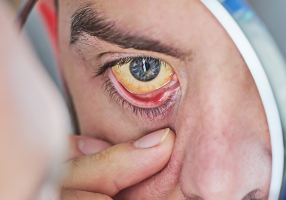
Be Kind To Your Liver! On March 15, 2019, I attended a celebration of life gathering for a bar buddy who, after another long night drinking at Tradr Sam’s, fell…
[Connecting with Journey Magazine](https://lifering.org/connecting_with_journey_magazine/ "Connecting with Journey Magazine")
### Connecting with Journey Magazine
By [Bees](https://lifering.org/author/bee/) \| April 9, 2024 
LifeRing Connects with Journey Magazine Journey Magazine is celebrating its 5th year in publication. LifeRing is featured in Issue 32 hitting the streets this week! Visibility is critical to the…
- 1
- [2](https://lifering.org/page/2/?page_id=70800&fl_builder)
- [3](https://lifering.org/page/3/?page_id=70800&fl_builder)
- …
- [39](https://lifering.org/page/39/?page_id=70800&fl_builder)
- [Next »](https://lifering.org/page/2/?page_id=70800&fl_builder)
**Categories:** 1070 About
**Tags:** about us Menu
---
### [Archived Pages](https://lifering.org/archived-pages/)
**Published:** June 30, 2016
**Author:** Bees
**Categories:** 9000 Archive
---
### [Ways to Donate](https://lifering.org/ways-to-donate/)
**Published:** April 28, 2010
**Author:** Bees
**Content:**
## Ways to donate:
##### Donation Button
Flexible amounts with a recurring monthly option.[](../../../donations/donation-form/)
##### Write a check
Make the check out to “LifeRing” and mail it to LifeRing Service Center, 25125 Santa Clara St, Suite E, #359, Hayward CA 94544. Your contribution is tax-deductible.
##### Name LifeRing as beneficiary
You can name LifeRing a beneficiary of your will or trust. Our EIN is 94-3267919. Contact [The LifeRing Service Center](https://lifering.org/contact-us/) for details. Your contribution is tax-deductible. Here is some information about a [bequest](https://lifering.org/wp-content/uploads/ImportantDocs/LifeRing_Bequest_Language.pdf)
LifeRing thanks you for your continuing support.
Federal Tax ID # 94-3267919
501(c)(3) corporation
**Categories:** 0010 Sue's Play Area
---
### [Please Donate this Giving Tuesday!](https://lifering.org/giving-tuesday-donation/)
**Published:** November 29, 2021
**Author:** Bees
**Content:**
## **On Giving Tuesday, please help us help others with your contribution!**

### **You can support the LifeRing Community with a donation using your credit card, PayPal, or direct deposit.**
You can leave your contact information if you wish or donate anonymously.
\[donate\]
LifeRing is a 501(c)(3) charitable organization, EIN 94-3267919.
All contributions are tax-deductible. No goods or services will be provided in exchange for the contribution.
**Categories:** 0010 Sue's Play Area
---
### [LifeRing Surveys](https://lifering.org/lifering-surveys/)
**Published:** May 21, 2014
**Author:** Bees
**Content:**
- [2005 LifeRing Survey](https://lifering.org/wp-content/uploads/Public_Documents/Surveys/2005-Survey.pdf)
- [2013 LifeRing Survey](https://lifering.org/wp-content/uploads/Public_Documents/Surveys/2013-Survey.pdf)
**Categories:** 0010 Sue's Play Area
---
### [LifeRing Executive Director](https://lifering.org/executive-director-search/)
**Published:** June 13, 2022
**Author:** Bees
**Content:**
## **EXECUTIVE DIRECTOR \| LifeRing Secular Recovery**
### **OPPORTUNITY DETAILS**
**Location**: Remote
**Salary**: Volunteer position \| No monetary compensation at this time
**Job Type**: This is a part-time position requiring an average of 40 hours per month based with possible additional hours during fundraising events
**LifeRing Secular Recovery** provides abstinence-based, secular, and self-directed sobriety pathways through meetings and support communities. \|
LifeRing is a 501(c)(3) charitable organization, EIN 94-3267919
**Contact**: [LifeRing Service Center](mailto:service@lifering.org)
### **BENEFITS**
While this opportunity does not offer traditional employee benefits,the opportunity for job satisfaction is endless. \[it will make you feel like a hero\]!
**Benefits include**: Immense job satisfaction, the thrill of growing an established 501(c)(3) nonprofit, and the pride of knowing you help over 200 people every day to abstain from problematic substance use. You will make a lasting impact on the world.
### **SUMMARY**
LifeRing is looking for an Executive Director who will do more than keep the lights on. We want an Executive Director who will help us shine.
The location of this position is remote with a mailing address located in Hayward, California. This vacancy is also being shared with the LifeRing Community. **Preference will be given to candidates who prescribe to the LifeRing Secular Recovery 3-S Philosophy and have hands-on LifeRing experience**.
We recognize this may appear rather extensive for a part-time volunteer position, but we have high expectations. Our current Executive Director gives more than 100%. If you think that’s impossible, you haven’t met Robert.
### **FULL JOB DESCRIPTION ⸺ LIFERING SECULAR RECOVERY EXECUTIVE DIRECTOR**
LifeRing Secular Recovery is recognized by the NIAAA as one of the top three secular recovery pathways available for people with problematic substance use. We are searching for a thoughtful visionary to steward LifeRing through our next phase of strategic growth. Supported by our talented pool of volunteers and the Board of Directors, the new ED will extend LifeRing’s capacity and influence by deepening programmatic success, elevating LifeRing’s public profile, attracting new partners and funders, and ensuring community wellbeing and growth. This is an exceptional opportunity to deeply impact the global development of LifeRing and, as a result, the future of the people worldwide who will turn to LifeRing for recovery support.
As the recovery landscape continues to evolve, there is a growing need for LifeRing’s unique role as a positive advocate for substance use recovery. Under the leadership of the right ED, LifeRing will actualize our strategic plan and define a path forward that meets these needs.
LifeRing was founded on the belief that for people in recovery to succeed, they must develop their own pathway. LifeRing is based on three principles known as the 3-S philosophy: Sobriety, Secularity, and Self-Direction or, more commonly termed, Self-Empowerment. The principle of Self-Empowerment encourages each member to develop his or her own program of recovery.
The new ED will recognize that, for LifeRing, everything is about the meetings. The LifeRing Community is held together and supported by over 150 weekly meetings, both in-person and online, each unique but united in their effort to provide a safe, nonjudgmental space for people to explore and develop their own recovery pathways.
All volunteer efforts focus on introducing people to LifeRIng and providing the most positive experience possible for our meeting attendees. The new ED will be focal in coordinating efforts, developing external relationships, and generating the funding required to expand while making the LifeRing Mission and Vision and Values the driving force.
The ED will expand LifeRing’s professional alliances, deepen stakeholder engagement, and galvanize accelerated programmatic progress. This will include establishing external fiduciary relationships, identifying emerging nonprofit fundraising practices, implementing new organizational resources and prioritizing ways that raise sensitivity around inclusion and diversity. The ED will also ensure long-term organizational sustainability and increase capacity for growth and funding, as well as advance public knowledge while promoting positive and inclusive recovery support.
Reporting directly to the LifeRing Secular Recovery Board of Directors, the ED will implement the strategic plan in support of its theory of change and harness the talent of LifeRing volunteers as we work together to fulfill the LifeRing mission. The ED will lead by example to foster a culture of collaboration, outcome-based performance, and support.
### **SUCCESSFUL EXECUTIVE DIRECTOR CANDIDATE PROFILE**
**Executive Director Minimum Requirements**
- At least two years active involvement and familiarity with LifeRing
- At least 2 years continuous sobriety
- At least 21 years of age
- Fundraising skills: Grants \| Corporate donors \| Community resources
- Program development and organizational planning experience
- Clear communication skills
**Executive Director Personal Qualities**
- Accountability \| Reliability
- Flexibility
- Aligned with LifeRing mission, values, and objectives
- Team player
- Organizational skills
- Competency needed to collaborate with stakeholders to incite change and promote growth
**Principal Executive Director Responsibilities**
- Strategic leadership
- Fundraising \| Resource development
- External relationships and communication
- Fiscal management
- Technological advancements
- Organizational expansion
- Compliance with internal and governmental regulations
- Liaison between stakeholders including Regional Representatives and LifeRing Community
### **SPECIFIC QUALIFICATIONS**
The ideal candidate will bring experience leading multi-sectoral alliances, an understanding of the far-reaching impact LifeRing will have on people and society, and a desire to see that the LifeRing Community maintains its inclusive, nonjudgmental, supportive DNA even as we expand our public profile. Additional qualifications and characteristics include the following:
- Experience managing at the top levels of an organization.
- Nonprofit management experience, including successfully partnering with a Board of Directors, and responsibility for the fiscal oversight of an organization.
- Proven experience in developing and operationalizing strategies to take an organization to a new stage of growth and impact.
- Professional credibility and maturity to effectively engage and build authentic relationships, including the ability to build trust and consensus, and to influence widely diverse stakeholders.
- Demonstrated experience fundraising from a variety of sources including corporations, philanthropies, and public sector sources.
- Exceptional communication skills in multiple environments, ranging from internal to external audiences.
- Skill as an outstanding coach, mentor, and motivator of volunteers, with a dedication to attracting, retaining, and developing outstanding and diverse talent.
- Solid understanding of government regulations imposed on nonprofit charitable organizations.
- Demonstrated commitment to and fluency with issues of inclusivity and privacy.
- Knowledge, deep interest, curiosity, and insights about the history, status, and likely trajectory of addiction recovery methodologies.
### **SPECIFIC RESPONSIBILITIES**
**Strategic Leadership**
- Execute on the strategic and organizational objectives set forth in the LifeRing Secular Recovery 2022 Strategic Plan and, in future years, lead the process to define strategic and organizational objectives of the organization in collaboration with the Board.
- Report to the Board on execution of the priorities set forth in the strategic plan.
- Work with Board leadership to ensure on-going functioning and governance of the Board.
**Operational Management and Programmatic Expansion**
- Oversee operations to execute on the strategic and organizational objectives set forth in the LifeRing Strategic Plan, and to ensure continuity of program delivery in line with the Board’s guidance.
- Execute responsibilities with a style that is flexible, empowering, transparent, encourages teamwork, and honors the efforts of all community members.
- Build and strengthen existing relationships and build new relationships with external stakeholders, including partners, funders, and other actors addressing the benefits of LifeRIng Secular Recovery.
- Identify emergent use cases and ecosystems in recovery in order to develop new opportunities for expansion and ensure a continual pipeline of strategic projects.
- Provide strategic insight and substantive contributions to LifeRing programs.
- Ensure effective systems to track progress that can be effectively communicated to the Board of Directors, funders, and other constituents.
**Fundraising and Fiscal Management**
- Ensure fundraising and resource development that supports sustained operations and execution of strategic priorities.
- Cultivate a strong pipeline of prospects for LifeRing alliance and maintain close working relationships with partners to ensure the continued commitment (financial and substantive) of partner organizations to the work of LifeRing Secular Recovery.
- Ensure proper financial management and budgeting in collaboration with the Board Chair and the Board Treasurer.
**External Relationships and Communication**
- Act as the public face of LifeRing Secular Recovery.
- Advance the development and implementation of a public engagement and media strategy to further strengthen LifeRing’s public profile and influence.
- Engage actively with media, policymakers, and external stakeholders, with the support of the communications team.
This job description is not a contract – SMART Recovery USA reserves the right to change its contents at any time. SMART Recovery USA complies with the guidelines set forth in the Americans with Disabilities Act of 1990 and does not discriminate on the basis of race, color, religion, national origin, ancestry, sex, age, disability, or status as a disabled veteran or veteran of the Vietnam era. SMART Recovery USA is an Equal Opportunity Employer.
### **ADDITIONAL RESOURCES**
[Related LifeRing Secular Recovery Bylaws](https://lifering.org/wp-content/uploads/ImportantDocs/Current_Bylaws.pdf)
**11.1.1** The Executive Director shall serve as the organization’s chief executive officer, shall comply with the duties required by the law for such an officer, and shall have such other responsibilities as the Board may delegate. \[Amended 2010.\]
**11.2** The officers shall be appointed by and shall serve at the pleasure of the Board.
**11.3** An officer shall be a person in recovery from a substance addiction, a member of LifeRing Secular Recovery, at least 21 years old, and shall have abstained from alcohol and illicit or non-medically indicated drugs continuously for at least two years prior to commencing service. The fact that a person serves as a LifeRing employee or Board member shall not prevent such person from also serving as an officer
**11.5** Officers shall serve in their roles as such without compensation. For the avoidance of doubt, this Section 11.5 shall not prohibit a LifeRing employee from receiving compensation for his or her services as an employee, or reimbursement for expenses incurred in connection with such employment services, regardless of whether such LifeRing employee also serves as an officer.
**This job description is not a contract – LifeRing reserves the right to change its contents at any time.**
### **APPLICATION PROCESS**
Interested parties should email resume and cover letter to <service@lifering.org>.
LifeRing complies with the guidelines set forth in the Americans with Disabilities Act of 1990 and does not discriminate on the basis of race, color, religion, national origin, ancestry, sex, age, disability, or status as a disabled veteran or veteran of the Vietnam era.
[LifeRing is an Equal Opportunity Employer](https://lifering.org/wp-content/uploads/Public_Documents/Policy_Statements/Nondiscrimination_%20Policy_(09-2014).pdf).
**Categories:** 0010 Sue's Play Area
---
### [images for download purposes](https://lifering.org/images-for-download-purposes/)
**Published:** December 21, 2022
**Author:** Bees
**Content:**
Decorative images for use in other areas of the LifeRing Website



\#image\_title


Online meeting attendance: Juy 2021 through January 2023 \| Color cohorts indicate individual start month. Blue cohorts represent people who joined prior to July 2021.


**Categories:** 0010 Sue's Play Area
---
### [Outside Recovery Articles](https://lifering.org/lifering-resources/outside-recovery-articles/)
**Published:** February 20, 2020
**Author:** Bees
**Content:**
# Outside Recovery Articles
### **HOT OFF THE PRESS:**
[Alternative Steps to Recovery: Why The 12-Step Model Isn’t Right For Everyone ](https://recovered.org/blog/why-the-12-step-model-isnt-right-for-everyone)
Mary Beth O’Connor, [*Recovered*](https://recovered.org/), 23 February 2024 \| *Recovered* was formerly *NCADD.org*
### These articles published by external entities address different domains of our recovery journey
Health and Exercise
- [Exercise Reduces Cannabis Cravings.pdf](/wp-content/uploads/lifering_recovery/outside-recovery-articles/exercise/Exercise%20Reduces%20Cannabis%20Cravings.pdf)
- [Five do-it-yourself exercises to improve how happy you feel right now-do they work – Recovery R.pdf](/wp-content/uploads/lifering_recovery/outside-recovery-articles/exercise/Five%20do-it-yourself%20exercises%20to%20improve%20how%20happy%20you%20feel%20right%20now-do%20they%20work_%20-%20Recovery%20R.pdf)
- [Exercise motivators – 4 psychological fixes to get back on track.pdf](/wp-content/uploads/lifering_recovery/outside-recovery-articles/exercise/Exercise%20motivators_%204%20psychological%20fixes%20to%20get%20back%20on%20track.pdf)
- [Fitness Tips for staying motivated – Mayo Clinic.pdf](/wp-content/uploads/lifering_recovery/outside-recovery-articles/health/Fitness%20Tips%20for%20staying%20motivated%20-%20Mayo%20Clinic.pdf)
- [How Exercise Can Help Treat Addiction.pdf](/wp-content/uploads/lifering_recovery/outside-recovery-articles/health/How%20Exercise%20Can%20Help%20Treat%20Addiction.pdf)
- [How Exercise Might Increase Your Self-Control.pdf](/wp-content/uploads/lifering_recovery/outside-recovery-articles/health/How%20Exercise%20Might%20Increase%20Your%20Self-Control.pdf)
- [How to Keep Good Habits Post-Lockdown – The New York Times.pdf](/wp-content/uploads/lifering_recovery/outside-recovery-articles/health/How%20to%20Keep%20Good%20Habits%20Post-Lockdown%20-%20The%20New%20York%20Times.pdf)
- [One hour of exercise a week can prevent depression — ScienceDaily.pdf](/wp-content/uploads/lifering_recovery/outside-recovery-articles/health/One%20hour%20of%20exercise%20a%20week%20can%20prevent%20depression%20--%20ScienceDaily.pdf)
- [Quitting alcohol may improve mental well-being health-related quality of life — ScienceDaily.pdf](/wp-content/uploads/lifering_recovery/outside-recovery-articles/health/Quitting%20alcohol%20may%20improve%20mental%20well-being%20health-related%20quality%20of%20life%20--%20ScienceDaily.pdf)
- [The Benefits of Playing Music Help Your Brain More Than Any Other Activity – Inc. – Pocket.pdf](/wp-content/uploads/lifering_recovery/outside-recovery-articles/health/The%20Benefits%20of%20Playing%20Music%20Help%20Your%20Brain%20More%20Than%20Any%20Other%20Activity%20-%20Inc.%20-%20Pocket.pdf)
- [Want to quit smoking, Partner up, Couples who attempt to stop smoking together have a sixfold chance of success — ScienceDaily.pdf](/wp-content/uploads/lifering_recovery/outside-recovery-articles/health/Want%20to%20quit%20smoking_%20Partner%20up_%20Couples%20who%20attempt%20to%20stop%20smoking%20together%20have%20a%20sixfold%20chance%20of%20success%20--%20ScienceDaily.pdf)
- [Why Exercise Is So Essential for Mental Health.pdf](/wp-content/uploads/lifering_recovery/outside-recovery-articles/health/Why%20Exercise%20Is%20So%20Essential%20for%20Mental%20Health.pdf)
- [Mental Health Providers Struggle to Meet Pandemic Demand – The New York Times.pdf](/wp-content/uploads/lifering_recovery/outside-recovery-articles/health/Mental%20Health%20Providers%20Struggle%20to%20Meet%20Pandemic%20Demand%20-%20The%20New%20York%20Times.pdf)
Individual Stories
- [Addiction treatment costs. She spent more than $110000 on drug rehab. Her son still died.pdf](/wp-content/uploads/lifering_recovery/outside-recovery-articles/individual_stories/Addiction%20treatment%20costs_%20She%20spent%20more%20than%20$110000%20on%20drug%20rehab.%20Her%20son%20still%20died.%20-%20.pdf)
- [Lynn Stuart Parramore\_ ‘Promising Young Woman,’ Covid and the women giving up alcohol to fight the patriarchy.pdf](/wp-content/uploads/lifering_recovery/outside-recovery-articles/individual_stories/Lynn%20Stuart%20Parramore_%20'Promising%20Young%20Woman,'%20Covid%20and%20the%20women%20giving%20up%20alcohol%20to%20fight%20the%20patriarchy.pdf)
Mood
- [6 Steps to Turn Regret Into Self-Improvement – The New York Times.pdf](/wp-content/uploads/lifering_recovery/outside-recovery-articles/mood/6%20Steps%20to%20Turn%20Regret%20Into%20Self-Improvement%20-%20The%20New%20York%20Times.pdf)
- [Dealing with SAD.pdf](/wp-content/uploads/lifering_recovery/outside-recovery-articles/mood/Dealing%20with%20SAD.pdf)
- [Exercise as Medicine for Depression – A Key But Often Overlooked Role In Prevention And Treatment.pdf](/wp-content/uploads/lifering_recovery/outside-recovery-articles/mood/Exercise%20as%20Medicine%20for%20Depression%20-%20A%20Key%20But%20Often%20Overlooked%20Role%20In%20Prevention%20And%20Treatment.pdf)
- [Explaining the link between emotion and addictive substance use — ScienceDaily.pdf](/wp-content/uploads/lifering_recovery/outside-recovery-articles/mood/Explaining%20link%20between%20emotion%20and%20addictive%20substance%20use%20--%20ScienceDaily.pdf)
- [Is Guilt Good for Your Health – Scientific American.pdf](/wp-content/uploads/lifering_recovery/outside-recovery-articles/mood/Is%20Guilt%20Good%20for%20Your%20Health%20-%20Scientific%20American.pdf)
- [Regret 8 Ways to Move On.pdf](/wp-content/uploads/lifering_recovery/outside-recovery-articles/mood/Regret%208%20Ways%20to%20Move%20On.pdf)
- [Self Compassion – Scientific American.pdf](/wp-content/uploads/lifering_recovery/outside-recovery-articles/mood/Self%20Compassion%20-%20Scientific%20American.pdf)
- [Stress Depression and the Holidays.pdf](/wp-content/uploads/lifering_recovery/outside-recovery-articles/mood/Stress%20Depression%20and%20the%20Holidays.pdf)
- [Stress Management.pdf](/wp-content/uploads/lifering_recovery/outside-recovery-articles/mood/Stress%20Management.pdf)
- [Stress.pdf](/wp-content/uploads/lifering_recovery/outside-recovery-articles/mood/Stress.pdf)
- [The Self Compassion Solution.pdf](/wp-content/uploads/lifering_recovery/outside-recovery-articles/mood/The%20Self%20Compassion%20Solution.pdf)
Misc.
- [How being realistic can be key to your wellbeing – BBC Worklife.pdf](/wp-content/uploads/lifering_recovery/outside-recovery-articles/misc/How%20being%20realistic%20can%20be%20key%20to%20your%20wellbeing%20-%20BBC%20Worklife.pdf)
- [How to Build Healthy Habits – The New York Times.pdf](/wp-content/uploads/lifering_recovery/outside-recovery-articles/misc/How%20to%20Build%20Healthy%20Habits%20-%20The%20New%20York%20Times.pdf)
- [Life Changed When I Stopped Drinking \_ by Sara Nash, PhD, LMHC \_ Medium.pdf](/wp-content/uploads/lifering_recovery/outside-recovery-articles/misc/Life%20Changed%20When%20I%20Stopped%20Drinking%20_%20by%20Sara%20Nash,%20PhD,%20LMHC%20_%20Medium.pdf)
- [Top 6 Smartphone Apps for Addiction Recovery – Drug Rehab Options.pdf](/wp-content/uploads/lifering_recovery/outside-recovery-articles/misc/Top%206%20Smartphone%20Apps%20for%20Addiction%20Recovery%20-%20Drug%20Rehab%20Options.pdf)
- [The Truth About How Boring Life Is Without Alcohol \_ by Amanda Kuda \_ Noteworthy – The Journal Blog.pdf](/wp-content/uploads/lifering_recovery/outside-recovery-articles/misc/The%20Truth%20About%20How%20Boring%20Life%20Is%20Without%20Alcohol%20_%20by%20Amanda%20Kuda%20_%20Noteworthy%20-%20The%20Journal%20Blog.pdf)
- [It’s Not You. It’s the Alcohol.. For at least a year into my life as an… \_ by Lonna Whiting \_ Nov, 2020 \_ Medium.pdf](/wp-content/uploads/lifering_recovery/outside-recovery-articles/misc/It's%20Not%20You.%20It's%20the%20Alcohol..%20For%20at%20least%20a%20year%20into%20my%20life%20as%20an…%20_%20by%20Lonna%20Whiting%20_%20Nov,%202020%20_%20Medium.pdf)
- [Addiction and Substance Misuse Reports and Publications](https://www.hhs.gov/surgeongeneral/reports-and-publications/addiction-and-substance-misuse/index.html)
- [Alcohol overuse causes 178,000 American deaths annually. Why is it so undertreated?](https://www.vox.com/the-highlight/2023/11/6/23931877/alcohol-use-disorder-leading-cause-deaths-medication-therapy)
- [Alternative 12 Steps](https://aa-ao.org/resources/alternative-12-steps/)
- [Are you being sober-shamed?](https://rehabsuk.com/blog/are-you-being-sober-shamed/)
- [Drug & Alcohol Cravings: 10 Useful Methods to Cope](https://www.practicalrecovery.com/prblog/drug-alcohol-cravings-10-useful-methods-to-cope/)
- [How Alcohol Treatment Became Divorced from Alcohol Science: The Rise of the Minnesota Model](https://www.practicalrecovery.com/prblog/how-alcohol-treatment-became-divorced-from-alcohol-science-the-rise-of-the-minnesota-model/)
- [How I Get Through Hard Times Using Curiosity, Compassion, and Challenge](https://tinybuddha.com/blog/how-i-get-through-hard-times-using-curiosity-compassion-and-challenge/)
- [How to Deal with Shame](https://www.gottman.com/blog/how-to-deal-with-shame/?utm_source=Blog&utm_medium=Email&utm_campaign=RSS)
- [Is Addiction Driven by the Gut Microbiome?](https://www.psychologytoday.com/ca/blog/mood-by-microbe/202308/is-addiction-driven-by-the-gut-microbiome)
- [Parenting With a Buzz: When Does Alcohol as Self-Care Become a Problem?](https://www.parents.com/parenting/better-parenting/style/parenting-with-a-buzz-alcohol-as-self-care/)
- [Post-Acute Withdrawal Syndrome (PAWS): What Is PAWS?](https://americanaddictioncenters.org/withdrawal-timelines-treatments/post-acute-withdrawal-syndrome)
- [Stoicism and Rational Emotive Behaviour Therapy by Walter J. Matweychuk](https://modernstoicism.com/stoicism-and-rational-emotive-behaviour-therapy-by-walter-j-matweychuk/)
- [What Is Substance Abuse?](https://www.webmd.com/mental-health/addiction/substance-abuse)
- [What is Cognitive Behavioral Therapy?](https://www.apa.org/ptsd-guideline/patients-and-families/cognitive-behavioral)
- [What Foods Contain Alcohol?](https://www.abbeycarefoundation.com/alcohol/what-foods-contain-alcohol/)
- [Why is it Hard to Change Unhealthy Habits?](https://joinmonument.com/resources/change-unhealthy-habits/)
-
Motivation and Relapse
- [Loss of motivation in recovery with citation.pdf](/wp-content/uploads/lifering_recovery/outside-recovery-articles/motivation_and_relapse/Loss%20of%20motivation%20in%20recovery%20with%20citation.pdf)
- [Loss of Motivation in Recovery.pdf](/wp-content/uploads/lifering_recovery/outside-recovery-articles/motivation_and_relapse/Loss%20of%20Motivation%20in%20Recovery.pdf)
- [Relapse Prevention and 5 Rules of Recovery](/wp-content/uploads/lifering_recovery/outside-recovery-articles/motivation_and_relapse/Relapse%20Prevention%20and%205%20Rules%20of%20Recovery.pdf)
- [The 3 Stages Of Relapse Early Warning Signs And How To Move Forward.pdf](/wp-content/uploads/lifering_recovery/outside-recovery-articles/motivation_and_relapse/The%203%20Stages%20Of%20Relapse%20Early%20Warning%20Signs%20And%20How%20To%20Move%20Forward.pdf)
- [The Four Ds – a Simple Relapse Prevention Strategy.pdf](/wp-content/uploads/lifering_recovery/outside-recovery-articles/motivation_and_relapse/The%20Four%20Ds%20-%20a%20Simple%20Relapse%20Prevention%20Strategy.pdf)
- [Ways to Motivate Yourself and Others.pdf](/wp-content/uploads/lifering_recovery/outside-recovery-articles/motivation_and_relapse/Ways%20to%20Motivate%20Yourself%20and%20Others.pdf)
Science
- [Brain Change in Addiction as Learning, Not Disease, Marc Lewis.pdf](/wp-content/uploads/lifering_recovery/outside-recovery-articles/science/Brain%20Change%20in%20Addiction%20as%20Learning,%20Not%20Disease, Marc%20Lewis.pdf)
- [Dopamine Duality of Desire, Marc Lewis.pdf](/wp-content/uploads/lifering_recovery/outside-recovery-articles/science/Dopamine%20Duality%20of%20Desire,%20Marc%20Lewis.pdf)
- [Exercise as Medicine for Depression – A Key But Often Overlooked Role In Prevention And Treatment.pdf](/wp-content/uploads/lifering_recovery/outside-recovery-articles/science/Exercise%20as%20Medicine%20for%20Depression%20-%20A%20Key%20But%20Often%20Overlooked%20Role%20In%20Prevention%20And%20Treatment.pdf)
- [Experts review evidence yoga is good for the brain.pdf](/wp-content/uploads/lifering_recovery/outside-recovery-articles/science/Experts%20review%20evidence%20yoga%20is%20good%20for%20the%20brain.pdf)
- [Even low-risk drinking can be harmful — ScienceDaily.pdf](/wp-content/uploads/lifering_recovery/outside-recovery-articles/science/Even%20_low-risk_%20drinking%20can%20be%20harmful%20--%20ScienceDaily.pdf)
- [Fundamental Factors of Success in Addiction Recovery.pdf](/wp-content/uploads/lifering_recovery/outside-recovery-articles/science/Fundamental%20Factors%20of%20Success%20in%20Addiction%20Recovery.pdf)
- [Here’s another interesting study asking how many attempts does it take to quit.pdf](/wp-content/uploads/lifering_recovery/outside-recovery-articles/science/Here's%20another%20interesting%20study%20asking%20how%20many%20attempts%20does%20it%20take%20to%20quit.pdf)
- [How Addiction Works.pdf](/wp-content/uploads/lifering_recovery/outside-recovery-articles/science/How%20Addiction%20Works.pdf)
- [How Long Does Withdrawal From Marijuana Last.pdf](/wp-content/uploads/lifering_recovery/outside-recovery-articles/science/How%20Long%20Does%20Withdrawal%20From%20Marijuana%20Last.pdf)
- [Lancet article on moderate alcohol drinking.pdf](/wp-content/uploads/lifering_recovery/outside-recovery-articles/science/Lancet%20article%20on%20moderate%20alcohol%20drinking.pdf)
- [Lancet no level of alcohol.pdf](/wp-content/uploads/lifering_recovery/outside-recovery-articles/science/Lancet%20no%20level%20of%20alcohol.pdf)
- [Mental Health in a Cannabis Nation.pdf](/wp-content/uploads/lifering_recovery/outside-recovery-articles/science/Mental%20Health%20in%20a%20Cannabis%20Nation.pdf)
- [Sleep Problems Associated with Addiction and Recovery.pdf](/wp-content/uploads/lifering_recovery/outside-recovery-articles/science/Sleep%20Problems%20Associated%20with%20Addiction%20and%20Recovery.pdf)
- [Study on quitting attempts.pdf](/wp-content/uploads/lifering_recovery/outside-recovery-articles/science/Study%20on%20quitting%20attempts.pdf)
- [The Opposite of Addiction is Connection.pdf](/wp-content/uploads/lifering_recovery/outside-recovery-articles/science/The%20Opposite%20of%20Addiction%20is%20Connection.pdf)
- [Timeline of body effects after stopping drinking.pdf](/wp-content/uploads/lifering_recovery/outside-recovery-articles/science/Timeline%20of%20body%20effects%20after%20stopping%20drinking.pdf)
- [Turn Down Your Brain.pdf](/wp-content/uploads/lifering_recovery/outside-recovery-articles/science/Turn%20Down%20Your%20Brain.pdf)
- [Type 1 and 2 thinking.pdf](/wp-content/uploads/lifering_recovery/outside-recovery-articles/science/Type%201%20and%202%20thinking.pdf)
- [Using Behavioral Science to Build an Exercise Habit.pdf](/wp-content/uploads/lifering_recovery/outside-recovery-articles/science/Using%20Behavioral%20Science%20to%20Build%20an%20Exercise%20Habit.pdf)
- [Why Music Makes Our Brains Sing.pdf](/wp-content/uploads/lifering_recovery/outside-recovery-articles/science/Why%20Music%20Makes%20Our%20Brains%20Sing.pdf)
- [Why You Procrastinate (It Has Nothing to Do With Self-Control) – The New York Times.pdf](/wp-content/uploads/lifering_recovery/outside-recovery-articles/science/Why%20You%20Procrastinate%20(It%20Has%20Nothing%20to%20Do%20With%20Self-Control)%20-%20The%20New%20York%20Times.pdf)
- [E-cigarettes won’t help smokers quit.pdf](/wp-content/uploads/lifering_recovery/outside-recovery-articles/science/E-cigarettes%20won't%20help%20smokers%20quit.pdf)
- [Brain parts, mind parts, and psychotherapy for addiction \_ Understanding Addiction.pdf](/wp-content/uploads/lifering_recovery/outside-recovery-articles/science/Brain%20parts,%20mind%20parts,%20and%20psychotherapy%20for%20addiction%20_%20Understanding%20Addiction.pdf)
Urges
- [5 Easy Tools to Resist the Urge of Bad Habits aka DEADS.pdf](/wp-content/uploads/lifering_recovery/outside-recovery-articles/urges/5%20Easy%20Tools%20to%20Resist%20the%20Urge%20of%20Bad%20Habits%20aka%20DEADS.pdf)
- [10 Tips for Staying Sober During the Holidays.pdf](/wp-content/uploads/lifering_recovery/outside-recovery-articles/urges/10%20Tips%20for%20Staying%20Sober%20During%20the%20Holidays.pdf)
- [Challenging Negative Thoughts.pdf](/wp-content/uploads/lifering_recovery/outside-recovery-articles/urges/Challenging%20Negative%20Thoughts.pdf)
- [Changing Addictive Thought Patterns.pdf](/wp-content/uploads/lifering_recovery/outside-recovery-articles/urges/Changing%20Addictive%20Thought%20Patterns.pdf)
- [Creating Cues Not to Use.pdf](https://lifering.org/wp-content/uploads/lifering_recovery/outside-recovery-articles/urges/Creating%20Cues%20Not%20to%20Use.pdf)
- [Delay Discounting and the Use of Mindful Attention Versus Distraction.pdf](/wp-content/uploads/lifering_recovery/outside-recovery-articles/urges/Delay%20Discounting%20and%20the%20Use%20of%20Mindful%20Attention%20Versus%20Distraction.pdf)
- [Delay Having a Drink.pdf](/wp-content/uploads/lifering_recovery/outside-recovery-articles/urges/Delay%20Having%20a%20Drink.pdf)
- [Marc Lewis – Delay Discounting.pdf](/wp-content/uploads/lifering_recovery/outside-recovery-articles/urges/Marc%20Lewis%20-%20Delay%20Discounting.pdf)
- [Planning to Avoid Temptations Helps in Goal Pursuit – ScienceBlog.com.pdf](/wp-content/uploads/lifering_recovery/outside-recovery-articles/urges/Planning%20to%20Avoid%20Temptations%20Helps%20in%20Goal%20Pursuit%20-%20ScienceBlog.com.pdf)
- [Power of Habit.pdf](/wp-content/uploads/lifering_recovery/outside-recovery-articles/urges/Power%20of%20Habit.pdf)
- [Talk to Yourself in the Second or Third Person for Better Motivation.pdf](/wp-content/uploads/lifering_recovery/outside-recovery-articles/urges/Talk%20to%20Yourself%20in%20the%20Second%20or%20Third%20Person%20for%20Better%20Motivation.pdf)
- [Talking the Tape Forward.pdf](/wp-content/uploads/lifering_recovery/outside-recovery-articles/urges/Talking%20the%20Tape%20Forward.pdf)
- [The 6 Triggers of Craving.pdf](/wp-content/uploads/lifering_recovery/outside-recovery-articles/urges/The%206%20Triggers%20of%20Craving.pdf)
- [To Get Sober Delay Having the Drink.pdf](/wp-content/uploads/lifering_recovery/outside-recovery-articles/urges/To%20Get%20Sober%20Delay%20Having%20the%20Drink.pdf)
- [Want to quit smoking Partner up.pdf](/wp-content/uploads/lifering_recovery/outside-recovery-articles/urges/Want%20to%20quit%20smoking%20Partner%20up.pdf)
- [Why Cravings Occur.pdf](/wp-content/uploads/lifering_recovery/outside-recovery-articles/urges/Why%20Cravings%20Occur.pdf)
- [Why Gulping Down a Cold Drink Feels So Rewarding – The New York Times.pdf](/wp-content/uploads/lifering_recovery/outside-recovery-articles/urges/Why%20Gulping%20Down%20a%20Cold%20Drink%20Feels%20So%20Rewarding%20-%20The%20New%20York%20Times.pdf)
**Categories:** 1030 Resources
**Tags:** Discover LifeRing, menus
---
### [Request Materials](https://lifering.org/taresas-play-area/request-materials/)
**Published:** October 28, 2024
**Author:** Bees
**Content:**
We have an array of materials we can mail out to those who support people in recovery.
- [Pamphlets](https://lifering.org/pamphlets/)
- [Posters](https://lifering.org/convenor-menu/in-person-convenor-portal/in-person-convening/)
- [Books](https://lifering.org/books/)
LifeRing can provide materials to organizations and individuals depending on their needs. Below are recommended materials for different environments and needs:
- **Treatment centers** $50 Add all to bag
- [How Was Your Week meeting handbook](https://lifering.org/bookstore-shopping-cart/Empowering-Your-Sober-Self-p161742544)
- [Recovery By Choice workbook](https://lifering.org/bookstore-shopping-cart/Recovery-By-Choice-A-Workbook-p162427560)
- **Therapists, counselors**
- [Recovery By Choice workbook](https://lifering.org/bookstore-shopping-cart/Recovery-By-Choice-A-Workbook-p162427560)
- **Courts, probation officers, case managers**
- [Pamphlets](https://lifering.org/pamphlets/)
- **Peer support community organizatio**ns
- [Pamphlets](https://lifering.org/pamphlets/)
- [Posters](https://lifering.org/convenor-menu/in-person-convenor-portal/in-person-convening/)
- **Meeting facilities**
- [Pamphlets](https://lifering.org/pamphlets/)
- [Posters](https://lifering.org/convenor-menu/in-person-convenor-portal/in-person-convening/)
- **Community bulletin boards**
- [Pamphlets](https://lifering.org/pamphlets/)
- [Posters](https://lifering.org/convenor-menu/in-person-convenor-portal/in-person-convening/)
**Categories:** 0020 Taresa Play Area
---
### [Spread the Word](https://lifering.org/spread-the-word/)
**Published:** September 26, 2024
**Author:** webmaster @lifering.org
**Content:**
## Spread the Word
**Categories:** Post
---
## Categories
### [Post](https://lifering.org/category/post/)
---
### [2000 Meetings](https://lifering.org/category/2000-meetings/)
---
### [3000 Convenors](https://lifering.org/category/3000-convenors/)
---
### [5000 Governance](https://lifering.org/category/5000-governance/)
---
### [6000 Annual Meeting](https://lifering.org/category/6000-annual-meeting/)
---
### [9000 Archive](https://lifering.org/category/9000-archive/)
---
### [0010 Sue's Play Area](https://lifering.org/category/0010-sues-play-area/)
---
### [0020 Taresa Play Area](https://lifering.org/category/0020-taresa-play-area/)
---
### [4000 Shop](https://lifering.org/category/4000-shop/)
---
### [1070 About](https://lifering.org/category/1070-about/)
---
### [1030 Resources](https://lifering.org/category/1030-resources/)
---
### [1080 Contact](https://lifering.org/category/1080-contact/)
---
### [7000 General Pages](https://lifering.org/category/7000-general-pages/)
---
### [Post 2](https://lifering.org/category/post-2/)
---
### [1000 Landing Pages](https://lifering.org/category/1000-landing-pages/)
---
### [1060 Professionals](https://lifering.org/category/1060-professionals/)
---
### [1040 Connections](https://lifering.org/category/1040-connections/)
---
### [1050 Engage](https://lifering.org/category/1050-engage/)
---
### [2500 The Liver Spot](https://lifering.org/category/2500-the-liver-spot/)
---
## Tags
### [secular recovery](https://lifering.org/tag/secular-recovery/)
---
### [addiction](https://lifering.org/tag/addiction/)
---
### [women and sobriety](https://lifering.org/tag/women-and-sobriety/)
---
### [recovery](https://lifering.org/tag/recovery/)
---
### [multiple pathways of recovery](https://lifering.org/tag/multiple-pathways-of-recovery/)
---
### [LifeRIng](https://lifering.org/tag/lifering/)
---
### [lifering secular recovery](https://lifering.org/tag/lifering-secular-recovery/)
---
### [pride](https://lifering.org/tag/pride/)
---
### [dual diagnosis](https://lifering.org/tag/dual-diagnosis/)
---
### [sobriety](https://lifering.org/tag/sobriety/)
---
### [National Institute of Heath](https://lifering.org/tag/national-institute-of-heath/)
---
### [NIH](https://lifering.org/tag/nih/)
---
### [Alcohol Research Group](https://lifering.org/tag/alcohol-research-group/)
---
### [ARG](https://lifering.org/tag/arg/)
---
### [PAL](https://lifering.org/tag/pal/)
---
### [PAL2](https://lifering.org/tag/pal2/)
---
### [Dr. John Kelly](https://lifering.org/tag/dr-john-kelly/)
---
### [Dr. John F. Kelly](https://lifering.org/tag/dr-john-f-kelly/)
---
### [2022 LifeRing Annual Conference](https://lifering.org/tag/2022-lifering-annual-conference/)
---
### [addiction support meetings](https://lifering.org/tag/addiction-support-meetings/)
---
### [addiction recovery meetings](https://lifering.org/tag/addiction-recovery-meetings/)
---
### [lifering meetings](https://lifering.org/tag/lifering-meetings/)
---
### [addiction meetings](https://lifering.org/tag/addiction-meetings/)
---
### [addiction support](https://lifering.org/tag/addiction-support/)
---
### [SoCal](https://lifering.org/tag/socal/)
---
### [Southern California](https://lifering.org/tag/southern-california/)
---
### [San Diego](https://lifering.org/tag/san-diego/)
---
### [in-person michigan](https://lifering.org/tag/in-person-michigan/)
---
### [grand rapids](https://lifering.org/tag/grand-rapids/)
---
### [meetings grand rapids](https://lifering.org/tag/meetings-grand-rapids/)
---
### [livermore](https://lifering.org/tag/livermore/)
---
### [in-person california](https://lifering.org/tag/in-person-california/)
---
### [meetings livermore](https://lifering.org/tag/meetings-livermore/)
---
### [life ring](https://lifering.org/tag/life-ring/)
---
### [lifering online](https://lifering.org/tag/lifering-online/)
---
### [sober holliday](https://lifering.org/tag/sober-holliday/)
---
### [New Jersey](https://lifering.org/tag/new-jersey/)
---
### [LifeeRing meetings](https://lifering.org/tag/lifeering-meetings/)
---
### [in-person reccovery meeting](https://lifering.org/tag/in-person-reccovery-meeting/)
---
### [recovery books](https://lifering.org/tag/recovery-books/)
---
### [Lifering bookstore](https://lifering.org/tag/lifering-bookstore/)
---
### [LifeRing Policies](https://lifering.org/tag/lifering-policies/)
---
### [lifering meetings hayward](https://lifering.org/tag/lifering-meetings-hayward/)
---
### [lifering meetings california](https://lifering.org/tag/lifering-meetings-california/)
---
### [LifeRing Introdction](https://lifering.org/tag/lifering-introdction/)
---
### [introduction to lifering](https://lifering.org/tag/introduction-to-lifering/)
---
### [non-religious recovery](https://lifering.org/tag/non-religious-recovery/)
---
### [nonreligious addiction recovery](https://lifering.org/tag/nonreligious-addiction-recovery/)
---
### [addiction recovery meetings in oregon](https://lifering.org/tag/addiction-recovery-meetings-in-oregon/)
---
### [caregivers](https://lifering.org/tag/caregivers/)
---
### [recovery resources](https://lifering.org/tag/recovery-resources/)
---
### [secular recovery resources](https://lifering.org/tag/secular-recovery-resources/)
---
### [liver awareness](https://lifering.org/tag/liver-awareness/)
---
### [cirrhosis](https://lifering.org/tag/cirrhosis/)
---
### [alcoholic](https://lifering.org/tag/alcoholic/)
---
### [the liver spot](https://lifering.org/tag/the-liver-spot/)
---
### [liver patient meetings](https://lifering.org/tag/liver-patient-meetings/)
---
### [liver meetings](https://lifering.org/tag/liver-meetings/)
---
### [LifeRing Conference](https://lifering.org/tag/lifering-conference/)
---
### [co-morbidity](https://lifering.org/tag/co-morbidity/)
---
### [Co-occurring disorders](https://lifering.org/tag/co-occurring-disorders/)
---
### [mental health peer support](https://lifering.org/tag/mental-health-peer-support/)
---
### [co-occurring disorders peer support](https://lifering.org/tag/co-occurring-disorders-peer-support/)
---
### [nonreligious recovery](https://lifering.org/tag/nonreligious-recovery/)
---
### [online recovery meetings](https://lifering.org/tag/online-recovery-meetings/)
---
### [Mega Menu](https://lifering.org/tag/mega-menu/)
---
### [Front Page](https://lifering.org/tag/front-page/)
---
### [Top Bar Menu](https://lifering.org/tag/top-bar-menu/)
---
### [Main Menu](https://lifering.org/tag/main-menu/)
---
### [meetings](https://lifering.org/tag/meetings/)
---
### [convenor support](https://lifering.org/tag/convenor-support/)
---
### [shop](https://lifering.org/tag/shop/)
---
### [annual meeting](https://lifering.org/tag/annual-meeting/)
---
### [Discover LifeRing](https://lifering.org/tag/discover-lifering/)
---
### [Governance](https://lifering.org/tag/governance/)
---
### [Get Involved](https://lifering.org/tag/get-involved/)
---
### [about us](https://lifering.org/tag/about-us/)
---
### [menus](https://lifering.org/tag/menus/)
---
### [convenors](https://lifering.org/tag/convenors/)
---
### [LifeRing Resources](https://lifering.org/tag/lifering-resources/)
---
### [Bookstore](https://lifering.org/tag/bookstore/)
---
### [about us Menu](https://lifering.org/tag/about-us-menu/)
---
### [Top Menu](https://lifering.org/tag/top-menu/)
---
### [non-aa meetings](https://lifering.org/tag/non-aa-meetings/)
---
### [non-religious recovery meetings](https://lifering.org/tag/non-religious-recovery-meetings/)
---
### [Self love](https://lifering.org/tag/self-love/)
---
### [Valentines Day](https://lifering.org/tag/valentines-day/)
---
### [crisis awareness](https://lifering.org/tag/crisis-awareness/)
---
### [suicide prevention](https://lifering.org/tag/suicide-prevention/)
---
### [liver](https://lifering.org/tag/liver/)
---
### [Organ donation](https://lifering.org/tag/organ-donation/)
---
### [Phil Lesh](https://lifering.org/tag/phil-lesh/)
---
### [sober gathering](https://lifering.org/tag/sober-gathering/)
---
### [Sober holiday](https://lifering.org/tag/sober-holiday/)
---
### [sober party](https://lifering.org/tag/sober-party/)
---
### [sober social](https://lifering.org/tag/sober-social/)
---
### [sober socializing](https://lifering.org/tag/sober-socializing/)
---
### [sober thanksgiving](https://lifering.org/tag/sober-thanksgiving/)
---
### [Giving Tuesday](https://lifering.org/tag/giving-tuesday/)
---
### [Sober hangout](https://lifering.org/tag/sober-hangout/)
---
### [Sober New Year](https://lifering.org/tag/sober-new-year/)
---
### [dry january](https://lifering.org/tag/dry-january/)
---
### [sober curious](https://lifering.org/tag/sober-curious/)
---
### [Liver Failure](https://lifering.org/tag/liver-failure/)
---
### [liver support meetings](https://lifering.org/tag/liver-support-meetings/)
---
### [liver transplant](https://lifering.org/tag/liver-transplant/)
---
### [UCSF](https://lifering.org/tag/ucsf/)
---
### [UCSF HALT](https://lifering.org/tag/ucsf-halt/)
---
### [UCSF Health](https://lifering.org/tag/ucsf-health/)
---
### [I Have a Dream](https://lifering.org/tag/i-have-a-dream/)
---
### [Martin Luther King](https://lifering.org/tag/martin-luther-king/)
---
### [MLK](https://lifering.org/tag/mlk/)
---
### [LifeRing award](https://lifering.org/tag/lifering-award/)
---
### [platinum award](https://lifering.org/tag/platinum-award/)
---
### [lifering liver spot](https://lifering.org/tag/lifering-liver-spot/)
---
### [Liver Transplant Support](https://lifering.org/tag/liver-transplant-support/)
---
### [patient support meetings](https://lifering.org/tag/patient-support-meetings/)
---
### [LifeRing events](https://lifering.org/tag/lifering-events/)
---
### [LifeRing Governance](https://lifering.org/tag/lifering-governance/)
---
### [annual report](https://lifering.org/tag/annual-report/)
---
### [nonreligious recovery support](https://lifering.org/tag/nonreligious-recovery-support/)
---
### [liver donation](https://lifering.org/tag/liver-donation/)
---
### [recovery meetings](https://lifering.org/tag/recovery-meetings/)
---
### [addiction recovery](https://lifering.org/tag/addiction-recovery/)
---
### [addictions support](https://lifering.org/tag/addictions-support/)
---
### [International](https://lifering.org/tag/international/)
---
### [Canada](https://lifering.org/tag/canada/)
---
### [Sweden](https://lifering.org/tag/sweden/)
---
### [Ireland](https://lifering.org/tag/ireland/)
---
### [liver spot](https://lifering.org/tag/liver-spot/)
---
### [ALD support](https://lifering.org/tag/ald-support/)
---
### [cirrhosis support](https://lifering.org/tag/cirrhosis-support/)
---
### [alcohol related liver disease](https://lifering.org/tag/alcohol-related-liver-disease/)
---
### [cirrhosis support group](https://lifering.org/tag/cirrhosis-support-group/)
---
### [National Recovery Month](https://lifering.org/tag/national-recovery-month/)
---
### [Outreach](https://lifering.org/tag/outreach/)
---
### [LifeRing Town Hall](https://lifering.org/tag/lifering-town-hall/)
---
### [holiday hangouts](https://lifering.org/tag/holiday-hangouts/)
---
### [Addiction Recovery Resources](https://lifering.org/tag/addiction-recovery-resources/)
---
### [Support LifeRing](https://lifering.org/tag/support-lifering/)
---
### [nonprofit recovery support](https://lifering.org/tag/nonprofit-recovery-support/)
---
### [nonprofit addiction support](https://lifering.org/tag/nonprofit-addiction-support/)
---
### [non-step recovery support](https://lifering.org/tag/non-step-recovery-support/)
---
### [Secular Recovery Support](https://lifering.org/tag/secular-recovery-support/)
---
### [lifering townhall](https://lifering.org/tag/lifering-townhall/)
---
### [alcoholic liver](https://lifering.org/tag/alcoholic-liver/)
---
### [liver disease](https://lifering.org/tag/liver-disease/)
---
### [LifeRing Volunteers](https://lifering.org/tag/lifering-volunteers/)
---
### [lifering volunteering](https://lifering.org/tag/lifering-volunteering/)
---
### [lifering event](https://lifering.org/tag/lifering-event/)
---
### [lifering opportunities](https://lifering.org/tag/lifering-opportunities/)
---
### [addition meetings](https://lifering.org/tag/addition-meetings/)
---
### [sober super bowl](https://lifering.org/tag/sober-super-bowl/)
---
### [sober superbowl](https://lifering.org/tag/sober-superbowl/)
---
### [In Person Meetings](https://lifering.org/tag/in-person-meetings/)
---
### [National Volunteer Week](https://lifering.org/tag/national-volunteer-week/)
---
### [online recovery community](https://lifering.org/tag/online-recovery-community/)
---
### [Text Based Recovery](https://lifering.org/tag/text-based-recovery/)
---
### [eGroups](https://lifering.org/tag/egroups/)
---
### [NVW](https://lifering.org/tag/nvw/)
---
### [LifeRing Annual Congress](https://lifering.org/tag/lifering-annual-congress/)
---
### [LifeRing Bylaws](https://lifering.org/tag/lifering-bylaws/)
---
### [mindfulness](https://lifering.org/tag/mindfulness/)
---
### [mental health](https://lifering.org/tag/mental-health/)
---
### [The Liver Spot Community](https://lifering.org/tag/the-liver-spot-community/)
---
### [ALD Liver Support](https://lifering.org/tag/ald-liver-support/)
---
### [liver spot meeting](https://lifering.org/tag/liver-spot-meeting/)
---
### [liver spot community](https://lifering.org/tag/liver-spot-community/)
---
### [El Punto de Hígado](https://lifering.org/tag/el-punto-de-higado/)
---
### [liver support in spanish](https://lifering.org/tag/liver-support-in-spanish/)
---
### [The Liver Spot in spanish](https://lifering.org/tag/the-liver-spot-in-spanish/)
---
### [LifeRing Member Experiences](https://lifering.org/tag/lifering-member-experiences/)
---
### [pets](https://lifering.org/tag/pets/)
---
### [non-step recovery](https://lifering.org/tag/non-step-recovery/)
---
### [The Liver Spot Communities](https://lifering.org/tag/the-liver-spot-communities/)
---
### [Medicaid Community Engagement Requirements](https://lifering.org/tag/medicaid-community-engagement-requirements/)
---
### [Medicaid Work Requirements](https://lifering.org/tag/medicaid-work-requirements/)
---
### [Substance misuse](https://lifering.org/tag/substance-misuse/)
---
### [Hope](https://lifering.org/tag/hope/)
---
### [Peer Support](https://lifering.org/tag/peer-support/)
---
### [positive support](https://lifering.org/tag/positive-support/)
---
### [isolation](https://lifering.org/tag/isolation/)
---
### [summer heat](https://lifering.org/tag/summer-heat/)
---
### [peer supported recovery](https://lifering.org/tag/peer-supported-recovery/)
---
### [donate](https://lifering.org/tag/donate/)
---
### [LifeRing Online Meetings Format](https://lifering.org/tag/lifering-online-meetings-format/)
---
### [Online Meetings Code of Conduct](https://lifering.org/tag/online-meetings-code-of-conduct/)
---
### [code of conduct](https://lifering.org/tag/code-of-conduct/)
---
### [conduct](https://lifering.org/tag/conduct/)
---
### [behaviors](https://lifering.org/tag/behaviors/)
---
### [participant code of conduct](https://lifering.org/tag/participant-code-of-conduct/)
---
### [participation](https://lifering.org/tag/participation/)
---
### [behavioral expectations](https://lifering.org/tag/behavioral-expectations/)
---
### [policies](https://lifering.org/tag/policies/)
---
### [guidelines](https://lifering.org/tag/guidelines/)
---
### [ald](https://lifering.org/tag/ald/)
---
### [liver support](https://lifering.org/tag/liver-support/)
---
### [No Judgement meetings](https://lifering.org/tag/no-judgement-meetings/)
---
### [samhsa survey results](https://lifering.org/tag/samhsa-survey-results/)
---
### [celebrate Recovery Awareness Month](https://lifering.org/tag/celebrate-recovery-awareness-month/)
---
### [Recovery Awareness Month](https://lifering.org/tag/recovery-awareness-month/)
---
### [LifeRing Open House](https://lifering.org/tag/lifering-open-house/)
---
### [Promotional Materials](https://lifering.org/tag/promotional-materials/)
---
### [Flyers](https://lifering.org/tag/flyers/)
---
### [Posters](https://lifering.org/tag/posters/)
---
### [Brochures](https://lifering.org/tag/brochures/)
---
### [collateral](https://lifering.org/tag/collateral/)
---
### [Recovery Month 2026](https://lifering.org/tag/recovery-month-2026/)
---
### [California spreads secular message](https://lifering.org/tag/california-spreads-secular-message/)
---
### [community](https://lifering.org/tag/community/)
---
### [LifeRing BOD](https://lifering.org/tag/lifering-bod/)
---
### [Colorado](https://lifering.org/tag/colorado/)
---
### [Michigan and Texas spread secular recovery message](https://lifering.org/tag/michigan-and-texas-spread-secular-recovery-message/)
---
## Beaver Builder Categories
### [three_button](https://lifering.org/fl-builder-template-category/three_button/)
---