
Empowering Sobriety
 What the Latest SAMHSA Data Means for the LifeRing Community
 What the Latest SAMHSA Data Means for the LifeRing Community
Hot Off the Presses: The Substance Abuse and Mental Health Services Administration (SAMHSA) has released its latest National Survey on Drug Use and Health (NSDUH) — the nation’s primary benchmark for substance use and mental health statistics.
For the LifeRing Community, this annual publication provides far more than raw numbers. Its findings offer powerful, empirical proof that recovery is dynamic, individualized, and widespread. By illustrating real-world substance trends and treatment gaps, the report reinforces the vital need for LifeRing’s secular, self-empowered model in today's recovery landscape.
Quick Takeaways
- Recovery is Real and Widespread: An overwhelming 73% of adults who identified as having had a substance use problem consider themselves in recovery or recovered — proving that self-directed recovery works.
- Sobriety Remains Essential: Alcohol continues to be the nation’s most widely used substance. With millions meeting the criteria for a substance use disorder, maintaining complete sobriety remains a necessary, practical boundary.
- Empowerment Through Our 3-S Philosophy: By grounding support in Secularity, Sobriety, and Self-Empowerment, LifeRing offers an inclusive, doctrine-free space to build a Personal Recovery Plan tailored to your individual life and mental health needs.
Key Insights from the Report
- Long-Term Recovery is Achievable
At the heart of the NSDUH report is an encouraging truth: nearly three-quarters of adults with a past substance use problem report being in recovery. This directly mirrors LifeRing’s core principle of Self-Empowerment. When individuals take full ownership of their path, design custom recovery strategies, and lean on peer encouragement, lasting sobriety is entirely within reach. - The Continuing Need for Abstinence and Community
The survey highlights ongoing behavioral health challenges across the country. Alcohol remains the primary substance involved in misuse, with roughly 44% of current drinkers reporting binge drinking in the past year. Furthermore, approximately 44.6 million Americans aged 12 and older met the criteria for a Substance Use Disorder (SUD), yet only a fraction received formal clinical treatment. These figures emphasize why total Sobriety is crucial for long-term health, and why accessible peer-support networks are essential safety nets outside traditional medical settings - Addressing Mental Health Without Barriers
SAMHSA reported that 54.6 million adults experienced a mental health condition over the past year, underscoring the deep connection between emotional health and substance use. LifeRing’s commitment to Secularity ensures a safe, non-judgmental environment where members can address co-occurring mental health concerns freely. Without religious doctrines or spiritual requirements, participants can seamlessly integrate evidence-based therapy, medical support, and personal wellness practices into their recovery journey.
Core Data Highlights
| Metric | Findings & Statistics | Relevance to Peer Recovery |
| Substance Use Disorder (SUD) | ~44.6 million Americans aged 12+ met SUD criteria. | Demonstrates the massive ongoing need for accessible, secular mutual-aid groups. |
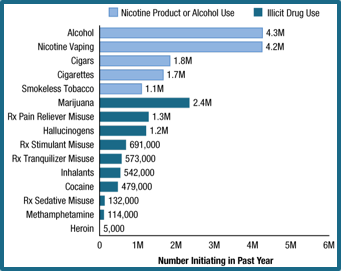
| Alcohol Usage | Driven predominantly by alcohol, over half the U.S. population used alcohol, tobacco, or illicit drugs in the past month. | Reaffirms alcohol as a primary driver of substance concerns across all demographics. |
| Co-Occurring Mental Health | 54.6 million adults experienced mental illness; adolescent anxiety (~18%) and major depressive episodes (~15%) remain high. | Reinforces LifeRing’s commitment to self-directed recovery that respects individual mental health needs and professional medical care. |
| Treatment Gap | Only a small fraction of those meeting SUD criteria received formal clinical treatment. | Highlights why community-based support groups are vital long-term lifelines. |
Perceived Unmet Need for Substance Use Treatment among Adults

Substance Abuse and Mental Health Services Administration. (2026). Key substance use and mental health indicators in the United States: Results from the 2025 National Survey on Drug Use and Health (HHS Publication No. PEP26‑07‑010, NSDUH Series H‑61). Center for Behavioral Health Statistics and Quality, Substance Abuse and Mental Health Services Administration. https://www.samhsa.gov/data/data‐we‐collect/nsduh‐national‐survey‐drug‐use‐and‐health/national‐releases
The LifeRing Perspective
- Empowering Personal Choice: SAMHSA’s emphasis on self-reported recovery underscores that healing is deeply personal. LifeRing’s 3-S framework (Secularity, Sobriety, Self-Empowerment) aligns directly with these findings by encouraging every member to craft a Personal Recovery Plan suited to their unique life conditions.
- Secular and Inclusive Support: With tens of millions navigating substance use and mental health challenges simultaneously, nonreligious, peer-led spaces remain a vital, barrier-free sanctuary for anyone seeking recovery on their own terms.
Help Us Keep Recovery Free, Inclusive, and Empowering
With nearly 45 million Americans navigating substance use disorders and only a fraction receiving formal clinical treatment, community-based support is more vital than ever. SAMHSA’s research demonstrates that peer recovery works — but it must remain accessible, judgment-free, and free of dogma.
At LifeRing, we believe everyone deserves a safe space to build a sober life on their own terms. We never charge for our meetings or support networks, but keeping our doors open and accessible requires resources.
Your generosity directly funds our online meeting platforms, resources for meeting convenors, and outreach efforts to ensure no one has to navigate recovery alone.
Donate Today
Support evidence-based, compassionate, and self-empowered recovery for all.