A Long and Winding Road Ended in a Meeting in Salem
Meet Kelly, Who's Blazing a Trail at Oregon's First LSR Meeting
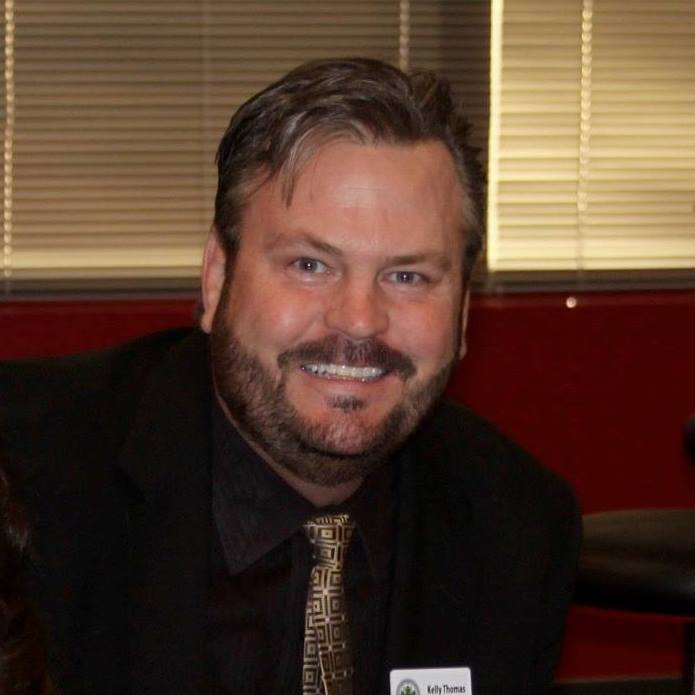
We're pleased to introduce Kelly Thomas, one of our newest convenors who's started the first face-to-face LifeRing meeting in the state of Oregon.
Kelly took some time to talk to us about his journey into recovery, which like many of us went in fits and starts before finally sticking with him:
What's your recovery journey been like?
I'm a living example of "fall down seven times, get up eight." My recovery journey has been long and winding. I've had nine separate stretches of recovery lasting over 100 days and have been through at least five outpatient programs. As I write this, I have over 810 days of continuous sobriety.
I first checked myself into a six-week outpatient program in Las Vegas in December 2000. Not long after, I began misusing prescription opiates that weren't mine; they belonged to my parents. I didn't have the language for it at the time, but it was classic substitute addiction.
In the spring of 2001, I started looking for alternatives to AA and discovered LifeRing. I still have a copy of the 1999 workbook: it's much smaller than today's version. Another UNLV student and I tried to start a meeting on campus, but after a few attempts, it fizzled out.
In January 2005, I entered outpatient treatment again and was prescribed medication for withdrawal along with Campral (acamprosate), which was relatively new at the time. I continue to take it today. I put together over six months of solid recovery, built meaningful connections, and began to understand an important truth: connection really is the opposite of addiction.
At around 200 days, while on vacation (a known trigger), I learned I hadn't received a promotion I expected. I responded the way I often had: I picked up again.
Over the next several years, I cycled in and out of recovery. In early 2010, I reached another 100+ days and met a woman who would later become my wife, a major catalyst for change in my life.
In 2012, knowing I planned to propose, I again put together about six months of recovery. But after she said yes, I returned to old habits. For years, that pattern continued.
In November 2015, I was determined to stop and entered outpatient treatment again. This time, I explored multiple recovery paths, including SMART Recovery and Refuge Recovery. I even tried to start a Refuge Recovery meeting in Las Vegas, though it never materialized. I also began attending a secular AA meeting, which became my first true home group.
During this period, I landed a dream job with the State Energy Office in Carson City, bringing me closer to Reno, where I grew up. Carson had a meditation community but lacked secular recovery options, so I started a secular sober social group and built meaningful connections. Even then, I still didn't fully understand that connection was the key to my recovery.
After more than 14 months of solid recovery, I convinced myself I could control my drinking and decided to have alcohol "just for the holidays." As expected, it didn't work. My career suffered, and I returned to treatment, this time in a CBT-based outpatient program.
In August 2018, I moved to Salem, Oregon for another dream job. Years earlier, I had imagined living somewhere within an hour of the ocean, the mountains, and an international airport. I didn't realize it at the time, but Salem fit that vision perfectly.
In May 2019, I found my way back to recovery. That summer, I had a key realization: I needed to actually do the work of a recovery program. I became active in Recovery Dharma, helped grow the community, and started an additional meeting. Once again, I built over a year of solid recovery. But in July 2020, family issues and the isolation of COVID led me back to old patterns
A major turning point came in February 2021, when I made the difficult decision to cut contact with toxic family members. Since then, I've spent over 70% of my days in recovery, and since January 2024, I've been completely sober.
In February 2024, I entered outpatient treatment again at Serenity Lane and wrote my own recovery plan from scratch. As a trained architect, I'm drawn to building analogies, so I call it the Four Foundational Corners of Connection, grounded in the idea that the opposite of addiction isn't sobriety: it's connection.
Those four points are: self, individuals, groups, and community.
Self comes first. I've learned that self-care isn't selfish. My plan includes nutrition, supplementation, and working with a dietitian to manage cravings.
From there, I built strong individual connections: friends, mentors, and professionals who support my recovery.
But one or two points of connection can feel unstable, like balancing on a unicycle. Adding a third brings real stability. For me, that came through LifeRing. I began attending the Saturday online meeting in May 2024, followed by the Sunday workbook meeting, and immediately felt that missing piece click into place.
What struck me most was discovering later that LifeRing's own tagline is "The Opposite of Addiction is a LifeRing Connection." I had arrived at the same conclusion independently. That felt like a sign.
The fourth point is community, and it led me to start building something local. After attending the LifeRing Winter Social in late 2024 and the Annual Congress in the summer of 2025, I knew I wanted to create an in-person meeting in Salem.
What led you to start a meeting in Salem, and how has it been going?
Starting a meeting required the right mix of time, energy, and location. Through connections from Recovery Dharma, I found a space at IKE Box, a unique coffee shop in a historic building in downtown Salem. It's housed in an old mausoleum, which makes for a pretty memorable setting.
The meeting has been small so far. Some weeks it's just me and one regular attendee. We've had new people come through, though most haven't returned yet. That's challenging, but it's part of building something from the ground up.
Recently, someone came back for a second meeting, a small but meaningful milestone. He strongly identifies with secular recovery and is looking for an alternative to AA. I'm hopeful it's the beginning of steady growth.
My goal is to build a core group of 8 to 12 regulars. From there, we can expand into additional meetings. Long term, I'd love to see LifeRing grow across Oregon, in places like Bend, Corvallis, Eugene, and Portland.
What can people expect from your meeting?
We start with a 5 to 10 minute grounding meditation, inspired by Recovery Dharma, then move into LifeRing's "How Was Your Week?" format. As the group grows, we plan to introduce a monthly topic meeting using the Recovery by Choice workbook or readings from Empowering Your Sober Self. Topics will be chosen collaboratively by the group.
What draws you to LifeRing?
What draws me to LifeRing is its openness and its emphasis on building your own recovery.
I sometimes describe it this way: LifeRing is like Chipotle, but for recovery. You start with your base (mine is connection) and then add what works for you. But you still must eat it. You must do the work!
That flexibility aligns with my personal philosophy of being an "Omnist," someone who believes that different perspectives can hold elements of truth. LifeRing creates space for people to build a recovery that actually fits their lives.
What do you like about living in the Pacific Northwest?
I was drawn to the Pacific Northwest for both its culture and its natural beauty. Growing up in Reno gave me a love for the outdoors, but after more than 20 years in Las Vegas, I was ready for something greener and a genuine four seasons.
The PNW’s open, secular-friendly mindset makes it an ideal place to build a recovery community. I know that community exists here, and I'd love to help it grow. If you're looking for a place to build your own recovery, we're building one here in Salem, one person at a time.
Thanks for everyone who volunteers and attends, either in person or online. Everyone makes a difference.
thank you so much, kelly , for hanging in there through the time that the meeting is small.
thanks bobbi for this blogpost!
A long and winding road to recovery, what I think we all want at lifeRing is permanence, but know that if we fall , there is a community to support us getting up,, back to recovery.
Good for him! Hope it all works out well.
All the best!